Introduction
The coronavirus disease 2019 (Covid-19) pandemic has created a myriad of new obstacles for the healthcare system in the UK, already stretched by demand prior to its arrival. Social distancing measures and a new ‘work at home’ culture introduced during lockdown have challenged the traditional approach of how medical care is delivered to the public.Reference Thunström, Newbold, Finnoff, Ashworth and Shogren1 The pandemic has, in some ways, acted as a catalyst for change, and created innovative opportunities to change how patients can access healthcare.Reference Blandford, Wesson, Amalberti, AlHazme and Allwihan2 One specific challenge was how to deliver out-patient care. In mid-March of 2020, the National Health Service (NHS) released guidance advising the cessation of all out-patient care and switching to remote consultations where possible.Reference Bokolo3,4
This was especially pertinent in the ENT department, which has a large out-patient workload that is highly procedural based, with a large proportion requiring aerosol-generating procedures. This presented problems for patients accessing this service, particularly those who were deemed vulnerable to the Covid-19 virus and who were asked to shield in light of pre-existing risk factors. It also compromised the safety of clinicians, who appeared to be more susceptible to the Covid-19 virus given the nature of the specialty. A study conducted in Wuhan revealed that ENT clinicians had a high risk of contracting the virus because of their close proximity with patients’ upper respiratory mucosa.Reference Vukkadala, Qian, Holsinger, Patel and Rosenthal5 The high viral load in patients’ nasal cavities and nasopharynx has also been suggested as a cause.Reference Zou, Ruan, Huang, Liang, Huang and Hong6 These viral particles may be aerosolised with the use of anaesthetic sprays and irrigation, and this can significantly increase exposure for the clinician.7
The significant risks to both patients and clinicians have led to the cancellation of many elective operations and routine clinics. The challenge remained to reduce these risks and to continue to deliver an ENT service to patients. The solution was to shift the vast majority of these out-patient clinics to telephone clinics, where patients would be assessed, triaged and managed without having a face-to-face appointment. Along with the NHS guidelines, this also followed the advice from the specialty's professional membership body, ENT UK.7
This study investigated the impact of telephone clinics in a district general hospital on patient outcomes and examined the benefits to be gained from this method of service delivery.
Materials and methods
This study followed the Strengthening the Reporting of Observational Studies in Epidemiology (‘STROBE’) guidelines. This was a retrospective audit, with data collected over a 7-day period from 10 to 17 May 2020. Telephone clinic lists were obtained from the hospital's electronic information database. Our inclusion criteria included both paediatric and adult patients, referred for the first time on a routine pathway. We excluded any two-week wait and urgent pathway referrals, as well as any follow-up patients.
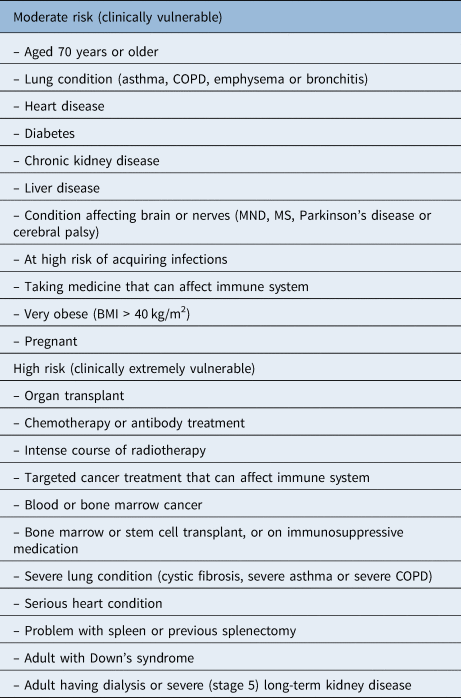
Once the relevant clinics and patients were identified, we examined various factors from the clinical notes on the hospital electronic patient database. These included: patient demographics, vulnerable risk status regarding coronavirus (Table 1), grade of clinician seeing the patient and the initial outcomes of these appointments. Patient outcomes were recorded as either discharged, brought back for a face-to-face appointment, referred to another specialty, referred for imaging, followed up via telephone or given a ‘patient-initiated follow up’ of at least six months.
Factors determining vulnerable risk status to Covid-198

Covid-19 = coronavirus disease 2019; COPD = chronic obstructive pulmonary disease; MND = motor neurone disease; MS = multiple sclerosis; BMI = body mass index
Patients were followed up over an eight-month period. Data were collected and analysed on a Microsoft Excel spreadsheet, which was stored on a secure password-encrypted hospital computer.
Results
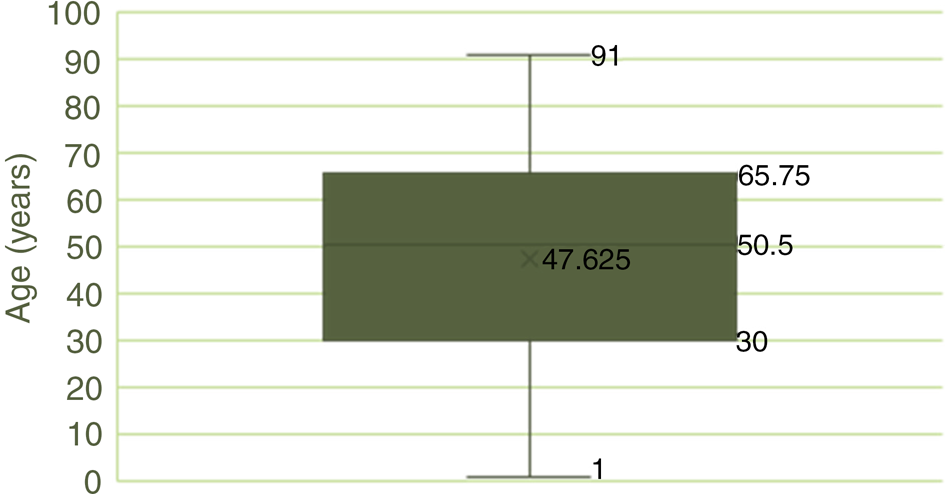
Data were collected from 134 patients over a 7-day period in May. Of these patients, 104 (78 per cent) fit our inclusion criteria; 27 patients (22 per cent) were excluded as they were follow-up appointments. Of the new patients, 64 (62 per cent) were female and 40 (38 per cent) were male. Patient age ranged from 1 to 91 years, with an average age of 45.5 years and a median of 49 years (Figure 1). Regarding the consultations, 74 (71 per cent) were undertaken by 4 different consultants, 18 (17 per cent) by 2 registrars and 12 (12 per cent) by an associate specialist.
Box and whisker plot of patients’ ages.

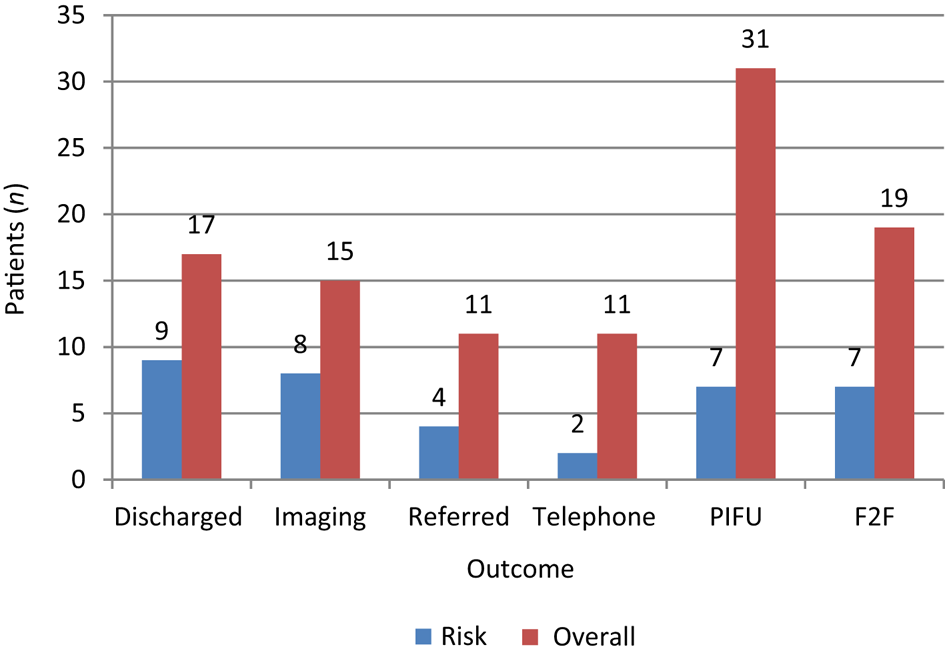
Of the 104 patients who underwent telephone consultations, 17 (16.3 per cent) were discharged, 15 (14.4 per cent) had imaging requested, 11 (10.6 per cent) were referred on to a different specialty, 11 (10.6 per cent) had a further telephone clinic appointment arranged, 31 (29.8 per cent) were given a patient-initiated follow up and 19 (18.3 per cent) were brought in for a face-to-face appointment (Figure 2).
Telephone clinic outcomes in patients deemed moderate and high risk for coronavirus and patients overall. PIFU = patient-initiated follow up; F2F = face-to-face appointment

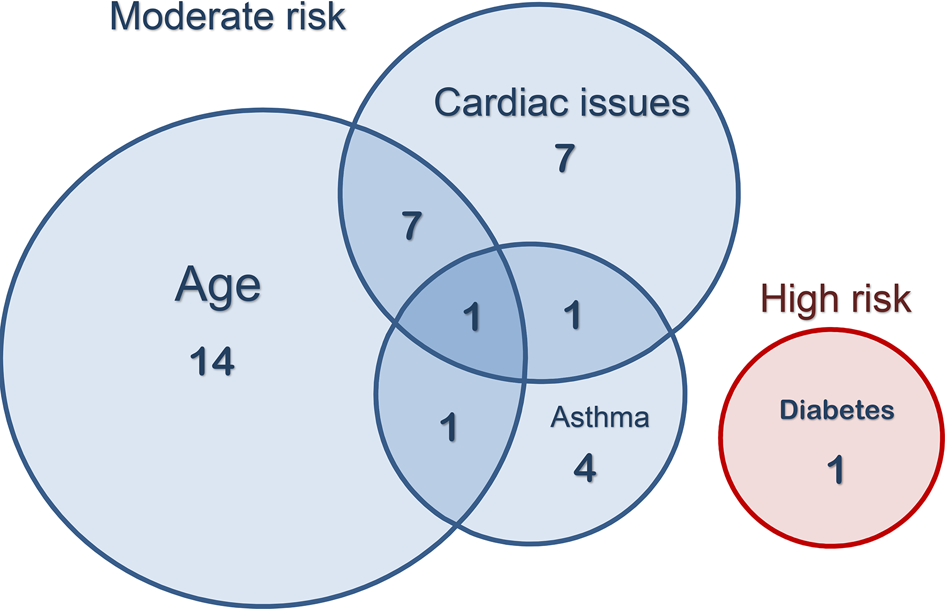
Thirty-six of the 104 patients (35.6 per cent) were classed as either ‘moderate’ or ‘high risk’ for Covid-19. This categorisation was based on: age, asthma, cardiac issues, cancer and diabetes (Figure 3). Seven (18.9 per cent) of these at-risk patients had face-to-face appointments following their telephone consultation. Seven (18.9 per cent) were given patient-initiated follow-up appointments, of which only one led to a face-to-face appointment.
Coronavirus risk factors for patients at moderate and high risk.

Consultants had arranged 14 of the face-to-face appointments, registrars had arranged 4, and an associate specialist had arranged 1.
Eight months after the initial telephone consultation, five patients were yet to have their consultation. Of these five patients, two had been booked for a face-to-face appointment at a later date (after eight months), two appointments had been cancelled and rebooked for coronavirus-related reasons (clinics were cancelled), and one patient did not attend.
Of those patients who attended their face-to-face appointments, five were discharged, two were given patient-initiated follow-up appointments, three were scheduled for surgery in the operating theatre (adenoidectomy, septoplasty and functional endoscopic sinus surgery) and three had imaging requested. In these patients, only two had their provisional diagnosis (made during the telephone clinic) changed following a face-to-face appointment. One patient was diagnosed with vestibular migraine, after initially being given a suspected diagnosis of benign paroxysmal positional vertigo. The other patient had a diagnosis of a scarred tympanic membrane after being initially queried for a persistent perforation of the tympanic membrane. Neither patient was harmed as a consequence of the altered diagnoses.
The remaining patients seen in a face-to-face clinic had the following presenting complaints and diagnoses: four had chronic rhinosinusitis or nasal obstruction, three had hearing loss (and required audiology), one had an attic retraction pocket and one patient was diagnosed with globus pharyngeus.
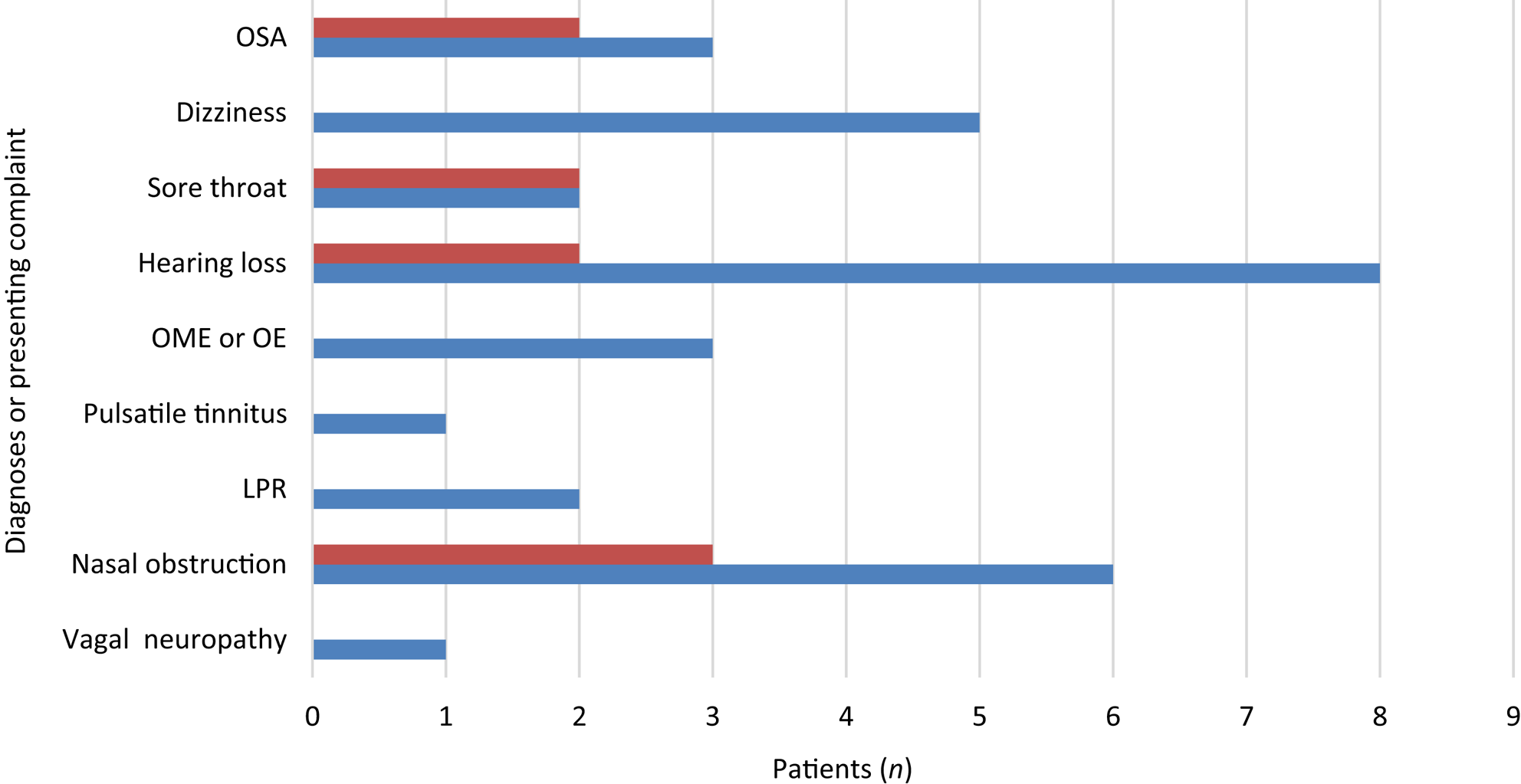
Of the 31 patient-initiated follow-up appointments, 22 were requested by consultants, 8 by registrars and 1 by an associate specialist. In the eight months since this time, four patients have had further consultations. One patient had a further telephone clinic appointment, whilst three had face-to-face appointments; two were scheduled for surgery in the operating theatre (for grommets, and tonsillotomy with or without adenoidectomy), whilst one was discharged. Figure 4 gives a breakdown of the presenting complaints and diagnoses scheduled for patients given a patient-initiated follow up.
Diagnoses and presenting complaints for patients given a patient-initiated follow up. Red bar indicates high risk patients. OSA = obstructive sleep apnoea; OME = otitis media with effusion; OE = otitis externa; LPR = laryngopharyngeal reflux

The patients who were discharged most commonly presented with otology problems, with five (29.4 per cent) complaining of hearing loss. Three patients (17.6 per cent) presented with tinnitus and one (5.9 per cent) presented with vertigo. Four patients (23.5 per cent) presented with chronic rhinosinusitis and one patient each (5.9 per cent) presented with snoring, hyposmia, laryngospasm and a nasal fracture.
Discussion
The global Covid-19 pandemic has had a significant impact on healthcare services around the world. The measures introduced to curtail the spread of the virus, such as lockdowns (both local and national) and social distancing, has limited the ability of many specialties to provide care. This has been especially pertinent in otolaryngology, where a significant proportion of the workload occurs in the out-patients department. Telephone clinics were introduced during this period in an effort to try and keep some form of an ENT service running. Thus, patients avoid coming into hospital, whilst still having some form of consultation with a clinician.
Overall, the data show that 57 per cent of patients avoided a hospital visit, because they were either discharged, given a patient-initiated follow up or a further telephone clinic appointment as a follow up. Only 17 per cent of patients needed to present to hospital for assessment, and, most importantly, 49 per cent of all high or moderate risk patients for Covid-19 avoided a hospital visit. After eight months, there was no significant morbidity and no mortality. Our results are quite encouraging in the context of the pandemic. Specifically, nasal obstruction and hearing loss were the presenting complaints managed most frequently. This information could be useful when triaging patients into telephone or face-to-face clinics in the future. In a similar study carried out in Spain, only 10.8 per cent of patients required a face-to-face appointment, with 21.7 per cent being appropriately managed via telephone.Reference González, Pérez, Vivancos, Iñiguez, Maquilón and Alonso9
Telemedicine has been gaining popularity as a tool for delivering healthcare around the world. It is relatively simple to introduce during a pandemic. Moreover, it allows clinicians to, where possible, treat and manage patients, whilst simultaneously triaging to avoid patient admissions and prevent adding further pressure to front-line hospital staff.Reference Smith, Thomas, Snoswell, Haydon, Mehrotra and Clemensen10 From a patient's perspective, it limits travel to and from the hospital, thus also limiting exposure to the virus. Telemedicine is especially useful for patients who live in rural areas and who need to travel a considerable distance in order to attend appointments. ENT has traditionally been slower than other specialties in adopting telemedicine as a tool,Reference Huang, Imam and Nguyen11 likely due to the inability to carry out routine investigations such as flexible nasoendoscopy or otological examinations via microscope. We hope this article can further support the use of telemedicine in routine work as an alternative, yet effective and safe, mode of service delivery for ENT out-patients.
Further scope
Although this study did not measure patient satisfaction, recent studies have shown considerable approval for telemedicine. This was shown to be true for clinicians as well. A prospective study carried out by Fieux et al.Reference Fieux, Duret, Bawazeer, Denoix, Zaouche and Tringali12 showed that, overall, 87 per cent of patients were satisfied with their ENT telemedicine consultation, with a particular appreciation given to physicians’ responses, and savings in cost and time. A systematic review of the literature relating to ENT telemedicine clinics from 1982 to 2019, by Ning et al.,Reference Ning, Cabrera and D'Anza13 also found high levels of patient satisfaction and equally high levels of clinician satisfaction. It is important to note that both of these papers included video clinics as part of their study; there is an opportunity to assess this method in relation to telephone clinics alone.
• Telephone clinics are an inexpensive and efficient method of service delivery
• The majority of patients were managed remotely
• Higher risk patients avoided a hospital visit
• There was no significant morbidity or mortality
• Telephone clinics may have a role in reducing the carbon footprint
Another benefit of telemedicine is the carbon footprint reduction, as patients are not travelling to see their clinicians. Healthcare in the UK is responsible for a significant amount of the country's carbon emissions and telephone clinics can have a large impact on the NHS’ pledge to be carbon neutral by 2050.Reference Jennings and Rao14 That study did not account for the method of travel that would have been used by patients if these consultations were face-to-face (only the distance was measured), but a further study could investigate this.
Several studies have shown that consultant supervision and pre-clinic case note reviews can reduce trainee follow-up rates.Reference Balakumar and Mirza15–Reference Lo, Eze and Jonathan17 Although this study does not have significant numbers to make a comparison between these levels, it would be worth undertaking a larger study to evaluate this for telephone clinics.
Data availability statement
The data that support the findings of this study are available on request from the corresponding author. The data are not publicly available due to privacy or ethical restrictions.
Competing interests
None declared