Introduction
Dementia has become a worldwide public health challenge related to population aging. Globally, one person is diagnosed with dementia every second, with a new dementia patient diagnosed every 7 seconds (Song and Wang, Reference Song and Wang2010). Chinese older adults with dementia account for 40% of all patients with dementia in the Asia–Pacific region and 25% of those globally. At present, the number of people aged 60 years or older in mainland China exceeds 130 million and includes 6 million to 7 million people with dementia (Song and Wang, Reference Song and Wang2010; Liu et al., Reference Liu, Wang and Tan2013; Hsiao et al., Reference Hsiao, Liu, Xu, Huang and Chi2016). An estimated 0.75% to 4.69% of those older than 60 years, 5.00% to 7.69% of those older than 65 years, and approximately 40% of those aged 85 years or older have dementia in China (Li and Ke, Reference Li and Ke2010). The prevalence rate of dementia among older adults and the rapid increase in the aging population suggest that dementia is a major public health crisis in China. However, due to a lack of trained professionals and a specialized care model for dementia care (Liu et al., Reference Liu, Wang and Tan2013; Hsiao et al., Reference Hsiao, Liu, Xu, Huang and Chi2016), most older adults with dementia in the early stages are not encouraged to be hospitalized but instead treated as outpatients. In the Chinese context of filial piety and the one-child policy, dementia caregivers are mostly spouses, children, or children-in-law (Chen et al., Reference Chen, Lang, Clifford, Chen, Hu and Han2016). Given a typical family size of five people spanning three generations, at least 30 million to 35 million people in China are directly or indirectly affected by dementia. The care burden of dementia has deleterious effects on caregivers’ physical and mental health. Moreover, caregivers of older adults with dementia in China tend to have low levels of education (Chen et al., Reference Chen, Lang, Clifford, Chen, Hu and Han2016) and nearly 50% of them are unaware that their siblings have dementia, along with 76% of older adults who could not identify their own dementia. Hence, family-based assistance is lacking in China, with only 2% of families capable of assisting with correct diagnoses and treatment (Song and Wang, Reference Song and Wang2010).
In addition to dementia caregivers’ low awareness of dementia as a disease and insufficient training, dementia care is unevenly distributed in China. Service models and facilities vary among hospitals and primary care community centers across China. Mental health providers receive very limited on-the-job training for dementia care (Hsiao et al., Reference Hsiao, Liu, Xu, Huang and Chi2016). High-quality dementia care requires a comprehensive system with support from various groups of professionals including physicians, nurses, family caregivers, community workers, home health aides, personal and home care aides, and social workers. It is essential to provide continuing medical education, an approach focused on a learner-centered paradigm or demand-driven learning model, for these professionals to improve quality of dementia care and performance and ensure older adults with dementia are treated with dignity and respect (MacDonald et al., Reference MacDonald, Stodel, Farres, Breithaupt and Gabriel2001). Principles of adult learning must be incorporated into this approach, particularly recognizing that adults learn by choice. Successful implementation of continuing medical education begins with a needs assessment, which collects and analyzes information about the educational needs of individuals or organizations (Robinson et al., Reference Robinson, Barry, Renick, Bergen and Stratos2001). With the increasing size of the older adult population and new cases of dementia being diagnosed annually in China (Kalaria et al., Reference Kalaria2008), there is an urgent need to assess the training needs of professionals in the field of dementia care, which will lead to well-designed training curriculum and development.
In Western societies, the need for and importance of dementia care education have been stressed for professions such as aging care workers (Fleming and FitzGerald, Reference Fleming and FitzGerald2009), healthcare assistants in hospitals (Chapman and Law, Reference Chapman and Law2009), and primary care physicians (Robinson et al., Reference Robinson, Barry, Renick, Bergen and Stratos2001; Cherry et al., Reference Cherry, Hahn and Vickrey2009; Beer et al., Reference Beer2011). Even though recommendations vary regarding educational content, most studies have emphasized the importance of dementia care training as a distinct component of required education for any professional or paraprofessional working in long-term care (Gould and Reed, Reference Gould and Reed2009). According to a systematic review, training content should emphasize the importance of identifying behavioral symptoms and appropriate interventions, normal aging and age-related changes in health and function, causes of dementia, intervention strategies, end-of-life care, and staff stress management (Gould and Reed, Reference Gould and Reed2009). Different modalities of training include workshops, seminars, videos, outside consultants, workbooks, classroom training, role play, online modules, university or technical college instruction, train-the-trainer models, intensive staff training, and in-service training (Kovach and Krejci, Reference Kovach and Krejci1998).
Unlike studies in Western societies that emphasized training or continuing education for any professional or paraprofessional staff member, most research in China regarding dementia care training needs has focused on family caregivers from the caregivers’ perspectives. For example, a study found that 100% of dementia caregivers reported a lack of caregiving knowledge and technical ability that directly influenced the care recipient's quality of life (Han et al., Reference Han, Zhang, Wang and Yang2007). Caregivers have expressed a desire to learn basic knowledge about dementia including treatment, pathogens, and symptoms and related topics like cognitive training, nursing skills, communication skills, and how to look after older adults with dementia, memory barriers, and sleep abnormalities (Cheng and Yang, Reference Cheng and Yang2009; Wang and Zhang, Reference Wang and Zhang2009). Other topics include treatment effectiveness, how to provide nutrition to individuals with dementia, how to postpone the progress of dementia, where to seek services (Yang et al., Reference Yang2005), and personalized training programs for family caregivers of individuals with dementia (Han et al., Reference Han, Zhang, Wang and Yang2007).
In mainland China, providers tasked with delivering mental health services in hospitals or community clinics, including physicians and nurses, are a major resource that families rely on when experiencing the effects of dementia, particularly in areas in which specialist care for dementia is not available (Connell et al., Reference Connell, Boise, Stuckey, Holmes and Hudson2004; Hsiao et al., Reference Hsiao, Liu, Xu, Huang and Chi2016). Therefore, needs assessments and development of a training curriculum focused on family caregivers are insufficient to improve the quality of dementia care. In terms of China's current medical educational system, continuing education for mental health providers is conducted in neurology departments rather than in mental health fields such as psychology or psychiatry. Moreover, no training curriculum for dementia care exists for general practitioners in neurology, nor is the importance of dementia care training emphasized as a key component of mandatory education for any professional or paraprofessional working with older adults with dementia. Hence, mental health providers in China have not received formal training or education specific to dementia care as part of their regular curricula in medical school (Wang, Reference Wang2012; Hsiao et al., Reference Hsiao, Liu, Xu, Huang and Chi2016).
Given the increasing need for dementia care in China, the inadequacy of professionals’ knowledge of dementia and dementia care services is a major barrier to improving quality of care. However, to the authors’ knowledge, very few studies have examined the training needs related to dementia care in China. This study sought to contribute to the understanding of who should receive training, what content or topics should be included in training curricula for continuing education programs for various groups of trainees, and how to deliver the training, especially from the perspectives of professional mental health providers. Gaining this knowledge of training needs related to dementia care is important for the development of training curricula related to dementia care and improvement of quality of life for older adults with dementia and their family caregivers.
Methods
Study design
This study employed the focus group method, a qualitative approach, to explore training needs regarding dementia care in China. Researchers from the Institute of Mental Health in Beijing distributed flyers in local mental health community clinics and hospitals governed by the municipal departments of Xicheng and Daxing, which have four urban districts and four rural districts. Using a purposive sampling method, mental health providers working in community clinics and psychiatric hospitals were approached and invited to participate if they were full-time employees such as psychiatrists and nurses whose job responsibilities solely involved providing mental health services. The research protocol was approved by the institutional review board of the University of Southern California.
Four focus group discussions with ten health providers each were conducted in 2012, creating a sample of 40 mental health providers. After informing participants of the purpose of the study and obtaining written consent, two research team members led each focus group. One researcher served as the moderator and the other served as an observer and took notes. Each session was approximately 90 minutes in length and was held in a private meeting room located in the health clinics.
Study instruments
After some discussion about their understanding and knowledge of dementia care, working experience with dementia, and dementia caregiving practice in China, participants were asked the following three main questions:
1. Who do you think needs to receive training in dementia care?
2. What content do you think the trainees need to learn?
3. In your opinion, how should the training be delivered or implemented?
These three guiding questions were supplemented with supporting questions that helped participants elaborate on concepts or provide personal stories to explain their opinions. The guiding questions were effective in garnering detailed information from the participants and helped achieve the research objectives.
A survey was also developed to collect information about the sociodemographic characteristics, employment histories, and work experience of mental health providers. All participants completed the survey after focus group discussions. Measures included gender, age, marital status, level of education, medical degree, annual household income, occupation, work position, years of practice, and self-assessed familiarity with the knowledge and skills required to serve patients with dementia.
Data analysis
All focus group discussions were audio recorded with consent from participants. Digital recordings were stored in a secure, password-protected system. Audio-taped data were transcribed verbatim into Mandarin. Transcripts were reviewed and analyzed by four members of the research team. After a researcher independently transcribed each audio tape, a second researcher conducted a second transcription. A third researcher then compared the first and second transcriptions for disparities. A final transcription was developed after the researchers collectively discussed the most accurate interpretation of the disparities. A back-translation approach was also used, which involved translation to English and then double-checking for errors by a second independent researcher to ensure equivalence in both languages, as recommended by Knight et al. (Reference Knight, Roosa and Umaña-Taylor2009).
Then, three researchers used thematic analysis and identified themes through a coding process that progressed from description to interpretation (Braun and Clarke, Reference Braun and Clarke2006). Members of the research team coded the data independently to provide the basis for a preliminary coding framework. At team meetings, the fourth researcher was invited to provide an outsider perspective to ensure the accuracy of the emergent codes and themes identified by three researchers. All researchers reconvened to comparing coding outcomes to enhance consistency and expand the dimensions and comprehensiveness of each code. Codes were later combined or synthesized into broader, recurrent themes. In addition, there was final agreement on 85% of the codes applied, indicating good reliability (Boyatzis, Reference Boyatzis1998). Codes were later combined or synthesized into broader, recurrent themes. In the analysis stage, charts of themes, research notes, and field notes were reviewed.
Results
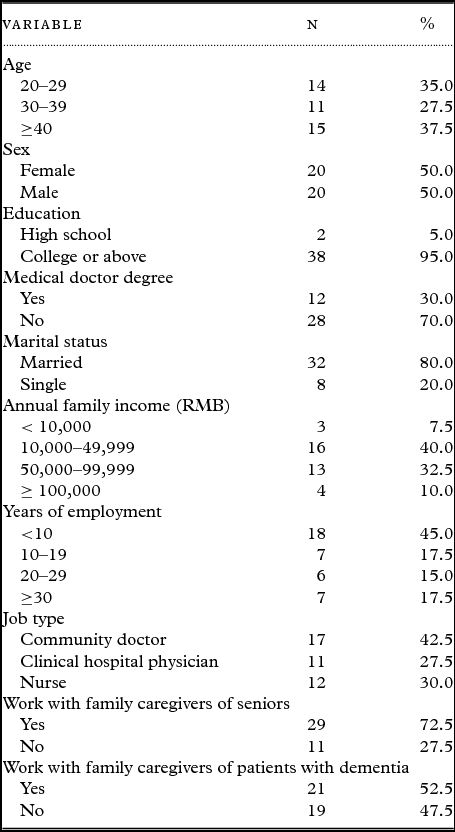
Table 1 reports the sociodemographic characteristics of the study participants. The median age of participants was approximately 33 years. Half of the participants were women. Most participants were married (80%) and had received some college-level education (90%). However, only 30% of participants held medical doctor degrees. Fifty percent of participants had worked in the mental health field for more than ten years. About 42.5% of them were community-based doctors. More than half of the participants had worked with caregivers of family members with dementia.
Demographic characteristics of participants (N = 40)

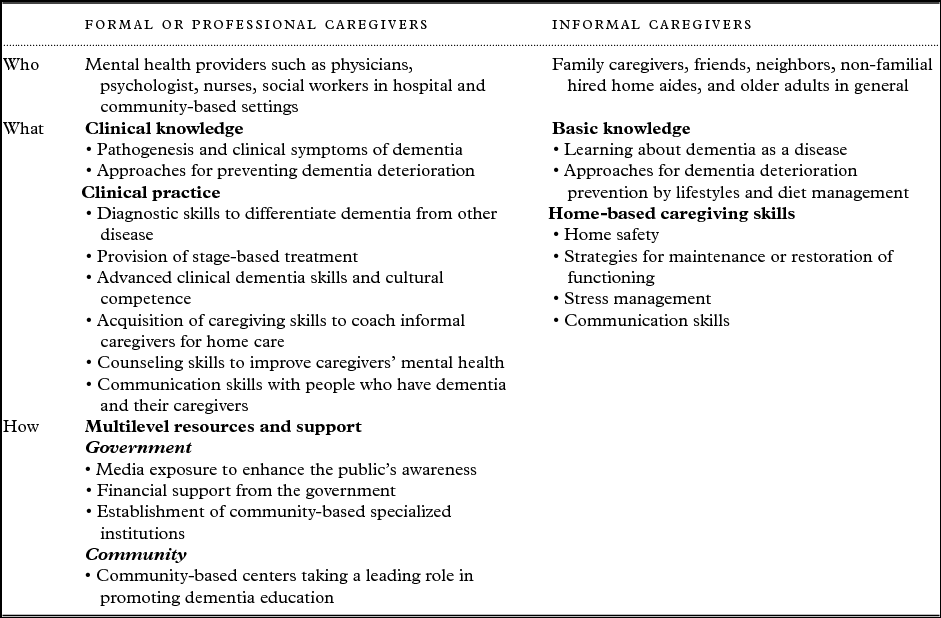
Table 2 shows emergent themes from four focus group discussions in three main categories – who, what, and how – related to need for dementia care training.
Summary of identified themes

Who
Given a lack of formal training relevant to dementia care in the current medical educational system in China, which is typically the first service contact by patients with dementia, all participants reported an urgent need for both formal or professional and informal caregivers to receive training in dementia care. Formal or professional caregivers included hospital-employed physicians, psychologist, nurses, social workers, and community health workers in hospital and community-based settings. Currently, informal caregivers shoulder the major responsibilities of caregiving for patients with dementia in China. Respondents said due to unfamiliarity with and low awareness of dementia as a disease, informal caregivers including family members, friends, neighbors, non-familial hired home aids, and older adults in general should attend training sessions to improve home-based dementia care.
Formal or professional caregivers
Many focus group participants agreed that structured training is needed for formal or professional caregivers in hospital and community-based settings, including physicians, nurses, and mental healthcare providers:
The key issue is to promote awareness of dementia as a disease. We, as physicians, should be the first group to receive training and acquire comprehensive knowledge of dementia as a disease, especially those with specialization and substantial clinical skills. (Dr D)
Nurses should take trainings to better assist with patients with dementia. Administrative staffs will be another group of trainees. Only if enough attention is paid by the management level can we provide better services in dementia care. (Dr L3)
Sometimes these physicians are unable to attend trainings due to tight schedules. Nevertheless, community-based physicians should attend training sessions with family caregivers because they are more knowledgeable. Family members will benefit from attending trainings because they are the major caregivers. (Dr S1)
Community health providers are not as familiar with dementia as a disease as they should be. It's better to have professional workshops focusing on dementia to enhance their level of knowledge about dementia step by step. (Dr W)
Informal caregivers
People working for community-based centers and older adults in general were identified by participants as informal caregivers who need training or education. Informal caregivers were mostly family members, friends, neighbors, and non-kin hired home aides. For example, Dr H1 mentioned, “We don't have social workers in our community. Board members of local centers in the communities such as homeowners associations could be trainees.” Dr H2 stated that older adults who are less active than others should attend training workshops because preventive education is beneficial for them. In addition to these individuals, participants said family members are the primary informal caregivers who need training:
Family members should be the one who receive trainings. Their understanding about dementia in various aspects needs to be trained and improved. It's very stressful for them to take care of siblings with dementia. As their cognitive function deteriorates, patients have very little knowledge about what they are doing; what they are ought to eat or drink. Those with dementia have no pain and suffer less than patients with cancer. Hence, if family members learn skills of caregiving from training workshops, their burden of caregiving could be eased at certain levels. (Dr. L1)
What
Formal or professional caregivers
Mental health practitioner generally said that professionals need clinical knowledge of dementia and clinical practice skills. They also identified specific topics for training.
Clinical knowledge of dementia
Pathogenesis and clinical symptoms of dementia and approaches for dementia prevention and deterioration were identified as recommended training content for professionals.
Most mental health providers expressed a strong need for training focusing on pathogenesis and clinical symptoms of dementia, because most of them were not familiar with the factors and mechanisms that cause dementia:
I would like to learn about causes, pathogenesis, and clinical symptoms of dementia in the early stage of dementia. Why could some people live up to 100 years old without dementia, whereas others have dementia [regardless of their age]? Is dementia caused by genes? (Dr Z1)
In addition to providing timely treatment for patients, mental health providers acknowledged that effective prevention could reduce deterioration of dementia and suggested that workshops and education should be promoted at various levels to delay deterioration. Participants agreed that multilevel approaches to prevent dementia deterioration could reduce cost to the medical system and society.
In China, we need to provide prevention education for dementia at three levels. For example, in terms of prevention education at level one, we could promote dementia as a disease among those older adults without dementia and enhance their awareness of it. For level-two education, physicians provide timely intervention after patients are diagnosed with dementia. After patients discharge from the hospitals, we do our best to reduce rates of disability or of dementia deterioration. In this way, preventive education provided at various levels will be more effective. (Dr H1)
Clinical practice
Various clinical practices were identified by participants to be included in the training curriculum, including diagnostic skills to differentiate dementia from other diseases, provision of stage-based treatment, advanced clinical dementia skills and cultural competence, acquisition of caregiving skills to coach informal caregivers for home care, counseling skills to improve caregivers’ mental health, and communication skills with people who have dementia and their caregivers.
Due to lack of formal training in medical education, it is challenging for most mental health providers to provide a timely diagnosis for patients with dementia. Acknowledging the importance of early detection of dementia, providers expressed a desire to build the capability to differentiate between patients with dementia and those with other diseases. For example, “it is important for physicians to learn the skills of diagnosis and treatment” (Dr C). Similarly, another participant stated:
At this moment, it's important and urgently needed to acquire knowledge and built capabilities for this disease. I am interested in learning skills of diagnosis to differentiate patients with dementia from those without this disease. (Dr J)
Participants said that after diagnosis, timely treatments should be provided for patients based on clinical symptoms of stages of dementia (i.e. early, middle, and late stages). They said trainings on treatment provision for mental health providers should take this perspective into account:
I would like to know whether and how trainings are delivered based on stages of dementia. How should we provide treatments for patients with dementia at early, middle, and late stages? For example, when the level of patients’ independent living is high, what are those changes psychologically and cognitively in the early stages of dementia? How can we coach patients’ family members to care for patients in the middle stages and those with severe cognitive impairment in the late stages? (Dr S1)
Many participants were interested in learning about advanced practices used in Western societies, especially the United States. Learning about cultural differences in treatment between the West and the East benefits their practice in China. For example, Dr X mentioned, “[I] want to learn the pathogenesis of dementia including causes and state-of-the-art treatment as well as some effective and successful cases in the restorative or maintenance stage in Western societies.” Dr Z2 expressed similar opinions:
Is there any progress in clinical practice of dementia in the United States? In terms of treatment, are there any advanced skills developed by Western countries we should learn, such as cultural differences of dementia progression between Western and Chinese patients? (Dr. Z2)
Because participants received no formal training specific to dementia care, they expressed the need for professional providers including physicians and nurses to learn how to coach their patients’ family caregivers to take care of patients at home:
I would like to learn how to care for patients with dementia. It's essential to provide training workshops in caregiving skills for us, especially for home care. Then we could teach caregivers more knowledge about caregiving for patients with dementia. (Dr B)
We could train family caregivers and coach them on how to care for patients. Training workshops could be hosted in hospitals, community-based clinical centers, or at home to inform caregivers about what they need to be aware of. (Dr W)
Due to a lack of specialized institutions for people with dementia and issues of affordability in China, most family members are the major sources of care for individuals with dementia. The heavy burden of caregiving can lead to high levels of stress that negatively affect family caregivers’ mental health. Hence, most participants said they desired to learn counseling skills to help them reduce stress derived from caregiving:
In communities, we should actively promote mental health education among family caregivers. For anyone whose family members have dementia, the burden on their shoulders is very heavy. Hence, we should provide counseling services for them regularly. (Dr Z3)
Caring for family members with dementia might result in caregivers’ mental health issues such as insomnia, depression, anxiety, emotional disorder, and so on. Hence, if we could provide family caregivers counseling services, that should be very helpful. (Dr. S2)
As professional providers, participants said they should position themselves as the group that bridges communications among patients, their family members, and residents in the neighborhood. Their responsibilities not only include informing these people of a diagnosis, but also helping them accept the situation with detailed explanation. A comfortable atmosphere and living environment for patients with dementia can only be created through active communication with various stakeholders relevant to them. For example, Dr S1 mentioned, “Sometimes patients’ thoughts are hard to predict. It's important to know what they think and communicate with them.” Other participants also stated:
How to communicate with family members is very important. We need to teach them how to accept their loved one being diagnosed with dementia, how to communicate with older adults with dementia, and how to create a more comfortable atmosphere through communication at home. (Dr Z4)
Informal caregivers
Most participants said that informal caregivers needed to be trained in basic knowledge of dementia and home-based dementia caregiving skills to enhance their literacy related to dementia.
Basic knowledge of dementia
Informal dementia caregivers need to learn about dementia as a disease and approaches to dementia prevention related to lifestyle and diet management.
Due to unfamiliarity with dementia as a disease, the public has low awareness of dementia and is often confused by early symptoms among older adults. Professional providers stated that family members who assume major responsibilities for caregiving should take trainings to learn about dementia as a disease so they will take patients to seek professional assistance when they show signs of early onset of the disease:
Currently, patients’ family members don't know anything about dementia and insist that their fathers or mothers are not sick. Hence, first of all, family members are the group that should learn knowledge of dementia. Once they understand that dementia is a disease, then they could accept what happens to their loved ones. Family members need to be educated about dementia as a disease so if they find older adults having aggressive and angry behavior such as verbal abuse, which is caused by cerebellar atrophy, these are symptoms of dementia. (Dr L1)
Dementia has a negative impact on the harmony of a family. The key issue is that most family members don't know much about it [dementia]. Public awareness needs to be enhanced. As long as patients receive inpatient treatment, their conditions [quality of life] can be improved. (Dr F1)
Most participants suggested that family members need to monitor older adults’ diet, using food and healthy lifestyle approaches as strategies to prevent older adults from experiencing dementia deterioration:
For me, as long as older adults could do whatever they like to do during their free time, the pleasure deriving from their hobbies will prevent them from experiencing deteriorating dementia. Family members should read newspapers to or watch TV programs together with older adults as well. (Dr F2)
In terms of diet, older adults should try to eat healthy and light food with less sodium and more variety of veggies as much as they could to prevent cardiovascular disease, which might lead to less dementia deterioration. (Dr G)
Home-based caregiving skills
Informal dementia caregivers need training on caregiving skills that focus on home safety, restorative strategies, communication skills, and stress management.
Participants emphasized that it is important for family caregivers to build caregiving skills and learn practices of home care. They need to identify and control risk factors for wandering and hazards that may cause fire, learn how to protect patients at home, and create a safer environment for them. Dr B mentioned, “The safety of the patients at home is an important issue. Family caregivers should learn skills relevant to how to prevent the patients from being lost or setting their own house on fire.” Dr Z5 also gave an example and opinions on this training need:
For example, I have a patient who became bedbound and has the problem of drooling, so a nonkin caregiver has to accompany him 24 hours for 7 days. Sometimes the caregiver couldn't find the patient due to problems of disorientation. Family caregivers need to take trainings that teach them how to care for patients at home in terms of eating, bathing, and dressing.
To improve quality of life of patients with dementia, mental health providers suggested that family caregivers help care recipients perform basic tasks at homes as strategies for maintenance or restoration of functioning:
Sometimes these family members only need to learn caregiving skills at a beginner level. For example, in terms of restorative strategies, they know how to help patients perform daily tasks or use medical equipment as exercise. (Dr W)
It is overwhelming to take care of a loved one with dementia; therefore, these mental health providers stated that most caregivers experience high levels of stress. They recommended that family caregivers learn skills or techniques of managing stress at multiple levels to avoid burnout. For example, Dr S2 said, “These family caregivers need to learn how to deal with their frustration of taking care of the family member with dementia such as techniques for relaxation.” Dr G expressed similar opinions:
Stress management should be educated at various levels, including individual, family, and societal levels. Skills of relieving stress emotionally should be widely promoted among the public.
Again, how to communicate effectively with loved one with dementia is another important training content for informal caregivers. As Dr W mentioned, “We should reach out family members and residents in the neighborhood to educate them about communication skills with people who have dementia.”
How
Multilevel resources and support were identified at both government and community levels to help implement the training.
Government level
Government will play a key role in implementing training programs. For example, the participants said the government needs to provide media exposure to enhance the public's awareness, offer financial support, and establish community-based specialized institutions.
Media exposure
In China, the media has been the major channel for knowledge or information dissemination countrywide. The participants suggested that the media plays an essential role in enhancing awareness of dementia in the public, especially government-owned televisions such as China Central Television, which has the highest viewership. Educational workshops broadcasted by TV stations will have a significant impact on increasing the public's knowledge of dementia as a disease. For example, Dr W said Chinese Central Television “has provided programs relevant to chronic diseases, and I found that older adults are very interested in watching these programs.” Dr L2 expressed similar opinions:
It's better to promote dementia as a disease via TV stations as public education. Because everyone watches television daily, the media should strongly promote [this issue] to enhance the public's awareness. (Dr L2)
Financial support from the government
Given the high cost of dementia care and affordability issues among patients and their family members, all participants stated that the government should provide strong financial support to improve the quality of dementia care, not only to ensure the comprehensiveness of the healthcare system but also for manpower and facilities:
At the macro level, there is a need for comprehensiveness in the health care system with funding secured by the government. The government provides funding, including the budget for professionals for program execution and rehabilitation facilities for patients with dementia. (Dr L3)
From the perspectives of patients, some of them experience financial difficulties. Financial aid provided by the government will benefit them by prolonging their lives. Manpower, facilities, and governmental funding resources are key factors that we could use to provide better dementia care for the patients. (Dr G)
Establishment of community-based specialized institutions
Due to the lack of professional training in dementia among most mental health providers and nuclear families with one child, participants acknowledged the need for specialized institutions for patients with dementia and their family caregivers to ease their financial burden and improve the quality of care. In addition, they said these institutions could provide culturally adapted trainings not only for providers but also for the public:
We need specialized institutions to provide professional care for this group of people with dementia. If these institutions could charge half of the expense, that will be very helpful for easing the financial burden on these families. It's really challenging for family members to take care of people with dementia. (Dr L2)
For patients who are diagnosed dementia, [I suggest] establishing specialized institutions in the communities where family caregivers can get professional assistance. These institutions should not only educate healthy older adults about dementia prevention but also provide training workshops regularly for formal caregivers. The public's awareness could be enhanced through dissemination of knowledge relevant to health and diet with cultural adaptation. (Dr G)
Community level
The participants all agreed that community-based centers should take a leading role in promoting dementia education and implementing any training program, because they are grassroots organizations familiar to most Chinese residents.
In China, people who work for community-based centers such as members of homeowner associations typically have the most frequent contact with local residents. Many participants suggested that community-based centers should take leadership in promoting knowledge of dementia as a disease in the communities, which will increase the level of attention or awareness among individuals who have older family members with dementia:
First of all, we need to call for community-based centers’ attention to dementia as a disease such as homeowner associations in various neighborhoods. In this way, the public will acknowledge that this is a disease that may lead to disability and heavy burden for family members and society as a whole. The priority is to enhance awareness among people who work for community-based centers. Once they have a certain level of knowledge and familiarity of dementia, then the public's awareness will be enhanced and the patients will receive more attention from family members and be taken good care of accordingly. (Dr G)
Family caregivers have various degrees of understanding of dementia as a disease. Hence, if awareness of dementia in the communities could be enhanced through various educational workshops for promotion, that of family members in households will be enhanced substantially as well. (Dr Z2)
Discussion
The increasing demand for health and social care related to older adults with dementia, along with the trend to accommodate people in the community, has not affected higher education, continuing education programs, or training programs as significantly as may be appropriate in China. Although it will be necessary for educators, the government, and the community to consider the influences of the aging context on their education or training curricula, it is also necessary to explore the actual needs for training to incorporate a learner-centered paradigm or demand-driven leaning model that will assist in the efficient delivery of health and social care services. With this purpose in mind, this study contributed to the understanding of whether a need for training in dementia care exists and if so, who should receive training, what content should be covered, and how the training should be delivered, from the perspectives of mental health providers.
First, in terms of trainees, participants agreed that formal or professional and informal caregivers are two groups that should receive training. Formal or professional caregivers were identified as physicians, psychologists, nurses, social workers, community health workers, etc. in hospital and community-based settings, whereas informal caregivers were mostly family members, friends, neighbors, and non-kin hired home aides in home-based settings. Consistent with Western literature, our findings suggest that training needs for dementia care are universal across disciplines at all levels of the service system (Splaine, Reference Splaine2008). This finding is also an extension of previous studies on Chinese dementia care, which mostly focused on family caregivers (Han et al., Reference Han, Zhang, Wang and Yang2007; Cheng and Yang, Reference Cheng and Yang2009; Wang and Zhang, Reference Wang and Zhang2009), and thus should serve as a reminder to the government, hospitals, and community officials that professionals also need continuing education or training programs related to providing care to older adults with dementia.
Second, regarding what content should be covered in the training, our study found that from the perspectives of professional mental health providers, informal family caregivers needed to learn basic dementia knowledge including prevention and maintenance, stress management strategies, and caregiving skills such as promoting safety among older adults with dementia. These findings are consistent with those of the previous few studies conducted on this topic in China, which emphasized the needs and importance of training for informal caregivers (Han et al., Reference Han, Zhang, Wang and Yang2007; Cheng and Yang, Reference Cheng and Yang2009; Wang and Zhang, Reference Wang and Zhang2009; Ni et al., Reference Ni2013). In Chinese society, the family is the primary social institution promoting the survival and well-being of older adults. Taking care of aging parents is one of the primary ethical principles endorsed by generations of Chinese people and has been formalized in China's constitution. In 1996, the Chinese government enacted an older adult protection law that reinforces family-based long-term care systems; emphasizes older adults’ right to be cared for by their family members, especially their offspring; and obligates family members to support older adults’ financial, emotional, and physical well-being. When older adults are diagnosed with dementia in China, 90% of them are cared for by family members, especially by their spouse and adult children (Wang and Zhang, Reference Wang and Zhang2009; Chen et al., Reference Chen, Lang, Clifford, Chen, Hu and Han2016). Training for informal family dementia caregivers is necessary and important in China to cope with the increasing number of older adults with dementia.
However, social, economic, and demographic changes in China, especially the strict one-child policy, have fundamentally shaken the family-centered care system for older adults. For many families, taking care of older family members has become increasingly challenging (Zimmer and Kwong, Reference Zimmer and Kwong2003; Ding and Hesketh, Reference Ding and Hesketh2006). When informal support networks are unable to meet dementia care needs, older adults may have to reach out for additional formal support provided by social service agencies. Institutional care has become more acceptable to older adults and their adult children, and clinical staff members and employees need training to manage the behavioral and psychological symptoms of dementia. In addition, 93.8% of informal family caregivers in China reported an expectation to receive training from professional physicians and nurses (Tan et al., Reference Tan, Lin and Zhao2010). Professional health providers in these service institutions need continuing education about dementia care knowledge and skills.
Findings from the present study show that formal or professional caregivers providing dementia care need structured training on knowledge of dementia and clinical skills. Knowledge of dementia includes causes and consequences, diagnosis and symptoms, treatment, prevention, and rehabilitation, whereas clinical working skills include caregiving, counseling, and communication skills. These findings, on one hand, filled a knowledge gap on what content professionals involved in dementia care should learn in China. On the other hand, they indicate some similarities and differences in training content compared to Western societies. Professional dementia caregivers in both Western societies and China expressed a need to learn more current knowledge about dementia, such as assessment and causes, and communication skills. For example, healthcare professionals in the United States need communication skills training to enable them to meet the communicative needs of people with dementia, improve the quality of life and well-being of people with dementia, and increase positive interactions in various care settings (Eggenberger et al., Reference Eggenberger, Heimerl and Bennett2013). In addition, differences in training content for professional dementia caregivers were also found in China compared to those in Western societies. Whereas our results indicate that Chinese formal caregivers need training on more basic knowledge and skills related to dementia care, Western literature has shown more specific learning requirements or needs. For example, American physicians reported high levels of interest in learning more about functional assessment, urinary incontinence, and sensory impairment related to dementia (Robinson et al., Reference Robinson, Barry, Renick, Bergen and Stratos2001). Western studies also recommended that professional staffs receive training on dementia care management, with an emphasis on holistic assessment, individualized goals, person-centered care, communication, environmental modification, end-of-life care, and staff stress management, among other topics (Gould and Reed, Reference Gould and Reed2009). These differences in training content related to dementia care for professional providers might reflect that dementia care is still in its nascent stage in China, given the strong need for fundamental knowledge about dementia. After this stage, with full understanding of basic knowledge about dementia, professional providers may need to learn more advanced knowledge regarding dementia care management.
Third, regarding how to deliver the training, this study revealed some macro strategies or venues, such as enhancing or promoting the public's awareness of dementia as a disease via media exposure, increasing financial support from the government, creating a patient-centered care system, and developing a people-friendly care environment. Previous studies proposed some micro training methods, such as doctor – nurse conversations in China (Wang and Zhang, Reference Wang and Zhang2009) or workshops, seminars, role play, online modules, train-the-trainer models, intensive staff training, and in-service training in the United States (Kovach and Krejci, Reference Kovach and Krejci1998). Findings from this study expanded previous research by proposing some training delivery approaches from a macro perspective. These macro suggestions echoed previous findings that funding for mental health services at macro levels should be provided by the Chinese government, which currently has one of the lowest rates of expenditures on mental health services among all Asian countries (Chang and Kleinman, Reference Chang and Kleinman2002). The current Chinese government support system is a top-down system with strong administrative power at the upper government level. Getting support from the government is critical to developing training and developing the dementia care system in China. The study findings also represent and reflect the dementia situation in China. Stigma about dementia and ageism were found in both urban and rural China (Hsiao et al., Reference Hsiao, Liu, Xu, Huang and Chi2016), suggesting a possible reason why our study participants proposed enhancing the public's awareness of dementia as a disease via the media and building a dementia-friendly environment.
There are some limitations to the present study. First, data were collected in Beijing, a capital city with significant development in terms of urban planning and civilization. Mental health providers in this study were recruited from hospitals or clinics in two districts of Beijing. Therefore, the results may not be representative of providers in other cities across China. Second, recall bias may have occurred because responses from all providers were based on reflections or experiences regarding their work with dementia patients. Third, the study used a purposive sampling method to recruit mental health providers at different levels. Perceptions of who should receive training, what content needs to be covered, and how to deliver the training may have varied greatly among these participants. For example, participants with more contact with patients with dementia had greater levels of knowledge than general mental health providers. Future studies using a quantitative survey with a random sampling method could examine training needs related to dementia care while controlling for personal characteristics, such as years of experience or education, among participants to generate more representative results that allow generalization to larger populations in both urban and rural settings.
Last, due to disparities in educational background and level of professional knowledge, some providers’ assumptions or knowledge regarding dementia care were not grounded in science, which indicated their poor understanding of dementia and related care, and thus limited the interpretation of the qualitative findings to some extent. For example, some participants did not seem to distinguish among different types of dementia. Although recommending fruits and vegetables is certainly appropriate for most adults and might influence vascular dementia, it does not seem to be appropriate for Alzheimer disease. Some participants thought inpatient treatment can improve dementia outcomes; however, they ignored the progressive and ultimately deadly course of dementia. This limitation, however, reflects the importance and urgency of developing structured training for formal or professional caregivers related to dementia care in China.
Despite these study limitations, the present study used qualitative methods to highlight who needs training on dementia care, what content should be covered in the training, and how the training should be delivered at a macro level from the perspectives of professional mental health providers. Improving quality of dementia care among older adults requires effort from various professionals at multiple levels, such as educators in the healthcare system, key individuals from community-based centers, and officials working for the central government. Our findings provide guidance for designing and developing a training curriculum for formal and informal dementia caregivers. Moreover, findings of this study will help practitioners and policy-makers improve the mental health system and services for people with dementia in China.
Conflict of interest
None.
Description of authors’ roles
LX analyzed the data and wrote the paper. HYH collected the data, analyzed the data, and drafted the results section of the paper, including the context and tables. WD analyzed the data and helped drafted the results section of the paper. IC designed the study and participated in the data analysis process.