


Introduction
The importance of therapists’ mental well-being has long been recognised, with some suggesting that it forms the foundation of their work (Deutsch, 1985; Kottler, Reference Kottler2017). Mental well-being goes beyond the absence of mental illness, allowing individuals to function in all parts of daily living, cope with normal life stressors, and take care of themselves and others (Keyes and Haidt, Reference Keyes and Haidt2003; World Health Organization, 2018). Occupational stress has been identified as one of the biggest contributors to therapists’ poor mental well-being (Cotton, Reference Cotton2017). Within the United Kingdom (UK), studies including large representative samples of CBT therapists have found that 50% of psychological therapists experience burnout, with 61–80% scoring below the general population on well-being, measured using the Warwick-Edinburgh Mental Well-Being Scale (WEMWBS; Westwood et al., Reference Westwood, Morison, Allt and Holmes2017; Cotton, Reference Cotton2017). Another study, on a sample of Improving Access to Psychological Therapies (IAPT) therapists found that over half of therapists report moderate to high burnout, with younger, less experienced and over-involved therapists being at higher risk (Simionato and Simpson, Reference Simionato and Simpson2018).
This is not just relevant for therapists’ personal lives, but also for their professional functioning. Therapists’ emotional well-being has been identified as one of the key components of therapeutic practice, as it has been found to have direct effects on therapeutic outcomes and professional functioning (Delgadillo et al., Reference Delgadillo, Saxon and Barkham2018; Nissen-Lie et al., Reference Nissen-Lie, Monsen, Ulleberg and Rønnestad2013). These effects are suggested to be reciprocal, with therapists’ personal lives being affected by their therapeutic practice and their therapeutic practice being affected by their personal lives (Råbu et al., Reference Råbu, Moltu, Binder and McLeod2016). Therapists’ emotional well-being has also been associated with the therapeutic process, including but not limited to: length of treatment (Strean, Reference Strean1993), emotional detachment, reduced genuineness (Norcross and Guy, Reference Norcross and Guy2007), early termination (Piselli et al., Reference Piselli, Halgin and MacEwan2011) and therapists’ disengagement and withdrawal (Thériault and Gazzola, Reference Thériault and Gazzola2006).
Literature review
To distinguish these experiences, understanding the avenue through which therapists’ professional work impacts their well-being is important. Research exploring therapists’ experiences during the pandemic have documented an increase in several occupational stressors related to remote working, including logistical and technical concerns to deeper concerns of competency (Connolly et al., Reference Connolly, Miller, Lindsay and Bauer2020). Government travel restrictions to slow the spreading of the virus led most therapists to work remotely with little warning, and little preparation and training using online telepsychology methods (Békés et al., Reference Békés, Doorn, Prout and Hoffman2020). Government restrictions and guidelines have been associated with reduced rates of mental well-being in the general population (Lopes and Jaspal, Reference Lopes and Jaspal2020). Large-scale research of therapists working remotely have found similar effects, with young and less experienced therapists being at increased risk (Connolly et al., Reference Connolly, Miller, Lindsay and Bauer2020). Large-scale online studies found that some therapists experienced increased tiredness within sessions, poor mental well-being, self-doubt and increased feelings of incompetence (Doorn et al., Reference Doorn, Békés, Prout and Hoffman2020; Scharff et al., Reference Scharff, Breiner, Ueno, Underwood, Merritt, Welch and Litchford2021).
However, not everyone experiences these effects. Some therapists have been found to experience compassion and work satisfaction. Outside pandemic contexts, therapists have also been found to experience compassion and work satisfaction despite also experiencing occupational stress (Sodeke-Gregson et al., Reference Sodeke-Gregson, Holttum and Billings2013), with some therapists being found to have experienced growth (Doorn et al., Reference Doorn, Békés, Luo, Prout and Hoffman2021). Thus, the adverse impact on therapists’ well-being is not an inherent aspect of therapeutic work and identifying factors distinguishing these experiences is important. However, as most of this research has been conducted outside the UK, the experiences of therapists within the UK are unknown. It is important to measure rates of well-being and self-doubt within the UK, due to the uniqueness of the healthcare system and due to the variation in experiences of the pandemic (Scharff et al., Reference Scharff, Breiner, Ueno, Underwood, Merritt, Welch and Litchford2021).
A key perspective of the cognitive behavioural model suggests that the same event or circumstance can affect people differently, due to their individual interpretation of the event. This suggests it is the interpretation of events, rather than the event itself, that impacts individuals; the discrepancy on therapists’ well-being may therefore be due to therapists’ interpretation of their professional lives. Theories of therapist development have proposed self-doubt, developmental experience (depletion and growth), and years of experience as potential avenues.
Early theories of therapist development proposed self-doubt and criticism to be a normal and healthy part of therapist development, and essential in the drastic developmental changes that occur in the first few hundred clinical hours by allowing therapists to develop an internal gauge to evaluate their experiences and develop boundaries of the professional self (Bischoff and Barton, Reference Bischoff and Barton2002; Stoltenberg, Reference Stoltenberg1981). It is proposed that once confidence develops through accumulating experience, self-doubt and criticism and its effects will subside. However, self-doubt has been found to be common among a wide range of therapists, varying in form, severity and consequence (Kannan and Levitt, Reference Kannan and Levitt2017). Self-doubt has been associated with poor well-being within the general population (James et al., Reference James, Verplanken and Rimes2015). Therapists may not be immune to these effects. Qualitative research suggests that some form of self-doubt is normal, adaptive and associated with growth, whereas others are pervasive, detrimental and self-punishing (Chang, Reference Chang2008; Thériault and Gazzola, Reference Thériault and Gazzola2005; Thériault and Gazzola, Reference Thériault and Gazzola2010). This pervasive form of self-doubt has been suggested to impact therapists’ views about themselves, leading to burnout, lowered self-esteem, increased risk of mental health issues and premature career change or abandonment (Deutsch, Reference Deutsch1984; Thériault and Gazzola, Reference Thériault and Gazzola2005; Thériault and Gazzola, Reference Thériault and Gazzola2010).
Self-doubt has also been negatively associated with the therapeutic relationship (Watson and Greenberg, Reference Watson and Greenberg2000) and positively with client disengagement, withdrawal and drop-out (Brady et al., Reference Brady, Guy, Poelstra and Brown1996; Thériault and Gazzola, Reference Thériault and Gazzola2006). However, research into the impact of self-doubt on therapeutic processes and outcomes has been mixed, with positive and negative outcomes (Tracey et al., Reference Tracey, Wampold, Lichtenberg and Goodyear2014).
Large scale cross-cultural quantitative research recruiting therapists at all experience levels, has distinguished between the anxieties referred to in early developmental theories, and a more pervasive form of self-doubt associated with adverse effects on therapists’ personal and professional lives. It was found that some forms of self-doubt reduce across the lifespan (with increased competence), and some continue to experience self-doubt despite their years of experience, with self-doubt only declining below 35% after a decade of experience, and 7.6% of those with 23–52 years of experience still experienced self-doubt and insecurity (Orlinsky et al., Reference Orlinsky, Rønnestad, Ambühl, Willutzki, Botersman and Cierpka1999b). This has led to criticism of earlier theories, suggesting they refer to a general performance-related anxiety, subsiding once therapists address their fears, knowledge gaps and are adjusted to their new roles (Oliveira and Vandenberghe, Reference Oliveira and Vandenberghe2009). This suggests years of experience may also be important to consider.
Qualitative research exploring the depth and nature of trainee and qualified therapists’ self-doubt across all experience levels has found self-doubt that is procedural, technical and dependent on micro-level outcomes did not impact therapists deeply or personally, and did not lead detrimental effects (Thériault and Gazzola, Reference Thériault and Gazzola2010). They suggest the intensity (and personal impact) increases with deeper levels of professional self-doubt around questioning their professional identities, their effectiveness as therapists, themselves as people and have concerns of an inherent flaw or inadequacy preventing them from being the therapist they want to be (Thériault and Gazzola, Reference Thériault and Gazzola2005; Thériault and Gazzola, Reference Thériault and Gazzola2010).
Nissen-Lie et al. (Reference Nissen-Lie, Ronnestad, Høglend, Havik, Solbakken, Stiles and Monsen2017) found therapists’ self-doubt was beneficial for client outcomes and this increased when therapists also experienced self-affiliation (loved themselves as people), whereas therapists who experienced high self-affiliation but did not doubt themselves led to least effective change. This may in part be explained by the ‘Dunning-Kruger effect’, meaning that therapists with limited knowledge may over-estimate their level of competence. Other researchers have found that therapists’ lower ratings of therapeutic improvement compared with patient self-report was associated with better therapeutic change, where researchers concluded therapists were not prone to ‘illusory superiority’ were rather modest in their estimations (Ziem and Hoyer, Reference Ziem and Hoyer2020). These modest estimations correlated with greater therapeutic change. Thus, this supports the view that some forms of self-doubt may be healthy and useful, and suggests the impact of self-doubt could be mediated. Studies not exploring moderating or mediating effects have associated therapists’ self-doubt with negative client outcomes (Kannan and Levitt, Reference Kannan and Levitt2017; Odyniec et al., Reference Odyniec, Probst, Margraf and Willutzki2019).
Similarly, other research suggests that when therapists are more aware of their challenges and limitations, they are less blinded by inflated confidence and more able to address issues in their therapeutic practice (Macdonald and Mellor-Clark, Reference Macdonald and Mellor-Clark2015). Thus, the impact of self-doubt is suggested to be determined by a therapist’s response (Meehan, Reference Meehan2019; Nissen-Lie et al., Reference Nissen-Lie, Ronnestad, Høglend, Havik, Solbakken, Stiles and Monsen2017), where an adaptive form of self-doubt is dependent on therapists acknowledging personal limitations and being solution-orientated (Macdonald and Mellor-Clark, Reference Macdonald and Mellor-Clark2015; Meehan, Reference Meehan2019). Reflecting on performance has been advocated and suggested to facilitate professional development when accompanied by active practices, e.g. having learning objectives, supervision, seeking feedback and making changes (Klostermann et al., Reference Klostermann, Mignone, Steffan and Mahadeo2018).
The variation may also be due to the varying definitions and overlap between doubt, reflexivity and self-correction. This research suggests some form of self-doubt is normal, adaptive and associated with growth, whereas others are pervasive, detrimental and self-punishing (Chang, Reference Chang2008; Thériault and Gazzola, Reference Thériault and Gazzola2005; Thériault and Gazzola, Reference Thériault and Gazzola2010). Research distinguishes this latter form of pervasive self-doubt which therapists, including ‘expert therapists’, struggle with throughout their careers (Wampold and Imel, Reference Wampold and Imel2015).
This distinction is consistent with current developmental theories based on research exploring therapists’ development across their professional lifespan (Ronnestad et al., Reference Ronnestad, Orlinsky, Schröder, Skovholt and Willutzki2019). These theories propose cycles of development. Growth is characterised by reflection, constructive coping, positive therapeutic engagement and work environment, and positive mental well-being. Depletion, characterised by poor work setting and stressful therapeutic engagement, can lead therapists to experience emotional exhaustion and non-constructive coping and is a risk for premature disengagement through self-doubt and anxiety (Ronnestad and Skovholt, Reference Ronnestad and Skovholt2013; Schroder et al., Reference Schroder, Orlinsky, Ronnestad and Willutzki2015); thus suggesting growth and depletion may be important mediators to consider.
This research into therapists’ well-being, occupational burnout and distress has led to research into advocation for therapists’ to ‘Experiencing CBT from the inside out’, seek therapy, and apply therapeutic techniques and skills to themselves (Bennett-Levy et al., Reference Bennett-Levy, Thwaites, Haarhoff and Perry2014; p. 1). Therapists’ self-care practices have not just been suggested as an ideal, but emphasised as an ethical responsibility (Thériault et al., Reference Thériault, Gazzola, Isenor and Pascal2015).
Qualitative research suggests that therapists who hold expectations of earlier theories, expecting self-doubt to subside with experience or as a sign of actual incompetence, continued to experience distressing self-doubt throughout their careers (Thériault and Gazzola, Reference Thériault and Gazzola2005), whereas those not holding such expectations grew through their experiences, learning to and feeling equipped to manage their self-doubt buffering them from experiencing its detrimental effects (Thériault et al., Reference Thériault, Gazzola and Richardson2009). This is particularly concerning considering that some trainee therapists continue to hold these beliefs (Kannan and Levitt, Reference Kannan and Levitt2017), thus suggesting the important role developmental experience may play in mediating the relationship between self-doubt and well-being. It also indicates the potential importance of considering years of experience as a mediator between self-doubt and well-being.
Rationale and aims of the current study
Understanding potential avenues mediating the relationship between therapists’ professional lives and their personal well-being is important. This is particularly important considering these experiences have been described as plaguing, and isolating, where they desire to be free but also fear being exposed by therapists at all experience levels (Thériault and Gazzola, Reference Thériault and Gazzola2005; Thériault and Gazzola, Reference Thériault and Gazzola2010). This is especially disconcerting considering the qualitative research suggesting that therapists are ‘haunted’ by these experiences (Thériault and Gazzola, Reference Thériault and Gazzola2010; p. 239), and not addressing self-doubt and its effects leads therapists to ‘suffer in silence’ (Thériault et al., Reference Thériault, Gazzola and Richardson2009; p. 116).
This study aims to build on the reviewed literature and expand the understanding of the role of self-doubt (including feelings of incompetence), growth, depletion and years of experience in mediating the relationship between therapists’ professional lives and their well-being. This is vital considering there is a history of research suggesting that mentally healthy therapists are more effective (Deutsch, Reference Deutsch1984).
Five hypotheses are proposed:
Hypothesis 1 Self-doubt will predict therapists’ well-being.
Hypothesis 2 Developmental experience (Growth and Depletion) will predict therapists’ well-being.
Hypothesis 3 Years of experience will predict therapists’ well-being.
Post-hoc Hypothesis 4: Developmental experience will mediate the relationship between self-doubt and well-being.
Post-hoc Hypothesis 5 Years of experience will mediate the relationship between self-doubt and well-being.
Method
Recruitment
Participants were recruited from four IAPT services in London, and a cognitive behavioural therapy (CBT) training course at Buckinghamshire New University, in Buckinghamshire. IAPT is a National Health Service (NHS) facility providing free access to a range of therapies, including CBT. Recruitment began on 10 June and ended on 14 July 2020, during the COVID-19 pandemic.
Participants
The questionnaire was completed by 65 trainee and qualified cognitive behavioural therapists (CBT therapists). The sample consisted of 27 trainee and 38 qualified CBT therapists, with 2 months to 25 years of experience (mean = 4 years, SD = 5 years). The participants’ age ranged from 25 to 58 years (mean = 34 years; SD = 7.9 years). Participants self-identified as Asian (12), Black (16), White (31), Middle Eastern (1) and five identified as having dual heritage. Most participants self-identified as female (46), 15 identified as male and three identified as non-binary. The clinical supervision participants received ranged from 1 to 12 hours a month, which included individual supervision alone, or alongside group supervision (mean = 3.87 hours; SD = 2.38 hours).
Measures
A comprehensive questionnaire was used within this study consisting of three multi-item scales, one single-item scale, and a demographic questionnaire. All variables were operationalised using well-established questionnaires.
Predictor variables
The ‘Development of Psychotherapists Common Core Questionnaire’ (DPCCQ; Orlinsky et al., Reference Orlinsky, Ambühl, Rønnestad, Davis, Gerin and Davis1999a) was used to operationalise and measure the predictor variables. This scale was chosen due to its well-established validity and reliability with large groups of diverse therapists, its basis and development from therapists’ qualitative experiences and its found effectiveness in operationalising therapists’ abstract qualities and characteristics (Ronnestad et al., Reference Ronnestad, Orlinsky, Schröder, Skovholt and Willutzki2019).
Years of experience single item
Years of experience was measured using a single item, asking therapists to indicate their years of experience.
Professional Self-Doubt Multi-Item Subscale-adapted
Six items (see Table 1) on a 6-point Likert-type scale (where 0 is ‘never’ and 5 is ‘very often’) were used to measure therapists’ self-questioning about their professional capability and efficacy. ‘Feelings of incompetence’ was added due to its prominence in the qualitative research exploring therapists’ self-doubting and self-critical experiences (Thériault et al., Reference Thériault, Gazzola and Richardson2009; Orlinsky et al., Reference Orlinsky, Rønnestad, Ambühl, Willutzki, Botersman and Cierpka1999b). Factorability and reliability tests indicated good factorability, overall reliability (α = .91) higher than the original 5-item scale (α = .89) and internal consistency higher than reported in samples of therapists with diverse therapeutic orientations (Cronbach’s α = .78; Orlinsky and Ronnestad, Reference Orlinsky and Ronnestad2005).
Factor analysis using principal component extraction

Currently Experienced Development Multi-Item Subscale
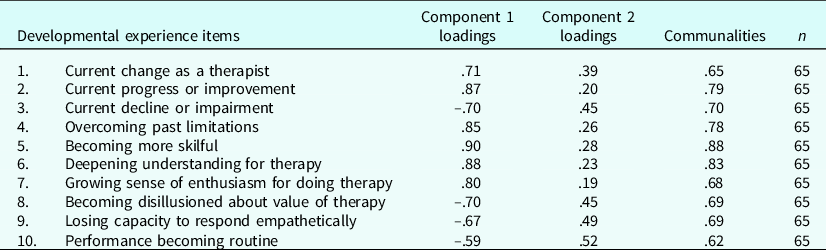
Eleven items on a Likert-style response scale measured therapists’ ongoing experience of ‘growth’ (6 items) and ‘depletion’ (4 items; Orlinsky et al., 1999; see Table 2). Factorability and reliability tests indicated significant factorability, good internal consistency and reliability (‘depletion’, α = .84; ‘growth’, α = .94). This is higher than reported in previous research with therapists of diverse theoretical orientation (depletion, α = .70; growth, α = .86; Orlinsky and Ronnestad, Reference Orlinsky and Ronnestad2005).
Factor analysis using principal component extraction and direct oblimin rotation with Kaiser normalization

Criterion variable
Warwick-Edinburgh Mental Well-Being Scale (WEMWBS)
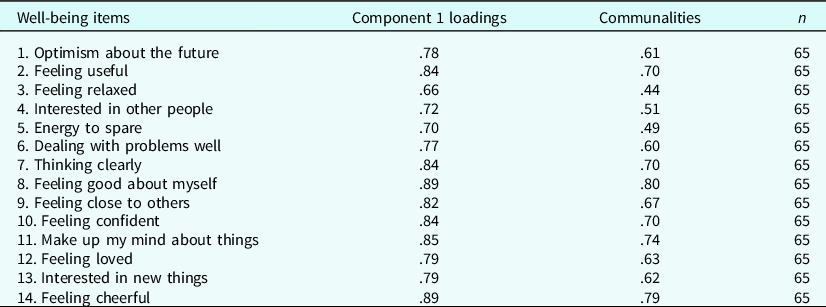
Fifteen items on a 5-point Likert-type scale measured positive mental well-being (see Table 3; Tennant et al., Reference Tennant, Hiller, Fishwick, Platt, Joseph and Weich2007). Factorability and reliability tests indicated good factorability and good overall reliability (α = .96), higher than previous research (Cronbach’s α = .91; Stewart-Brown et al., Reference Stewart-Brown, Platt, Tennant, Maheswaran, Parkinson and Weich2011).
Factor analysis using principal component extraction

Procedure
A generic email invitation was sent to all eligible therapists with an anonymised link to the study. The questionnaire was presented through Qualtrics, an online confidential survey software (Qualtrics, Provo, UT, USA). Participants were then asked to select a ‘study reference code’, a six-digit numerical code to uphold their right to withdrawal after the study was completed. The scales were then administered consecutively. The same questionnaire was administered to all participants, and they were not given instruction on where or how long to participate. This was followed by an electronic debrief, in which the purpose of the research was re-iterated and information regarding support services was provided, should they need it. The researcher and supervisor contact information were also provided. The questionnaire took participants 15–20 minutes to complete.
Method of analysis
All analyses were conducted using a software program, IBM SPSS Statistics for Windows, version 25. The assumptions for regression analysis were tested, and the assumptions and criteria for regression analyses were met. The sample size is sufficient for calculating the estimates of multiple correlations (R), considering there are four predictor variables (Brace et al., Reference Brace, Snelgar and Kemp2016). This was supported by a priori power analysis conducted using G*Power 3.1, indicating a minimum sample of 59 was required (Faul et al., Reference Faul, Erdfelder, Buchner and Lang2009). Pearson’s correlation coefficient (r) indicated several correlations between predictors, indicating multi-collinearity. However, the variance inflation factor (VIF) and high tolerance, indicating that the multi-collinearity may not impact the coefficients or p-values and therefore is not problematic to warrant adapting analysis methods (Everitt and Skrondal, Reference Everitt and Skrondal2010). The data met the assumption of independent errors (Durbin-Watson value = 2.22) and of normality as the data contained approximately normally distributed errors. There was normal distribution and linearity. The data also met the assumptions of homoscedasticity and non-zero variances.
A multiple regression analysis was conducted using the enter method to test Hypotheses 1–3, to explore the association between four predictor variables and one criterion.
Mediation analysis was conducted using SPSS macro PROCESS Model 4, with a 95% confidence interval, based on a 10,000 bootstrap sample (Hayes, Reference Hayes2017). A parallel mediation analysis was used to test Hypothesis 4, to explore whether developmental experience, growth or depletion, mediated the relationship between self-doubt and well-being. The underlying theoretical basis for this mediation was based on current research and theory, which guided the selection of developmental experience as potential mediators (MacKinnon and Pirlott, Reference MacKinnon and Pirlott2015).
The multiple regression analysis indicated that the association between years of experience and well-being was non-significant, and the Pearson’s correlation suggested years of experience had a positive correlation with depletion, which had a positive correlation with well-being. Thus, a post-hoc mediation analysis was conducted using SPSS macro PROCESS Model 4, with a 95% confidence interval, based on a 10,000 bootstrap sample to test post-hoc Hypothesis 4 (Hayes, Reference Hayes2017) to test Hypothesis 5.
The statistical significance level (p-value) was set to below .05 for all analyses, as is recommended (Hayes, Reference Hayes2017).
The data for this paper were generated using Qualtrics software (September 2020, Qualtrics; copyright © 2020 Qualtrics). Qualtrics and all other Qualtrics product or service names are registered trademarks or trademarks of Qualtrics, Provo, UT, USA.
Results
Descriptive and frequency statistics
Well-being scores ranged from 19 to 70 (mean 44.25, SD 10.99; Table 4). Experience ranged from 2 months to 25 years, with an average of 4 years of experience (minimum 2 months, maximum 300 months, mean 47.75, SD = 60.61).
Descriptive statistics for well-being and months of experience

On average therapists experienced ‘occasional’ to ‘moderate’ self-doubt (mean 2.54, SD = 1.04), ‘somewhat’ to ‘moderate’ growth (mean 2.77, SD 1.24) and ‘slight’ to ‘somewhat’ depletion (mean 1.56, SD 1.27; see Table 5). On average, therapists experienced more growth and self-doubt than depletion. Therapists’ experiences also varied from never experiencing self-doubt, depletion and growth, to experiencing it very often.
Descriptive and frequency statistics for self-doubt, depletion and growth

Pearson’s correlation coefficient
Pearson’s correlation coefficient (r; Table 6) also indicated several correlations between predictors, indicating multi-collinearity. However, the VIF and high tolerance, indicating the multi-collinearity may not impact the coefficients or p-values and is therefore not problematic to warrant adapting analysis methods (Everitt and Skrondal, Reference Everitt and Skrondal2010).
Pearson’s correlation between each variable

* Correlation is significant at the 0.01 level (1-tailed).
** Correlation is significant at the 0.02 level (1-tailed).
Multiple regression analysis
A multiple regression analysis was conducted to test Hypotheses 1–3, proposing self-doubt, developmental growth, developmental depletion and years of experience will predict therapists’ well-being. One significant model emerged from the analysis with an eigenvalue greater than 1 (eigenvalue = 3.91), explaining 73.2% of the variance in therapists’ well-being (R 2 = .75, R 2 adjusted = .732, SE = 5.69). The ANOVA analysis indicated the adjusted R 2 was significant, supporting the overall explanatory power of the model and indicating a good model fit (F 4,60 = 44.78, p<.001).
Self-doubt was the most significant predictor of well-being (B = –4.18, β = –.40, t 60 = –5.33, p<.001), followed by depletion (B = –3.28, β = –.38, t 60 = –4.28, p<.001). Self-doubt and depletion had a highly significant negative correlation with well-being (see Table 7). In contrast, the third most significant predictor, growth, had a highly positive correlation with well-being (B = 2.68, β = .30 t 60 = 3.58, p = .001). This supported Hypotheses 1 and 2. Months of experience did not significantly predict therapists’ well-being (B = .01, β = .07, t 60 = 1.03, p = .309), thus failing to reject the null of Hypothesis 3.
Multiple regression coefficients

A post-hoc G*Power 3.1 analysis with an α of .05 and f 2 = 2.98 (d.f. = 60) calculated using R 2 .749 indicated a power of 1.00 had been achieved, suggesting an adequate sample size was recruited to achieve a high power, reducing the chances of type 2 error (Faul et al., Reference Faul, Erdfelder, Buchner and Lang2009).
A mediation process analysis
Parallel mediation analysis using model 4
The total effect of self-doubt on well-being accounted for 46.31% of the variance in well-being scores (R 2 = .46, B = –7.18, t 63 = –7.37, p<.001, 95% CI: –9.13, –5.24). The direct effect of self-doubt on well-being was lower, indicating a potential indirect effect (B = –4.10, t 63 = –5.25, p <.001, 95% CI: –5.66, –2.54).
The pathways between self-doubt and depletion, and growth and well-being were positive. All other pathways between variables were negative (see Table 8). The magnitude of these associations were higher in C′, b1 and b2 pathways than in a1 and a2. Self-doubt predicted 16.55% of the variance in growth (R 2 = .17, B = –.49, SE = .14, F 1,63 = 12.49, p<.001) and 20.80% of the variation in depletion (R 2 = .21, B = .56, SE = .14, F 1,63 = 16.54, p<.001). The total variance accounted for by self-doubt, depletion and growth, was higher (74.47%) than the total effect accounted for by the parallel mediation (R 2 = .74, MSE = 32.36, F 3,61 = 59.31, p<.001).
Mediation analysis: indirect effects

M1 here refers to growth and M2 refers to depletion. X refers to the predictor, self-doubt and Y refers to the criterion, well-being.
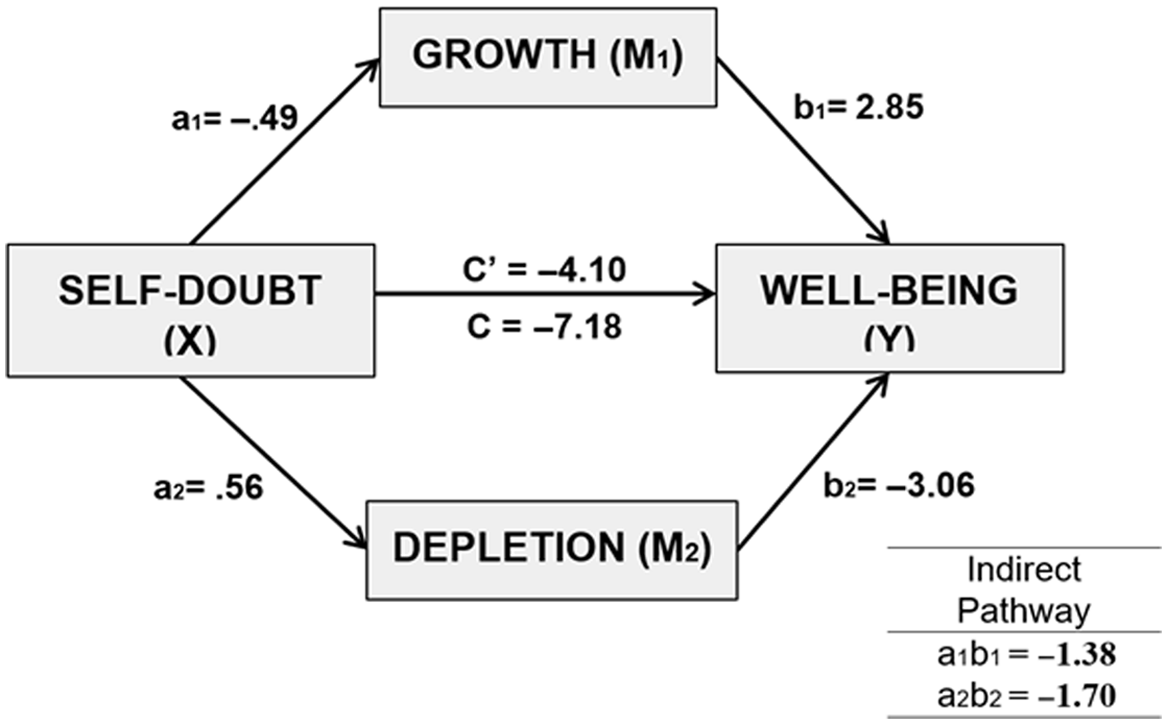
Figure 1 depicts the total, direct and indirect effects of self-doubt on well-being. Self-doubt predicted reduced growth (B = –.49, t 63 = –3.53, p<.001, 95% CI: –.76, –.21), growth predicted increased well-being (B = 2.85, t 61 = 3.89, p<.001, 95% CI: 1.38, 4.31). The total indirect effect mediated by growth was negative (a1b1 = –1.38, 95% BootCI: –2.58, –.47).
Depiction of the direct and indirect effects of self-doubt on well-being (mediated by growth and depletion); an denotes the effects of self-doubt on mediators, bn denotes the effects of mediators on well-being, c’ is the direct effect of self-doubt on well-being, c represents the total effect of self-doubt on well-being. All effects are unstandardized (Hayes, Reference Hayes2017).

Self-doubt predicted increased depletion (B = .56, t 62 = 4.07, p<.001, 95% CI: .28, .82), depletion predicted reduced well-being (B = –3.06, t 61 = –4.16, p<.001, 95% CI: –4.54, –1.59). The total indirect effect mediated by depletion was negative and larger than the indirect path mediated by growth (a2b2 = –1.70, 95% BootCI: –3.2806, –.6014). Both indirect paths were significant, indicated by the BootCI not straddling zero. The contrast effects straddled zero indicating no indirect path in the model was more statistically significant (a1b1–a2b2 = –.32, BootLLCI: –2.20, BootULCI: 1.36).
A post-hoc G*Power 3.1 analysis with an α of .05 and the f 2 = .86 (d.f. = 60) calculated using R 2 = .46 indicated a power of .86 had been achieved, suggesting an adequate sample size was recruited to achieve an acceptable power but having a 14% chance of type 2 error (Faul et al., Reference Faul, Erdfelder, Buchner and Lang2009; Hayes, Reference Hayes2017).
Simple mediation model
A simple mediation model indicated a non-significant pathway between years of experience and well-being, mediated by depletion (effect = –.03, 95% BootCI: –.08, .01). The link between depletion and years of experience was also found to be non-significant (B = .01, t 63 = 1.97, p>.05, 95% CI: –.00, .01).
Discussion
Over the last four decades, research has provided valuable insight into the impact of therapists’ professional lives on their well-being (Muran and Eubanks, Reference Muran and Eubanks2020). The aim of this study was to explore the avenues through which a therapist’s professional life impacts their well-being. The regression analyses found that 73.2–74.47% of the variation in well-being scores were accounted for by self-doubt and developmental experience (growth and depletion). The current study suggests that therapists who experience more growth, less self-doubt and less depletion experienced more positive mental well-being than those who experience more depletion and self-doubt, and less growth. Self-doubt was the strongest predictor of well-being, followed by depletion and then growth. A significant indirect pathway between self-doubt and well-being mediated by developmental experience was also found. The negative association between self-doubt and well-being was smaller when mediated through growth, and higher mediated through depletion; however, all effects were negative. This provided support for Hypotheses 1, 2 and 4. The individual effects of these predictors were stronger than the indirect effects, but they are still important to consider (Everitt and Skrondal, Reference Everitt and Skrondal2010).
This suggests that negative experiences of self-doubt and depletion may be more significant in predicting therapists’ mental well-being than positive experiences. It also suggests that when therapists experience high self-doubt, whether they experience growth or depletion, they are likely to also experience low mental well-being. This negative effect may be stronger when therapists experience both depletion and self-doubt. Despite growth being associated with higher mental well-being, it also suggests that managing the impact of self-doubt may not be as simple as increasing growth experiences or accumulating years of experience. Rather, when therapists experience self-doubt, this needs to be addressed directly.
Years of experience positively correlated with depletion but no other variable, including the criterion, thus failing to reject the null of Hypothesis 3. The post-hoc analysis also indicated a non-significant indirect pathway between years of experience and well-being, mediated by depletion.
Contributions to theory and research
The complexity of interactions found support criticisms of earlier theories being simplistic (Schroder et al., Reference Schroder, Orlinsky, Ronnestad and Willutzki2015). First, years of experience had no association with growth, indicating the accumulation of experience did not lead to increased growth as suggested by earlier theories (Stoltenberg, Reference Stoltenberg1981). Second, growth had a negative relationship with self-doubt, contradicting earlier theories proposing increased self-doubt leading to increased growth (Stoltenberg, Reference Stoltenberg1981).
The current study is consistent with current developmental theories. Self-doubt, depletion and growth may continue across years of experience rather than being a developmental milestone achieved with an accumulation of years (Ronnestad and Skovholt, Reference Ronnestad and Skovholt2013). Current theories’ conceptualisation of ‘growth’ leading to positive and ‘depletion’ leading to negative consequences for therapists were also supported (Ronnestad et al., Reference Ronnestad, Orlinsky, Schröder, Skovholt and Willutzki2019). Consistently, self-doubt (with feelings of incompetence) was negatively associated with well-being and growth, and positively associated with experiences of depletion. Lastly, this also provides support for current theories of conceptualisations of self-doubt leading to and potentially maintaining negative consequences for therapists (Schroder et al., Reference Schroder, Orlinsky, Ronnestad and Willutzki2015).
Previous research has distinguished between self-doubt that is adaptive and constructive or detrimental and self-punishing (Kannan and Levitt, Reference Kannan and Levitt2017; Thériault and Gazzola, Reference Thériault and Gazzola2010). Another study also using the DPCCQ self-doubt subscale, found a positive association between self-doubt and client outcomes, which increased when therapists also experience self-affiliation (Nissen-Lie et al., Reference Nissen-Lie, Ronnestad, Høglend, Havik, Solbakken, Stiles and Monsen2017). Self-doubt with low self-affiliation was found to evoke less change in clients compared with when therapists loved themselves as people. This suggests self-doubt is beneficial, when therapists doubt themselves professionally, but do not allow this to impact their views about themselves as a person. Thus, self-affiliation may buffer against negative effects. The current study supports the potential mediation of self-doubt through developmental experience, although growth only reduced the negative impact and did not eliminate its effects. This may partly be explained by the addition of ‘feelings of incompetence’ to the self-doubt measure used within the current study. The current study suggests self-doubt including feelings of incompetence is potentially harmful to therapists’ emotional and functional well-being, and their feelings about themselves, as measured by the WEMWBS (Stewart-Brown et al., Reference Stewart-Brown, Platt, Tennant, Maheswaran, Parkinson and Weich2011).
Similarly, qualitative research has found self-doubt characterised by feelings of incompetence, questioning themselves as therapists, their capacity to be effective and their identity impacted therapists more personally than procedural and technical self-doubt (Thériault and Gazzola, Reference Thériault and Gazzola2005; Thériault and Gazzola, Reference Thériault and Gazzola2010). Other studies not exploring moderating or mediating effects and using the original DPCCQ have found a negative association between therapists’ self-doubt and client outcomes (Kannan and Levitt, Reference Kannan and Levitt2017; Odyniec et al., Reference Odyniec, Probst, Margraf and Willutzki2019). The current study has added to this research, by expanding the use of the DPCCQ from exploring implications for clients to therapists themselves and suggesting the link between self-doubt and therapists’ well-being can also be mediated.
Rates of self-doubt, depletion, growth and well-being during the pandemic
Scores for self-doubt within the current sample were higher, compared with previous research conducted with trainee and qualified therapists (mean = 1.52, Odyniec et al., Reference Odyniec, Probst, Margraf and Willutzki2019; mean = 1.24, Nissen-Lie et al., Reference Nissen-Lie, Monsen, Ulleberg and Rønnestad2013). Research exploring therapists’ experiences during the pandemic have documented an increase in several occupational stressors related to remote working, including logistical and technical concerns to deeper concerns of competency (Connolly et al., Reference Connolly, Miller, Lindsay and Bauer2020). Larger-scale research conducted in America, using the original DPCCQ self-doubt subscale found similarly high self-doubt (mean = 2.41), increased tiredness in session and distress, with one third of therapists feeling less competent compared with before the pandemic (Doorn et al., Reference Doorn, Békés, Prout and Hoffman2020). Another study conducted after the pandemic also found similarly high self-doubt in the first 3 months of the pandemic measured using the same subscale (mean = 2.48). They also found a negative correlation between professional self-doubt and therapists’ mature (adaptive) defence mechanisms, and a positive correlation with immature and neurotic defence mechanisms (Doorn et al., Reference Doorn, Békés, Luo, Prout and Hoffman2021). Furthermore, they found this high level of self-doubt in therapists reduced after 3 months. The current study adds to this unique insight for the experiences of therapists within the UK. The higher scores may also be higher in the current study due to the scale being adapted to include ‘feelings of incompetence’.
Consistent with previous research on therapist samples, the average well-being scores within the current sample were lower compared with the general UK population (Cotton, Reference Cotton2017), with 19 therapists scoring less than 40, suggested to be indicative of low mental well-being and risk for developing mental health issues. No participant scored less than 17, the cut-off for ‘probable depression or anxiety’ (Stewart-Brown and Janmohamed, Reference Stewart-Brown and Janmohamed2008). However, this research faces the same limited generalisability of previous studies by recruiting mostly IAPT therapists. However, these findings are still useful, particularly in highlighting the well-being of CBT therapists working remotely during the pandemic.
Winter et al. (Reference Winter, Riordan, Pakpour, Griffiths, Mason, Poulgrain and Damian2020) found well-being scores, also measured using the WEMWBS during the pandemic, were also lower in the general UK population, athough still higher than the sample in the current study (mean = 49.1). They also found the WEMWBS negatively correlated with the ‘Fear of COVID19 Scale’, suggesting those who experienced more fear and anxiety around the outbreak may have had lower well-being. This may also partly explain the lower well-being in the current sample.
Similarly, experiences of depletion were also higher (mean = 0.8, Orlinsky and Ronnestad, Reference Orlinsky and Ronnestad2015) and experiences of growth lower compared with previous research (mean = 3.5, SD = 0.9; Orlinsky and Ronnestad, Reference Orlinsky and Ronnestad2015). However, growth was more commonly experienced and higher in this sample compared with experiences of self-doubt or depletion, suggesting that some therapists still experience the positive effects of their work, even during a pandemic (Doorn et al., Reference Doorn, Békés, Prout and Hoffman2020).
Methodological considerations: strengths and limitations
There are several considerations that need to be made when interpreting these findings. First, the current sample was a small predominantly young, female and relatively less experienced one, compared with other research in this area, which may have influenced increased scores of self-doubt and lower well-being (Békés et al., Reference Békés, Doorn, Prout and Hoffman2020; Mesrie et al., Reference Mesrie, Diener and Clark2018). This may have also limited the study’s ability to fully explore years of experiences and contributed to the non-significant pathways found. The majority of the sample were, what previous research has described as, ‘apprentice level’ with only a few participants being ‘established’ or ‘seasoned’ therapists (7–25 years of experience). No participants were ‘senior’ (25–50 years of experience; Orlinsky and Ronnestad, Reference Orlinsky and Ronnestad2015).
One advantage of the current sample is that it consisted of trainee and qualified therapists from a range of ethnic backgrounds. The general research within this area is limited to recruiting predominantly white, female samples; however, this may reflect actual representations within IAPT services (Beck et al., Reference Beck, Naz, Brooks and Jankowska2019). Collectively 52% of the participants self-identified as being from an ethnic minority and 48% self-identified as white. However, although this variation in ethnicity may have expanded the scope of the current study, it may have also contributed to the higher scores in the current sample, as ethnic minorities have been identified as being at increased risk of developing poor mental well-being and being disproportionately impacted by the pandemic (Peto et al., Reference Peto, Alwan, Godfrey, Burgess, Hunter and Riboli2020). The current study is thus limited in its generalisability by not controlling for or considering other variables influencing therapists’ well-being and self-doubt scores (Doorn et al., Reference Doorn, Békés, Prout and Hoffman2020).
The study was also susceptible to biases through its reliance on self-report, and potential limitations in introspective ability could have limited therapists’ scores truly reflecting their internal experiences (Békés et al., Reference Békés, Doorn, Prout and Hoffman2020). However, as therapists are regularly encouraged to be self-reflective, the reliance on self-report was a time and cost-effective method of measuring therapists’ internal experiences.
The cross-sectional nature was similarly a time and cost-effective method to establish whether an association exists, although collecting scores at a single time point meant the temporal stability of variables was not measured. Thus, it is difficult to distinguish the impact of the variables measured, from external variables not accounted for within this study (Nissen-Lie et al., Reference Nissen-Lie, Ronnestad, Høglend, Havik, Solbakken, Stiles and Monsen2017).
Caution is needed when generalising these findings outside a pandemic context or to other therapists in other countries due to the variation in experiences of the pandemic (Scharff et al., Reference Scharff, Breiner, Ueno, Underwood, Merritt, Welch and Litchford2021). Establishing true correlations and proposing conclusive causal explanations are beyond the scope of this research, particularly as there may be a multitude of personal, professional and organisational avenues through which a therapists’ professional life impacts their well-being. This further highlights the complexity of this relationship (Kottler, Reference Kottler2017).
Implications and future directions
Despite the generalisability of these findings being limited by the circumstances in which the research was conducted, this study made two notable contributions. First, this study bridges areas of research exploring therapists’ development, self-doubt and well-being. Second, it provides unique insight into potential avenues through which a therapist’s professional life may impact their well-being (Tracey et al., Reference Tracey, Wampold, Goodyear and Lichtenberg2015). To the researcher’s knowledge this is the first quantitative study to explore the avenues through which a therapist’s professional life impacts their well-being.
The current study suggests that therapists may be vulnerable, and may require more support, both personally and professionally, to manage their self-doubt, depletion and well-being during this pandemic and its aftermath, particularly as research suggests there may be a new normality for therapeutic practice (Békés et al., Reference Békés, Doorn, Prout and Hoffman2020). In the current climate the need to support therapists’ well-being may be more important, considering the reliance on therapists suggested to increase to help the general population and healthcare workers overcome the impact of the pandemic (Rauch et al., Reference Rauch, Simon and Rothbaum2020). This has been similarly echoed by other research within this area, highlighting an ethical and moral need to address therapists’ well-being in the face of the pandemic and beyond, to help not only therapists but also their clients avoid the potential long-term detrimental effects of the pandemic (Békés et al., Reference Békés, Doorn, Prout and Hoffman2020).
As suggested by previous research, therapists should be encouraged to engage in self-care, adaptive coping strategies and continually engage with the resources that are available which could aid in increasing growth experiences (Posluns and Gall, Reference Posluns and Gall2020), as well as addressing practical and technological needs (Hames et al., Reference Hames, Bell, Perez-Lima, Holm-Denoma, Rooney, Charles, Thompson, Mehlenbeck, Tawfik, Fondacaro, Simmons and Hoersting2020). The current study also suggests that therapists in practice may also benefit from exploring their views about themselves as practitioners and their experiences of their development. Open dialogues about these experiences, psychoeducation, supervision encouraging personal–professional reflection and adapting training programmes to facilitate and normalising therapists’ experiences of self-doubt, depletion and well-being may also be useful (Doorn et al., Reference Doorn, Békés, Luo, Prout and Hoffman2021). Where these are lacking there is a need to develop such resources, workshops and webinars (Ronnestad et al., Reference Ronnestad, Orlinsky, Schröder, Skovholt and Willutzki2019). Work has already begun in developing such resources relating to the pandemic (McBride et al., Reference McBride, Joseph, Schmitt and Holtz2020).
One potential promising avenue to explore in future research is the potential mediating and moderating effects of other variables such as self-affiliation or feelings of incompetence (Nissen-Lie et al., Reference Nissen-Lie, Ronnestad, Høglend, Havik, Solbakken, Stiles and Monsen2017). This has potential to further support therapists in practice, by exploring the direct and potential indirect effects of a range of factors. Considering this, the interaction of feelings of incompetence, self-affiliation, developmental experience and self-doubt may be an important avenue for future research.
Conclusion
This study suggests that self-doubt, depletion and growth are all important avenues predicting therapists’ well-being. In the context of previous research, it also suggests that overcoming these effects may not be as simple as unlearning self-doubt or increasing growth experiences (Nissen-Lie et al., Reference Nissen-Lie, Ronnestad, Høglend, Havik, Solbakken, Stiles and Monsen2017). Instead, the self-doubt may need to be addressed directly with self-love and compassion, without which therapists’ self-doubt may have potentially harmful effects for therapists (Odyniec et al., Reference Odyniec, Probst, Margraf and Willutzki2019). The current study supports previous research suggesting self-doubt, depletion and poor well-being are common among therapists and which needs to be addressed (Thériault and Gazzola, Reference Thériault and Gazzola2010). However, the current study also found, despite the pandemic, that growth was more commonly experienced and higher than self-doubt and depletion. Althhough this support is limited by the design of the current study, it is hoped that it contributes to helping therapists ‘break free’ of their isolating experiences (Thériault et al., Reference Thériault, Gazzola and Richardson2009; p. 115).
Key practice points
-
(1) Therapists that experienced more growth, less self-doubt and less depletion experienced more positive mental well-being than those who experienced more depletion and self-doubt, and less growth
-
(2) Self-doubt, with feelings of incompetence, is the strongest predictor of mental well-being.
-
(3) Accumulating years of experience may not be enough to reduce the impact of therapists’ professional lives on their well-being. Therapists need to be encouraged to address self-doubt directly with self-love and compassion (Nissen-Lie et al., Reference Nissen-Lie, Ronnestad, Høglend, Havik, Solbakken, Stiles and Monsen2017).
-
(4) Addressing the impact of therapists’ professional lives could be facilitated and supported by managers, supervisors and training programmes to support and equip therapists to manage and address self-doubt and depletion.
Data availability statement
The author of this article has made the evidence supporting their findings available at: https://osf.io/3wh6v/?view_only=96c131568fb54e458274588515b4fca6
Acknowledgements
I would like to thank my supervisor Wendy Whipp for all her support and guidance, not only through my dissertation but also throughout my development as a cognitive behavioural therapist. I would like to thank all the gatekeepers and participants, for making this research possible. I would like to thank David E. Orlinsky and Anne Theriault for inspiring this work. Finally, I would like to thank my family. All of you, in some way, have inspired the intellectual curiosity and motivation to do this research. I hope this research can shed light on therapists’ well-being, to spark the same interest in others.
Author contributions
Sidrah Altaf: Data curation (lead), Formal analysis (lead), Methodology (lead), Resources (lead), Software (lead), Writing – original draft (lead), Writing – review & editing (lead).
Financial support
This research received no specific grant from any funding agency, commercial or not-for-profit sectors.
Conflicts of interest
The author was a Honorary trainee at one of the IAPT services and a student at Buckinghamshire New University at the time of this study.
Ethical standards
The above study has abided by the Ethical Principles of Psychologists and Code of Conduct as set out by the BABCP and BPS. The study was approved by Buckinghamshire New University’s ethics committee.









Comments
No Comments have been published for this article.