Introduction
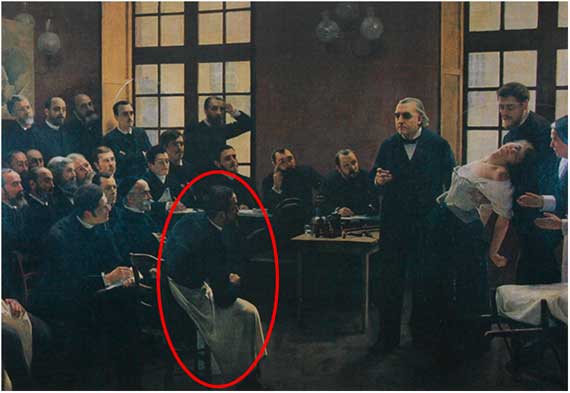
Gilles de la Tourette syndrome (GTS) is a neurodevelopmental condition characterized by the chronic presence of at least 2 motor tics and 1 vocal tic,Reference Cavanna and Seri 1 , Reference Hallett 2 Tics are described as involuntary, sudden, rapid, recurrent, non-rhythmic movements or vocalizations, and are accompanied by specific behavioral symptoms in the majority of patients.Reference Ganos and Martino 3 It is therefore not surprising that GTS, along with other tic disorders, features in both neurological and psychiatric classification systems, such as the ones developed by the Movement Disorders Society and the American Psychiatric Association. For a long time after its initial description in 1885 by French physician Georges Gilles de la Tourette (Figure 1), GTS was regarded as a rare medical curiosity.Reference Rickards and Cavanna 4 , Reference McNaught and Mink 5 Although epidemiological studies using current diagnostic criteria have consistently shown that GTS is not a rare condition, with prevalence figures ranging between 0.4% and 1% across all cultures, GTS is still underdiagnosed and poorly understood.Reference Robertson, Eapen and Cavanna 6 , Reference Scharf, Miller, Gauvin, Alabiso, Mathews and Ben-Shlomo 7
The birth of modern neuropsychiatry: “Une leçon clinique à la Salpêtrière” by André Brouillet (1887). Georges Gilles de la Tourette (1857–1904) sits facing his master Jean-Martin Charcot (1825–1893), ahead of the other scholars attending Charcot’s famous clinical demonstrations.

This review article encompasses the clinical phenomenology of motor and vocal tics and associated sensory experiences (premonitory urges), as well as the behavioral spectrum of the most common comorbidities, including obsessive-compulsive disorder, attention-deficit and hyperactivity disorder, affective symptoms, and impulsivity.
Motor and Sensory Aspects of Tics
Tics are reported 3 to 4 times more frequently in males than females, with an average age at onset of 6–8 years.Reference Cohen, Leckman and Bloch 8 In most cases motor tics precede the development of vocal tics and the most commonly reported tic at onset is eye blinking. Young patients often report a gradual spreading of simple motor tics, affecting the eyes (eg, eye rolling), mouth (eg, mouth opening), face (eg, grimacing), neck (eg, neck jerking), shoulder (eg, shoulder shrugging), trunk (eg, abdominal tensing), and limbs (eg, arm stretching, kicking). Among the most commonly reported simple vocal tics are grunting, sniffing, coughing, and throat clearing. Complex motor tics characteristically develop at a later stage and involve multiple muscular districts. Interestingly, Gilles de la Tourette’s original case series described 9 patients who also presented with complex tics, namely echolalia (repeating other people’s words) and coprolalia (swearing as a tic).Reference Ganos, Ogrzal, Schnitzler and Münchau 9 , Reference Eddy and Cavanna 10 Other complex vocal tics include palilalia (ie, the repetition of one’s own words, usually a set number of times or until the sounds feel “just right”), as well as the production of seemingly random words or animal sounds. Complex motor tics, which can resemble purposeful voluntary actions, include palipraxia (repeating actions, usually a set number of times or until the movements feel “just right”), echopraxia (copying other people’s actions), and copropraxia (rude gestures as tics). Despite elective media coverage portrayal in the media, coprophenomena (the involuntary production of obscene words or gestures) are relatively rare, occurring in about 10% of patients with GTS in the community (up to 30% in specialist clinics where more severe and complex cases are typically seen).Reference Eddy and Cavanna 10 , Reference Freeman, Zinner and Müller-Vahl 11 It is important to highlight that coprophenomena are not included among current diagnostic criteria for GTS, and similar symptoms have been reported in the context of other conditions.Reference Ganos, Edwards and Müller-Vahl 12 , Reference Afshangian, Nami and Abolhasani Foroughi 13
The diagnosis of tics is clinical and relies on skillful observation and comprehensive history taking. This should cover sensory experiences associated with tics, as both simple and complex tics are characteristically preceded by a subjective feeling of physical tension or pressure, which is temporarily relieved by tic expression.Reference Kwak, Dat Vuong and Jankovic 14 – Reference Crossley and Cavanna 16 These sensations (also referred to as “premonitory urges”) are a hallmark feature of tics, and their presence and characteristics often allow clinicians to reliably distinguish GTS from other hyperkinetic movement disorders. Recent research has shown that the premonitory urge to tic in GTS is associated with interoceptive awareness.Reference Ganos, Garrido and Navalpotro-Gómez 17 Most patients are able to voluntarily suppress their tics for short periods of time, ranging from a few seconds to several minutes, at the expense of mounting inner tension until the distressing experience of the premonitory urge becomes unbearable.
Tics spontaneously fluctuate in number, distribution, frequency, and severity over time, exhibiting a characteristic waxing and waning course, usually with a peak in severity during early teenage years and improvement in adulthood.Reference Bloch and Leckman 18 – Reference Groth, Mol Debes, Rask, Lange and Skov 20 Moreover, both psychological and environmental factors have been shown to modulate tic expression. Anxiety, stress, tiredness, and boredom are among commonly reported exacerbating factors, whereas mental and physical engagement in pleasant activities such as playing sports and music often ameliorate tics. It is well known that certain social situations and interactions with other people can contribute to modulate the expression of both tics and socially inappropriate behaviors: the results of recent clinical studies on social cognition in GTS have shed some initial light on the possible mechanisms underlying this intriguing and clinically relevant phenomenon.Reference Eddy and Cavanna 21
GTS is known to be a genetically heterogeneous condition,Reference Pauls, Fernandez, Mathews, State and Scharf 22 with environmental factors (including autoimmunity as well as pre- and perinatal problems) possibly playing a contributory role in the etiopathogenesis of GTS.Reference Mathews, Scharf, Miller, Macdonald-Wallis, Lawlor and Ben-Shlomo 23 , Reference Martino, Zis and Buttiglione 24 The exact brain mechanisms underlying tic development and expression are still largely unknown. Dopaminergic dysfunction within the cortico-striato-cortico-frontal circuitry seems to play a pivotal role, although other neurotransmitter systems (especially noradrenergic and histaminergic pathways) have been shown to be likely involved.Reference Leckman, Bloch, Smith, Larabi and Hampson 25 , Reference Yael, Vinner and Bar-Gad 26 Research on the brain correlates of the premonitory urge to tic has identified the dysfunctional role of other brain regions such as the insula, cingulate cortex, and supplementary motor area.Reference Cavanna, Black, Hallett and Voon 27
The Behavioral Spectrum of Gilles de la Tourette Syndrome
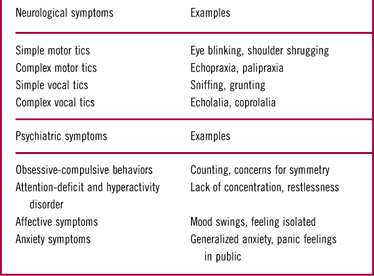
It has been consistently shown that in about 90% of cases, tics are not the only manifestation of GTS.Reference Cavanna and Rickards 28 , Reference Martino, Ganos and Pringsheim 29 Patients with GTS, whether seen in specialist movement disorders clinics or in the general community, commonly report the presence of behavioral symptoms alongside their tics (Table 1). It is important to note that GTS is not associated with intellectual disability, and among patients with tics, there are talented people who excel in different areas of life. Converging evidence suggests that obsessive-compulsive disorder and attention-deficit and hyperactivity disorder are the most frequently reported comorbid conditions. Symptoms of anxiety, affective disturbances, and impulsivity are also frequently encountered across the lifespan. Overall, the behavioral spectrum of GTS appears to be clinically multifaceted and can pose considerable diagnostic and therapeutic challenges, as the management of patients with the so-called “GTS-plus” condition often requires the input of experienced clinicians.
The percentage of patients with GTS who report either obsessive-compulsive symptoms or full-blown obsessive-compulsive disorder is about 60%.Reference Lombroso and Scahill 30 , Reference Eddy and Cavanna 31 It has been observed that the obsessive-compulsive symptoms reported by patients with tics overlap only partially with the clinical presentation of patients with primary obsessive-compulsive disorder. Specifically, repetitive behaviors such as obsessional counting (arithmomania), “just-right” perceptions, concerns of symmetry, and evening up behaviors are more commonly reported by patients with tics, whereas cleaning rituals, compulsive washing, and fears of contamination are more commonly reported by patients with primary obsessive-compulsive disorder without tics. The implications of these clinical observations are twofold: On the one hand, these semiological differences are likely to stem from different pathophysiological mechanisms, as only certain types of obsessive-compulsive symptoms can be reliably considered to be intrinsic to GTS; on the other hand, tic-like obsessive-compulsive symptoms have been shown to be relatively refractory to traditional treatment interventions for obsessive-compulsive disorder.Reference Mansueto and Keuler 32 , Reference Ganos, Martino and Pringsheim 33
Prevalence figures for children with a dual diagnosis of GTS and attention-deficit and hyperactivity disorder vary considerably across studies, with some studies reporting comorbidity rates as high as 90%.Reference Coffey 34 By definition, tics involve hyperactivity; the constant effort to actively suppress them can interfere with ability to sustain concentration in school settings. The differential diagnosis between hyperactivity and attentional lapses due to the presence of the tics (plus the constant effort to suppress them) and the presence of comorbid attention-deficit and hyperactivity disorder can be challenging. The diagnosis of comorbid attention-deficit and hyperactivity disorder often requires the expertise of child and adolescent psychiatrists who can carry out a comprehensive clinical assessment. The presence of attentional problems and/or hyperactivity complicates not only the diagnostic process, but also the clinical management of children and adolescents with GTS.
Among patients with GTS there are also higher rates of impulse-control disorders, anxiety disorders, and affective disorders compared to the general population.Reference Robertson 35 , Reference Frank, Piedad, Rickards and Cavanna 36 Depression can be an understandable psychological reaction to living with a potentially disabling and often stigmatizing condition. Moreover, monoaminergic dysfunction within cortico-striatal pathways could also result in the development of affective symptoms. Antidopaminergic agents, which are commonly used for tic management, are known to potentially precipitate affective symptoms as an adverse effect.Reference Kompoliti, Goetz, Morrissey and Leurgans 37 Both tics and stereotypies are diagnosed with increased frequency in patients with autism spectrum disorders.Reference Kern, Geier, King, Sykes, Mehta and Geier 38 A relatively under-investigated area within the behavioral profile of patients with GTS is the association with personality disorders, which have been shown to be over-represented in patients with GTS, especially in the presence of comorbid psychiatric disorders.Reference Trillini and Müller-Vahl 39
The results of recent clinical studies using statistical techniques such as principal component factor analysis and hierarchical cluster analysis have provided confirmatory evidence that GTS is a highly heterogeneous condition, with multiple phenotypes in terms of both tic types and comorbid behavioral symptoms.Reference Cavanna and Rickards 28 , Reference Martino, Ganos and Pringsheim 29 , Reference Darrow, Hirschtritt and Davis 40 These findings are in line with the concepts of genetic and etiological heterogeneity that characterize GTS. Moreover, patients with GTS present with a wide range of symptom severity, from mild tics that do not cause significant impairment and can go unnoticed, to forceful movements and loud noises that can affect daily activities and social life. It is also worth noting that research on health-related quality of life mainly conducted over the last decade showed that behavioral comorbidities often compromise the overall well-being of patients with GTS to a greater extent than tic severity.Reference Eddy, Cavanna, Gulisano, Calì, Robertson and Rizzo 41 With the development of disease-specific quality of life instruments for both pediatric and adult populations with GTS, it has become possible to explore the multidimensional impairment of health-related quality of life in patients with GTS, encompassing the physical, psychological, obsessional, and cognitive domains.Reference Cavanna, Schrag and Morley 42 , Reference Su, McFarlane and Cavanna 43 Importantly, the differential impact of GTS phenotypes on patients’ lives highlights the need for a better understanding of the multiple clinical presentations of GTS and of the available treatment options.Reference Cavanna, David and Bandera 44
Treatment Approaches
Following establishment of the diagnosis and characterization of the phenotype, the clinical management of patients with GTS involves at least 1 annual review by a clinician who is knowledgeable about the complexities of the disorder and its evolving treatment.Reference Cavanna and Seri 1 Specialist services for patients with GTS are under expansion internationally, as neuropsychiatry expertise in this challenging area is in increasing demand. The importance of psychoeducation as the first step in the treatment pathway of GTS should not be underestimated. Relevant and accurate information, alongside reassurance and explanation, should be provided to the patient, relatives, teachers, and employers, as well as other medical professionals involved. Although GTS is a lifelong condition with far-reaching implications, it is often compatible with success both at school and in the workplace. Therefore head teachers should be encouraged to implement appropriate arrangements for children with GTS in the school setting, whereas career choices should take account of the practical implications of having tics and associated behavioral symptoms.Reference Cavanna and Seri 1
Treatment strategies for GTS encompass behavioral, pharmacological, and, in rare cases, neurosurgical interventions, depending on the clinical picture and impact on health-related quality of life.Reference Kurlan 45 Although a wide range of behavioral interventions have been developed or adapted to improve tic control in patients with GTS, the evidence in support of behavioral management strategies is still relatively limited.Reference Frank and Cavanna 46 – Reference Fründt, Woods and Ganos 48 The best evidence to date comes from studies conducted over the last decade implementing habit reversal therapy as the main component of a wider comprehensive behavioral intervention for tics.Reference Piacentini, Woods and Scahill 49 – Reference Dutta and Cavanna 51 There is some evidence also for the use of a different behavioral technique, namely exposure and response prevention. Although both approaches are based on patients’ awareness of their urges to tic, habit reversal therapy encourages patients to habituate to the premonitory urge by replacing tic expression with a competing response, whereas exposure and response prevention promotes tic suppression per se.
Pharmacotherapy should be considered in addition to psychoeducation for patients with significant impairment associated with their tics: tics causing subjective discomfort, sustained social or emotional problems for the patient, or functional interference. The first medications to have proven useful for tic control were neuroleptics, especially haloperidol, pimozide, and fluphenazine, which are still considered among the most effective pharmacological agents for tic control.Reference Waldon, Hill, Termine, Balottin and Cavanna 52 These medications are currently used as second- or third-line options in selected patients, mainly due to their poor tolerability profiles. Newer antidopaminergic agents (atypical antipsychotics such as risperidone) have shown similar efficacy for tic control and are considered to be safer in terms of tolerability, although metabolic adverse effects are not uncommon. The dopamine receptor partial agonist aripiprazole is used as first-line medication by a number of clinicians based on its better efficacy-to-tolerability ratio. Other pharmacological options acting at the level of dopaminergic neurotransmission include substitute benzamides (eg, sulpiride) and presynaptic dopamine depletors (eg, tetrabenazine). Alpha-2 agonists, such as clonidine and guanfacine, are often considered as first-line pharmacological option for young patients, as these medications are associated with fewer adverse effects than other classes and their anti-noradrenergic action can be effective also for comorbid attention-deficit and hyperactivity symptoms. 53 Antiepileptic drugs (especially topiramate) deserve more studies based on positive results from preliminary trials.Reference Jankovic, Jimenez-Shahed and Brown 54
The art of tailoring pharmacotherapy to the individual needs of each patient with GTS requires in-depth understanding of the full spectrum of behavioral comorbidities. Antidopaminergic agents can be helpful in the management of tic-like obsessive-compulsive symptoms, alongside their known role as augmentation therapy in patients treated with serotonergic agents for obsessive-compulsive disorder.Reference Masi, Pfanner and Brovedani 55 The decision whether to prioritize treatment of attention-deficit and hyperactivity disorder or tic symptoms in young patients with GTS is not an easy one, as central nervous system stimulants used to treat attention-deficit and hyperactivity disorder have the potential to increase tic severity. Based on recently built evidence, experts have reached a consensus according to which it is appropriate to provide treatment with stimulants to patients with tics where the attention-deficit and hyperactivity symptoms cause a significant impairment to their health-related quality of life; slow titration and avoidance of supratherapeutic doses are recommended.Reference Erenberg 56 , Reference Cohen, Mulqueen and Ferracioli-Oda 57
Finally, a few selected patients with severe tics who failed to respond to conventional interventions have undergone the neurosurgical procedure of deep brain stimulation (globus pallidus–pars interna and thalamic ventromedian-parafascicular nucleus).Reference Baldermann, Schüller and Huys 58 There is however little evidence to date to reliably establish the suitability of a candidate and the optimal brain target for deep brain stimulation.
Conclusion
GTS is a complex tic disorder often associated with specific behavioral symptoms. This quintessentially neuropsychiatric condition can cause significant distress and compromise health-related quality of life. Based on their individual needs, patients should be provided with psychoeducation and offered targeted treatment interventions.
Neurology and psychiatry of Gilles de la Tourette syndrome

Open questions for future research include the identification of the different clinical phenotypes (and corresponding genotypes) of GTS, the characterization of the reciprocal contributions of genetic and environmental factors in the pathophysiology, the clarification of the underlying pathophysiological process, and the development of safe and effective treatments for refractory cases. A thorough understanding of both the neurology and the psychiatry of GTS is of key importance to meet the needs of this patient population, from the formulation of an accurate diagnosis to the implementation of effective interventions to improve patients’ lives.