“…if in discourse the city serves as a totalizing and almost mythical landmark for socioeconomic and political strategies, urban life increasingly permits the re-emergence of the element that the urbanistic project excluded… The city becomes the dominant theme in political legends, but it is no longer a field of programmed and regulated operations. Beneath the discourses that ideologize the city, the ruses and combinations of powers that have no readable identity proliferate…”
—de Certeau 1984:95The ancient Mesoamerican political landscape was dominated by numerous urban centers dating back to as early as 1200 b.c. Mesoamerican cities exhibited great diversity in scale, population density, layout, and monumentality, as well as political and economic relations both within the urban center and with its broader hinterland. I define urban centers or cities as communities that are to varying degrees demographic, political, economic, and cultural nuclei linked through complex and varied ways to a broader hinterland. Urbanism refers to relations between the city and its hinterland, while urbanization refers to processes leading to the origins of urbanism (Cowgill 2004). In this article I consider recent research on urbanism in ancient Mesoamerica, especially over the past 20 years being marked by this katun issue of Ancient Mesoamerica. In particular, I focus on the theoretical perspectives that archaeologists use to address cities, urbanism, and urbanization. I argue that despite some significant advances in how we understand urbanism, most research continues to be embedded within cultural evolutionist, functionalist, and elitist theoretical frameworks. I highlight approaches drawn from poststructural and feminist theory that hold promise for moving us beyond seeing the city as de Certeau's (1984:95) “totalizing and almost mythical landmark” and toward a more dynamic and less disciplined place peopled by vibrant and varied human lives. Although the discussion examines theoretical approaches to urbanism in Mesoamerica and beyond, I focus on recent research in Oaxaca.
DEFINING URBANISM
As argued by Cowgill (2003a:1, 2004:526), much of the recent archaeological research on urbanism has been undertheorized and often embedded within cultural evolutionist assumptions. A major shift in focus over the past 20 years, however, has been a movement away from universal definitions of cities and urbanism and an increasing recognition of their variability. Archaeologists have critiqued definitions of cities based on sheer size as well as static trait lists such as Childe's (1950) famous checklist for the urban revolution that privilege Western urban forms (Cowgill 2004:526–528; McCafferty and Peuramaki-Brown 2007; A. Smith 2003:186–189; M.E. Smith 2005:404–405; 2008a:4–5). Instead, scholars have developed more flexible definitions that, while less precise, encompass a broader range of communities and traditions that most archaeologists consider urban in character.
Most recent definitions of cities focus on urbanism and the ways in which urban centers are differentiated from rural or hinterland communities. Some archaeologists have stressed the ways in which city dwellers are differentiated from those in other communities according to practices; occupations; experiences; and the complexity of social relations, possibilities, and conflicts, especially as understood by notions of identity (Chase and Chase 2007; Cowgill 2004:527; Emberling 2003; Hansen 2000:19; Hutson et al. 2008; Janusek 2004:24; M.L. Smith 2003:24–28; Yaeger 2003). Many definitions focus more specifically on cities as seats of political authority. Cities can be seen as political centers that function to integrate larger societies or polities through a variety of political, economic, and religious functions (Charlton and Nichols 1997c; Hansen 2000:12; M.E. Smith 2001b, 2005:404–405, 2007a:4–5, 2008a:5–11; Trigger 2003:120–123; Wilson 1997). In a less functionalist mode, urbanism can be seen as a product of the political relations and structures of authority that produce relations of dominance and dependence among the people of cities and their hinterlands (Janusek 2004; A. Smith 2003:189).
For Mesoamerican archaeologists a focus on political authority resonates well with indigenous views known from pre-Hispanic and early Colonial-period documents. As noted by many scholars (e.g., Gutiérrez 2003; Hirth 2000:271–274, 2003a; Houston et al. 2003; Lind 2000; Marcus 1983b:226, 239; M.E. Smith 2000), indigenous terms that accord most closely with our notion of cities refer to the seats of power of ruling dynasties that extend beyond particular settlements to the broader territory claimed by the ruler. Of course, the documents from which these terms are understood today were authored entirely by social elites and may not reflect other indigenous understandings—those of commoners and others who resided beyond the seats of political power. Nevertheless, indigenous views that extend the reach of urban centers beyond their demographic and architectural footprints to larger spheres of political influence are consistent with the trend in archaeological theory toward a more relational view of urbanism.
The past 20 years, therefore, have seen an opening up of definitions of urbanism with an emphasis on social, political, and economic relations inside the city as well as between the city and its hinterland. Urbanism creates complex social distinctions between those who live in cities and those in the countryside, while cities are usually seats of political, economic, and cultural power. Of course, with broader definitions of urbanism comes greater potential for debate as exemplified by recent disagreements over whether the Olmec centers of San Lorenzo and La Venta were cities (Clark 1997:224–227, 2001; Marcus and Flannery 1996:138) and the degree to which Aztec and Maya political centers were urban (Chase et al. 1990; Grube 2000; Sanders and Webster 1988:528; M.E. Smith 1989, 2008a:5, 205; Webster and Sanders 2001). Considering the implications of these expanded views of urbanism, McIntosh and McIntosh (2003) argue for the presence of cities without evidence for social stratification in the Middle Niger region of West Africa and Michael Smith (2008a:6, 205) extends settlements with urban functions to both Aztec cities and towns.
THEORIZING URBANISM
Over the last 20 years research on ancient urbanism in Mesoamerica has often been subsumed within theories of complex societies and the state (Cowgill 2004). Fewer studies have tried to take urbanism as a central theoretical construct (Ciudad et al. 2001; Cowgill 2004; Hirth 2000; Hutson et al. 2008; Sanders et al. 2003; Sanders and Webster 1988; M.E. Smith 2000, 2001b, 2007a, 2008a; Storey 2006). Not surprisingly, considerations of Mesoamerican urbanism have tracked the theoretical debates of the late twentieth and early twenty-first centuries. Recent research reflects a wide variety of theoretical positions, ranging from cultural evolution and functionalism to poststructural theory.
Cultural evolution and functionalism
Much theorizing about urbanism continues to be grounded in cultural evolutionism and functionalism. The origins, development, and decline of cities are often viewed as part of the cultural evolution of states, and urbanism is largely understood as a component of the functioning of state systems (Charlton and Nichols 1997c; Marcus 1983b, 1989, 1998; Sanders and Webster 1988; Trigger 2003:120). Cultural evolutionary views of urbanism have advanced, however, in proposing multiple types of urban formations linked to different evolutionary trajectories. Several typologies have been proposed to try to capture this variability ranging from Fox's (1977) model of regal-ritual, administrative, and mercantile cities (see Marcus 1983; Sanders and Webster 1988) to schemes that differentiate smaller, less complex city-states from urbanism in territorial states or macro-states (Charlton and Nichols 1997b; Hansen 2000:16; Trigger 2003; Webster 1997). In Mesoamerica, archaeologists have debated whether certain city types, especially city-states and regal-ritual centers, were truly urban and if they were associated with less complex societies ranging from chiefdoms to segmentary states (Chase and Chase 1996; Chase et al. 1990; Graham 1999:188; Grube 2000; Marcus 1998; Sanders and Webster 1988:528; M.E. Smith 1989; Webster 1997).
Cities are seen as serving crucial social, political, and economic functions that integrate and create cohesive social formations. For example, drawing on Fox (1977), Sanders and Webster (1988) focus on the ways in which Mesoamerican cities had political functions, whether expressed through ideologies communicated via religious ritual at regal-ritual centers like Copan or through the more powerful and extensive bureaucratic institutions of administrative centers like Tenochtitlan and Tikal. Blanton and colleagues (1993:69–82; 1999) insightfully question traditional cultural evolutionary categories, although their arguments concerning the early years of urbanism in Oaxaca focus on the integrative functions of the city. They argue that Monte Albán was founded by a confederacy of previously distinct polities that then came to administer the political, military, and economic functions of the city through which communities within a broader state polity were integrated (also see Winter 2006). Charlton and Nichols (1997c) conceive of city-states as “tightly integrated units of city and hinterland” with the city as political capital providing social and, at times, economic cohesion.
In these functionalist formulations the fundamental unit is the city and the hinterland under its political control. Although these scholars acknowledge varying factions and status groups often with divergent interests, the emphasis is on the overall functioning and integration of a society, polity, or city-state. The actions, identities, and agency of people are largely subsumed by abstract, high-level social and ecological functions of the city and especially the broader state polity. Functionalist approaches such as these have been critiqued from a variety of theoretical perspectives (Brumfiel 1992; Cowgill 1993; Hodder and Hutson 2003:1–44; A. Joyce 2008; Pauketat 2007; Shanks and Tilley 1992:52–54; Yoffee 2005).
Urbanism as elite strategy
Another important development in thinking about urbanism follows broader trends in archaeological theory away from traditional cultural evolutionary and functionalist accounts and toward approaches that incorporate human agency into the archaeological record (Dobres and Robb 1999). Approaches to agency and their theoretical underpinnings vary greatly, and this is reflected in recent approaches to urbanism in Mesoamerica.
In his recent review article on urbanism, Cowgill (2004) calls for archaeologists to theorize individual agency, including practices, interests, and emotions. In particular, Cowgill (1993:562–564) calls for a “middle range theory of the mind” to identify human psychological propensities that might help archaeologists interpret human experience and perception at the microscale of individual lives. He considers how art styles at Teotihuacan helped to inculcate views about the world and particularly about political relations (Cowgill 1993:567–568; 1997:136–137; also see Sugiyama 1993). Cowgill (2004:44–51) also considers how individually perceived benefits like living in such a privileged and sacred place—a cosmic center—outweighed drawbacks such as reduced privacy, crowding, poor sanitation, health risks, and the loss of autonomy given the proximity of powerful rulers (also see Storey 2006).
In his study of Aztec city-states, Michael Smith (2008a:5–6) relies on a functionalist view of cities informed by political economy and collective action theory (Fargher and Blanton 2007; Hirschman 1978). He argues that urban centers have political, religious, and economic functions that are attributes of the broader societies of which the city is a part but that in ancient Mesoamerica, it is political power and administration that are the most important functions. Mesoamerican cities were also religious foci, but Smith (2008a) points out that religion served the interests of elites because of its ideological content. As seats of political authority, cities were used by elites to further their own agendas, raising issues of agency and power. Aztec kings designed, constructed, and used cities and urban institutions to negotiate relations with other nobles and commoners, and these negotiations were motivated largely by rational economic decisions on the part of these status groups. Kings cooperated with other elites to provide both positive (markets and religion) and negative (laws and punishment) incentives to commoners to comply with the interests of the nobility. Markets provided economic benefits to commoners, while labor and taxation laws provided a degree of coercion. Religion was a public good materialized in temples, ballcourts, shrines, and ritual objects that drew people to cities. Participating in the construction of public buildings also created allegiances between cities, communities, and kings. In return for these benefits, kings demanded that people provide taxes, labor, military service, and allegiance.
In Oaxaca, researchers have used “action theory” to examine the origin and collapse of pre-Hispanic cities like Monte Albán (Balkansky 1998a:454; 2002:10–13, 93–94; Flannery 1999; Marcus and Flannery 1996; also see Spencer 1990, 1993; Spencer and Redmond 2001). Action theory argues that cultural evolution and agency are compatible. History is seen as being characterized by long periods of relative stability with short periods of transformation analogous to punctuated equilibrium models in biological evolution. Evolutionary structures describe the periods of relative stasis, while agency comes into play when societies reach evolutionary thresholds. Human agency provides the contextual variation on which selective pressures act so that what people do at these times of transformation can result in structural changes to more or less complex evolutionary stages. Agency produces the cultural variation that is seen within evolutionary stages like the state. Action theorists see the aggressive self-interested decisions of rulers and other elites as being the key aspect of agency that drives social change (Flannery 1999; Marcus and Flannery 1996:31; Spencer 1990:4–15; 1993).
Not surprisingly, action theory's view of episodic cultural change has led to a focus on the founding and decline of urban centers and has been linked to arguments concerning the origins and collapse of states (Balkansky 1998a; Marcus and Flannery 1996; Spencer and Redmond 2001). For example, Marcus and Flannery (1996:139–154) argue that urbanization at Monte Albán in the Valley of Oaxaca was the result of the process of synoikism where several communities abruptly relocate to form a city in the face of an overwhelming external threat. Rulers made the decision to relocate and initiated the construction of public administrative buildings, a defensive wall, and carved stone monuments that communicated military propaganda to intimidate their enemies. The relocation of thousands of people to the infertile slopes of the hilltop center also required elites to initiate an economic reorganization to provision the community with food and other necessities. Balkansky (1998a:466–469, 1998b; Balkansky et al. 2004) extends the synoikism model to the Mixteca Alta, arguing that early cities like Huamelulpan, Monte Negro, and Yucuita formed as a response to military threats from the Oaxaca Valley, although he views new social institutions in the region as local developments.
Using an actor-based theoretical perspective focused on the behavioral strategies of individuals, Marcus Winter and I have argued that Monte Albán was founded as a result of elite initiated warfare and changes in religion and ideology (Joyce 1997; Joyce and Winter 1996). Like action theory, the focus here is on the goal-oriented strategies of social elites, a position I now see as problematic (Joyce 2008).
The trend toward considering agency is important because it moves us away from abstract top-down, structuralist accounts that view cities only as foci of political, economic, and cultural power that function to integrate larger social systems. Agency allows us to consider people and the microscale of human activity. However, approaches like action theory continue to view cities as components of static evolutionary structures except during relatively brief periods of social change (see A. Smith 2003:42–43). Agency is attributed largely to social elites, while commoners, women, and people outside of political centers are viewed as passive participants in political process. As pointed out by several scholars (Graham 2002:413–415; A. Joyce 2008; Joyce et al. 2001; Joyce and Weller 2007; Sheets 2000; Yaeger 2003), the focus on elites as agents of social change in the origins and development of Mesoamerican cities is part of a more general tendency to ignore the political significance and contributions of urban commoners and people living outside of major centers. Although commoners, rural dwellers, and women may be seen as farmers, craftspeople, curers, wives, laborers, and tribute payers, they are rarely afforded agency or power in terms of political processes like the founding and collapse of cities, urban planning, or changes in political and religious institutions and practices associated with urban centers. Approaches that focus on elite agency are also problematic in that they assume an aggressive, goal-oriented Western economic rationality and do not sufficiently consider how “rationality” might be culturally constructed (Gero 2000). Furthermore, attempts to incorporate agency theory into cultural evolutionary and functionalist frameworks often fail to specify how agency relates to larger-scale societal structures and processes. Action theory, however, is an exception in that the relationship between elite agents and cultural evolutionary structures is delineated with leaders seen as initiating crucial military, political, and economic innovations at critical cultural evolutionary thresholds (Flannery 1999; Spencer 1993).
Urbanism as social practice
Recently, archaeologists have begun to take a more dynamic and inclusive view of social processes associated with the history of Mesoamerican urban centers and their hinterland relations (Ashmore et al. 2004; Houston et al. 2003; Hutson et al. 2008; A. Joyce 2000, 2004, 2008, 2010; R. Joyce 2001a, 2001b; Ringle 1999; Robin 2002, 2004; Yaeger 2003). This research is a result of the increasing influence of poststructural and feminist theories of practice, power, and identity in archaeology. These perspectives argue that social and political formations like ancient cities and polities are instantiations of ongoing social relations simultaneously embedded in and both producing and reproducing historical traditions (Dobres and Robb 2000; Hodder and Hutson 2003; A. Joyce 2008; Joyce and Lopiparo 2005; Pauketat 2001; Shanks and Tilley 1992:116–134). Rather than integrated and coherent, societies are fragmented and contested to varying degrees such that there is never complete closure to any system of social relations. Practices and the cultural and material conditions that constitute social formations such as those that characterize different urban landscapes are always negotiations among differently positioned actors—socially embedded individuals and groups—distinguished by varying identities, interests, emotions, knowledge, outlooks, and dispositions. As locations characterized by a “greater concentration of social relationships” (Southall 1983:10), cities are places where these negotiations are perhaps most concentrated, intense, and unrelenting.
Yaeger (2003) effectively explores the city and its relations with the countryside from such a poststructural position. He is particularly interested in social negotiations between urban elites at the Terminal Classic period Maya city of Xunantunich and the people of hinterland settlements both commoners and community leaders, especially the village of San Lorenzo. Not surprisingly, he takes a relational position in examining the constitution of Xunantunich as an urban polity. Yaeger (2003:123) considers relations between city and hinterland in three respects; the city as a nexus of broader social and political networks, as a physical place, and as a symbol of a broader imagined community predicated on the existence of a Xunantunich identity. Although rulers at Xunantunich had considerable power, polity-wide identity was the product of negotiations among rulers, local community leaders, and residents in the hinterland. Social tensions surrounding variable identities and affiliations were worked out in settings ranging from rituals at the ceremonial center, feasting in hinterland communities, the construction of a ritual complex by Xunantunich's rulers at San Lorenzo, investments in domestic architecture, and the acquisition of exotic adornments of greenstone that tied local leaders to the urban elite.
Like Yaeger (2003), Ringle (1999), and Houston and colleagues (2003) emphasize how the founding of Maya cities involved the production of social cohesion through a shared identity focused on the ceremonial center and its ruling dynasty. Both stress the ways in which religious belief and practice created a collective identity in the face of difference, particularly widening status distinctions. Though religion was important in the legitimation of rising inequality and the recruitment of followers, both researchers argue that cohesion was achieved primarily through negotiations between rulers and subjects. Ringle (1999:214) sees this shared identity as a “comprehensive vision of society” that was constructed through rituals such as processions, regional religious cults, and the ballgame and symbolized in monumental architecture at ceremonial centers. Houston and colleagues (2003) view this shared identity as a moral community symbolically and practically centered on the ruler. Thus, Maya cities like Piedras Negras were founded by charismatic leaders and held together by a “moral authority” involving collective values and reciprocal obligations constituting a sacred covenant between nobles and commoners (also see Monaghan 1995; A. Joyce 2000). This moral authority created a form of social “enchantment” that united a diverse constituency (Houston et al. 2003:215). Yet this enchantment was not total, and there was the possibility that rulers could violate their sacred obligations in the face of famine, warfare, or “failure to adjudicate the tensions within a complex society” (Houston et al. 2003:238). Houston and his colleagues (2003:239) argue that such a “crisis of faith” is implicated in the Maya collapse. These researchers give greater agency and power to non-elites in negotiating political relations than in cultural evolutionary, functionalist, and elite-focused approaches.
Finally, Hutson and colleagues (2008) remind us that urbanism involves a multiplicity of partially overlapping identities created through a variety of shared practices and experiences. At the Maya site of Chunchucmil in the northwestern Yucatan, affiliations with the city were produced through social relations including obsidian trade, shared social experiences of living within the crowded urban core, and the emulation of urban architectural forms. Since many of these practices and experiences did not involve face-to-face interaction, the identities that they constructed can be considered different kinds of imagined communities that constituted urbanism at Chunchucmil. Hutson and colleagues (2008) review the urban layout of other Maya cities to make the point that the nature of community and identity tied to urbanism varied across the Mesoamerica.
NEGOTIATING URBANISM IN OAXACA
Rather than driven by evolutionary structures, societal function, or the interests of elites, the poststructural approaches discussed above argue that urban life, whether in cities or the hinterland, was an ongoing process and not the result of stable structures punctuated by brief periods of change. Applying this perspective to ancient Oaxaca, I argue that urban life should be viewed as continuously produced in practice through the negotiation of subjects differently positioned in relation to cultural meanings, resources, and therefore social power. Major structural changes such as the founding or collapse of cities can appear to be sudden and dramatic or more gradual but are always transformations with deeper historical roots. This perspective draws attention to salient social distinctions and divisions within early Oaxacan cities and their hinterlands and how urban life was negotiated in practice. Cities were also massive in their materialities; the intense concentration of relationships that characterized cites was not just among people but involved networks of people, palaces, temples, residences, shrines, plazas, roads, earthworks, neighborhoods, sculpture, artifacts, ancestors, and deities, among others (Ashmore 1991; Inomata 2006a; A. Joyce 2009; Joyce and Hendon 2000; Love 1999). Social negotiations were therefore simultaneously negotiations with social, material, and ideational worlds. A focus on historical process as the outcome of social negotiations forces us to problematize the history of pre-Hispanic Oaxacan urbanism in new ways. In this section, I consider ancient Oaxaca and explore some ways in which a focus on practice, negotiation, identity, and materiality can provide insights into urbanism.Footnote 1
The first cities in Oaxaca arose at the end of the Formative period, from ca. 500 b.c. to a.d. 100, when a wave of urbanization spread through much of Mesoamerica. The best known of these early cities is Monte Albán in the Valley of Oaxaca, but urban centers also arose throughout the Mixtec highlands and along the Pacific coastal lowlands (Figure 1).Footnote 2 The history of Oaxaca's urban centers and their relationships with their hinterlands and more distant neighbors was dynamic and changing. For example, many early cities including Monte Negro, Yucuita, Cerro de las Minas, and Río Viejo collapsed at the end of the Formative period between ca. 100 b.c. and a.d. 250 (Balkansky et al. 2004:50; Joyce 2005:26–28, 2008:234–240; Winter 2007a:103–105). Cerro de las Minas and Río Viejo reemerged as urban centers later in the Classic period but with more exclusionary forms of political authority compared to the Formative period. By the end of the Classic period at ca. a.d. 800 a wave of political collapse swept through Oaxaca and much of Mesoamerica resulting in the decline or abandonment of most of Oaxaca's urban centers. By the Late Postclassic period dozens of cities of varying scales had reemerged in Oaxaca with Mixtec Tututepec and Zapotec Tehuantepec forming the political seats of small empires (Joyce et al. 2004; Zeitlin 2005:1–88).
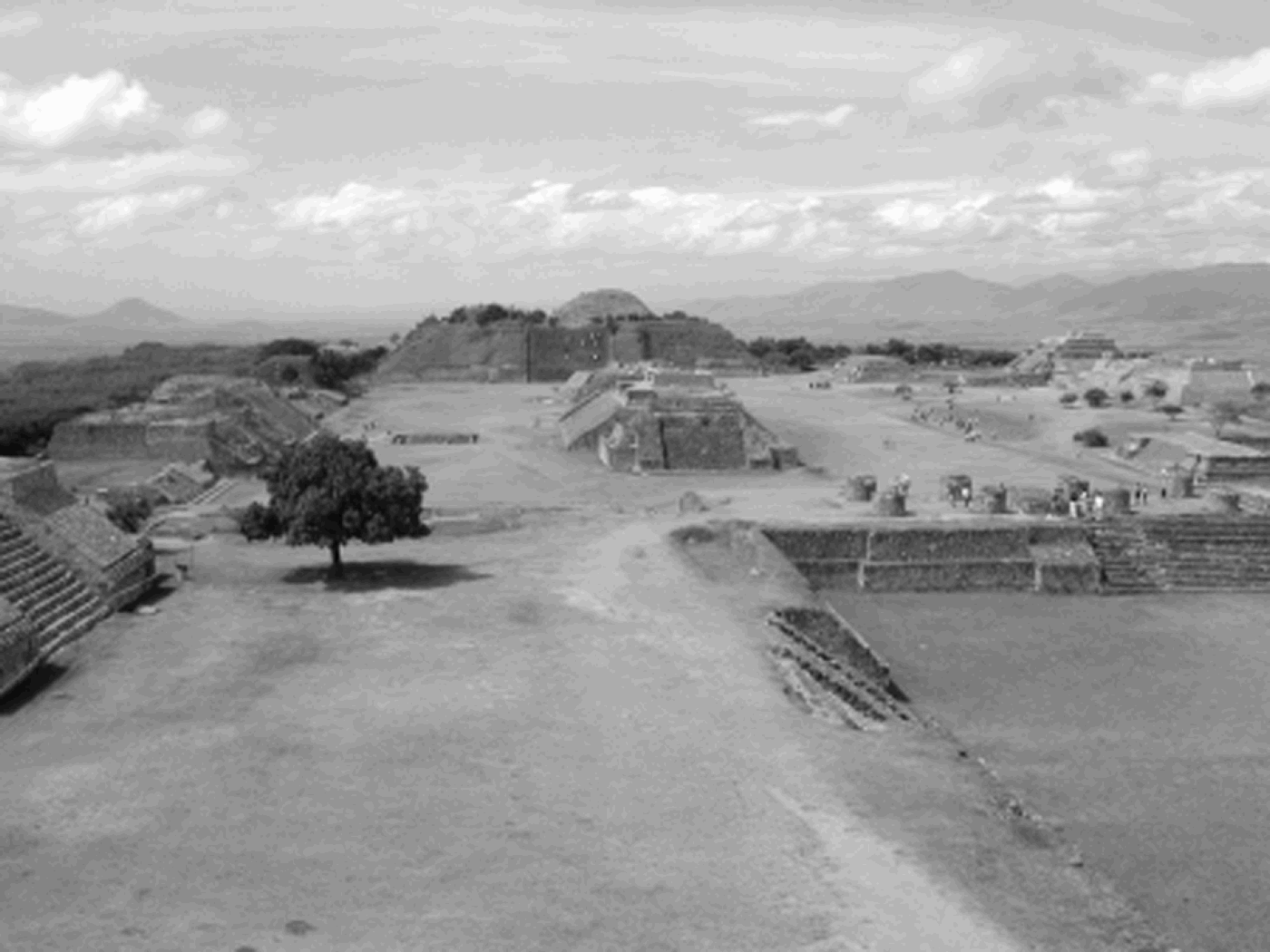
The Main Plaza of Monte Albán.
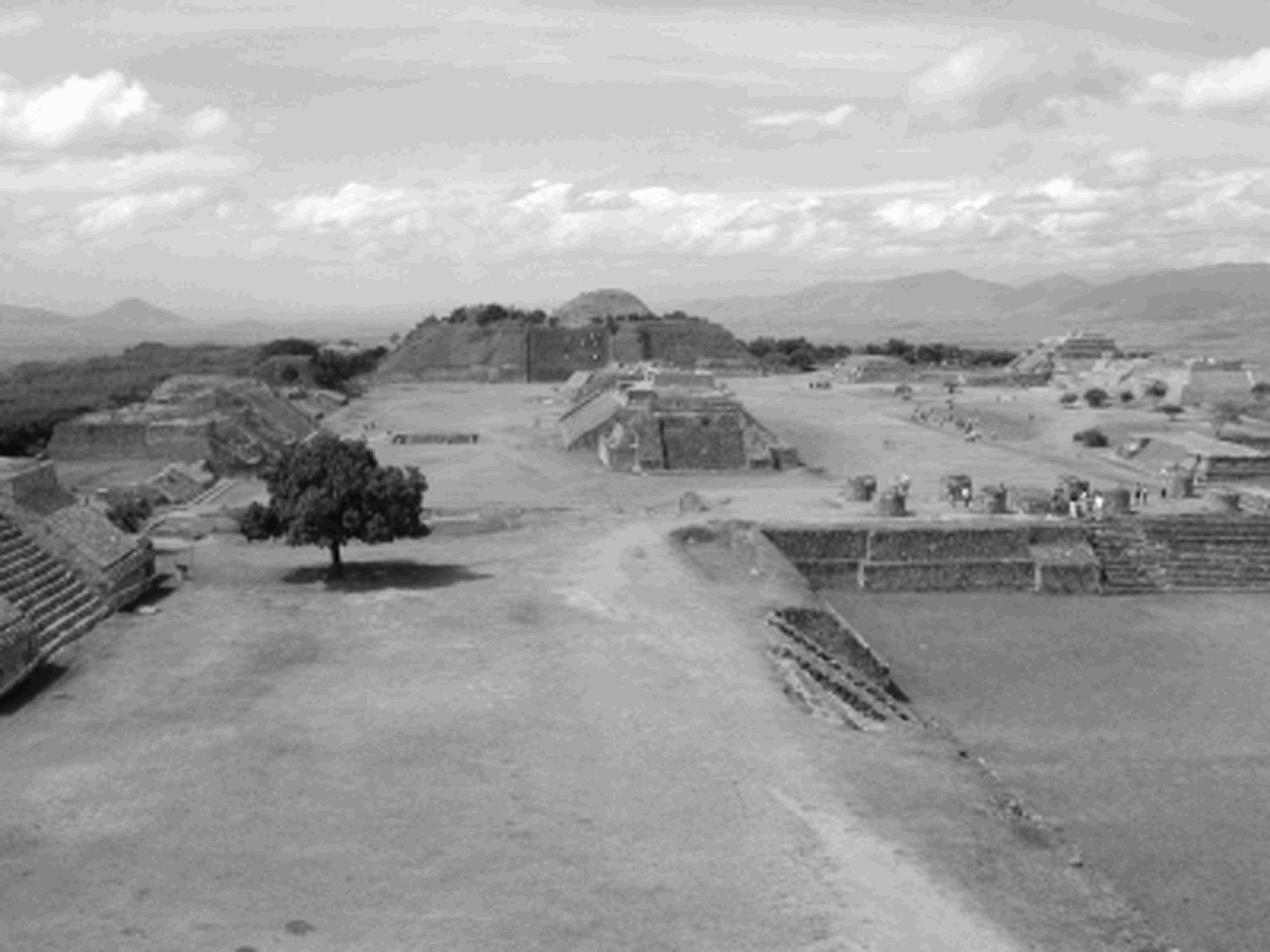
Initial urbanization was not a gradual process but was instead the result of a “big bang” where people rapidly resettled from surrounding communities into new urban nuclei (Balkansky 1998b:48–50; Balkansky et al. 2004:44–46; Barber and Joyce 2007:224–229; Joyce 2008:224; Kowalewski et al. 1989:90–94; Winter 2006, 2007a:27–35). The synoikism model explains the founding of urban centers in Oaxaca as strategically initiated by rulers due to military threats (Balkansky 1998a:62–63, 1998b; Balkansky et al. 2004; Marcus and Flannery 1996:139–154). There are major disagreements concerning the nature and intensity of warfare (Balkansky 1998b; A. Joyce 2003; Redmond and Spencer 2006; Workinger and Joyce 2009; Zeitlin and Joyce 1999; Winter 2006), but regardless of these debates it seems to me that the synoikism model as well as other elite focused arguments (e.g., Joyce and Winter 1996) are incomplete. The social, political, and economic motivations and implications of relocating from people's traditional homes, their lands, and their ancestors varied greatly for residents of different communities, for nobles and commoners (A. Joyce 2004:197–198), and undoubtedly across other social distinctions as well. Archaeologists must consider these variable implications and how the founding of early cities was negotiated and perhaps contested. Unless the founding and early development of urban centers engaged broad constituencies, it is unlikely that they would have been successful.
I have argued that the construction of public ceremonial architecture on a massive scale at early cities like Monte Albán and Río Viejo, as well as evidence for ritual innovations, indicate that these communities were not simply founded for defense by elites but were connected to broader social and religious movements during a time of crisis and uncertainty that engaged non-elites as well as the nobility (Barber and Joyce 2007; A. Joyce 2000, 2004:194–198, 2008:223–227, 2010; also see Blanton et al. 1999:101–107). Understanding and dealing with social problems through contact with the divine world of deities and ancestors are consistent with the cultural logic of Mesoamerican peoples, both past and present (Freidel et al. 1993; Monaghan 1995). The materiality of new urban agglomerations, ceremonial centers, religious paraphernalia, deities, and ritually sanctioned rulers and subjects created new agential relationships between city and hinterland, ruler and subject, and people and the divine that had long-lasting political and economic as well as religious consequences (Joyce 2008, 2009, 2010).
New social, political, economic, and ritual relations were forged in urban landscapes both among people concentrated within cities but also between urban dwellers and people in the hinterland and beyond (see Balkansky 2002; Barber 2005; Blanton et al. 1982, 1999; Feinman and Nicholas 2004; A. Joyce 1993, 1994, 2008, 2010; Kowalewski et al 1989:90–126, 2009; Levine 2007; Winter 2004, 2006). These social relations involved new affiliations, coalitions, and identities as well as social tensions and conflicts of interest. For example, major changes in settlement and domestic economy in Monte Albán's hinterland during the Terminal Formative period were not simply directed by rulers to provision the urban center, but undoubtedly had complex implications in terms of city-hinterland, status, and gender relations that need to be more fully explored (see Kowalewski et al. 1989:123–126). By the Classic period, if not before, people in the hinterland had flexibility in adopting a mix of occupations—agricultural and crafting—through which they made a living and established networks of social relations that may have been only distantly connected to Monte Albán (Feinman and Nicholas 2004).
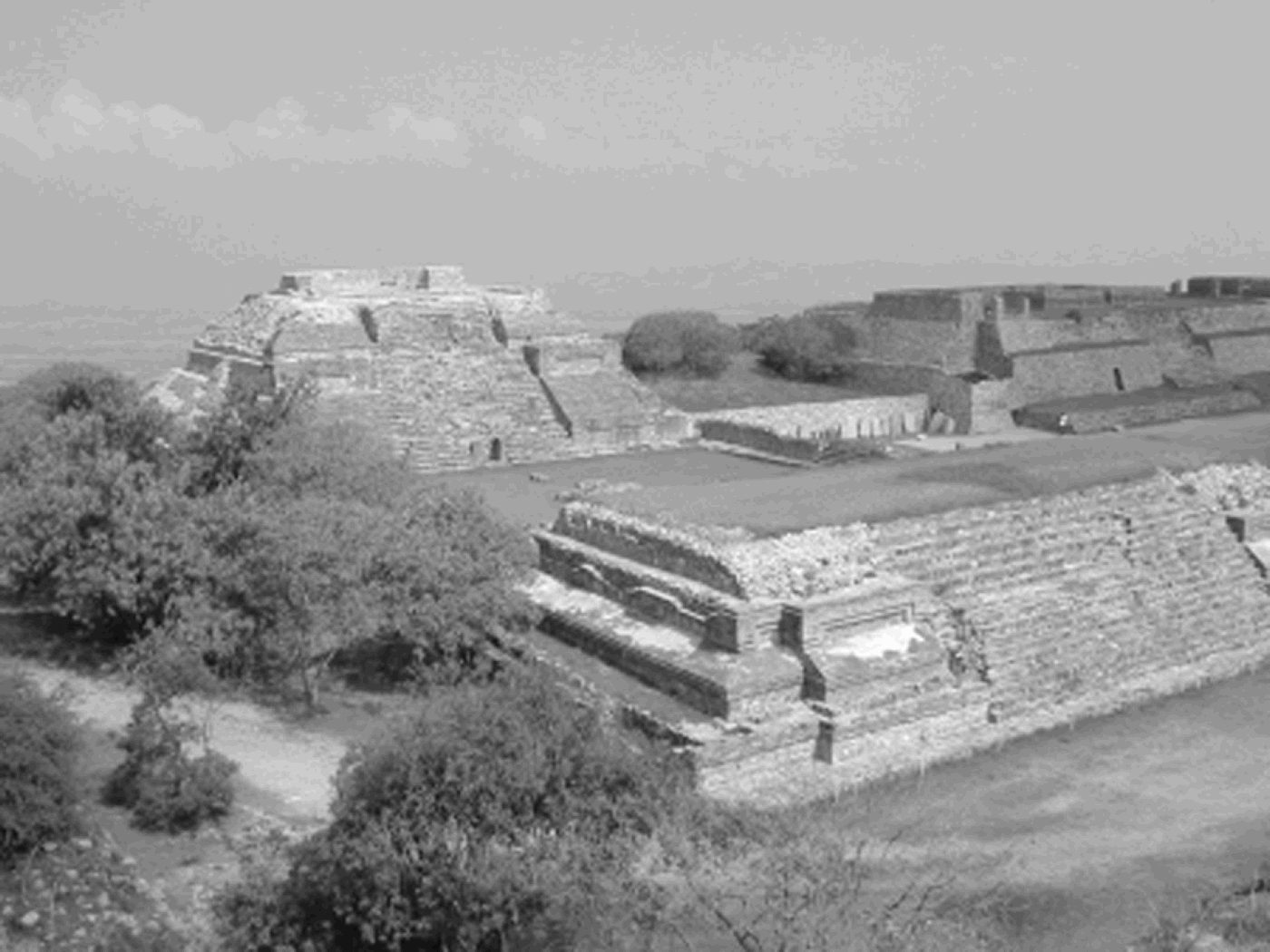
I agree with Ringle (1999) and Houston and colleagues (2003), among others, that religious belief and practice figured prominently in constructing a broader social identity, an imagined community, that encompassed the people of the cities and their hinterlands (A. Joyce 2000, 2004, 2008, 2010). Although religion defined a sacred covenant between commoners, nobles, and deities, it also legitimated the special status and economic position of the nobility. Communal projects such as the construction of monumental buildings along with rituals carried out in ceremonial spaces were a crucial medium for the communication of ideological principles. Yet the monumentality and visibility of public architecture at urban centers also presented possibilities for the discursive penetration of these beliefs (Hutson 2002; Joyce 2008). There were undoubtedly differing degrees of involvement with this shared identity, and some people may have distanced themselves from or actively resisted incorporation into communities centered on cities and their ruling institutions (Joyce et al. 2001; Spencer and Redmond 2006). Palaces, temples, plazas, and ballcourts were not static indicators of state institutions (Flannery 1998; Spencer and Redmond 2004a), but, rather, were inseparable from people's negotiations with each other and with the material circumstances of their world. For example, I argue that the increasing exclusion of commoners from centralizing institutions, practices, and symbols during the Classic period contributed to the collapse of ruling institutions and dynasties at ca. a.d. 800 (A. Joyce 2004:211–212; Joyce et al. 2001). At Monte Albán, the closing off of access points and the construction of high-status residences transformed the main plaza from a public space for large-scale ceremonies to a place of exclusionary elite-domestic activities (Barber and Joyce 2006; A. Joyce 2004; Winter 2003). The creation of restricted ceremonial spaces within the plaza, especially temple-patio-altar complexes (TPAs), also enhanced elite control over access to the divine (Figure 2). To the degree that public ceremonies continued to be enacted on the plaza, we can consider how local commoners and visitors from the hinterland (those who de Certeau [1984] refers to as “walkers” in the urban landscape) would have experienced a segmented and highly controlled space emphasizing distinctions between status groups. This regionalization of space and practice (sensu Giddens 1984:119–132; also see Love 1999:134–135) through the presence of elite residences and the seclusion of important rituals within TPAs acted as reminders of the appropriation of sacred space and access to the divine by the nobility. By the end of the Classic period, people throughout Oaxaca may have increasingly penetrated ruling ideologies such that Mixtecs, Zapotecs, and Chatinos, like their Maya contemporaries, experienced a crisis of faith. A dramatic indication of this crisis comes from Río Viejo on the Oaxaca coast where shortly after the collapse of ruling institutions a carved stone portrait of a ruler was broken, converted into a metate, and later used as a stone in the foundation of a commoner house.
System M at Monte Albán, a Late Classic period temple-patio-altar complex that created a restricted ceremonial space.
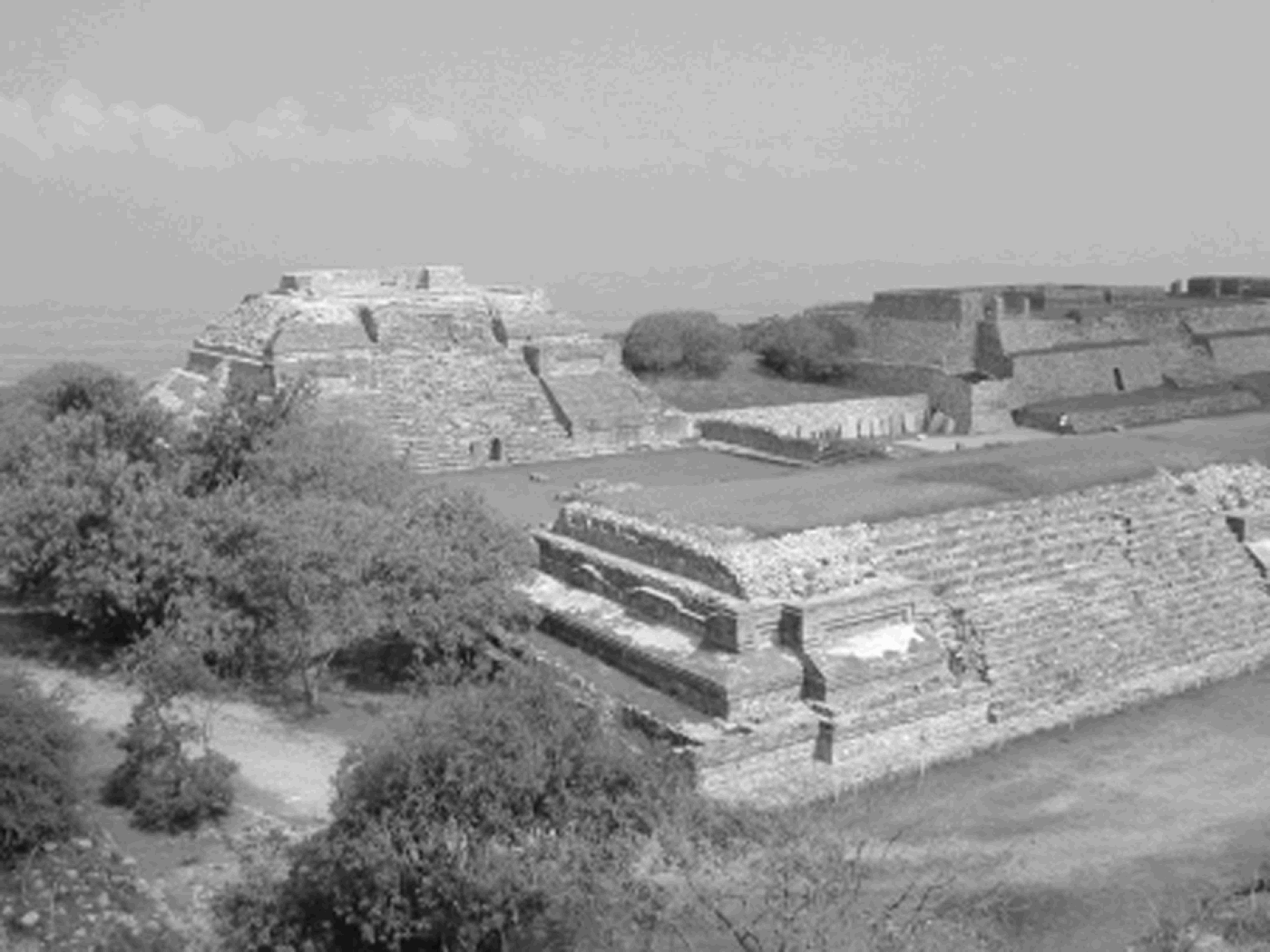
Though tensions existed between nobles and commoners, there are also indications of points of friction within ruling institutions that contributed to social transformations. For example, evidence suggests that the Terminal Formative period was marked by tension, negotiation, and possibly conflict between traditional forms of political authority that were more communal, local, and egalitarian, and emerging forms of authority that were more exclusionary, regional, and hierarchical (Barber and Joyce 2007; A. Joyce 2008:223–229). The abandonment and possible destruction of public buildings at Río Viejo and the dismantling and destruction of iconographic programs at Monte Albán suggest that these social tensions may have ended in some form of conflict (A. Joyce 2008:228–229; Urcid 2008). In the Valley of Oaxaca, exclusionary forms of political authority won out and Classic period rulership was centered on powerful dynasties (Urcid 2005b), while in the lower Río Verde Valley regional authority collapsed. The pattern of multiple complexes of high-status residences and public buildings at early cities in the Mixteca Alta (Balkansky et al. 2000:373), suggests that political authority there was based on associations of multiple corporate groups, which may have inhibited the formation of an overarching political identity. Such a form of political organization may account in part for the collapse of Mixtec cities like Monte Negro and Yucuita only a century or two after their founding. Another social distinction with political implications that should be investigated is gender. Iconographic, epigraphic, and mortuary evidence indicate that women could be powerful political figures in Classic and Postclassic period Oaxaca and, especially in the Mixteca often were polity rulers (Jansen and Pérez Jiménez 2007; Urcid 2005b).
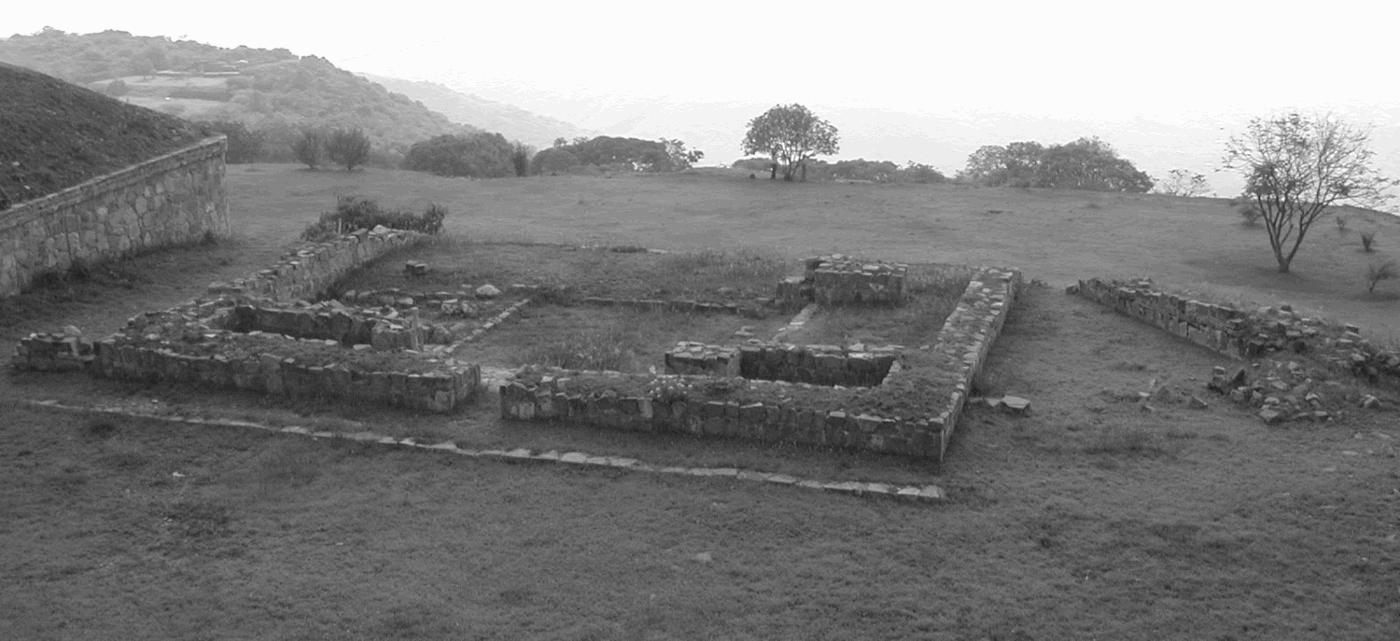
By the Late Classic period, increasing factionalism among Valley of Oaxaca nobility (Elson 2003:155–56; A. Joyce 2004:211; Kowalewski et al. 1989:251; Lind 1994; Sherman 2005:306–310; Winter 2003:116) and the exclusion of commoners and people in the rural hinterland from unifying practices, symbols, and institutions (Joyce 2004:208–212) contributed to the collapse of Monte Albán. Rising social tensions at the end of the Classic period are suggested by data indicating that Monte Albán's nobility was increasingly isolating themselves from the general population as people began to leave the city and as ruling institutions failed (Blanton 1978:100; Winter 2003). At this time, many elite residences were abandoned or rebuilt on a smaller, more modest scale. Several new high-status residences were built in the main plaza area in very restricted locations often protected by walls (Figure 3). Residences throughout the site were increasingly enclosed and inwardly focused, perhaps due to rising social tensions and divisions. Although factionalism among the nobility is indicated, other possible points of social tension should be considered (e.g., between communities, barrios, and across status groups; see A. Joyce 2009).
Late Classic period residence with a protective wall on Monte Albán's North Platform.
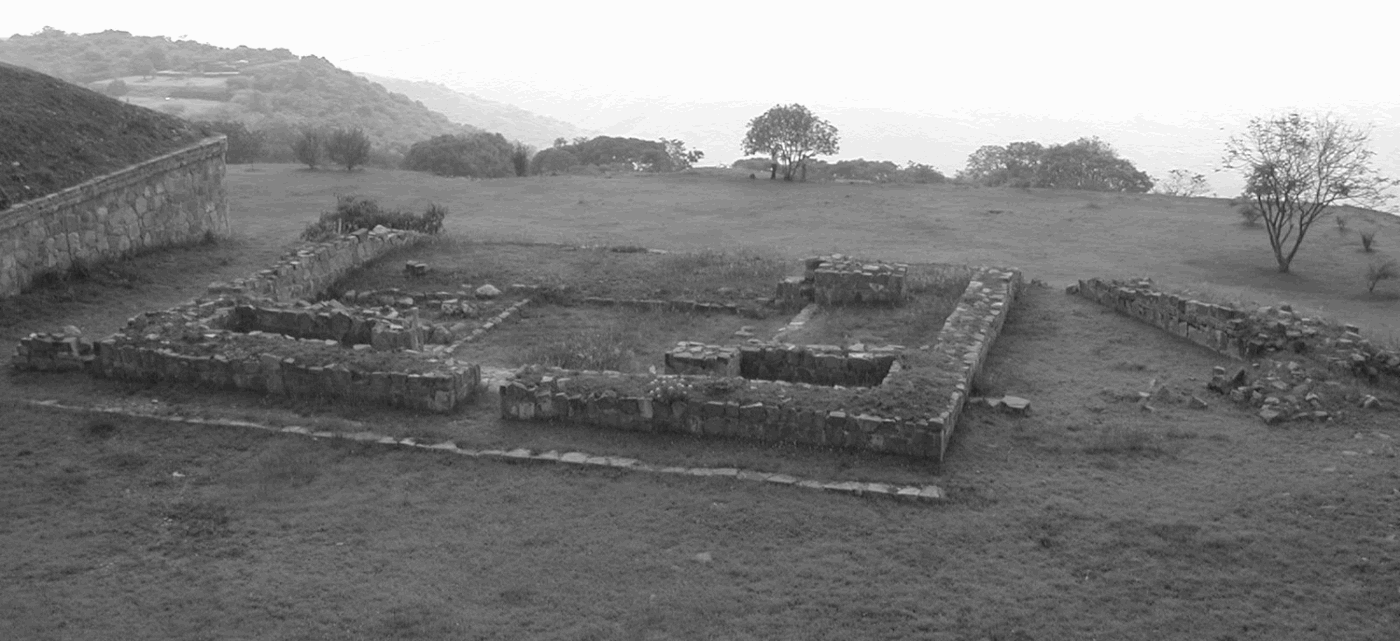
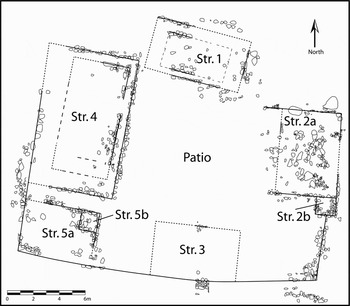
Evidence from early colonial ethnohistory and the Mixtec codices show that during the Late Postclassic period the fortunes of ruling dynasties waxed and waned as they fought wars, formed alliances, and negotiated trade relations with distant regions (Byland and Pohl 1994; Jansen and Pérez Jiménez 2007; Joyce et al. 2004; Lind 2000; Oudijk 2002). Though ethnohistorical evidence bears largely on the lives of elites, archaeological research shows how common people as well as nobles negotiated their political and social position amid the dynamic political landscape of the Late Postclassic period. For example, residential excavations by Levine (2007) show how commoners at Tututepec were successfully negotiating economic relations with elites and retaining control over important productive efforts, especially surrounding cotton textiles (Figure 4). The people who lived in the houses excavated by Levine consumed a variety of valuables including copper axes, polychrome pottery, and obsidian, indicating that they enjoyed a measure of wealth. The economic and symbolic importance of textiles in the Late Postclassic period also suggests that gender relations were politically as well as economically charged since spinning and weaving were practices that were gendered female (see R. Joyce 2001a; McCafferty and McCafferty 1998). The iconography of polychrome pottery used in domestic ritual exhibits themes of sacrifice and warfare, suggesting in this instance that there was a degree of concordance between the imperial ambitions of Tututepec's rulers and the economic interests of those commoners who benefited from the prestige and influx of wealth into the city (Forde 2006; Levine 2007). Archaeological research focused on non-elite segments of Postclassic period society such as Levine's (2007) study is needed to complement and critique elite viewpoints derived from ethnohistorical studies (also see Pérez Rodríguez 2006; Spores and Robles García 2007:343–344).
Residence A at Tututepec (drawing courtesy of Marc Levine).

FUTURE DIRECTIONS
A focus on practice, social negotiation, identity, and materiality draws attention to the actions of people within their social, cultural, and material settings rather than on abstract high-level forces such as cultural evolutionary structures or the functioning of urban centers. Cities and their relations with hinterlands were not unified and coherent political formations. I argue that archaeologists should instead address urbanism as a social problem involving the ongoing instantiation of complex interactions among people of varying identities, viewpoints, and access to resources and power. Such a perspective in de Certeau's (1984:91–110) words moves us from the totalizing views of the city to the level of “walkers” whose quotidian practices elude total regulation, domination, and discipline. It was not just rulers or social structures that drove the history of ancient cities, but also de Certeau's “walkers”—farmers, women, children, and craftspeople among others—who contributed to dominant ideas and institution but who could also create distance from and resist in varying ways systems of domination.
Future research needs to explore more fully the range of social distinctions that came together in different urban formations in Mesoamerica, how these distinctions were instantiated in daily practice and recursively implicated in the material world of residences, ceremonial centers, exotic goods, crops, roads, etc. For example, an important organizational principle in cities like Teotihuacan, Monte Albán, and Tikal was the urban barrio, which could intersect with distinctions based on language, status, occupation, and kinship (Becker 2003; Blanton 1978:66–93; Cowgill 1997:138–141). Archaeologists need to examine how political and economic relations were negotiated within and among barrios and how these relations contributed to variation across Mesoamerica's urban landscape. Another problem that archaeologists need to consider more fully are the variable ways in which people understood, experienced, and responded to forces such as warfare and climate change that have been implicated in the rise and fall of urban centers. Cities and polities do not respond as a unit to problems such as these. For example, while evidence for climatic change at the end of the Classic period is indicated by research in several areas of Mesoamerica (e.g., Hodell et al. 2007), archaeologists need to consider how drought would have differentially affected people such as rural farmers, urban crafts people, and nobles as well as the complex changes in social relations that resulted (Yaeger and Hodell 2008). That is, climate change should be explored as a social problem as much as an environmental one. Through excavation and survey in both urban centers and their hinterlands we must better address the complex ways in which the social, political, and economic relations that constitute varied urbanisms are produced and transformed. Over the next 20 years a focus on practice, social negotiation, identity, and materiality promises to yield a richer, more dynamic, complex, and culturally compelling view of the history of Mesoamerican urbanism.
RESUMEN
En este artículo analizo las más recientes investigaciones relacionadas con el urbanismo en Mesoamérica, especialmente aquellas de los últimos 20 años. Me enfoco en las perspectivas teóricas usadas por los arqueólogos para referirse a los conceptos de ciudad, urbanismo y urbanización. Argumento que aunque han habido avances significativos en la comprensión del urbanismo, la mayoría de las investigaciones continúan enmarcándose en teorías culturales evolucionistas, funcionalistas y elitistas. En este artículo se realzan los enfoques tomados de la teoría post-estructuralista, los cuales permiten el desarrollo de una perspectiva más dinámica, compleja y culturalmente más convincente del urbanismo en Mesoamérica. Utilizando casos de las culturas prehispánicas de Oaxaca, discuto como un análisis, basado en las teorías de la práctica, negociación social y materialidad, hace que enfoquemos nuestra atención en las acciones de las personas dentro de sus escenarios sociales, culturales y materiales. Este acercamiento es superior a aquellas perspectivas basadas en fuerzas abstractas de alto nivel, tal como las estructuras culturales evolutivas o bien el funcionamiento de centros urbanos en contextos de sociedades más amplias y complejas.
Acknowledgements
I would like to thank Geoff McCafferty and Bill Fowler for inviting me to participate in the katun issue of Ancient Mesoamerica. I would also like to thank Stacy Barber, John Hoffecker, Scott Hutson, Marc Levine, Robert Markens, Cynthia Robin, and Payson Sheets for commenting on an earlier draft of this paper.