INTRODUCTION
Since the mid 1990s, there has been a growing recognition of the benefits of participatory plant breeding (PPB), particularly in marginal and diverse environments. Ashby and Lilja (Reference Ashby and Lilja2004) reviewed the efficacy of PPB compared to conventional breeding for over 150 projects. They concluded that the efficacy of PPB compared to conventional breeding was demonstrated by increasing the overall level of benefit from the programme, increased effectiveness of reaching women and the poor, improved research efficiency, varieties developed being more acceptable and adopted faster, and changed costs without lowering cost–benefit ratios (and these may improve). High adoption rates of varieties developed through PPB have been reported by many plant breeders (Monyo et al., Reference Monyo, Ipinge, Heinrich, Chinhema, Lilja, Ashby and Sperling2001; Witcombe et al., Reference Witcombe, Joshi, Gyawali and Subedi2002). However, Morris and Bellon (Reference Morris and Bellon2004) stress that PPB should be seen not as an end in itself. Rather it should be seen a ‘means to an end – namely, the production of varieties that are better adapted to the needs of end users’. One of the lessons learned in participatory research is that a technology is better adapted if the user is genuinely involved in the different stages of the process rather than being simply ‘involved’ as data providers, observers or on-lookers of on-farm experiments, or recipients of research findings. This involvement of the users, whether male or female farmers, provides a sense of ownership as they have some control of the use of inputs and outputs used. Thus, a major challenge facing managers of institutional breeding programmes is to figure out ways to foster increased participation by the end users. Unfortunately, however, most research projects which claim to practise ‘participatory research’ aimed at poverty alleviation do not automatically result in participation or inclusion of the marginalized groups of the society, especially poor rural women. Even with women's active involvement in rice production, post-harvest and seed management, agricultural scientists and extension workers seldom consult women farmers or include them in farmer-managed trials. Ignoring women's indigenous knowledge and preferences for rice varieties may lead to slow adoption of new varieties. According to Farnworth and Jiggins (Reference Farnworth and Jiggins2003), while there is rapidly growing literature on the impacts of PPB on farmers, this is not further differentiated by gender. Despite the immense literature on the impacts of production and post-production technologies on women farmers, systematic studies on the impacts of PPB on women in any category – as a participant in a PPB process or in terms of the impact of the new materials generated – are few. For this reason, guides for impact assessment of participatory research and gender analysis were developed to ensure that poor women are not ignored in the research process (Johnson et al., Reference Johnson, Lilja and Ashby2000; Lilja and Ashby, Reference Lilja and Ashby1999; Lilja and Johnson, Reference Lilja and Johnson2001). A few studies on PPB show that consulting women and involving them in varietal evaluation leads to the inclusion of varietal traits, especially gender-related varietal preferences, leading to better acceptability and faster adoption of varieties (Lilja and Erenstein, Reference Lilja and Erenstein2002). Failure to include gender-differentiated production and consumption traits and focusing on the wrong attributes leads to biased and inappropriate varietal promotions. Evaluating new varieties only on yield-related characteristics (often gender-neutral) has lead to 19 % of all varieties being miscategorized as superior, whereas incorporating gender-differentiated traits (labour-related, consumption, post-harvest) has reduced miscategorization and increases adoption potential (Dalton and Guei, Reference Dalton and Guei2003; Lilja and Dalton, Reference Lilja and Dalton1997).
Benefiting disadvantaged beneficiary groups, such as women, by promoting gender equity in access to resources and agricultural knowledge through participatory research should be social goals of participatory research. Feldstein (Reference Feldstein1999) cited three ways in which gender analysis can be considered in participatory research: the efficiency argument, equity oriented and empowerment.
Gender analysis can help empower women through strengthening their economic security and social status, as well as contribute to the well-being of their families. This paper assesses farmer adoption of rice varieties and new genotypes introduced through participatory varietal selection (PVS) in villages which represent submergence- and drought/submergence-prone villages in eastern Uttar Pradesh, India, and discusses the integration of participatory research and gender analysis in the research process. We assess the impact of participating in PVS trials on women's decision-making authority (or women's empowerment) on rice varietal choice, seed acquisition and disposal, and crop management, and identify factors that influence women's empowerment. Finally, we recommend strategies to involve further women farmers in PVS.
BACKGROUND OF THE PROJECT
In 1997, with funding until 2000 from the International Development Research of Canada (IDRC), a PPB project on rice was initiated by the International Rice Research Institute (IRRI). The project was carried out in response to the low adoption rates of improved released cultivars in rainfed rice environments in eastern India. The low adoption rates relate mainly to the inability of a highly centralized breeding system to address the enormous diversity of environmental conditions and end-user needs in eastern India. The goal of this project was to increase food security by providing varieties capable of producing high and stable yields. The project aimed to test the hypothesis that the efficiency of breeding increases with participation, and to identify stages in breeding where participation is optimal, and to enhance the capacities of the national agricultural research systems (NARS) in PPB and PVS. In PVS, farmers (both men and women) are given a wide range of novel cultivars to test for themselves in their own fields and given the opportunities to make decisions to reject or accept them using their own criteria and preferences (Courtois et al., Reference Courtois, Singh, Bartolome, Chaudhury, McLaren, Misra, Mandal, Pandey, Paris, Piggin, Prasad, Roy, Sahu, Sahu, Sarkarung, Sharma, Singh, Singh, Singh, Singh, Singh, Singh, Sinha, Sisodia and Takur2001).
Narendra Deva University of Agricultural Technology (NDUAT), under the Indian Council of Agricultural (ICAR), located in eastern Uttar Pradesh is one of the NARS collaborators in eastern India, which has continued the PPB and PVS from 2000 to date. The project involves plant breeding and social science components. The plant breeding component aims to develop and evaluate a methodology for participatory improvement of rice for heterogeneous environments and to improve adoption of material suiting farmers' needs. The social science component aims to characterize farming systems, diversity of varieties grown and crop management practices, and to elicit farmers' selection criteria and their reactions to a range of cultivars and breeding lines. In 1998, a social scientist (gender specialist) and a local sociologist formally joined the team of plant breeders developing participatory methods for including farmers' criteria in breeding rice for the fragile environments. An additional task of the social scientists was to assess what can be done to better involve both men and women farmers in the early stages of the breeding process (Paris et al., Reference Paris, Singh and Luis2001). Who participates in the different decisions during the innovation process is potentially a determinant of the impact of the participatory process on the research results – in particular, the design of technologies, and thus of the outcomes of farmers using the resultant technology. At the testing, evaluation and diffusion stages, there may be gender-differentiated participation in decision making and preferences which influence the adoption of new materials. Here we define gender analysis as a particular case of stakeholder analysis where the chief discriminating variable is defining the stakeholder group of interest, which is gender. We also considered the social (caste, religion), economic status (size of landholdings) and age as important discriminating variables, which like gender are also determinants of the type and level of impact of participatory approaches and of technical change.
In the following section, we discuss how we integrated gender analysis into the PVS processFootnote 1, such as initial site characterization and testing suitable rice varieties.
METHODOLOGY FOR INTEGRATING GENDER ANALYSIS IN PVS
Initial site characterization and assessing farmers' criteria for varietal selection
Farm household surveys were conducted by social scientists in Siddharthnagar and Faizabad districts, eastern Uttar Pradesh. These surveys were done to characterize farmers' agro-ecological, socio-economic and cultural environments, farming systems, rice diversity, crop management and seed management practices. A structured gender-sensitive questionnaire was used for interviewing 50 households per research site. Information on gender-specific roles and responsibilities in rice production and seed management according to social (caste) and economic status (size of landholdings) was included in the questionnaire.
The villages selected for this study represented contrasting features of rice production ecosystems. Villages in Siddharthnagar are submergence-prone, while those in Faizabad suffer from both drought and submergence. Siddharthnagar is strictly rainfed, while Faizabad has supplementary irrigation, such as tube wells (hired or owned). The major constraints in eastern Uttar Pradesh include an unpredictable combination of droughts and floods, poor soil conditions (sodicity), and lack of assured water for irrigating the fields, and also the increasing costs of fuel for irrigation. Farmers are resource-poor, which limits their risk-management strategies in rice production. Adoption of traditional varieties is higher in Siddarthanagar than in Faizabad. Therefore, any development of rice varieties suitable for these fragile ecologies could make a positive impact on the millions of poor people in eastern Uttar Pradesh. The majority of farmers have small and marginal landholdings and belong to the lower castes. Most of the women are illiterate. Women from poor farming households and of lowest social status provide 60–80% of the total labour inputs in rice production (pulling of seedlings, transplanting, weeding), post-harvest (winnowing, dehusking, hand threshing, seed drying) and seed management (selection, storage). Men are mainly responsible for land preparation, application of chemicals, and transporting inputs and products.
Participatory Rural Appraisal (PRA) tools, such as focus group discussions and graphic illustration of rice varietal traits on cards, were used to consult male and female farmers (separately) on their criteria for selecting rice varieties for different land types in their rainfed rice ecosystems. Male and female farmers in the drought/submergence-prone villages agreed that grain yield and crop duration were the most important traits when choosing varieties for upland and low lying areas. However, women gave more importance to traits related to their tasks, such as weed-competitiveness and post-harvest qualities (ease of dehusking and threshing, high milling recovery, and suitability for different food preparations, e.g. puffed rice; Paris et al., Reference Paris, Singh and Luis2001). In West and Central Africa, female farmers who are responsible for harvesting prefer tall rice to facilitate single-panicle harvesting (Gridley, Reference Gridley, Bellon and Reeves2002). Here we were most interested in identifying the appropriate collaborators who have special knowledge in varietal choice or responsibility for doing tasks related to rice production and post-harvest activities.
Testing suitable rice varieties
In 2001, a new IRRI plant breeder refined the participatory methods of evaluating rice varieties on farmers' fields using the lessons learned from 1997 to 2000. The challenge was to develop methodologies to include farmers' criteria in rice varietal selection and to include farmers in the early evaluation of new rice lines under their own management. The ‘mother’ and ‘baby’ design trials, pioneered by Snapp (Reference Snapp1999), were adapted in this project. The ‘mother and baby’ trial was named by one of the farmers involved in a project in Malawi. The ‘mother’ trials test many different technologies, while the ‘baby’ trials test a subset of three or fewer technologies, plus one control. The design makes it possible to collect quantitative data from mother trials managed by researchers, and to crosscheck them systematically with baby trials on a similar theme that are managed by farmers (Snapp, Reference Snapp, Bellon and Reeves2002). These ‘mother and baby’ design trials are now extensively used in conducting PVS trials (Atlin et al., Reference Atlin, Paris, Courtois, Bellon and Reeves2002; Banziger and Diallo, Reference Banziger and Diallo2001; de Groote et al., Reference de Groote, Siambi, Friesen, Diallo, Bellon and Reeves2002).
In this project, the ‘mother’ trial was the researcher-managed trial consisting of a set of advanced lines and a local control, while the ‘baby’ trial was the farmer-managed trial. ‘Mother’ trials were conducted in the Masodha research station managed by NDUAT and also on farmers' fields in Siddarthnagar and Faizabad, which represent submergence- and drought/submergence-prone environments, respectively. Fourteen advanced lines from the IRRI-led Shuttle Breeding Program, from NDUAT and a released variety Mahsuri were included. These advanced lines differed by grain type, maturity (135–155 days), plant height (105–145 cm) and potential yield (4–6 ha−1). New lines with medium duration were included in the drought/submergence-prone village where more farmers have upland plots, while lines with longer duration were included in the submergence-prone village where farmers have more lowland plots. Each year, several lines were replaced by new good lines if the crops did not perform well. In the submergence-prone villages, an aromatic traditional variety ‘Kalamanak’, which commands a high price in the market but has low yields, was included in the trials. In 2002, NDUAT developed the improved ‘Kalamanak’ (combined quality traits with high yields), which was then added to the ‘mother and baby’ trials.
Groups of farmers (men and women) of different socio-economic status were invited to visit the ‘mother’ trials and to select the lines which they liked and disliked. During the early phase of the project, the women farmers were excluded from the project. When they were invited to join the meetings for the first time, the men dominated in the discussions, so the women were not able to express their opinions. Thus, meetings were subsequently conducted separately for men and women. After the team had developed a rapport with the women farmers, the women participated in the rating of the new lines included in the ‘mother’ trials during farmers' field days. They selected their preferred lines and compared them with the varieties they use, took the seeds and grew them on their own plots. The number of women involved in PVS trials gradually increased. Moreover, they were able to select the lines which have good eating qualities and are suitable for making other rice products. Three and six genotypes were grown by several men and women farmers in several villages in the submergence- and drought/submergence-prone villages, respectively.
Diffusion of varieties and new rice lines
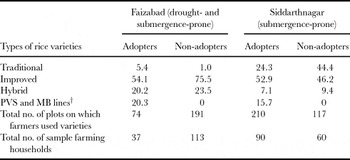
To assess the extent of adoption of varieties and new rice lines in the research sites, social scientists conducted household surveys in 2004. Of all the varieties grown, 20 % and 16 % in the drought/submergence-prone and submergence-prone villages, respectively, were varieties and lines from the PVS trials (Table 1). NDR 9830116 was adopted by the farmers in the drought/submergence-prone villages, while NDR 9830144 and NDR 9730018 were grown by farmers in the submergence-prone villages. Seeds were disseminated through exchange, given away as gifts or sold to other farmers. However, diffusion of these lines was slow due to seed constraints and losses due to abiotic stresses during the cropping season. The improved varieties frequently grown by farmers in the drought-prone villages were Sarju, Swarna and Sambha Mahsuri. A higher proportion of the farmers in villages of Siddarthnagar (submergence-prone) still grew traditional varieties such as Jarethwa, Sarya, Bengalia and Kalamanak, which have low yields but could survive submergence in low-lying and flash-flooded areas. Hybrid rice is becoming increasingly popular in some areas of Faizabad, where supplementary irrigation sources are available. Farmers tried this variety because of the availability of seeds sold by private seed companies and the potential higher yields than the varieties they grow. The drawback though is that farmers have to purchase seeds every season, which can be a constraint for farming household with limited cash.
Type of rice variety used by farmers, eastern Uttar Pradesh, India (%).

†PVS – participatory varietal selection; MB – Mother and baby trials.
IMPACT OF PVS ON WOMEN'S EMPOWERMENT
What is the impact of PVS on women's empowerment? Several studies that dealt with decision-making authority or empowerment in Indian agriculture have shown that the male head of the family often makes decisions. Males have greater participation in decisions which require contact outside the homestead, because of their greater mobility and higher literacy than women. Despite women's active involvement as unpaid family workers in rice production and processing, their high illiteracy rates, social restrictions, lack of access to technologies and their exclusion from the agricultural research agenda have led to their inability to participate or dominate in decisions that affect their roles. Their potential economic contributions remain untapped. According to Kabeer (Reference Kabeer1999, p. 47), ‘the concept of empowerment is extremely difficult to measure due to the elusiveness of its meaning and the values which it tends to be loaded with’. Measures of ‘empowerment’, particularly for women, are used in different contexts to carry multiple meanings. In general, most of the measures point to ‘power’ as the root of empowerment. Kabeer (Reference Kabeer1999) defines power in terms of the ‘ability to make choices’. It is clear that the women's participation, their decision-making capacity, control over resources and their own welfare practices are the major factors in women's empowerment. In other words, empowerment is the opportunity for and action towards people's full participation in the choices, decisions and processes that affect their lives. Women's empowerment is to exercise their choices with full capability in order to contribute to social and economic growth for their welfare as part of the overall development process. According to White (Reference White1992, p. 23), ‘decisions are simply not accessible. Decisions are made through complex processes, perhaps over an extended period and may involve diverse negotiations of interests. Moreover, a stress on decision making assumes that actions issue from choices by individual actors. This prejudges questions of social identity that should be a focus for exploration in gender studies.’ However, with an optimistic view, Farnworth and Jiggins (Reference Farnworth and Jiggins2003) suggest that researchers should experiment with methods for measuring women's decision-making authority by capturing and interpreting empowerment and changes in gender dynamics. To assess the impact of PVS on women's empowerment, we consider the ‘wife's participation’ in relation to her husband in decision making. We hypothesize that women can be empowered to make sound decisions regarding varietal choice, seed acquisition and disposal, and crop management if they have access to new knowledge, information and resources such as new seeds through their participation in the PVS trials.
As an experiment in social research methodology, we developed the Women Empowerment Index (WEI) to measure women's empowerment by participating in PVS trials. WEI is determined through identifying the decision maker (husband or wife) and activities where a decision is made. A woman's empowerment is higher when she can make decisions alone, even if her husband is present. Thus, the wife is ‘highly empowered’ or ‘enabled’ when she gets a high score. This methodology was developed by Hossain et al. (Reference Hossain, Bose and Ahmad2004) for agricultural and non-agricultural decisions of a husband and wife in Bangladesh. We assigned the lowest value (= 1) when the husband makes the decision alone, even if the wife is present. At the other extreme, the highest value (= 5) was assigned when the wife makes the decision alone, even if her husband is present. For example, a higher value (K) of an indicator (X) goes to indicate a higher empowerment level of a woman shown below, where K is (1. . .5):
1 = husband alone, even if his wife is present
2 = husband dominates wife
3 = husband and wife make joint decision
4 = wife dominates husband
5 = wife alone, even if her husband is present.
The above statement can be measured through rating of each decision indicator (X):
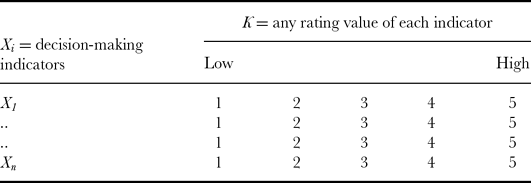
Therefore, the average scoring value of Xi (i.e., ith indicator) for all households would is the average of the value Ki denoted by the following matrix:

We used the given value of 11 indicators for each household to construct the WEI for varietal choice, seed acquisition and disposal and crop management (WEvari), equation 2:
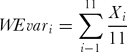
where, WEvari represents the following indicators of an ith household:
x1 = what rice variety to grow for next season
x2 = to give or sell seeds to other farmers
x3 = to exchange seeds with other farmers
x4 = when and where to get seeds
x5 = to keep seeds for the next season
x6 = to apply fertilizer
x7 = when to apply fertilizer
x8 = crop establishment method(s) to use
x9 = to weed the rice fields
x10 = when to weed the rice fields
x11 = to remove off-types and select seeds for next season
At both research sites, 60 participating and 60 non-participating households in the PVS project were interviewed regarding decision-making authority in relation to the 11 above-mentioned indicators.
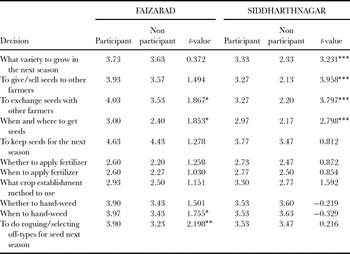
At both sites, WEIs or scores were higher among participants than non-participants (Table 2). Specifically, at both sites, the women who participated in the PVS trials were more empowered in making decisions on the acquisition of seeds (to exchange, and when and where to get seeds). These differences between the participants and non-participants are statistically significant. Thus, to maintain the quality of seeds obtained through farmer-to-farmer exchange, women should be given adequate knowledge and skills on all aspects of rice production and not only on post-harvest and seed management aspects.
Women's empowerment index.

Source: NDUAT–IRRI PVS Assessment, India, 2004–2005.
*Significant at 10%, **Significant at 5%, ***Significant at 1%.
In the submergence-prone villages, the WEIs of participating households were significantly higher than those of non-participating households on what variety to grow in the next season and whether to give/sell the seeds to other farmers. For the first time, by participating in PVS, women were given access to knowledge and the opportunity to test the seeds of new lines with different grain qualities suited for consumption, preparation for other food products and for sale. They claimed that their decision-making authority is better than before. Women from non-participating households had lower decision-making authority in the choice of variety and in selling seeds for the next season. The majority of the farmers who had marginal and small rice lands also gave away or sold seeds to other farmers during times of severe cash constraint and to fulfil their social obligations (gifts to relatives on special occasions such as marriages and religious festivals). In these situations, husbands dominated in making decisions. Farmers sold the traditional aromatic variety ‘Kalamanak’ to other farmers due to its high demand and higher price, and purchased other cheaper and lower-quality rice for home consumption.
In the study villages, weeds are pests that cause low rice yields. Women from poor farming households provide unpaid labour and suffer the drudgery of hand weeding to obtain higher yields. In the drought/submergence-prone villages, the participants were more empowered in making decisions on when to weed their fields (score of 3.97) than non-participants (score of 3.43) and these differences are statistically significant. PVS participants were given training on removing weed seeds and off-types to maintain the quality of seeds to be planted for the next season. Thus, their knowledge gained gave them more decision-making authority on weed and seed management.
The application of chemical fertilizers in these villages was exclusively done by men. Consequently, the men dominated in making decisions related to this operation as shown by the low WEIs among participants and non-participants. Crop establishment, such as transplanting, was exclusively done by women. However, although the WEIs of PVS participants were higher than those of non-participants, these differences were not significant. This is due to the fact that decisions on whether to transplant or direct seed depends on the availability of rain. When the rains do not come on time, seed and seedlings which are more than 45 days old are fed to animals.
FACTORS AFFECTING WOMEN'S EMPOWERMENT
What factors influence women's decision-making authority or empowerment? We used the Ordinary Least Squares (OLS) multivariate model with the Women's Empowerment Index as the dependent variable. The hypothesized factors contributing to women's empowerment in rice varietal choice, seed acquisition and disposal and crop management are size of landholdings, production systems, participation in PVS trials, age of household head, access to new seeds and if the household has a migrant member. The following is the specification of the model:
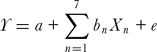
Where:
Y = dependent variable (composite index value of women's empowerment)
a = intercept term
X1 = size of landholding (ha)
X2 = production system (1 = submergence-prone 0 = drought/submergence-prone)
X3 = participation in the PVS trials (yes = 1; no = 0)
X4 = type of household (1 = joint; 0 = nuclear)
X5 = age of household head (years)
X6 = access to new seeds (1 = yes; 0 = no)
X7 = have migrant member in the household (1 = yes, 0 = no)
b1 – b7 = regression coefficients
e = error term
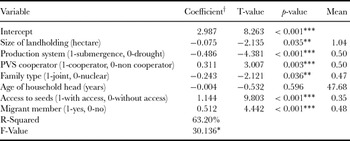
The estimated results from the model are shown in Table 3. The R2 value is 0.632, which means that 63.2% of the variation in women's empowerment can be explained by the independent variables included in the model. Regression analysis shows that all the hypothesized factors which influence women's decision-making authority in varietal choice, acquisition and disposal and crop management, such as size of landholding, production systems, participation in the PVS trials, age of household head, type of household, access to new seeds and having a male migrant (husband or son) have a statistically significant effect on women's empowerment. A sufficiently large F value indicates that the model is significant.
Factors influencing women's empowerment: estimates of multivariate regression.

†Dependent variable: women empowerment index.
*significant at 10%, **significant at 5%, ***significant at 1%.
The results of the analysis show that among the explanatory variables, size of landholdings is negative and statistically significant – the smaller the landholdings, the more empowered are the women. This is due to the fact that the women from lower castes with marginal and small landholdings work as unpaid family labour, and as exchange and hired labourers in other fields. In contrast, women from the upper castes, who generally have larger landholdings, do not provide physical labour on their own fields (Paris et al., Reference Paris, Singh, Hossain, Luis, Tuong, Kam, Wade, Pandey, Bouman and Hardy2000). These findings are similar to those of Bagchi (Reference Bagchi1982) which showed a clear and inverse relationship of women's decision-making authority with farm size.
The coefficient for type of ecosystem is also negative and significant, indicating that the women from the drought/submergence-prone villages are more empowered than those from the submergence-prone villages. The positive and significant coefficient of household having a migrant member (in this case, mostly husbands) indicates that wives are more empowered because they are compelled to make decisions in the absence of their husbands. In the drought/submergence-prone villages, male labour emigration is higher due to the proximity to the labour market (Faizabad city). A recent migration study conducted in eastern Uttar Pradesh revealed that in Faizabad, more husbands than sons migrate. In contrast, in Siddarthnagar more sons migrate than husbands (Paris et al., Reference Paris, Singh and Luis2005). Thus women become de facto heads of households who have to make ‘on the spot’ farm-related decisions.
As expected, women from nuclear families with younger household heads have greater decision-making authority than those in joint families. In joint families, members pool their income, which is controlled by the most senior member of the family who is also the major decision maker in farm-related and household matters.
Women's participation in PVS and access to new seeds are positive and significantly related to women's empowerment. By participating in the project, scientists provided women farmers with many varieties to choose from and additional information related to these varieties (suitability to land type, duration, height), crop management (frequency and timing of weeding), and seed management (removal of off-types, separating the diseased seeds). The reasons women may not participate in the PVS are: land is owned by men, social restrictions, their lack of self-confidence that their opinions/criteria in rice varietal preferences matter or will be considered by plant breeders, too busy in household and farm work, and in addition, the University does not normally include female participants in their on-farm experiments.
WOMEN'S PERCEPTIONS ON THE BENEFITS OF PARTICIPATION IN PVS
Aside from measuring women's empowerment by developing an index, we collected qualitative information on the additional benefits of participating in the PVS trials based on women's perceptions. Women mentioned that they gained the capability to make choices, recognition of their knowledge, greater access to suitable varieties for their stressed environments, and improved gender relations.
Ability to make choices
Women of the minority group, as well as other castes, are now more empowered to choose among several lines included in the trials. They said that ‘For a long time since we lived in this village, we had been growing the traditional varieties because nobody came to us to give us new seeds. We never thought that there are many other varieties from which we can select or choose from depending upon our needs and farm condition. Now we do not only select which ones we like and which we dislike, but we can also try the ones we preferred on our own fields.’
Recognition of their knowledge
Women mentioned that ‘We are happy that researchers asked our opinions on the performance of the rice plants on our own fields and on the station, including the cooking and eating qualities of the varieties. This made us realize that we are also knowledgeable about the traits and that our participation in farm activities is important.’
Increased access to available new seeds
One female co-operator (married, member of a Minority community with a marginal-sized piece of land) of the ‘baby’ trials conducted in Siddarthanagar mentioned that ‘I had been growing one of the PVS lines for the last four years due to its good yield, slender grains, high milling recovery and good taste. Because of its high yield, now I can feed my family (nine children) the whole year round. My fields are on the lower-lying areas, thus I need taller plants. This variety (NDR96005) is good for my fields where water stagnates longer. The duration of this line is also good. It matures 10 days earlier than Sambha Mahsuri, which is the most popular variety for the low-lying areas. I am glad that we have found varieties better that what we used to grow.’
Improved gender relations
Women gained respect from their husbands and also from their mothers-in-law. Their self esteem, confidence and pride in being a farmer have increased because of acknowledgement and building up of knowledge based on their experience. One woman from Karaideeh, Siddarthnagar, who received seeds of NDR 9930111 through the PVS trials, said that ‘After four months of sowing the seeds (generally broadcasting done by male farmers), my husband and son never visited the field because they were occupied with non-farm work. Both were less interested in rice farming, because the crop was flooded and submerged three times, for up to 7–10 days. They told me that there was no need to see the field because there was no chance that the seeds had survived. However, I visited my field whenever I got the time. My other fields with older and traditional varieties were damaged by the flooding. However, the seeds you gave me were safe after the submergence. They had many tillers and gave high yields. Both my husband and son were happy. Other farmers began to ask for seeds from me after harvest. Now I am saving the seeds for all my fields for next year. I am so happy because my husband and son are both proud of me. Both of them have increased their trust and confidence that I can manage our farms while they earn income from non-farm work.’
In order to get researchers to include women in agricultural research efforts, especially those connected with farming systems research or community participation, those writing in the 1980s and early 1990s framed the issues as making ‘research more efficient and effective’ because of better information by including women as well as men as informants and participants. We often downplayed the issue of women's empowerment. Here we see that the process of including women does indeed empower women themselves, as well as raising the productivity of the whole household, or frees them for additional jobs to gain income. In other words, women's empowerment benefits the whole household and is not a source of disruption to the household.
STRATEGIES TO STRENGTHEN WOMEN'S INVOLVEMENT IN PVS
Include female scientists in research teams
Biological scientists and agronomists should listen to women farmers' opinions, assess their attitudes towards certain farming practices and consider their criteria in the design and dissemination of rice technologies. Without a female member in a team, it is difficult to elicit information from women farmers, particularly in situations where there are social restrictions on women.
Involve women in training activities on all aspects of rice production, especially on seed management
Women's knowledge and skills are vital in making sound decisions on growing rice and post-harvest, particularly when wives become de facto heads of households after husbands migrate for jobs in the cities or abroad.
Conduct interviews separately for men's and women's groups
Village meetings should start with mixed groups followed by single sex groups to keep men from dominating the discussions. Women can express themselves better if they are with a group of women only. Moreover, the place, time and duration of meetings for women should be adjusted to accommodate women's time for household and childcare responsibilities. More women will participate in training activities after they have finished their household chores in the morning and when the meeting is conducted within walking distance in the village. Thus there should be no excuse for women not to participate in a farmer meeting.
CONCLUSIONS
This research demonstrated that integrating participatory research and gender analysis enabled women to gain confidence in making decisions related to varietal choice, acquisition and disposal, and crop management. Participation of both men and women in the early evaluation of the performance of the rice lines/genotypes on their own farms led to the development of varieties that are suited to their fragile environments. However, involving women in PVS is only the first step towards reducing gender disparity in agriculture. Women farmers should be provided with new knowledge and skills in conserving and managing the seeds, as well in managing crops and other farm resources. Women can play key roles as change agents if they are provided with access to varieties suiting their needs, and they will disseminate improved quality seeds to other farmers. Based on this experience, farmer participatory approaches which involve ‘learning by doing’ and ‘farmer to farmer’ training or exchange of information are the best methods to accelerate farmer adoption of technologies. With the increasing emigration of men to the cities, women left behind have greater responsibilities in managing their farms. Thus, several strategies should be used to increase the involvement of women farmers in PVS – including female scientists in research teams, involving women in training activities on all aspects of rice production, especially on seed management, and conducting interviews separately for men's and women's groups. They should be involved in farmer participatory research projects and training programmes, which can enhance their technical knowledge and help them make sound decisions in managing their rice farms, thus increasing productivity, reducing hunger and improving the well-being of the whole family.