Introduction
The general trend of poultry production and consumption has been steadily increasing globally in recent years. Recent data showed that poultry meat accounts for about 33% of the global meat consumption of which 87% comes from chicken (FAO, 2010). Similarly, the consumer demand for chicken meat has been growing progressively over the last decade (Costa, Reference COSTA2009) because of its benefit to consumers’ health. Thus, the human population benefits greatly from chicken meat and eggs, which provide food containing high-quality protein with desirable amino acid profiles (FAO, 2010).
Approximately 800 million chickens are currently found on the African continent, of which 80% are kept under traditional scavenging production systems (Muchadeyi et al., Reference MUCHADEYI, SIBANDA, KUSINA, KUSINA and MAKUZA2005; Kugonza et al., Reference KUGONZA, KYARISIIMA and IISA2008; Petrus et al., Reference PETRUS, MPOFU and LUTAAYA2011). Scavenging chicken production is an important agricultural activity of almost all rural communities in Africa, providing much needed protein in the form of meat and eggs as well as being a source of income (Moreki, Reference MOREKI2010). This type of chicken production is characterised by low outputs of egg and meat production per bird, but has low capital input and hence low economic risks (Olwande et al., Reference OLWANDE, OGARA, OKUTHE, MUCHEMI, OKOTH, ODINDO and ADHIAMBO2010). Several studies have reported that income and consumption have been considered the main rationale for keeping village chicken (Badubi et al., Reference BADUBI, RAKERENG and MARUMO2006; Kugonza et al., Reference KUGONZA, KYARISIIMA and IISA2008; Natukunda et al., Reference NATUKUNDA, KUGONZA and KYARISIIMA2011).
Generally, in Africa, indigenous chickens are mostly owned and managed by women and children thus forming an integral part of female-headed households (Badubi et al., Reference BADUBI, RAKERENG and MARUMO2006; Ahlers et al., Reference AHLERS, ALDERS, BAGNOL, CAMBAZA, HARUN, MSAMI, PYM, WEGENER, WETHLI and YOUNG2009; Moreki, Reference MOREKI2010). Thus, the promotion of indigenous chicken production assists in economically empowering the rural youth and women. Scavenging chicken production play an important role in households where there are no able-bodied family members and especially where family members are suffering from debilitating diseases like, HIV/AIDS or there is a disabled family member (Moreki, Reference MOREKI2010). Another additional advantage of promoting scavenging village chicken production is that it has a significantly less detrimental impact on the environment than other species of livestock and also uses less water. Compared with ruminants, chickens emit no methane and produce less phosphate and carbon dioxide than other meat-producing animals (Probst, Reference PROBST2009).
The objective of this paper is to review research based recent developments on the significance of scavenging chicken production in the livelihoods of the rural communities in the context of the African content. This review can provide insight to smallholder farmers, researchers, development agents, governmental and nongovernmental organisations, policy makers and other stakeholders on the present status and value of scavenging chicken in rural Africa as an alternative and sustainable strategy to enhance food security of the poor people.
Values of scavenging village chicken production
socio-cultural and religious values
Chicken rearing among the rural communities of Africa plays a symbolic importance within the context of socio-cultural and religious functions (Kondombo et al., Reference KONDOMBO, NIANOGO, KWAKKEL, UDO and SLINGERL2003; Muchadeyi et al., Reference MUCHADEYI, SIBANDA, KUSINA, KUSINA and MAKUZA2004; Thekisoe et al., Reference THEKISOE, MBATI and BISSCHOP2004). It has been reported that the choice of chickens for most of such socio-cultural functions or sacrifices are of a specific sex and plumage colour. Studies by Forssido (Reference FORSSIDO1986) and Gueye (Reference GUEYE2007) indicated that white and red feathered cocks are sacrificed for the purposes of obtaining a good harvest while a white cockerel cements a marriage proposal between two families. Moreover, as reported by Mafu and Masika (Reference MAFU and MASIKA2003), there are few social and religious taboos associated with the consumption of meat and eggs obtained from the scavenging chickens. The uses of native chickens as faunal medicine and in funeral ceremonies have been reported by Kondombo et al. (Reference KONDOMBO, NIANOGO, KWAKKEL, UDO and SLINGERL2003) from Burkina Faso. It has also been reported by Kondombo et al. (Reference KONDOMBO, NIANOGO, KWAKKEL, UDO and SLINGERL2003) that the chickens play a pivotal role in socio-cultural role of the agrarian community of the country.
nutritive values
In most African countries, human diets are predominantly plant-based and contribute to the high prevalence of multiple micronutrient deficiencies particularly in children (Siekmann et al., Reference SIEKMANN, ALLEN, BWIBO, DEMMENT, MURPHY and NEUMANN2003). Efforts to increase the availability and access to micronutrient-rich animal source foods are needed to improve the diets of the rural communities particularly that of nursing mothers and those of the children. Products from the scavenging village chicken production can contribute considerably in minimising these problems and also provide nutritionally high-quality animal protein (eggs and meat) at the source of production.
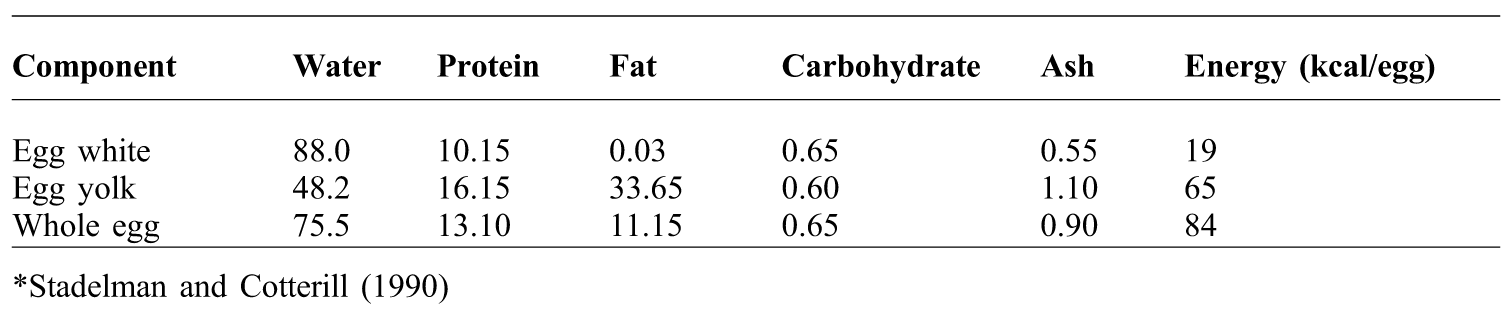
Eggs are some of the richest sources of nutrients needed for the growth and maintenance of the human body (Table 1). They contain an abundance of proteins, fat, carbohydrates and minerals (Stadelman and Cotterill, Reference STADELMAN and COTTERILL1990). The protein fraction of egg is highly digestible and is of high quality, having a biological value of 94%, being the highest of any food (Ensminger, Reference ENSMINGER1992). This is because egg protein contains all the essential amino acids required to maintain life and promote growth and health. As a result, egg's protein has become the standard against which other proteins are compared (Bell, Reference BELL2002). Eggs also supply various vitamins (for example vitamins D3, B6 and B12) and can be stored for a couple of days under village conditions. They are second only to fish liver oils as a natural source of vitamin D.
Average percentage composition of the hen's egg*.

*Stadelman and Cotterill (Reference STADELMAN and COTTERILL1990)
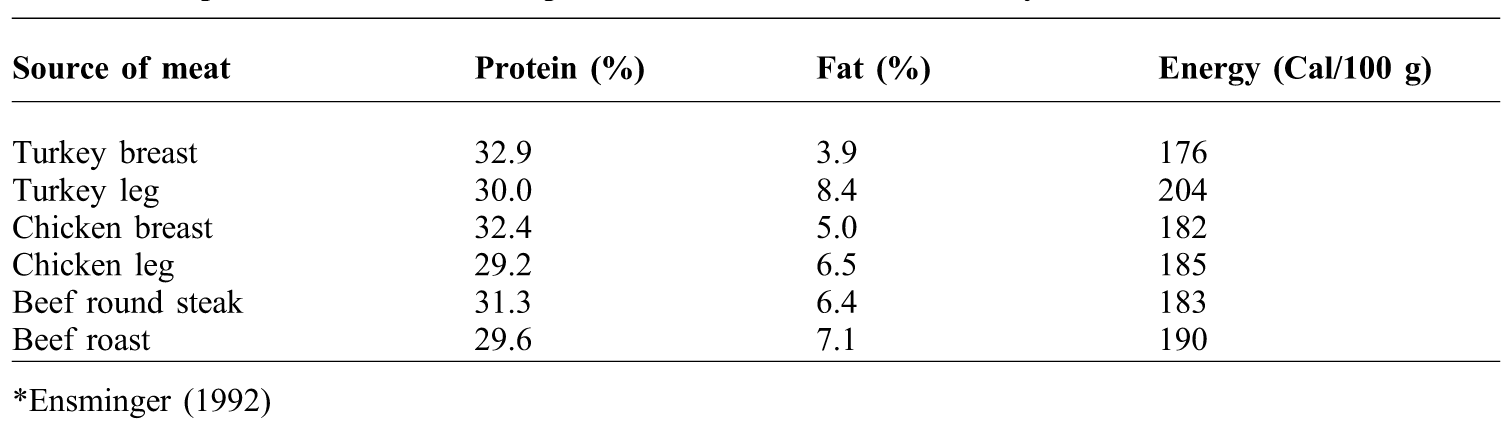
The main source of the global supply of poultry meat is chickens followed by turkey, although meat from duck, geese, guinea fowl, quail and other types of fowl are consumed in different parts of the world. Nutritionally, people in the developed world eat poultry meat for its high-quality protein and low-fat contents. As shown in Table 2, the meat from turkey and chicken are slightly richer in protein when compared to other red meats.
Comparison of nutrient composition of cooked chicken, turkey and beef*.
*Ensminger (Reference ENSMINGER1992)
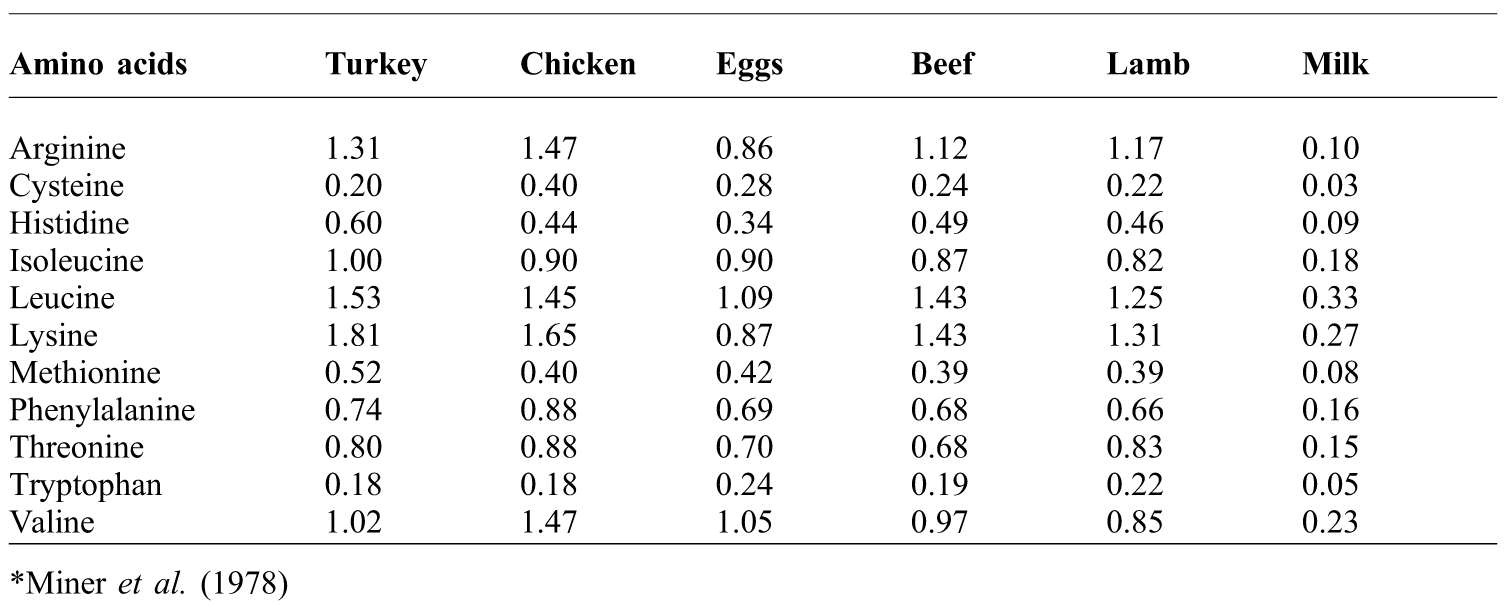
The average carcass yield per live-weight of modern broiler is about 70%, which is higher than the most of the other livestock species. Chicken meat has considerable amounts of high-quality protein and is rich in all the essential amino acids (Miner et al., Reference MINER, SCRIMSHAW and WANG1978). As presented in Table 3, chicken meat appears to be higher in a number of micronutrient values than other raw meats, except fish. The levels of magnesium, calcium, selenium, manganese and phosphorus are all superior compared with those found in the highest value cuts of beef, lamb and pork. Chicken meat also appears to contain higher amounts of retinol equivalents than those of beef and pork, more richer in alpha-tocopherol than all traditional meat sources (excluding fish), higher niacin equivalents than lamb and pork, more thiamin than lamb and beef and rich in vitamin B12 when compared to pork (Probst, Reference PROBST2009). These nutrient levels may relate to the ability of chickens to utilise the nutrients from their feeds more efficiently than other farm animals.
Comparison of amino acid compositions of various animal foods (%)*.
*Miner et al. (Reference MINER, SCRIMSHAW and WANG1978)
Improvement strategies of scavenging chickens
housing
Proper housing in scavenging chicken management is still absent in many parts of the developing world, and field surveys in Africa have revealed many cases where no housing or shelter is provided at all (Goodger et al., Reference GOODGER, BENNET and DWINGER2002; Abubakar et al., Reference ABUBAKAR, AMBALI and TAMJDO2007; Moges et al., Reference MOGES, MELESSE and DESSIE2010). In places where there are shelters for scavenging chickens, they are in most cases not well planned or constructed. These types of houses cannot provide the minimum basic protection to the chickens they house against the common types of stressors including cold, heat, and predators. In the scavenging production system, housing is particularly an important component to protect chickens from both ground and aerial predators. Predatory attacks on village chicken production often cause avoidable losses in free-range systems. In a study conducted by Natukunda et al. (Reference NATUKUNDA, KUGONZA and KYARISIIMA2011) from Uganda indicated that all the chicken farmers rearing native free ranging chickens reported that predation as an important constraint in indigenous chicken production system. Young chickens below the age of eight weeks are particularly vulnerable to the predators, which often can account for more than 80% of the mortality among all the eggs hatched (Muchadeyi et al., Reference MUCHADEYI, SIBANDA, KUSINA, KUSINA and MAKUZA2005; Momoh et al., Reference MOMOH, NWOSU and ADEYINKA2008; Moges et al., Reference MOGES, MELESSE and DESSIE2010; Petrus et al., Reference PETRUS, MPOFU and LUTAAYA2011). The common predators reported in Africa are the dogs, skunks, cats, snakes, eagles, hawks, rats and ants (Awuni, Reference AWUNI2002; Muchadeyi et al., Reference MUCHADEYI, SIBANDA, KUSINA, KUSINA and MAKUZA2004; Reference MUCHADEYI, SIBANDA, KUSINA, KUSINA and MAKUZA2005; Moges et al., Reference MOGES, MELESSE and DESSIE2010; Natukunda et al., Reference NATUKUNDA, KUGONZA and KYARISIIMA2011). Protective measures should be designed around the predators that are common in the given region and try to understand how these predators attack local chickens. Implementation of the following general measures has been suggested by various scholars to help minimise losses due to predators in scavenging chicken production practices:
- Construction of shelters to offer maximum protection of young and adult chickens from predators. The available resources and the perceived threats to chicken survival tend to influence the type of housing. In Zimbabwe, brick type of housing structures was common with households who viewed predation as the main threat (Muchadeyi et al., Reference MUCHADEYI, SIBANDA, KUSINA, KUSINA and MAKUZA2004; Reference MUCHADEYI, SIBANDA, KUSINA, KUSINA and MAKUZA2005). It is recommended to build a chicken house on poles and put inverted metal cones around the legs to prevent the entrance of predators.
- Clearing of grasses and bushes around the chicken house is essential to limit hiding places for ground predators (Ahlers et al., Reference AHLERS, ALDERS, BAGNOL, CAMBAZA, HARUN, MSAMI, PYM, WEGENER, WETHLI and YOUNG2009; Moreki, Reference MOREKI2010). However, clearing of the bush and grass cover can also contribute to increased predation by aerial predators such as hawks and eagles. Thus, such practices should be implemented in areas where flying predators are not a challenge.
- Keep the areas around the homestead clean and free of farm debris where predators hide and rats build nests. Eliminate woodpiles, construction materials, hay mounds and similar farm refuses.
- Avoid providing feed or water in extensive open areas where chickens can be attacked easily by the birds of prey. Food or water should not be provided next to dense bushes where most of the ground predators can hide from view (Ahlers et al., Reference AHLERS, ALDERS, BAGNOL, CAMBAZA, HARUN, MSAMI, PYM, WEGENER, WETHLI and YOUNG2009).
- Hanging of small pieces of metal containers on a tree or on a long pole close to the area to be protected will help to minimise possible attacks of predators. The noise produced and sunlight reflected when these containers move with the wind can avert the attention of the predators from attacking chickens. It has been reported that scaring wild birds and animals away from their flocks by making various kinds of noise as effective strategy to deter them from attacking the chicks (Natukunda et al., Reference NATUKUNDA, KUGONZA and KYARISIIMA2011).
- Avoid keeping chickens with bright white plumage. Chickens with coloured feathers are better camouflaged than those with bright white plumage, which are an easier target for predators (Halima et al., Reference HALIMA, NESER, VAN MARLE-KOSTER and DE KOCK2007; Ahlers et al., Reference AHLERS, ALDERS, BAGNOL, CAMBAZA, HARUN, MSAMI, PYM, WEGENER, WETHLI and YOUNG2009).
- It is advisable to keep the chicks in small enclosures like home made baskets or other simple confinements which can protect them from both aerial and ground predators.
- According to Aklobessi et al. (Reference AKLOBESSI, GUITOBA, KENKOU and KOUGBENYA1992), poultry holders found that a wicker basket cage shaped like a round-bottomed cone and made of split rachis of palm fronds (Sonaiya, Reference SONAIYA1990) proved to be quite effective in preventing hawk predation.
- Goat pellets was also found to be effective in keeping away predators, particularly snakes that attack baby chicks (Muchadeyi et al., Reference MUCHADEYI, SIBANDA, KUSINA, KUSINA and MAKUZA2004) as the smell deterred the predators from mauling the chicks.
- Keep cocks (roosters) along with hens and pullets. The cocks by nature defend their flocks against predatory attacks. They also vocalise perceived threats, alerting the flock to disperse and hide in case of any imminent danger, such as the presence of any hawk or kite flying overhead.
feeding
Village chickens of Africa are not usually confined during the day time and are left to obtain most of their diet from scavenging for food and water around the homestead or at its vicinity. Such a production system is based on low inputs but low outputs, which is sometimes also termed as ‘balanced farming’ (Dessie and Ogle, Reference DESSIE and OGLE2001; Kondombo et al., Reference KONDOMBO, NIANOGO, KWAKKEL, UDO and SLINGERL2003). The scavenging feed resource base is a major characteristic of the local chicken production systems so unique for most of the African nations. The scavenging feed resource base includes various types of green plants, seeds and fruits, insects, worms, minerals from the soil, gleanings from cultivated fields, bran from agro processing units and household food scraps and leftovers (Sonaiya, Reference SONAIYA2004).
It is apparent that chickens need adequate feed to maintain their natural and healthy condition, to grow and to produce eggs. They can subsist on scraps from human food sources, as this consists of different nutrients such as carbohydrates, proteins, fats, vitamins, minerals, crude fibre and water. The proximate analysis of the crop and gizzard contents of the scavenging chickens reared in some African countries indicated that the protein, energy and mineral contents of the feed consumed was much lower than that of the recommended levels (Sonaiya, Reference SONAIYA2004; Mekonnen et al., Reference MEKONNEN, MULATU, KELAY and BERHAN2010). The low proportion of these nutrients are at most of the times just enough to support maintenance, hence resulting in poor low growth and fewer egg production. Thus, one important area of regular intervention in the scavenging system could be through supplementation of grains that are, preferably, not suitable for human consumption. Maize was reported to be the most commonly named supplemented cereal to the scavenging village chickens in many of the African countries (Abubakar et al., Reference ABUBAKAR, AMBALI and TAMJDO2007; Moges et al., Reference MOGES, MELESSE and DESSIE2010). The types of supplementation provided to these free-range chickens vary from region to region. As observed by Mwalusanya et al. (Reference MWALUSANYA, KATULE, MUTAYOBA, MTAMBO, OLSEN and MINGA2001), Dessie and Ogle (Reference DESSIE and OGLE2001) and Kondombo et al. (Reference KONDOMBO, NIANOGO, KWAKKEL, UDO and SLINGERL2003) some of the chickens receive some amount of supplementation in form of kitchen wastes and sometimes also with grain and bran. However, it is worthwhile to note that most of the resource challenged farmers may not be even able to supplement their flocks with grains as these are used for their own consumption. Thus, advising and encouraging the smallholder farmers to use alternative non-conventional feed resources which are not consumed by the humans is imperative for improving the production and reproduction potential of these chickens.
The diet of the scavenging chickens can be supplemented with leaves of leguminous plants, sweet potato, and cassava. The use of leaves and pods (either fresh or dried) of trees such as Leucaena spp., Moringa spp. which can be grown easily in the backyard of the farmers can serve as alternative source of proteins. Recent findings indicated that chickens fed with dried and ground Moringa stenopetala leaf showed better growth performance and carcass characteristics compared to those not receiving supplemented diets (Melesse et al., Reference MELESSE, TIRUNEH and NEGESSE2011a; Reference MELESSE, GETYE, BERIHUN and BANERJEE2013). Studies on feeding ground pods of Prosopis juliflora to broiler chicks has shown a better growth performance than those fed with maize (AL-Beitawi et al., Reference AL-BEITAWI, AWAWDEH and KHWAILEH2010). In rural areas where fishery is a common practice, non-edible parts (offal) of fish can be used for feeding the scavenging chickens as valuable protein sources (Negesse and Tera, Reference NEGESSE and TERA2010). Another readily available product in the rural communities is the dried brewer's yeast obtained as a by product of the brewing practices from the local brewers. Studies by Smith (Reference SMITH2001) indicated that brewer's yeast contains practically no fibre but it is very rich in phosphorus making it suitable for feeding grower chicks. It also contains 40-45% protein of a very high biological value. It is naturally fortified with vitamin B complex and riboflavin.
During grain harvests in the dry season, birds can usually scavenge enough energy feed but not during the rainy season as the crops are usually not mature by then and also that there may be pathogenic growth on the leftover seeds or it may be too wet to scavenge. However, the wet season provides abundant animal protein in form of worms, snails, larvae and insects to the scavenging chickens (Sonaiya, Reference SONAIYA2009). Maggots (larvae of Musca domestics) which proliferate during the hot and humid climate are rich in protein content and can be easily incorporated in the diet of these birds. Maggots have estimated values of a dry matter content of 30% of which contains about 60% crude protein, 16% fat and 11 MJ energy per kg (Smith, Reference SMITH2001). Moreover, the availability of earthworms (Eisenia foetida) increase during this season and such worms have reasonably high protein content (55% of the dry matter) as well as high water content (84%). The faeces of cattle and of other livestock favour the growth of earthworms which can be used as a feed for scavenging chicken.
health
High mortality of chicks due to diseases, parasites and predation are some of the major constraints on village chicken production in most African countries (Goodger et al., Reference GOODGER, BENNET and DWINGER2002; Dube et al., Reference DUBE, ZINDI, MBANGA and DUBE2010; Kingori et al., Reference KINGORI, WACHIRA and TUITOEK2010). The high levels of chicken mortality during the brooding period are well known and longitudinal studies have recorded mortality rates of 80% (Awuni, Reference AWUNI2002; Muchadeyi et al., Reference MUCHADEYI, SIBANDA, KUSINA, KUSINA and MAKUZA2005; Petrus et al., Reference PETRUS, MPOFU and LUTAAYA2011), 60% (to 10 weeks) (Mwalusanya et al., Reference MWALUSANYA, KATULE, MUTAYOBA, MTAMBO, OLSEN and MINGA2001; Awuni, Reference AWUNI2002), and 61% (to 8 weeks) (Dessie and Ogle, Reference DESSIE and OGLE2001). However, there are considerable variations between studies as well as across countries in mortality rates of village chickens (Goodger et al., Reference GOODGER, BENNET and DWINGER2002; Kondombo et al., Reference KONDOMBO, NIANOGO, KWAKKEL, UDO and SLINGERL2003).
In the scavenging chicken production system, Newcastle disease (NCD) has been reported as the predominant causes of high mortality at all the ages and among both the sexes. It is the most prevalent and fatal in poultry in Nigeria (Nwanta et al., Reference NWANTA, EGEGE, ALLI-BALOGUN and EZEMA2008), Kenya, Botswana (Kingori et al., Reference KINGORI, WACHIRA and TUITOEK2010; Moreki, Reference MOREKI2010) and in many other countries of the continent. Goodger et al. (Reference GOODGER, BENNET and DWINGER2002) reported that chick mortality in Zimbabwe, Egypt, Ghana and Tanzania was higher during the wet season, which is coupled with even higher incidence of NCD.
The most effective strategy for the prevention of NCD is to vaccinate all the fowls within a village. However, due to lack of awareness, non-availability of quality vaccines and vaccinators results in the fact that only a few smallholder producers of indigenous chickens in Africa do vaccinate their flocks. However, formation of self-help groups or community based organisations and local non-government organisations can play a very important role in this regard as they can easily mobilise the households and vaccinate all the flocks within the village itself. Training of school leavers or model farmers in simple vaccination techniques could help to solve the problem related to lack of veterinary services.
Other major health problems in scavenging chickens of Africa are the presence of both external and internal parasites (Goodger et al., Reference GOODGER, BENNET and DWINGER2002; Nnadi and George, Reference NNADI and GEORGE2010). These parasites have the ability to weaken the birds causing them to become prone to infectious diseases and in certain cases may be secondary hosts for other diseases. Studies by Dube et al. (Reference DUBE, ZINDI, MBANGA and DUBE2010) indicated that presence of ecto-parasites (mites, ticks, lice, etc.) result in poor growth of chickens in Zimbabwe. A study on ecto-parasites of domestic fowls in Nigeria showed that lice were the major problem in chickens reared in rural areas (Nnadi and George, Reference NNADI and GEORGE2010).
Since village chickens are raised under the scavenging production system, they are predisposed to various types of internal parasites. Studies conducted by several researchers in free-range chicken in Uganda, Nigeria, Zimbabwe, Tanzania and South Africa showed a high prevalence of helminthes (Kingori et al., Reference KINGORI, WACHIRA and TUITOEK2010; Nnadi and George, Reference NNADI and GEORGE2010; Mwale and Masika, Reference MWALE and MASIKA2011). The majority of the identified species are reported to be potentially pathogenic for poultry. The prevalence of the helminths can be minimised if there are proper medicaments and hygiene which can be made available through provision of proper veterinary extension facilities. However, there is lack of any veterinary extension service in most rural areas of Africa (Yakubu, Reference YAKUBU2010; Petrus et al., Reference PETRUS, MPOFU and LUTAAYA2011) and hence most farmers commonly use locally available ethno-veterinary medicines in treating the sick chickens (Muchadeyi et al., Reference MUCHADEYI, SIBANDA, KUSINA, KUSINA and MAKUZA2005; Yakubu, Reference YAKUBU2010; Petrus et al., Reference PETRUS, MPOFU and LUTAAYA2011). Hence, the scientific merit of these medicines should be studied at a larger level for an efficient utilisation and dosage calculations.
breeding
The native chicken breeds in most African countries are yet to be studied in detail and due to the lack of proper records and non existence of breed societies in the region, have resulted in genetic dilution of the native breeds of chickens. Farmers pay little attention in the breeding of the native chickens and hence almost all the breeding that occurs in the rural areas are panmictic in nature. Most of the indigenous chickens of Africa are a heterogeneous population with no standardised characteristics and performance (Kingori et al., Reference KINGORI, WACHIRA and TUITOEK2010; Melesse and Negesse, Reference MELESSE and NEGESSE2011). They vary in size, plumage colour, comb type, egg shell and skin colour within and across the region. Some of the scavenging chicken production systems and the morphological characteristics of African indigenous chicken populations have been described by various scholars (Badubi et al., Reference BADUBI, RAKERENG and MARUMO2006; Egahi et al., Reference EGAHI, DIM, MOMOH and GWAZA2010; Melesse and Negesse, Reference MELESSE and NEGESSE2011). Distinct indigenous chicken ecotypes have been identified and characterised in some of the countries in the continent (Forssido, Reference FORSSIDO1986; Kingori et al., Reference KINGORI, WACHIRA and TUITOEK2010).
Most works reported that the production system characteristics and performance of scavenging chickens is similar across most African countries. The average flock size per household varies across the regions and ranges from 6 to 34. Village chicken production is usually determined by key parameters such as clutches per year, number of eggs per clutch, hatchability and chick survival. At the traditional farm level, average egg production of indigenous chickens in African countries is highly variable. Most eggs are laid in two to five clutches, each consisting of three to 20 eggs. The eggs weight ranges from 25 to 52 g in most African countries (Mwalusanya et al., Reference MWALUSANYA, KATULE, MUTAYOBA, MTAMBO, OLSEN and MINGA2001; Kondombo et al., Reference KONDOMBO, NIANOGO, KWAKKEL, UDO and SLINGERL2003; Muchadeyi et al., Reference MUCHADEYI, SIBANDA, KUSINA, KUSINA and MAKUZA2005; Badubi et al., Reference BADUBI, RAKERENG and MARUMO2006; Abubakar et al., Reference ABUBAKAR, AMBALI and TAMJDO2007; Moges et al., Reference MOGES, MELESSE and DESSIE2010; Olwande et al., Reference OLWANDE, OGARA, OKUTHE, MUCHEMI, OKOTH, ODINDO and ADHIAMBO2010).
As a consequence of natural selection, scavenging chickens in Africa are more disease tolerant, well adapted to the production challenges and are able to reproduce under adverse environments as compared to commercial breeds (Ikeobi et al., Reference IKEOBI, OZOJE, ADEBAMBO and ADENOWO2001; Melesse et al., Reference MELESSE, MAAK and VON LENGERKEN2005). It may be that these chickens prove to be a good genetic base for development of ecotypes/breeds much suitable under the prevailing village conditions of the continent. Several attempts have been made in the past to improve the productivity and reproductive potentials of the native chickens with varying results. In Kenya, the National Poultry Development Program, a joint venture between the governments of Kenya and the Netherlands, initiated a cockerel exchange program in 1977 and by 1989 it was observed that there was an increase in egg production by 52% (Mbugua, Reference MBUGUA1990). The Fayoumi chicken breed of Egypt has been introduced to some African countries (Katule, Reference KATULE1989; Kingori et al., Reference KINGORI, WACHIRA and TUITOEK2010) and the results were initially quite promising, although the original production goals were not achieved. Some preliminary research results in Ethiopia indicated that the Fayoumi chicken has been well accepted by the farming community (Bekele et al., Reference BEKELE, ÅDNØY, GJØEN, KATHLE and ABEBE2010; Alewi et al., Reference ALEWI, MELESSE and DESSIE2011). This chicken breed is better in egg production and other performance as well as adaptive traits than local chickens of Ethiopian origin.
Selection among the indigenous chickens offers the possibility of utilising the germplasm and offers opportunities to conserve indigenous stocks. On the other hand, crossbreeding offers a chance to exploit heterosis and the development of synthetic lines. Considerable work has been done on the crossbreeding of local breeds with exotics in some African countries such as Ethiopia (Melesse et al., Reference MELESSE, MAAK and VON LENGERKEN2005; Reference MELESSE, MAAK, SCHMIDT and VON LENGERKEN2011b; Reference MELESSE, MAAK and VON LENGERKEN2011c). Although performance of crossbred chickens was generally better than local chickens under controlled environment (Melesse et al., Reference MELESSE, MAAK and VON LENGERKEN2005), their performance under scavenging systems is yet to be tested.
The genetic resource base of the indigenous chickens in the tropics is rich and can form the basis for genetic improvement and diversification to produce a breed adapted to local conditions. The indigenous chicken ecotypes of Africa represent a reservoir of chicken genomes and harbours genes which are useful for adaptation under particular production environments meeting local breeding goals (Horst, Reference HORST1988; Katule, Reference KATULE1989; Halima et al., Reference HALIMA, NESER, VAN MARLE-KOSTER and DE KOCK2007; Melesse and Negesse, Reference MELESSE and NEGESSE2011). Thus, their continued use in small scale production system serves as cheap in situ genetic conservation that needs to be encouraged and supported on a larger scale. They are, however, continuously endangered due to high rates of genetic erosion resulting from unplanned introduction of exotic chicken breeds, which are not well adapted to harsher production environments (Halima et al., Reference HALIMA, NESER, VAN MARLE-KOSTER and DE KOCK2007). Moreover, limited information is available on the genetic makeup of scavenging local chickens with respect to their performance, adaptability, resistance, genetic variability and relationships. It is thus imperative that studies should be conducted across regions to document the genetic potentials of indigenous African chicken ecotypes which can at the end provide information on the potential of their inclusion in sustainable breeding policies.
Even though broodiness is essential for the farmers to increase their flock, it is known to be the cause of low egg production in scavenging chicken (Missohou et al., Reference MISSOHOU, DIEYE and TALAKI2002). Since almost all the local hens hatch their own chicks, broodiness is a necessary event which provides the opportunity to take care of their brood and accumulate enough body reserves to prepare for the next clutch of eggs. Nevertheless, to increase egg production, broodiness must be at least partially suppressed in the scavenging chicken production system. This may be achieved by isolating the hen in a small cage fixed about a metre above the rest of the stock. Early separation of chicks from the hen could increase clutches provided chicks are adequately protected from aerial and ground predators.
Another important constraint, which is often ignored, is the prevalence of inbreeding in scavenger flocks, which can lead to depression in production potential, hatchability and survivability of the flocks. The effect of inbreeding can possibly be very high in the scavenging chickens as the breeding stock is rarely replaced by flocks from outside of the household. This problem can be partially solved by advising farmers through proper extension network to use cockerels from other farmers or obtain their replacement stocks through purchase.
Marketing scavenging chicken products
The most important marketable products of the scavenging chicken are live birds and eggs. Live chickens are marketed during the time of need for cash and eggs are sold when hatching is not required. However, saleable eggs are mostly kept for several days in unhygienic conditions, leading to spoilage and economic loss. Women are mostly responsible for selling live chickens and eggs to meet the day to day needs of the households. Generally, scavenging chickens in Africa are in higher demand and fetch higher prices in the urban markets, both live and dressed (Mlozi et al., Reference MLOZI, KAKENGI, MINGA, MTAMBO and OLSEN2003; Moges et al., Reference MOGES, MELESSE and DESSIE2010). Marketing scavenging chickens in the smallholder sector is informal and mostly localised within rural markets and between farming households, who mostly depend on exploitative middlemen (Mlozi et al., Reference MLOZI, KAKENGI, MINGA, MTAMBO and OLSEN2003; Gondwe et al., Reference GONDWE, WOLLNY and KAUMBATA2005; Aklilu et al., Reference AKLILU, ALMEKINDERS, UDO and VAN DER ZIJPP2007). Marketing channels for local chickens include selling of chickens and eggs at households within the villages, at road sides and in city markets (Ekue et al., Reference EKUE, PONE, MAFENI, NFI and NJOYA2002; Missohou et al., Reference MISSOHOU, DIEYE and TALAKI2002; Moges et al., Reference MOGES, MELESSE and DESSIE2010).
Attributes such as body size, plumage colour and general body condition significantly influence the price of local chickens (Moges et al., Reference MOGES, MELESSE and DESSIE2010; Bett et al., Reference BETT, PETERS and BOKELMANN2011). However, live weights of chickens positively influenced pricing and profit margins (Gondwe et al., Reference GONDWE, WOLLNY and KAUMBATA2005). In some parts of Africa, religious festivals periodically shift local demand and prices of chickens (Aklilu et al., Reference AKLILU, ALMEKINDERS, UDO and VAN DER ZIJPP2007; Dinka et al., Reference DINKA, CHALA, DAWO, LETA and BEKANA2010).
In rural areas, transaction costs associated with selling of agricultural products are high (Muchadeyi et al., Reference MUCHADEYI, SIBANDA, KUSINA, KUSINA and MAKUZA2005; Aklilu et al., Reference AKLILU, ALMEKINDERS, UDO and VAN DER ZIJPP2007). These costs are caused by the low quantities of products that are sold, long distances travelled, poor infrastructure and lack of market information. Most local chickens are transported on foot to market sites, resulting in losses in bird condition due to transport stress (Aklilu et al., Reference AKLILU, ALMEKINDERS, UDO and VAN DER ZIJPP2007; Youssouf et al., Reference YOUSSOUF, YOUSSOUF, SOUMARKAMLA and AYAO2012). Better market access is thus associated with a shorter market chain and higher prices for the producers (Aklilu et al., Reference AKLILU, ALMEKINDERS, UDO and VAN DER ZIJPP2007). Organising farmers through the formation of self-help groups can enhance their bargaining power and shortening the marketing chain for the poultry products. Moreover, the formation of such self-help groups of farmers may facilitate the producers to get access to veterinary services and improved feed resources thereby networking all the stakeholders in the production and marketing process.
It is apparent that scavenging indigenous chickens are the major source of poultry meat produced in most African countries. However, information on the production potential of scavenging chicken is limited. Local poultry farmers in Kenya are adding value to their chicken by processing and packaging (Kingori et al., Reference KINGORI, WACHIRA and TUITOEK2010). It is now possible to find local chicken packaged and labelled in supermarkets in Nairobi, which has improved the prices by about 50%. This practice could be adopted in other regions of African to bridge the marketing gap.
Conclusions
The current information suggests major strategic implications for policy makers within the agricultural sector of each country for promoting the scavenging chicken production in food security of the poor in rural communities of Africa. This can be achieved through promoting the use of ethno-veterinary medicines, establishing sustainable schemes for vaccines against Newcastle disease, proper housing, genetic selection and identifying non-conventional feed resources. Training women in village poultry husbandry as well as improving their capital base through formation of cooperating and micro-credit schemes is of paramount importance. Strategic increases in the productivity of scavenging chicken flocks will, greatly assist in poverty reduction; improve household food-security and protein intake of the rural communities and in the long term may help to control the massive urban migration of the youth.
Acknowledgements
The Alexander von Humboldt Foundation (Germany) is highly appreciated for awarding a research fellowship for the author during the preparation of this manuscript. The general assistance received from the Director of School of Animal and Range Sciences of Hawassa University is also highly acknowledged. The author sincerely acknowledges Dr. Yewelsew Abebe (Professor of Nutrition) for her unreserved encouragement and honorable support right from the initiation of the project idea to the end of the manuscript preparation.