Introduction
Suicide and non-fatal suicidal behaviour among youths are a worldwide major public health concern (McLoughlin et al. Reference McLoughlin, Gould and Malone2015). Suicide is the second or the third leading cause of death in youths in many countries (Kokkevi et al. Reference Kokkevi, Rotsika, Arapaki and Richardson2012; Ougrin et al. Reference Ougrin, Tranah, Stahl, Moran and Asarnow2015). Non-fatal suicidal behaviour is common among youths, with 6–26% of adolescents reporting serious ideation during the past year (Kann et al. Reference Kann, McManus, Harris, Shanklin, Flint, Hawkins, Queen, Lowry, Olsen, Chyen, Whittle, Thornton, Lim, Yamakawa, Brener and Zaza2016; McKinnon et al. Reference McKinnon, Gariepy, Sentenac and Elgar2016; Price & Khubchandani, Reference Price and Khubchandani2017) and 5–15% of adolescents having attempted suicide/self-harmed (Gould et al. Reference Gould, Greenberg, Velting and Shaffer2003; Hawton et al. Reference Hawton, Saunders and O'Connor2012; Kokkevi et al. Reference Kokkevi, Rotsika, Arapaki and Richardson2012; Kann et al. Reference Kann, McManus, Harris, Shanklin, Flint, Hawkins, Queen, Lowry, Olsen, Chyen, Whittle, Thornton, Lim, Yamakawa, Brener and Zaza2016). Suicidal behaviour has been reported as a leading cause of psychiatric emergencies for adolescents (Safer, Reference Safer1996) and the strongest predictor of future suicide attempts (SAs) and suicide death (Gould et al. Reference Gould, Greenberg, Velting and Shaffer2003; Hawton et al. Reference Hawton, Saunders and O'Connor2012; Ougrin et al. Reference Ougrin, Tranah, Stahl, Moran and Asarnow2015). Suicidal behaviour among youths is associated with multiple biological, cognitive, psychological, family and social factors (Gould et al. Reference Gould, Greenberg, Velting and Shaffer2003; Liu & Tein, Reference Liu and Tein2005; Hawton et al. Reference Hawton, Saunders and O'Connor2012; Kokkevi et al. Reference Kokkevi, Rotsika, Arapaki and Richardson2012; McKinnon et al. Reference McKinnon, Gariepy, Sentenac and Elgar2016).
Suicide rate in China has been declining from 23.2 per 100 000 in late 1990s (Phillips et al. Reference Phillips, Li and Zhang2002a) to 8.1–9.8 per 100 000 in early 2010s (Wang et al. Reference Wang, Chan and Yip2014; Zhang et al. Reference Zhang, Sun, Liu and Zhang2014). However, suicide accounts for 19% of all deaths and remains the leading cause of death among youths aged 15–34 years (Wang et al. Reference Wang, Li, Chi, Xiao, Ozanne-Smith, Stevenson and Phillips2008; Zhao & Zhang, Reference Zhao and Zhang2015). Although suicidal behaviour is a significant predictor of suicide death, longitudinal epidemiological data in Chinese adolescents are scarce. Most epidemiological studies were cross-sectional and were mainly conducted in urban adolescents (Hu et al. Reference Hu, Dong, Chen, Liu, Ma, Liu, Zheng, Mao, Chen and He2015). A meta-analysis of 43 studies from 1989 to 2014 reported a pooled prevalence of SAs in Chinese adolescents was 2.94% (Hu et al. Reference Hu, Dong, Chen, Liu, Ma, Liu, Zheng, Mao, Chen and He2015). Epidemiologic studies of suicidal behaviour in Chinese adolescents share the limitations of small sample sizes and differences in the assessment of suicidal behaviour (Liu & Tein, Reference Liu and Tein2005; Hu et al. Reference Hu, Dong, Chen, Liu, Ma, Liu, Zheng, Mao, Chen and He2015), so the prevalence rates are not directly comparable between studies. Little is known about age and gender-specific prevalence, the age of first SA, developmental changes, methods of attempting suicide, medical consequences of SA, prospective risk and protective factors, and prospective association between suicidal behaviour and suicide in rural youths of China. Shandong Adolescent Behavior and Health Cohort (SABHC) study was designed to address the limitations and data gaps of previous small and cross-sectional studies. Based on the first wave data of the SABHC study, the current paper was to (1) report the prevalence, (2) describe epidemiological characteristics and (3) explore risk factors of suicidal thought (ST), suicide plan (SP) and SA (Silverman et al. Reference Silverman, Berman, Sanddal, O'Carroll and Joiner2007) in a large sample of rural Chinese adolescents (n = 11 831).
Methods
Participants and procedure
SABHC is an ongoing longitudinal study of adolescent behaviour and health in Shandong, China. Shandong, located in the middle eastern coast of China, is a typical province in terms of population structure and social and cultural life. Shandong has a total population of 95.8 million and about half of its population lives in rural areas. A total of 11 836 adolescent students participated in the SABHC baseline survey. Detailed sampling and baseline data collection have been described elsewhere (Chen et al. Reference Chen, Wang, Bo, Zhang, Qi, Liu and Jia2017; Liu et al. Reference Liu, Yang, Liu, Chen, Fan and Jia2017). In brief, participants were sampled from five middle and three high schools, which were selected from a total of 62 middle schools and nine high schools in three counties (Lijin, Yanggu and Zoucheng) of Shandong. The three counties and eight schools in Shandong were selected for the study, with consideration of the representativeness of adolescent students in the region, prior study collaboration, convenience and budget for at least three waves of data collection.
In November–December 2015, participants were invited to complete a self-administered, structured adolescent health questionnaire (AHQ). The AHQ was developed by our team and has been used in our previous studies to assess suicidal behaviour, mental health and psychosocial factors (Liu et al. Reference Liu, Kurita, Uchiyama, Okawa, Liu and Ma2000; Liu & Tein, Reference Liu and Tein2005; Tepper et al. Reference Tepper, Liu, Guo, Zhai, Liu and Li2008). After getting permission from the target schools, trained master-level public health workers administered AHQ to participants in their classrooms during regular school hours. Before filling out the questionnaire, participants were instructed to read the instructions carefully and informed that the survey was anonymous and their responses were blind to teachers and their participation was voluntary without any penalties for non-participation.
We obtained permission to conduct the study from the principals in the target schools and informed consent from participants in the target classes before the survey. The study was approved by the research ethics committee of Shandong University School of Public Health and target schools.
Measures in the AHQ
Suicidal behaviour
Following Silverman et al. (Silverman et al. Reference Silverman, Berman, Sanddal, O'Carroll and Joiner2007), suicidal behaviour includes ST, SP and SA. Lifetime ST and SP are defined as a ‘yes’ response to the questions: ‘Have you ever seriously thought about suicide or killing yourself?’ and ‘Have you ever had a specific plan for how you would kill yourself?’, respectively. A lifetime SA is defined as a ‘yes’ response to the question: ‘Have you ever in your whole life tried to kill yourself?’ Similar questions were used to ask suicidal behaviours that happened in the past year. These questions are commonly used in suicidality studies in the world (Kann et al. Reference Kann, McManus, Harris, Shanklin, Flint, Hawkins, Queen, Lowry, Olsen, Chyen, Whittle, Thornton, Lim, Yamakawa, Brener and Zaza2016; McKinnon et al. Reference McKinnon, Gariepy, Sentenac and Elgar2016). The age of first attempt was asked for those who had attempted suicide. For most recent attempt, individuals were asked the intent to suicide, the method used to attempt suicide, preparatory acts (such as writing a will or suicide note, saying goodbye to friends) and if they received medical treatment.
Internalising and externalising problems. The Youth Self-Report (YSR) of Child Behavior Checklist was used to measure behavioural problems (Achenbach, Reference Achenbach1991; Liu et al. Reference Liu, Guo, Liu and Sun1997). The YSR comprises 103 problem items, which are grouped into eight syndromes and two second-order factors (internalising and externalising). The externalising factor is made up of the aggressive behaviour and delinquent behaviour; the internalising factor is made up of the anxious/depressed, withdrawn and somatic complaints. Cronbach α was 0.93 for internalising problems and 0.91 for externalising problems with the current sample.
Psychological vulnerability
Psychological vulnerability assessed in the study included hopelessness and impulsiveness. The Beck Hopelessness Scale (BHS) (Beck et al. Reference Beck, Weissman, Lester and Trexler1974) is a 20-item, true-or-false, self-report scale designed to assess negative expectancies about future. It is scored by summing the keyed responses of pessimism for each of the 20 items. Cronbach α was 0.74 with the current sample. The Eysenck I7 impulsiveness scale (Eysenck et al. Reference Eysenck, Easting and Pearson1984) was used to assess adolescent's impulsivity. The scale is composed of 19 items. Cronbach α was 0.92 with the current sample.
Adolescent and family demographical factors
Adolescent factors included age, sex, grade, chronic physical diseases/disabilities, ever smoking a cigarette, ever drinking alcohol, history of suicide or attempt among friends or acquaintances and number of negative life events experienced in the last year. Family factors included paternal education and occupation, parental relationship, family history of suicide or attempt and family economic status.
Statistical analysis
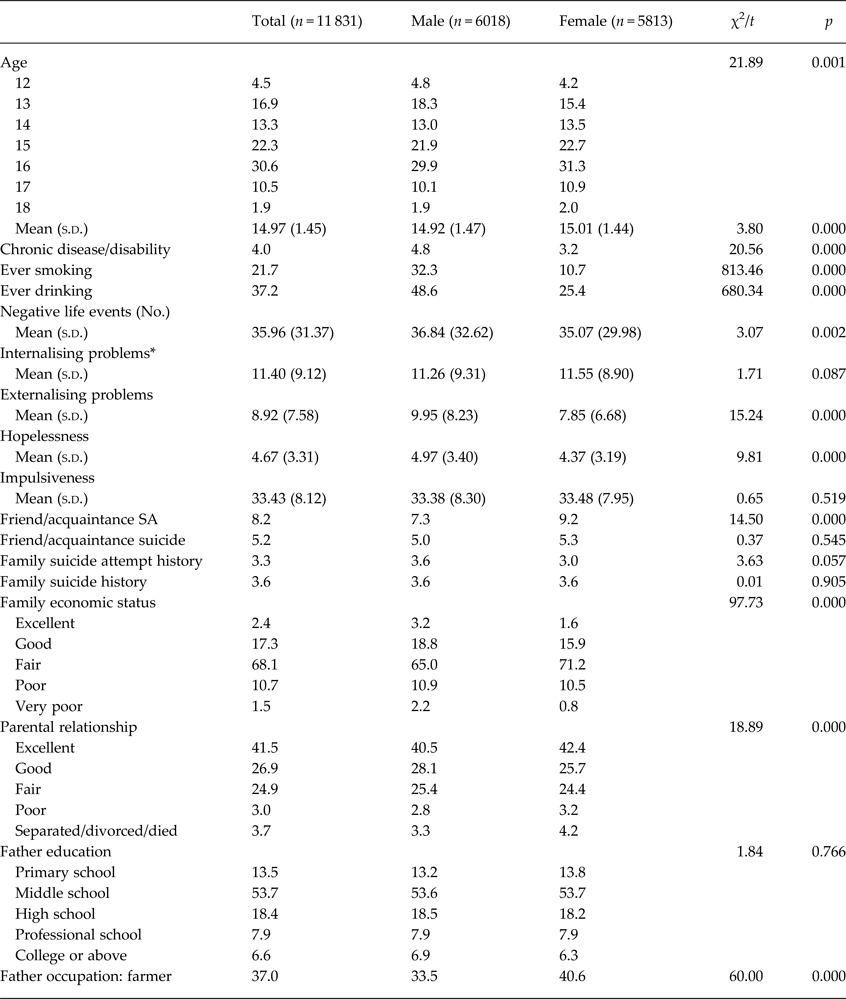
The χ 2 tests for categorical variables or t tests for continuous variables were performed to examine the differences in terms of demographics and psychosocial characteristics between male and female adolescents. Age and sex differences in the three suicidal behaviours were examined by χ 2 testes. Univariate logistic regression analyses were performed to examine the associations between individual adolescent and family variables and last-year suicide thought, plan and attempt, respectively. Separate multivariate regressions were performed to examine which adolescent and family variables were independently associated with suicide thought, plan or attempt. All variables were entered to adjust for potential confounding effects with each other (Table 1). The p < 0.05 was used as a threshold for significance tests. Statistical tests of the regression estimates or odds ratios were based on Wald statistics. All statistical analyses were performed using IBM SPSS Statistics for Windows, Version 20.0 (IBM Corp, Armonk, New York, USA).
Sample characteristics (%)
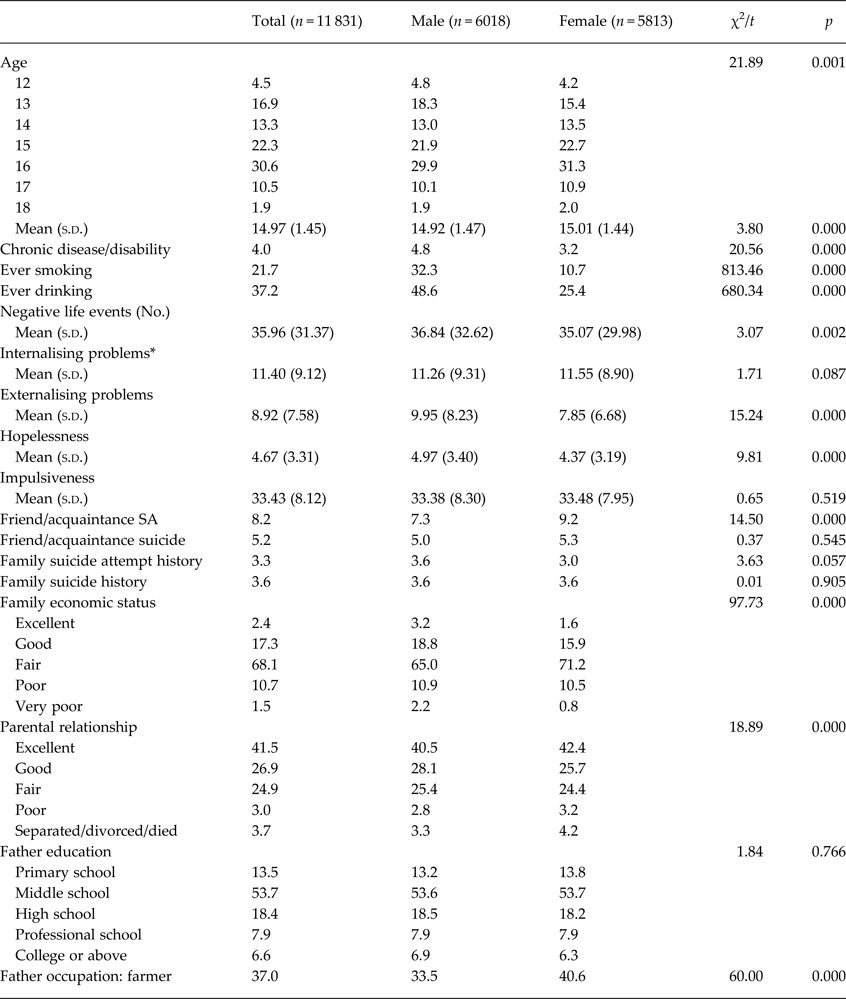
* Excluding self-harm and suicidal thought.
Results
Sample characteristics
Of 12 301 students sampled for the baseline survey, 11 836 who attended school on the day of survey returned questionnaires; five students returned their questionnaires in blank, leaving 11 831 for statistical analysis (96.2%). Mean age of the participants was 15.0 (s.d. = 1.5) and 51% were boys. Participant and family characteristics by sex are presented in Table 1.
Prevalence of suicidal behaviour
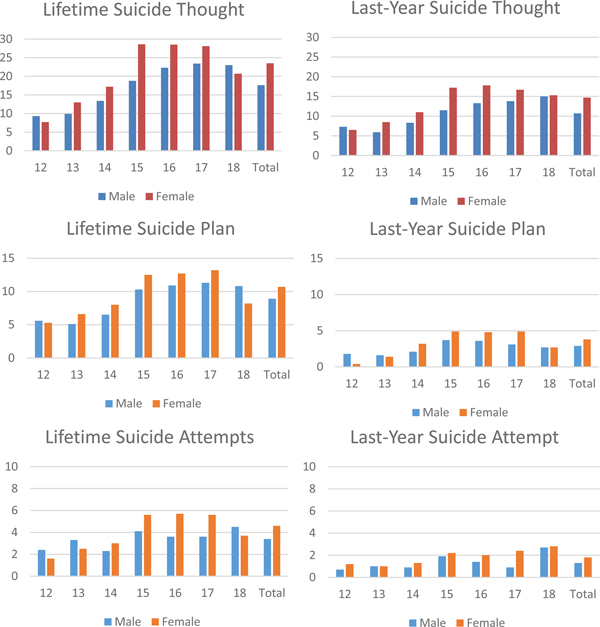
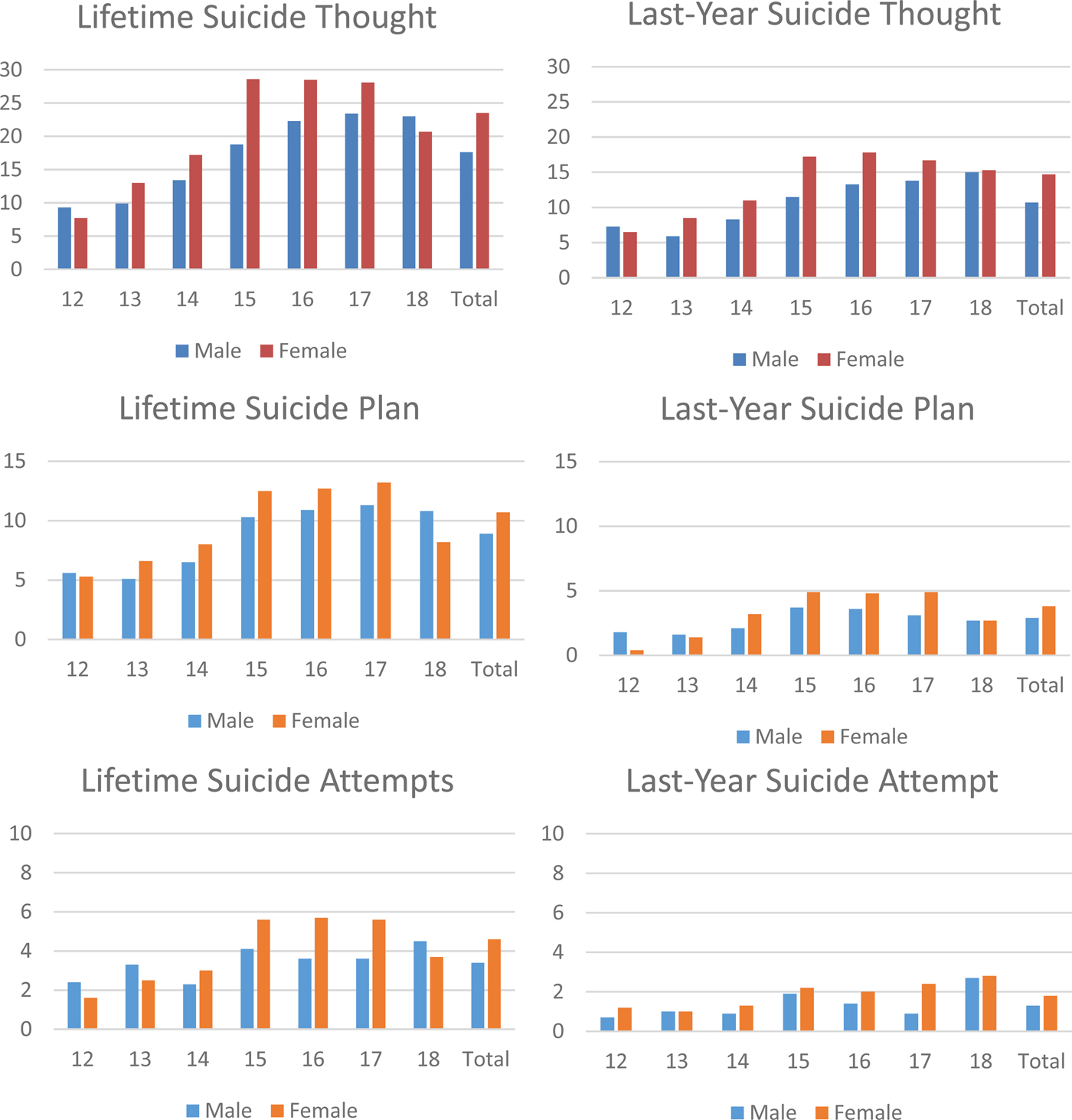
Of the sample, 17.6% of boys and 23.5% girls had ever had ST, 10.7 and 14.7% had ST in the last year; 8.9 and 10.7% had ever had SP, 2.9 and 3.8% had SP in the last year; and 3.4 and 4.6% had ever had SA, 1.3 and 1.8% had SA in the last year, respectively. The lifetime and last-year prevalence rates of all the three suicidal behaviours were significantly higher in girls than in boys (all p < 0.05). As shown in Fig. 1, all the three suicidal behaviours tended to increase before age 17.
Prevalence (%) of suicidal behaviour by age and gender.
Characteristics of SA
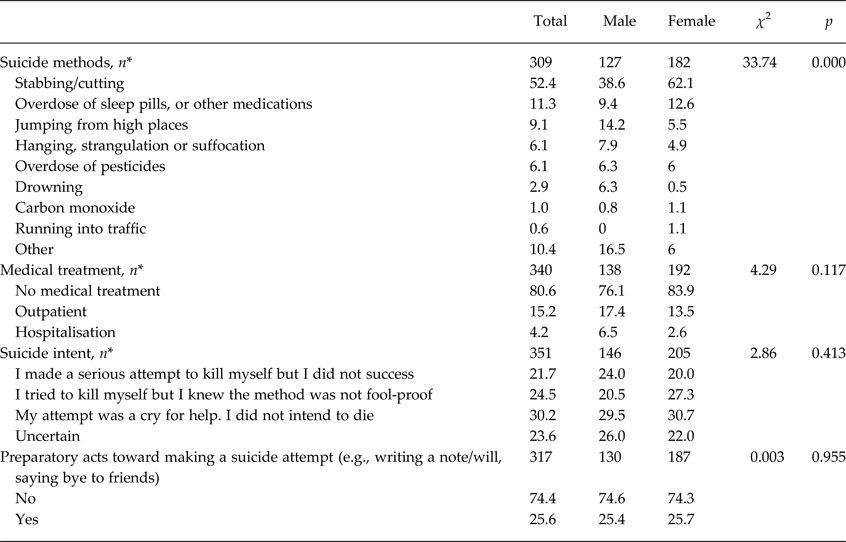
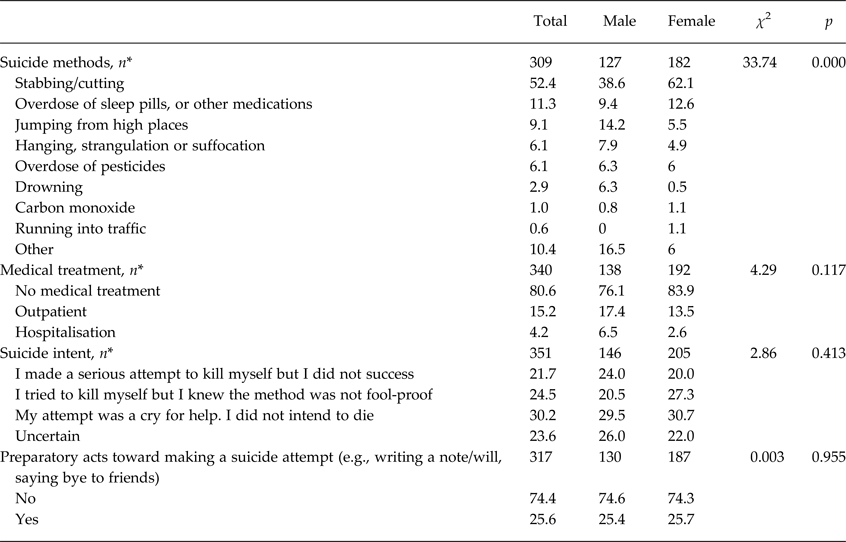
The mean age of first SA was similar between boys (12.3, s.d. = 2.29) and girls (12.6, s.d. = 2.17). As shown in Table 2, stabbing/cutting was the most common method to attempt suicide, with 62% in girls and 39% in boys. Jumping from high places was the second common method (14.2%) for boys, overdose of sleep pills or other medications was the second common method (12.6%) for girls. There were significant differences in attempt methods between males and females (χ 2 = 33.74, p < 0.001).
Suicidal characteristics of most recent suicide attempt by gender (%)
* Ns differ due to missing values.
One in five suicide attempters made a serious attempt to kill self and 30% made attempt just for help. Three in four suicide attempters had no preparatory action (e.g., made a will and said goodbye to family or friends). About one in five male attempters were medically treated and 6.5% were hospitalised, 16.1% of female attempters were medically treated and 2.6% were hospitalised.
Demographic and psychosocial factors associated with last-year suicidal behaviour
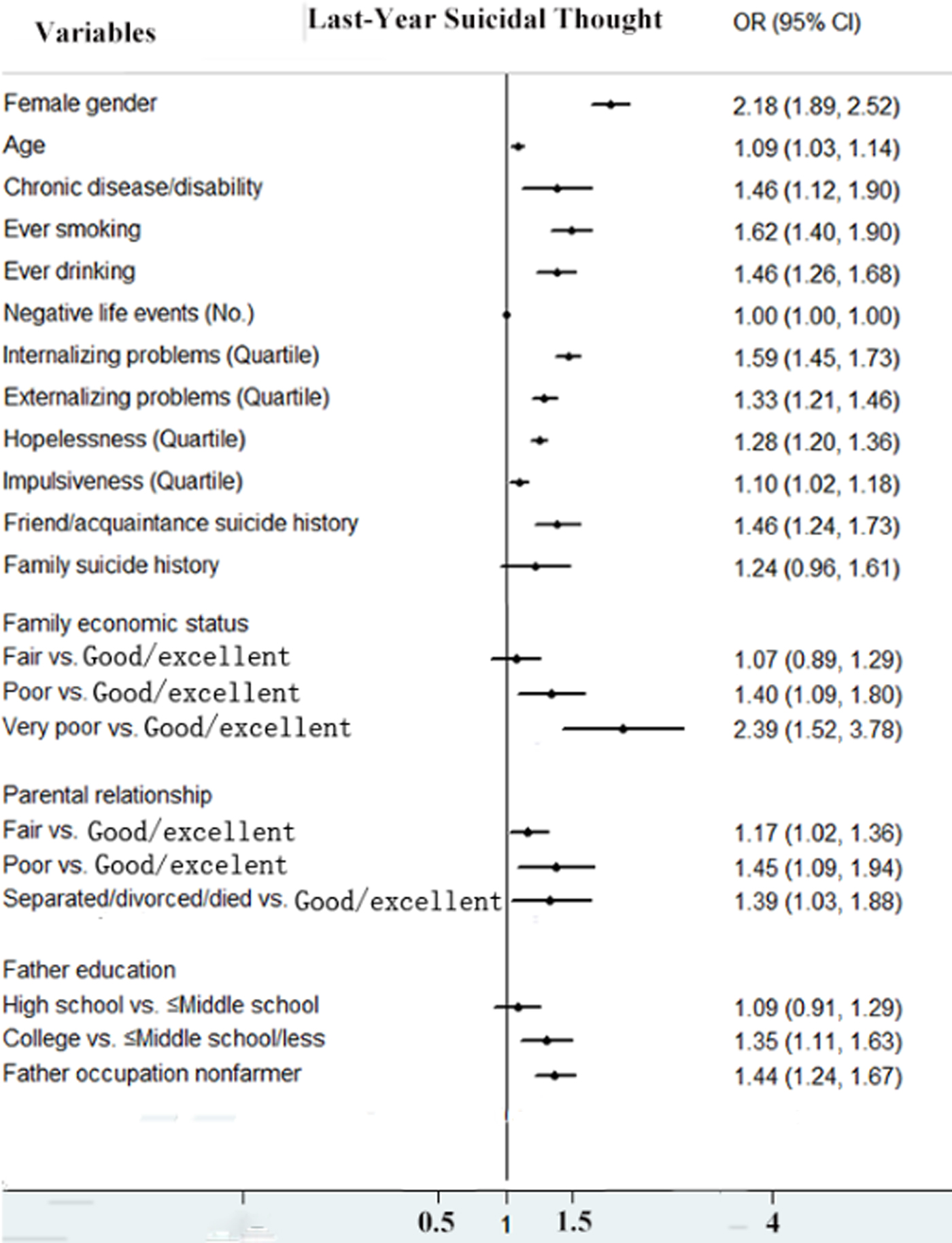
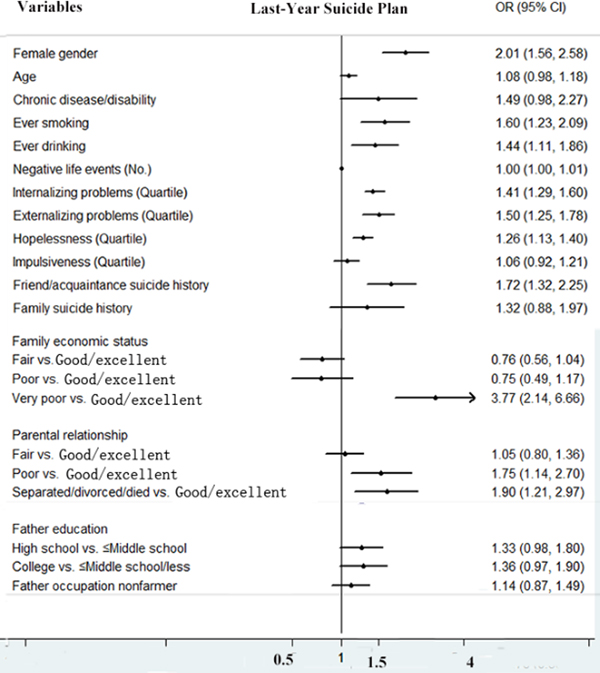
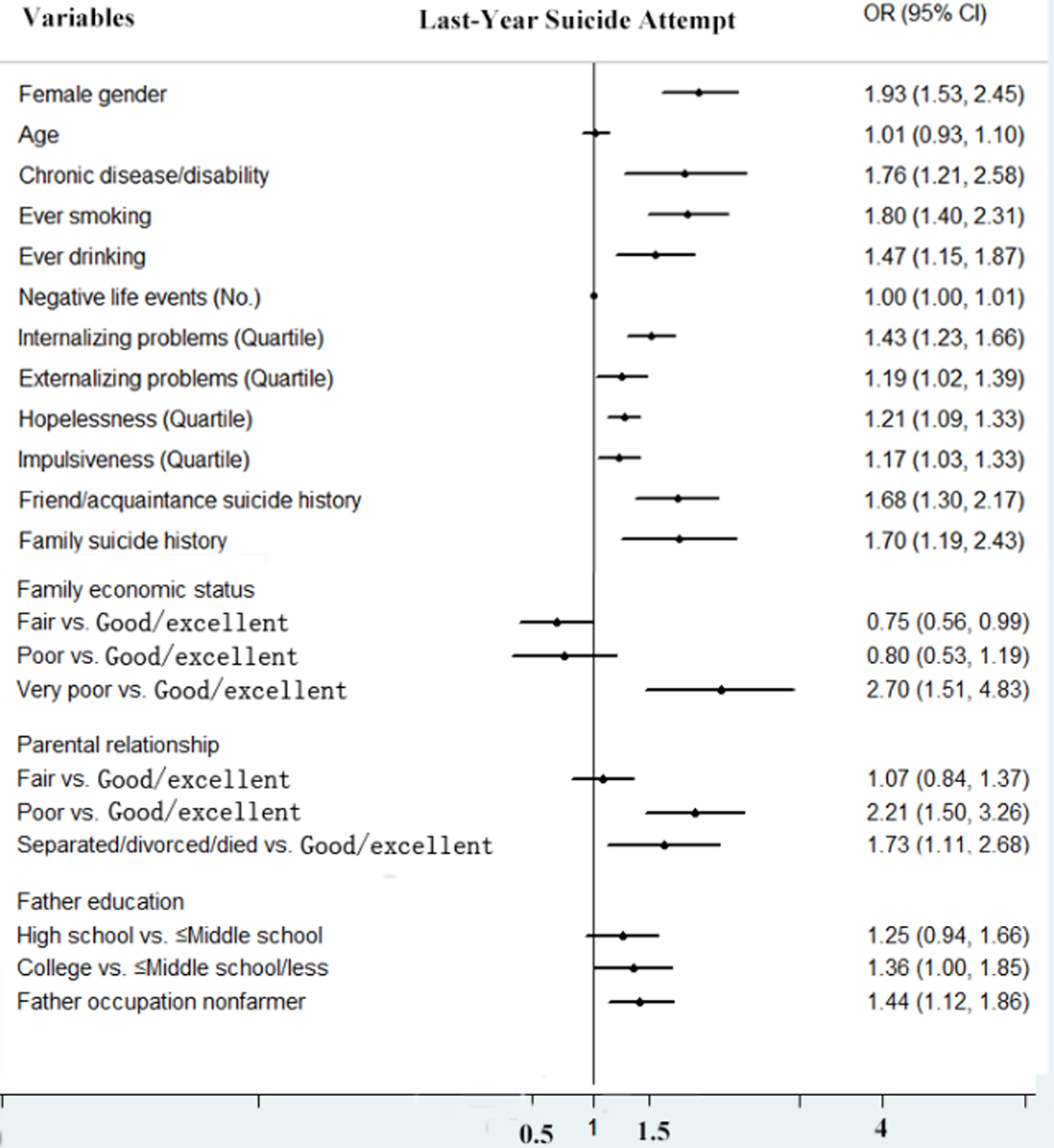
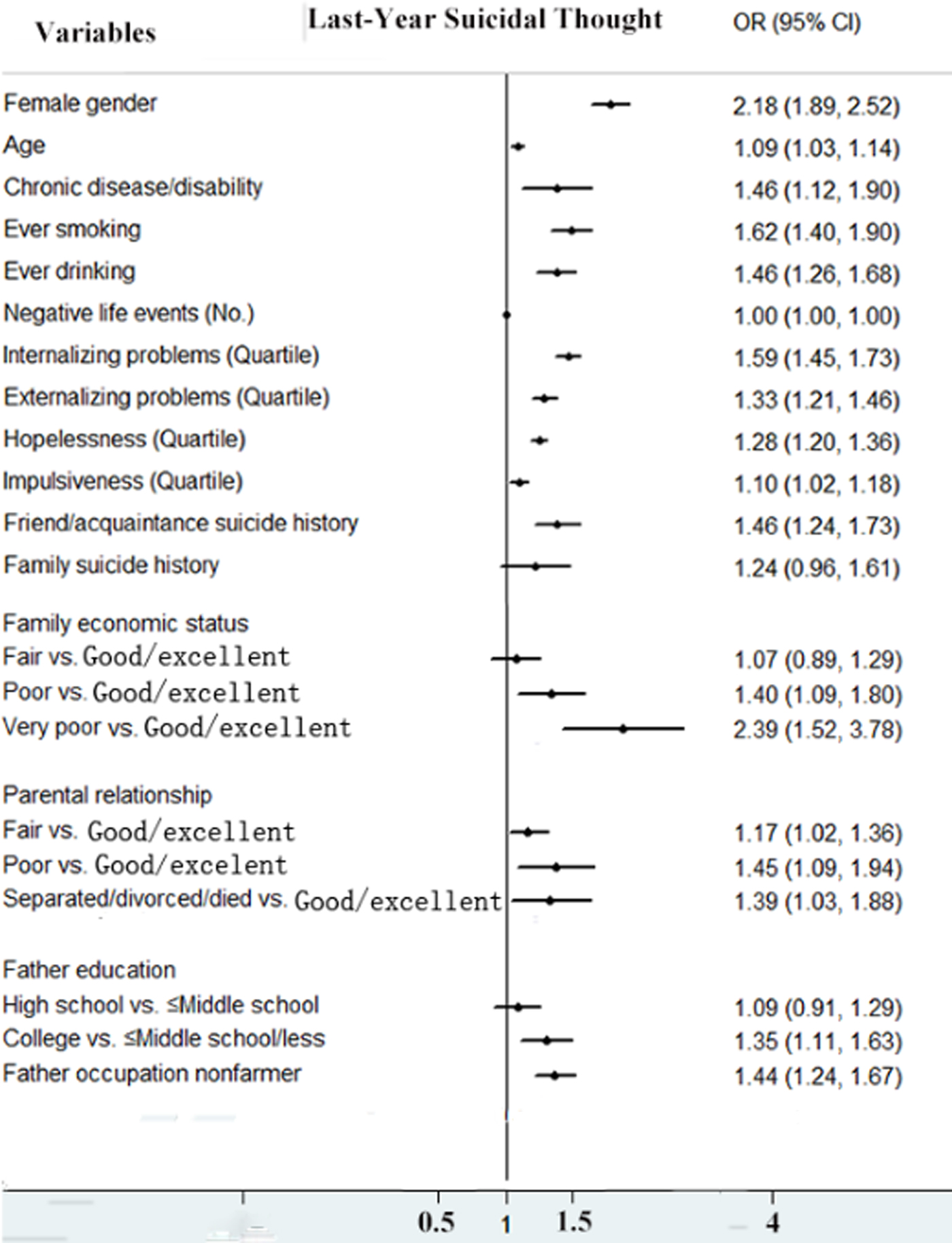
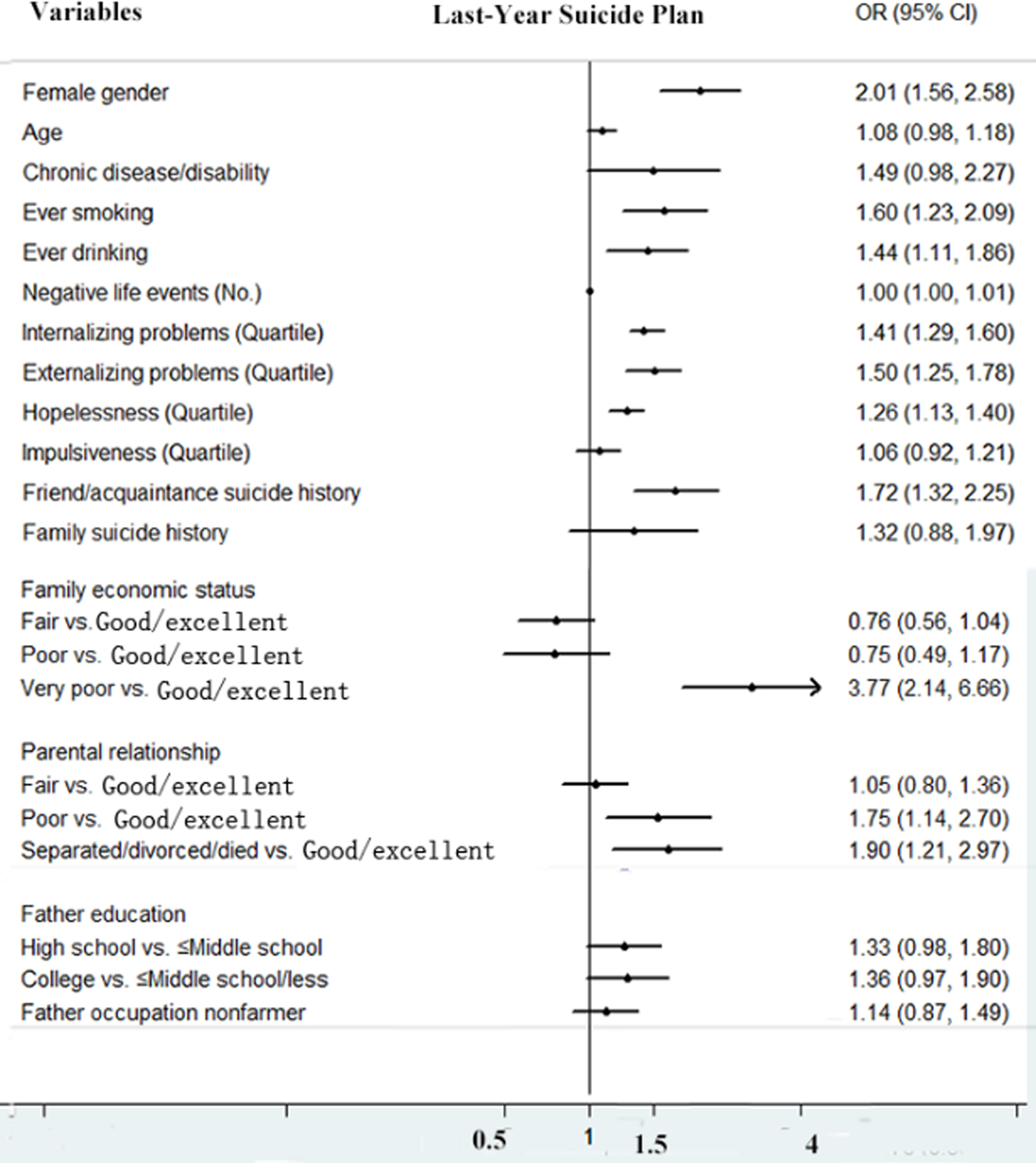
The factors that were associated with increased odds of suicidal behaviour were very similar across ST, SP and SA. As shown in Figs 2–4, after adjusting for all other demographics and psychosocial variables, female gender, ever smoking, ever drinking, internalising and externalising problems, hopelessness, suicide/attempt history of friends or acquaintances, poor family economic status and poor parental relationship were significantly associated with elevated risk of the three suicidal behaviours.
Adjusted odds ratios (95% CI) of risk factors associated with last-year suicidal thought.
Adjusted odds ratios (95% CI) of risk factors associated with last-year suicide plan.
Adjusted odds ratios (95% CI) of risk factors associated with last-year suicide attempt.
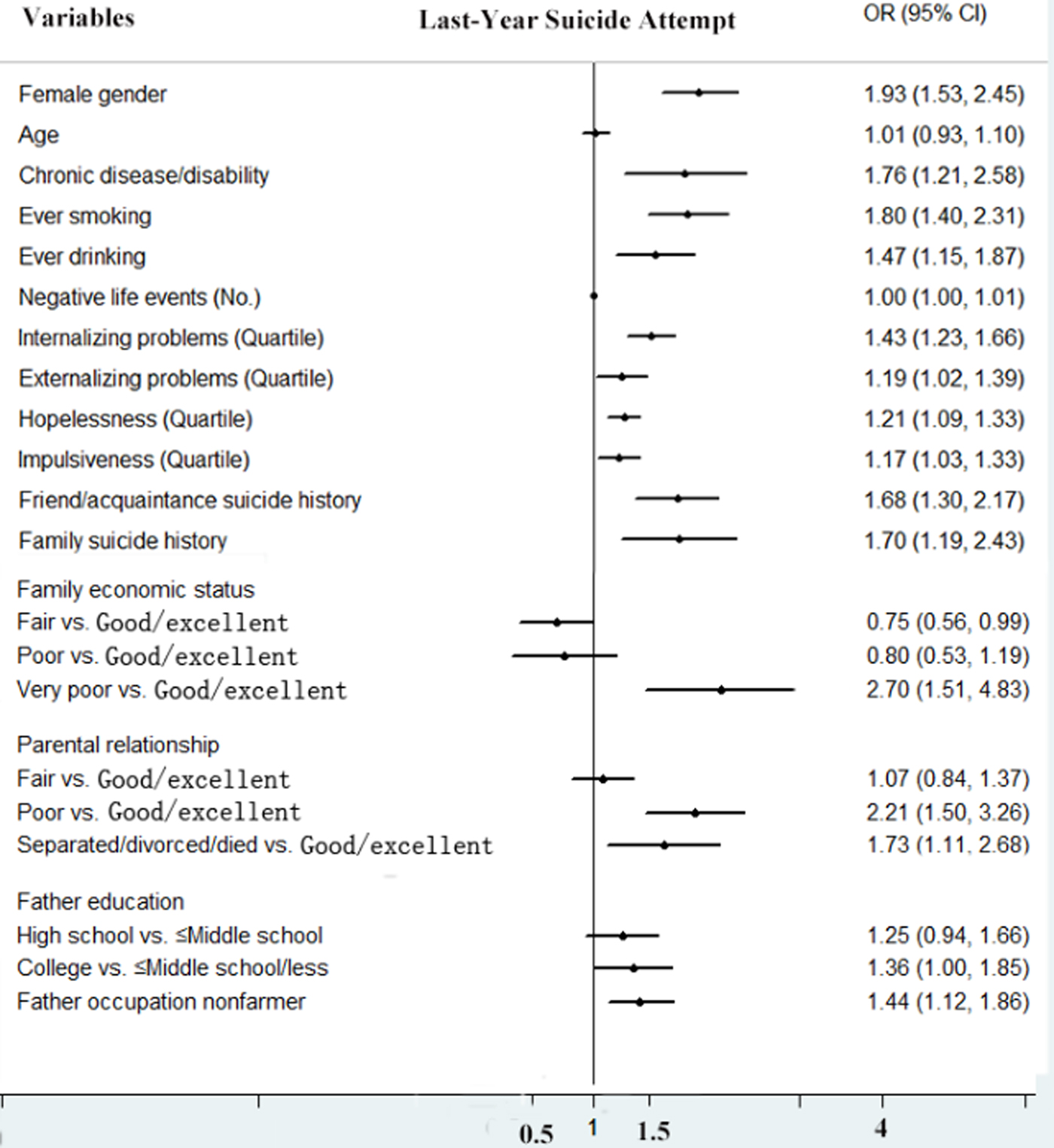
Chronic disease/disability, impulsiveness, college or above of father's education and non-famer occupation of father were associated with increased risk of suicide thought and SA in the past year. Family suicide/attempt history was significantly associated with 70% increased risk of SP (OR = 1.70, 95% CI = 1.19–2.43) compared with those adolescents without family history of suicide/attempt.
Discussion
SAHBC represents one of the largest epidemiological studies of suicidal behaviour and risk factors in Chinese rural adolescents. Our major findings are (1) suicidal behaviour was prevalent and increased before age 17 in Chinese adolescents; (2) suicidal behaviour was more prevalent in girls than in boys but with a low female-to-male ratio of 1.2–1.3; (3) the mean age of first SA was 12–13 years; (4) male attempters were more likely than females to use lethal methods and to be medically treated and hospitalised; (5) suicide thought, plan and attempt shared similar multiple adolescent and family risk factors.
In the sample of Chinese adolescents, 18–25% had ever seriously thought about killing self, 11–15% had thought about it in the last year; 9–11% had ever made a SP, 3–4% had a plan in the last year; and 3–5% had ever attempted suicide, 1–2% had attempted in the last year. The rates of suicide thought and SAs are comparable to those reported in previous studies of Chinese adolescents (Liu & Tein, Reference Liu and Tein2005; Hu et al. Reference Hu, Dong, Chen, Liu, Ma, Liu, Zheng, Mao, Chen and He2015). For example, in a meta-analysis of SA in Chinese adolescents, the authors found that the prevalence rates were 3.10% in rural area and 3.56% in urban area (Hu et al. Reference Hu, Dong, Chen, Liu, Ma, Liu, Zheng, Mao, Chen and He2015). However, the rates are lower than those reported in Western adolescents. For example, in the US 2015 Youth Risk Behavior Survey (YRBS) (Kann et al. Reference Kann, McManus, Harris, Shanklin, Flint, Hawkins, Queen, Lowry, Olsen, Chyen, Whittle, Thornton, Lim, Yamakawa, Brener and Zaza2016), 17.7% of students seriously considered attempting suicide, 14.6% planned for SA and 8.6% attempted suicide during the past year. In the European School Survey Project on Alcohol and Other Drugs (ESPAD) 2007 school survey (Kokkevi et al. Reference Kokkevi, Rotsika, Arapaki and Richardson2012), the median prevalence of any lifetime self-reported SA was 10.5% across 17 European participating countries (range 4.1–23.5%).
The variation of prevalence rates of suicidal behaviour may be influenced substantially by methodological differences between studies, including study populations, measures or question wording of suicidal behaviour, and the level of confidentiality (Hawton et al. Reference Hawton, Saunders and O'Connor2012; Kokkevi et al. Reference Kokkevi, Rotsika, Arapaki and Richardson2012; Kann et al. Reference Kann, McManus, Harris, Shanklin, Flint, Hawkins, Queen, Lowry, Olsen, Chyen, Whittle, Thornton, Lim, Yamakawa, Brener and Zaza2016). However, the study population (adolescent students), data collection (self-report) and questions to assess the three suicidal behaviours are similar between our study and the US YRBS (Kann et al. Reference Kann, McManus, Harris, Shanklin, Flint, Hawkins, Queen, Lowry, Olsen, Chyen, Whittle, Thornton, Lim, Yamakawa, Brener and Zaza2016). The lower rates of suicidal behaviour in Chinese adolescents may be explained by cultural and psychosocial differences. For example, mental health problems, especially depression, are a major risk factor of suicidal behaviour. Studies have demonstrated that behavioural and emotional problems, including depression, are less prevalent in Chinese children and adolescents than in their Western peers (Liu et al. Reference Liu, Kurita, Guo, Miyake, Ze and Cao1999; Tepper et al. Reference Tepper, Liu, Guo, Zhai, Liu and Li2008). Another potential explanation is that Chinese adolescents are likely to under-report their suicidal behaviour. Further study is warranted to understand why Chinese adolescents reported less suicidal behaviour than Western peers.
Consistent with previous studies, we found that female adolescents reported more suicidal behaviour than male peers (Hu et al. Reference Hu, Dong, Chen, Liu, Ma, Liu, Zheng, Mao, Chen and He2015; McKinnon et al. Reference McKinnon, Gariepy, Sentenac and Elgar2016). However, our study showed a lower female-to-male ratio (1.2–1.3) for each suicidal behaviour in Chinese adolescents than in Western adolescents (⩾2) (Madge et al. Reference Madge, Hewitt, Hawton, de Wilde, Corcoran, Fekete, van Heeringen, De Leo and Ystgaard2008; Kokkevi et al. Reference Kokkevi, Rotsika, Arapaki and Richardson2012; Kann et al. Reference Kann, McManus, Harris, Shanklin, Flint, Hawkins, Queen, Lowry, Olsen, Chyen, Whittle, Thornton, Lim, Yamakawa, Brener and Zaza2016). For example, in the study of 17 European countries (Kokkevi et al. Reference Kokkevi, Rotsika, Arapaki and Richardson2012), the lifetime prevalence rates in females are almost double those in males for SAs (13.7% v. 6.9%) and ST (41.2% v. 20.2%). Further studies are needed to investigate the environmental and/or genetic influences on the lower female–male ratio of suicidal behaviour in Chinese adolescents.
Little is known about methods of attempting suicide, intent of suicide and medical treatment due to SA in Chinese adolescents. In the current study, we found that more than half attempters tried to kill self by stabbing/cutting. Female adolescents were more likely than males to stab or cut self to attempt suicide (60 v. 38%). These findings are consistent with most Western studies that demonstrate that self-cutting/stabbing is the most common method (Hawton et al. Reference Hawton, Hall, Simkin, Bale, Bond, Codd and Stewart2003; Olfson et al. Reference Olfson, Gameroff, Marcus, Greenberg and Shaffer2005; Madge et al. Reference Madge, Hewitt, Hawton, de Wilde, Corcoran, Fekete, van Heeringen, De Leo and Ystgaard2008).
We also found that lethal methods like jumping from high places and hanging were more commonly used by male attempters. Male attempters were more likely to be medically treated and hospitalised, possibly due to violent methods used (Madge et al. Reference Madge, Hewitt, Hawton, de Wilde, Corcoran, Fekete, van Heeringen, De Leo and Ystgaard2008). Overdose of pesticides is the most common suicide method in rural Chinese adults (Phillips et al. Reference Phillips, Yang, Zhang, Wang, Ji and Zhou2002b), but only 6% of attempters took pesticides to attempt suicide in the general population of rural adolescents. Majority of rural Chinese adolescent attempters (>80%) did not get medical treatment, consistent with most Western studies (Madge et al. Reference Madge, Hewitt, Hawton, de Wilde, Corcoran, Fekete, van Heeringen, De Leo and Ystgaard2008; Hawton et al. Reference Hawton, Saunders and O'Connor2012).
It should be noted that more than 20% of attempters in Chinese rural adolescents made a serious non-fatal attempt and three in four attempters did not make any preparatory acts towards attempting suicide. This may mean that Chinese suicide attempters might have serious suicide intent or their attempts might happen impulsively, similar to completed suicide in China (Lin et al. Reference Lin, Zhang, Zhou and Jiang2016). Although the rate of SA is lower in rural Chinese adolescents than in Western peers, the consequence of the attempt may be more severe and this may explain relatively higher rates of completed suicide (Phillips et al. Reference Phillips, Li and Zhang2002a) but lower rates of ST and SA in China (Hu et al. Reference Hu, Dong, Chen, Liu, Ma, Liu, Zheng, Mao, Chen and He2015).
Consistent with previous studies (Liu & Tein, Reference Liu and Tein2005; Hawton et al. Reference Hawton, Saunders and O'Connor2012; Kokkevi et al. Reference Kokkevi, Rotsika, Arapaki and Richardson2012), we found that multiple child and family factors are associated with suicidal behaviour in adolescents. In addition to female gender, smoking, alcohol drinking, internalising and externalising problems, hopelessness, suicide history of friends and acquaintances, poor family economic status and poor parental relationship were all significantly associated with increased risk of suicidal behaviour. Although longitudinal studies are needed to examine the causal relationships between these factors and suicidal behaviour, all of which should be taken into consideration to develop comprehensive preventative and interventional programmes for suicide prevention in rural Chinese youths.
This study has several limitations. First, the data were collected by self-report, which may have led to biased reporting of suicidal behaviour. However, given that many SAs may never come to medical attention or result in hospitalisation, self-report measures facilitated through anonymous questionnaires remain a valuable source of information (Madge et al. Reference Madge, Hewitt, Hawton, de Wilde, Corcoran, Fekete, van Heeringen, De Leo and Ystgaard2008; Kokkevi et al. Reference Kokkevi, Rotsika, Arapaki and Richardson2012). Second, the sample was large and the selection of classes was random, but it is unknown the extent to which the findings could be generalised to those adolescents who are not attending schools. Third, although many adolescent and family factors were examined in the study, some other factors from school and community were not included. Furthermore, this is a baseline data analysis of a longitudinal study, so it is not possible to determine the direction of causality between adolescent and family factors and suicidal behaviour.
In conclusion, this study represents one of the largest to report the prevalence, to describe suicidal characteristics, and to examine multiple adolescent and family risk factors of suicidal behaviour in rural Chinese adolescents. Suicidal behaviour is prevalent in Chinese adolescents but less prevalent than that reported in Western peers. Suicidal behaviour in Chinese adolescents has a lower female-to-male ratio (1.2–1.3) that reported in Western peers (⩾2.0). While females are more likely to attempt suicide, males are more likely to use lethal methods. Majority of attempters did not take any preparatory action. Multiple adolescent and family factors are associated with suicidal behaviour. These findings may be of great importance for early identifying adolescents at risk and for developing and implementing suicide prevention and intervention programmes for adolescents.
Acknowledgements
The authors would like to thank staffs at Yanggu County Center for Disease Control and Prevention, Lijin County Center for Disease Control and Prevention, and Zoucheng City Center for Disease Control and Prevention, Shandong Province, China and all participating school teachers for their help with data collection and all students for their voluntarily participating in the study.
Financial Support
This work was funded in part by Shandong Scientific Technique Development Plan (grant number 2014GSF 118163) and National Natural Science Foundation of China (grant number 81573233).
Conflict of Interest
None.
Ethical Standard
The authors assert that all procedures contributing to this work comply with the ethical standards of the relevant national and institutional committees on human experimentation and with the Helsinki Declaration of 1975, as revised in 2008.
Availability of Data and Materials
Please contact Dr Xianchen Liu at xliu69@uthsc.edu or Dr Cun-Xian Jia at jiacunxian@sdu.edu.cn for data supporting the findings of the study.