Introduction
Of all lichenized fungi, around 10% are associated with cyanobacterial photobionts as functional photosynthetic active partners that also fix atmospheric nitrogen into organic forms (Honegger Reference Honegger2012). According to Adams et al. (Reference Adams, Bergman, Nierzwicki-Bauer, Duggan, Rai and Schüßler2013), the most common cyanobacterial photobionts are the heterocystous forms Nostoc, Scytonema, Calothrix and Fischerella. While over the last decade a large and growing body of literature has investigated symbiotic Nostoc (for review, see Rikkinen Reference Rikkinen2009, Reference Rikkinen2013), the diversity of other lichenized cyanobacteria has only lately begun to be explored. A phylogenetic study by Lücking and collaborators (Reference Lücking, Lawrey, Sikaroodi, Gillevet, Chaves, Sipman and Bungartz2009) discovered, for instance, a previously unrecognized lineage of filamentous, heterocystous cyanobacteria, which was recently named as Rhizonema Lücking & Barrie (Lücking et al. Reference Lücking, Barrie and Genney2014). In addition, Rhizonema was found to be the second most diverse lichenized cyanobacterial genus after Nostoc.
Initially, Rhizonema appeared to be obligately lichenized and largely tropical, with prevalence in the recently revised basidiolichen genera Acantholichen, Cora, Corella, Cyphellostereum and Dictyonema (Lawrey et al. Reference Lawrey, Lücking, Sipman, Chaves, Redhead, Bungartz, Sikaroodi and Gillevet2009; Yánez et al. Reference Yánez, Dal-Forno, Bungartz, Lücking and Lawrey2012; Dal-Forno et al. Reference Dal-Forno, Lawrey, Sikaroodi, Bhattarai, Gillevet, Sulzbacher and Lücking2013, Reference Dal-Forno, Lücking, Bungartz, Yánez-Ayabaca, Marcelli, Spielmann, Coca, Chaves, Aptroot and Sipman2016; Lücking et al. Reference Lücking, Barrie and Genney2014), as well as in other, unrelated but ecologically similar lichens, such as in the ascomycetous genera Coccocarpia and Stereocaulon (Lücking et al. Reference Lücking, Lawrey, Sikaroodi, Gillevet, Chaves, Sipman and Bungartz2009). However, our parallel study shows 1) that Rhizonema species are also found together with lichens from boreal forests, and 2) that they can live in symbiosis with a liverwort and not necessarily only with lichens (Cornejo & Scheidegger Reference Cornejo and Scheidegger2016). The present study focuses on the genetic diversity of the symbiotic Rhizonema species associated with the boreal felt lichen, Erioderma pedicellatum (Hue) P. M. Jørg.
Erioderma pedicellatum is a rare epiphytic cyanolichen, first discovered in the 19th century in New Brunswick, Atlantic Canada. This species is considered to be an ancient taxon that evolved early from a Gondwanaland stock of the genus (Jørgensen Reference Jørgensen2001). In the last 50 years, it has experienced a dramatic decline in its European and Canadian populations, and is listed as critically endangered by the International Union for the Conservation of Nature (Scheidegger Reference Scheidegger2003). In fact it was believed to be extinct in Europe by Jørgensen (Reference Jørgensen1990), but young specimens were unexpectedly found in two disjunct regions in Norway (Holien et al. Reference Holien, Gaarder and Håpnes1995; Reiso & Hofton Reference Reiso and Hofton2006), apparently indicating recolonization. More recently, E. pedicellatum was surprisingly discovered in rich populations in damp conifer forests in Alaska (Nelson et al. Reference Nelson, Walton and Roland2009) and Kamchatka (Stepanchikova & Himelbrant Reference Stepanchikova and Himelbrant2012), confirming its restriction to moist boreal forests, while other species of the genus have mainly evolved in South America and South-East Asia (Jørgensen Reference Jørgensen2001; Jørgensen & Arvidsson Reference Jørgensen and Arvidsson2002; Jørgensen & Sipman Reference Jørgensen and Sipman2002).
During recent decades, a number of studies have investigated habitat requirements and environmental effects that threaten the existence of E. pedicellatum. Different causes for the decline of this lichen are well documented, for example, forestry activities in Sweden (Ahlner Reference Ahlner1954). In Maritime Canada, the loss of thalli due to wind exposure after clear-cut, acid rain, and air pollution, are likely to contribute to the rapid population decline (Maass & Yetman Reference Maass and Yetman2002; Richardson & Cameron Reference Richardson and Cameron2004; Cameron et al. Reference Cameron, Neily and Anderson2010, Reference Cameron, Goudie and Richardson2013 a, Reference Cameron, Neily and Clapp b). Less is known, however, about the life cycle of E. pedicellatum and the resynthesis of the lichen symbiosis. Like all sexually reproducing lichen species, a germinating ascospore of E. pedicellatum will not be able to form a lichen thallus until it makes contact with a compatible photosynthetic cyanobiont. Among other reasons, it is quite conceivable that populations of E. pedicellatum in Maritime Canada are declining due to the limited availability of the photobiont in natural habitats. In other words, fungal hyphae of E. pedicellatum would only rarely find a suitable photobiont in order to re-establish the lichen symbiosis.
Many fungal species have been shown to associate with more than one cyanobiont, and these are often also shared by several other cohabiting cyanolichen species (for a review, see Rikkinen Reference Rikkinen2009, Reference Rikkinen2013, Reference Rikkinen2015). Our previous investigation at the regional scale in Newfoundland has shown, however, that E. pedicellatum is highly selective towards one Rhizonema strain (Cornejo & Scheidegger Reference Cornejo and Scheidegger2016). Additionally, this study reports that various closely related Rhizonema form symbioses with ecologically similar lichen species, but from different genera, such as an undetermined Lichinodium Nyl. species, Moelleropsis nebulosa subsp. frullaniae Maass, and Parmeliella parvula P. M. Jørg. Based on these initial findings, the present study also explores whether the boreal felt lichen remains highly selective towards the same Rhizonema strain throughout the whole distribution range on the Atlantic and Pacific Coasts.
With respect to the photobiont, Jørgensen et al. (Reference Jørgensen, Clayden, Hanel and Elix2009) assumed the presence of a photobiont-mediated lichen guild, Coccocarpia-Erioderma, for E. mollissimum (Sampaio) Du Rietz and E. pedicellatum in forests of Newfoundland, according to Rikkinen (Reference Rikkinen2002, Reference Rikkinen2003). A recent investigation confirmed this assumption, demonstrating that E. pedicellatum shares an identical Rhizonema rbcLX haplotype with local populations of the core species Coccocarpia palmicola (Spreng.) Arv. & D. J. Galloway, and with cyanobacterial colonies on the co-occurring liverwort Frullania asagrayana Mont. (Cornejo & Scheidegger Reference Cornejo and Scheidegger2016). Nevertheless, the question still remains whether the compatible photobiont can be found within suitable, as yet uncolonized habitats of E. pedicellatum. According to the concept of photobiont-mediated lichen guilds, the photobiont of E. pedicellatum is hypothesized to be more frequent on trees colonized by vegetatively reproducing lichens that share the same photobiont, than on trees without these core lichen species. However, our previous study (Cornejo & Scheidegger Reference Cornejo and Scheidegger2016) demonstrated that in Newfoundland, a cyanobacteria-mediated tripartite interaction between Rhizonema, F. asagrayana and lichenized fungi must be taken into consideration. Therefore, one of the purposes of this study is to test whether the compatible Rhizonema is present in uncolonized habitats of E. pedicellatum, by screening for this cyanobacterium in leaves of F. asagrayana, collected from trees with and without the core lichen species C. palmicola.
The most significant threats to lichens in boreal forests today are the loss of mature trees, the disappearance of old-growth forests, and changes in tree species composition. Therefore, this study attempts to gain a better understanding of the boreal felt lichen, and to contribute to its continuous persistence in boreal forests. Partial sequences of both the small subunit rDNA gene (16S) and the RuBisCo region rbcL-rbcX (rbcLX) were sampled to identify locally restricted cyanobacterial clusters. This paper reports on the surprising findings that the specific photobiont of E. pedicellatum is widespread in uncolonized habitats in Newfoundland and that the highest photobiont diversity of E. pedicellatum is found in populations on the Pacific coast.
Materials and Methods
Collection sites of Erioderma pedicellatum
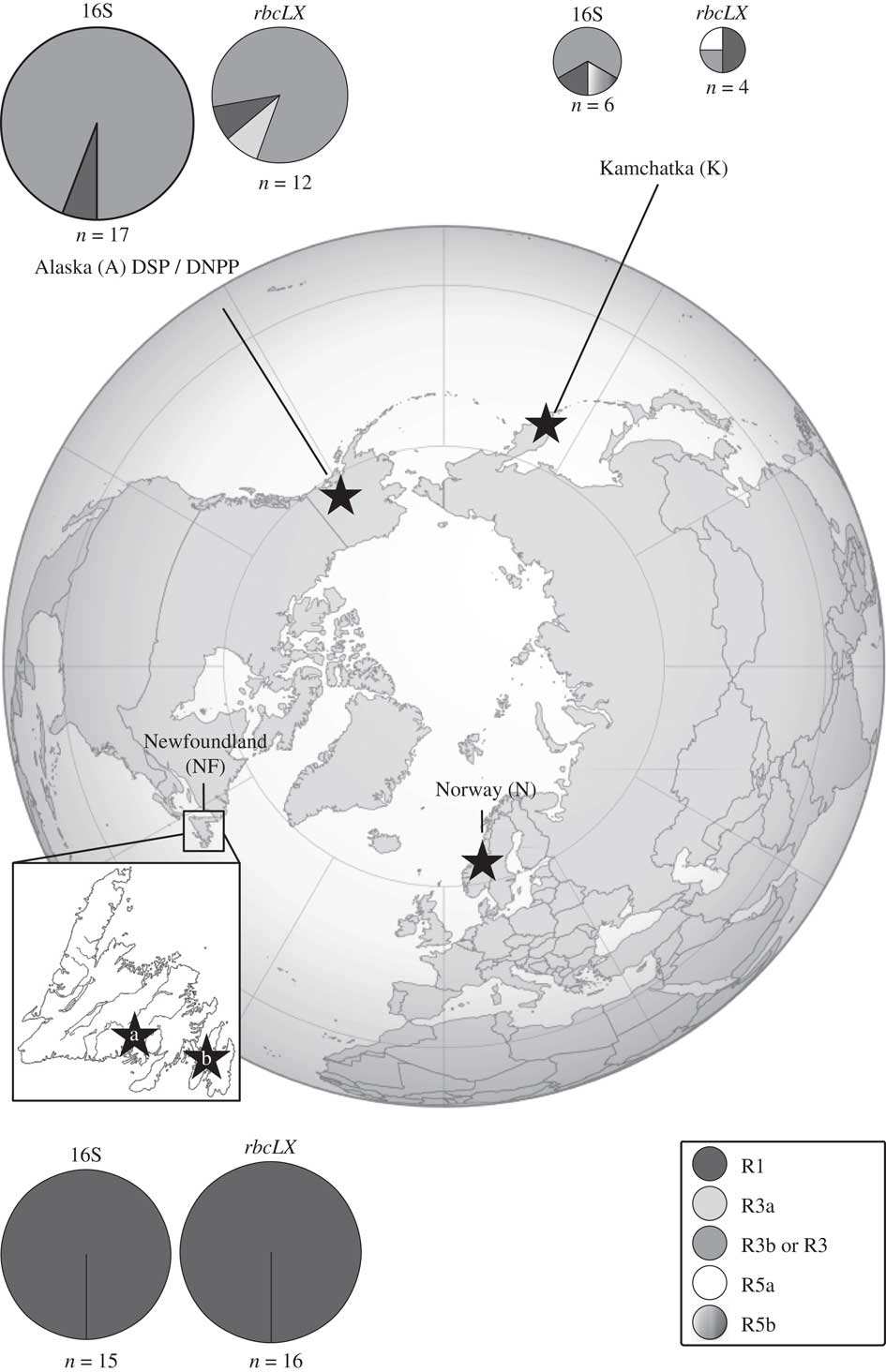
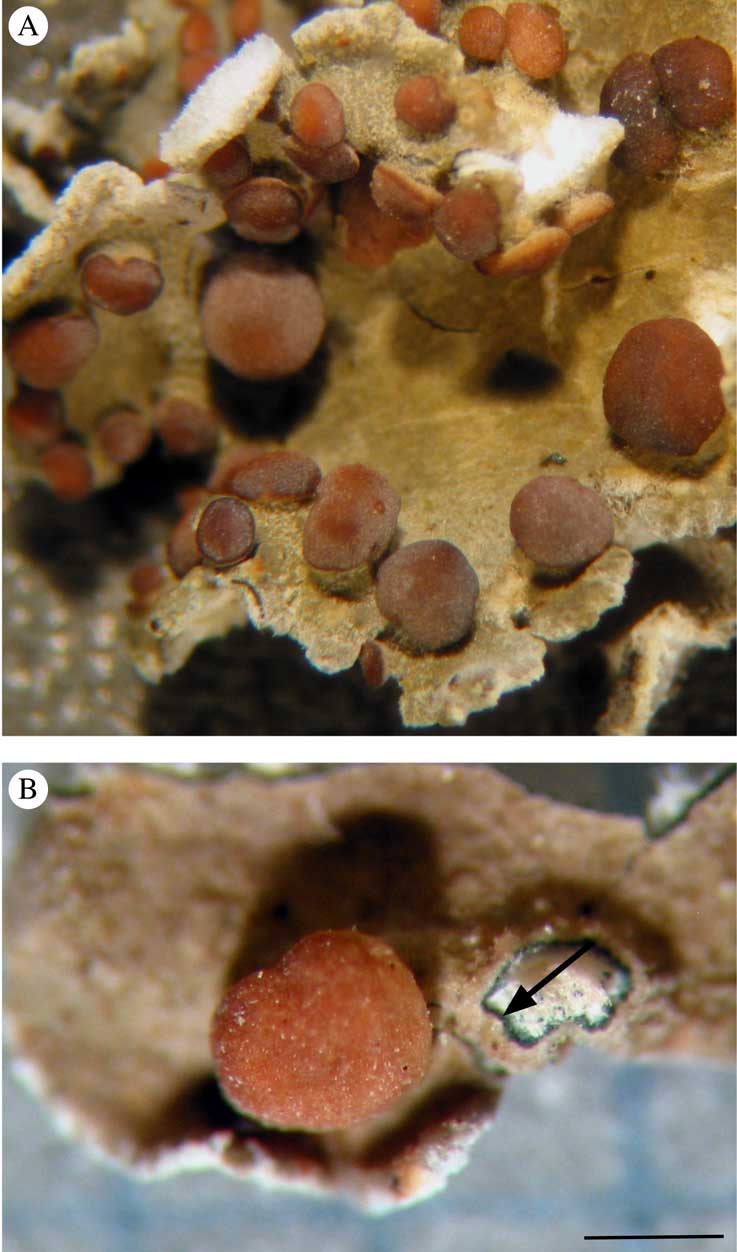
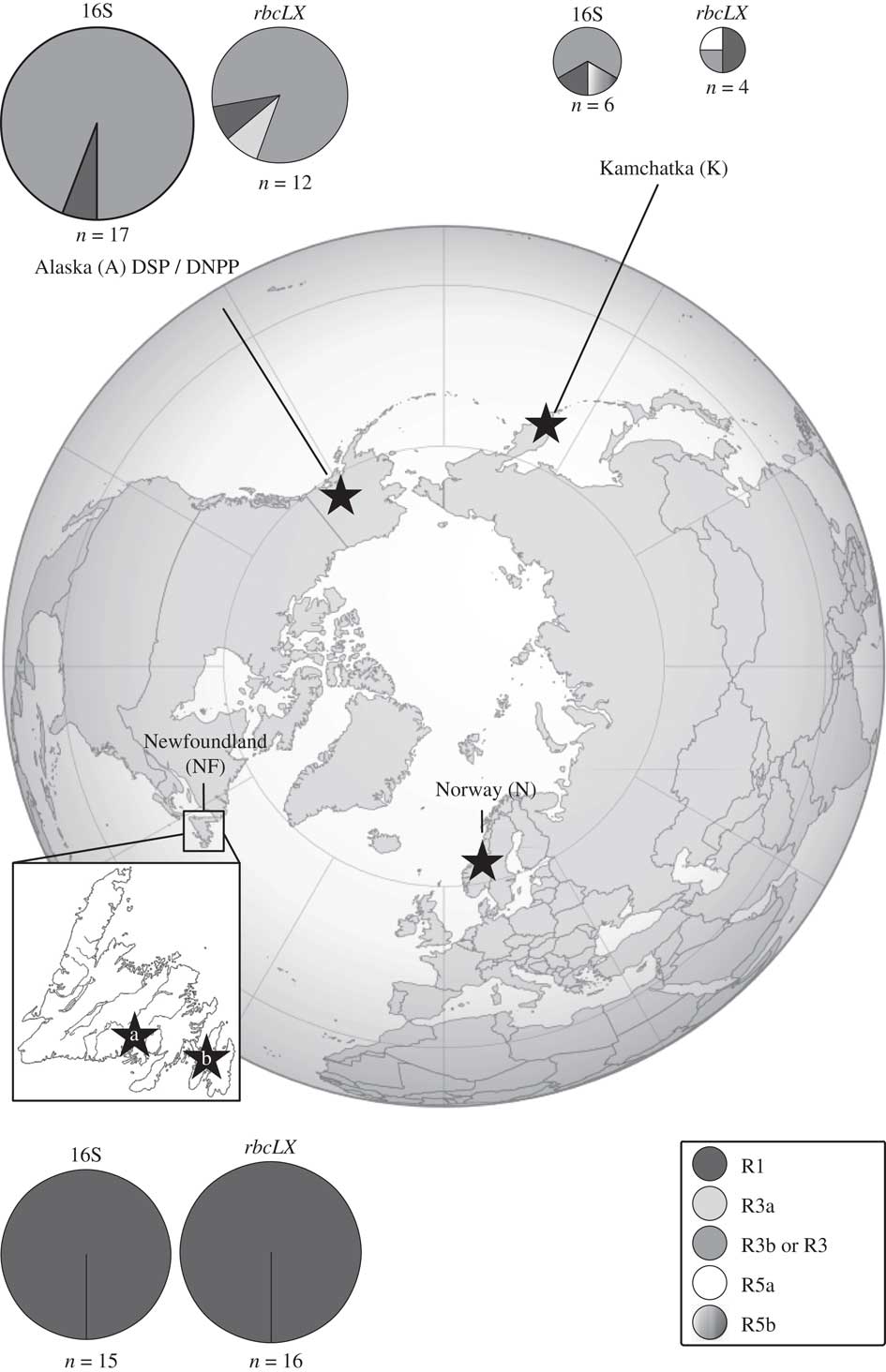
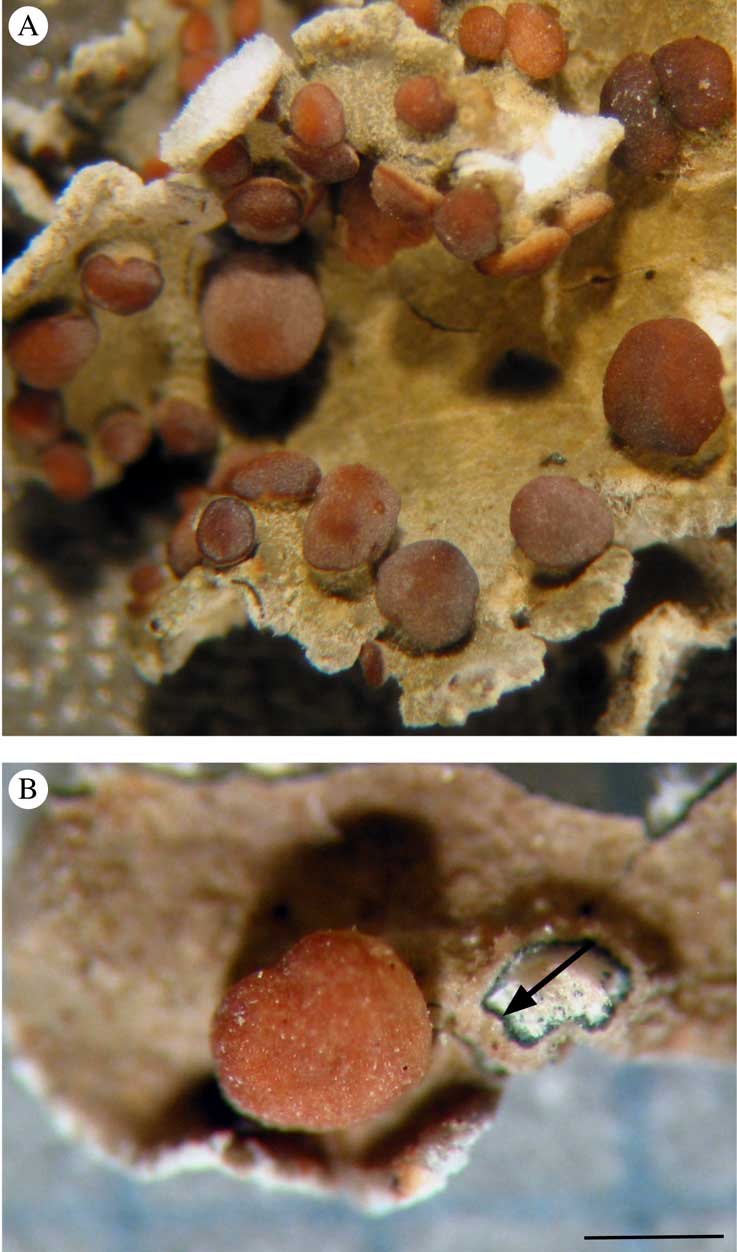
Specimens of E. pedicellatum were collected in Alaska (USA) and the Kamchatka Peninsula (Russia) (Fig. 1). In addition, a small fragment of E. pedicellatum from North Trøndelag (Norway) was kindly provided by the TRH herbarium for the purpose of this study (Fig. 2B). A humid continental climate, greatly influenced by the sea, and coniferous forests characterize all collection sites where E. pedicellatum grows predominantly on the bark of conifers: in Alaska on Picea glauca (Moench) Voss., in Kamchatka on Picea ajanensis (Lindl. et Gord.) Fisch. ex Carr., and in Europe on Picea abies (L.) H. Karst.
Circumpolar map showing sampling locations for Erioderma pedicellatum. Collection sites in Newfoundland include site a, close to the Bay D’Espoir (one site) and site b, Avalon Peninsula (all other specimens). Pie charts show the distribution of 16S and rbcLX haplotypes found in each location. The size of circles is directly proportional to the number of individuals analyzed. The ERI/02-individual from Norway belongs to the 16S R3-haplotype and is not shown. A full list of haplotypes per collection site can be found in Table 2. (Circumpolar map: Wikimedia Commons; Avalon Peninsula: artofanderson.com)
Erioderma pedicellatum. A, thallus showing many apothecia; B, sampled piece of thallus (ERI/02 from Norway). A wound on the upper surface of the thallus exposes the blue-greenish, cyanobacterial layer (arrow). Scale=c. 1 mm
Specimens from south-central Alaska were collected in the Denali State Park (DSP) and the Denali National Park and Preserve (DNPP), located between 62°18'–64°04' N latitude and 152°52'–148°48' W longitude (for sampling details, see Nelson et al. Reference Nelson, Walton and Roland2009). In Kamchatka, specimens were collected in August 2009 during a collecting trip in the Kronotsky Nature Reserve, south of the Nikolka Volcano, close to the confluence of the Levaja Schapina and Ipuin rivers. One collection site was 2·2 km to the north of the mouth of the Ipuin River at 300 m altitude. Two other locations were c. 2·5 km, and the last 3·5 km to the north-east of the mouth of this river, at 331, 350, and 370 m altitude, respectively. The vegetation of these sites was an pristine Picea ajanensis forest with green mosses on the slopes. The collection area ranged between 55°08'07''–38'' N latitude and 159°57'23''–159°59'24'' E longitude (Stepanchikova & Himelbrant Reference Stepanchikova and Himelbrant2012).
Finally, this study utilizes molecular data of specimens collected in Newfoundland and analyzed in a previous study (Cornejo & Scheidegger Reference Cornejo and Scheidegger2016). In Newfoundland, E. pedicellatum grows mainly on Abies balsamea (L.) Mill. One collection site was on the southern coast of Newfoundland, in Bay D’Espoir (BDE) (47°54'22·3194" N, 55°34'37·74" W) (Fig. 1), while all others were in the Avalon Peninsula, in the vicinity of Lockyers Waters (LW), Fourth Pond (FP), Sandy Pond (SP), Long Harbour (LH), and Placentia (P), between 47°25'–47°14' N latitude and 53°57'–53°16' W longitude (Fig. 1).
Study species
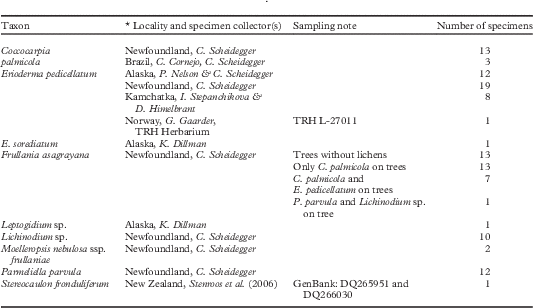
This work studies species of the lichen guild Coccocarpia-Erioderma collected in Newfoundland, that is, C. palmicola, E. pedicellatum, Lichinodium sp., Moelleropsis nebulosa ssp. frullaniae, and Parmeliella parvula, as well as the liverwort Frullania asagrayana (Table 1). Other lichen species, such as Pectenia plumbea (Lightf.) P. M. Jørg. et al., Lobaria pulmonaria (L.) Hoffm., Lobaria scrobiculata Nyl. ex Cromb., Fuscopannaria ahlneri P. M. Jørg., Peltigera collina (Ach.) Röhl., and Pseudocyphellaria crocata (L.) Vain., share the same habitat but are already known to associate with Nostoc strains (Miadlikowska & Lutzoni Reference Miadlikowska and Lutzoni2000; Stenroos et al. Reference Stenroos, Stocker-Wörgötter, Yoshimura, Myllys, Thell and Hyvonen2003; Wedin et al. Reference Wedin, Wiklund, Jorgensen and Ekman2009). Thus only some of these species were included in the dataset as outgroup taxa.
Taxa and number of specimens used in this study

* Majority of specimens from Newfoundland collected for previous study (Cornejo & Scheidegger 2016).
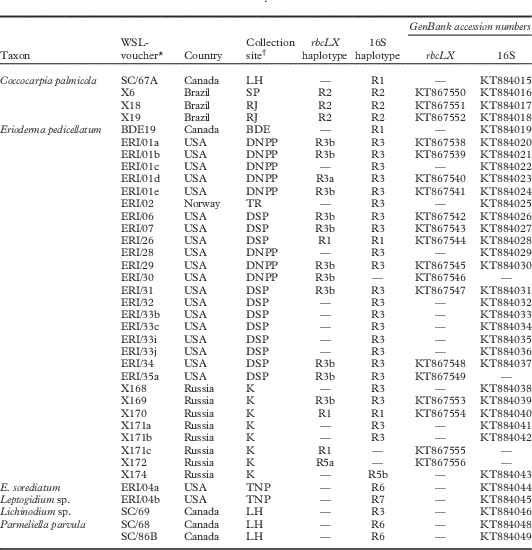
In contrast, Erioderma sorediatum P. M. Jørg. & D. J. Galloway and an undefined Leptogidium Nyl. species are reported to associate with Scytonema strains (Jørgensen Reference Jørgensen2006; Muggia et al. Reference Muggia, Nelson, Wheeler, Yakovchenko, Tønsberg and Spribille2011). According to Lücking et al. (Reference Lücking, Lawrey, Sikaroodi, Gillevet, Chaves, Sipman and Bungartz2009), lichenized Scytonema-like cyanobacteria might belong to Rhizonema. Consequently, specimens of E. sorediatum and Leptogidium sp. from the Tongass National Forest in south Alaska were added to the dataset to test whether their photobionts are also Rhizonema species. To minimize population damage due to sampling, only fragments of E. pedicellaum were harvested (Fig. 2). The specimen vouchers and GenBank accession numbers of loci sampled are listed in Table 2.
Vouchers of sampled lichen specimens, their rbcLX and 16S haplotypes and GenBank accession numbers
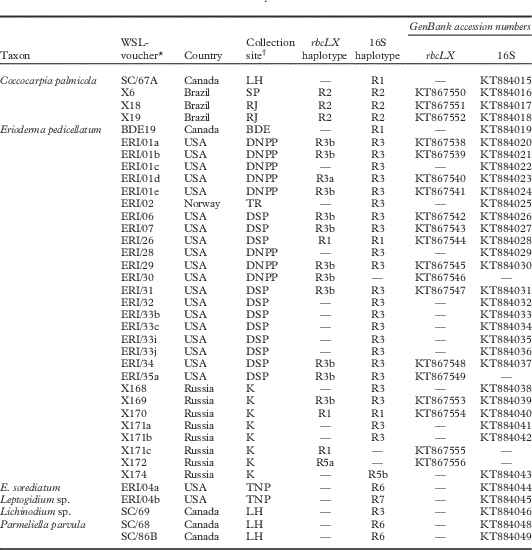
* All specimens are stored frozen at WSL (C. Scheidegger-collection), except BDE19.
† Collection site key: Brazil: SP=State Paraná; RJ=Rio de Janeiro. Canada-Newfoundland: BDE=Bay D’Espoir; LH=Long Harbour; LW=Lockyer’s Waters. Norway: TR=North Trøndelag. Russia: K=Kamchatka. USA-Alaska: TNP=Tongass National Park; DSP=Denali State Park; DNPP=Denali National Park and Preserve.
Sampling design for Frullania asagrayana
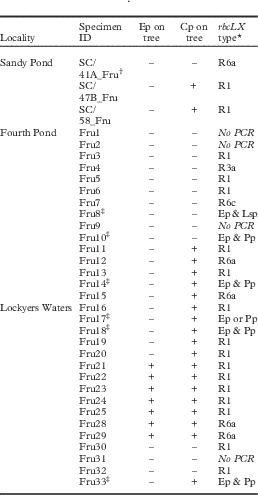
In order to verify the presence of the compatible photobiont of E. pedicellatum in potential habitats of this species in Newfoundland, we collected F. asagrayana, colonized by cyanobacterial mats in two E. pedicellatum localities, namely Fourth Pond and Lockyers Waters, where 31 liverwort specimens were randomly sampled from trees: 1) without lichens, 2) where C. palmicola was present, and 3) where C. palmicola and E. pedicellatum were present on trees. Three additional F. asagrayana specimens from the Sandy Pond locality were found on trees that were already colonized by C. palmicola and E. pedicellatum or by P. parvula and Lichinodium sp. In total, 34 specimens of F. asagrayana were collected and prepared for DNA extraction (Table 3). The null hypothesis here was that there is no association between the occurrence of C. palmicola and the occurrence of the compatible Rhizonema on the same tree, while the alternative hypothesis assumes that the compatible Rhizonema is found in a higher proportion of trees where C. palmicola is present. A one-sided test was chosen because we expected that the presence of the core lichen C. palmicola supports the presence of the compatible Rhizonema on the same tree, according to the concept of the photobiont-mediated lichen guild (Rikkinen Reference Rikkinen2002). Fisher’s exact test (R 3.2.2, R Core Team 2014) used a 2×2 contingency table for the test of the null hypothesis and it was applied with a significance level of P=0·05.
Screening of Rhizonema strains on specimens of the liverwort Frullania asagrayana from Newfoundland. The presence (+) or absence (–) of lichen taxa on sampled trees, and the rbcLX type found in the liverwort are indicated
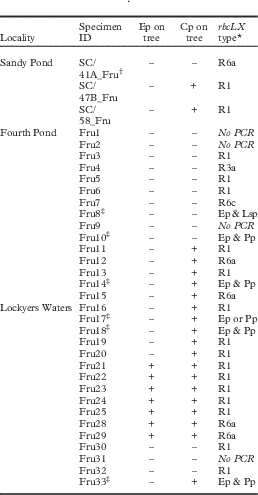
* GenBank accession numbers KT867586–KT867609 (Cornejo & Scheidegger 2016).
† Non-systematically sampled tree, SC/41A, with P. parvula and Lichinodium sp. on tree.
‡ Dimorphic rbcLX sequences, representing two different Rhizonema strains. These sequences were excluded from haplotype analysis, hence they are not designated with a haplotype abbreviation but with both lichen names to which sequences correspond.
Cp=C. palmicola; Ep=E. pedicellatum; Lsp=Lichinodium sp.; Pp=P. parvula
Laboratory procedures and data analyses
DNA isolation and genetic markers
The DNA isolation of all specimens, the polymerase chain reactions of the 16S and rbcLX loci, the cycle sequencing, and sequence alignments were performed as described in Cornejo & Scheidegger (Reference Cornejo and Scheidegger2016). For the amplification of shorter fragments with higher Rhizonema specificity, internal primer pairs were designed (16S: CYA-16S-F 5'-ctagttggtagggtaaaagctt-3' and CYA-16S-R 5'-taccgcactctagctttga-3'; rbcLX: CYA-rbcLX-F 5'-atttggtggtggtactttgggt-3' and CYA-rbcLX-R 5'-agccaaagtgctaagggagaat-3') based on sequences obtained with the broad range primers CYA106F–CYA781R (Nübel et al. Reference Nübel, Garciapichel and Muyzer1997) and CW–CX (Rudi et al. Reference Rudi, Skulberg and Jakobsen1998), following the author’s PCR instructions.
DNA polymorphism of sampled 16S and rbcLX sequences
To eliminate ambiguously aligned fragments, both datasets were aligned using Gblocks (Castresana Reference Castresana2000; Talavera & Castresana Reference Talavera and Castresana2007) on the Phylogeny.fr platform (Dereeper et al. Reference Dereeper, Guignon, Blanc, Audic, Buffet, Chevenet, Dufayard, Guindon, Lefort and Lescot2008, Reference Dereeper, Audic, Claverie and Blanc2010). Within Gblocks, the options “smaller final blocks, gaps position on the final blocks, and fewer strict flanking positions” were used. DnaSP v.5.10.01 (Librado & Rozas Reference Librado and Rozas2009) was used for DNA polymorphism analyses, using options for haploid prokaryotes and excluding sites with gaps. Analyses focused on haplotype diversity (Hd, probability that two randomly chosen haplotypes are different within the sample) (Nei & Tajima Reference Nei and Tajima1983), the pairwise estimates of nucleotide divergence (Pi, probability that two randomly taken nucleotides from the same position are different) (Jukes & Cantor Reference Jukes and Cantor1969), and the average of nucleotide differences (K). In order to test the null hypothesis that sequences are evolving according to neutral expectations, Tajima’s D-test were performed on each locus (Tajima Reference Tajima1989). Signal of recombination was sorted on each locus using the Phi test (Bruen et al. Reference Bruen, Philippe and Bryant2006) as applied in the software SplitsTree4 (v.4.11.3; Huson & Bryant Reference Huson and Bryant2006), since DnaSP uses a four-gametic statistic whose infinite sites assumption can be violated by the high mutation rate of bacteria.
Haplotype network
The statistical parsimony algorithm applied in TCS v.1.21 (Clement et al. Reference Clement, Posada and Crandall2000) was used to construct a haplotype network that estimates 1) gene genealogies, including multifurcations and/or reticulations, and 2) the species-subspecies interface, using a 95% connection limit and treating gaps as missing data. In a haplotype network, the aim is to represent all equally most-parsimonious solutions, and missing data are likely to result in greater network complexity (Joly et al. Reference Joly, Stevens and van Vuuren2007). Therefore, the datasets obtained from Gblocks, which excluded all ambiguous sites from the matrix, were used for TCS haplotype analyses. Based on Hart & Sunday (Reference Hart and Sunday2007), the present study considered unconnected subnetworks as a general tool in species assignment. Haplotypes were hierarchically nested to visualize higher-order patterns of association and colour-coded using the graphic software Omnigraffle 5.4.4 (Omni Group, Seattle, USA).
Results
Primer specificity, dimorphic sequences and alignments
Out of the eight specimens of E. pedicellatum from Kamchatka, six 16S and four rbcLX sequences were obtained, since the others did not amplify with the internal primers, and generated several PCR products with the external primers. Similarly, only the 16S sequences of the specimens ERI/02 (E. pedicellatum from Norway), E. sorediatum and Leptogidium sp. were obtained. Consequently, these samples are not represented in the rbcLX haplotype analysis. Furthermore, four DNA samples of F. asagrayana did not amplify with any rbcLX primers (Table 3), and most specimens of this liverwort gave very low PCR concentrations with the 16S-primers. In this case, a reamplification with internal primers has not been successful and the few sequences obtained were mostly dimorphic. For this reason, 16S-sequences of F. asagrayana were not used for the present study.
Six samples of F. asagrayana were excluded from analyses because their sequences contained some dimorphic nucleotide sites. A separate analysis of dimorphic sites demonstrated that there were two possible DNA sequences in each sequence belonging to the Rhizonema strains under investigation (Table 3). In other words, different strains of lichen-compatible cyanobacteria were found that belong to the genus Rhizonema and live epiphytically on the same liverwort leaf. In five cases, the photobionts of E. pedicellatum and P. parvula were detected on the same branch. Further, the cyanobacterial partners of E. pedicellatum and Lichinodium sp. were also found to share the habitat on a single branch of the liverwort.
Finally, the present study used data from 116 specimens that included one liverwort species and eight lichen species (Table 1). The 16S partial locus of 35 samples and the rbcLX region of 20 specimens were generated (Tables 2 & 3) and analyzed together with 42 16S and 76 rbcLX sequences produced previously (Cornejo & Scheidegger Reference Cornejo and Scheidegger2016), as well as the sequences DQ265951 (16S) and DQ266030 (rbcLX) acquired from GenBank. Gblocks calculated no ambiguous positions (i.e., 100% conserved) for the 573 bp alignment of the 16S dataset, including three sequences with each single gap. However, some rbcLX sequences were amplified with external primers and others with internal primers, resulting in longer and shorter rbcLX sequences. Consequently, 375 positions (57%) of the rbcLX alignment were considered conserved by Gblocks, including 17 sequences containing one gap, one sequence with two gaps, two with 32, and one sequence with 34 gaps.
Screening of the compatible Rhizonema strain of E. pedicellatum
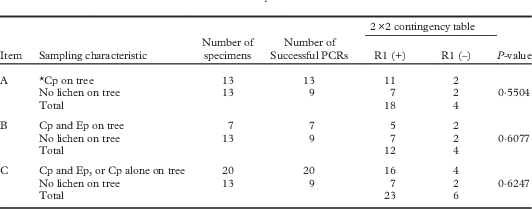
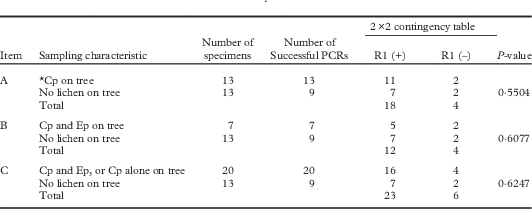
From 34 samples of F. asagrayana, four gave no PCR product and one was on a tree colonized by P. parvula and Lichinodium sp. but not C. palmicola or E. pedicellatum (Table 3). These five specimens were therefore excluded from further analysis. The photobiont of E. pedicellatum was present in 23 (79·3%) out of the 29 remaining samples, including six dimorphic rbcLX sequences. Out of 20 samples that were collected from trees where either E. pedicellatum or C. palmicola or both were present, 16 (80%) samples contained the E. pedicellatum-specific Rhizonema. Furthermore, out of the 9 samples that were collected from trees where neither of the two lichen species was present, 7 (77·7%) contained the E. pedicellatum-specific Rhizonema. The null hypothesis, which assumed a lack of association between the occurrence of the compatible Rhizonema and the presence of C. palmicola on the same tree, failed to be rejected. Thus, no significant difference was found between trees without lichens and i) trees with C. palmicola (P=0·5504), ii) trees with C. palmicola and E. pedicellatum (P=0·6077), and iii) trees with E. pedicellatum and C. palmicola or C. palmicola alone on the same tree (P=0·6247) (Table 4).
Evaluation of the Rhizonema rbcLX haplotype (R1) found in F. asagrayana and compatible with E. pedicellatum in Newfoundland, using 2×2 contingency tables for the observed presence (+) or absence (–) of the R1. The P-values indicate results of one-tailed Fisher’s exact tests for a small sample size
*Cp=Coccocarpia palmicola; Ep=Erioderma pedicellatum.
16S and rbcLX sequence variation
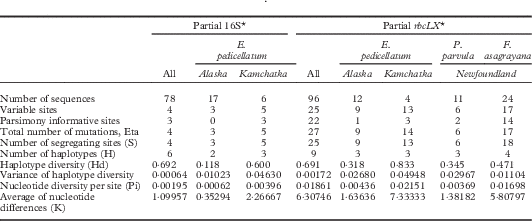
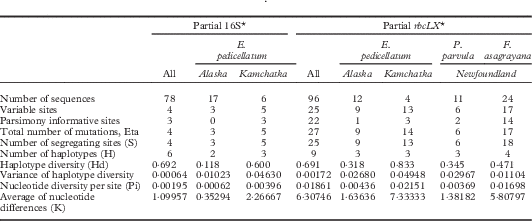
In both datasets polymorphism was detected (Table 5). However, polymorphism within Rhizonema of the same lichen species was rare. In Newfoundland, within-host polymorphism was only detected in F. asagrayana and P. parvula. Rhizonema of E. pedicellatum were polymorphic only in Alaska and Kamchatka (Fig. 1). Similarly, polymorphism was only detected between Brazilian and Canadian specimens of C. palmicola but not within populations. Rhizonema of E. pedicellatum in Newfoundland was monomorphic for both loci (Fig. 1), whereas strains from Kamchatka showed the highest nucleotide diversity per site (Pi) and average of nucleotide differences (K) of all Rhizonema strains studied (Table 5).
Summary of the nucleotide and haplotype diversity of polymorphic Rhizonema as calculated by DnaSP. Within-host polymorphism was found only in 16S-sequences of E. pedicellatum from Alaska and Kamchatka, and in rbcLX-sequences of E. pedicellatum (Alaska and Kamchatka), P. parvula and F. asagrayana
* Alignment length of 16S: 1–573 nu; rbcLX: 1–375 nu.
Within-locus analyses (78 16S-sequences of eight lichen species and 96 rbcLX-sequences of six lichen and one liverwort species) gave a haplotype diversity of 6 and 9 haplotypes, respectively. But while both regions obtained similar values for the haplotype diversity (Hd), the nucleotide diversity (Pi) showed a significant difference between both loci, the Pi value of the 16S region being around ten times lower than that of the rbcLX locus (Table 5). Of all variable sites within both datasets, only one consisted of two nucleotides next to each other; all others were SNPs (single-nucleotide polymorphisms). The largest number of SNPs was found within the intergenic spacer of the rbcLX region, then within the partial rbcL coding region, whereas the partial rbcX region was monomorphic among the specimens studied (data not shown). Selective neutrality was examined by Tajima’s method, which tests the standard neutral model for a given region of DNA sequence (Tajima Reference Tajima1989). Tajima’s D showed values close to zero (16S: D=0·73517; rbcLX: D=0·60414) and were not significant (P>0·10), suggesting that both 16S and rbcLX regions are apparently free from strong selective pressure. Furthermore, the Phi test (SplitsTree4) found no statistically significant evidence for recombination within the 16S (P=0·793) or rbcLX matrix (P=0·066).
Haplotype analyses
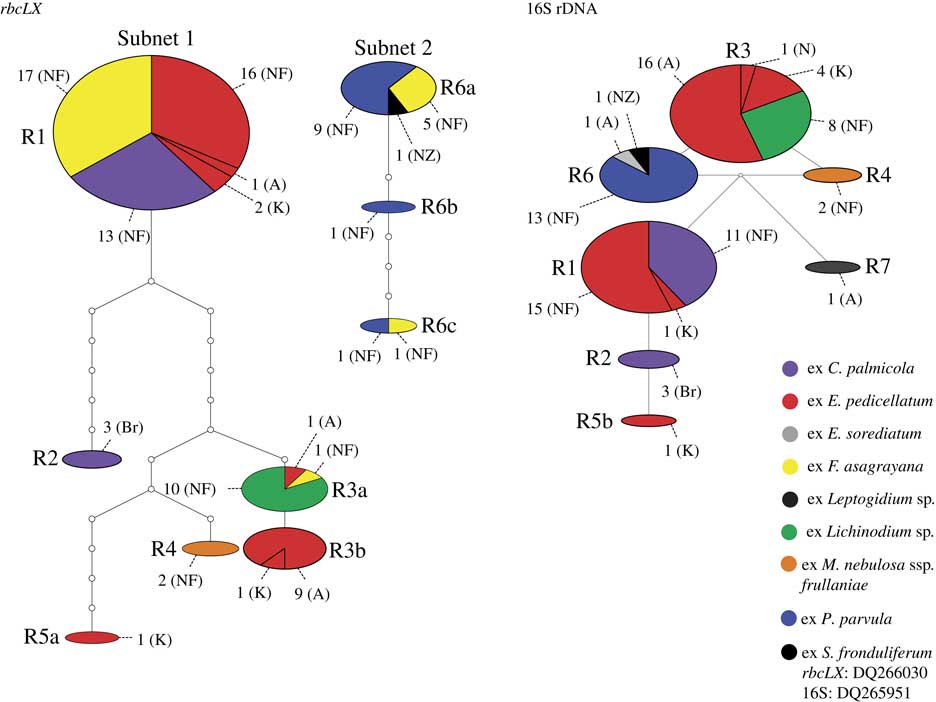
At 95% statistical parsimony, eight connection steps were calculated for the rbcLX dataset, resulting in two subnets (Fig. 3). The 96 analyzed Rhizonema sequences contained nine diverging rbcLX haplotypes in accordance with the DnaSP number of haplotypes (H). Subnet 1 is dominated by the haplotype R1, which includes specimens of C. palmicola, E. pedicellatum and F. asagrayana that were sampled in Newfoundland, as well as one specimen of E. pedicellatum from Alaska (ERI/26) and two from Kamchatka (X170, X171c). Most Rhizonema sequences of E. pedicellatum from Alaska are found in R3b, one specimen from Kamchatka (X169) being the exception within R3b. On the other hand, all Rhizonema samples of Lichinodium sp. are included in R3a, one specimen of E. pedicellatum from Alaska (ERI/01d) being the exception within R3a. Other haplotypes within subnet 1 are R2 (comprising three Brazilian specimens of C. palmicola), R4 (comprising both specimens of M. nebulosa ssp. frullaniae from Newfoundland), and R5a (specimen X172 of E. pedicellatum from Kamchatka). Finally, in P. parvula from Newfoundland, three distinct rbcLX haplotypes (R6a–c) were found plotted in subnet 2. Interestingly, the sequence DQ266030 of S. fronduliferum from New Zealand shares the same rbcLX haplotype, R6a, as specimens of P. parvula from Newfoundland.
Two haplotype analyses of relationships among symbiotic Rhizonema. Left: two unconnected subnets representing 96 rbcLX sequences of symbiotic Rhizonema associated with lichens and a liverwort. Right: one network representing 78 16S sequences of symbiotic Rhizonema associated with lichens. Ovals or segments are coloured according to the symbiotic partner. Number of specimens per symbiotic partner is adjacent to segments; letters in parentheses indicate origin of specimens. Key to countries: A, Alaska; Br, Brazil; K, Kamchatka; N, Norway; NF, Newfoundland; NZ, New Zealand.
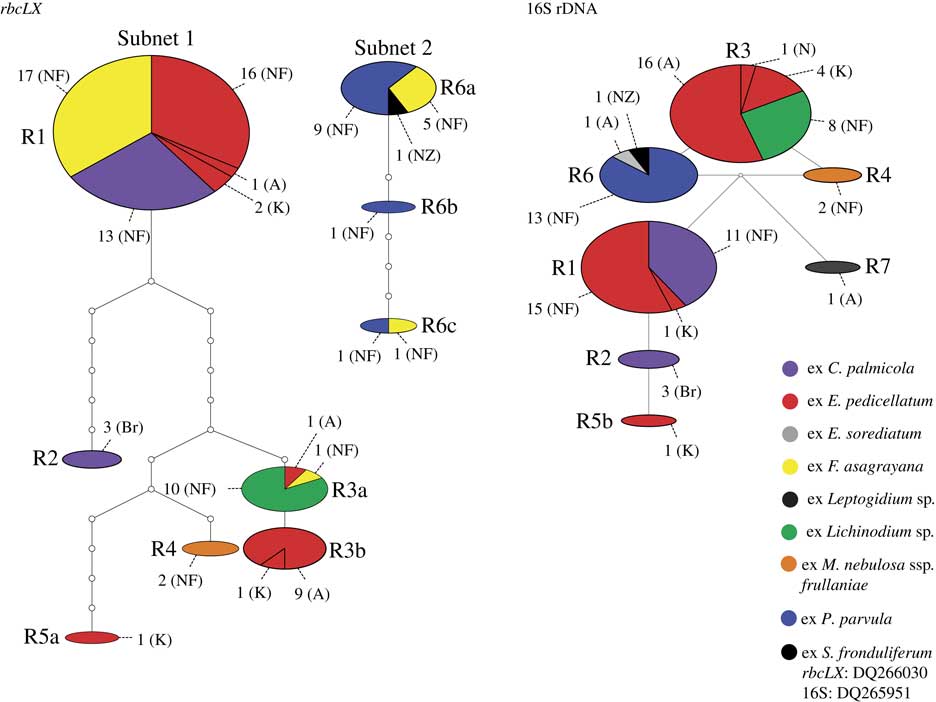
The quantity of rbcLX haplotypes varied from species to species. Four different types (R1, R3a, R3b and R5a) were found within 32 samples of E. pedicellatum (Table 1), two (R1 and R2) in 16 specimens of C. palmicola, and three in 11 specimens of P. parvula (R6a, R6b and R6c). However, in each case (ten Lichinodium specimens (R3a) and two individuals of M. nebulosa ssp. frullaniae (R4)) only one haplotype was found. This result may reflect differences in the number of individuals sampled, considering the huge difference between 32 individuals of E. pedicellatum and only two of M. nebulosa ssp. frullaniae. However, it also shows an important discrepancy between specimens from Newfoundland with similar sampling size: three different haplotypes in P. parvula (n=11) but only one in each of C. palmicola (n=13) and Lichinodium sp. (n=10).
The distribution of rbcLX haplotypes was also heterogeneous depending on the collection site. Specimens of C. palmicola from Brazil (R2) differed from the rbcLX haplotype found in Newfoundland of the same species (R1). Out of 16 specimens of E. pedicellatum from Newfoundland, one rbcLX haplotype (R1) was found, while three were detected out of 12 specimens from Alaska (R1, R3a and R3b) and three out of four specimens from Kamchatka (R1, R3b and R5a). On the other hand, all 11 analyzed specimens of P. parvula originate from Newfoundland, and are associated with three different rbcLX haplotypes.
In contrast to the rbcLX matrix, the 16S dataset did not contain specimens of F. asagrayana (Fig. 3). At the 95% parsimony limit, seven haplotypes were found that were separated by a maximum of ten connection steps. Thus TCS analysis resulted in one haplotype more than the DnaSP haplotype calculation, probably due to differences in the handling of gaps; while DnaSP excluded gaps from pairwise comparisons, TCS treated them as missing data. TCS assigned the highest outgroup probability to the R1-haplotype for the rbcLX subnet 1, and to the R6a-haplotype for the subnet 2. For the 16S-network, it calculated the highest outgroup probability for the R3-haplotype. Since haplotypes were hierarchically nested, the arrangement of haplotypes was somehow different for both analyses. Even though the 16S-network showed less-differentiated haplotypes, the outcome produced basically the same patterns as the rbcLX networks. Less differentiation was found within the haplotype R3, which contained specimens of E. pedicellatum from Alaska, the specimen ERI/02 from Norway and four specimens from Kamchatka, as well as all specimens of a Lichinodium species from Newfoundland. Similarly, all specimens of P. parvula shared one haplotype (R6) together with S. fronduliferum from New Zealand and the 16S-sequence of E. sorediatum from south Alaska. In contrast, the 16S-sample of a Leptogidium species from south Alaska resulted in the different haplotype R7.
Discussion
Molecular techniques offer a highly practical way to study the diversity of symbiotic cyanobacteria since the few morphological structures of these organisms are limited and tend to become modified within the lichen thallus. Since the initial description of the genus Rhizonema (Lücking et al. Reference Lücking, Lawrey, Sikaroodi, Gillevet, Chaves, Sipman and Bungartz2009, Reference Lücking, Barrie and Genney2014), this work and our parallel study (Cornejo & Scheidegger Reference Cornejo and Scheidegger2016) are the first dedicated to the genetic diversity within this genus. This study shows the wide geographical distribution of Rhizonema strains in boreal forests, associated with a high genetic diversity and their occurrence as the photobiont of many different lichen species. For instance, Rhizonema strains were identified which associate with E. sorediatum and an undetermined Leptogidium species. Only recently, Muggia et al. (Reference Muggia, Nelson, Wheeler, Yakovchenko, Tønsberg and Spribille2011) recovered the genus Leptogidium for “Scytonema-containing” species, which are morphologically similar to the convergently evolved genus Polychidium. Findings from the present study indicate that Leptogidium may associate with Rhizonema instead of Scytonema, and phylogenetic study of the mycobiont and photobiont of Leptogidium specimens may provide clarity on this issue. Similarly, this study shows that at least two species of Erioderma associate with Rhizonema, instead of Scytonema. Lücking et al. (Reference Lücking, Lawrey, Sikaroodi, Gillevet, Chaves, Sipman and Bungartz2009) showed that Rhizonema strains are widely distributed in tropical regions and a more comprehensive dataset of the genus Erioderma might confirm the association with Rhizonema for the other taxa as well.
Genetic diversity of Rhizonema
Within-locus calculations of the nucleotide diversity (Pi; Table 5), including all species studied, showed a ten times higher nucleotide diversity for rbcLX data, resulting in higher haplotype diversity and, consequently, higher resolution power in phylogenetic analysis for this locus (Fig. 3). For example, the rbcLX haplotype analysis revealed two Rhizonema species, indicated by two unconnected subnets (Fig. 3; Hart & Sunday Reference Hart and Sunday2007). Tajima’s statistics suggested that both 16S and rbcLX loci of Rhizonema have been undergoing stable history. Additionally, there was no signal of recombination between the specimens studied. However, in the present work, recombination could also be underestimated as a consequence of the limited amount of loci analyzed, the moderate sequence length for each analyzed locus, and the limited divergence between sequences involved in recombination events, particularly evidenced by the low nucleotide diversity (Pi) found within the 16S region. Furthermore, most within-host sequences were monomorphic, indicating a high level of clonal reproduction. Larger sampling size (specimens and nucleotide sites) from highly polymorphic Rhizonema from Alaska or Kamchatka, for instance, could provide clearer evidence of recombination.
In Newfoundland, Rhizonema strains were divided by their host affiliation, except those strains that were detected in F. asagrayana and P. parvula with the rbcLX locus. Both species can associate with several different haplotypes (H=4 or 3, respectively). Frullania asagrayana also presented similar Pi-values to those of the complete dataset (Table 5). Rhizonema of E. pedicellatum from Kamchatka showed the highest nucleotide diversity per site (rbcLX-Pi: 0·02151) out of all Rhizonema strains studied, which was around three times higher than the nucleotide diversity found in Nostoc of the sexually reproducing Pectenia plumbea within the same locus (Otálora et al. Reference Otálora, Salvador, Martínez and Aragón2013). It is also interesting because three Rhizonema haplotypes of E. pedicellatum from Kamchatka contained c. 20% more nucleotide diversity than four Rhizonema haplotypes of F. asagrayana from Newfoundland. In contrast, each E. pedicellatum, C. palmicola, and a Lichinodium species from Newfoundland presented monomorphic DNA structure. This finding indicates clonal reproduction patterns for these Rhizonema within a restricted regional scale, suggesting vegetative reproduction of the lichen linked to vertical transmission of the photobiont. Vegetative reproduction is indeed the case in C. palmicola and Lichinodium sp., but not in E. pedicellatum.
The Erioderma pedicellatum–Rhizonema association
Although E. pedicellatum must always begin the life cycle starting from ascospores, this study detected only the rbcLX haplotype R1 in Newfoundland. This tight association between symbionts is rather expected for vegetatively-reproducing lichen species where the mycobiont and photobiont are vertically transmitted to the next generation (Otálora et al. Reference Otálora, Martínez, O’Brien, Molina, Aragón and Lutzoni2010, Reference Otálora, Salvador, Martínez and Aragón2013; Fernández-Mendoza et al. Reference Fernández-Mendoza, Domaschke, García, Jordan, Martín and Printzen2011; Dal Grande et al. Reference Dal Grande, Widmer, Wagner and Scheidegger2012; O’Brien et al. Reference O’Brien, Miadlikowska and Lutzoni2013). Furthermore, R1 was found to be the most common Rhizonema haplotype, which is also present in Alaska and Kamchatka with a long distribution range within circumboreal forests. Considering that both datasets are hardly different, the study found four haplotypes in total for E. pedicellatum within the rbcLX matrix, from which R1, R3b and R5a were found in Kamchatka, and R1, R3a and R3b in Alaska. Similarly, of three haplotypes within the 16S matrix, R1, R3 and R5b were found in Kamchatka. This pattern demonstrates that the geographical limitation of the E. pedicellatum photobiont is true for Newfoundland, but not for Alaska or Kamchatka, where E. pedicellatum associates with some Rhizonema haplotypes that have a global distribution and are closely related to strains found in unrelated, tropical lichens.
Interestingly, our study suggests E. pedicellatum is a generalist with respect to photobiont association, at least in Alaska and Kamchatka. This is the case if a fungus associates with more than one photobiont strain. For generalists, a fungal system has been suggested which maintains the association with a particular strain for short-term advantages, allowing rapid exploitation and colonization, but which switches to new photobiont combinations that permit a fine-tuning of the symbiosis in order to persist in a changing environment and survive over a longer timescale (Nelsen & Gargas Reference Nelsen and Gargas2008). Thus, low selectivity would allow lichen-forming fungi to establish successful symbioses with locally-adapted photobionts in a wider range of habitats. However, the generalist pattern of E. pedicellatum presented in this study cannot hide the fact that this species occupies a narrow ecological niche. Representatives of this species are predominantly found on coniferous trees in the very humid temperate and boreal Northern Hemisphere. Particularly in Atlantic Canada, they have been shown to be susceptible to air pollution (Cameron et al. Reference Cameron, Neily and Clapp2013 b) and the environmental effects of logging (Maass & Yetman Reference Maass and Yetman2002). In Alaska, E. pedicellatum is also found in a narrow ecological range, being largely confined to Picea glauca trees in the limited area of maritime boreal forests south of the Alaskan Range (Stehn et al. Reference Stehn, Nelson, Roland and Jones2013).
Presence of the compatible Rhizonema strain in potential habitats in Newfoundland
This study found no significant difference between the presence of the rbcLX haplotype R1 in F. asagrayana and the occurrence of C. palmicola on the same tree in Newfoundland. Indeed, R1 incorporates the majority of the Rhizonema found living with the liverwort F. asagrayana, regardless of the presence of lichens on the tree. This result contradicts the expectation that the compatible photobiont of E. pedicellatum is more frequently found on trees where the core lichen C. palmicola occurs. This finding, while preliminary, supports the hypothesis that the Coccocarpia-Erioderma guild in Newfoundland is facilitated by local reservoirs of Rhizonema photobionts, either in association with F. asagrayana and/or free-living on the substratum, or both. Such a tripartite facilitation hypothesis has been suggested in greater detail in Cornejo & Scheidegger (Reference Cornejo and Scheidegger2016), and we argue that cyanobacterial diversity in co-occurring symbiotic bryophytes needs to be included in metacommunity studies of lichens. However, more research on this topic needs to be undertaken before the interaction points between co-occurring bryophytes and lichens is more clearly understood. In the particular case of the compatible Rhizonema of E. pedicellatum, screening of the possible free-living Rhizonema on the substratum is needed to better understand the role of F. asagrayana as photobiont facilitator.
Interestingly, there are Rhizonema strains of E. pedicellatum from trees in stands where neither E. pedicellatum nor C. palmicola was present. In addition, R1 integrates all samples of C. palmicola and E. pedicellatum from five different collection sites in Newfoundland, demonstrating that there is no geographical subdivision of specimens within this area. These results show that potential habitats of E. pedicellatum are colonized by compatible Rhizonema, living together with F. asagrayana, and demonstrate that the geographical distribution, and possibly also the ecological requirement of the photobiont of E. pedicellatum are wider than that of the lichen phenotype.
In conclusion, the photobiont selectivity of E. pedicellatum can be described as low globally, except for the high local selectivity in Newfoundland. Even though in Newfoundland E. pedicellatum was found to associate with R1-cyanobacteria, R3a-Rhizonema are also known to be compatible and present, being the most common symbiont of the co-occurring, sterile Lichinodium sp., and very closely related to the photobiont of E. pedicellatum from Norway. Additionally, even though it was found in one single specimen, the R3a-Rhizonema has here been shown to be capable of associating with the liverwort F. asagrayana on a tree without other lichens. Therefore, the exclusive association of E. pedicellatum with R1-Rhizonema in Newfoundland cannot be explained by the absence of R3a. Differences in photobiont selectivity varying between different regions have also been documented for green-algal lichens (Yahr et al. Reference Yahr, Vilgalys and DePriest2006; Muggia et al. Reference Muggia, Vancurova, Škaloud, Peksa, Wedin and Grube2013, Reference Muggia, Pérez-Ortega, Kopun, Zellnig and Grube2014; Dal Grande et al. Reference Dal Grande, Beck, Cornejo, Singh, Cheenacharoen, Nelsen and Scheidegger2014) and cyanolichens (Otálora et al. Reference Otálora, Martínez, O’Brien, Molina, Aragón and Lutzoni2010, Reference Otálora, Salvador, Martínez and Aragón2013; Fedrowitz et al. Reference Fedrowitz, Kaasalainen and Rikkinen2012; O’Brien et al. Reference O’Brien, Miadlikowska and Lutzoni2013). It has been hypothesized that the symbiont diversity in these lichen species reflects one mechanism by which these symbioses respond to habitat variability and environmental change at a local scale (Rikkinen Reference Rikkinen2013). In this way, it may allow fungal hosts to associate with the cyanobacterial genotypes that are optimally adapted to the prevailing conditions.
In this context, our results provide further support for the geographical mosaic theory of co-evolution (Thompson Reference Thompson1999 a, Reference Thompsonb , Reference Thompson2005) that states that adaptation varies through space and time in interactions between species, creating selection mosaics of co-evolving species above the level of local communities. However, further studies will need to be undertaken to test this hypothesis. A gap of knowledge in the historical relationship of populations of E. pedicellatum, for example, limits our understanding of spatial structure. Our data show that apparently Pacific populations are the primary source of E. pedicellatum, indicated by higher flexibility of the mycobiont to successfully establish the symbioses with several different Rhizonema genotypes. But recolonization after extinction by a subset of the metapopulation can also be the cause of a geographical mosaic (Gomulkiewicz et al. Reference Gomulkiewicz, Drown, Dybdahl, Godsoe, Nuismer, Pepin, Ridenhour, Smith and Yoder2007). Another important source of uncertainty is our lack of knowledge on gene flow across landscapes and genetic drift among Atlantic and Pacific populations of E. pedicellatum, which could also have the potential to produce spatial variation in selectivity. Lastly, an occupancy survey of a large number of patches using neutral genetic markers is needed to estimate the importance of gene flow, random genetic drift and rate of population extinction and recolonization of E. pedicellatum.
We are much obliged to lichenologists and institutions that kindly provided support for fieldwork or contributed with specimens from their collections. Special thanks goes to Karen Dillman for providing specimens from the Tongass National Forest (Alaska), and to Heath O’Brien and an anonymous reviewer for valuable comments on the manuscript. Curtis Gautschi corrected the English text.