Hypoplastic left heart syndrome constitutes 1–2% of all cardiac malformations, and the reported incidence varies between 9 and 25 per 100,000 live-born infants in the absence of selection during pregnancy.Reference Carlgren1–Reference Moons, Sluysmans and De Wolf4 The lesion is uniformly fatal if not surgically treated. Gradually improving survival following Norwood surgery has been reported by several authorsReference Bu’Lock, Stumper and Jagtap5,Reference Siffel, Riehle-Colarusso, Oster and Correa6 but few have reported national population-based data on long-term outcome in classical hypoplastic left heart syndrome.Reference Rogers, Pagel and Sullivan7 We have previously described the changing epidemiology of hypoplastic left heart syndrome in Sweden 1990–2010 based on the complete cohort of 256 patients analysing trends in pregnancy terminations, incidence at birth, and factors determining whether Norwood surgery was performed or not.Reference Öhman, El-Segaier and Bergman8 The present report focuses on the 121 patients who underwent Norwood surgery from the first case in 1993 until 2010. The aims were to analyse trends in transplantation-free survival and to identify risk factors for death or transplantation.
Materials and methods
Hypoplastic left heart syndrome was, for the purpose of this study, defined as aortic atresia in combination with mitral atresia or mitral stenosis in the setting of atrioventricular and ventriculoarterial concordance and an intact ventricular septum. Thus, patients with aortic stenosis were not included regardless of the degree of underdevelopment of left heart structures. Patients born from 1 January, 1993 to 31 December, 2010 with a diagnosis consistent with this definition were identified through combined searches of the Swedish Medical Birth Register, the Swedish Cause of Death Register, and the Swedish National Inpatient Register. All of these are managed by the National Board of Health and Welfare, and reporting is compulsory. Identified cases were cross-checked with the Swedish Registry of Congenital Heart Disease (Swedcon), local surgical databases from the university hospitals in Lund and Gothenburg, and medical records. The corresponding codes were 746H (International Classification of Diseases, ninth revision) and, from 1997, Q23.4 (International Classification of Diseases, tenth revision). Cases with an additional code of aortic stenosis in any registry or when information was found in medical records or local surgical databases on the presence of a patent aortic valve were excluded. Cases with any additional cardiac malformations, apart from coarctation, were excluded. Patients with extra-cardiac malformations or chromosomal abnormalities were not excluded.
Surgery was defined as stage I (Norwood procedure or hybrid procedure) or primary heart transplantation, stage II (bidirectional cavopulmonary connection), and stage III (total cavopulmonary connection). Atrioseptostomy was noted if the intervention was performed within 24 hours of birth. Birthweight, birth length, and head circumference at birth were related to the normal Swedish standards by standard deviation scores.Reference Niklasson and Albertsson-Wikland9 Preterm was defined as a gestational age < 37 weeks. Patients were followed until 25 September, 2016. At the time of last follow-up, all patients had either had stage III surgery, received a heart transplant, or died.
Data analysis
The study period was divided into two periods, and patients were assigned by year of birth to the early period, 1993–2000 or the late period, 2001–2010. Transplantation-free survival was defined as time to death or heart transplantation for the entire cohort and according to birth period and gender separately. Transplantation-free survival was analysed following each surgical stage. Thirty-day mortality and inter-stage mortality were also analysed. Inter-stage mortality was defined as death later than 30 days after surgery, but before the following surgical stage. The categorical variables analysed as potential risk factors for death after stage I surgery were birth period, gender, prematurity, prenatal diagnosis, extra-cardiac malformation, and surgical centre. The continuous variables analysed were age at first surgery, gestational age in weeks, birthweight, birthweight standard deviation score, birth head circumference, birth head circumference standard deviation score, and a ratio of birth head circumference to birthweight including cut-off values as described below.
Statistical analysis
The event of death or heart transplantation was studied both in overall analysis described by event rates and by survival analyses for the purpose of predicting the time to the event by selected baseline variables. Crude event rates were expressed as the number of events per 100 person-years with 95% confidence intervals estimated by exact 95% Poisson confidence limits. Follow-up time (years) and median inter-quartile range were calculated. Prediction analyses of survival for time from first surgery to death or transplantation were performed using univariable and multivariable Cox proportional hazards models. The assumption of proportional hazards was tested by introducing an interaction term between each potentially associated factor and the logarithm of time in the study into the model and was found to be satisfied. The best multivariable model was selected using stepwise regression. Hazard ratios with 95% confidence intervals and p-values were obtained from these models. For continuous variables, the possibly non-linear relation between each variable and the outcome was studied as a piecewise linear relation with a cut-off at the median value observed in the study. The model giving the best fit was identified based on the lowest Akaike information criterion. The model fit was expressed with Harrell’s c-statistics and 95% confidence intervals. Interaction with birth period and gender was checked for the independent statistically significant associated factors in the multivariable model. The survival curves from the Cox regression based on the selected multivariable model are expressed graphically. Overall survival time from first, second, and third surgery to death or transplantation is shown in Kaplan–Meier curves with 95% confidence limits. For tests between two groups, Fisher’s exact test was used for dichotomous variables and the Mann–Whitney U-test for continuous variables. All tests were two-tailed and were conducted at a significance level of 0.05. Analyses were performed using SAS software version 9.4 (SAS Institute Inc., Cary, North Carolina, United States of America).
Ethics
The study was approved by the Regional Ethical Review Board at the University of Gothenburg (Registration number 137-12). No informed consent was required.
Results
Study population
The complete national cohort of live-born infants with hypoplastic left heart syndrome/aortic atresia 1993–2010 included 208 patients. Norwood surgery was performed in 121/208 (58%).
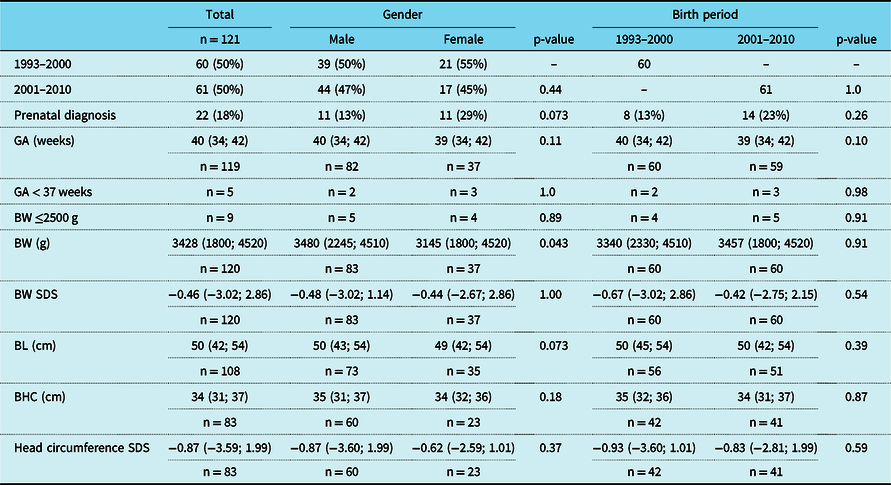
Of 121 operated patients, 22 (18%) had a prenatal diagnosis and 83 were male (69%). The median gestational age at birth was 40.0 (34.0; 42.0) weeks. Five were born prematurely at 34–36 weeks. The lowest birthweight when surgery was performed was 1.8 kg. Extra-cardiac malformations were present in six patients; all being single malformations of the musculoskeletal system or the urogenital tract, and there was one patient with a chromosomal aberration (Turners syndrome). Sixty-nine patients (57%) underwent surgery in Gothenburg and fifty-two (43%) in Lund, the two paediatric cardiac surgery centres in Sweden. One patient with completed total cavopulmonary connection was lost to follow-up in 2014 due to emigration. This patient was censored at the date of emigration in the analyses. Sixty patients were born during the early period (1993–2000) and sixty-one during the later period (2001–2010). Descriptive data, subdivided by gender and birth period for the patients that had undergone surgery, are given in Table 1.
Descriptive data for patients with hypoplastic left heart syndrome who underwent Norwood surgery in the period 1993–2010

BHC = birth head circumference; BL = birth length; BW = birthweight; SDS = standard deviation score.
For categorical variables, n (%) are presented. For continuous variables, median (min; max) and n are presented.
Surgery
In all cases, the first surgical procedure was Norwood surgery at a median age of 7.6 (1.0; 31.0) days (n = 121). There was no hybrid procedure or primary cardiac transplantation performed on patients in this cohort. The second surgical stage (bidirectional cavopulmonary connection) was performed at 5.7 (1.9; 9.8) months (n = 78). The third surgical stage (total cavopulmonary connection) was performed at 29.7 (10.1; 85.2) months (n = 68). Atrioseptostomy was performed before Norwood surgery in two patients, both of whom died shortly after Norwood surgery. After the introduction of the right ventricle to pulmonary artery shunt in 2002, it was used in 38 of 55 patients (69%) and a modified Blalock–Taussig shunt in the remaining 17 (31%).
Mortality and cardiac transplantation in relation to surgical stage
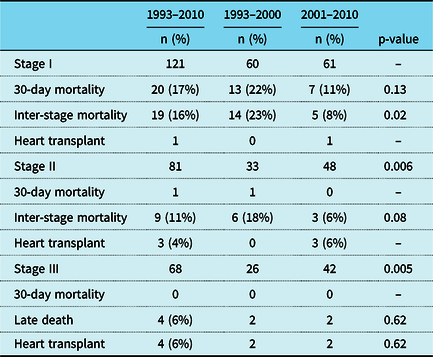
The 30-day mortality after Norwood surgery was 17% in the total cohort (Table 2), with no significant difference between the early and late birth period (22% versus 11%, p = 0.13). The inter-stage mortality between stages I and II was 16%, with a significant decrease between the periods. Only one patient died within 30 days of stage II surgery. Inter-stage mortality after stage II was 11%, and no significant difference was found between the periods. There was no 30-day mortality after stage III surgery, but four patients died late after stage III. Of the 121 patients who had Norwood surgery, eight (7%) subsequently underwent a heart transplantation at a median age of 2.2 (0.5–15.7) years. Six of these were still alive in September 2016, at a median age of 7.5 (6.6–19.4) years.
Deaths and heart transplantations between stages I and II, between stages II and III, and after stage III in the early and late birth period for 121 patients who underwent Norwood surgery in 1993–2010. Late deaths = death later than 30 days after stage III surgery

Transplantation-free survival probability after surgery
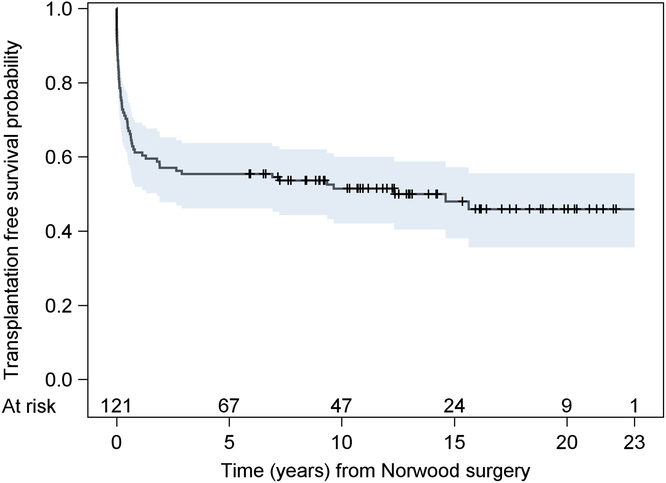
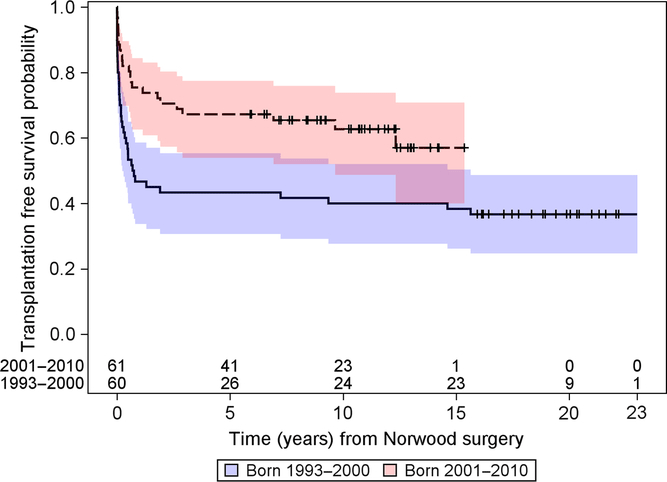
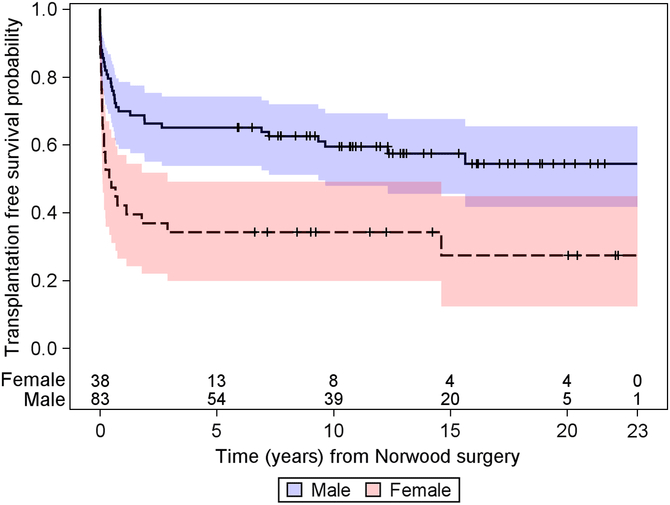
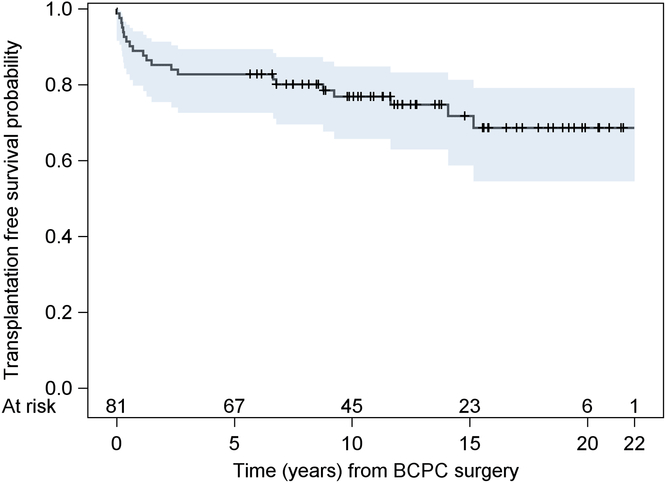
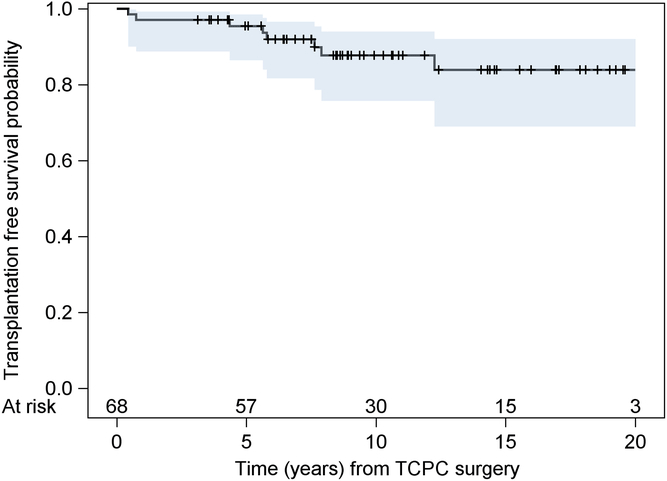
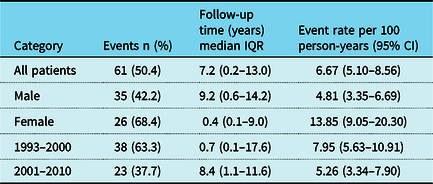
The overall transplantation-free survival after surgery was 0.51 (95% CI 0.42–0.60) (Fig 1). The survival probability after surgery was significantly higher in the late birth period than in the early birth period, HR 0.50 (95% CI 0.30–0.85), p = 0.010 (Fig 2), and was higher for male than for female patients, HR 2.25 (95% CI 1.35–3.76), p = 0.002 (Fig 3). The overall survival after stages II and III is shown in Figures 4 and 5. The crude event rates and median follow-up times for all patients, and for gender and birth periods separately, are given in Table 3.
Kaplan–Meier curve for time to death or heart transplantation after stage I surgery for 121 patients with hypoplastic left heart syndrome/aortic atresia that underwent Norwood surgery. Transplantation-free survival probability at 1 year 0.61 (0.52–0.69), at 5 years 0.55 (0.46–0.64), and at 10 years 0.51 (0.42–0.60).

Kaplan–Meier curve for time to death or heart transplantation by birth period early (1993–2000) and late (2001–2010) for 121 patients that underwent stage I surgery. Survival at 1 year 1993–2000: 0.47 (0.34–0.59) versus 2001–2010: 0.75 (0.63–0.84). Survival at 5 years 1993–2000: 0.43 (0.31–0.55) versus 2001–2010: 0.67 (0.54–0.77). Survival at 10 years 1993–2000: 0.40 (0.28–0.52) versus 2001–2010: 0.63 (0.49–0.74). HR = 0.50 (95% CI 0.30–0.85) p = 0.010.

Kaplan–Meier curve for time to death or heart transplantation by gender for 121 patients that underwent stage I surgery. Survival at 1 year for male versus female patients: 0.70 (0.59–0.79) versus 0.42 (0.26–0.57). At 5 years 0.65 (0.54–0.74) versus 0.34 (0.20–0.49). At 10 years 0.59 (0.48–0.69) versus 0.34 (0.20–0.49). HR = 2.25 (95% CI 1.35–3.76) p = 0.0018.

Kaplan–Meier curve for time to death or heart transplantation for the 81 patients that underwent stage II surgery (bidirectional cavopulmonary connection). Survival at 1 year 0.89 (0.80–0.94), at 5 years 0.83 (0.73–0.89), and at 10 years 0.77 (0.66–0.85).

Kaplan–Meier curve for time to death or heart transplantation for the 68 patients that underwent stage III surgery (total cavopulmonary connection). Survival at 1 year 0.97 (0.89–0.99), at 5 years 0.95 (0.86–0.99), and at 10 years: 0.88 (0.76–0.94).

The crude event rate and median follow-up time, interquartile range for the 121 patients who underwent Norwood surgery in the period 1993–2010

Infants were on average 3 (95% CI 2–4; p < 0.0001) days younger at stage I, 1.2 (95% CI 0.2–1.9, p = 0.018) months younger at stage II, and 12.6 (95% CI 6.2–18.2, p = 0.0002) months younger at stage III in Lund than in Gothenburg. Yet, no statistically significant difference was observed when comparing the two study centres regarding transplantation-free survival from stages I, II, and III onwards.
Risk factors for death or transplantation after Norwood surgery
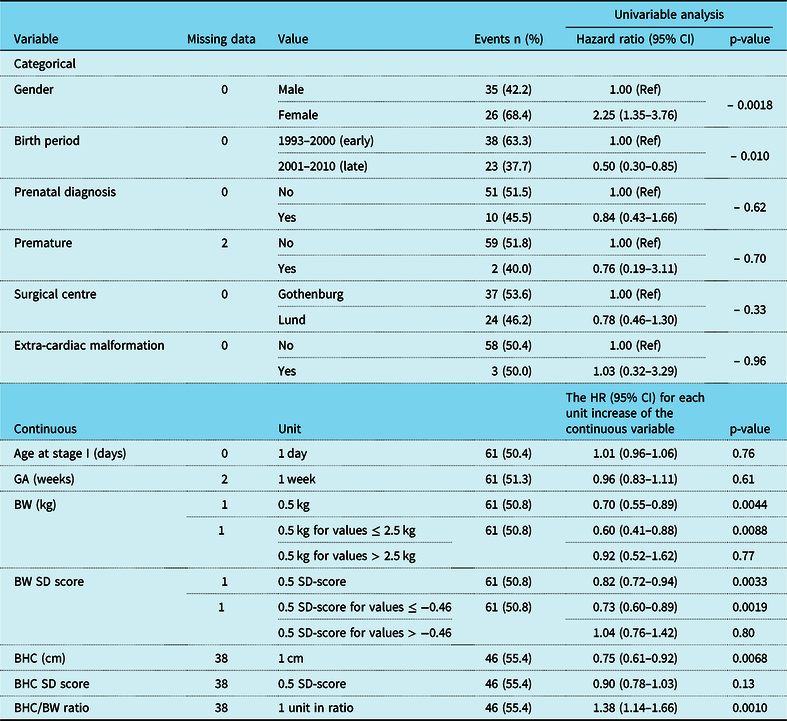
The results of the univariable Cox regression analysis of the risk factors for outcome (death or heart transplantation) are given in Table 4, whereas the results of the Cox regression including interaction terms and multivariable analysis are given in Supplemental Table 1 and are graphically depicted in Figure 6. The categorical variables such as female gender and birth period were statistically significant in the univariable analysis showing higher hazard ratio for female compared with male gender and for early compared with late birth period. Prematurity, extra-cardiac malformation, prenatal diagnosis, and place of surgery did not show a significant association to outcome. The continuous variables birth head circumference, birth head circumference/birth weight, birth weight below 2.5 kg, and birth weight standard deviation scores were all univariably associated with a statistically significant lower risk for death or heart transplantation per studied unit increase. For birthweight, there was a statistically significant decrease in risk for each 0.5 unit increase when birthweight was below 2.5 kg, but when birthweight was above 2.5 kg, there was no significant association between increase in birthweight and outcome. Birthweight standard deviation score showed a significant association to outcome with a decreased risk for each 0.5 unit increase up to the median value of −0.46. Gestational age at birth, age at first surgery, and birth head circumference standard deviation score were not associated to outcome. Using Cox stepwise regression, a multivariable model including gender, birthweight standard deviation score, the interaction between gender and birthweight standard deviation score below the median of −0.46, and birth period as independently associated factors was selected with an acceptable Harrell c-statistic of 0.71 (95% CI; 0.45–0.91). The result of the multivariable model showed that the association between birth period and outcome was independent of the variables birthweight, birthweight standard deviation score, and gender. Likewise, the association between gender and outcome was independent of the variables birthweight, birthweight standard deviation score, and birth period. There was a statistically significant interaction found between the variables birthweight standard deviation score below the median −0.46 and gender in the way that the effect of an increase in the variable birthweight standard deviation score below the median −0.46 was significant for male patients but not for female patients.
The results of the univariable Cox regression analysis to investigate risk factors for death or heart transplantation in the 121 patients who underwent Norwood surgery in the period 1993–2010

BHC = birth head circumference; BW = birthweight; SD score = standard deviation score.
Results of the multivariable Cox regression analysis including gender, birth period, birthweight standard deviation score (BW SDS), and the interaction term gender BW SDS × gender. (BWSD in Figure = BW SDS)

Discussion
This study analysed transplantation-free survival and risk factors for death and heart transplantation in all 121 patients undergoing surgery for hypoplastic left heart syndrome/aortic atresia in Sweden 1993–2010. They were part of the complete national cohort of 208 patients born alive during the same period with this diagnosis. Those not undergoing surgery have been described in detail in a recent report.Reference Öhman, El-Segaier and Bergman8
We included only cases with aortic atresia. The rational to exclude cases with aortic stenosis is the heterogeneous pattern of morphology found in mitral stenosis/aortic stenosis including not only severely hypoplastic left ventricles but also borderline cases possibly permitting a biventricular outcome. Most other reports on outcome in hypoplastic left heart syndrome use a broader definition including cases with aortic stenosis and sometimes also unbalanced atrioventricular septal defects. In the Single Ventricle Reconstruction trial,Reference Ohye, Sleeper and Mahony10 conducted during 2005–2008, about 2/3 of the patients had hypoplastic left heart syndrome/aortic atresia. The transplantation-free survival 12 months after stage I surgery was 69% similar to our results during the late period with 75% survival to 1 year. Population-based studies reporting outcome after Norwood surgery are rare; in a recent report from Wales and England, survival (including transplantation) was 61% at 1 year and 56% at 5 years.Reference Rogers, Pagel and Sullivan7 From the Czech Republic, it was reported that 52 patients born 1999–2012 had a survival of 73% including survival after heart transplantation.Reference Vojtovic11 In a recent national population-based study from New Zealand, Cloete et al reported 56% survival to 1 year of age in hypoplastic left heart syndrome with intention to treat.Reference Cloete, Sadler, Bloomfield, Crengle, Percival and Gentles12
The improved survival between the early and late birth period was mainly explained by improved survival between stages I and II. Improved survival over time was frequently reported in the early era of Norwood surgery.Reference Bu’Lock, Stumper and Jagtap5,Reference Weldner, Myers and Gleason13 In our cohort, the introduction of the right ventricle to pulmonary artery shunt in 2002 possibly contributed to the improved outcome. The Single Ventricle Reconstruction trial reported 74% survival to 1 year for Norwood surgery with a right ventricle to pulmonary artery shunt versus 64% for modified Blalock–Taussig shunt.Reference Ohye, Sleeper and Mahony10
Home monitoring programs have been shown to be important to improve inter-stage survival.Reference Ghanayem, Allen and Tabbutt14–Reference Ghanayem, Hoffman and Mussatto16 The method was introduced at the surgical centre in Gothenburg in 2007.Reference Öhman, Stromvall-Larsson, Nilsson and Mellander17 However, there was no significant difference in overall survival between the two surgical centres.
The length of the vulnerable inter-stage period depends on the timing of stage II surgery. The optimal age has been reported to be between 3 and 6 months.Reference Meza, Hickey and Blackstone18 In our cohort, stage II was performed at a median age of 5.7 months. Although the two surgical centres in general had very similar surgical treatment strategies, there was a significant difference in the timing of surgery (all stages) but no difference in survival.
The gender difference in survival could not be explained by any other factor in the data we analysed. The effect was significant during both time periods despite descriptive data being similar between genders except for a small difference in birthweight between female and male patients.
To investigate what was previously known on the influence of gender on survival after surgery for single ventricle lesions, reports relating gender to outcome in general were identified through the Paediatric Heart Network, The Society of Thoracic Surgeons Congenital Heart Surgery Database, and two major single institutions.Reference Marelli, Gauvreau, Landzberg and Jenkins19–Reference Mah, Cheng and Alexander27 Of the nine studies identified, three analysed if there was an association between gender and survival.Reference Marelli, Gauvreau, Landzberg and Jenkins19,Reference DiBardino, Pasquali and Hirsch20,Reference Alsoufi, Mori and Gillespie26 Marelli et al reported that female infants who had high-risk procedures were at a higher risk for death.Reference Marelli, Gauvreau, Landzberg and Jenkins19 On the other hand, in a study investigating the Society of Thoracic Surgeons Congenital Heart Surgery database on in hospital mortality after surgery for all types of congenital heart disease, there was no gender difference,Reference DiBardino, Pasquali and Hirsch20 and Alsoufi et al found no significant gender difference in survival in hypoplastic left heart syndrome.Reference Alsoufi, Mori and Gillespie26 The risk of death has been reported to be significantly higher for female gender when there was also Turner syndrome.Reference Lara, Ethen, Canfield, Nembhard and Morris28 Turner syndrome was present in one patient in our cohort and could not be the only explanation for the observed gender difference in outcome. A recent report from the Intensive Care Registry in Sweden reported that male patients have a better overall survival than female patients after admission to paediatric intensive care units, most evident in children less than 1- year of age.Reference Johansson Frigyesi, Andersson and Frigyesi29 A sex-related biological effect on post-operative cardiovascular stress has been suggested by Kochilas after a report on worse outcome for female patients following complex cardiac surgery in the neonatal period.Reference Kochilas, Vinocur and Menk30 A deeper understanding of a gender-related vulnerability could possibly improve the perspective for female patients with hypoplastic left heart syndrome. Our results indicate that gender should be important to include in the analysis of survival in future studies on hypoplastic left heart syndrome.
For male patients, lower birthweight in relation to gestational age was a risk factor suggesting that it was “small for gestational age” rather than birthweight per se that was the risk factor. This interpretation was supported by the finding that the ratio between head circumference and birthweight was a factor of importance. This ratio has been used by others as indicating late-onset intrauterine growth restriction in term babies.Reference Lindley, Becker, Gray and Hermann31 Recently, Miller et al analysed the influence of birthweight and gestational age on outcome to 6 years in hypoplastic left heart syndrome based on data from the Single Ventricle Reconstruction trial.Reference Miller, Ghanayem and Newburger32 Preterm birth was associated with worse survival and low birthweight with worse neurodevelopment.
Other non-cardiac factors known to influence outcome after Norwood surgery are chromosomal abnormalities and major non-cardiac anomalies. This cohort included no patients with severe extra-cardiac malformations and only one with a known chromosomal abnormality (Turners syndrome).
Prenatal diagnosis did not result in a better survival similar to the findings of others.Reference Khoshnood, De Vigan and Vodovar33,Reference Thakur, Munk, Mertens and Nield34
For patients that survived to stage III surgery, the 10-year transplantation-free survival was 88%. Long-term results after stage III have been reported from the population of New Zealand and Australia with a 97% survival. Hypoplastic left heart syndrome was the primary predictor of Fontan failure. Ten-year freedom of failure (death, transplantation or severe complications) was 79% for patients with hypoplastic left heart syndrome versus 92% for patients with other cardiac morphologies.Reference Iyengar, Winlaw and Galati35 When intermediate mortality post Fontan was investigated by Martin,Reference Martin, Mah and Eckersley36 there was no worse result for hypoplastic left heart syndrome than for other single-ventricle patients, reporting a 10-year transplantation-free survival probability of 90% for patients with hypoplastic left heart syndrome.
Strengths and limitations
The major strength and rather unique feature of this study is the complete national cohort of all neonates operated for hypoplastic left heart syndrome/aortic atresia during a 21-year period with only one patient lost to follow-up. Another is the strictly defined inclusion criteria.
The results rely on correct diagnostic coding. However, we cross-checked several national registries against each other as well as with the local cardiac surgery registries. This should minimize the risk of under- or over-reporting of cases.
The study presents the same limitations common to all retrospective cohort studies.
Conclusions
The survival after surgery for hypoplastic left heart syndrome/aortic atresia improved by era of surgery, mainly explained by improved survival between stages I and II. Female gender was a significant risk factor for death or heart transplantation. For male patients, there was an increased risk of death when birthweight was lower than expected in relation to gestational age.
Supplementary material
To view supplementary material for this article, please visit https://doi.org/10.1017/S1047951119003263
Acknowledgements
All contributors to this study fulfilled authorship criteria and are listed as authors.
Financial Support
This work was supported by the Swedish Heart-Lung Foundation.
Conflicts of Interest
None.