Introduction
Phaloriini (Orthoptera: Phalangopsidae: Phaloriinae) are distinguished by their widened upper ovipositor valves from the species of Subtiloriini, another Phaloriinae tribe, and the related species of Cachoplistinae, Luzarinae, Paragryllinae, and Phalangopsinae (Gorochov Reference Gorochov1996, Reference Gorochov1999; Desutter-Grandcolas Reference Desutter-Grandcolas2015; Chintauan-Marquier et al. Reference Chintauan-Marquier, Legendre, Hugel, Robillard, Grandcolas and Nel2016). These species are lute-shaped, more-or-less brown with light and dark patches, ring-like patches on the legs, and legs that are very long (Figs. 1, 3). These species lay their eggs into plant tissue and their ovipositors are equipped with drilling denticles that assist them in doing this (Gorochov Reference Gorochov2003). Grasses, shrubs, and tree leaves near streams are their habitat. The immature stages (Fig. 1F) always live together, but the adults live alone and the males will stay far from each other while calling.
Living species of Trellius and Vescelia. A, Trellius (Trellius) guangdongensis, male; B, T. (T.) guangdongensis, female; C, Trellius (Neotrellius) yunnanensis, male; D, Vescelia pieli, male; E, V. pieli, female; F, V. pieli, immature. Photographs provided by Tao Zhang.

The Phaloriini are tropical crickets distributed in Southeast Asia, northern Australia, western Oceania, Seychelles, Gabon, and Tanzania (Gorochov Reference Gorochov2010; Desutter-Grandcolas Reference Desutter-Grandcolas2015; Cigliano et al. Reference Cigliano, Braun, Eades and Otte2018). The tribe contains 12 genera, Afrophaloria Desutter-Grandcolas, Reference Desutter-Grandcolas2015; Ceyloria Gorochov, Reference Gorochov1996; Gorochovius Xie, Zheng, and Li, Reference Xie, Zheng and Li2004; Phaloria Stål, Reference Stål1877; Phasmagryllus Desutter-Grandcolas, Reference Desutter-Grandcolas2015; Pseudotrigonidium Chopard, Reference Chopard1915; Strophiola Uvarov, Reference Uvarov1940; Sumatloria Gorochov, Reference Gorochov2003; Trellius Gorochov, Reference Gorochov1988; Tremellia Stål, Reference Stål1877; Upupagryllus Desutter-Grandcolas, Reference Desutter-Grandcolas2015; and Vescelia Stål, Reference Stål1877 (Stål Reference Stål1877; Chopard Reference Chopard1915; Uvarov Reference Uvarov1940; Gorochov Reference Gorochov1988, Reference Gorochov1996, Reference Gorochov2003; Xie et al. Reference Xie, Zheng and Li2004; Desutter-Grandcolas Reference Desutter-Grandcolas2015). Among them, Gorochovius, Trellius, and Vescelia are included in the Chinese fauna (Yin and Liu Reference Yin and Liu1995; Ma Reference Ma2011; Cigliano et al. Reference Cigliano, Braun, Eades and Otte2018). Gorochovius was established by Xie et al. (Reference Xie, Zheng and Li2004) with Gorochovius trinervus Xie, Zheng, and Li, Reference Xie, Zheng and Li2004 as the type species, the sole species of the genera and only recorded in southern China (Xie et al. Reference Xie, Zheng and Li2004; Cigliano et al. Reference Cigliano, Braun, Eades and Otte2018). Trellius was established by Gorochov (Reference Gorochov1988) with Heterotrypus vitalisi Chopard, Reference Chopard1925 as type species, containing six subgenera and 34 species distributed in the Philippines and Borneo (Chopard Reference Chopard1925; Cigliano et al. Reference Cigliano, Braun, Eades and Otte2018). Vescelia was established by Stål (Reference Stål1877) with Vescelia infumata Stål, Reference Stål1877 as the type species and includes six total species located in southwestern Asia (Stål Reference Stål1877; Cigliano et al. Reference Cigliano, Braun, Eades and Otte2018).
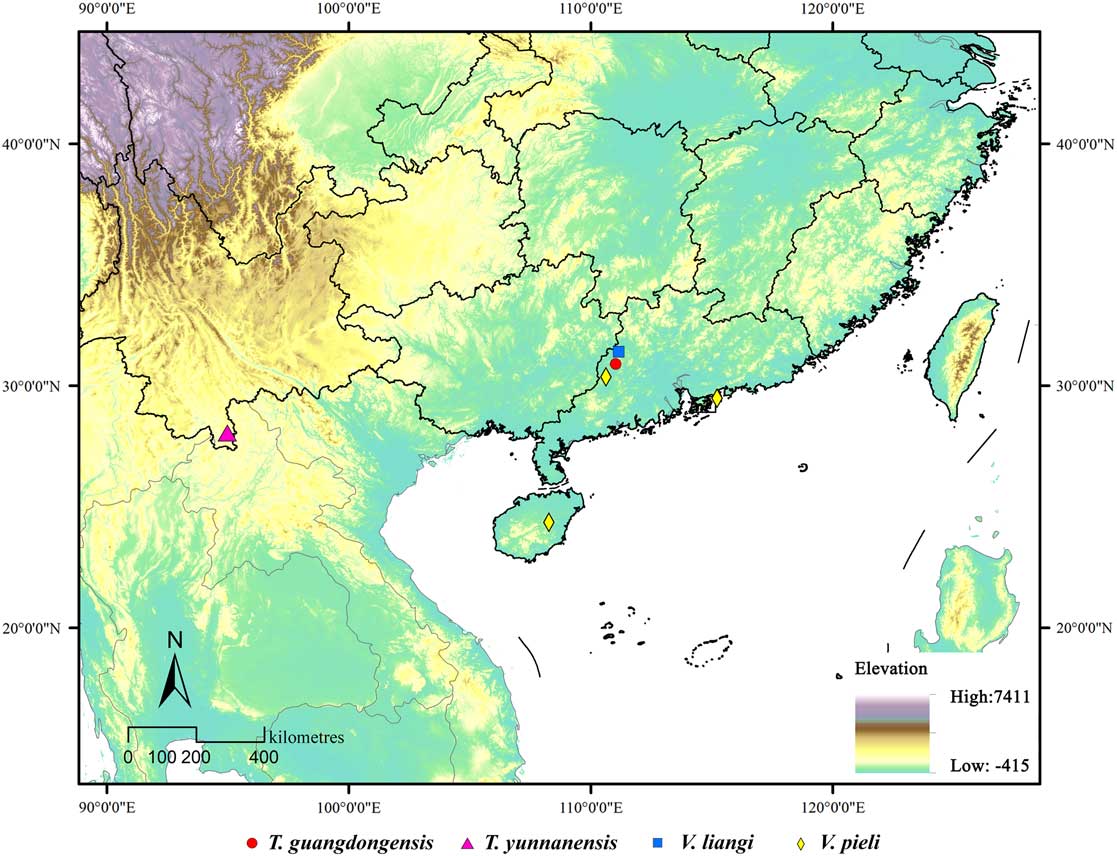
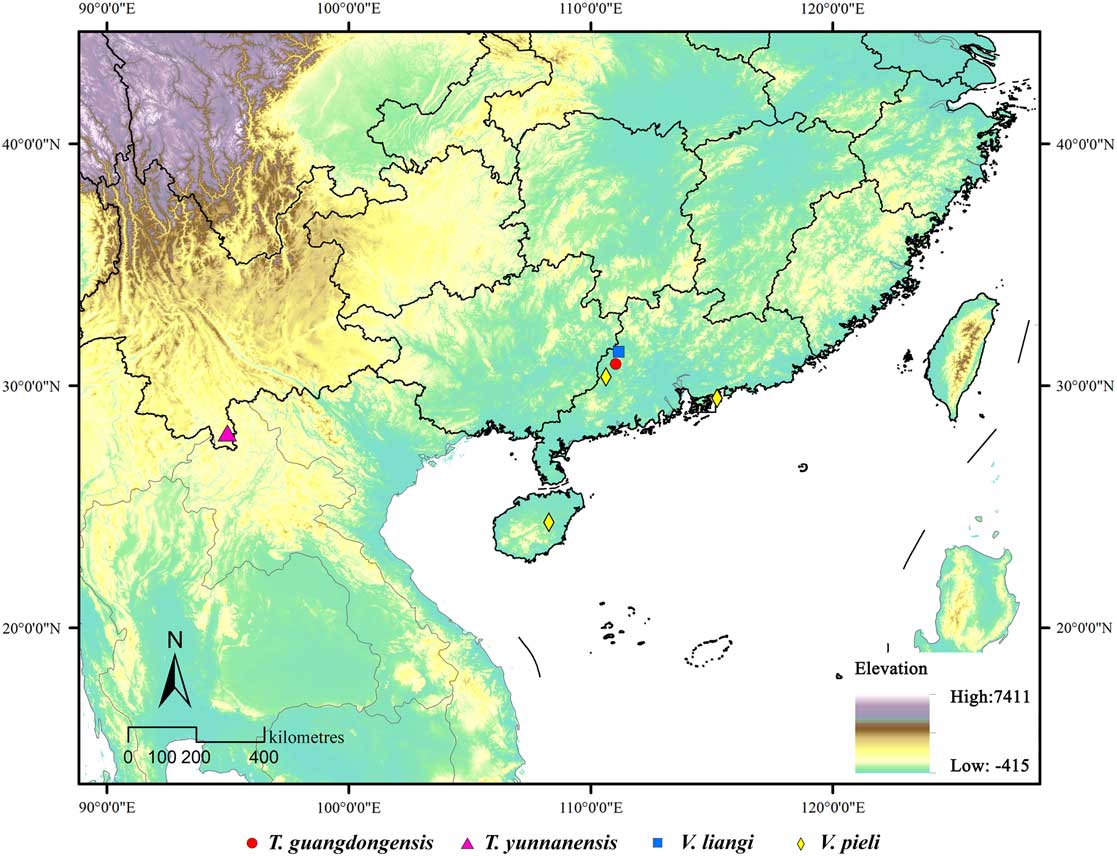
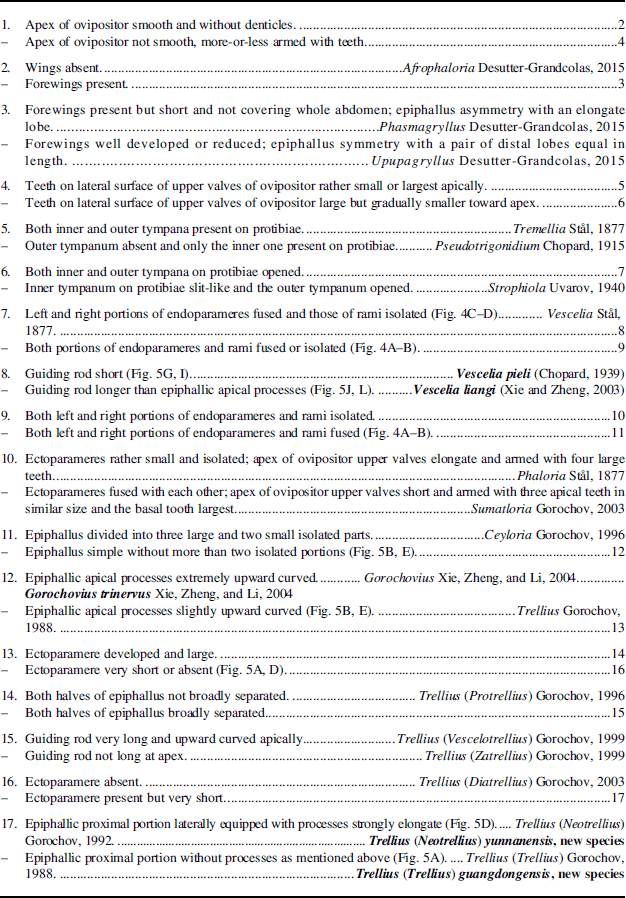
In previous studies, Vescelia pieli (Chopard, Reference Chopard1939), Phaloria liangi Xie and Zheng, Reference Xie and Zheng2003, and Gorochovius trinervus were the Phaloriini species recorded in China (Chopard Reference Chopard1939; Yin and Liu Reference Yin and Liu1995; Xie and Zheng Reference Xie and Zheng2003; Xie et al. Reference Xie, Zheng and Li2004; Ma Reference Ma2011) (Fig. 2). In the present study, P. liangi is demonstrated to belong in the genus Vescelia according to genitalia features (Figs. 4, 5). The distribution records of genus Trellius with its two subgenera, Trellius Gorochov, Reference Gorochov1988 and Neotrellius Gorochov, Reference Gorochov1992, are the first reported in China (Fig. 2). In addition, two new species of Trellius, belonging to the subgenera of Trellius and Neotrellius, respectively, were discovered. Here, we describe and illustrate these taxa and provide the key to Phaloriini species from China.
Distribution of Trellius and Vescelia species from China. Trellius (Trellius) guangdongensis (red circle), Trellius (Neotrellius) yunnanensis (pink triangle), Vescelia liangi (blue square), V. pieli (yellow diamonds).
Materials and methods
Identification of involved species was primarily based on males. Most specimens were caught at night in the field. Figures of genitalia and body details were produced using a highly sensitive Tucsen TCC-5.0 ICE digital camera (Xintu Photonics, Fuzhou, China) and IScapture 2.0 imaging software (Xintu Photonics). The details of ovipositor were produced using a Tabletop Electron Microscope (TM3030; Hitachi High-Technologies, Hitachinaka, Japan). Habitus photographs were taken with a Nikon D610 using a Nikon AF Nikkor 105 mm lens (Nikon, Tokyo, Japan). Specimens were dry preserved and dissecting of genitalia was done after softening them. The dissecting needle was used to pull out the male genitalia from the gonopore. Genitalia were prepared by placing the dissected genitalia complex into a concentrated solution of alkaline protease (0.2 g/ml, AOBOX, Beijing, China) with water bath temperature of 40–50 °C for two hours.
Songs were recorded using a Sony PCM-D50 linear recorder (Sony, Dongguan, China), with its built-in microphone. Each specimen was brought to the laboratory and raised in a frustum cone-like plastic box (top surface diameter: 7.7 mm; bottom surface diameter: 5.7 mm; height: 4.2 mm). When the cricket sang, we approached the chirping male to record the sound and kept the recorder within a distance of less than 10 cm from box. Recording period was about two minutes. The sample rate we used was 96 kHz at 16 bits/sample. From each sample, the parts with good signal-to-noise ratio were selected for acoustical analysis. Each sound file was analysed in the units of echeme and syllable.
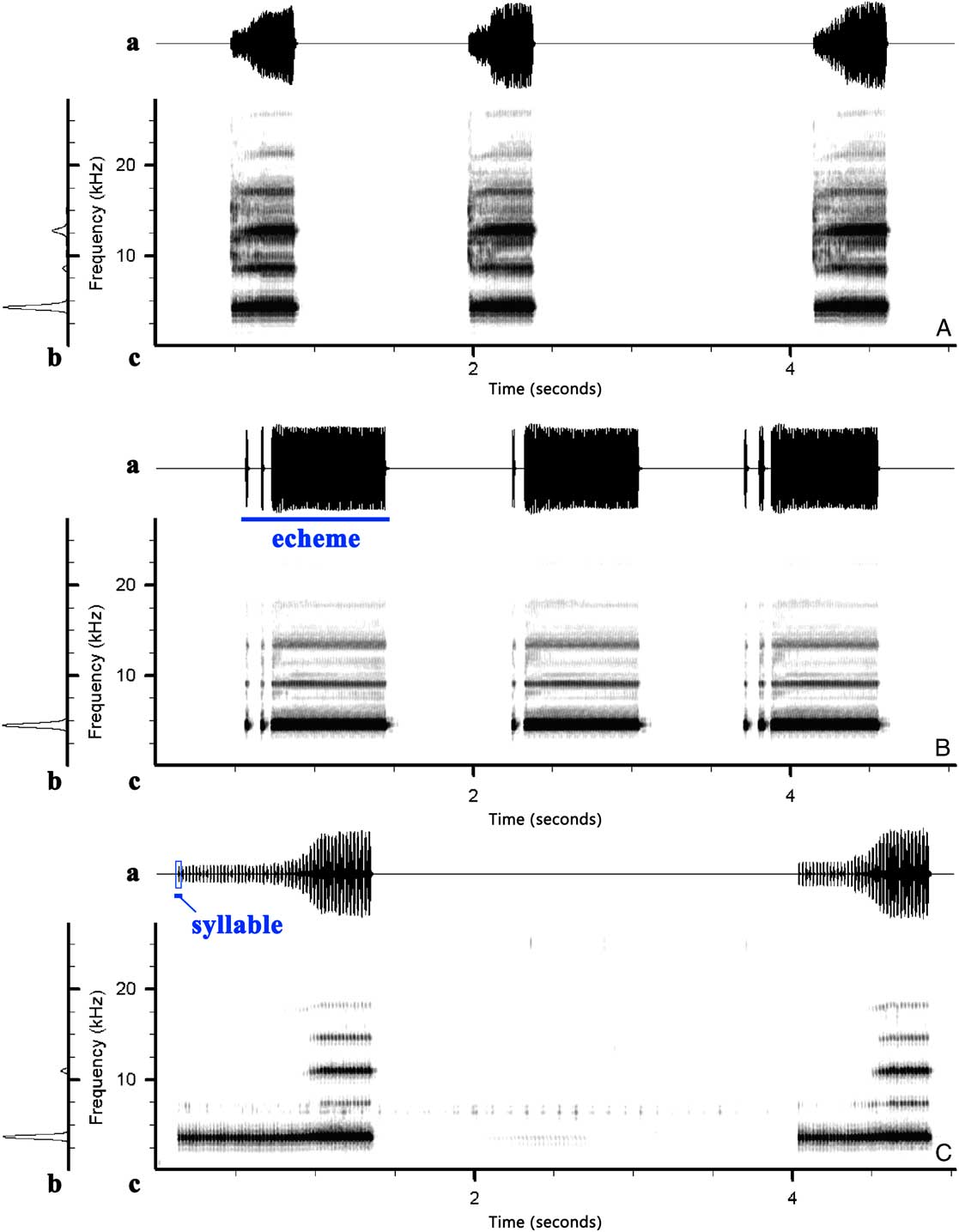
Sounds were analysed in Avisoft-SASLab Pro (Version 5.2.12; Avisoft Bioacoustics, Glienicke, Germany) based upon a 512 FFT, 100% frame size, and 50% temporal overlap. We obtained echeme duration from the oscillogram using Avisoft software. We analysed frequency parameters for the first harmonic (with the highest energy) of each echeme. Peak frequency, minimum frequency, and maximum frequency were extracted from the power spectrum. The energy threshold was set as −30 dB for the measurement of minimum frequency and maximum frequency. We defined a “syllable” as a unit of a calling song, which constitutes each echeme (Fig. 7).
Acronyms for the institutions where examined specimens are deposited: IEAS—Shanghai Entomological Museum, Chinese Academy of Sciences, Shanghai, China; NWAU—Northwest A&F University, Yangling, China; and SNNU—College of Life Sciences, Shaanxi Normal University, Xi’an, China.
Genus Trellius Gorochov, Reference Gorochov1988
Trellius: Gorochov Reference Gorochov1988: 11, Reference Gorochov1992: 3, Reference Gorochov2003: 85, Reference Gorochov2014: 14; Otte Reference Otte1994a: 64.
Type species. Heterotrypus vitalisi Chopard, Reference Chopard1925.
Distribution. China, Myanmar, Vietnam, Thailand, Cambodia, Philippines, Malaysia, Indonesia.
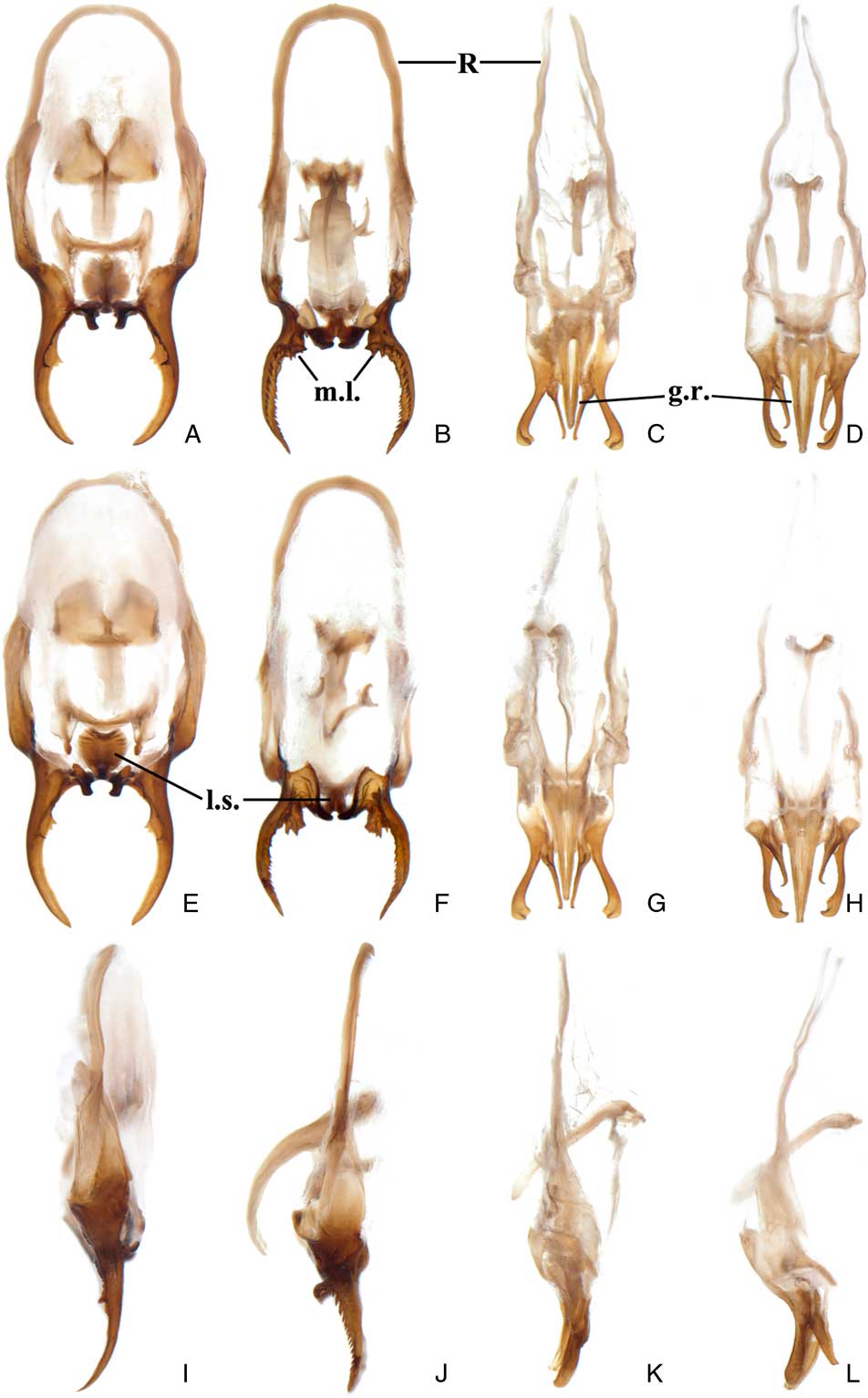
Diagnosis. Protibiae laterally depressed proximally. Both inner and outer tympana of protibiae present and of normal ovoid shape, with the inner tympana slightly larger than the outer tympana. Left and right halves of the epiphallus are isolated or almost isolated from each other (Fig. 5A, D). Epiphallic lateral lobes sickle shaped, with varying numbers of inner denticles (Fig. 4A–B). Ectoparamere absent or rather small (Fig. 4A–B). Two portions of endoparameres and rami fused or almost fused (Fig. 4A–B). Guiding rod absent or isolated from the mould portions of the attachment plate of the spermatophore. Teeth on lateral surface of oviposter upper valve widened and five in number (Gorochov Reference Gorochov1996).
Remarks. This genus is first reported from China in this study.
Trellius (Trellius) Gorochov, Reference Gorochov1988
Trellius (Trellius): Gorochov Reference Gorochov1992: 5; Otte Reference Otte1994b: 86.
Type species. Heterotrypus vitalisi Chopard, Reference Chopard1925.
Distribution. China, Vietnam, Thailand, Cambodia.
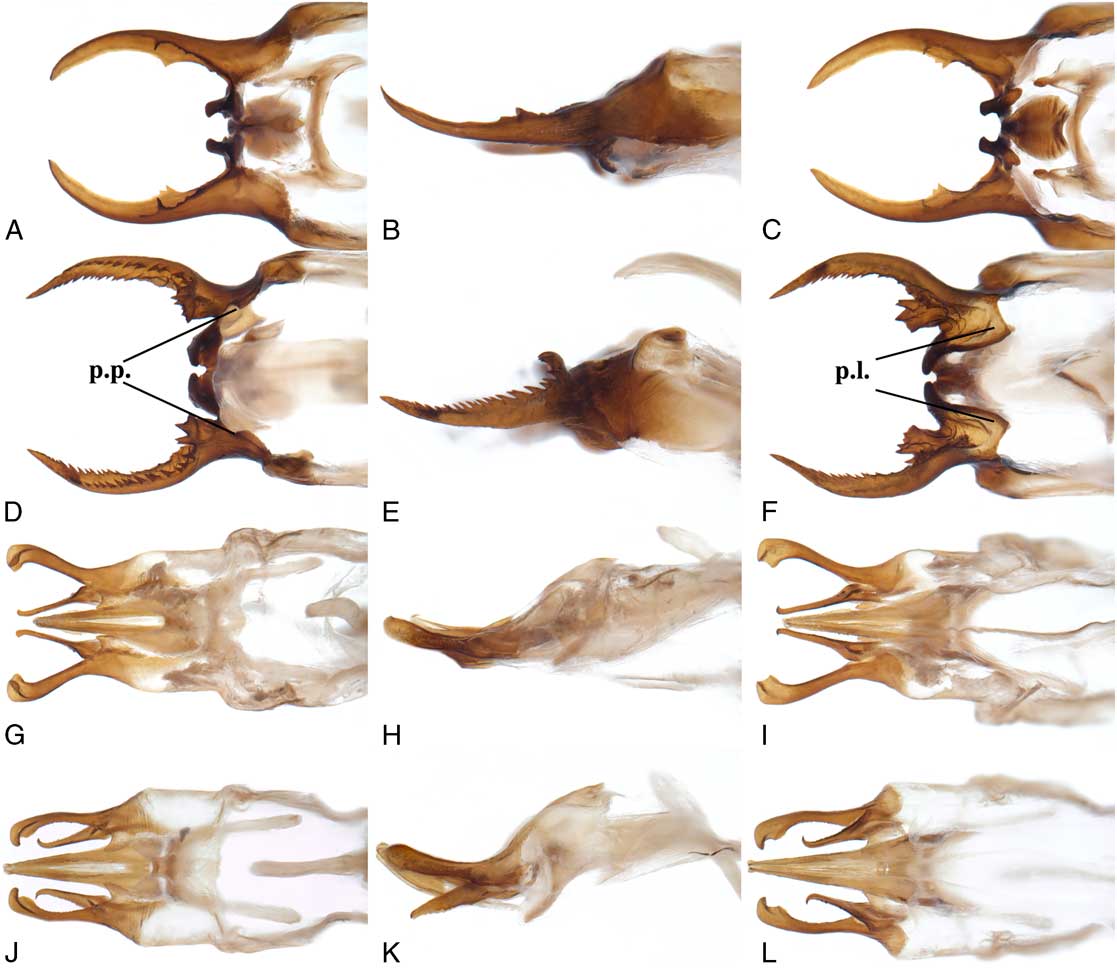
Diagnosis. Proximal portions of the epiphallus without strong elongation (Fig. 5A, D: p.p.). Endoparamere close to the proximal inner edge of the epiphallus (Fig. 4E). Proximal lower sclerite of the epiphallus somewhat rounded and separated from the paired blade-like proximal margin of the epiphallus (Gorochov Reference Gorochov1992).
Remarks. The subgenus Trellius includes 11 species and most of them are distributed in Vietnam. This study is the first distribution record of this subgenus in China. According to the features of the epiphallic apex and ectoparamere, this subgenus can be divided into two groups. One group is equipped with an epiphallic apex curved extremely upward and an ectoparamere pointed inward. This group includes the species Trellius (Trellius) detersus Gorochov, Reference Gorochov1999, Trellius (Trellius) inquisitor Gorochov, Reference Gorochov2010, Trellius (Trellius) lithophilus Gorochov, Reference Gorochov1990, Trellius (Trellius) orlovi Gorochov, Reference Gorochov1999, Trellius (Trellius) riparius Gorochov, Reference Gorochov1990, and Trellius (Trellius) vitalisi (Chopard, Reference Chopard1925) (Gorochov, Reference Gorochov1990, Reference Gorochov1999, Reference Gorochov2010). The other group is armed with an epiphallic apex curved slightly upward and an ectoparamere pointed caudally, and this group contains Trellius (Trellius) alius Gorochov, Reference Gorochov1992, Trellius (Trellius) certus Gorochov, Reference Gorochov1992, Trellius (Trellius) deminutus Gorochov, Reference Gorochov1990, and Trellius (Trellius) verus Gorochov, Reference Gorochov1992 (Gorochov Reference Gorochov1990, Reference Gorochov1992). The new species discovered in the present study belongs to the second group. Namely, Trellius (Trellius) jacobsoni (Chopard, Reference Chopard1925), recorded in the old region of Sima Lang between the Indian subcontinent and the Philippines, is distinguished from the general genitalia characteristics of this genus. Thus, it may not belong to this genus.
Trellius (Trellius) guangdongensis Ma and Jing, new species
http://zoobank.org/urn:lsid:zoobank.org:act:43DBAB4C-1BC6-4494-8CB6-71763079E9C9
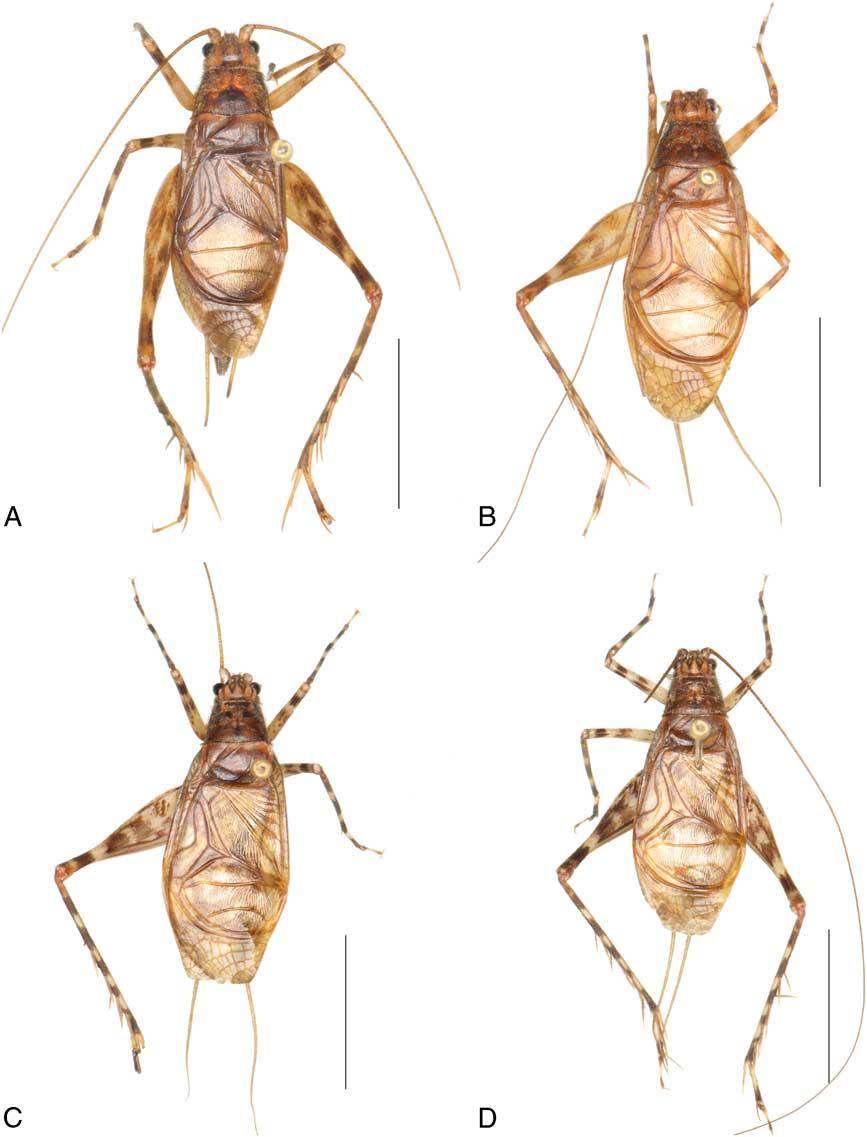
Body of Trellius and Vescelia species. A, Trellius (Trellius) guangdongensis, male; B, Trellius (Neotrellius) yunnanensis, male; C, Vescelia pieli, male; D, Vescelia liangi, male. Scale bar: 10 mm.
Entire genitalia of Trellius and Vescelia species. A, E, I, Trellius (Trellius) guangdongensis; B, F, J, Trellius (Neotrellius) yunnanensis; C, G, K, Vescelia pieli; D, H, L, V. liangi. A–D, dorsal view; E–H, ventral view; I–L, lateral view. Terminology: g.r., guiding rod; l.s., epiphallice proximal lower sclerite; m.l., epiphallic median lobes; R, rami.
Part genitalia of Trellius and Vescelia species. A–C, Trellius (Trellius) guangdongensis; D–F, Trellius (Neotrellius) yunnanensis; G–I, Vescelia pieli; J–L, V. liangi. A, D, G, J, dorsal view; B, E, H, K, lateral view; C, F, I, L, ventral view. Terminology: p.p., epiphallic proximal elongate processes; p.l., ectoparamere proximal lobe.
Type specimens. Holotype: male, China: Guangdong Province, Fengkai District, Heishiding Mountain, 3 October 2014, Zhang Tao (SNNU). Paratypes: one male and one female, Guangdong Province, Fengkai District, Heishiding Mountain, 4 October 2014, Zhang Tao (SNNU); two males and two females, Guangdong Province, Fengkai District, Heishiding Mountain, 3 October 2014, Zhang Tao (one male at NWAU, one male and two females at SNNU).
Measurements. Body length from head to tip of forewings 15.77±0.76 mm, head width 3.34±0.13 mm, pronotum length 3.03±0.17 mm, maximum width of pronotum 4.37±0.18 mm, length of forewings 14.15±0.19 mm, length of visible portions of hind wings 1.00±0.31 mm, length of mesotibiae 6.74±0.30 mm, length of metafemur 13.92±0.42 mm, cercus length 12.47±1.95 mm.
Etymology. The specific epithet “guangdongensis” refers to the type locality.
Natural history. This new species lives on grasses near streams. It is distributed sparsely in the field, with each individual far from others (about a few dozen metres). Adults emerge around October.
Diagnosis. Body yellowish brown with dark patches and spots (Figs. 1A, 3A). Posterior margin of pronotum bisinuate (median portions arced and lateral portions angled) (Fig. 3A). Elytra with five oblique veins, apical field conspicuously shorter than mirror. Hind wings exceed elytra, with viewed portions as long as median claw. Epiphallic lateral lobes sickle shaped, with weak denticles present on half of the proximal top margin. Ectoparamere small, somewhat square and caudally pointed (Fig. 5A). Endoparamere closed to the proximal inner edge of epiphallus (Fig. 5C). The proximal lower sclerite of epiphallus somewhat heart shaped with concave proximal portion and acute apical portion (Fig. 5C: l.s.).
Description. Head small, longitudinally short. Lateral ocelli small, rounded and slightly convex; median ocellus small, convex and somewhat rounded. Rostrum suture straight. Labium with broad, arced apical margin. Pronotal anterior margin almost straight and slightly concave medially; posterior margin bisinuate. Elytra with five oblique veins; diagonal vein not straight, short and bifurcated at base; inner chordal vein somewhat angle-like and a curved transverse vein linked to the inner margin of the mirror present at this angle potion; median chordal vein rounded and curved and outer chordal vein straight and short. Mirror large; top portions angled with two straight margins; the bottom portion rounded; two dividing veins, located at the middle and the bottom. Apical field distinctly shorter than mirror, armed with three or four branches of CuA1; lateral field vertically long, armed with vertical branches of Sc vein. Hind wings exceed elytra and the viewed portions present and rather short, almost equal in length to median claw. Genitalia: Epiphallic lateral lobes sickle shaped, weak denticles present on half of the proximal top margin. One denticle located at the median of top margin and two or three weak denticles located at the median of bottom margin. Epiphallic apex subacute. Ectoparamere small, somewhat square and caudally pointed. The proximal portion of ectoparamere rather small. Endoparamere closed to the proximal inner edge of epiphallus. The proximal lower sclerite of epiphallus somewhat heart shaped with concave proximal portion and acute apical portion, which is separated from paired blade-like proximal margin of epiphallus.
Body yellowish brown with dark parches and spots. Eyes dark brown. Pronotal disc ornamented with yellow-red patterns medially and lateral lobes ornamented with light-coloured spots at the anterior corner. The basal half of elytra dark brown. Hind wings dark brown. Femurs light coloured, ornamented with ring-like dark brown stripes at apex and with some dark brown spots.
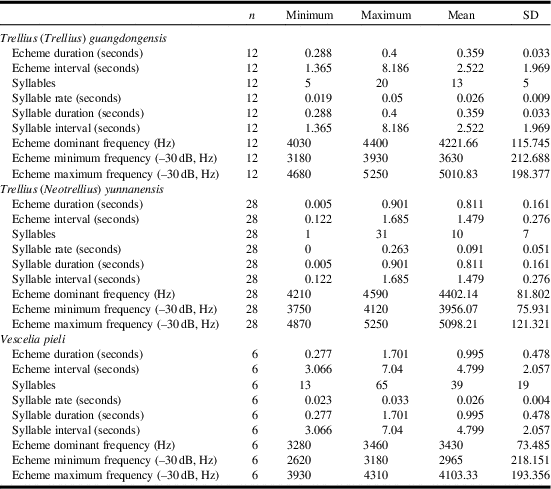
Calling song (Table 1, Fig. 7A). Most of this species are mature in October and prefer wet conditions. Individuals were found on the grass near a creek but distributed sparsely. While one is calling, the other sounding body would be found tens of metres away. The sound was fast (echeme duration is 0.36±0.03 seconds) and amplitude gradually increased (Fig. 7A: a). The dominant frequency was 4.22±0.12 kHz and each echeme contained about 13±5 syllables.
Descriptive statistics of five acoustic parameters in samples of Trellius (Trellius) guangdongensis, Trellius (Neotrellius) yunnanensis, and Vescelia pieli.

Female. General appearance similar to the male (Fig. 1B). Sloping veins on the dorsum of elytra somewhat arch shaped and sub-parallel. Ovipositor not much longer than hind wings and much darker distally. Apex of upper valves of ovipositor armed with two rows of large teeth at distal parts and several small denticles at basal parts. Ventral valves smooth and armed with one tooth near basal part (Fig. 6A–C).
Ovipositors of Trellius (Trellius) guangdongensis and Vescelia pieli. A–C, T. (T.) guangdongensis; D–F, V. pieli. A, D, overall view; B, E, apex lateral view; C, F, apex ventral view.

Remarks. The epiphallic apex of this species is curved slightly upward and its ectoparamere points caudally. Within this subgenus, the species T. (Trellius) alius, T. (Trellius) certus, T. (Trellius) deminutus, and T. (Trellius) verus are similar to this new species. For the species T. (Trellius) alius, T. (Trellius) certus, and T. (Trellius) verus, the proximal top margin of the epiphallus is extended and armed with several denticles covering its bottom margin conspicuously larger than it. The new species is armed with much smaller denticles and only one tooth is slightly larger and located at the median of its top margin, and this top margin is somewhat reduced and smaller than the bottom one. Trellius (T.) deminutus is a distinct species, whose epiphallic lobes are more curved and ectoparameres are more separated from each other, which distinguishes it from the new species. It is noteworthy that we found this new species living together with Vescelia liangi and V. pieli.
Subgenus Trellius (Neotrellius) Gorochov, Reference Gorochov1992
Trellius (Neotrellius): Gorochov Reference Gorochov1992: 3; Otte Reference Otte1994b: 86.
Type species. Heterotrypus tonkinensis Chopard, Reference Chopard1925.
Distribution. China, Vietnam.
Diagnosis. The epiphallic proximal portion laterally equipped with elongate processes (Fig. 5D: p.p.). Endoparamere very far from the proximal inner edge of epiphallus (Fig. 4F). The proximal lower sclerite of epiphallus stellate and linked with (not separated from) paired, blade-like proximal margin of epiphallus (Fig. 5F: l.s.).
Remarks. This subgenus only contains the type species, Trellius (Neotrellius) tonkinensis (Chopard, Reference Chopard1925), which occurs in Vietnam. This is the first report of this subgenus from China.
Trellius (Neotrellius) yunnanensis Ma and Jing, new species
http://zoobank.org/urn:lsid:zoobank.org:act:9A484752-0676-442D-86AD-80DD8F12EB53
Figures 1C, 3B, 4B, 4F, 4J, 5D–F.
Type specimens. Holotype: male, China: Yunnan Province, Mengla District, Wangtianshu, 12–23 October 2014, Zhang Tao (SNNU). Paratypes: three males, collecting data identical to holotype (one at NWAU, two at SNNU).
Measurements. Body length from head to tip of forewings 15.43±0.46 mm, head width 3.13±0.16 mm, pronotum length 3.21±0.25 mm, maximum width of pronotum 4.60±0.19 mm, length of forewings 15.36±0.61 mm, length of mesotibiae 6.17±0.43 mm, length of metafemur 12.21±0.85 mm, cercus length 12.65±1.31 mm.
Etymology. The specific epithet “yunnanensis” refers to the type locality.
Biological information. This species lives in higher shrubs and adults live near streams. The population is somewhat large and each individual is separated from others by about 10 m.
Diagnosis. Body yellowish brown (Figs. 1C, 3B). Posterior margin of pronotum bisinuate (median portions arced and lateral portions angled) (Fig. 3B). Elytra with seven oblique veins; apical field short, possessing three or four CuA1 branches. Hind wings short and slightly extended to the apex of elytra. Epiphallic lateral lobes sickle shaped, armed with two rows (both the top and bottom margins) of denticles (Fig. 5D). Ectoparamere very short, thick and inward pointed (Fig. 5F). Ventrally viewed, proximal portions of ectoparamere large and lobe shaped (Fig. 5F: p.l.). Endoparamere very far from the proximal inner edge of epiphallus (Fig. 4F). The proximal lower sclerite of epiphallus linked with (not separated from) paired blade-like proximal margin of epiphallus (Fig. 5F: l.s.).
Description. Head small. Rostrum square, wider than antennal scape. Occiput and vertex almost in the same horizontal plate. Lateral ocelli round and flat; median ocellus round and convex. Pronotum armed with anterior margin slightly concave and posterior margin bisinuate (median portions arced and lateral portions angled). Elytra gradually expanded toward lateral sides and much broader at the posterior portion. Elytra with seven oblique veins; diagonal vein short and bifurcate at base; inner chordal vein slightly angled and rounded at the corner, where it possesses a transverse vein linked to the crosspoint of diagonal vein and mirror. The top portions of mirror angled and the bottom parts rounded. Two dividing veins, with the longer one slightly bisinuate and the shorter arced. Apical field short, possessing three or four CuA1 branches. Hind wings short and just slightly extended to the tip of elytra. Genitalia: Epiphallic lateral lobes sickle shaped, armed with two rows (top and bottom) of denticles. Epiphallic median lobes present, rather short and armed with varying numbers of denticles apically (Fig. 4E: m.l.). The epiphallic proximal portion laterally equipped with elongate processes and with a notch behind each of these processes (Fig. 5D: p.p.). Epiphallic apex very acute. Ectoparamere very short, thick and inward pointed. The proximal portions of ectoparamere large and lobed in ventral view. Endoparamere very far from the proximal inner edge of epiphallus. The proximal lower sclerite of epiphallus stellate and linked with (not separated from) paired, blade-like proximal margin of epiphallus.
Body yellowish brown (Figs. 1C, 3B). Eyes and pronotum brown or dark brown. Head dorsum ornamented with dark stripes. Veins on elytra dark brown. Legs ornamented with ringed, dark stripes.
Calling song (Table 1, Fig. 7B). These samples were found in the shrubs along a river. In total about seven or eight individuals were singing about 10 m away from each other. Each echeme lasted for about one second (0.81±0.16 seconds) and showed uniform amplitude (Fig. 7B: a.). The dominant frequency was 4.4±0.08 kHz and each echeme included more than 25 syllables (statistic data is affected by one or two beginning short sounds before continuous song).
Calling song profiles of Trellius and Vescelia species (in five seconds, data of temperature and relative humidity missing). A, Trellius (Trellius) guangdongensis; B, Trellius (Neotrellius) yunnanensis; C, Vescelia pieli. a, oscillogram (amplitude versus time); b, mean amplitude spectrum (frequency versus amplitude); c, sonogram or spectrogram (frequency versus time).

Female unknown.
Remarks. Compared to the type species, T. (N.) tonkinensis, this new species is armed with slightly smaller epiphallic median lobes that are equipped with large denticles, and has very short ectoparameres. Particularly, the notches at the sides of the proximal inner margin of the epiphallus are conspicuously smaller than that of T. (N.) tonkinensis (Fig. 5D: p.p.).
Genus Vescelia Stål, Reference Stål1877
Vescelia: Stål Reference Stål1877: 49; Gorochov Reference Gorochov1996: 81, Reference Gorochov2003: 90, Reference Gorochov2014: 14
Type species. Vescelia infumata Stål, Reference Stål1877.
Distribution. China, Japan, Vietnam, Philippines, Malaysia, Indonesia.
Diagnosis. Both tympana present. Inner acoustic apparatus pit-like and equipped with a long, ovoid tympanum; outer tympanum is normal and ovoid shaped (Ma Reference Ma2011). Epiphallus rami-like, thin or thick. Ectoparamere long and thin, equipped with curved and hook-like apex. Endoparamere short and somewhat thick, and both left and right endoparamere fused. Rami very long, wavy, and isolated (Fig. 4C–D). Guiding rod isolated from the mould portions of the attachment plate of the spermatophore. The apical portions of ovipositor similar to Trellius (Gorochov Reference Gorochov1996).
Remarks. This genus contains six species worldwide (Cigliano et al. Reference Cigliano, Braun, Eades and Otte2018). Four of them possess epiphallic lateral lobes that are thin and rami-like (Gorochov Reference Gorochov1996, Reference Gorochov1999, Reference Gorochov2003, Reference Gorochov2014). The species discussed in the present study belong to this genitalia morphology type.
Vescelia pieli (Chopard, Reference Chopard1939)
Figures 1D–F, 3C, 4C, 4G, 4K, 5G–I.
Heterotrypus pieli: Chopard Reference Chopard1939: 79.
Phaloria pieli: Chopard Reference Chopard1968: 362; Ma Reference Ma2011: 88; Xie and Zheng Reference Xie and Zheng2003: 539.
Vescelia pieli: Gorochov Reference Gorochov2003: 90.
Type locality. China, Hainan Province (from Yuan Mantung to Huang Mao Hsiatung).
Specimens examined. China: Holotype, 1 male, Hainan Province, from Yuan Mantung to Huang Mao Hsiatung, G. Ros, 9 April 1936 (IEAS). China: 1 male, Guangdong Province, Fengkai District, Heishiding Mountain, 2 October 2014, Zhang Tao (SNNU); 4 males and 3 females, Guangdong Province, Shenzheng District, Qiniangshan Mountain, 8 October 2014, Zhang Tao (SNNU).
Distribution. China.
Measurements. Body length from head to tip of forewings 14.30±0.63 mm, head width 3.16±0.08 mm, pronotum length 2.83±0.11 mm, maximum width of pronotum 4.19±0.12 mm, length of forewings 13.81±0.85 mm, length of mesotibiae 6.30±0.47 mm, length of metafemur 12.98±0.54 mm, cercus length 14.25±1.86 mm.
Natural history. This species matures from about June to October. It lives in grasses and shrubs along streams, and it lives together with T. guangdongensis and V. liangi.
Diagnosis. Body greyish brown (Fig. 1D). Posterior margin of pronotum almost straight (Fig. 3C). Elytra with nine oblique veins; apical field short, nearly as long as mirror, equipped with three CuA1 branches. Hind wings very short and not extended to elytra apex. Guiding rod short, not reaching the tip of epiphallic lateral lobes (Fig. 5G). Tip of ectoparemere slightly long and more obtuse (Fig. 5G, I).
Description. Head small. Occiput and vertex almost flat. Rostrum somewhat dorsally convex, slightly narrower than antennal scape. Lateral ocelli round and somewhat convex; median ocellus ovoid and somewhat convex. End section of maxillary palpi with an apex laterally depressed and expanded. Pronotum armed with straight anterior and posterior margin. Elytra very broad. Elytra with nine oblique veins, diagonal vein slightly curved and bifurcated at base, false veins distributed in the portions between oblique and diagonal veins and in mirror. Genitalia: Guiding rod short, not reaching the tip of epiphallic lateral lobes. The apex of ectoparemere slightly elongate and very obtuse. Median epiphallic lobes short and slightly acute.
Occiput and vertex ornamented with two median dark stripes and their apical portions each with a loop. Protibiae and mesotibiae ornamented with three dark stripes; profemora and mesofemora ornamented with two dark stripes. Metatibiae ornamented with four dark stripes; metafemur with dark spots or stripes. Cercus light coloured.
Calling song (Table 1, Fig. 7C). The songs were continuous for a long time and the maximum echeme duration was nearly two seconds (Table 1). Each echeme contained low and high parts of amplitude and each part was almost uniform (Fig. 7C: a). The dominant frequency was 4.8±0.02 kHz and each echeme contained more than 40 syllables.
Female. General appearance similar to male (Fig. 1E) but posterior margin of pronotum not straight but bisinuate with convex median portions; hind wings conspicuously longer than elytra. Sloping veins on the dorsum of elytra sparse and sub-parallel. Ovipositor slightly longer than the tip of hind wings and much darker apically. Apex of dorsal valves armed with two rows of large teeth at distal parts, and the basal part armed with four additional large teeth that overlapped. Ventral parts somewhat similar to T. guangdongensis, but much rougher distally (Fig. 6D–F).
Natural history. This species is found from June to October. It prefers to live in wet areas. Individuals were found in grasses and shrubs along rivers and creeks. Most mature individuals, regardless of sex, live alone and apart from each other.
Remarks. Vescelia pieli contains three subspecies, Vescelia pieli pieli (Chopard, Reference Chopard1939), Vescelia pieli ryukyuensis (Oshiro, Reference Oshiro1985), and Vescelia pieli vieti Gorochov, Reference Gorochov2003 (Chopard Reference Chopard1939, Reference Chopard1968; Oshiro Reference Oshiro1985; Gorochov Reference Gorochov2003). These subspecies occupy different geographical regions: V. pieli pieli is mainly distributed in China; V.pieli ryukyuensis is recorded in Japan; and V. pieli vieti is only found in Vietnam. What we discussed here is limited to V. pieli pieli from China.
Vescelia liangi Xie and Zheng, new combination
Phaloria liangi: Xie and Zheng Reference Xie and Zheng2003: 538.
Type specimen information. Type locality: China, Guangdong Province (Heishiding Mountain, Fengkai District). Holotype deposited in Wuhan Polytechnic University, Wuhan, China (not examined).
Specimens examined. China: 1 male, Guangdong Province, Fengkai District, Heishiding Mountain, 2 October 2014, Zhang Tao (SNNU).
Distribution. China.
Measurements. Body length from head to tip of forewings 14.28 mm, head width 3.07 mm, pronotum length 2.43 mm, maximum width of pronotum 3.84 mm, length of forewings 14.13 mm, length of mesotibiae 6.12 mm, length of metafemur 12.38 mm, cercus length 15.21 mm.
Diagnosis. Body greyish brown (Fig. 3D). Posterior margin of pronotum almost straight (Fig. 3D). Elytra with six oblique veins; apical field short, nearly as long as mirror and equipped with three CuA1 branches. Hind wings very short and not extended to elytra tip. Guiding rod very large and long, obviously exceeding the tip of epiphallic lateral lobes (Fig. 5J). The apex of ectoparemere slightly long and more acute (Fig. 5J, L).
Description. Head small. Occiput and vertex somewhat concave. Rostrum square and slightly wider than antennal scape. Lateral ocelli small, round, and flat; median ocellus small, ovoid, and somewhat convex. Labial apex concave and arced. Pronotum armed with straight anterior and posterior margins. Pronotal disc almost flat, laterally inclined to lateral lobes. Elytra gradually widened and broad at the posterior potion. Elytra with six oblique veins; diagonal vein short, curved, and bifurcate at base; inner chordal vein angled, and at the angle equipped with a transverse vein linked to inner margin of mirror; median chordal vein curved and somewhat bisinuate. Mirror large and transversely broad, with weakly arced top portion and arced bottom portion. Two dividing veins, the longer dividing vein located medially and somewhat bisinuate and the shorter dividing vein arced. Apical field short, almost as long as mirror, with three CuA1 branches. Hind wings very short and not extended to elytra apex. Genitalia: guiding rod very large and long, conspicuously exceeding the tip of lateral epiphallic lobes. The tip of ectoparemere weakly elongate and very acute. Median epiphallic lobes longer and very acute.
Colouration similar to Vescelia pieli.
Female unknown.
Remarks. This species was originally described in the genus Phaloria. Based on the genitalia characters, we here transfer it into the genus of Vescelia, as Vescelia liangi new combination. Resembling V. pieli, it also belongs to those Vescelia species with thin and rami-like epiphallic lateral lobes. This species is very similar to V. pieli, but the guiding rod is conspicuously long and longer than its epiphallic lateral lobes. Besides this, V. liangi possesses longer and more acute median lobes of the epiphallus, and its ectoparamere is also more curved and acute apically.
Genus Gorochovius Xie, Zheng, and Li, Reference Xie, Zheng and Li2004
Gorochovius: Xie et al. Reference Xie, Zheng and Li2004: 721; Gorochov Reference Gorochov2014: 14.
Type species. Gorochovius trinervus Xie, Zheng, and Li, Reference Xie, Zheng and Li2004.
Distribution. China.
Gorochovius trinervus Xie, Zheng, and Li, Reference Xie, Zheng and Li2004
Gorochovius trinervus Xie et al. Reference Xie, Zheng and Li2004: 721.
Type specimen information. Type locality: China, Guangxi Province (Dayaoshan Mountain, Jinxiu District). Holotype deposited in Wuhan Polytechnic University, Wuhan, China (not examined).
Distribution. China.
Diagnosis. Body dark brown, ornamented with yellowish-brown or brown patches or stripes. Elytra with eight oblique veins, apical field short and armed with four CuA1 branches. Hind wings not extended to the tip of elytra. Epiphallic lateral lobes rod-like, but curved upward and equipped with double denticles proximally.
Discussion
The tribe Phaloriini contains 12 genera, and the genera are mainly identified by the characteristics of acoustical apparatuses, ovipositor, and genitalia. Most species possess ovipositor armed with distal teeth. However, three genera, Afrophaloria, Phasmagryllus, and Upupagryllus, reported by Desutter-Grandcolas (Reference Desutter-Grandcolas2015), do not have denticles on their ovipositor dorsal valve and appear smooth. In two other genera, the shape and distribution of ovipositor teeth are very distinguishing. One is Pseudotrigonidium. Its ovipositor teeth are largest in the distal part while most species show gradually smaller teeth toward the apex. In another genus, Tremellia, these teeth are much smaller than the ornamented teeth of other genera. These teeth are very similar to those of the genera Phaloria, Strophiola, Trellius, and Vescelia. In addition, inner acoustical apparatuses (tympanum) of Phaloriini species are always depressed as a pit with smaller tympanum, but in some genera, they are reduced or absent. The general variations of genitalia structure are isolation or fusion of endoparamere and rami. Sometimes both the right and left parts of endoparamere and rami are fused or isolated (Fig. 4A–B), or alternatively, fusion in the endoparamere but the rami are isolated (Fig. 4C–D).
Trellius and Vescelia are the primary taxa we studied. They appear to have similar exterior features and living preferences (Fig. 1), and in particular, we encountered these two genera in one place. Similar to most crickets, they are distinct in genitalia structures (Figs. 4–5) and somewhat different in their colouration (Figs. 1, 3). Similar to the situation in the genera above, V. liangi and V. pieli are distinct morphologically (Fig. 5G, J), but could be also found in similar places. As mentioned above, V. pieli is a common species, possessing three subspecies (here we use this name instead of the subspecies V. pieli pieli), and, to some extent, widely distributed (Chopard Reference Chopard1939; Oshiro Reference Oshiro1985; Gorochov Reference Gorochov2003). Vescelia liangi is a species rather close to V. pieli, which almost could not be identified without checking their genitalia complex. In our samples, there is only one specimen that was collected from similar locality (Heishiding Mountains, Fengkai, Guangdong) with the holotype of V. liangi. Based on the fact that it is rarely present, we think V. liangi might be sparse in its niche or it is not abundant in July or October (both the holotype and ours were collected in this period). In addition, how these relatives live together and share similar niches would be a curious question.
According to genitalia structure, the subgenus Trellius could be divided into two groups. One group is equipped with an extremely upward curved epiphallic apex and inward pointed ectoparamere, while the other group is armed with an epiphallic apex slightly upward curved and caudally pointed ectoparamere. In particular, Trellius jacobsoni (Chopard, Reference Chopard1925) was moved into the genus Trellius by Gorochov (Reference Gorochov1988), and he used the word “possible” for this combination. After checking the original description of Heterotrypus jacobsoni Chopard, Reference Chopard1925, we believe it is distinct from Trellius and other Phaloriinae species. Its epiphallus is armed with long bristles on each side proximally and its ectoparamere is very long, thin, and crossed apically. Accordingly, we infer that H. jacobsoni may belong to the subfamily Phalangopsidae (Gorochov Reference Gorochov2014; Cigliano et al. Reference Cigliano, Braun, Eades and Otte2018).
Acknowledgements
The authors sincerely thank Laura Q. Wu of Baylor College of Medicine, Houston, Texas, United States of America for help in revising this manuscript. This work is supported by the National Natural Science Foundation of China (number 31750002) and the Fundamental Research Funds for the Central Universities (GK201702010).