Introduction
Kokum [Garcinia indica (Dupetit-Thouars) Choisy], an indigenous tropical under-exploited semi-domesticated crop, is endemic plant to Northern Western Ghats of India (Rajasekharan and Ganeshan, Reference Rajasekharan and Ganeshan2002). Garcinia L. is a genus of evergreen poly-gamodioecious trees and shrubs comprising 400 species with a pan-tropical distribution (Seetharam, Reference Seetharam1989). It is the second-largest genus within the family Clusiaceae (Guttiferae). Though POWO (2023) enlists 405 accepted names in the genus, all the recent revisions and other lists estimate only nearly 260 species world-wide (Mohanan et al., Reference Mohanan, Shameer and Sabu2023). Malaysia and Africa with large number of endemic species appear to be the two main centres of origin of the genus Garcinia. Many Garcinia species in Tropical Asia, Southern Africa and Northern Australia are locally used, and the edible fruits are of interest worldwide, as well as having potential implication on the economy of local communities (Gunaga et al., Reference Gunaga, Harsha kumar, Manjunath, Damle, Asha, Vasudeva, Ganeshaiah, Vasudeva, Janagoudar, Reddy, Sthapit and Singh2010). Recent revision of genus Garcinia recognized 33 species and seven varieties in India (Mohanan et al., Reference Mohanan, Shameer and Sabu2023). Garcinia gummi-gutta and G. indica are the predominant species occurring in the Western Ghats, and these are locally traded as Kodampuli and Kokum, respectively. The trade analysis of Garcinia species suggests that the demand for the dried fruit rinds (raw drugs) and its value-added products are increasing as these species are traded throughout India and also exported to other countries as raw drugs, juices and extracts (Ved and Goraya, Reference Ved and Goraya2007; Gunaga et al., Reference Gunaga, Harsha kumar, Manjunath, Damle, Asha, Vasudeva, Ganeshaiah, Vasudeva, Janagoudar, Reddy, Sthapit and Singh2010).
The genus Garcinia have a highly diverse sexual system in their species, which include dioecious (Sweeny, Reference Sweeny2008), gynodioecious (Pangsuban et al., Reference Pangsuban, Bamroongrugsa, Kanchanapoom and Nualsri2007), androdioecious (Berg, Reference Berg1979, George et al., Reference George, Baby Latha, Lyla Mathew and Geetha1992), polygamo-dioecious, monoecious and andromonoecious (Leal et al., Reference Leal, Benevides, Silva, Santiago-Fernandes, Sa-Haiad and Lima2013). Richards (Reference Richards1990a, Reference Richards1990b, Reference Richards1997) has suggested the occurrence of apomixis in pantropical species of Garcinia especially in Asian Garcinia mangostana L. in which males were not found (Richards, Reference Richards1990b). Sexual system of G. indica is a controversial one, as it has been reported to be polygamo-dioecious (Rajasekharan and Ganeshan, Reference Rajasekharan and Ganeshan2002) or gynodioecious (Rawat and Bhatnagar, Reference Rawat and Bhatnagar2005). Further, the presence of four different kinds of flowers, ‘trioecy’ [these basic kinds of flowers formed two kinds of individuals as unisexual (individually present on a particular tree) or co-sexual (in combination of two)] was reported by Thatte and Deodhar, (Reference Thatte and Deodhar2012).
Kokum (Garicinia indica) is found wild in evergreen or semi-evergreen forests of Western Ghats and in the western coastal region in south Maharashtra extending southwards to Karnataka and Kerala in the northern-most parts. It is known by various names like bindin, biran, bhirand, bhinda, katambi, punarpuli, ratamba or amsool. Kokum is a multipurpose tree grown in the home gardens of south Maharashtra, Goa and Karnataka for the acidic fruit rind, which is used as a condiment and garnish and, for the kernel oil which yields the commercial kokum butter. The trees yield fruits annually in the summer season generally during the months of March to May. The fruits are green when raw and red to dark purple or light yellow when fully ripe. Fruits are used to prepare juice, pickles and as an acidulant in curries. Sherbat or syrup prepared from the fruit rind along with sugar after a fermentation process in bright sunshine is used as a cooling summer drink with antioxidant and antacid properties, as a source to avoid skin damages and allergies from the sunlight in tropical climate. The seed oil is used in medicine especially in cosmetics, the kernels contain 23–46% oil on dry weight basis which remains solid at room temperature, is used in the preparation of chocolates, medicines and cosmetics (Baliga et al., Reference Baliga, Bhat, Pai, Boloor and Palatty2011). Dried fruit rind is used as a souring agent and a substitute for tamarind paste in Indian curries and slightly acrid spice in recipes in the states of Maharashtra and Goa in India.
Rind extracts of kokum are rich in garcinol, isogarcinol, hydroxycitric acid (HCA), HCA lactone, citric acid and oxalic acid. A study on garcinol's dopamine restorative potency with homocysteine lowering ability (Mazumder et al., Reference Mazumder, Bhattacharjee and Borah2016, Reference Mazumder, Paul, Phukan, Dutta, Chakrabarty, Bhattacharya and Borah2018) and the countering of L-DOPA-induced dyskinesia (Ryu et al., Reference Ryu, Park, Go, Kim, Hwang, Choi, Noh, Rhee, Han, Lee and Kim2018) demonstrated its worthiness as a potential drug candidate against Parkinsonian Disease. The HCA and HCA lactone content in the two species, G. gummi-gutta (previously known as G. cambogia) and G. indica varied from 1.7% to 16.3% and 3.5% to 20.7%, respectively. DNA barcoding and NMR study revealed that there was no adulteration in trading of the above two species in Indian herbal markets, hence, it could be effectively used as a regulatory tool to authenticate Garcinia fruit rinds and food supplements (Seethapathy et al., Reference Seethapathy, Tadesse, Urumarudappa, Gunaga, Vasudeva, Malterud, Shaanker, de Boer, Ravikanth and Wangensteen2018). G. indica seeds are a desirable source of acyltransferases for engineering high stearic acid phenotypes in temperate oilseeds (Daniel et al., Reference Daniel, Abraham, Balaji and Rajasekharan2003). Kokum fat has been used as cocoa butter extenders, suitable for use in chocolate and confectionery, along with a phulwara butter fraction. In addition, they had narrow melting ranges like cocoa butter, and they were compatible with cocoa butter and have tolerance towards milk fat (Reddy and Prabhakar, Reference Reddy and Prabhakar1994).
A base line survey of Konkan region in 2012 estimated that Kokum plantations in the area spread over about 2200 ha with production of 10,000 to 12,000 MT fruits. Only two districts (Ratnagiri and Sindhudurg) of Maharashtra state had 92.3% (43,000 trees out of 46,600) of Kokum trees. In South Konkan region, the quantity of Kokum fruits used for the purpose of dried rind, syrup and butter is 1674, 757 and 40 MT, respectively (Miguel et al., Reference Miguel, Shirodkar, Bhat and Krishnan2012). Although it's importance with respect to industrial, commercial and medicinal aspects are increasing, Kokum is not yet fully exploited commercially at present. Wide variability among the kokum genotypes with respect to yield and quality parameters, dioecy, dominance of tropism in vegetative propagation and harvesting at the onset of rainy season are some of the foremost obstacles for its acceptance as a commercial crop.
Keeping these in view, the present study was undertaken with the following objectives: (1) Field survey and collection of kokum germplasm (2) To know the nature of flowering/ fruiting behaviour of Kokum, (3) To assess the morphological variability present among the fruited accessions using multivariate analysis and (4) To identify trees with good fruit yield and other economically important traits. Further, we had also presented the nutritional and economic importance aspects for utilization of genetic resources in future breeding programmes.
Materials and methods
Field survey and collection
Field survey and exploration trips were made to the Konkan region (stretching over Goa, Karnataka and Maharashtra states) over a period of 17 years from 1987 to 2004 and 31 accessions of Kokum germplasm were collected. The Konkan tract is about 515 km in length and is a stretch of land by the west coast of India, bound by the river Daman Ganga at Damaon in the north, to Anjediva Island next to Karwar town in the south; with the Arabian Sea to the west and the Deccan plateau to the east. In addition, one collection was made from Kasaragod, northernmost district of Kerala. The passport data of collected germplasm (23 accessions) under study is presented in Table S1. Information on processing of dried rind as spice, fresh rind for syrup and dried kernels for butter was gathered from the people who were actually processing in the villages and cottage industries in Maharashtra and Karnataka. Germplasm was collected in the form of fruits, cuttings and scions from different habitats/ areas such as forests, homesteads, farms, extraction/ processing centres from Dapoli southwards to Kerala.
Establishment of Field Gene Bank
The seeds were extracted from the collected fruit and sown in the nursery bed. One-year old seedlings raised immediately after collection (the age of each accession varies as the collection made from 1987 to 2004 and the year of collection is mentioned in Table S1) were transplanted into the field, maintaining a minimum of three plants per accession. The Field Gene Bank (FGB) was initially established with 85 seedling origin trees belonging to 31 accessions at ICAR-NBPGR Regional Station, Thrissur, out of which 67 trees are presently maintained in the FGB. Two to three seedlings were planted in each accession and numbered as −1, −2, and −3 after the Indigenous Collection number (IC No.). The FGB is located at 10.5480o N, 76.2830o E, and the soil type is shallow, well drained, gravelly clay soils with moderate surface gravelliness on moderately steeply sloping laterite mounds, with moderate erosion.
Morphological characterization of fruiting trees
Thirty-three fruiting trees belonging to 23 accessions were subjected to morphological characterization in the present study using 25 quantitative and 10 qualitative traits during 2015–2018. Each tree whether the same or different accession was treated as a separate individual for characterization purposes as they are seedling progenies. Ten fruits from each tree were used for studying fruit, seed and kernel characters, whereas, annual yield per tree was assessed in terms of number of fruits and total fresh weight of them. The qualitative characters such as fruit shape, fruit projection shape, fruit attractiveness, fruit base shape, fruit apex shape, fruit size, presence of yellow exudation, seed size, fresh kernel shape, fresh kernel colour were also observed.
Data analysis
The mapping of collection sites with the help of DIVAGIS, version 1.4 was carried out. Data observed on 25 quantitative traits were subjected to basic descriptive statistics, Pearson's correlation and multivariate analysis (cluster and principal components analysis), which were performed using PAST3 software (Hammer et. al., Reference Hammer, Harper and Ryan2001).
Results
Field survey and collection
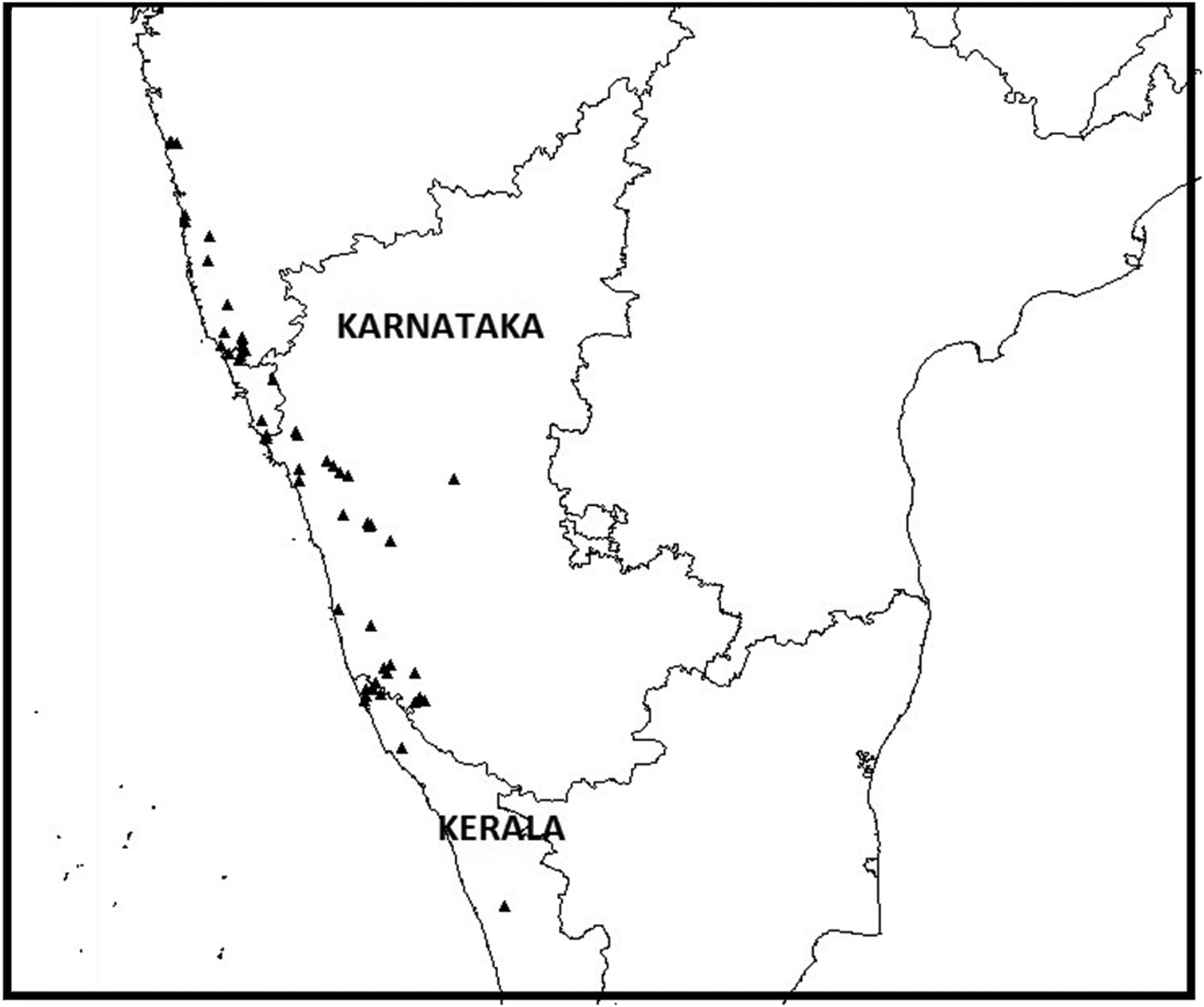
In total, 31 accessions (85 trees) of kokum were collected from its natural habitats across Western Ghats viz., Goa, Karnataka, Kerala and Maharashtra during field survey and exploration trips made by ICAR-NBPGR Regional Station, Thrissur, Kerala (India). The mapping of collection sites with the help of DIVA-GIS indicated its distribution pattern as west coastal and upland regions of southern Peninsular India (Fig. 1). The collections were made between 12.5oN to 17.78oN latitude and 73.16oE to 75.19oE longitude. Frequency of Kokum plants noticed as common occurrence in west coast/upland slope regions of Karnataka, Goa, south Maharashtra, and also in upland slopes of Kerala, whereas, it's occurrence was rare in rest of Kerala. Numbers of collections made per state were as 42, 23, 12 and 8 in Karnataka, Maharashtra, Kerala and Goa, respectively.
Collection localities of kokum germplasm using DIVA-GIS software.

Establishment of Field Gene Bank
Kokum plantation was established at ICAR-NBPGR Regional Station, Thrissur includes eight collections from Goa [North Goa (3) and South Goa (5) districts]; 42 from Karnataka [Dakshin Kannad (6), Kodagu (5), Shimoga (7), Udupi (6) and Uttar Kannad (18) districts]; 12 from Kerala [Kannur (1), Kasaragod (9) and Thrissur (2) districts] and 23 from Maharashtra [Ratnagiri (12) and Sindhudurg (11) districts]. A field view of grown-up tree, tree at fruiting stage and harvested kokum fruits are presented in Fig. 2a–c.
Field view, fruit and kernel variability and use of Kokum (a) Field view of grown-up tree, (b) Tree at fruiting stage, (c) Harvested fruit, (d) & (e) Fruit variability, (f) Kernel variability, (g) Dried rind of fruit and (h) Butter from dried kernel.

Flowering/ fruiting behaviour of collected accessions
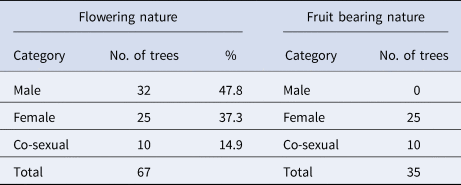
Poly-gamodioeceous sexual system existing in Kokum (Garcinia indica) was presented in Fig. 3, which depicts the female bud, male bud, female flower with staminodes, male flower with pistillodes, male flower without pistillodes and bisexual flower. Out of 67 trees surviving in FGB, 32 (47.8%), 25 (37.3%) and 10 (14.9%) were observed as male, female and co-sexual trees, respectively. Fruit bearing capacity was noticed only in 35 trees which include all 25 female and 10 co-sexual trees with huge variability in fruit and kernel characteristics (Table 1 and Fig. 2d–f).
Polygamodioeceous sexual system in Kokum (Garcinia indica). (a) Female bud, (b) Male bud, (c) Female flower with staminodes, (d) Male flower with pistillodes, (e) Male flower without pistillodes and (f) Bisexual flower.

Flowering and fruit bearing of Kokum genotypes collected from Konkan region of India

Morphological characterization of fruiting trees
Range of variation
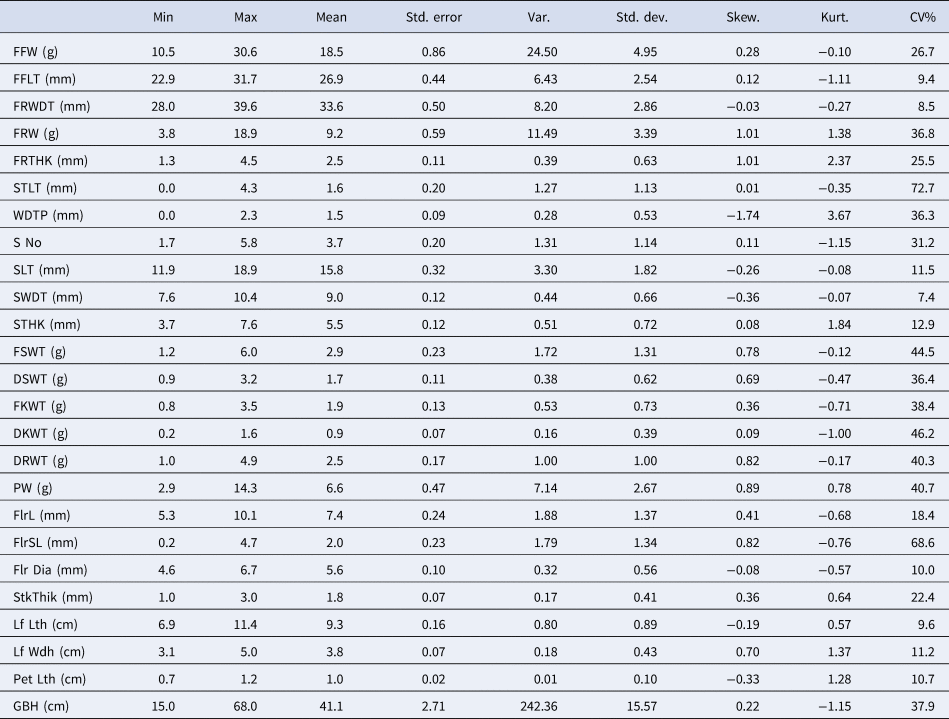
Morphological characterization of 33 G. indica trees/ genotypes using 25 quantitative traits is presented in Table 2. High coefficient of variation (CV %) was observed for stalk length (72.7) followed by flower stalk length (68.6), dry kernel weight (46.2), fresh seed weight (44.5) and minimum in seed width (7.4). The range and mean values of important characters such as stalk length (0.0 to 4.3 and 1.5 mm), flower stalk length (0.22 to 4.68 and 1.95 mm), dry kernel weight (0.2 to 1.6 and 0.9 g), fresh seed weight (1.2 to 6.0 and 3.0 g), dry seed weight (0.9 to 3.2 and 1.7 g) and fresh kernel weight (0.8 to 3.5 and 1.9 g). Range of fresh fruit weight (g), fresh rind weight (g) and fresh rind thickness (mm) are as 10.5 to 30.6, 3.8 to 18.9 and 1.3 to 4.5 with mean values of 18.7, 9.3 and 2.5, respectively. Flowering was observed for five months period from December to April in male trees, whereas, fruiting in female trees was observed from January to May.
Range of variation for 25 quantitative traits of 33 Kokum genotypes collected from Konkan region of India

FFW, fresh fruit weight (g); FFLT, fresh fruit length (mm); FRW, fresh rind weight (g); FRTHK, fresh rind thichkness (mm); STLT, stalk length (mm), WDTP, width of projection (mm); SNo, number of seeds per fruit; SLT, seed length (mm); SWDT, seed width (mm); STHK, seed thickness (mm); FSWT, fresh seed weight (g); DSWT, dry seed weight (g); FKWT, fresh kernel weight (g); DKWT, dry kernel weight (g); DRWT, dry rind weight (g); PW, pulp weight (g); FlrL, flower length (mm); FlrSL, Flower stalk (mm); Flr Dia, flower diameter (mm); StkThik, stalk thickness (mm); Lf Lth, leaf length (cm); Lf Wdh, leaf width (cm); Pet Lth, petiole length (cm); GBH, girth at breast height (cm).
Pearson's correlation
Pearson's correlation was worked out between 25 traits including nine yield attributing characters such as fresh fruit weight, fresh rind weight, fresh rind thickness, seed number, fresh seed weight, dry seed weight, fresh kernel weight, dry kernel weight and dry rind weight which are presented in Table S2. Highest positive correlation was observed between fresh seed weight and fresh kernel weight (0.92) followed by flower width and flower stalk length (0.90), fresh fruit weight and fresh rind width (0.81), fresh seed weight and dry seed weight (0.79). Highest negative correlation was observed between fresh fruit weight and flower stalk length (0.56). Fresh rind width had showed positive correlation of <0.59 with seed and kernel traits, whereas fresh rind thickness had showed low positive or negative correlation with all traits.
Cluster analysis
Cluster analysis based on Jaccard's similarity coefficient using UPGMA method clearly distinguished 33 G. indica trees/genotypes into four major clusters, Cluster I, II, III and IV at similarity coefficient value of 0.27 based on 25 quantitative traits (Fig. 4). The Cluster I was grouped with both two male/bisexual (IC405350-2, IC136678) and two female genotypes (IC342296-3, IC342297-1). The Cluster II was divided into two sub-clusters as sub-cluster IIa with six genotypes (IC136682-3, IC550571, IC409061-3, IC136687-1, IC383701-3, IC409060-2) and IIb with two genotypes (IC136685-2, IC342321-1) at similarity coefficient value of 0.38. The Cluster III was divided into two sub-clusters as sub-cluster IIIa and IIIb at similarity coefficient value of 0.30 and are having 17 (IC342298-3, IC342301-2, IC136682-2, IC342322-1, IC136687-2, IC136687-3, IC342296-1, IC342301-1, IC342319-2, IC342322-3, IC342298-1, IC342329-3, IC342321-2, IC342315-2, IC342319-3, IC342327-1, IC550572-1) and three (IC342302-2, IC342303-2, IC342305-2) genotypes respectively. Cluster IV was grouped with one female genotype IC136685-1 collected from Mangalore of Karnataka state, India.
Dendrogram generated for 25 quantitative traits of 33 Garcinia indica trees/ genotypes using UPGMA method based on Jaccard's similarity coefficient.

Principal components analysis
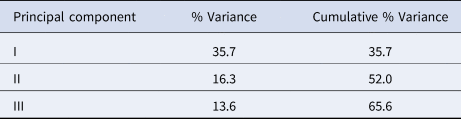
PCA analysis was also performed to determine the genetic relationships among 33 G. indica trees/ genotypes and two-dimensional scatter-plot of PCA ordination for them is presented in Fig. 5. First, second and third principal components explained about 35.7, 16.3 and 13.6% genetic variation respectively present in G. indica trees/ genotypes as with cumulative variation of 65.6% (Table 3). Traits showed more weightage in PCA-1 for grouping were as follows: fresh seed weight (g), dry kernel weight (g), dry seed weight (g) and fresh kernel weight (g), whereas in PCA-2 were as stalk length (mm), fresh seed weight (g) and fresh kernel weight (g).
Two-dimensional scatter-plot of PCA ordination for 25 quantitative traits of 33 G. indica genotypes using first two principal components.

The cumulative % variance of first three principal components obtained through PCA analysis of 33 Kokum genotypes collected from Konkan region of India

Trait-specific elite lines identified
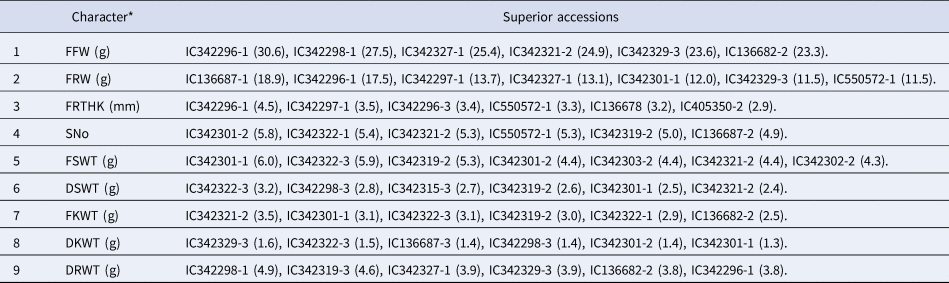
The superior accessions identified for the important characters are presented in Table 4. Accession IC342296-1 was identified with high fresh fruit weight (30.6 g), fresh rind weight (17.5 g), fresh rind thickness (4.5 mm) and dry rind thickness (3.8). Whereas, accession IC342298-1 have second high fresh fruit weight (27.5 g) with higher dry rind thickness (4.9 mm) among accessions. Four accessions viz., IC342315-2, IC136685-2, IC136678 and IC409060-1 showed higher dry rind recovery percentage with values 86.8, 52.31, 48.4 and 45.2 respectively. Dried rind of kokum fruit and butter from dried kernel are represented in Fig. 2g, h. Among 49 accessions (75% from Karnataka state alone) of kokum observed for fruiting behaviour at Thrissur, four (IC136687-1, IC136687-3, IC552528-1 and IC552528-3) accessions were found to be extra early in fruiting (January 1st week).
Superior accessions identified for different economically important traits in 33 Kokum genotypes collected from Konkan region of India

* FFW, fresh fruit weight (g); FRW, fresh rind weight (g); FRTHK, fresh rind thichkness (mm); SNo, number of seeds per fruit; FSWT, fresh seed weight (g); DSWT, dry seed weight (g); FKWT, fresh kernel weight (g); DKWT, dry kernel weight (g); DRWT, dry rind weight (g).
Frequency distribution of qualitative traits
Morphological characterization using 10 qualitative traits is presented in Table S3. This study revealed that all 33 genotypes except IC383701-3 showed similarity among them for all 10 traits. Accession IC383701-3 had showed difference in fruit shape (ovoid), fruit projection shape (prominent), fruit apex shape (mammiform), seed size (small) from rest of genotypes.
Discussion
Kokum (Garicinia indica) is naturally distributed in Western Ghats (the western coastal regions viz., Maharashtra, Karnataka, Goa and Kerala) of India. Thirty-one accessions (85 trees) of kokum were collected from its natural habitats across Western Ghats as above-mentioned states. The number of collections was made per state [from Karnataka (42), Maharashtra (23), Kerala (12) and Goa (8)] to cover the genetic diversity representing its natural distribution pattern and population density in the concerned state. Kokum plantation established at ICAR-NBPGR Regional Station, Thrissur was the first of its kind in Kerala with vast genetic diversity of species from different geographical areas at one place. Kokum trees exist mostly as natural populations in the forests of south Maharashtra, Goa, Karnataka, Kerala and Tamil Nadu. Sometimes, it is grown in farmer's field as chance volunteer seedlings in homestead gardens except Kerala. Mostly, the homestead populations consisted of only the female trees in which the flowers contained degenerated stamens or staminodes instead of perfect stamens, sometimes with 1 or 2 male trees around. One of the possibilities of a smaller number of male trees may be due to the gradual removal of these trees being non-productive.
Results of our study on floral behaviour of G. indica accessions was comparable to Joseph and Murthy (Reference Joseph and Murthy2015) who also obtained 42% of trees as male, 38.8% of trees as female and 19.2% of trees as co-sexual from 281 trees collected from different locations. Fruit bearing capacity noticed only in 35 trees (25 female and 10 co-sexual trees) with huge variability in fruit and kernel characteristics might be owing to the trioecious nature of kokum flowers as reported by Thatte and Deodhar (Reference Thatte and Deodhar2012). Further, Joseph and Murthy (Reference Joseph and Murthy2015) had reported the percentage of different kind of flowers viz., pure hermaphroditic flowers, andromonoecious, gyno-monoecious and monoecious produced in 54 co-sexual trees as 3.7, 35.1, 16.6, and 44.4%, respectively. Manjunath (Reference Manjunath2021) studied the floral biology of kokum in detail and reported that male flowers were of two types, one with pistillode and other without it. Female trees produce flowers in solitary or in groups of two or three whereas female and bisexual trees produce flowers in clusters. Although we have not studied the floral percentage of co-sexual trees in the present study, the variability observed in the fruit shape and weight within co-sexual trees might provide insight into the utilization of genetic resources for plant breeding and improvement programme.
Morphological characterization of 33 G. indica trees/ genotypes using 25 quantitative traits under present study revealed the presence of considerable amount of variation among them on the basis of coefficient of variation (CV %) for important traits viz., stalk length, flower stalk length, dry kernel weight and fresh seed weight. The range and mean values of above important characters had also indicated the presence of wide variability among them. Similarly, a profound morphological variability was observed by Thatte et al., (Reference Thatte, Khandekar and Deodhar2012) on kokum populations collected from northern Western Ghats especially Maharashtra for the traits such as leaf length, breadth, leaf apex, leaf area, stem height, stem girth, fruit colour and rind thickness. Early stage of kokum plantation under study had showed significant variations in tree height, tree spread, leaf length, leaf breadth, leaf area, petiole length and tree branching pattern with horizontal or drooping or semi-erect branches (Abraham et al., Reference Abraham, Latha, Senthil Kumar, Rathy, Shelja and Sunanda2002).
Pearson's correlation analysis revealed the existence of highest positive correlation between important morphological traits (fresh seed weight and fresh kernel weight; flower width and flower stalk length; fresh fruit weight and fresh rind width). Hence selection of accessions based on fresh kernel weight and fresh fruit weight will be useful for accomplishing lines with more seed derived products. Fresh rind width had showed positive correlation of <0.59 with seed and kernel traits, whereas fresh rind thickness had showed low positive or negative correlation with all traits.
Cluster analysis had clearly distinguished 33 G. indica trees/ genotypes by forming four major clusters which mainly grouped the male and bisexual trees in the Cluster I and II [with exception of two female genotypes (IC342296-3, IC342297-1) in Cluster I], whereas other remaining female trees were grouped in Cluster III and IV. The grouping of these two female genotypes (IC342296-3, IC342297-1) into male/ bisexual group might be due to the values of more weighed characters in PCA-I [fresh seed weight (g), dry kernel weight (g), dry seed weight (g) and fresh kernel weight (g) as (1.6, 1.2, 1.3 and 0.3) and (1.8, 1.0, 1.0, 0.2), respectively for two genotypes] falls within the range of male/ bisexual genotypes. The male/ bisexual and female genotypes under present study showed range values as (1.2 to 2.3, 0.9 to 1.7, 0.8 to 1.8 and 0.3 to 1.2) and (1.6 to 6.0, 1.2 to 3.2, 1.0 to 3.5 and 0.2 to 1.5), respectively for the above four traits. Only one female genotype IC136685-1 was grouped in Cluster IV might also be due near or fall of the values of four traits (2.7, 1.6, 1.8 and 0.8, respectively) within the range of male/ bisexual and female genotypes under present study. Overall, the Cluster II and III showing the grouping of trees on basis of geographical area (majorly at district and/ or village) at sub-group level.
The grouping formed in cluster analysis was confirmed by PCA analysis and it had revealed the cumulative genetic variation of 65.6% by using variation obtained in the first three PCs. Traits showed more weightage in PCA-1 for grouping were as follows: fresh seed weight (g), dry kernel weight (g), dry seed weight (g) and fresh kernel weight (g), whereas the traits in PCA-2 were as stalk length (mm), fresh seed weight (g) and fresh kernel weight (g). These traits could be used for determination of male or female plants of kokum as it formed four different grouping by clearly separating the male/bisexual ones from female genotypes.
Since dry kernel is the source of kokum butter, selection of accessions superior for dry kernel recovery percentage is inevitable. Four accessions (IC342315-2, IC136685-2, IC136678 and IC409060-1) identified with higher dry rind recovery percentage could be directly or indirectly used as a potential source for kokum butter by involving them in the development of superior lines in breeding programme. Two accessions (IC342296-1 and IC342298-1) identified with high fresh fruit weight and dry rind thickness could be used for kokum butter and/ or other kokum preparation like sherbet or juice.
In general, fruit maturity of kokum takes place during the peak monsoon season (July–August) in the Karnataka State of India leading to difficulty in the collection, drying and processing of fruits. Interestingly, fruit maturity of kokum occurs at post-monsoon season (January to March) in the Kerala State of India. Hence, this temporal difference in phenological process existing between these two states may be exploited by kokum industries for drying and processing of fruits by establishing more plantations in Kerala. Four (IC136687-1, IC136687-3, IC552528-1 and IC552528-3) accessions with extra-early in fruiting identified in Kerala under present study could be evaluated for release as an early kokum variety for large scale production of kokum fruit for their industrial utilization.
Future prospects
Kokum is on the threshold of becoming a future horticultural crop of the South India as already this tree is being exploited for its commercial products of food, cosmetics and medicine, which are flooding the markets now. Although Kokum is not a commercial crop in Kerala, its plantation was established successfully at this regional station by Introduction from other Indian States viz., Karnataka, Goa and Maharashtra. This will enable farmers to go in for cultivation of kokum as a plantation crop to generate more income by using both fruit rind and kernels, as the kernels contain appreciable quantities of health promoting edible oil. Efforts were also made to characterize fruit quality, yield and commercial production of G. indica (Haldankar et al., Reference Haldankar, Pawar, Kshirsagar and Kulkurni1993) and also to identify early fruiting, high yielding, HCA rich clones for standardization of protocol for clonal propagation of elite clones (Tembe and Deodhar, Reference Tembe and Deodhar2011).
Conclusion
Being a multi-purpose useful tree, Kokum needs to be promoted as a horticultural crop tree in non-traditional areas by considering its variability on economically important traits and it may also lead to crop diversification of those areas. Kokum products possess many health benefits and are useful in various medical conditions (Mazumder et al., Reference Mazumder, Bhattacharjee and Borah2016, Reference Mazumder, Paul, Phukan, Dutta, Chakrabarty, Bhattacharya and Borah2018; Ryu et al., Reference Ryu, Park, Go, Kim, Hwang, Choi, Noh, Rhee, Han, Lee and Kim2018). ICAR-NBPGR Regional station, Thrissur is presently maintaining the largest germplasm repository of kokum collected from Konkan region in its FGB. The present study on morphological traits of these kokum genotypes revealed the presence of considerable amount of genetic variability among them. The accessions grouped into four major clusters based on sexual system with male/bisexual genotypes in Cluster I and II and female ones in Cluster III and IV. Superior accessions identified for one or more combination of traits viz., high fresh fruit weight, fresh rind weight, fresh and dry rind thickness and dry rind recovery percentage will be more useful in industrial aspects of preparing kokum butter and juice. A accession (IC136687-3) with high yield and showing the high number of fruits and fruit yield consistently for last 9–10 years has been registered as genetic stock (INGR04063) under Plant Germplasm Registration Committee (PGRC) of ICAR, New Delhi during 2004. Further, the seasonal difference identified in fruiting and maturity of fruits well before onset of monsoon in four (IC136687-1, IC136687-3, IC552528-1 and IC552528-3) accessions with early maturity may be exploited by kokum industries as it could provide improved conditions for drying and processing of fruits at Kerala compare to traditionally grown areas.
Supplementary material
The supplementary material for this article can be found at https://doi.org/10.1017/S1479262124000558.