There are various speech sounds in the world contrasting with one another in a language-specific way. A sound contrast can be signaled acoustically by different types of information. In perceiving a sound contrast, speakers of a language may pay differential amounts of attention to different acoustic cues. Some cues are primary and others secondary, thus resulting in a specific pattern of cue reliance. For instance, there are at least two cues in the English /i/–/ɪ/ contrast, namely, spectral properties and duration. All else being equal, /i/ has a lower F1 and a higher F2, and is longer than /ɪ/. When discriminating English /i/ and /ɪ/, native English speakers rely predominantly on spectral properties with less attention paid to vowel duration (Hillenbrand, Clark, & Houde, Reference Hillenbrand, Clark and Houde2000).
A considerable amount of research has shown that the analysis of perceptual attention paid to acoustic cues can reliably explain the differences between native and nonnative listeners. For example, Bohn and Flege (Reference Bohn, Flege, Leather and James1990a) pointed out that perceptual abilities for a new vowel contrast may develop slowly in second language (L2) learning, and that even if L2 speakers are able to accurately discriminate, their strategies are often not the same as those employed by native speakers. Likewise, Bion, Escudero, Rauber, and Baptista (Reference Bion, Escudero, Rauber and Baptista2006) observed that in the perception and production of English front vowels, some Brazilian participants performed similarly to native English speakers on a category formation test, though they did not manifest nativelike reliance on spectral quality. Instead, vowel duration was found to play an important role in the formation of their English vowel categories. Moreover, a number of studies (e.g., Bohn, Reference Bohn and Strange1995; Escudero, Reference Escudero, Baptista and Watkins2006; Escudero & Boersma, Reference Escudero and Boersma2004; Kondaurova & Francis, Reference Kondaurova and Francis2008) demonstrated that unlike native English speakers, their Spanish and Russian participants relied exclusively on vowel duration instead of spectral properties when identifying the English /i/–/ɪ/ contrast.
Speech perception may vary considerably among L2 learners with the same first language (L1) background (Smith & Hayes-Harb, Reference Smith and Hayes-Harb2011). As specified in some studies (e.g., Escudero, Reference Escudero2000; Escudero, Benders, & Lipski, Reference Escudero, Benders and Lipski2009), Spanish speakers generally prefer temporal cues when distinguishing English /i/–/ɪ/ or Dutch /aː/–/ɑ/, but the relative use of temporal and spectral cues across individuals is widely variable. The participants in Escudero (Reference Escudero2000) ranged from having a strong preference for temporal cues to a nativelike preference for spectral cues. It was argued that these differences may be due to different individuals being at different developmental stages of learning English /i/ and /ɪ/. This kind of phenomenon, as summarized by Ingvalson, Ettlinger, and Wong (Reference Ingvalson, Ettlinger and Wong2014), is often observed in the nonnative speech perception literature, but why do learners speaking exactly the same L1 perform so differently in their L2 sound perception? Earlier studies have explored a variety of factors from a range of perspectives and provided certain insights into this issue as introduced in the following section. In the current study, we applied the concept of learning styles based on Kolb's experiential learning theory (ELT) to the exploration of perceptual patterns for English /i/-/ɪ/ among Chinese college students who learn English as a foreign language (EFL). By showing how perceptual patterns among EFL learners may vary with their learning styles, we hope the present work could highlight the important role of learning styles in nonnative speech learning and teaching.
FACTORS AFFECTING L2 SPEECH PERCEPTION
One factor that has long been given attention is the age of beginning to learn an L2. A number of studies have shown that children are more successful learners than are adults. For example, Flege, Mackay, and Meador (Reference Flege, MacKay and Meador1999) assessed the discrimination of English vowels by different types of native speakers of Italian. Their participants were selected on the basis of age of arrival in Canada and how much they used Italian. The participants in the group designated “early high” and those in the group designated “late high” both used Italian relatively often, but the former arrived in Canada at a younger age than the latter. The participants in the group designated “early low” were matched to those in the early high group for age of arrival but used Italian significantly less. The results showed that both the early low and the early high participants obtained higher discrimination scores than the late ones but did not differ significantly from either the native English group or one another. Furthermore, Baker, Trofimovich, Mack, and Flege (Reference Baker, Trofimovich, Mack, Flege, Skarabela, Fish and Do2002) examined the discrimination of English vowels by groups of Koreans, who were matched for years of residence in the United States but differed in age of arrival and amount of Korean use. They found that the early learners discriminated English vowels better than the late learners and did not differ significantly from native English speakers. Tsukada et al. (Reference Tsukada, Birdsong, Bialystok, Mack, Sung and Flege2005) pointed out that their native Korean child participants resembled their age-matched native English speakers to a greater extent than did their native Korean adult participants in both discriminating and producing English vowels. Similarly, in a study with Spanish/Swedish bilinguals by Abrahamsson and Hyltenstam (Reference Abrahamsson and Hyltenstam2009), most of the early learners achieved nativelike competence in Swedish verb onset time production and verb onset time categorical perception tasks, whereas none of the late learners performed within the native-speaker range.
At the same time, the role of age in L2 speech learning is more complex than it may seem. Marinova-Todd, Marshall, and Snow (Reference Marinova-Todd, Marshall and Snow2000) argued that age may have an effect on language learning, but primarily because it is related to social, psychological, educational, and other factors that can affect L2 proficiency. Moreover, research has shown that age differences do not reflect differences in the capacity to learn an L2, and there are no constraints on the possibility that adults can become highly proficient, even nativelike, in L2 speech perception. According to Best and Strange (1992), the perception of vowels and consonants still remains malleable to some extent in adulthood. Flege, Bohn, and Jang (Reference Flege, Bohn and Jang1997) also demonstrated that while some of their native Spanish late learners failed to perceive the spectral differences between English /i/ and /ɪ/, many of them showed a nativelike use of spectral differences in classifying these English vowels.
Another factor that draws researchers’ interest is the amount of experience with the target L2. This variable has been operationalized in many L2 studies as “length of residence,” which specifies the number of years spent in a community where the L2 is the predominant language (Piske, MacKay, & Flege, Reference Piske, MacKay and Flege2001). A good deal of research has revealed that speech perception may become more nativelike as a function of L2 experience. For instance, Gottfried and Beddor (Reference Gottfried and Beddor1988) observed that native English speakers who had French experience resembled French native speakers more closely than did English monolinguals in identifying the members of a French /o/–/ɔ/continuum. Bohn and Flege (Reference Bohn and Flege1990b) proved that L2 experience affects the perception of an L2 contrast that involves a vowel for which no counterpart exists in the L1. According to their results, in the task of labeling responses to members of synthetic continua based on the English /ɛ/–/æ/contrast, the experienced Germans resembled native English speakers more closely than the inexperienced Germans. Likewise, Flege et al. (Reference Flege, Bohn and Jang1997) showed that there were significant differences between relatively experienced and inexperienced adult nonnative speakers of English in vowel perception based on synthetic stimuli, as well as in vowel production accuracy as analyzed through acoustic analyses.
L1 knowledge is also found to play a key role in L2 speech perception. It is assumed in some theoretical models that learners’ perception of L2 sounds is influenced by their L1 phonological systems. For instance, the speech learning model (Flege, Reference Flege and Strange1995) and the perceptual assimilation model (Best & Tyler, Reference Best, Tyler, Bohn and Munro2007) both attempt to account for how L2 sounds are related and assimilated to L1 systems in order to predict levels of difficulty in learning nonnative contrasts. Many studies reported that learners with different L1 backgrounds have differential performance when perceiving the same L2 speech sounds (e.g., Bohn & Best, Reference Bohn and Best2012; Bohn & Flege, Reference Bohn and Flege1990b; Escudero, Reference Escudero2000; Escudero et al., Reference Escudero, Benders and Lipski2009; Flege et al., Reference Flege, Bohn and Jang1997; Kondaurova & Francis, Reference Kondaurova and Francis2008). Furthermore, even learners with the same L1 background are shown to perform differently in their perception of L2 speech sounds if they have different amounts of L1 use. For example, in an attempt to examine the role of L1 use and age of arrival on native Italian participants’ identification of English consonants, MacKay, Meador, and Flege (Reference MacKay, Meador and Flege2001) revealed that both the participants’ age of arrival and L1 use affected their performance, suggesting that a nativelike identification of L2 consonants can be achieved only if L2 learning begins early in life and the L1 is used relatively seldom. Similarly, Flege and MacKay (Reference Flege and MacKay2004) demonstrated that high L1 use but not low L1 use early learners differed significantly from native English speakers when perceiving English vowels.
A number of other factors have been proposed and examined in L2 speech production studies, such as motivation (e.g., Birdsong, Reference Birdsong, Bohn and Munro2007; Elliott, Reference Elliott1995; Flege, Munro, & MacKay, Reference Flege, Munro and MacKay1995; Moyer, Reference Moyer2004; Skehan, Reference Skehan1991), attitude (e.g., Baker, Reference Baker, Bowles, Foote, Perpinán and Bhatt2008; Moyer, Reference Moyer2004, Reference Moyer2007), special aptitudes (e.g., Flege et al., Reference Flege, Munro and MacKay1995, Reference Flege, MacKay and Meador1999; Slevc & Miyake, Reference Slevc and Miyake2006; Thompson, Reference Thompson1991), and so on, but they generally receive insufficient attention in L2 perception research. One notable exception is the study by Kondaurova and Francis (Reference Kondaurova and Francis2008), which included an analysis of the effects of 13 factors on L2 listeners’ perception of the English tense/lax vowel contrast. These factors are known to affect the degree of foreign accent in L2, and some of them have received special attention in L2 speech production research, such as self-estimated degree of motivation in using English as a second language (ESL) and self-estimated degree of imitation abilities. The technique of forward stepwise multiple regression analysis was used to compare each individual's spectrum to duration ratio with these factors. Although the final model was significant with six factors (namely, period of EFL in the home country, age of arrival in the United States, self-estimated degree of using ESL at home, self-estimated degree of using ESL at work, age of starting EFL education in the home country, and period of formal education in the United States), only one factor (period of EFL in the home country) was significant in its own right, implying that the longer a participant had taken EFL instruction in their home country, the greater their reliance on spectrum over duration in the perception task. The authors concluded that whatever differences there might have been in terms of the different English dialects to which each listener was previously exposed, these were not as significant a factor as simply the amount of EFL instruction in their home country.
It is also important to note that MacKay et al. (Reference MacKay, Meador and Flege2001) provided preliminary evidence that individual differences in phonological short-term memory may affect the perception of L2 consonants. In their study, phonological short-term memory was evaluated by having the native Italian participants repeat nonwords (formed from Italian consonant–vowel syllables). It was shown that the more nonwords the participants were able to repeat, the fewer errors they made when identifying English consonants. The authors speculated that the repetition of nonwords may tap skills needed to establish long-term memory representations for phonetic segments. More specifically, an aptitude for holding strings of consonant–vowel syllables in short-term memory before reproducing them may be beneficial for developing long-term memory representations for L2 consonants. Maddox and Chandrasekaran (Reference Maddox and Chandrasekaran2014) further demonstrated more recently that working-memory capacity is an important determiner of individual differences in foreign language (FL) speech category learning performance. In this study, monolingual native speakers of American English were trained to categorize Mandarin tones. The results indicated that individuals, who had higher working-memory capacity as measured by the Wechsler Memory Scale—Third Edition, were more effective at tone category learning.
In sum, with regard to factors affecting the perception of L2 sounds, previous research has focused mainly on age of starting to learn an L2, length of L2 experience, L1 background, and amount of L1 use, while many other important variables known to cause individual differences in language learning have received little attention. As noted by Smith and Hayes-Harb (Reference Smith and Hayes-Harb2011), variables extensively studied in the more general literature on L2 acquisition, such as personality, aptitude, motivation, learning styles, and learning strategies, may also affect the individual differences in L2 speech perception. A systematic exploration of these factors is likely to uncover even more sources of variation among L2 learners, thereby leading to a fuller understanding of the variability in their performance.
Another feature of the previous research is that most of the studies were carried out in L2 settings without taking into account learning a language in FL conditions (Muñoz, Reference Muñoz and Muñoz2006). There are substantial differences between FL learning and naturalistic L2 learning (Muñoz, Reference Muñoz2008). Naturalistic L2 learning may be characterized as learning through immersion in the L2 environment, whereas FL learning may be characterized as formal learning in the classroom. According to Muñoz (Reference Muñoz2008), a typical FL teaching/learning situation in many countries may have the following features: (a) instruction is limited to 2–4 sessions of approximately 50 min per week; (b) exposure to the target language may be limited in source (mainly the teacher), quantity (not all teachers use the target language as the language of communication in the classroom, and input is usually distributed in very small doses), and quality (there is a considerable variability in teachers’ oral fluency and general proficiency); (c) the target language is not the language of communication between peers; and (d) the target language is not spoken outside the classroom. Given these disadvantages, it is highly possible that learners in FL learning conditions are less likely to develop their perceptual abilities as effectively and efficiently as in L2 conditions. However, research on FL learners in formal learning contexts within the L1 community is noticeably more limited than in L2 naturalistic settings (Fullana, Reference Fullana and Muñoz2006), and too little is known at present to ascertain the effects of starting age and FL exposure on the perception of FL sounds.
In light of the above considerations, the current study paid special attention to the perception of English sounds among Chinese college EFL students. It not only examined the effects of starting age and length of language exposure on the perception of FL sounds in comparison with the findings from previous studies in L2 conditions but also explored the role of learning styles that has received little attention in both L2 and FL speech perception research.
LEARNING STYLES AND PERFORMANCE IN L2 LEARNING TASKS
Learning styles refer to “an individual's natural, habitual, and preferred way(s) of absorbing, processing, and retaining new information and skills” (Reid, Reference Reid1995, p. viii). Among the competing theories of learning styles put forward in the literature, the model developed by Kolb as part of his broader ELT is widely recognized by both researchers and practitioners (Dörnyei, Reference Dörnyei2005, p. 129; Metallidou & Platisidou, Reference Metallidou and Platisidou2008). An analysis of the 1,004 entries in the 1999 Experiential Learning Theory Bibliography (Kolb, Boyatzis, & Mainemelis, Reference Kolb, Boyatzis, Mainemelis, Sternberg and Zhang2001) reported 207 studies in management, 430 in education, 104 in information science, 101 in psychology, 72 in medicine, 63 in nursing, 22 in accounting, and 5 in law. Moreover, the 2009 Experiential Learning Theory Bibliography included over 3,000 entries (Passarelli & Kolb, Reference Passarelli, Kolb and London2011).
According to Kolb's ELT, learning is “the process whereby knowledge is created through the transformation of experience. Knowledge results from the combination of grasping and transforming experience” (Kolb, Reference Kolb1984, p. 41). Grasping experience refers to the process of taking in information, and transforming experience is how individuals interpret and act on that information (Passarelli & Kolb, Reference Passarelli, Kolb, Vande Berg, Paige and Lou2012). Generally, learners grasp an experience through one of two dialectically related modes: concrete experience or abstract conceptualization, and transform an experience also through one of two dialectically related modes: reflective observation or active experimentation. In the model of experiential learning, learners “touch all the bases” (i.e., experiencing, reflecting, thinking, and acting) in a recursive process that is responsive to the learning situation and what is being learned, thus forming an idealized learning cycle. Specifically, immediate or concrete experiences (CE) are the basis for observations and reflections (RO), which are further assimilated and distilled into abstract concepts (AC). On the basis of such concepts, new hypotheses for action can be drawn and then actively tested (AE), thereby serving as guides in creating new experiences. It is important to note that this idealized learning cycle will vary by individuals’ learning styles and learning context (Kolb, Reference Kolb1984).
Learning style can describe the unique ways that individuals spiral through the learning cycle based on their preferences for using a combination from these dialectic learning modes. Almost every individual employs each learning mode to a certain degree, but has a preferred learning style as a result of the tendency to learn either through CE or through AC, combined with the tendency to learn either through AE or through RO. These learning style preferences are specified as divergent (CE/RO), assimilative (AC/RO), convergent (AC/AE), and accommodative (CE/AE; Kolb, Reference Kolb1984).
Each learning style is characterized by certain strength and weakness. According to Kolb (Reference Kolb and Chickering1981), divergers emphasize CE and RO. Their greatest strength lies in their imaginative ability and awareness of meaning and values. Their primary adaptive ability is to view specific situations from different perspectives and to combine many relationships into a meaningful whole. They concentrate on adaptation by observation rather than by action. Assimilators possess the dominant learning abilities of AC and RO. They are excellent at inductive reasoning, creating theoretical models, and assimilating disparate observations into an integrated explanation. Convergers rely primarily on the learning abilities of AC and AE. They are skillful at problem solving, decision making, and the practical application of ideas, and prefer dealing with technical tasks and problems rather than with social and interpersonal issues. Accommodators pay more attention to CE and AE. They are good at doing things, at carrying out plans and tasks, and at getting involved in new experiences. They are likely to solve problems in an intuitive trial-and-error manner and depend on other people for information rather than on their own analytic ability.
The Kolb Learning Style Inventory (LSI), based on the ELT framework, has been utilized in a number of studies to assess the performance of L2 or FL learners and has produced many meaningful findings. As reported by Kolb (Reference Kolb and Chickering1981), according to the information from the Carnegie Commission study of graduate students and faculty, foreign language graduate students and faculty fell mostly in the diverger category. Salazar Noguera and Wageman (Reference Salazar Noguera and Wageman2011) conducted an investigation among students from an English philology degree program in a Spanish EFL higher education context. The study, aimed at exploring students’ perceptions of their learning styles, examined their responses to the identification of their learning styles using the LSI. The findings revealed that most of the students had either a diverging style or an accommodating style. Furthermore, the students’ perceptions of their own learning styles concurred with the results obtained from the Kolb LSI.
Castro and Peck (Reference Castro and Peck2005) administered the LSI to students learning Spanish at a US university. The students were from two regular classes and two modified classes. The modified classes were set up for students who had diagnosed learning disabilities and/or students who encountered extreme difficulty in the regular classes. An analysis of the distribution of learning styles and learning modes among students in both types of classes indicated that learning styles do play an important role in foreign language learning difficulties. It was pointed out that a highly specialized learning style is not conducive to language learning, whereas the ability to rely on different learning styles is more advantageous. However, it was also noted that many students in the regular classes preferred reflective observation. This phenomenon seems to be consistent with the view of Erhman (Reference Ehrman1996) regarding the success of analytical learners in attaining high levels of accuracy in foreign language classes, because these learners are able to break information into parts and decide what is relevant and what is not important.
Andreou, Andreou, and Vlachos (Reference Andreou, Andreou and Vlachos2008) also used the LSI to investigate the relationship between Greek students’ learning styles and their performance on English phonological, syntactic, and semantic tasks. They observed that divergent learning style preference significantly predicted the participants’ performance on phonological tasks and semantic tasks, while accommodative learning style preference predicted their performance on syntactical tasks. It is interesting that Wang and Dai (Reference Wang and Dai2013) applied the LSI and the design of Andreou et al. (Reference Andreou, Andreou and Vlachos2008) to their investigation conducted among 247 Chinese university students. Their findings were completely consistent with those from Andreou et al. (Reference Andreou, Andreou and Vlachos2008).
Finally, a study by Kim and Kim (2012) was designed to explore the relation between learning styles based on the LSI and the results of using Digital Mind Map as a study tool in an elementary English class. The authors observed that learning achievement was dependent upon the learning styles of the students in the English class adopting the Digital Mind Map method. Specifically, the English vocabulary skills of divergers were proven to be meaningfully enhanced more than those of the convergers. More recently, Chermahini, Ghanbari, and Ghanbari Talab (Reference Chermahini, Ghanbari and Ghanbari Talab2013) examined the relationship between learning styles and the EFL academic performance of 488 high school students in Iran. The students filled out the LSI and then completed an English achievement test. The findings revealed that the students with an assimilating style performed best, and they were significantly better than those with an accommodating or a converging style. The students with a diverging style were also better than those with an accommodating style. The authors concluded that learning styles can be considered as a good predictor of L2 academic performance.
In summary, even though learning styles based on Kolb's LSI are seen as playing an important role in various L2 learning tasks in earlier studies, we are not aware of the association between learning styles and the perception of L2/FL speech sounds.
THE CURRENT STUDY
As noted by Castro and Peck (Reference Castro and Peck2005), the complex nature of L2/FL learning process makes it indispensable to be able to tap into different learning styles. On the one hand, a highly specialized learning style is not conducive to L2/FL learning where the ability to rely on different learning styles is more advantageous. On the other hand, certain learning styles do correlate more highly than others with desired aspects of language performance in specific settings. Consequently, the effective matching of task demands and learning styles can result in an adaptive competence, whereas mismatches in learning styles have been cited as one of the factors influencing learning difficulties (Ehrman, Reference Ehrman1996). Learners who can operate in a range of styles in a situation-specific and flexible manner are likely to become more effective learners. Clearly, exploring the specific roles of different learning styles in various learning activities should provide us with a deeper insight into the matching between task demands and learning styles, and thus is of great theoretical and practical significance.
Based on the above considerations, the current study was designed to examine the association between learning styles and Chinese college students’ perception of English sounds. As postulated in ELT, the process of learning from experience is ubiquitous, present in human activity everywhere all the time (Passarelli & Kolb, Reference Passarelli, Kolb and London2011). According to this view, learners’ development in the perception of L2/FL sounds should be a result of learning from their language experience. Correspondingly, the process of learning to perceive L2/FL sound contrasts could be illustrated within the framework of Kolb's learning cycle. Learners gain concrete experiences with the sounds in various manners (CE), and they further analyze and interpret the information carried in the sounds via reflecting process (RO). The results of reflection are summarized and distilled to build abstract representations of the sounds (AC), which are then actively tested and applied to creating new experiences (AE) with the sounds. It is reasonable to anticipate that in the process of learning to identify L2/FL speech sounds, learners with different styles might have special preferences for certain learning modes in their cycles of experiential learning, which may ultimately lead to differential achievements in their perception development.
In this study, we focused on the role of Kolb's learning styles in the perception of English /i/-/ɪ/ based on a synthetic beat–bit continuum among Chinese college students. Generally, Mandarin has a front unrounded /i/ to a certain degree similar to English /i/ and /ɪ/. In the area of the acoustic vowel space where English /i/ and /ɪ/ are located, Mandarin has only /i/ (Bohn, Reference Bohn and Strange1995; Zhang, Reference Zhang2002). Furthermore, Mandarin /i/ can be realized as an [ɪ]-quality vowel in some contexts (Howie, Reference Howie1976). However, unlike English, in which /ɪ/ may occur as a stressed monophthong, Mandarin doesn't have a phonemic distinction between /i/ and /ɪ/, and it also does not use vowel duration to distinguish vowels (Bohn, Reference Bohn and Strange1995; Jia, Strange, Collado, & Guan, Reference Jia, Strange, Wu, Collado and Guan2006; Lin & Repp, Reference Lin and Repp1989; Wang, Reference Wang2002). These facts pose a big problem for native Mandarin speakers in their perception of English /i/–/ɪ/. Chinese English learners systematically substitute /i/ for /ɪ/ (Wang, Reference Wang1998) and tend to rely predominantly on the temporal cues rather than the spectral properties of the contrast (e.g., Bohn, Reference Bohn and Strange1995; Wang, Reference Wang2002). Moreover, there are considerable individual variations among Chinese learners in perceiving English /i/–/ɪ/ in L2 settings, and their performance is tightly related to their age of starting L2 learning and length of L2 experience (e.g., Flege et al., Reference Flege, Bohn and Jang1997; Jia et al., Reference Jia, Strange, Wu, Collado and Guan2006).
In the present study, we hypothesized that Chinese learners’ learning styles should have an important impact on their performance in perceiving the English /i/–/ɪ/ contrast. As a preliminary attempt to examine this hypothesis, this study was designed to answer two questions:
1. Is the performance of Chinese college students in perceiving the English /i/–/ɪ/ contrast related to their learning styles?
Because different learning style preferences facilitate different FL learning tasks (Andreou et al., Reference Andreou, Andreou and Vlachos2008; Wang & Dai, Reference Wang and Dai2013), it was reasonable to expect that in the challenging task of perceiving English /i/–/ɪ/, individual differences in learning styles could cause differential performance among Chinese EFL students. Given the strength and weakness of each learning style, we hypothesized that students with assimilative and divergent learning styles would have better performance than those with convergent and accommodative styles. As specified in the preceding section, divergers are good at examining problems from different perspectives, and assimilators are excellent at assimilating disparate observations into an integrated explanation. It is possible that when learning English /i/–/ɪ/, both divergers and assimilators are able to analytically explore the roles of spectral properties and duration, and decide which cue is more relevant and important. In consequence, they would rely more on spectral properties in their perception. In contrast, convergers are skillful at the practical application of ideas, and accommodators often solve problems in an intuitive manner. It can be expected that both of them lack the motives to thoroughly examine and analyze new sounds in speech learning. When discriminating English /i/–/ɪ/, they would be prone to use temporal cues that are easier to identify than spectral properties. Therefore, assimilators and divergers would perceive these sounds in a manner more similar to that of native English speakers than would convergers and accommodators.
Furthermore, in light of the roles played by age of first exposure to L2 and length of L2 experience found in previous studies on L2 speech perception, we took into consideration their counterparts in FL conditions (i.e., age of starting EFL learning and length of EFL learning). In addition, participants’ English proficiency was also included as a variable, because EFL proficiency has been found to exert a noticeable impact on EFL listening (e.g., Chang, Tseng, & Tseng, Reference Chang, Tseng and Tseng2011). These factors’ confounding effects were statistically controlled when we were examining the variance caused by leanring styles.
2. If Chinese college students’ perception of the English /i/-/ɪ/ contrast is found to be closely related to their learning styles, then which of the four learning modes based on ELT is most critical to their performance?
We reasoned that if students with assimilative and divergent styles demonstrate better performance, the role of the RO learning mode would be highlighted because both types of students prefer the RO mode in learning activities. According to Kolb's learning cycle, we further reasoned that when exploring the information gained from their experience with the English /i/–/ɪ/ contrast (CE), students should analyze and interpret the acoustic cues carried in the sounds via the RO process, which is crucial for building abstract categories for these sounds (AC) and subsequently determines the results of applying these categories to their perceptual activities (AE). Thus, we hypothesized that the RO learning mode would be most critical to the perception of the English /i/–/ɪ/ contrast among Chinese students.
METHODS
Participants
A total of 83 Chinese college students and 16 native speakers of American English participated (see Table 1). The Chinese participants, including 40 English majors (26 females, 14 males) and 43 non-English majors (33 females, 10 males), were all sophomore students. Their ages ranged from 19 to 22, and their ages of learning English (AOL) from 4 to 13. Although there was a marginally significant difference in AOL between the two groups of participants (t = –2.01, p = .048), their difference in length of learning English (LOL) did not reach a significant level (t = 1.62, p = .110). It should be noted that both groups of participants were at the same level of English proficiency at the beginning of their freshman year, and then the English majors began to receive a great deal of intensive training in English, which enabled them to obtain a higher overall English proficiency than the non-English majors. In general, the Chinese participants were usually exposed to English spoken by their Chinese teachers and peers, and they practiced listening comprehension in their English classes using various English materials. The American participants were English teachers and undergraduate students on a short visit to China. They all grew up in the Midwestern United States with ages ranging from 19 to 42. In the current study, they only completed the perception task, and their data were analyzed to obtain a general perceptual pattern of native English speakers, which was utilized to assess the performance of each Chinese participant. All the participants reported no history of speech or hearing disability and were paid for their participation.
Characteristics of the participants

Note: L1, First language; Age, chronological age (years); AOL, age of learning (years); LOL, length of learning (years); m, male; f, female.
Materials
Kolb's Learning Style Inventory (LSI-1985)
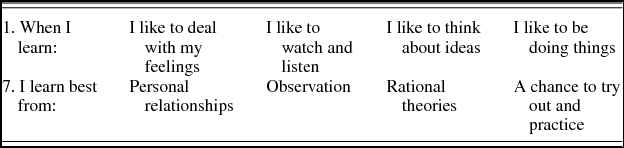
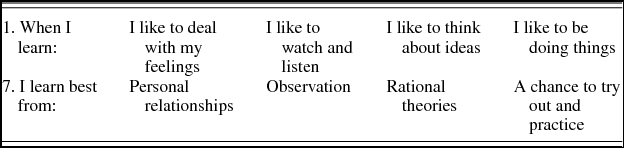
According to Healey and Jenkins (Reference Healey and Jenkins2000), the LSI-1985 (Kolb, Reference Kolb1985) is one of the most widely used instruments in higher education. The inventory contains 12 short statements concerning learning situations, and respondents are asked to rank four sentence endings that correspond to the four learning modes based on ELT (i.e., CE, RO, AC and AE; see Appendix A for example items). With this forced choice format, the ranks are added up to indicate the relative preferences among the dialectic modes. Then, the combination scores AC-CE (i.e., cumulative rank score for CE subtracted from that for AC) and AE-RO (i.e., cumulative rank score for RO subtracted from that for AE) are calculated. A higher AC-CE score shows a comparatively greater inclination for abstractness (AC) and a lesser inclination for concreteness (CE), and a lower AC-CE shows the opposite. Similarly, a higher AE-RO score suggests a preference for action (AE) over reflection (RO) and a lower score for the reverse (Joy & Kolb, Reference Joy and Kolb2009). A learner's learning style type can be derived by taking both combination scores together and comparing them with the cutoff values from the normative groups provided by the inventory. In addition, to minimize the impact of variation in English proficiency among the Chinese participants, the inventory was translated into Chinese.
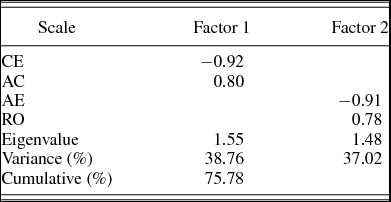
To verify the inventory's construct validity, we examined its structure by means of an exploratory factor analysis. Following the procedure adopted in earlier studies (e.g., Metallidou & Platisidou, Reference Metallidou and Platisidou2008; Yaha, Reference Yaha1998), we performed a principal component analysis with varimax rotation of the sum scores of the items of each of the four learning modes’ scales. As shown in Table 2, the analysis yielded two factors with eigenvalues greater than 1.0. Clearly, this two-factor solution was consistent with the framework of bipolar dimensions of ELT.
Results of exploratory factor analysis on the Kolb Learning Style Inventory (Reference Kolb1985)
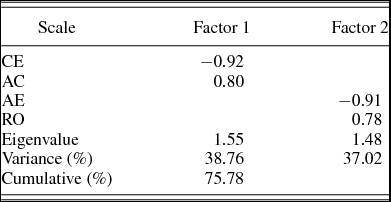
Note: CE, concrete experience; AC, abstract conceptualization; AE, active experimentation; RO, reflective observation.
The Cronbach coefficients of the scales of the four learning modes (i.e., CE, RO, AC, and AE) and their combinations (i.e. AC-CE and AE-RO) were found within the acceptable range (0.80, 0.72, 0.77, 0.80, 0.85, 0.83, respectively), completely in line with the results from Smith and Kolb (Reference Smith and Kolb1986, p. 97) (0.82, 0.73, 0.83, 0.78, 0.88, 0.81, respectively).
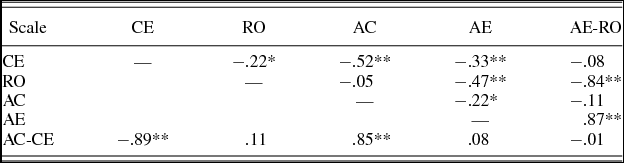
The correlation matrix in Table 3 shows that the AC scale was negatively correlated with the CE scale at a significant level, as was the AE scale with the RO scale. The two bipolar dimensions (i.e., AC-CE and AE-RO) were essentially independent of each other. The CE and AC scales did not correlate with AE-RO, and the AE and RO scales did not correlate with AC-CE. Finally, the cross-dimensional scales (i.e., CE/RO, AC/AE, CE/AE, and AC/RO) were not correlated as highly as the within-dimension scales. All these results were consistent with the framework of ELT.
Scale intercorrelations of the Kolb Learning Style Inventory (Reference Kolb1985)
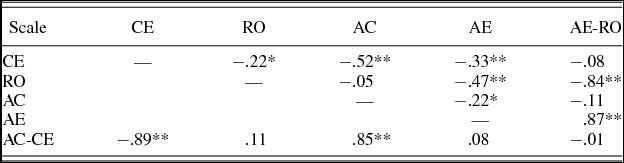
Note: CE, concrete experience; RO, reflective observation; AC, abstract conceptualization; AE, active experimentation.
*p < .05 (two tailed). **p < .01.
English /i/–/ɪ/ Perception Test
A synthetic beat–bit continuum was prepared for the perception test. The sounds were created using KLSYN (version 1.5) based on the parallel model of Klatt (Reference Klatt1980) software synthesizer. Two parameters were varied factorially with vowel spectrum in 7 equal Mel steps and duration in 5 equal steps, and thus a total of 35 stimuli were generated for the continuum.
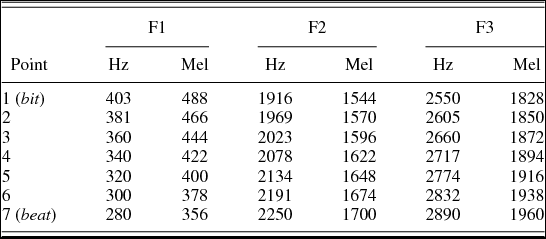
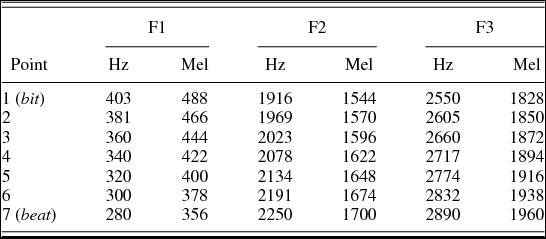
For the whole continuum, the vowel portion varied from values appropriate for English /i/ to those for /ɪ/. The nominal frequency values for F1 to F3 in the endpoints /i/ and /ɪ/ were based on the mean frequencies reported by Ladefoged (Reference Ladefoged2001, p. 172). An auditory scale rather than a physical one was used to assess the values in the continuum. The first three formant frequencies were converted to Mels, and seven values were calculated for each formant ranging in equal Mel steps between the beat and bit values. A total of seven spectral steps were created by linear interpolation between the two endpoints (see Table 4). Furthermore, based on the values from Bohn and Flege (Reference Bohn and Flege1990b), F4 and F5 were set at 3300 and 3850 Hz, respectively. The bandwidths for the five formants were 90, 110, 170, 250, and 200 Hz, respectively. Fundamental frequency F0 remained at 138 Hz for the first half of the vowel portion and then was interpolated to 95 Hz over the final half of the vowel.
Spectral values of the vowels in the beat-bit continuum
From each of the seven steps along the vowel quality continuum, a continuum of five steps in vowel duration was created. These durations ranged from 150 to 250 ms (150, 175, 200, 225, and 250 ms), including the formant transitions cueing the word-initial and word-final stops. According to Bohn and Flege (Reference Bohn and Flege1990b), the word-initial /b/ was synthesized by interpolating F1 from 180 Hz, F2 from 1465 Hz, and F3 from 2180 Hz to the steady-state values of the following vowel. The durations of the F1–F3 transitions were 25, 45, and 50 ms, respectively. The final /t/ was synthesized by interpolating from the vowel steady state to 300 Hz for F1, 2000 Hz for F2, and 2900 Hz for F3. The word-final F1–F3 transitions were 40, 40, and 60 ms, respectively. After the end of the /t/ transitions, there was a 65-ms period of silence followed by a wide-spectrum 30-ms release burst. The peak syllable intensity of all of the 35 stimuli was normalized.
Procedure
The participants were tested one at a time in a sound booth. The Chinese participants responded to the LSI and then completed the perception test, and the American participants only finished the perception test. The perception test was carried out on a computer using Alvin 1.27 (see Hillenbrand & Gayvert, Reference Hillenbrand and Gayvert2005). The stimuli were presented over Sennheiser headphones at a comfortable listening level. Eleven randomizations of the 35 stimuli were presented binaurally with the first one as the practice session. The participants identified each vowel by pressing one of two buttons marked “beat” and “bit.” There was a short pause of 500 ms before the start of a new trial. The participants had both verbal and written instructions. They were instructed to respond as quickly as possible, but each trial was self-paced with no limit on time to respond, and the next trial would not appear until a decision was made. The participants were told to guess if uncertain and they were also told that the first block was for practice, and its data were not included in the final analysis. In general, the American participants completed the whole procedure of the perception test within 12 min, while the Chinese participants spent about 18 min responding to the LSI and finishing the perception test.
Data analysis
The technique of logistic regression was applied to each listener's perception data. Logistic regression is now a standard and widely used method of analyzing proportional data and has been successfully applied to L1 and L2 speech perception data (Morrison, Reference Morrison2005). It fits a model to response data using an iterative maximum likelihood technique to derive estimates of coefficients in equations of the form
 \begin{equation*}
{\rm Logit}\;{\rm (/i/}\;{\rm |}\;{\rm dur,}\;{\rm spec)}\;{\rm = }\;{\rm \alpha }\;{\rm + }\;{\rm \beta }_{{\rm dur}} \;{\times}\;{\rm dur}\;{\rm + }\;{\rm \beta }_{{\rm spec}}\;{\times}\;{\rm spec,}
\end{equation*}
where dur and spec are stimulus property values for duration and spectral properties, respectively; α is a bias coefficient that is independent of changes in stimulus properties; and βdur and βspec are coefficients representing the tuning of the response by the stimulus properties (Morrison, Reference Morrison2005). These stimulus-tuned coefficients can exhibit how fast the response changes from /ɪ/ to /i/ as the duration increases and F1 decreases, thus providing an ideal metric for cue weighting (Morrison, Reference Morrison2005, Reference Morrison2008). Furthermore, the coefficients of βdur and βspec derived for each participant in the perception experiment and their data from the LSI were submitted to a series of statistical tests, that is, t test, K-means cluster analysis, one-way analysis of variance, analysis of covariance, and regression analysis, in an attempt to explore the links among the variables under examination. An α level of 0.05 was used for all statistical tests.
RESULTS
Perceptual patterns for English /i/ and /ɪ/ among the participants
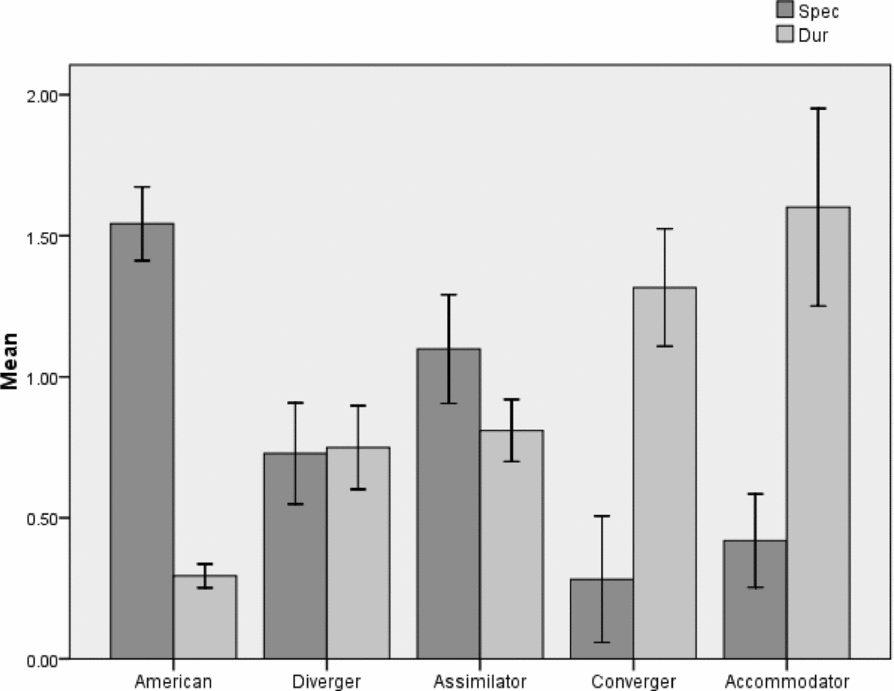
The results indicated that the Chinese participants had much smaller βspec (M = 0.76, SD = 0.98) than the American participants (M = 1.55, SD = 0.52), t (38.98) = –4.62, p < .001 (Welchs t test), Cohen d = 0.84. They also had larger βdur (M = 0.97, SD = 0.81) than the American participants (M = 0.29, SD = 0.17), t (96.45) = 6.86, p < .001 (Welch t test), Cohen d = 0.91. Thus, compared with the American participants, the Chinese participants, on the whole, relied more on duration and less on spectral quality in indentifying English /i/–/ɪ/. According to the standard deviations of βspec and βdur, there were also tremendous individual differences among the Chinese participants.
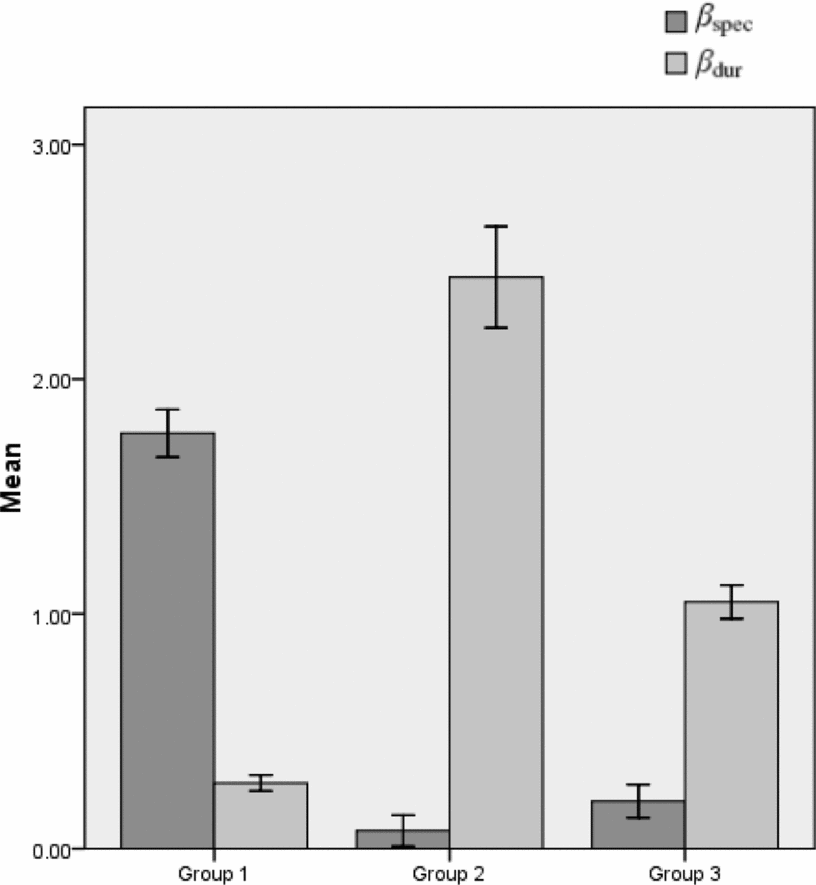
We then combined all the data from the Chinese and American participants, and divided them into several groups according to the patterns they manifested in the perception test. This procedure was achieved via a K-means cluster analysis on βspec and βdur. In K-means cluster analyses, the number of groups and exact division of cases into groups usually involves a certain subjectivity. After a careful examination of possible solutions with different numbers of groups, we adopted a three-group solution in the present analysis (see Figure 1). The results showed that 28 of the Chinese participants and all the American participants were classified into one group (βspec = 1.77, βdur = 0.28), implying that the perceptual patterns of these Chinese participants closely resembled those of the American participants. The second group, including 11 Chinese participants, depended exclusively on duration (βspec = 0.08, βdur = 2.43), which was completely opposite to the patterns found among the American participants. The third group, including 44 Chinese participants, still mainly used temporal cues, but began to pay a small amount of attention to spectral properties (βspec = 0.20, βdur = 1.05).
Mean βspec and βdur values among different groups of participants in perceiving the English /i/–/ɪ/ contrast. Group 1 included 28 Chinese participants and 16 American participants. Group 2 and Group 3 included 11 and 44 Chinese participants, respectively. The error bars enclose ±1.0 SE.

In summary, similar to the Spanish learners reported by Escudero (Reference Escudero2000), the Chinese individual participants also exhibited enormous variations, ranging from having a strong preference for duration cues to a nativelike preference for spectral cues. To explore possible causes for such differences, we examined the role of learning styles as presented in the following sections.
Learning styles and perceptual patterns for English /i/–/ɪ/ among the Chinese participants
Figure 2 presents the mean βspec and βdur values among the Chinese participants with different learning styles in perceiving the English /i/–/ɪ/ contrast. For the sake of comparison, the perceptual performance of the American participants was also included.
Mean βspec and βdur values among the Chinese participants with different learning styles and the American participants in perceiving the English /i/–/ɪ/ contrast. The error bars enclose ±1.0 SE.
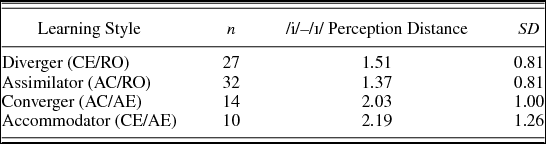
Prior to examining the role of learning styles, we identified some limitations in the foregoing analyses. These analyses only gave a general picture with regard to the differences in English /i/–/ɪ/ perception between the Chinese participants and the American participants, failing to provide a specific measure for each Chinese participant to indicate the extent to which he/she differed from the American participants. Moreover, the coefficients of βspec and βdur were compared and analyzed separately without being combined as a whole to reflect the general perceptual patterns for English /i/–/ɪ/. Therefore, we carried out the following computation for further analyses. We assumed that there was a normal perceptual pattern for native American English speakers, which could be reflected by the mean scores of βspec and βdur of the American participants in the present study. Based on these two coefficients, we then performed a distance analysis with data standardized using the z score method to obtain the Euclidean distance between each Chinese participant's perceptual pattern and the normal perceptual pattern of the American participants. The smaller the distance, the more he/she resembled the American participants. As can be seen from Table 5, this perception distance was a good indicator of a Chinese participant's development in his/her perception of English /i/–/ɪ/.
Perception distances among the Chinese participants with different learning styles
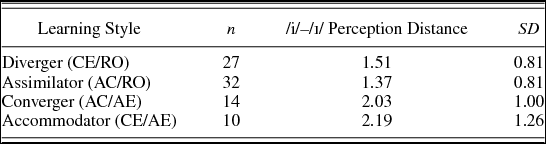
Note: CE, concrete experience; RO, reflective observation; AC, abstract conceptualization; AE, active experimentation.
We continued our exploration by examining the relation between the Chinese participants’ learning styles and their perception distances from the normal American pattern. As presented in Table 5, the Chinese participants’ perception distances from the American pattern varied as a function of learning styles. The results from a one-way analysis of variance showed that the effect of learning styles on perception distances was significant, F (3, 79) = 3.24, p = .026, Cohen f = 0.35. According to the results from least significant difference multiple comparisons, the assimilators perceived the vowels in a manner most similar to that of the American participants, and their perception distances were significantly shorter than those of the convergers and the accommodators (p = .025 and p = .015, respectively). The divergers, similar to the assimilators (p = .559), were also significantly shorter than the accommodators (p = .046) and, to a certain extent, smaller than the convergers (marginally significant, p = .082). Thus, the convergers and the accommodators were more different from the American participants than the assimilators and the divergers.
We also examined other variables that might cause variations in the perceptual performance among the Chinese participants. An independent sample t test showed that the English majors (M = 1.51, SD = 1.01) did not perform significantly better than the non-English majors (M = 1.73, SD = 0.87), t (81) = –1.07, p = .287, Cohen d = –0.23. In addition, the results from a Pearson correlation analysis revealed that perception distances were negatively correlated with LOL, r (83) = –.23, p = .039, implying that the longer a Chinese participant had taken instruction of English, the closer his/her perception was to that of the American participants. However, the correlation between perception distances and AOL did not reach a significance level, r (83) = .18, p = .112.
Furthermore, an analysis of covariance was computed to see whether learning styles and major could affect perceptual performance when AOL and LOL were included as covariates. The results showed that there was a significant main effect of learning styles, F (3, 73) = 3.82, p = .013, Cohen f = 0.40, but no significant main effect of major was found, F (1, 73) = 0.04, p = .85, Cohen f = 0.02. The Learning Styles × Major interaction was also nonsignificant, F (3, 73) = 1.65, p = .186, Cohen f = 0.26. For the two covariates, LOL was significant, F (1, 73) = 4.04, p = .048, Cohen f = 0.24, and AOL remained nonsignificant, F (1, 73) = 1.86, p = .177, Cohen f = 0.16. Finally, pairwise comparisons with the least significant difference method disclosed that the assimilators resembled the Americans most closely, much better than the convergers and the accommodators (p = .010 and p = .012, respectively). The divergers, similar to the assimilators (p = .461), also performed better than the convergers and the accommodators (p = .047 and p = .050, respectively). The convergers and the accommodators had almost the same performance (p = .941).
Learning modes and perceptual patterns for English /i/–/ɪ/ among the Chinese participants
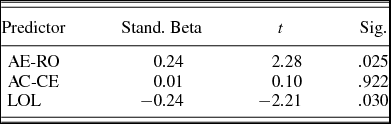
According to ELT, one's learning style can be derived from the combination of his/her preferred learning modes on the two bipolar dimensions (i.e., AC-CE for grasping an experience and AE-RO for transforming an experience). Then which dimension is more critical to the perception of English /i/–/ɪ/ among the Chinese participants? Based on the above analyses, the assimilators (AC/RO) and the divergers (CE/RO) both outperformed the convergers (AC/AE) and the accommodators (CE/AE) in the English /i/–/ɪ/ perception test. The assimilators (AC/RO) and the divergers (CE/RO), though different in their preferences on the AC-CE dimension, both favored RO on the AE-RO dimension. By contrast, the convergers (AC/AE) and the accommodators (CE/AE), though opposite to each other on the AC-CE dimension, both preferred AE on the AE-RO dimension. We reasoned, thereby, that the Chinese participants’ preferences on the AE-RO dimension (i.e., the ways of transforming an experience) should be essential to their perception of English /i/–/ɪ/. To confirm this prediction, we performed a multiple regression analysis with AC-CE and AE-RO as the predictor variables and English /i/–/ɪ/ perception distance as the dependent variable. At the same time, LOL was also included as a predictor variable considering its important role as revealed in the preceding analyses.
The results (see Table 6) showed that the Chinese participants’ preferences on the AE-RO dimension exerted a significant effect on their perception. As proposed by ELT, the higher one's score on AE-RO, the more he/she prefers active experimentation, whereas the lower the score, the more he/she prefers reflective observation. The negative relationship between AE-RO and perceptual performance suggested that the more the participants preferred active experimentation, the farther their perception from that of the American participants. In other words, the more the participants preferred reflective observation, the more their perception became nativelike. Moreover, the participants’ preferences on the AC-CE dimension (i.e., their ways of grasping an experience) bore little relation to their perception. Finally, LOL still positively affected perception development: the longer the participants had taken EFL instruction, the more they resembled the American participants in English /i/–/ɪ/ perception.
Beta weights of AE-RO, AC-CE and LOL as the predictors of English /i/–/ɪ/ perception distances among the Chinese participants
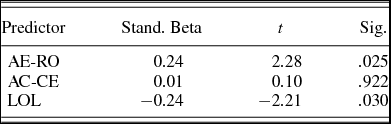
Note: R 2 = .11, F = 3.25, p = .026. AE, Active experimentation; RO, reflective observation; AC, abstract conceptualization; CE, concrete experience.
DISCUSSION
The current study was an attempt to explore the relationship between learning styles based on Kolb's LSI-1985 and the perception of synthetic English /i/–/ɪ/ among Chinese college students. We examined the perceptual patterns for English /i/–/ɪ/ among Chinese college students. In line with the findings from previous L2 studies (e.g., Bohn, Reference Bohn and Strange1995; Flege et al., Reference Flege, Bohn and Jang1997), we found that the Chinese participants manifested perceptual patterns for the English /i/–/ɪ/ contrast distinctly different from those of the American participants. The Chinese participants relied mainly on temporal cues and paid little attention to spectral properties. Then why were the Chinese participants so insensitive to the formant changes in the two vowels? It might be because Mandarin does not possess a phonemic contrast between /i/ and /ɪ/. Flege (Reference Flege and Strange1995) pointed out that learning an L2 phone is hard when it is similar to an L1 phone that is the nearest equivalent. An L2 phone similar to an L1 category will cause great difficulties because “equivalence classification” will block adult L2 learners from establishing a phonetic category for the “similar” but not for the “new” L2 phone. Because Mandarin only has /i/, which is nearest in the phonetic space to both English /i/ and /ɪ/, Chinese learners often substitute it for them, resulting in confusion when perceiving English /i/ and /ɪ/.
Because vowel duration is not generally used to distinguish vowels in Mandarin, why did so many Chinese participants rely primarily on temporal cues in their perception of /i/ and /ɪ/? One possible explanation was from Bohn's (Reference Bohn and Strange1995) desensitization hypothesis, which proposed a perceptual principle that listeners apply independently of their native language background. According to this hypothesis, whenever spectral differences are insufficient to differentiate vowel contrasts because previous linguistic experience failed to sensitize listeners to these spectral differences, duration differences will be employed to differentiate the nonnative vowel contrast. Another compelling explanation is that the Chinese participants’ overuse of temporal cues might have been a strategy learned at school. After the experiment, some Chinese participants mentioned to us that they had always been told that it is the length of the sounds that differentiate between English /i/ and /ɪ/. Some researchers believe that this strategy could even be found in classrooms all over the world (e.g., Flege et al., Reference Flege, Bohn and Jang1997; Morrison, Reference Morrison and Díaz-Campos2006).
Even though many of the Chinese participants performed differently from the American participants in identifying the English /i/–/ɪ/ contrast, some of them exhibited perceptual patterns resembling those of the American participants. These results were consistent with the findings from previous studies on ESL or EFL learners with other L1 backgrounds (e.g., Escudero, Reference Escudero2000; Flege et al. Reference Flege, Bohn and Jang1997; Morrison, Reference Morrison2008). Regarding the causes for such substantial variations in the perceptual development among the Chinese participants, while earlier studies mainly concentrated on learners’ age of L2 learning, length of L2 experience, amount of L1 and L2 use, and so on, we explored this issue from a cognitive perspective by focusing on learning styles based on Kolb's LSI-1985.
Our results answered the first research question by demonstrating that the Chinese participants with assimilative and divergent learning styles perceived English /i/ and /ɪ/ in a more nativelike manner than those with convergent and accommodative learning styles. Similar phenomena could also be observed in many earlier studies reporting that certain learning styles correlate more highly than others with desired aspects of language performance in a specific language task (e.g., Andreou et al., Reference Andreou, Andreou and Vlachos2008; Kim & Kim, 2011; Wang & Dai, Reference Wang and Dai2013). As to the second research question, our results implied that differential performance in English /i/–/ɪ/ perception found among the participants with different learning styles was closely related to their preferences between the two learning modes on the experience-transforming dimension, that is, active experimentation and reflective observation according to ELT. The more the Chinese participants favored reflective observation, the more they resembled the American participants in their perception. By contrast, the more they depended on active experimentation, the less nativelike their perception became. Meanwhile, their preferences between the two modes on the experience-grasping dimension (i.e., abstract conceptualization and concrete experience) yielded little effect on their perceptual performance. These findings suggested that when learning to identify FL speech sounds, how one analyzes and interprets the information about a given sound is more critical than how he/she collects and obtains that information from his/her learning experience.
Why could the assimilators and the divergers, who preferred reflective observation, achieve greater progress in their perceptual development than did the accommodators and the convergers, who both preferred active experimentation? This could be explained in terms of the cognitive features of these two learning modes. As pointed out by Honey and Mumford (Reference Honey and Mumford1982), reflective learners like to ponder experiences and observe them from many different perspectives. They prefer to thoroughly collect data and reflect on them before reaching definitive conclusions. Conversely, activists involve themselves fully in new experiences without prior reflection and sufficient preparation, and they are likely to take immediate action with unnecessary risks. It is widely held that reflection plays a critical role with its inherent strengths in specific learning situations. According to Dewey (Reference Dewey1933), we learn more from reflecting on our experiences than we do from the actual experiences, and reflection is the hallmark of intelligent action, enabling effective problem solving to take place and improving the effectiveness of learning. In Boud, Keogh, and Walker (Reference Boud, Keogh and Walker1985), reflection is thought to be an active process of exploration and discovering. Smith (Reference Smith1991) maintained that through our reflection, we gain the insights essential to improved learning performance. Similarly, Driscoll (Reference Driscoll1994) pointed out that reflection is a powerful link between thought and action that is able to supply information about outcomes and the effectiveness of selected strategies. Furthermore, Ertmer and Newby (Reference Ertmer and Nweby1996) proposed that in an actual learning situation, reflection enables learners to consider the plans made prior to engaging in a task, the assessments and adjustments made while they work, and the revisions made afterwards. Maddox and Chandrasekaran (Reference Maddox and Chandrasekaran2014) demonstrated that reflective strategy use is an important determiner of success in a speech category learning task, and reduced effectiveness in using this strategy may result in substantially lower category learning success.
It could therefore be assumed that, when it comes to learning to identify FL sounds, the strengths of reflective observation should allow assimilators and divergers to gain important advantages over other learners. Metacognitive reflection helps keep them on the right track and remember the larger context. When learning to perceive the English /i/–/ɪ/ contrast, assimilators and divergers may tend to patiently collect details about the two sounds from various sources, and analyze them thoroughly to find out their fundamental differences. In establishing categories for the two sounds, they might actively compare, evaluate, and improve their perceptual outcomes with strong metacognitve awareness. Accordingly, they are more likely to make a clear distinction between the sounds based on their essential spectral quality, thereby achieving high accuracy in their perception.
In contrast, just as summarized by Ehrman (Reference Ehrman1996), mismatches in learning styles could give rise to serious learning difficulties. Active experimentation, unlike reflective observation, might bring more problems to convergers and accommodators in their experience of learning to perceive similar FL sounds. Although convergers and accommodators are enthusiastic about anything new, they may lack the motives to patiently and closely analyze what they have heard about new FL sounds. Given that convergers often make decisions too quickly and solve the wrong problem and accommodators tend to involve themselves in trivial activities (Furnham, Reference Furnham1992, pp. 434–435), they are both particularly prone to keep their attention concentrated on the temporal cues in the English /i/–/ɪ/ contrast because these cues are easier to notice and access (Bohn, Reference Bohn and Strange1995; Escudero, Reference Escudero, Do, Dominguez and Johansen2001), thereby stopping themselves from further exploring the spectral properties of the sounds.
The current study may shed light on the learning and teaching of speech sounds in FL conditions. Teachers may consider helping students adopt learning styles or learning modes suitable for speech sound perception. It has been increasingly recognized that learning style is not a fixed psychological trait but a dynamic state resulting from synergistic transactions between the person and the environment (Passarelli & Kolb, Reference Passarelli, Kolb and London2011). Ehrman (Reference Ehrman1996) proposed that “just as situations determine which hand to use (write with one hand, grip jars to open with the other), so they also have considerable influence on choice of learning strategies associated with one learning style or another” (p. 53). Passarelli and Kolb (Reference Passarelli, Kolb and London2011) suggested that one way to develop in the learning modes is to develop the skills associated with them. In the case of perceiving FL sounds, developing the capacity for reflecting in language learning may be of great help for students. In this regard, Kolb and Kolb (Reference Kolb and Kolb2008) provided some useful strategies. For example, reflective learning can be enhanced by the practice of deliberately viewing things from different perspectives. Information skills regarding sense making, information gathering, and information analysis can aid in the development of the reflecting mode of learning. Likewise, in the FL speech-learning classroom, it is advisable to direct intentionally learners’ attention to comparing and contrasting phonetic contrasts in association with sounds from learners’ native languages. It is also facilitative to give learners special encouragement if they manifest interest in developing strategies of reflection and observation when dealing with speech sounds.
In addition, we examined the impact of other variables, that is, age of learning English, length of learning English, and English proficiency. We found that for the Chinese participants, length of learning English was positively correlated with their English /i/–/ɪ/ perception, whereas age of learning had no significant association with their perceptual performance. These results corroborated the findings from existing studies on FL speech perception. For example, Fullana (Reference Fullana and Muñoz2006) observed that a longer exposure to the FL seemed to help older learners more accurately perceive the tense/lax vowel contrast /i/–/ɪ/. Kondaurova and Francis (Reference Kondaurova and Francis2008), who examined the effects of a range of factors on English /i/–/ɪ/ perception among participants with different L1s and various periods of EFL education prior to their arrival in the United States, reported that among the factors under investigation, only period of EFL education in the home country was significant in its own right. Based on these findings, we may suggest that in FL learning conditions, it is necessary for learners to receive sufficient formal English instruction to ensure the quantity and quality of input and the amount of formal training required for their perceptual development. Taken together, the role of length of learning in FL conditions is similar to that of language experience in L2 conditions as revealed in many previous studies (e.g., Flege et al., Reference Flege, Munro and MacKay1995, Reference Flege, Bohn and Jang1997).
However, with regard to the role of age of starting EFL learning, both Kondaurova and Francis (Reference Kondaurova and Francis2008) and the present study diverged from some earlier views that supported the part played by age of beginning L2 experience. This discrepancy, to a certain degree, might be caused by the differences between FL and L2 learning conditions. Compared with the L2 context, a foreign language learning setting cannot provide the optimal learning conditions (Muñoz, Reference Muñoz2008). It is highly possible that the quality and quantity of input and output in FL conditions fail to meet the requirements for learners to develop their perceptual abilities as effectively as in L2 conditions. Learners starting learning an FL at an early age might not necessarily gain greater achievements than those starting learning at a relatively later age. In other words, an early start might lead to success but only provided that it is associated with enough significant exposure (Muñoz, Reference Muñoz2008). Patkowski (Reference Patkowski2003) also pointed out that the critical period hypothesis specifically applies to language acquisition under sustained conditions of naturalistic or informal exposure, thereby excluding its generalization to situations of instructed foreign language learning. More important, Muñoz (Reference Muñoz and Muñoz2006) argued that in a situation of foreign language learning with limited language exposure, the actual period in which L2 learning takes place may be more relevant to the learning process than age of onset. Therefore, in FL learning conditions, how early one starts English learning is not as crucial as, at least for English vowel perception, how long one has been learning English. However, it should be noted that this observation needs to be further tested among learners with larger variation in age of starting because the Chinese participants in the present study mostly began to receive their EFL instruction before puberty and the range of ages was relatively narrow. In short, FL speech learning and L2 speech learning might share some common properties, but they should be treated differently in language teaching. The conclusions obtained in L2 conditions are not necessarily applicable to speech learning in FL conditions.
We also observed that for the Chinese participants, major did not yield a significant effect on their English /i/–/ɪ/ perceptual performance. In the EFL learning context of China, although both the English majors and the non-English majors involved in the present study were similar in length of English learning, the former had received intensive and systematic training in English skills and knowledge in the recent 2 years, which enabled them to obtain higher overall English proficiency on average than the latter. Thus, our findings demonstrated that English proficiency only exerts a negligible effect on students’ perception of the English /i/–/ɪ/ contrast. More important, this result provided evidence from a different angle regarding the role played by learning styles in perceiving L2 sounds. In a number of earlier studies, learners’ learning styles were proven to be critical to their FL/SL proficiency (e.g., Castro & Peck, Reference Castro and Peck2005; Chermahini et al., Reference Chermahini, Ghanbari and Ghanbari Talab2013). In the present study, if the participants’ English proficiency had been found to have a link with their perception of English sounds, it would have been possible that the effects of learning styles on the perception of English sounds might be attributable to learning styles’ association with English proficiency. Because we did not observe such a relationship between the participants’ English proficiency and their perceptual performance here, it is reasonable to infer that learning styles should play a specific and direct role in learners’ development in perceiving English sounds.
The current study has limitations. First, all of the participants in this study were only from a single university, thereby limiting its representativeness. Second, the scope of this study was restricted to the perception of the /i/–/ɪ/ contrast, so it remains unclear to what extent the findings about the role of learning styles can be generalized to FL speech perceptual development as a whole. We anticipate that learning styles may not play equal roles in the perception of different FL sounds. Given that different English sound contrasts can pose difficulties at different levels to Chinese learners (Jia et al., Reference Jia, Strange, Wu, Collado and Guan2006), the effects of learning styles on the perception of FL speech sounds should vary accordingly. Some contrasts are easier to acquire, thus most learners can perceive them with ease, whatever learning styles they exhibit. By contrast, some sounds are difficult to identify and can cause substantial individual variations among learners. For these sounds, learners’ learning styles may play an important role in their perception development. Therefore, future work should test more FL speech contrasts at different difficulty levels. Third, because this study was conducted only among Chinese EFL learners, it is necessary to carry out more extensive investigations to examine whether its conclusions are applicable to other L2 or FL settings that may vary from country to country. Fourth, there are still some factors that might yield confounding effects on the results of the current study. For example, learning several languages may give rise to cross-linguistic influence (De Angelis, Reference De Angelis2007). Although in China's current learning context, most of the Chinese participants in this study did not receive formal training in another foreign language, it cannot be ruled out that a few of them might have experience learning another foreign language for personal needs. Fifth, the present study, which is based on a correlational analysis, cannot be used to categorically conclude that different learning styles definitely cause different performance in FL speech perception. What it does suggest is that learning styles may be an important factor in predicting the speech perception development of a FL learner. A logical next step would be an experimental exploration by instructing learners to apply different learning modes and comparing pre- and postinstruction speech perception, which may answer more precisely whether FL speech perception can be affected through the changes of learning styles. It is imperative to find out whether training learners to use the skills of actively analyzing, comparing, and contrasting various sounds to develop their RO learning mode can effectively improve their performance in perceiving FL speech sounds. Notwithstanding these limitations, the present study has provided clear evidence that variations in FL speech perception, to a certain degree, are related to individual differences in learning styles.
CONCLUSIONS
This study demonstrated that the Chinese college students’ perceptual patterns for English /i/ and /ɪ/ varied according to their learning styles. Specifically, assimilative and divergent learning styles were more beneficial for acquiring perceptual patterns resembling those of native English speakers than convergent and accommodative learning styles. Of the four learning modes, reflective observation had a facilitative effect on the acquisition of the essential differences between English /i/ and /ɪ/, whereas active experimentation was more connected with difficulties in learning to identify these two sounds. In addition, length of learning English was crucial to the development of English /i/–/ɪ/ perception among the Chinese participants. Age of starting English learning in FL conditions was not as significant as suggested by previous speech perception research conducted in L2 conditions. Therefore, the role of age should be carefully assessed in connection with specific learning conditions due to the complex nature of nonnative speech acquisition.
Examples from Kolb's Learning Style Inventory (Reference Kolb1985)
ACKNOWLEDGMENTS
This study was supported by a grant from the Humanity and Social Science Youth Foundation of Ministry of Education of China (11YJC740130), a grant from the Innovation Program of Shanghai Municipal Education Commission (12ZS023), and a grant from the Liberal Arts and Sciences Cross-Disciplinary Program of Shanghai Jiao Tong University (13JCRY02). The authors thank three anonymous reviewers and the editor for their helpful comments.