Introduction
In the Western world stroke is the second most common cause of mortality and the third most common cause of morbidity. The incidence varies from 10 to 20 per 100,000.Reference Lozano, Naghavi and Foreman 1 The etiology of stroke is multifactorial, with risk factors being increasing age, male gender, hypertension, dyslipidemia and diabetes mellitus.Reference Patel, Winkel and Ali 2 – Reference Grysiewicz, Thomas and Pandey 4 There is evidence to suggest that stroke originates in utero.Reference Ventura, Jin and Tse 5 , Reference Bygren, Edvinsson and Brostrom 6 Offspring of mothers who had preeclampsia during pregnancy are at an increased risk for developing stroke.Reference Herrera-Garcia and Contag 7 Also people who were light at birth had higher stroke risk in later life.Reference Johnson and Schoeni 8
The Developmental Origins of Health and Disease hypothesis suggests that an adverse uterine environment can alter the structure and function of organs and systems in the fetal body. The adaptations in early life increase the individual’s susceptibility for adult disease.Reference Barker, Winter and Osmond 9 , Reference Hales and Barker 10 There is a large body of evidence from populations around the globe that support this hypothesis.Reference Rich-Edwards, Stampfer and Manson 11 – Reference Barker and Clark 16 Experimental studies showed that undernutrition in guinea pigs and rats during pregnancy causes elevated blood pressure and reduced life span of the offspring in later life.Reference Langley-Evans and Sculley 17 – Reference Woodall, Johnston and Breier 19 Studies in men and women who were born around the time of famines suggest that prenatal exposure to famine increases the risks of cardiovascular health in humans. Offspring from Nigerian women who were pregnant during the Sub Saharan Biafra famine had an increased risk of hypertension and impaired glucose tolerance at the age of 40 years.Reference Hult, Tornhammar and Ueda 20 Hypertension at adult age is also seen more often in offspring from Chinese mothers who were pregnant during the Chinese famine of 1959–1961 compare with unexposed offspring.Reference Yu, Wang and Li 21
In the Dutch Famine Birth Cohort Study the effects of prenatal exposure to famine on adult health have also been studied. We found that famine exposure in early gestation was associated with cardiovascular risk factors and disease such as a more atherogenic lipid profile, a higher incidence of obesity among women exposed to famine in early gestation and a doubled risk of coronary heart disease later in life.Reference Roseboom, Painter and van Abeelen 15 , Reference Roseboom, van der Meulen and Osmond 22 – Reference Ravelli, van Der Meulen and Osmond 24 Women exposed to famine in early gestation had a significantly higher adult cardiovascular mortality.Reference van Abeelen, Veenendaal and Painter 25 Based on the association with metabolic and cardiovascular diseases, it can be postulated that prenatal famine increases the risk of stroke in later life. The aim of this study was to assess whether prenatal exposure during the Dutch famine affects stroke risk at adult age.
Methods
The Dutch famine
To assess the effect of prenatal famine exposure on the risk for stroke at adult age, we used the historical Dutch famine birth cohort that has been described in detail previously.Reference Ravelli, van der Meulen and Michels 26 This cohort originates from the birth registry of a hospital in Amsterdam of babies born between 1943 and 1947. The Dutch famine was a 5-month period of extreme food shortage during the winter of 1944–1945 at the end of World War II. It was a result of a cascade of events in the fight between the allied forces and the Germans. Before and after the famine the nutritional condition was stable with a caloric intake of around 2000 calories a day.Reference Roseboom, Painter and van Abeelen 15 The rations dropped dramatically in late November 1944 from 1400 to 1000 calories a day. In the most severe period, between December 1944 and April 1945 the amount of calories decreased to a ration ranging from 400 to 800 calories a day.Reference Roseboom, Painter and van Abeelen 15 After the Netherlands were liberated in May 1945 the daily caloric rations rose to 2000 calories a day.Reference Roseboom, van der Meulen and Osmond 22 , Reference Roseboom, van der Meulen and Ravelli 23 , Reference Painter, Roseboom and Bleker 27
The Dutch famine birth cohort
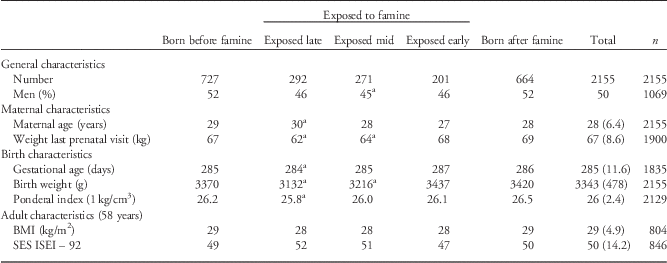
The Dutch famine birth cohort consists of 2414 full-term (pregnancy duration longer than 259 days) singletons born in the Wilhelmina Gasthuis, a university hospital in the center of Amsterdam, between 1 January 1943 and 28 February 1947. Stillborn babies were excluded.Reference Ravelli, van der Meulen and Michels 26 Baseline characteristics and pregnancy information about the Dutch famine birth cohort are described in Table 1.
General, maternal, birth and adult characteristics of Dutch famine birth cohort according to time of prenatal exposure to famine

BMI, body mass index; SES ISEI, socio-economic status score according to the International Socio-Economic Index.
Values are means (SD), except where given as numbers and percentages.
a Significantly different, P⩽0.05. Exposed participants compared with unexposed participants (born before and conceived after the famine) based on linear regression analysis.
Exposed to famine and control groups
Babies were considered to be exposed when they suffered a 13 week continuous period of prenatal famine. Babies born between 7 January 1945 and 8 December 1945 were considered to be exposed to prenatal famine. The exposure time was divided into three gestational periods of 16 weeks. Early gestation (born between 19 August 1945 and 28 December 1945), mid gestation (born between 9 April 1945 and 18 August 1945) and late gestation (born between 7 January 1945 and 28 April 1945). The control group consisted of babies born before 7 January 1945 and after 8 December 1945. These babies were considered to be unexposed to famine in utero.
Participants and data extraction
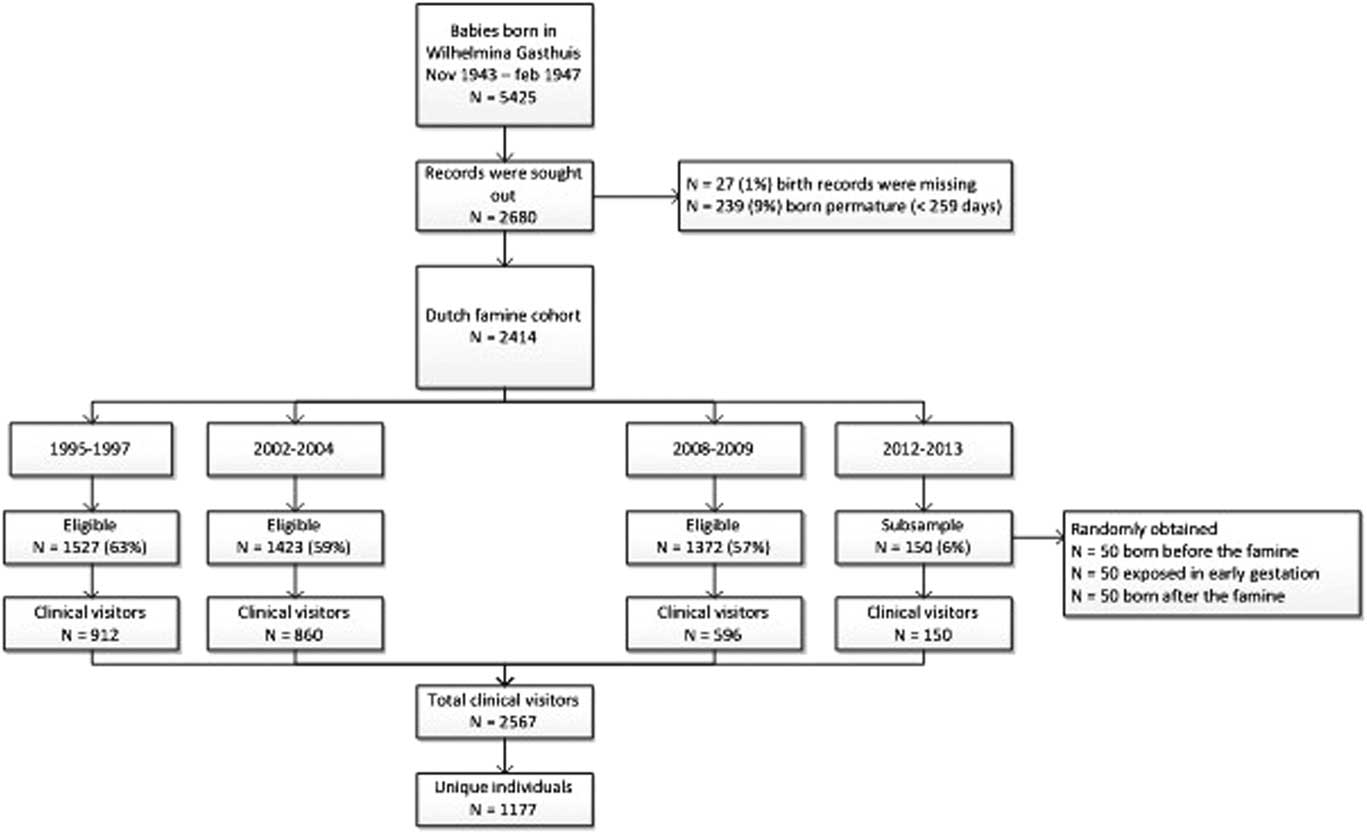
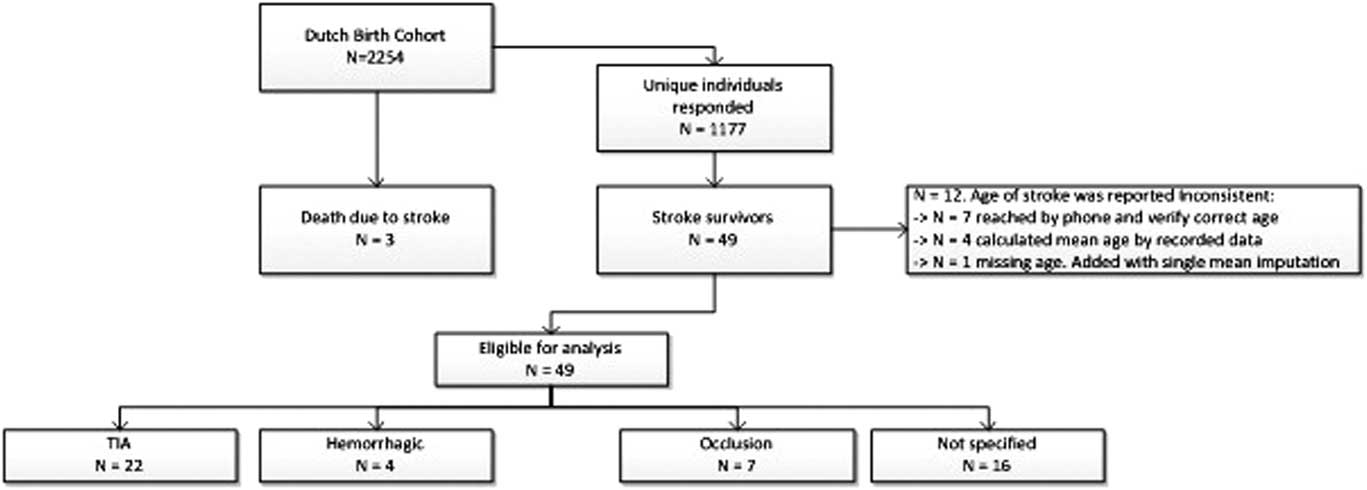
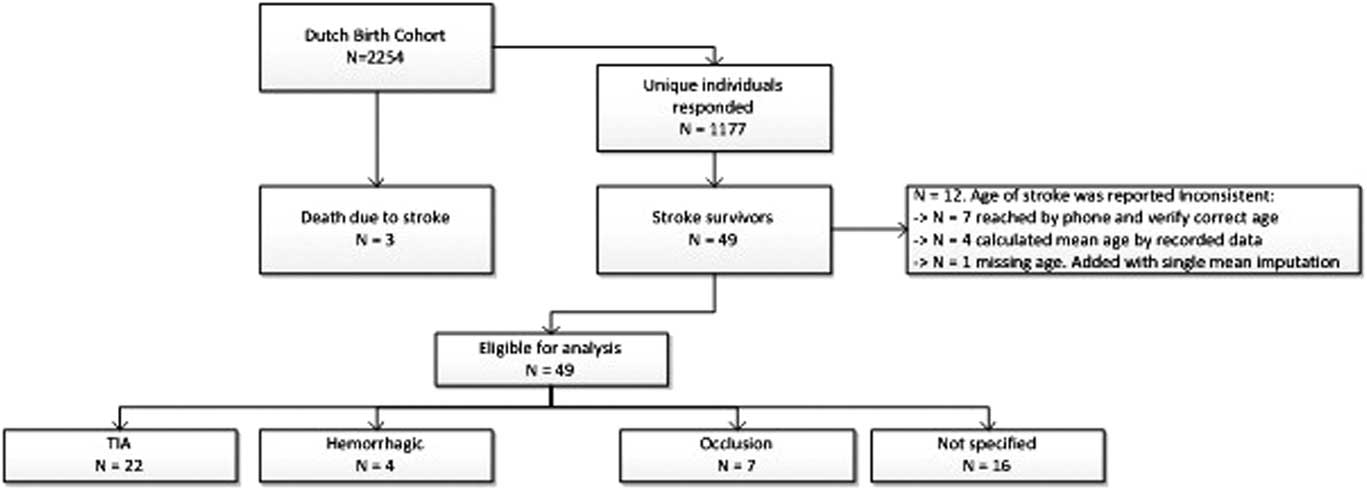
Between 1994 and 1996, the population registry of Amsterdam traced 2155 (89%) of the 2414 cohort babies. Of the 2155 traced cohort members, 265 (12%) had died, 199 (9%) had emigrated and 164 (8%) did not allow the population registry to use their address.Reference Ravelli, van Der Meulen and Osmond 24 From the 1527 (63%) remaining participants, 1018 (42%) people who lived in or close to Amsterdam were invited for interviews between 1995 and 1997. Of these, 912 (38%) participants agreed to be interviewed about their medical history and current health. Between 2002–2004 and 2008–2009 subsequently eligible participants were invited. In 2012–2013 a subsample of 150 (6%) participants was invited. In total 1177 (49%) unique individuals participated in at least one of the follow-up visits. For detailed inclusion information see Fig. 1. The 1177 included participants were interviewed using standardized questionnaires. We collected information on self-reported stroke (including age at diagnosis and the specialists who made the diagnosis, as well as subsequent treatment) (Fig. 2). Causes of death were extracted by linking the cohort with Statistics Netherlands until July 2009. Causes of death were coded according to the International Classification of Diseases (ICD) coding system at the time of death. From 1941 till 1949 the 5th ICD version was used, ICD-6 for 1950–1957, ICD-7 for 1958–1968, ICD-8 for 1969–1978, ICD-9 for 1979–1995 and ICD-10 for 1996 onwards. We were interested in the ‘cerebrovascular disease’ subgroup. All participants gave written informed consent for study participation. All the studies were approved by the local Medical Ethics Committee and conducted according to the declaration of Helsinki.
Number of participants who responded to the questionnaires.Reference Ravelli, van der Meulen and Michels 26 , Reference Painter, Roseboom and Bossuyt 28 , Reference de Rooij, Painter and Swaab 29

Number and stroke types among questionnaires responders.
Statistical analysis
Continuous variables are presented as means with standard deviations (SD) when the assumptions of a normal distribution were met. Linear regression analysis was performed to calculate the differences between the unexposed and the exposed groups for the general, maternal, birth and adult characteristics. In case of dichotomous dependent variables, a logistic regression analysis was used. To calculate the hazard ratios (HR) for the risk of non-fatal stroke between exposed and unexposed participants who responded to the invitation for medical checkup (n=1177), we used a Cox proportional hazard regression model, as a function of age. Follow-up time ended by the age of first stroke or at last contact. Participants who did not develop a stroke at last contact were censored. In multivariable Cox’s regression analysis, we adjusted for gender. In addition, HR for the risk of non-fatal stroke were calculated for men and women separately. For all analyses we used the program SPSS Statistics version 23.0 (IBM Corp., Armonk, NY)
Results
The Dutch famine birth cohort
Table 1 shows the maternal and birth characteristics according to timing of exposure to famine for the 2155 men and women of the Dutch Famine Birth Cohort. In total 764 (35%) were exposed to prenatal famine: exposed during late gestation (n=292), during mid gestation (n=271) and during early gestation (n=201). The unexposed groups existed of 1391 (65%) participants, of whom 727 were born before the famine and 664 after the famine. The weight at last prenatal visit of mothers who were exposed during late and mid gestation was significantly lower compared with the weight of unexposed mothers. The birth weights of babies exposed to famine during late and mid gestation were significantly lower compared with unexposed babies whereas the ponderal index of babies was significantly lower compared with unexposed babies in only the exposed to late-gestation group. There was no statistically significant difference between the unexposed and the exposed groups regarding body mass index and socio-economic status (SES ISEI – 92) as measured at age 58 years.
Stroke and its risk factors
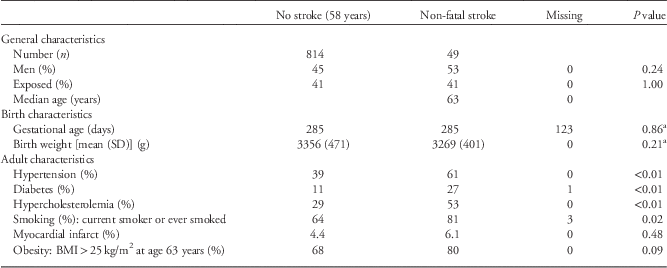
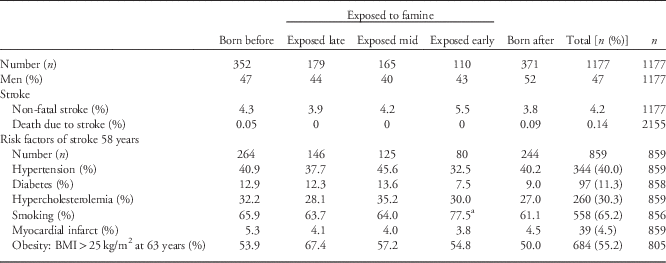
Of the entire Dutch famine birth cohort (n=2155) three cohort members (0.14%) died due to stroke up to the age of 63 years. In total 1177 unique individuals participated in one or more follow-up visits (Fig. 1) of whom 454 (39%) were exposed to famine prenatally: exposed during late gestation (n=179), during mid gestation (n=165) and during early gestation (n=110). The unexposed group consisted of 723 (61%) participants, of whom 352 were born before the famine and 371 after the famine. Of these 1177 individuals, 49 (4.2%) persons reported to have had a stroke. In Table 2 characteristics of the participants are shown according to stroke occurrence. The prevalence of hypertension, diabetes, hypercholesterolemia and smoking was significantly higher among the participants with a reported stroke compared with those without stroke. The percentage of men did not differ between the groups, nor did the prevalence of myocardial infarction and obesity or birth weight. In Table 3 the risk of stroke is presented for each subgroup of famine exposure, as well as the distribution of known risk factors for stroke measured at the age of 58 years.
Birth and adult characteristics at the age of 58 years for participating participants with and without a stroke

Significantly different P<0.05 between participants with and without a stroke based on χ2 or Fisher’s exact tests.
a Independent-samples t test.
Distribution of risk factors for stroke amongst participants who participated in at least one of the follow-up visits (n=1177)

Values are numbers and percentages.
aSignificantly different, P<0.05 corrected for gender, compared with unexposed participants (born before and conceived after the famine) based on logistic regression.
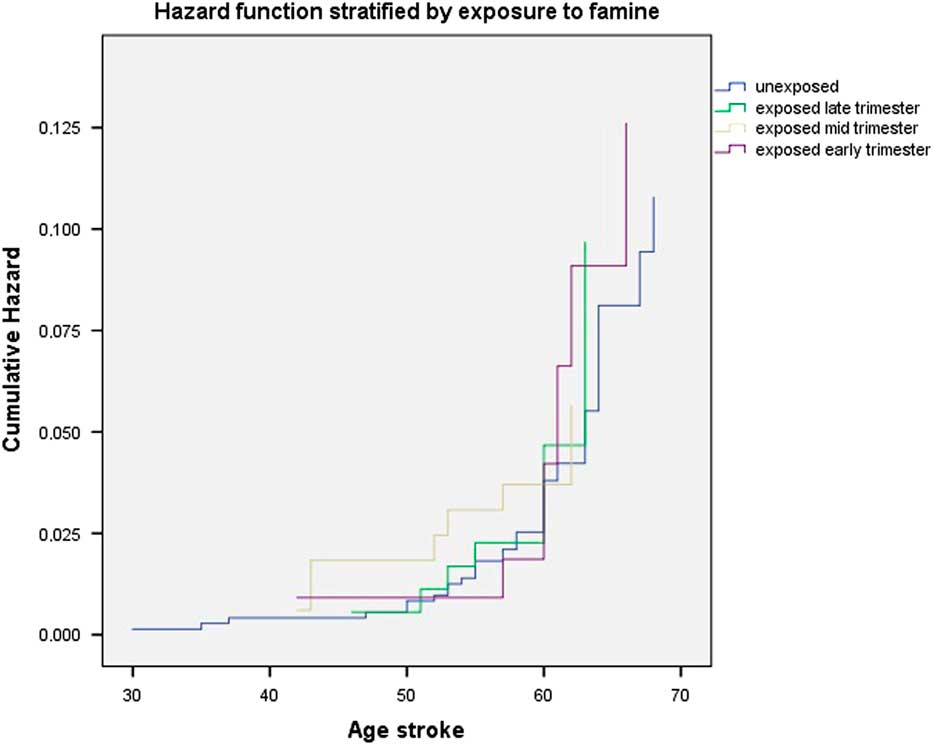
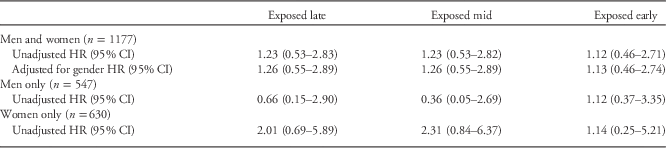
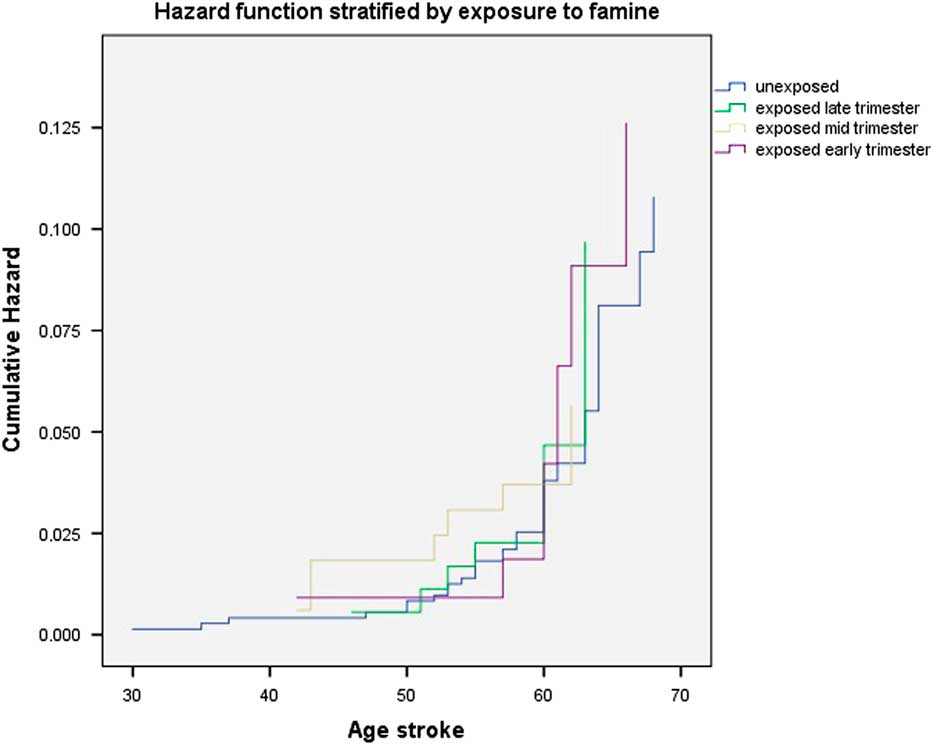
The risk of non-fatal stroke for participants who were not exposed to prenatal famine was 4.0% (29 out of 723) compared with 3.9% (7 out of 179), 4.2% (7 out of 165) and 5.5% (6 out of 110) for the participants exposed in late, mid and early gestation, respectively (P=0.913). There were no differences between the unexposed and the exposed groups in risk factors for stroke (Table 3), with the exception of smoking, which was more frequent in the exposed during early gestation group. Cox’s regression analysis revealed no significantly increased HR for non-fatal stroke between the unexposed and exposed groups during late, mid and early gestation: HR 1.23 (95% CI 0.53–2.83), HR 1.23 (95% CI 0.53–2.82) and HR 1.12 (95% CI 0.46–2.71), respectively (figure 3). Adjustment for gender did not alter the results (Table 4). The effect of prenatal famine exposure on stroke risk was not different for men and women (P for interaction between exposure and gender P=0.42) (Table 4). In Cox’s regression analysis, birth weight was not significantly associated with the risk of stroke (HR 1.00; 95% CI 0.99–1.00).
Hazard ratios (HR) for stroke for the exposed participants, in three different gestational periods, compared with unexposed participants (born before and conceived after the famine).
Hazard ratios (HR) with 95% confidence interval (CI) for the risk of stroke amongst participants, who participated in at least one of the follow-up visits (n=1177) exposed compared with unexposed participants. Unadjusted and adjusted for gender and separated for men only (n=547) and women only (n=630)

Discussion
We were unable to find any evidence for an increased risk of stroke after prenatal famine exposure, despite earlier findings of increased risks of stroke risk factors such as atherogenic lipid profiles, impaired glucose tolerance, hypertension and obesity after prenatal famine exposure.Reference Patel, Winkel and Ali 2 , Reference Harmsen, Lappas and Rosengren 3 , Reference Bygren, Edvinsson and Brostrom 6 , Reference Roseboom, Painter and van Abeelen 15 , Reference Yu, Wang and Li 21 , Reference Ravelli, van der Meulen and Michels 26 , Reference Painter, Roseboom and Bleker 27 , Reference Stein, Zybert and van der Pal-de Bruin 30
Our findings contrast with findings in a Swedish study which showed that a poor harvest during pregnancy was associated with increased risk for sudden death at adult age due to cerebrovascular and cardiovascular disease.Reference Bygren, Edvinsson and Brostrom 6 The different findings may be due to the different settings between 19th century Sweden and current age Netherlands and the associated differences in healthcare and environment. These findings also contrast with results of a previous study on long-term health consequences of exposure to the Dutch famine which showed that postnatal famine during childhood and adolescence was associated with a reduced risk of stroke.Reference van Abeelen, Elias and Bossuyt 31
One possible explanation for the inconsistency between studies may be due to our inability to distinguish between the two major types of stroke: brain hemorrhage and brain ischemia, which are known to have a different etiology. Ischemic stroke is strongly related to atherosclerosis, while the most common cause of hemorrhage strokes is attributed to hypertension.Reference Ariesen, Claus and Rinkel 32 – Reference Caplan 34 There is some evidence that also the early origins of these two types of stroke are different.Reference Eriksson, Forsen and Tuomilehto 35 , Reference Heshmati, Chaparro and Koupil 36
Our study also has other limitations. First, the incidence of non-fatal stroke was based on self-report which may have led to misclassification. Also, the study was carried out at a too young age to detect differences in stroke incidence in this unique historical cohort.Reference Harmsen, Lappas and Rosengren 3 Finally, only participants who responded to follow-up are included in this study which has potentially led to selective participation of the more healthy cohort members. This may have led to a lower rate of stroke in our study population compared with the actual rate in the entire birth cohort, which will have further reduced our statistical power. In conclusion, we could not find any evidence for any major increased risk of stroke after prenatal exposure to famine, but we cannot exclude the potential more subtle differences in risk of stroke after prenatal exposure to famine.
Acknowledgments
None.
Financial Support
This research received no specific grant from any funding agency, commercial or not-for-profit sectors.
Conflicts of Interest
None.
Ethical standard
The authors assert that all procedures contributing to this work comply with the ethical standards of the relevant national guidelines on human experimentation (Dutch Medical Research Involving Human Subjects Act) and with the Helsinki Declaration of 1975, as revised in 2008, and has been approved by the institutional committees (the Medical Ethics Review Commitee of the Academic Medical Center, Amsterdam).