Introduction
Seed germination and seedling establishment largely affect plant distribution and abundance (Fenner and Thompson, Reference Fenner and Thompson2005; Huang et al., Reference Huang, Liu, Bradford, Huxman and Venable2016). The timing and percentage of germination affect a plant's recruitment success and may have consequences for species migration (Xu et al., Reference Xu, Li, Zhang, Liu and Du2014) and the ability of individual plants to disperse and re-establish (Jiménez-Alfaro et al., Reference Jiménez-Alfaro, Silveira, Fidelis, Poschold and Commander2016). Germination studies at the community level are thus crucial for understanding and predicting changes in species distribution patterns. Recent studies suggest that plant phylogeny and life-history traits should be taken into account when investigating determinants of seed germination at the community level (Wang et al., Reference Wang, Baskin, Cui and Du2009; Liu et al., Reference Liu, Baskin, Baskin, Bu, Liu, Liu and Du2011; Xu et al., Reference Xu, Li, Zhang, Liu and Du2014), as seed germination is largely affected by phylogeny and life-history traits such as seed mass, seed dispersal, life-form and environmental factors (Wang et al., Reference Wang, Baskin, Cui and Du2009; Xu et al., Reference Xu, Li, Zhang, Liu and Du2014). Moreover, Wang et al. (Reference Wang, Baskin, Cui and Du2009) recommend including as many variables likely to influence germination as possible when measuring the effects of natural selection on seed germination because some of the variance in life-history traits between species is attributed to phylogenetic constraints (Wang et al., Reference Wang, Baskin, Cui and Du2009). Measuring germination traits can also highly benefit research in community assembly, climate change and restoration ecology because these data provide ecologically meaningful and relatively easy-to-obtain information about the functional properties of plant communities that may not be correlated with adult plant traits (Jiménez-Alfaro et al., Reference Jiménez-Alfaro, Silveira, Fidelis, Poschold and Commander2016).
In a rapidly changing climate, we face growing pressure to manage, restore and conserve native plant species and communities, both by predicting species responses in situ and by improving conservation outcomes using assisted migration and ex situ seed banking (Hoyle et al., Reference Hoyle, Cordiner, Good and Nicotra2014). Ex situ seed banking is now widely used for the conservation of wild plant species (Satterthwaite et al., Reference Satterthwaite, Holl, Hayes and Barber2007; Hay and Probert, Reference Hay and Probert2013) and seed bank collections of wild species play an important role in habitat restoration and reintroduction of rare species (Merritt and Dixon, Reference Merritt and Dixon2011). Many plant species have seeds that can be conventionally stored for long periods at low moisture contents and low temperature without damage. These seeds are referred to as orthodox seeds (Roberts, Reference Roberts1973). In contrast, desiccation-sensitive (recalcitrant) seeds cannot be stored conventionally and may be difficult to store for long periods because they are sensitive to dehydration or chilling. About 75–80% of angiosperm species that have been tested worldwide produce orthodox seeds, while an estimated 5–10% of angiosperm species produce seeds that do not survive desiccation and are killed in the freezer when ice crystals form (Dickie and Pritchard, Reference Dickie, Pritchard, Black and Pritchard2002). About 10–15% of angiosperm species withstand sufficient dehydration to prevent formation of lethal ice; nevertheless, their seeds are short-lived in the freezer for unknown reasons (Walters et al., Reference Walters, Berjak, Pammenter, Kennedy and Raven2013). Recent studies estimate that the proportion of species with desiccation-sensitive seeds is approximately 8%, with tropical and subtropical moist broadleaf forests having the highest incidence of seed desiccation sensitivity and an estimated 18.5% of the seed plant flora possessing the trait (Wyse and Dickie, Reference Wyse and Dickie2017). Rare plant species growing in tropical and subtropical habitats often have unknown storage behaviour and few seeds available for experimentation. Determining seed storage behaviour is essential for developing plant biodiversity conservation strategies as seed bank collections may not be possible for all species (Lima et al., Reference Lima, Hong, Arruda, Mendes and Ellis2014).
Florida pine rocklands contain over 400 native plant species (Gann et al., Reference Gann, Abdo, Gann, Woodmansee, Bradley, Grahl and Hines2016a), of which 40 are endemic to Florida (Wunderlin et al., Reference Wunderlin, Hansen, Franck and Essig2016), 11 are listed as federally endangered and five are federally threatened. Pine rockland communities of South Florida are largely threatened by high rates of human-induced habitat fragmentation (Snyder et al., Reference Snyder, Herndon, Robertson, Myers and Ewel1990), and by high intensity and frequency of hurricane storm surges (Ross et al., Reference Ross, O'Brien, Ford, Zhang and Morkil2009). Agriculture, fire suppression and invasive species have also had a large impact on this ecosystem (Possley et al., Reference Possley, Maschinski, Maguire and Guerra2014). Because many remaining pine rockland forests are near the coast, pine rockland plants may experience physiological stress, mortality or limited recruitment if soil salinity increases beyond the tolerance levels of native species as a result of sea level rise (e.g. Goodman et al., Reference Goodman, Maschinski, Hughes, McAuliffe, Roncal, Powell and Sternberg2012). Thus seed germination studies are fundamental to assist habitat restoration practices and the re-establishment of rare and endangered native plants.
Little is known about the factors regulating seed germination in pine rockland plants and whether seeds from this globally critically imperiled ecosystem can be stored under dry and freezing storage conditions. In this study, we investigated seed germination variation across 53 species (20 state or federally listed threatened-endangered and 33 common species) growing in subtropical South Florida pine rocklands. We predict that phylogeny and plant life-history traits contribute to seed germination variations across species. As seed germination is shaped both by autoecology of the species and by the evolutionary history of the lineage (Xu et al., Reference Xu, Li, Zhang, Liu and Du2014), we expected that closely related species would exhibit more similar germination patterns than distantly related species. We specifically addressed the following questions: (1) do seeds of South Florida pine rockland species withstand drying and freezing storage conditions?; and (2) is seed germination variation among species in South Florida pine rockland related to phylogeny and plant life-history traits?
Materials and methods
Study site
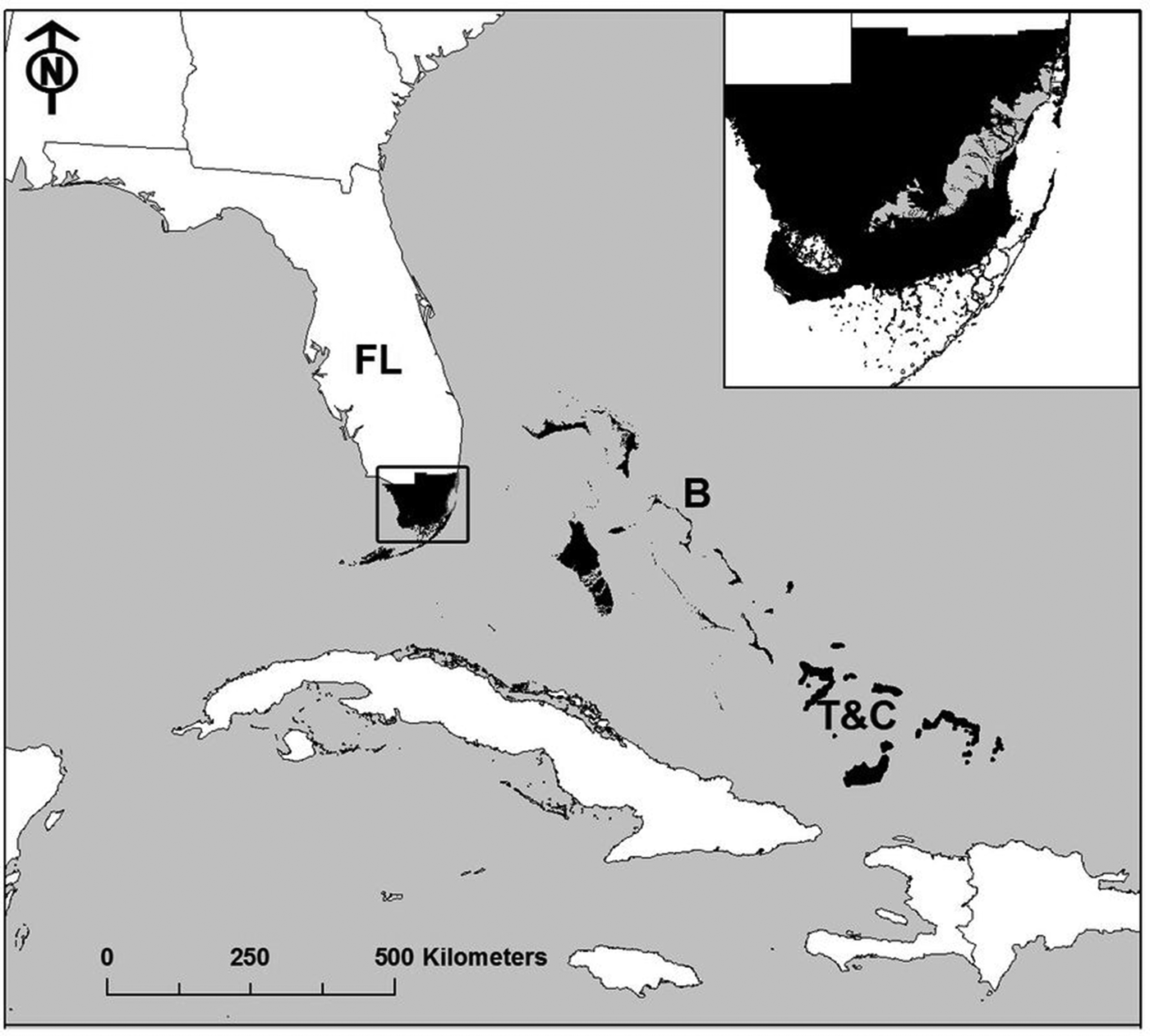
Globally critically imperiled pine rocklands are distributed in southeast Florida, the four northernmost Bahamian islands, and the Turks and Caicos Islands (Correll and Correll, Reference Correll and Correll1982; Fig. 1). Most endemic species require a fire return interval of less than five years to maintain their habitat (Robertson, Reference Robertson1954; Possley et al., Reference Possley, Woodmansee and Maschinski2008). The substrate is limestone with occasional shallow sand. Mean annual rainfall is 1400–1530 mm with about 80% of the rainfall occurring from May to October; the mean annual temperature is 27°C (Snyder et al., Reference Snyder, Herndon, Robertson, Myers and Ewel1990). Florida pine rockland canopy is dominated almost exclusively by Pinus elliotti var. densa. Beneath this canopy lies a rich understory composed of grasses, sedges, palms, vines and shrubs of temperate and tropical origin. South Florida pine rocklands are now nearly gone outside the boundary of the Everglades National Park, as a result of human population growth and land clearing in the Miami area and the Keys. Less than 2% of the original habitat is thought to remain, making it an endangered ecoregion (Noss and Peters, Reference Noss and Peters1995).
Map of study area, with approximate range of pine rocklands shown in black: Miami-Dade and Monroe County in South Florida (FL), The Bahamas (B) and the Turks and Caicos (T&C). The inset (upper right) shows the original extent of pine rocklands (grey) within Miami-Dade County (black). Map created using ArcGIS® software by Esri.

Seed collection and germination tests
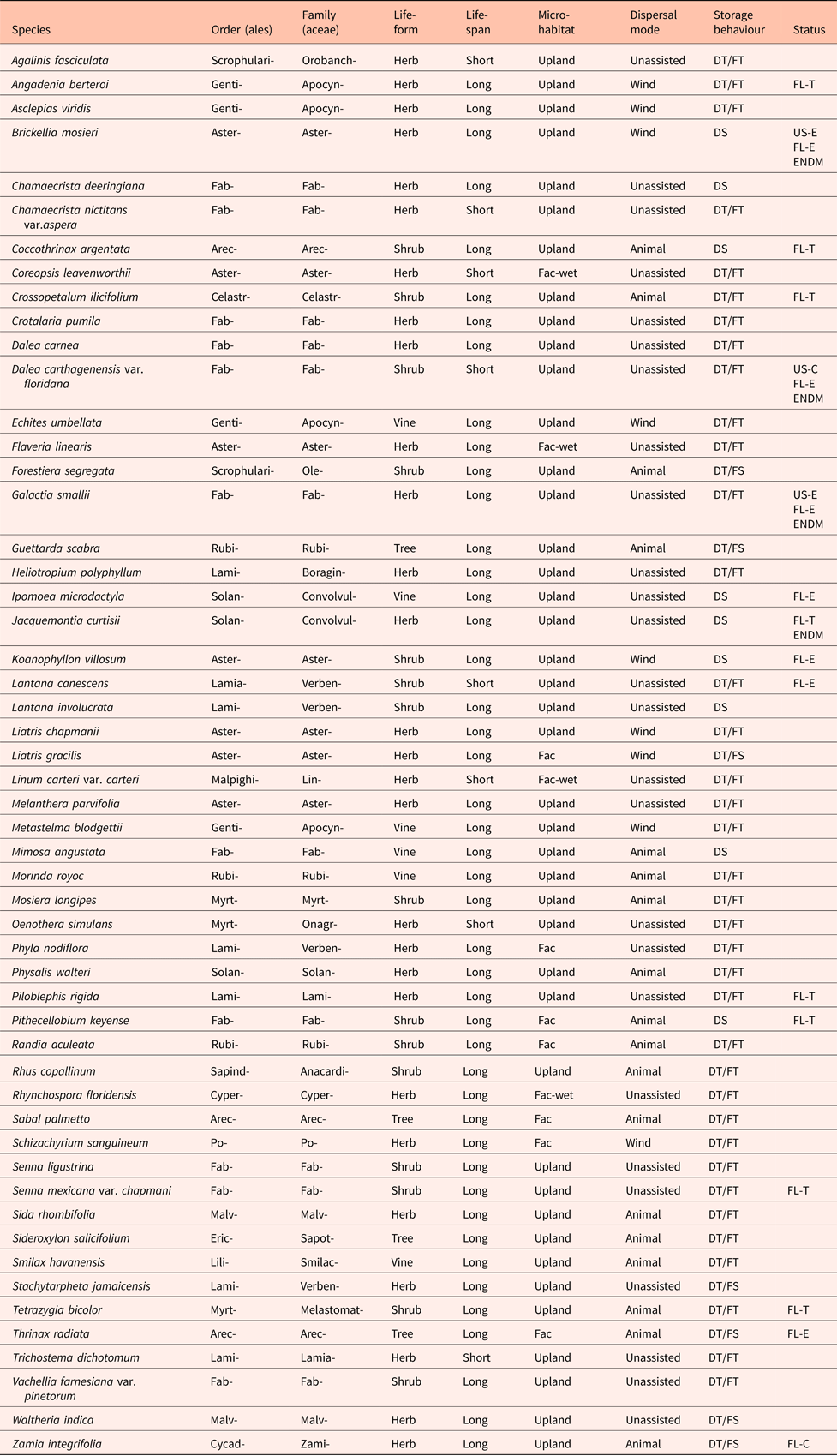
Mature seeds were collected from the field or from the ex situ nursery collection at Fairchild Tropical Botanic Garden (Miami, Florida) from 2005 to 2013.The studied species belong to 26 different families and 18 orders (Table 1). Seed tolerance to desiccation and freezing temperatures in storage was tested by subjecting seeds to desiccation and freezing and conducting germination trials. Germination trials consisted of 10 replicates of 10 seeds under the following conditions: (1) fresh seeds (seeds stored under ambient conditions at 21–23°C , 50% relative humidity (RH); time between the collection and beginning of germination experiments varied among species ranging from 10 to 90 days); (2) seeds desiccated at 21–23°C and 11–25% RH for 3 days, and (3) seeds desiccated at 21–23°C, 11–25% RH for 3 days and stored at –18o C for one week. For each species we noted any pre-germination treatments necessary to break dormancy. Seeds were sowed in Petri dishes on filter paper and dampened with water. Petri dishes were then placed on germination racks at 25°C, 50% RH, and 12 h photoperiod. Germination (radicle protrusion) was recorded two to three times per week until all seeds germinated or were determined to be dead by performing a cut test. Seeds were watered as needed.
Taxa used in the study and their characteristics

Plant life-form: herbs, shrubs, trees and vines; life-span: long-lived and short-lived; microhabitat: upland, facultative (Fac), facultative-wetland (Fac-wet); seed dispersal mode: unassisted, wind- or animal-dispersed; storage behaviour: desiccation-tolerant and freezing-tolerant (DT/FT), desiccation-sensitive (DS), and desiccation-tolerant but freezing-sensitive (DT/FS). Life-form and life-span based on Gann et al. (Reference Gann, Abdo, Gann, Woodmansee, Bradley, Grahl and Hines2016a) and USDA definitions (https://plants.usda.gov/growth_habits_def.html). Habitat based on Florida Administrative Code (1994). Seed dispersal mode based on Gann et al. (Reference Gann, Abdo, Gann, Woodmansee, Bradley, Grahl and Hines2016b) and J. Possley (personal field observations). Status indicates species that are federally endangered (US-E) or candidates for the federal endangered species list (US-C), those listed by the state of Florida as threatened (FL-T) or endangered (FL-E), and those that are endemic to Florida (ENDM). Status based on Weaver and Anderson (Reference Weaver and Anderson2010) and Wunderlin et al. (Reference Wunderlin, Hansen, Franck and Essig2016).
Data analysis
We classified species into the following three storage behaviour groups based on their performance in germination trials: DT/FT (desiccation and freezing tolerant), DS (desiccation sensitive), and DT/FS (desiccation tolerant but freezing sensitive). We evaluated the interactive effects of storage treatment (fresh, desiccated, and desiccated and frozen) and species on the probability of germination using a generalized linear model with a binary error distribution and logit link function. We conducted post hoc linear contrast on this model to evaluate for each species if germination percentage (GP) significantly differed between fresh and desiccated treatments (contrast1), and between desiccated and desiccated and frozen treatments (contrast2). We classified a species as ‘DS’ if the probability of germination was significantly lower for desiccated seeds than for fresh seeds in contrast1. We classified a species as DT/FS if there was no significant difference in contrast1, but desiccated and frozen seeds displayed significantly lower probability of germination than desiccated seeds in contrast2.
We then applied Bayesian mixed effect models in the R package MCMCglmm (Hadfield, Reference Hadfield2010) to evaluate the effects of phylogenetic history and species life-history covariates on germination percentage (GP) and number of days to reach 50% germination (T 50). We previously constructed a phylogenetic tree with Phylomatic version 3 based on the angiosperm megatree R20160415.new and branch lengths were estimated with Phylocom version 4 using the bladj function (Webb et al., Reference Webb, Ackerly and Kembel2008). Each species was assigned to a family and order according to the Angiosperm Phylogeny Group (2016). Life-history traits include: life-form (tree, shrub, herb, vine), life-span (long-lived, short-lived), microhabitat (upland, wet, and facultative), and dispersal mode (unassisted, wind, animal; Table 1).
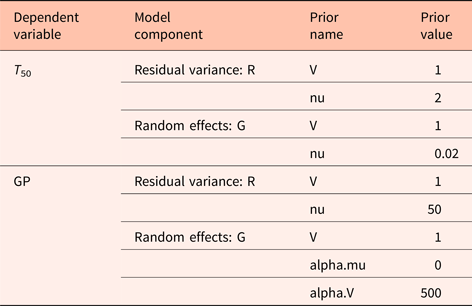
We then modelled GP using a multinomial error distribution, which is equivalent to a binomial error distribution when the number of outcomes (k) is 2. We used a Gaussian error distribution in models predicting T 50, which was log transformed to meet the assumption of normality of errors. We ran all MCMCglmm models for 5,000,000 iterations with a burn in of 100,000 iterations. Each MCMC chain was thinned every 500 iterations, resulting in an effective sample size of 9800. Priors used for each model type (Gaussian and multinomial) are included in Table 2.
List of priors used in Bayesian mixed effect models used to determine the effects of life-history covariates and phylogenetic history on seed germination
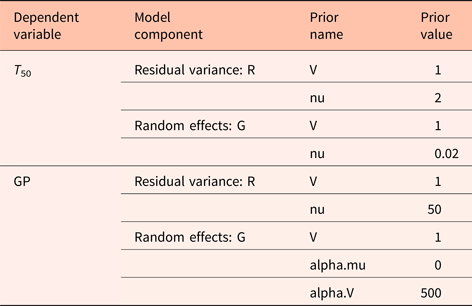
Prior names correspond to arguments of the MCMCglmm package in R.
For both GP and T 50, we calculated the distribution of posterior probabilities of phylogenetic signal (λ) by dividing the variance of the phylogenetic random effect by the total model variance from models that included only the dependent variable T 50 or GP, an intercept, and the phylogenetic random effect (Garamszegi, Reference Garamszegi2014). From this distribution, we found the mean and 95% confidence intervals of λ. Values of λ range from 0 to 1 (0 indicates a trait with no phylogenetic influence, and 1 indicates a trait with a strong phylogenetic influence). We then applied models with multiple fixed effects and a phylogenetic random effect to determine if species life-history covariates significantly associate with species mean GP and T 50. Initial models included all four life-history covariates. We then used stepwise deletion of fixed effects to determine which combination of covariates produced models with the lowest deviance information criterion (DIC). If two models had DIC values within one point, we selected the simpler model.
Results
Seed germination under dry and freezing storage
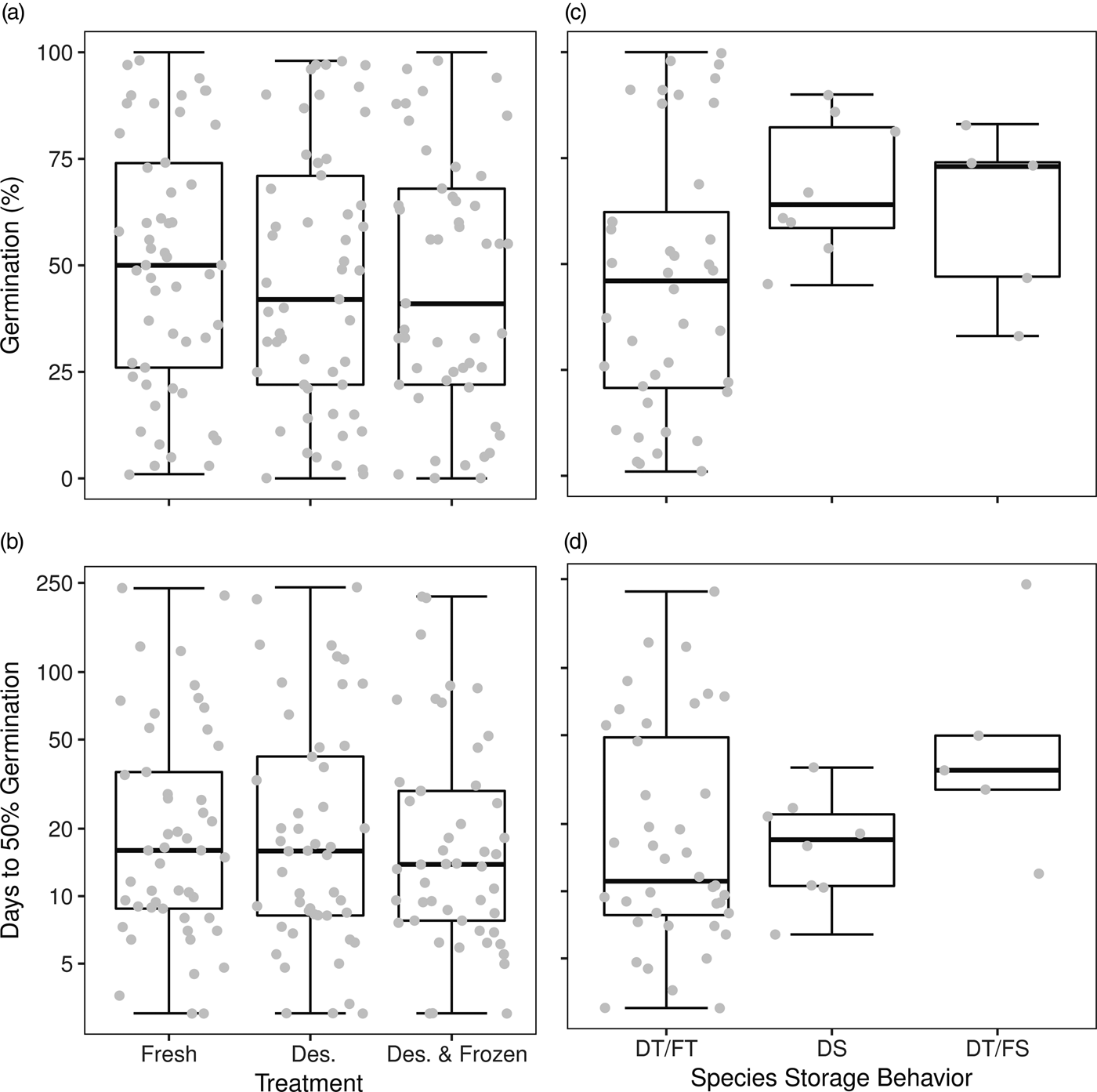
GP of fresh, desiccated, and desiccated and frozen seeds of the studied species ranged from 0 to 100% with an average across species of 51, 48 and 50% (Fig. 2a). T 50 ranged from 3 to 239 days with an average across species of 34, 37 and 33 days for fresh, desiccated, and desiccated and frozen seeds, respectively (Fig. 2b). Mean GP of desiccation and freezing-tolerant, desiccation-sensitive, and desiccation-tolerant but freezing-sensitive seeds was 46, 71 and 49%, respectively (Fig. 2c). Mean T 50 of desiccation and freezing-tolerant, desiccation-sensitive, and desiccation-tolerant but freezing-sensitive seeds was 33, 29 and 43 days, respectively (Fig. 2d). The effect of storage treatments on germination behaviour differed among species. We found a significant species × treatment interaction effect on the probability of germination (χ2 = 505, d.f. = 2,104, P < 0.001). Germination percentage did not differ among treatments in 36 species, which were classified as desiccation-tolerant/freezing-tolerant (DT/FT; Table 1). Nine species were classified as desiccation-sensitive because desiccated seeds did not perform as well as fresh seeds in germination trials (DS; Table 1). Finally, eight species were classified as desiccation-tolerant/freezing-sensitive because desiccated and frozen seeds did not perform as well as desiccated seeds (DT/FS; Table 1).
Panels a and b: box plots comparing germination (%) and time to 50% germination of fresh, desiccated (Des.) and desiccated and frozen (Des. & Frozen) seeds. Panels c and d: box plots comparing germination (%) and time to 50% germination of desiccation and freezing-tolerant (DT/FT), desiccation-sensitive (DS) and desiccation-tolerant but freezing-sensitive (DT/FS) seeds. Boxes span the 25th to 75th percentiles; whiskers span the 5th to 95th percentiles. Points represent individual species.

Correlation between germination, phylogeny and life-history traits
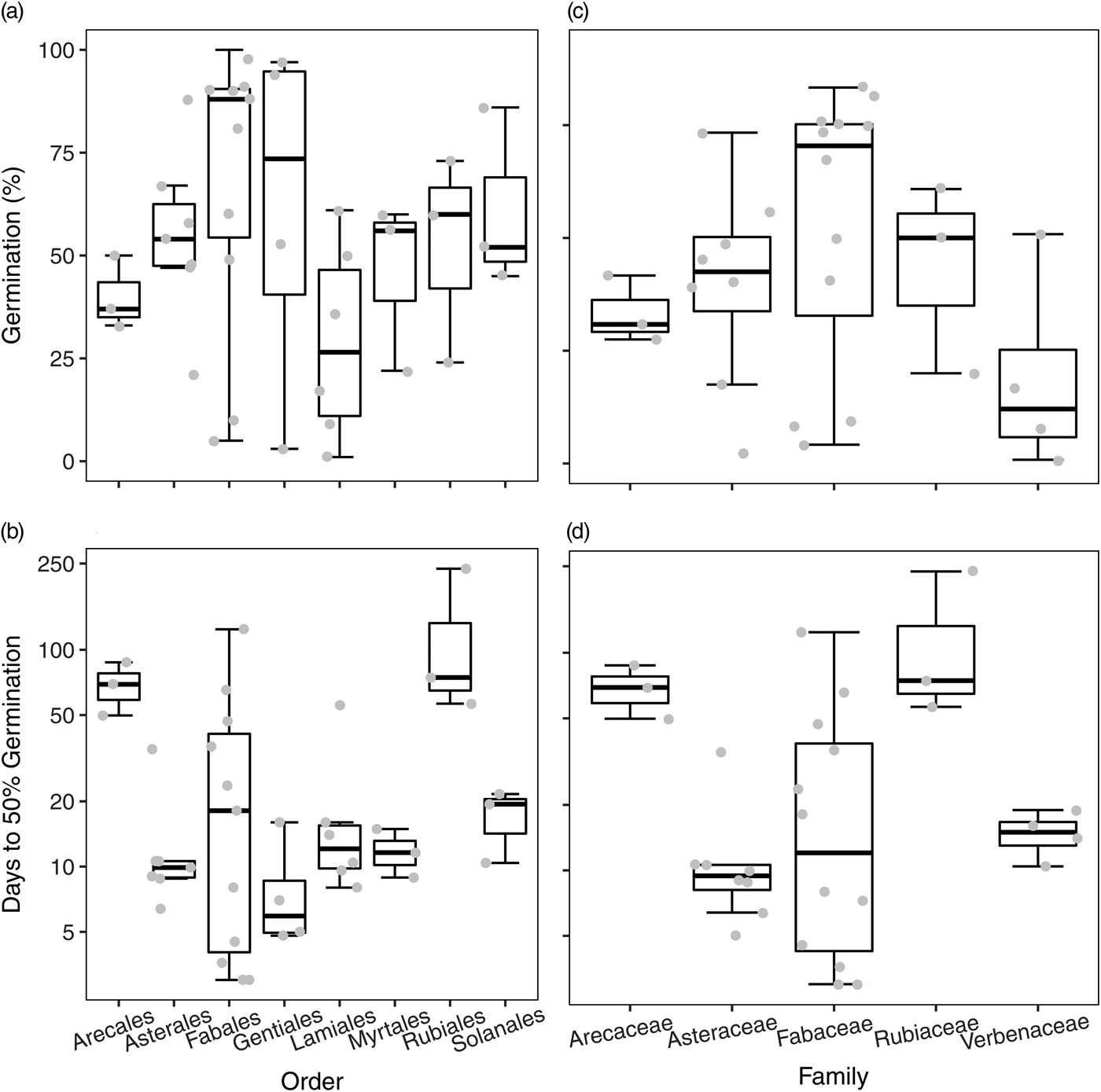
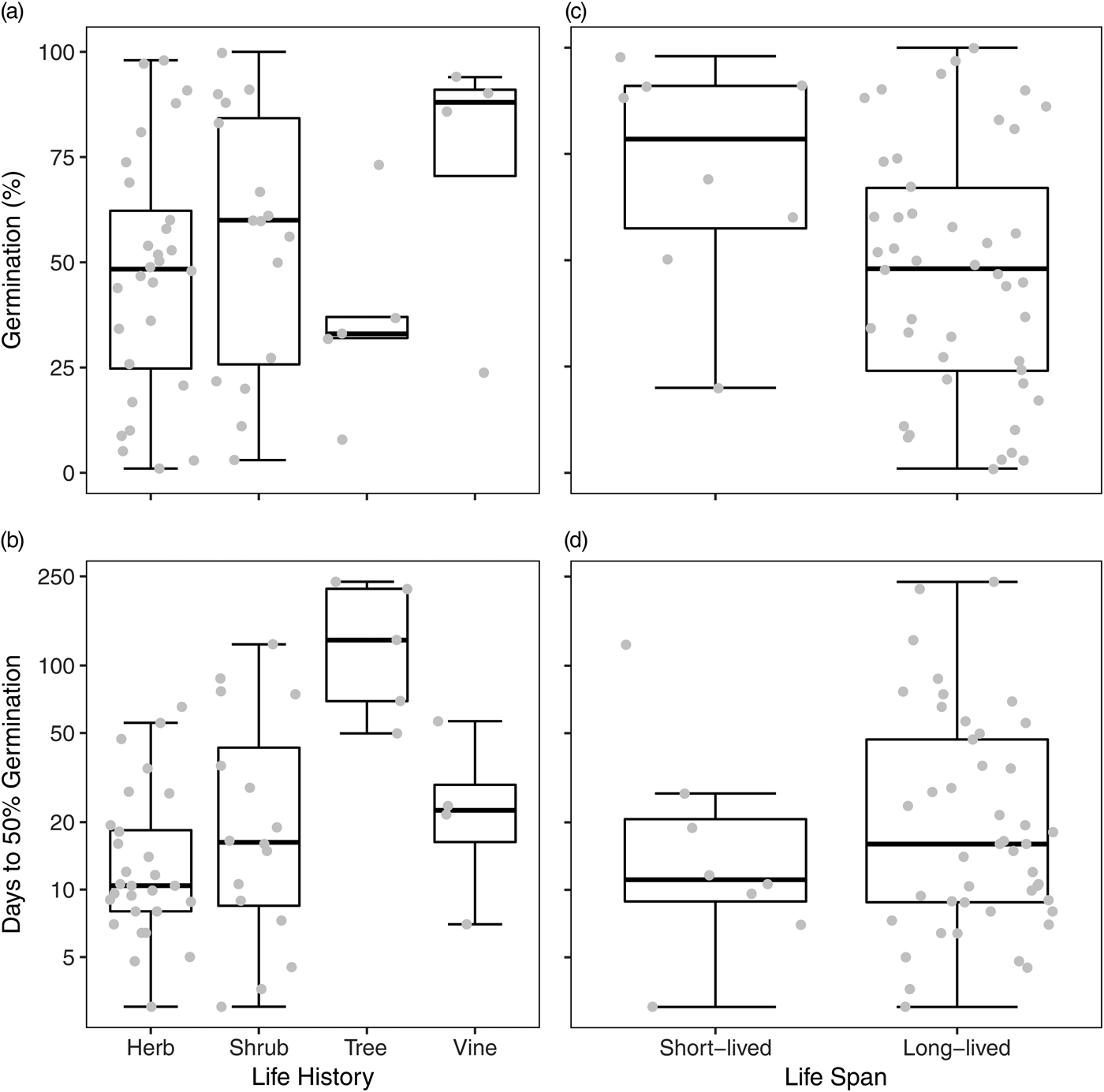
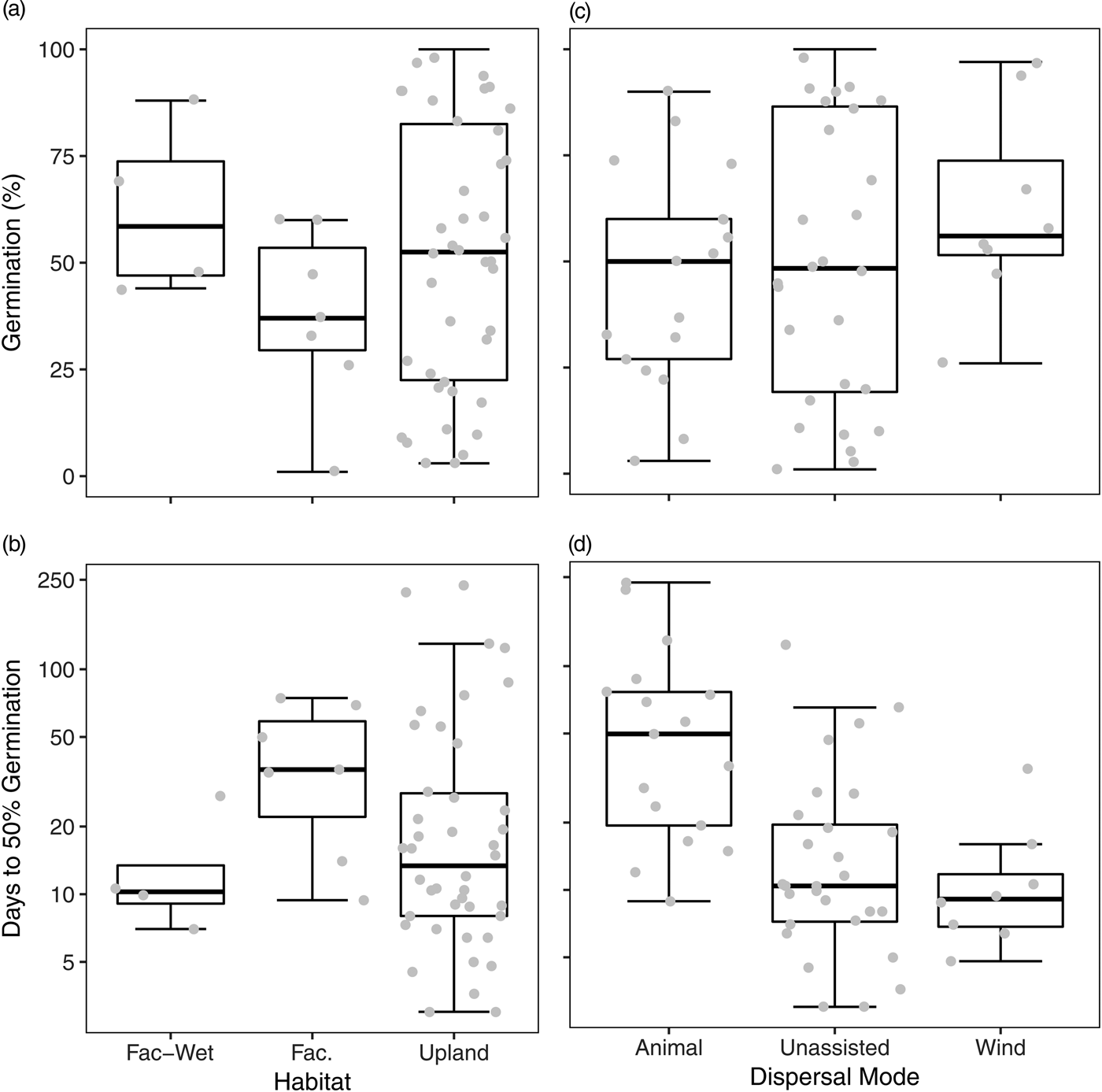
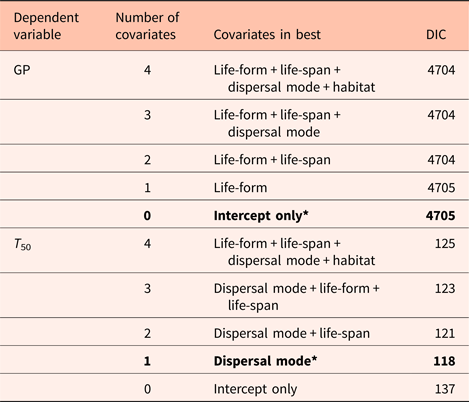
Seed germination exhibited significant phylogenetic signal. Phylogenetic signal (λ) was significantly greater than zero for both GP (mean 0.87, CI95 0.711–0.97) and T 50 (mean 0.57, CI95 0.21–0.92). There was wide variation in GP and T 50 among orders and families (Fig. 3). For example, species in the Fabales and Gentianales exhibited larger variations in GP than species in the Arecales and Asterales (Fig. 3a). Seeds from Arecaceae and Rubiaceae families took as many as 200 days to reach 50% germination, whereas seeds from Asteraceae took as few as 5 days to reach 50% germination (Fig. 3d). Seeds from Verbenaceae displayed the lowest average germination rate (GP) across all species, with only 22% of fresh seeds germinated across four species. When considering life-history traits we found that seeds of trees had lower GP values and took longer to germinate on average than any other life-form (Fig. 4a,b). Seeds of short-lived species had a higher probability of germination and faster time to germination than seeds of long-lived species (Fig. 4c,d).Seeds of facultative-wet species had higher GPs than seeds of upland and facultative species (Fig. 5a,b). Animal-dispersed seeds had lower GPs but higher T 50 values than wind-dispersed and unassisted seeds (Fig. 5c,d). After controlling for the effect of phylogenetic history, life-history covariates did not explain additional significant variation in the probability of germination, according to DIC model selection (Table 3). Seed dispersal mode, however, did explain significant variation in T 50 after controlling for phylogeny (Table 3).
Box plots comparing germination (%) and time to 50% germination of seeds across orders (a,b) and across families (c,d). Boxes span the 25th to 75th percentiles; whiskers span the 5th to 95th percentiles. Points represent individual species.

Box plots comparing germination (%) and time to 50% germination of seeds of species according to life-form (a,b) (herbs, shrubs, trees and vines) and according to life-span (c,d) (short- and long-lived). Boxes span the 25th to 75th percentiles; whiskers span the 5th to 95th percentiles. Points represent individual species.

Box plots comparing germination (%) and time to 50% germination of seeds of species according to habitat (a,b) (upland, facultative, facultative-wet) and according to seed dispersal mode (c,d) (animal, wind, unassisted). Boxes span the 25th to 75th percentiles; whiskers span the 5th to 95th percentiles. Points represent individual species.

Deviance Information Criterion values used to select the best generalized linear mixed effect models (MCMCglmm) evaluating the effect of life-history covariates on the probability of germination (GP) and days to 50% germination (T 50)

All mixed models contained a phylogenetic random effect. *Model selected for presentation in the manuscript.
Discussion
Seed germination under dry and freezing storage
Our results indicate that seeds of most (68%) of the studied species tolerated dry and freezing storage conditions while few (17%) were desiccation-sensitive or (15%) were desiccation-tolerant but sensitive to freezing. Our results support recent predictions that most of the world's seed plants produce desiccation-tolerant seeds (Wyse and Dickie, Reference Wyse and Dickie2017). Our results also suggest that seeds of most studied species from the globally endangered pineland rocklands could be safely placed into ex situ storage without significant losses in germination capacity. Further studies, however, are necessary to examine life-span of the studied species under long-term freezer conditions because our inference may not extend beyond the period of time tested and long-term seed viability under freezer condition may indeed vary across species, within species, and even within a population (C. Walters, personal communication).
Correlation between germination, phylogeny and life-history traits
We found a significant phylogenetic signal in germination patterns, and the relationship between life-history traits and germination could not be disentangled from the effect of evolutionary history alone. Both GP and T 50 differed among orders and families with species from the Fabales exhibiting the highest mean GP, while species from the Lamiales exhibited the lowest mean GP. At the family level, seed germination of species from Fabaceae had the highest GP while species from Arecaceae and Verbenaceae had the lowest GP. Species from the Rubiaceae and Arecaceae had the most delayed germination across families. Our results agree with broad comparative surveys in Mediterranean plant species (Carta et al., Reference Carta, Hanson and Müller2016), in alpine/subalpine meadows (Bu et al., Reference Bu, Du, Chen, Wang, Xu and Liu2009; Wang et al., Reference Wang, Chen, Baskin, Baskin, Cui, Zhang, Qiang and Du2012; Xu et al., Reference Xu, Li, Zhang, Liu and Du2014), in arid and semi-arid zones in China (Wang et al., Reference Wang, Baskin, Cui and Du2009), in cold deserts (Liu et al., Reference Liu, Zhang, Duan, Wang and Song2014) and in temperate rainforests (Figueroa, Reference Figueroa2003) which have found that germination percentage and germination time are phylogenetically conserved traits.
In our study, life-history traits were significantly associated with germination but these covariates did not explain additional variance that could not be explained by phylogeny alone. Some studies have found significant relationships between plant life-form and seed germination strategies (Figueroa and Armesto, Reference Figueroa and Armesto2001; Flores and Briones, Reference Flores and Briones2001) but others have not (Garwood, Reference Garwood1983). In general, seeds of trees took longer to germinate than seeds of any of the other life-forms. The presence of delayed germination (dormant seeds) in tree species may enable them to survive environmentally harsh conditions such as soil water deficits during the dry season in this ecosystem. Also, seeds of short-lived species had higher germination percentages and germinated faster than seeds of long-lived species. The differences in seed germination rates among life-forms and life-spans suggest that pine rockland species may use distinct strategies to persist in such a seasonal environment. Our results agree with Grime et al. (Reference Grime, Mason, Curtis, Rodman, Band, Mowforth, Neal and Shaw1981), who found that seeds of annuals and perennial herbs germinated faster than seeds of shrubs and trees in temperate flora. In comparison with perennials, annuals are more dependent on seeds in order to persist in the environment and early-germinating species may gain competitive advantages over late-germinating species (Xu et al., Reference Xu, Li, Zhang, Liu and Du2014).
In seasonal environments, delaying seed germination until conditions are favourable for seedling establishment is crucial for the long-term persistence of plant populations as seedlings are highly vulnerable to desiccation during long periods of drought and high temperatures (Salazar et al., Reference Salazar, Goldstein, Franco and Miralles-Wilhelm2012) or conversely, they can also be killed by excess water (Fraaije et al., Reference Fraaije, Braak, Verduyn, Breeman, Verhoeven and Soons2015). Seeds of facultative species (growing in moderate moisture conditions) exhibited lower and delayed germination compared with seeds of upland (growing in low moisture conditions) and facultative-wetland species (moderate to high moisture conditions). The delayed germination of facultative species could be an important survival strategy because it prevents seeds of species with moderate water requirements from germinating in unfavourable conditions of drought or excess water (Wang et al., Reference Wang, Baskin, Cui and Du2009). On the other hand, species with low and moderate–high water requirements (upland and facultative-wetland species, respectively) seem to exhibit a more ‘opportunistic’ seed germination strategy to ensure occasional successful establishment of seedlings under favourable soil water conditions (Wang et al., Reference Wang, Baskin, Cui and Du2009). Thus our results suggest that early or delayed germination may be two opposing germination strategies used by pine rockland species to cope with species-specific water requirements in a seasonal environment.
Seed dispersal mode significantly affected seed germination rate (after controlling for the phylogenetic effects) with animal-dispersed seeds taking longer to germinate than wind or unassisted dispersed seeds. Our results agree with studies conducted in arid and subalpine environments where wind-dispersed seeds had higher germination percentages than unassisted and vertebrate-dispersed seeds (Wang et al., Reference Wang, Baskin, Cui and Du2009, Reference Wang, Chen, Baskin, Baskin, Cui, Zhang, Qiang and Du2012), and also with studies conducted in alpine/subalpine meadows, where adhesion-dispersed seeds had higher germination percentages than unassisted seeds and ant-dispersed seeds exhibited fast germination (Xu et al., Reference Xu, Li, Zhang, Liu and Du2014). Our results also agree with studies conducted in temperate rainforests where endozoochorous species had a more delayed germination than species with other dispersal syndromes (Figueroa and Armesto, Reference Figueroa and Armesto2001). Delayed germination of animal-dispersed seeds could be explained because seeds dispersed by frugivores must survive the passage through the digestive tract of the animal so they usually delay germination longer than their abiotically dispersed relatives (Figueroa and Armesto, Reference Figueroa and Armesto2001). As has been found in other seasonal environments, delayed germination of pine rockland species with animal-dispersed seeds could help to increase their chances of being dispersed by remaining available for long periods of time (Garwood, Reference Garwood1983; Salazar et al., Reference Salazar, Goldstein, Franco and Miralles-Wilhelm2012).
In conclusion, our study shows that seeds of most studied pine rockland species (68%) withstand dry and freezing storage conditions. Thus ex situ seed banking can assist long-term conservation of this endangered plant community. In addition, seed germination patterns in this globally critically imperilled ecosystem depended most strongly on phylogeny. Life-history traits affect germination but did not explain significant additional variation in germination parameters when controlling for the phylogenetic relationships among species. Seed dispersal mode did affect germination rate, with animal-dispersed seeds exhibiting a more delayed germination than wind-assisted or unassisted dispersed seeds. Differential germination responses across phylogenies and species with different seed dispersal modes have implications for understanding how pine rockland plant communities might respond to disturbance and climate change. We suggest that management, restoration and conservation practices for native plant species in pine rocklands should take into account that seed germination strategies are correlated with species phylogeny and by some plant life-history traits such as seed dispersal mode.
Acknowledgements
We thank S. Wright, S. Lewis, K. Bradley, J. Goodman, C. Walters, D. Walters and K. Minkowski for field and laboratory assistance. We also thank the Florida Department of Agriculture and Consumer Services, Miami-Dade County Natural Areas Management and Miami's Environmentally Endangered Lands Program for granting seed collection permits.
Financial support
This work was supported by funds from the Florida Department of Agriculture and Consumer Services, Endangered Plant Advisory Council (contracts numbers 011299, 012863, 013925, 014880, 015982 , 017162, 018700, 020161, 021010 and 022647 awarded to Fairchild Tropical Botanic Garden), Miami-Dade County Natural Areas Management and Miami's Environmentally Endangered Lands Program (agreement R-808-07, amendment 1 to R-808-07, and agreement R-R76-16 awarded to Fairchild Tropical Botanic Garden) and the Center for Plant Conservation.
Conflicts of interest
The authors declare no conflicts of interest.