Introduction
With extended life expectancies and the retirement of baby boomers, South Korea is facing rapid growth in its older population. In 2000, adults ages 65 years or older accounted for at least 7.0% of the population in Korea, and that proportion is expected to increase to 14.3% by 2018 and 20.8% by 2026 (Korea Institute for Health and Social Affairs, 2007). Korean older adults are considered vulnerable, as they face significant mental health issues (Lee and Moon, Reference Lee and Moon2011; Lee and Chang, Reference Lee and Chang2012). For example, while suicide is ranked the fourth leading cause of death in South Korea overall (Ahn, Reference Ahn2012; Jeon, Reference Jeon2012), the suicide rate among older adults is seven times higher than that of younger adults in their 20s (National Statistical Office of Korea, 2009). Several reasons for mental health problems among the Korean elderly have been identified, such as loneliness and isolation, health problems, financial difficulties, loss of social status and social support, and fear of dying (Lee and Moon, Reference Lee and Moon2011; Ko et al., Reference Ko2012).
To our knowledge, the level of mental health services utilization among older adults in South Korea is not known. In the USA, studies have reported that Korean Americans under-utilize community-based mental health services (Jang et al., Reference Jang, Kim, Hansen and Chiriboga2007; Jang et al., Reference Jang, Chiriboga and Okazaki2009). In their study, Jang et al. (Reference Jang, Kim, Hansen and Chiriboga2007, Reference Jang, Chiriboga and Okazaki2009) found that culture-embedded beliefs, such as misconceptions and social stigma, played substantial, negative roles in Korean Americans’ attitudes toward mental health services utilization. To comprehensively assess factors associated with the level of mental health services utilization, understanding the role of mental health literacy is critical. However, relatively little is known about the potential role of mental health literacy on mental health services utilization among Korean and Korean American older adults.
Mental health literacy consists of “(i) the ability to recognize specific disorders or different types of psychological distress; (ii) knowledge and beliefs about risk factors and causes; (iii) knowledge and beliefs about self-help interventions; (iv) knowledge and beliefs about professional help available; (v) attitudes which facilitate recognition and appropriate help-seeking; and (vi) knowledge of how to seek mental health information” (Jorm, Reference Jorm2000, p. 396). While there is no evidence about how mental health literacy is related to mental health outcomes and service utilization, there are some studies that report a significant positive relationship between health literacy, which is defined as degree to which individuals have the capacity to obtain, process, and understand basic health information and services needed to make appropriate health decisions (Ratzan and Parker, Reference Ratzan, Parker, Selden, Zorn, Ratzan and Parker2000, p. vi), and the two outcome variables. Adults with low health literacy are more likely to report symptoms of depression (Coffman and Norton, Reference Coffman and Norton2010; Lee et al., Reference Lee, Rhee, Kim and Ahluwalia2015; Rhee et al., Reference Rhee, Lee, Kim, Han, Lee and Kim2016). In Rhee and colleagues’ (Reference Rhee, Lee, Kim, Han, Lee and Kim2016) study, Korean older adults, who had a lower level of health literacy, were more likely to have depressive symptoms. Korean older adults who showed lower health literacy were also less likely to use healthcare services (Kripalani et al., Reference Kripalani, Henderson, Chiu, Robertson, Kolm and Jacobson2006; Kim et al., Reference Kim, Khatiwoda, Park and Lee2016).
Interventions specifically targeting mental health literacy have been found to benefit participants in multiple ways. For example, Kelly and colleagues (Reference Kelly, Jorm and Wright2007) systematically reviewed 12 different mental health literacy interventions and found that individuals could better identify depression and improve help-seeking behaviors for depression after attending community-based mental health awareness programs; individuals also showed a significant reduction in stigmatizing attitudes. These studies, however, focused only on how mental health literacy influences mental health outcomes, not investigating its relationship with mental health services utilization. Furthermore, these studies only focused on young adults ages 18 to 25 years outside of Asia. No study has yet identified the role of mental health literacy in older adults in South Korea.
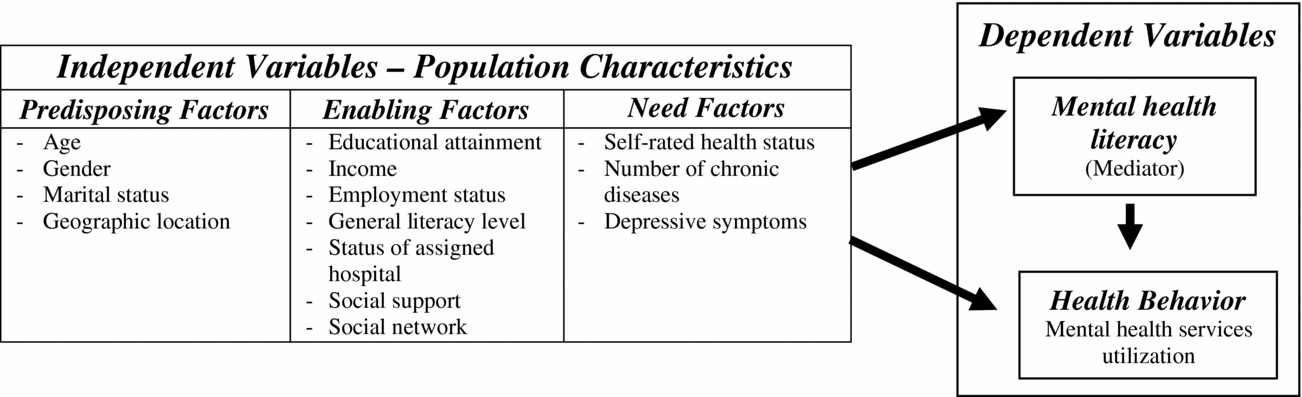
Guided by Andersen's health behavioral model (Andersen, Reference Andersen1995), we used mediation and path analysis to identify the role of mental health literacy in the relationship between population characteristics and mental health services utilization. Andersen (Reference Andersen1995) outlined (1) predisposing factors as exogenous influences on health service use, such as demographic characteristics, (2) enabling factors as resource-related determinants that either encourage or impede healthcare services utilization, and (3) need factors as perceived needs for the use of healthcare services. When all three types of factors are in place, the model posits that successful health service utilization will occur. While a study conducted by Lindamer and colleagues (Reference Lindamer2012) suggests that enabling and need factors have the strongest associations with high utilization of acute mental health services, a recent systematic review on Andersen's health behavioral model (Babitsch et al., Reference Babitsch, Gohl and von Lengerke2012) concludes that different operationalizations of the model may lead to a small common set of variables (e.g. age and gender) to predict and/or understand health care utilization. Relying on Andersen's health behavioral model as a theoretical guide, we developed our own framework with the population characteristics classified as predisposing, enabling, or need factors (see Figure 1).
Conceptual model of the study.

Although mental health literacy is considered a critical factor in determining mental health disparities, there is limited research on this topic in South Korea, particularly among older adults. To our knowledge, this is the first study investigating a relationship between mental health literacy and mental health services utilization in this vulnerable group. Given that Korean older adults reported the highest suicide rates across age groups, and limited evidence related to their mental health literacy currently exists, a deeper understanding of the population's mental health literacy and its impact on service utilization is necessary and timely. Therefore, our objectives were to identify: (1) whether mental health literacy mediates the association between population characteristics and mental health services utilization, and (2) an optimal path model for mental health services utilization among Korean older adults. Understanding descriptive patterns of the role of mental health literacy in mental health services utilization will allow healthcare professionals and policy-makers to develop community-based mental health programs and policies focused on improving mental health literacy and mental health services utilization among Korean older adults.
Methods
Research design and data source
We used a cross-sectional survey research design to investigate the proposed study aims. Using a quota sampling strategy, we recruited a sample of 640 community-dwelling Korean adults ages 65 years or older living in six metropolitan, four suburban, and four rural areas in South Korea from September to December 2009. The sampling method was appropriate to ensure proportional numbers of participants in different geographic areas (Neuman, Reference Neuman1994). We recruited study participants from local social services centers across the country. Before conducting a full survey, we also had a preliminary pilot study with ten Korean older adults to assess the accessibility (e.g. readability), cultural sensitivity, and ability to complete the survey form. We provided a self-administered questionnaire to five randomly selected older adults, and completed face-to-face interviews with the other five older adults. We conducted a statistical test of the equality of alpha reliability (Feldt, Reference Feldt1969), which showed no significant difference in reliability between these two different groups. After completing the pilot study, a self-administered questionnaire was given to the study sample. Prior to data collection, we explained the purpose of the study, eligibility criteria, confidentiality, and the voluntary nature of participation to every participant in both oral and written formats. The response rate for the survey was 90.6%. Upon examining all participants’ responses (e.g. missing data), we only included 596 responses in the final study. The research procedure for this study was approved by the University of Minnesota Institutional Review Board.
Instruments
Dependent variable
The utilization of mental health services was the primary outcome of interest in our study. Each participant was asked whether or not he or she had used mental health services (0 = No, 1 = Yes).
Independent (mediating) variable
Mental health literacy was the mediating variable. We used a ten-item scale adapted from Epps et al. (Reference Epps, Armstrong, Davis, Massey, McNeish and Smith2007) and Davis et al. (Reference Davis, Massey, Smith, Armstrong, Vergon and McNeish2008). The reliability measure using Cronbach's α was 0.93 and the factor analysis suggested that the constructed mediating variable was appropriate. We used a 5-point Likert scale for each item from “not at all” (1) to “always” (5). The summated score ranged from 10 to 50, where a higher score indicates a higher level of mental health literacy. The detailed description of the constructed mental health literacy variable was reported elsewhere (Reference Kim, Lee, Lee, Park and SimmsKim et al., under review).
Controlling variables
Based on existing literature and our conceptual framework, for predisposing factors, we included age, gender, marital status, and geographic location. For enabling factors, we included educational attainment, income, employment status, general literacy level, having a primary hospital, social support, and social network. Since South Korea has a national health insurance policy, we did not include a health insurance variable as an enabling factor. For need factors, self-rated health status, number of chronic conditions, and depressive symptoms were used. Self-rated health status was measured using a 5-point Likert-type rating scale ranging from “very poor” (1) to “very good” (5). We computed the number of chronic conditions by summing each participant's indication of whether or not they experienced each of the seven most common chronic conditions, such as arthritis and diabetes. Finally, depressive symptoms were assessed using a short form of the Center for Epidemiologic Studies Depression Scale (CES-D) (Andersen et al., Reference Andersen, Cater, Malmgren and Patrick1994; Radloff, Reference Radloff1997). The ten items were rated based on four response categories from “very rarely” (0) to “always” (3); the sum score ranged from 0 to 30 accordingly, where higher scores indicate more severe depressive symptoms.
Data analysis
First, we presented descriptive statistics of the socio-demographic characteristics of our sample by the levels of mental health literacy and mental health service utilization. We used structural equation modeling (SEM) to estimate the mediating role of mental health literacy between the socio-demographic characteristics and the outcome of interest, mental health services utilization. We observed and tested multiple patterns, and identified the optimal pathway to mental health services utilization. To perform these analyses, we used the maximum likelihood method with AMOS 21.0.0 statistical software (Arbuckle, Reference Arbuckle2012). We further used Normed fit index (NFI) (Bentler and Bonett, Reference Bentler and Bonett1980), comparative fit index (CFI) (Bentler, Reference Bentler1990), and root mean square error of approximation (RMSEA) (Steiger and Lind, Reference Steiger and Lind1980) to estimate the best model fit in our SEM.
Results
Socio-demographic characteristics of the study sample
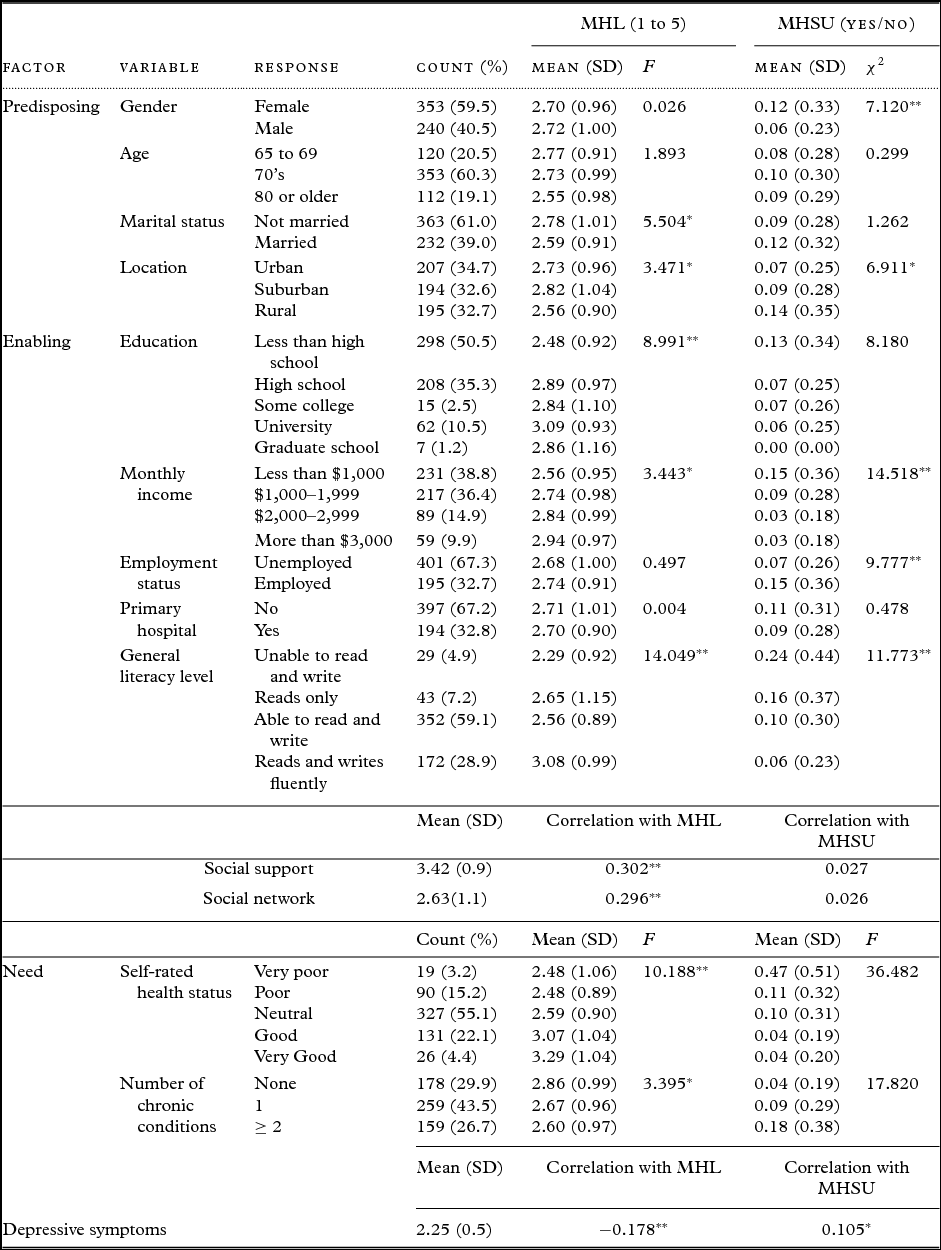
Table 1 summarizes study participants’ socio-demographic characteristics. Among 596 participants, 59.5% were female and 60.3% were in their 70s. Only 14.2% of the study sample had some college education or higher and 75.2% had an income of less than $2,000 a month. The majority (88.0%) showed adequate literacy in both reading and writing. Slightly over a quarter (26.5%) of the sample responded that their health status was “good” or “very good,” while roughly the same proportion (26.7%) had two or more chronic conditions. With regard to mental health literacy, those who were married, were college graduates, had higher income, a higher general literacy level, a higher self-rated health status, and a lower level of depression were more likely to have higher mental health literacy, respectively (p < 0.05). With regard to mental health services utilization, the distributions of gender, location, income, employment status, general literacy, and depressive symptoms significantly differed by the status of mental health services utilization (p < 0.05).
Socio-demographic characteristics of the study sample (n = 596)

Note: * p < 0.05, ** p < 0.01.
Mediation effect of mental health literacy
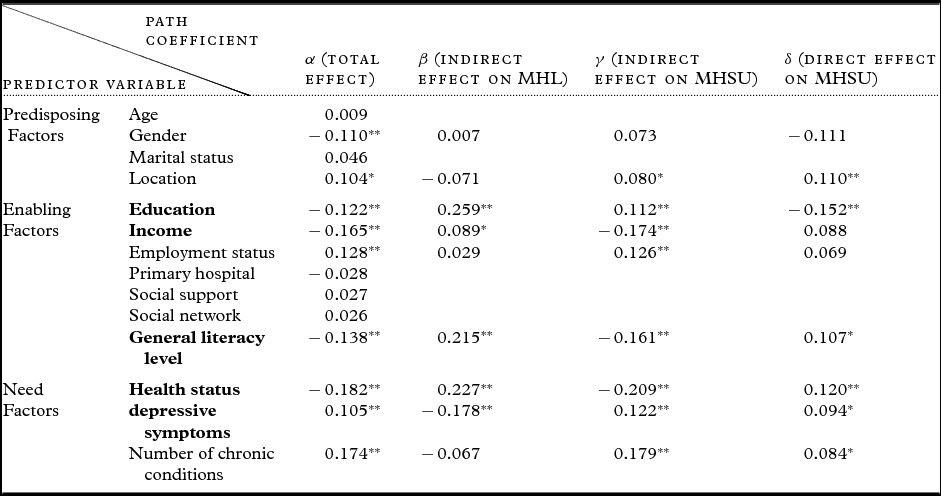
Table 2 describes estimates of path analysis for each independent variable on the mediating and outcome variables. Mental health literacy played a significant mediating role for education, income, and general literacy level in enabling factors (p < 0.01 and p < 0.05 for income) and health status and depressive symptoms in need factors (p < 0.01).
Standardized regression coefficients of path analysis

Note: *p < 0.05; **p < 0.01.
Optimal path model
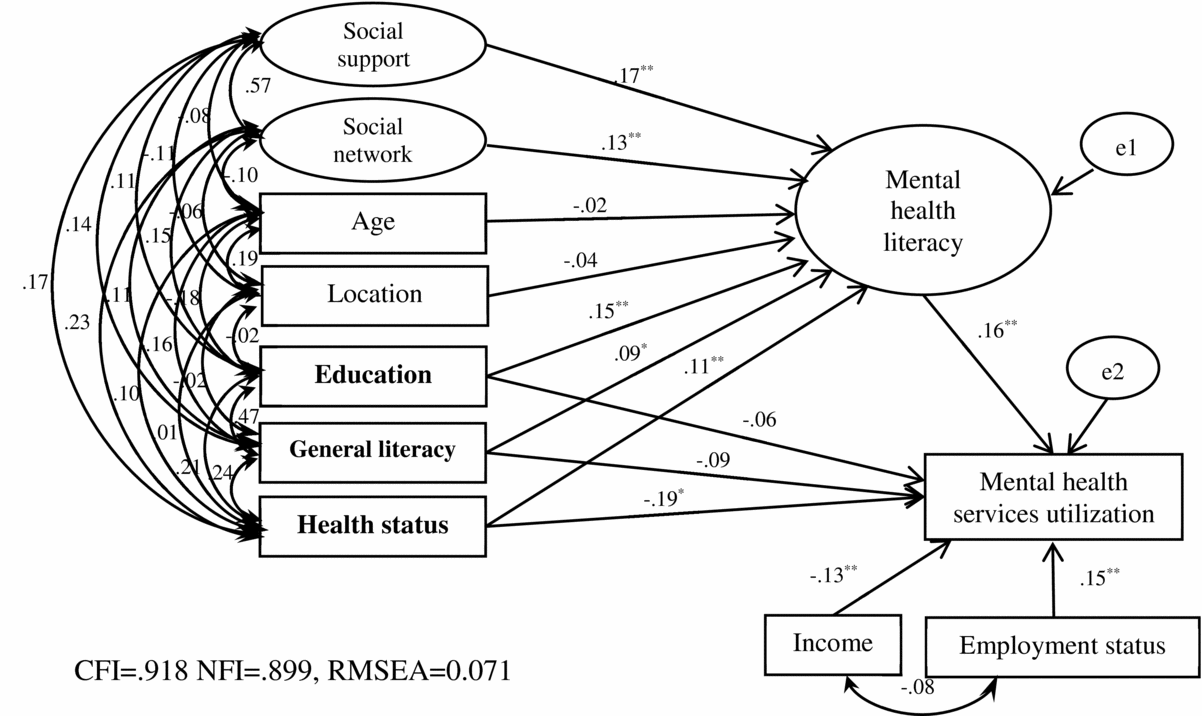
We drew the final path model for mediation analysis based on the conceptual framework to explain the mediating role of mental health literacy on mental health services utilization when controlling for other pertinent socio-demographic factors. Figure 2 shows the optimal path model, suggesting that mental health literacy was a mediator between education, general literacy level, and health status and the outcome variable of interest, mental health services utilization, holding other variables constant.
Final path model for mediating effect of mental health literacy on mental health services utilization.

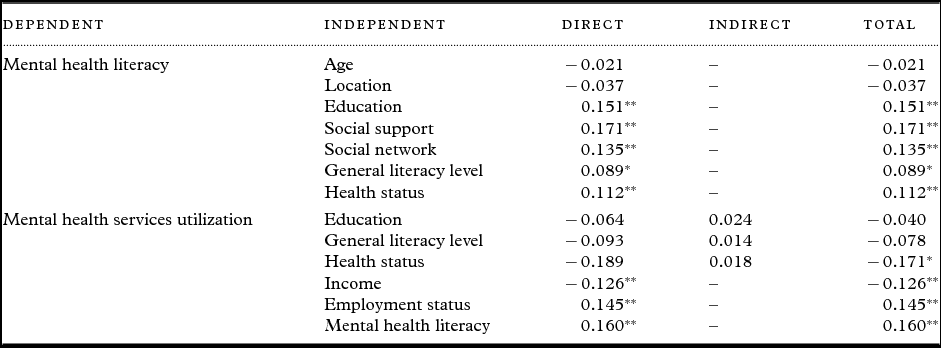
Table 3 summarizes the decomposition of direct and indirect effects, when adjusted for other covariates. Most enabling factors, such as education, social support, social network, and general literacy level, and one need factor, health status, had direct effects on mental health literacy. For mental health services utilization, income, employment status, and mental health literacy had significant direct effects. While income was negatively associated with mental health services utilization (p < 0.01), employment status, and mental health literacy were positively associated with mental health services utilization (p < 0.01). Mental health literacy played a significant mediating role for the effects of education, general literacy level, and health status on mental health services utilization. The model fit index shows that this model fits very well (CFI = 0.92, NFI = 0.90, RMSEA = 0.07).
Decomposition of direct and indirect effects

Note: *p < 0.05; **p < 0.01.
Discussion
This is the first study to investigate the role of mental health literacy on mental health services utilization among older adults in South Korea. In particular, the current study extends the existing literature on mental health literacy by investigating its potential role as a mediator between population characteristics and mental health services utilization. As shown in the final optimal path model, mental health literacy had a significant mediating role between three factors – education, general literacy, and health status – and mental health services utilization, all in positive directions.
First of all, education had a direct positive association with mental health literacy. Other researchers have similarly found that higher education predicted successful recognition of depression (Dahlberg et al., Reference Dahlberg, Waern and Runeson2008) and greater insight and awareness about mood disorders in individuals with depression (Yen et al., Reference Yen, Chen, Lee, Tang, Ko and Yen2005). On the other hand, this study found no significant direct association between education and mental health services utilization. While this finding is in line with a study that demonstrated no effect of education on help-seeking for psychological problems (Judd et al., Reference Judd2006), most of the existing research has shown that higher education predicts a greater likelihood of visiting health professionals for mental health reasons (Alegria et al., Reference Alegria, Bijl, Lin, Walters and Kessler2000; Parslow and Jorm, Reference Parslow and Jorm2000; Steele et al., Reference Steele, Dewa, Lin and Lee2007; Amone-P'Olak et al., Reference Amone-P'Olak, Ormel, Oldehinkel, Reijneveld, Verhulst and Burger2010). This effect may partially be explained by the tendency for individuals with higher education to have more positive attitudes toward mental health services, an association found among Korean American participants (Jang et al., Reference Jang, Chiriboga and Okazaki2009). However, current findings imply that mental health literacy plays a significant mediating role between education and the use of mental health services among Korean older adults. In addition, previous studies have found that education has an inverse association with the likelihood of mental health problems and diagnoses (Araya et al., Reference Araya, Lewis, Rojas and Fritsch2003; Hoeymans et al., Reference Hoeymans, Garssen, Westert and Verhaak2004; Howard et al., Reference Howard, Sentell and Gazmararian2006). Together, these trends suggest that individuals with lower education, who may be most in need of mental health services, tend to be less likely to access such services, due in part to inadequate mental health literacy.
As with education, general literacy level had a direct positive association with mental health literacy, though no direct association with mental health services utilization. While the positive association between health and education has been thoroughly recognized (Ross and Wu, Reference Ross and Wu1995; Lleras-Muney, Reference Lleras-Muney2005; Silles, Reference Silles2009), the paths by which education exerts its impact are less established. Literacy has emerged as one such path, as it has been previously identified as a mediator of the relationship between education and various health outcome variables, such as glycemic control (Schillinger et al., Reference Schillinger, Barton, Karter, Wang and Adler2006), blood pressure control (Pandit et al., Reference Pandit2009), and even cardiovascular mortality (Baker et al., Reference Baker, Wolf, Feinglass, Thompson, Gazmararian and Huang2007). The current study expands the body of knowledge into the realm of mental health by highlighting the role of mental health literacy as a mediator between general literacy and mental health services utilization. Although educational attainment and literacy are strongly linked, with higher educational attainment predicting greater literacy skills (Park and Kyei, Reference Park and Kyei2011; Cohen et al., Reference Cohen, White and Cohen2012), literacy is only one of many possible outcomes of education. Because of the more specific skills connoted by the definition of literacy – competence in reading and writing, as opposed to general years of education – the relationships among literacy, mental health, and service utilization merit further focused attention.
The final factor for which mental health literacy played a mediating role in its relationship with mental health services utilization was health status, which also had a direct positive association with mental health literacy. While the connection between health literacy and health outcome measures has already been established for older adults (Wolf et al., Reference Wolf, Gazmararian and Baker2005; Sudore et al., Reference Sudore2006), the relationship between health status and mental health literacy specifically has not been thoroughly studied in any ethnic population group. However, a randomized controlled trial of an intervention designed to increase mental health literacy effectively improved the mental health status of participants (Kitchener and Jorm, Reference Kitchener and Jorm2004), signifying a connection between mental health literacy and the psychological aspects of health. In addition, the bidirectional interaction between physical health status and mental health is well-known (Chapman et al., Reference Chapman, Perry and Strine2005; Al-Nsour et al., Reference Al-Nsour2013). Overall, health also appears to impact mental health services utilization, as an adverse physical health event significantly increased the likelihood of accessing treatment for mental health problems (Yoon and Bernell, Reference Yoon and Bernell2013). Conversely, the current study found a positive indirect association between physical health and mental health services utilizations, mediated by mental health literacy, indicating the need for future research to clarify the nature of these relationships.
Implications and future directions
Due to its direct positive effects on mental health services utilization, mental health literacy warrants greater public health attention. Knowledge of the appropriate steps for the recognition, prevention, and treatment of mental distress and/or disorders would serve not only to bolster the use of mental health services, but also foster improved overall community mental health. Evidence has shown that interventions including Mental Health First Aid training, community campaigns, and informational websites can successfully increase mental health literacy (Jorm, Reference Jorm2012). As older adults tend to score lower on health literacy measures in general (Baker et al., Reference Baker, Gazmararian, Sudano and Patterson2000; Morrow et al., Reference Morrow2006) and mental health literacy measures specifically (Fisher and Goldney, Reference Fisher and Goldney2003; Farrer et al., Reference Farrer, Leach, Griffiths, Christensen and Jorm2008), these interventions should tailor unique aspects of their approach to specifically target this age group. For optimal engagement in interventions, all aspects should be culturally tailored to the population of interest, in this case, Korean older adults. Because mental illness carries a strong stigma in South Korea and other Asian countries (Seo and Kim, Reference Seo and Kim2005; Lauber and Rossler, Reference Lauber and Rossler2007), framing mental health campaigns in terms of “wellness enhancement” or “happy living” programs may increase their acceptance and satisfaction in the community.
While we discovered that mental health literacy mediates the relationships of education, general literacy, and health status with mental health services utilization, the mediating role of mental health literacy may be found with additional population characteristics not included in this study. Investigation into this topic among culturally diverse populations of older adults and various age groups constitute important next steps. Previous findings demonstrating cultural influences on attitudes toward mental health (e.g. Yoo et al., Reference Yoo, Goh and Yoon2005; Hovey et al., Reference Hovey, Kim and Seligman2006; Jang et al., Reference Jang, Kim, Hansen and Chiriboga2007) imply a need for further research into beliefs about mental health among Korean older adults and how they influence both mental health literacy and mental health services utilization. In addition, as our study only examined whether or not individuals had ever used any mental health service, greater understanding of the patterns of mental health service utilization among Korean older adults, including the types of services used by individuals with varying demographic characteristics and for which perceived mental health issues, would be beneficial, particularly examining for which types of services mental health literacy plays a mediating role.
Limitations
This study has several limitations. First, as a cross-sectional survey design that used convenience sampling, the study findings may not be generalized to other populations and assumptions cannot be made regarding causality. Second, the mental health literacy measure has not been utilized and tested in this population previously. Further, the measure was originally developed for family caregivers taking care of mentally ill family members (Epps et al., Reference Epps, Armstrong, Davis, Massey, McNeish and Smith2007). Thus, developing a culturally competent scale to accurately measure the population's level of mental health literacy is urgently needed, given its importance in increasing mental health service utilization. Third, the mental health literacy measure was based entirely on self-report, the validity of which depends on participants’ levels of insight into their own knowledge and skills. Comparing responses on the self-report measure to a more objective test of mental health literacy (e.g. knowledge of psychiatric symptoms) would clarify the accuracy of the measure we used. Fourth, the study had an exclusively quantitative approach and, therefore, did not explore the ascribed meaning behind participants’ responses, including their perspectives on and experiences with mental health literacy and mental health services utilization. A mixed method research approach would produce rich data that uncover the deeper meaning behind participants’ responses.
Conclusion
This marks the first study to report on the important role of mental health literacy as a mediator between population characteristics and the utilization of mental health services and to devise an optimal path model to explain such relationships. Based on initial evidence from the current findings, interventions promoting mental health literacy among Korean older adults should pay particular attention to individuals with lower education, general literacy and/or health status. By improving mental health literacy, the appropriate utilization of mental health services is expected to improve accordingly, potentially leading to better mental health outcomes. With the Korean older adult population expanding at a rapid rate and having a markedly high rate of suicide, the need to promote mental health through targeted mental health literacy interventions and effective service delivery will only become more salient.
Conflict of interest
None.
Description of authors’ roles
Dr Kim conceived the study, developed the survey, collected the data, supervised data analysis and interpretation, led the writing of the paper, and oversaw all aspects of the study. Dr Rhee analyzed and interpreted the data and led the writing of the paper. Dr Lee designed the study and developed the survey, supervised data collection and analysis, and reviewed and approved the final version of the paper. Dr Park developed the survey, supervised the data collection, and provided critical review of the paper. Ms Sharratt assisted with review of literature, citation management, and critically revising the paper.
Acknowledgments
This research was supported by the fund from the Ministry of Health and Welfare in Korea.