Introduction
Throughout history, there have been numerous wars, ranging from small-scale skirmishes between tribes to large-scale battles between regular armies. Since World War II, more than 160 wars have occurred. Reference Hakimoglu, Karcıoglu and Tuzcu1 In the 21st century, conflicts affecting numerous civilians and military personnel have persisted in Afghanistan, Syria, Yemen, and most recently, Ukraine.
The Syrian Civil War (SCW) emerged in 2011 as part of the broader Arab Spring demonstrations initiated by the Syrian people. Reference Keseljevic and Spruk2 The government’s use of force against protesters caused an escalation of the demonstrations. Subsequently, opposition forces armed themselves and formed military units, initiating an insurgency to seize control of cities and challenge the government. Reference Berdufi and Nezha3 Since 2011, various lethal weapons have been used against both military personnel and civilians in the on-going war, resulting in approximately 500,000 fatalities and 2,000,000 injuries. Reference Talmy, Cohen-Manheim and Radomislensky4,Reference Hanafi, Munder and Ahmad5
Since its inception, the SCW has remarkably impacted not only neighboring countries, but also the entire world in terms of political, economic, and social situations, and these impacts persist to the present day. Reference Akçan, Yıldırım, Isak and Tümer6 Specifically, owing to the fact that Syria shares a common border with Türkiye, the civil war in Syria has brought about significant changes in Türkiye, affecting its overall economy as well as health care, housing, and food sectors. Reference Hakimoglu, Karcıoglu and Tuzcu1 The long-lasting conflict in Syria has resulted in the destruction of a significant majority of health care facilities, with the remaining institutions that have not been destroyed experiencing a substantial loss of operational capacity. Reference Elsafti, Van Berlaer and Al Safadi7 Consequently, the majority of individuals wounded during the SCW were transported to hospitals in adjacent Turkish provinces across the Syrian border for medical treatment. Reference Er, Çorbacıoğlu and Güler8,Reference Fansa, Karatepe, Acıpayam and Lale9
Most studies on armed conflicts have focused on injuries to military personnel. Reference Hanafi, Munder and Ahmad5 However, civilians world-wide are also widely exposed to the adverse impacts of armed conflicts, with high rates of civilian casualties occurring alongside military fatalities in wars. Reference Fansa, Karatepe, Acıpayam and Lale9,Reference Çelikel, Karaaslan, Demirkıran, Zeren and Arslan10 It has been asserted that, in the 20th century, approximately 190 million lives were lost due to wars and conflicts, with the majority of these fatalities being civilian casualties. Reference Karakuş, Yengil, Akkücük, Cevik, Zeren and Uruc11 Historically, fatalities were predominantly caused by secondary effects of war, such as inadequate shelter, famine, and infections. Nowadays, civilian mortality and morbidity rates are rising due to the direct consequences of warfare. Reference Hakimoglu, Karcıoglu and Tuzcu1 Therefore, investigating the effects of war-related trauma, morbidity, and mortality on civilians is of utmost importance.
During emergencies such as disasters and wars, emergency services play a critical role in the health care system because they can facilitate direct access, engage in multi-disciplinary efforts, and swiftly utilize auxiliary services. Reference Karcıoğlu and Topaçoğlu12 Most trauma victims are treated in health care facilities’ emergency departments (EDs). Reference Ugare, Bassey and Udosen13 Swift and appropriate triage of life-threatening injuries in trauma patients presenting to the ED can reduce mortality and morbidity rates. Reference Halpern, Tsai, Arnold, Stok and Ersoy14 Several trauma scoring systems have been developed to rapidly assess injury severity and predict prognosis. Reference Miller, Nazir, McDonald and Cannon15 The modified Rapid Emergency Medicine Score (mREMS), developed in 2004, is a trauma scoring system that integrates multiple clinical parameters, including age, systolic blood pressure, heart rate, respiratory rate, oxygen saturation, and the Glasgow Coma Scale (GCS). Reference Mostafaei, Balafar and Paknezhad16 Currently, the mREMS is employed as an effective marker for assessing patients’ clinical status and mortality risk, particularly in intensive care units (ICUs) and EDs.
The impact of war on pediatric populations is significant and multi-faceted. Reference Çelikel, Karaaslan, Demirkıran, Zeren and Arslan10 During armed conflicts, pediatric patients account for six percent of cases in military hospitals and 18% in humanitarian health care facilities. Reference Haverkamp, Van Gennip, Muhrbeck, Veen, Wladis and Tan17 However, the mREMS demonstrates limited applicability in pediatric populations, as its components were not physiologically tailored for this group and have not been validated for individuals aged <16 years. Reference Miller, Nazir, McDonald and Cannon15
Comprehensive recording and evaluation of data on mortality and morbidity related to traumatic injuries facilitate the establishment of a reference dataset for future studies. Reference Squyer, Cherry and Lehman18 Information obtained from epidemiological studies conducted through hospital record reviews benefits the identification of risk factors, planning of preventive measures, and development of protocols for initial interventions and treatments. Reference Karasu, Sabanci and Cansever19 To date, no studies have evaluated the ability of the mREMS to predict in-hospital mortality in patients injured during the SCW. Within this framework, the primary objective of this study was to evaluate the performance and reliability of mREMS in predicting in-hospital mortality among adult trauma patients injured during the SCW. The secondary objective of this study was to analyze the epidemiological characteristics of both adult and pediatric populations affected by the conflict.
Methods
Study Design and Setting
This retrospective observational study was conducted in the ED of Kilis State Hospital, located in Kilis City in south-central Türkiye, approximately seven kilometers from the Syrian border. The study population was divided into two cohorts: adult and pediatric. Demographic and clinical characteristics of both groups were examined using hospital records for epidemiological analysis. As the mREMS is inapplicable to pediatric patients, its diagnostic and prognostic value was evaluated exclusively in the adult cohort, particularly considering its potential usefulness in resource-limited settings such as war zones. Although this study included both adult and pediatric cohorts for epidemiological evaluation, no direct comparisons were made between the groups.
Study Participants
Patients from Syria injured in the SCW and transported to the ED were assigned a specific classification code using the hospital’s electronic data recording system. Using this code and applying the inclusion and exclusion criteria, 5,453 patients were identified. The patients were subsequently divided into two cohorts: 4,074 adult patients and 1,379 pediatric patients.
Patients with war-related injuries during the SCW were included in the study if they were transported directly to the ED. They were classified using a war-specific code in the hospital database. Patients were excluded if they presented with non-traumatic conditions, were identified as military personnel or military members, had incomplete data or records, were transferred from another hospital, or were treated in hospital units other than the ED.
The study was approved by the Ethics Consultation Committee of Medipol University (Istanbul, Türkiye), with a decision dated January 6, 2016, numbered E.328.03.
Data Collection and Outcome Measures
The data collection process involved a detailed review of electronic records and documentation in the hospital’s data system. Emergency medicine physicians with trauma care expertise screened the records to ensure adherence to the inclusion and exclusion criteria. In total, 6,135 patient records were identified. Of these, 682 patients were excluded based on the criteria, and the remaining 5,453 patients were included in the study. This study included 4,074 adult patients aged ≥18 years and 1,379 pediatric patients aged <18 years.
Demographic and clinical variables, including age, sex, vital signs, GCS score, ward or ICU admission, referral status, mortality, and discharge outcomes, were extracted using a standardized data collection form designed specifically for this study. The mREMS for the adult cohort were calculated retrospectively using patient records.
The primary outcome measure was in-hospital mortality. Secondary outcome measures included rates of admission to the ICU and hospital wards, referral status, and discharge outcomes.
Data Analysis
Statistical Package for the Social Sciences for Windows (version 26.0; IBM Corp.; Armonk, New York USA) and Microsoft Excel from Microsoft 365 (Microsoft Corp.; Redmond, Washington USA) were used for the statistical analysis of the data obtained. Categorical variables were expressed as absolute frequencies and percentages, and their associations with outcomes were assessed using the chi-squared test. The Mann-Whitney U test was used to compare mREMS scores between survivors and non-survivors. To evaluate the predictive accuracy of the mREMS for in-hospital mortality, receiver operating characteristic (ROC) curve analysis was performed. The area under the curve (AUC) and 95% confidence interval (CI) were calculated to assess the discriminative power of mREMS. Statistical significance was set at P < .05.
Results
In this study, the hospital records of patients injured during the SCW and admitted to the ED of Kilis State Hospital (Kilis, Türkiye) from January 2012 through January 2016 were reviewed; overall, 4,074 adult patients and 1,379 pediatric patients met the inclusion criteria.
Adult Cohort
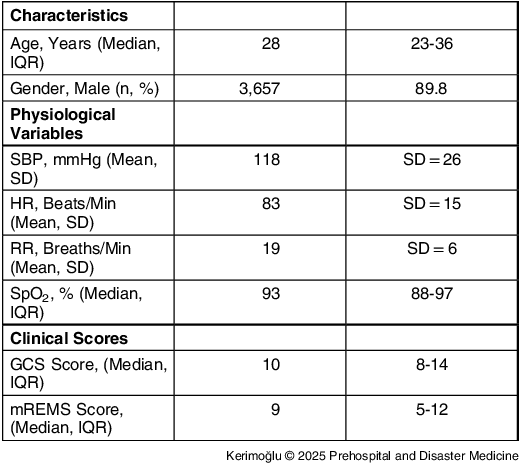
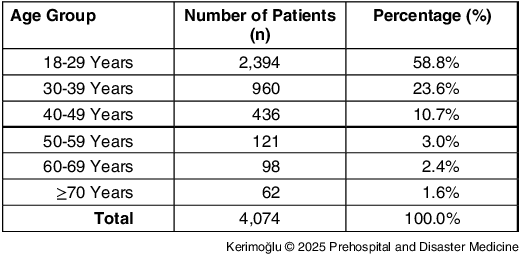
Among the 4,074 adult patients included in the study, 3,657 (89.8%) were male and 417 (10.2%) were female, with a median age of 28 years (IQR: 23, 36). The ages of males ranged between 18-91 years, while those of females ranged between 19-79 years (Table 1). The median age was 28 years (IQR: 23, 36 years) for males and 29 years (IQR: 22, 37 years) for females. Regarding age groups, a considerable number of patients (n = 2,394; 58.8%) were within the 18-29-years of age range (Table 2).
Baseline Characteristics, Physiological Variables, and Clinical Scores of the Adult Cases

Abbreviations: GCS, Glasgow Coma Scale; HR, heart rate; IQR, interquartile range; mREMS, modified Rapid Emergency Medicine Score; RR, respiratory rate; SBP, systolic blood pressure; SD, standard deviation; SpO2, pulse oxygen saturation.
Age-Based Distribution of Adult Cases

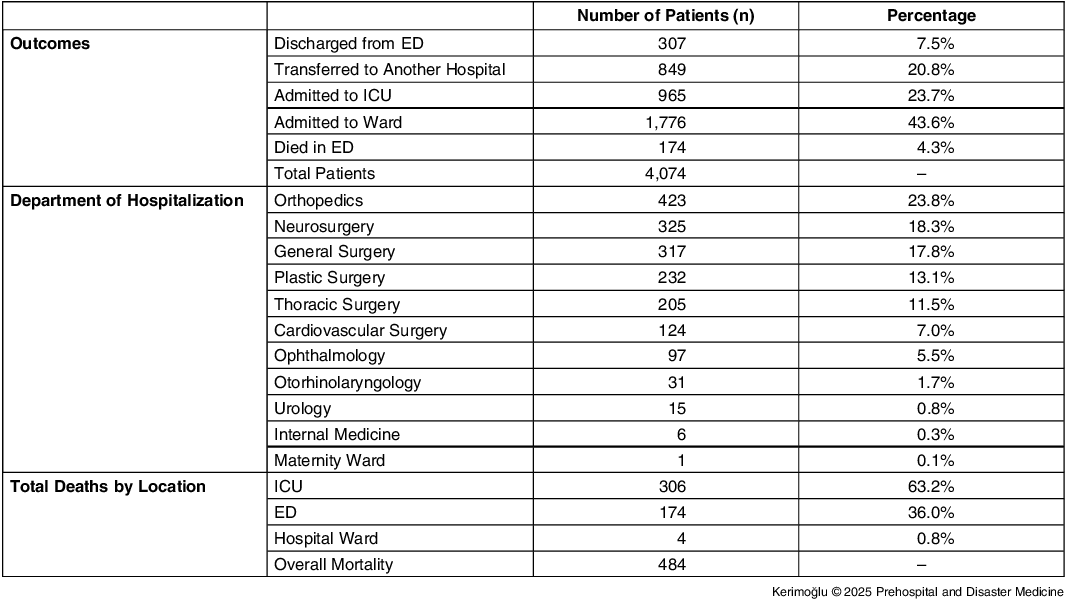
When the 4,074 adult patients included in the study were evaluated in terms of management and outcomes in the ED, 307 (7.5%) were discharged on an out-patient basis (Table 3). A total of 849 (20.8%) patients were transferred from the ED to another health care facility. Admission to the ICU was required for 965 patients (23.7%), while 1,776 patients (43.6%) were admitted to the wards. The highest number of admissions was in orthopedics (423 patients; 23.8%), neurosurgery (325 patients; 18.3%), and general surgery (317 patients; 17.8%).
Outcomes and Hospitalization Details of the Adult Patients Admitted to the Emergency Department

Abbreviations: ED, emergency department; ICU, intensive care unit.
When the study’s data were evaluated in terms of mortality, 484 of 4,074 patients (11.9%) died in the hospital (Table 3). Among the deceased patients, 174 (36.0%) died within the first 24 hours after admission. Of 965 patients admitted to the ICU, 306 (31.7%) died. Only four (0.22%) of the 1,776 patients admitted to the hospital wards died.
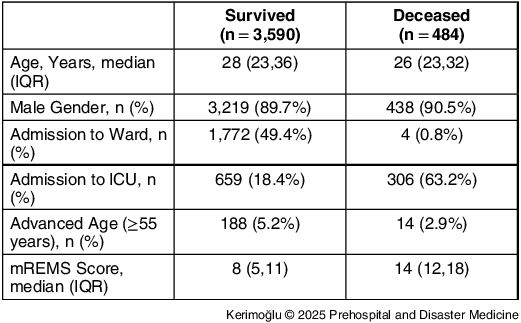
To compare the outcomes between deceased and surviving patients, the study cohort was stratified into two groups as follows: the first group was “surviving” (n = 3,590), whilst the second one was “deceased” (n = 484); Table 4. There were no notable differences between the groups in terms of age and gender. Conversely, ICU admission was strongly associated with mortality, with an odds ratio (OR) of 7.6 (95%CI, 6.2–9.3). Admission to hospital wards was associated with a lower mortality rate. Patients aged 55 years and older also exhibited a higher proportion of deaths.
Comparison of Demographic and Clinical Characteristics between Surviving and Deceased Adult Groups

Abbreviations: ICU, intensive care unit; mREMS, modified Rapid Emergency Medicine Score.
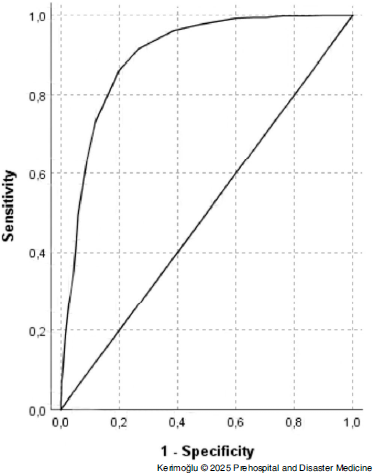
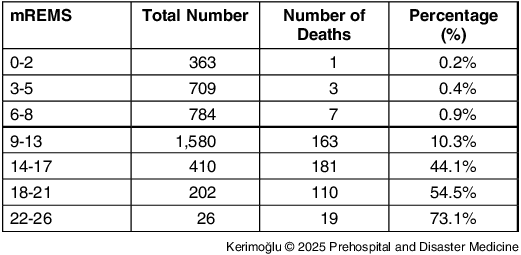
When evaluating the cases in terms of the detected mREMS, the median score was eight (IQR: 5, 11) among survivors and 14 (IQR: 12, 18) among non-survivors, indicating a statistically significant difference between the two groups (P < .001; Table 4). The ROC curve analysis was used to determine the predictive value of mREMS for in-hospital mortality, and AUC was calculated with a 95% CI. Based on the results, with each point increase in the mREMS, the odds of death increased by 1.45 (95%CI, 1.41–1.50), with an associated AUC of 0.897 (95%CI, 0.884–0.909); Figure 1. The optimal cut-off value for mREMS in predicting mortality was determined to be ≤11, exhibiting a sensitivity of 86.2% (95%CI, 82.8–89.0) and specificity of 80.1% (95%CI, 78.7–81.4); Table 5. When the patients included in the study were classified based on their mREMS values, an increased mortality rate was associated with higher mREMS. In the mREMS group, a large share of cases (n = 1,580) were within the range of 9-13 points (Table 6). Of the 26 patients with mREMS of ≥22, a total of 19 died from their injuries.
Receiver Operating Characteristic Curve of the Modified Rapid Emergency Medicine Score According to Mortality (Optimal Cut-Off Value is 11).

Receiver Operating Characteristic Analysis for mREMS According to Mortality

Note: Reference Hakimoglu, Karcıoglu and Tuzcu1 Sensitivity; Reference Keseljevic and Spruk2 Specificity; Reference Berdufi and Nezha3 Positive Predictive Value; Reference Talmy, Cohen-Manheim and Radomislensky4 Negative Predictive Value. Abbreviations: AUC, area under the ROC curve; CI, confidence interval; mREMS, modified Rapid Emergency Medicine Score; ROC, Receiver Operating Curve (Honley & Mc Nell – Youden index J); SE, standard error.
Mortality Rates by mREMS Risk Groups

Abbreviation: mREMS, modified Rapid Emergency Medicine Score.
Pediatric Cohort
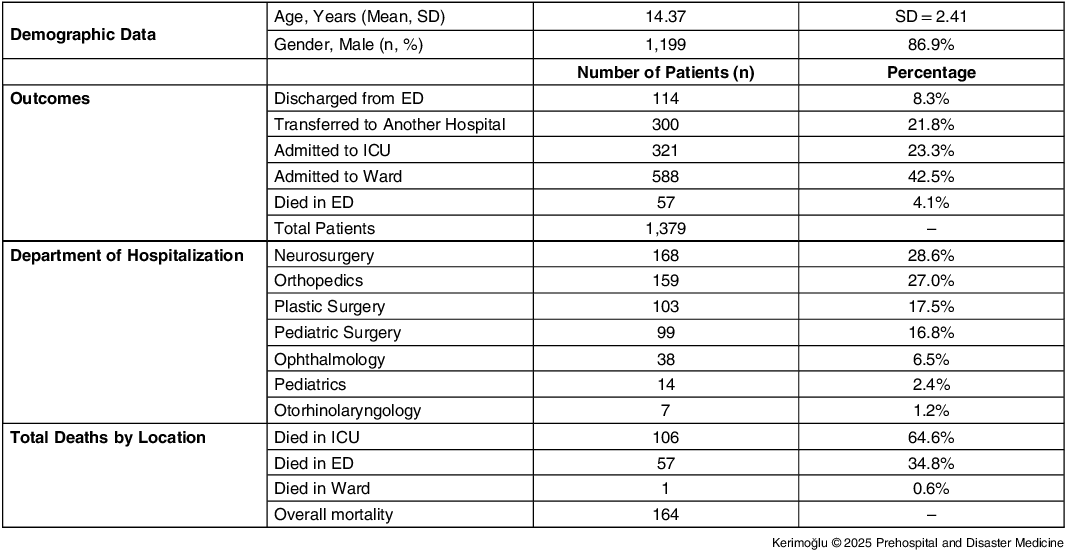
Among the 1,379 pediatric patients included in the study, a total of 1,199 (86.9%) were male and 180 (13.1%) were female, with a mean age of 14.37 (SD = 2.41; range: 3-17) years (Table 7). Upon evaluation of the treatment processes and clinical outcomes of the patients in the ED, 114 (8.3%) were found to have been discharged on an out-patient basis (Table 7). A total of 300 (21.8%) patients were referred to another health care facility from the ED. A total of 321 (23.3 %) patients were admitted to the ICU, and 588 (42.5%) were admitted to various hospital wards. The highest number of pediatric patient admissions was for neurosurgery (168; 28.6%), followed by orthopedics (159; 27.0%) and plastic surgery (103; 17.5%).
Demographic Data, Clinical Outcomes, Admission Details, and Mortality Distribution of Pediatric Patients Included in the Study

Abbreviations: ED, Emergency department; ICU, intensive care unit; SD, standard deviation.
When the data obtained from the study were evaluated in terms of mortality, 164 of 1,379 pediatric patients (11.9%) died in the hospital. Of these patients, 57 (34.8%) died in the ED within 24 hours of hospital admission (Table 7). Among the 321 patients admitted to the ICU, 106 (33.2%) died, whereas only one (0.17%) of the 588 patients admitted to the hospital wards succumbed.
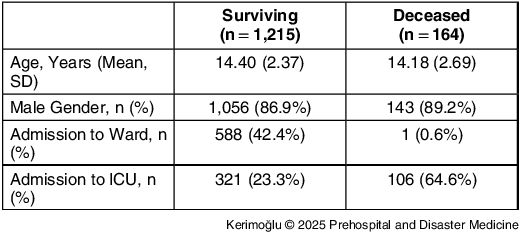
To compare the outcomes between surviving and deceased pediatric patients, the study population was divided into two groups: the “surviving” group (n = 1,215) and the “deceased” group (n = 164); Table 8. There were no notable differences between the groups in terms of age or gender. However, mortality was higher among patients who were admitted to the ICU and lower among those who were admitted to the wards.
Comparison of Demographic and Clinical Characteristics between Pediatric Surviving and Deceased Groups

Abbreviation: ICU, intensive care unit.
Discussion
Adult Cohort
In wartime injuries, rapid evacuation of the wounded individuals to a nearby health care facility is crucial for treatment outcomes. Kilis State Hospital, located seven kilometers from the Syrian border, is a health care institution that experienced significant conflicts nearby during the SCW. Many civilians injured during the SCW were evacuated to the hospital. This study included 4,074 adult patients admitted to the ED with injuries sustained during the SCW, of whom 3,657 (89.8%) were male. Similar to this study’s findings, two different studies conducted by Celikel, et al Reference Çelikel, Karaaslan, Demirkıran, Zeren and Arslan10 and Er, et al Reference Er, Çorbacıoğlu and Güler8 also reported higher proportions of males injured in the SCW, at 91.4% and 90.8%, respectively, compared to females. Men’s greater involvement in economic and social activities during wartime exposes them to increased risk. Women and children are typically evacuated to safer areas during conflicts, whereas men often remain behind and are consequently exposed to greater risks. Owing to these factors, men are believed to be more likely to be injured during wars.
In the current research, the patients’ median age was found to be 28 (IQR: 23–36) years, with an age range of 18-91 years. Similarly, in a study conducted by Hakimoglu, et al Reference Hakimoglu, Karcıoglu and Tuzcu1 involving 364 patients injured in the SCW, the average age was 29 (IQR: 3–68) years. Consistent with these results, another study conducted by Farhat, et al Reference Farhat, Nahouli and Hajjar20 analyzed 341 patients injured in the Lebanon conflict, revealing an average age of 32.8 (SD = 19.1) years. Based on these studies, it is clear that the average age of civilians injured in wars is significantly lower. This could be because of young people needing to work to support their families during wartime, the prioritization of the older individuals for evacuation to safer areas, and a sense of responsibility that the younger individuals feel to protect their families.
Of the 4,074 cases included, the rate of patients discharged on an out-patient basis was 7.5%, rate of patients transferred to another health care facility was 20.8%, ward admission rate was 43.6%, and ICU admission rate was 23.7%. Previously, a study conducted by Karakus, et al Reference Karakuş, Yengil, Akkücük, Cevik, Zeren and Uruc11 on 482 patients injured in the SCW reported that 26.8% of the patients were managed in the ED, 0.8% were transferred to other facilities, and 71.8% were admitted to the hospital. The hospital admission rates in this study were comparable to those reported in a previous study. However, there was a notable difference in the number of patients who were transferred to other hospitals between the two studies. This variation may be attributed to the proximity of the ED to the conflict zone in this study, which resulted in more direct admissions, whereas another study reported more frequent transfers from other hospitals.
The highest number of admissions in the study were in the orthopedic, neurosurgery, and general surgery wards, accounting for 23.8%, 18.3%, and 17.8% of the patients, respectively. Although the numbers were lower than those in the previously mentioned departments, plastic surgery, thoracic surgery, and cardiovascular surgery remained notable among the wards where patients were admitted. Similarly, in a study by Kocamer-Simsek, et al, Reference Kocamer Simsek, Dokur and Uysal21 the departments with the highest number of admissions were orthopedics, plastic surgery, and general surgery. In another study conducted by Karakus, et al, Reference Karakuş, Yengil, Akkücük, Cevik, Zeren and Uruc11 ophthalmology was identified as one of the departments with the highest number of patient admissions, accounting for 6.6% of the cases; this study found that the admission rate to the ophthalmology department was 5.5%. Injuries from explosions, gunshots, falls, and burns were prevalent during wartime. Consequently, there is an increased demand for services in clinics such as orthopedics, general surgery, neurosurgery, and plastic surgery, owing to the nature and frequency of these injuries.
In the current study, 484 of 4,074 adult patients died, resulting in a mortality rate of 11.9%. Among the deaths, 36.0% occurred in the ED, 63.2% in the ICU, and 0.8% of the patients died in the hospital wards. Similar to this study, research conducted by Hakimoglu, et al Reference Hakimoglu, Karcıoglu and Tuzcu1 and Fansa, et al Reference Fansa, Karatepe, Acıpayam and Lale9 on patients injured in the SCW reported overall mortality rates of 10.4% and 15.5%, respectively. Moreover, a study by Behbehani, et al Reference Behbehani, Abu-Zidan, Hasaniya and Merei22 on patients injured during another conflict, the Gulf War, revealed an overall mortality rate of 16.7%, which is similar to the mortality rate observed in this study. Additionally, another study on patients with gunshot wounds who presented to a hospital very close to the conflict zone reported an overall mortality rate of 15.1%. Reference Eriş, Orak, Al, Güloğlu and Aldemir23 Injuries sustained during warfare are often caused by high-energy trauma, and the environment of on-going conflict makes it challenging to provide rapid and effective medical intervention for the wounded, directly impacting mortality rates. All of these factors are thought to contribute to the high rate of civilian fatalities resulting from war.
Pediatric Cohort
In this study, 86.9% of the pediatric patients were identified as male. Similarly, two separate studies conducted by Çelikel, et al Reference Çelikel, Karbeyaz, Kararslan, Arslan and Zeren24 and Çelikkaya, et al Reference Çelikkaya, Atıcı, El and Akçora25 also reported that the proportion of males injured during the SCW was higher than that of females in the pediatric patient group (77.9% and 73.4%, respectively). During wartime, the higher incidence of injuries among male children can be attributed to several factors, including their assumption of responsibilities, such as protecting their families or living areas due to the absence of adult males serving as soldiers, and spending more time in conflict zones, compared to female children, driven by social and cultural factors.
In terms of clinical outcomes, a previous study conducted by Sultanoğlu, et al Reference Sultanoğlu, Özkan, Erdem Sultanoğlu and Kavak26 on 1,510 pediatric patients presenting to the ED with multiple traumas reported that 49.4% of the patients were discharged from the ED, 11.7% were referred to another health care facility, 20.7% were admitted to hospital wards, and 14.1% were admitted to the ICU. In comparison, the clinical outcomes observed in this study showed significant differences in proportions, despite both studies having similar sample sizes. This discrepancy may be attributed to the fact that this study focused on patients brought directly from conflict zones to the ED with war-related injuries, whereas Sultanoğlu, et al Reference Sultanoğlu, Özkan, Erdem Sultanoğlu and Kavak26 evaluated all pediatric trauma patients presenting to the ED. These two patient populations differ significantly in terms of the patient profile, trauma severity, and required treatment protocols.
In terms of ICU admission rates, a study conducted by Gale, et al Reference Gale, Borgman, April and Schauer27 on 3,439 pediatric patients injured during wars in Iraq and Afghanistan reported an ICU admission rate of 56.8%. The ICU admission rate identified in this study (23.3%) was approximately one-half of that reported in the study conducted by Gale, et al. Reference Gale, Borgman, April and Schauer27 The difference between the two studies may be attributed to the fact that the study conducted by Gale, et al Reference Gale, Borgman, April and Schauer27 was carried out in trauma centers of military hospitals located in war zones, where a higher number of severely injured trauma patients were admitted.
A study conducted by Haverkamp, et al Reference Haverkamp, Van Gennip, Muhrbeck, Veen, Wladis and Tan17 on pediatric patients injured during conflicts in Afghanistan reported a mortality rate of 4.1%. The mortality rate reported in that study was significantly lower than that reported in this study (11.8%). This difference may be attributed to the fact that this study was conducted in a single center, whereas the reference study included data from eight different trauma centers. In contrast, a study conducted by Al-Nouri, et al Reference Al-Nouri, Hameed and Hassan28 on pediatric patients injured during the Iraq War reported a mortality rate of 40.0%, which was significantly higher than the mortality rate observed in this study. This discrepancy may be explained by the fact that the study by Al-Nouri, et al Reference Al-Nouri, Hameed and Hassan28 included not only civilians, but also individuals actively involved in conflicts. In a study conducted by Wild, et al, Reference Wild, Stewart, LeBoa, Stave and Wren29 which included 5,100 pediatric patients injured during five different wars, the mortality rate was reported to be 11.0%, which is comparable to the results of this study. Pediatric injuries sustained during wartime often involve severe trauma, with factors such as delays in timely intervention and limited access to health care services significantly contributing to increased mortality rates. These challenges result in high mortality rates among pediatric patients.
mREMS in Mortality Prediction
When the literature was reviewed for articles related to mREMS, no research specifically conducted on patients injured in the SCW was found. In a study by Punghassaporn, et al Reference Phunghassaporn, Sukhvibul, Techapongsatorn and Tansawet30 involving 1,033 patients, the effectiveness of the mREMS in predicting mortality in road traffic injuries was evaluated. In their study, the median mREMS was six points higher in patients who died than in survivors (6 [IQR: 5–10] versus 1 [IQR: 0–2], respectively), with an associated AUC of 0.909 (95%CI, 0.866–0.951). In this study, although the median mREMS values were higher than those reported in the aforementioned study, a similar six-point difference was observed between survivors and non-survivors. The findings of ROC analysis in this study also demonstrated outstanding discrimination properties, similar to the study conducted by Punghassaporn, et al. Reference Phunghassaporn, Sukhvibul, Techapongsatorn and Tansawet30 In a study conducted by Moreno-Blanco, et al Reference Moreno-Blanco, Alonso and Sanz-García31 on 8,854 trauma patients admitted to trauma centers in Spain and the United States, the optimum threshold for the mREMS was determined to be eight, with an AUC of 0.960 (95%CI, 0.940–0.970). In this study, the optimum threshold for the mREMS was determined to be 11. Although the AUC value that this study identified fell within the range considered excellent for ROC analysis, it remained lower than the findings reported by Moreno-Blanco, et al. Reference Moreno-Blanco, Alonso and Sanz-García31 The difference observed between the two studies may be attributed to the variation in the populations covered by each study. In a study by Miller, et al Reference Miller, Nazir, McDonald and Cannon15 on trauma patients, each one-point increase in the mREMS was associated with an OR of 1.62 (95%CI, 1.60–1.63) for predicting mortality. Similarly, this study identified that with each point increase in the mREMS, the odds of mortality rose by 1.45 (95%CI, 1.41–1.50), aligning closely with the results reported by Miller, et al. Reference Miller, Nazir, McDonald and Cannon15 These findings collectively emphasize the outstanding predictive performance of the mREMS in evaluating in-hospital mortality among trauma patients, especially in the context of the SCW.
Summary and Relevance of Findings
The differences observed between this study’s results and those of previous studies may be attributed to variations in the study population characteristics, the unique nature of warfare in this region during the SCW and its impact on the types and severity of war-related injuries, as well as the collapse and dysfunction of the local health care infrastructure, which necessitated the transfer of injured individuals to neighboring countries for medical care.
The mREMS offers distinct advantages over other scoring systems, particularly its ability to incorporate all vital signs, the GCS scores, and age, thus facilitating a more comprehensive and accurate risk assessment. These features enhance its predictive accuracy, making it a practical and reliable tool for mortality prediction and clinical decision making, particularly in emergency and trauma care settings.
Despite its utility, applying the mREMS in prehospital or field environments, particularly in conflict zones, presents practical challenges. Limited access to monitoring equipment, difficulties in accurately assessing GCS in chaotic settings, and the urgency of care in such environments can hinder their effective use.
Notably, the mREMS has not yet been validated for use in the pediatric population. Therefore, the mREMS was not calculated for the pediatric cohort in this study. Because the mREMS incorporates age as a component, with mortality risk increasing with age, this aspect of the scoring system requires adjustment to account for the unique characteristics of pediatric patients before it can be reliably applied to this population.
Limitations
The limitations of this study include the hospital’s proximity to the conflict zone, which likely resulted in a higher admission rate of severely injured patients, potentially contributing to the elevated observed mortality, ICU admission rates, and average mREMS. Additionally, 20.8% of the patients included in the study were transferred to another health care facility, and their outcomes remain unknown. Finally, the study’s retrospective design and reliance on data from a single center further limit its generalizability.
Conclusion
This study pointed out that the majority of civilians injured during the SCW were young males. Although injuries predominantly occur in the younger population, injuries sustained by older individuals are associated with higher mortality rates. Additionally, no previous studies have validated the mREMS in adult patients injured during the SCW. This study’s findings indicate that the mREMS demonstrates excellent performance in predicting in-hospital mortality among trauma patients injured in the SCW.
Conflicts of interest
The authors have disclosed that there are no potential conflicts of interest concerning the research, authorship, and/or publication of this article.
Author Contributions
Concept (MB); Design (ACA); Data Collection and/or Processing (MB, ACA); Analysis and/or Interpretation (KKK); Supervision (ACA); Writing-Original Draft (KKK); Writing-Review and Editing (KKK, MB, ACA); Final Approval (KKK, MB, ACA).
Use of AI Technology
This study was conducted and prepared without the use of artificial intelligence (AI) technologies or tools. All analyses, data interpretations, and manuscript drafting were performed solely by the authors.