The United States continues to experience an epidemic of drug overdose deaths. From 2000 to 2015 more than half a million people died from drug overdoses, the majority (55% of these deaths) occurring from 2009 to 2015 . . . Large suburban metro counties went from having the lowest to the highest rate of premature death due to drug overdose within the past decade. Premature death due to drug overdose was highest among whites (778 years of potential life lost per 100,000). (Givens, Gennuso, Jovaag, & Van Dijk, Reference Givens, Gennuso, Jovaag and Van Dijk2017, p. 6)
Over the last two decades, studies have documented more frequent drug and alcohol use among upper middle class teens than their less well-off counterparts, but what remains unclear is the degree to which this might eventuate in serious problems of addiction. In this paper, we present adult data on two cohorts from schools in predominantly affluent communities. Both cohorts were initially assessed as high school seniors, with one subsequently assessed annually at ages 23–27, and the second across the 4 years of college at ages 19–22 years. For women and men separately, we document frequency of using different substances and psychiatric diagnoses of abuse as well as dependence, relative to national normative data.
Substance Misuse Among Upper Middle Class Youth
In 2009, an editorial in the Journal of the American Academy of Child & Adolescent Psychiatry declared affluent youth to be a “newly identified at-risk group” (Koplewicz, Gurian, & Williams, Reference Koplewicz, Gurian and Williams2009, p. 1053), and over time, studies have confirmed that substance misuse is a problem of particular concern (Botticello, Reference Botticello2009; Luthar & Barkin, Reference Luthar and Barkin2012; Luthar & D'Avanzo, Reference Luthar and D'Avanzo1999; Patrick, Wightman, Schoeni, & Schulenberg, Reference Patrick, Wightman, Schoeni and Schulenberg2012). Researchers have documented high binge drinking and marijuana use in neighborhoods with mostly well-educated, wealthy, White families (Reboussin, Preisser, Song, & Wolfson, Reference Reboussin, Preisser, Song and Wolfson2010; Song et al., Reference Song, Reboussin, Foley, Kaltenbach, Wagoner and Wolfson2009). Similar patterns are seen in highly achieving schools, which serve mostly affluent students (as home prices typically rise with schools' standardized test scores; Bui & Dougherty, Reference Bui and Dougherty2017). Studies have recurrently shown elevated substance use levels, compared to national norms, among students at high-achieving public and independent schools, in the suburbs and cities, and across different parts of the country (for a review, see Luthar, Barkin, & Crossman, Reference Luthar, Barkin and Crossman2013).
Consistent findings have been reported in analyses of large, national data sets. In a nationally representative sample of over 13,000 US youth, Coley, Sims, Dearing, and Spielvogel (Reference Coley, Sims, Dearing and Spielvogel2017) found that attendance at schools with a high proportion of affluent schoolmates was associated with significantly higher likelihood of both intoxication and use of illicit drugs (marijuana, cocaine, and other illegal drugs). In similar analyses of data in Norway, Lund, Dearing, and Zachrisson (Reference Lund, Dearing and Zachrisson2017) established links between school-level affluence and students' drinking to intoxication: boys and girls at the most affluent schools were about two and half times more likely to report such abuse of alcohol than those at the poorest schools, mirroring prior findings in the United States (Luthar & D'Avanzo, Reference Luthar and D'Avanzo1999; Lyman & Luthar, Reference Lyman and Luthar2014).
Maturing Out?
Despite evidence of high substance use in affluent high schools, little is known about the evolution of alcohol and drug use after high school graduation. In contemporary times, after the early or “emerging” adulthood years roughly spanning ages 18–25 (Arnett, Reference Arnett2007), youth tend to mature out of deviant behaviors linked with adolescence including misuse of drugs and alcohol (Arnett, Reference Arnett2005). To illustrate, Schulenberg and Zarrett (Reference Schulenberg, Zarrett, Arnett and Tanner2006) showed that binge drinking and marijuana use declined at approximately age 21 or 22, and Jackson, Sher, Gotham, and Wood (Reference Jackson, Sher, Gotham and Wood2001) documented maturation toward less severe drinking by the age of 24 years.
Youth in relatively affluent communities may not show these patterns of maturing out for at least two reasons. First, many in this demographic begin to use substances in preadolescence (Luthar & Barkin, Reference Luthar and Barkin2012; Luthar & Goldstein, Reference Luthar and Goldstein2008), and early substance use is a strong predictor of long-term continued use (Moss, Chen, & Yi, Reference Moss, Chen and Yi2014). Longitudinal research has shown that the incidence of adult alcohol dependence was over 10% among those who started drinking (more than two drinks per week) at age 13, as compared to 2% who started at age 18 (Grant, Stinson, & Harford, Reference Grant, Stinson and Harford2001).
Second, almost all high school seniors in affluent settings go on to attend college (e.g., Dreier, Reference Dreier2014; Pell Institute, 2015) and among contemporary college students, mores in the peer culture often actively support drinking and drug use (e.g., LaBrie, Hummer, & Pedersen, Reference LaBrie, Hummer and Pedersen2007; O'Hara, Armeli, & Tennen, Reference O'Hara, Armeli and Tennen2015). Across the college years, inebriation not only is normative at social gatherings but also is often desirable (Chase, Reference Chase2008; Marano, Reference Marano2005), and studies have revealed binge-drinking rates as high as 44% among undergraduates (Wechsler et al., Reference Wechsler, Lee, Kuo, Seibring, Nelson and Lee2002; Wechsler & Nelson, Reference Wechsler and Nelson2008). Moreover, harmful drinking habits have been found to be more pronounced in college students from well-educated, affluent families, at least in part because they have more disposable income while at the same time living away from parent vigilance (Dantzer, Wardle, Fuller, Pampalone, & Steptoe, Reference Dantzer, Wardle, Fuller, Pampalone and Steptoe2006; Rose, Smith, & Segrist, Reference Rose, Smith and Segrist2010; see also Carrick, Reference Carrick2016; Hussey & Schlossberg, Reference Hussey and Schlossberg2015; Schiffman, Reference Schiffman2011).
Whereas these trends may apply across all 4 years of college, it is possible that there are at least modest reductions in substance use around the time of graduation. During the first or second year of college, experimentation with alcohol and drugs can be high given freedom from parental supervision (Turrisi, Wiersma, & Hughes, Reference Turrisi, Wiersma and Hughes2000); some also drink or use drugs to conform to a new peer group and to ease social anxiety (LaBrie et al., Reference LaBrie, Hummer and Pedersen2007; O'Hara et al., Reference O'Hara, Armeli and Tennen2015; Reifman & Watson, Reference Reifman and Watson2003; Turrisi et al., Reference Turrisi, Wiersma and Hughes2000). Closer to the time of graduation, however, it is plausible that overall use levels are reduced given attention, for example, to securing full-time employment (see Shulenberg & Zarrett, Reference Schulenberg, Zarrett, Arnett and Tanner2006; Steinman, Reference Steinman2003; Turrisi et al., Reference Turrisi, Wiersma and Hughes2000).
Following college graduation, similarly, it is possible that use levels may remain somewhat elevated in the first year or so, and declines become apparent several years later as these youth approach their late 20s (Chen & Jacobson, Reference Chen and Jacobson2013). Studies have shown that even after the college years, drinking to get drunk is common in social gatherings (Maggs & Schulenberg, Reference Maggs and Schulenberg2004), and hard drugs such as cocaine are used as well (White, Becker-Blease, & Grace-Bishop, Reference White, Becker-Blease and Grace-Bishop2006). Affiliation with deviant peers, who routinely binge drink and use drugs, can therefore reinforce substance misuse among these young people through the mid-20s (Andrews, Tildesley, Hops, & Li, Reference Andrews, Tildesley, Hops and Li2002; Mason & Spoth, Reference Mason and Spoth2011; Schulenberg & Zarrett, Reference Schulenberg, Zarrett, Arnett and Tanner2006). By the later 20s, in contrast, substance use should, in theory, be reduced as a result of social role transitions, including full-time employment and family formation roles such as long-term, committed relationships (Bachman, Wadsworth, O'Malley, Johnston, & Schulenberg, Reference Bachman, Wadsworth, O'Malley, Johnston and Schulenberg1997; Glatz, Stattin, & Kerr, Reference Glatz, Stattin and Kerr2012).
The New England Study of Suburban Youth (NESSY)
With a focus on youth who grew up in affluent suburbs, we report on patterns of substance use across a period of 10 adult years in a prospective, longitudinal design with two cohorts. The first cohort was assessed from sixth grade through high school (Luthar & Barkin, Reference Luthar and Barkin2012), and here we present data at Grade 12 and then across the 5 years after college graduation, through the ages of 23 to 27 years. The second cohort was first assessed in Grade 12 and then followed through their 4 years of college, across the ages of 18–22. In this report, we refer to these two respective cohorts as NESSY older (NESSY-O) and NESSY younger (NESSY-Y). Both schools sampled were in communities with a high concentration of well-educated, white-collar professionals, with median incomes in the top 5% of the country, from two different states in the Northeastern United States.
Based on annual assessments in adulthood, we expected to see elevated frequencies, compared to national norms, for at least four use indices: drunkenness, and the use of marijuana, stimulants such as Adderall or Ritalin, and cocaine. As noted earlier, elevated alcohol and marijuana use have already been documented among high school youth in affluent communities, and past use is a good predictor of later use. Studies have increasingly reported high misuse among college students of stimulant drugs such as Ritalin and Adderall, both as study aids and for recreational use, with reported rates as high as 20%–35%, and acquisition easy either from friends or through black-market sales on college campuses (Gendaszek & Low, Reference Gendaszek and Low2002; Moore, Burgard, Larson, & Ferm, Reference Moore, Burgard, Larson and Ferm2014; Vrecko, Reference Vrecko2015). Finally, cocaine is also more commonly used by young adults from high socioeconomic status (SES) families than others, whereas in general, use of cigarettes and other drugs (e.g., inhalants, methamphetamines, and heroin), are more used among lower SES individuals (Humensky, Reference Humensky2010; Lee, McClernon, Kollins, Prybol, & Fuemmeler, Reference Lee, McClernon, Kollins, Prybol and Fuemmeler2013).
Psychiatric Diagnoses: Does Frequent Use Imply Impairment?
Percentages reporting some use of a substance per year do not necessarily imply serious disorders; even if twice as many upper middle class youth report using a substance as their less wealthy counterparts, this may not entail functional impairment (see Uestuen & Kennedy, Reference Uestuen and Kennedy2009). In this paper, therefore, we go beyond reporting on the percentages using substances relative to national norms (per data from Monitoring the Future; Johnston, O'Malley, Bachman, & Schulenberg, Reference Johnston, O'Malley, Bachman and Schulenberg2012). Here we also report on the proportions of the sample that met criteria for psychiatric diagnoses, based on structured interviews, of substance abuse and dependence. Broadly speaking, diagnoses of abuse imply levels of use that lead to failure to fulfill major role obligations, or problems with the law, without meeting criteria for dependence. The latter is the more serious diagnosis, encompassing the medical term for what is commonly referred to as alcoholism or addiction, involving physical tolerance, craving, and withdrawal symptoms when use is reduced.
For both NESSY-Y and NESSY-O, diagnoses were made based on criteria in the DSM–IV (American Psychiatric Association, 1994), the version of the diagnostic manual current at the time participants were enrolled in the study. Alongside, we present national normative rates for individuals of the same age using data from the National Comorbidity Study Replication (NCS-R), a nationally representative survey implemented between 2001 and 2003 with individuals 18 years and older, where rates of diagnoses were also based on structured interviews (Kessler et al., Reference Kessler, Berglund, Chiu, Demler, Heeringa, Hiripi and Zheng2004).
In this paper, we report on lifetime rates in the NESSY cohorts using two sets of estimates. The first set is based on diagnostic interviews conducted at a single assessment time as was done in the NCS-R. This was the last interview with each cohort, at age 26 for NESSY-O (age 27 assessments encompassed the questionnaires but not interviews; see Methods) and age 22 for NESSY-Y. The second set of rates is based on lifetime diagnoses obtained cumulatively, across any of the annual NESSY interviews conducted. Several studies have established that single, cross-sectional assessments of mental disorders underestimate true lifetime rates, given limitations of retrospective recall across several years (Moffitt et al., Reference Moffitt, Caspi, Taylor, Kokaua, Milne, Polanczyk and Poulton2010; Olino et al., Reference Olino, Yu, Klein, Rohde, Seeley, Pilkonis and Lewinsohn2012; Takayanagi et al., Reference Takayanagi, Spira, Roth, Gallo, Eaton and Mojtabai2014). Thus, for both cohorts, we also present lifetime rates based on all four annual assessments, such that a positive diagnosis at any of these indicated a lifetime diagnosis.
Parent Containment
A final aim in this study was to examine the protective power of adolescents' perceived parents' “containment” in relation to long-term substance misuse. Containment represents views of the seriousness of repercussions from parents if they were to discover the youth's use of drugs or alcohol. Cross-sectionally and across multiple affluent school samples, low perceived parent containment has been found to have robust links with teenagers' actual use, over and above conventionally examined aspects of parents' supervision or monitoring (Luthar & Barkin, Reference Luthar and Barkin2012). As this single construct explained much more variance than other parent predictors, researchers have underscored the need for upper middle class parents to avoid laxness when detecting teen substance use, in order to mitigate high levels of misuse in the future (Luthar et al., Reference Luthar, Barkin and Crossman2013).
Whereas such cautions may be reasonable, there is only limited evidence that high school parent containment has any ramifications for youths' substance use past the time that they no longer live at home. In a prospective study of 339 high school students in the Southwest, parental containment and parent–child relationship quality were examined in relation to alcohol use over the college transition (Hartman et al., Reference Hartman, Corbin, Luthar, Van Lenten, Dishion, Doane and Ha2016). Again, given overlap between the constructs of parental monitoring and containment, parental monitoring was included as a covariate. Results showed that higher parental containment was associated with less alcohol use in college, especially in the context of more positive, supportive parent–child relationships, mirroring findings that authoritative parenting is generally beneficial whereas authoritarian parenting is not (Cohen & Rice, Reference Cohen and Rice1997; Hoffmann & Bahr, Reference Hoffmann and Bahr2014; Visser, de Winter, Vollebergh, Verhulst, & Reijneveld, Reference Visser, de Winter, Vollebergh, Verhulst and Reijneveld2013). The authors concluded that the construct of containment can have “important implications for parental efforts to reduce risk for alcohol use and related problems prior to the important transition to college, during which rates of heavy drinking and related problems often dramatically increase” (Hartman et al., Reference Hartman, Corbin, Luthar, Van Lenten, Dishion, Doane and Ha2016).
In this study, therefore, we examined, using longitudinal data, whether parents' containment in high school might have any prognostic significance for frequency of substance use well into adulthood. In these prospective analyses (as in prior cross-sectional work), we controlled for overall parental monitoring in high school, toward illuminating links largely specific to containment. Outcomes examined were frequencies on three use indices: drunkenness, marijuana use, and stimulants use. This choice was based on anticipated range of scores, wherein enough individuals would likely report using at least once, and some with high frequency scores, such that floor effects (with mostly zeros) could be avoided. These three indicators were considered, again, in the last year of adult assessments. In addition, assuming these associations were identified, we sought to determine whether they might be mediated by overall substance use during high school, while these young people had still been living at home.
Summary
In this cross-lagged longitudinal study, the central goal was to provide in-depth data on adult substance use among a population recently identified as being “at risk,” that is, youth who grow up in relatively affluent communities. We document levels of alcohol and drug use in two cohorts both assessed as high school seniors, and then annually across 4 college years (NESSY-Y), and across 5 years of young adulthood from ages 23 to 27 years (NESSY-O). In comparison with national norms, we expected to see (a) high rates of drinking to intoxication, and the use of marijuana, stimulants, and cocaine; and (b) modest reductions in rates, relative to prior use, by the senior year of college in NESSY-Y and by age 27 years in NESSY-O. A second goal was to compare rates of lifetime diagnoses of abuse or dependence relative to national norms, at ages 22 and 26 for NESSY-Y and NESSY-O, respectively. Finally, we sought to examine whether parental containment of substance use in high school was related to frequency of substance use several years later in adulthood, with high school use as a potential mediator. All analyses were conducted separately by gender, as prior work with affluent youth has shown gender differences in specific areas of maladjustment as well as in salient risk and protective processes (e.g., substance use shows robust links with high peer status among males but not among females; Luthar et al., Reference Luthar, Barkin and Crossman2013).
Methods
Sample
Originally encompassing only one cohort of students in a relatively affluent Northeastern suburb, this study evolved into a two-cohort design. The first cohort, NESSY-O, was followed annually from Grade 6 through freshman year of college (eight assessments, between 1998 and 2005; see Luthar & Barkin, Reference Luthar and Barkin2012), and then again, after college graduation, between the ages of 23 and 27 (five assessments, between 2009 and 2013). Because data collection with NESSY-O was unavoidably stopped between 2006 and 2009, the second cohort (NESSY-Y) was recruited for this study to (a) capture trends among suburban youth across the critical college years of ages 19–22, and (b) potentially, to establish generalizability of young adult findings across two sites.
This report is the first to present on any data past the high school years on the NESSY-O cohort, and the first to present any data at all on the NESSY-Y cohort. In high school assessments of both samples, participation had been voluntary, and 71% and 70% of the graduating classes participated in the senior year assessments (ns = 255 and 272, respectively). Approximately half of the participants were female (48% and 54% in NESSY-O and NESSY-Y, respectively). Most students were White (88% and 80%), and the majority of parents had a college degree (83% and 90% for fathers and 83% and 88% for mothers in NESSY-O and NESSY-Y, respectively). Median family incomes were well over three times the national average in 2014 of $52,250, at $151,771 and $241,453 in the two towns, and median home prices in 2015 were both over $1 million (United States Bureau of the Census, 2015).
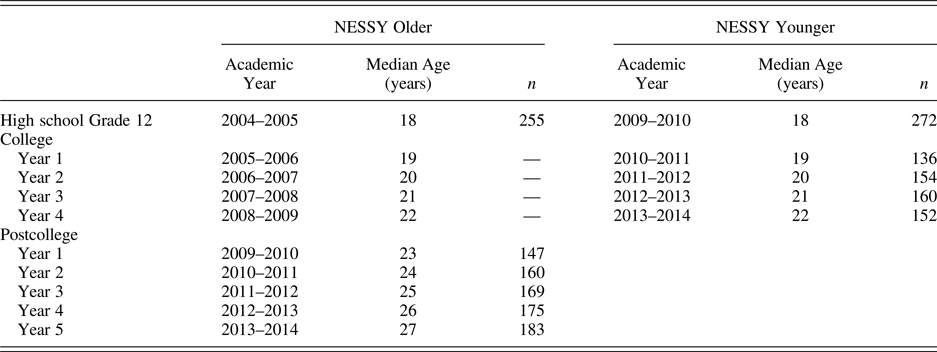
With regard to retention, the number of participants assessed at each wave is shown for both cohorts in Table 1. Note that at each wave, students were invited to join even if they had not participated in preceding waves of data collection. As shown in Table 1, at the final wave of data collection, we assessed 72% of NESSY-O youth who participated as high school seniors (age 27 years: 183 of 255 participants), and 56% of NESSY-Y youth (age 22 years: 152 of 272 participants). Whereas retention rates were lower for NESSY-Y, they compare favorably to other follow-up studies of substance use among high school students. For example, the Monitoring the Future (MTF) study reported retention rates for high school seniors ranging from 50% to 54% for the first year after high school through the fifth year after high school (Johnston, O'Malley, Bachman, Schulenberg, & Miech, Reference Johnston, O'Malley, Bachman, Schulenberg and Miech2014).
The New England Study of Suburban Youth (NESSY): Two cohort longitudinal design

To test for attrition biases, we compared Grade 12 scores on substance use between participants at the final year of data collection with their counterparts who had dropped out after high school assessments. In both NESSY-O and NESSY-Y, final year participants versus nonparticipants were not significantly different on overall substance use as high school seniors, F (1, 249) = 0.40, ns and F (1, 264) = 0.63, ns. Further analyses showed, in addition, that there were no significant differences for specific substance use categories, participant race, parents' marital status, mother and father education levels, mother and father employment status, and number of hours/week parents worked outside the home. Thus, the adult prospective samples appear to be generally representative of the original NESSY-O and NESSY-Y cohorts as high school seniors, with no evidence to suggest differential attrition.
Procedure
In the high school senior year, data collection occurred during the month of May for both cohorts. Students' participation was voluntary and based on passive consent procedures, as the study was part of school-based initiatives promoting positive youth development. Participants completed a packet of questionnaires administered in a group setting, with research assistants available to answer any questions that arose. In Grade 12 assessments, participants received monetary incentives of a $30 gift card for NESSY-O (who had already participated in prior school-based assessments) and a $10 gift card for NESSY-Y (for whom this was the first assessment).
In subsequent annual adult assessments, data were collected via two processes: phone interviews for psychiatric diagnoses and online questionnaires in an extensive battery of self-report measures including those on substance use. Of the five adult assessments of NESSY-O, the first four (ages 23, 24, 25, and 26 years) involved the complete battery with psychiatric interviews for diagnoses as well as all questionnaires, whereas in the last assessment (age 27), project funds were available only for the questionnaire part of the study. Thus, diagnostic data are presented through age 26 but use data are available at age 27 as well. The second cohort, NESSY-Y, received the complete battery of assessments across four annual assessments, so that data on both diagnoses and use are available for ages 19, 20, 21, and 22. For NESSY-O adult assessments, incentives for completing both interview and online assessments were $150 at each wave; for their final wave where only questionnaires were completed, participants received $75. On completion of both parts of the study, NESSY-Y participants received $125 for participation during college freshman year, and $150 in subsequent years.
Measures
Substance use: Prevalence rates and frequencies
Participants completed questions from the MTF (Johnston et al., Reference Johnston, O'Malley, Bachman and Schulenberg2012) study about the use of alcohol and different substances. The reliability and validity of this type of self-report have been amply documented (http://www.monitoringthefuture.org). For each substance, participants indicated use both for the past year and the past 30 days, and in this paper, we present rates of any past-year use because for some substances (i.e., those rarely used), normative data for the past 30 days are not available. In addition, we considered past-year rates more reliable than those in the past month, as participants were assessed at different times in the year, and events (e.g., final exams or football season in college) could have skewed some 30-day use patterns.
Clinical diagnoses
Trained research assistants with bachelor's degrees administered the Computerized Diagnostic Interview Schedule for the DSM-IV (Robins et al., Reference Robins, Cottler, Compton, Bucholz, North and Rourke2000) to subjects via telephone. The Computerized Diagnostic Interview Schedule for the DSM-IV is a structured interview that can be administered by lay interviewers and assesses lifetime and past-year symptoms according to the DSM-IV. All responses are precoded, and the measure has good reliability and criterion validity (Robins et al., Reference Robins, Cottler, Compton, Bucholz, North and Rourke2000). In this study, we report on lifetime DSM-IV diagnoses of both abuse and dependence for alcohol and drugs. Criteria for drug abuse and dependence are parallel to those for alcohol abuse and dependence.
As noted earlier, lifetime diagnoses in both NESSY cohorts are compared here to normative rates from the NCS-R survey (Kessler et al., Reference Kessler, Berglund, Chiu, Demler, Heeringa, Hiripi and Zheng2004), wherein DSM-IV diagnoses were obtained via a structured interview also administered by trained lay interviewers, using laptop computers. The interview used in the NCS-R was the Composite International Diagnostic Interview, which is similar to the Diagnostic Interview Schedule but was designed to produce diagnoses based on criteria of both DSM-IV and ICD-10 (National Comorbidity Study, 2005). To ensure comparability with our sample, we used the DSM-IV rates.
In the national NCS-R study, completed from 2001 to 2003, researchers had recruited participants from US households in different geographic regions, and had chosen one adult member of the household randomly, for a total of 9,836 interviews of English-speaking adults to determine diagnosis. Rates were then appropriately weighted to adjust for differential probabilities of selection for the national survey, as some groups of respondents were undersampled (e.g., based on sociodemographic and geographic variables; see Kessler et al., Reference Kessler, Berglund, Chiu, Demler, Heeringa, Hiripi and Zheng2004). Accordingly, the NCS-R prevalence rates we used, shown in the present tables, were calculated using the same weighting criteria as were used in the NCS-R study, to derive national lifetime rates, by gender, and at the specific ages that corresponded to our NESSY-Y (age 22) and NESSY-O (age 26) samples. These conversions were done by using SAS survey procedures (Version 9.1.5, SAS Institute Inc.).
As previously indicated, we report on two sets of lifetime diagnoses in our NESSY cohorts. The first is based on the last assessment point only for each sample, as NCS-R rates were based on a single interview. The second set of NESSY lifetime rates are based on diagnoses received across all annual interviews, a method that both corrects for underestimation due to retrospective recall spanning several years and takes into account data from all participants, whether or not they were interviewed in the last year of the study, specifically.
Parent containment of substance use: 12th grade
With responses rated on a 5-point scale, students were asked, “How serious would the repercussions from your parents be if they found out that you … Attended a keg or drinking party without permission; Got drunk; Went to a party where no adults were present without permission; Were smoking marijuana” (Luthar & Goldstein, Reference Luthar and Goldstein2008). Alpha coefficients among females and males respectively were 0.89 and 0.87, among NESSY-O, and 0.85 for both genders among NESSY-Y.
Parent monitoring: 12th grade
Paralleling measures used by Fletcher, Steinberg, and Williams-Wheeler (Reference Fletcher, Steinberg and Williams-Wheeler2004), participants were asked about how much their parents know about their activities via a five-item, 5-point scale (Luthar & Goldstein, Reference Luthar and Goldstein2008). Illustrative items include “My parents know where I am after school,” “My parents know how I spend my money,” and “My parents know who my friends are.” Alpha coefficients among females and males respectively were 0.75 and 0.78 among NESSY-O, and 0.75 and 0.78 among NESSY-Y.
Results
Comparability of the two cohorts in adolescence
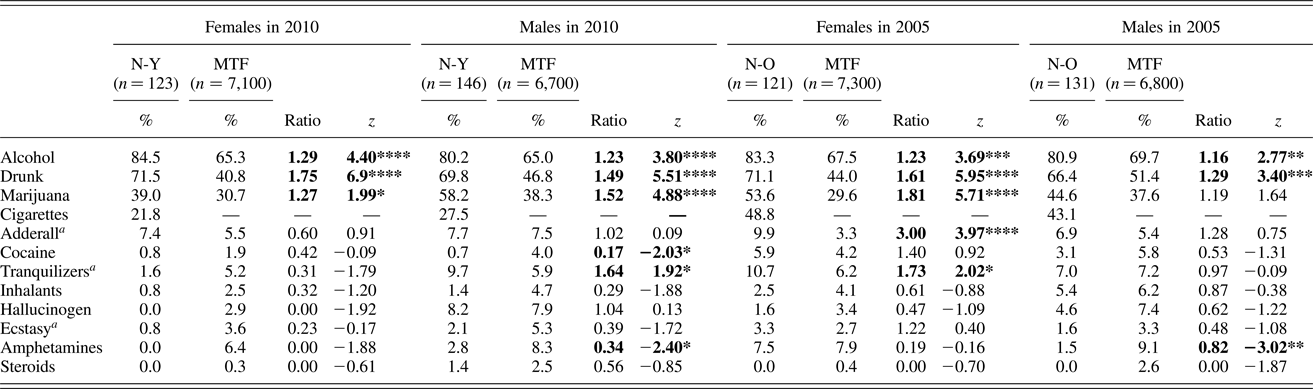
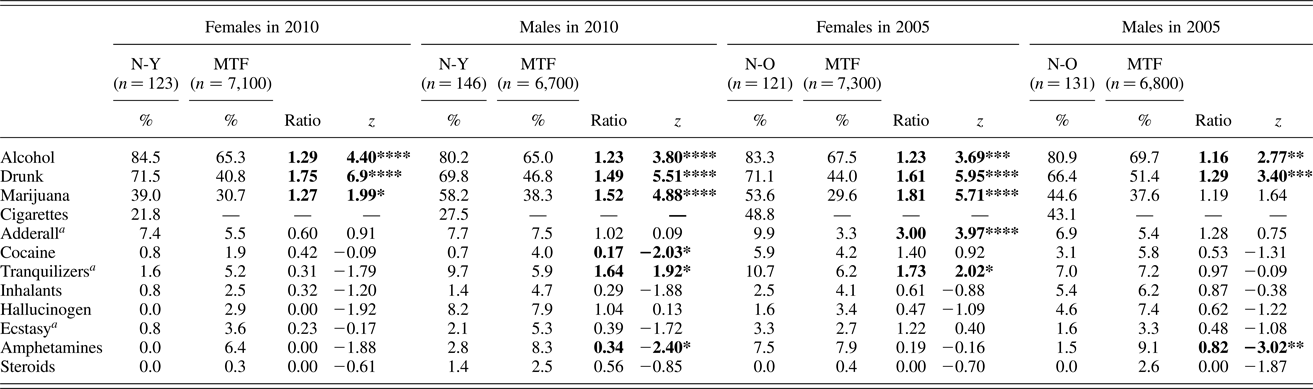
As noted earlier, the two cohorts were similar in sociodemographics; to ascertain overall comparability on substance use, we examined past-year rates of use as high school seniors versus rates in MTF norms also assessed in the 12th grade and during the same calendar year (i.e., 2005 and 2010 to compare with NESSY-O and NESSY-Y, respectively). Results for both cohorts are shown in Table 2. Note that in this and subsequent tables (Tables 3 and 4), comparisons in which the category encompasses more than one particular substance within MTF norms, the MTF value that we report is that of the substance with the highest rate in the norms. Thus, in the interest of stringency, we compare to MTF rates of Adderall rather than Ritalin that are lower in MTF; tranquilizers rather than barbiturates; and ecstasy rather than ketamine.
Comparability of NESSY younger and older cohorts: Rates of past year use in Grade 12 split by gender, with ratios to MTF norms in the same chronological year
Note: NESSY, New England Study of Suburban Youth; MTF, Monitoring the Future; N-Y, younger NESSY cohort; N-O, older NESSY cohort. The first three rows contain values for substances on which NESSY adult elevations were expected a priori. MTF norms are according to Johnston et al. (Reference Johnston, O'Malley, Bachman and Schulenberg2012). Bold values indicate ratios where NESSY rates are significantly higher than MTF. Comparisons of population proportions using z scores were weighted for sample size.
a Comparisons for which MTF features multiple substances; ratios are based on the MTF substance with the highest rate, that is, Adderall > Ritalin. Ratio = %NESSY/%MTF.
*p < .05. **p < .01. ***p < .001. ****p < .0001.
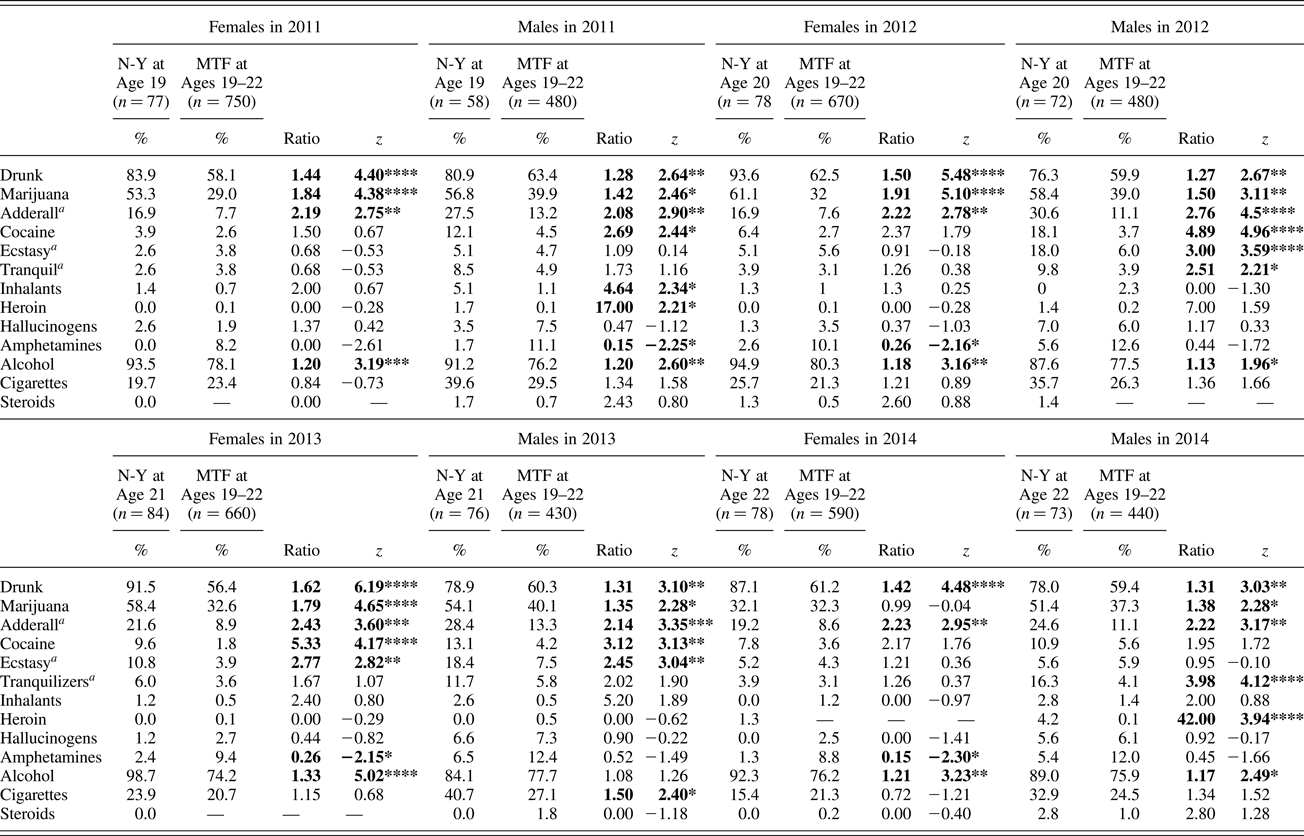
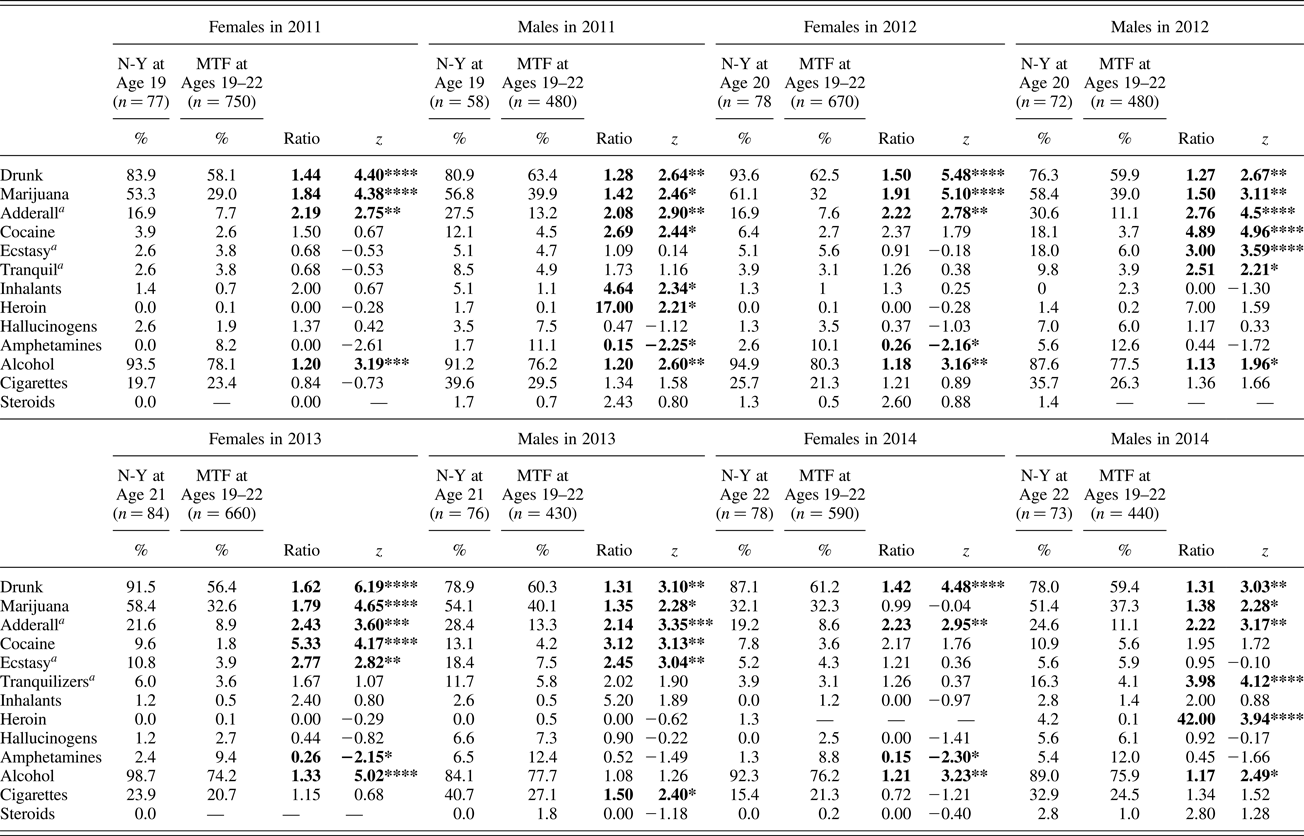
NESSY younger cohort: Past-year substance use, with ratios of rates to MTF norms for college 19- to 20-year-olds, by gender
Note: NESSY, New England Study of Suburban Youth; MTF, Monitoring the Future; N-Y, younger NESSY cohort. The first four rows in the top and bottom sections contain values for substances on which NESSY adult elevations were expected a priori. MTF norms are according to Johnston et al. (Reference Johnston, O'Malley, Bachman and Schulenberg2012). Bold values indicate ratios where NESSY rates are significantly higher than MTF. Comparisons of population proportions using z scores were weighted for sample size.
a Comparisons for which MTF features multiple substances; ratios are based on the MTF substance with the highest rate, that is, Adderall > Ritalin. Ratio = %NESSY/%MTF.
*p < .05. **p < .01. ***p < .001. ****p < .0001.
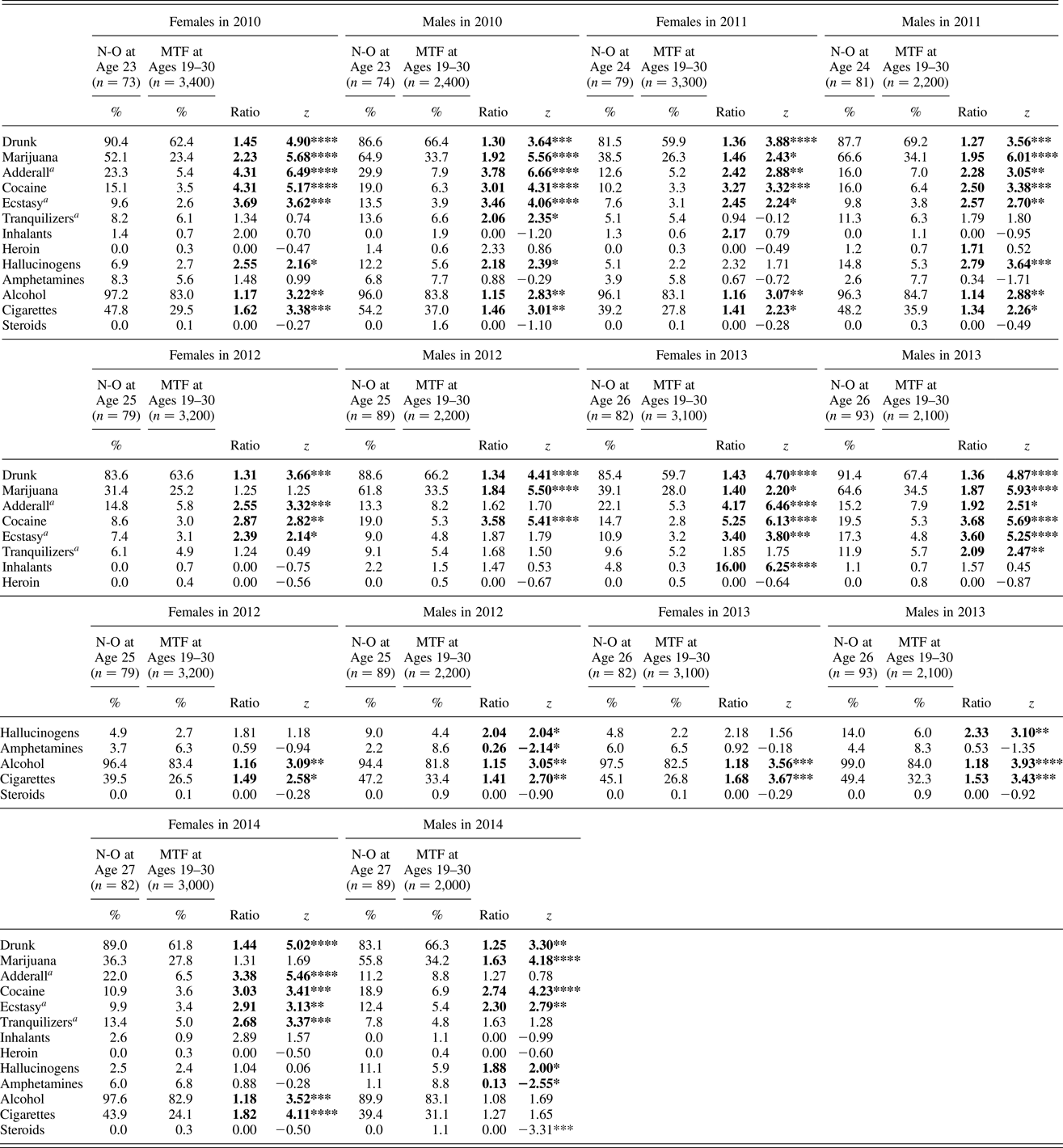
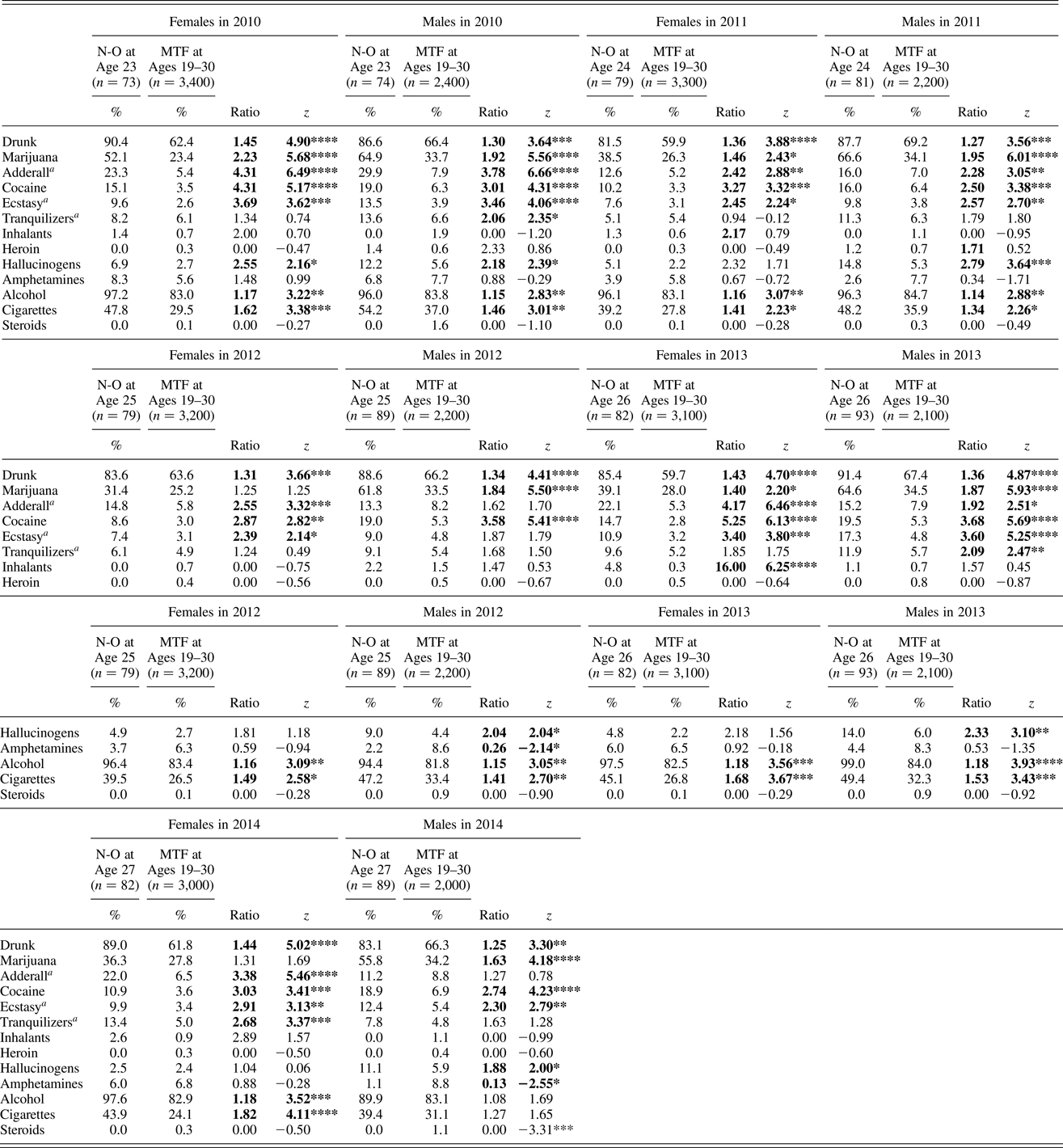
NESSY older cohort: Past-year substance use, with ratios of rates to MTF norms for college 19- to 30-year-olds, by gender
Note: NESSY, New England Study of Suburban Youth; MTF, Monitoring the Future; N-Y, younger NESSY cohort. The first four rows in each section contain values for substances on which NESSY adult elevations were expected a priori. MTF norms are according to Johnston et al. (Reference Johnston, O'Malley, Bachman and Schulenberg2012). Bold values indicate ratios where NESSY rates are significantly higher than MTF. Comparisons of population proportions using z scores were weighted for sample size.
a Comparisons for which MTF features multiple substances; ratios are based on the MTF substance with the highest rate, that is, Adderall > Ritalin. Ratio = %NESSY/%MTF.
*p < .05. **p < .01. ***p < .001. ****p < .0001.
To ease interpretation of the array of values, we present not only rates in our two cohorts and those in MTF norms during the same calendar year but also the relative risk, calculated as a simple ratio. Thus, as 84.5% of NESSY-Y girls reported alcohol use in Grade 12 versus 65.3% in MTF norms, the relative ratio was 84.5/65.3 = 1.29 (the first row in Table 2). In addition, we conducted, significance testing to compare the proportions of use in the NESSY samples versus the MTF sample using two-tailed z tests, appropriately weighted for sample size differences. Where NESSY values were significantly higher than those in MTF, ratios and z scores are shown in bold in the tables.
As shown in Table 2, elevations were apparent on the use dimensions we had expected, a priori, based on prior high school assessments. For females and males in the older and younger cohorts, NESSY values were significantly higher than those in MTF on 11 of the 12 comparisons: frequency of alcohol use, drunkenness, and marijuana use among all subgroups with the exception of marijuana use among NESSY-O males. In addition, there were slight elevations in the use of tranquilizers only among NESSY-Y males and NESSY-O females, with the latter also showing elevations in Adderall use. Other rates of use were below norms in both high school cohorts.
Substance use relative to national norms
In Table 3, we present prevalence rates of substance use across each of the 4 college years for the NESSY-Y cohort, as compared to MTF normative rates (Johnston et al., Reference Johnston, O'Malley, Bachman, Schulenberg and Miech2014) corresponding to ages 19–22 years during the same calendar year. For comparisons in Table 3, again, two-tailed z tests weighted for sample size were conducted to test for differences in the proportions between the NESSY and MTF samples.
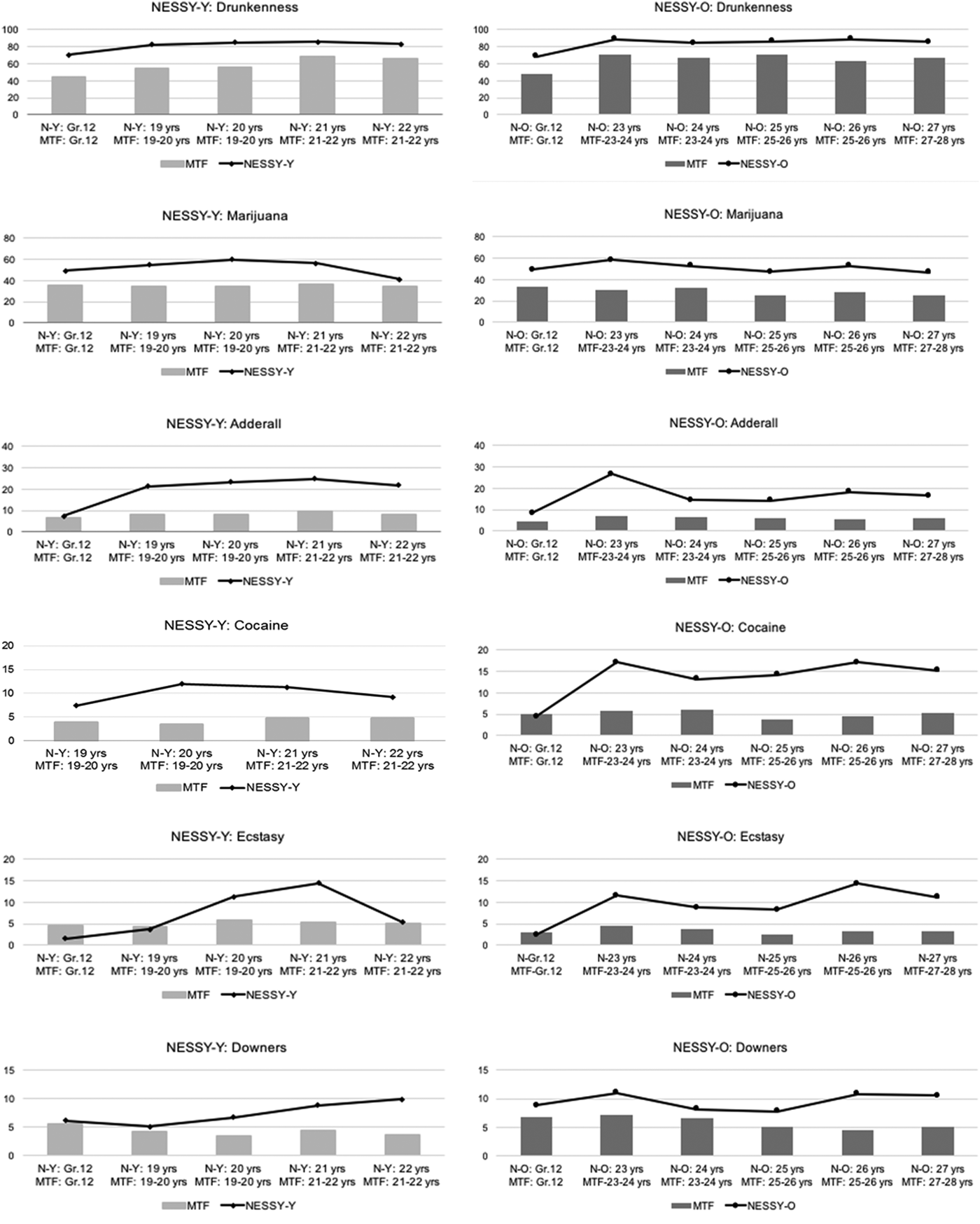
Unfortunately, MTF prevalence rates for college students specifically are not available separately by both age and gender, but rather are reported for the overall age bracket 19–22 years, encompassing typical ages during college attendance, separately for males and females. Because (a) it is well known that substance use is higher among college students than others (Substance Abuse and Mental Health Services Administration, 2012), and (b) of central interest to us, a priori, were gender-specific use patterns among NESSY youth across young adulthood, we used these MTF rates in central analyses of relative risk among NESSY-Y. (Note that comparisons by specific ages 19, 20, 21, and 22, relative to overall MTF rates for these ages, not just for college students and not separated by gender, are depicted in Figure 1.)
Rates of use at specific ages for New England Study of Suburban Youth younger (NESSY-Y) and older (NESSY-O) cohorts compared to Monitoring the Future (Johnston et al., Reference Johnston, O'Malley, Bachman and Schulenberg2012) norms during the same calendar years for drunkenness, and use of marijuana, Adderall, cocaine, ecstasy, and downers. Data for NESSY-Y and NESSY-O are represented by the lines, and Monitoring the Future norms are represented by the columns.

As shown in Table 3, for the four use indices in which we expected to see elevations (i.e., drunk, marijuana, stimulants, and cocaine), and across all 4 years of college and among both males and females, prevalence rates were significantly higher than norms in 27 of the 32 instances. Of the other 5 ratios that were not statistically significant, 4 were those for cocaine, which were 1.5–2.4 times higher in NESSY than MTF, but actual incidence rates were too low to allow for statistical significance (ns of 3, 5, 6, and 8 for values in order, across Table 3). The 27 significantly elevated ratios ranged from 1.27 to 5.33, with a median value of 1.81. Overall, therefore, findings were striking in showing that across all 8 observations (4 years and both genders), almost every ratio for drunk, marijuana, stimulants, and cocaine was above norms (97%), and relative elevations were statistically significant in 85% of comparisons.
In Table 4, we present parallel values for NESSY-O for five assessments between the ages of 23 in 2010, and 27 in 2014, compared with MTF normative rates for adults (ages 19–30, during the same calendar years), separately by males and females. Unfortunately, MTF normative rates for adult men and women are not broken down by specific age but are presented across the span of 19–30 years. Again, as our central a priori goal was to illuminate NESSY use patterns separately by gender, our primary analyses entailed comparisons of adult MTF men and women in Table 4. Subsequently, we also show descriptive rates for specific NESSY ages 23, 24, 25, 26, and 27, relative to each of these ages in MTF (not split by gender) in Figure 1.
As in preceding analyses, two-tailed z tests weighted for sample size were conducted to test for differences in the proportions between the NESSY and MTF samples. Rates were significantly different in 36 of the 40 comparisons involving elevations hypothesized a priori: drunkenness, marijuana, stimulants, and cocaine, among females and males across five observations. The four nonsignificant ratios were all above 1, for example, 1.25 for marijuana use by females at 25, 1.62 for Adderall use by males at age 25, 1.31 for marijuana use by females age 27, and 1.27 for Adderall use by males age 27. The 36 significantly elevated ratios ranged from 1.25 to 5.25, with a median value of 2.1.
Aside from the indices we had hypothesized to be elevated, findings also revealed distinct elevations on club drugs such as ecstasy among NESSY-O, with 9 of the 10 values statistically significant ranging from 2.30 to 3.69 (Table 4). Tranquilizer use rates were somewhat higher than norms in both cohorts, with 12 of the 18 ratios across Tables 3 and 4 being greater than 1.5 (although only statistically significant differences in 5 of these, possibly due in part to low incidence of tranquilizer use overall). Finally, cigarette use, surprisingly, was significantly elevated in 9 of the 10 comparisons among NESSY-O, with z scores ranging from 1.34 to 1.82.
Trends displayed over time
Figure 1 displays patterns of use over time for both cohorts, side by side, across the four annual assessments during college (NESSY-Y) and five adult assessments (NESSY-O), along with national norms by individual age. As noted before, previously discussed comparisons in Table 3 referenced national rates for 19- to 22-year-old college students, rather than separate rates for 19-, 20-, 21-, and 22-year-olds. In Figure 1, we present comparisons of NESSY-Y with MTF rates for each age (19, 20, 21, and 22 years), acknowledging that the latter normative data included both college students and others, and combined for men and women. As a reference point for patterns during each of the adult years, we include Grade 12 rates. In these figures, NESSY-Y and NESSY-O rates are shown by the lines across the annual assessments, and the bars show parallel rates for the MTF normative samples at the same age and during the same calendar year. These comparative rates are shown not only for the four indices for which we had expected elevations a priori (drunk, marijuana, stimulants, and cocaine) but also for ecstasy and downers (e.g., tranquilizers) that we found, in this study, to show elevations (Table 3 and Table 4).
With regard to possible “maturing out,” across the college years, prevalence rates did seem to decrease for some indices by the senior year of college, for example, marijuana and ecstasy. At the same time, elevations relative to norms appeared somewhat elevated among NESSY-Y on drunk (83% vs. 66% in norms), stimulant use (21% vs. 8% in norms), and cocaine use (9% vs. 5%; percentages averaged across men and women, in Table 3). Among NESSY-O individuals, we did not see any marked reductions in rates of use at the last assessment relative to all prior years, ages 23 to 27 years.
Diagnoses
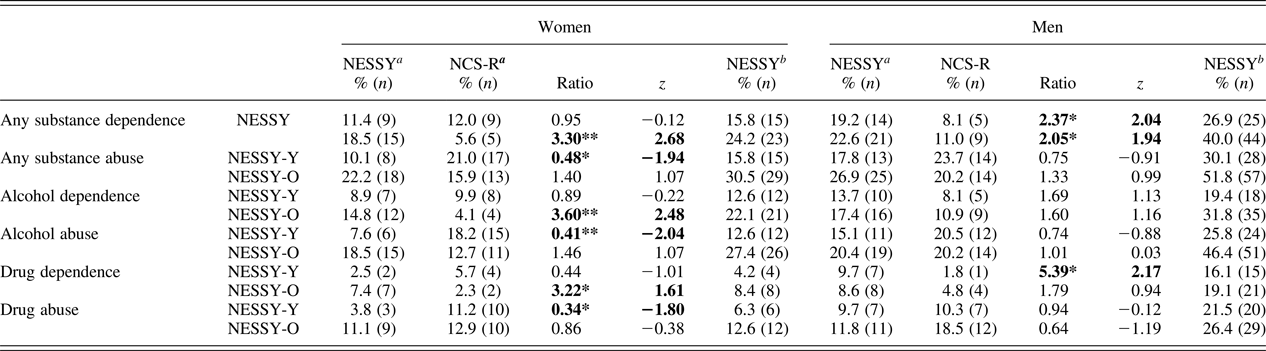
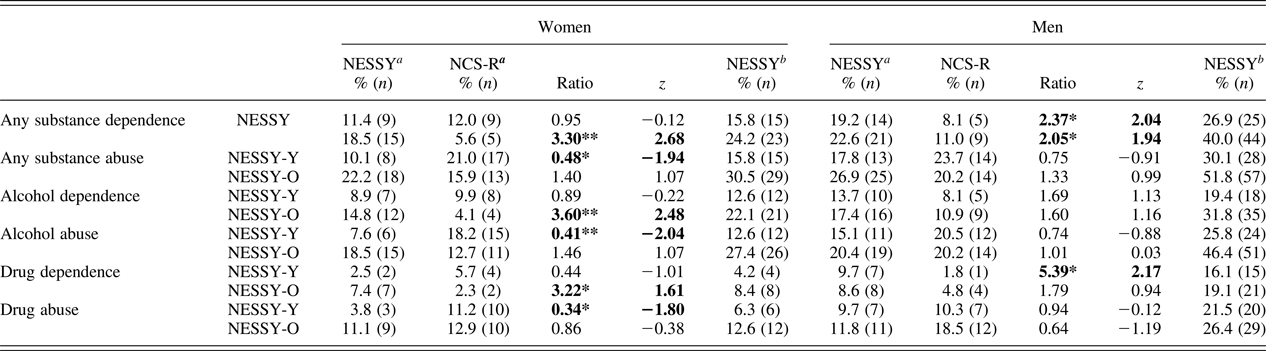
Presented in Table 5 are lifetime rates of DSM-IV substance use diagnoses in the NESSY-Y (age 22 years) and NESSY–O (age 26 years) cohorts, compared with rates of diagnoses estimated in the NCS-R study for adults of the same age (Kessler et al., Reference Kessler, Berglund, Chiu, Demler, Heeringa, Hiripi and Zheng2004), separately by gender. Values in the first set of columns are based on lifetime diagnoses as reported in only the last assessment of NESSY-Y or NESSY-O along with parallel values in the NCS-R (also based on a single assessment), and their ratio, NESSY/NCS-R. Again, two-tailed z tests weighted for sample size were conducted to test for differences in the proportions between the NESSY and MTF samples. Incidence rates in the last set of columns for women and men represent diagnoses based on cumulative assessments, that is, if criteria were met at any of the annual assessments conducted, for each cohort.
Lifetime DSM-IV substance use diagnoses in the NESSY-Y (age 22 years) and NESSY-O (age 26 years) cohorts versus NCS-R for participants aged 22 years and 26 years
Note: NESSY-Y, New England Study of Suburban Youth younger cohort; NESSY-O, NESSY older cohort; NCS-R, National Comorbidity Survey Replication. Sampling weights were used to calculate percentages for NCS-R data according to Kessler et al. (Reference Kessler, Berglund, Chiu, Demler, Heeringa, Hiripi and Zheng2004). NCS-R age 22 women: n = 95, men: n = 84; NCS-R age 26 women: n = 96, men: n = 71. Comparisons of population proportions using z scores were weighted for sample size.
a NESSY rates based on final assessment point only: ages 22 and 27 for NESSY-Y and NESSY-O, respectively. Ratio = %NESSY/%MTF. NESSY-Y: n = 78 women, n = 73 men; NESSY-O: n = 82 women, n = 89 men.
b NESSY rates based on all annual assessments. Cumulative NESSY-O: n = 95 women, n = 110 men; cumulative NESSY-Y: n = 95 women, n = 93 men.
*z ≥ 1.6, p < .05. **z ≥ 2.5, p < .01.
The first two rows of Table 5 depict the diagnostic values of greatest concern (i.e., signifying dependence on, or addiction, to any substance). As shown there, values were significantly elevated for three of the four subgroups with relative ratios of 2.37, 3.30, and 2.05 for NESSY-Y men and NESSY-O women and men, respectively. Among NESSY-Y women, rates of dependence were close to those in national norms.
Percentages of participants meeting diagnostic criteria for dependence based on cumulative assessments in the last column, versus a single assessment (first column) were 15.8% versus 11.4% for NESSY-Y women; 26.9% versus 19.2% for NESSY-Y men; 24.2% versus 18.5% for NESSY-O women; and were substantially different among NESSY-O men, at 40.0% versus 22.6%.
On diagnoses of any substance abuse, NESSY-Y men and women were both below norms. Their older counterparts were above norms (ratios 1.4 and 1.33), but these differences were not statistically significant.
Predicting substance use in adulthood
For the prospective examination of associations between high school containment and adult use levels, regression and mediation analyses were conducted using MPlus 7.11 (Muthén & Muthén, Reference Muthén and Muthén2013) with full information maximum likelihood unless otherwise specified. Maximum likelihood missing data handling was employed to account for the existence of missing data (Enders, Reference Enders2010), whether due to attrition or a result of incomplete measurement. Maximum likelihood missing data handling utilizes all of the available observations for each case to compute the likelihood function (Enders & Bandalos, Reference Enders and Bandalos2001), and subsequently provides unbiased estimates with minimal standard errors when data are missing at random (Schafer & Graham, Reference Schafer and Graham2002). To account for the existence of missing data and ensure the use of all available observations, maximum likelihood missing data handling requires that the model specify the estimation of means, variances, and covariances among the predictors.
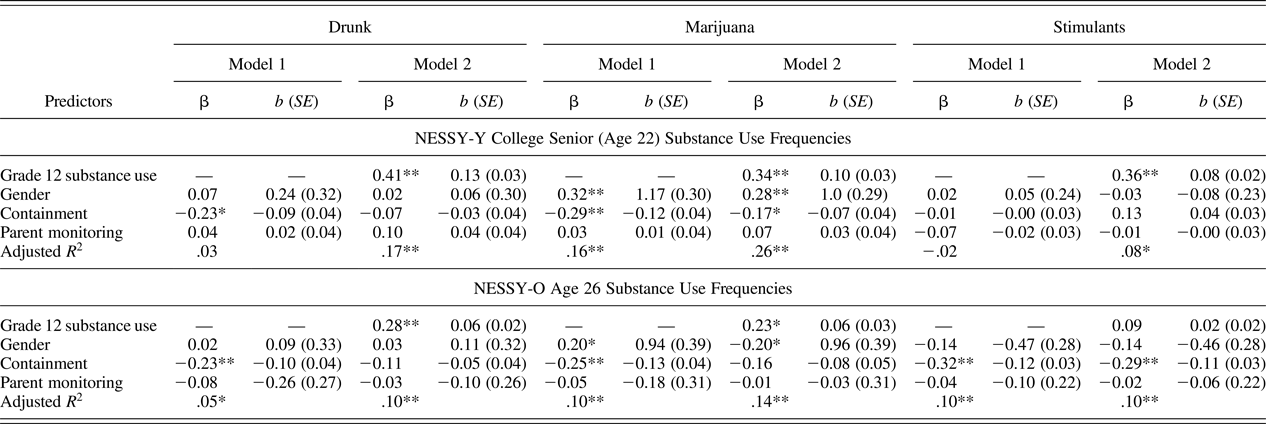
In examining long-term effects of perceived parents' containment, we examined whether containment in high school was linked with use frequencies at the last assessment for three indices on which we expected adequate variability: drunk, marijuana use, and stimulant use. Regression analyses showed that after controlling for gender and parental monitoring, containment was significantly associated with lower levels of drunkenness and marijuana use among NESSY-Y, and for all three outcomes among NESSY-O (see Table 6). Once Grade 12 levels of overall substance use (summed across all substances) were also considered in Model 2, three of the five associations became nonsignificant, suggestive of mediated effects. (Correlations between containment and Grade 12 use were r = –.40 for NESSY-Y and r = –.46 for NESSY-O, respectively; between containment and gender were r = –.05 for NESSY-Y and r = –.02 for NESSY-O, respectively; and between Grade 12 use and gender were r = –.03 for NESSY-Y and r = –.19 for NESSY-O, respectively.)
Linear regression analyses of Grade 12 perceived parents’ containment in relation to adult use frequencies
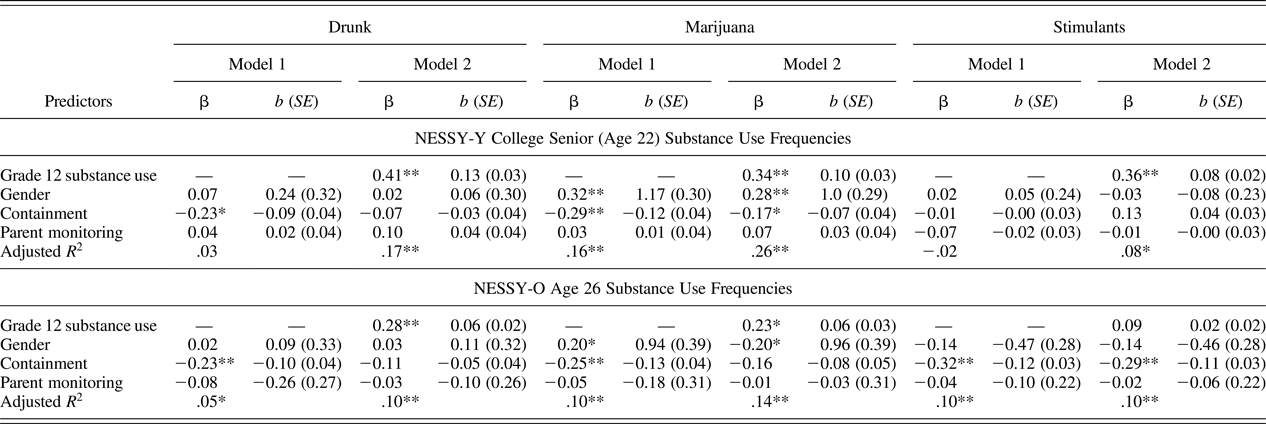
Note: Gender was coded 0 = female, 1 = male; Grade 12 substance use is the sum of the frequencies of using all substances; Model 1 does not control for Grade 12 substance use, whereas Model 2 does control for Grade 12 substance use. NESSY-Y and -O, New England Study of Suburban Youth younger cohort and older cohort.
*p < .05. **p < .01.
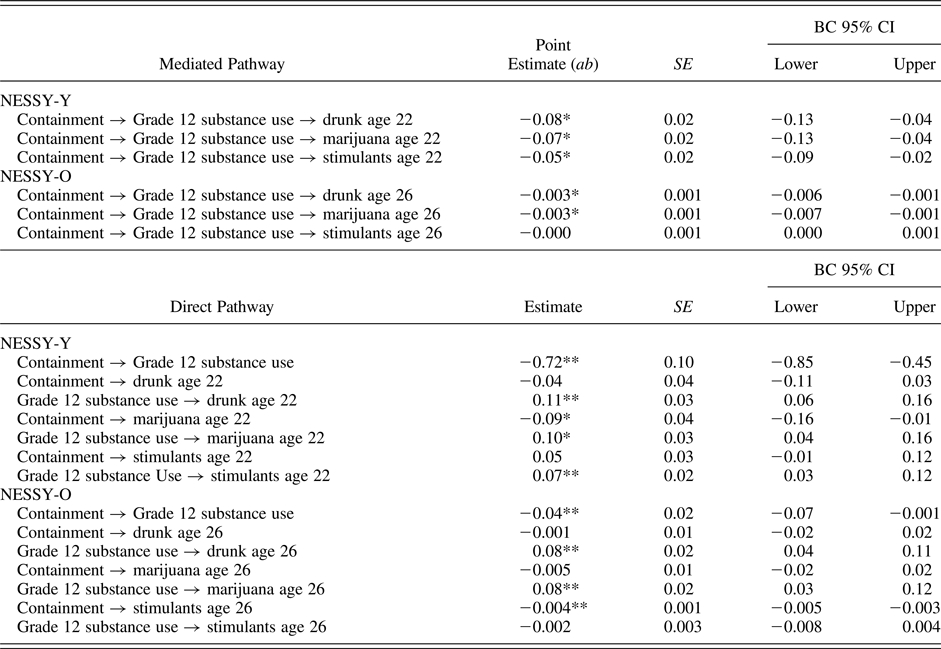
In follow-up analyses, we estimated mediated effects and 95% confidence intervals for the same three substance use indices for which we ran regressions, using MODEL INDIRECT in Mplus 7.1 (Muthén & Muthén, Reference Muthén and Muthén2013) with bias corrected bootstrap resampling (5,000 samples) for greater accuracy in the estimation of the standard errors (MacKinnon, Reference MacKinnon2008). A mediated effect was considered statistically significant when the confidence interval did not contain zero (MacKinnon, Reference MacKinnon2008). The results indicated that Grade 12 use significantly mediated the influence of parental containment on drunkenness and marijuana use for both NESSY-O and NESSY-Y cohorts, and on stimulant use for the NESSY-Y cohort only (see Table 7).
Grade 12 perceived parents’ containment in relation to adult use frequencies with estimates of the mediating effects of Grade 12 substance use with bias-corrected 95% confidence limits
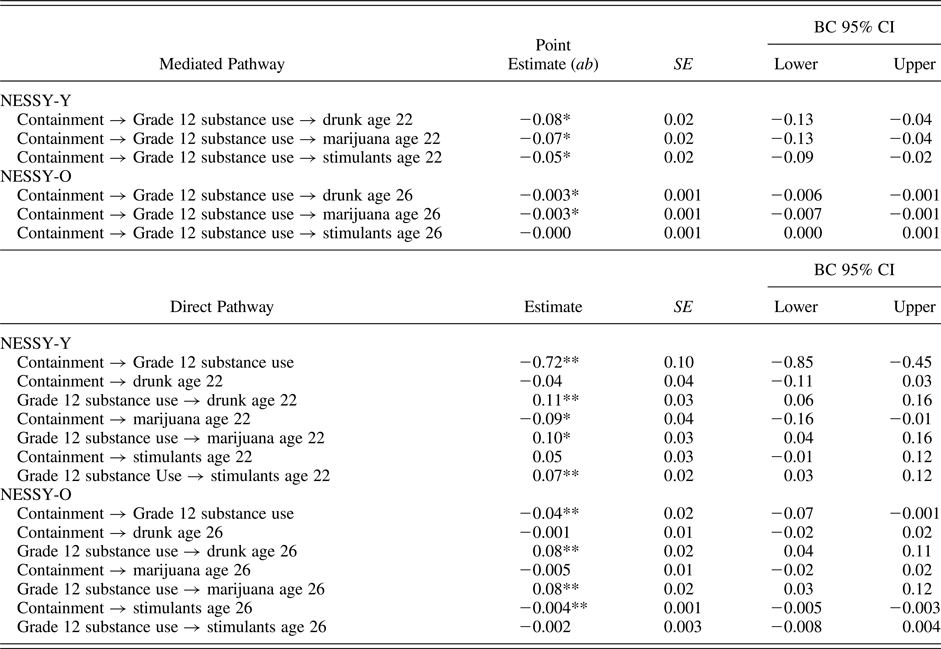
Note: Grade 12 substance use is the sum of the frequencies of using any substances. Covariates not shown include gender and parent monitoring. NESSY-Y and -O, New England Study of Suburban Youth younger cohort and older cohort.
*p < .05. **p < .01.
Discussion
Our findings suggest that it is probably unwise to treat lightly the elevated rates of substance use previously documented among upper middle class teenagers; a troubling proportion of these youth met criteria for diagnoses of substance dependence in their late 20s. In the older NESSY cohort assessed at age 26, lifetime diagnoses of addiction to any substance (drug or alcohol) were over 2 and 3 times those of national rates, for men and women, respectively. Data on the younger NESSY cohort showed that by age 22 years, lifetime rates of dependence on any substance were 2.4 times national rates for men, although rates among the younger women were closer to normative rates (0.95).
It should be noted that the estimates discussed here are on the conservative side, being based on a single diagnostic interview (the last in the follow-ups of each cohort). Retrospective recall could have diminished reporting of some serious use in past years (Moffitt et al., Reference Moffitt, Caspi, Taylor, Kokaua, Milne, Polanczyk and Poulton2010; Olino et al., Reference Olino, Yu, Klein, Rohde, Seeley, Pilkonis and Lewinsohn2012; Takayanagi et al., Reference Takayanagi, Spira, Roth, Gallo, Eaton and Mojtabai2014). As shown in the tables, when overall lifetime rates were computed on the basis of repeated annual interviews, rates of diagnoses were substantially higher.
Further suggesting the seriousness of the issues are data on the actual frequency of using different substances over time, including not only drunkenness and marijuana use (elevated even in high school) but also the use of stimulants and cocaine as hypothesized. Across multiple waves, stimulant use rates for NESSY-O ranged between 15% and 20%, at least twice as high as in MTF norms. Among NESSY-Y across the college years, one in five of NESSY-Y on average reported misusing stimulants, rates more than twice as high as in normative MTF samples. Similar trends were seen on cocaine: in both cohorts, rates of cocaine use were, again, at least twice as high as in norms.
One of the four subgroups in this study did not show significant elevations in diagnoses of any substance dependence compared to NCS-R rates: that is, NESSY-Y women. However, even among these young women, a disturbingly high proportion were not only getting drunk frequently but also misusing other substances. Rates of intoxication were around 1.5 those of MTF norms across the four assessment waves as rates for both stimulants and cocaine were 1.5 to more than 2 times normative values. The consistency of elevated frequencies across time is cause for concern (notwithstanding that some frequent users did not meet criteria for addiction by age 22). It is also possible that increasing proportions of these young women would meet diagnostic criteria in the years after college graduation, approaching the clearly elevated rates of NESSY-O women by age 26.
Conservatively estimating, therefore, for three of the four subgroups in this study, findings resonate with reports on the growing problem of abuse in segments of the population that thus far have not been thought of as being “at risk.” Recent studies have suggested that in their adult years, adolescents from high SES families have higher rates of binge drinking as well as misuse of marijuana, stimulants, prescription drugs, and cocaine, with these elevations seen even among those with full-time employment, well after college graduation (Arria, Bugbee, Caldeira, & Vincent, Reference Arria, Bugbee, Caldeira and Vincent2014; Humensky, Reference Humensky2010). These past reports have been based on survey data; to our knowledge, ours is the first study to report on interview-based DSM-IV diagnoses, with rates reported for both substance dependence and abuse. It is worrisome to learn that before their 27th birthdays, lifetime diagnoses of any substance dependence could be seen among men and women from upper middle class communities in as many as 23%–40% of men, and 19%–24% of women.
Potentially mitigating concerns, in contrast, it should be noted that with further developmental maturity, diagnoses of past-year dependence could be reduced somewhat. Whereas life transitions such as marriage or having children are typically associated with marked reductions in substance use (Bachman et al., Reference Bachman, Wadsworth, O'Malley, Johnston and Schulenberg1997; Glatz et al., Reference Glatz, Stattin and Kerr2012), in the upper middle class cohorts in this study, neither event had yet occurred at their final assessments for any participant. In future work, it will be important to ascertain whether diagnostic rates, as well as frequency of use, decrease with transition to adult roles such as marriage (which tends to occur later among the more affluent), or whether they might remain elevated given high lifetime rates already documented.
Containment
Perceived parent containment for substance use is reportedly a robust predictor of concurrent use levels among affluent adolescents (Luthar et al., Reference Luthar, Barkin and Crossman2013), and results of this study indicate potential ramifications continuing well into adulthood (Hartman et al., Reference Hartman, Corbin, Luthar, Van Lenten, Dishion, Doane and Ha2016). Perceived parents' containment at age 18 was found to have direct associations with the frequency of marijuana use at age 22 among the younger NESSY cohort, and with the frequency of stimulant use at age 27 among the older cohort. Furthermore, containment was indirectly associated, through substance use in Grade 12, with drunkenness and marijuana use at both age 22 and age 27 years, and with stimulant use at age 22.
Along with prior evidence that perceived parental approval of substance use influences substance use behavior (Boyle & Boekeloo, Reference Boyle and Boekeloo2006; Messler, Quevillon, & Simons, Reference Messler, Quevillon and Simons2014), findings from this study highlight the need for upper middle class parents to revisit laissez-faire attitudes toward their high school children's substance use, with three caveats. The first is that the repercussions meted out should be consequential, but at the same time, (a) are not draconian, (b) are mutually agreed upon (for “repeat offenses”), and (c) are consistently enforced, within the context of a supportive parent–child relationship. Overly severe punishments in the absence of support and nurturance will inevitably backfire (Luthar et al., Reference Luthar, Barkin and Crossman2013). Second, along with such limit setting, parents would do well to discuss these issues long before the onset of high school, spelling out the risks associated. In this regard, Reyna and Mills's (Reference Reyna and Mills2014) findings are useful, showing the benefits of sex education programs conveying the “bottom line” of the risks involved, such as “it only takes once” to contract a sexually transmitted disease. With regard to substance abuse, an analogous message for these highly achieving and ambitious youth might be that “it takes only one arrest” for cocaine possession, or for injuring someone while driving intoxicated, to disqualify them from future careers involving high-profile, senior positions of substantive leadership.
Limitations
There are questions about generalizability of our findings, as both schools from which cohorts were originally sampled were located in the suburbs of the northeastern United States (although in their adult years, participants lived in varied geographic locations). At the same time, we should note that the 12th grade elevations in use are consistent with high relative risk rate patterns across many other high school samples, in suburbs and cites (see Botticello, Reference Botticello2009; Coley et al., Reference Coley, Sims, Dearing and Spielvogel2017; Lund et al., Reference Lund, Dearing and Zachrisson2017; Patrick et al., Reference Patrick, Wightman, Schoeni and Schulenberg2012; Reboussin et al., Reference Reboussin, Preisser, Song and Wolfson2010; Song et al., Reference Song, Reboussin, Foley, Kaltenbach, Wagoner and Wolfson2009).
A related limitation is small sample size; neither cohort was large, and each showed the kind of attrition that is expected when high school students are followed into adulthood. As noted earlier, high school assessments were conducted as part of the routine school day, whereas all subsequent interviews required proactive participation. This said, our retention rates of 56% to 72% across adult assessments compare reasonably with parallel MTF rates for high school seniors, ranging from 50% to 54% for the first year through the fifth year after high school (Johnston et al., Reference Johnston, O'Malley, Bachman, Schulenberg and Miech2014), although for NESSY-Y, rates are lower than the approximately 65% retention in prospective studies that used interviews rather than survey-based questionnaires (see Deng, Hillygus, Reiter, Si, & Zeng, Reference Deng, Hillygus, Reiter, Si and Zheng2013; Rothman, Reference Rothman2009). Perhaps most importantly, there was no evidence of differential attrition in either the NESSY-O or the NESSY-Y cohort, in terms of high school levels of substance use, or on multiple sociodemographic indices including parents' education, employment status, race, or marital status.
With regard to findings on containment, the possibility of bidirectional effects must be acknowledged. There is a considerable literature showing that children's behaviors can affect those of parents in addition to the reverse (see Abar, Jackson, & Wood, Reference Abar, Jackson and Wood2014; Kerr, Stattin, & Özdemir, Reference Kerr, Stattin and Özdemir2012; Pardini, Reference Pardini2008; Racz & McMahon, Reference Racz and McMahon2011). Thus, in some instances, it is plausible that adolescents were using frequently but without being caught, leading to beliefs that if use were to be detected, the teen might minimize it as a one-time event and thus meet with few consequences from parents.
As we fully acknowledge the limitations of this work, we believe that it is worth considering our findings, at the very least, as pointing to potentially serious public health issues warranting further rigorous study. A defining feature of the field of developmental psychopathology, across the more than three decades since its inception, is careful attentiveness to the implications of data for policy and practice (Cicchetti, Reference Cicchetti1984). As colleagues in science weigh the credibility of the rates we have described, to treat them as probable “false positives” (e.g., as they are based on just two Northeast cohorts) could turn out to be a disservice to many if there are serious problems of drug and alcohol addiction in a substantial proportion of youth growing up in affluent communities. Our own perspective is that from a prevention standpoint, it might be more prudent to treat these elevated rates of addiction as real possibilities, with future research systematically refuting or substantiating this postulate as the case may be, given the substantial costs of these problems to society: estimated at over $600 billion in the United States (National Institute on Drug Abuse, 2014). Even among well-educated adults, frequent use of alcohol and drugs is linked with lower yearly earnings as well as poorer functioning at work (Ellickson, Martino, & Collins, Reference Ellickson, Martino and Collins2004; Ellickson, Tucker, Klein, & McGuigan, Reference Ellickson, Tucker, Klein and McGuigan2001; Griffin, Samuolis, & Williams, Reference Griffin, Samuolis and Williams2011).
Finally, in weighing the possible seriousness of these issues, it is worth considering national data on the misuse of prescription drugs over time. Between 2006 and 2011, the nonmedical use of the stimulant Adderall reportedly rose 67%, and emergency room visits went up 156% (Chen et al., Reference Chen, Crum, Strain, Alexander, Kaufmann and Mojtabai2016). Increasing misuse was particularly pronounced among 18- to 25-year-olds (often used as study aids in college); these young adults usually procured the medications from family and friends (Chen et al., Reference Chen, Crum, Strain, Alexander, Kaufmann and Mojtabai2016). In analyses of trends spanning 2004–2013, researchers documented significant increases in emergency department visits for drug overdoses among children and adolescents, with most poisonings resulting from unsupervised exposure to opioids (including pain medications such as oxycodone), followed closely by benzodiazepines or tranquilizers (Lovegrove, Weidle, & Budnitz, Reference Lovegrove, Weidle and Budnitz2015). Finally, analyses of patterns between 1997 and 2012 showed significant increases in opioid poisonings among 15- to 19-year-olds (Gaither, Leventhal, Ryan, & Camenga, Reference Gaither, Leventhal, Ryan and Camenga2016). Besides suicidal intent, poisonings occurred because of recreational misuse and self-medication for depression or anxiety, and once again, most teens obtained the drugs from friends or family (Gaither et al., Reference Gaither, Leventhal, Ryan and Camenga2016; Hirshman, Reference Hirshman2017). Obviously, the ability to obtain all these controlled substances is easiest for young adults who have ample discretional spending money.
Future directions
In the years ahead, our findings suggest the need for more focused research on substance use in teens in upper middle class communities. It has been noted that acquiring these samples in developmental research can be difficult given the high emphasis on privacy of students (some of whom have well-known parents); furthermore, even when school-based assessments are obtained, following them over time can be complicated as monetary incentives for participation are not adequate as many are well-off (Luthar et al., Reference Luthar, Barkin and Crossman2013). As was the case with the accelerated scientific attention to youth in poverty when they were recognized as being at risk for adjustment problems (see Huston, McLoyd, & Garcia Coll, Reference Huston, McLoyd and Coll1994), we would suggest that there is value in future initiatives seeking focused research on this subgroup of youth. Useful, for example, could be requests for proposals with funds allocated to studies on the onset, ontogenesis, and potential mitigation of drug and alcohol use among teens growing up in relatively affluent schools and communities.
In future prospective research and with large enough samples, it will be important to tease apart long-term effects, on youth, of demographic indices not examined here, with appropriate significance testing. As suggested at the outset of this paper, for example, parents' income or education levels might contribute less unique variance to high substance use than does growing up in schools and communities with mostly high SES families (Coley et al., Reference Coley, Sims, Dearing and Spielvogel2017; Jensen, Chassin, & Gonzales, Reference Jensen, Chassin and Gonzales2017; Lund et al., Reference Lund, Dearing and Zachrisson2017; Odgers, Donley, Caspi, Bates, & Moffitt, Reference Odgers, Donley, Caspi, Bates and Moffitt2015; Trim & Chassin, Reference Trim and Chassin2008). In addition, it will be important to disentangle effects of ethnicity (Crosnoe, Reference Crosnoe2009). In this study as in the general population, families with high SES disproportionately included Caucasians. Finally, with larger samples (and thus greater power to detect significance given relatively low-incidence problems), there is value in exploring if there are any long-term associations between high school parent containment and later psychiatric diagnoses of dependence on different substances, and if there are, whether these too might be mediated by levels of use during the high school years.
In conclusion, results of this study suggest the value of more systematic, long-term studies on a population that is quite possibly at considerable risk for problems of addiction: youth raised in relatively well-to-do school and community settings. Although by no means decisive, the patterns documented are troubling given their consistency across two independent cohorts, different sets of measures (questionnaires and interviews), and across 10 annual assessments, considered cumulatively. Prospective studies of any at-risk groups are rarely pursued without some initial evidence of long-term problems. As results of this study show little evidence that participants matured out of serious alcohol and drug misuse well into their 20s, we hope that this work will, at the least, serve as “preliminary data” for long-term, contextually sensitive research on problems of substance misuse among children in upwardly mobile communities. Over time, such research could prove invaluable for a sizeable group of youth whose vulnerability is profound, but remains largely unacknowledged in science, prevention, and public policy.