Introduction
Approximately 27% of Europeans aged 18–65 are, or have been, affected by at least one mental disorder over the past year (Wittchen et al. Reference Wittchen, Jacobi, Rehm, Gustavsson, Svensson, Jönsson, Olesen, Allgulander, Alonso and Faravelli2011). In Australia, one in five adults experience a mental health disorder in any given year, with lifetime prevalence at 45% (ABS, 2008b). These rates indicate that conversations about diagnosis occur regularly in mental health services. Mental health services users have a right to receive relevant, accurate, understandable medical information (Cleary et al. Reference Cleary, Hunt and Horsfall2009); however, initiating a conversation about a mental health diagnosis requires both skill and consideration. This is particularly important when considering the full gamut of responses a diagnosis can illicit in an individual; ranging from relief and feeling understood to experiencing distress, confusion or worry (Lewis, Reference Lewis1995; Buston, Reference Buston2002; Wisdom & Green, Reference Wisdom and Green2004; Gallagher et al. Reference Gallagher, Arber, Chaplin and Quirk2010; Milton & Mullan, Reference Milton and Mullan2014a, Reference Milton and Mullan2015; Milton et al. Reference Milton, Mullan and Hunt2016). There are also longer-term impacts associated with mental health conditions, including stigma and discrimination (Corrigan, Reference Corrigan2007). Despite this, few quantitative studies have examined the challenges faced when initially communicating about a mental health diagnosis and the strategies used to support such conversations (Milton & Mullan, Reference Milton and Mullan2014a).
Internationally, the use of guidelines and tools have been called for to support the process of diagnostic disclosure (Cleary et al. Reference Cleary, Hunt and Horsfall2009; Seeman, Reference Seeman2010; Milton & Mullan, Reference Milton and Mullan2014a, Reference Milton and Mullanb; Farooq et al. Reference Farooq, Naeem and Singh2016; Villani & Kovess-Masféty, Reference Villani and Kovess-Masféty2016). Some models have also been proposed to assist clinician training or to provide a communication tool to support discussions at the time of diagnosis. Two of these models are specialised to culture (Hwang, Reference Hwang2008) and diagnostic subgroups (Levin et al. Reference Levin, Kelly, Cohen, Vamos, Landa and Bylund2011) and were initially developed by obtaining the views of psychiatrists. Hwang (Reference Hwang2008) proposed a ten-item list of key cultural considerations for diagnostic discussions. The ‘Compsych model’ for disclosing schizophrenia (Levin et al. Reference Levin, Kelly, Cohen, Vamos, Landa and Bylund2011) has recently been successfully piloted for use in junior medical officer training (Loughland et al. Reference Loughland, Kelly, Ditton-Phare, Sandhu, Vamos, Outram, Levin and Investigators2015). The SPIKES protocol (Setting; Perception; Invitation; Knowledge; Empathy; Summary/next Steps (Baile et al. Reference Baile, Buckman, Lenzi, Glober, Beale and Kudelka2000)) has also been advocated (Cleary et al. Reference Cleary, Hunt and Horsfall2009; Seeman, Reference Seeman2010; Milton & Mullan, Reference Milton and Mullan2014a, Reference Milton and Mullanb), and is not limited by diagnostic subtype. The model originated in oncology, but has been utilised in both mental health research and training (McNeilly & Wengel, Reference Mcneilly and Wengel2001; Cleary et al. Reference Cleary, Hunt, Escott and Walter2010a, Reference Cleary, Hunt and Walterb; Milton & Mullan, Reference Milton and Mullan2016). SPIKES has been found to be acceptable to individuals who have a lived experience of diagnosis; however, factors specific to mental health require additional focus, such as better addressing stigma and diagnostic change (Milton & Mullan, Reference Milton and Mullan2015), which has led to extended models (Milton et al. Reference Milton, Mullan and Hunt2016).
Although factors that facilitate conversations about a mental health diagnosis are considered in the above-mentioned models, it is important to also develop an understanding of barriers to these discussions. Quantitative research, although minimal, has examined some circumstances that influence whether a diagnosis takes place (Milton & Mullan, Reference Milton and Mullan2014a). These include diagnostic type (Gantt & Green, Reference Gantt and Green1985, Reference Green and Gantt1987; McDonald-Scott et al. Reference Mcdonald-Scott, Machizawa and Satoh1992; Shergill et al. Reference Shergill, Barker and Greenberg1998; Clafferty et al. Reference Clafferty, Mccabe and Brown2001; Cleary et al. Reference Cleary, Hunt, Escott and Walter2010a, Reference Cleary, Hunt and Walterb), individual circumstances of the person receiving the diagnosis (Cleary et al. Reference Cleary, Hunt, Escott and Walter2010a) and clinician characteristics (Green & Gantt, Reference Green and Gantt1987; Trump & Hugo, Reference Trump and Hugo2006; Cleary et al. Reference Cleary, Hunt and Walter2010b). For example, a diagnosis of schizophrenia is less frequently disclosed than other diagnoses (Gantt & Green, Reference Gantt and Green1985; Green & Gantt, Reference Green and Gantt1987; McDonald-Scott et al. Reference Mcdonald-Scott, Machizawa and Satoh1992; Shergill et al. Reference Shergill, Barker and Greenberg1998; Clafferty et al. Reference Clafferty, Mccabe and Brown2001; Cleary et al. Reference Cleary, Hunt, Escott and Walter2010a, Reference Cleary, Hunt and Walterb). An individual's level of insight and risk of becoming distressed due to the information can influence disclosure (Cleary et al. Reference Cleary, Hunt, Escott and Walter2010a). Clinicians who are psychiatrists (Green & Gantt, Reference Green and Gantt1987; Trump & Hugo, Reference Trump and Hugo2006), younger, and newer to the profession report being more likely to discuss a diagnosis (McDonald-Scott et al. Reference Mcdonald-Scott, Machizawa and Satoh1992; Clafferty et al. Reference Clafferty, Mccabe and Brown2001). Overall, a more comprehensive understanding of barriers to communication is needed. For example, understanding how frequently specific types of barriers to information sharing are an issue in practice could aid clinician training and assist to address service delivery gaps.
In Australian health system, a variety of clinicians are involved in the process of supporting people at the time of a mental health diagnosis; including general practitioners (GPs), psychiatrists, psychologists, mental health nurses (MHNs) and others. A detailed explanation of clinician roles within the Australian context is provided elsewhere (Beyondblue, 2016; RANZCP, 2016). Ultimately, as multiple clinicians are involved at the point of diagnosis, the current research explores various health professionals’ viewpoints of working in different Australian mental health settings. The overall aims of the research were to examine:
(1) the specific challenges to communication that arise at the time of a diagnosis;
(2) variations in perceived barriers to communication across clinicians;
(3) the strategies used to support individuals at the time of diagnosis.
Method
Participants, recruitment
Participants (n = 147) were initially recruited through advertisements with various professional bodies (e.g., ACMHN, ACPA, RACGP, RANZCP), professional groups (e.g., MHCC, MHPN) and workplaces (e.g., headspace, NSW Health) in staff email-outs, in online news bulletins, on staff intranets and on social media. Additionally, a snowballing technique (Biernacki & Waldorf, Reference Biernacki and Waldorf1981) was used; where willing participants and their wider networks were able to forward the study to others. Eligible participants were clinicians who diagnosed mental health conditions or supported individuals at the time of diagnosis.
Procedures
Ethical approval was provided by the University of Sydney and South Western Sydney Local Health District human research ethics committees (Protocol number 2015/003 and LNR/15.LPOOL/349, respectively). Participants followed the study link provided in the online advertisement. After reading the participant information statement on the Qualtrics page, participants provided consent. All surveys were completed within 12 months from April 2015 and took an average of 24 min to complete.
Materials
The online survey was developed from reviews of qualitative and quantitative research (Milton & Mullan, Reference Milton and Mullan2014a, Reference Milton and Mullanb) and from a qualitative study with clinicians (Milton et al. Reference Milton, Mullan and Hunt2016). Items that related to: (a) barriers to communication at the time of diagnosis; and (b) strategies to support information giving, were synthesised. The questionnaire was piloted for length, readability and content with representatives from various health professions (psychiatrist, clinical psychologist, medical doctor, MHN) and a statistical advisor reviewed the survey design. Feedback was incorporated. Participants reported on demographics/biographics, their views on the barriers and strategies that aid discussions about diagnosis (termed barrier-items and strategy-items, respectively). For barrier-items participants were asked ‘In your practice, what are the common challenges or barriers that you deal with when speaking with an individual about their mental health diagnosis after it has been assessed and/or formulated?’ Participants were subsequently presented with a list of 26-items (see Table 3), which they were asked to rate on a six-point Likert-scale (1 = Almost always or always poses a challenge to 6 = Almost never or never poses a challenge). For strategy-items participants were asked ‘In your practice, how helpful are these items in aiding supportive discussions with an individual about their mental health condition after it has been assessed and/or formulated?’ Participants were subsequently presented with a list of 78-items (see online Supplementary Table 1), which they were asked to rate on a six-point Likert-scale (1 = Never or almost never helpful to 6 = Almost always or always helpful).
Analysis
Quantitative data were analysed using SPSS-21 (IBM, 2012). Of these initial participants (n = 147), 16 participants dropped out immediately after providing consent (11%) leaving 131 participants for analysis. An additional 15 (10%) provided usable data, but did not fully complete all survey modules. Sample sizes for each specific analysis are presented in table titles. Three analysis steps were completed, including: (1) identification of the barriers or facilitators that were utilised in practice significantly more or less frequently than others; (2) exploratory factor analysis (EFA) of the barrier-items; and (3) linear regressions predicting the identified barrier-items factors.
The following analysis was used to identify the barrier or strategy-items that were utilised in practice significantly more or less frequently than others. A total barrier score was calculated by taking the average score across all barrier-items. In SPSS, missing values are imputed whereby the sum of valid values is divided by the number of valid values. Each barrier-item was then compared with the mean of all barrier-items using one sample t-tests. A Holm–Bonferroni correction was applied to adjust for multiple comparisons (Holm, Reference Holm1979; Gaetano, Reference Gaetano2013). This procedure was repeated for strategy-items.
For all 26 barrier-items, an EFA using principal axis factor analysis with promax rotation was conducted. The purpose of using EFA in this research was to simplify interrelated items for a regression analysis by collapsing the barrier variables into interpretable underlying factors. As this study is exploratory, it is not using previous theory or empirical research to postulate the relationship pattern a priori and then tests the hypothesis statistically nor is it an attempt to create a scale for future use; hence confirmatory factor analysis was not selected. This analysis was selected as it is a descriptive procedure that is less likely to generate improper solutions than maximum likelihood (Finch & West, Reference Finch and West1997). A promax oblique rotation was used as the factors were expected to be inter-correlated. The Kaiser–Meyer–Olkin (KMO) value exceeded the recommended minimum of 0.6 (Kaiser, Reference Kaiser1974; Hair et al. Reference Hair, Black, Babin, Anderson and Tatham2006) and the Bartlett Test of Sphericity also reached statistical significance (Bartlett, Reference Bartlett1954), supporting the appropriateness of dimensionality analyses of the correlation matrix. Missing data were excluded list-wise resulting in 117 cases for analysis. Parallel analysis comparing the 95th percentile of 1000 samples to the observed eigenvalues was used to determine the number of factors (Watkins, Reference Watkins2016). Subsequent analyses calculated a variable representing each factor using the sum of items that: (a) had a high (>0.35) primary loading on that factor; (b) showed no cross-loadings >0.35; and (c) had a communality estimate ≥0.20.
Regression analyses were used to examine the association between demographic/biographic items and the factor subscales. Missing data were excluded list-wise. There was sufficient power to detect whether a moderate effect size in a regression coefficient would be significant, calculated using Gpower 3.1 ((Faul et al. Reference Faul, Erdfelder, Buchner and Lang2009) post hoc sample size = 121; alpha = 0.05; effect size = 0.15; predictors = 10; power = 0.99). Ten demographic/biographic predictors that met regression model assumptions of linearity, homoscedasticity, independence and normality (evaluated using standard residuals based diagnostic procedures) included medical training (Yes/No), time in profession, gender, rural work location (Yes/No), hospital work (Yes/No), work with young people under 25 (Yes/No), work with people who experience serious mental illness (Yes/No), confidence telling diagnosis, confidence handling distress and attitude towards diagnosis. Given the exploratory nature of the analyses, to reduce the problem of Type 1 error we required that all variables identified as significant in the regression analyses were also significant (p < 0.05) in non-parametric bootstrap analyses (Mooney & Duval, Reference Mooney and Duval1993). This approach is conservative in that it gives two chances of rejecting an effect (if not significant in either analysis) but only one chance of not rejecting it (if significant in both). Bootstrapping was applied using 1000 re-samples and calculated point estimates (mean/1000) to ensure robustness through the bias corrected confidence intervals.
Results
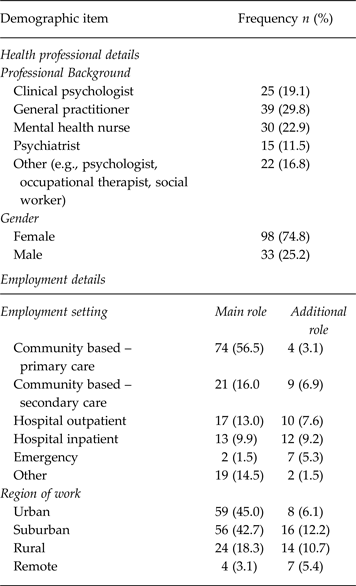
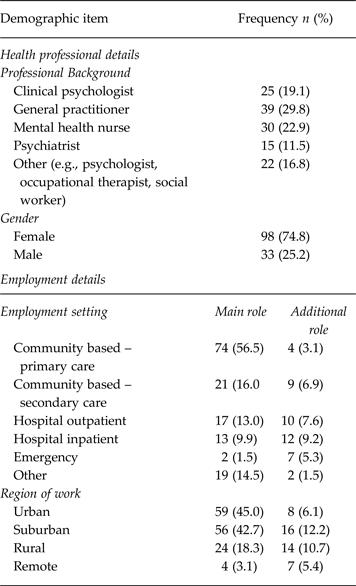
Demographics and employment details are presented in Table 1. Average years in practice was 16.34 years (s.d. = 11.41) and the vast majority (n = 121; 93.1%) had trained in Australia. Participants worked with patients across the lifespan with 82.3% (n = 107) working with young people (<25 years) and 84.6% working with adults (n = 110).
Participant demographic and employment details (n = 131)
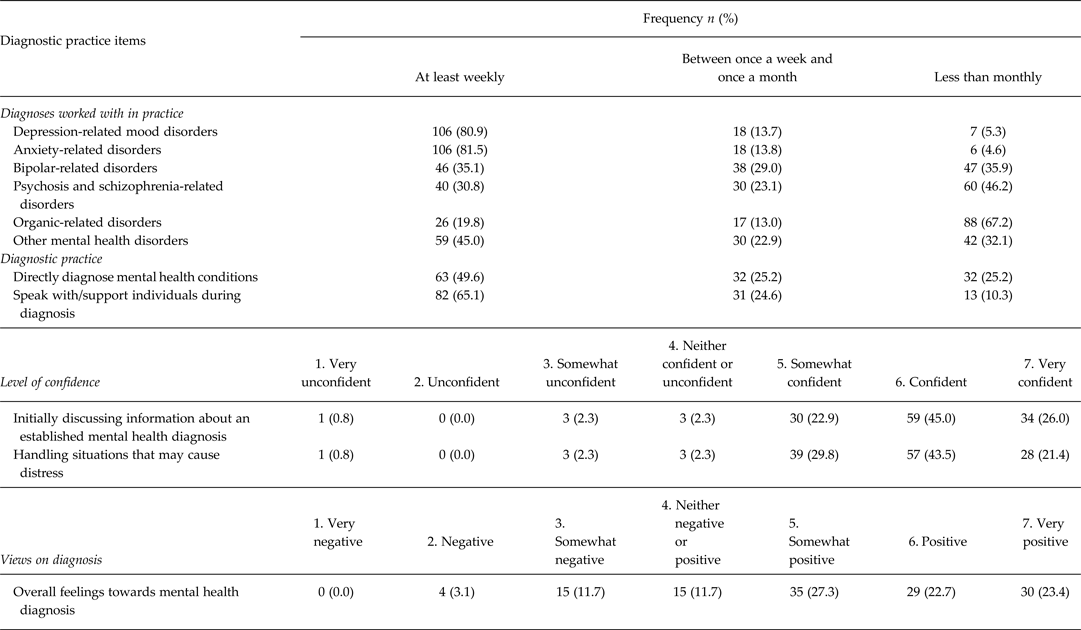
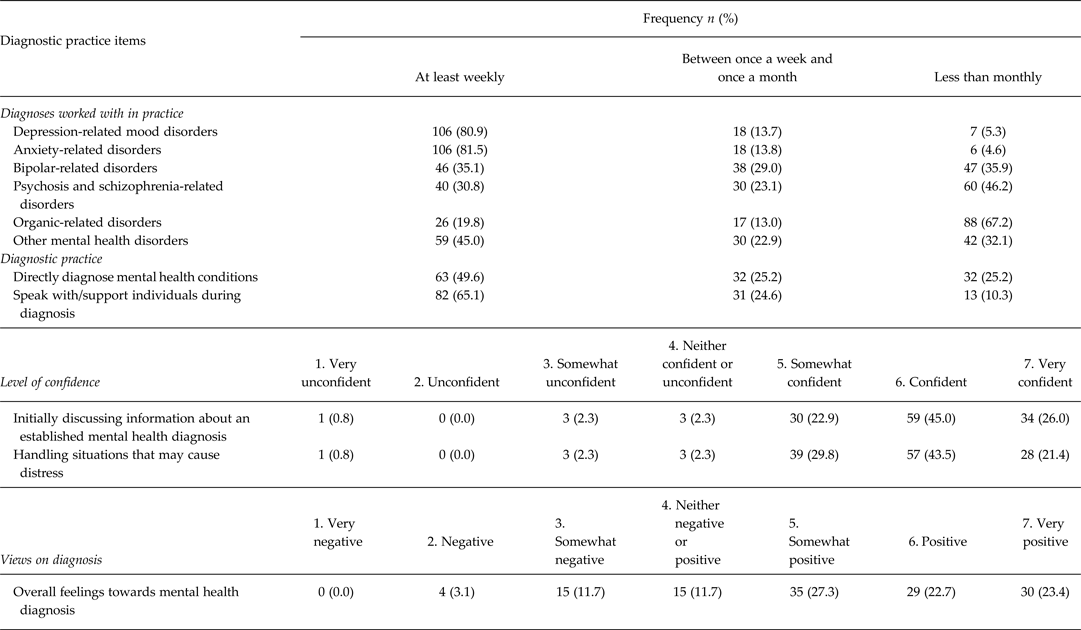
Details of diagnostic practice are presented in Table 2. The majority of clinicians worked with individuals experiencing depression (n = 106; 80.9%) or anxiety disorders (n = 106; 81.5%). Most directly diagnosed a mental health condition at least weekly (n = 63; 49.6%) and supported individuals during the process of diagnosis at least weekly (n = 82; 65.1%). The majority reported being ‘confident’ initiating a diagnostic discussion (n = 59; 45.0%) and handling situations that have the potential to cause distress (n = 57; 43.5%). When asked to rate their ‘overall feelings towards mental health diagnosis’, the majority described these as positive (‘somewhat positive’ (n = 35; 27.3%), ‘positive’ (n = 29; 22.7%) and ‘very positive’ (n = 30; 23.4%)).
Details of diagnostic practice (n = 131)
Barriers to diagnostic discussions
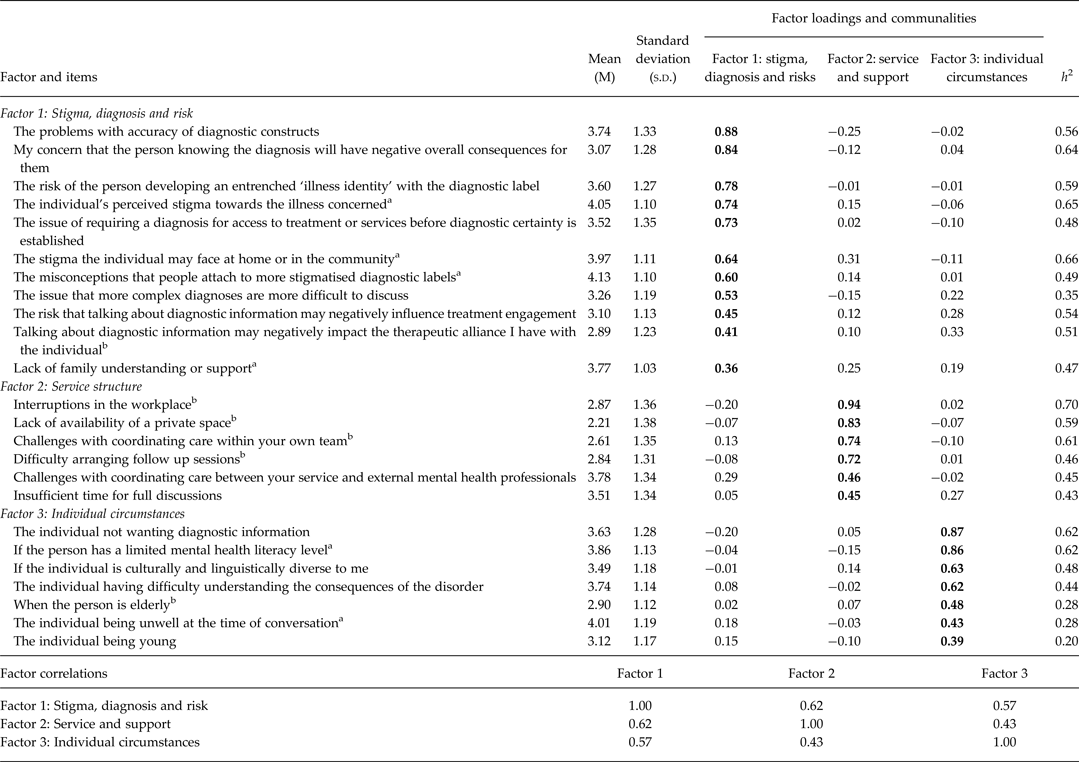
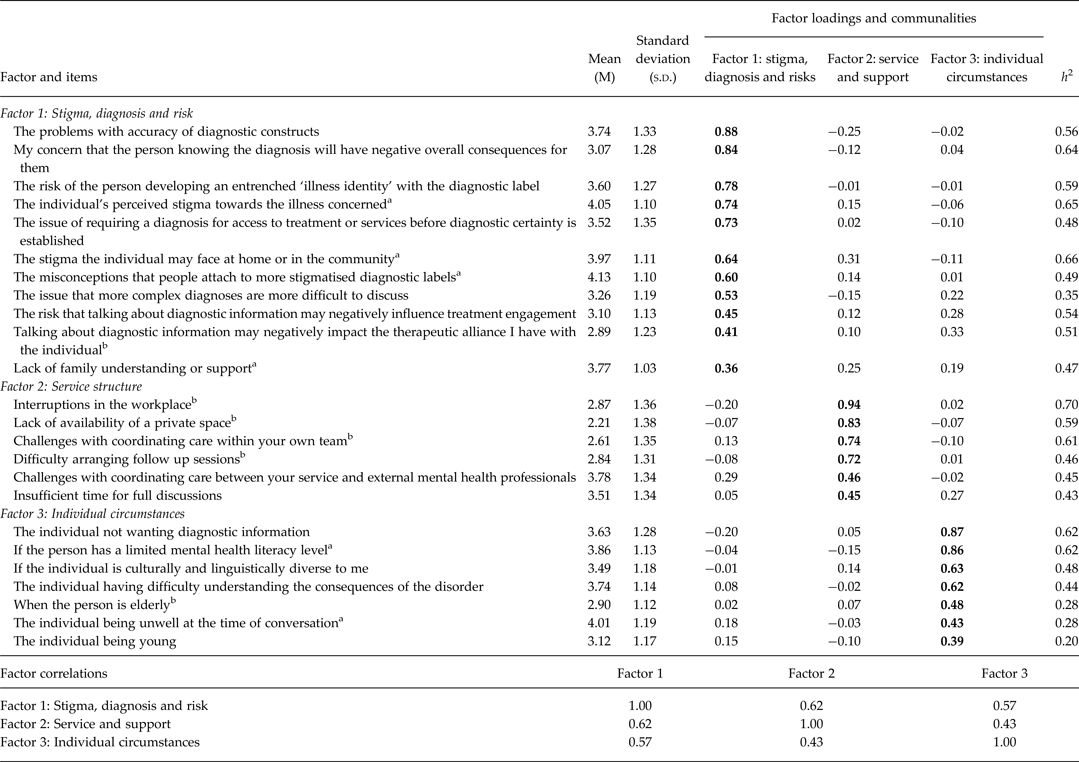
Mean barrier-item responses ranged from M = 2.21 (s.d. = 1.38) to M = 4.11 (s.d. = 1.10) with a score of 2 representing ‘rarely poses a challenge’ and 4 representing ‘often posing a challenge’ when discussing a diagnosis (see Table 3). To partially address Aim 1, barrier-items were compared with the mean point average. Barrier-items that were endorsed significantly more often included stigma concerns, the individual being unwell, having low health literacy, not understanding the consequences of the disorder, and lacking family understanding or support. Barrier-items that were rated as rarely a challenge related to the workplace environment; this included issues such as privacy, team coordination, follow-up and interruptions in the workplace. The item ‘talking about diagnostic information may negatively impact the therapeutic alliance I have with the individual’ was also significantly less of a concern.
Descriptive statistics, reliability and factor loadings and inter-correlations for a three-factor exploratory factor analysis of the 26 barrier items with principal axis factoring and promax rotation (n = 117)
Note. Salient factor loadings (λ > 0.35) are shown in bold text.
a Denotes items that were significantly higher than the mean point average barrier-item score.
b Denotes items that were significantly lower than the mean point average barrier-item score.
Aim 1 was also addressed by conducting an EFA principal axis factoring extraction with promax rotation. Two items were removed. The first item produced in a Heywood case (factor loading was greater that 1.0; item: ‘the problems with validity of diagnostic constructs’) probably due to near-identical wording to another item which was retained (item: ‘the problems with accuracy of diagnostic constructs’). The second item loaded equally across two factors (item: ‘if I have only known the individual professionally for a short time’). For the final 24-item model, the KMO (0.84) and Bartlett Test of Sphericity (χ 2 (276) = 1729; p < 0.01) established that a factorial model was appropriate. Using parallel analysis with 1000 bootstrap samples, three observed eigenvalues were greater than the 95th percentile of bootstrap samples, indicating three factors should be extracted. The three-factor solution explained 50.4% of the variance among the 24-items. Factor loadings and communalities of barrier-items from the EFA are shown in Table 3. Factor 1 (‘stigma, diagnosis and risk’) included 11-items that loaded saliently (λ > 0.35). These item reflected risks associated with a diagnosis (e.g., risk associated with the person developing an ‘illness identity’), having a diagnostic conversation (e.g., risk to the therapeutic alliance), stigma concerns (e.g., from the community or family) and the potential for diagnostic inaccuracy. Factor 2 (‘service structure’) included six-items that loaded saliently (λ > 0.35). This factor related to the structure of the workplace and included items such as privacy, team coordination, follow-up and interruptions in the workplace. Factor 3 (‘individual circumstances’) included seven-items that loaded saliently (λ > 0.35). This factor included potential circumstances of the individual receiving the diagnosis, such as whether they had a culturally linguistically diverse background or their level of wellness at the time of diagnostic conversation. Factors correlations were high, ranging from 0.43 to 0.62.
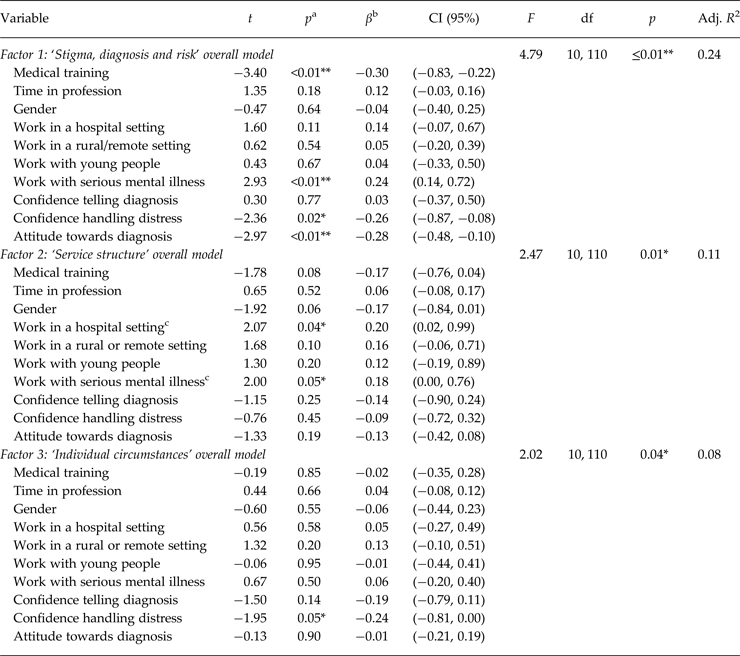
Total scores for the three barrier variables were calculated by taking the average rating across the relevant items for each factor. Total mean scores for the three barrier factors were: factor 1 ‘stigma, diagnosis and risk’ M = 3.56, s.d. = 0.88; factor 2 ‘service structure’ M = 2.93, s.d. = 1.06; and factor 3 ‘individual circumstances’ M = 3.53, s.d. = 0.81. These scores approximated ‘sometimes’ to ‘often posing a challenge when discussing diagnostic information’. To address Aim 2, a series of regression analyses were conducted to determine the unique contribution of the demographic and biographic variables to each of the three identified barrier factors. Collinearity estimates among variables in the model were acceptable (tolerance >0.40, Durbin Watson >1.0). Table 4 shows three regression models for each of the three latent factors. For factor 1, the regression model significantly explained 24.0% of the variance (F (10, 110) = 4.8, p ≤ 0.01, R 2adj = 0.24). Four variables significantly explained the variance. In order of effect size, this included medical training (β = −0.30; p ≤ 0.01), self-rated attitude towards diagnosis (β = −0.27; p < 0.01), confidence handling distress (β = −0.26; p = 0.02) and working with people who had serious mental illness (β = 0.24; p < 0.01). Participants who were allied health professionals (i.e., not medically trained), had a more negative overall attitude towards diagnosis, were less confident handling distress or worked with people who experienced serious mental health problems reported more barriers relating to ‘stigma, diagnosis and risk’. For factor 2, the regression model significantly accounted for 10.9% of the variance (F (10, 110) = 2.5, p = 0.01, R 2adj = 0.11). Two variables significantly explained the variance, which included working in a hospital setting (β = 0.20; p = 0.04) and working with people who had serious mental illness ((β = 0.18; p = 0.05). Those who worked in a hospital setting or worked with people who experienced serious mental health problems more frequently reported more barriers around ‘service structure’ that is provided; however, when bootstrapped these items became non-significant. For factor 3, 7.8% of the variance was significantly explained in the regression model (F (10, 110) = 2.02, p = 0.04, R 2adj = 0.08). Health professionals’ confidence handling distress (β = −0.24, p = 0.05) was also significant when bootstrapped. This demonstrated that participants with less confidence handling distress reported more barriers relating to the individual they were supporting. Time in profession, gender, working with young people, working in rural or remote areas and confidence telling a diagnosis did not significantly explain variance for any factor.
Multiple regression models for factors 1, 2 and 3 (n = 121)
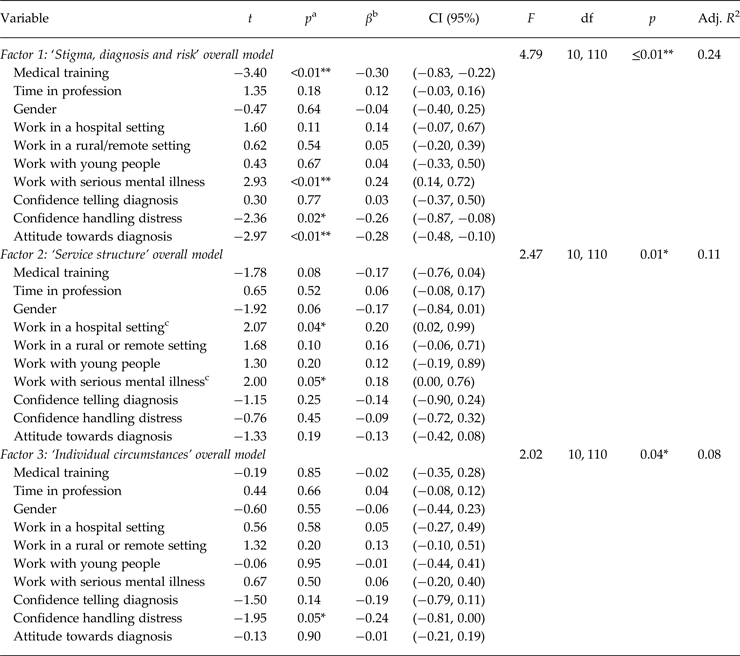
*Significant at 95% confidence interval; ** significant at 99% confidence interval.
a Non-bootstrapped values.
b Standardised beta values.
c Not significant using both original and bootstrapped analyses.
Combined group for regression analysis: Medically trained (Yes v. No); Hospital work (Yes v. No); Rural and remote (Yes v. No); Serious mental health diagnosis (Yes v. No); ‘less confident’ (Likert responses 1–5) v. ‘confident’ (Likert responses 6–7); Views towards diagnosis were ‘negative or neutral’, ‘somewhat positive’ and ‘positive or very positive’.
Facilitators of diagnostic discussions
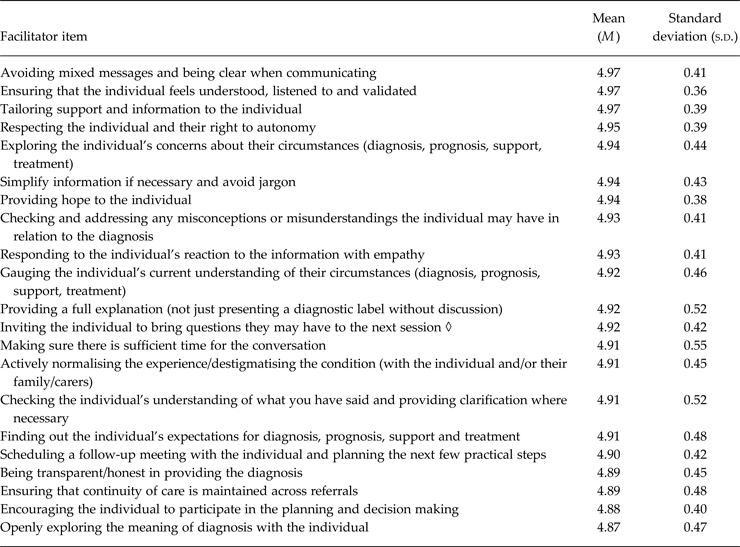
To address Aim 3, all 78 strategy-items were assessed in terms of frequency of reporting. Participants’ mean scores for all strategy-item were high; ranging from 3.62 to 4.97, A score of 3, 4 and 5 represented ‘sometimes’, ‘often’ and ‘usually’ helpful when discussing diagnostic information, respectively. The items that were rated as significantly more frequently helpful are presented in Table 5 (See online Supplementary File 1 for full list). The most frequently used strategies centred on clinicians’ communication skills, gauging the individual's perception of their circumstances, responding with empathy, following-up after discussion, addressing stigma concerns, using collaborative practice and setting up for the conversation.
Mean and standard deviation scores of health professional strategies used significantly more frequently in practice (minimum n = 114)
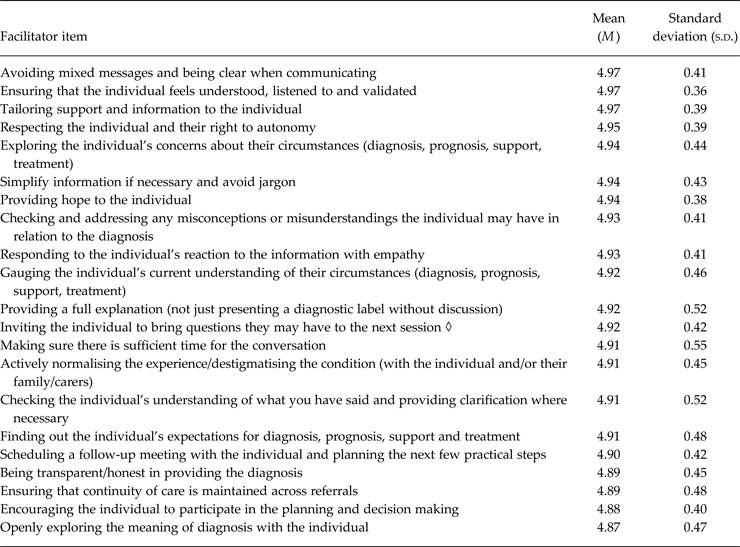
Note. For each item, the minimum score is 1 and the maximum score is 6.
Discussion and conclusions
Stigma and health professional roles
The most frequently reported barriers when discussing diagnostic news related to ‘stigma, diagnosis and risk’. Reviews of the stigma literature advocate that clinicians take on a role as ‘de-stigmatisers’ as part of everyday service provision (Schulze, Reference Schulze2007). This is vital as research based on modified labelling theory has reported correlations between internalised stigma and poorer self-esteem, socioeconomic situations, social networks and quality-of-life (Link et al. Reference Link, Struening, Rahav, Phelan and Nuttbrock1997; Rosenfield, Reference Rosenfield1997; Markowitz, Reference Markowitz1998). As diagnosis is part of routine practice, health professionals should consider addressing the issue of stigma in partnership with the individual they are supporting. In addition, helping patients to develop stigma management strategies is likely to be beneficial (Świtaj et al. Reference Świtaj, Wciórka, Smolarska-Świtaj and Grygiel2009; Yanos et al. Reference Yanos, Roe, West, Smith and Lysaker2012; Sibitz et al. Reference Sibitz, Provaznikova, Lipp, Lakeman and Amering2013; Rüsch et al. Reference Rüsch, Abbruzzese, Hagedorn, Hartenhauer, Kaufmann, Curschellas, Ventling, Zuaboni, Bridler and Olschewski2014). Our findings suggest that this may be particularly beneficial for individuals who experience a more serious mental health diagnosis. Screening for stigma stress within individuals at risk of serious mental health diagnosis is an avenue for future research (Riecher-Rössler & McGorry, Reference Riecher-Rössler and Mcgorry2016) and may improve service delivery.
Whether participants had completed medical training significantly explained variance in ‘stigma, diagnosis and risk’, even after controlling for overall attitude towards diagnosis. Those with allied health training reported ‘stigma, diagnosis and risk’ barriers more frequently compared those who were medically trained. There may be various reasons for this finding; it may be that diagnosis plays a more important role in medical training and service delivery compared to allied health. For example, research has demonstrated that psychiatrists are more likely to disclose a diagnosis than allied health professionals (Green & Gantt, Reference Green and Gantt1987). It may also be a function of beliefs around diagnosis. Studies highlight differences between clinicians’ stigma beliefs, with psychiatrists holding more stigmatising beliefs than other professions (Lauber et al. Reference Lauber, Nordt, Braunschweig and Rössler2006; Nordt et al. Reference Nordt, Rössler and Lauber2006). MHNs have also been found to be more positive about long-term outcomes and prognosis in scenarios describing either schizophrenia or depression compared to those with a medical background (Caldwell & Jorm, Reference Caldwell and Jorm2001). Caldwell & Jorm (Reference Caldwell and Jorm2001) suggest that given the potential impact on individuals who access services, all practitioners need to be cognisant of their own beliefs as well as those of the multidisciplinary team. In the current study, professional background did influence perceptions of stigma as an issue in practice. Differing views can create the potential for professional disagreement to arise, or alternatively, may be used in a constructive and complementary manner through inter-professional collaboration and discussion. How clinicians communicate with each other within a service before a diagnosis takes place is important as inter/intra-professional tensions and disagreement about diagnosis can arise (Loughland et al. Reference Loughland, Kelly, Ditton-Phare, Sandhu, Vamos, Outram, Levin and Investigators2015). Strategies such as close cooperation between team members, and team preparation with regard to how the discussion might proceed were highlighted as crucial to supporting an individual through the diagnostic communication process. This is particularly worthwhile as research has found that individuals with additional support at the time of diagnosis report higher levels of satisfaction compared with those who only had support from the diagnosing clinician (Milton & Mullan, Reference Milton and Mullan2016).
Stigma awareness and reduction training for clinicians may be central to aiding professional development. Studies are now focusing on medical practitioners being a key target audience for anti-stigma programmes (Friedrich et al. Reference Friedrich, Evans-Lacko, London, Rhydderch, Henderson and Thornicroft2013; Modgill et al. Reference Modgill, Patten, Knaak, Kassam and Szeto2014; Yamaguchi et al. Reference Yamaguchi, Niekawa, Maida, Chiba, Umeda, Uddin, Taneda and Ito2015). Such training might also extend to follow-up modules that support all mental health clinicians, irrespective of professional background, that facilitates consideration of how they themselves can play an active role in stigma reduction. Schulze argues that the various anti-stigma programmes have demonstrated that health professionals can champion the processes of social change (Schulze, Reference Schulze2007). Given the multidisciplinary make-up of mental health teams, these programmes may be worthwhile pursuing, using a whole-team inter-professional training approach. This may also integrate into student settings; where inter-professional education is being progressively introduced (e.g., see (Olson & Bialocerkowski, Reference Olson and Bialocerkowski2014)).
Health professional skills
In this study, many of the SPIKES items, often advocated for use in clinician training, were also reported to be frequently utilised by clinicians in practice. These included setting up for the conversation, gauging the individual's perception of their circumstances, responding with empathy and following-up after discussion. Additional strategies frequently used by clinicians included addressing stigma concerns and using collaborative practice, these also are highly important skills for clinicians to develop early on in their career. In terms of barriers, confidence handling distress also explained variance in both the ‘individual circumstances’ and the ‘stigma, diagnosis and risk’ latent factors. This variable had more explanatory power than confidence telling a diagnosis. This is in line with previous research, where clinicians have reported that the likelihood of an individual becoming distressed can impact on their practice when delivering difficult news (Cleary et al. Reference Cleary, Hunt and Walter2010b). Strategies, such as allowing time for the individual to air their distress, and empathically acknowledging the individual's experience, have been reported as important (Milton et al. Reference Milton, Mullan and Hunt2016); and training to support distressed individuals is vital. Internationally, there have been calls for clinician training programmes targeting the communication of diagnostic news (Cleary et al. Reference Cleary, Hunt and Horsfall2009; Seeman, Reference Seeman2010; Milton & Mullan, Reference Milton and Mullan2014a, Reference Milton and Mullanb; Loughland et al. Reference Loughland, Kelly, Ditton-Phare, Sandhu, Vamos, Outram, Levin and Investigators2015; Farooq et al. Reference Farooq, Naeem and Singh2016). Health professionals have also requested more training (Cleary et al. Reference Cleary, Hunt and Walter2010b). Some promising programmes are beginning to emerge, such as those recently piloted by Loughland et al. (Reference Loughland, Kelly, Ditton-Phare, Sandhu, Vamos, Outram, Levin and Investigators2015) which look at communicating news of schizophrenia. Their initial results have demonstrated that communication training programmes improved confidence in discussing diagnosis and more research of this ilk is needed.
Limitations
Further research is required to investigate whether changes in the barriers and facilitators assessed in this study improve outcomes, and whether there are more areas requiring consideration by practitioners that are not defined in this study's original list. However, these items were established systematically through both reviews of the literature and through qualitative interviews, hence should be relatively comprehensive. Additional research could also address existing study limitations; including the exploratory nature of the research, the reliance on self-report, the use of voluntary samples, the underrepresentation of male clinicians, and the potential for non-response. Social desirability biases, or accuracy of reported practices, may be an issue as differences have been reported between clinicians’ views and practices; however this is unlikely as online surveys may not be as heavily subjected to social desirability biases as there is no interviewer present (Heeren et al. Reference Heeren, Edwards, Dennis, Rodkin, Hingson and Rosenbloom2008). Observational studies are needed alongside future interventions (Crisp et al. Reference Crisp, Gelder, Rix, Meltzer and Rowlands2000). The strength of the study rests in the sampling of clinicians with both diverse backgrounds and clinical workplace settings. Additionally, rural and remote areas were well represented in this survey, at 18.3 and 3.1%, respectively. The last published census reported that 11.3% of Australians lived in outer regional or remote areas (ABS, 2008a). This diversity helps to address previous calls in the literature to incorporate a range of viewpoints (Milton & Mullan, Reference Milton and Mullan2014a; Loughland et al. Reference Loughland, Kelly, Ditton-Phare, Sandhu, Vamos, Outram, Levin and Investigators2015).
Conclusions
Alongside considering the strategies that help clinicians to discuss diagnosis in a supportive and tailored way, is a greater understanding of the barriers to communication. The current research suggests that there are three main areas for health professionals to reflect on, plan for and ultimately address when discussing mental health diagnoses. This includes factors relating to: (1) stigma, diagnostic factors and future risks; (2) the individual who is being told the diagnosis; and (3) the service and support provided. Clinician factors, such as professional background can also influence beliefs and practices. Awareness of these differences and applying team based strategies to utilise this diversity in a complementary way are important for health professionals to plan for and address to effectively support the individual within a service.
Acknowledgements
Thank you to the Australian Clinical Psychology Association, Australian College of Mental Health Nurses, The Royal Australian College of General Practitioners and The Royal Australian and New Zealand College of Psychiatrists, Headspace and South West Sydney Local Health District for their assistance with recruitment. Thank you to Dr N. Gill, Mr M. James, Professor S. Johnson and Ms M. Quig for your pilot study input.
Financial support
This research received no specific grant from any funding agency, commercial or not-for-profit sectors.
Conflict of interest
None.
Ethical standards
The authors assert that all procedures contributing to this work comply with the ethical standards of the relevant national and institutional committees on human experimentation and with the Helsinki Declaration of 1975, as revised in 2008.
Availability of Data and Materials
The research team is open to potential collaborations with other researchers. Study materials and data are retained at the University of Sydney in accordance with ethical guidelines. Access can be authorised under data management guidance to occur at this location. Thus, any collaboration requests should be made by contacting the research team (amil2403@uni.sydney.edu.au) with their expression of interest.
Supplementary material
The supplementary material for this article can be found at https://doi.org/10.1017/S2045796016001153.