




No CrossRef data available.
Article contents
Results of staged reconstruction for hypoplasia of the left heart: an experience of 12 years from one institution
Published online by Cambridge University Press: 24 May 2005
Abstract
Background: We reviewed our 12-year experience with staged reconstruction for hypoplasia of the left heart, examining the results of each surgical step and the impact of the year of the Norwood operation on survival. We compared survival of patients with hypoplasia of the left heart subsequent to completion of the Fontan circulation to survival of patients with a dominant left ventricle undergoing a Fontan procedure. Patients: Between 1989 and 2001, we performed a first stage procedure in 89 patients. Their median age was 9 days, with a range from 2 to 140 days, and the median weight was 3.4 kg, with a range from 2.4 to 5.4 kg. Results: Survival at 1, 4, and 10 years was 55%, 49%, and 49%, respectively. We experienced 23 early deaths (26%), and 12 deaths between the stages of the Norwood cascade. Of our patients, 42 underwent the second stage, and 30 the third stage. Prior to the first stage, symptoms of necrotising enterocolitis, and of obstructed pulmonary venous return, influenced survival significantly. The latter was eliminated as risk factor when surgery was performed within the first week of life. During the later part of our experience, survival at the first stage operation improved significantly, with survival at 3 years increasing from 42% to 75% for the patients at standard-risk (p = 0.017), and from 17% to 42% for those deemed to be at high-risk (p = 0.1). No deaths occurred in 23 patients older than 3 years of age, all of whom had proceeded through the third stage. After completion of the Fontan circulation, the survival of the patients with hypoplasia of the left heart at 4 years was comparable to the survival of patients undergoing the Fontan procedure with a dominant left ventricle (88% versus 90%, p = 0.8). Conclusions: Early and intermediate survival has improved significantly over the period of 12 years. Late death has been uncommon, and none of our patients are listed for cardiac transplantation.
Information
- Type
- Original Article
- Information
- Copyright
- © 2003 Cambridge University Press
Hypoplasia of the left heart is the most common congenital cardiac malformation producing a functionally univentricular circulation, and the fourth most common lesion requiring open heart surgery in the neonatal period. Without treatment, over nine-tenths of afflicted neonates do not survive the first month of life.1 Management of the neonates, however, remains controversial. At present, cardiac transplantation,2, 3 and staged reconstruction following the Norwood protocol,4, 5 are the only palliative options on offer. Both have their particular difficulties and limitations. Neonatal cardiac allotransplantation is limited by the supply of suitable donor hearts,6 by the constraints of time resulting from the pathophysiology of medical palliation while awaiting transplantation,7 and by the effects of long-term immunosuppression.8 The reconstructive approach requires a sequence of technically demanding procedures that may be fraught with high operative mortality, and the ultimate limitations of a functionally univentricular physiology. Because of these problems, some still recommend the withholding of surgery.9, 10 At our institution, we have offered staged reconstruction for infants with hypoplasia of the left heart since October, 1989. In this study, we have analysed retrospectively our experience with the Norwood operation, and the subsequent two-stage conversion to the Fontan circulation, over a period of 12 years. We have compared the rates of survival of our patients at standard risk, and those deemed to be at high risk, during two periods. We have also compared the hemodynamic data of patients with hypoplasia of the left heart after the second stage operation with those of patients having a dominant left ventricle subsequent to a bidirectional cavopulmonary anastomosis. We have also compared the midterm survival after completion of the Fontan circulation between these groups of patients.
Methods
Study design
We reviewed the surgical database at Heart Center NRW in Bad Oeynhausen to identify all patients who underwent the first stage of reconstruction for hypoplasia of the left heart between October 1, 1989, and December 31, 2001. Diagnosis was based on cross-sectional echocardiographic evidence of a diminutive ascending aorta or aortic arch, aortic atresia or hypoplasia, and hypoplasia of the left ventricle, with underdevelopment of all three of its component parts. Angiocardiography was performed as an initial study only in the 5 cases with borderline hypoplasia of the left ventricle, but was routinely performed before the second and third stages of the Norwood sequence. We included amongst our patients with variants of hypoplasia of the left heart, such as unbalanced atrioventricular septal defect with common atrioventricular junction, and double outlet right ventricle with mitral atresia, subaortic stenosis, and hypoplasia of the aortic arch. The systemic circulation was always completely dependent on the morphologically right ventricle. Patients who underwent a Norwood procedure with a well-developed left ventricle and aortic atresia, or obstruction or interruption of the aortic arch, were not included.
The impact on survival of the year of the first stage procedure was evaluated by dividing the study period into two periods. These were the first eight years, from October 1, 1989 to September 30, 1997, when we performed surgery on 38 patients, and the last four years, from October 1, 1997 to December 31, 2001, when we carried out surgery on 51 patients. We chose September 1997, as the dividing point since, at that time, we reviewed critically our protocols for perioperative management, making the following changes:
- During rewarming, and after separation from the extracorporal circulation, volume was supplied more rigidly according to the central venous pressure, the arterial pressure, the arteriovenous oxygen saturation difference, and the amount of negative base excess. As optimal values, we sought a central venous pressure of 12–13 mmHg, a difference in arteriovenous saturation of oxygen of 30, and a normal base excess.
- If arterial pressure and ventricular function were inadequate, inotropic support was started.
- In addition, stricter efforts were made to balance pulmonary and systemic flows of blood by adjusting mechanical ventilation, usage of vasodilators and application of carbon dioxide.
- Also newly introduced was the infusion of Aprotinin at the end of the operation, and the usage of a battery operated ventilator to bridge the way from the operating theatre to the pediatric cardiac intensive care unit, thus avoiding manual hyperventilation.
We separated the patients entering the study into those deemed at standard or high risk according to criterions established from prior analyses performed at this institution,11, 12 and by others.13, 14
Definition of risks
Amongst those considered at high risk were patients presenting with severe obstruction of pulmonary venous return, patients with preoperative symptoms of necrotising enterocolitis and/or anal atresia, patients with a birth weight of less than 2.5 kg, and patients with pulmonary sequestration and partial hypoplasia of one lung (Table 1).
Table 1. Groups of patients with hypoplasia of the left heart.

The diagnosis of obstructed pulmonary venous return was always based on Doppler interrogation alone. The obstruction was caused by restriction at the oval foramen in 19 cases, and by stenotic totally anomalous pulmonary venous connection of supracardiac type in one patient. We found no evidence of morphologic stenosis of the pulmonary veins themselves. The oval foramen was considered to be restrictive if the transatrial pressure gradient reached at least 13 mmHg as assessed by Doppler echocardiography. This was the only criterion for inclusion. In each case, the restriction at the oval foramen was confirmed by direct inspection by the surgeon at the time of the Norwood operation.
Symptoms of necrotising enterocolitis were observed in 10 infants. All developed a blown-out, tightened, and painful abdomen within the period of 12 h before the scheduled operation. In 7 cases, these symptoms were accompanied by various degrees of abdominal erythema. In addition, the stool of 3 of the 10 patients contained blood. The day before the appearance of abdominal symptoms, levels of lactate in the 10 infants were between 2.0 and 3.0 mmol/l. Shortly before the operation, there was a sudden increase of up to 5 to 18 mmol/l, accompanied by an increased negative base excess. In usual circumstances, these patients are considered to be inoperable. We hoped, nonetheless, to improve abdominal perfusion significantly by an immediate operation.
Our follow-up is complete for all patients, with all being followed by our institution. The median period of follow-up was 27 months, with a range from 2 to 128 months. We also identified those patients who underwent cardiac transplantation subsequent to the first stage of the Norwood sequence. Early death was defined as death within 30 days after the procedure. Death between stages was defined as that occurring beyond the 30th day after the Norwood procedure, but before the second stage operation. Late death was defined as mortality that occurred beyond the 30th day after the second stage or the third stage of the Norwood cascade, respectively.
We divided the patients according to anatomy into groups with:
- Aortic and mitral atresia.
- Aortic atresia and mitral hypoplasia.
- Aortic hypoplasia and mitral atresia.
- Aortic hypoplasia and mitral hypoplasia.
- Other variants.
The actuarial survival of the patients who had undergone the third stage was compared to the survival of our patients whose systemic circulation was supported by a dominant left ventricle with a normally developed aortic root and aortic arch, and who also had undergone an inferior cavopulmonary anastomosis after a previous bidirectional cavopulmonary anastomosis between January 1, 1992 and December 31, 2001. Therefore, we reviewed the surgical database at Heart Center NRW in Bad Oeynhausen to identify all patients with a dominant left ventricle. Follow-up is also complete for these patients, all again being followed by our institution. The median period of follow-up was 47 months, with a range from 1 to 139 months.
Surgical technique
During the treatment of our first 13 patients, our technical procedure for augmentation of the aorta and the institution of the aortopulmonary shunt varied several times. Since summer 1994, however, the surgical procedure has become standardized, and is similar to that described in detail by others.4, 5, 15 Briefly, the aortic arch is augmented by a tailored segment of a 10 mm coated Heamashield dacron double velours prosthesis, the arterial duct is resected, and the pulmonary valve is incorporated into the neoaorta. The systemic-to-pulmonary arterial shunt is constructed by joining the brachiocephalic artery, or near by its origin, to the right pulmonary artery close to the bifurcation. The conduit joining the vessels, in infants weighing more than 3.5 kg, was a 4 mm tube of polytetraflourethylene. For infants weighing between 3.0 and 3.5 kg, we used a tube of 3.5 mm diameter, and for infants of less than 3.0 kg we used a tube having a diameter of 3 mm. An atrioseptectomy is also performed. The average circulatory arrest time was 58 ± 14 mm. The complete procedure, and our technique for the staged Fontan operation, have recently been described elsewhere.12 The total cavopulmonary anastomosis was always performed using a lateral tunnel, incorporating a fenetration of 4 mm.
Statistics
Survival status was confirmed by direct patient contact. Survival estimates were obtained by means of the Kaplan-Meier method, comparing subgroups with the log-rank test. Chi-square test was used for univariate comparisons regarding early mortality of the two time periods, and early mortality of patients with and without an obstructed pulmonary venous return. For multivariate analyses of potential risk factors for early mortality, we used binary logistic regression. Age and hemodynamic parameters of the patients with hypoplasia of the left heart who underwent completion of the Fontan circulation, and the comparable patients with a dominant left ventricle, were compared using Student's t-test for unpaired values. The univariate search for risk factors over the long term was done with the log rank test after dichotomization at the median for the continuous variables. For multivariate identification of risk factors, we constructed Cox regression models including the relevant groups of patients. Significance was stated when p-values were <0.05. For all analyses, we used SPSS Version 10.0, SPSS Inc., Chicago.
Cohorts of patients
- For calculations concerning early mortality and actuarial survival over the total period of study, and for comparison of the early versus the late era, the cohort contained all 89 patients who underwent the first stage procedure.
- For calculations concerning the impact of an obstructed pulmonary venous return upon survival after the first stage operation, the cohort contained 85 cases. We excluded 4 patients from the years between 1989 and 1990 because we lacked echocardiographic data concerning the size of the oval foramen and the transatrial pressure gradient.
- For analysis of age as a risk factor for patients with an obstructed pulmonary venous return, the cohort contained the 20 patients with an obstructed pulmonary venous return.
- The cohort of those deemed at high risk consisted of 28 patients. They had one or several of the predefined potential risk factors. We included 2 of the 4 patients with no preoperative data concerning transatrial pressure gradient since they had another potential risk factor.
- The cohort of those deemed to be at standard risk consisted of 59 patients. They had none of the predefined potential risk factors. The remaining 2 of the 4 patients with no preoperative echocardiographic data concerning transatrial pressure gradient were excluded. Although they had no further potential risk factors, their interatrial communication might have been restrictive.
Results
Population of patients
From October 1, 1989 to December 31, 2001, 98 infants with hypoplasia of the left heart were admitted to our hospital. Of these infants, 89 underwent the first stage procedure. In 9 patients, we did not perform the Norwood operation. Of these, 4 neonates were admitted with severe and untreatable myocardial failure and died. An additional 2 neonates had an intact oval foramen and died after surgical septectomy. Primary cardiac transplantation was performed in 1 patient. Between 1994 and 1997, we refused to treat 2 patients because their weight at birth was less than 2.6 kg. We abolished this limitation in September, 1997. The preoperative data for all the patients undergoing surgery are shown in Table 2. The median age at the time of the first stage operation was 9 days, with a range from 2 to 140 days. This median age decreased from 31.5 days for 18 patients over the period from October 1989 to December 1993, to 14.5 days for 20 patients over the period January 1994 to September 1997, and reached 5.0 days in the 51 patients seen between October 1997 and December 2001. The old age of the patients during the early part of our experience had several causes: At the beginning of the surgical program, we considered cardiac transplantation to be the therapy of choice. If no donor heart was available, the Norwood procedure was offered as an alternative. During that period, only one donor heart became available. Patients waited several weeks, therefore, before they were scheduled for the Norwood operation. Since 1993, cardiac transplantation has no longer been offered as the first choice. A further reason for the old age during the first years of the program was the hypothesis that postoperative balancing of the parallel pulmonary and systemic blood flows might be easier if pulmonary vascular resistance had already been reduced preoperatively as low as was possible. Because of this, the Norwood operation was delayed for one to two weeks. In addition, age at admission was higher during the first eight years than during the last four years, with a mean age of 8 days versus one of 3 days. This reflects the hesitant acceptance of the surgical program for patients having hypoplasia of the left heart by the referring institutions. All neonates diagnosed prenatally were admitted only during the last four years.
Table 2. Preoperative data of the patients with hypoplasia of the left heart.

The median weight was 3.4 kg, with a range from 2.4 to 5.4 kg. There were 54 males (60%) and 35 females (40%). Of the 89 patients, 13 were diagnosed prenatally, and 60 were diagnosed after cardiopulmonary collapse. Of the patients undergoing surgery, 20 had obstructed pulmonary venous return including the solitary patient with stenotic totally anomalous pulmonary venous connection. Preoperatively, 10 of the 89 patients developed symptoms of necrotising enterocolitis, with two having had a previous operation for anal atresia. Pulmonary sequestration and pulmonary hypoplasia were found in one patient. Within the period of follow-up, we had 44 survivors (49.4%), 45 of the cohort (50.6%) dying. Among those dying were 2 patients who had undergone orthotopic cardiac transplantation 7 and 22 months after the Norwood operation. The second stage, a bidirectional upper cavopulmonary anastomosis, was performed in 42 patients at a median age of 4.5 months, with a range from 1.7 to 19 months. The third stage, an inferior cavopulmonary anastomosis, was performed in 30 patients at a median age of 17 months, with a range from 10 to 40 months.
From January 1, 1992 to December 31, 2001, 98 patients with a dominant left ventricle, without having undergone an initial Norwood operation, had construction of a bidirectional upper cavopulmonary anastomosis and subsequent inferior cavopulmonary anastomosis at our institution. There were 56 males (57%) and 42 females (43%). The median age at the time of the bidirectional upper cavopulmonary anastomosis was 10.5 months, with a range from 2.2 to 78 months. The median age at the time of the inferior cavopulmonary anastomosis was 22 months, with a range from 3.5 to 91 months.
The morphologic subsets amongst our 89 patients are shown in Figure 1. There were 33 patients (37%) with aortic and mitral atresia, while 27 patients (30%) had one atretic and one hypoplastic left-sided valve. The 3 cases with double outlet right ventricle were included in the subgroup of mitral atresia and aortic hypoplasia. In 26 patients (29%, there was severe hypoplasia of both left-sided valves. An unbalanced atrioventricular septal defect was seen in 3 patients (4%).

Figure 1. Distribution of morphologic subgroups amongst the 89 patients undergoing surgery for hypoplasia of the left heart. AVSD: atrio-ventricular septal defect.
The diameters of the ascending aorta are shown in Figure 2. The mean diameter of the ascending aorta was 3.5 ± 2.3 mm, with a range from 1.5 to 8 mm, with 47 patients (53%) having an aorta with a diameter of less than 3 mm, and 28 patients (31%) having a diameter of 4 mm or more.

Figure 2. The distribution of the diameter of the ascending aorta amongst the 89 patients undergoing surgery for hypoplasia of the left heart.
Mortality
Figure 3 shows the overall and risk-stratified actuarial survival of our entire cohort. The surviva1 at 1, 4, and 10 years without risk stratification was 55%, 49%, and 49%, respectively. Most of the deaths were observed after the Norwood procedure, with 23 deaths occurring early after the first stage (51% of the total deaths). Of those dying, 17 did so within the first 36 h. There were 12 patients who died between stages for various reasons. In 1 case, the aortopulmonary shunt was obstructed. In another, with a weight at birth of 2.4 kg, multiple thrombemboli were found in the pulmonary arteries. We lost 2 patients with severe DiGeorge syndrome because of recurrent pneumonias, while 2 patients seen early in our experience died after cardiac transplantation. The indication for transplantation in both cases was not myocardial failure, but extensive obstruction within the aortic arch, with additional neoaortic valvar incompetence in 1 case. The transplantation procedure included the replacement of the whole aortic arch. We lost 1 patient with preoperative symptoms of necrotising enterocolitis after prolonged multiorgan failure. The remaining 5 patients died suddenly. Although there were no typical electrocardiographic patterns, the most probable reason seemed to be critically low coronary arterial flow.
We performed the second stage procedure in 42 patients, with 4 early and 3 late deaths. The causes of death were myocardial failure in each case. The third stage has been performed in 30 patients, with no early death. We have, however, lost three patients subsequently, due to pneumococcal meningitis at the age of 3 years in one, recurrent pleural effusions due to hypoplastic pulmonary arteries at the age of 2 years in another, and aspiration at the age of 2 years in the final patient. None of the 23 patients older than 3 years has died. Of these patients, 16 are now older than 4 years, and 6 are older than 7 years.
For our overall cohort, stratification of risk (Fig. 3) demonstrates a significant difference for early mortality, as well as for long-term survival, between the 59 patients deemed at standard risk and the 28 patients placed in the group considered at high risk. Only 7 of the 59 patients (11.8%) considered at standard risk died, as compared to 14 of the 28 (50%) deemed to be at high risk (p = 0.001). Survival at 3 years was 60% for those at standard risk, as opposed to only 32% for those considered to be at high risk (p = 0.003).

Figure 3. Actuarial survival of all 89 patients: as a whole and, for 87 patients, split by the presence of risk factors. The group of patients shown to be at standard risk had a significant advantage concerning early mortality (p = 0.001) and survival (p = 0.003).
Figure 4 shows the actuarial survival for overall population divided into the 38 patients undergoing surgery from October 1989 to September 1997, and the 51 patients undergoing surgery from October 1997 until December 2001. Performance of the first stage operation in the later period was associated with a significantly increased long-term survival, with survival at 3 years improving from 32% to 67% (p = 0.003). The early mortality decreased from 34% to 20% (p = 0.12).

Figure 4. Actuarial survival of the entire study group analysed for the two periods of time with regard to the first stage operation. Survival improved significantly (p = 0.003) in the second era.
Figure 5 shows the actuarial survival of the patients deemed to be at standard risk in the two periods. Although early mortality was the same in both eras, actuarial survival has significantly improved in the later era (p = 0.017). The increased survival at 3 years (42% to 75%) was because fewer patients died between stages.

Figure 5. Actuarial survival of patients known to be at standard risk analysed for the two periods of time for the first stage operation.
Figure 6 shows the actuarial survival of the patients at high risk divided according to the two periods of time. The first stage operation performed in the second period was associated with marked but insignificant improvement of early mortality, as well as of actuarial survival. This may be due to the small number of patients. Early mortality decreased from 67% to 38% (p = 0.13), while survival over 3 years improved from 17% to 43% (p = 0.1)

Figure 6. Actuarial survival of patients known to be at high risk analysed for the two periods of time for the first stage operation.
In Figure 7, survival of the 30 patients with hypoplasia of the left heart who underwent the third stage is compared to survival of the 98 patients with a dominant left ventricle. The survival at 1 year for patients with a dominant left ventricle was 92%, compared to 88% for patients with a dominant right ventricle. Comparable survival at 4 years was 90% and 88%, respectively. The difference was not significant (p = 0.8). The ages of both groups at the time of the upper as well as of the inferior cavopulmonary anastomosis are listed in Table 3. At the time of the upper bidirectional cavopulmonary anastomosis, patients with a dominant left ventricle were 4 months older (p < 0.05). At the time of completion of the Fontan circulation, they were 5 months older than their counterparts (p < 0.05). Table 4 gives the hemodynamic data for the two groups, as determined by catheterization 1 day before the inferior cavopulmonary anastomosis was performed. No differences were found between the groups.

Figure 7. Comparison of overall survival after the total cavopulmonary anastomosis performed as part of the two-stage Fontan procedure for patients with hypoplasia of the left heart (bold line) compared to patients with a dominant left ventricle. HLHS: hypoplastic left heart syndrome; LV: dominant left ventricle.
Table 3. Age of patients with hypoplasia of the left heart or dominant left ventricle at the time of the upper and inferior cavopulmonary (CPA) anastomoses.

Table 4. Hemodynamic data of patients with hypoplasia of the left heart compared to those with a dominant left ventricle before the inferior cavopulmonary anastomosis.

Risk factors for mortality
The risk factors for death at any time after the Norwood procedure are shown in Table 5. Age and weight at the first stage, worst acid–base balance before the first stage, saturations of oxygen before the first stage, the diameter of the ascending aorta, morphologic subgroups, cardiothoracic ratio before the first stage, and circulatory arrest time of the first stage procedure were not significantly associated with death at any time after the Norwood operation. Concerning the weight, however, there were only 2 patients weighing less than 2.5 kg, and both died. The estimations as determined by univariate significance were confirmed by multivariate analyses.
Table 5. Risk factors for overall mortality after the Norwood operation.

Until September 1998, when we analysed the risk factors for the first time, the presence of an obstructed pulmonary venous return was a significant risk factor for early mortality (Table 6, Step 1). At that time, 10 out of 45 operated patients presented an obstructed pulmonary venous blood flow. In 4 further patients undergoing surgery, no echocardiographic data were available concerning the transatrial pressure gradient. The median age of patients with an obstruction was 21 days, with a range from 14 to 42 days, while for patients without obstruction, it was 18 days, with a range from 4 to 140 days. Only 4 of the 10 patients with an obstruction survived, whereas 30 of the 35 without an obstruction survived (p = 0.007) (Table 6, Step 1). Since the age of all patients was very high, we hypothesise that, for cases with a restrictive interatrial communication, the longer the period of pulmonary venous congestion, the more should the lungs be jeopardized. Because of this, all 40 patients admitted to our institution since October 1998, including 10 cases with a restrictive interatrial communication, have undergone the first stage operation as early as possible. Between October 1998 and December 2001, the median age at operation of the patients with an obstruction decreased to 5 days, with a range from 2 to 8 days. The age of the patients without an obstruction was also 5 days, with a range from 2 to 83 days. Of patients with an obstruction, 9 of 10 survived (90%). During that period, obstructed pulmonary venous return was no longer a risk factor (p = 0.7) (Table 6, Step 2). Obstructed pulmonary venous drainage ceased even to be a risk factor for the whole cohort (Table 6, Step 3, p = 0.1). As the next step, we analysed age at the first stage operation for all the 20 patients with obstructed pulmonary venous drainage. It transpired that an age of more than 7 days for patients with obstructed pulmonary venous drainage was still a risk factor (Table 6, Step 4, p = 0.005).
Table 6. Comparison of early mortality after the Norwood operation for patients with and without pulmonary venous obstruction at two different periods of time, and age at the Norwood operation as a risk factor for patients with an obstructed pulmonary venous return.

The presence of symptoms of necrotising enterocolitis prior to the Norwood operation was also a significant risk factor (p = 0.0001). None of the 10 patients with symptoms of necrotising enterocolitis survived the first stage operation. In 1 of the 3 patients with bloody stools, autopsy revealed a necrotic intestine measuring at least 20 cm. This patient had undergone surgery on his fourth day of life.
Morbidity
Significant morbid conditions were noted in 11 of the 44 survivors (25%). Adverse neurologic conditions were noted in 6 patients (13%), including 2 patients with medically treated seizures, 2 patients with developmental delay, 2 patients with improving hemipalsy, and additional developmental delay in 1. Morbidity related to the cardiovascular system was noted in 5 patients (11%). This included 4 patients with arrhythmias who received a permanent pacemaker, and 1 patient who developed pulmonary arteriovenous fistulas at the age of 8 years and requires supplementation with oxygen. No patient had signs of cardiac failure.
Discussion
During the last decade, staged reconstructive surgery for patients with hypoplasia of the left heart has gained increased acceptance, and the results of each surgical step have significantly improved. Operative mortality associated with the first stage operation, and attrition between stages, nonetheless, remain relatively high.12, 14, 16–18 In addition, there are doubts about the function of the morphologically right ventricle over the long term.19 Management, therefore, remains controversial, currently ranging from cardiac transplantation and staged reconstruction to no surgical intervention at all. In this study, we reviewed the results of staged reconstructive surgery at our institution since beginning of our reconstructive program in October 1989. During this 12-year period, we performed the Norwood procedure in 89 patients. Their median age was rather high. This was due to our early strategy, until 1993, of initially offering cardiac transplantation, as well as to our attempt to delay the first stage operation for 1 to 2 weeks in order to achieve preoperatively a lower pulmonary vascular resistance. An additional reason for the old age was late referral during the first years because of hesitant acceptance of the surgical program. All antenatally diagnosed neonates were admitted to our institution during the second era. Considered as a whole, our patients presented a wide spectrum of overall conditions before they underwent first stage operation. Two-thirds were not diagnosed until suffering cardiopulmonary collapse in the referring hospital or at home. In most of these cases, the exact duration of the cardiopulmonary decompensation was unknown, and many were critically ill on initial presentation. Over one-tenth of our cohort developed clinical symptoms of necrotising enterocolitis prior to the Norwood operation. Almost one-quarter presented preoperatively with an obstructed pulmonary venous drainage due to a restrictive interatrial communication. Both these features were significantly associated with a bad outcome after the Norwood operation. Neither age nor weight, however, was found to be risk factors for the Norwood operation. We did lose two patients weighing less than 2.5 kg, but this number was too small for us to make a valid statement.
Over the period of study, patients deemed to be at standard risk had a significantly better early and actuarial survival compared with those considered at high risk. In addition, the era in which we performed the Norwood operation also had an important impact on survival, this being significant for those at standard and high risk. Interestingly, for patients at standard risk, early mortality was already rather low during the first era, and did not change during the second era. In this group, the main profit was gained by a reduced rate of those dying between stages during the second era, resulting in a significantly improved actuarial survival. Patients at high risk profited mainly by a markedly reduced early mortality in the later era. This was mainly achieved by operating earlier in those with obstructed pulmonary venous return. The obstructed pulmonary venous return, almost always due to a restrictive interatrial communication, remained a risk factor in our population until September 1998. The obstruction was rarely present immediately after birth, developing over the course of the first days of life. This was the consequence of the almost unchanged diameter of the oval foramen, which became restrictive when pulmonary blood flow increased, following the progressive decrease of pulmonary vascular resistance after birth. In those cases, the interatrial pressure gradient increased gradually with time. The obstructed pulmonary venous drainage presents two clinical aspects. During the first days of life, some amount of restriction at the atrial septum is most probably beneficial, since it helps to control the flow of blood to the lungs, preventing the high output state that often leads to myocardial failure. If the obstructed pulmonary venous drainage persists for a longer time, however, the disadvantages of an increasing pulmonary congestion overwhelm the advantages, as observed in our population until September 1998. These patients had a high median age of 21 days, and were characterised by a high early postoperative mortality. Later on, however, earlier operation eliminated obstructed pulmonary venous blood flow as a risk factor. The median age of the patients undergoing surgery between October 1998 and December 2001 was 5 days, and early mortality was significantly reduced from 60% to 10%. An age of more than 7 days was shown to be a univariate risk factor for patients with pulmonary venous obstruction. Patients who have survived until the third stage operation are obviously afflicted, with only minimal risk for the Fontan completion and for the following years. The 3 late deaths after the third stage were not cardiac-related, and no death occurred in the 23 patients aged 3 years of age or greater. None of the survivors has signs of heart failure. Similar observations have been reported recently by others.14, 18
No differences were found when actuarial survival was compared for patients having hypoplasia of the left heart and those having a dominant left ventricle. All hemodynamic parameters, determined before Fontan completion, were also identical for the two groups. From the statistical point of view, the patients with a dominant left ventricle were significantly older at both the upper and the inferior cavopulmonary anastomosis. The differences between the ages, however, were clinically irrelevant.
Some have suggested an increased risk for patients with mitral and aortic atresia,20 but this was not confirmed either by our study, or by other reports.14, 16, 21
We must admit that our statements concerning the mid-term survival of patients after the third stage is limited because of the small number of patients beyond 5 years of follow-up. In addition, due to the retrospective design of our study, some of the potential risk factors were identified only after the study had started.
Our study therefore, has demonstrated a significantly improved survival over time for patients with hypoplasia of the left heart undergoing the Norwood operation. At present, we can expect an early mortality of about 11% after the Norwood operation and a 4-year survival of more than three-quarters for those patients at standard-risk. Survival for patients at high risk has also improved, but insignificantly. Obstructed pulmonary venous return, almost always due to a restrictive interatrial communication, is no longer a risk factor if the operation is performed earlier. Accepting that the number of patients with hypoplasia of the left heart beyond the third stage is small, we have found no differences from those with a dominant left ventricle undergoing a total cavopulmonary anastomosis. We conclude that staged reconstruction is a realistic option for patients with hypoplasia of the left heart, but we need to continue our efforts further to reduce mortality.
References
Fyler DC. Report of the New England Regional Infant Cardiac Program. Pediatrics 1980; 65 (Suppl): 375–461.Google Scholar
Bailey LL, Assaad AN, Trimm RF, Nehlsen-Cannarella SL, Kanakriych MS, Haas GS. Orthotopic transplantation during early infancy as therapy of incurable congenital heart disease. Ann Thorac Surg 1988; 208: 279–286.Google Scholar
Backer CL, Zales VR, Harrison HL, Idriss FS, Benson DW Jr, Mavroudis C. Intermediate-term results of infant orthotopic cardiac transplantation from two centers. J Thorac Cardiovasc Surg 1991; 101: 826–832.Google Scholar
Norwood WI, Kirklin JK, Sanders SP. Hypoplastic left heart syndrome: experience with palliative surgery. Am J Cardiol 1980; 45: 87–91.Google Scholar
Pigott JD, Murphy JD, Barber G, Norwood WI. Palliative reconstructive surgery for hypoplastic left heart syndrome. Ann Thorac Surg 1988; 45: 122–128.Google Scholar
Stuart AG, Wren C, Sharples PM, Hunter S, Hey EN. Hypoplastic left heart syndrome: more potential transplant recipients than suitable donors. Lancet 1991; 337: 957–959.Google Scholar
Morrow WR, Naftel D, Chinnoock R, et al. Pediatric Heart Transplantation Study Group. Outcome of listing for heart transplantation in infants younger than six months: Predictor of death and interval to transplantation. J Heart Lung Transplant 1997; 16: 1255–1266.Google Scholar
Hosenpud JD, Bennett LE, Keck BM, Fiol B, Boucek MM, Novick RJ. The Registry of the International Society for Heart and Lung Transplantation: fifteenth official report – 1998. J Heart Lung Transplant 1998; 17: 656–668.Google Scholar
Storch TG. Passive euthanasia for hypoplastic left heart syndrome. Am J Dis Child 1992; 146: 1426–1431.Google Scholar
Gutgesell HP, Massaro TA. Management of hypoplastic left heart syndrome in a consortium of university hospitals. Am J Cardiol 1995; 76: 809–811.Google Scholar
Thies WR, Breymann T, Böthig D, Kirchner G, Körfer R, Meyer H. Factors for survival after stage I and stage II procedure for typical hypoplastic left heart syndrome. Cardiol Young 2000; 10 (Suppl 2): 56 (abstract).Google Scholar
Breymann T, Kirchner G, Blanz U, et al. Results after Norwood procedure and subsequent cavopulmonary anastomoses for typical hypoplastic left heart syndrome and similar complex cardiovascular malformations. Eur J Cardiothorac Surg 1999; 16: 117–124.Google Scholar
Bove EL, Lloyd TR. Staged reconstruction for hypoplastic left heart syndrome. Ann Surg 1996; 224: 387–395.Google Scholar
Mahle WT, Spray TL, Wernovsky G, Gaynor JW, Clark III BJ. Survival after reconstructive surgery for hypoplastic left heart syndrome. A 15-year experience from a single institution. Circulation 2000; 102 (Suppl III): III-136–III-141.Google Scholar
Jonas RA, Lang P, Hansen D, Hickey P, Castaneda AR. First-stage palliation of hypoplastic left heart syndrome: importance of coarctation and shunt size. J Thorac Cardiovasc Surg 1986; 92: 6–13.Google Scholar
Iannettoni MD, Bove EL, Mosca RS, et al. Improving results with first stage palliation for hypoplastic left heart syndrome. J Thorac Cardiovasc Surg 1994; 107: 934–940.Google Scholar
Kern JH, Hayes CJ, Michler RE, Gersony WM, Quagebeur JM. Survival and riskfactor analysis for the Norwood procedure for hypoplastic left heart syndrome. Am J Cardiol 1997; 80: 170–174.Google Scholar
Bove EL. Current status of staged reconstruction for hypoplastic left heart syndrome. Ped Cardiol 1998; 19: 308–315.Google Scholar
Uemura H, Yagihara T, Kawashima Y, et al. What factors affect ventricular performance after a Fontan-type operation? J Thorac Cardiovasc Surg 1995; 110: 405–415.Google Scholar
Forbess JM, Cook N, Roth SJ, Serraf A, Mayer JE, Jonas RA. Ten year institutional experience with palliative surgery for hypoplastic left heart syndrome. Circulation 1995; 92 (Suppl II): II-262–II-266.Google Scholar
Murdison KA, Baffa JM, Farrell PE, et al. Hypoplastic left heart syndrome: outcome after initial reconstruction and before modified Fontan procedure. Circulation :1990; 82 (Suppl IV): IV-199–IV-207.Google Scholar
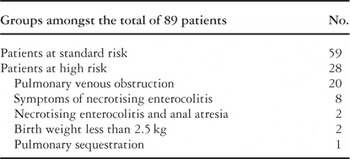
Table 1.
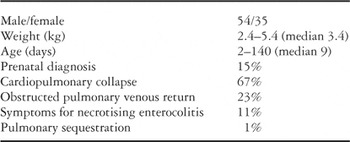
Table 2.

Distribution of morphologic subgroups amongst the 89 patients undergoing surgery for hypoplasia of the left heart. AVSD: atrio-ventricular septal defect.

The distribution of the diameter of the ascending aorta amongst the 89 patients undergoing surgery for hypoplasia of the left heart.

Actuarial survival of all 89 patients: as a whole and, for 87 patients, split by the presence of risk factors. The group of patients shown to be at standard risk had a significant advantage concerning early mortality (p = 0.001) and survival (p = 0.003).

Actuarial survival of the entire study group analysed for the two periods of time with regard to the first stage operation. Survival improved significantly (p = 0.003) in the second era.

Actuarial survival of patients known to be at standard risk analysed for the two periods of time for the first stage operation.

Actuarial survival of patients known to be at high risk analysed for the two periods of time for the first stage operation.

Comparison of overall survival after the total cavopulmonary anastomosis performed as part of the two-stage Fontan procedure for patients with hypoplasia of the left heart (bold line) compared to patients with a dominant left ventricle. HLHS: hypoplastic left heart syndrome; LV: dominant left ventricle.
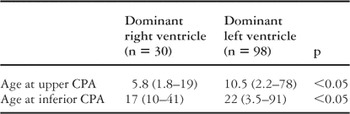
Table 3.
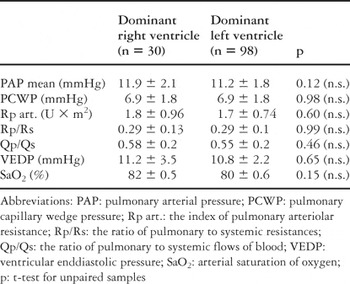
Table 4.
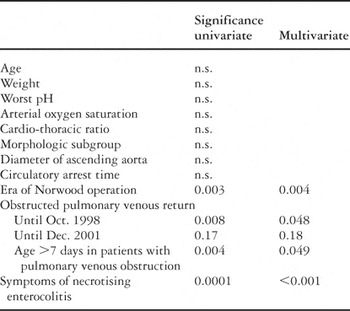
Table 5.
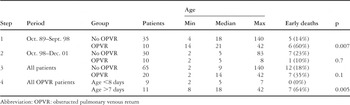
Table 6.
 You have
Access
- 10
- Cited by