Introduction
Medical experts have aggressively pushed for the use of medication-assisted treatment (“MAT”) — coined as the “the gold standard” for opioid addiction care — to combat the opioid crisis.Reference Lopez1 And rightly so: employing MATs with opioids like methadone and buprenorphine can play a critical and even necessary role in the recovery of many individuals suffering from opioid abuse disorder.Reference Pierce2 In particular, MAT advocates have propelled buprenorphine treatment into the limelight, identifying buprenorphine as both the safest treatment option and easily self-administrated.3 As articulated by its most outspoken advocates, the idea is that if we eliminate cumbersome prescription regulations and take proactive steps to get buprenorphine into the hands of opioid users, then we can treat those afflicted with opioid use disorder: problem solved.4
In this article, we argue for a more balanced approach to expanding buprenorphine access in the United States, through evidence-based decision-making that considers both the drug's potential dangers and its potential benefits.Reference Schulte and Donovan5 Advocacy groups such as the National Alliance of Advocates for Buprenorphine Treatment officially recognize that “[b]uprenorphine is not a cure nor a miracle medication, but a new and effective tool in fighting opioid addiction”; however, these groups have not devoted appropriate attention to buprenorphine's downsides.6 According to Dr. Eric Wish, Director of the Center for Substance Abuse Research at the University of Maryland, “This is the first drug that nobody seems to want to know about as a potential problem.”Reference Sontag7 The Food and Drug Administration (FDA), even as it has adopted a pro-MAT position,8 has been criticized for its more cautious approach to MAT proliferation and buprenorphine access.Reference Szalavitz9
The vigorous advocacy for treatment expansion has effectively caricatured buprenorphine to the layperson as a miracle drug. Intended or not, this kind of advocacy can lead to simplified or even false perceptions. Former Senator Carl Levin, for instance, described buprenorphine “as a miracle drug, bringing addicts back from the brink and helping them lead normal lives when all else had failed.”Reference Levin10 Others are left with the misimpression that buprenorphine “can't be abused.”11
Methadone As a Cautionary Tale
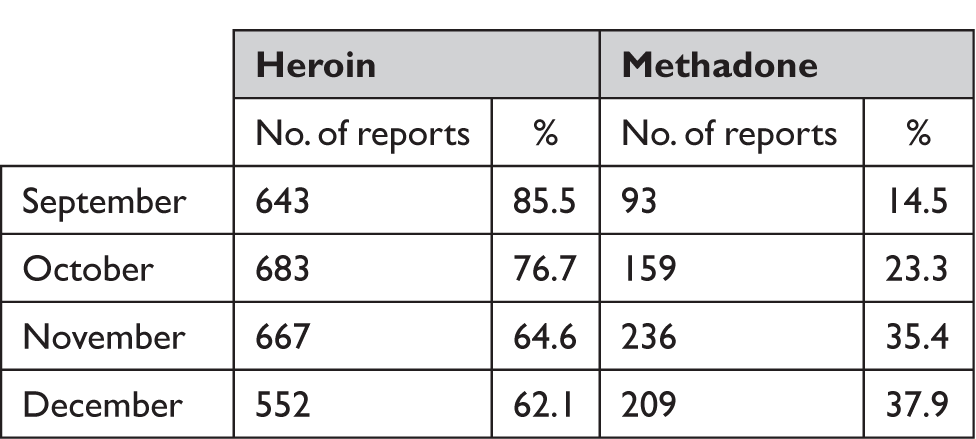
The current MAT advocacy story echoes an earlier one. Several decades ago, methadone was hailed as a wonder drug, the solution to heroin addiction, when Drs. Vincent Doe and Marie Nyswander “intimated that they had discovered the ‘magic bullet’ because metha-done allegedly provided a blockade to the effects of heroin.”Reference Abadinsky12 In the early 1960s, America had been in the throes of a heroin epidemic and was seeking a solution.Reference Jaffe and O’Keeffe13 Researchers had demonstrated that methadone — originally invented by German scientists during WWIIReference Quinones14 — lasted longer than other opiate treatments and lacked the “severe highs and lows” characteristic of heroin addiction.15 As a result, researchers concluded that “methadone could act as a replacement for heroin.”16 From 1967 to 1970, the FDA liberally issued Investigational New Drug applications for methadone research, and by 1969, “several thousand patients were enrolled in methadone maintenance treatment research programs.”17 By early 1973, there were 73,000 people with opioid addiction receiving methadone maintenance treatment.18 However, as one 1972 Atlantic article put it, “[M]ethadone is turning out to be no ‘magic bullet.’”Reference Vorenberg19 While methadone was intended as an oral treatment, it could easily be injected to achieve a concentrated euphoric effect akin to heroin. It quickly became clear that many addicts use heroin and methadone (and other opioids) interchangeably.”20 As a result, Methadone Maintenance Therapy led to street diversion and misuse, with many resulting deaths.21
Drug Abuse Warning Network Reports of National Heroin and Methadone Deaths 22 September 1972–December 1972

In the end, this cycle resulted in seriously diminished access to methadone. In 1972, new FDA regulations created a closed system for methadone whereby only approved clinics and hospital pharmacies could prescribe methadone for maintenance treatment purposes.23 Furthermore, the Narcotic Addict Treatment Act of 1974 gave the Drug Enforcement Agency (“DEA”) jurisdiction over the drugs used in addiction treatment and required all physicians approved for methadone prescription to register with the DEA each year.24 In practice, these regulations have resulted in a system where methadone maintenance treatment remains largely limited to clinic-based treatment with daily visits. Federal policies allow for take-home (unregulated) methadone doses, but these practices are subject to highly restrictive criteria.25 Even if one meets these criteria, further restrictions establish maximum take-home doses based on the time that a patient has been in treatment.26 Methadone has also been plagued with a series of other side effects and problems that have prevented widespread adoption.Reference Rosenbaum and Murphy27 While symptoms vary in intensity, patients have reported methadone side effects of “weight gain, weight loss, amenorrhea, acne, hoarseness, sweating, constipation, leg cramps, muscle spasms, hair loss, bladder infections, nervousness, arthritis, anxiety, memory loss, body aches, emotionality, nonemotionality, and lethargy.”28 Some patients describe metha-done's side effects, “as severely discomforting, disabling, numbing and tiring,” leaving a broad dysphoric impact on quality of life.Reference Fischer, Rehm, Kim and Kirst29
Nevertheless, methadone is still available as maintenance treatment — and continues to be abused.Reference Manchikanti30 In 2014, methadone accounted for only 1% of all opioid prescriptions yet was involved in 22.9% of all opioid-related deaths.Reference Faul, Bohm and Alexander31 That is not to say that methadone maintenance is fully responsible for deadly diversion; methadone is less regulated when prescribed for pain.32 To take Vermont as an example, most metha-done involved in fatal overdoses was obtained through illegal diversion, but of the prescribed methadone leading to death, 68% had received pain prescriptions and only 8% were on methadone maintenance therapy.33
There are reasons to think that buprenorphine, too, may not live up to the vaunted representations made-about it. “Least dangerous” does not necessarily mean “safe.”Reference Khanna and Pillarisetti34 By describing some of the imperfections of buprenorphine, this paper seeks to promote a more comprehensive perspective on the risks associated with widespread reliance on prescribing buprenorphine to the opioid-using population. Armed with a realistic depiction of this efficacious yet flawed treatment, policymakers and regulators will be better positioned to determine the appropriate target populations for buprenorphine treatment, the best avenues for accessing this substance, and the appropriate prescription and review mechanisms to reduce misuse and undesired outcomes.
Risks Associated With Buprenorphine
Buprenorphine has proliferated as an opioid treatment in two formulations: Subutex (buprenorphine hydrochloride) and Suboxone (buprenorphine hydro-chloride and naloxone hydrochloride).35 Both forms (and their generic counterparts) are approved by the Food and Drug Administration for opioid treatment, and each is classified as a Schedule III drug under the Controlled Substances Act.36 The FDA has also approved Zubsolv, a tablet medication with the same buprenorphine-to-naloxone ratio as Suboxone but with higher bioavailability, which allows for smaller dosing options. However, these differences are largely cosmetic — a faster disolve time and a preferable after-taste during sublingual administration.Reference Lyseng-Williamson37 At present, physicians must participate in an eight-hour training course to obtain a waiver to prescribe buprenorphine and are limited to a maximum of 275 patients.38 Physicians first receive a waiver to prescribe buprenorphine for up to 30 patients, then can apply a year later for permission to increase their buprenorphine limit to 100 patients. After one year at the 100-patient limit, physicians may apply for the increase to 275 patients.39 Additionally, nurse practitioners and physician assistants may qualify for buprenorphine prescription waivers for up to 30 patients after completing 24 hours of training.40 These strict buprenorphine prescription regulations have led to some significant access problems, as detailed elsewhere in this issue.Reference Guevremont, Barnes and Haupt41 Nevertheless, “there has been a steady increase in buprenorphine's diffusion, particularly in office-based practice.”Reference Knudsen, Havens, Lofwall, Studts and Walsh42
Buprenorphine operates as a partial µ-opioid receptor agonist. As is true of full agonists such as heroin and methadone, the use of buprenorphine produces a euphoric “high” and induces respiratory depression.43 Unlike full µ-agonists, however, the effects of buprenorphine do not increase in proportion to the amount ingested; buprenorphine's chemical profile limits its euphoric effect to the equivalent to 60 mg of methadone.Reference Walsh, Preston, Stitzer, Cone and Bigelow44 That is to say, this substance has an effective “ceiling.” This ceiling works as a safety factor compared with full agonists; individuals are unlikely to overdose on buprenorphine when taken as properly prescribed.45 Moreover, those engaged in buprenorphine abuse alone are very unlikely to overdose fatally.46 Therefore, when compared with the overdose havoc caused by abuse of methadone, buprenorphine provides a safer option.
However, “safer” does not mean “abuse-proof.” While the latter term has been implied by some advocates,47 such a characterization is simply inaccurate. As the DEA has noted, “buprenorphine is capable of producing significant euphoria. Data from other countries indicate that buprenorphine has been abused by various routes of administration (sublingual, intranasal and injection) and has gained popularity as a heroin substitute and as a primary drug of abuse.”48 While mass use of the drug is relatively new to the United States, many countries around the world have already grappled with the challenges posed by buprenorphine proliferation — buprenorphine has been available as treatment in some countries since 1999.49 In 2014, Michelle Lofwall and Sharon Walsh published a thorough examination of buprenorphine diversion and misuse around the world and concluded that “buprenorphine diversion and misuse appear to be common behaviors of opioid addicted individuals.”Reference Lofwall and Walsh50 Lofwall and Walsh report buprenorphine diversion and misuse experiences in diverse countries such as France, Germany, Australia, Finland, and Malaysia and regard these as cautionary tales of buprenorphine injection and illicit use.Reference Ahmadi, Ahmadi and Ohaeri51
A Substitute for Heroin?
There are several avenues for buprenorphine misuse. For those without opioid dependence, ingestion of buprenorphine tablets or filmstrips can provide euphoria.52 In addition, buprenorphine tablets can be crushed and then injected, resulting in opioid euphoria and eventual dependence if use continues.Reference Nigam53 Indeed, in Finland, injected buprenorphine replaced heroin as the primary used street drug in 2002.Reference Uosukainen54 Suboxone filmstrips may be misused through sublingual ingestion or can be mixed with water and snorted.Reference Genis55
Buprenorphine advocates — including Reckitt-Benckiser, the pharmaceutical company that produces Suboxone and Subutex — have acknowledged the risk of buprenorphine abuse through injection.56 The company has advertised Suboxone as less subject to abuse than Subutex because it contains naloxone in addition to buprenorphine.57 Naloxone is an opioid antagonist.58 If taken orally, naloxone alone has no effect,59 but the dominant narrative touts the claim that if injected, naloxone binds with opioid receptors to induce unpleasant withdrawal symptoms, thereby deterring misuse through injection.Reference Simojoki, Vorma and Alho60
Unfortunately, this claim is only partially true. Diversion surveillance reports provide evidence that the buprenorphine/naloxone combination is still employed for misuse purposes.61 It turns out that, while naloxone is an excellent medication for blocking heroin, it is not very good for blocking buprenorphine. Buprenorphine's chemical properties result in a stronger binding to the µ-opioid receptors than do heroin's, and naloxone is not strong enough to effectively block this interaction.Reference Vicknasingam, Mazlanb, Schottenfeld and Chawarski62 Therefore, Suboxone's chemical composition does not effectively deter the injection abuse of buprenorphine — especially among those who have previously used buprenorphine (rather than heroin) as their primary drug.63 In Malaysia, buprenorphine “spread like wildfire” between 2004 and 2006, overtaking the heroin market and leading to widespread abuse.64 The introduction of the burprenorphine/naloxone (Suboxone) combination in Malaysia reduced but did not stop the misuse of the drug.65
In several countries, buprenorphine has arisen as a major substitute for heroin and other full µ-agonists. For example, buprenorphine remains “the most commonly used illicit opioid in Finland”Reference Simojoki and Alho66 and is the “most frequently misused non-heroin opioid” in the Czech Republic.67 In India, researchers found buprenorphine to be second to heroin as the most commonly injected drug in the country.Reference Yokell, Zaller, Green and Rich68 Moreover, once buprenorphine misuse takes hold, it can be difficult to eradicate. As Finnish researchers found, “restrictions on the access of mono-buprenorphine and the lower street price of buprenorphine/naloxone did not significantly alter the illicit use of this drug [buprenorphine] over several years of its availability on the street.”69 In part, this reflects naloxone's inability and hence irrelevance for preventing abuse of buprenorphine by those without heroin dependence, making it especially risky for young, “gateway” users who initiate opioid use through buprenorphine.
In some countries, widespread availability of buprenorphine (by prescription or through diversion) risks attracting new, younger users and new cases of opioid addiction. As one report noted, “From a medical point of view, buprenorphine is a[n] effective drug in the treatment of opiate dependents, but has simultaneously proven to be a deepening problem among abusers and especially so among young ones.”
Attracting Youth Abuse
In some countries, widespread availability of buprenorphine (by prescription or through diversion) risks attracting new, younger users and new cases of opioid addiction. As one report noted, “From a medical point of view, buprenorphine is a[n] effective drug in the treatment of opiate dependents, but has simultaneously proven to be a deepening problem among abusers and especially so among young ones.”Reference Partanen and Mäki70 Europe as a whole, however, has not seen a shift to youth adoption of buprenorphine misuse.Reference Pirona, Guarita, Montanari and Noor71 The European Monitoring Centre for Drugs and Drug Addiction report indicates that “buprenorphine misusers seem to differ from other opiate users in several respects: they are reported to be younger, enter treatment earlier, start injecting sooner, and inject more often.”72 Additionally, “Younger people are reported to use [buprenorphine] often as the primary drug of choice, whereas older users more often use buprenorphine as ‘self-medication.’”73 This suggests that younger people are more likely to view buprenorphine as an available avenue for recreational misuse — in contrast to those seeking to “self-medicate,” usually heroin users seeking to stave off withdrawal symptoms.Reference Williams74 For such individuals, Suboxone and Subutex do not act as treatments but instead present additional avenues to “get high.” India provides a particularly jarring example, where many teenagers buy a “set” of daily injections “consisting of an ampule of Buprenorphine (semi-synthetic opioid), an ampule of Diazepam (Valium), an ampule of Avil (an antihistamine) and two disposable syringes … sold for 50 rupees — a little less than $1.”Reference Fite75 Additionally, a 2010 study in India found “a predominance of buprenorphine injection among younger injectors.”Reference Solomon76
Buprenorphine's abuse potential might help explain why the introduction of buprenorphine as a treatment led to “lucrative black markets” in countries including Germany, New Zealand, and the United Kingdom during the mid-2000s.77 In France, studies have linked relaxed prescribing regulations for buprenorphine to a thriving black market.Reference Casati, Sedefov and Pfeiffer-Gerschel78 However, increased prescription monitoring in France helped reduce diversion without reducing access to treatment.79 In sum, it is vital that those considering the increased proliferation of buprenorphine availability also be cognizant that widespread buprenorphine access might concomitantly be associated with a greater number of people misusing the drug, including becoming addicted to opioids.
Deadly Risk
Buprenorphine use can also turn deadly. It is true that buprenorphine's partial-µ agonist composition greatly reduces the likelihood that misuse will result in a fatal overdose. The drug's “ceiling effect” means that after reaching a certain dosage level, the opioid effects level off despite further dose increases.80 Unfortunately, buprenorphine's “safety ceiling” is neither an absolute rule nor immutable principle. By mixing buprenorphine with a benzodiazepine (such as Xanax, Valium, or Tranxene), users can “lift the plateau” for buprenorphine's chemical ceiling.81 This technique both allows a greater euphoric high and creates a potentially lethal combination. For example, in 2014, Finland reported 75 cases of fatal overdoses where the toxicology report included buprenorphine,82 with many of these cases involving the concomitant use of benzodiazepines.83
Moreover, the specific chemical nature of buprenorphine exacerbates this overdose risk. The partial µ-agonist nature of Suboxone and Subutex results in diminishing utility for users who have developed tolerance. In fact, because of the ceiling, neither can effectively treat those individuals who, if treated with methadone, would require more than 60 mg of that substance.84 This limitation is significant because “[f] or most patients, a stable dose [of methadone] ranges from 80–120 mg per day.”Reference Saxon, Yih-Ing, Woody and Ling85 Additionally, those in provisionally long-term buprenorphine treatment will also develop tolerance and will over time need more buprenorphine to obtain the same effects.Reference Kosten and George86 Thus, many individuals who struggle with opioid use disorder eventually require significantly larger doses than buprenorphine can provide. While “[t]olerance, a loss of analgesic potency, is one of the common complications of opioid treatment, leading to ever-increasing dose requirements and decreasing effectiveness over time,” buprenorphine's ceiling prevents indefinite dose escalation.Reference Benyamin, Trescot and Datta87
If such individuals obtain buprenorphine as part of their treatment regime, they may be unable to achieve the semblance of “feeling normal.” Likewise, individuals who obtain illicit buprenorphine may find that it is inadequate, in whatever dose, to feel “normal,” much less to achieve any desired “high.” In both situations, the addicted individual may undertake a concerted effort to combine buprenorphine with benzodiazepines. The evidence shows that individuals caught in the throes of their opioid addiction pursue dangerous behavior in the quest to achieve the desired level of euphoria.Reference Seelye88 This same dangerous motivation has been attributed to the rise in fentanyl and even carfentanil-related deaths by (non-buprenorphine) opioid abusers seeking a more cost-effective and satisfying high.89 The concern is that if buprenorphine availability becomes widespread, this may lead high-tolerance drug users to shift to the dangerous mix of buprenorphine and benzodiazepines or to street drugs such as heroin.
Alcohol use is also contra-indicated for buprenorphine users. While co-use of alcohol — also a CNS suppressant — does not pose the same degree of danger as co-use of benzodiazepines, it still significantly increases the risk of overdose morbidity and mortality.90 Indeed, it has been reported that mixing alcohol with buprenorphine can lead to death even if a patient does not exceed the medically prescribed buprenorphine dosage.Reference Ferrant91 Like other forms of misuse or abuse, the dangers from co-use of alcohol are not a problem specific to buprenorphine; polydrug users in general face an increased risk of death.Reference Collins, Ellickson and Bell92
Nevertheless, such a risk is especially relevant given the particular context of buprenorphine's benefits. One of the lauded advantages of buprenorphine over methadone is the ease and anonymity that buprenorphine medication allows.Reference Cherkis93 Instead of being indefinitely on a regime of regular visits to a methadone clinic to receive treatment, buprenorphine is a “take-home” medication that patients pick up from a local pharmacy and self-administer.94 In addition, because buprenorphine does not require regular trips to an opioid clinic, it also provides for greater privacy.Reference Harris95 An individual can live a normal life while privately medicating with buprenorphine.96 Within this context, alcohol creates complications. First, buprenorphine can prove a much less effective form of MAT for those suffering from alcoholism, which poses a significant problem given the frequent coexistence of alcoholism and opiate dependence.Reference Cushman97 Second, the contra-indication of alcohol use may pose a significant constraint in many social contexts. Additionally, prescription warnings for Subutex and Suboxone suggest that this constraint goes beyond mere social discomfort. The danger of alcohol is sufficiently extreme to warrant the need for individuals to check their food and medicine labels to ensure that their products do not contain alcohol.98 Even small amounts of alcohol consumption alongside buprenorphine can result in impairment of judgment, extreme lethargy, and unconsciousness.99
Serious Side Effects
Even when used properly, buprenorphine brings a multitude of side effects that may deter widespread patient adoption of this evidence-based treatment. As with other opioids, common side effects include nausea, vomiting, constipation, muscle aches and cramps, cravings, the inability to sleep, distress and irritability, and fever.100 Buprenorphine treatments very commonly bring the risk of psychiatric side effects,101 including rare but severe cases of psychosis.Reference Varma, Balachander and Basu102 While these risks are not unique to buprenorphine, the exceptionally high rate of concurrent mental health disorders among opioid abusers means that treatment in the form of opioid maintenance imposes added pressures on an already vulnerable population.103 Buprenorphine can also have adverse effects on motor skills and liver function, though to a lesser degree than methadone.Reference Soyka, Hock and Kagerer104 Respiratory depression is likewise a concern.105
We must also consider that buprenorphine, even as medication, carries the risk of addiction.106 While the benefits of treating severe opioid abuse certainly outweigh the costs of medication-assisted treatment, long-term buprenorphine users will go into withdrawal if, for whatever reason, they find themselves without access to the drug. Such withdrawal would encourage patients to seek buprenorphine, methadone, or heroin through illicit channels in an attempt to self-medicate. Buprenorphine, like other opioids, may be especially contraindicated for pregnant women, because it can affect fetal development and its withdrawal leads to significant distress for newborn infants.Reference Allen, Casavant and Spiller107
Growing youth adoption is a particularly poignant concern should buprenorphine proliferate in the United States. The experience in Finland shows that buprenorphine can serve as a gateway opioid. A ubiquitous buprenorphine presence could well present American teenagers with a readily accessible, euphoria-inducing substance.
Remarkably, however, the National Alliance of Advocates for Buprenorphine Treatment (the major advocacy group funded by producers of the substance) lists only headache, constipation, and dry mouth as common side effects; the many downsides discussed above remain largely absent.108 Such a picture elides the evidence that buprenorphine may not present the right treatment option, or deliver better results than metha-done treatment, for many users. In one comparison of methadone and buprenorphine, the trials showed that “[b]uprenorphine did not differ from methadone in its ability to suppress heroin use, but retained approximately 10% fewer patients.”Reference Mattick, Ali and White109 In sum, buprenorphine treatment provides an effective weapon for combating the opioid epidemic, but optimal utilization requires risk management based on a clear-eyed understanding of buprenorphine's boons and banes.
Policy Considerations for the United States
The Risk of Large-Scale Diversion
Increasing access also increases the likelihood of diversion. Many of the problems with buprenorphine in Europe and Malaysia would be amplified with large-scale prescription availability in the United States. As experts repeatedly reminded the authors, the United States is very different from most other countries in the causes, nature, and severity of its opioid crisis. America's size and intolerance for pain makes this national crisis sui generis. An estimated 80 percent of the world's opioid supply is consumed in the United States.Reference Gusovsky110 The United States also already has the highest global percentage of opioid abuse,111 the highest percentage of deaths from opioid abuse,Reference Katz112 and by far the largest stock of opioid substance users under treatment.113 Twenty percent of Americans (61.8 million Americans) legally obtained at least one opioid prescription, for pain or opioid maintenance, in 2016.114 To concretize the scale of this epidemic: SAMHSA estimates 626,000 Americans have experienced heroin dependence or abuse in 2016 alone.115 Eleven and a half million Americans misused prescription pain relievers.Reference Tice116 Of those, at least 1.8 million Americans have a diagnosed pain reliever use disorder.117 Undeniably, an effort to use buprenorphine to treat all those with substance use disorders would require the proliferation of millions of pills.
Growing youth adoption is a particularly poignant concern should buprenorphine proliferate in the United States. The experience in Finland shows that buprenorphine can serve as a gateway opioid. A ubiquitous buprenorphine presence could well present American teenagers with a readily accessible, euphoria-inducing substance. In York Beach, Maine, one convicted Suboxone dealer noted that “Every kid on the beach was looking for [Suboxone], … The high lasts all day.”118 Given buprenorphine's addictive nature, these “kids” could quickly find it impossible to stop. And once buprenorphine addiction takes hold, withdrawing its supply jeopardizes recreating the OxyContin pathway: from prescription painkiller to heroin.Reference Pollini119 Moreover, buprenorphine users may not appreciate the risks of misuse. As one user reflected on the death of his friend: “I didn't know you could overdose on Suboxone … We were just a bunch of friends getting high and hanging out, doing what 20-year-olds do. Then we went to sleep, and Miles never woke up.”120
Downplaying the medication's limitations and its diversion and misuse potential is counterproductive to shaping a thoughtful, informed discussion over the appropriate buprenorphine policy for the United States. To reduce the risk of a significant growth in the opioid dependent population and other adverse consequences, any increase in buprenorphine distribution should be carefully administered and continuously evaluated.
Current Buprenorphine Misuse in the United States
Preliminary reports show that even with strict buprenorphine regulation, the United States has already seen some buprenorphine misuse. A 2011 report of buprenorphine use leading to drug-related emergency department visits shows relatively modest misuse compared to heroin and other opioids such as methadone, oxycodone, and morphine.Reference Maxwell121 Still, misused buprenorphine grew explosively (2,242%) from 2004 through 2009.122 SAMHSA estimated that 712,000 buprenorphine products (defined as “Suboxone, generic buprenorphine, generic buprenorphine plus naloxone, or other similar products”) were misused in 2016.123 Many anecdotes confirm that the American public has experienced buprenorphine misuse. In 2013, the New York Times reported “a seemingly unstoppable flow of Suboxone onto the streets” of Portland, Maine.124 In Southwest Kansas, treatment providers found themselves disenchanted with buprenorphine as “a vast number of patients attempt[ed] to abuse the medication like they would a traditional opiate.”Reference Minton125 In Vermont, locals report, “You can buy buprenorphine outside Rite Aid.”Reference Kranz126 Of even greater concern, reports suggest that some users have employed buprenorphine in a potentially lethal combination with benzodiazepines.127
Buprenorphine has also emerged as a drug of choice in many United States prisons.Reference Moleski128 One former New York State prisoner reports, “[T]he prison yards of America are now full of inmates high on [buprenorphine].”129 Illustrative of its powerful euphoric effect, a single strip or pill of buprenorphine is “way too much for a prisoner” with a relatively “clean” system.130 Instead, prisoners will use one-eighth of a pill or strip for euphoria.131 This misuse has become so pervasive that the New York Department of Corrections needed to add an additional urinalysis test for buprenorphine.132 In Vermont, buprenorphine accounted for half of all illicit substances in the state's correctional facilities in 2012.133 In Maryland, the “staggering” number of intercepted Suboxone doses (over 2,300 “hits” in six months) led the state to remove Suboxone from Maryland's list of preferred drugs.Reference Kodjak134
Buprenorphine MAT May Facilitate Addiction But Not Indefinite Treatment
An important outstanding question surrounds the goal of buprenorphine MAT. Some see buprenorphine MAT as an interim phase, with the strategy of tapering the dose to a goal of eventual abstinence.Reference Ling135 There has been some clinical evidence published on the efficacy of this abstinence-oriented approach. One study finds that tapering over four weeks works more effectively than shorter tapering durations,Reference Sigmon136 while another suggests that many experience opioid recovery without the use of any FDA-approved medications.Reference Kelly137 However, many experts see buprenorphine MAT as an indefinite treatmentReference Fiellin and Renner138 and advise against tapering with a goal of detoxification.139 “There is a high risk for relapse, even if maintenance has been stable for a while, when medication assisted treatment is discontinued.”Reference Cassadonte140 In other words, tapering buprenorphine doses to eventual abstinence may not be an advisable option. One study goes so far as to argue that tapering with buprenorphine — whether initially or after a period of substantial improvement — leads to nearly universal relapse in people dependent on prescription opioids.141 One educational website funded by the National Institute on Drug Abuse suggests that physicians should frame buprenorphine MAT treatment as “parallel to medication for a chronic condition” in order to explain the need for indefinite maintenance.142 Such an approach compares opioid use disorder to conditions such as hypertension or diabetes. This analogy may be incomplete. Buprenorphine's tolerance and ceiling effect, explored previously in this article, at least complicate — and may vitiate — its use as a long-term option.
Of course, the right treatment approach will depend on the specific case. For many individuals, complete abstinence may be the ideal outcome, but abstinence can be an unreasonable goal for long-term opioid abusers. One former opioid user with whom one of us spoke, who does not want to be identified, was offered the opportunity of MAT treatment and declined it. He explained (paraphrasing), “I had only been using for a year or so and had consciously tried to avoid becoming too tolerant. I hoped my brain wasn't completely hard-wired. And I just didn't want to be dependent on opioids for the rest of my life. There are so many downsides.” In short, buprenorphine MAT does not provide the clear best-treatment option in every circumstance.
Self-Treatment or Misuse?
Policymakers must also consider the extent to which increasing prescriptions for buprenorphine may lead to an increase in misuse or abuse of the drug. Even under current regulations, some patients use their MAT-prescriptions to barter for heroin: “Suboxone is plentiful because it is prescribed, so [drug addicts] get their monthly allotment of several dozen doses, pay with a Medicaid card, and sell it off at five dollars a pill or strip to buy a real bag of dope.”143
With buprenorphine, moreover, the distinction between treatment and enabling can often blur. Many buprenorphine advocates downplay the risk of buprenorphine misuse by claiming that when buprenorphine is purchased on the street, it is used for self-medication, not euphoria. For example, a recent piece in Health Affairs contends that “most people addicted to opiates appear to be purchasing illicit, ‘street’ buprenorphine not for a euphoric effect, but instead as a form of self-treatment.”Reference Chaiyachati and Hom144 As the argument goes, the reason for this illegal self-care is because the buprenorphine restrictions prevent those with opioid use disorder from receiving medical treatment: “Most [people] who take “street bupe” aren't after a high, they are tired of chasing pills or heroin, and they are self-medicating with illegally obtained bupe because they can't get medical care.”145
The reality is more complicated, however, because self-treatment and euphoria-seeking use are not mutually exclusive. As Lofwall and Walsh report,
Much attention has been given to misuse for reasons that mimic the medical reasons for which the medication is prescribed. These latter reasons should not be used to legitimize IV misuse of diverted medication because many persons addicted to illicit substances (e.g., heroin) will similarly report use of heroin to prevent or treat their withdrawal/to feel “normal,” and there is clear morbidity and mortality associated with IVDU. There are no data showing that IV self-medication with buprenorphine is effective treatment.146
Fortunately, recent developments offer the possibility of technological solutions to some of the diversion and misuse concerns. In 2016, the FDA approved Probuphine, a subdermal six-month surgical implant.147 In November 2017, the FDA approved the much less invasive Sublocade.148 Sublocade consists of a monthly injection. Careful administration of these newer formulations might greatly reduce the risk of buprenorphine diversion and misuse.149
Buprenorphine MAT Requires More Than Buprenorphine
Finally, policymakers considering measures to increase access to prescribed buprenorphine must act with the understanding that, in order to be an effective treatment, MAT needs to be accompanied by additional interventions — which may well be more costly than is the provision of buprenorphine itself. Just as successful diabetes treatment requires behavior changes as well as medicine,150 so does MAT for opioid use disorder. Dispensing buprenorphine unaccompanied by behavioral or psycho-social therapies would be unfair, even cruel, to those patients who, due to increased tolerance and the limitations of the medication itself, are at risk of relapse to illicitly obtained opioids.Reference Leshner151
Conclusion: Moving Forward With Informed Policies
Current buprenorphine restrictions might not provide the optimal balance. But the dangers of buprenorphine expansion militate in favor of well thought-out, measured steps to increase access as well as ongoing evidence-based evaluation of the consequences of each stage of increased access. On the basis of what we now know about buprenorphine, we do not see the case for abandoning all prescription limitations and physician training. Our concerns include but also extend beyond the risks of diversion and abuse. Without careful physician training, negligent provision will assuredly lead some users to combine their prescriptions with benzodiazepines or alcohol, leading to fatalities among the very population that the doctors are trying to help. In a recent policy statement, FDA Commissioner Scott Gottlieb candidly addressed the balance between access and control: “[T]he [FDA] is also reinforcing that MAT should not necessarily be denied to patients taking [benzodiazepines]. The dangers associated with failing to treat an opioid use disorder can outweigh the risks of co-prescribing buprenorphine MAT and benzodiazepines. Instead, careful management of the patient and coordination of care is recommended.”152 In other words, there are circumstances where the patient's need for buprenorphine provision outweighs associated risks. These circumstances include buprenorphine use in short-term tapering and treating less severe cases. However, smart decisions require drug policies based on a thorough understanding of the reality of this medicine, not the miracle substance we all wish we had.
Acknowledgements
The authors thank Dr. Marek Chawarski, Associate Professor of Psychiatry and of Emergency Medicine at the Yale School of Medicine; Dr. Alessandro Pirona, Principal Scientific Analyst at the European Monitoring Centre for Drugs and Drug Addiction; and Dr. Elina Kotovirta, Ministerial Adviser at the Government of Finland's Ministry of Social Affairs and Health, for lending their thoughtful insights and scientific expertise to this project.