Decades of research have left little doubt that early adversity (i.e., early life stress) sets the stage for the development of psychopathology across the life span (McLaughlin, Reference McLaughlin2016; McLaughlin et al., Reference McLaughlin, Green, Gruber, Sampson, Zaslavsky and Kessler2012). Epidemiological findings indicate that early adversity contributes to approximately 30% of all disorder first onsets among adolescents and adults in the US population (McLaughlin et al., Reference McLaughlin, Green, Gruber, Sampson, Zaslavsky and Kessler2012). Despite the significance of early adversity for the development of psychopathology, relatively little is known about the mechanisms through which early adversity contributes to risk (McLaughlin, Reference McLaughlin2016; Wilkinson & Goodyer, Reference Wilkinson and Goodyer2011). Given that nearly 60% of adolescents face early adversity (McLaughlin et al., Reference McLaughlin, Green, Gruber, Sampson, Zaslavsky and Kessler2012), elucidating such mechanisms has been identified as both a research and a public health priority (McLaughlin, Reference McLaughlin2016; Wilkinson & Goodyer, Reference Wilkinson and Goodyer2011).
The allostatic load model serves as one of the predominant frameworks guiding research focused on identifying the underlying mechanisms (e.g., Wilkinson & Goodyer, Reference Wilkinson and Goodyer2011). This model posits that exposure to chronically stressful conditions leads to allostatic states or changes in the set points regulating the activity of multiple physiological systems, including the hypothalamic–pituitary–adrenal (HPA) axis; in turn, such changes contribute to negative health outcomes, including psychopathology (e.g., Lupien et al., Reference Lupien, Ouellet-Morin, Hupbach, Tu, Buss, Walker, McEwen, Cicchetti and Cohen2006; McEwen, Reference McEwen, Yehuda and McEwen2004). However, research has not yet examined whether early adversity contributes to the development of psychopathology by altering the set points of the HPA axis. The present study was designed to address this gap.
Early Adversity and the Development of Psychopathology
Early adversity increases risk for psychopathology among children, adolescents, and adults (for a review, see McLaughlin, Reference McLaughlin2016). Epidemiological research indicates that individuals tend to be exposed to more than one type of early adversity, and although multiple types of early adversity increase risk for psychopathology, that which occurs within the family environment (e.g., maltreatment and parental maladjustment) appears to be particularly potent (e.g., McLaughlin et al., Reference McLaughlin, Green, Gruber, Sampson, Zaslavsky and Kessler2012). Such studies have also shown that exposure to early adversity has a cumulative, but nonadditive, effect on the onset of psychological disorders, such that the odds of disorder onset increase with each exposure, but at a decreasing rate (e.g., McLaughlin et al., Reference McLaughlin, Green, Gruber, Sampson, Zaslavsky and Kessler2012). Moreover, the effect of early adversity (i.e., abuse and neglect) on the onset of psychiatric disorders is fully explained by underlying vulnerabilities to experience internalizing and externalizing psychopathology (vs. risk for developing specific disorders; Keyes et al., Reference Keyes, Eaton, Krueger, McLaughlin, Wall, Grant and Hasin2012). Collectively, these findings suggest that research designed to elucidate the mechanisms through which early adverse experiences in the family environment contribute to broad dimensions of psychopathology will be particularly informative for prevention efforts. In the present study, we focused on identifying a mechanism through which early adversity contributes to the development of internalizing psychopathology, because adolescence is a period of heightened risk for the development of internalizing disorders, particularly for girls (Costello, Mustillo, Erkanli, Keeler, & Angold, Reference Costello, Mustillo, Erkanli, Keeler and Angold2003; Rohde, Beevers, Stice, & O'Neil, Reference Rohde, Beevers, Stice and O'Neil2009).
Despite abundant evidence that early adversity increases risk for psychopathology, significant gaps remain. Most prior work has focused on the onset of diagnosable disorders, rather than the development of symptoms. However, subclinical symptoms during adolescence predict the development of subsequent major depression and anxiety disorders, and are associated with significant impairment (e.g., Bittner et al., Reference Bittner, Egger, Erkanli, Costello, Foley and Angold2007; Klein et al., Reference Klein, Glenn, Kosty, Seeley, Rohde and Lewinsohn2013; Wittchen, Nelson, & Lachner, Reference Wittchen, Nelson and Lachner1998). Thus, understanding the association between early adversity and the development of internalizing symptoms is critical in the prevention, rather than intervention, of subsequent disorders, particularly given evidence that early adversity has important implications for first onsets of disorders, rather than their persistence (McLaughlin, Green, et al., 2010). Second, few studies have focused on adolescents (for an exception, see McLaughlin et al., Reference McLaughlin, Green, Gruber, Sampson, Zaslavsky and Kessler2012). Disorders associated with alterations in HPA axis functioning as well as early adversity (e.g., depression and social phobia) often develop in middle adolescence (e.g., Costello et al., Reference Costello, Mustillo, Erkanli, Keeler and Angold2003; Rohde et al., Reference Rohde, Beevers, Stice and O'Neil2009). Furthermore, early adolescent girls have higher rates of anxiety and depression relative to their male counterparts (e.g., Rohde et al., Reference Rohde, Beevers, Stice and O'Neil2009; Wittchen et al., Reference Wittchen, Nelson and Lachner1998), which may be due in part to gender differences in HPA axis functioning (e.g., Gunnar, Wewerka, Frenn, Long, & Griggs, Reference Gunnar, Wewerka, Frenn, Long and Griggs2009). Thus, it is particularly important to evaluate whether early adversity contributes to the development of internalizing symptoms among early adolescent girls prior to the development of diagnosable internalizing disorders.
Third, and perhaps most important, few studies have identified the underlying mechanisms of the association between early adversity and psychopathology (Wilkinson & Goodyer, Reference Wilkinson and Goodyer2011). Several mechanisms have been proposed, including, for example, alterations in stress-responsive physiological and neuroendocrine systems, disruptions in interpersonal relationships and interpersonal functioning, and emotion regulation difficulties (Lupien et al., Reference Lupien, Ouellet-Morin, Hupbach, Tu, Buss, Walker, McEwen, Cicchetti and Cohen2006; McEwen, Reference McEwen, Yehuda and McEwen2004; Repetti, Taylor, & Seeman, Reference Repetti, Taylor and Seeman2002). These mechanisms are beginning to accumulate support: individuals who have experienced early adversity are at greater risk for psychopathology due to increased sensitivity to future stressors (e.g., La Rocque, Harkness, & Bagby, Reference La Rocque, Harkness and Bagby2014), increased emotional reactivity (McLaughlin, Kubzansky, et al., 2010), impaired social relationships and interpersonal functioning (e.g., Alink, Cicchetti, Kim, & Rogosch, Reference Alink, Cicchetti, Kim and Rogosch2012), emotion regulation difficulties (Heleniak, Jenness, Van der Stoep, McCauley, & McLaughlin, Reference Heleniak, Jenness, Van der Stoep, McCauley and McLaughlin2016), and alterations in physiological reactivity (e.g., McLaughlin, Sheridan, Alves, & Mendes, Reference McLaughlin, Sheridan, Alves and Mendes2014), as well as in neural systems involved in emotional processing and regulation (e.g., Herringa et al., Reference Herringa, Birn, Ruttle, Stodola, Davidson and Essex2013). Despite the contribution of this work, most studies have focused on severe forms of single types of early adversity (e.g., childhood maltreatment), and research has yet to examine individual differences in HPA axis activity as a mechanism. To address these gaps, we investigated whether individual differences in HPA axis activity is one mechanism through which the accumulation of early adversity within the family environment predicts the development of internalizing symptoms among early adolescent girls.
Existing Evidence Linking Early Adversity and Individual Differences in HPA Activity
Substantial evidence supports the relation between early adversity and HPA axis activity (e.g., Cicchetti & Rogosch, Reference Cicchetti and Rogosch2012). To index HPA axis activity, several measures of cortisol (the primary product of the HPA axis) have been used, including indicators of basal cortisol (e.g., levels at particular times of day, such as morning or bedtime), cortisol reactivity (i.e., changes in cortisol levels in response to a stressor), and the diurnal cortisol rhythm (i.e., the daily pattern of cortisol secretion; for a review, see Granger et al., Reference Granger, Fortunato, Beltzer, Virag, Bright and Out2012). This work has consistently shown that early adversity is associated with alterations in cortisol reactivity and in diurnal cortisol rhythms (Cicchetti & Rogosch, Reference Cicchetti and Rogosch2012). Although most work has focused on severe forms of early adversity such as childhood maltreatment (i.e., severe abuse and neglect), emerging evidence also suggests that less severe, more common, aspects of the family environment, such as interparental conflict, parental physical illness, and loss (e.g., parental divorce or death of a family member) are associated with alterations in HPA axis activity (e.g., Miller, Chen, & Zhou, Reference Miller, Chen and Zhou2007; Repetti et al., Reference Repetti, Taylor and Seeman2002). Research indicates that youth exposed to multiple stressors exhibit greater allostatic load, as reflected by sustained or altered activity in multiple regulatory systems, including the HPA axis (e.g., Evans, Reference Evans2003; Repetti et al., Reference Repetti, Taylor and Seeman2002), and that the cumulative effect of multiple types of early adversity may have a greater impact on youths’ HPA axis functioning, as compared to single adversities (e.g., Evans, Reference Evans2003).
Despite these promising findings, longitudinal studies suggest that the cortisol indicators used in prior work exhibit limited stability, and largely capture day-to-day fluctuations within individuals (e.g., Doane, Chen, Sladek, Van Lenten, & Granger, Reference Doane, Chen, Sladek, Van Lenten and Granger2015; Ross, Murphy, Adam, Chen, & Miller, Reference Ross, Murphy, Adam, Chen and Miller2014). For example, in a 9-month study, 82.30% and 81.25% of the variance in the cortisol awakening response (CAR; the peak in cortisol upon waking; Clow, Thorn, Evans, & Hucklebridge, Reference Clow, Thorn, Evans and Hucklebridge2004) and the diurnal slope (the linear rate of decline in cortisol from waking to bedtime; Adam, Reference Adam2006), respectively, reflected day-to-day variation, rather than within-person cross-wave change (CAR: 3.22%; diurnal slope: 0.78%) or stable individual differences (CAR: 14.48%; diurnal slope: 17.97%; Doane et al., Reference Doane, Chen, Sladek, Van Lenten and Granger2015). To quantify stable individual differences in cortisol levels, researchers have recently employed various modeling approaches that use the commonalities among cortisol samples collected across several days in reference to the grand mean (or whole sample) to construct latent trait cortisol (LTC) factors (e.g., Chen et al., Reference Chen, Raine, Rudo-Hutt, Glenn, Soyfer and Granger2015; Doane et al., Reference Doane, Chen, Sladek, Van Lenten and Granger2015; Yeung et al., Reference Yeung, Place, Gordish-Dressman, Visich, Hoffman, Walker and Granger2016). Specifically, in these approaches, the intercorrelations among the cortisol samples permit the samples to be used as indicators on a LTC factor, which captures individual differences by drawing upon the variance that is shared among the samples. The shared variance is separated from the unique variance of each sample, the latter of which captures state-specific situational or environmental influences (that may change from moment to moment or day to day) and random error variances. In this way, these approaches offer a distinct advantage over simply aggregating (i.e., averaging) cortisol samples, which averages the measurement error, rather than parsing it into a separate component (see Yeung et al., Reference Yeung, Place, Gordish-Dressman, Visich, Hoffman, Walker and Granger2016). For example, Doane et al. (Reference Doane, Chen, Sladek, Van Lenten and Granger2015) used a modeling approach to derive LTC indicators that were stable within and across three assessments over a period of 9 months, and were distinct from the CAR and diurnal slope. Between 71% and 88% of the variability in the within-wave LTC indicators could be explained by an across-wave LTC factor, suggesting that the LTC indicators exhibited stability across several months, and largely reflected individual differences (i.e., between-persons variability) in HPA axis activity. Given that LTC level predominantly reflects individual differences in HPA axis activity, it may be a more useful indicator of allostatic set points, relative to other cortisol indicators in the allostatic load index (e.g., CAR and diurnal slope), which predominantly reflect day-to-day variation rather than between-persons variation in HPA axis activity (Doane et al., Reference Doane, Chen, Sladek, Van Lenten and Granger2015; Stroud, Chen, Doane, & Granger, Reference Stroud, Chen, Doane and Granger2016b).
Although few studies have investigated factors that contribute to LTC level, three studies suggest that early adversity makes a contribution (Doane et al., Reference Doane, Chen, Sladek, Van Lenten and Granger2015; Essex et al., Reference Essex, Shirtcliff, Burk, Ruttle, Klein, Slattery and Armstrong2011; Stroud, Chen, Doane, & Granger, Reference Stroud, Chen, Doane and Granger2016a). For example, in the present sample, we demonstrated that early adolescent girls who had experienced greater early adversity within the family environment exhibited lower LTC levels (Stroud et al., Reference Stroud, Chen, Doane and Granger2016a). Thus, emerging evidence suggests that early adversity is associated with alterations in the set points regulating HPA axis activity (e.g., Doane et al., Reference Doane, Chen, Sladek, Van Lenten and Granger2015; Essex et al., Reference Essex, Shirtcliff, Burk, Ruttle, Klein, Slattery and Armstrong2011; Stroud et al., Reference Stroud, Chen, Doane and Granger2016a), but whether such alterations, in turn, predict the development of psychopathology remains to be investigated.
HPA Axis Regulation and Internalizing Symptoms
Dysregulation of the HPA axis is well established in the etiology of internalizing psychopathology (e.g., Cicchetti & Rogosch, Reference Cicchetti and Rogosch2012). For example, prior cross-sectional research suggests that alterations in basal cortisol levels (e.g., lower morning values), the diurnal cortisol rhythm (e.g., flatter diurnal slopes), and cortisol reactivity (e.g., higher or blunted cortisol reactivity) are associated with the presence of general distress, symptoms (depressive, internalizing, and anxiety), and major depressive disorder (e.g., Adam, Reference Adam2006; Doane et al., Reference Doane, Mineka, Zinbarg, Craske, Griffith and Adam2013; Lopez-Duran, Kovacs, & George, Reference Lopez-Duran, Kovacs and George2009; Wilkinson & Goodyer, Reference Wilkinson and Goodyer2011). Limited prospective studies indicate that elevated morning cortisol and CAR elevations each predict increases in depressive symptoms and major depressive episodes (e.g., Harris et al., Reference Harris, Borsanyi, Messari, Stanford, Cleary, Shiers and Herbert2000; Vrshek-Schallhorn et al., Reference Vrshek-Schallhorn, Doane, Mineka, Zinbarg, Craske and Adam2013). Similar prospective associations are also obtained when examining anxiety disorder onsets (e.g., Adam et al., Reference Adam, Vrshek-Schallhorn, Kendall, Mineka, Zinbarg and Craske2014), as well as anxiety and internalizing symptom levels (e.g., Badanes, Watamura, & Hankin, Reference Badanes, Watamura and Hankin2011; Shirtcliff & Essex, Reference Shirtcliff and Essex2008).
However, few studies have evaluated whether trait cortisol is related to the development of psychopathology. Thus, although we have substantial evidence that alterations in diurnal cortisol indicators that exhibit limited stability over months or years (e.g., CAR and diurnal slope; Doane et al., Reference Doane, Chen, Sladek, Van Lenten and Granger2015; Ross et al., Reference Ross, Murphy, Adam, Chen and Miller2014) are associated with psychopathology, we know relatively little about whether enduring differences in HPA axis regulation between individuals predict the development of psychopathology. In an exception, Chen et al. (Reference Chen, Raine, Rudo-Hutt, Glenn, Soyfer and Granger2015) showed that LTC level was positively related to girls’ concurrent internalizing problems, and the interaction of LTC level and autonomic nervous system arousal was associated with a latent class in which internalizing problems were high initially, but declined over time (Chen, Raine, Glenn, & Granger, Reference Chen, Raine, Glenn and Granger2016). Thus, initial work suggests that LTC level is associated with internalizing psychopathology.
The Present Study
The present study builds upon a prior study in which we showed that early adolescent girls who had experienced greater early adversity within the family environment exhibited a lower LTC level, suggesting that early adversity is associated with individual differences in HPA axis activity (Stroud et al., Reference Stroud, Chen, Doane and Granger2016a). Here we examined whether individual differences in HPA axis activity mediate the prospective association between early adversity and subsequent internalizing symptoms. Based upon the allostatic load framework (e.g., Lupien et al., Reference Lupien, Ouellet-Morin, Hupbach, Tu, Buss, Walker, McEwen, Cicchetti and Cohen2006; McEwen, Reference McEwen, Yehuda and McEwen2004), we expected that individual differences in HPA axis activity would mediate the prospective link between early adversity and internalizing symptoms. Specifically, we expected that greater early adversity would be associated with lower LTC levels (Stroud et al., Reference Stroud, Chen, Doane and Granger2016a), which in turn would predict internalizing symptoms.
Because the allostatic load framework posits that the effect of early adversity on risk for negative health outcomes is cumulative (Lupien et al., Reference Lupien, Ouellet-Morin, Hupbach, Tu, Buss, Walker, McEwen, Cicchetti and Cohen2006), we focused on the accumulation of early adverse experiences during approximately the first 11.5 years of girls’ lives. However, research has yet to clarify which aspect of early adversity might be most relevant in quantifying its accumulation. The allostatic load model (Lupien et al., Reference Lupien, Ouellet-Morin, Hupbach, Tu, Buss, Walker, McEwen, Cicchetti and Cohen2006; McEwen, Reference McEwen, Yehuda and McEwen2004) suggests that the frequency of adversities (total number) or the breadth of adversities (number of different types) might be critical (e.g., Evans, Reference Evans2003; Evans, Li, & Whipple, Reference Evans, Li and Whipple2013; Juster et al., Reference Juster, Bizik, Picard, Arsenault-Lapierre, Sindi, Trepanier and Lupien2011; McEwen, Reference McEwen, Yehuda and McEwen2004). Several studies suggest that youth exposed to a greater variety of different types of stressors (e.g., crowding, noise, family separation, or poverty) exhibit higher allostatic load and higher levels of psychological distress (e.g., Evans, Reference Evans2003). However, we know very little about whether the cumulative severity of such experiences has implications for HPA axis regulation and risk for psychopathology. Research investigating the mechanisms through which early adversity increases risk for psychopathology has largely conceptualized early adversity as the severity or presence of single types of early adversity (e.g., childhood maltreatment; LaRocque et al., Reference La Rocque, Harkness and Bagby2014), rather than considering accumulation of multiple types of early adversity (for an exception, see McLaughlin, Green, et al., 2010). Thus, to shed light on the parameters of early adversity that are most relevant in quantifying its accumulation, we repeated our mediation models using three different methods of defining early adversity: (a) frequency (the number of experiences, regardless of severity or type); (b) variety (the number of different types of experiences, regardless of frequency or severity); and (c) overall severity (total objective severity rating considering all adversities experienced). Given our prior work showed that early adversity, as conceptualized in each of these ways, was associated with LTC level (Stroud et al., Reference Stroud, Chen, Doane and Granger2016a), we predicted that LTC level would mediate the prospective link between early adversity and internalizing symptoms using each conceptualization.
Method
Participants and procedures
Participants were early adolescent girls drawn from a larger study designed to examine biopsychosocial predictors of emotional disorders (sample of larger study: N = 132). Participants and their primary female caregivers (called “mother”) were recruited from two New England counties through advertisements or flyers, word of mouth, and local schools. At Time 1 (T1) participation included a laboratory visit during which mothers and daughters each completed separate diagnostic interviews, as well as contextual life stress interviews assessing early adversity and recent stress, and a packet of questionnaires, including a measure of pubertal status. At the laboratory visit, participants were given the materials and instructions for completing the cortisol collection, which was scheduled on 3 consecutive weekdays within approximately 1 week of the laboratory visit (M = 7.48 days; SD = 8.86), avoiding atypical days (e.g., vacations or birthdays). Each day, adolescents collected whole saliva by passive drool at waking, 30 min postwaking, and bedtime. For each sample, adolescents recorded the time and completed a diary assessment, including questions assessing time of waking as well as affect, perceived stress, caffeine use, and nicotine use in the hour preceding sampling. Objective collection times were obtained by storing saliva collection materials in a container with a MEMS 6TM (Aardex; Aardex Group, Richmond, VA) track cap that recorded each time it was opened. Samples were returned via mail, stored at –20 °C, and sent via courier on dry ice over 3 days to the Biochemisches Labor at the University of Trier, Germany, to be assayed. One-hundred and twenty-two participants completed the cortisol collection.Footnote 1 Of those, on average, 8.74 (SD = 0.78) samples were provided over 3 days; 91 participants (74.59%) used the track cap; and across all samples, the mean difference between the self-reported and track cap collection times ranged from 7.06 to 13.24 min.
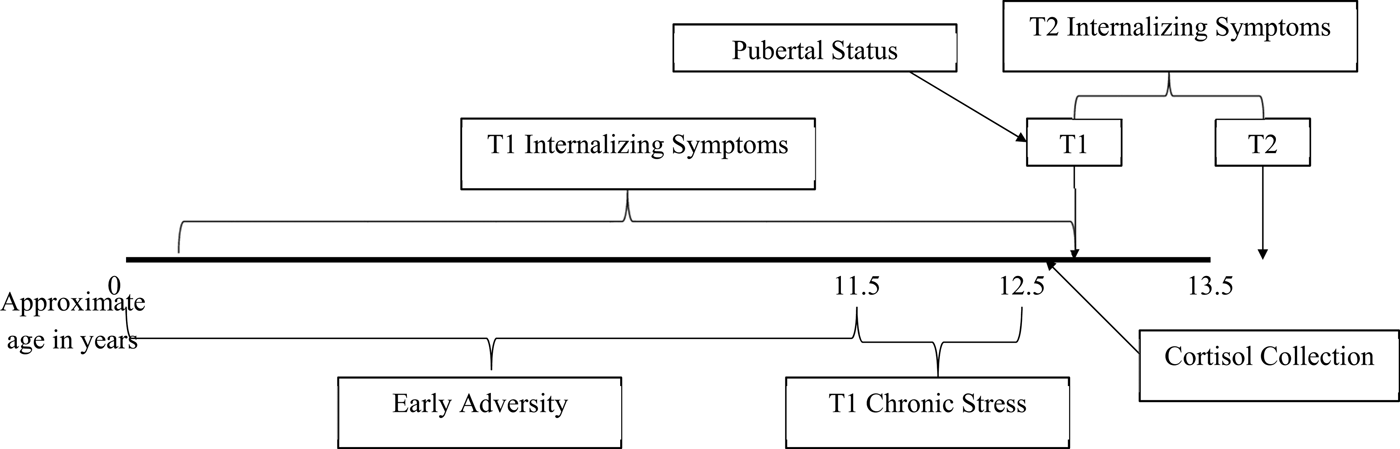
Approximately 1 year later, 85.61% (n = 113) participated in a follow-up (Time 2; T2) that included the same contextual life stress interviews to assess recent acute and chronic stress, and diagnostic interviews. There were no significant differences between those who did and did not participate in T2 on the T1 variables, except that those who did not participate had higher chronic stress at T1 (p < .05). The 113 participants with T2 follow-up data were included in this study (T1 M age = 12.30 years, SD = 0.71 years; 86% White). Most families were middle to upper class (18.6% had a yearly income of <$40,000; 17.7% had a yearly income of $41,000–$60,000; 28.3% had a yearly income of $61,000–$100,000; and 35.4% had a yearlt income >$100,000).Footnote 2 Analyses were conducted with full sample (n = 113) and a subset of participants (n = 69) who strictly adhered to the sampling protocol and used a track cap (see below). See Figure 3 for study timeline.
Measures
Cortisol
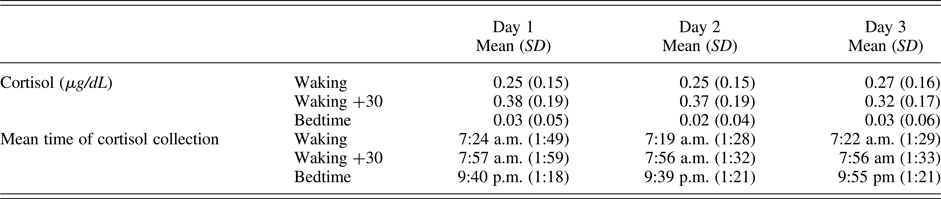
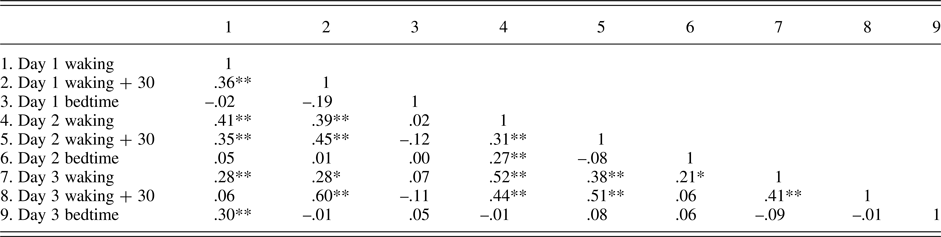
Samples were assayed for cortisol in duplicate, using a solid phase time-resolved fluorescence immunoassay with fluorometric endpoint detection (DELFIA; Dressendörfer, Kirschbaum, Rohde, Stahl, & Strasburger, Reference Dressendörfer, Kirschbaum, Rohde, Stahl and Strasburger1992). The intra-assay coefficients of variation ranged from 4.0% to 6.7% and the interassay coefficients of variation ranged from 7.1% to 9.0%. See Tables 1 and 2 for means, variances, timing, and intercorrelations of the samples.
Descriptive statistics for the cortisol samples included in the latent trait cortisol measurement model

Note: Mean time of cortisol collection is based upon the times reported on the collection tubes by adolescent participants. n = 113.
Intercorrelations of cortisol levels
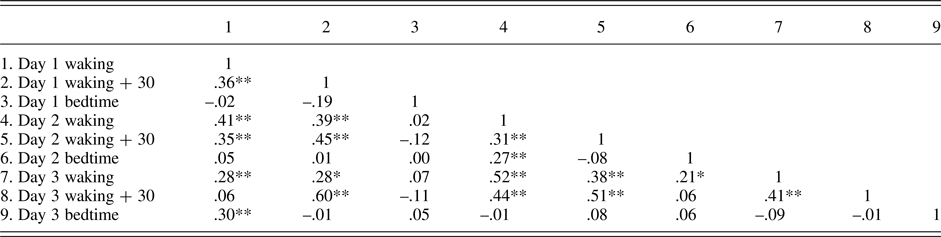
Note: *p < .05, **p < .01. n = 113.
Early adversity
The lifetime adversity section of the Youth Life Stress Interview (Rudolph & Flynn, Reference Rudolph and Flynn2007) was used to assess girls’ exposure to negative family events and circumstances during their lifetime (up until the year prior to the interview). Mothers and daughters completed separate interviews with the same interviewer, and interviewers were blind to all other data (see Stroud et al., Reference Stroud, Chen, Doane and Granger2016a). A general probe was used to assess exposure to particularly stressful events and circumstances, followed by a series of probes assessing specific types of adversity (death of a close family member or friend, long separation from parents [or primary caregivers], parental separation or divorce, exposure to serious marital conflict, chronic physical or mental illness of a close family member or friend, multiple family transitions [e.g., frequent moves between different caregivers], chaotic family living circumstances [e.g., neglect], legal problems of family members, and financial difficulties). A final probe assessed exposure to any other very difficult experience. See Stroud et al. (Reference Stroud, Chen, Doane and Granger2016a) for detailed descriptive statistics.
Participants provided information about the context (i.e., circumstances) and the consequences for each adversity endorsed. Using audio recordings of the interviews, a research assistant prepared narrative accounts for each adversity endorsed (excluding participants’ subjective reactions), combining information provided by mothers and daughters into a single narrative, consistent with prior work (e.g., Rudolph & Flynn, Reference Rudolph and Flynn2007).Footnote 3 If mothers and daughters endorsed the same adversity, the narratives reflected both of their reports. If only the mother or only the daughter endorsed the adversity, the narrative was based upon only one person's report. Subsequently, the research assistant presented the narratives to an independent rating team of two to four coders who were blind to participants’ subjective reactions and all other data. The team coded objective impact (i.e., severity) using the narratives on a scale from 1 (no adversity) to 9 (extremely severe negative impact), considering the likely impact of the adversity (or total adversities) for a typical adolescent given the circumstances. The team rated each adversity endorsed and provided an overall severity rating. A second team, blind to the original ratings, rerated a set of participants (n = 60; interrater reliability: intraclass correlation [ICC] = 0.99).
Early adversity was quantified in three ways: (a) overall severity (based on the overall adversity rating provided by the rating team; M = 4.10, SD = 2.19);Footnote 4 (b) frequency (total frequency of adversities experienced; e.g., If a participant experienced 2 deaths, 1 marital separation, and 2 chronic illnesses of family members or close friends, frequency = 5; M = 2.98, SD = 2.20); and (c) variety (sum of the number of different types of adversities experienced, regardless of severity; e.g., in example above, variety would be rated 3; M = 5.79, SD = 1.20).
Internalizing symptoms
At T1 and T2, adolescents were interviewed with the Schedule for Affective Disorders and Schizophrenia for School-Aged Children—Present and Lifetime version (Kaufman et al., Reference Kaufman, Birmaher, Brent, Rau, Flynn, Moreci and Ryan1997), a widely-used semi-structured diagnostic interview with well-established validity (Kaufman et al., Reference Kaufman, Birmaher, Brent, Rau, Flynn, Moreci and Ryan1997). Nine internalizing disorders were assessed (dysthymia, generalized anxiety disorder, major depression, obsessive–compulsive disorder, separation anxiety disorder, specific phobia, social phobia, panic disorder, and posttraumatic stress disorder). Symptom levels for each disorder were separately rated: 0 = no symptoms; 1 = mild symptoms; 2 = moderate, subthreshold symptoms; and 3 = DSM-IV criteria. T1 ratings reflect lifetime history and current symptoms, and T2 ratings reflect symptoms since T1. To form an internalizing disorder composite for each time point, we summed the symptom ratings of the nine disorders at T1 and T2, respectively. We chose to form an internalizing composite variable to increase variance for our predictor and outcome variables, and because research suggests that the association between early adversity and psychiatric disorders is fully explained by underlying vulnerabilities to experience internalizing and externalizing psychopathology, as opposed to risk for developing specific disorders (Keyes et al., Reference Keyes, Eaton, Krueger, McLaughlin, Wall, Grant and Hasin2012). At T1 and T2, respectively, 33.6% and 38.9% reported mild current or past symptoms; 33.6% and 31.9% reported moderate, subthreshold current or past symptoms; and 20.4% and 15.9% met diagnostic criteria (current or past) of at least one internalizing disorder. Of those reporting current or past internalizing symptoms, the majority reported symptoms of or met criteria for more than one disorder (T1: 70.1%; T2: 70.4%). Interrater reliability was assessed by rerating a set of interviews (blind to original ratings; T1: n = 30; T2: n = 20) using audio recordings; ICCs ranged from 0.80 to 1.00.
Covariates
Demographic and health covariates
Covariates explored were (a) time of waking; (b) race/ethnicity (White = 1; non-White = 0; 88.2% White);Footnote 5 (c) oral contraceptive use; (d) past-hour caffeine use; (e) past-hour nicotine use; (f) past-hour perceptions of stress (1 = not at all, 5 = very much); (g) average daily negative affect; (h) average daily positive affect; (i) age; (j) maternal education (less than a bachelor's degree = 0; a bachelor's degree or higher = 1; 61.1% coded 1); and (k) pubertal status. Average daily positive and negative affect were assessed in the diary assessment using the Positive and Negative Affect Schedule (Watson, Clark, & Tellegen, Reference Watson, Clark and Tellegen1988). Adolescents were asked to report on the extent to which they felt a list of 10 positive (e.g., excited) and 10 negative (e.g., upset) emotions in the hour prior to the sampling on a scale from 0 (not at all) to 4 (extremely); mean daily negative and positive affect variables were computed. At the laboratory visit, pubertal status was assessed via adolescent self-report using the Pubertal Development Scale (Petersen, Crockett, Richards, & Boxer, Reference Petersen, Crockett, Richards and Boxer1988). The five items, which assess growth spurt in height, skin and body hair changes, breast development, and age at menarche, are rated on a 4-point scale, from no development (1) to development seems completed (4); except for menarche which is rated 1 or 4. The Pubertal Development Scale has demonstrated good reliability and validity (Petersen et al., Reference Petersen, Crockett, Richards and Boxer1988). The mean was used (α = 0.70).
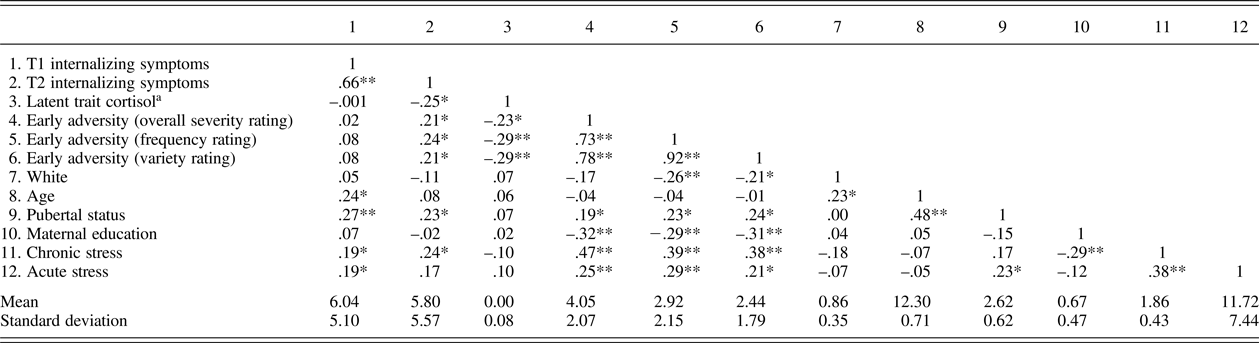
Due to limited frequency, oral contraceptive use (1.8 %) and nicotine use (0 %) were not included. All other day-level covariates that had significant effect on cortisol levels from corresponding days were retained in the LTC measurement model. In addition, person-level covariates that were significantly or marginally significantly correlated with both early adversity and T2 internalizing symptoms were included (see Table 3).
Bivariate correlations and descriptive statistics
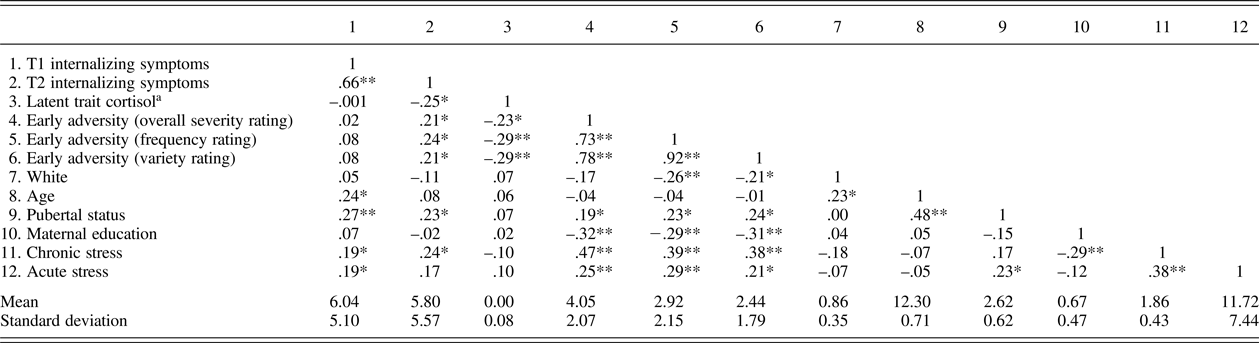
Note: a Latent trait cortisol is saved output from Mplus using the Regression Method for factor score determination.
*p < .05; **p < .01; ***p < .001. n = 113.
Recent stress
Adolescents’ past-year acute (i.e., events with a brief onset and relatively short duration) and chronic (i.e., ongoing objective stress over the past year) life stress were each evaluated as potential covariates as each was significantly associated with LTC level in a prior study in the present sample (Stroud et al., Reference Stroud, Chen, Doane and Granger2016b). Acute and chronic stress were assessed with a modified version of the UCLA Life Stress Interview (LSI; adapted from Rudolph & Hammen, Reference Rudolph and Hammen1999; Rudolph et al., Reference Rudolph, Hammen, Burge, Lindberg, Herzberg and Daley2000). Mothers and daughters were separately interviewed by the same interviewer. Interviewers were blind to other study data.
Acute stress
For each event reported during the LSI, participants provided information about the surrounding context (e.g., circumstances and resources to cope with it, predictability, and prior experience with similar events), its duration, and the consequences to obtain the degree of objective impact. Narrative accounts of each event (detailing the surrounding circumstances and consequences, but excluding participants’ subjective reactions) were prepared by interviewers, and then presented to an independent rating team who was blind to all other study data. Consistent with prior work (e.g., Rudolph et al., Reference Rudolph, Hammen, Burge, Lindberg, Herzberg and Daley2000), when mothers and daughters reported the same event, information from mothers and adolescents was combined into a single narrative. If only one reported the event, the narrative reflected only her report. The team rated the objective impact of each event on a 1 (no negative impact) to 5 (extremely severe negative impact) scale. A second team, blind to the original ratings, rerated a set of events (n =132); interrater reliability was strong (ICC = 0.92). The objective impact ratings of events that occurred during the 1-year assessment period were summed to form an acute stress composite variable.
Chronic stress
In the LSI, behavioral probes were used to elicit behavioral descriptions of adolescents’ ongoing objective stress over the past year in an array of domains (academics, academic behavior, parent–child relationship, close friendships, peer social life, romantic relationships/dating, and parents’ marital [or cohabiting] romantic relationship [if applicable]). Using the behavioral descriptions, interviewers rated adolescents’ level of chronic stress over the past year in each domain on scale from 1 (excellent/optimal circumstances) to 5 (very bad circumstances) in half-point increments; rating points were anchored by specific behavioral indicators to provide an objective rating that was independent of participants’ subjective experiences. Interrater reliability was good (ICCs: M = 0.81, 95% confidence interval [0.70, 0.91]). The mean of the objective ratings for each domain was computed to form a chronic stress composite variable. Composites based on mother and daughter report were correlated (r = .81, ps < .001) and thus were combined by taking the mean of the mothers’ and daughters’ ratings for each domain.
Analytic strategy
Preliminary analyses examined compliance with cortisol sampling. The 30-min waking sample was considered compliant if the self-reported time difference between the waking and the 30-min postwaking samples was between 23 and 37 min (e.g., Doane et al., Reference Doane, Chen, Sladek, Van Lenten and Granger2015; Stroud et al., Reference Stroud, Chen, Doane and Granger2016b). Samples out of this range were considered noncompliant and treated as missing (68 of 317 samples [21.45%]). In addition, 7 of 563 compliant cortisol values (1.241%) were defined as outliers (i.e., 3 SD away from the mean) and treated as missing.Footnote 6
The primary analyses were conducted in Mplus 8 (Muthen & Muthen, Reference Muthen and Muthen1998–2017). Analyses were conducted with maximum likelihood estimation with robust standard errors (MLR), and full information maximum likelihood was used to handle missing data (Savalei & Rhemtulla, Reference Savalei and Rhemtulla2012). Model fit was assessed with the chi-square test (a p value > .05 indicates good fit), the comparative fit index (CFI; >0.90 indicates good fit), and the root mean square error of approximation (RMSEA; <0.05 indicates good fit; <0.08 indicates adequate fit; Browne & Cudeck, Reference Browne, Cudeck, Bollen and Long1993; Hu & Bentler, Reference Hu and Bentler1998).
We used confirmatory factor analysis to model LTC using the waking and the 30-min postwaking cortisol samples from the 3 days of collection (Stroud et al., Reference Stroud, Chen, Doane and Granger2016a, Reference Stroud, Chen, Doane and Granger2016b). Using the correlations between the samples, the LTC indicator is derived by drawing upon the commonalities among cortisol samples in reference to the grand mean. Because the bedtime samples were not significantly correlated with the morning samples (see Table 2), they were not used to construct the LTC (see Doane et al., Reference Doane, Chen, Sladek, Van Lenten and Granger2015; Stroud et al., Reference Stroud, Chen, Doane and Granger2016a).Footnote 7 Potential day-level covariates were added to the model one at a time, and those that were not significantly associated with the corresponding 30-min postwaking cortisol indicators were trimmed. Based upon the modification indices suggested by Mplus, the errors of some samples were allowed to correlate (see Stroud et al. Reference Stroud, Chen, Doane and Granger2016a, Reference Stroud, Chen, Doane and Granger2016b).
Next, we investigated whether the person-level covariates (e.g., pubertal status) were significantly or marginally significantly correlated with early adversity and T2 internalizing symptoms. Pubertal status and chronic stress were each significantly or marginally significantly correlated with both early adversity and T2 internalizing symptoms (see Table 3) and thus were included as covariates in all analyses. In addition, we also included T1 internalizing symptoms as a covariate given that research suggests that past and current internalizing symptoms can influence HPA axis activity (e.g., Doane et al., Reference Doane, Mineka, Zinbarg, Craske, Griffith and Adam2013), and because we were interested in examining whether early adversity predicted developmental changes in internalizing symptoms (via LTC level) between T1 and T2. This approach also ensures temporal precedence of early adversity and HPA axis functioning to internalizing psychopathology, which is critical in mediation models (e.g., MacKinnon, Reference MacKinnon2008).
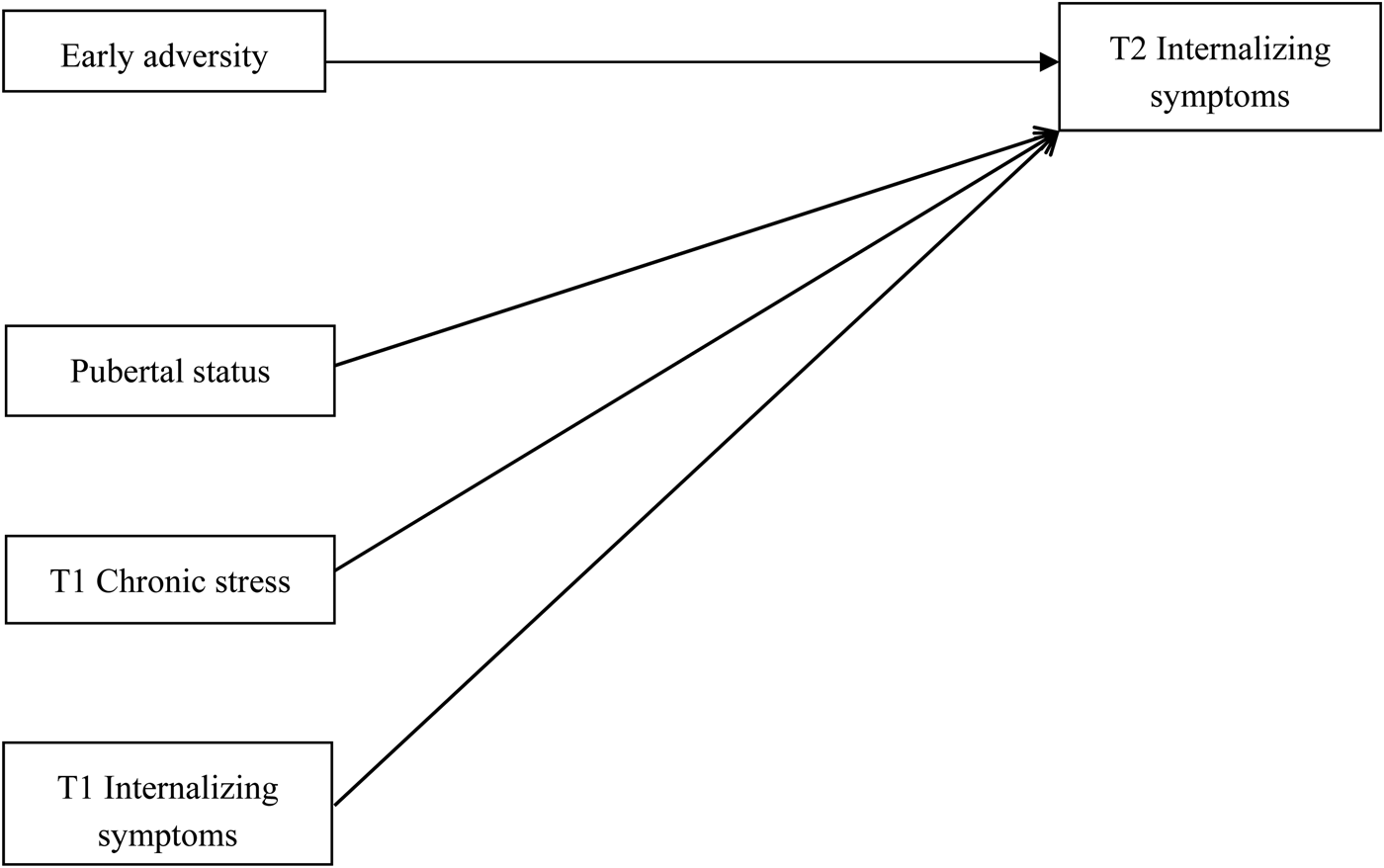
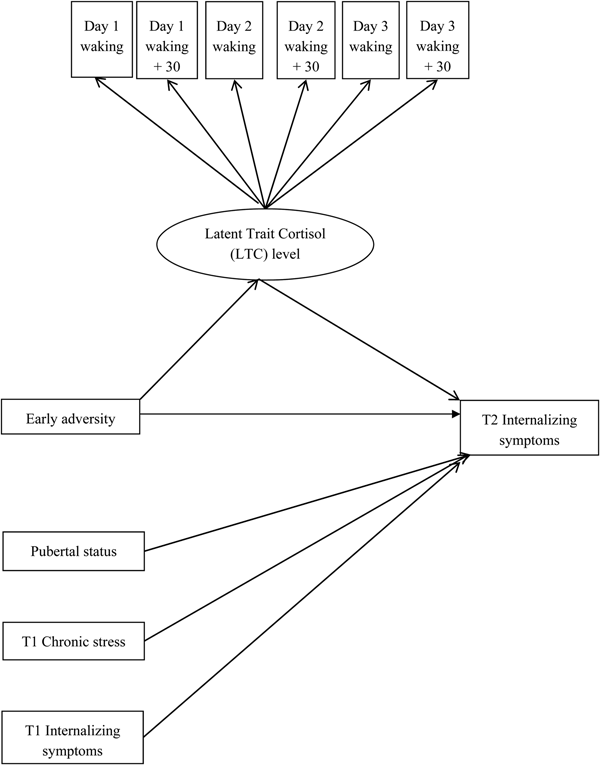
Next, we examined the total effect of early adversity on T2 internalizing symptoms. Thus, we specified models that included a path from early adversity to T2 internalizing symptoms (Models 1a–3a; see Figure 1). Then, to examine whether LTC level mediated the prospective association between early adversity and T2 internalizing symptoms, we added LTC level to Models 1a–3a, and included an indirect path from early adversity to T2 internalizing symptoms through LTC level (Model 1b–3b; see Figure 2). Because T1 internalizing symptoms was included, Models 1–3 evaluate whether early adversity (via LTC level) predicts unique variance in T2 internalizing symptoms (i.e., variance not explained by T1 internalizing symptoms).
Models 1a–3a: Total effect of early adversity on Time 2 internalizing symptoms adjusting for the effects of pubertal status, Time 1 chronic stress, and Time 1 internalizing symptoms.

Models 1b–3b: Direct and indirect effects of early adversity on T2 internalizing symptoms adjusting for the effects of pubertal status, T1 chronic stress, and T1 internalizing symptoms.

To evaluate different methods of quantifying the accumulation of early adversity, we repeated the models three times, once for each way of quantifying adversity (overall severity, frequency, and variety).Footnote 8 To test the robustness of our findings, we repeated Models 1–3 without the covariates. Finally, because including T1 internalizing symptoms as a covariate tests whether early adversity (via LTC level) predicts unique variance in T2 internalizing symptoms, but not necessarily changes in internalizing symptoms between T1 and T2, we repeated Models 1–3, but used an internalizing symptoms difference score (i.e., difference between T1 and T2 internalizing symptoms) as the outcome variable. Consistent with recommendations (MacKinnon, Reference MacKinnon2008), significance of direct and indirect effects was evaluated using bias-corrected bootstrapping (n = 5,000). In all models, significant effects are those not including zero in the 95% asymmetric confidence intervals (CIs).
In follow-up analyses, we repeated Models 1–3 in a compliance sample comprising participants who used the track cap; whose track cap detected time of waking sample was within 10 min of their self-reported waking time for that day; and whose track cap time detected their 30-min postwaking sample was within 23 and 37 min after their waking sample for that day (n = 69; e.g., DeSantis et al., 2010; Stroud et al., Reference Stroud, Chen, Doane and Granger2016b). In these models, Bayesian estimation was used because the factor loadings of the indicators (i.e., the waking and the 30-min postwaking cortisol samples) on the LTC latent variable in the compliance sample were heavily skewed; Bayesian estimation does not assume that the parameters are normally distributed; and Bayesian estimation accommodates small samples (e.g., Muthén & Asparouhov, Reference Muthén and Asparouhov2012). Model fit was assessed with the F statistic 95% CI for difference between the observed and the replicated χ2 values (a CI where zero is close to the middle of the CI indicates excellent fit; a positive lower limit indicates poor fit; Muthén & Asparouhov, Reference Muthén and Asparouhov2012), and the posterior predictive p value (around .5 indicates excellent fit; Muthén & Asparouhov, Reference Muthén and Asparouhov2012).
Results
Measurement model: LTC
The waking and 30-min postwaking samples were used to construct the LTC. None of the day-level covariates were significantly associated with the corresponding 30-min postwaking cortisol indicators and, thus, were trimmed. Based on the modification indices, the error covariance between the waking sample on Day 1 and the postwaking sample on Day 3 was freely correlated, which significantly improved model fit, initial fit: χ2 (9) = 33.54, p < .001, CFI = 0.78, RMSEA = 0.16, p = .001. Fit indices of the final model indicated that fit was adequate, χ2 (8) = 14.91, p = .06; CFI = 0.94, RMSEA = 0.09, p = .16, with the exception of the RMSEA, which was slightly outside the range of adequate fit. However, the analysis testing the null hypothesis that RMSEA was smaller than 0.05 was not significant (p = .16). All standardized factor loadings were above 0.5 (ps < .01).
Does early adversity predict increases in internalizing symptoms between T1 and T2?
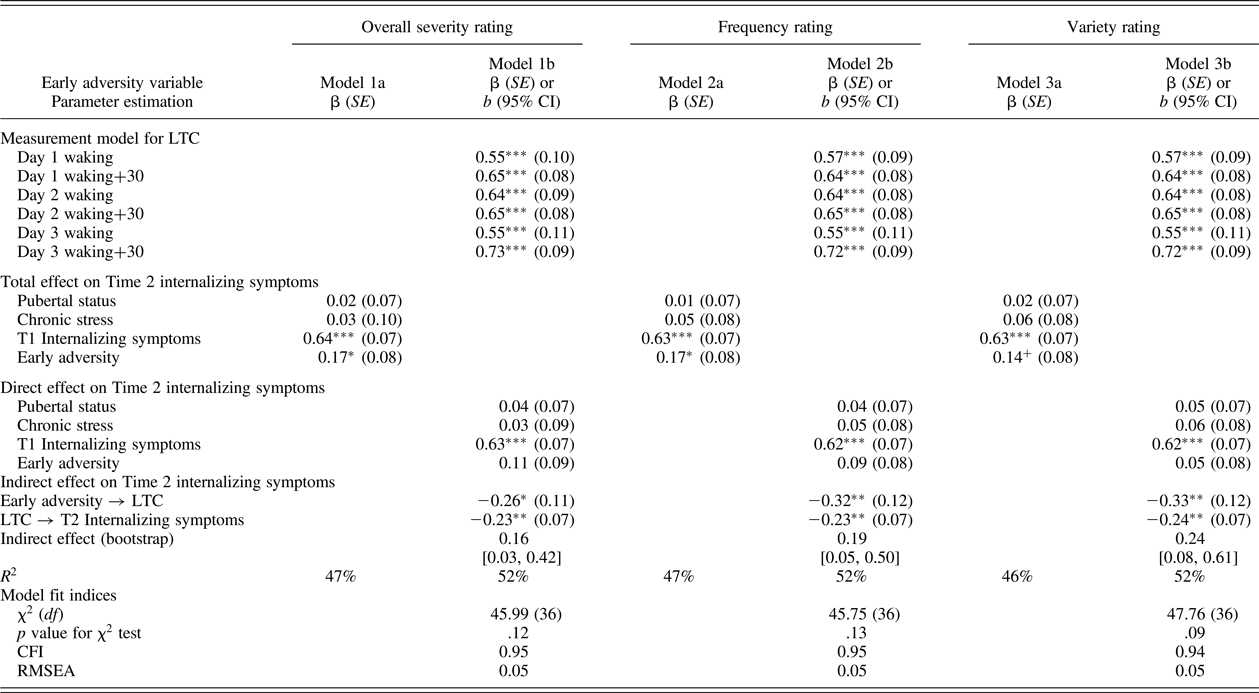
Next, we examined whether early adversity directly predicted increases in T2 internalizing symptoms between T1 and T2 in three separate models, one for each way of conceptualizing early adversity. No model fit indices were available because these models were just-identified models. As hypothesized, in each model, greater early adversity predicted greater T2 internalizing symptoms. As shown in Table 4, the total effect reached significance when early adversity was conceptualized as the overall severity rating (Model 1a; standardized coefficient, β = 0.17, p = .042) and the frequency rating (Model 2a; β = 0.17, p = .026), and approached significance when conceptualized as the variety rating (Model 3a; β = 0.14, p = .087). The total effects were small in size, and the models explained 46%–47% of the variance in T2 internalizing symptoms (see Table 4; Models 1a–3a).
Examining whether latent trait cortisol (LTC) level mediates the association between early adversity and Time 2 internalizing symptoms
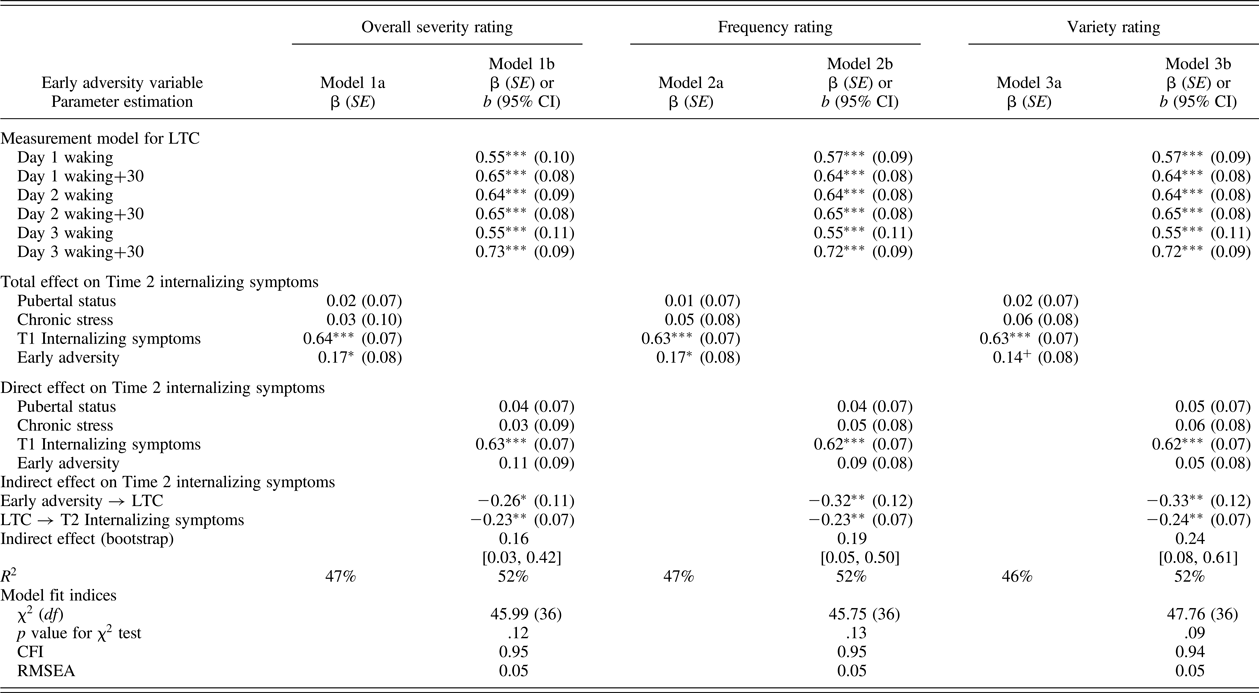
Note: “a” models are base models. “b” models are mediation models. Models 1b–3b were run twice: (a) to obtain the coefficients and standard errors for the total effect using maximum likelihood estimation with robust standard errors; and (b) to obtain the direct effect, and the indirect effect and its 95% bootstrap confidence intervals using maximum likelihood. β, standardized coefficient. SE, standard error. CI, confidence interval. CFI, comparative fit index. RMSEA, root mean square error of approximation. +p < .10, *p < .05, **p < .01, ***p < .001. n = 113.
Does LTC level mediate the prospective association between early adversity and T2 internalizing symptoms?
We examined whether LTC level mediated the prospective association between early adversity and T2 internalizing symptoms in three separate models, one for each way of conceptualizing early adversity. Model fit indices and standardized coefficients for the path between early adversity and LTC level are presented in Table 4 (see Models 1b–3b). Model fit indices were adequate. Consistent with predictions, greater early adversity indirectly predicted greater T2 internalizing symptoms through lower LTC level. Based upon the bias-corrected bootstrap confidence intervals, the indirect effects were all significant (bs = 0.16–0.24). In each model, the direct effects of early adversity on T2 internalizing symptoms were small and not significant (βs = 0.05–0.11; ps = .13). The models explained 51%–52% of the variance in T2 internalizing symptoms.
To examine the robustness of the findings, we repeated Models 1–3 without the person-level covariates (T1 internalizing symptoms, pubertal status, and T1 chronic stress). Model fit indices were adequate, and the indirect effects remained significant (bs = 0.16–0.23). The models explained 7%–10% of the variance in T2 internalizing symptoms. Then, we examined whether early adversity predicted changes in internalizing symptoms between T1 and T2 via LTC level by using the difference between T1 and T2 internalizing symptoms as the outcome variable. Pubertal status and T1 chronic stress were included as covariates. Model fit indices were adequate, and the indirect effects remained significant (bs = 0.15–0.24). The models explained 11%–13% of the variance in T2 internalizing symptoms.Footnote 9
Finally, we repeated Models 1–3 in a compliance sample comprising individuals who used the track cap and strictly adhered to the sampling protocol (n = 69). Fit indices of the LTC measurement model were adequate, F statistic 95% CI [–9.78, 32.81]; posterior predictive p = .18, and most of the standardized factor loadings were above 0.5 and their 95% CIs did not include zero. For Models 1a–3a, model fit indices were adequate, but the total effects of early adversity on T2 internalizing symptoms were no longer significant (Bs = 0.08–0.19). In Models 1b–3b, model fit indices were also adequate. The paths from early adversity to LTC remained significant (Bs = –0.27 to –0.38), but the paths from LTC to T2 internalizing symptoms were no longer significant (Bs = –0.16 to –0.21). The indirect effects were similar in magnitude to those that were observed in the full sample, but were no longer significant: overall severity, b = 0.11 [–0.06, 0.44], frequency, b = 0.08 [0.06, 0.40], and variety, b = 0.19 [–0.06, 0.67].Footnote 10
Discussion
In the present study, we used a novel approach of quantifying individual differences in HPA axis activity to test a central tenet of the allostatic load model, whether the accumulation of stress “gets under the skin” by altering the set points regulating the activity of the HPA axis, which in turn leads to negative health outcomes (e.g., Lupien et al., Reference Lupien, Ouellet-Morin, Hupbach, Tu, Buss, Walker, McEwen, Cicchetti and Cohen2006; McEwen, Reference McEwen, Yehuda and McEwen2004). Consistent with this, we provided new evidence that early adversity places girls at risk for the development of internalizing symptoms via its association with individual differences in HPA axis regulation. Such findings were bolstered by using objective contextual stress interviews with adolescents and their mothers to assess early adverse experiences within the family environment over early adolescent girls’ entire lives (except for the past year), by using diagnostic interviews to assess current and lifetime history of internalizing symptoms, by replicating the findings across all three ways of conceptualizing early adversity, and by adjusting for the effects of T1 internalizing symptoms and past-year chronic stress.
Early adversity and internalizing psychopathology: Individual differences in HPA axis activity as an underlying mechanism
The present study adds to a small body of evidence documenting the ways in which early adversity contributes to the development of psychopathology. Collectively, this work suggests that youth exposed to early adversity are vulnerable to psychopathology through a variety of mechanisms, including increased stress sensitivity (e.g., La Rocque et al., Reference La Rocque, Harkness and Bagby2014) and emotional reactivity (e.g., Heleniak et al., Reference Heleniak, Jenness, Van der Stoep, McCauley and McLaughlin2016; McLaughlin, Kubzansky, et al., 2010); impaired social relationships and interpersonal functioning (e.g., Alink et al., Reference Alink, Cicchetti, Kim and Rogosch2012); emotion regulation difficulties (e.g., Heleniak et al., Reference Heleniak, Jenness, Van der Stoep, McCauley and McLaughlin2016); and alterations in physiological reactivity (e.g., McLaughlin et al., Reference McLaughlin, Sheridan, Alves and Mendes2014) as well as in neural systems involved in emotional processing and regulation (e.g., Herringa et al., Reference Herringa, Birn, Ruttle, Stodola, Davidson and Essex2013). In a literature focused on older adolescents and adults, the present study builds upon this work by identifying a mechanism through which early adversity increases risk for internalizing symptoms during early adolescence, a critical developmental period for understanding the emergence of internalizing psychopathology for girls (e.g., Rohde et al., Reference Rohde, Beevers, Stice and O'Neil2009). Moreover, adding to prior work that has largely focused on the presence or severity level of singular severe forms of early experiences (e.g., childhood maltreatment), the present findings suggest that the accumulation of relatively less severe experiences in the family environment (e.g., parents’ marital conflict) has the capacity to increase risk for internalizing symptoms via its association with individual differences in HPA axis regulation. In using three different ways of quantifying early adversity, here we showed that the frequency (i.e., number, regardless of severity and type), variety (i.e., number of different types of stressors, regardless of frequency and severity), and overall severity (total objective severity rating considering all adversities experienced) of such experiences are each parameters of early adverse experiences that predict risk for internalizing psychopathology via alterations in HPA axis regulation. Such findings underscore the importance of evaluating different ways of quantifying early adversity when considering adolescent girls’ risk for developing internalizing symptoms.
The present findings suggest several additional directions for future research. First, research should examine whether and how the prospective association between early adversity and internalizing psychopathology (via LTC level) changes over time and across different developmental periods (e.g., childhood and adulthood). This is important because in the present study cortisol was sampled three times per day over 3 days, but only at one time point, and as such, the extent to which LTC level remains stable over longer time periods is unknown (i.e., >9 months; Doane et al., Reference Doane, Chen, Sladek, Van Lenten and Granger2015). Research suggests that the association between early adversity and trait cortisol changes within individuals from childhood to adolescence (Essex et al., Reference Essex, Shirtcliff, Burk, Ruttle, Klein, Slattery and Armstrong2011), perhaps due to developmental changes in LTC levels (e.g., pubertal status and age; e.g., Gunnar et al., Reference Gunnar, Wewerka, Frenn, Long and Griggs2009; Pendry & Adam, Reference Pendry and Adam2007) or increased time between the age of exposure to early adversity and the age of the cortisol assessment (Miller et al., Reference Miller, Chen and Zhou2007). Furthermore, the effect of early adversity on stress physiology differs across development, with some evidence that early exposure (e.g., infancy or early childhood) may have a stronger impact on stress physiology than that occurring at later ages (e.g., Cicchetti & Rogosch, Reference Cicchetti and Rogosch2012). Thus, research assessing early adversity, cortisol, and psychopathology on multiple occasions over multiple developmental periods is needed to understand how the association between early adversity and psychopathology (via LTC level) changes across development.
Second, research should aim to identify factors that moderate the impact of early adversity on risk for psychopathology (via LTC level), focusing first on factors known to affect the impact of early adversity on both HPA axis activity and internalizing psychopathology. For example, variation in the serotonin transporter gene (5-HTTPLR) moderates the impact of early adversity on both HPA axis activity (Chen, Stroud, Vrshek-Schallhorn, Doane, & Granger, Reference Chen, Stroud, Vrshek-Schallhorn, Doane and Granger2017) and major depression (Caspi et al., Reference Caspi, Sudgen, Moffit, Taylor, Craig, Harrington and Poulton2003), suggesting that 5-HTTPLR may moderate the indirect effect from early adversity to internalizing psychopathology via LTC level. Third, future work should simultaneously investigate LTC level and other mechanisms linking early adversity and psychopathology in order to shed light on their interrelations. For example, lower LTC level in response to early adversity may act as an intermediate outcome in models demonstrating links between early adversity and psychopathology via physiological reactivity to future acute stressors (e.g., McLaughlin, Kubzansky, et al., 2010). Supporting this, research indicates that morning cortisol slopes from early to late childhood predict cortisol reactivity to laboratory-based stressors in late childhood (Laurent, Gilliam, Wright, & Fisher, Reference Laurent, Gilliam, Wright and Fisher2015). In addition, given links between HPA axis functioning and emotion regulation (e.g., Hilt, Sladek, Doane, & Stroud, Reference Hilt, Sladek, Doane and Stroudin press), LTC level may similarly function as an intermediate outcome in the pathway between early adversity and psychopathology via emotion regulation difficulties (e.g., Heleniak et al., Reference Heleniak, Jenness, Van der Stoep, McCauley and McLaughlin2016). Moreover, as previously suggested (e.g., McLaughlin, Kubzansky, et al., 2010), enduring differences in physiological regulation, as captured by LTC level, might explain why individuals who have experienced early adversity are more sensitive to stressors of lower severity, thereby increasing their risk for depression and anxiety (e.g., La Rocque et al., Reference La Rocque, Harkness and Bagby2014). Thus, research investigating the role of LTC level in pathways linking early adversity to psychopathology via other mechanisms, such as cortisol reactivity, emotion regulation, and stress sensitivity, may be particularly fruitful in further elucidating how early adversity increases risk for psychopathology.
Individual differences in HPA axis activity and the development of internalizing symptoms
In using the LTC approach, the present findings add to a handful of studies examining the prospective association between HPA axis activity and psychopathology using an index of HPA activity that captures traitlike individual differences (e.g., Chen et al., Reference Chen, Raine, Rudo-Hutt, Glenn, Soyfer and Granger2015, 2016; Shirtcliff & Essex, Reference Shirtcliff and Essex2008). Given that LTC level largely taps between-person variation in HPA axis regulation and exhibits considerable within-person stability over short-term follow-ups (i.e., 9 months; Doane et al., Reference Doane, Chen, Sladek, Van Lenten and Granger2015), such an approach permits the evaluation of whether enduring differences between individuals increase risk for psychopathology. Consequently, the present findings suggest that a relatively stable component of HPA axis regulation sets the stage for the development of internalizing psychopathology. The prospective link between LTC level and internalizing symptoms emerged when adjusting for the effects of current and lifetime history of internalizing symptoms in the prediction of subsequent internalizing symptoms, and held when predicting changes in internalizing symptoms between T1 and T2, suggesting that early adversity predicts developmental changes in internalizing symptoms (i.e., changes in the severity level or emergence of symptoms) via LTC level. Given that those with a history of internalizing disorders exhibit a different pattern of HPA axis activity, as compared to those without such history (e.g., Doane et al., Reference Doane, Mineka, Zinbarg, Craske, Griffith and Adam2013), it will be important for future research to incorporate measures of HPA axis activity over multiple time points in order to capture the dynamic associations between HPA axis activity and internalizing symptoms over time.
Because only a few studies have examined associations between trait cortisol and psychopathology, and even fewer studies have done so prospectively, it is premature to draw conclusions about cross-study differences. It is worth noting, however, that the findings are mixed regarding whether hypocortisolism or hypercortisolism confers risk. For example, one study demonstrated that lower trait cortisol was concurrently associated with symptom severity (a composite including internalizing and externalizing symptoms) among youth in fifth grade, but that higher trait cortisol in fifth grade predicted increases in symptoms at the 2-year follow-up (Shirtcliff & Essex, Reference Shirtcliff and Essex2008). Similarly, Chen et al. (Reference Chen, Raine, Rudo-Hutt, Glenn, Soyfer and Granger2015) showed that LTC level (captured with saliva samples on a single day) was positively associated with concurrent internalizing problems among girls, but not boys, in a sample of high-risk urban youth.
However, prospective longitudinal studies focusing on basal cortisol or diurnal cortisol rhythms have been fairly consistent in demonstrating that elevations in morning cortisol confer risk for internalizing psychopathology among older adolescents and adults. Such studies indicate that elevated morning cortisol predicts prospective increases in depressive symptoms and major depressive episodes (e.g., Harris et al., Reference Harris, Borsanyi, Messari, Stanford, Cleary, Shiers and Herbert2000), and elevations in the CAR predict increases in depressive symptoms (e.g., Vrshek-Schallhorn et al., Reference Vrshek-Schallhorn, Doane, Mineka, Zinbarg, Craske and Adam2013), as well as onsets of major depression (e.g., Vrshek-Schallhorn et al., Reference Vrshek-Schallhorn, Doane, Mineka, Zinbarg, Craske and Adam2013) and anxiety disorders (e.g., Adam et al., Reference Adam, Vrshek-Schallhorn, Kendall, Mineka, Zinbarg and Craske2014). Although numerous methodological differences may have contributed to differences between these results and those of the present study (e.g., Cicchetti & Rogosch, Reference Cicchetti and Rogosch2001), developmental differences in the link between HPA axis regulation and internalizing psychopathology may be important (e.g., Badanes et al., Reference Badanes, Watamura and Hankin2011). The prospective studies (focusing on basal cortisol or diurnal cortisol rhythms) supporting a link between hypercortisolism and internalizing psychopathology have predominately focused on older adolescents or adults (e.g., Adam et al., Reference Adam, Vrshek-Schallhorn, Kendall, Mineka, Zinbarg and Craske2014; Vrshek-Schallhorn et al., Reference Vrshek-Schallhorn, Doane, Mineka, Zinbarg, Craske and Adam2013). Thus, it may be that the prospective association between HPA axis activity and internalizing psychopathology varies as a function of pubertal development, with hypocortisolism increasing subsequent risk prior to pubertal development (and perhaps during the pubertal transition) and hypercortisolism increasing subsequent risk after pubertal transition (e.g., Badanes et al., Reference Badanes, Watamura and Hankin2011). Prospective longitudinal studies that include multiple measures of HPA axis regulation, pubertal development, and internalizing psychopathology, over the pubertal transition (i.e., pre- and postpubertal development), are needed to directly examine this possibility.
Despite these cross-study differences, it is tempting to speculate why lower levels of HPA axis regulation might confer risk for internalizing symptoms. One possibility, consistent with the “boost” hypothesis, is that short-term elevations in cortisol (e.g., CAR) serve a short-term adaptive function by mobilizing the body's resources (via influencing metabolic processes) to help meet perceived daily demands (e.g., Adam, Hawkley, Kudielka, & Cacioppo, Reference Adam, Hawkley, Kudielka and Cacioppo2006). Supporting this, research indicates that within-person increases in cortisol are associated with subsequent increases in activeness (Hoyt, Zeiders, Ehrlich, & Adam, Reference Hoyt, Zeiders, Ehrlich and Adam2016). Moreover, higher cortisol reactivity has been linked with lower levels of negative affect, indicating that cortisol may serve to buffer against negative mood and promote well-being following acute stress (e.g., Het, Schoofs, Rohleder, & Wolf, Reference Het, Schoofs, Rohleder and Wolf2012). Collectively, this suggests that adolescents with lower LTC levels may not mount a cortisol response when faced with acute stress, thereby reducing their ability to adaptively cope with such stress, which over time may contribute to the development of internalizing symptoms. However, research providing support for the boost hypothesis has focused on adults: given the changes in adrenocortical functioning associated with pubertal development (Gunnar et al., Reference Gunnar, Wewerka, Frenn, Long and Griggs2009), it is unknown whether early adolescents also display this cortisol surge to meet daily demands, as well as whether it similarly promotes well-being following stress. Furthermore, the “boost” reflects a day-to-day or moment-to-moment process wherein cortisol surges in response to daily or momentary environmental contexts, respectively (e.g., Adam et al., Reference Adam, Hawkley, Kudielka and Cacioppo2006; Het et al., Reference Het, Schoofs, Rohleder and Wolf2012). Because LTC is a relatively stable indicator of between-person variation in HPA axis activity (Doane et al., Reference Doane, Chen, Sladek, Van Lenten and Granger2015), we would not hypothesize that LTC level would change in response to daily or transient stressors (Doane et al., Reference Doane, Chen, Sladek, Van Lenten and Granger2015), and as such, it is unclear whether the “boost” is related to LTC level. Future research focusing on the implications of LTC level for subsequent HPA axis responses to daily or transient stressors (e.g., as indexed by indicators of diurnal cortisol) may increase our understanding of why lower LTC level confers risk for internalizing psychopathology.
Future research should also evaluate the duration of the predictive effect of LTC level on internalizing symptoms. Vrhsek-Schallhorn et al. (Reference Vrshek-Schallhorn, Doane, Mineka, Zinbarg, Craske and Adam2013) demonstrated that the effect of the CAR on risk for major depressive onsets decayed over time, such that CAR elevations significantly predicted major depressive onsets within 2.5 years (but not between 2.5 and 4 years) of the cortisol assessment. Given that the CAR exhibits limited stability over periods greater than 1 month (e.g., Ross et al., Reference Ross, Murphy, Adam, Chen and Miller2014) whereas LTC level captures traitlike individual differences in HPA axis activity, exhibiting relatively greater stability (e.g., Doane et al., Reference Doane, Chen, Sladek, Van Lenten and Granger2015), we hypothesize that early adversity might engender risk for internalizing psychopathology via LTC level over longer time periods (as compared to the CAR). Such work could also address other questions about the nature of this association including whether the present findings vary as a function of prior (diagnosable) psychopathology or the presence of comorbid externalizing psychopathology, and whether the findings apply to diagnosable disorders.
Limitations and strengths
Several limitations merit note. First, the sample was self-selected, and composed of mostly White early adolescent girls. Research highlighting gender differences in the diurnal cortisol rhythm as youth enter puberty (e.g., Gunnar et al., Reference Gunnar, Wewerka, Frenn, Long and Griggs2009), as well as in associations between stress and HPA axis functioning (e.g., Pendry and Adam, Reference Pendry and Adam2007; Gunnar et al., Reference Gunnar, Wewerka, Frenn, Long and Griggs2009), suggests that the findings may not generalize to early adolescent boys. Moreover, given that developmental changes in adrenocortical functioning occur in early adolescence (Gunnar et al., Reference Gunnar, Wewerka, Frenn, Long and Griggs2009), and prior work has obtained a positive association between early adversity and trait cortisol during other developmental periods (e.g., childhood: Essex et al., Reference Essex, Shirtcliff, Burk, Ruttle, Klein, Slattery and Armstrong2011; late adolescence: Doane et al., Reference Doane, Chen, Sladek, Van Lenten and Granger2015), the present findings may not apply to other developmental periods. Moreover, given we relied on a community sample, the severity and frequency of the early adversities faced by adolescents were relatively low. In addition, participants reported low levels of chronic stress (M = 1.86), and those who did not participate at T2 had higher levels of recent chronic stress at T1 (as compared to those who participated at T2). Thus, it will be important to replicate these findings in a sample of individuals facing higher levels of recent stress and early adversity. Further, because most adolescents were experiencing internalizing symptoms, rather than diagnosable disorders, the present findings may not generalize to onsets of diagnosable disorders. Second, although our measure of early adversity examined adolescents’ entire lives (except for the past year) and early adversity occurred prior to the cortisol collection, early adversity and LTC level were measured concurrently (see Figure 3). Thus, we cannot rule out the possibility that third variables contributed to the observed associations. For example, shared genetic factors may have influenced the likelihood of experiencing early adversity and psychopathology (Kendler & Karkowski-Shuman, Reference Kendler and Karkowski-Shuman1997). Third, the indirect effect of early adversity on internalizing psychopathology (via LTC level) was not replicated in the compliance sample (comprising individuals who strictly adhered to the saliva collection protocol and used a track cap; n = 69). Girls considered compliant versus noncompliant did not significantly differ in level of internalizing symptoms at T1, noncompliant: M = 5.50, SD = 4.97; compliant: M = 6.39, SD = 5.18; t (111) = –0.91, p = .37, and T2, noncompliant: M = 5.73, SD = 5.35; compliant: M = 5.84, SD = 5.74; t (111) = –0.11, p = .92. It is likely that the effects were not replicated because there was very low power to detect significant indirect effects (19%) due to the reduced sample size. To directly evaluate this, replication of the indirect effects in a larger sample of individuals who utilize electronic monitoring devices and strictly adhere to the collection protocol will be important. Fourth, our measure of early adversity was retrospective. Fifth, the mediation model explained a small percentage of the variation in T2 internalizing symptoms (11%–13% when changes in internalizing symptoms between T1 and T2 were investigated), and thus, individual differences in HPA axis functioning are only one of many factors that contribute to the association between early adversity and internalizing psychopathology. Nonetheless, given there are multiple pathways through which early adversity contributes to psychopathology (e.g., McLaughlin, Reference McLaughlin2016), the present findings suggest that the pathway through individual differences in HPA axis functioning is a significant one.
Study timeline.

Conclusion
The findings of the present study provide new evidence that early adversity may place early adolescent girls at risk for the development of internalizing psychopathology by lowering the set points regulating the functioning of the HPA axis, supporting a central tenet of the allostatic load model (e.g., Lupien et al., Reference Lupien, Ouellet-Morin, Hupbach, Tu, Buss, Walker, McEwen, Cicchetti and Cohen2006). Such findings support the use and development of psychosocial interventions targeting youth and their caregivers with the goal of promoting adaptive HPA axis functioning among youth who have experienced early adversity (for a review, see Slopen, McLaughlin, & Shonkoff, Reference Slopen, McLaughlin and Shonkoff2014). Prior evidence in the present sample suggests that the accumulation of acute interpersonal stress over the past year has the capacity modify LTC level, even after accounting for the effect of early adversity (Stroud et al., Reference Stroud, Chen, Doane and Granger2016b). This suggests that even traitlike individual differences in HPA axis regulation are not set in stone by early adversity; such differences continue to adjust in response to the accumulation of new experiences. This leaves open the possibility that psychosocial interventions may also be capable of altering traitlike individual differences in HPA axis regulation, with the ultimate goal of preventing the development of internalizing psychopathology among those who have experienced early adversity.
In conclusion, our study adds to the body of work examining the mechanisms through which early adversity is linked with later psychopathology by illustrating a novel pathway through individual differences in physiological stress system regulation.