Introduction
In the nineteenth century, religion and force remained the key instruments of governance for the rulers of Kabul. This political culture was partly based on the idea of taghallub (domination), a theory that Muslim jurists traditionally considered to be a source of political legitimacy.Footnote 1 The theory derived from the classical principle of the “rule belongs to he who conquers” (al-hukm li-man ghalab).Footnote 2 On the other hand, Sunni jurists had a pragmatic interpretation of the Quranic verse wherein God instructs the faithful to obey their rulers.Footnote 3 According to this popular belief, showing obedience to the ruler was a religious duty, and no matter the character of the ruler, or how he ascended to the throne, one had to obey him.Footnote 4 This understanding incentivised the use of force and religiosity in politics. As a result, Afghan rulers mainly relied on two elite groups to practice governance: tribal chiefs for the supply of soldiers, and clergy for religious sanction.Footnote 5 Ordinary people, the public, on the other hand, were of little concern to the ruler, and their wishes or wants could easily be ignored.
Amir Shir ʿAli Khan, during his second reign (1868–79), tried to change this. Tired of the endless wars with his many rivals, he decided to take a new approach towards governance. He imported print machines from India to carry out a number of reforms that were primarily aimed at strengthening the relationship between ordinary people and the state. He used the new technology to modernise government paperwork, print postal stamps, and publish educational books and pamphlets. The most prominent of his reform programmes was the establishment of Shams al-Nahar (the morning sun), Afghanistan's first newspaper. The Amir wanted to talk to people and win over their hearts and minds. His goal was to portray himself to the public as a righteous Muslim ruler, to whom showing obedience, according to the rules of the religion, was not optional. His newspaper, in addition to religious rhetoric, would also use rational reasoning to buy public loyalty for the Amir.
“In England, they have put a woman, just in name, on the throne and still people obey her”: so read an article in the 22 November 1873 issue of Shams al-Nahar which informed its readers about the relationship between the public and the state in the most powerful and prosperous country in the world. Indeed, “In Punjab, which is ten thousand miles away from the borders of England, a government employee works with so much sincerity as if he is working in front of her”.Footnote 6 The author told his countrymen that the secret to England's prosperity lay in the loyalty of its public to the crown, and if Afghans wished their country to prosper, then they too had to obey their king and stop spreading anti-government sentiments. Knowing that invoking neighbourly envy alone might not encourage Afghans to obey the Amir of Kabul, the author deployed another tactic: if they did not obey their ruler, in this world, they would be miserable and humiliated and, in the other world, “tortured in hell”.Footnote 7 He did not stop there. Citing the Quran and the Prophet he then declared that obeying the king was the order of God and “whoever uses bad words against His Majesty the King of the country, his wife would become divorced from him and he would become an infidel”.Footnote 8
The majority of original articles in Shams al-Nahar dealt with the same theme: obey the king and stop spreading anti-government ideas. Or, in other words, the newspaper was published for the direct purpose of shaping public opinion, in an effort to extend the authority of the state over a country that was, and continues to be, divided by tribal enmities and tall mountains. In a predominantly illiterate population, however, public opinion was primarily shaped by stories that circulated in the bazaar and other places where members of the public could communicate face-to-face. The state, as this article proposes, recognised the bazaar's communication culture and its effectiveness. The news that circulated in bazaars mobilised people in almost every decisive moment in Afghanistan's modern history, from the overthrow of kingdoms to the defeat of invading armies. All rulers, as a result, were wary of the information that the public consumed, and all knew that “the power of the people is the power of God”, as one of them famously proclaimed.Footnote 9 A favourable public opinion meant political legitimacy that, in turn, would translate into more recruits for the army and more obedient public servants, two pillars of a long-lasting reign. It seems, however, that they rarely managed to achieve such a goal: most Afghan rulers in the modern era were either forcefully ousted from power or murdered, including the man who quipped the abovementioned quote.
This article thus explores how Afghan rulers used information to build authority, earn legitimacy, and gain public support. Every Afghan government, it could be argued, has dealt with some sort of insurgency fuelled, at least in part, by bazaar news.Footnote 10 And in order to contain bazaar news, the state has traditionally relied on print. The contestation, therefore, between the bazaar (a public medium) and print (a state medium) has been a defining feature of information order in Afghanistan. Drawing on a wide range of sources, particularly Afghan state periodicals and untapped materials from the National Archives of Afghanistan in Kabul, this article shows how the bazaar influenced people's opinions and how rulers attempted to control what the public talked about. This article also highlights the importance of the bazaar—as opposed to the mosque—as a social infrastructure that facilitated the circulation of news, knowledge and ideas. The period under investigation covers events from 1873 to 1901, including Amir Shir ʿAli Khan's rule, the two years of British occupation (1878–80), and the formative reign of Amir ʿAbd al-Rahman. Looking at this neglected aspect of Afghan history from this perspective, this article argues, allows us to uncover new aspects of the country's troublesome relationship between the government and the governed.
From Sword to Pen: The Transformation of Political Domination
In Afghanistan, throughout its modern history, coercive power was the key instrument used by the rulers to assert, and expand, their authority over the territory and the population—and it rarely worked, as evident from the repeated insurgencies and civil wars that took place. Christine Noelle, in her study of the first Barakzai ruler, Amir Dust Muhammad Khan (r. 1826–63), explains the mechanics of how the Amir ruled. His government was not strong enough to wage war on all his rivals, so the Amir, being a master of forging alliances, had to use ‘carrot and stick’ tactics to control his domains, especially the volatile areas where Pashtun tribes lived.Footnote 11 Afghan rulers, to earn loyalty, had to offer lands or regional governorships to powerful tribal chiefs.Footnote 12 They also offered them “opportunities for plunder”, as Benjamin Hopkins shows. In this respect, the Afghan method of governance followed a “plundering polity model”, where the authority of political leaders was based on their ability to “collect and distribute wealth gained through booty raids of neighbouring territories”.Footnote 13 Hopkins, echoing Thomas Barfield, suggests that governance by violence and conquest was mainly a feature of Central Asian polities.Footnote 14 The phenomenon, however, as mentioned earlier, is better understood in the context of taghallub (domination), which defined the nature of pre-modern political power in the Islamic world. The theory of legitimacy through domination was not a fabrication of later Muslim dynasties trying to justify their violent conquests, but an idea that dates back to the early days of Islam.Footnote 15 Violent subjugation, if carried out by a Muslim ruler, was understood as a legitimate use of power.
Amir Shir ʿAli Khan's adoption of print technology in the second half of the nineteenth century demonstrated his intention to depart from traditional ways of exercising governmental power. He employed print to build a new information order, where the state controlled the news and shaped public opinion. But print was a visual medium that required mass literacy to communicate the ideas of the state to the general public; and in nineteenth-century Afghanistan, few could read as education remained available only to a small group of elites and the clergy.Footnote 16 Historians of the Afghan media have cited this very reason for the failure of print to tame the country's main method of communication: oral bazaar news.Footnote 17 Instead of pursuing literacy to popularise print, the Amir, and especially his successor, tried unsuccessfully to control oral information circulation by force. Or in other words, despite knowing the local expression, “you can close the gates of the city, but not the mouths of the people”, Afghanistan's rulers tried to close the mouths of the people. In India, the country that inspired Amir Shir ʿAli Khan to invest in print, the construction of a reading public was a more successful process thanks to the presence of an independent press. The formation of voluntary associations, which could be considered the cause or consequence of a reading public, was also something that Afghanistan did not experience, but they grew in India mostly due to the public's better access to reliable information there.Footnote 18
The news that circulated in the Kabul bazaar were rumours. Rumours are orally transmitted information characterised by their anonymous source and fluid nature. They emerge when the demand for information is high but access to information is limited.Footnote 19 A rumour, therefore, is the collective effort of a group of people trying to make sense of an ambiguous situation. It usually contains some factual matter, but it is different from news because of the absence of evidence. That is why it is also referred to as “improvised news”.Footnote 20 Christopher Bayly, in his pioneering work on information order in colonial India, placed equal weight on both formal and informal channels of communication. He employed the concept of ‘information order’ to refer to a wide range of knowledge transmission modes that included not only sources such the press and government intelligence reports, but also religious texts, women's gossip, mercantile economic information and bazaar rumours.Footnote 21 In colonial India, the British administration was “peculiarly vulnerable to rumours” because of how relatively easy it was to spread them.Footnote 22 At the time, the public imagination was characterised by a distrust of India's foreign rulers, which encouraged people to believe all sorts of anti-government stories.Footnote 23 India's colonial authorities had to rely on these informal information channels to obtain a sense of public opinion, and to respond accordingly.Footnote 24 The decentralised nature of informal communication, however, meant that those who relied on it as a source of news could easily be manipulated by misinformation.
In order to understand how the circulation of misinformation operated before the age of social media and how public opinion was manipulated, we first need to understand public opinion itself. Habermas defined it as the “critical reflections of a public competent to form its own judgments”.Footnote 25 In democratic societies, public opinion is generated as a result of voluntary and free political conversation among members of the public. In deliberative democracies, public opinion formation, according to social scientists, is part of a four-stage communication process: news media use—political conversation—opinion formation—and political participation.Footnote 26 Face-to-face conversation is a key step in opinion formation, and this is the reason what the public talks about matters greatly to anyone who is in power or in pursuit of power. As a result, influencing political conversation is a crucial first step towards manipulating public opinion. This requires crafting messages that could circulate widely—or go viral, to use a modern term. A message can go viral only if it provokes the public's emotional response. In a recent study on viral political posts on Twitter, researchers found that messages triggering moral judgment tended to get wider attention.Footnote 27 As we will see in this article, the anti-government stories circulating in the Afghan bazaar were often about issues that triggered people's moral judgements, issues such as religion, sex or money.
The Mosque and the State
There is a long-held belief in Afghanistan that the mosque is an effective site of opinion formation. Even the current Afghan government believes in the mosque's potential as an instrument for influencing public opinion. The Ministry of Hajj and Endowments in Kabul sends out talking points to all imams in the country via SMS (or text messages), dictating what they should say in Friday sermons.Footnote 28 In other Muslim countries too, some consider the mosque to be the primary space of the public sphere in the city.Footnote 29 The power of the mosque as a site of opinion formation may be exaggerated but is understandable. Every Friday worshippers congregate in the mosque for prayers at the end of which the imam delivers a sermon that usually contains religious preaching together with opinions on political and public affairs. In addition, in Friday sermons, the preacher, according to a tradition found all over the Muslim world, has to say a prayer for the recognised ruler as a sign of allegiance. In times of turmoil, to hide their loyalty, some imams might recite the prayer “in the name of the Islamic king”, without naming anyone.Footnote 30 Such state affiliation, along with its exclusion of non-Muslims, non-males, and non-Shia (or non-Sunni), arguably makes the mosque anything but a public sphere in which, by definition, “access is guaranteed to all citizens”.Footnote 31 As a result, the mosque has served as a space where the public could passively receive official information but it has been far from an open space of conversation and debate. Rather it represents a closed space that has served the powerful.
But while not exactly a space of the public sphere, the mosque nonetheless was an ideal place to deliver information to a captive audience. That was why in much of Afghan history, the mosque was where the state disseminated misinformation and official propaganda. The Afghan state also kept imams on payroll and instructed them what to say in Friday sermons. In 1893, for instance, in the early days of the state's genocidal campaign against the Hazaras (a Shia minority), Amir ʿAbd al-Rahman Khan (r. 1880–1901) printed propaganda booklets and sent them out to mosques around the country. The preachers, during Friday sermons, had to read out the booklet to the congregation, sharing its pro-government ideas about the “protection of the nation and the country”, which were supported by verses from the Quran and sayings from the Prophet.Footnote 32 The Amir was particularly sensitive with respect to the control of mosques, their imams and the content of sermons. In 1892, a local clergyman opposed the delivery of Friday and ʿId sermons in a certain mosque in Khust, but the Amir ordered his officials there to make sure that these were delivered despite the local opposition.Footnote 33 In another decree, Amir ʿAbd al-Rahman Khan instructed his governors to appoint imams in all the country's mosques and have them deliver Friday sermons in support of his authority. In Herat, he sent orders to his governor to prepare a detailed list of all the mosques in the region, whether they were urban, rural, small or big.Footnote 34 He did not have a newspaper, but the Amir used the mosque as an infrastructure of state propaganda. As a result, the bazaar, not the mosque, was arguably a truly open space that allowed the public to assemble, exchange information and form opinions that—throughout Afghan history—were significant in challenging the ruling power. The mosque, as mentioned earlier, was a closed space.
The Bazaar and the Public
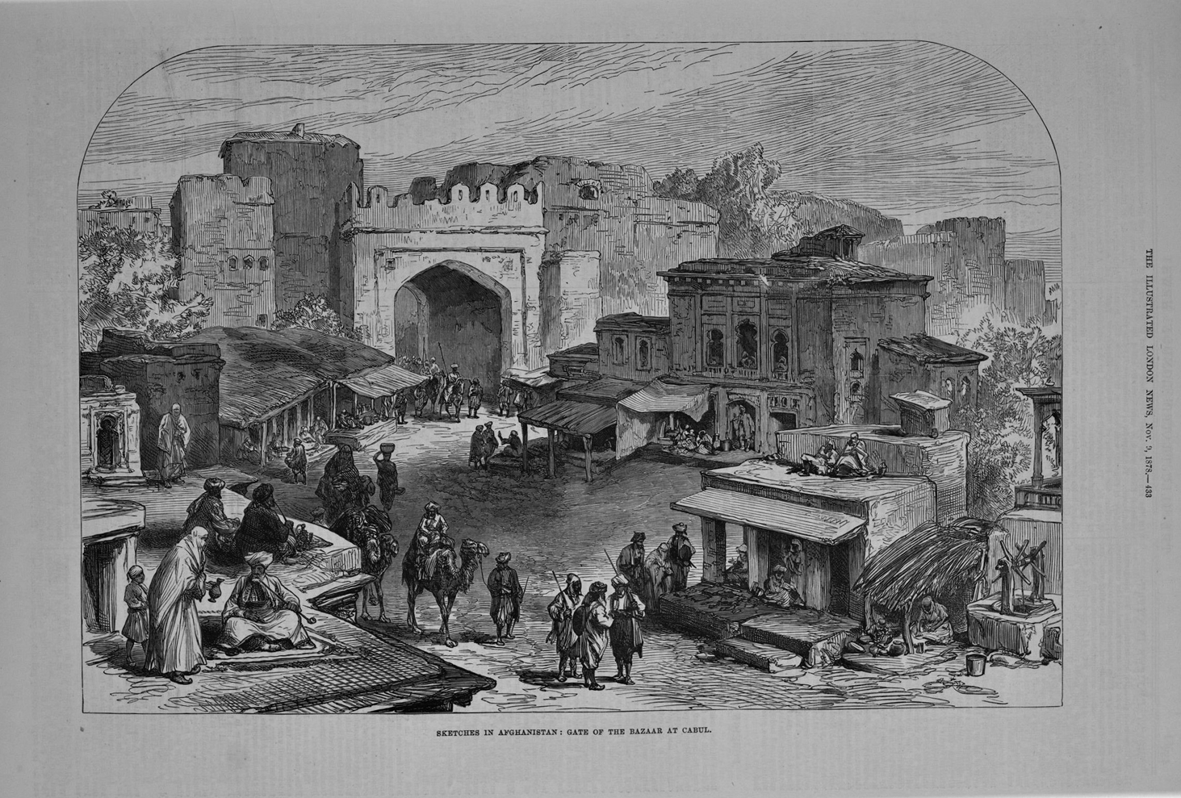
In countries with an independent press, when the state hides critical information there are usually whistleblowers who leak the information to the media. In nineteenth-century Kabul, with no independent media, insiders would leak such information in the bazaar. This explains the old expression in Kabul “news from the Chawk”, which is still in use today in the local media, everyday language and Afghan politics.Footnote 35 It referred to the news that originated from the Chawk, or town square, the centre of the bazaar in Kabul (Fig. 1). Word-of-mouth stories emanating from the bazaar were considered real and more credible than what was published in newspapers by the government: bazaar news was a key source of information as few would trust official news. In 1951, during a short period of time when the Afghan state allowed independent media, one newspaper ran a rumour column entitled “News from the Chawk”, publishing unflattering information about top officials. The column was later renamed “Official News from Unofficial Sources”, which was a clever way of defining bazaar news: the information was official but unofficially obtained because most bazaar news was leaked by insiders with access to credible government information.Footnote 36 Today, however, now that Afghanistan enjoys a greater degree of freedom of the press, the “news from the square” expression has gained a negative connotation. Politicians today use it to dismiss leaked news, whether real or fabricated, and some media outlets will use it to refer to rumours. The expression, nonetheless, carries the colourful history of an urban public space that played a significant role in the culture of the city. The news from the square, in other words, used to be an instrument of public resistance against state propaganda.
In the nineteenth century, the bazaar of Kabul was an open social space of assembly that served as the primary source of political news for the residents. This image shows the Chawk, the city's main public square, and the entrance to its famed arcade bazaar. Source: Illustrated London News, 9 November 1878, p. 433.

Bazaar news, as previously mentioned, did not comprise just false stories. It, of course, contained falsehoods but, generally, the essence of stories was based on facts. The reason for this was government secrecy: when the state closely guarded information and only allowed sugar-coated propaganda to be published (mostly in print), the facts could only be ascertained through unofficial channels—and that meant face-to-face communication in physical places such as the bazaar. As a result, on many occasions, stories circulating there contained reliable information, and this was why some foreign embassies in Kabul used them in their own intelligence gathering. The bazaar, therefore, to borrow from Nancy Fraser, was a “counterpublic”—as opposed to the state's desired, but not realised, “reading public”. In her critique of the Habermasian public sphere, Fraser redefined the communicative aspects of deliberative democracy by showing how subordinated social groups in Europe built counterpublics, which challenged the bourgeois public spheres that were not as accessible, inclusive or egalitarian as had been thought.Footnote 37 In Afghanistan, the bazaar—a popular site of communication—led to the creation of a counterpublic that contested the narratives produced in official newspapers—the organ of the elite reading public. The bazaar, as a social infrastructure, thus remained a counterpublic space, even at times when government-imposed surveillance and control made it difficult to function as an open space of assembly.
Assessing the accuracy of bazaar information was a delicate task. After all, bazaar stories were orally-transmitted information with no written evidence to substantiate them.Footnote 38 In Kabul, the locals as well as experienced foreigners were generally able to tell between reliable and baseless bazaar news.Footnote 39 British intelligence officers in Kabul, who relied on bazaar news for gathering information, had a system of ranking such information based on its apparent reliability. They would place three alphabetical marks, A, B, and C, on the margins of their reports, next to a piece of significant information, in order to indicate its trustworthiness. Their ranking system shows that bazaar rumours were not simply rumours, but often stories that carried credible information.Footnote 40 This was why anyone interested in learning about new rumours circulating in town had to go to the bazaar and chat with traders.
Such talk was as essential for bazaar traders as the goods that they were selling. Shopkeepers would invite patrons to sit with them and just talk as if, according to one observer, they were “not at all worried about selling their merchandise”.Footnote 41 Bazaar news, in addition to affecting the political landscape, could also move markets. Stories could easily cause fluctuations in the price of basic commodities, something that could create economic and political chaos.Footnote 42 This was why governors from all major towns in the county were required to dispatch regular reports on price information in their bazaars to Kabul.Footnote 43 In 1883, two soldiers who had deserted returned from Kabul to Qandahar, their hometown, where they told the bazaar about the Amir's defeat in one of his campaigns against insurgents. Their news “caused a good deal of excitement, and a rise in the price of grain took place”. The governor ordered his police chief to kill the rumour, which was adding momentum to anti-government groups. The police chief did what he thought was a sure way to stop the rumour: he arrested a man for repeating the news in the bazaar and “had his mouth sewn up”.Footnote 44
The Arrival of Print, 1871–8
In 1871, print technology arrived in a country where few could read. Print was the Afghan state's most ambitious attempt to counter the influence of bazaar stories. In 1873, Amir Shir ʿAli Khan published Shams al-Nahar, using a lithographic printing press imported from India. He published other print materials, too, such as books, educational pamphlets and postal stamps, to bring about the transition of the government—and the nation—from orality to print, and ultimately to contain the bothersome dominance of oral networks of dissemination of information.Footnote 45 As a consequence, a cultural confrontation broke out that pitted two institutions of communication against one another: the public's bazaar and the state's print. The public resisted the state's attempt to monopolise the circulation of information. This resistance, with varying degrees of success, was played out in urban public spaces where stories about the Amir and his government were disseminated.
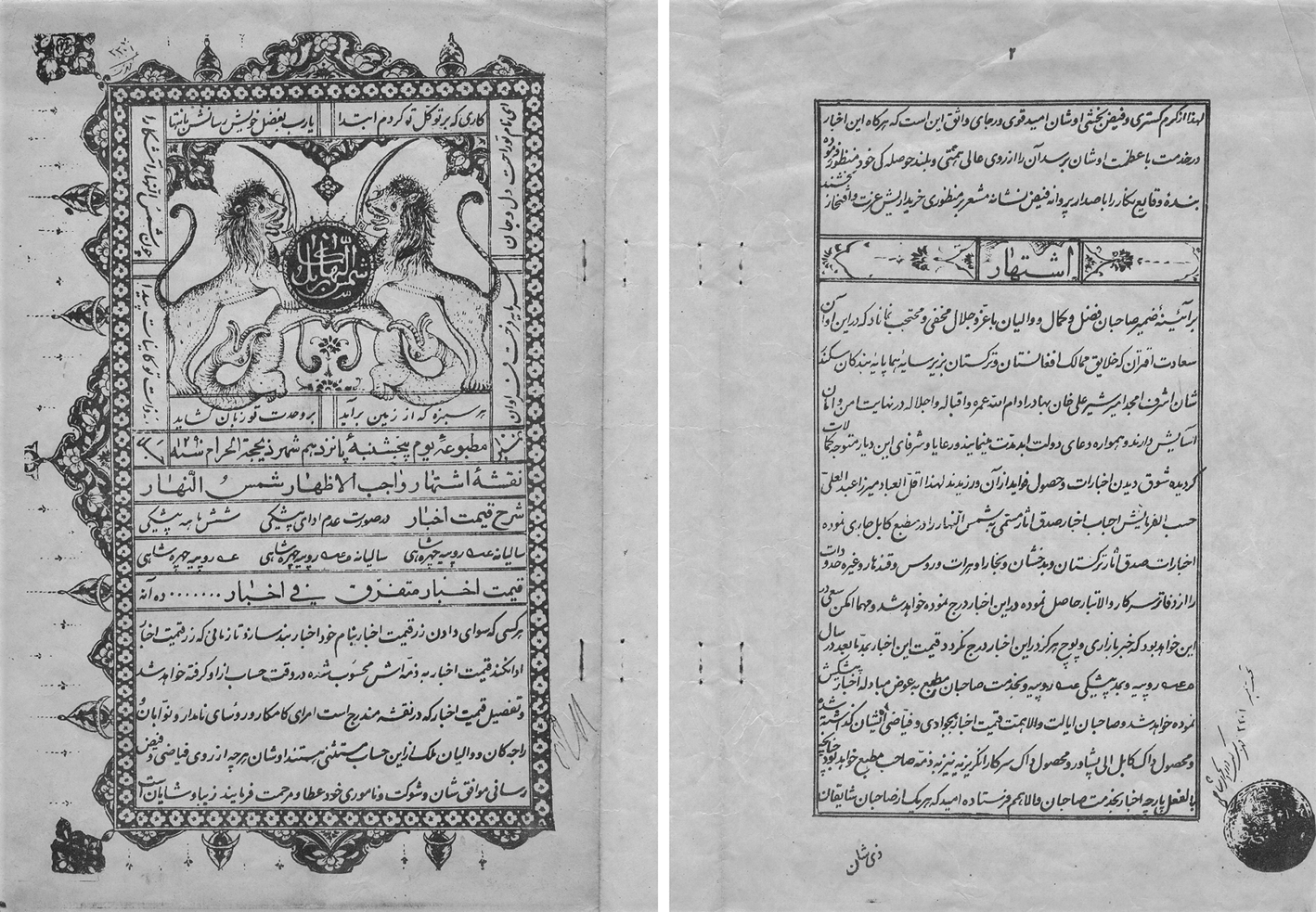
The Afghan government at the time was run mostly on the basis of oral information. A good example of this would be the petition: people would deliver their petitions verbally to the ruler during his town hall meetings (darbars.) Amir Shir ʿAli Khan, however, ended this practice by requiring petitioners to present their complaints to him in written form alone. The Amir also bureaucratised tax collection by requiring officials to issue receipts to prevent them from extorting money from people.Footnote 46 Publishing Shams al-Nahar, which was edited by a certain Mirza ʿAbd al-ʿAli, therefore, formed part of this larger programme of state-building. An editorial announcement in the very first issue of the newspaper made it clear why it had been established: “We will gather information from around the country from government offices and we will do our best not to publish bazaar news”.Footnote 47 The announcement was considered sufficiently important to be printed on the second page of every subsequent issue of the newspaper (Fig. 2). In addition to the newspaper and some books, Amir Shir ʿAli Khan also introduced one other important paper medium, the postage stamp, with the aim of modernising Afghanistan's postal communication. Within government, his reforms included forming a cabinet of ministers and remodelling the Afghan army.Footnote 48
Amir Shir ʿAli Khan published Shams al-Nahar, Afghanistan's first newspaper, to combat the dominance of the bazaar as the sole source of political information. In an advertisement (right) that appeared in its every issue, the paper promised to publish only credible information and refrain from “bazaar news”. Source: Shams al-Nahar, 15 Zi al-Hajja 1290/3 February 1873, pp. 1–2.

Reading Shams al-Nahar, one can see how the paper struggled to contain the anti-government sentiments that were spreading in public. In addition to news from Afghanistan and around the world, it regularly published lengthy opinion pieces by government officials on the advantages of work, education, peace and progress—values associated with modernity. One of the dominant themes in these pieces was encouraging people to obey the ruler if they wanted to be a good Muslim and their country to progress. “Look at the people of Russia who pray for their king after each time they eat”, argued one of the articles: “We, as Muslims and followers of the Prophet Muhammad, too, should pray for our king after we eat because that is a Sharia order”.Footnote 49 Amir Shir ʿAli Khan also published Shahab-i Saqib (1871), a pamphlet against Wahhabism—even though there were no Wahhabis, or a serious threat of Wahhabism, in the country at the time. Rather the pamphlet served as an instrument of warning to “potential troublemakers”, while, at the same time, propagating the Amir's position as a righteous Muslim ruler.Footnote 50
A good public image abroad was an important priority for the Afghan king. At least 25 different newspapers from India would be sent to Kabul, and the editors of Shams al-Nahar were irritated by how the Indian press used bazaar news in their coverage of the Afghan Amir, in their view damaging the reputation of the country.Footnote 51 An editorial blasted the news from the square that found its way into print in Indian newspapers. It refuted two examples of such bazaar stories. One concerned the Amir's rocky relationship with his son, Muhammad Yaʿqub Khan, governor of Herat. According to the story, when the son got a disease that “withered one of his hands”, he asked his father for a physician. His father responded: “Physician will not be sent. I hope you die soon”. Shams al-Nahar instead strongly rejected the existence of any rift between the Amir and his son. The other piece of bazaar news was related to an alleged undercover writer in Kabul who despatched news of the kingdom to Lahore. According to an Indian newspaper, he had been arrested and then deported by the Afghan government. This news was also “wrong through and through”, because, as Shams al-Nahar argued, “Kabul is no longer like the old times. Kabul today, under the just rule of his majesty Amir Shir ʿAli Khan, is like Europe and nobody cares about these illusions”. The editor then offered words of advice on how to run a good newspaper: “publishers should tell their correspondents that if in a certain week they [are] not able to find fresh news, they should instead write a reasonable piece on a scientific topic, which would be one hundred times more beneficial than these types of news that damage the credibility of a newspaper”.Footnote 52
In a letter to the editor from the governor of Kunar, ʿAli Muhammad Khan, that appeared in the same issue of Shams al-Nahar, its author similarly lashed out at Indian newspapers for publishing false news stories. However, citing the expression, “if there wasn't a thing, people wouldn't say things” (gar nabashad chizaki, mardum naguyand chiz-ha), he argued that, while some of the news might contain an element of fact, those who provided information to Indian newspapers usually exaggerated or misinterpreted developments and had a tendency to “make mountain out of a straw and a straw out of a mountain”.Footnote 53 Indian newspapers relied on traders who frequented Kabul for their Afghan coverage. Journalists such as Rudyard Kipling were always on the hunt to find traders or adventurers with personal knowledge of Afghanistan for their journalistic and literary writings.Footnote 54 Shams al-Nahar knew how critical the information carried by traders in and out of Kabul was for the political and economic stability of the country. Asking for loyalty to the throne, it frequently warned that treachery and disunity would not only earn the country a bad name but also lead to the loss of people's lives, on the one hand, and the loss of property on the part of traders, on the other.Footnote 55
While Shams al-Nahar insisted that it would not publish news from the square, and that to do so would damage its own credibility, now and again its editors could not resist printing sensational bazaar news, such as the story that a shepherd told the newspaper about a dragon the size of an elephant that appeared in Bajaur and ate 500 of his sheep in one bite. (To be fair, the dragon story ended with the following disclaimer: “Although reason does not believe this tale, because in the workshop of The Creator everything is possible, it was published”).Footnote 56 In another issue, it printed the story of a tornado in Ghurband, Baghlan province, sent in by its correspondent. The tornado, according to the story, carried the wall of an old fortress, along with several trees, from one side of a river to the other, “as if someone had transplanted them there”. The newspaper commented that the story seemed unbelievable but “because seven-eight [sic] credible individuals have confirmed it, we publish it here”.Footnote 57
Partly because of the authoritarian nature of a state that did not allow real news to be printed but mainly because the newspaper could not find enough readers in a country with almost total illiteracy, Shams al-Nahar's influence in shaping public opinion inside Afghanistan was limited. However, outside the country, its slight anti-British undertone and its relentless refutation of allegations made in the Indian press against Kabul—such as false reports about the Afghan Amir's military preparations for a possible attack on India—made the British authorities increasingly uncomfortable.Footnote 58 The British finally persuaded themselves that the Afghan Amir was getting too close to the Russian Empire, their feared adversary. In November 1878, they invaded Afghanistan for a second time, forcing Amir Shir ʿAli Khan out of power and installing his biggest rival on the throne, his son, Muhammad Yaʿqub Khan.Footnote 59
“Silence is Golden”: The British Occupation, 1878–80
After Shir ʿAli Khan, although Afghanistan had an Amir, it was the British officials in Kabul who more or less ruled the country during two years of occupation (1878–80). While there were no newspapers, the new rulers used many other strategies to get their message across. The occupation itself had two phases: the first before the assassination of the British ambassador, and the second thereafter. In the first phase, the British installed Muhammad Yaʿqub Khan as the Amir and made him sign a treaty that was shamelessly in their favour. A few months later, an uprising broke out in Kabul during which the British ambassador and his staff were killed. This triggered the second phase of the war, which involved the invasion of new troops from India under the command of General Sir Frederick Roberts. General Roberts was now the de facto ruler of the country and the installed Amir, Muhammad Yaʿqub Khan, found himself under house arrest. As a result, Roberts had to manage two different publics and control the information communicated to them: the Afghan public who had to obey him, and the British public back in England who were not entirely supportive of the war.Footnote 60
The British army installed a telegraph line between Kabul and Peshawar and, recognising that it was vulnerable to sabotage, they also built heliograph posts to ensure that there was no communication failure between Afghanistan and India.Footnote 61 In addition, they censored the reports dispatched by locally-embedded journalists.Footnote 62 They took these measures to control the message that reached Britain. General Roberts, however, in dealing with the Afghan public, relied primarily on violence as a control mechanism. The theatrical punishments that he instructed to be carried out, such as public executions, had enormous communication impact. As a Liberal Member of Parliament in London put it, being “thousands of miles away from public opinion” and fighting “a savage and uneducated enemy”, the general and his men resorted to excessive violence so as to subjugate the population.Footnote 63 While they had paid spies among sardars (princes) and their servants, the British considered “rumours from the city” a better source of “trustworthy news” because their salaried spies could not be relied upon: “an Afghan is a greater adept at fabrication than any other Asiatic. We cannot trust them”.Footnote 64 In Kabul, the bazaar was perceived as a source of anti-British mobilisation, and so the occupiers invested great efforts in controlling it. In particular, the city's town square, the Chawk, which one British journalist described as a place where “all Cabul circulates when any excitement arouses the people”, was under close watch: one hundred Sikh and Gurkha soldiers were stationed there “ready to turn out at a moment's notice if an alarm of ‘ghazis’ were raised”.Footnote 65 Showing this level of sensitivity to the bazaar suggests that the British had learned the hard lesson from their previous military adventure in Kabul (1839–42) when the bazaar had served as one of the key sources and sites of the rebellion against the invaders.
Indeed, in the first Anglo-Afghan war, bazaar stories played a major role in triggering the war. Sensational accounts, particularly about the occupiers’ immoral behaviour, swirled in the city. Some of the stories about drunken British parties and their involvement with Afghan women, it turned out, contained an element of credibility. In 1840, according to an Afghan source, prostitution boomed in Kabul thanks to the high demand from foreign forces. Local pimps would take prostitutes on horses to the British military station in Shirpur, north of the city, causing a number of Kabulis to complain about the issue to Shah Shujaʿ, the puppet king. The Shah raised the matter with the top British official, Sir William Macnaghten, who, in response, said: “If we prohibit soldiers from having sex with women, they will get several diseases”.Footnote 66 High-level British officials such as Alexander Burnes, were also very much involved with local women, something that bothered the conservative Afghans.Footnote 67
Dissidents inside the court supplied the bazaar with dramatic information. Men like Mulla ʿAbd al-Shukur Khan, governor of Kabul and a Barakzai rival of the king, would go to the bazaar and tell people there that Shah Shujaʿ was ruler only in name and the British owned everything, even “your wives don't belong to you”.Footnote 68 In order to mock Shujaʿ's status as a British puppet, the public created a satirical poem to parody the verse on coins minted in his name. The official poem on the coins read: Shah Shujaʿ al-Mulk the King, the light of the eyes of the Pearl of the Pearls / the brighter than the sun and the moon, put his stamp on silver and gold. Kabulis, however, distorted the poem to read as follows: Shah Shujaʿ the Christian, the light of the eyes of the Lord and Burnes / the dust of the foot of the Company, put his stamp on silver and gold.Footnote 69 Anti-British and anti-Shah stories circulated in the Kabul bazaar, in the process agitating the public. Matters escalated on 23 December 1841 when rebels killed the British envoy, Sir William Macnaghten, dragged his body around town, and finally hung it from a butcher's hook in the city's main square.Footnote 70
Consequently, it was no surprise that during their second occupation of Kabul, the British guarded the bazaar in the attempt to prevent public protest. Very early on, they realised that anti-British ideas were already circulating in public.Footnote 71 On the western plains of the city, they received reports that a group of gunmen were shouting obscenities at the British envoy in Kabul, Sir Louis Cavagnari. The envoy, upon hearing the news, downplayed the power of such provocations, saying: “Dogs that bark don't bite!”Footnote 72 Later, he along with the rest of the British Embassy staff in Kabul were massacred by a mob of Afghan gunmen—while the Amir and other top officials, who had been appointed by the British, did little to protect them. In October 1879, when the reinforcement army led by General Roberts in search of retribution and the “vindication of national honour” arrived in Kabul, a reign of terror took over the city.Footnote 73 The British generals started to arrest all the notables of the court and the city, including the Amir himself, on the charge of taking part in the uprising. When people noticed the Amir's disappearance, one of the leaders of the insurgency, Muhammad Jan Khan Vardak, minted a coin with a verse about the missing king.Footnote 74 The coin was a medium that could circulate in the bazaar and so became an effective tool for spreading the message that the nation was kingless.
General Roberts, much like an Afghan Amir, deployed the disciplinary power of fear to govern the Afghan capital. He issued a proclamation on 12 October 1879, declaring Kabul and the ten miles surrounding it to be a space governed by martial law where harsh punishments awaited anyone violating the rules.Footnote 75 The rules were restrictive: someone caught carrying a weapon, even a knife, on the streets would be punished by death. To disarm the population, Roberts offered monetary rewards for anyone submitting their weapons (e.g. 3 rupees for a rifle). To collect information on ghazis, he paid people to report those who participated in the rebellion. According to the proclamation, informants would be paid 50 to 120 rupees per person reported, depending on that person's importance and rank.Footnote 76 Gathering information through a reward system turned everyone in the city into a potential spy, according to an Afghan oral account.Footnote 77 Soon after Roberts’ announcement, arbitrary arrests began. The British converted Sarai Shir ʿAli Khan, a caravanserai in the bazaar, into a detention centre guarded by Gurkha soldiers. The monetary reward for reporting ghazis incentivised economic rivals in the bazaar to denounce one another, mostly wrongfully, to the British as rebels. The detainees would be interrogated, tortured, jailed or killed.Footnote 78 People were afraid now, not only of the government agents and the British, but also of each other.
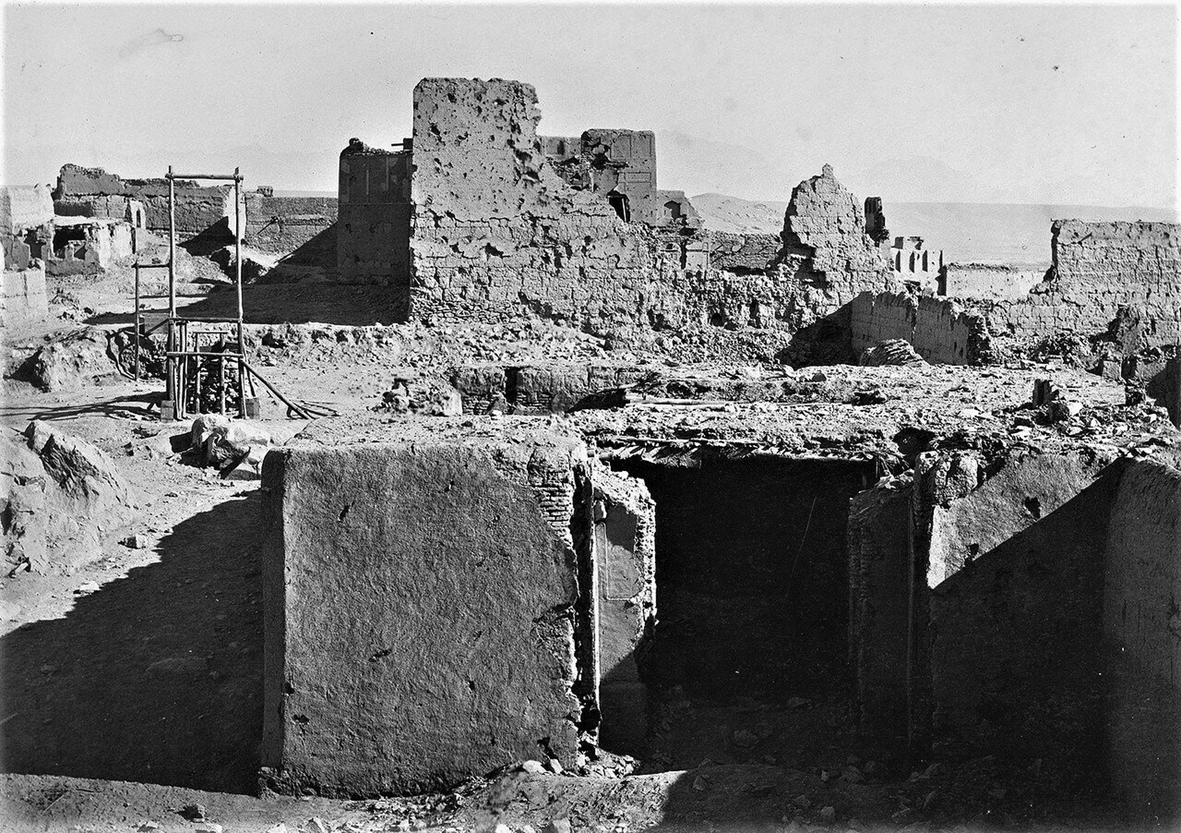
A three-member Military Commission set up by General Roberts to investigate the detainees and issue sentences, according to critics in London, disregarded due process.Footnote 79 The Commission used public execution as a method for dominating the population by fear. After hanging five people in one morning, for instance, the Daily News journalist on the scene, who later wrote a book about the war, noticed that the news of the executions “had a healthy effect upon the city”. The public executions, in his view, were intended to make it “clear to the populace that our old, absurd mode of dealing with assassins as if they were saints, has no longer a place in our policy”. The journalist found the sight of three British officers handing out death sentences in great quantity unusual, to say the least, but he nonetheless justified their actions: “our army is but taking the place of the executioner by pressure of circumstances”, writing “however distasteful the office of hangman may be, it has to be filled”.Footnote 80 The British had built gallows in Bala Hisar fortress for executions (Fig. 3), in one case hanging 49 men in three days.Footnote 81 By 27 January 1880, according to a telegraph sent by Roberts, the Commission had hanged 87 people.Footnote 82 Among them was the Kotwal (police chief) of Kabul, Aslam Khan, whose execution made it to the front pages of the international press, thanks to a drawing from the scene.Footnote 83 In addition to theatrical punishments in the city, the British army also shot prisoners and, on one occasion, burned the bodies of dead Afghans, as revealed in a letter written by Roberts in response to questions raised by Members of Parliament in London regarding the excessive use of violence in Afghanistan.Footnote 84
During the Second Anglo-Afghan War, the British generals used public punishment as a disciplinary tool to communicate their power to the Kabul populace. This photograph, taken in 1879 in war-torn Bala Hisar, shows the hanging gallows on which they executed Afghan rebels. Source: National Army Museum, London, UK. NAM. 1965-10-212-23.

At the height of the terror, a Times correspondent went out on the streets of the city to find out what Kabulis thought of the British rulers. The residents of the city, according to the reporter, were “mutually distrustful and suspicious of each other” and would not speak out. “Silence is golden”, he observed. When asked about the latest news, everyone in the city said the same thing: “There is no news”.Footnote 85 Although the British agents and journalists in Kabul failed to get hold of the news that was circulating around town, Kabul's bazaar News had already reached Istanbul. Among Istanbul's Afghan community. News circulated that explained why the Afghans revolted against the British mission in Kabul. The story, according to a Times correspondent in Istanbul, was “one of those thousand and one rumours which have no value except as harmless amusements for the loungers in the cafes and bazaars”. The people of Kabul, the story reported, noticed that big boxes were transported to the British mission. A person examined what was in the boxes and found out, to his horror, that they contained “Bibles and Korans, printed by infidels on infidels’ papers”. It was revealed that the sacred text of Islam had been tampered with and, along with the Bible, was used for Christian propaganda. The man told the people of Kabul what he had seen, and this sparked the deadly uprising.Footnote 86 This report, right or wrong, illustrated the power of bazaar news in shaping public opinion among Afghans.
By the summer of 1880, order had somehow been restored in Kabul's bazaar, and merchants were busy as usual trading goods and stories. A British officer, T. H. Holdich one day left the military cantonment in Shirpur for a visit to the city. He was sitting in a shop when a man asked him: “Have you heard the news from Kandahar?” Having replied in the negative, the man then informed him, “Well, you British have been well beaten down … Ayub Khan is now besieging Kandahar”. Holdich confidently refuted the story and told the man that he should not “circulate such untruths, because it might have a disturbing effect in Kabul”. The man, however, like any other Afghan, did not trust information coming from the government. He was “in no way disturbed by our incredulity”, Holdich recounted in his memoir, “In fact, he didn't believe in it”. It was then that Holdich suddenly remembered that lately there had been no letters arriving from Qandahar. “Could it be that this old man knew more than we knew?” he wondered. He later learned that the old man was, indeed, right, and had been talking about the, now famous, Battle of Mayvand, where the British army lost close to a thousand men in one day.Footnote 87 The bazaar, despite the control mechanisms put in place by the military, was surprisingly fast in disseminating bad news to faraway lands. In fact, during the first Anglo-Afghan war, when the British army was defeated outside Kabul and its communication system fell apart, it had been the runners working for Indian traders who first delivered the bad tidings to Delhi—despite British efforts to keep the news secret.Footnote 88
ʿAbd al-Rahman Khan: the “Iron Amir” (1880–1901)
In 1880, the British officials in Kabul were desperate to find someone “to take the government of the country off our hands”.Footnote 89 They finally trusted Sardar ʿAbd al-Rahman Khan, an exiled prince in Tashkent and grandson of Amir Dust Muhammad Khan, with ruling Afghanistan while they prepared to withdraw. The new Amir would receive an annual subsidy and in return would stay away from the Russians and give up his independence on foreign relations. ʿAbd al-Rahman Khan was a master of information. While he did not publish a newspaper, he used print technology to expand state bureaucracy and disseminate propaganda in the form of books, pamphlets and posters. Following the Amirs before him, he wanted to persuade the public that he was a righteous Muslim ruler, an uli al-amr, whose obedience, according to the Quran, was the duty of every Muslim.Footnote 90 In order to solidify his power, in addition to religious rhetoric and print propaganda, he also employed extreme forms of violence such as public punishment, forced displacement, enslavement and a genocidal war against tribes who resisted his harsh rule.
During his 21 years on the throne, the Amir managed to suppress insurgency, contain dissent and bring the entire country under his rule by using violence and fear. In the capital, he placed “sentries all over the town to prevent people talking politics”. He even issued orders that “respectable people [were] not to hold private intercourse with each other, but only to talk in public”.Footnote 91 What would happen if two men of “respectable” stature met in private? The Amir would know, and he would go to any length to find out the purpose of the meeting. In 1888, a man named Ismaʿil Khan, a former governor of Charikar, invited a mirza (scribe) for dinner to his home in Kabul to seek expert help on some accounting issue. The Amir somehow learned about the dinner and asked his son, Prince Habib Allah Khan, to investigate the matter and if any wrongdoing was found on the part of Ismaʿil Khan, the latter should be “strapped to the muzzle of a cannon and blown away”.Footnote 92 He was not found guilty.
One of ʿAbd al-Rahman Khan's favourite policing techniques was spreading disinformation: he would leak the news of his travels on the Chawk and then, instead of travelling on the announced date, he would try to monitor the public's reaction in order to identify anti-government elements. On 7 February 1883, for instance, the British agent in Qandahar reported that “rumours are prevalent that after Nowroz, the Amir will come to Kandahar to rectify the affairs of the country”. Knowing how the Amir's manipulation of public opinion worked, he added: “but I don't believe this rumour has any foundation”.Footnote 93 In another report, the news writer seemed to have grown tired of the Amir's tactic: “His Highness was constantly declaring his intention to leave for Herat via Kandahar […] but it is difficult to imagine how his Highness can leave Kabul, while the whole of [its] inhabitants are ripe for disturbance”.Footnote 94
The Amir's main propaganda medium was the use of poster announcements (ishtihar). In 1888, during the rebellion of Ishaq Khan in northern Afghanistan, knowing that the only way for bazaar news to go viral was through a catchy satire in verse, he commissioned his poet laureate to write a satirical propaganda poem against Ishaq Khan, which would then be printed on large posters and hung in city centres.Footnote 95 Considering that most Afghans were illiterate, written propaganda was not the only tool that he used. He also brought the heads of some of the rebels, without their bodies, and hung them in Kabul's Chawk as a message to the public.Footnote 96 The Amir used posters for other matters, too, such as to introduce new rules to bazaar merchants.Footnote 97 In another instance, he published posters preemptively to contain bazaar rumours: in a royal decree, he asked his governor in Herat to publish an ishtihar informing people that the increased presence of Russian military on the border was to prevent a plague epidemic and had nothing to do with them.Footnote 98 In 1895, the Amir likewise used posters to share the travel reports of his son, Nasr Allah Khan, sent during his visit to Europe. The posters were written in large print by Fayz Muhammad, a court scribe who later became a historian, and were posted in town squares for the public to read.Footnote 99
In 1888, many soldiers deserted the war in Ghazni and told the bazaar about the “death of thousands” on the government side. The Amir published posters with the names of 129 soldiers killed in the war and installed them in crowded spots in the bazaar in order to refute the rumours that he had lost such large quantities of men.Footnote 100 When rumours were personally about himself, the Amir would not use papers, with opposing evidence printed on them, to challenge such stories. Instead, he would use a more violent method. In 1900, for example, during a cholera epidemic, the Amir moved to Paghman, a valley on the western side of the capital. A story spread in the Kabul bazaar that he had died. Soon the Amir caught the man who had started the rumour. He ordered his men to cut him into pieces and display the mutilated body in the bazaar as a warning to others. In another case, he caught an old man who was also spreading rumours against him. The punishment was equally brutal. The Amir ordered his soldiers to throw the man from the top of Asmayi, the mountain overlooking the city. When the soldiers threw the man off the cliff, his clothes caught on a rock, suspending him in the air. They had to carefully release him from the rock and take him back to the top of the mountain where they threw him off again, “this time successfully”.Footnote 101
Conclusion
In 1901, ʿAbd al-Rahman Khan died and his son Amir Habib Allah Khan (r. 1901–19) took his place. ʿAbd al-Rahman Khan is rightly considered to be the builder of a central state in Afghanistan, and someone who successfully managed to subjugate all its major tribes and fix the country's borders. In Afghan historiography, his reign is relatively well-studied, thanks to the abundance of colonial and local sources. However, there are still many things that remain unknown about his rule, and, in particular, the logistics of his intelligence work are yet to be thoroughly examined. This article, therefore, has sought to initiate a wider conversation on how information control and how it contributed to ʿAbd al-Rahman Khan's success in expanding his power and how it can be used as a prism to look at his predecessors' struggles in building state authority and earning the public's loyalty.
More broadly, this article has also drawn attention to two points in relation to the history of information order in Afghanistan. First, the advent of print technology in the nineteenth century introduced Afghan rulers, like other rulers around the world, to a new instrument for extending their authority within their territory and exercising power over its population. Continuous interruptions, however, prevented them from constructing a reading public that could be reached and manipulated easily by the written word, and hence they had to resort to violence to control public opinion. Second, the bazaar as a social space of assembly was a critical site of opinion formation—it was a counterpublic. We generally assume the mosque to be a place that influences the public's thinking but as the evidence presented in this article has highlighted, the bazaar and the stories that circulated there could have a greater role in shaping public opinion and mobilising people at critical moments. Thanks to their religious authority, the clergy certainly maintained great influence, but the mosque was a closed space usually used by the state to disseminate propaganda. The bazaar, therefore, was the closest thing to a public sphere where the members of the public could freely access and communicate with each other in person.
The established assumption has been that all bazaar news was just false rumours. This article has accordingly also offered a refined account of what constituted bazaar news. It has argued that in a country like Afghanistan, which suffered from widespread illiteracy and suffocating police control, bazaar news was the only non-state form of information communication. As a result, bazaar news, in addition to containing many falsehoods, also carried credible information and allowed the public to make sense of their lives in a low-information environment. When it comes to assessing information more broadly, there is a deep-seated bias against the oral medium even in places with low literacy rate. The common expression, “hearing is not the same as seeing” (shinidan kay buvad manand-i didan), which is a hadith and also a popular Persian poem, points to the epistemic distinction between visual and oral information: the written word is a visual medium while bazaar news is an oral medium. We place greater trust in the written word because it is fixed, as opposed to oral information which is fluid and ephemeral. All the same, the oral media's relative lack of authority does not change the fact that the majority of the population in Afghanistan in the late nineteenth and early twentieth centuries, like a great many more people around the world, could not read, and so the information they heard in face-to-face communications shaped their opinions and informed their political actions. Studying oral genres of information communication is difficult but necessary in order to better understand Afghanistan's social history and political culture.