Introduction
Ossicular damage resulting from diseases such as chronic suppurative otitis media is an infrequent but serious complication which can lead to hearing loss and speech and learning difficulties. The onset of such damage is typically insidious and well established by the time of diagnosis.
Ossicular reconstruction was first performed in the 1950s. Early attempts involved varying the position of the tympanic membrane in order to alter the volume of the middle ear. This was followed by ossicular reconstruction using homograft or allograft ossicles. Later, a variety of plastic and ceramic materials were investigated, but the ideal ossicular replacement material has yet to be established. This study examined the use of titanium prostheses in a group of patients presenting with ossicular dysfunction from a range of causes.
The use of titanium for ossicular chain reconstruction began in Germany in 1993. A group of surgeons designed the total or ‘Aerial’ prosthesis and the partial or ‘Bell’ prosthesis, which were produced by the German company Kurz GmbH. The partial implant was used in the presence of an intact and mobile stapes. The total prosthesis was used when the stapes superstructure was absent.
The present study used the Kurz titanium total ossicular replacement prosthesis (TORP) (Aerial) and the partial ossicular replacement prosthesis (PORP) (Bell) with adjustable lengths (Vario model).
The purpose of this report is to present a series of outcomes for patients with chronic middle-ear disease who have undergone titanium ossicular chain reconstruction. Data are presented in accordance with the American Academy of Otolaryngology–Head and Neck Surgery committee on hearing and equilibrium guidelines for evaluation of the results of treatment of conductive hearing loss.Reference Monsell, Balkany, Gates, Goldenberg, Meyerhoff and House1
Materials and methods
A retrospective chart review was undertaken of the results for Kurz (Dusslingen, Germany) titanium prosthesis implantations performed by the senior author (TRK). All patients who had undergone ossicular chain reconstruction with a titanium prosthesis between 1 February 2002 and 31 March 2007 were included. An institutional review board was not available at our institution; however, all patients gave written, informed consent for inclusion in the study. All data collected were de-identified.
Fifty-five patients underwent ossicular chain reconstruction during the study period. There was one case of prosthesis extrusion, which was excluded from the review. A tragal cartilage cap was placed between the tympanic membrane and the prosthesis in all cases to prevent extrusion.
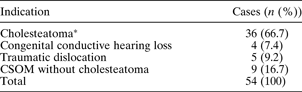
Both children and adults were included; their ages ranged from six to 74 years, with an average age of 34 years. There were 32 male and 22 female patients. Table I lists the indications for ossicular chain reconstruction in this group; the most common was damage caused by acquired cholesteatoma.
Indications for ossicular chain replacement
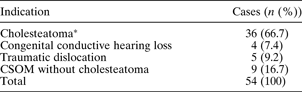
*Acquired, n = 28; congenital, n = 8. CSOM = chronic suppurative otitis media
Audiograms assessing pure tone air and bone conduction thresholds were obtained pre- and post-operatively. If multiple audiograms were done pre-operatively, the last audiogram before surgery was used. Post-operative audiograms were taken at least six months post-operatively, and in most cases 12 months post-operatively. Data from the last post-operative audiogram were used if multiple audiograms had been performed. Pure tone averages were then calculated for 0.5, 1, 2 and 3 kHz. The air–bone gap (ABG) was then calculated. The American Academy of Otolaryngology–Head and Neck Surgery guidelines define a post-operative ABG of 20 dB or less as a successful hearing result.Reference Monsell, Balkany, Gates, Goldenberg, Meyerhoff and House1
Twenty-five patients (46 per cent) underwent primary ossicular reconstruction procedures in which disease treatment and ossicular chain reconstruction were performed during the same operation. Planned two-stage procedures, involving an initial operation to treat the disease process and a second operation to reconstruct the ossicular chain, were used in 29 patients (54 per cent).
Partial ossicular replacement prostheses were used in 32 patients (59 per cent) and TORPs in 22 (41 per cent). Follow up ranged from 12 months to five years.
All data were analysed using SAS version 9.1 software (SAS Institute, Cary, North Carolina, USA). Continuous data were initially assessed for normality and expressed as mean ± standard deviation. Categorical data were expressed as count and proportions. Pre- and post-operative comparison of continuous variables was performed using paired t-test. Chi-square or Fisher's exact test was used to compare proportions. A two-sided p value of 0.05 was considered statistically significant.
Results and analysis
Overall hearing results
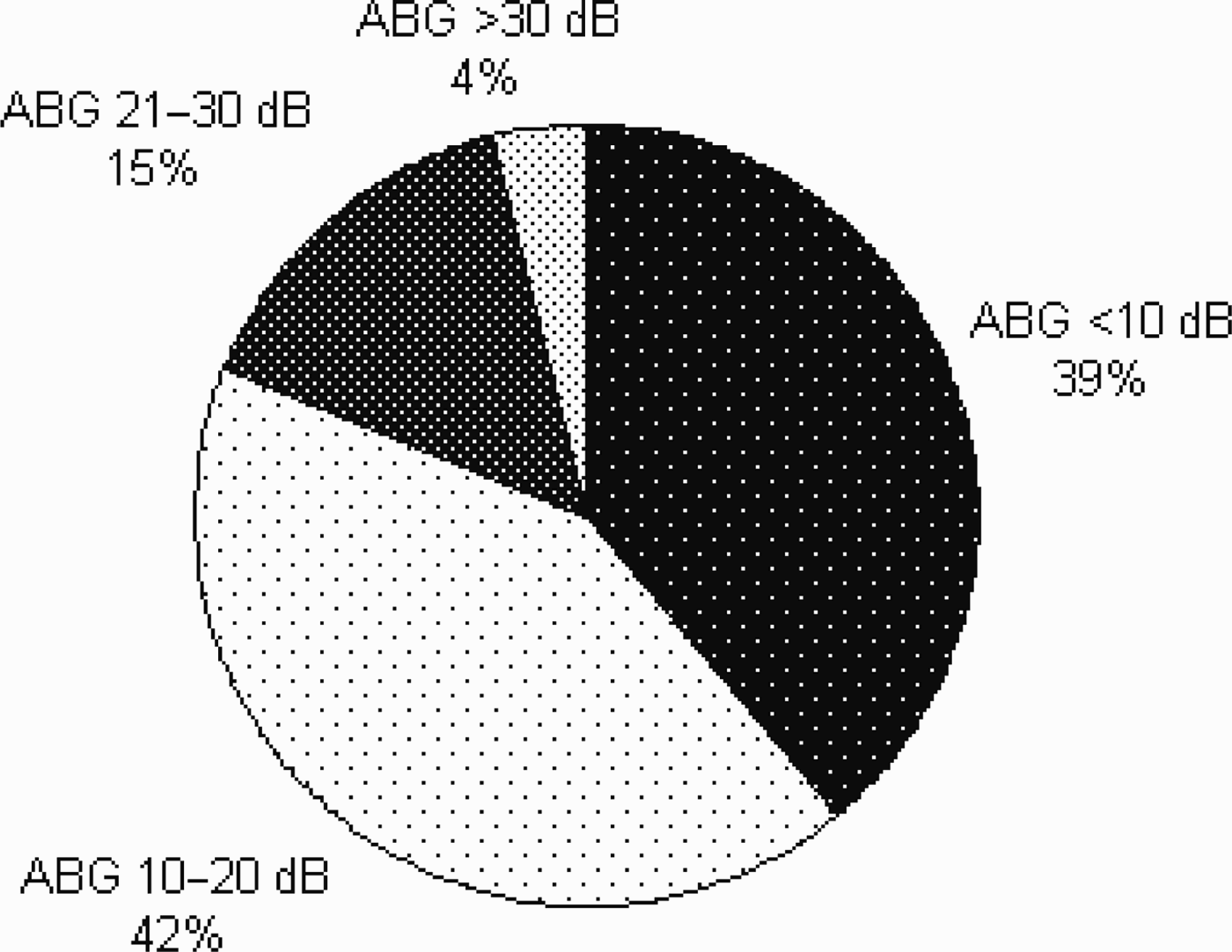
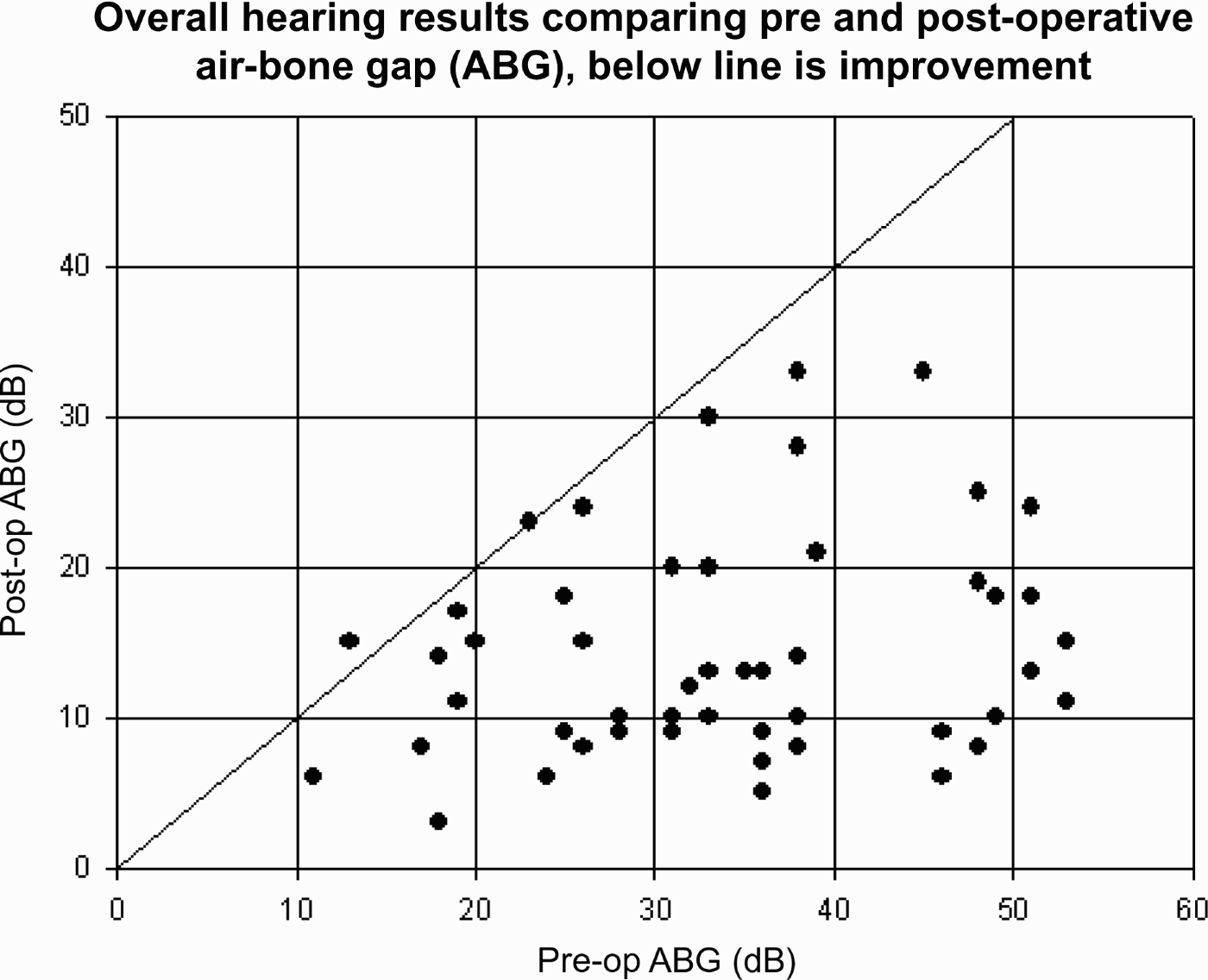
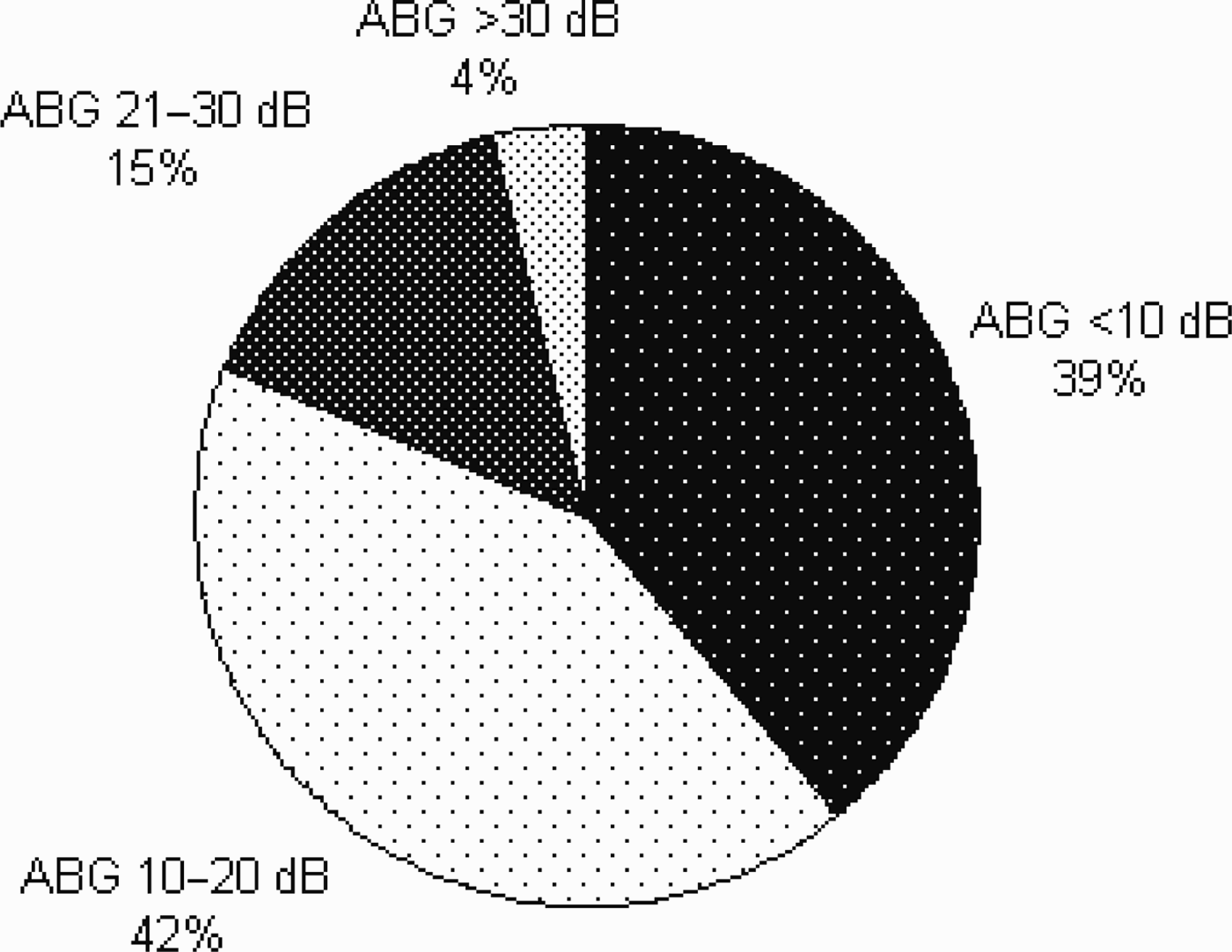
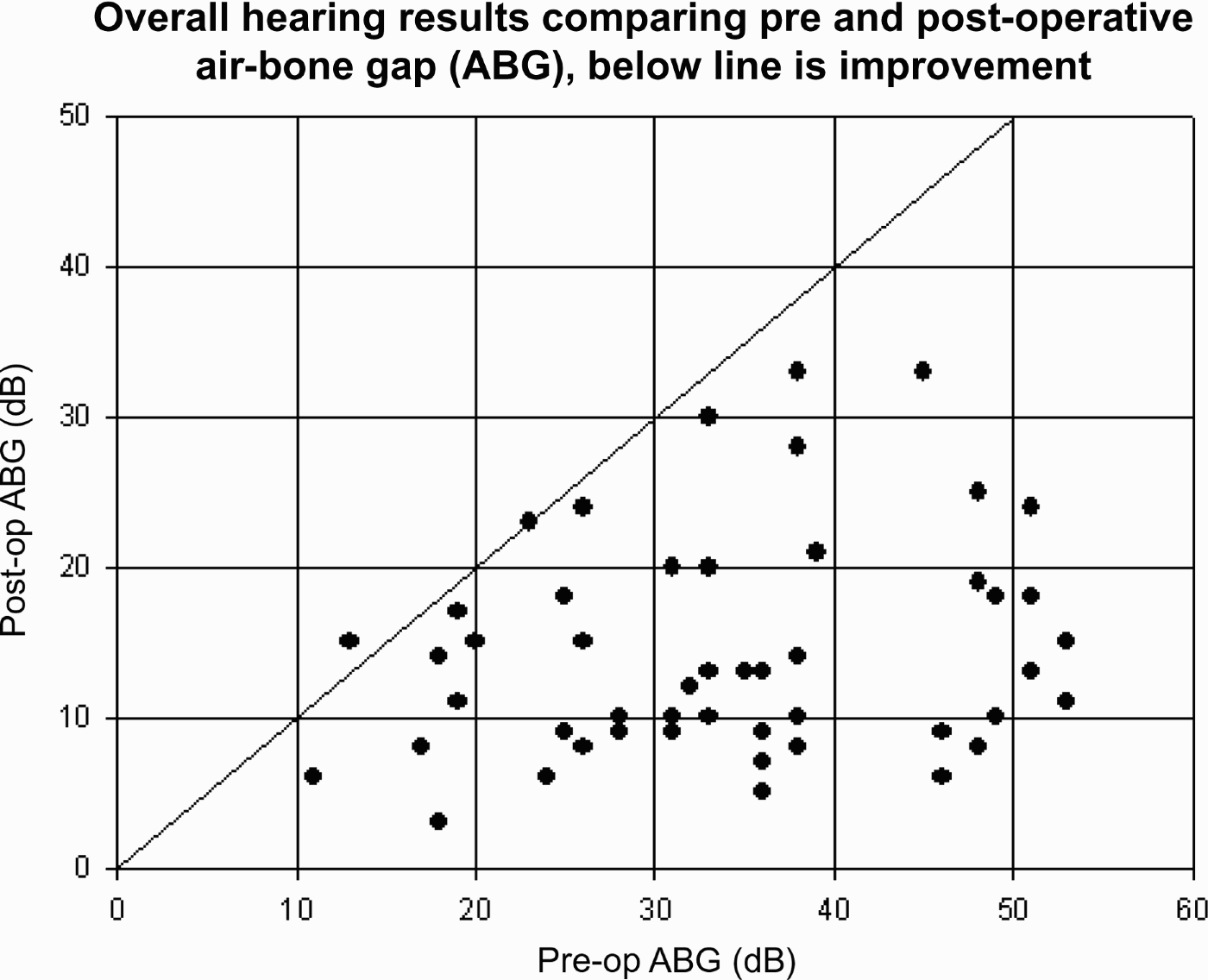
The overall hearing results are shown in Table II and Figure 1 and 3. Table II shows the improvement in pure tone average (PTA) and ABG for all patients (n = 54). Pure tone average improved from a pre-operative average of 50.9 dB (±16.0) to a post-operative average of 29.5 dB (±13.4), an improvement of 21.4 dB (p < 0.001). The ABG improved from a pre-operative average of 33.8 dB (±10.9) to a post-operative average of 14.6 dB (±7.0), an improvement of 19.2 dB (p < 0.001).
Overall hearing results for post-operative air–bone gap (ABG) (n = 54).
Overall hearing results, comparing pre- and post-operative air–bone gap (post-op ABG). PORP = partial ossicular replacement prosthesis; TORP = total ossicular replacement prosthesis

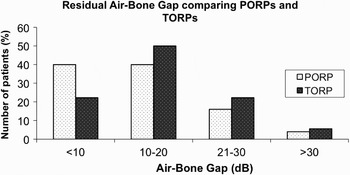
Post-operative air–bone gap comparing partial and total ossicular chain reconstructions. Pre-op = pre-operative; post-op = post-operative; ABG = air–bone gap
Pre- and post-operative PTA* and ABG results

Data represent means plus standard deviations.
* For 500 Hz and 1, 2 and 3 kHz. †n = 53; ‡n = 53; **n = 53. PTA = air pure tone average; ABG = air–bone gap; pre-op = pre-operative; post-op = post-operative
Figure 1 shows the pure tone average ABG for all patients after their procedure; the ABG was less than 10 dB in 39 per cent of patients, 10–20 dB in 42 per cent and 21–30 dB in 15 per cent. Only 4 per cent of patients had an ABG greater than 30 dB post-operatively.
Successful rehabilitation of the ABG to 20 dB or less was achieved in 81 per cent of patients.
Hearing results by prosthesis type
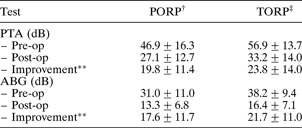
Hearing results for the TORP and PORP groups were analysed separately, and are presented in Table III.
PTA* and ABG results: PORPs vs TORPs

Data represent means ± standard deviations.
* For 500 Hz and 1, 3 and 4 kHz. †n = 32; ‡n = 21. **p < 0.001. PTA = pure tone average; ABG = air–bone gap; PORPs = partial ossicular replacement prostheses; TORPs = total ossicular replacement prostheses; pre-op = pre-operative; post-op = post-operative
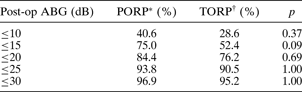
In patients undergoing PORP procedures (n = 32), the PTA improved by an average of 19.8 dB (p < 0.001) and the ABG improved by 17.6 dB (p < 0.001). An ABG of 20 dB or less was successfully achieved in 84.4 per cent of PORP procedure patients, while an ABG of 30 dB or less was achieved in 97 per cent (Table IV).
ABG results by prosthesis type
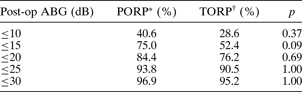
*n = 32; †n = 21. ABG = air–bone gap; post-op = post-operative; PORP = partial ossicular replacement prosthesis; TORP = total ossicular replacement prosthesis
In patients undergoing TORP procedures (n = 21), the PTA improved by an average of 23.8 dB (p < 0.001), and the ABG improved by an average of 21.7 dB (p < 0.001). An ABG of 20 dB or less was successfully achieved by 76.2 per cent of TORP procedure patients, while an ABG of 30 dB or less was successfully achieved by 95 per cent (Table IV). The difference in hearing outcomes between patients undergoing PORP and TORP procedures was not statistically significant.
Hearing results by procedure type
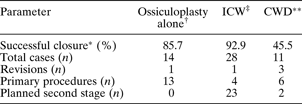
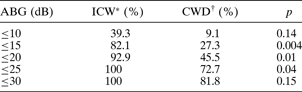
The hearing results for TORPs and PORPs were analysed separately and are presented in Table III and Figure 2. Hearing results for patients undergoing the types of procedure were compared, and are summarised in Tables V and VI.
Rates of successful closure* by procedure
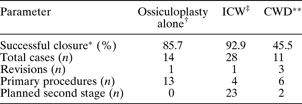
* To air–bone gap ≤20 dB. †n = 14; ‡n = 28; **n = 11. ICW = intact canal wall; CWD = canal wall down
ABG results by preservation of posterior canal wall
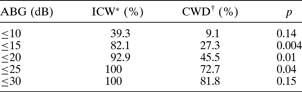
*n = 28; †n = 11. ABG = air–bone gap; ICW = intact canal wall; CWD = canal wall down
An ABG of 20 dB or less was achieved by 66 per cent of patients undergoing revision surgery (n = 6) and 60 per cent of patients undergoing primary procedures (n = 25). However, 90 per cent of patients undergoing planned two-stage procedures (n = 29) achieved an ABG of 20 dB or less. The difference in hearing results between single-stage and two-stage procedures was statistically significant (p < 0.001).
Successful closure of the ABG to less than or equal to 20 dB occurred in 87 per cent of patients undergoing ossiculoplasty alone (n = 16), 93 per cent of patients undergoing intact canal wall procedures (n = 27) and 45 per cent of patients undergoing canal wall down procedures (n = 11). The difference in hearing results between intact canal wall procedures and canal wall down procedures was statistically significant (p < 0.001).
Complications
There was one case of prosthesis extrusion. At the time of writing, revision surgery was pending in this case.
Discussion
The search for the ideal prosthesis to reconstruct middle-ear anatomy has a long history that continues to evolve. The ideal prosthesis should be lightweight, rigid, biostable,Reference Goode and Nishihara2–Reference Zenner, Stegmaier, Lehner, Baumann and Zimmerman4 conform well to the remaining ossicular chain, have a low extrusion rate and produce acceptable hearing results. Early studies focussed on comparing prostheses based on their biostability, with less attention paid to hearing results.
The titanium prosthesis combines a number of the benefits of earlier prostheses. Its thin shaft and perforated head allow visualisation of the stapes head or footplate during placement. It is stiff and has a thin top and a long stem, all of which favour improved energy transmission through the middle ear. The centre of gravity of a titanium prosthesis is very low, thereby assisting stability on the stapes head or footplate. The implant shaft is adjustable using the stainless steel kit, obviating the need to stock multiple prostheses.
A number of reports have now been published supporting the use of titanium as an excellent material for ossicular chain reconstruction. In 2001, Dalchow et al. Reference Dalchow, Grun and Stupp5 reported a large series of 790 patients with a success rate of 76 per cent. A smaller series reported by Krueger et al. Reference Krueger, Feghali, Shelton, Green, Beatty and Wilson6 in 2002 also showed good results, with a success rate of 74 per cent. Later reports by Ho et al. Reference Ho, Battista and Wiet7 and Hillman and SheltonReference Hillman and Shelton8 showed fair results, with success rates of 56 and 45 per cent, respectively. In 2004, Gardner et al. Reference Gardner, Jackson and Kaylie9 and Martin and HarnerReference Martin and Harner10 both reported success rates of 57 per cent. In 2005, Nguyen et al. Reference Nguyen, Morel, Troussier, Lavieille and Schmerber11 published a success rate of 66 per cent.
House and TeufertReference House and Teufert12 published a large series in 2001 comparing 1045 patients implanted with Plastipore prostheses (success rate 65 per cent) with 165 patients implanted with hydroxylapatite prostheses (success rate 47.5 per cent). Extrusion rates were 3.7 per cent for Plastipore and 7.9 per cent for hydroxylapatite.Reference Macias, Glassock, Widick, Schall, Haynes and Josey13
In our study, we found that patients undergoing PORP procedures were more likely to achieve a successful result than those undergoing TORP procedures. This result, however, was not statistically significant. Dalchow et al. Reference Dalchow, Grun and Stupp5 found that patients undergoing TORP procedures did better, whereas the more recent reviews by Gardner et al. Reference Gardner, Jackson and Kaylie9 and Martin and HarnerReference Martin and Harner10 found that PORP patients did better.
As with other studies,Reference Martin and Harner10, Reference Schmerber, Troussier, Dumas, Lavieille and Nguyen14 hearing outcomes in canal wall down procedures were less successful compared with intact canal wall procedures. The main reason for this may be that the senior author of the current study preferred intact canal wall mastoidectomy in two stages for cholesteatoma when possible. Canal wall down mastoidectomy is preferred in sclerotic mastoids with large volume disease in which access to all parts of the matrix is difficult. Thus, our canal wall down sample was skewed towards patients with poorer eustachian tube function.
The type of prosthesis used for ossicular chain reconstruction is only one factor in achieving an acceptable functional hearing result. The familiarity of the surgeon with the chosen prosthesis is at least as important, as is the condition of the middle ear and the function of the eustachian tube.
• Titanium prostheses have been used since 1993; however, long-term follow up and use in an Australian population have not previously been described
• In this study, successful rehabilitation of conductive hearing loss (i.e. ≤20 dB air–bone gap) was obtained in 85 per cent of the partial ossicular chain reconstruction group and 77 per cent of the total ossicular chain reconstruction group
• Patients undergoing intact canal wall mastoidectomy had better hearing results than those undergoing canal wall down mastoidectomy
• Patients undergoing two-stage procedures had better hearing results compared with those undergoing single-stage procedures
• The titanium prosthesis is ideal for ossicular chain reconstruction due to its ease of insertion, low extrusion rate and good functional results
In the current series, patients who underwent two-stage procedures had statistically significant better hearing results compared with those undergoing a single-stage procedure. Of those patients undergoing two-stage procedures, 92 per cent had an intact canal wall operation as their initial surgical procedure. This may partially explain this finding, as the patients who underwent intact canal wall procedures were largely those with well pneumatised mastoid cavities and better eustachian tube function.
Conclusion
Our results indicate that titanium is an ideal material for ossicular chain reconstruction prostheses, because of its ease of insertion, low rate of extrusion and good functional results. In our series, the partial prosthesis gave marginally better hearing results than the total prosthesis. Intact canal wall mastoidectomy had better hearing results than canal wall down mastoidectomy. Patients undergoing staged surgery had better hearing outcomes than those undergoing primary ossiculoplasty. Long-term follow up is needed to assess the extrusion rate along with hearing stability over time.
Acknowledgements
We wish to thank Eldho Paul from the Department of Epidemiology and Preventive Medicine, Faculty of Medicine, Nursing and Health Sciences, Monash University, for his assistance in performing the statistical analysis of our data.