Introduction
Lichens are good indicators of habitat changes, providing an integrated measure of all disturbances present in their environment (Pinho et al. Reference Pinho, Augusto, Branquinho, Bio, Pereira, Soares and Catarino2004). The diversity of epiphytic lichens, the composition of lichen communities, the accumulation of trace elements and the response of physiological parameters in sensitive species can be used as indicators of environmental stress (Hawksworth & Rose Reference Hawksworth and Rose1976; Gilbert Reference Gilbert, Bates and Farmer1992; Garty Reference Garty2001; Asta et al. Reference Asta, Erhardt, Ferretti, Fornasier, Kirschbaum, Nimis, Purvis, Pirintsos, Scheidegger, van Haluwyn, Nimis, Scheidegger and Wolseley2002; van Haluwyn & van Herk Reference van Haluwyn, van Herk, Nimis, Scheidegger and Wolseley2002; Davies et al. Reference Davies, Bates, Bell, James and Purvis2007; Paoli et al. Reference Paoli, Pisani, Guttová, Sardella and Loppi2011). Epiphytic lichen diversity is the result of the interaction between biotic and abiotic environmental variables (Paoli et al. Reference Paoli, Munzi, Fiorini, Gaggi and Loppi2012). Lichen communities, specifically the assemblages of species that feature similar ecological requirements viz. functional groups (e.g. nitrophilous, oligotrophic or acidophilous species) are even more informative (Liška Reference Liška1997). Physiological parameters reflect the health status of lichen thalli, offer rapid information on the effects of stress and allow monitoring of the biological effects of air pollution (Richardson & Nieboer Reference Richardson and Nieboer1983; Richardson Reference Richardson1988; Munzi et al. Reference Munzi, Pisani and Loppi2009). They are widely used for the assessment of the effects on lichens of, for example, metals, SO2, H2S, O3 or NO2 (Garty Reference Garty2001; Boonpragob Reference Boonpragob, Nimis, Scheidegger and Wolseley2002; Paoli & Loppi Reference Paoli and Loppi2008; Bačkor & Loppi Reference Bačkor and Loppi2009). Due to their response to different pollutants, some species transplanted to urban and industrial areas are excellent markers of different emission sources and are suitable for biomonitoring atmospheric quality (Gonzáles & Pignata Reference Gonzáles and Pignata2000).
The lichen Evernia prunastri is one of the most widely used species for biomonitoring purposes, either as a bioindicator of air quality or as a bioaccumulator of atmospheric deposition (Ayrault et al. Reference Ayrault, Clochiatti, Carrot, Daudin and Bennett2007). It is an example of a sensitive indicator species, which underwent a reduction in distribution in the second half of the 20th century as a consequence of the poor air quality of Central Europe, particularly in the most polluted areas known as the ‘Black Triangle II’ (Maňkovská et al. Reference Maňkovská, Oszlányi and Barančok2008). It was reported absent in the vicinities of local emission sources in Slovakia, including the urban area of Bratislava, during the period of severe air pollution which peaked in the 1970s (Hajdúk et al. Reference Hajdúk, Lisická and Pišút1975; Lackovičová Reference Lackovičová1981; Pišút & Lisická Reference Pišút and Lisická1985; Pišút Reference Pišút1999; Lackovičová et al. Reference Lackovičová, Pišút and Guttová2008). Occasionally, single damaged thalli were recorded in the semi-natural areas in the outskirts of the Malé Karpaty Mountains and in the floodplain forests along the Danube, far away from the city centre (Pišút Reference Pišút1999).
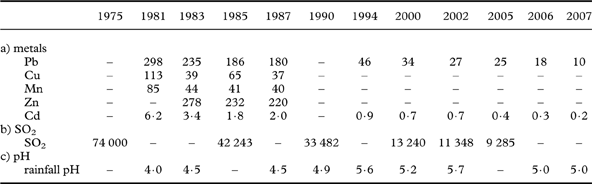
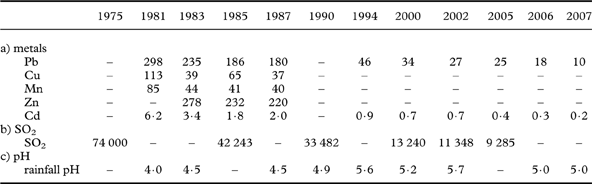
The critical levels of SO2, as well as metals (Table 1), were considered responsible for the extensive damage and even destruction of the existing epiphytic lichen flora. In 1973, Lackovičová (Reference Lackovičová1981) found that up to 95% of the surface of the transplanted lichen Hypogymnia physodes was damaged after three months of exposure in Bratislava, suggesting chlorophyll degradation and physiological alterations due to the impact of toxic air pollutants. Since the 1990s, epiphytic lichens have started to recolonize lichen-desert areas in the town (Pišút Reference Pišút2000) and currently, after a significant decrease in air pollution (Guttová et al. Reference Guttová, Lackovičová, Pišút and Pišút2011), E. prunastri has also started to come back to the semi-natural sites of the city from the refuges around Bratislava. Recently (December 2008–March 2009), a simple experiment with transplanted H. physodes showed very few signs of damage in the transplanted thalli, with a maximum of up to 10% of the thallus surface becoming discoloured (unpublished data).
The aim of the present study was to find out whether current air quality still limits the distribution of indicator species such as E. prunastri, in an urban area with decreased air pollution, such as Bratislava (Slovakia). Based on the already known sporadic recolonization, we hypothesized that the species might be able to survive, at least in some parts of the city. In this paper, we characterized the physiological response of E. prunastri exposed to current environmental conditions and investigated the relationship between this response and the environmental quality expressed as epiphytic lichen diversity.
Mean annual concentrations of selected elements (ng m–3), SO2 emissions (t year–1) and rainfall pH in Bratislava during 1975–2007 after Závodský 2007 and www.shmu.sk (– no data).
Material and Methods
Study area
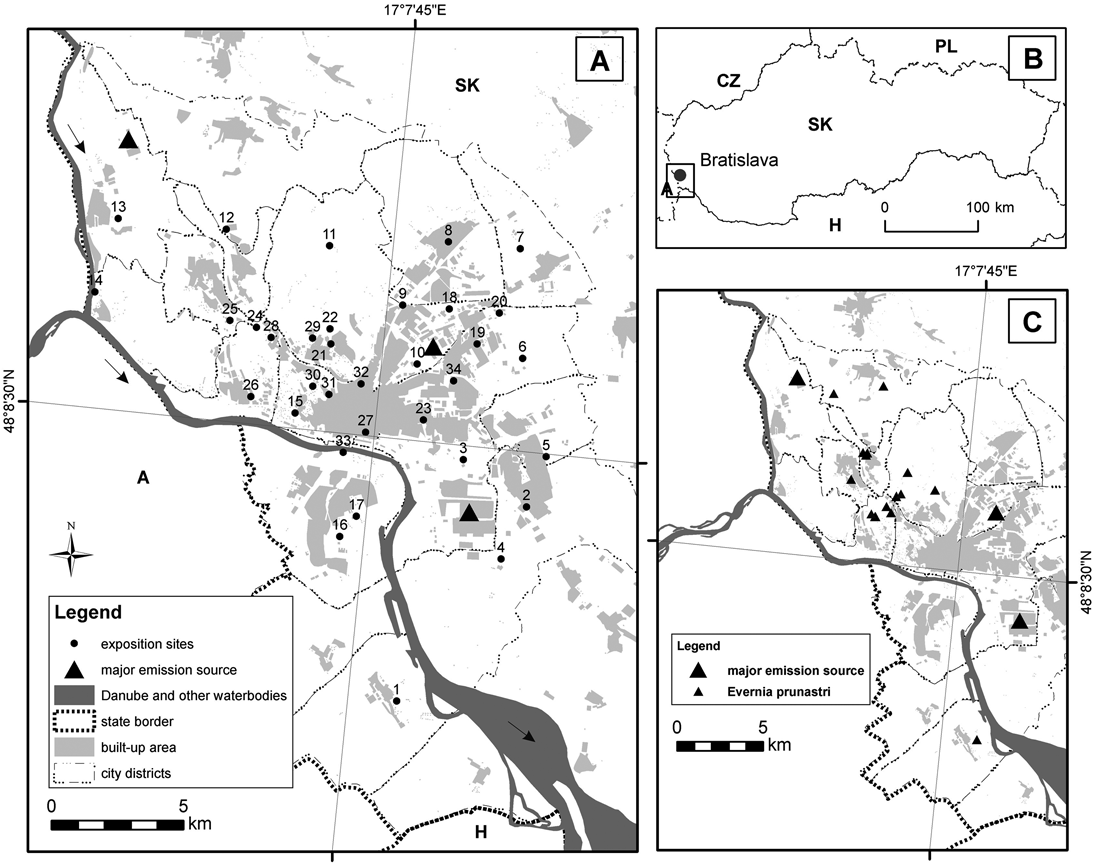
The study area corresponds to the area of Bratislava (SW Slovakia), covering c. 368 km2 (altitude 126–514 m a. s. l.) (Fig. 1). The city is populated by c. 450 000 people, with an additional 200 000 people commuting daily. Bratislava lies around the southern foothills of the Malé Karpaty Mountains, covered by oak-hornbeam, beech forests and vineyards, and on the outskirts of the surrounding plains Podunajská nížina and Záhorská nížina with peri-urban fields. The river Danube crosses the city in a west to south-easterly direction. The climate is warm and reasonably dry, with moderate winters and an annual minimum and maximum temperature of 6°C and 15°C, respectively. Average annual rainfall is 557 mm. Prevailing day-time winds blow along a north-west/south-east axis. The occurrence of windless days is very rare in Bratislava. A typical feature of the winds is high speed, with good dispersal of gaseous pollutants from local sources. Strong wind causes suspension of particles from the ground surface (construction sites, streets), with a significant contribution from vehicular traffic. During the night, the wind changes its direction to north-east to east, running round the Malé Karpaty Mts. This transports pollutants from industrial hubs in the outskirts (e.g. Istrochem) to the town centre, and partly to the residential district of Petržalka in the south (Závodský Reference Závodský2007). Major pollution sources are chemical plants, an oil refinery, a municipal incinerator and gas heating stations. Many plants either closed or upgraded their technology in the period of industrial restructuring in the 1990s, to ensure compliance with the current environmental legislation. Today, vehicular traffic contributes significantly to the total emission load (total vehicular kilometres are increasing), although new vehicles are becoming individually cleaner in response to European as well as national emission standards legislation (www.shmu.sk 2007; Závodský Reference Závodský2007; Ministry of Environment SR 2009; Slovak Hydrometeorological Institute 2010). For more information about the study area see Feráková & Jarolímek (Reference Feráková, Jarolímek, Kelcey and Müller2011), and for pollution sources see Guttová et al. (Reference Guttová, Lackovičová, Pišút and Pišút2011).
A & B, study area and location of exposure sites; C, spontaneous occurrence of Evernia prunastri.

Experimental design
Evernia prunastri is a fruticose lichen that grows on acid to subneutral bark in sites with low eutrophication and SO2 levels. The thalli of the lichen attached to the bark were collected in a control site, natural oak-hornbeam woods c. 54 NW from Bratislava. They were mounted with grafting wax to exposure boards made of oak (Schönbeck Reference Schönbeck1969). On each board (29×12×3 cm), 10 discs of bark (4·5 cm diam.) with lichen thalli were attached to the holes (1·5 cm deep), to have replicates. Holes partially protected the thalli from possible throughfall in spring months when new leaves appeared. Boards were fastened to the tree trunks on the N side of the bole so that the upper edge was 2 m above the ground. Free standing, well-lit trees with similar bark properties were selected (Acer sp., Fraxinus sp., Juglans sp., Populus sp.). The boards were exposed for 6 months (December 2008–May 2009) in 34 sites in Bratislava (Fig. 1). This period features conditions which hinder pollutant dispersion (www.shmu.sk). The sites represented three main types of the natural and socio-economic context of the area: residential areas with infrastructures (2, 5–8, 10, 12, 13, 15, 17, 19, 20, 21, 23, 25–29, 31, 32, 34), industrial hubs (3, 4, 9, 16, 18, 24) and semi-natural sites (parks, forests, 1, 11, 14, 22, 30, 33).
Data on the spontaneous occurrence of E. prunastri, as well as on total epiphytic lichen diversity (LD), were collected in the period 2006–2008, from 457 trees (tree based sampling, one tree representing a sampling unit). Lichen diversity was measured on trees with subneutral bark (Acer sp., Fraxinus sp.) following the recommendations of Asta et al. (Reference Asta, Erhardt, Ferretti, Fornasier, Kirschbaum, Nimis, Purvis, Pirintsos, Scheidegger, van Haluwyn, Nimis, Scheidegger and Wolseley2002). The sampling was carried out according to LeBlanc & De Sloover (Reference LeBlanc and De Sloover1970). The proportion of nitrophytes was estimated at each site as the ratio of the number of nitrophilous species to the total number of epiphytic lichens in the site (LDN). The species were assigned the categories of eutrophication according to Nimis & Martellos (Reference Nimis and Martellos2008). Only the species classified as 4 (rather high eutrophication) or 5 (very high eutrophication) were considered. Lichen nomenclature follows Nimis & Martellos (Reference Nimis and Martellos2008).
Photosynthetic pigments and chlorophyll degradation
To measure the content of photosynthetic pigments and evaluate chlorophyll degradation to phaeophytin, cleaned lichen samples, c. 15 mg of dry weight (dw) of the apical parts of the thalli (up to 5 mm), were placed in Eppendorf tubes and extracted in 1 ml of cool acetone for 60 min (Feige et al. Reference Feige, Lumbsch, Huneck and Elix1993). Extraction was repeated at least three times. Residues of lichen samples were extracted in the dark for 1 h at 65°C in 5 ml of dimethyl sulfoxide (DMSO). Extracts were allowed to cool to ambient temperature, and the absorbance (<0·01) was checked at 750 nm with a UVI Light XTD 2 spectrophotometer (Secomam, France). To assess the amount of chlorophyll, the absorbance of extracts was read at 665, 649, 435 and 415 nm (Ronen & Galun Reference Ronen and Galun1984; Wellburn Reference Wellburn1994). Absorbance was also read at 480 nm to assess total carotenoids. Chlorophyll a, chlorophyll b, chlorophyll a+b and total carotenoids were calculated using equations derived from specific absorption coefficients for pure chlorophyll a and chlorophyll b in DMSO (Wellburn Reference Wellburn1994). The ratio of optical densities at 435 and 415 nm (OD435/OD415), termed the phaeophytinization quotient, was interpreted as reflecting the ratio of chlorophyll a to phaeophytin a (Ronen & Galun Reference Ronen and Galun1984). Three replicates were used.
Soluble proteins
Lichen samples (c. 100 mg dry weight) were homogenized in an ice-cold mortar in 50 mM of phosphate buffer (pH 7·0), containing 5 mM of polyvinylpolypyrrolidone. After centrifugation at 15 000 g at 4°C for 20 min, the water-soluble protein content of supernatants was measured using the method of Bradford (Bradford Reference Bradford1976). Supernatants (100 µl) were pipetted into 900 µl of Bradford assay kit (Biorad) in a spectrophotometric cuvette and mixed. After 10 min, absorbance of samples was measured spectrophotometrically at 595 nm. Bovine serum albumin was used as a calibration standard. Three replicates were used.
Lichen secondary metabolites
Evernia prunastri produces several secondary metabolites. Evernic acid, usnic acid, atranorin and chloratranorin are deposited mainly in the cortex. Evernic acid is also deposited in the medulla (Ryan Reference Ryan, Nash, Ryan, Gries and Bungartz2002; Millanes et al. Reference Millanes, Fontaniella, Legaz and Vicente2003). Metabolites were analyzed using thin-layer chromatography (TLC) and high performance liquid chromatography (HPLC) from acetone extracts obtained prior to preparation of samples for analysis of photosynthetic pigments. These extracts were collected and evaporated, and residues were dissolved with fresh 1·5 ml of acetone and used for determination of secondary metabolites. A standardized TLC method was used (Orange et al. Reference Orange, James and White2001). Acetone extracts were applied on the pre-coated thin-layer plates of Merck silica gel 60 F-254. Three solvent systems (A, B′, C) were used and compounds were visualized by spraying with 10% sulphuric acid and heating for 30 min at 110°C. Filtered acetone extracts were also analyzed by gradient HPLC (Feige et al. Reference Feige, Lumbsch, Huneck and Elix1993) under the following conditions: column Tessek SGX C18, flow rate was 0·7 ml min-1. Mobile phase: A=H2O: acetonitrile: H3PO4 (80:19:1) and B=95% acetonitrile. Gradient program: 0 min 25% B, 5 min 50% B, 20 min 100% B, 25 min 25 % B. Detection was performed at the wavelength of 254 nm (detector Ecom LCD 2084). Usnic acid and atranorin (Sigma-Aldrich) were used as standards. Each analysis was replicated three times.
Bark pH
Bark pH was measured in 2009 in Pinus sylvestris L. and Robinia pseudoacacia L., for a comparison with a previous dataset collected in 1992. The bark was processed using a standard method (Härtel & Grill Reference Härtel and Grill1972). Upper bark layer, c. 3 mm thick, was cut into pieces and 4 g was put into 30 ml of distilled water. After extraction for 24 h, the pH of the extract was measured by Eutech Instruments pH 510.
Statistical analysis
One-way analysis of variance and Tukey's pairwise comparisons (MINITAB Release 11, 1996) were used to determine the significance (P<0·05) of differences in the full dataset containing measured physiological parameters (data not shown). Since LD was measured in a huge number of sampling units (457), we compared LD with physiological parameters, only using the data from those 34 sites selected for the transplant experiment. The significance of differences between pairs of mean pH values measured in 1992 and the data collected in 2009 for this study was checked by a paired two-tailed t-test (P<0·01). Pearson's coefficients (P<0·05) were calculated to look for correlations between lichen diversity and the parameters investigated.
Results
Physiological parameters
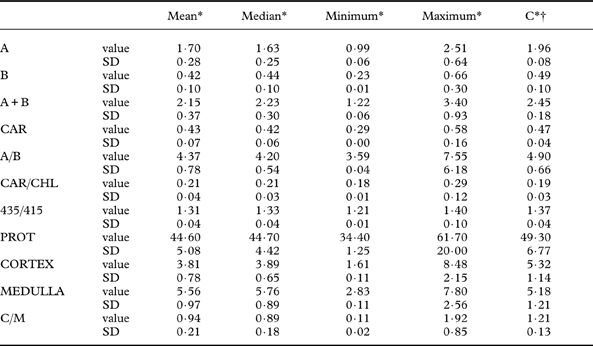
Physiological parameters (photosynthetic pigments and chlorophyll degradation, secondary metabolites and soluble proteins) before the transplant (control) and in transplanted thalli of E. prunastri are summarized in Table 2. Photosynthetic pigments (chlorophyll a, chlorophyll b, chlorophyll a+b and total carotenoids), their ratios (chlorophyll a/b, carotenoids/chlorophylls) and phaeophytinization quotient (OD435/OD415) did not change, comparing control samples before the transplant and thalli exposed in the study area (Table 2). A small decrease in total chlorophylls occurring with chlorophyll degradation was measured in four sites located in residential zones with infrastructure and major transport routes (sites 8, 24, 28 and 29), and in the vicinity of an oil refinery (site 4). However, these values were not sufficiently low to be statistically significant (data not shown). The ratio of cortical and medullar secondary metabolites (C/M) varied little among control samples and sampling sites in Bratislava (Table 2), without any clear spatial pattern linked to the land use. Occasionally, the C/M ratio was higher in lichens transplanted in the proximity of a local soil contamination source by waste dumping. Soluble proteins, both in control samples and in transplanted thalli, were generally low compared to published data (e. g. Gonzáles & Pignata Reference Gonzáles and Pignata2000; Bačkor & Loppi Reference Bačkor and Loppi2009; Piovár et al. Reference Piovár, Stavrou, Kaduková, Kimáková and Bačkor2011), and protein contents in the transplants did not change significantly in most of the sites (data not shown).
Chlorophyll a content (A, mg g dw–1), chlorophyll b content (B, mg g dw–1), total chlorophyll content (A+B, mg g dw–1), total carotenoid content (CAR, mg g dw–1), chlorophyll a/b ratio (A/B), carotenoid/chlorophyll ratio (CAR/CHL), phaeophytinization quotient (435/415), soluble protein content (PROT, mg dw–1), content of cortical compounds (CORTEX, % dw), content of medullar compounds (MEDULLA, % dw) and ratio of cortical/medullar compounds (C/M) in Evernia prunastri transplants.
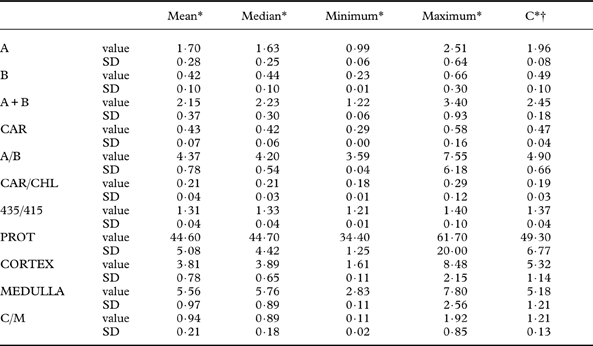
*values±SDs (n=3) are based on measurements in 34 monitoring sites; †control site.
Current lichen diversity and distribution of Evernia prunastri
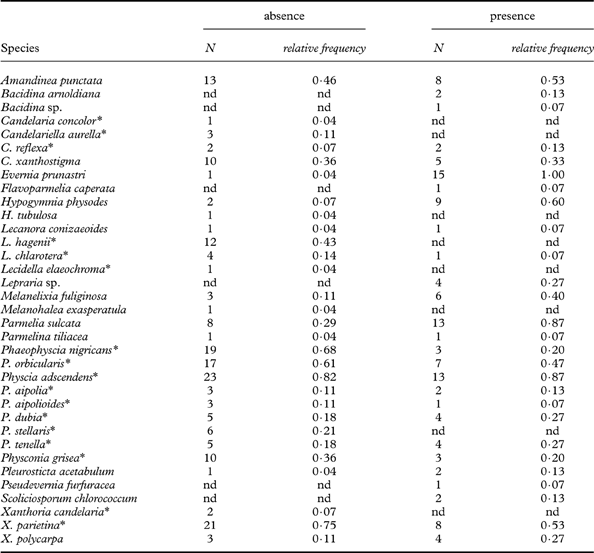
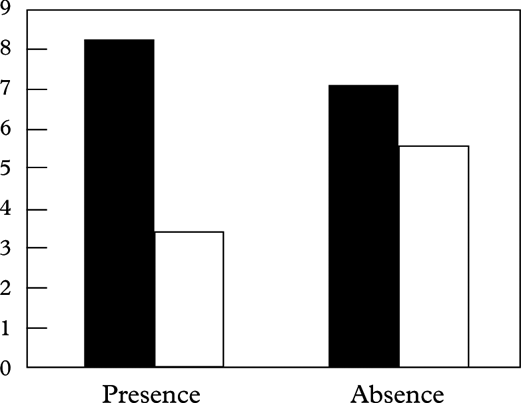
A total of 35 epiphytic lichen species was recorded. Higher lichen diversity corresponded to the sites outside the city centre, lower lichen diversity to the sites with high traffic density or industrial hubs. Most species (60%) are foliose, 34% are crustose and 2% fruticose. Table 3 provides a comparison of the lichen frequencies between the sites recolonized by E. prunastri and the sites where the species is still missing. Epiphytic lichen communities were dominated by nitrophilous species. The sites with spontaneous occurrence of E. prunastri feature a significantly lower share of nitrophytic species in comparison to the sites where E. prunastri was absent (Fig. 2). Concerning the overall distribution of E. prunastri in the study area, in 2006–2009 we found mostly juvenile, rarely adult, thalli without symptoms of discoloration or morphological alteration, in 15 out of 457 sites (Fig. 1). Natural presence of E. prunastri was also recorded in one of the sites selected for the transplant experiment (site 13). The frequency of the species in the study area was 3·3%.
Epiphytic lichens recorded in the sites where E. prunastri was absent (absence) and where it was present (presence). N– number of sites and their relative frequency.
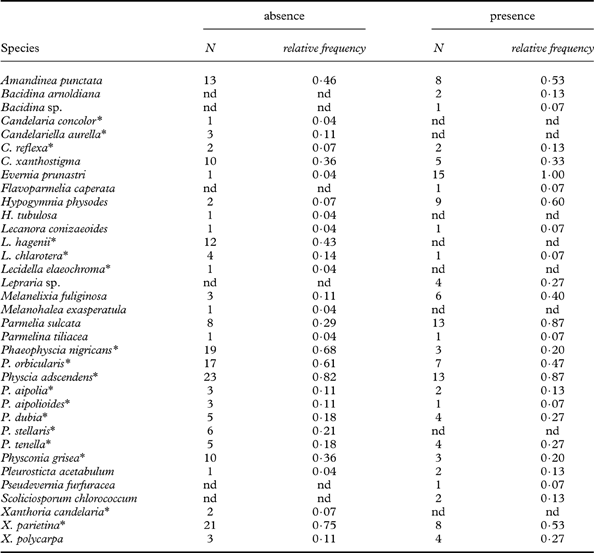
* nitrophilous species – rather high or very high eutrophication (Nimis & Martellos Reference Nimis and Martellos2008); nd – no data.
Epiphytic lichen diversity (mean values) expressed as number of species recorded in the sites with spontaneous occurrence of Evernia prunastri (presence) and in the sites without E. prunastri (absence). The proportion of nitrophilous species is significantly higher in the sites where E. prunastri was absent (t-test two sample unequal variance, α=0·05, t=7·498, tcrit two-tail= 2·045). ▪=total mean lichen diversity; □=mean diversity of nitrophilous species.

Bark pH (1992–2009)
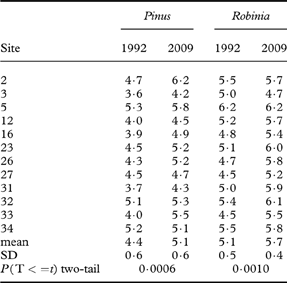
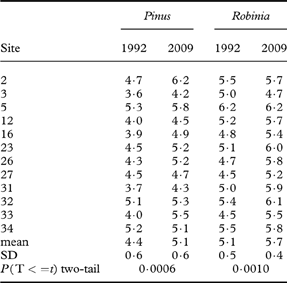
Bark pH is a simple indicator that reflects the ongoing environmental change after SO2 pollution decline. In 2009, bark pH in the sampling sites selected ranged between 4·2 and 6·2 (mean 5·1) in Pinus sylvestris, and between 4·7 and 6·2 (mean 5·7) in Robinia pseudacacia. In the period 1992–2009, a significant increase in bark pH was observed, by an average of 16% in P. sylvestris and by 12% in R. pseudacacia (Table 4).
Average values (n=3) of bark pH of Pinus silvestris and Robinia pseudacacia measured in 1992 and 2009 and the results of paired two-tailed t-test (α=0·01)
Correlation between physiological parameters and lichen diversity
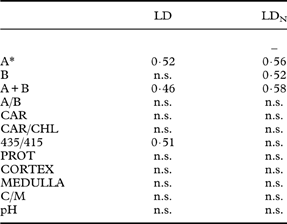
Pearson's correlation coefficients between pairs of investigated variables are summarized in Table 5. Positive correlations were found between lichen diversity and OD435/OD415, between LD and chlorophyll a content, and between LD and total chlorophylls. Chlorophyll content (a and b) in transplanted E. prunastri was found to be negatively correlated with the ratio of nitrophilous lichens per site (LDN).
Correlation coefficients (Pearson) between Lichen Diversity and physiological parameters in Evernia prunastri transplants
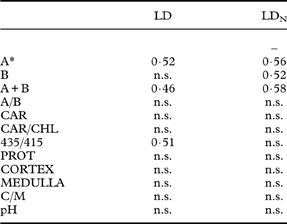
* Abbreviations: A – chlorophyll a, B – chlorophyll b, CAR – total carotedoids, CHL – total chlorophyll, 435/415 – phaeophytinization quotient, pH – bark pH. LD – total number of epiphytic lichens recorded on a sampled tree, LDN – share of nitrophilous species within total LD, n.s. – not significant values.
Discussion
A radical change in the quality and quantity of emissions in the urban area of Bratislava, after political and socio-economic changes in 1989, brought about a significant decrease in air pollution. A recent study using lichens confirmed a significant decline in heavy metal pollution (Cu, Cd, Cr, Mn, Ni, Pb and Zn) compared to the period prior to 1990 (Guttová et al. Reference Guttová, Lackovičová, Pišút and Pišút2011). In this work, we have shown that the selected physiological parameters of the lichen E. prunastri did not change after the transplantation from natural site to the urban environment of Bratislava. Correlations of physiological parameters and trace elements (Cu, Cd, Cr, Mn, Ni, Pb and Zn) in the transplants were also tested, but without significant results (data not shown). Lichens were thriving without physiological and visual damage.
In our study (Table 2), the degree of chlorophyll degradation of E. prunastri transplanted in Bratislava was very low. In healthy lichen photobionts, chlorophyll degradation expressed as the phaeophytinization quotient is generally equal to 1·4 (Ronen & Galun Reference Ronen and Galun1984). In both lichens and axenic photobiont cultures, chlorophyll degradation and altered photosynthetic pigments have been correlated with high levels of metals (Garty et al. Reference Garty, Ronen and Galun1985; Bačkor & Dzubaj Reference Bačkor and Dzubaj2004; Bačkor et al. Reference Bačkor, Váczi, Barták, Buďová and Dzubaj2007). The positive correlation between chlorophyll a content, the primary assimilation pigment for photosynthesis, and LD is in line with observations that chlorophyll a is sensitive to the contents of specific airborne pollutants (e.g. SO2, NOX, HF). In a study carried out using E. prunastri as a biomonitor of geothermal pollution, a decrease in chlorophyll a and an increase in chlorophyll degradation were paralleled by a worsening of air quality confirmed by low lichen diversity values (Paoli & Loppi Reference Paoli and Loppi2008). This premise is used in methods for mapping lichen diversity as an indicator of environmental quality; the lower the pollution, the higher the diversity of epiphytic lichens and also the chlorophyll a content and phaeophytinization quotient. Photosynthetic pigments are also influenced by climatic parameters (Paoli et al. Reference Paoli, Pisani, Munzi, Gaggi and Loppi2010; Pirintsos et al. Reference Pirintsos, Paoli, Loppi and Kotzabasis2011) and moderate levels of fertilizing air pollutants may even enhance metabolic performance, providing protection against chlorophyll degradation and resulting in higher levels of photosynthetic pigments (Ra et al. Reference Ra, Geiser and Crang2005).
We recorded a general increase in bark pH as a consequence of declining SO2 concentrations and the alkalifying effect of traffic emissions, mainly particulate matter. Road transport significantly contributes to the total emission load in Bratislava, and along main junctions particulate matter and NOx may exceed emission limits (Izakovičová et al. Reference Izakovičová, Moyzesová, Krnáčová and Hrnčiarová2006). In many urban areas, NOx is now considered to be the major pollutant in areas subjected to intense vehicular traffic (Wolseley et al. Reference Wolseley, James, Purvis, Leith, Sutton, Sutton, Pitcairn and Whitfield2004). Also in Bratislava, an increase in levels of NOx and particulate matter have led to a parallel increase in nitrophilous lichen species, accompanied by a rise in the bark pH of trees, as measured between 1992 and 2009. However, it is plausible to assume that nitrogen (N) and bark pH may contribute differently to changes in lichen diversity, as shown by van Herk (Reference van Herk2001) in the case of ammonia, where bark pH had a greater effect on epiphytic lichens than direct N supply. This issue should be tested experimentally (Hauck Reference Hauck2010).
The content of photosynthetic pigments in transplanted E. prunastri was negatively correlated with the proportion of nitrophilous lichens, suggesting that E. prunastri would be better adapted in sites with low eutrophication. In fact, the ongoing recolonization occurs chiefly in semi-natural sites with a higher share of acidophilous lichens. The study on the relationship between photosynthetic efficiency of E. prunastri, being an indicator of sample vitality, and N pollution showed that the response of the lichen is time- and dose-dependent (Munzi et al. Reference Munzi, Pisani, Paoli and Loppi2010). Prolonged exposure to low concentrations of N cause changes in the composition of lichen communities. Sensitive acidophilous species disappear and are replaced by nitrophilous species. High N concentrations during long-term exposure have similar effects, while short-term exposure affects only sensitive species. Nitrogen tolerance in lichens has a metabolic component, as the tolerance requires the simultaneous availability of carbon and nitrogen (Hauck Reference Hauck2010; Munzi et al. Reference Munzi, Loppi, Cruz and Branquinho2011). Gaio-Oliveira et al. (Reference Gaio-Oliveira, Dahlman, Palmqvist, Martins-Louçáo and Máguas2005) reported a good correlation between cation exchange capacity and sensitivity to N. Evernia prunastri (N sensitive species) showed the highest cation exchange capacity, whereas X. parietina (N tolerant species) the lowest.
Secondary metabolites are known as chelators of cations. It was hypothesized that some of these metabolites are involved in heavy metal detoxification (Bačkor Reference Bačkor2011; Pawlik-Skowrońska & Bačkor Reference Pawlik-Skowrońska and Bačkor2011). Białońska & Dayan (Reference Białońska and Dayan2005) recorded significant differences in the quantity of secondary metabolites among lichens transplanted to areas with different pollution levels in Poland. This hypothesis was given a mechanistic explanation by Hauck & Huneck (Reference Hauck and Huneck2007a , Reference Hauck and Huneck b ), who tested in laboratory conditions whether lichen substances of Hypogymnia physodes could control the uptake of toxic metals by adsorbing metal ions at cation exchange sites on cell walls. Pawlik-Skowrońska & Bačkor (Reference Pawlik-Skowrońska and Bačkor2011) discovered that lichens inhabiting Zn/Pb polluted sites contained higher total amounts of secondary metabolites (depsides, depsidones, terpenoids) and were able to produce less metal-complexing phytochelatins than the same lichens sampled from unpolluted areas. In our study, certain increased values of the ratio of cortical to medullar secondary metabolites may indicate the impact of local soil contamination, in particular by Cu and Zn caused by waste dumping (Izakovičová et al. Reference Izakovičová, Moyzesová, Krnáčová and Hrnčiarová2006).
Soluble proteins, although not routinely, are used to assess the physiological status of different organisms (Bačkor et al. Reference Bačkor, Klejdus, Vantová and Kováčik2009a ). In lichens, a decline in soluble protein content was demonstrated over the course of Cu treatments of the thalli (Monnet et al. Reference Monnet, Bordas, Deluchat and Baudu2006; Bačkor et al. Reference Bačkor, Kováčik, Dzubaj and Bačkorová2009b ) or after fumigation with SO2 (Kong et al. Reference Kong, Hu, Chao, Sang and Wang1999). A negative correlation between the contents of soluble proteins and the intracellular content of Cu was observed in cultures of Trebouxia erici. A significant decrease in proteins due to the presence of Cu was observed in the cultures of the algae Scenedesmus quadricauda and S. vacuolatus (Piovár et al. Reference Piovár, Stavrou, Kaduková, Kimáková and Bačkor2011). In our study, soluble proteins did not change when comparing control thalli with the transplants. Further information regarding the variation of soluble proteins in lichens during field experiments is required, since all the previous works refer to laboratory studies.
Evernia prunastri, almost totally absent in Bratislava in the second half of the 20th century, is initially recolonizing close-to-nature sites within the study area. The sites include forests of the Malé Karpaty Mts. and floodplain woods along the Danube. These surrounding refuges are a part of the biological corridors important at a local (Protected Landscape Areas Malé Karpaty and Dunajské Luhy) and regional level (Alpine-Carpathian corridor). Recolonization is related to the ameliorated air quality since 1989. However, the spread of the species is still limited (Fig. 1C) due to the concentrations of particulate matter, NO x (www.shmu.sk) and Mn (Guttová et al. Reference Guttová, Lackovičová, Pišút and Pišút2011). Manganese is effective at inhibiting lichen growth in the field, namely reducing chlorophyll concentrations, chlorophyll fluorescence and degrading the chloroplasts in lichen photobionts (Hauck & Paul Reference Hauck and Paul2005). Some secondary metabolites (e. g. medullar depsidones) are efficient at reducing Mn2+ absorption at cation exchange sites (Hauck & Huneck Reference Hauck and Huneck2007a , Reference Hauck and Huneck b ). Despite its secondary chemistry shield, E. prunastri might still be sensitive to high ambient concentrations of these ions. The hygro-mesophytic E. prunastri might also be limited by the drier and warmer microclimate of the built-up area of the town centre and residential zones, which changed their character due to progressive urban development since 1989.
Conclusion
Evernia prunastri, almost totally absent in Bratislava until the 1990s, is coming back to the area, firstly recolonizing semi-natural sites. Using this lichen as a model species, our investigation showed that certain sensitive lichens may live and thrive in Bratislava under the current environmental conditions. Current air quality is not limiting the species over the study area. The physiological status of E. prunastri did not change significantly after six months of exposure with respect to control samples, and the parameters measured (chlorophyll a, b content, carotenoids, OD435/OD415, cortical and medullar secondary compounds and soluble proteins) featured no specific spatial pattern or link to the land use. However, photosynthetic pigments of E. prunastri were negatively correlated with the presence of nitrophilous species, suggesting a better adaptation of the species to sites with low eutrophication. The sites with spontaneous occurrence of E. prunastri had a lower proportion of nitrophilous species compared to the sites where E. prunastri was transplanted. Thus the presence or absence of the species can also help to assess the pressures caused by N pollution.
We are indebted to J. Bennett, L. Paoli and two anonymous reviewers for valuable comments and critical remarks on the manuscript. This work was supported by the Slovak Research and Development Agency under contract no. APVV-51-040805, VEGA 2/0071/10 and VEGA 1/0362/09.