Implications
Excellent reproductive performance in both males and females is fundamental to profitable dairy and beef production systems. Genetics is known to contribute to variation in cattle performance traits including milk and meat production. In this review we summarise the contribution of genetic differences to reproductive performance and how the genetics of reproductive performance is correlated with the genetics of other performance traits. Particular attention is given to gaps in knowledge as well as potentially useful technologies in the near future to increase genetic gain.
Introduction
Excellent reproductive performance is paramount to profitable dairy and beef production systems. This is particularly true in strict seasonal calving production systems where animals are expected to establish and maintain pregnancy within a short period post-calving. The objective of this review was to summarise the state-of-the-art in the genetics of male and female reproductive performance. Future research and application, particularly the use of genomic technologies, for further improving the rate of genetic gain in reproductive performance is also discussed.
Reproductive phenotypes used in animal breeding
Traditional female reproductive traits
Traditional reproductive traits may be separated into (1) interval traits, (2) binary traits and (3) count traits; by traditional we mean traits that are routinely measured on commercial animals in most international dairy and beef cattle populations.
Interval traits
One of the most commonly used reproductive traits in dairy and beef breeding programmes is calving interval (Gutiérrez et al., Reference Gutiérrez, Álvarez, Fernández, Royo, Díez and Goyache2002; Berry et al., Reference Berry, Kearney, Twomey and Evans2013; Wall et al., Reference Wall, Brotherstone, Woolliams, Banos and Coffey2003) which is the interval, in days, between consecutive calving events. Calving interval encapsulates the ability of the animal to resume normal cyclicity post-calving, express oestrus of sufficient intensity to be detected, conceive and establish pregnancy, as well as the resulting gestation length. The choice and nomenclature of other interval reproductive traits differ among studies and include the (a) interval from calving to first heat, (b) interval from calving to first insemination, (c) interval from calving to conception also known as days open, and (d) interval from first to last insemination or the interval from first service to conception. Days to calving is a trait commonly used to assess reproductive performance in beef cows, especially in Australia (Johnston and Bunter, Reference Johnston and Bunter1996); days to calving is defined as the number of days from first service or herd mating start date to subsequent calving. Calving day, defined as the number of days from the beginning of the herd’s calving season to the cow’s calving date, is also sometimes used as a reproductive phenotype in beef cattle (Minick-Bormann and Wilson, Reference Minick Bormann and Wilson2010). Interval traits defined in nulliparae include age at first oestrus, age at first service, and age at first calving.
Binary traits
Binary traits are traits with only two outcomes, for example (1) pregnant or (2) not pregnant. Non-return is the most commonly used binary traits in cattle, both in the assessment of cow reproductive status (Wall et al., Reference Wall, Brotherstone, Woolliams, Banos and Coffey2003; Jamrozik et al., Reference Jamrozik, Fatehi, Kistemaker and Schaeffer2005; Sewalem et al., Reference Sewalem, Kistemaker and Miglior2010) and bull reproductive status (Clay and McDaniel, Reference Clay and McDaniel2001). Non-return is whether or not a cow has been served (or seen in oestrus) within a specified period after breeding. Pregnant/conceived to first service is a binary trait similar to non-return rate and has also been used in the evaluation of female reproductive performance (Veerkamp et al., Reference Veerkamp, Koenen and De Jong2001; Berry et al., Reference Berry, Kearney, Twomey and Evans2013) and male reproductive performance (Berry et al., Reference Berry, Evans and McParland2011). Seasonal calving production systems commonly use a binary trait describing whether or not a cow became pregnant within a pre-defined period (e.g. 42-day, 63-day) from the start of the breeding season (Grosshans et al., Reference Grosshans, Xu, Burton, Johnson and Macmillan1997; Berry et al., Reference Berry, Buckley, Dillon, Evans, Rath and Veerkamp2003). Submission rate is also useful in seasonal calving/breeding production systems to describe whether or not an animal was submitted for service in a given period from the initiation of the herd breeding season (Berry et al., Reference Berry, Kearney, Twomey and Evans2013). Calving rate is sometimes used in beef genetic evaluations (Johnston and Bunter, Reference Johnston and Bunter1996; Urioste et al., Reference Urioste, Misztal and Bertrand2007).
Count traits
The most commonly used count trait is number of services (Berry et al., Reference Berry, Buckley, Dillon, Evans, Rath and Veerkamp2003; Wall et al., Reference Wall, Brotherstone, Woolliams, Banos and Coffey2003; Jamrozik et al., Reference Jamrozik, Fatehi, Kistemaker and Schaeffer2005). Number of services can either be the total number of services (Veerkamp et al., Reference Veerkamp, Koenen and De Jong2001; Berry et al., Reference Berry, Buckley, Dillon, Evans, Rath and Veerkamp2003) or the number of services per conception (Wall et al., Reference Wall, Brotherstone, Woolliams, Banos and Coffey2003; Jamrozik et al., Reference Jamrozik, Fatehi, Kistemaker and Schaeffer2005); the latter is restricted to only cows that conceived and is therefore right censored.
Detailed female reproductive traits
Detailed reproductive traits described here refer to reproductive traits not routinely measured in most dairy and beef cow populations. Such traits are generally based either on hormonal profiles (Royal et al., Reference Royal, Pryce, Woolliams and Flint2002; Berry et al., Reference Berry, Bastiaansen, Veerkamp, Wijga, Wall, Berglund and Calus2012) or ultrasound analysis, palpation or examination of the reproductive tract (Carthy et al., Reference Carthy, Fitzgerald, Berry, McParland, Williams, Butler, Cromie and Ryan2014; Fitzgerald et al., Reference Fitzgerald, Berry, Carthy, Cromie and Ryan2014). Although a plethora of detailed reproductive phenotypes exist, the focus here is on traits that are, or can be, implemented nationally on a large scale.
Postpartum interval to commencement of luteal activity is defined as the number of days from calving to the commencement of luteal activity. Postpartum interval to commencement of luteal activity is generally measured as the number of days post-calving to when progesterone concentration in milk of two consecutive samples exceeds a threshold (e.g., ⩾3 ng/ml; Royal et al., 2002; Pollott and Coffey, Reference Pollott and Coffey2008; Berry et al., Reference Berry, Bastiaansen, Veerkamp, Wijga, Wall, Berglund and Calus2012). Other reproduction phenotypes derived from progesterone profiles in milk include length of first luteal phase, persistency of corpus luteum, delayed ovulation and percentage of animals with a milk progesterone concentration ⩾3 ng/ml in the first 60 days post-calving (Royal et al., Reference Royal, Pryce, Woolliams and Flint2002).
Ultrasonography of the reproductive tract can also provide valuable detailed information on the status of both the ovaries and the uterine pathology (Fricke, Reference Fricke2002; Carthy et al., Reference Carthy, Fitzgerald, Berry, McParland, Williams, Butler, Cromie and Ryan2014; Fitzgerald et al., Reference Fitzgerald, Berry, Carthy, Cromie and Ryan2014). Phenotypes that can be derived from ultrasound include the presence of cystic ovaries (Hooijer et al., Reference Hooijer, Lubbers, Ducro, van Arendonk, Kaal-Lansbergen and van der Lende2001; Carthy et al., Reference Carthy, Fitzgerald, Berry, McParland, Williams, Butler, Cromie and Ryan2014), scar tissue, multiple ovulations (Echternkamp et al., Reference Echternkamp, Huttington, Tyrell and Reynolds1990; Fitzgerald et al., Reference Fitzgerald, Berry, Carthy, Cromie and Ryan2014), whether or not the cow is cycling (Carthy et al., Reference Carthy, Fitzgerald, Berry, McParland, Williams, Butler, Cromie and Ryan2014) and the tone of the uterine wall (Carthy et al., Reference Carthy, Fitzgerald, Berry, McParland, Williams, Butler, Cromie and Ryan2014).
Endometrial cytometry could potentially be implemented at a national level to diagnose a compromised reproductive tract (Kasimanickam et al., Reference Kasimanickam, Duffield, Foster, Gartley, Leslie, Walton and Johnson2004). Classification of abnormal vaginal discharge based on colour, viscosity and smell (Sheldon et al., Reference Sheldon, Williams, Miller, Nash and Herath2008) is probably more amenable to implementation at a national level. The genetic variation in both phenotypes has, however to-date, not been quantified.
Male reproductive traits
Non-return rate is the predominant phenotype used for assessing male reproductive status in the field (Clay and McDaniel, Reference Clay and McDaniel2001; Kuhn and Hutchison, Reference Kuhn and Hutchison2008). Pregnancy rate, which is strongly correlated with non-return rate, has also been proposed (Berry et al., Reference Berry, Evans and McParland2011). Semen quality measures such as sperm concentration, motility and per cent live/dead are also often used to characterise male reproduction (Parkinson, Reference Parkinson2004) but studies on their association with pregnancy rate in the field are contradictory (Parkinson, Reference Parkinson2004). Testicular characteristics (e.g. scrotal circumference) have been used as a measure primarily of sperm output since sperm production per unit testis volume is constant (Parkinson, Reference Parkinson2004). The phenotypic relationship between measures such as scrotal circumference with non-return rate in male animals has not been fully explored.
Gaps in knowledge and areas of further research
Accurate genetic evaluations require large quantities of information on which to estimate breeding values. This is particularly true for low heritability traits as often encountered with reproductive traits (discussed later). At least for the short- to medium-term, genomic tools will not circumvent the requirement for large quantities of phenotypic data. This is because genomics will not be able to explain all the additive genetic variation in reproduction traits, but also non-additive genetic variation as well as permanent environmental variation contributes to the eventual phenotype (Berry et al., Reference Berry, Buckley, Dillon, Evans, Rath and Veerkamp2003; Jamrozik et al., Reference Jamrozik, Fatehi, Kistemaker and Schaeffer2005; Wall et al., Reference Wall, Brotherstone, Kearney, Woolliams and Coffey2005). Phenotypic information will still be required to capture this remaining, exploitable variation. Moreover, reproductive records are necessary to aid on-farm management decisions. Therefore the routine procurement of accurate, low cost reproductive phenotypes (or genetically correlated heritable phenotypes) is key to sustainable and rapid genetic gain.
Heritability indicates the proportion of the phenotypic variation (after adjustment for systematic environmental effects) attributable to genetic differences among animals. Generally the narrow sense heritability is used in animal breeding where the numerator of the equation is the additive genetic variance (i.e. the variation that is transmitted between generations). A common misconception is that the remaining variation is solely management but the residual variation can include both errors in recording (e.g. performance or pedigree) and inappropriate statistical modelling as well as management and non-additive genetic variation. Furthermore, the permanent environmental effect if fitted in the model encapsulates management, chance, but also possible epigenetic effects. Hoeschele (Reference Hoeschele1991) estimated that the broad sense heritability (i.e. numerator includes both additive and non-additive genetic variation) can be at least twice the narrow sense heritability. Improving the accuracy of the heritability estimate could result in faster genetic gain. The routine use of low-cost genomic tools on-farm can aid in more accurate parentage assignment (e.g. rangeland beef production systems) thereby improving the heritability but also the genetic evaluations themselves. Preferential treatment is also likely to introduce residual noise. Examples of preferential treatment include voluntarily delaying insemination of high-yielding dairy cows or even enrolling cows on embryo flushing programmes or synchronisation programmes without informing the genetic evaluation system. Accurate recording of such events will result in greater genetic gain and potentially less bias (Kuhn et al., Reference Kuhn, Boettcher and Freeman1994). More accurate phenotyping could be employed by exploiting information from multiple data sources to (in)validate records. Including in genetic evaluations, service records, for example, undertaken at the inappropriate time of the oestrus cycle will introduce error thereby deflating the heritability. Using milk progesterone data from a research herd Royal et al. (Reference Royal, Pryce, Woolliams and Flint2002) concluded that 5% of inseminations were undertaken at the inappropriate period of the oestrus cycle. Activity monitoring data or reproductive tract ultrasound data (Fricke, Reference Fricke2002), if available, could be used in the data editing process of national genetic evaluations. Recording all reproductive treatments in cows and their appropriate inclusion in national genetic evaluations systems will improve the accuracy of genetic evaluations. Finally improved statistical modelling could improve the heritability and advance genetic gain in reproductive performance. In the analysis of male reproductive performance, for example, details on the batch number of the ejaculate could be exploited to remove temporal effects.
The use of heritable predictor traits for reproductive performance in a multi-trait genetic evaluation for reproductive performance could also augment the accuracy of selection and thus genetic gain for reproductive performance. Body condition score (BCS) is an example of a heritable phenotype genetically correlated with fertility and amenable to routine data collection (Pryce et al., Reference Pryce, Coffey and Brotherstone1997; Berry et al., Reference Berry, Buckley, Dillon, Evans, Rath and Veerkamp2003). Dairy form is also known to be associated with reproductive performance (Dechow et al., Reference Dechow, Rogers, Klei, Lawlor and VanRaden2004). Other possible predictor traits which could be genetically correlated with reproductive performance include activity meters (Løvendahl and Chagunda, Reference Løvendahl and Chagunda2009), individual cow global position systems, IR tomography of animal surfaces and temperature monitoring, as well as energy balance predicted from IR spectroscopy analysis of milk (McParland et al., Reference McParland, Banos, Wall, Coffey, Soyeurt, Veerkamp and Berry2011). Many of these and other tools and sensors have the potential to each generate a huge quantity of information at a given time point. Arguably one of the greatest challenges in the future is computational biology and information technology approaches required for collating, analysing and interpreting the vast quantity of data generated. Rapid data compression and decompression algorithms with minimal loss in accuracy for the transfer and storage of big data need to be evaluated. For example, wavelength data from IR spectroscopy analyses contain highly correlated wavelength values which subsequently may be sparsely represented in a de-correlating transformation; this will reduce the quantity of data to be transferred and stored.
The implementation of genomic selection in many cattle populations (Spelman et al., Reference Spelman, Hayes and Berry2013; van Marle-Koster et al., Reference van Marle-Koster, Visser and Berry2013) may lead to an increased usage of natural mating bulls because of improved accuracy of selection from exploiting genomic information. Hence, breeding for bull functionality may become more important and therefore heritable phenotypes reflecting such attributes need to be re-investigated. An example of a phenotype to reflect bull functionality is the number of calves born which incorporates libido, servicing capacity, fertilisation capacity and longevity. Moreover, docility, which is known to be heritable (Gauly et al., Reference Gauly, Mathiak, Hoffmann, Kraus and Erhardt2001; Berry et al., Reference Berry, Buckley, Dillon, Evans and Veerkamp2004; Berry and Evans, Reference Berry and Evans2014) may become more important in such production systems although it should be achieved within a balanced breeding programme that also includes libido because of any potential antagonisms.
Variance components for reproductive traits
Variance components (i.e. a measure of the variation present in a sample population) for reproductive traits can be population specific. The genetic variance for a trait will depend on the frequency of the alleles at the loci influencing the trait, whether or not they are segregating, the size of the allelic substitution effect(s), and the mode of gene action(s). Variance components can also change as the trait changes over the lifetime of an animal as well as over time within a population as allele frequencies and the degree of segregation change due to factors such as inbreeding, selection, migration and mutation. Furthermore, the environmental variance can vary depending on the management system and the statistical model used. Because of this, many studies in quantitative genetics are dedicated to estimating the heritability of traits at a population level as well as their genetic correlations with other traits. Pooled heritability estimates were derived from a meta-analysis of available studies using the approach outlined by Koots et al. (Reference Koots, Gibson, Smith and Wilton1994a).
Female reproductive performance
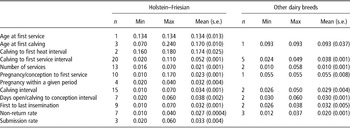
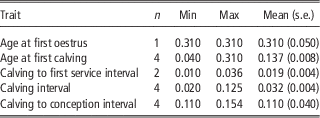
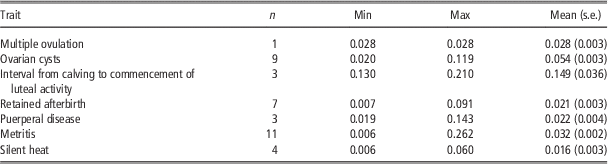
Heritability estimates for the traditional reproductive traits across different populations are summarised in Tables 1 and 2 for Holstein cows, other breeds of dairy cows and beef cows. Heritability estimates for detailed reproductive traits are in Table 3. Calving to first service interval and calving interval are the two most commonly evaluated reproductive traits in dairy cows. There appears to be fewer studies on nulliparous animals than in lactating cows. Moreover, there are few studies that have provided sufficient information to calculate the coefficient of genetic variation which is a crucial statistic for estimating the potential genetic gain achievable relative to other traits. From the available information provided in studies, the mean coefficient of genetic variation for calving to first service interval and calving interval was 7% and 2%, respectively, implying considerable genetic variation in reproductive performance does indeed exist.
Number of populations (n), minimum (Min), maximum (Max) and pooled mean (standard error in parenthesis) heritability estimates for different female reproductive traits in Holstein–Friesian populations and other dairy breed populationsFootnote †

† Individual study estimates and associated references are in Supplementary Tables S1 and S2.
Not all studies may have contributed to the mean heritability estimate if sufficient information was not provided in the study.
Number of populations (n), minimum (Min), maximum (Max) and pooled mean (standard error in parenthesis) heritability estimates for a range of female reproductive traits in beef cattleFootnote †

† Individual study estimates and associated references are in Supplementary Table S3.
Not all studies may have contributed to the mean heritability estimate if sufficient information was not provided in the study.
Number of populations (n), minimum (Min), maximum (Max) and pooled mean (standard error in parenthesis) heritability estimates for a range of detailed female reproductive traits in cattle populationsFootnote †

† Individual study estimates and associated references are in Supplementary Table S4.
Not all studies may have contributed to the mean heritability estimate if sufficient information was not provided in the study.
Of the traditional reproductive traits, the heritability of the interval traits tended to be greater than the heritability of either the binary or count traits. This could partly be attributable to the distribution of the values for the traits; most of the heritability estimates for the binary traits in the meta-analysis were from linear models. Relative to most of the other traditional reproductive phenotypes, the heritability of reproductive performance in nulliparae (i.e. age at first oestrus, age at first service and age at first calving) was large. The heritability of the interval from calving to first detected heat in dairy cows was particularly large but consistent across two studies (Pryce et al., Reference Pryce, Coffey and Brotherstone1997; Berry et al., Reference Berry, Bastiaansen, Veerkamp, Wijga, Wall, Berglund and Calus2012) and also consistent with the relatively high mean heritability of 0.149 for the interval from calving to commencement of luteal activity (Table 3). Nonetheless, with the exception of the interval from calving to first heat or first service, the heritability of most of the traditional reproductive traits in dairy and beef cattle were, on average, between 0.02 to 0.04. Moreover, the estimates were remarkably similar across the large number of studies investigated as well as among the populations of Holstein–Friesian, other dairy breeds and beef populations.
The heritability of the detailed reproduction traits were also low; the mean pooled heritability for the seven different traits varied from 0.004 (puerperal disease) to 0.149 (interval post-calving to the commencement of luteal activity). However, considerable variation in heritability estimates between populations was evident; for example the heritability of metritis in different populations varied from 0.006 (Pösö and Mänytsaari, Reference Pösö and Mänytsaari1996) to 0.262 (Lin et al., Reference Lin, Oltenacu, Van Vleck, Erb and Smith1989).
Male reproductive performance
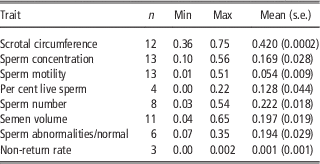
Heritability estimates for alternative measures of male reproductive performance from a meta-analysis of 25 different populations are in Table 4. The pooled heritability estimates for traits associated with semen quality varied from 0.05 (sperm motility) to 0.23 (abnormalities or normal sperm). The pooled heritability for testicular size reported across 12 studies was 0.42 and estimates were relatively consistent (0.40 to 0.75) across studies. The heritability of non-return rate or calving rate, both measured in the field, was 0.001 and 0.08, respectively. Hence, with the exception of non-return rate or calving rate, the heritability for most of the semen characteristics is greater than that for the female reproductive phenotypes.
Number of populations (n), minimum (Min), maximum (Max) and pooled mean (standard error in parenthesis) heritability estimates for a range of male reproductive traits in cattle populationsFootnote †

† Individual study estimates and associated references are in Supplementary Table S5.
Not all studies may have contributed to the mean heritability estimate if sufficient information was not provided in the study.
Practically no genetic variation in non-return rate measured in artificially inseminated (AI) bulls exists. The latter is most likely due to selection since generally only bulls with sufficiently high semen quality are considered for use in AI thereby biasing the estimates of genetic variation. Moreover, different semen dilution rates may be used for different ejaculates depending on the semen quality characteristics. Berry et al. (Reference Berry, Evans and McParland2011) reported a positive (0.52) genetic correlation between pregnancy rate in males and pregnancy rate in females suggesting that selection for improved pregnancy rate in males (i.e. semen quality) will result in a concurrent improvement in pregnancy rate in the female population. Positive, but weak, correlations were documented between male and female reproductive performance in other cattle populations (Mackinnon et al., Reference Mackinnon, Taylor and Hetzel1990).
Genetic correlations among reproductive performance measures
Pooled genetic correlations between two traits were estimated using an approach similar to Koots et al. (Reference Koots, Gibson and Wilton1994b) except that the approximated standard error of the genetic correlation based on the number of sires in the analysis was replaced by the actual published standard error of the genetic correlation. Correlation estimates differ between populations due to a multitude of factors including trait definition, environmental factors (e.g. genotype by environment) and the statistical model used.
Correlations among female reproductive traits
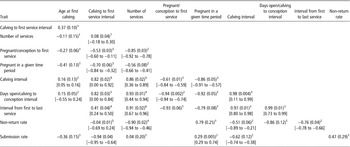
The mean and range in genetic correlations among the different female traditional reproductive traits are in Table 5. Most of the pair-wise genetic correlations among the reproductive traits were moderate to strong. With the exception of the genetic correlation between calving to first service interval and the interval from first to last service (0.41) the mean genetic correlations among the interval traits (i.e. calving to first service interval, calving to conception interval, calving interval and the interval from first to last service) varied from 0.82 to 0.99. These strong genetic correlations are, in most instances, an artefact of the part-whole relationship between these traits but also the relationships among the statistical distributions for the pairs of traits. For example, a clear part-whole relationship exists between calving to first service interval and calving interval since calving to first service interval is a component of calving interval. Furthermore, number of services follows a negative binomial distribution and pregnancy rate to first service constitutes its binomial probabilities.
Pooled genetic correlations (pooled standard error in parenthesis) as well as the range in genetic correlations (in square parenthesis) between female reproductive traits across different dairy cow populationsFootnote † Footnote ‡ Footnote #

† Superscript is the number of populations included in the range; this may not necessarily be also the number of studies included in the pooled estimate due to a lack of standard errors provided for some population.
‡ No literature estimates could be found for empty cells of pair-wise correlations.
# Studies contributing to the correlations are listed in Supplementary material S1.
Longer calving to first service intervals were, on average (and across all studies investigated), associated with reduced pregnancy rate to first service; it is not clear whether this genetic association is non-linear like observed at the phenotypic level (Berry et al., Reference Berry, Evans and McParland2011). As expected longer calving to first service intervals were strongly (−0.94) associated with reduced submission rate. Furthermore, reduced pregnancy rate to first service was associated with greater number of services.
Calving to conception interval and calving interval were, as expected, very strongly genetically correlated (0.93) since the difference between them phenotypically should only be gestation length. Calving interval was also strongly positively correlated (0.86) with number of services and negatively correlated (−0.61) with pregnancy rate to first service.
Reported genetic correlations among the various detailed reproductive traits are few and generally associated with relatively large standard errors. Pösö and Mänytsaari (Reference Pösö and Mänytsaari1996) documented a positive genetic correlation (0.59; s.e.=0.33) between ovulatory disorder and metritis in Finnish Ayrshire cows while Koeck et al. (Reference Koeck, Miglior, Kelton and Schenkel2012) reported strong positive genetic correlations (0.76 to 1.00) among acute metritis, purulent discharge, endometritis and chronic metritis in Canadian Holsteins. Koeck et al. (Reference Koeck, Miglior, Kelton and Schenkel2012) also reported positive genetic correlations among retained placenta and both metritis (0.62; s.e.=0.11) and cystic ovaries (0.23; s.e.=0.14) with no genetic correlation (0.04; s.e.=0.16) between metritis and cystic ovaries.
Even fewer studies have documented genetic correlations between detailed reproductive traits and traditional traits. Pösö and Mänytsaari (Reference Pösö and Mänytsaari1996) in an analysis of Finnish Ayrshire cows reported a genetic correlation of 0.80 (s.e.=0.12) between ovulatory disorder and operational days open and also a positive genetic correlation (0.37; s.e.=0.25) between metritis and operational days open. Similarly, based on correlations between sire estimated breeding values (with a least 30 daughter records each) Koeck et al. (Reference Koeck, Miglior, Kelton and Schenkel2012) inferred positive (0.22 to 0.25) genetic correlations among retained placenta (299 sires), metritis (193 sires) and cystic ovaries (154 sires) with days open.
Correlations among male reproductive traits
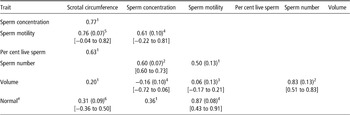
The genetic correlations among the different measures of semen characteristics, including scrotal circumference, are summarised in Table 6; no genetic correlations between semen quality measures and field non-return rate have been documented. Documented genetic correlations among many of the semen quality characteristics suggest that larger scrotal circumference is associated with a greater volume and concentration of sperm, a larger proportion of live sperm with greater motility, and a larger proportion of normal sperm. Although no study estimated the genetic correlation between scrotal circumference and sperm number, the positive genetic correlations between scrotal circumference and both sperm concentration and volume suggest the correlation between scrotal circumference and total sperm number may also be positive. Greater sperm concentration was associated with greater sperm motility and the proportion of normal sperm but only weakly associated with volume, although in some studies the genetic correlation was strongly negative. The genetic correlation between scrotal circumference and female reproductive performance has been documented to be weak (Martínez-Velázquez et al., Reference Martínez-Velázquez, Gregory, Bennett and Van Vleck2003). This lack of a strong genetic correlation between scrotal circumference and female reproductive performance questions the usefulness of breeding programmes for testicular size as an indirect tool to improve female reproductive performance.
Pooled genetic correlations (pooled standard error in parenthesis) as well as the range in genetic correlations (in square parenthesis) between male reproductive traits across different dairy populationsFootnote † Footnote ‡ Footnote ¥

† Superscript is the number of populations included in the range; this may not necessarily be also the number of studies included in the pooled estimate due to a lack of standard errors provided for some population.
‡ No literature estimates could be found for empty cells of pair-wise correlations
# The sign of the correlation was reversed when the trait under investigation was ‘abnormalities’.
¥ Studies contributing to the correlations are listed in Supplementary material S2.
Correlations between female reproductive traits and performance
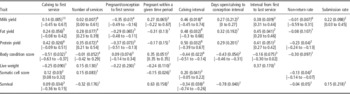
Mean pooled genetic correlations between female reproductive traits and a selection of performance traits in dairy cattle are summarised in Table 7. In general, an antagonistic genetic correlation existed among milk yield, fat yield and protein yield and the range of traditional reproductive traits; the exceptions were between pregnancy rate during a given period of the breeding season with milk yield and between both non-return rate and submission rate with milk yield. Although variation in the genetic correlations existed among studies, in general, most of the documented genetic correlations were antagonistic or close to zero. In contrast, the genetic correlations between BCS and reproductive performance were, on average, all favourable; that is, increased BCS was associated with improved reproductive performance and this was generally consistent across most studies (Table 7). Despite the contribution of genetic merit for BCS to differences in genetic merit for live weight, mean genetic correlations suggested that heavier animals had compromised reproductive performance.
Pooled genetic correlations (pooled standard error in parenthesis) as well as the range in genetic correlations (in square parenthesis) between female reproductive traits and a selection of performance traits in different dairy populationsFootnote † Footnote ‡ Footnote ¥

† Superscript is the number of populations included in the range; this may not necessarily be also the number of studies included in the pooled estimate due to a lack of standard errors provided for some population.
‡ No literature estimates could be found for empty cells of pair-wise correlations.
¥ Studies contributing to the correlations are listed in Supplementary material S3.
Although represented by dairy cow populations in both confinement and seasonal production systems, inferior genetic merit for reproductive performance in dairy cows was generally associated with reduced survival. On average, genetic merit for calving interval explained 12% of the genetic variance in survival but this was as high as 55% in a seasonal calving dairy cow population in Ireland (Berry et al., Reference Berry, Kearney, Twomey and Evans2013). Maintaining a 365-day calving interval in seasonal calving production systems is vital to maximise the utilisation of lower-cost grazed grass in the diet and is therefore a major contributor to cow survival.
Estimates of the genetic correlations between animal reproduction and health are usually associated with relatively large standard errors, because of the generally low heritability of both traits but also and relatively small population sizes. Most studies suggest that inferior genetic merit for reproductive performance is associated with compromised genetic merit for animal health. Pritchard et al. (Reference Pritchard, Coffey, Mrode and Wall2013) reported positive (i.e. favourable) genetic correlations among calving to first service interval, calving interval and number of services with a range of mastitis and lameness related traits; genetic correlations ranged from 0.15 to 0.38. Favourable genetic correlations reported by Pritchard et al. (Reference Pritchard, Coffey, Mrode and Wall2013) among non-return rate and both mastitis and lameness related traits ranged from −0.44 (number of lameness episodes) to −0.07 (somatic cell count).
Based on one of the largest studies investigating the genetic association between reproductive performance and terminal traits in beef cattle, Berry and Evans (Reference Berry and Evans2014) using the national Irish database documented a generally unfavourable genetic correlation among reproductive performance and both size and muscularity. The mean genetic correlation reported by Berry and Evans (Reference Berry and Evans2014) among seven linear subjectively scored type traits describing animal muscularity in live animals (i.e. positive value implies greater muscularity) and calving interval was 0.21; the genetic correlation among cow live weight, direct weaning weight and animal weight post-weaning with calving interval ranged from 0.39 to 0.70. Similar genetic correlations with calving interval existed for weight and conformation traits measured at the time of slaughter. Cow and progeny carcass weight and calving interval were positively correlated (0.22 to 0.34) as were the correlations between cow and progeny carcass conformation and calving interval (0.19 to 0.29). Furthermore, agreeing with the well cited (Pryce et al., Reference Pryce, Coffey and Brotherstone1997; Berry et al., Reference Berry, Buckley, Dillon, Evans, Rath and Veerkamp2003; Wall et al., Reference Wall, Brotherstone, Kearney, Woolliams and Coffey2005) genetic correlations that exist between greater BCS and improved reproductive performance, Berry and Evans (Reference Berry and Evans2014) reported negative genetic correlations (−0.44 to −0.31) between carcass subcutaneous fat depth (i.e. higher scores represent more fat) and calving interval in beef cows. Genetic correlations suggesting greater terminal characteristics are associated with poor maternal characteristics have also been reported elsewhere (Phocas, Reference Phocas2009) although they are not always consistent (Gutiérrez et al., Reference Gutiérrez, Álvarez, Fernández, Royo, Díez and Goyache2002).
Gaps in knowledge
Knowledge of genetic correlations among traits can be useful to: (1) quantify the (change in) response to selection in other (performance) traits from selection on reproductive traits alone or within a breeding objective, and (2) the corollary, determining the expected response in reproductive performance from selection on other traits (i.e. indirect selection) or from selection on an overall breeding goal. Of note is the considerable number of cells in the Tables 5, 6 and 7 where no estimates in the literature exist on those pair-wise correlations. More importantly though is the lack of precise estimates of genetic correlations between reproductive performance and other performance traits in beef cattle. These are required to make informed decisions on the impact of current beef breeding strategies on the long-term sustainability of modern-day production systems. Putting in place the necessary resources to estimate such correlations must be prioritised in beef cattle.
Many reproductive traits are moderate to strongly correlated with each other but differences in these correlations exist among populations which can be attributable to many factors including the sampling variation associated with the estimates but also population specific characteristics such as the past selection pressure imposed. Therefore estimating these correlations in the population representative of where they will be used still need to be estimated. Furthermore, a paucity of estimates of genetic parameters exist in the literature including variance components from maiden heifers but also genetic correlations between male and female reproductive phenotypes.
Because of the low heritability of reproduction traits, and the lack of a large populations of phenotyped animals, estimates of genetic correlations in some populations lack precision; exploiting genomic information through a combined pedigree and genomic relationship matrix can aid in improving the precision of the estimates. Furthermore, estimates of genetic correlations between reproductive traits and other phenotypes (e.g. feed efficiency, many health traits) are also lacking.
Genetic correlations may manifest themselves from either the same genomic mutation affecting both traits (termed pleiotropic effect) or different genomic mutations affecting both traits but tending to, on average, be inherited together (i.e. linked). Exploitation of genomic information can aid in elucidating the genomic architecture underlying estimated genetic correlations; the component of the correlation attributable to linkage may be resolved using the appropriate genomic information. This may result in a weakening of the genetic correlation between favourable performance characteristics and unfavourable reproductive performance.
Genetic trends
Estimation of the average genetic merit of animals per year of birth is a useful approach to quantify genetic trends and thus determine the impact of past or current breeding goals on performance. Figure 1 shows the genetic trend for reproductive performance in Irish, the United Kingdom and Australian dairy cows. Genetic merit for calving interval in Ireland increased (i.e. worsened) between the years 1980 and 2004 concomitant with a rapid increase in genetic merit for milk production. This era coincided with a national breeding objective based solely on milk production (Berry et al., Reference Berry, Shalloo, Cromie, Veerkamp, Dillon, Amer, Kearney, Evans and Wickham2007) and thus the correlated unfavourable responses to selection are expected given the now known antagonistic genetic correlations between milk production and reproductive performance (Table 7). Phenotypic performance for calving interval deteriorated also during this period. Fitting a linear regression through the annual means between the years 1980 and 2004 revealed that the annual increase in phenotypic calving interval was 0.68 days while the average increase in genetic merit for calving interval was 0.43 implying that genetics contributed substantially to the decline in reproductive performance over that period. In the UK, genetic merit for calving interval deteriorated until the year 2009 after which it improved; the genetic trend was reflected in the trend in phenotypic performance. Genetic trends for Australian dairy sires also deteriorated until the year 2005 after which they started to improve. Phenotypic calving interval also increased concomitant with the worsening in genetic merit for calving interval but now, like Ireland, phenotypic performance is improving. Similar genetic trends in reproductive performance exist in many other dairy populations.
Phenotypic (broken line) and genetic merit (continuous line) for calving interval of (a) Irish, (b) the UK and (c) Australian Holstein–Friesian dairy cows across different years of birth. The Australian fertility index is breeding values for 6 weeks in calf rate calculated from calving interval.

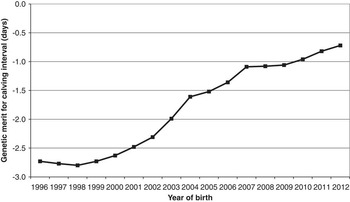
There is a paucity of information on genetic trends for reproductive traits in beef cattle. Figure 2 illustrates the genetic trend for calving interval in Irish commercial beef cows over the past 2 decades. Genetic merit for calving interval is deteriorating primarily due to aggressive selection for improved carcass yield and conformation which are known to be antagonistically correlated with reproductive performance in beef cattle (Phocas, Reference Phocas2009; Berry and Evans, Reference Berry and Evans2014). Therefore, in the absence of genetic trends for reproductive performance in other beef populations, it may be speculated that genetic selection for improved terminal traits without taking cognisance of maternal characteristics could lead to deterioration in female reproductive performance which may subsequently erode farm profitability. This should be addressed immediately. If genetic evaluations for reproductive performance do not exist then controlled experiments could be set up including animals divergent for the relevant beef breeding objectives.
Mean genetic merit (i.e. predicted transmitting ability) for calving interval of Irish beef cows across different years of birth.

Breeding goals and reproductive performance
Once the impact of aggressive genetic selection for milk production on reproductive performance in dairy cattle was established, many dairy cattle national breeding goals broadened to include functional (e.g. reproductive performance) traits (Miglior et al., Reference Miglior, Muir and Van Doormaal2005). Breeding goals in beef cattle are less commonly used. The emphasis applied to reproductive traits in breeding goals differs greatly among populations. This difference in relative emphasis exists for a number of reasons including (1) whether a reduction, halting or reversing in the genetic trend for reproductive performance was desired, (2) the underlying assumptions of the bioeconomic model or profit functions used to calculate the economic value or if a desired gains approach was implemented, and (3) the production system, since for example reproductive performance may be relatively more important in a seasonal calving production system.
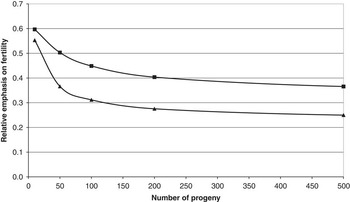
Assuming a heritability of milk production of 0.35 and a heritability for reproductive performance (e.g. calving interval) of 0.034 (Table 1) it was possible to calculate the relative emphasis on reproductive performance required to halt any deterioration in reproductive performance within a breeding goal of milk production and reproductive performance; the analysis was undertaken across different mean progeny group sizes. The genetic variance of milk production and calving interval were assumed to be 685 396 kg2 and 77 days2, respectively; the genetic correlation between both traits was altered from 0.30 to 0.50. The relative emphasis on reproductive performance was calculated as:
 $${\rm Emphasis}_{{{\rm REPRO}}} ={{{\rm \,\mid\,}a_{{{\rm REPRO}}} \cdot \sigma _{{{\rm REPRO}}} {\rm \,\mid\,}} \over {{\rm \,\mid\,}a_{{{\rm REPRO}}} \cdot \sigma _{{{\rm REPRO}}} {\rm \,\mid\,}{\plus}{\rm \,\mid\,}a_{{{\rm MILK}}} \cdot \sigma _{{{\rm MILK}}} {\rm \,\mid\,}}}$$
where a x is the economic value for trait X and σ x is the genetic standard deviation for trait X. Figure 3 clearly shows that the relative emphasis required on reproductive performance to halt any deterioration due to selection on milk production declines as the mean progeny group sizes increase. Nonetheless, irrespective of progeny group size more emphasis is required on reproductive performance when the genetic correlation with the other traits in the breeding goal (i.e. here milk production) is strong, although it will depend also on their respective economic values. When the genetic correlation between reproductive performance and milk production was assumed to be 0.50, then at least 33% of the emphasis within that breeding goal would need to be placed on reproductive performance to halt any deterioration; the minimum emphasis on reproductive performance required to halt any deterioration when the genetic correlation with milk production was 0.3 was 23% (Figure 3). With a progeny group size of 100 animals, genetic gain in milk production in a breeding goal that halts the deterioration in reproductive performance was 95% and 80% of the gains achievable without including reproductive performance in the breeding goal when the genetic correlation between reproductive performance and milk production was 0.30 and 0.50, respectively. Although the example of milk production in dairy cows is used, the same principle can be applied in beef cattle; Berry and Evans (Reference Berry and Evans2014) documented a genetic correlation between live weight and calving interval of, on average 0.54. Assuming a heritability for live weight of 0.43 (Berry and Evans, Reference Berry and Evans2014) and the variance components for calving interval used in the dairy example, an emphasis of 60%, 52% and 47% on reproductive performance would be required to halt any deterioration in reproductive performance with a progeny group size of 10, 50 or 100, respectively.
Relative emphasis required on reproductive performance (heritability of 0.034) to avoid any deterioration within a breeding goal which includes a trait such as milk or meat yield (heritability of 0.35) with a genetic correlation of 0.30 (▲) or 0.50 (■) with reproductive performance.

Although most national breeding goals around the world are based on economic appraisal of a unit change in each of the goal traits, it is likely that in the future cognisance of other public-good effects will have to be considered. It may, for example, be unacceptable in the future to select for increased yield or growth rate if that increase leads to an, albeit profitable, deterioration in reproductive performance and/or other fitness traits. Therefore, it is likely that future relative economic values will be based on a more complete appraisal of costs, particularly those attributable to animal well-being and other public good attributes (e.g. environmental footprint). Approaches that consider environmental footprint in a breeding goal have been developed (Wall et al., Reference Wall, Simm and Moran2010) but as yet, the long-term environmental cost of farming has generally been ignored in cattle breeding. Nielsen et al. (Reference Nielsen, Christensen and Groen2005) argued that the non-market value of conception rate was ~2.6 times the economic market value. In comparison the non-market value of mastitis incidence was 0.4 times the market value. Considering wider societal (e.g. consumer opinion, environmental impact, government targets and/or legislative restrictions) could result in an even greater weighting on fitness traits to ensure that public opinion of modern-day cattle production remains positive and their opinion is captured in the overall breeding goal.
Irish, the UK and Australian dairy cow breeding goals
Here we describe the national breeding goals of Ireland, the United Kingdom and Australia as examples of other national breeding goals. The Irish national breeding goal in dairy cows, the economic breeding index (EBI) reflects the profit per lactation of progeny. It includes 18 traits compressed into seven sub-indexes. The relative emphasis on reproductive performance and survival within the EBI is 24% and 11%, respectively. The goal traits in the current UK dairy index (£PLI) incorporate a production index (PIN), lifespan, reproduction, and the health traits of mastitis incidence and lameness. The current weighting in the breeding goal is 45.2% on production traits and 54.8% on fitness traits, with an overall weighting on the reproduction traits of 18.5% and 21.1% on survival (DairyCo, 2013). The national dairy cow breeding goal in Australia, the Australian Profit Rank (APR) is also a profit based breeding goal and includes nine traits (milk, fat and protein yield, fertility, somatic cell count, live weight, survival, temperament and milking speed); the relative emphasis on reproduction and survival in the APR is 19% and 17%, respectively.
To explore the impact of alternative breeding goals we will use the UK PLI as an example. The expected responses in physical and economic performance where the breeding goal was production only traits (100:0:0% production:reproduction:other fitness) was compared with the current PLI (45.2:18.5:36.3%) or a restricted index where the genetic decline in reproductive performance was restricted to zero. Responses to selection on the alternative goals were calculated using selection index theory (Hazel, Reference Hazel1943). Selection candidates were assumed to be progeny test bulls with 75 daughters, and yearly gains were calculated based on a 0.22 standard deviations change in the aggregate index (Rendel and Robertson, Reference Rendel and Robertson1950).
The expected annual genetic responses to selection using the alternative breeding goals are in Table 8. Selection on milk, fat and protein yield (PIN) alone resulted in an annual economic response of £6.03 per cow per annum. The addition of fitness traits, including reproduction with a weighting of ∼18%, increased the economic response to £7.10. This extra profit was achieved even with a reduction in the genetic gain for the yield traits due to an improvement in lifespan and a decrease in the genetic decline of health and reproductive performance. As expected, the production only index was predicted to have an unfavourable response in reproductive performance in that calving interval was expected to increase by 0.64 days per cow per year compared with 0.37 days when selecting on PLI. The restricted index had an intermediate economic response of £6.98 but held the genetic decline in reproductive performance at zero, suggesting that there would be a £0.21 per cow per annum (∼3%) loss in economic performance if the a restriction halting the genetic decline in reproductive performance was imposed. Although the restricted index focused on halting the genetic decline in reproductive performance this was also the best index in terms of expected responses in the other fitness traits namely lifespan (0.061 lactations per cow per annum v. 0.00 lactations on production only index) and health traits (e.g. mastitis increase 0.4 cases in a 1000 cows per annum v. three cases in a 1000 for the production only index).
Expected annual responses to selection for production, lifespan, health and reproductive performance when the breeding goal constitutes production only (PIN), an economic index with both production and fitness traits (PLI), and a restricted index where the genetic change in reproductive performance is constrained at zero

Figure 4 illustrates the expected responses to selection for milk yield, fat yield, protein yield and calving interval following selection on the national Irish, Australian and the UK dairy indexes. Selection candidates were assumed to be progeny test bulls, with 75 daughters, and annual gains were calculated based on a 0.22 standard deviations change in the aggregate index (Rendel and Robertson, Reference Rendel and Robertson1950). Despite the negative economic value on milk yield in each of the three indexes, negative responses to selection are expected only in Ireland; however this translated to also considerably lower expected genetic gain in fat and protein yield in Ireland relative to Australia and the United Kingdom since milk, fat and protein yield are highly genetically correlated. Moreover, the genetic correlation between calving interval and protein yield (estimated from the correlation of reliable bull proofs in the respective countries) is −0.56 and −0.19 in Ireland and Australia, respectively and since Ireland places a considerable selection pressure on calving interval, again the response to selection in milk production is reduced. Of note is that genetic merit for calving interval is still expected to deteriorate if selecting on the UK PLI; it is not economically advantageous to halt this deterioration (Table 8) given the underlying assumptions used in the calculation of the economic weightings. However, the realised genetic trend in the United Kingdom (Figure 1) suggests that within top PLI bulls, there appears to be sub-selection for superior genetic merit for reproduction.
Annual expected responses to selection in milk yield, fat yield, protein yield and fertility (positive fertility values imply improvement) from selection on the Australian (APR; black bar), Irish (EBI; striped bar) and UK (PLI; checked bar) breeding goals assuming 0.22 index standard deviations change per annum with daughter progeny group sizes of 75 animals. APR=Australian Profit Rank; EBI=economic breeding index.

Breeding objectives are either not available or routinely used in many beef populations. Until recently a single overall breeding objective for beef cattle existed in Ireland which was replaced by two indexes reflecting terminal selection and maternal selection; the breeding goal and genetic evaluations are across breeds. The terminal breeding goal includes carcass traits (i.e. weight, conformation and fat), direct calving difficulty, gestation length and perinatal mortality as well as docility and feed intake. A total of 42.6% of the emphasis in the maternal index is on terminal traits (including direct calving performance traits like calving difficulty) with the remainder being on traits related to replacement females. Traits included in the latter (relative emphasis as a percentage of the entire maternal index in parenthesis) include age at first calving (5%), calving interval (7%), survival (5%), feed intake (15.1%), maternal calving difficulty (4.5%), maternal weaning weight (12.4%), cow live weight (5.5%) and docility (2.9%). The United Kingdom also operates a separate terminal and maternal breeding goal for beef cattle (Roughsedge et al., Reference Roughsedge, Amer, Thompson and Simm2005); like in Ireland terminal traits (e.g. progeny carcass traits) are also included in the maternal breeding goal. A total of 18% of the relative emphasis within the entire maternal breeding goal is on calving interval while 15% and 8% is on age at first calving and survival, respectively.
Genomics of reproductive performance for animal breeding
While some traits (e.g. complex vertebral malformation (CVM)), are controlled by a single gene, reproductive performance is affected by many mutations in genes each of small effect (Cole et al., Reference Cole, VanRaden, O'Connell, Van Tassell, Sonstegard, Schnabel, Taylor and Wiggans2009, Hayes et al., Reference Hayes, Bowman, Chamberlain and Goddard2009). Genomic selection attempts to capture (most of) the effect of these causative mutations by selecting on many thousands of (usually not causative) other mutations across the genome. The success of this generally unsupervised statistical approach is attributable to the biological knowledge that large segments of DNA are transmitted from one generation to the next. Therefore the causative mutations can be tagged by known and measurable polymorphisms and the effect of the causative mutation usually partitioned among many genotyped single-nucleotide polymorphisms (SNPs). Genomic selection was first described by Meuwissen et al. (Reference Meuwissen, Hayes and Goddard2001) but only became a reality with the commercial availability of high-density oligonucleotide SNP arrays (i.e. SNP chips). These arrays consist of many thousands of probes on a small micro-chip, allowing for many SNPs to be interrogated simultaneously (Eggen, Reference Eggen2012).
Implementation of genomic selection is a two-step process. First the effect of each of the genome-wide SNP markers on the trait of interest is quantified in a reference population. Because the effect of each DNA marker is small, reference populations must be very large to estimate these effects accurately. Many different statistical approaches can be used to estimate the SNP effects (Hayes and Goddard, Reference Hayes and Goddard2010). The second stage of genomic selection, the implementation stage, involves genotyping candidate animals and summing, across the animal’s SNPs, the allele count multiplied by the estimated SNP effects from the reference population. The outcome of this process is direct genomic values which are estimates of genetic merit based solely on DNA information. Genomic selection has had a dramatic effect on the reliability of breeding values for animals without records or progeny. For example, in Ireland, the reliability of calving interval breeding values for bulls without progeny increased by 27 percentage units from 20% to 47%; the increase in reliability for fertility breeding values from using genomic selection in Australia and the United Kingdom was 22 and 29 percentage units, respectively.
Figure 5 depicts the reliability of genomic predictions for different phenotype heritability estimates across a range of phenotyped population sizes (Calus et al., Reference Calus, Berry, Banos, de Haas and Veerkamp2013); 1000 effective chromosomal segments was assumed and SNPs could explain 80% of the genetic variance. Clearly, a larger reference population is required for lower heritability traits. Assuming a heritability of 0.03 (commonly observed for traditional reproduction traits; Table 2), phenotypes on 100 000 cows are required to generate genomic predictions with a reliability of 0.60. Estimated breeding values or daughter yield deviations of AI bulls are commonly used in most reference populations (Spelman et al., 2013) since the effective heritability tends to be greater and therefore less animals are required to obtain reliable genomic predictions. However, there are a limited number of AI bulls. Therefore to increase the accuracy of genomic predictions, females need to be considered in the reference population.
Reliability of direct genomic breeding values across a range of population sizes with phenotypic records for a trait with a heritability of 0.03 (■), 0.15 (▲), 0.35 (X) and 0.90 (♦).

Genome-wide association studies have been performed in many species with varying degrees of success (Visscher et al., Reference Visscher, Brown, McCarthy and Yang2012). In general though, the proportion of genetic variation in complex traits explained by the analyses was usually <10% (Visscher et al., Reference Visscher, Brown, McCarthy and Yang2012). Genome-wide association studies for reproductive performance exist for both dairy (Pryce et al., Reference Pryce, Bolormaa, Chamberlain, Bowman, Savin, Goddard and Hayes2010; Höglund et al., Reference Höglund, Buitenhuis, Guldbrandtsen, Su, Thomsen and Lund2009; Berry et al., Reference Berry, Bastiaansen, Veerkamp, Wijga, Wall, Berglund and Calus2012) and beef (Hawken et al., Reference Hawken, Zhang, Fortes, Collis, Barris, Corbet, Williams, Fordyce, Holroyd, Walkley, Barendse, Johnston, Prayaga, Tier, Reverter and Lehnert2012) cattle. Nonetheless, most genome-wide association studies for reproductive traits suffer from inadequate statistical power attributed in part to the low heritability of the traditional reproduction traits. Regions of the genome with large effects on female reproductive performance (more specifically embryonic death) have nonetheless been identified. VanRaden et al. (Reference VanRaden, Olson, Null and Hutchison2011) documented the existence of haplotypes that had a high population frequency in the population but did not exist in the homozygous state. The effects are only observed in mating related individuals that share the same lethal haplotype. In fact, significant effects on calving rate were observed between matings of carrier sires and daughters of carrier sires, confirming that the haplotypes harbour embryonic lethal mutations (VanRaden et al., Reference VanRaden, Olson, Null and Hutchison2011; Fritz et al., Reference Fritz, Capitan, Djari, Rodriguez, Barbat, Baur, Grohs, Weiss, Boussaha, Esquerré, Klopp, Dominique Rocha and Boichard2013). Recently, in Holstein, Montbeliarde and Normande cattle Fritz et al. (Reference Fritz, Capitan, Djari, Rodriguez, Barbat, Baur, Grohs, Weiss, Boussaha, Esquerré, Klopp, Dominique Rocha and Boichard2013) identified 34 candidate haplotypes (P<10−4) including Brachyspina, CVM, HH1 and HH3 previously reported by VanRaden et al. (Reference VanRaden, Olson, Null and Hutchison2011) and three novel mutations that had effects on protein structure. The impact of these mutations is likely to increase as inbreeding accumulates in intensively selected cattle breeds. Controlling these mutations therefore using mating plans is becoming more important.
Genomic mating plans
The rate of inbreeding in most dairy populations is increasing at between +0.10% to +0.25% per annum (Wiggans et al., Reference Wiggans, VanRaden and Zuurbier1995; Kearney et al., Reference Kearney, Wall, Villanueva and Coffey2004; McParland et al., Reference McParland, Kearney, Rath and Berry2007a; Hinrichs and Thaller, Reference Hinrichs and Thaller2011). Inbreeding is also increasing in some beef cow populations (McParland et al., Reference McParland, Kearney, Rath and Berry2007a). Inbreeding depression is the reduction in fitness in offspring results from the mating of individuals that share at least one common ancestor. The average increase in calving interval or days open for example in the female progeny resulting from the mating of two non-inbred half-sib is expected to be between 1.2 days and 8.8 days (Hudson and Van Vleck Reference Hudson and Van Vleck1984; Hoeschele, Reference Hoeschele1991; Wall et al., Reference Wall, Brotherstone, Kearney, Woolliams and Coffey2005; McParland et al., Reference McParland, Kearney, Rath and Berry2007b).
Control of inbreeding levels in progeny can be implemented using mate allocation (Kinghorn, Reference Kinghorn1998). For large herds in particular, mating plans could help resolve the choice of sires to mate to cows. The idea is to maximise a specific breeding objective while constraining inbreeding in the progeny (Kinghorn, Reference Kinghorn1998). Traditionally pedigree relationships have been used to control inbreeding in mating plans. However, the genomic relationship matrix can be used instead (Pryce et al., 2012). The advantage of using the genomic relationships instead of pedigree relationships is that errors in recorded ancestry can be resolved. Moreover, pedigree relationships provide only information on the expected relationships between animals while genomic-derived relationships provides a more accurate estimate of the true relationships among animals. For example, theoretically two full-sibs from non-inbred parents can be completely un-related at the genomic level, as can a cow and her maternal grandsire. Elaborate mating plans exploiting genomic information have recently been developed; for example Sun et al. (Reference Sun, VanRaden, O’Connell, Weigel and Gianola2013) included estimates of dominance from genomic data, with the aim maximising heterozygosity.
Gaps in knowledge and areas of future research
The ever-declining cost of full genome sequencing has lead to sequencing of influential ancestors in many dairy and beef populations. Full genome sequence data in genomic prediction could be advantageous (1) if the causative mutations (or SNP markers in complete linkage disequilibrium with these causative mutations across populations) affecting the phenotypic values are not included in the SNP arrays (which they are not), (2) if across-breed genomic predictions are required, and (3) for improving the persistency of genomic predictions across generations. Although the cost of sequencing is decreasing, it is unlikely that deep coverage sequence will be performed on all animals in the populations. To-date the international sequencing strategy has been to sequence influential animals in a pedigree and impute to sequence animals genotyped using less expensive SNP arrays. There is however an ever-increasing interest in extremely low-coverage sequencing of larger populations of individuals (Pasaniuc et al., Reference Pasaniuc, Rohland, McLaren, Garimella, Zaitlen, Li, Gupta, Neale, Daly, Sklar, Sullivan, Bergen, Moran, Hultman, Lichtenstein, Magnusson, Purcell, Haas, Liang, Sunyaev, Patterson, de Bakker, Reich and Price2012) to build consensus haplotypes which can then be used to impute full sequence data. The low-coverage sequencing approach on many individuals has at least three advantages over sequencing of influential ancestors (Hickey, Reference Hickey2013) which include (1) reducing the inefficiencies of sequencing the same genomic segment on the same individual many times, (2) better detection of recombination hotspots through the use of sequence data and (3) improved accuracy of imputation which relies on close relationship between the animals with the higher density genomic information and the animals to be imputed (Berry and Kearney, Reference Berry and Kearney2011; Huang et al., Reference Huang, Maltecca, Cassady, Alexander, Snelling and MacNeil2012) which is diluted if only influential ancestors many generations back are sequenced.
Genomic selection, as currently implemented, is largely an unsupervised statistical approach to the estimation of SNP effects. Few, if any, of the causative mutations contributing to variation in phenotypes reside on the commercially available SNP arrays. Even when full sequence data exists, elucidating the phenotype–genotype associations in an unsupervised strategy is likely to be unwieldy. Knowledge exists however that specific mutations (e.g. non-synonymous mutations, indels) are more likely to contribute to genetic variation than other mutations (e.g. intra-genic mutations). Furthermore, knowledge of likely genes and biological pathways governing phenotypic differencing among animals are emerging from either genome-wide association studies (Berry et al., Reference Berry, Bastiaansen, Veerkamp, Wijga, Wall, Berglund and Calus2012), candidate gene studies (Waters et al., Reference Waters, McCabe, Howard, Giblin, Magee, MacHugh and Berry2011) or transcriptomic studies (Evans et al., Reference Evans, Forde, O’Gorman, Zielak, Lonergan and Fair2008). Such discoveries could be incorporated into a more supervised (e.g. Bayesian) framework for either genome-wide association studies or genomic selection. Therefore, future genomic selection algorithms could incorporate three components: (1) known causative mutation or potential quantitative trait loci with a high degree of confidence, (2) remaining variation captured by the measured genomic mutations, and (3) a polygenic effect to account for the genetic variation not explained by the measured genomic variants.
The paradigm shift in genetic/genomic evaluations implies a re-evaluation of traditional breeding programmes, especially the use of advanced reproductive technologies. Once high accuracy of selection is achieved, arguably the most fruitful approach to increase annual genetic gain will be through reducing the generation interval. Ovum pick up and in vitro fertilisation techniques circumvent the necessity to wait for sexual maturity of potential dams thereby reducing the dam generation interval.
Genomic selection, and other advanced breeding tools, can help to accelerate improvement in reproductive performance and other low heritability traits. Genetic engineering, however, is becoming a more realistic prospect (Fahrenkrug et al., Reference Fahrenkrug, Blake, Carlson, Doran, Van Eenennaam, Faber, Galli, Gao, Hackett, Li, Maga, Muir, Murray, Shi, Stotish, Sullivan, Taylor, Walton, Wheeler, Whitelaw and Glenn2010). The tools of functional genomics and the availability of genome sequences provide detailed information that can be used to engineer precise changes in the genome and associated phenotype, as well as monitor any adverse effects of such changes in other animal characteristics (Whitelaw and Sang Reference Whitelaw and Sang2005; Miller et al., Reference Miller, Wang, Petek, Hirata, Sands and Russell2006). Genetic engineering is nonetheless likely to be complementary rather than replace traditional genetic and genomic based improvement technologies. In reality, reproductive performance, like most complex traits, is controlled by many genes, some of which will not have an equal effect on the phenotype. Genetic engineering approaches are likely to target the genes with larger effects but also offer the opportunity to introduce new alleles that do not currently exist within a population. As the molecular tools develop, the implementation of gene supplementation and genome editing in breeding populations will become a reality. However, the target genes and alleles need to be first identified.
Conclusions
The heritability of most traditional measures of male and female reproductive performance in dairy and beef cattle is low. However, this does not imply that genetic gain in reproductive performance is not possible as evidenced by its deterioration in past decades in most Holstein populations. Therefore, genetic selection for improvements in reproductive performance is indeed possible. Since the genetic correlations with output traits (i.e. milk production and growth rate) are not unity, genetic gains in reproductive performance does not imply a reduction in genetic merit for output traits. Genomic information is now included in most developed national dairy cattle breeding programmes and research into implementation in beef breeding programmes is actively underway. Retrospective analysis to-date signifies clear advantages in genetic gain through exploitation of genomic information. Moreover, advancements in genomics research can further improve the rate of genetic gain for all traits affecting profitability, including reproductive performance.
Acknowledgements
Eileen Wall is funded by Scottish Government’s Rural Affairs and the Environment Strategic Research 2011–2016. Jennie Pryce acknowledges the Department of Environment and Primary Industries, Victoria, Australia and Dairy Futures Co-operative Research Council, Melbourne, Australia for funding this research.