The Formosa Fun Coast Dust Explosion (FFCDE) was the largest man-made mass casualty incident in the history of Taiwan. A medical emergency with many severely burned victims presents enormous medical, logistical, and organizational challenges because specialized treatment and large quantities of resources are required, and the rapid progression of burn patients’ injuries creates great time pressure.Reference Atiyeh and Dibo1 - Reference Potin, Sénéchaud and Carsin2
The FFCDE started when a flammable, colored powder was sprayed from a stage onto the audience around 8:30 PM on Saturday, June 27, 2015, at the Formosa Fun Coast Park in New Taipei City. Victims, average age of 23, wore flammable swimwear resulting in large total body surface area (TBSA) burns (average 44%; 281 people with TBSA burns > 40%, 41 people with TBSA burns > 80%). Nearly 300 emergency vehicles were dispatched. Within 6 hours, 499 victims were delivered to 34 hospitals.Reference Yang and Shih3 Many victims were sent to lower level hospitals that lacked adequate burn care capacity because of the unavailability of medical resources.Reference Wang, Jhao and Yeh4 The medical system, hospitals, and emergency departments (EDs) all adapted to accommodate the treatment demands for the many burn victims in a short period of time. The medical response to the tragedy resulted in an overall death rate of 3% (2016 National Burn Repository of the United States reports a rate of 3.7%).5 The satisfactory patient outcomes were achieved by the immediate treatment of patients, despite the treating hospitals being lower level hospitals.Reference Wang, Jhao and Yeh4
After the famous 911 US terrorist attacks occurred in 2001,Reference Eaton6 man-made mass casualty incidents seemed increasingly common. Knowledge of hospitals’ prompt and effective response will help guide response leaders and staff to offer victims the most appropriate care when lives are at stake.Reference Inglesby7 The FFCDE disaster involving a large number of severely burned victims is a sudden onset no-notice event. It has led to several studies that document different aspects of the medical response. Some of these provide a general account of the system response to the mass burn casualty incident (MBCI),Reference Dai, Tzeng and Wang8 - Reference Chuang, Huang and Liu9 whereas others focus on the clinical details of the burn injuries and the appropriate treatment for those burned.Reference Hu, Chang and Hsu10 - Reference Chiang, Chen and Huang11 For the lower level hospitals, they were pushed into a position that needed to stand on their own to provide resuscitation and life support for the mass casualties arriving from the FFCDE disaster site; however, a paucity of detailed study of how they effectively responded to the mass casualties was found.
The study examines how one of the initial receiving lower level hospitals dealt with victims arriving from the FFCDE disaster site to reveal the difficulties that challenged the hospital as the ED provided resuscitation and life support for the influx of burn patients. The study examines the potential for overload, the potential bottlenecks that resulted, how personnel adapted normal practices and reconfigured human and physical resources in a variety of ways to cope with the potential for these bottlenecks to degrade patient care, given time pressure and uncertainty. This article aims to provide comprehensive insight on how effective emergency response to the sudden influx of burn patients exceeded the hospital’s burn care capacity for future disaster planning.
METHODS
Hospital Setting
The hospital studied was selected from 17 initial receiving lower level hospitals with similar scale and capacity. The hospital received the largest number of victims compared with other 16 hospitals. It is a regional community hospital with medium-level emergency response capacity and is affiliated with the Ministry of Health and Welfare (MOHW). It has 584 beds in total, including 104 surgical general acute beds, 7 surgical intensive care unit (ICU) beds, 23 medical ICU beds, and others. The average number of patient visits in the ED is about 70 during the daytime and about 40 at night. This volume of service is provided by 2 shifts of attending physicians and 3 shifts of nursing care per day. One ED physician is responsible for medical patients and another provides trauma (injury) care. Six nurses plus 1 nurse practitioner are assigned for each nursing shift. The ED is divided into 4 major treatment areas totaling 23 staffed beds. One area is equipped and staffed for seriously ill patients (CPR area), 2 are dedicated to injured cases (trauma area) and to medical patients (medical area), and the remaining area is used only for minor cases or as an observation area. The maximum severe patients that can be treated simultaneously is 3. This hospital has no burn care capacity (no burn units and only 1 plastic surgeon).
Preceding the incident, the hospital used standard operating procedures during periodically practiced mass casualty scenarios, which included a cluster of around 15 patients with food poisoning and 5 patients arriving from a fire or car accident. The hospital had no plan for an MBCI, no experience with an incident involving 30 patients, and no experience with an incident where a surge would develop over time with uncertainty about the number and severity of patients who would continue to arrive.
Data Collection and Analysis
Hospital response was studied using the critical incident method.Reference Flanagan12 - Reference Klein, Calderwood and MacGregor14 An interview procedure of applying a questionnaire with open-ended questions was developed based on (1) a review of the literature and relevant documents on treatment of burn victims in the context of an MBCI and (2) interviews with 2 experts in managing mass casualty incidents.
Hospital records were reviewed prior to the interviews. For FFCDE patients, age, gender, percentage of TBSA burned, ED arrival time, and departure time (transfer to ICU/wards or discharge) were recorded. ED admission logs were reviewed for non-FFCDE patients arriving between the arrival of the first burn victim and the transfer of the last burn patient. ED arrival time, departure time, and triage level were recorded. These data were used to develop and graph the timeline for use during the interviews.
The open-ended questions probed for difficulties encountered during the incident, how and when they recognized these difficulties, how they coped with them, and general questions about the ED environment during the incident. The questionnaire and the graphic timeline were used in interviews with 11 key participants beginning with the ED director. The interviewer used the timeline to trigger recall by participants and capture their roles, experiences, and perspectives on the challenges and adaptations. Interviews were conducted by the lead researcher between September 2016 and May 2017. Six physicians and 5 nurses were interviewed. Each interview lasted from 2 to 3 hours. Conflicts and ambiguities arising over the course of the interviews were addressed by later telephone or e-mail exchanges.
Interviews were transcribed into time-binned spreadsheets (Excel, Microsoft Corp, Seattle, WA) along with patient data. The resulting data collection was used for process tracing analysis, a standard cognitive systems engineering method for characterizing human performance in critical incidents.Reference Woods, Klein, Orasanu and Calderwood15 - Reference Woods and Hollnagel16 The analysis focused on how the ED and other units adapted to cope with the potential bottlenecks created by the patient surge. The study was approved by the Institutional Review Board.
RESULTS
Basic Sequence of Events
The earliest awareness among ED personnel of an impending mass casualty came around 9:40 PM when ED staff was informed by the Fire Department that there had been fire at the Formosa Fun Coast facility. The staff believed their ED would receive only a few additional patients. Around 9:45 PM, the hospital vice president (VP), who was riding on a train, saw news reports describing “almost a hundred victims on the scene.” The VP called the ED nurse leads and instructed them to begin preparing for a surge. The VP also called her assistant and the medical secretary who was a physician and liaison for physicians’ communication, as well as texted the physician group via the message platform LINE. The initiatives were to inform them and ensure that the key physicians can receive a returning instruction, especially to the chief physicians of both the ED and surgical departments (SD). This communication triggered mobilization of physicians at the beginning of the MBCI.
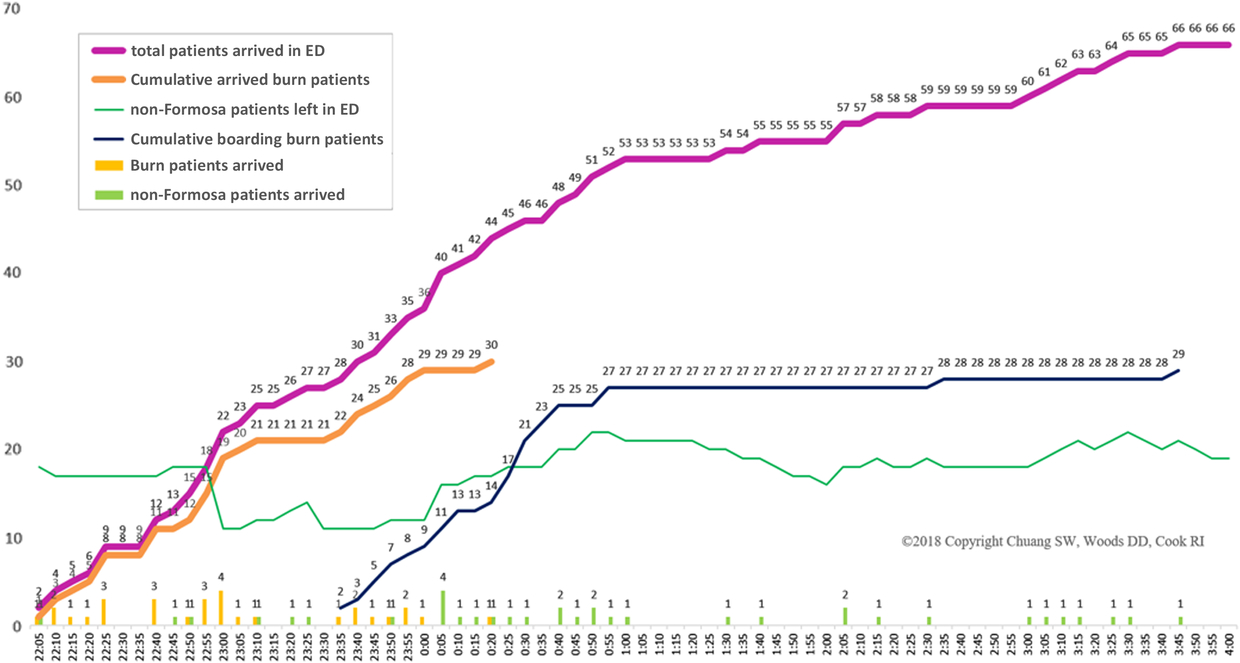
Figure 1 displays the flows of surge patient into and out of the ED. In total, 30 burn patients came to the ED. The first victim arrived at 10:04 PM, 1.5 hours after the disaster occurred, about 20 minutes after the alerting call from the hospital VP. At this point, 17 non-FFCDE patients were already present in the ED. Six of the first 7 patients to arrive were severely burned (TBSA 50%–72%). Twenty additional victims arrived over the first hour. After the ED had received about 10 burn patients, the SD director initiated a call to the Emergency Operation Center (EOC) to request that the emergency services stop sending victims to the hospital because the ED was reaching saturation. The ED received an uncertain answer. After 20 burn patients arrived at the ED, the SD director called the EOC again but the answer still was uncertain. Eight additional patients arrived between 11:05 PM and 12:20 AM. Non-FFCDE patients continued to arrive during this time period. In total, 68 patients visited the ED in this period (see Figure 1).
Cumulative Arrival of All Patients and Burn Patients in the ED, and Cumulative Transferred Burn Patients to ICU/Wards

The ED started the transfer of burn patients to the ICU and other wards around 11:35 PM. The last burn patient was transferred out of the ED at 3:45 AM according to the ED log; however, this record is different from the time (around 2:30 AM) that 3 interviewees remembered. At the first wave of transfer, 5 burn patients were sent to the ICU, 24 were sent to 7 general wards, and 1 was discharged. The ED resumed to the normal operation around 2:30 AM on June 28. After the re-evaluation of admitted burn patients, 6 high-acuity patients in general wards were transferred to other hospitals with burn units in the first wave of the referral. This was followed by 16 high-acuity patients referred within 36 hours after the first victim arrived to the ED. Five patients with TBSA of 12%–26% and 2 patients with TBSA of 6%–10% remained in the hospital in the surgical ICU that was reconfigured as a temporary burn ICU. The patients were treated based on burn care protocol and discharged before July 31, 2015.
Patient Characteristics
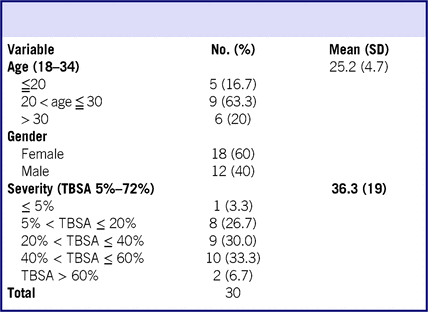
The average age of burn patients was 25.2 years, and injuries ranged from TBSA of 5% to 72% mainly on extremities (Table 1). Of the 30 burn patients received, 29 were admitted and 1 was discharged. Besides the 17 non-FFCDE patients already present in the ED, 35 new non-FFCDE arrived to the ED during the time period, including 6 with severe conditions (triage 1 and 2), and 29 were in triage 3.
FFCDE Patient Characteristics (n = 30)

FFCDE = Formosa Fun Coast Dust Explosion.
Difficulties With Dealing With Mass Burn Casualty
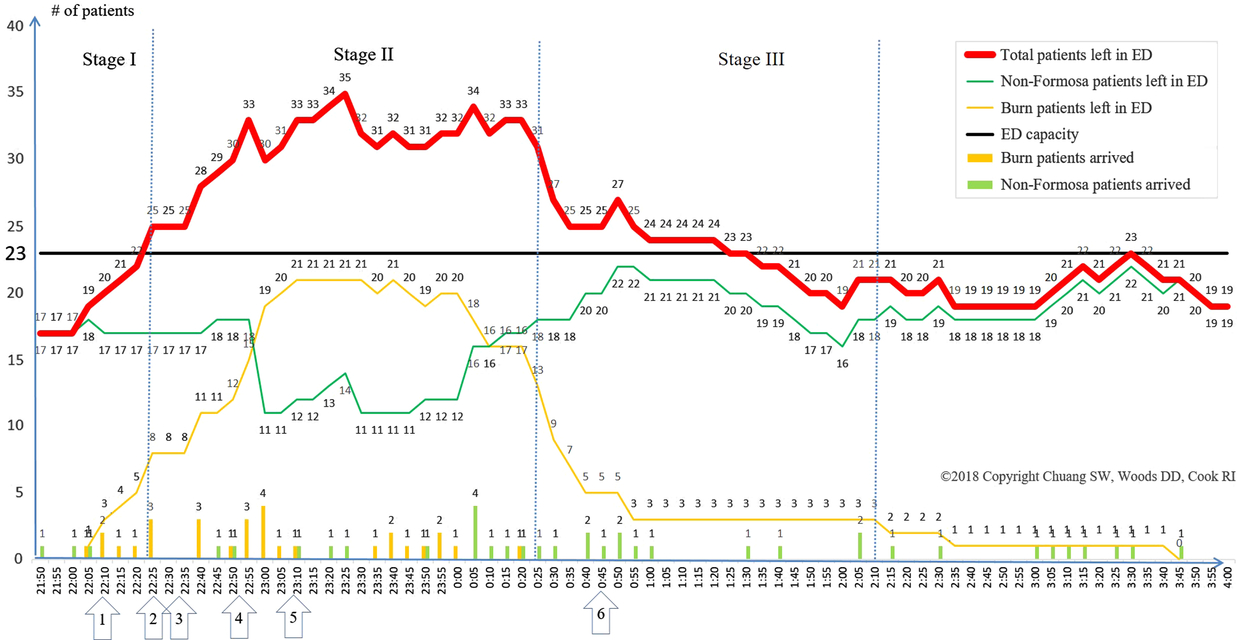
The ED was quickly overcrowded with burn patients, non-FFCDE patients, clinicians, and patients’ families and friends. Figure 2 shows the ED census over time. Three stages are identified before the ED resumed normal operation: (1) initial surge, (2) period of overload, and (3) period of patient transfer out of the ED. The challenges that the ED personnel faced changed dramatically over time.
Three Stages Before the ED Resumed to Normal Operation
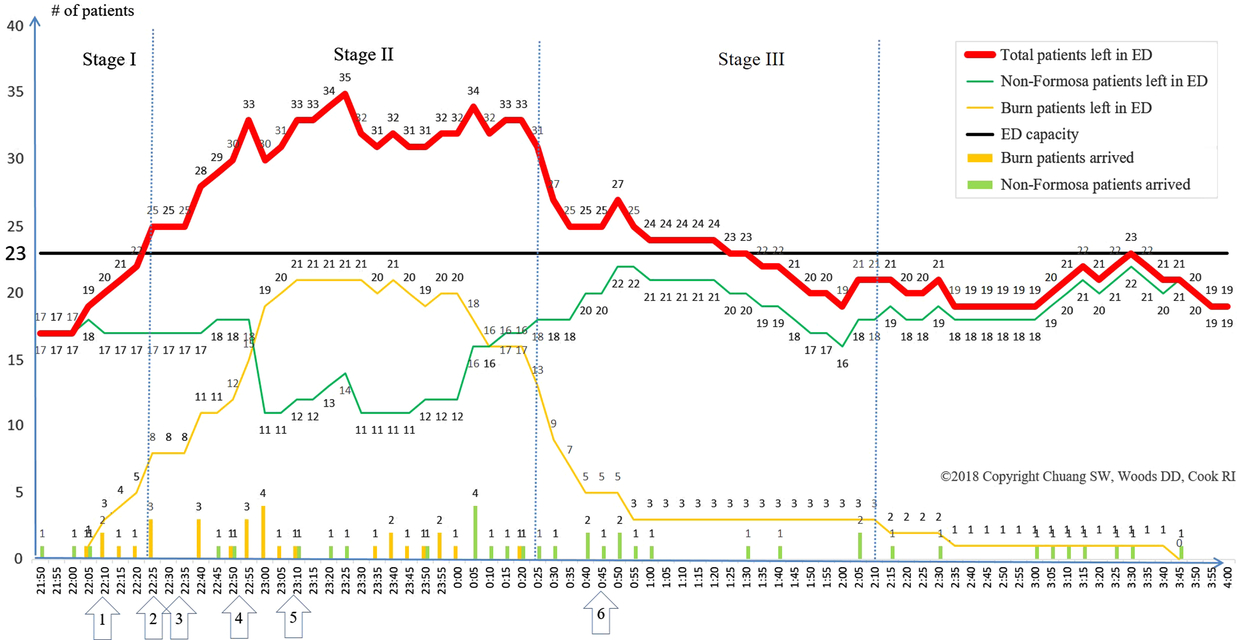
Initial Surge (10:04 PM to 10:25 PM)
-
1. The ED nearly reached the margin of normal capacity in beds (23 beds), space, medical materials, and clinicians.
-
2. The clinical staff on duty at this time had limited experience with burn care.
-
3. There was high uncertainty about how many victims would continue to arrive.
-
4. There was a risk that necessary materials would run out.
-
5. The available physical space in the ED was becoming overcrowded.
-
6. The victims were needed ICU-level care, but there were no ICU beds immediately available, and there was high uncertainty about whether ICU transfers would be possible.
Overload (10:25 PM to 12:25 AM)
-
1. Acute shortage of supplies
-
2. Not enough clinical staff to care for patients
-
3. Uncertainty about when and how many more victims would arrive
-
4. Anticipated risks to patient care with overload
Period of Patient Transfer Out of the ED (12:25 AM to 2:10 AM)
-
1. Deciding which patients to transfer and where they should go
-
2. Providing adequate information to the caregivers receiving these patients
-
3. Deciding how to follow up patients who were transferred
Adaptation to Challenges
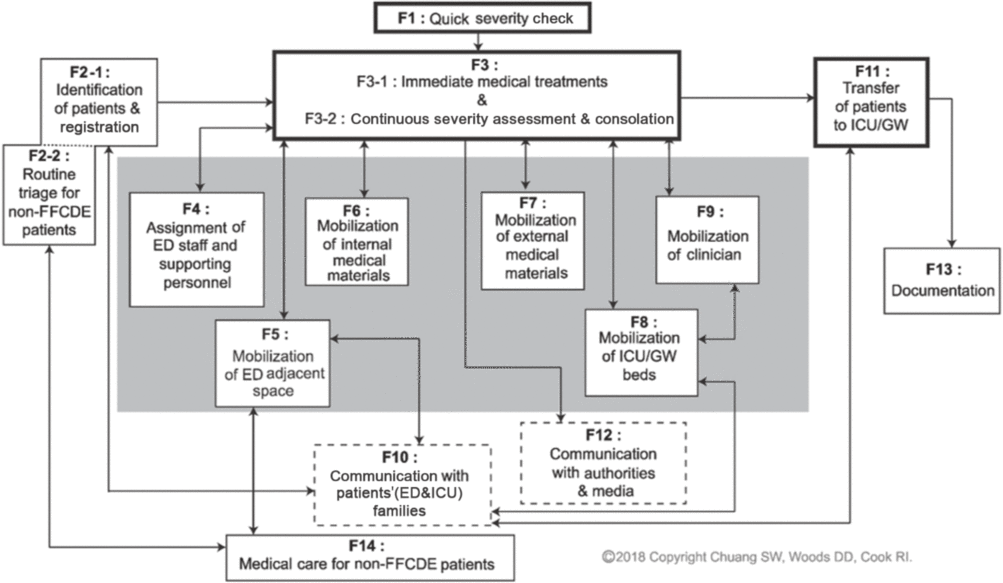
The overall responses were synthesized into 14 key functional adaptive activities (Figure 3). These activities were interacted and interdependent among units and staff. The adaptations are classified into 4 categories: (1) First aid treatment, including F1, F3-1, F3-2, and F11, provided resuscitation and life support for the victims; (2) mobilization and deployment of relevant resources, including F4–F9 labeled in the gray area, mobilized or reconfigured space, personnel, and material resources to extend the surge capabilities to support resuscitation; (3) rearrangement of regular emergency services, including F2-1, F2-2, F13, F14, gave less priority to conducting no urgent or great important activities, such as to postpone or simplify the documentation of medical care related record; and (4) public communication, including F10 and F12, were to build sensitive communication with non-FFCDE patients, ICU/ED patients’ families, authorities, and media. In addition, the study revealed that 4 key staff – the VP, the SD director, an ED medical physician, and the on-duty head nurse – were the real engines behind all adaptive efforts to drive coordination, integration across units and roles, and decision-making, while the ED was filled with a large number of people.
Holistic Emergency Response Framework

The overload manifested in 3 ways: (1) saturation of ED space and ICU beds (see Figure 2), (2) workload saturation or near saturation of clinicians, and (3) exhaustion of critical medical materials (Figure 4). A variety of adaptations was deployed to meet each of these manifestations.
Shortage in Critical Medical Material and the Hospitals’ Responses

Saturation of ED Space and ICU Beds
During the initial stage, demand for beds within the ED exceeded supply. During the overload stage, demand for ICU beds exceeded supply. Coping with these was accomplished by adaptations reconfiguring space, giving personnel additional authority and encouraging them to act independently, and reducing the workload from the admitted non-FFCDE patients in the ED (see Figure 2, codes 1–6).
Early on, ED staff transferred 1 acute non-FFCDE patient to the ICU to open resources for the initial surge of burn patients (see Figure 2, code 1). One ED medical physician instructed his nurses to organize moving 16 non-FFCDE patients to an ED adjacent area in the hospital lobby as an ad hoc observation area (see Figure 2, code 2; also see Figure 3, F5 and F10) and discharged them later (see Figure 2, code 4). The ED still admitted 35 non-FFCDE patients before the last burn patient was transferred at 3:45 AM on June 28. Six acuity non-FFCDE patients were treated in the ED medical area, and other 29 non-FFCDE patients were managed in the hospital lobby area and served by 1 ED physician and nurse team (see Figure 2, code 5; also see Figure 3, F14).
While still offsite, the hospital VP initiated clearing beds in the ICU and general wards to prepare for receiving victims after initial treatment in the ED. She mobilized post-ED resources at the beginning of the overload stage in anticipation of the arrival of additional victims (see Figure 2, code 3; also see Figure 3, F8). As a result, 5 ICU beds were open for the high-acuity burn patients before 11:30 PM. During Stage II, when there were about 20 burn patients in the ED, the SD director who spontaneously acted as an initial local incident commander decided they would need to move burn patients out of the ED to cope with the current ED overcrowding. Adequate working spaces in the ED had to be preserved to provide for continuous severity assessment and consolation for the victims already there and immediate treatment for the victims possibly still to arrive (see Figure 3, F3-1 and F3-2).
Given insufficient available ICU beds, provisions needed to be made to move and treat burn patients in the general wards as well (see Figure 3, F11). The SD director had to wrestle with the balance of multiple risks given the resources already available or being mobilized as the ED became overloaded. The judgments to transfer burn patients to the ICU or general wards were made upon the assessment of patient severity, mainly the level of TBSA and consciousness. The SD director anticipated that difficulties would arise managing the care of burn patients as they arrived in the ICU and wards. Before physically transferring burn patients, he mobilized both the on-duty physicians in the wards and early recruited nurses to immediately re-evaluate the transferred patients (see Figure 2, code 6; also see Figure 3, F9). The effectiveness and flexibility of the arrangement of general acute beds and ICU beds allowed for early admission and distribution of all burn patients in 1.5 to 5 hours.
Workload Saturation or Near Saturation of Clinicians
The surge of arriving FFCDE victims challenged the capacity of the clinical staff to provide care. The number and severity of injuries overwhelmed the capacity of the ED, and additional capacity had to be mobilized and deployed. The major adaptations that occurred to mobilize additional capability were as follows.
Before and during the initial stage, the VP began mobilizing off-duty physicians about 9:45 PM, and a few minutes later (9:50 PM), the on-duty ED physician and head nurse activated the local hospital disaster alarm to trigger preparations for emergency management (333 signal) to call for on-hospital staff. This led to physicians coming to the hospital from home and moving to the ED from within the hospital.
After the second victim came, the normal triage process was abbreviated. On entry into the ED, a triage nurse and/or ED medical physician checked the level of consciousness and gauged the TBSA of burn patients and then directed the transporters to deliver the patients to a particular ED area (see Figure 3, F1), while a nursing supervisor or the ED nurse leader assisted the triage and registration for non-FFCDE patients (see Figure 3, F2-1 and F2-2). In each area, small groups of physicians and nurses provided immediate treatment and resuscitation.
The organization of clinical teams changed over time as victims and staff arrived to the ED. A nurse would always stay behind to provide continuous care until the patient was transferred to the ICU or general wards. The reorganization of the clinical teams was mostly spontaneous. The groups provided immediate medical treatment (see Figure 3, F3-1 and F3-2), including air-way checking, flushing patient’s wound area by using normal saline, early burn wound assessment and initiation of fluid resuscitation based on TBSA and coating, followed by continuous monitoring of their status and providing consolation to relieve patient’s stress including pain control (see Figure 3, F3-2). No patients were intubated in the ED; 2 patients were intubated in the ICU.
Most staff did not have specialized expertise in burn treatment. Surgeons and a few burn-experienced nurses provided direction for those with less experience. Surgeons directed others (ie, pediatric physicians, internal medicine physicians) in severity assessment and other tasks. The SD director supervised the working groups as they treated individual patients and decided which patients should be transferred to the ICU or ward (see Figure 3, F3-2 and F4). The SD director called the ward physicians (see Figure 3, F3-2 and F9) to ask them to re-evaluate the transferred patients immediately on arrival. This resulted in the second transfer within 18 hours after admission, where 8 high-acuity burn patients in the general wards were transferred to the ICU. During the transfer from the ED to the ICU or general wards, individual patients were accompanied by the ED nurse who cared for them. This nurse provided a verbal report to the receiving physicians and nurses. Brief medical records of the individual transferred patients were documented after the ED resumed to normal operations.
Normal nursing shift boundaries were relaxed. Night shift nurses worked for up to 3 hours past their normal end time and late-night shift nurses came early to assist the response. This produced a 3-hour shift overlap that substantially increased the nursing coverage (see Figure 3, F9). During the overlap of 3 hours in the ICU and wards, about 50 nurses cared for burn patients.
After 29 burn patients were transferred, the tempo of ED work slowed. The VP organized 5 change dressing teams and recalled 9 nurse practitioners to support dressing changes for the coming morning and afterward until the patients were referred to other hospitals. Overall, 88 health care staff (14 physicians, 61 nurses, and 13 administrative staff) presented in the ED after the initial wave of victims arrived. Five attending surgeons and 6 attending doctors in other specialties were the main force to provide immediate treatment and later re-evaluation for the patients.
Exhaustion of Critical Medical Materials
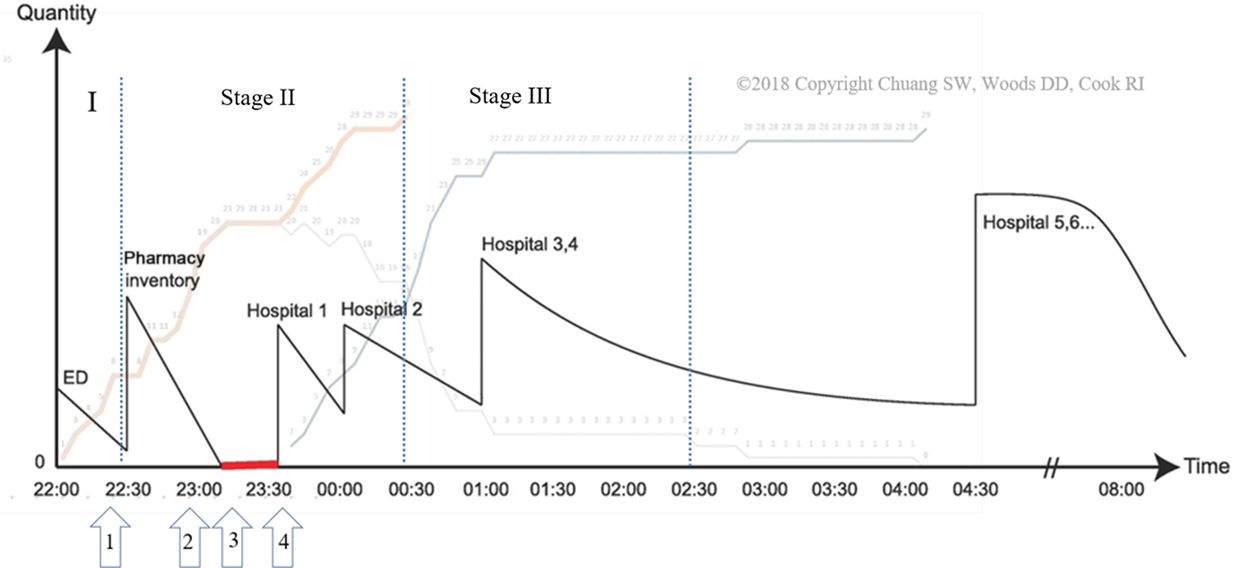
Treating burn patients requires large amounts of specific medical materials, especially for patients with greater than 50% body surface area burns. Existing stocks of normal saline, 1000 cc/bot (cleaning purpose), silver sulfadiazine (tube and jar), large size gauze, tetanus toxoid booster, and especially IV fluid (normal saline, 500 cc/bot), were all quickly consumed. The most critical were burn dressing/ointment (silver sulfadiazine) and large-size gauze. Figure 4 shows that the ED used up its own materials quickly in Stage I. Then the hospital’s pharmacy inventory was emptied of ointment in Stage II, in the period of 11:00 PM to 11:30 PM.
The on-duty head nurse recognized the shortages. She coordinated with the pharmacy and general supply staff to “borrow” materials from their inventories for quickly fulfilling the ED’s need (see Figure 4, code 1; also see Figure 3, F4 and F6). The resourcefulness of the nursing staff was notable: an ICU nurse doing immediate care in the ED, returned to her ICU to “liberate” some packs of burn ointment (see Figure 4, code 3).
The VP returned to the hospital around 10:50 PM and took on the responsibility of incident commander (see Figure 4, code 2). Anticipating that medical supplies would run out soon, she requested authorization of the MOHW hospitals alliance to activate the administrative mechanism that allows staff to request a variety of supplies from other hospitals (see Figure 3, F7). Supplies from a nearby hospital arrived at around 11:30 PM and from others throughout the night. The early decision to request sharing of supplies by other hospitals maintained minimal supply levels during the incident and over the following days.
DISCUSSION
The FFCDE disaster caused multiple MBCIs in several hospitals simultaneously. The study revealed real difficulties that the hospital never faced before and found many examples of successful adaptations implemented by staff when the ED was overwhelmed by the influx of severely injured patients. Findings from this study have highlighted that several important factors may contribute to future disaster planning and preparedness, as covered and described in the following texts.
Effective Coordination
In practice, EDs are used to performing strategic “standard” adaptations, including relocating patients, adjusting processes or equipment use, and providing additional or flex staffing to cope with workload changes or exercise scenarios.Reference Back, Ross and Duncan17 These attempt to increase capacity and efficiency for a variety of situations. However, additional unique adaptations were implemented during this event, such as moving the non-FFCDE patients to the lobby, rotating clinical teams with great gaps in experiences and profession over time to treat victims promptly, mobilizing highly irregular medical materials from alliance hospitals. The successful adaptations found depend on effective coordination and integration across roles and units.
The immediate stabilization care for mass burn casualties in the ED was highly distributed and specialized, thereby relying on interdependent functions to complete the mission.Reference Potin, Sénéchaud and Carsin2 Despite the criticality of staff, stuff and structure to a mass casualty incident, putting them into context with policies and procedures as a system approach to seamlessly integrate capability is imperative. Operational efficiency and effectiveness is dependent on the dynamic linkage of all of the subcomponents of the interwoven domains.Reference Barbisch and Koenig18
The hospital’s 14 functional adaptive activities worked as a system approach to resolve resource limitation in real time. Successfully implementing these adaptions during the critical stage of the mass casualty incident demonstrated not only the mutually understandable internal communication between staff for mobilization and deployment of resources, but also the staff was willing to take additional workload and risk for others. In addition, 4 key personnel who were not the appointed leaders in the formal emergency response organization structure spontaneously drove the activities, assigned tasks, and decision-making.
The coordination is to implement various mechanisms that allow team members to manage interdependencies between their roles and tasks, and conflicts between their goals.Reference Klein, Feltovich, Bradshaw, Rouse and Boff19 Burstein argued that response failures to a mass casualty incident was led by coordination rather than simply communication problems, and an effective coordination is built on people practices in regular and simple drills frequently, this allowing staff to communicate correctly in disasters.Reference Burstein20
The Best Possible Care to Patients
In the FFCDE disaster, there were arguments about the triage performed in the ED, such as when burn wound was estimated quickly by who was not a burn specialist, an underestimate of burn wound area would result in inadequate resuscitation and misplacement of the patients.Reference Chuang, Huang and Liu9 In addition, whether the emergency care in the ED for burn patients should include preventive intubation and use of burn dressing for wound care, and what level of medical care for the non-FFCDE patients were also argued. This hospital provided the best possible care to patients, and the satisfactory outcome was achieved based on their available resources and the presence of personnel, equipment, and supplies in the ED and wards.
Hospitals with different levels of surge capacity following a mass casualty incident fall into 3 basic categories, depending on the magnitude of the event: conventional, contingency, and crisis surge capacity. Note that the same event may result in conventional care at a major trauma center, but crisis care at a smaller, rural facility.Reference Altevogt, Stroud and Hanson21 Besides, there is not one “golden” medical emergency system, there are no “golden” timelines, and no “golden” skills applicable for different situations. This hospital proved that a medical system should be flexible and be able to adjust on each specific, local situation, and that, in the front line, several methods are suitable to give medical care as soon as possible.Reference Hoejenbos, McManus and Hodgetts22 For disaster planning, all health care entities should have plans to provide optimal care for achieving the greatest good for the greatest number of people.Reference Atiyeh and Hayek23 The lower level entities use their available resources to hold the patients awaiting transfer and to use them most effectively.Reference Hick, Hanfling and Cantrill24 - Reference Wears and Cook25
Anticipatory Ability
Either unsuccessful communication with the EOC or absence of needed information about burn patients from the EOC and ICU beds from other hospitals caused high uncertainty to the hospitals in this disaster.Reference Yang and Shih3 , Reference Cheng, Mathews and Chuang26 To overcome the challenge of uncertainty was found to depend on the staff’ anticipatory ability. Multilevel managers – the VP (high-level manager), the SD director (middle-level manager), and the head nurse (the base-line manager) – showed their anticipatory abilities to make effective decisions throughout the responses. Effective response in this beyond-surge capacity incident, especially under the context of uncertainty, depended on the anticipation of potential bottlenecks ahead and on dynamically reconfiguring coordination across roles and units.Reference King, North and Larkin27
The anticipatory ability of individuals or an organization looks ahead to read the signs that its adaptive capacity, as it currently is configured and performs, is becoming inadequate to meet the demands it will or could encounter in the future.Reference Woods, Hollnagel, Pariès and Woods28 The Disaster Research Center only found evidence of communication between the disaster site and any ambulance or hospital in 33% of disasters.Reference Auf der Heide29 This implies that anticipatory ability of staff is an imperative core ability for disaster response. The ability not only comes from experienced staff who have greater familiarity with the hospital’s resources and conditions, but also relies on routine practice of typical actions and becoming ingrained or experienced to cope with the unexpected or to improvise unconventional solutions to difficult situations.Reference Burstein20 , Reference Auf der Heide29
Limitations
Retrospective critical incident studies have several limits.Reference Flanagan12 , Reference Klein, Calderwood and MacGregor14 Participant interviews are conducted with some time lag following the incident; in this case, the interviews occurred 15 months after the FFCDE disaster. Besides, in-depth individual interviews often are not feasible to clarify the story truthfully in a short interview. This study tried to collect data from multiple participants and from multiple roles to build a comprehensive picture from multiple perspectives and to cross-check across participant reports to build a definitive account. This increased the difficulties of extending the research in an expected speed to other hospitals that handled their share of the victims from the FFCDE disaster. Critical incident studies are valuable when they are part of a larger effort to build a corpus of cases that permit pattern extraction across the set, despite the uniqueness of each case.Reference Woods, Klein, Orasanu and Calderwood15 This study is based on interviews with 11 participants who represent a sample of the clinical staff involved in the response. However, it provides a start on building such a corpus on how hospitals respond to mass casualty incidents to plan preparation and practice.
CONCLUSIONS
The study provides insight into how the hospital’s responses actually played out against a detailed timeline for the MBCI. This captures the real difficulties and adaptive behavior. The graphical timeline-based models (see Figures 1, 2, and 4) demonstrate the dynamically detailed responses to the MBCI. Figure 3 systematically illustrates the overall interactive and interdependent adaptations in a system approach. Furthermore, the study reveals that effective response in this beyond-surge capacity incident depended on anticipating potential bottlenecks ahead and dynamically reconfiguring coordination across roles and units. Man-made mass casualty incidents seem increasingly common. It is important to be aware that if and when a situation presents itself in practice differently than expected, plans need to be changed. Adapting to unforeseen circumstances is essential to an effective disaster response. An effective disaster response requires competent responders and leaders.Reference King, North and Larkin27 Building organizational support for adaptations is a critical need for disaster planning.
Acknowledgments
The authors thank the hospital and all interviewees for allowing the investigation to be conducted, as well as Dr Yun Yen for his strong support on the planning of the project, and field experts Dr Hsian-Jenn Wang and Dr Kuo-Song Chang for sharing their expertise in mass burn casualty disaster.
Conflict of Interest
The authors have no conflicts of interest to declare.
Financial Support
The study was funded by the Care Fund for the Formosa Fun Coast Dust Explosion, Taipei Medical University (project no:105-07-01), and the Ministry of Science and Technology (project no: MOST 107-2119-M-038-001).