I. INTRODUCTION
Electrical discharge machining (EDM) is a well-developed machining technique especially for materials that are hard to be machined. Recently, many new EDM processes are established for polish purpose or improving material remove and tool electrode wear. The present authors have EDMed Ti- and Zr-based alloys to make work-piece’s surface react with dielectric medium and tool electrode.Reference Hsieh, Chen, Lin, Ou, Lin and Huang1 However, conventional EDM using kerosene-based oil as dielectric medium has a serious disadvantage,Reference Saha and Choudhury2 which poses environment pollution. Consequently, EDM in gas, also named as dry EDM, was proposed in 1997 (Ref. Reference Kunieda and Yoshida3) and it has advantages: environmental friendliness, low electrode wear rate, and thin recast layer.Reference Saha and Choudhury2,Reference Kunieda and Yoshida3 There have been many studies of dry EDM on steel,Reference Zhang, Zhang, Deng, Qin and Niu4,Reference Curodeau, Richard and Frohn-Villeneuve5 Ti alloys,Reference Lee, Simao, Aspinwall, Dewes and Voice6 and cemented carbideReference ZhanBo, Takahashi and Kunieda7 but, rarely on Ti–Ni alloys.
Ti–Ni shape memory alloys (SMAs) have been commonly applied in medical engineering, such as orthodontic arch wires, surgical stents, active catheters, spine fracture fixation, oral and maxillofacial implants, bone plates, and lumbar vertebral replacements. Nevertheless, a disadvantage is that released Ni may cause allergy for a long-term implantation in human body. Surface coating is a useful method to prevent the release of Ni from Ti–Ni SMAs. It has been found that corrosion resistance of Ti–Ni alloys is improved by coating a titanium nitrideReference Starosvetsky and Gotman8,Reference Kazuhiko, Rohit, Yoshima and Hiroki9 or carbide filmReference Baba, Hatada, Flege, Kraft and Ensinger10 on their surfaces.
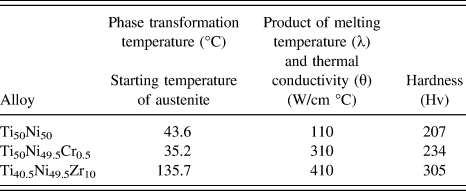
To control the transformation temperature of TiNi SMA to be close to body temperature, the present authors added Cr to substitute Ti. Therefore, the developed Ti49.5Ni50Cr0.5 SMA has a starting temperature of austinite of 35.2 °C, which is lower than Ti50Ni50 SMA (As = 43 °C).Reference Hsieh, Chen, Lin, Lin, Huang and Lin11 Furthermore, this study developed a Ti40.5Ni49.5Zr10 SMA with a high phase transformation temperature (As = 135.7 °C). This study attempts to coat titanium nitride and carbide films on three kinds of SMAs, Ti50Ni50, Ti49.5Ni50Cr0.5, and Ti40.5Ni49.5Zr10, using dry EDM, aiming at medical applications. Commercial pure titanium thin pipe is used as tool electrode and dielectric medium are nitrogen gas and the gas mixture of nitrogen and acetylene. First, the machining properties [material removal rate (MRR) and electrode wear rate] of Ti–Ni SMAs EDMed in different dielectric mediums were compared. Next, the surface characteristics (roughness, composition, hardness, and adhesion) of the EDMed Ti–Ni SMAs were evaluated.
II. MATERIALS AND METHODS
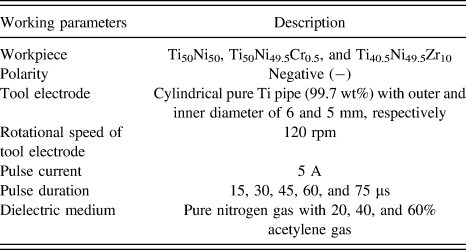
Ti50Ni50 (45Ti55Ni wt%), Ti50Ni49.5Cr0.5 (45Ti54.5Ni0.5Cr wt%), and Ti40.5Ni49.5Zr10 (33.7Ti50.5Ni15.8Zr wt%) buttons were prepared by melted Ti (purity, 99.7 wt%), Ni (purity, 99.9 wt%), Cr (purity, 99.8 wt%), and Zr (purity, 99.8 wt%) ingots using conventional tungsten arc-melting technique. Each button weighting 150 g was re-melted at least six times in an argon atmosphere and pure Ti buttons were used as getters. Prior to cut buttons into φ6 mm × 1 mm plates, the as-melted buttons were homogenized at 950 °C for 72 h. The properties of three kinds of SMAs were listed in Table I. Specimens for EDM were mechanically polished with SiC sandpaper (180, 240, 400, 600, and 800 grits) and then evacuated in quartz tubes and annealed at 900 °C for 2 h, followed by a water-quench. The EDM end-face machining was performed using a die-sinking EDM machine (model LS-250C; Lien Sheng Co., Taichung,Taiwan). Machining parameters were listed in Table II. Pure nitrogen gas (99.9%) and a gas mixture containing nitrogen and acetylene gas (99.5%) were used as dielectric mediums. Pure nitrogen was measured by nitrogen analyzer with an accuracy of 99.99 ± 0.03% under 150 mL/min flow rate. Acetylene gas was measured by gas chromatography using hydrogen flame ionization detector according to ASTM standard (D2505-88). Helium was used as carrier gas. Dielectric medium was jetted from Ti pipe tool electrode under a pressure of 1 kg/cm2. Ti pipe tool electrode is shown in Fig. 1.
Phase transformation temperatures, hardness, and the product of the melting temperature and thermal conductivity of SMAs.

EDM conditions and parameters.
Ti pipe tool electrode.
The martensitic and austenite transformation temperature of SMAs were measured by a differential scanning calorimetry (Q10; TA Instruments, New Castle, Delaware) at a controlled heating/cooling rate of 10 °C/min. The shape recovery effect of SMAs was examined by a bending test.Reference Lin and Wu12 MRR is calculated and the weight loss of the work-pieces is determined by the following equations:
 $${\rm{MRR}} = {m_0} - {m \mathord{\left/ {\vphantom {m t}} \right. \kern-\nulldelimiterspace} t}\quad ,$$
where m 0, m, and t represents the original mass, the mass after EDM, and the machining period, respectively.
Surface roughness of the EDMed surface, presented by Ra, was evaluated quantitatively using a Talysurf profilometer (Taylor Hobson Ltd.; Leicester, U.K.). The cut-off is selected as 0.8 mm. For each piece, the average of readings taken at seven places on machining plane was chosen as the surface roughness value. An x-ray diffractometer (XRD, D500; Siemens, Munich, Germany) was used to examine the composition of the EDMed surface using a Cu Kα radiation. The power was 30 kV × 20 mA and the 2θ scanning rate was 3 min−1. A scanning electron microscopy (SEM, JEOL 6330 TF; JEOL Ltd., Peabody, Massachusetts) equipped with energy dispersive x-ray spectroscopy (EDS) was used to observed top-view and cross-sectional view of the EDMed surface. The cross-sectional specimens were prepared by polishing and then etching using solution comprises HF (1 mL) + HNO3 (2 mL) + HCl (2 mL) + H2O (100 mL). The etching period for Ti50Ni50, Ti50Ni49.5Cr0.5, and Ti40.5Ni49.5Zr10 is about 30, 120, and 50 s, respectively. The surface hardness was measured in a microvickers hardness tester (FUTURE.TECH FM.700; Future Tech Corp., Kanagawa, Japan)) with a load of 20 g for 15 s. Prior to the testing, the EDMed specimens were mounted, ground, polished and then cleaned ultrasonically with alcohol and/or distilled water. The adhesion between the recast layer and the SMAs was tested by a scratch tester (MFT-4000; Lanzhou Huahui Instrument Technology Co., Lanzhou, China). For each specimen, the hardness and scratch testing were done at least five times at different positions on the surface to obtain an average value.
III. RESULTS AND DISCUSSION
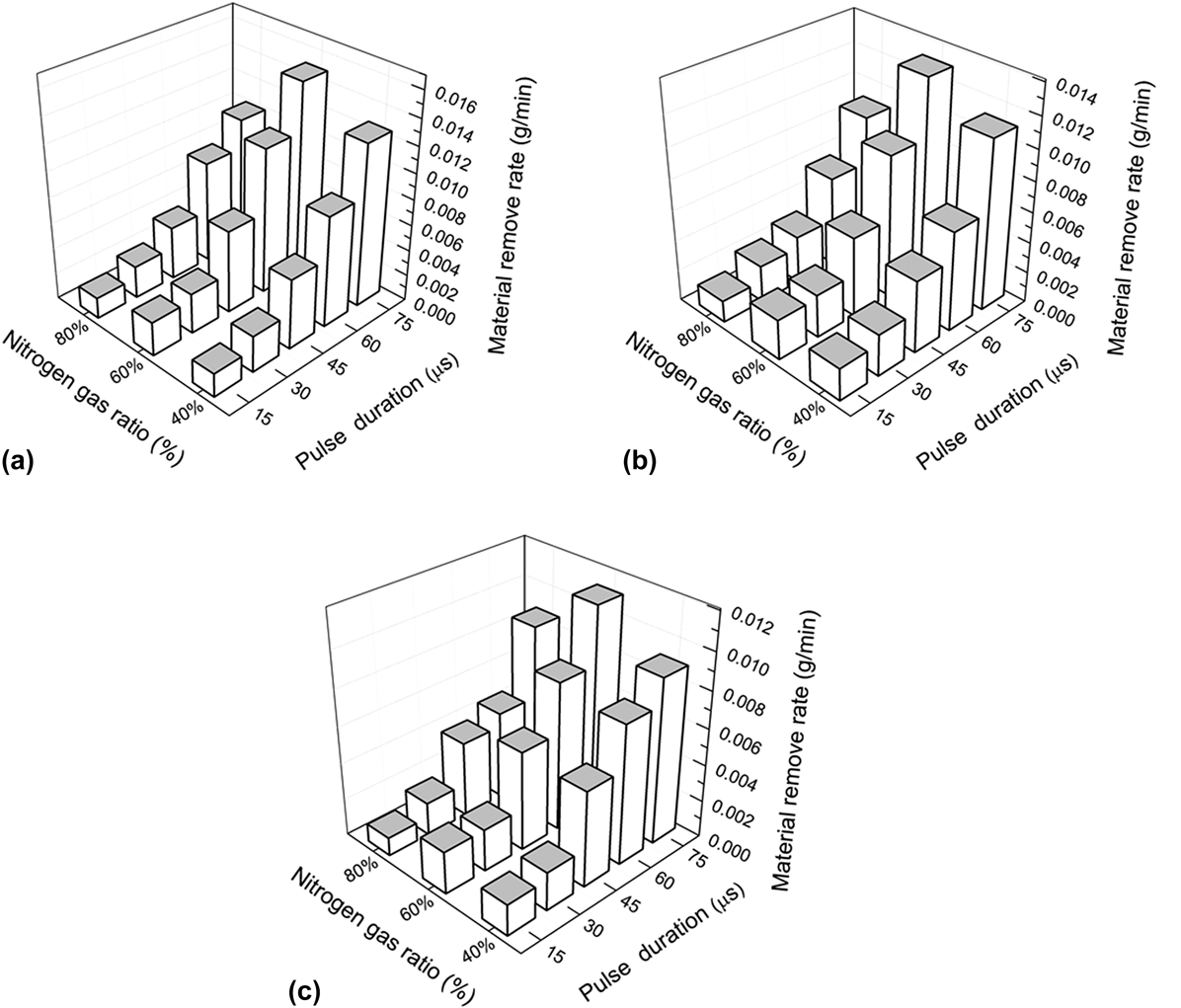
Figure 2 shows photos of as-received work-pieces and the EDMed work-pieces in nitrogen and gas mixture. Figures 3(a)–3(c) show MRR of Ti50Ni50, Ti50Ni49.5Cr0.5, and Ti40.5Ni49.5Zr10 as a function of acetylene ratio and pulse duration, respectively. The MRR of SMAs increased as the acetylene ratio increased to 40%. Furthermore, adding a large amount of acetylene gas (60%) resulted in the MRR decreased, which may be attributed to acetylene gas combustion (autoignition temperature: 305 °C). The acetylene gas is ignited by discharge and resulted in unstable discharge during EDM. Furthermore, EDM in the dielectric fluid with a high-acetylene-gas amount, the electrode surface is easily stuck with carbon, (Fig. 2), which results in the impulsive force of discharge is more unstable. Regarding to the parameter set, the MRR increased with increasing pulse duration. The MRR is related to discharge energy which can be regarded as the product of discharge voltage, peak current, and pulse duration. The MRR of all the SMAs shows the result as Ti50Ni50 > Ti50Ni49.5Cr0.5 > Ti40.5Ni49.5Zr10. The MMR has an inverse relationship with the product of melting temperature (λ) and thermal conductivity (θ) of work-piece has been proposed.Reference Lin, Lin and Cheng13 During EDM, a work-piece with a lower melting temperature is expected to be easily melted and evaporated by discharge, and the material will be rapidly removed by impulsive force from the dielectric medium evaporation. Furthermore, a work-piece with a low thermal conductivity is allowed the EDMed surface keeping in melted-liquid state, which also results in debris easily to be repelled. The λ × θ value of Ti50Ni50, Ti50Ni49.5Cr0.5, and Ti40.5Ni49.5Zr10 is 110, 310, and 410 W/cm °C, respectively. The MRR of these three SMAs consists with the relationship of their thermal conductivity.
The as-received workpieces and the EDMed workpieces in nitrogen and gas mixture with 60% acetylene.
Relationship between MMR and pulse duration as well as acetylene ratio for (a) Ti50Ni50, (b) Ti50Ni49.5Cr0.5, and (c) Ti40.5Ni49.5Zr10.
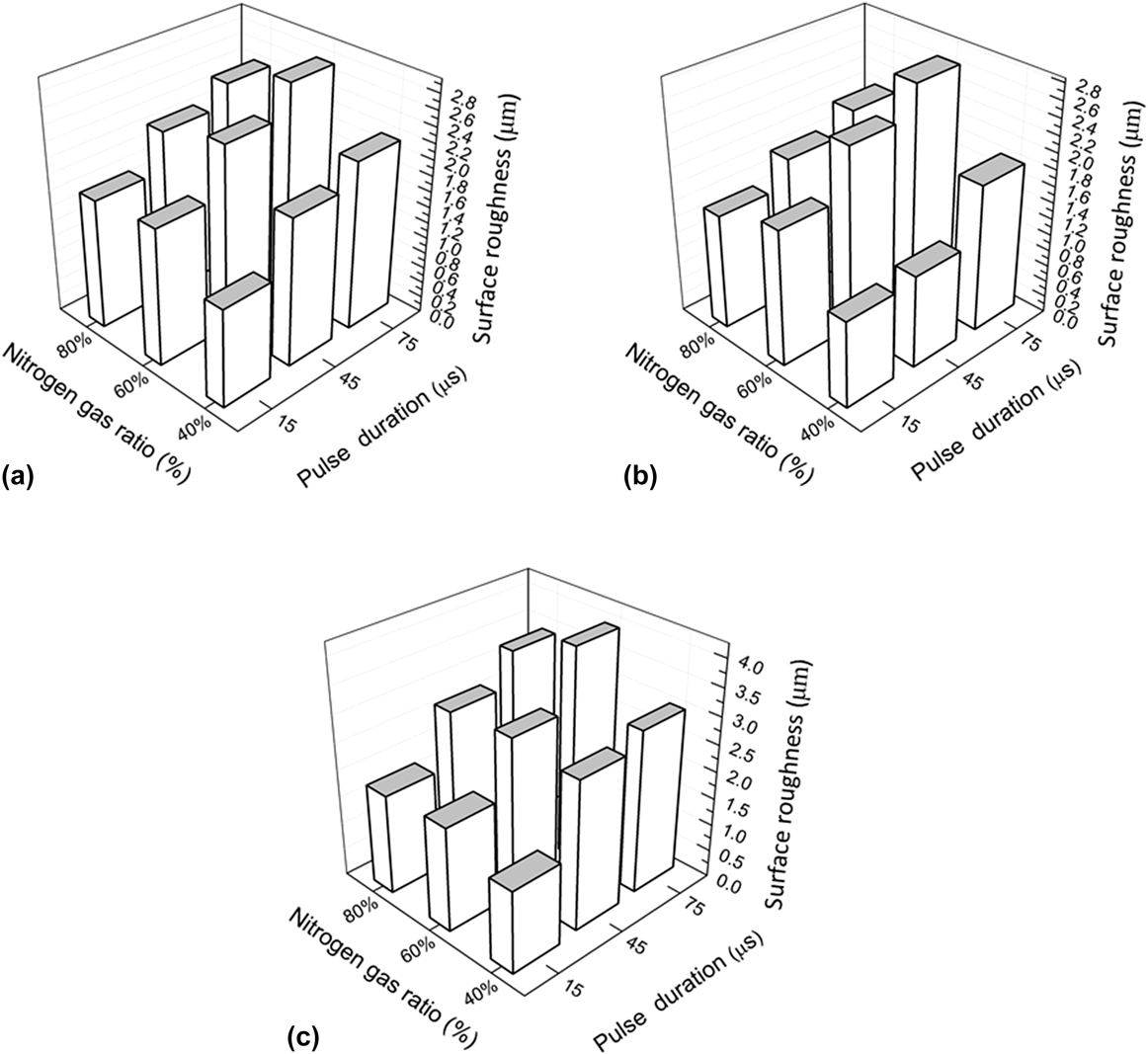
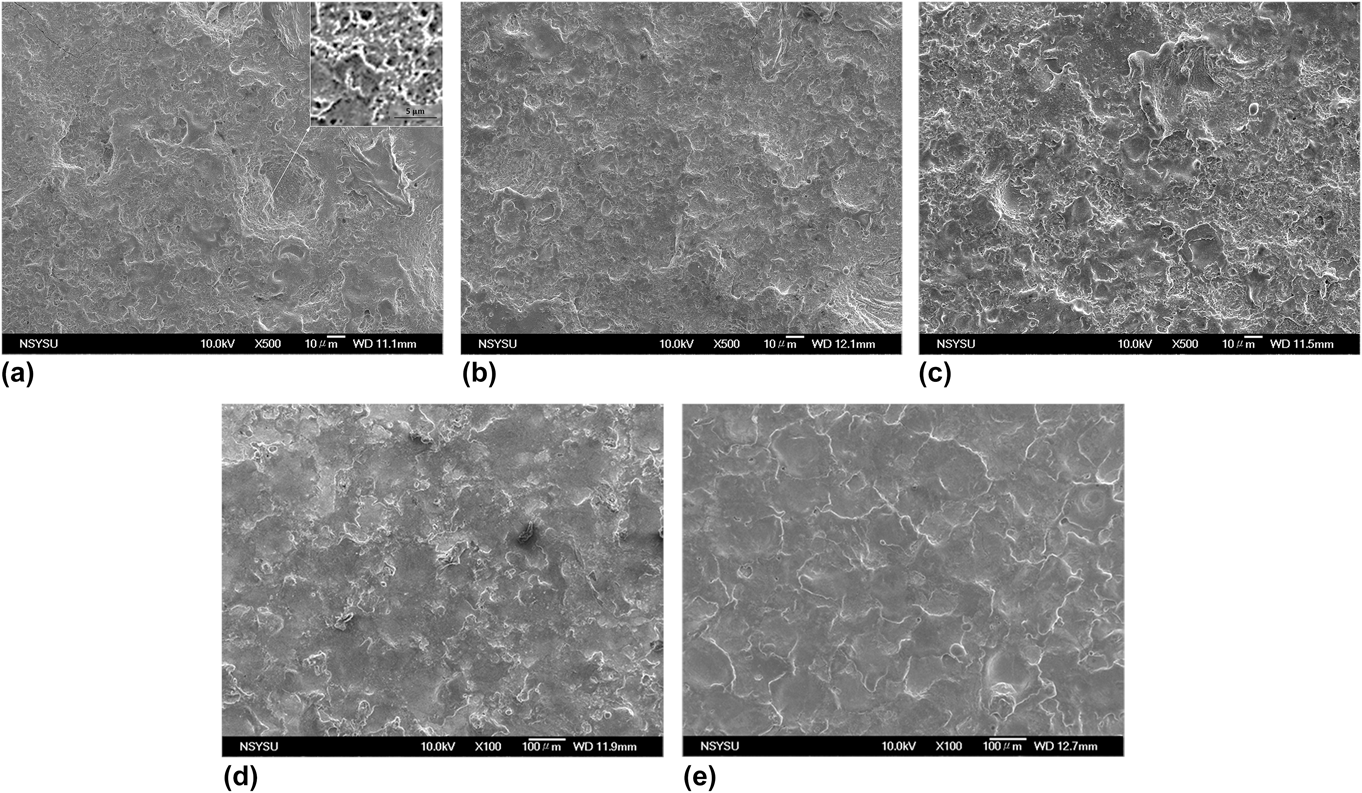
Figures 4(a)–4(c) show surface roughness of the EDMed Ti50Ni50, Ti50Ni49.5Cr0.5, and Ti40.5Ni49.5Zr10 as a function of acetylene ratio and pulse duration, respectively. The variation of the roughness with acetylene gas ratio exhibited a similar tendency as that of the MRR with acetylene gas ratio, as shown in Fig. 3. Figures 5(a)–5(c) show surface morphologies of Ti50Ni50, Ti50Ni49.5Cr0.5, and Ti40.5Ni49.5Zr10 were EDMed in gas mixture with 60% acetylene, respectively. The topographies of craters on the EDMed SMAs are rough, and the enlarged view can be seen in Fig. 5(a). Figures 5(d) and 5(e) show the surface morphologies of Ti50Ni50 SMAs were EDMed in distilled water and kerosene-based oil, respectively and the craters on both the surfaces looked very smooth. During EDM, craters are typical characters, which are created by high-energy discharge melting work-piece. The melted materials are repelled by impulsive force owing to the dielectric medium evaporation, and then solidify and attach to the workpiece surface. The debris in water or kerosene-based oil is rapidly cooled and ejected by dielectric medium, and thus few debris reattach on the surface. Nevertheless, the craters on the surfaces of EDMed SMAs in gas have rough surface due to many debris reattach on the surface when it is slowly cooled in gas. The thermal conductivity of water, kerosene-based oil, nitrogen gas, and acetylene gas are 0.599, 0.15, 0.024, and 0.018 W/m K measured at 25 °C, respectively. This result is consistent with a report from Curodeau et al.Reference Curodeau, Richard and Frohn-Villeneuve5 who explain the difference in the crater topology on the EDMed surface when using air and water is attributed to thermal conductivity.
Relationship between surface roughness and pulse duration as well as acetylene ratio for (a) Ti50Ni50, (b) Ti50Ni49.5Cr0.5, and (c) Ti40.5Ni49.5Zr10.
SEM micrographs of the surfaces for (a) Ti50Ni50, (b) Ti50Ni49.5Cr0.5, and (c) Ti40.5Ni49.5Zr10 were EDMed in gas mixture with 60% acetylene under 5 A × 45 μs. SEM micrographs of the surfaces for Ti50Ni50 was EDMed in (d) water and (e) kerosene-based oil.
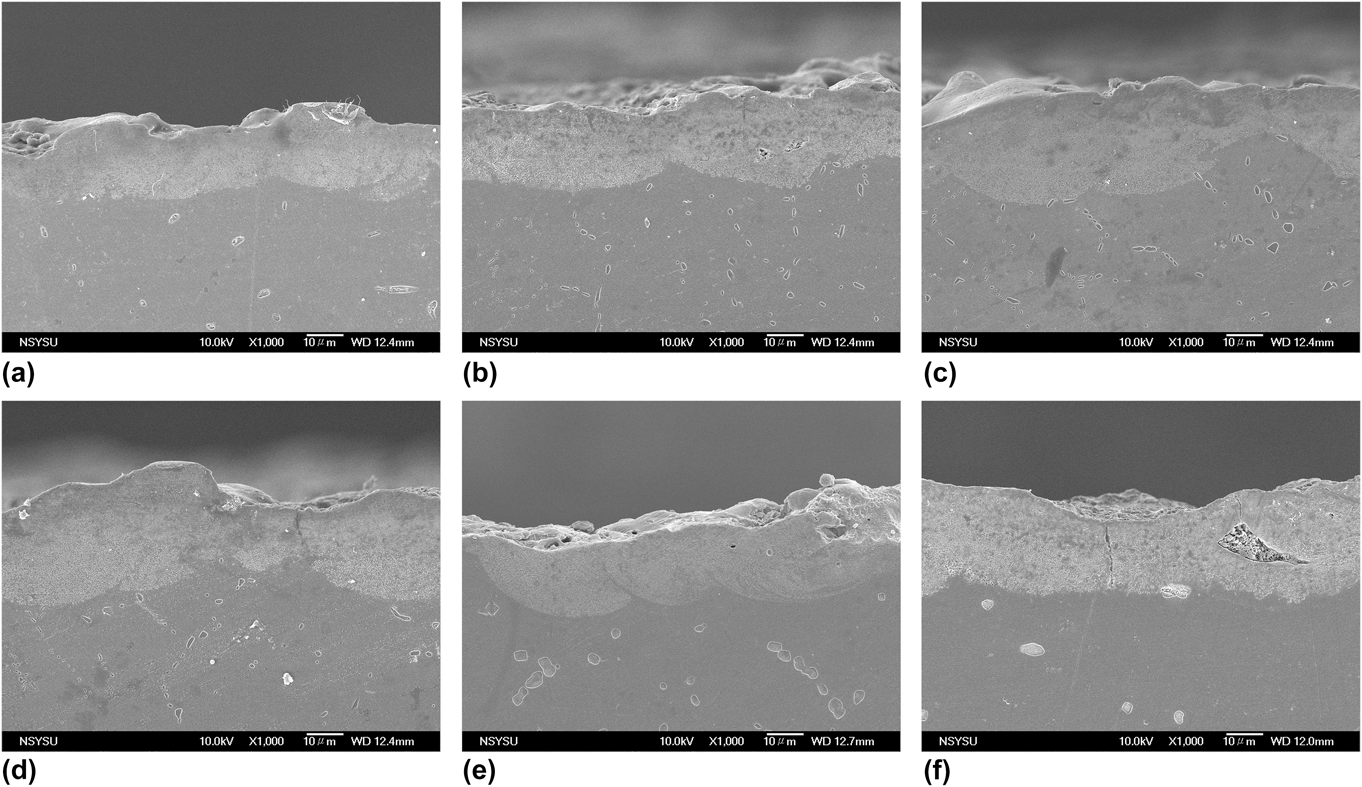
Figures 6(a)–6(c) show cross-sectional SEM micrographs of the EDMed Ti50Ni50. The recast layer on the Ti50Ni50 EDMed in gas mixture containing 20, 40, and 60% acetylene has an average thickness of 15.4, 17.9, and 20.2 μm, respectively. Obviously, for the sample using gas with a low acetylene ratio (20 and 40%), the recast layer thickness was smaller and more uniform. This result implies that increasing acetylene ratio can provide higher discharge energy and results in more materials being melted. However, adding a large amount of acetylene results in unstable discharge because acetylene combust during experiment. Consequently, the thickness of the recast layer is nonuniform when the gas mixture with 60% acetylene was used. Figures 6(d)–6(f) show the recast layer on the EDMed Ti50Ni50, Ti50Ni49.5Cr0.5, and Ti40.5Ni49.5Zr10, which has an average thickness of 23.4, 21.8, and 24.1 μm, respectively. In Fig. 6(f), cracks were frequently observed through the recast layer, which suggested the surface suffered a tension stress. However, cracks were less observed on the EDMed Ti50Ni50 and Ti50Ni49.5Cr0.5 specimens. The residual thermal stress caused by (i) thermal expansion mismatch between the substrate and the recast layer and (ii) the compounds within the recast layer have different thermal expansion coefficient. Regarding the reason (i), the residual thermal stress arises from thermal expansion mismatch between the substrate and the recast layer. The cracks will form if the stress do not uniformly distribute on the recast layer during cooling. The cooling rate of workpiece is crucial for stress distribution within the recast layer. Hence, cracks were frequently observed through the recast layer on Ti40.5Ni49.5Zr10 which has a highest thermal conductivity among three SMAs, and thus the difference in temperature between the recast layer and substrate is large. With regard to the reason (ii), the recast layer on Ti40.5Ni49.5Zr10 comprises many compounds (Ti and Zr nitrides) which have different thermal expansion properties. The coefficient of thermal expansion of TiN,Reference Ramaswamy14 CrN,Reference Holleck15 and ZrN (Ref. Reference Baker16) is 2.3–7.5 × 10⁻⁶, 7.5 × 10⁻⁶, and 6–7 × 10⁻⁶/°C, respectively. Accordingly, the larger thermal stress is formed when more compounds co-exist in the recast layer.
Cross-sectional SEM micrographs of Ti50Ni50 SMAs were EDMed in gas mixture with (a) 20%, (b) 40%, and (c) 60% acetylene under 5 A × 45 μs. Cross-sectional SEM micrographs of (d) Ti50Ni50, (e) Ti50Ni49.5Cr0.5, and (f) Ti40.5Ni49.5Zr10 were EDMed in gas mixture with 60% acetylene under 5 A × 75 μs.
Figure 7(a) shows the XRD patterns obtained from Ti50Ni50 SMAs were EDMed in nitrogen gas, which comprises peaks of recast layer (TiN) and substrate (B19′). Figure 7(b) shows the XRD patterns from Ti50Ni50 SMAs were EDMed in gas mixture with 60% acetylene and the recast layer comprises TiN + TiCN. This suggests that keeping workpiece as a melted state for a long time can induce workpiece elements to react with carbon which is produced by acetylene gas deionization. The composition of the EDMed Ti50Ni49.5Cr0.5 surface is similar to that of Ti50Ni50 SMA. Figure 7(c) shows the XRD patterns from the recast layer of the EDMed Ti40.5Ni49.5Zr10 SMAs comprise TiN + TiCN + ZrN. SEM–EDS result revealed that C and N were detected in the recast layer of the Ti50Ni50 SMA after EDM in gas mixture with 60% acetylene as shown in Fig. 7(d). Similarly, C and N also existed in the recast layer of the Ti50Ni50, Ti50Ni49.5Cr0.5, and Ti40.5Ni49.5Zr10 SMAs were EDMed in gas mixture.
XRD patterns obtained from Ti50Ni50 was EDMed (a) in nitrogen gas and (b) in gas mixture with 60% acetylene. (c) XRD patterns obtained from Ti40.5Ni49.5Zr10 was EDMed in gas mixture with 60% acetylene. (d) EDS spectrum of Ti50Ni50 was EDMed in gas mixture with 60% acetylene.
Recently, TiN has been demonstrated that it is biocompatibleReference Zhao, Li, Li and Gu17,Reference Jin, Zhang, Wang, Zhang and Zhang18 and has ability to inhibit bacterial adhesionReference Jeyachandran and Narayandass19 for implantable device applications. ZrN-based coating has been used in antimicrobial applicationsReference Wickens, West, Kelly, Verran, Lynch and Whitehead20 and ZrN coating can improve the corrosion resistance of Ti6Al4V alloy.Reference Kadam, Jagdeo and Nair21 Carbon is nontoxic element and titanium carbide promotes a faster osteointegrationReference Shtansky, Gloushankova, Bashkova, Petrzhik, Sheveiko, Kiryukhantsev-Korneev, Reshetov, Grigoryan and Levashov22 and cytocompatibilityReference Brama, Rhodes, Hunt, Ricci, Teghil, Migliaccio, De Rocca, Leccisotti, Lioi, Scandurra, De Maria, Ferro, Pu, Panzini, Politi and Scandurr23 has been evidenced. Zirconium carbide also shows an improved cytocompatibility than Ni–Ti alloyReference Chu, Ji, Yin, Pu, Lin and Chu24 and a better corrosion resistance than 316L stainless steel.Reference Ding, Zhang, Zhang and Jin25
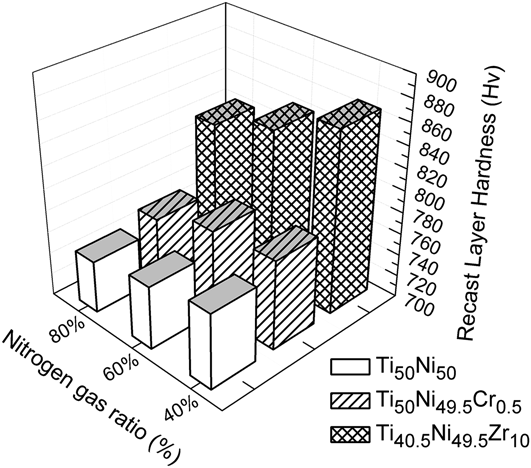
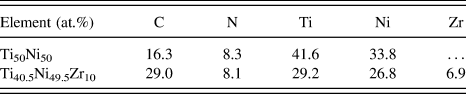
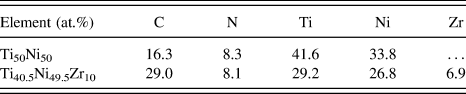
Figure 8 shows hardness of the recast layer as a function of acetylene ratio and workpiece material. The hardness of the recast layer increase as acetylene ratio increase due to the formation of metal carbides. In addition, the recast layer of Ti40.5Ni49.5Zr10 has the highest hardness among the SMAs. There is no significant difference that can distinguish between the hardness of the recast layer on Ti50Ni50 and Ti50Ni49.5Cr0.5. The hardness depends on the composition of the recast layer. Generally, metal carbides have higher hardness than metal nitrides. The formation energy of ZrC (−39,700 kJ) is lower than that of TiC (−38,280 kJ).Reference Shatynski26 Thus, in this study, it is believed that more amounts of carbide formed on the EDMed Ti40.5Ni49.5Zr10 SMA than Ti50Ni50 SMA. This can be evidenced that the EDMed Ti40.5Ni49.5Zr10 SMA contains more carbon than the EDMed Ti50Ni50 SMA, which was examined by EDS detection, as listed in Table III.
Relationship between hardness and acetylene ratio for Ti50Ni50, Ti50Ni49.5Cr0.5, and Ti40.5Ni49.5Zr10 were EDMed under 5 A × 75 μs.
Composition of the recast layers on the SMAs were EDMed in gas mixture with 60% acetylene.
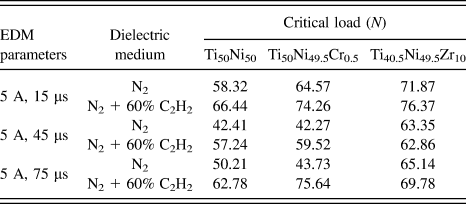
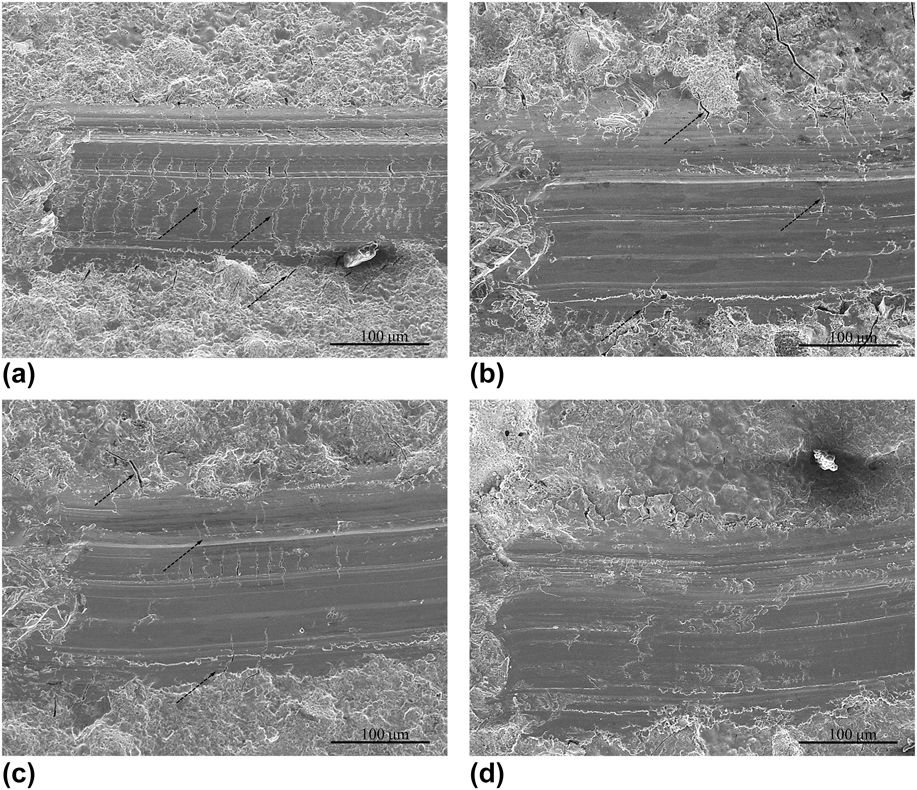
To evaluate the friction property and the adhesion between the recast layer and work-piece, scratch tests were performed on the EDMed surfaces. Table IV lists the measured critical load which depends on the recast layer hardness and adhesion. The recast layers formed in gas mixture exhibited higher critical load than those in nitrogen gas. After scratch test, the surface morphologies were observed using SEM, as shown in Fig. 9. Many cracks, resulting from the recast layer suffered from a friction force during scratch test, were found within and near the scratch on the surface of Ti50Ni50 was EDMed in nitrogen gas [Fig. 9(a)]. However, few cracks were observed on the surface of Ti50Ni50 was EDMed in gas mixture with 60% acetylene [Fig. 9(b)] because its recast layer comprises carbide. Further, the recast layers on Ti40.5Ni49.5Zr10 has a highest critical load in comparison with those on Ti50Ni50 and Ti50Ni49.5Cr0.5. Figure 9(c) also shows that cracks were seldom found on the EDMed Ti40.5Ni49.5Zr10, but cracks can be found on the EDMed Ti50Ni49.5Cr0.5 [Fig. 9(b)]. It implies a good adhesion between the recast layer and Ti40.5Ni49.5Zr10 substrate. Moreover, the critical load measured from the EDMed Ti40.5Ni49.5Zr10 decreased as the pulse duration increased and the critical load of Ti40.5Ni49.5Zr10 EDMed at 5 A × 75 μs is lower than that of Ti50Ni49.5Cr0.5, as listed in Table IV. This result can be attributed to many defects existed within the recast layer of Ti40.5Ni49.5Zr10 [Fig. 6(f)] when the thickness of the recast layer increased.
Critical load of SMAs were EDMed in nitrogen and gas mixture measured by scratch tests.
SEM micrographs of the surfaces after the scratch test for Ti50Ni50 was EDMed in (a) nitrogen gas and (b) gas mixture with 60% acetylene. SEM micrographs of the surfaces after the scratch test for (c) Ti50Ni49.5Cr0.5 and (d) Ti40.5Ni49.5Zr10 were EDMed in gas mixture with 60% acetylene.
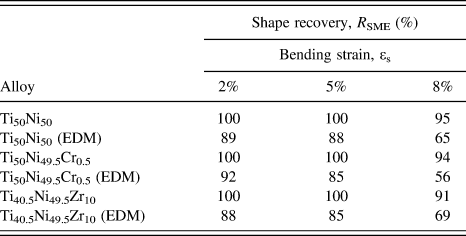
Table V lists shape recovery of Ti50Ni50, Ti50Ni49.5Cr0.5, and Ti40.5Ni49.5Zr10 SMAs were EDMed in nitrogen gas and gas mixture. After EDM, the shape recovery slightly reduced in comparison with that of SMAs before EDM. The decline in shape recovery is because of a high-hardness recast layer inhibits the SMA's shape recovery ability. In addition, comparing to our previous study, the decrease in the shape recovery ability of the SMAs EDMed in gas mixture is greater than those were EDMed in nitrogen gas.Reference Huang, Hsieh, Chen, Lin, Ou and Chang27 In conclusion, EDM in gas with acetylene can produce a recast layer with a high hardness and wear property, but it deteriorates the shape recovery ability of the SMAs.
Shape recovery of SMAs before and after EDM in gas mixture with 60% acetylene.
IV. CONCLUSIONS
This study investigated the machining characteristics of Ti50Ni50, Ti50Ni49.5Cr0.5, and Ti40.5Ni49.5Zr10 SMAs by EDM in nitrogen and acetylene gas mixture. The effects of acetylene gas as dielectric medium on the surface properties of the EDMed SMAs was discussed.
(1) Increasing the ratio of acetylene gas was beneficial for improving the MRR. Furthermore, adding a large amount of acetylene gas resulted in unstable discharge.
(2) Among three SMAs as workpiece, Ti40.5Ni49.5Zr10 SMA has the lowest MRR owing to it possessed a highest product of melting temperature and thermal conductivity.
(3) After EDM, SMAs' surfaces were covered by the recast layers which comprise nitrides and carbides. The recast layers exhibited high hardness and well adhered on the EDMed surfaces.
(4) The recast layer on Ti40.5Ni49.5Zr10 SMA exhibited the highest hardness and adhesion, which can be attributed to zirconium nitride was formed. However, the high-hardness recast layer inhibited the shape recovery of the SMA.
ACKNOWLEDGMENT
The authors sincerely acknowledge the financial support of this research by the National Science Council (NSC), Republic of China, under Grants NSC 101-2221-E-151-009 and NSC 102-2221-E-151-013. The authors also acknowledge the financial support by the Ministry of Science and Technology, Republic of China, under MOST 103-2221-E-151-013.