




No CrossRef data available.
Article contents
Pathways between profiles of family functioning, child security in the interparental subsystem, and child psychological problems
Published online by Cambridge University Press: 01 September 2004
Abstract
This study was designed to delineate pathways between systems profiles of family functioning, children's emotional insecurity in the interparental relationship, and their psychological adjustment in a sample of 221 children and their parents. Consistent with family systems theory, cluster analyses conducted with assessments of marital, coparental, and parent–child functioning indicated that families fit into one of four profiles: (a) cohesive families, characterized by warmth, affection, and flexible well-defined boundaries in family relationships; (b) disengaged families, reflected in high levels of adversity and low levels of support across family subsystems; (c) enmeshed families, evidenced by high levels of discord and weak maintenance of relationship boundaries in the family unit; and (d) adequate families, defined by elevated parental psychological control within a larger family context of low discord and high warmth. In comparison to children in cohesive families, children in enmeshed and disengaged families exhibited greater signs of insecurity in the interparental relationship concurrently and internalizing and externalizing symptoms both concurrently and 1 year later. Structural equation models revealed that a latent, multimethod measure of insecurity in the interparental relationship partially mediated associations between family enmeshment and disengagement and children's psychological symptoms 1 year later. Results are discussed in relation to how they inform and refine a family-wide model of the emotional security hypothesis.This research was supported by the National Institute of Mental Health (Project R01 MH57318) awarded to Patrick T. Davies and E. Mark Cummings. Marcia A. Winter was supported by a predoctoral National Research Service Award from the National Institute of Mental Health (F31 MH068058). The authors are grateful to the children, parents, teachers, and school administrators who participated in this project and to the staff who assisted on various stages of the project, including Courtney Forbes, Marcie Goeke–Morey, Amy Keller, Michelle Sutton, and the graduate and undergraduate students at the University of Rochester and University of Notre Dame. We also thank Harry Reis for his valuable statistical advice.
Information
- Type
- Research Article
- Information
- Copyright
- © 2004 Cambridge University Press
Family systems theory has challenged scientists to expand beyond understanding child development and psychopathology solely in the context of parent–child relationship dynamics (Minuchin, 1985). Guided by the principle of holism, family systems theory asserts that pathways linking parenting dynamics with child functioning are fully understood in the context of the collective experiences in the family as a whole (Hayden, Schiller, Dickstein, Seifer, Sameroff, Miller, Keitner, & Rasmussen, 1998; Mikulincer, Florian, Cowan, & Cowan, 2002). Supporting this principle, research has repeatedly demonstrated that marital functioning plays a key role in the socialization of children in families (Cowan & Cowan, 2002; Cummings & Davies, 2002; Emery, 1982; Grych & Fincham, 1990). Children exposed to marital discord are vulnerable to exhibiting a wide array of emotional, behavioral, and coping difficulties (Cummings, 1994). Furthermore, marital discord is posited to increase children's risk for psychological problems through multiple mechanisms reflecting transactions between the child and the larger family system (see Margolin, Oliver, & Medina, 2001).
In expanding on the associations between marital and child functioning, the emotional security hypothesis is a process model that is designed to partially explain how and why interparental conflict is associated with child vulnerability to psychological problems. Inspired by principles of family systems theory, the emotional security hypothesis complements earlier theories of parent–child relationships by drawing attention to the developmental and relational significance of children's evolving adaptation in the context of the interparental subsystem. Drawing from attachment theory, the emotional security hypothesis places the child's goal of preserving a sense of security at the heart of understanding transactions between the child and family. Thus, the emotional security hypothesis accepts the main presupposition of attachment theory: child emotional security in parent–child relationships is a key mechanism mediating the link between parental socialization strategies and child developmental outcomes. However, in assimilating principles of family systems theory, the emotional security hypothesis differs from conventional versions of attachment theory by more broadly conceptualizing children's adaptation as an evolving cause and product of functioning across multiple family relationships. By extension, a main assumption is that other aspects of family functioning, including the marital relationship, may serve as sources of support or threat to children's well-being (Cummings & Davies, 1996; Cummings, Goeke–Morey, & Papp, 2003; Davies & Cummings, 1994).
The emotional security hypothesis specifically postulates that interparental discord increases child vulnerability to psychological problems by undermining children's sense of security or safety in the family. Children from maritally discordant homes have sound bases for being concerned about their sense of security. Spousal conflicts in these homes tend to escalate into dysregulated bouts of hostility, proliferate to disrupt parent–child relations, and signify potential family instability. Thus, in the first part of this mediational chain, witnessing interparental discord is postulated to increase children's concerns about their safety, security, and well-being in subsequent contexts of interparental problems. In the second part of the mediational chain, concerns about security are proposed to sap children of biopsychological resources and, in the process, increase their vulnerability to psychological problems.
Preserving emotional security is conceptualized as a latent goal that can be inferred from three observable classes of responding: (a) emotional reactivity, characterized by intense, prolonged, dysregulated distress reactions to marital conflict; (b) regulation of exposure to parent affect, evidenced by prolonged rigid attempts to become involved in or avoid the parental conflict; and (c) internal representations of marital relations, as indexed by children's evaluations of the potential consequences of parental difficulties for their own well-being. Thus, children repeatedly exposed to high levels of marital hostility are posited to experience greater difficulties preserving security, as manifested in concrete signs of dysregulated distress, avoidance of or involvement in parental disputes, and negative representations of the meaning marital conflict has for their well-being. Consistent with a primary tenet of family systems theory (Byng–Hall & Stevenson–Hinde, 1991; Hinde, 1988), these response patterns are thought to cohere over time and increase children's probabilities of developing along psychopathological trajectories. Supporting these hypotheses, studies have shown that the proposed signs of emotional insecurity in the context of interparental conflict mediate the links between histories of exposure to marital discord and their psychological problems (Davies & Cummings, 1998; Davies, Harold, Goeke–Morey, & Cummings, 2002).
Expanding the study of child adaptation to the marital subsystem is a necessary, but not sufficient, condition for testing the predictions of family systems theories. For example, studying pathways between marital and child functioning in isolation from the larger family system is inconsistent with the principle of holism (Cox & Paley, 1997; Minuchin, 1974, 1985; Nichols, 1999). Thus, the emotional security hypothesis further postulates that family processes are critical to understanding the nature of associations between marital and child functioning (Cummmings et al., 2002; Davies et al., 2002). For example, family processes such as coparenting and parenting practices are hypothesized to mediate associations between marital discord and child adjustment. Supporting this hypothesis, research has specifically shown that parenting dimensions such as parental hostility, rejection, and lax monitoring account for part of the association between marital discord and child adjustment (Gonzales, Pitts, Hill, & Roosa, 2000; Miller, Cowan, Cowan, Hetherington, & Clingempeel, 1993; Stocker & Youngblade, 1999). Likewise, the implications of marital discord for children's security and adjustment are assumed to depend, in part, on the quality of the larger family system. Consistent with models of developmental psychopathology, family characteristics are specifically proposed to potentiate or protect children from experiencing insecurity in the face of marital discord. For example, marital discord may assume a more benign meaning for children in the context of cohesive, autonomy-supportive relationships in the family. By the same token, the deleterious implications of marital discord for children may be amplified by family processes that reflect high levels of discord, chaos, or disengagement. Supporting this hypothesis, Davies et al. (2002) reported that family instability potentiated the link between marital conflict and children's emotional insecurity in the marital relationship, while signs of harmony in the family system buffered children from experiencing insecurity in high conflict homes.
Despite exploratory support for the value of integrating the emotional security hypothesis with family systems theory, a systems understanding of children's coping and adjustment in the face of marital conflict will require progressively richer, holistic accounts of the family system. In accordance with family systems theory (Byng–Hall & Stevenson–Hinde, 1991; Mikulincer et al., 2002; Wagner & Reiss, 1995), the aim of this study was to assess children's security in the marital subsystem and their adjustment within a family-wide model that captures the organization, patterning, and regularity of processes in the family system that emerge from interrelationships between marital, coparenting, and parent–child dynamics. Pattern-based approaches, which permit classification of families into groups on the basis of their configurations of functioning within and across relationships, provide particularly useful tools for capturing the higher order organization of family functioning across multiple family subsystems. Given the previous success of applying cluster analytic methods to identify patterns of family functioning (O'Connor, Hetherington, & Clingempeel, 1997; O'Connor, Hetherington, & Reiss, 1998), we used cluster analysis to identify different profiles of family functioning. Guided by developmental models of family systems (e.g., Combrinck–Graham, 1985, 1990; Kretchmar & Jacobvitz, 2002; Wynne, 1988), we specifically assessed dimensions of family functioning that reflect the quality of emotional relationships within and across family subsystems. According to these models, communication patterns of families with school-aged children are salient developmental features of relationship quality in the family system.
Although theory and research on family systems have identified a number of different configurations of emotional and relational functioning in the family (e.g., O'Connor et al., 1997, 1998), three profiles of family functioning have been most consistently delineated in clinical and empirical work (Kerig, 1995; Kretchmar & Jacobvitz, 2002; Liddle & Schwartz, 2002; Minuchin, 1974; Stevenson–Hinde, 1990). The first profile consists of cohesive families who exhibit relatively warm, close, and harmonious relationships across multiple family subsystems. Boundaries that metaphorically separate relationships and family members are well-defined but flexible in cohesive families, permitting family members access to relationship resources and support while also respecting their autonomy (Cox & Paley, 1997). Children in cohesive families have been postulated to exhibit high levels of parent–child attachment security, constructive coping strategies, and psychological adjustment (Garbarino, Sebes, & Schellenbach, 1984; Kerig, 1995; Stevenson–Hinde, 1990). When interpreted within the emotional security hypothesis, witnessing well-managed marital disputes within a larger context of cohesive, warm family relationships is thought to increase children's confidence in their parents to resolve any disagreements or problems in the marriage in a way that maintains or improves family harmony (Davies et al., 2002). Thus, children from cohesive families are postulated to experience relatively few difficulties preserving their sense of security in the interparental relationship. Success in preserving emotional security, in turn, is thought to lower children's risk for psychological adjustment problems.
Enmeshed or chaotic families constitute the second profile of family functioning. Unlike cohesive families, these families exhibit high levels of conflict, hostility, and coercive control across multiple family subsystems. Diffuse boundaries exist between subsystems (e.g., marital and coparenting and parent–child subsystems) and individuals, as stress and dysfunction in one individual or relationship is a relatively seamless product and cause of dysfunction in the larger family system (Kretchmar & Jacobvitz, 2002; Marvin & Stewart, 1990; Stevenson–Hinde, 1990). In the bidirectional conceptualization of family systems theory, the psychological difficulties of each individual are conceptualized as both causes and sequelae of discordant, weak boundaries within and across family relationships (e.g., Wood, 1985). Accordingly, children from enmeshed families are thought to be at risk for developing a wide array of psychological (e.g., internalizing, externalizing) problems (Kerr, 2003; Tolan & Mitchell, 1989). According to the emotional security hypothesis, child concern about security in the face of marital difficulties is one mechanism that may account for links between enmeshed family processes and child psychological symptoms. Enmeshed family processes that emotionally pull or coax children into family problems may amplify the impact marital conflict has on children's sense of security. In turn, prolonged difficulties in preserving security in the marital subsystem are thought to increase children's risk for maladjustment (Coyne, Downey, & Boergers, 1992; Davies & Forman, 2002; Davies et al., 2002).
Disengaged or “separate” families, which comprise a third profile of family functioning, may resemble enmeshed families in exhibiting high levels of hostility and discord in relationships. However, unlike enmeshed families, the boundaries between and within marital, coparenting, and parent–child relationships are characterized as overly rigid, inflexible, distant, and emotionally cold (Belsky, Rovine, & Fish, 1989; Kretchmar & Jacobvitz, 2002; Minuchin, 1974; Stevenson–Hinde, 1990). According to family systems theory, disengaged family systems are thought to increase child psychological problems (Kerig, 1995). Although the emotional security hypothesis shares the prediction that children from disengaged families are at heightened risk for experiencing externalizing symptoms, it also hypothesizes that interparental hostility expressed in the context of a disengaged, cold family system amplifies children's concerns about the consequences interparental discord have for their own welfare and the welfare of their families. The resulting insecurity is further posited to increase psychological difficulties. A derivative hypothesis is that children's security in the interparental conflict is hypothesized to partially account for the vulnerability of children from disengaged families (Davies & Forman, 2002).
Additional family profiles have also been identified, but with less consistency. On the one hand, some empirical and clinical work supports the existence of a family profile characterized by a relatively cohesive marriage but some form of dysfunction in the parent–child subsystem. For example, research using community samples has identified profiles in which dysfunction in the family is isolated to the parent–child subsystem (O'Connor et al., 1997, 1998). Likewise, systems theorists have specifically described a “detouring” family configuration in which parents are proposed to become preoccupied with the difficulties faced by their children in an attempt to deflect attention away from more serious marital strife (Buchanan & Waizenhofer, 2001; Cox & Paley, 1997; Emery, 1989; Minuchin, 1974). On the other hand, other research supports the existence of family profiles characterized by significant difficulties in the spousal relationship may be embedded in the context of closeness and cohesion in other family subsystems (O'Connor et al., 1998). Inconsistencies in identifying other family configurations hinder the development of predictions about the existence and meaning of alternative family profiles.
The overarching goal of this study was to examine children's emotional security and adjustment in the context of the broader pattern of family relationships. Thus, our first specific aim was to identify the distinct forms of family configurations within our community sample of kindergarten children and their parents. Consistent with family systems theory, it was hypothesized that at least three forms of family functioning would emerge: cohesive, enmeshed, and disengaged families. Although the complexity of the family system also points to the possibility of identifying other family configurations, no additional hypotheses were offered in light of the inconsistencies in the literature. Our second aim was to examine whether these different family configurations are differentially linked with children's security in the marital relationship and their psychological symptoms. Consistent with our integration of the emotional security hypothesis and family systems theory, we specifically hypothesized that family enmeshment and disengagement would increase children's emotional insecurity in the marital subsystem. In turn, emotional insecurity is hypothesized to be associated with child psychological symptoms. To rigorously delineate associations between profiles of family functioning, child emotional security in the marital subsystem, and child psychological symptoms, we utilized (a) multiple informant (i.e., mother, father) reports of functioning in multiple family subsystems, (b) multiple methods and tasks for assessing child security in the marital subsystem, and (c) multiple informant (i.e., parents, teacher) reports of child psychological symptoms across two measurement occasions.
Method
Participants
The data for this study were drawn from a larger investigation focusing on linkages between family processes and child coping and psychological adjustment. The original sample of 236 kindergarten children and their families in the first wave of the study were recruited through local school districts and community centers in a moderate-sized metropolitan area in the Northeast and a small city in the Midwest. Families who expressed an interest in participating by returning a post card or calling our research office were included in the larger project if they met the following criteria: (a) the family had a child in kindergarten, (b) the kindergarten child lived with two primary caregivers for at least 3 years, (c) the primary caregivers and children were fluent in English, and (d) the primary caregivers and children were willing to participate. The retention rate over the 1-year period between the first and second waves was 98% (n = 231). Families who participated in both measurement waves were included in the present study if mothers, fathers, and children completed all the measures of family and child functioning used in this article. The resulting sample consisted of 221 mothers, fathers, and children. The average age of the children at Wave 1 was 6.0 years (SD = 0.48), with 56% of the sample consisting of girls (n = 124) and 44% consisting of boys (n = 97).
Sociodemographic data reflected that the participating families were relatively representative of the households in the counties from which our sample was drawn (i.e., St. Joseph County, IN; Monroe County, NY). Median annual family income of the families was between $40,000 and $54,999, with 9.2% of the families reporting income below $17,000 per year. The average number of years of education completed by mothers and fathers were 14.5 (SD = 2.32) and 14.6 (SD = 2.71), respectively. The majority of the sample identified themselves as White (77.1%), followed by smaller, but relatively representative (for the counties), proportions of Black (15.9%), Hispanic (4.0%), Asian (1.1%), and Other/Mixed (1.8%) family members. A large percentage of mothers and fathers reported being the biological parents of their children (95.5 and 87.8%, respectively), followed by relatively smaller percentages of adoptive parents (2.3 and 3.2%, respectively), stepparents (0.5 and 5.9%, respectively), and other types of guardianship (1.7 and 3.1%, respectively). At the first wave, mothers, fathers, and children lived in the same household for an average of 5.4 years (SD = 1.00).
Procedure
Data for this study were collected at two measurement occasions spaced 1 year apart. At each wave, families visited the laboratories at one of the two research sites. The laboratories were designed to be comparable in size and quality and included: (a) an observation room that was designed to resemble a family room (e.g., couch, pictures, lamps, end tables) and equipped with audiovisual equipment to capture family interactions, and (b) interview rooms for completing confidential survey measures.
Simulated Phone Argument Task (SPAT)
During the first measurement occasion, children and their mothers participated in the SPAT to assess child reactivity to interparental conflict. During this procedure, children witnessed live simulations of their parents engaging in a conflict and a subsequent resolution over the telephone. Each exchange lasted approximately 1 min, and was followed by a 3-min free period to assess children's immediate and delayed reactivity. The conflict script revolved around a relatively trivial disagreement regarding whether the father had completed a task requested by the mother (i.e., stopped at the store, made a phone call, made an appointment). The mothers were instructed to convey mild irritation, frustration, and anger toward their partner as they normally would at home. For the simulated resolution, the mother was asked to communicate a moderate level of understanding, caring, and warmth in her tone of voice. Although the simulations indicated to the child that the father was on the other end of the phone, an experimenter was actually on the phone feeding the mother the lines from the script. Videotaped records of the task were later coded for child overt reactivity to conflict.
Several procedures were instituted during a presimulation briefing and training session to ensure that mothers accurately followed the script and expressed the desired level and type of affect for each emotional exchange. First, mothers listened to a standard, audiotaped sample of the content and affective tone of the conflict and resolution. Second, mothers practiced the script with the experimenter until they were able to accurately and comfortably convey the content and affective tone of the exchanges. Third, mothers were encouraged to convey the same emotional level and quality of their successful practice run in the actual task with their children. Fourth, in feeding the mother the lines during the procedure, the experimenter simulated the affective tone and level for the mother to emulate.
To maximize the ecological validity of the exchanges, parents were asked during the first laboratory visit to schedule the second visit involving only the mother and child during a time in which the father was accessible by phone. In addition, mothers were asked to choose one of three script options that most realistically reflected the nature of interparental activities. Finally, mothers were given the opportunity to alter some of the wording of the scripts to more accurately reflect the content and nature of actual interparental conflicts and resolutions that occur in the home. However, to ensure that internal validity was not compromised, changes to the script were only implemented if they did not significantly alter the intensity, meaning, and affective tone of the disagreement or resolution.
SPAT interview
Immediately following each of the two free periods of the SPAT, the experimenter conducted a structured interview with the children to assess their self-reported emotionality and behavioral impulses during the simulated interparental conflict and resolution.
Structured interviews and questionnaires
At Wave 1, children completed the Children's Perception of Interparental Conflict Scale for Young Children (CPIC-Y; Grych, 2000), a modified, interview version of the CPIC scales designed to assess children's internal representations of interparental relations (Grych, Seid, & Fincham, 1992). Mothers and fathers also completed survey assessments of interparental functioning and parenting at the first measurement occasion, while mothers, fathers, and teachers completed assessments of children's psychological symptoms at both measurement occasions.
Measures
Child emotional insecurity
Different sets of judges rated each of the key constructs (e.g., behavioral distress, behavioral regulation of conflict exposure, involvement impulses) derived from behavioral and open-ended narrative responses to the SPAT.
Child emotional reactivity
Behavioral and subjective expressions of distress in response to the simulated interparental exchanges were obtained as indicators of emotional reactivity to interparental conflict. To assess children's behavioral distress to interparental discord, judges coded the presence of specific distress behaviors for eight 30-s intervals during the 4-min videotaped segment of the conflict and postconflict periods. Two judges independently coded 45 (21%) randomly selected children's responses to the SPAT to determine interrater reliability. The specific behavioral codes and their corresponding interrater reliability coefficients were as follows: (a) freezing—tense, motionless, or “fixed in place” for ≥5 s (κ = .73); (b) anxiety—expressions of anxiety through facial expressions and/or physical gestures (κ = .70); (c) whining—whimpering, fretting, complaining, or whining (κ = .54); (d) anxious smiling—smiling or laughing to self or parent that is clearly an anxious response to the simulated conflict (κ = .85); (e) sadness—facial expressions, verbal statements and tone, and/or posture reflect sadness or depressed affect (κ = .59); (f) loss of control—aimless, disorganized, uncontrolled quality to child activity (κ = .50); (g) anger—facial expression and/or posture reflects anger (κ = .66); and (h) interpersonal hostility—verbal or physical hostility directed toward the self or others (κ = .93). Frequency counts of the eight distress behaviors over the 4-min observational period were summed to form an overall measure of child behavioral distress.
A measure of subjective distress was obtained from four interview questions in the pair of SPAT interviews. In the interview following the simulated conflict, children specifically responded with yes or no answers to two questions: “Did you feel scared [sad] when your parents were talking on the phone?” To obtain assessments of prolonged subjective distress, children also responded with “yes” or “no” answers to two questions after the simulated phone resolution, “Did you feel scared [sad] when your parents were talking the second time?” Immediately after affirmative responses to these questions, children answered the question, “How much did you feel that way?” using response alternatives ranging from 1 = very little to 5 = a whole lot. Consistent with earlier research (Davies & Forman, 2002), fearful and sad responses were summed to form a single measure of children's subjective distress.
Child regulation of conflict exposure
Judges rated the presence of specific avoidance and involvement behavior codes in the eight 30-s intervals of the interparental conflict and postconflict free period to assess overt forms of child regulation of conflict exposure. Due to the very low frequency of specific involvement behaviors recorded during and following the phone dispute, the involvement behaviors were dropped from the analyses. To determine interobserver reliability, judges independently coded the behaviors of 47 (21%) of the children in the sample. The specific behavioral avoidance codes and their corresponding interobserver reliability coefficients were as follows: (a) shutting out, which is any behavioral attempt to avoid or escape the interpersonal exchanges or the parents (κ = 1.00); and (b) social withdrawal, which is unresponsiveness, indifference, and disinterest in response to bids, requests, or commands made by the mother (κ = 1.00). Frequency counts of the two types of avoidance over the 4-min observational period were summed to form an overall measure of child behavioral avoidance.
To assess impulses to become involved in the interparental exchanges, children first responded to the question, “What did you want to do when your parents were talking on the phone?” in the interview following the simulated conflict. In the interview after the simulated resolution, children answered a similar question, “What did you want to do when your parents were talking the second time?”, to obtain an assessment of prolonged impulses to intervene in interparental relations. For each question, children were first asked to select one of eight response cards containing cartoon illustrations of the following child actions: playing, walking away from the parents, huddling, watching the parents, helping with tasks, getting in between the parents, comforting one of the parents, and yelling at the parents. After selecting a card, children were asked to describe what was happening in the picture. To encourage children to rely on their own thoughts, feelings, and impulses in their narratives, the cartoon illustrations were specifically designed to be “projective” in nature, providing little or no information regarding the emotional states or the sexes of the characters. Involvement impulses were defined as dispositions to become emotionally or behaviorally involved in the interparental interactions. Ratings of involvement impulses consisted of: 1, none; 2, mild—a single, weak or ambiguous sign of involvement; 3, moderate—a clear, but still relatively mild, disposition to become involved; 4, intense—considerable disposition to become involved that requires moderate investment, risk, or forethought; and 5, very intense—considerable disposition to become involved that requires a high degree of investment, risk, or forethought. Intraclass correlation coefficients, which index interrater reliability with 100% of the sample, were .97 and .92 for ratings of involvement impulses in the conflict and the resolution, respectively.
Internal representations of interparental relations
To assess children's negative representations of interparental relations, we utilized the CPIC-Y (Grych, 2000). The CPIC-Y, which consists of 34 items, is a modified interview version of the CPIC Scale for use with young children (Grych et al., 1992). Children verbally respond to each statement by answering yes if the statement describes them or their family (1) or no if the statement does not describe them or their family (0). Given our theoretical emphasis on assessing children's perceptions of the implications interparental conflict has for their own welfare, only items from the Perceived Threat Scale were included in the present study. The six items comprising the Perceived Threat Scale assess children's appraisals of the degree to which interparental conflict is threatening to their well-being (e.g., “When my parents argue, I'm afraid something bad will happen”; α = .84 in this sample).
Family processes
Mothers and fathers independently completed a battery of questionnaires designed to assess functioning in the spousal, coparental, and parent–child subsystems.
Interparental conflict
Parents completed the O'Leary–Porter Scale (OPS; Porter & O'Leary, 1980) to assess the frequency of child exposure to interparental hostility. Each item (e.g., “How often do you and/or your partner display verbal hostility [e.g., raised voices, criticism, etc.] in front of your child?”) is rated on a scale of 0 (never) to 4 (very often). Test–retest reliability, internal consistency, and the concurrent validity of the OPS are well documented (e.g., Grych et al., 1992; Porter & O'Leary, 1980). Alpha coefficients for the mother and father reports on the OPS in this sample were .81 and .79, respectively. Mother and father reports of interparental hostility were averaged together in light of their substantial intercorrelation, r (221) = .61, p < .001.
Interparental affection
To obtain an assessment of interparental affection, parents completed the Love and Affection subscale of the Managing Affect and Differences Scale (Arellano & Markman, 1995). Participants rated how much they agreed or disagreed with 10 statements (e.g., “I am affectionate toward my partner.”) by selecting a response from a scale ranging from 1 (strongly disagree) to 5 (strongly agree). The Love and Affection subscale has adequate internal consistency (αs = .86 and .85 in this sample for mothers and fathers, respectively) and the validity of the measure is supported by its links with higher levels of relationship satisfaction and perceived relational efficacy and lower levels of relationship problems. Mother and father reports were averaged together to form a single measure of interparental affection in light of their moderate correlation, r (221) = .55, p < .001.
Coparental disagreements
Parents completed eight items from the original 21-item Child-Rearing Disagreements (CRD) Scale to assess the frequency of parental disagreements over child-rearing issues over the past year (Jouriles, Murphy, Farris, Smith, Richters, & Waters, 1991). Parents responded to each item on a 6-point continuum, ranging from 1 (never) to 6 (daily; e.g., irritating disagreements about “being too hard on our child”). Support for the reliability and validity of the CRD is well established. Alpha coefficients in the present sample were .79 and .74 for mothers and fathers, respectively. Because mother and father reports were moderately correlated, r (221) = .38, they were averaged together to form a single measure.
Parental acceptance
Parental reports on the Parental Acceptance subscale of the Parental Acceptance and Rejection Questionnaire (Rohner, 1990) were used to assess parent acceptance and warmth. Mothers and fathers completed the instrument twice to assess their own and their partner's acceptance using a 5-point scale ranging from 1 (never) to 5 (always; e.g., “You talk to your child in a warm, affectionate way.”). Internal consistencies for the four measures ranged from .89 to .93. Given the moderate correlations among the four measures (mean r = .38), the Acceptance subscales were averaged together to form a single assessment of parental acceptance.
Parental psychological control
Mothers and fathers reported on their own and their partner's use of psychologically controlling parenting behaviors using the Control Through Guilt (e.g., “You let your child know you feel hurt by the things he/she does”), Instilling Persistent Anxiety (e.g., “You think that any misbehavior is serious and will have future consequences”), and Intrusive (e.g., “You keep a careful check on your child to make sure s/he has the right kind of friends.”) subscales from the Child Report of Parenting Behaviors Inventory (Margolies & Weintraub, 1977; Schludermann & Schludermann, 1970). Items on each of the five-item subscales were rated on 5-point Likert scales ranging from 1 (never) to 5 (always). The subscales have satisfactory internal consistency and previous research has supported the convergent and discriminant validity of the measures (Fauber, Forehand, Thomas, & Wierson, 1990; Schwarz, Barton–Henry, & Pruzinsky, 1985). Because of the moderate to strong correlations among the three subscales (rs = .31–.67), the subscales were summed to form mother reports of her own and her partner's psychological control (αs = .85 and .83, respectively) and father reports of his own and his partner's psychological control (αs = .83 for both scales). The four measures of parental psychological control, in turn, were strongly correlated, mean r (221) = .50. Thus, they were averaged together to form a single assessment of parental psychological control.
Poor parental discipline
Parental reports on the Inconsistent Discipline subscale of the Alabama Parenting Questionnaire (APQ) were used to assess parental behavioral control (Shelton, Frick, & Wootton, 1996). Mothers and fathers completed the six-item subscale twice to assess their own and their partner's inconsistent discipline using a 5-point continuum ranging from 1 (never) to 5 (always; e.g., “You threaten to punish your child and then do not actually punish him/her”). The validity of the APQ scales is supported by its significant associations with child psychiatric symptoms and diagnoses (Frick, Christian, & Wootton, 1999; Wootton, Frick, Shelton, & Silverthorn, 1997). Internal consistencies for the four measures ranged from .66 to .73 in the present sample. The four measures of mother and father reports of their own and their partner's inconsistent discipline practices were averaged together into a single composite in light of their intercorrelations (mean r = .41).
Child maladjustment
Mothers and fathers completed the symptoms subscales from the Child Behavior Checklist (CBCL; Achenbach, 1991) at Waves 1 and 2. Following recommendations by Achenbach (1991), the Anxious/Depressed, Withdrawn, and Somatic Symptoms subscales were summed to obtain separate mother and father reports of internalizing symptoms, while the Delinquent Behavior and Aggressive Behavior subscales were summed to obtain mother and father reports of externalizing symptoms. The CBCL has demonstrated reliability (αs > .84 for all scales in the present sample), test–retest reliability, and validity (Achenbach, 1991). Mother and father reports were averaged together to form parsimonious parent reports of internalizing and externalizing symptoms at each wave, in light of the substantial empirical overlap across the informants (i.e., mean r = .51).
The Teacher Report Form (TRF; Achenbach, 1991) was also completed by the children's kindergarten and first grade teachers at Waves 1 and 2, respectively. Consistent with recommendations (Achenbach, 1991), the Anxious/Depressed, Withdrawn, and Somatic Symptoms subscales were summed to form an internalizing symptoms measure, while the Delinquent Behavior and Aggressive Behavior subscales were summed together to provide a teacher assessment of externalizing symptoms. Alpha coefficients for scales in the present sample exceeded .86 for each of the scales.
Results
For descriptive purposes, Table 1 shows the means, standard deviations, and intercorrelations among the measures of family process, child insecurity, and child psychological symptoms. Mean levels of behavior problems in our sample were comparable to or higher than other community samples for parent reports internalizing and externalizing symptoms at both time points and teacher reports of internalizing symptoms at both time points (see Achenbach, 1991; Clarke–Stewart, Allhusen, McDowell, Thelen, & Call, 2003). However, teacher reports of externalizing symptoms in our sample were notably lower than other community and high-risk samples, with our means ranging between 4.01 and 5.95 in comparison with other means ranging between 8.16 and 8.20 in other samples (Achenbach, 1991; Lynch & Cicchetti, 1998). Proportions of children who were above the clinical cut point (t > 63) on the child maladjustment measures ranged between 16 and 24% for parent reports of psychological symptoms and between 2 and 9% for teacher reports of psychological symptoms.
Means, standard deviations, and intercorrelations for measures of family process, child emotional security, and child psychological symptoms

The first section of the primary analyses presents pattern-based results pertaining to the identification of distinct profiles of family functioning across multiple family subsystems. The remaining sections present analyses that were designed to examine the nature of interrelationships among identified profiles of family functioning, child insecurity, and child psychological symptoms.
Cluster analyses
Identification of the profiles of family functioning occurred in two analytical steps. In the first step, we sought to specify the number of clusters in the data set by submitting the standardized scores for the six measures of family process to a hierarchical agglomerative cluster analysis. Hierarchical agglomerative cluster analyses are especially effective in determining the number of the clusters in a data set. Ward's hierarchical agglomerative cluster method with squared Euclidian distance was selected for use on the basis of general recommendations by quantitative psychologists; the availability of stopping rules for determining the number of clusters (e.g., dendogram); and its ability to recover the underlying structure of the clusters while taking into account level, shape, and scatter in identifying cluster profiles (Borgen & Barnett, 1987; Lorr, 1994; Milligan & Cooper, 1985; Skinner & Blashfield, 1982). In merging cases into groups at each successive stage, the Ward's method is specifically designed to maximize within-group homogeneity by minimizing within-group error variance for all profile variables.
The results of our analyses indicated that the four-cluster solution outperformed alternative cluster solutions across most domains of evaluation. First, the dendogram and agglomeration schedule showed that the increase in distance coefficients was particularly pronounced when four clusters were successively merged into three clusters. Thus, the four-factor solution was supported on the basis of stopping rules. Second, the four-cluster solution was effective in identifying family profiles that were significantly different from each other on the family variables submitted to the cluster analysis. Third, from a theoretical perspective, the four-cluster solution most closely resembled family profiles identified in previous family systems work (e.g., Kerig, 1995; Minuchin, 1974).
In the second analytical step, we sought to test the stability of the four-cluster solution and maximize the accuracy of the assignment of families to the clusters by conducting a nonhierarchical cluster analysis with the same data. Because hierarchical agglomerative methods of cluster analysis successively merge individuals into progressively smaller sets of clusters, participants assigned to clusters in the early iterations of the analysis may not resemble the changing properties of the increasingly larger clusters formed in the subsequent iterations and final solution. In contrast, nonhierarchical clustering methods permit reclassification of cases to clusters in an effort to maximize the between-cluster variance in relation to within-cluster variance (Grych, Jouriles, Swank, McDonald, & Norwood, 2000). Therefore, we conducted a nonhierarchical cluster analysis (i.e., K-means) to obtain a more precise classification of participants into the four clusters. Given that any single clustering method can generate idiosyncratic, artificial, or skewed solutions, replicating the cluster solution using K-means analysis holds the additional advantage of testing the stability of the clusters.
Consistent with conventional quantitative procedures (Fals–Stewart, Schafer, & Birchler, 1993), the initial cluster centers generated from the hierarchical analysis were used as starting points for the K-means analysis. Comparison of the four cluster solutions obtained from the hierarchical and K-means analyses indicated that there was considerable correspondence in the classification of families across the methods (81% agreement; κ = .71). Moreover, the strong correlations between the mean profiles of the family process variables of the clusters generated by the Ward's and K-means algorithms indicated that the shape of the profiles from the two cluster methods were highly similar, with rs ranging from .92 to 1.00. Given the robustness of the four-cluster solution across different methods of analysis, we followed the practice of using the results of the K-means analysis as our final solution (see Grych et al., 2000).
Table 2 shows the means and standard deviations of the standardized measures of family process for each of the four family clusters identified in the K-means analysis (also see Figure 1). The first cluster, which consisted of 46% of the sample (n = 102), displayed low levels of spousal hostility, coparental disagreements, and parental psychological control and inconsistent discipline along with moderate to high levels of spousal affection and parental acceptance. On the basis of earlier research (Kerig, 1995), these families were interpreted as exhibiting a cohesive profile of functioning. Parents of families in the second cluster (n = 18; 8%) reported very high levels of spousal hostility, coparenting disagreements, psychological control, and inconsistent discipline, while reporting modest to moderate levels of spousal affection and parental acceptance relative to the other clusters. Because the high levels of coparenting difficulties and parental psychological control were interpreted to reflect considerable difficulties in regulating affect and maintaining roles across family subsystems, we labeled these families as enmeshed. The third cluster consisted of 29% of the sample (n = 64). Although these families generally reported moderately high levels of spousal hostility, coparental disagreements, psychological control, and inconsistent discipline, the distinctiveness of this cluster lies in the extremely low levels of spousal and parental affection (i.e., parental acceptance). Accordingly, these families were labeled as disengaged. The fourth cluster of families (n = 37; 17%) closely resembled cohesive families in reporting harmonious marriages (i.e., low spousal hostility and coparenting disagreements, high spousal affection) and healthy functioning along two of the three dimensions parenting (i.e., high acceptance, modest levels inconsistent discipline). However, unlike cohesive families, they reported using relatively high levels of psychological control tactics with their children. Given the predominance of healthy functioning, these families were interpreted as displaying adequate (but not optimal) functioning (e.g., Lynch & Cicchetti, 1997).
Means, standard deviations, and statistical comparisons of the four family profiles of functioning on the six defining variables


The means of the four family profiles of functioning on the six defining variables.
Links between profiles of family functioning and child emotional insecurity
To examine whether the profiles of family functioning were associated with dimensions of children's insecurity, the five measures of child insecurity were submitted as dependent variables to a series of analyses of covariance, with the four profiles of family functioning serving as the independent variable and child gender serving as the covariate. Significant analyses of variance were followed up with planned comparisons (t tests) to examine whether children in each of the three nonoptimal profiles of family functioning (i.e., enmeshed, withdrawn, adequate) differed significantly from children in the cohesive family typology in their reactivity to marital difficulties. The results, which are presented in Table 3, indicated that all five child responses differed significantly as a function of family typology. Results of the planned comparisons indicated that children from enmeshed families experienced significantly higher levels of reactivity to conflict than children from cohesive families across all five assessments of insecurity, while children from disengaged families exhibited higher levels of the three subjective indices of insecurity (i.e., subjective distress, involvement impulses, threat appraisals) than children from cohesive families. Conversely, despite experiencing elevated threat appraisals, children from adequate families exhibited similar levels of security to children in cohesive families.
The relation of family profiles of functioning to indices of children's emotional insecurity in the interparental relationship

Links between profiles of family functioning and child psychological symptoms
To examine associations between family profiles and child psychological symptoms over the two measurement occasions, a series of repeated measures multivariate analyses of covariance were conducted for each dependent measure (i.e., teacher and parent reports of internalizing and externalizing symptoms) using family profile as the between-subjects factor and time (i.e., measurement occasion) as the within-subjects factor. Child gender served as a covariate in each analysis. Given our primary aim of understanding links between family systems profiles and child psychological functioning, only family profile main effects and Family Profile × Time interactions are described. For each set of analyses, family profile main effects and Family Profile × Time interactions were further evaluated at each measurement occasion to pinpoint whether child symptoms accompanied or followed the assessment of family profiles.
Table 4 provides a summary of the findings from these analyses. Relative to children in cohesive families, children in enmeshed families experienced significantly higher levels of parent-reported internalizing and externalizing symptoms at Time 1 and 2 and higher levels of teacher-reported externalizing symptoms at Time 2. In comparison with children in cohesive families, children in disengaged families displayed greater externalizing symptoms across both informants and measurement occasions. Children in disengaged families also experienced elevated levels of parent-reported internalizing symptoms. Finally, children in adequate families were generally comparable to cohesive families in their psychological symptoms with one exception: they exhibited higher levels of teacher-reported externalizing symptoms than did children in cohesive families at Time 2.
Statistical comparisons of the family profiles for parent and teacher reports of child internalizing and externalizing symptoms

Links between child emotional insecurity and psychological symptoms
To examine links between children's signs of insecurity in the martial subsystem and their psychological symptoms over the two measurement occasions, we conducted a series of repeated-measures multiple regression analyses. Each form of child conflict reactivity was submitted as a predictor in separate models predicting each of the four measures of psychological symptoms. Time (i.e., first or second measurement occasion) served as a within-subjects factor in the model, and child gender was treated as a covariate. Given our aim of delineating concurrent and prospective links between child conflict reactivity and child psychological symptoms, only child insecurity main effects and Child Insecurity × Time interactions are described. Significant main effects or interactions were followed up with regression analyses designed to specify the nature and magnitude of the relationship between the child insecurity variable and the psychological symptomatology measure at each measurement occasion.
Table 5 shows the results of the models predicting child externalizing symptoms. Children's subjective and behavioral distress reactions to interparental conflict predicted both parent and teacher reports of externalizing symptoms. With the exception of the nonsignificant link between subjective distress and parent reports of externalizing symptoms at Time 1, follow-up regression analyses indicated that child subjective and behavioral signs of insecurity were significantly associated with parent and teacher reports of externalizing symptoms across both time points. Child behavioral avoidance was also significantly associated with parent, but not teacher, reports of externalizing symptoms at Time 1 and 2.
Repeated measures general linear model analyses predicting child externalizing symptoms from indicators of child emotional insecurity in the interparental relationship

The results of the models predicting internalizing symptoms, which are shown in Table 6, indicate that child insecurity measures were consistent predictors of internalizing symptoms. Children's subjective distress to conflict was a consistent predictor of both parent and teacher reports of Time 2 internalizing symptoms. However, the robustness of the other measures of insecurity as predictors of internalizing symptoms varied across the type of informant. Children's behavioral distress and avoidance reactions to conflict predicted parent, but not teacher, reports of internalizing symptoms at both time points. Conversely, children's subjective impulses to intervene and appraisals of threat were associated with teacher, but not parent, reports of internalizing symptoms. In the model of teacher reports of internalizing symptoms, follow-up tests of the Marginal Perceived Threat × Time interaction indicated that perceived threat was significantly linked with teacher-reported internalizing symptoms at Time 2.
Repeated measures general linear model analyses predicting child internalizing symptoms from indicators of child emotional insecurity in the interparental relationship

Mediational paths between family functioning, emotional security, and child symptoms
Structural equation modeling (SEM) with maximum likelihood estimation was used to test the mediational role of emotional insecurity in the links between profiles of family functioning and child internalizing and externalizing symptoms. Linkages among the profiles of family functioning, emotional insecurity, and child psychological symptoms were consistently found for planned comparisons involving disengaged and enmeshed families but not for adequate families. Therefore, consistent with recommendations by Baron and Kenny (1986), our analyses examined whether the higher levels of psychological symptoms exhibited by children in disengaged and enmeshed families relative to children in cohesive families were partially mediated by child emotional insecurity in interparental relationships. Given the potentially distinct nature of mediational paths involving enmeshed and disengaged families, separate structural equation models were conducted to compare (a) enmeshed versus cohesive families and (b) disengaged versus cohesive families. Thus, in each model, the exogenous variable represented a dummy variable that contrasted one of the two maladaptive profiles (1) with the cohesive profile (0). The five indicators of emotional insecurity each served as the manifest indicators of a latent construct of emotional insecurity in the interparental relationship. To provide a more conservative test of our mediational hypotheses that temporally separates assessments of security from child symptoms, parent and teacher reports of psychological symptoms at Time 2 were utilized as manifest indicators of latent variables of internalizing and externalizing symptoms.
If the SEM results met criteria for mediation outlined by Baron and Kenny (1986), we also tested the significance of the indirect or mediational paths involving emotional security using the two methods developed by MacKinnon, Lockwood, Hoffman, West, and Sheets (2002). In the first method, the product of the two path coefficients in the indirect path (i.e., paths running from family type to emotional security and emotional security to child maladjustment) is divided by its standard error and compared with critical values of the sampling distribution for product terms. The resulting z′ provides a test of the significance of the proposed indirect path. In the second method, z scores are obtained for each of the indirect paths by dividing the respective path coefficients by their standard errors. The P statistic, which is the product of the two z scores, is then calculated and compared with the sampling distribution for the product of two normal random variables (see Elliot & Reis, 2003, for more details).
Figure 2 contains the results of the family enmeshment models in the prediction of internalizing and externalizing symptoms, respectively. Examining the mediational model first requires demonstrating that the proposed predictor is associated with the outcome. Thus, in the first stage of analyses, we specified models in which family enmeshment predicted child internalizing and externalizing symptoms after constraining paths between emotional insecurity and internalizing and externalizing symptoms to 0. Estimates of the standardized path coefficients from these models, which are shown in the brackets in Figure 2, indicate that family enmeshment was a significant predictor of subsequent internalizing and externalizing symptoms. Accordingly, the paths between emotional insecurity and child psychological symptoms were subsequently estimated in the second stage of analyses. As Figure 2 shows, the chi squares and goodness of fit indices (GFI) suggest that these models provide a good fit to the data for internalizing symptoms (χ2 = 28.64, df = 17 p = .04, GFI = .94, adjusted GFI [AGFI] = .88, root mean square error analysis [RMSEA] = .08) and externalizing symptoms (χ2 = 24.28, df = 17, p = .11, GFI = .95, AGFI = .89, RMSEA = .06). In support of the measurement portion of the models, indicator loadings for each of the latent constructs in the models were statistically significant and, on average, moderate in magnitude (mean λ = .44). Consistent with our mediational hypotheses, family enmeshment was associated with greater child emotional insecurity, which in turn, predicted higher levels of child internalizing and externalizing symptoms at Time 2. Further supporting the mediational role of insecurity, the magnitude of the standardized paths between family enmeshment and child internalizing and externalizing symptoms was substantially reduced when insecurity was included in the model (74 and 45% reductions, respectively). Follow up tests using the two methods recommended by MacKinnon et al. (2002) indicated that the indirect pathway involving emotional security was significant in the prediction of internalizing (z′ = 1.79, p < .05, P = 7.80, p < .05) and externalizing (z′ = 1.62, p < .05, P = 5.49, p < .05) symptoms.

Structural equation models testing the mediational role of children's emotional insecurity in the interparental relationship in pathways between family enmeshment and children's internalizing and externalizing symptoms.
Figure 3 contains the results of the models estimating linkages between family disengagement and child internalizing and externalizing symptoms. To examine the mediational precondition requiring significant associations between family disengagement and child symptoms, we first specified models in which family disengagement predicted child internalizing and externalizing symptoms after constraining paths between emotional insecurity and internalizing and externalizing symptoms to 0. Estimates of the standardized path coefficients from these models are shown in the brackets in Figure 3. In both models, family disengagement was a significant predictor of subsequent internalizing and externalizing symptoms. Accordingly, to examine medational hypotheses, the paths between emotional insecurity and child psychological symptoms were subsequently estimated in the models. As Figure 2 shows, the chi squares and GFIs suggest that these models provide a good fit to the data for internalizing symptoms (χ2 = 19.03, df = 18, p = .39, GFI = .97, AGFI = .95, RMSEA = .02) and externalizing symptoms (χ2 = 16.33, df = 17, p = .50, GFI = .98, AGFI = .95, RMSEA = .00). Support for the measurement component of the two models is evidenced by moderate and statistically significant indicator loadings for each of the latent constructs (mean λ = .43). Moreover, the pattern of findings in the structural component of the model was consistent with our mediational hypotheses for the prediction of internalizing symptoms. Family disengagement was linked with greater insecurity, which in turn, predicted greater child internalizing symptoms 1 year later. In further support of the mediational hypotheses, the magnitude of the standardized path between family disengagement and child internalizing was reduced by 37% (from .35 to .22) after emotional insecurity was included in the model. Follow-up tests using the methods recommended by MacKinnon et al. (2002) indicated that the indirect pathway involving emotional security was significant in the prediction of internalizing symptoms (z′ = 1.50, p < .05, P = 5.29, p < .05). In contrast, the nonsignificant path between child insecurity and externalizing symptoms did not support the mediational hypotheses in the prediction of child externalizing symptoms.

Structural equation models testing the mediational role of children's emotional insecurity in the interparental relationship in pathways between family disengagement and children's internalizing and externalizing symptoms.
Discussion
In this study, our goal was to integrate the emotional security hypothesis within a framework inspired by family systems theory. In the emotional security hypothesis and, more broadly, the discipline of developmental psychopathology, considerable attention has been devoted to identifying the coping and adaptational patterns of children that develop in contexts of family adversity and ultimately increase their vulnerability to psychopathology (Cicchetti, Cummings, Marvin, & Greenberg, 1990; Cicchetti & Toth, 1995; Cummings & Davies, 1996; Shields, Ryan, & Cicchetti, 2001). However, relatively less is known about how children cope, adapt, and function in relation to the broader constellation of functioning in the family system. With its aim of deciphering the relational meaning of specific family characteristics in the wider organization of the family unit, family systems conceptualizations provide useful heuristics for generating hypotheses regarding the interplay between configurations of functioning in the family unit and children's stress, coping, and psychopathology. Thus, integrating these frameworks generated a novel set of research questions addressed in this study. More specifically, can distinct configurations of relationship and interaction properties in the family system be identified through empirical classification methods? If so, are the distinct configurations of family systems conceptualizations developmentally meaningful? In other words, are individual differences in children's emotional security in the interparental relationship and their psychological adjustment associated with different relational configurations in the family? Likewise, does children's emotional insecurity in the interparental relationship partially mediate or account for why children exposed to distressed family configurations are at risk for developing psychological problems?
Addressing whether family configurations hold developmental utility in understanding child outcomes first required demonstrating that specific types of family configurations derived from family systems theory can be reliably identified. Using a variety of classification schemes, earlier empirical and clinical work has consistently identified three primary profiles of family functioning characterized by cohesion, enmeshment, and disengagement. Consistent with this work, three of the four family profiles identified in our cluster analyses closely resembled these configurations. The first cluster consisted of cohesive families who displayed low levels of hostility, conflict, and constraints on autonomy and high levels of warmth and supportiveness across marital, coparental, and parent–child subsystems. Thus, the proportion of families classified as cohesive (i.e., roughly half) and the nature of their profiles of functioning are in accordance with previous classifications of cohesive families based on displays of warmth, closeness, and maintenance of boundaries that permit family members access to resources without jeopardizing their autonomy (e.g., Kerig, 1995; Stevenson–Hinde, 1990). The second cluster exhibited considerable difficulties regulating negative affect and maintaining positive affect in the context of diffuse and irregular boundaries between subsystems (e.g., coparenting difficulties, inconsistent discipline, psychological control). Given its considerable conceptual overlap with earlier systems classifications of enmeshed or chaotic families and its rare occurrence (i.e., less than 10% of the sample), families in this cluster were labeled as enmeshed (Gilbert & Christensen, 1988; Kerig, 1995; Kerr, 2003). Although families in the third cluster resembled enmeshed families in reporting high levels of marital conflict, features of distinction for the third cluster included particularly low levels of positive affect across family systems and diminished engagement in the family. Thus, these families were characterized as “disengaged” or “separate” (Belsky et al., 1989; Kretchmar & Jacobvitz, 2002; Stevenson–Hinde, 1990). The final cluster, which did not readily fit in the tripartite classification scheme, consisted of “adequate” families who exhibited elevated levels of parental psychological control in a broader context warmth, harmony, and support across multiple family subsystems.
From a developmental psychopathology perspective (Cicchetti, 1993), the value of our classification of family profiles hinges, in large part, on its power to account for individual differences in child coping and adaptation over time. Analyses of associations between family profiles and child functioning indicated that the children in enmeshed and disengaged families exhibited consistently greater signs of insecurity than the children in the cohesive families. In contrast, children in adequate and cohesive families were largely indistinguishable along indices of emotional security in the marital relationship. In inspecting the family profiles, elevated discord in marital and coparenting relationships were the common denominators that distinguished the high-risk (i.e., enmeshed, disengaged) and low-risk family profiles (i.e., cohesive, adequate). Within the emotional security hypothesis, these findings are consistent with the assumption that heightened interparental discord plays a key role in increasing child concerns about security in the marital subsystem (Cummings et al., 2003; Davies et al., 2002).
However, two important variations around these general conclusions highlight the utility of adopting a family systems conceptualization of emotional security. First, children in enmeshed families exhibited the most widespread signs of insecurity in the interparental relationship despite being exposed to levels of interparental discord that were comparable to children in disengaged families. Enmeshment was specifically associated with elevated levels of both subjective (i.e., subjective distress, involvement impulses, threat appraisals) and overt (i.e., behavioral distress, avoidance) signs of child insecurity in the face of the simulated interparental conflict, while children in disengaged families only evidenced higher levels of subjective indices of insecurity. These findings suggest that exposure to similar levels of marital discord may assume different meaning for children depending on the broader organization of functioning in the family system. Specifically, the high levels of coparenting disagreements, parental psychological control, and inconsistent discipline in enmeshed families may signify diffuse relationship boundaries in the family that fuel concerns about insecurity in the interparental subsystem by “breaking down any affective distance between the children and the parents' distress” (Coyne et al., 1992; p. 222). For example, diffuse boundaries between parents and children and family role confusion emerging out of psychological control and inconsistent discipline may intensify children's insecurity in the face of interparental difficulties by constraining their autonomy, compromising their perceived personal efficacy, and heightening their feelings of guilt and dependency in the family (Davies & Forman, 2002).
Second, despite considerable similarity in levels of security among children in adequate and cohesive families, children in adequate families did appraise conflicts between parents as more threatening to their well-being than children in cohesive families. Thus, parent–child difficulties were associated with increases in children's perceptions of threat in the interparental relationship even in the context of warmth and harmony in the broader family system. These findings suggest that sources of family adversity outside the coparental and marital subsystems may undermine (albeit in a limited way) specific components of children's security in the interparental relationship above and beyond the impact of exposure to interparental discord. One interpretation is that parental use of intrusive and threatening strategies for managing child behavior in otherwise harmonious family units may actually foster child appraisals of parents as potentially threatening, vulnerable, or volatile figures (Rogosch, Cicchetti, & Aber, 1995). These negative parental representations, in turn, may increase children's negative appraisals of the implications interparental problems have for their own welfare (Davies et al., 2002).
Examining the associations between specific family profiles and child psychological symptoms revealed a similar pattern to the models predicting child emotional security. Although children in adequate and cohesive families were comparable to each other across virtually all the measures of psychological adjustment, enmeshment and disengagement were consistently associated with elevated levels of psychological symptoms. Family enmeshment was a consistent predictor of both concurrent and subsequent internalizing and externalizing symptoms in children, whereas family disengagement was more consistently associated with child externalizing symptoms than child internalizing symptoms. This pattern of findings is largely consistent with a family systems perspective on emotional security (e.g., Coyne et al., 1992; Davies & Forman, 2002). According to such a perspective, unsupportive, disengaged family relationships are especially likely to promote dismissing patterns of coping characterized by interpersonal disregard, alienation, and conduct problems. In contrast, diffuse boundaries between subsystems in enmeshed families are postulated to emotionally draw or pull children into family difficulties and, as a result amplify worries and distress. In addition to serving as a foundation for the development of internalizing symptoms, this constellation of worries, preoccupation, and distress may foster externalizing symptoms as children assume roles as family “decoys” or “detours” in deflecting attention away from more serious family issues to child behavior problems (Emery, 1989; Kerig, 1995; Stormshak, Speltz, DeKlyen, & Greenberg, 1997).
Our final aim was to examine whether children's emotional security in the interparental relationship mediated the link between enmeshed and disengaged family configurations and child psychological symptoms. Supporting the preconditions of mediation and earlier empirical findings (Davies & Cummings 1998; Davies & Forman, 2002; Davies et al., 2002), indices of insecurity were consistently associated with parent and teacher reports of internalizing and externalizing symptoms both concurrently and prospectively. In accordance with the emphasis on affective mechanisms in the emotional security hypothesis, behavioral and subjective distress responses to interparental conflict were the indices of insecurity that were most consistently associated with child symptoms. The results of the prospective, multimethod, and multiinformant SEM analyses further indicated that emotional insecurity partially mediated links between: (a) family enmeshment and children's internalizing and externalizing symptoms 1 year later and (b) family disengagement and child internalizing symptoms 1 year later. These results provide specific support for our hypothesis that exposure to family enmeshment or disengagement sensitizes child concerns about their emotional security, as manifested in high levels of behavioral and self-reported distress, avoidance, involvement, and negative representations of interparental relations. Emotional insecurity, in turn, not only predicted child symptomatology, but also accounted for part of the association between enmeshed and disengaged family functioning and child symptomatology. Consistent with the outcome specificity hypothesis (Davies et al., 2002), emotional insecurity was a particularly robust mediator of associations between family enmeshment and disengagement and child internalizing symptoms. According to this hypothesis, the worry, vigilance, and preoccupation with interparental difficulties that reflect emotional insecurity may cohere and crystallize into broader maladaptive coping patterns (e.g., learned helplessness, rumination, self-blame) over time and, in the process, increase children's specific vulnerability to internalizing symptoms.
Several limitations of this study and corresponding directions for future research merit discussion. Results from our classification procedure for identifying family configurations are open to alternative interpretations. For example, our analysis of the enmeshed cluster hinges on the assumption that high levels of psychological control, inconsistent discipline, and coparenting disagreements are reflective of boundary dissolution across family subsystems. Likewise, accepting our interpretation of the existence of a disengaged family typology presupposes that diminished positive affect in conjunction with high levels of hostility and discord in the family system are defining features of disengagement and alienation in family relationships. Thus, replicating these findings using different assessment techniques is an important empirical direction in this early stage of research (see Kerig, 1995; Lindahl & Malik, 2001). Likewise, although there is considerable conceptual overlap between our patterns of functioning in our family profiles and the profiles identified in family systems theory and research (e.g., Kerig, 1995; Stevenson–Hinde, 1990), explanations derived from other conceptual frameworks may also be employed to readily account for our findings (e.g., social learning theory). For example, the lack of support for the mediational role of emotional security in associations between family disengagement and externalizing symptoms may be interpreted to suggest that other emotional, social–cognitive, or behavioral mechanisms are operating as mediators. Interpreted within social learning theory, the direct paths between family disengagement and child externalizing symptoms may specifically reflect children's modeling of callous, hostile behavioral styles in the family. Likewise, cohesive, disengaged, and enmeshed profiles of family functioning may reflect underlying secure, avoidant, and resistant patterns of attachment, respectively. Given the well-established links between individual differences in attachment and child psychological adjustment, it is plausible that part of the association between family configurations and child maladjustment may be accounted for by parent–child attachment security (Cicchetti & Howes, 1991; Marvin & Stewart, 1990, Stevenson–Hinde, 1990). Caution also should be exercised in generalizing findings to other samples. As models of developmental psychopathology underscore (Cicchetti & Howes, 1991; Cowan & Cowan, 2002), the substance, function, correlates, and sequelae of family configurations in high risk populations may be different from those of our community sample.
Finally, although our prospective design is an advance over the predominant use of cross-sectional studies in the literature, our design and analyses cannot disentangle the temporal ordering of relationships between family profiles, child security, and child adjustment. Illustrating the limitations characteristic of short-term longitudinal designs, the high stability of psychological symptoms across our relatively narrow longitudinal window precluded the use of more powerful models (e.g., autoregressive designs) designed to identify individual differences in psychological symptom changes over time. Issues regarding directionality raise further questions about the operation of alternative pathways and processes that may help to explain the mediational paths in this study. Thus, although the mediational results are consistent with our prediction that patterns of family adversity increase child vulnerability to adjustment problems by undermining their sense of security in the interparental relationship, transactional models of developmental psychopathology and family systems theories share the assumption that associations between family and child functioning are products of bidirectional, reciprocal pathways of influences in the family (Cicchetti & Howes, 1991; Minuchin, 1985). Thus, the mediational pathways may reflect the impact children's coping patterns and adaptation have on the welfare of their parents' marriage and the family (Davies & Cummings, 1994; Schermerhorn, Cummings, & Davies, 2004).
In summary, the present findings support the utility of understanding children's emotional security in the interparental relationship in the context of broader family relational patterns encompassing the marital, coparenting, and parent–child subsystems. Supporting predictions, specific configurations of family functioning characterized by enmeshment and disengagement were especially robust predictors of children's emotional insecurity and psychological symptomtalogy. Furthermore, children's difficulties preserving their security in the interparental relationship partially explained why family disengagement and enmeshment were associated with greater psychological problems in children.
References
REFERENCES
Achenbach, T. M.
(1991).
Integrative guide for the 1991 CBCL/4–18, YSR, and TRF
profiles.
Burlington, VT:
University of Vermont, Department of Psychiatry.
Arellano, C. M., &
Markman, H. J.
(1995).
The Managing Affect and Differences Scale (MADS): A self-report
measure assessing conflict management strategies in couples.
Journal of Family Psychology
9,
319–334.Google Scholar
Baron, R. M., &
Kenny, D. A.
(1986).
The moderator-mediator variable distinction in social psychological
research: Conceptual, strategic, and statistical considerations.
Journal of Personality and Social Psychology
51,
1173–1182.Google Scholar
Belsky, J.,
Rovine, M., &
Fish, M.
(1989).
The developing family system. In
M. R. Gunnar &
E. Thelen (Eds.),
The Minnesota Symposium on Child Psychology: Vol. 22. Systems and
development (pp.
119–166).
Hillsdale, NJ:
Erlbaum.
Borgen, F. H., &
Barnett, D. C.
(1987).
Applying cluster analysis in counseling psychology research.
Journal of Counseling Psychology
34,
456–468.Google Scholar
Buchanan, C. M., &
Waizenhofer, R.
(2001).
The impact of interparental conflict on adolescent children:
Considerations of family systems and family structure. In
A. Booth,
A. C. Crouter, &
M. Clements (Eds.),
Couples in conflict (pp.
149–160).
Mahwah, NJ:
Erlbaum.
Byng–Hall, J., &
Stevenson–Hinde, J.
(1991).
Attachment relationships within a family system.
Infant Mental Health Journal
120,
187–200.Google Scholar
Cicchetti, D.
(1993).
Developmental psychopathology: Reactions, reflections, projections.
Developmental Review
13,
471–502.Google Scholar
Cicchetti, D.,
Cummings, E. M.,
Marvin, R. S., &
Greenberg, M. T.
(1990).
An organizational perspective on attachment beyond infancy. In
M. T. Greenberg,
D. Cicchetti, &
E. M. Cummings (Eds.),
Attachment in the preschool years (pp.
51–95).
Chicago:
University of Chicago Press.
Cicchetti, D., &
Howes, P. W.
(1991).
Developmental psychopathology in the context of the family:
Illustrations from the study of child maltreatment.
Canadian Journal of Behavioural Science
23,
257–281.Google Scholar
Cicchetti, D., &
Toth, S. L.
(1995).
A developmental psychopathology perspective on child abuse and
neglect.
Journal of the American Academy of Child and Adolescent Psychiatry
34,
541–565.Google Scholar
Clarke–Stewart, K. A.,
Allhusen, V. D.,
McDowell, D. J.,
Thelen, L., &
Call, M. D.
(2003).
Identifying psychological problems in young children: How do
mothers compare with child psychiatrists.
Journal of Applied Developmental Psychology
23,
589–624.Google Scholar
Combrinck–Graham, L.
(1985).
A developmental model for family systems.
Family Process
24,
139–150.Google Scholar
Combrinck–Graham, L.
(1990).
Developments in family systems theory and research. Journal of
the
American Academy of Child and Adolescent Psychiatry
29,
501–512.Google Scholar
Cowan, P. A., &
Cowan, C. P.
(2002).
Interventions as tests of family systems theories: Marital and
family relationships in children's development and
psychopathology.
Development and Psychopathology
14,
731–759.Google Scholar
Cox, M. J., &
Paley, B.
(1997).
Families as systems.
Annual Review of Psychology
48,
243–267.Google Scholar
Coyne, J. C.,
Downey, G., &
Boergers, J.
(1992).
Depression in families: A systems perspective. In
D. Cicchetti &
S. L. Toth (Eds.),
Rochester symposium on developmental psychopathology: Vol. 4.
Developmental perspectives on depression (pp.
211–249).
Rochester, NY:
University of Rochester Press.
Cummings, E. M.
(1994).
Marital conflict and children's functioning.
Social Development
3,
16–36.Google Scholar
Cummings, E. M., &
Davies, P.
(1996).
Emotional security as a regulatory process in normal development
and the development of psychopathology.
Development and Psychopathology
8,
123–139.Google Scholar
Cummings, E. M., &
Davies, P. T.
(2002).
Effects of marital discord on children: Recent advances and
emerging themes in process-oriented research.
Journal of Child Psychology and Psychiatry
43,
31–63.Google Scholar
Cummings, E. M.,
Goeke–Morey, M. C., &
Papp, L. M.
(2003).
A family-wide model for the role of emotion in family functioning.
Marriage & Family Review
34,
13–34.Google Scholar
Davies, P. T., &
Cummings, E. M.
(1994).
Marital conflict and child adjustment: An emotional security
hypothesis.
Psychological Bulletin
116,
387–411.Google Scholar
Davies, P. T., &
Cummings, E. M.
(1998).
Exploring children's emotional security as a mediator of the
link between marital relations and child adjustment.
Child Development
69,
124–139.Google Scholar
Davies, P. T., &
Forman, E. M.
(2002).
Children's patterns of preserving emotional security in the
interparental subsystem.
Child Development
73,
1880–1903.Google Scholar
Davies, P. T.,
Harold, G. T.,
Goeke–Morey, M., &
Cummings, E. M.
(2002).
Children's emotional security and interparental conflict.
Monographs of the Society for Research in Child Development
67,
1–129.Google Scholar
Elliot, A. J., &
Reis, H. T.
(2003).
Attachment and exploration in adulthood.
Journal of Personality and Social Psychology
85,
317–331.Google Scholar
Emery, R. E.
(1982).
Interparental conflict and the children of discord and divorce.
Psychological Bulletin
92,
310–330.Google Scholar
Fals–Stewart, W.,
Schafer, J., &
Birchler, G. R.
(1993).
An empirical typology of distressed couples that is based on the
areas of change questionnaire.
Journal of Family Psychology
7,
307–321.Google Scholar
Fauber, R. E.,
Forehand, R.,
Thomas, A. M., &
Wierson, M.
(1990).
A mediational model of the impact of marital conflict on adolescent
adjustment in intact and divorced families: The role of disrupted
parenting.
Child Development
61,
1112–1123.Google Scholar
Frick, P. J.,
Christian, R. E., &
Wootton, J. M.
(1999).
Age trends in association between parenting practices and conduct
problems.
Behavior Modification
23,
106–128.Google Scholar
Garbarino, J.,
Sebes, J., &
Schellenbach, C.
(1984).
Families at risk for destructive parent–child relations in
adolescence.
Child Development
55,
174–183.Google Scholar
Gilbert, R. K., &
Christensen, A.
(1988).
The assessment of family alliances.
Advances in Behavioral Assessment of Children and Families
4,
219–252.Google Scholar
Gonzales, N. A.,
Pitts, S. C.,
Hill, N. E., &
Roosa, M. W.
(2000).
A mediational model of the impact of interparental conflict on
child adjustment in a multiethnic, low-income sample.
Journal of Family Psychology
14,
365–379.Google Scholar
Grych, J. H.
(2000).
The Children's Perception of Interparental Conflict Scale for
young children.
Unpublished manuscript,
Marquette University.
Grych, J. H., &
Fincham, F. D.
(1990).
Marital conflict and children's adjustment: A
cognitive–contextual framework.
Psychological Bulletin
108,
267–290.Google Scholar
Grych, J. H.,
Jouriles, E. N.,
Swank, P. R.,
McDonald, R., &
Norwood, W. D.
(2000).
Patterns of adjustment among children of battered women.
Journal of Consulting and Clinical Psychology
68,
84–94.Google Scholar
Grych, J. H.,
Seid, M., &
Fincham, F. D.
(1992).
Assessing marital conflict from the child's perspective.
Child Development
63,
558–572.Google Scholar
Hayden, L. C.,
Schiller, M.,
Dickstein, S.,
Seifer, R.,
Sameroff, A. J.,
Miller, I.,
Keitner, G., &
Rasmussen, S.
(1998).
Levels of family assessment I: Family, marital, and
parent–child interaction.
Journal of Family Psychology
12,
7–22.Google Scholar
Hinde, R. A.
(1988).
Introduction. In
R. A. Hinde &
J. Stevenson–Hinde (Eds.),
Relationships within families: Mutual influences (pp.
1–4).
Oxford:
Clarendon Press.
Jouriles, E. N.,
Murphy, C.,
Farris, A. M.,
Smith, D. A.,
Richters, J. E., &
Waters, E.
(1991).
Marital adjustment, childrearing disagreements, and child behavior
problems: Increasing the specificity of the marital assessment.
Child Development
62,
1424–1433.Google Scholar
Kerig, P. K.
(1995).
Triangles in the family circle: Effects of family structure on
marriage, parenting, and child adjustment.
Journal of Family Psychology
9,
28–43.Google Scholar
Kerr, M.
(2003).
Multigenerational family systems theory of Bowen and its
application. In
G. P. Sholevar (Ed.),
Textbook of family and couples therapy: Clinical applications (pp.
103–126).
Washington, DC:
American Psychiatric Publishing.
Kretchmar, M. D., &
Jacobvitz, D. B.
(2002).
Observing mother–child relationships across generations:
Boundary patterns, attachment, and the transmission of caregiving.
Family Process
41,
351–374.Google Scholar
Liddle, H. A., &
Schwartz, S. J.
(2002).
Attachment and family therapy: Clinical utility of
adolescent–family attachment research.
Family Process
41,
455–476.Google Scholar
Lindahl, K. M., &
Malik, N. M.
(2001).
The system for coding interactions and family functioning. In
P. K. Kerig &
K. M. Lindahl (Eds.),
Family observational coding systems: Resources for systemic
research (pp.
77–91).
Mahwah, NJ:
Erlbaum.
Lorr, M.
(1994).
Cluster analysis: Aims, methods, and problems. In
S. Stack &
M. Lorr (Eds.),
Differentiating normal and abnormal personality (pp.
179–195).
New York:
Springer.
Lynch, M., &
Cicchetti, D.
(1997).
Children's relationships with adults and peers: An examination
of elementary and junior high school students.
Journal of School Psychology
35,
81–99.Google Scholar
Lynch, M., &
Cicchetti, D.
(1998).
An ecological–transactional analysis of children and
contexts: The longitudinal interplay among child maltreatment,
community violence, and children's symptomatology.
Development and Psychopathology
10,
235–258.Google Scholar
MacKinnon, D. P.,
Lockwood, C. M.,
Hoffman, J. M.,
West, S. G., &
Sheets, V.
(2002).
A comparison of methods to test mediation and other intervening
variable effects.
Psychological Methods
7,
83–104.Google Scholar
Margolies, P. J., &
Weintraub, S.
(1977).
The revised 56-item CRPBI as a research instrument: Reliability and
factor structure.
Journal of Clinical Psychology
33,
472–476.Google Scholar
Margolin, G.,
Oliver, P., &
Medina, A.
(2001).
Conceptual issues in understanding the relation between
interparental conflict and child adjustment: Integrating developmental
psychopathology and risk/resilience perspectives. In
J. Grych &
F. Fincham (Eds.),
Child development and interparental conflict (pp.
9–38).
New York:
Cambridge University Press.
Marvin, R. S., &
Stewart, R. B.
(1990).
A family systems framework for the study of attachment. In
M. Greenberg,
D. Cicchetti, &
E. M. Cummings (Eds.),
Attachment in the preschool years: Theory, research, and
intervention (pp.
51–86).
Chicago:
University of Chicago.
Mikulincer, M.,
Florian, V.,
Cowan, P. A., &
Cowan, C. P.
(2002).
Attachment security in couple relationships: A systemic model and
its implications for family dynamics.
Family Process
41,
405–434.Google Scholar
Miller, N. B.,
Cowan, P. A.,
Cowan, C. P.,
Hetherington, E. M., &
Clingempeel, W. G.
(1993).
Externalizing in preschoolers and early adolescents: A cross-study
replication of a family model.
Developmental Psychology
29,
3–18.Google Scholar
Milligan, G. W., &
Cooper, M. C.
(1985).
An examination of procedures for determining the number of clusters
in a data set.
Psychometrica
50,
159–197.Google Scholar
Minuchin, P.
(1985).
Families and individual development: Provocations from the field of
family therapy.
Child Development
56,
289–302.Google Scholar
Minuchin, S.
(1974).
Families and family therapy.
Cambridge, MA:
Harvard University Press.
Nichols, W. C.
(1999).
Family systems therapy. In
S. W. Russ &
T. H. Ollendick (Eds.),
Handbook of psychotherapies with children and families. Issues in
clinical child psychology (pp.
137–151).
New York:
Kluwer/Plenum.
O'Connor, T. G.,
Hetherington, E. M., &
Clingempeel, W. G.
(1997).
Systems and bidirectional influences in families.
Journal of Social and Personal Relationships
14,
491–504.Google Scholar
O'Connor, T. G.,
Hetherington, E. M., &
Reiss, D.
(1998).
Family systems and adolescent development: Shared and nonshared
risk and protective factors in nondivorced and remarried families.
Development and Psychopathology
10,
353–375.Google Scholar
Porter, B., &
O'Leary, K. D.
(1980).
Marital discord and childhood behavior problems.
Journal of Abnormal Child Psychology
8,
287–295.Google Scholar
Rogosch, F. A.,
Cicchetti, D., &
Aber, J. L.
(1995).
The role of child maltreatment in early deviations in cognitive and
affective processing abilities and later peer relationship
problems.
Development and Psychopathology
7,
591–609.Google Scholar
Rohner, R. P.
(1990).
Handbook for the study of parental acceptance and rejection.
Storrs, CT:
University of Connecticut, Center for the Study of Parental
Acceptance and Rejection.
Schludermann, E., &
Schludermann, S.
(1970).
Replicability of factors in children's report of parent
behavior (CRPBI).
Journal of Psychology
76,
239–249.Google Scholar
Schermerhorn, A. C.,
Cummings, E. M., &
Davies, P. T.
(2004).
A developmental perspective on children as agents in the family.
Manuscript submitted for publication.
Schwarz, J. C.,
Barton–Henry, M. L., &
Pruzinsky, T.
(1985).
Assessing child-rearing behaviors: A comparison of ratings made by
mother, father, child, and sibling on the CRPBI.
Child Development
56,
462–479.Google Scholar
Shelton, K. K.,
Frick, P. J., &
Wootton, J.
(1996).
Assessment of parenting practices in families of elementary
school-age children.
Journal of Clinical Child Psychology
25,
317–329.Google Scholar
Shields, A.,
Ryan, R. M., &
Cicchetti, D.
(2001).
Narrative representations of caregivers and emotion dysregulation
as predictors of maltreated children's rejection by peers.
Developmental Psychology
37,
321–337.Google Scholar
Skinner, H. A., &
Blashfield, R. K.
(1982).
Increasing the impact of cluster analysis research: The case of
psychiatric classification.
Journal of Consulting and Clinical Psychology
50,
727–735.Google Scholar
Stevenson–Hinde, J.
(1990).
Attachment within family systems: An overview.
Infant Mental Health Journal
11,
218–227.Google Scholar
Stocker, C.M., &
Youngblade, L.
(1999).
Marital conflict and parental hostility: Links with children's
sibling and peer relationships.
Journal of Family Psychology
13,
598–609.Google Scholar
Stormshak, E. A.,
Speltz, M. L.,
DeKlyen, M., &
Greenberg, M. T.
(1997).
Observing family interaction during clinical interviews: A
comparison of families containing preschool boys with and without
disruptive behavior.
Journal of Abnormal Child Psychology
25,
345–357.Google Scholar
Tolan, P. H., &
Mitchell, M. E.
(1989).
Families and the therapy of antisocial and delinquent behavior.
Journal of Psychotherapy and the Family
6,
29–48.Google Scholar
Wagner, B., &
Reiss, D.
(1995).
Family systems and developmental psychopathology: Courtship,
marriage, or divorce? In
D. Cicchetti &
D. J. Cohen (Eds.),
Developmental psychopathology: Vol. 1. Theory and methods (pp.
696–730).
New York:
Wiley.
Wood, B.
(1985).
Proximity and hierarchy: Orthogonal dimensions of family
interconnectedness.
Family Process
24,
487–507.Google Scholar
Wootton, J. M.,
Frick, P. J.,
Shelton, K. K., &
Silverthorn, P.
(1997).
Ineffective parenting and childhood conduct problems: The
moderating role of callous-unemotional traits.
Journal of Consulting and Clinical Psychology
65,
301–308.Google Scholar
Wynne, L. C.
(1988).
An epigenetic model of family processes. In
C. J. Falicov (Ed.),
Family transitions: Continuity and change over the life cycle (pp.
81–106).
New York:
Guilford Press.
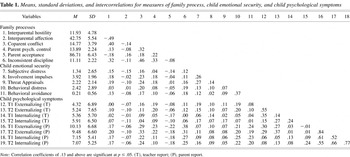
Means, standard deviations, and intercorrelations for measures of family process, child emotional security, and child psychological symptoms
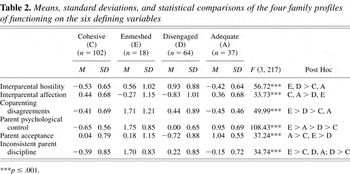
Means, standard deviations, and statistical comparisons of the four family profiles of functioning on the six defining variables
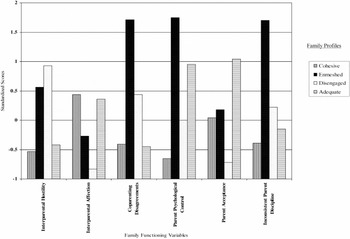
The means of the four family profiles of functioning on the six defining variables.
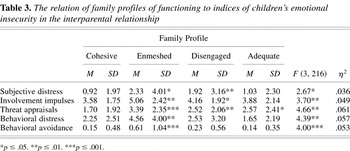
The relation of family profiles of functioning to indices of children's emotional insecurity in the interparental relationship
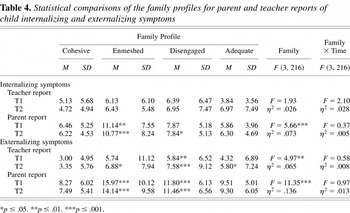
Statistical comparisons of the family profiles for parent and teacher reports of child internalizing and externalizing symptoms
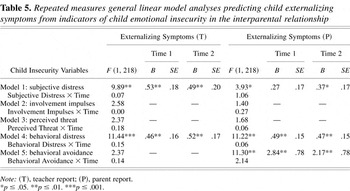
Repeated measures general linear model analyses predicting child externalizing symptoms from indicators of child emotional insecurity in the interparental relationship
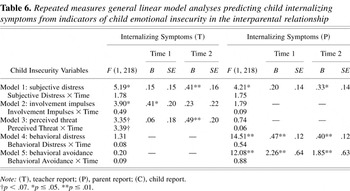
Repeated measures general linear model analyses predicting child internalizing symptoms from indicators of child emotional insecurity in the interparental relationship
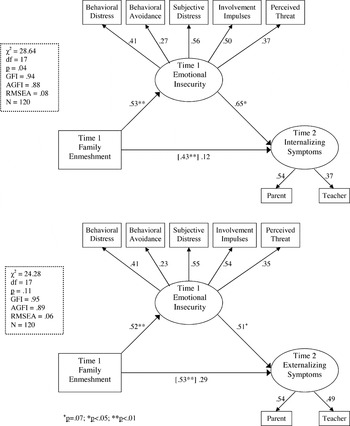
Structural equation models testing the mediational role of children's emotional insecurity in the interparental relationship in pathways between family enmeshment and children's internalizing and externalizing symptoms.
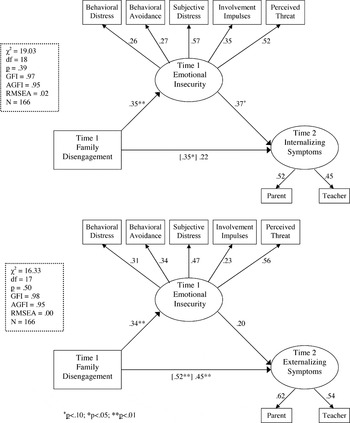
Structural equation models testing the mediational role of children's emotional insecurity in the interparental relationship in pathways between family disengagement and children's internalizing and externalizing symptoms.
 You have
Access
- 109
- Cited by