Au xixesiècle, les fonds d’archives constituent un enjeu juridique et politique immédiat : les Archives sont des institutions de souveraineté, et en aucun cas des lieux naturellement destinés à la recherche historique et à l’étude scientifique des documents. Les historiens contemporains de cette période doivent en faire l’expérience à maintes reprises. Durant l’automne 1867, c’est en vain que Leopold von Ranke tente d’accéder aux fonds du Geheimes Staatsarchiv, malgré sa demande au gouvernement bavarois faite en vue d’une « utilisation scientifique ». Ce refus est étonnant à deux points de vue : le royaume de Bavière fait montre d’une attitude assez libérale dans sa politique des archives et Ranke, parvenu au sommet de sa carrière, est déjà honorablement connu à Munich. Les fonctionnaires qui examinent sa requête ne la considèrent pas moins d’un œil méfiant : le conservateur en chef du Geheimes Staatsarchiv, le baron Karl Maria von Aretin, juge ainsi que l’utilisation des archives d’État bavaroises par un « historien prussien » est « problématique pour le moment » Footnote 1. Un an auparavant, la guerre a déchiré la Confédération germanique et s’est soldée par la défaite austro-bavaroise face à la Prusse, à la suite de la bataille de Sadowa. Une indemnité de guerre importante a été versée par le vaincu, qui fut forcé à conclure une alliance offensive et défensive avec le vainqueur. Après la déroute, le gouvernement bavarois a décidé d’adapter sa politique archivistique à la situation extérieure et de réorienter ses centres d’archives sur leur mission première : sécuriser l’existence de l’État bavarois. Dans cette perspective, non seulement Ranke – la figure de proue de la recherche historique fondée sur l’étude des archives au xixe siècle –, mais également les autres historiens et les archivistes venant de Prusse, ne sont pas les bienvenus Footnote 2.
Il nous faut rompre ici avec une représentation inhérente à notre propre pratique du métier d’historien, qui consisterait précisément à tenir pour évidente la vocation scientifique des archives : une telle perception n’est pas encore formée au début du xixe siècle. L’accès des savants aux fonds d’archives relevait, durant toute l’époque moderne et jusqu’au xixe siècle, du secret d’État, des arcana imperii – en tant que tel, il était nécessairement restreint et le contrôle de l’accès aux fonds était la norme plutôt que l’exception Footnote 3. Cependant, les historiens parvinrent à s’approprier, en s’appuyant sur les documents secrets qu’on les laissait consulter, la conception juridique de la vérité sous-jacente à cette tradition. La thèse centrale de cet article est que l’occultation politique des archives – à travers l’accès contrôlé – a été la condition pour que la recherche historique, au cours de la professionnalisation qu’elle a connue au xixe siècle, puisse se légitimer en profitant du statut de sources considérées comme juridiquement « vraies ».
L’objectivation des archives
Les archives et leur histoire ont rencontré, ces dernières années, une attention marquée de la part des chercheurs, avec des perspectives renouvelées. La tendance générale est, pour ainsi dire, celle d’une « objectivation des archives Footnote 4 ». En tant qu’institutions, les fonds d’archives ont longtemps été considérés comme des instances de vérité dont l’existence allait de soi et dont la finalité était la recherche historique. Peu à peu, les chercheurs ont commencé à les envisager comme des objets historiques à part entière, à en interroger les présupposés et à poser la question de leur rôle. Les interrogations formulées par les spécialistes de micro-histoire et d’histoire du quotidien ont été cruciales dans cette objectivation des archives. Il est apparu, en effet, qu’en voulant écrire l’histoire des opprimés, des anonymes et des groupes socialement exclus ou discriminés, ces historiens se heurtaient au fait que les pauvres, les criminels, les femmes ou les habitants locaux des colonies n’avaient pas écrit les documents de leur propre histoire – à supposer que ceux-ci existent. Les récits ou les prises de position les concernant sont marqués du sceau des relations de pouvoir au sein desquelles ils ont été produits et exigent un effort de méthode et de distance critique Footnote 5. Les sources n’apparaissent plus comme allant d’elles-mêmes, naturelles, mais bien comme des artefacts extrêmement complexes qui doivent être analysés selon la façon dont ils ont été fabriqués, transmis et utilisés. Cette mise en perspective, cependant, s’est longtemps limitée à des enjeux concrets d’histoire locale ; c’est seulement plus récemment que s’est manifesté un intérêt pour les archives en tant que telles et pour leur matérialité en dehors et au-delà de questions spécifiques à un contexte local. Également inspirés par les débats épistémologiques menés par certains philosophes Footnote 6, des historiens ont commencé à s’emparer de ce dossier Footnote 7. Une deuxième tendance utilisant les acquis récents de l’histoire des sciences pour se pencher sur la valeur heuristique des archives, en particulier comme matériau de la vérité historique, s’est ensuite fait jour Footnote 8. Ainsi, notre contribution pose les questions de l’accès aux documents et de leur utilisation, qui sont les prérequis du travail de l’historien à partir des archives Footnote 9.
La fonction politico-juridique des archives
À la fin du xviiie siècle encore, le « trésor » des archives n’a qu’exceptionnellement des visées historiques Footnote 10 ; il fait partie intégrante de l’appareil d’État – et par conséquent de l’occultation que pratique celui-ci, en opposition à la logique de publicité propre à la recherche historique. La nature exacte des fonds ainsi que la façon dont ils sont administrés sont maintenues secrètes Footnote 11. Conformément à l’idée des arcana imperii, propre à l’époque moderne, la mission des Archives gouvernementales est d’assurer l’intérêt de l’État et, au besoin, de garantir son existence Footnote 12. Dans le cas de l’Autriche, les « Archives secrètes de la Maison impériale » (Geheimes Hausarchiv) sont fondées en 1749, alors que Marie-Thérèse entend réagir aux difficultés rencontrées par la monarchie des Habsbourg dans la défense de ses intérêts lors de la guerre de Succession d’Autriche, qui vient de s’achever. Dans cette optique, elle charge Theodor Anton Taulow von Rosenthal (1702-1779), qui deviendra plus tard directeur des Archives de la Maison impériale, de rassembler tous les documents importants pour le nouveau centre d’archives de la monarchie des Habsbourg. Rosenthal sillonne tout l’Empire, se rendant aussi bien dans les dépôts des administrations impériales que dans ceux des pays de la Couronne – la Hofschatzregistratur à Innsbruck, le Hofschatzgewölbe à Graz ou le Kronarchiv à Prague –, à la recherche des pièces susceptibles d’être conservées dans ces archives centralisées. À Prague, il visite également le Landtafel, qui regroupe tous les documents des familles nobiliaires et notamment les chartes qui justifient leurs propriétés et leurs privilèges judiciaires Footnote 13. Le résultat des razzias menées par Rosenthal est impressionnant : 13 125 chartes, 82 fascicules et 32 manuscrits qui doivent constituer le « trésor spiritual Footnote 14 » garantissant la nouvelle solidité juridique de la monarchie danubienne.
Évidemment, les documents pouvant receler des secrets compromettants sur des actions du gouvernement guidées par la raison d’État, de même que les titres de propriété qui permettent de produire des preuves en cas de contentieux, en font partie Footnote 15. La gravité des conséquences de la perte éventuelle de certaines de ces chartes, de leur caractère incomplet ou encore d’un classement défectueux explique le soin apporté à leur conservation. Lorsque Franz Meinrad von Pflummern prend ses fonctions comme bailli de Triberg en « Autriche antérieure Footnote 16 » en 1737, il peine à établir son autorité en raison du désordre qui règne dans les papiers laissés par son prédécesseur. C’est au prix d’un long effort d’appropriation qu’il parvient à maîtriser ces documents ainsi que les coutumes liées à l’exercice des droits seigneuriaux et à répondre aux réclamations Footnote 17. Ce qui est vrai pour la gestion locale l’est aussi pour la « grande politique », comme le montre l’affaire des revendications habsbourgeoises sur la région bavaroise de Straubing à la suite de la mort du duc-électeur de Bavière, Maximilien III Joseph, en 1777. Le gouvernement bavarois est alors dans une position difficile dans les négociations, du fait de la perte d’une charte de renonciation à ces terres établie jadis par l’archiduc Albert d’Autriche Footnote 18. L’absence de documents importants peut donc se révéler périlleuse pour la politique du gouvernement comme pour la continuité de l’administration Footnote 19.
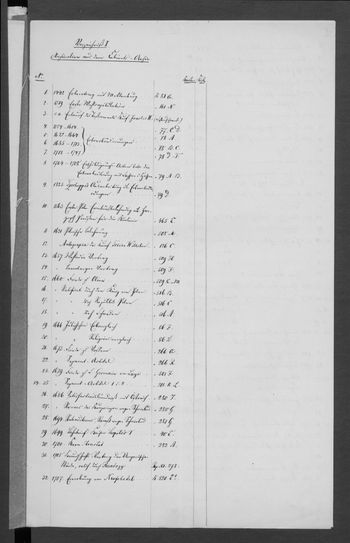
Cette fonction centrale des archives dans l’exercice de la souveraineté en fait, en temps de guerre, un objet de convoitise de la part des États ennemis Footnote 20. Devant l’avancée des troupes françaises vers Vienne en 1809, l’archiviste du Geheimes, Hausarchiv Joseph Knechtl (1771-1838) – « l’âme des archives » selon Klemens von Metternich –, organise le transfert des archives impériales en Hongrie. Un demi-siècle plus tard, la montée des tensions entre l’Autriche et la Prusse et la probabilité d’une confrontation militaire posent de nouveau la question de la mise en sûreté des archives. Du côté prussien, le directeur du Geheimes Staats- und Kabinettsarchiv, Carl Wilhelm von Lancizolle (1796-1871), se met d’accord avec le chancelier pour rapatrier les archives à Königsberg en cas d’urgence, cette solution ayant déjà été mise en œuvre en 1813 face à Napoléon – même si le principe arrêté pour les archives du gouvernement est que ces allées et venues doivent se produire « le moins possible, et qu’il vaut mieux trop peu que trop Footnote 21 ». L’inventaire des documents cruciaux établi à cette occasion occupe cinq feuillets in folio et comporte des actes remontant à 1442 (fig. 1) : concessions de fiefs, pactes d’alliance, traités de paix et de commerce avec leurs protocoles additionnels et leurs décrets de ratification, accords frontaliers et cartes correspondantes, archives de Frédéric le Grand, fonds privés laissés par les grands hommes d’État Footnote 22.
Outre les intérêts immédiats de l’État, les fonds d’archives peuvent aussi servir, le cas échéant, ceux de ses sujets. C’est ainsi qu’en août 1814, le curé Merz prie le gouvernement bavarois de lui faire parvenir la charte par laquelle « les dîmes de Betwar sont érigées en fondation, et qui doit se trouver dans [ses] archives secrètes », afin de prouver au roi du Wurtemberg que « les dîmes situées au-delà de la Tauber constituent une fondation, et ne peuvent en tant que telles être retirées à sa paroisse » Footnote 23, même si elles se trouvent en territoire wurtembergeois. Ces demandes pour se faire transmettre des documents de portée juridique qui émanent non seulement de particuliers, de corps constitués bavarois, mais aussi de gouvernements étrangers sont relativement fréquentes. Parmi les trois centres d’archives qui existent alors en Bavière, le Landesarchiv (Allgemeines Reichsarchiv à partir de 1812) se charge de faire parvenir les pièces, sous la forme de copies Footnote 24. Sur les 429 procédures définies entre 1800 et 1849 par le ministère bavarois de l’Intérieur pour les centres d’archives, 129 portent sur les demandes à visée historique ; les deux tiers restants concernent des demandes de consultation, à des fins principalement juridiques, qui émanent de ces acteurs privés ou publics Footnote 25.
La transmission des actes de propriété aux sujets du royaume a aussi pour effet de faire prendre conscience à ceux-ci de leurs droits vis-à-vis de tiers. Le « trésor le plus précieux de ce pays » contribue ainsi au maintien d’une société pacifiée par le droit, où les conflits sociaux se résolvent par des procédures contentieuses, elles-mêmes sous-tendues et garanties par l’existence et la production d’actes justificatifs devant les juges. Dans cette configuration, et conformément à la conception traditionnelle de l’époque moderne, les fonds d’archives participent au bien du pays.
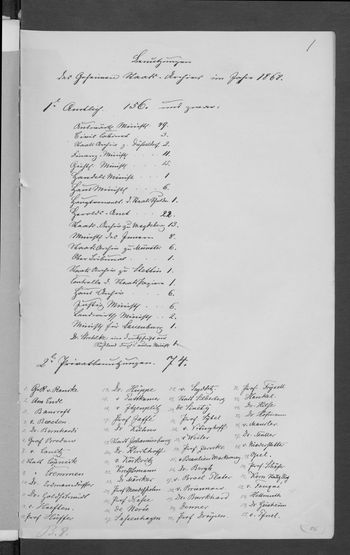
La mise à disposition des documents d’archives de manière interne, à destination d’autres services administratifs, est la deuxième grande mission des centres d’archives au xixe siècle (fig. 2). Les statistiques de consultation établies par l’administration prussienne des archives témoignent ainsi, pour les trois dernières décennies du siècle, d’un besoin documentaire grandissant de la part du gouvernement et de ses administrations. Alors que l’intérêt historique pour les archives en général est croissant et prédominant, dans le cas du Geheimes Staats- und Kabinettsarchiv, les besoins internes et administratifs dominent. Entre 1871 et 1899, ce sont 4 391 demandes de ce type qui parviennent au Geheimes Staats- und Kabinettsarchiv, soit en moyenne 175 requêtes par an Footnote 26. Ces sorties d’actes expliquent qu’une partie des fonds constitue en permanence une sorte de « centre d’archives itinérant Footnote 27 » et que de nombreuses séries se retrouvent incomplètes, en attendant que les administrations rendent les documents qui leur ont été prêtés Footnote 28. Par ailleurs, et c’est encore le cas sous l’Empire, ces consultations « internes » dépassent largement (61 %) les demandes « externes » qui émanent de personnes privées ou publiques (39 %).
L’histoire, un instrument de propagande ?
Le rôle et la valeur des archives reposent donc avant tout sur leur fonction juridique et politique. L’utilisation des documents à des fins « historiques » ou encore « littéraires » apparaît comme secondaire dans les hiérarchies implicites que trahissent les sources laissées par les archivistes eux-mêmes. La persistance de ces missions traditionnelles influençait l’organisation et le fonctionnement des archives publiques ainsi que leur « culture d’institution », sous le contrôle de l’administration centrale Footnote 29. Plus précisément, les centres d’archives devaient garantir la plus grande discrétion possible et le secret des documents conservés, en échange de leur indépendance politique. Les antagonismes et les relations de type « ami-ennemi », constitutifs des relations de politique intérieure comme extérieure, expliquent aussi le maintien de cette culture de la prudence et de l’occultation Footnote 30.
Si l’étude historique des archives repose sur leur caractère public, sinon publié, et s’oppose à cette culture du secret, elle comporte également, en particulier à l’époque, une dimension politique Footnote 31 : en effet, fonder le discours historique sur la consultation des archives permettait de faire de l’histoire une forme de propagande. Cet intérêt historique améliore, dans un premier temps, l’image extérieure des archives et de leur utilité. En 1827, Knechtl remarque ainsi que « les archives impériales autrichiennes constituent une mine presque inépuisable, non seulement pour l’histoire de telle ou telle province de l’Empire, mais aussi et surtout pour celle de l’ensemble des États européens Footnote 32 ». L’étude savante des actes et des chartes confirme le caractère inestimable du « trésor », tout en lui conférant une utilité supplémentaire Footnote 33. La redécouverte des anciens dirigeants politiques et de leur façon de gouverner était, de surcroît, un instrument précieux aux mains de l’État – ainsi de Johann Wilhelm Ridlers (1772-1834), qui profite d’une étude sur Ferdinand II pour partir en guerre contre les « calomnies scandaleuses » colportées contre la maison des Habsbourg :
L’habitude était de répondre aux racontars de cette sorte en les ignorant ; l’inconvénient est qu’on ne fait alors qu’accroître la malveillance des calomniateurs et de leurs complices, qui répandent leurs injures de façon si infatigable et sous tant de formes différentes qu’elles finissent par trouver un écho même chez les personnes innocentes, au point d’apparaître par la suite comme des vérités historiques incontestées Footnote 34.
L’étude historique des sources ouvre également la voie à la propagande historico-politique, en dévoilant, le cas échéant, des aspects oubliés de la grandeur nationale. Le baron Joseph von Hormayr, ambassadeur à Hanovre, vante, dans ses lettres au gouvernement bavarois, les mérites de Johann Böhmer (1795-1863) et de Georg Heinrich Pertz (1795-1876), collaborateurs des Monumenta Germaniae Historica (MGH). Les prémices de la « Société pour l’étude de l’histoire ancienne de l’Allemagne » (Gesellschaft für ältere deutsche Geschichtskunde) sont certes panallemandes, mais Hormayr attire l’attention sur le fait que certaines des sources publiées par Böhmer et Pertz « mettent au jour des choses importantes pour la Bavière », avant de pointer tout ce qui pourrait, dans ces éditions, susciter l’intérêt du gouvernement de Munich. Les trésors dénichés par les historiens font rayonner la grandeur politique et assurent la pérennité historique du royaume, à travers les trouvailles faites dans les collections d’Allemagne du Nord ou dans les archives bavaroises, les chroniques, les actes notariés, les chartes, les manuscrits, les récits et autres sources. Autrement dit, la puissance étatique bâtit de nouvelles fondations dans la profondeur des documents apportés par le travail des historiens Footnote 35.
Par ailleurs, l’histoire est une « arme politique de défense » – et maints contemporains considèrent la Vaterlandsgeschichte en particulier comme un « dispositif puissant, à la fois offensif et défensif » Footnote 36. On reconnaît, à travers ces conceptions, le biais qu’introduit l’attitude esthétique ou esthétisante dans le rapport qu’entretient l’observateur du passé avec l’objet de son étude. En effet, l’histoire semble alors promettre de donner des principes directeurs au présent, afin de prévenir l’« éclatement » des forces politiques et sociales Footnote 37. Cela se révèle particulièrement vrai pour des constructions politiques récentes comme la Bavière ou la Prusse, qui avaient besoin de légitimer historiquement la situation nouvelle née de l’impérialisme napoléonien. Le bouleversement des frontières européennes à la suite du congrès de Vienne a engendré l’acquisition par ces États de nouveaux droits et de nouveaux titres de propriété, des dîmes, des revenus ou des sujets liés à ces terres, qui leur ont légué des traditions très différentes d’un endroit à un autre. La loyauté de ces nouveaux sujets peut, entre autres, s’obtenir au moyen de l’histoire. Au-delà du rôle des exempla et des great narratives et de leurs effets politiques réels, ou tout du moins espérés, l’histoire se prête également à l’apprentissage du passé ; en tant que « science de l’État », la recherche historique avait pour mission de mettre au jour un corpus de connaissances sur des territoires et des populations encore largement inconnus de leurs propres gouvernants – et, par la suite, de diffuser ces connaissances. C’est ainsi qu’en Bavière paraît, en 1821-1823, une revue spécialisée, fournie en documents d’histoire locale par des archivistes-chercheurs afin de « donner à l’administration royale, grâce aux fonds des archives, des informations qu’elle aurait moins facilement par d’autres moyens » Footnote 38. Au xixe siècle, la collecte intensive de sources et l’approfondissement de la connaissance historique de l’État et du territoire qui en découle ont toutes les apparences d’une demande politique pressante.
L’ouverture des archives
Face à ce besoin politique manifeste, les gouvernements de l’époque s’interrogeaient sur la publicité qu’il fallait donner aux travaux historiques. Comment concilier la promotion de ces travaux avec la dimension secrète que l’État confère aux fonds, nécessaire à sa protection ou, en tout cas, à celle des savoirs qui le concernent ? En Autriche, l’idée de réforme fut pour ainsi dire discréditée politiquement par la résistance victorieuse à l’impérialisme napoléonien ; la Bavière et la Prusse, en revanche, connurent un climat de pression réformatrice. Aussi bien à Berlin qu’à Munich, les gouvernements formulèrent des idées de réorganisation qui cherchaient à opérer une synthèse entre deux conceptions des archives de nature politiquement différente.
Dans le cas de la Prusse, le ministre de la Culture Karl vom Stein zum Altenstein (1770-1840) fit une première proposition – dans le cadre des réformes des archives introduites sous le chancelier Karl August von Hardenberg (1750-1822) à partir de 1819 Footnote 39. L’idée était de séparer les documents conservés dans les fonds d’archives en deux catégories : actes de nature « juridique » et actes de nature « scientifique » – par la suite, à Berlin comme en province, les deux sections fonctionneront de manière séparée dans les centres d’archives Footnote 40. Ce projet de création d’« archives scientifiques » rencontre néanmoins des oppositions, comme celle du diplomate et futur directeur des Staatsarchive de Prusse, Karl-Georg von Raumer (1753-1833), qui affirme que cette séparation est « tout bonnement impossible » :
Ce qui est historique, étatique, ce qui concerne le droit constitutionnel ou le droit international s’entremêle tellement, qu’il ne resterait rien de nos fonds d’archives si l’on appliquait réellement cette séparation. Tout serait à vrai dire découpé en mille morceaux, comme si l’on disséquait un corps humain où tout tient ensemble. On aurait peut-être l’ensemble du système nerveux, ou du système vasculaire, ou du système lymphatique, mais le corps dans son existence organique aurait disparu Footnote 41.
En outre, Raumer n’oublie pas de remarquer que la tentative d’Altenstein laisse de côté la question centrale, en ce qui concerne le statut des documents d’archives, des droits que s’arrogent le souverain ou l’État vis-à-vis de ses propres sujets comme de l’étranger.
Les mêmes réserves conduisent, cinq ans plus tard, au refus d’une autre proposition de réforme. Alors que le projet d’Altenstein reposait d’abord sur une approche matérielle des fonds d’archives, la vision défendue par le Bavarois Joseph von Fink (1770-1843) est plus complexe, à en croire ses « idées sur des liens plus étroits entre les Archives royales et l’Académie des sciences », exprimées devant la section historique et philologique de l’Académie de Bavière. En renvoyant aux statuts de l’Académie, Fink estime qu’elle « doit promouvoir les sciences dont dépend la connaissance historique et scientifique du royaume » – et plaide par conséquent en faveur d’un accès plus facile aux archives pour les membres de l’Académie, dans la mesure où il s’agit de « documents fondamentaux parmi les sources de l’histoire » Footnote 42. En tant que conservateur des « Archives secrètes de l’État » – les Archives centrales du ministère des Affaires étrangères –, Fink est parfaitement conscient des missions qui leur sont assignées. Aussi, il milite pour une ouverture des « portes à la compétence des membres de l’Académie royale », d’autant que ces « trésors pieusement préservés », devenus désormais inutiles au gouvernement, constituent un gisement inépuisable pour la science Footnote 43. Or c’est justement cette « compétence » qui suscite des désaccords, y compris parmi les membres de la section historique et philologique de l’Académie eux-mêmes. Le haut fonctionnaire (Staatsrat) Georg Karl von Suttner (1763-1836) affirme ainsi :
La première et la plus essentielle parmi les missions des Archives royales est la préservation des chartes et des documents administratifs, en tant que supports servant à établir des situations juridiques, publiques ou privées. Elles appartiennent par conséquent aux administrations suprêmes de l’État, et ce n’est pas à un institut dont le rôle est seulement scientifique qu’il faut les confier Footnote 44.
Dix ans plus tard, le président du Conseil prussien Friedrich Ancillon (1776-1837) tente, de son côté, de corriger les « insuffisances des archives » par des réformes touchant à la structure du personnel. Il entend notamment créer un poste d’expert scientifique, afin que ce « trésor inutilisé puisse, à l’avenir, être davantage exploité pour la science Footnote 45 ». Le prince Wilhelm Ludwig Georg Sayn-Wittgenstein (1770-1851), ministre de la Maison du roi alors en charge des archives, s’oppose aussi bien à des changements dans leur structure qu’à leur utilisation dans le cadre de recherches historiques : « Ces messieurs de l’Université ou de la littérature envisagent les Archives comme une sorte de cabinet de curiosités, qui devrait servir à satisfaire leur vanité, leur intérêt ou leur goût de la nouveauté, ainsi qu’à amuser le public Footnote 46. » Ancillon réussit néanmoins à obtenir l’assentiment de Sayn-Wittgenstein et fait parvenir au souverain Frédéric-Guillaume III sa proposition de « mettre l’un de nos savants en relation permanente avec le Geheimes Staatsarchiv Footnote 47 ». Celui-ci devra « n’en faire qu’un usage discret et […] s’abstenir de toute immixtion dans l’administration proprement dite du centre d’archives, en se bornant à des travaux strictement scientifiques Footnote 48 ». Le roi reste cependant inflexible dans son refus de voir la circulation d’informations relatives au gouvernement échapper au contrôle plein et entier du directeur des Archives et élude la proposition de son président du Conseil Footnote 49.
Ces tentatives d’affirmer le rôle scientifique des archives de manière institutionnelle ont donc toutes échoué, que la question ait été abordée sous l’angle de l’organisation, de la composition du personnel ou d’une typologie des documents. Un premier élément d’explication réside dans la nature même du « centre d’archives traditionnel », qui repose précisément sur sa fonction politico-juridique : il s’agissait en particulier de sauvegarder les intérêts fiscaux et territoriaux de l’État, de fournir aux autorités et aux bureaux administratifs les anciens et nouveaux documents nécessaires et, enfin, dans la mesure du possible, de permettre une résolution de conflits d’intérêts qui soit légalement réglementée entre les différentes parties (en fournissant des copies). Si l’idée d’ouvrir les archives à un usage historique existe bel et bien et trouve des défenseurs, cette attitude reste encore isolée. Une seconde raison tient aux craintes, au sein de l’appareil administratif, de voir se diluer la souveraineté gouvernementale sur la circulation de l’information touchant aux intérêts de l’État. Une chose est certaine en tout cas : les tentatives pour rendre institutionnelle la consultation des archives par les historiens apparaissent incompatibles, dans la première moitié du xixe siècle, avec le souhait de maintenir une mainmise politique sur le « trésor » qu’elles constituent.
La supplique d’Ancien Régime, une pratique pérenne
L’ouverture des archives aux chercheurs qui se produit par la suite n’est donc pas le résultat de ces tentatives de réforme, mais celui de la généralisation d’une pratique déjà bien ancrée : la supplique, que l’on appelle dans le vocabulaire administratif allemand « Gesuch » (requête), « Eingabe » (pétition) ou encore « Petition » Footnote 50. Cette habitude de s’adresser par une demande directe à l’autorité politique remonte aux traditions de l’époque moderne, notamment pour les consultations de documents juridiques ou judiciaires. Il est fréquent, sous l’Ancien Régime, de demander de cette manière au souverain, ou à une autorité qui le représente, de lever une réglementation existante, avec l’argument que celle-ci pose une difficulté au demandeur pour des opérations anodines – cette demande de faveur se fait alors en adoptant une posture d’humilité Footnote 51. C’est également de cette manière que les historiens formulent leurs suppliques au souverain, en demandant de lever ponctuellement le secret sur tel acte ou telle charte, afin de procéder à une étude historique. En somme, les savants peuvent voir des documents à condition d’en faire la demande expresse, que le pouvoir politique se réserve d’accepter ou de refuser Footnote 52.
Les avantages d’une telle procédure sont évidents du point de vue de l’administration : elle ne confère en effet aucun « droit à la recherche » aux requérants. À l’opposé du droit reconnu à chaque citoyen de consulter les archives dans la France révolutionnaire Footnote 53, la pratique de la supplique reste une affaire de sujet et une marque de soumission à l’autorité monarchique. Celle-ci se réserve en effet à tout moment le droit de rejeter les demandes, tandis que le processus d’accès demeure de son fait. Comme la logique de la requête consiste à demander que soit faite une exception à une règle établie, ces autorisations ponctuelles ne remettent pas en cause le principe du secret.
Un second avantage tient néanmoins à la procédure de demande elle-même, qui impliquait de justifier la supplique en portant à la connaissance de l’administration l’objet exact des recherches menées. Là encore, la pratique permet de contrôler a priori les actes transmis et l’utilisation qui en sera faite, en les limitant à des pièces précises, dans le cadre d’un projet circonscrit : ainsi de l’historien du droit Jean-Marie Pardessus (1772-1853), lorsqu’il demande en 1826 à l’administration autrichienne à voir le manuscrit du Livre des assises et des usages du royaume de Jérusalem afin d’étudier le droit de la mer au Moyen Âge Footnote 54, ou encore de l’écrivain et ethnologue prussien Julius Max Schottky (1797-1849), qui sollicite en 1831 le roi de Bavière pour obtenir l’autorisation de travailler sur « les pièces documentaires en relation avec la guerre de Trente Ans, et qui sont conservées aux Archives royales », à l’occasion d’un voyage d’études qu’il compte accomplir à Prague et à Munich Footnote 55. La réception de ces demandes et l’intérêt individuel qu’elles manifestent ne garantissent donc aucunement un droit de consultation pour d’autres chercheurs, et encore moins pour tous, d’une manière qui serait générale ou impersonnelle. Systématiquement, l’administration traite chaque demande de manière spécifique, en tenant compte de la situation politique du moment. Cette configuration institutionnelle laisse une marge d’interprétation importante dans le processus de décision et permet également de surveiller au maximum la consultation et l’étude des documents transmis.
Cette procédure de la supplique explique la continuité de la pratique politique des archives au xixe siècle. L’utilisation de la supplique en vue d’une consultation historienne des archives est indépendante, par ailleurs, des différences existant d’un État à l’autre en termes de structures constitutionnelles. Il n’y a rien d’étonnant, par exemple, à ce que la monarchie habsbourgeoise, peu encline à la réforme, verse les demandes de consultation dans le « fonds des actes d’administration interne » (Kurrentakten), créé en 1749. On est en revanche plus surpris de constater que l’administration bavaroise, pourtant déjà profondément réformée, maintienne avec force le passage obligé par la supplique. Les réformes d’ensemble qui mettent alors en place une « nouvelle Bavière » incluent parallèlement des dispositions concernant l’organisation, la gestion des fonds et les principes de classement des archives de l’État. Les anciennes archives des Wittelsbach sont réparties dans trois centres d’archives d’État distincts, tandis que la méthode traditionnelle de classement des documents au fil de leur accumulation historique (Provenienz) est remplacée par une logique de destination (Pertinenz) Footnote 56. Bref, les historiens de cette période doivent en passer par la procédure de la supplique, dans la mesure où la fonction originelle assignée aux archives – la protection de la souveraineté – a besoin d’un moyen, lui aussi hérité de la tradition, pour assurer la gestion de leur consultation.
Le contrôle de l’accès aux fonds d’archives
Par conséquent, les gouvernements ont adopté pour les consultations à but historique des procédures qui correspondaient au modèle ancien des consultations à but juridique. Dans un cas comme dans l’autre, l’intérêt immédiat de l’État suscite l’attention : sont exclus d’emblée les documents qui toucheraient à des questions fiscales ou territoriales, comme en Bavière où les réponses aux demandes sont toujours négatives lorsqu’il s’agit d’actes concernant les anciennes seigneuries médiatisées ou encore les abbayes et les évêchés sécularisés Footnote 57. Par ailleurs, la bonne renommée de la dynastie régnante est également prise en compte, ainsi que ses relations avec d’autres lignages nobles, souverains ou non Footnote 58. On se soucie enfin de l’intérêt des autres États, lorsque leur réputation internationale ou leurs secrets entrent en jeu – chaque État dépendant de la discrétion des autres en ce domaine Footnote 59.
Loin de s’estomper durant la période dont nous parlons, comme on l’a parfois écrit Footnote 60, la tradition des arcana imperii reste donc bien vivante et les impératifs de la dissimulation sont toujours au cœur de la pratique administrative Footnote 61. Quand, dans son plaidoyer emphatique au sujet des recherches historiques menées à partir des archives, Hormayr rappelle l’« épicerie anxieuse du secret » à laquelle se livrait l’administration des archives dans les temps anciens, cela ne l’empêche pas pour autant, bien qu’ancien directeur des Archives de l’État et de la cour (1808-1813), de ne rien révéler de ce qui se trame derrière les portes closes des bureaux du gouvernement Footnote 62. Ni les manœuvres du gouvernement et de l’administration, ni les échanges entre les différents services, ni les recommandations sur les mesures à prendre ne percent derrière la retenue des fonctionnaires. Une requête conduit le plus souvent, pour le demandeur, à une fin de non-recevoir, comme celle que reçoit Ranke en octobre 1827 de la chancellerie de Vienne : « Histoire beaucoup trop récente. Les règles. Inconnu du centre d’archives » – il commente : « Beaucoup de belles paroles » Footnote 63.
Afin de préserver ce périmètre du secret d’État, les archivistes vérifient scrupuleusement les documents demandés, feuillet par feuillet Footnote 64 ; un moyen extrêmement coûteux en temps, mais qui permet d’éviter d’emblée toute révélation compromettante pour le gouvernement. Une limite de ce procédé réside dans la présence de documents rédigés en langues étrangères non comprises par les archivistes : il en est ainsi des pièces rédigées en russe conservées aux Archives secrètes de la cour, que Knechtl subtilise par sécurité lorsqu’elles sont transmises au chercheur Friedrich Adelung (1768-1843), car celui-ci se trouve être membre du corps diplomatique russe Footnote 65. Lorsque l’homme politique et savant anglais James Mackintosh (1765-1832) demande à avoir accès à la correspondance diplomatique de la République de Venise, il se voit opposer des arguments concernant l’état matériel des documents : « l’écriture misérable Footnote 66 » de ceux-ci les rendrait à peine lisibles ; par ailleurs, le rubriculum – la table des matières – manquerait, rendant impossible le dépouillement de l’ensemble des fascicules et des volumes concernés, étant donné la mauvaise lisibilité des pièces. Parallèlement, sa demande est passée au crible des critères administratifs habituels. Les motifs avancés par le demandeur paraissent peu crédibles, lorsqu’il déclare vouloir utiliser ces documents « à des fins purement historiques » alors qu’il est un membre en vue du Parlement anglais. Les archivistes estiment également douteux que « les anciennes vues politiques de cette République, dans ses relations avec les puissances continentales, puissent être mises au jour sans risque de compromission [d’intérêts actuels] ». Enfin, ils s’inquiètent de la conservation des pièces demandées qui devraient être envoyées par voie postale et donc confiées aux mains du requérant : dans ces conditions, « qui sait quelles mutilations les documents pourraient subir – car il n’est pas impossible que l’Angleterre tienne à faire disparaître le souvenir d’actes politiques répréhensibles qu’elle aurait commis alors ». Finalement, la réponse faite est qu’il n’est pas possible de décider si les documents sont communicables ou non, ce qui équivaut à un refus Footnote 67.
La masse considérable de documents conservés et la méconnaissance de leur contenu exact constituent des défis majeurs face à cette volonté de contrôle. La dispersion géographique des fonds en est un autre : ainsi des archives de la République de Venise, éparpillées entre Vienne, Paris, Berlin et bien sûr Venise. Pour les États allemands, la médiatisation des seigneuries impériales (c’est-à-dire le fait de ne plus relever directement de l’empereur) et la sécularisation des principautés ecclésiastiques consécutives à la période napoléonienne ont conduit à une appropriation des archives concernées par les grands États. Leurs archivistes tardent à les répertorier, et les connaissent par conséquent assez mal – l’« impossibilité d’une vue d’ensemble des fonds transmis » compliquant elle aussi l’utilisation par des personnes extérieures Footnote 68. Lorsque Ranke veut accéder « non seulement aux archives vénitiennes, mais aussi aux autres », Knechtl lui fait cette réponse : « Mais combien de ces pièces pourraient se trouver dans les volumes que vous demandez, et qui pourraient, à tort ou à raison, jeter une mauvaise lumière sur certaines familles et certains gouvernements encore en place aujourd’hui Footnote 69 ? » Après la mort de son prédécesseur, Knechtl exerce de facto la direction du Geheimes Hausarchiv de Vienne – sans être pour autant officiellement promu, faute d’avoir pu s’assurer les soutiens personnels nécessaires. Il s’occupe donc de la gestion administrative en sus de ses tâches habituelles d’archiviste, tandis que s’accumulent les demandes de consultation à caractère historique, telle celle de Ranke Footnote 70.
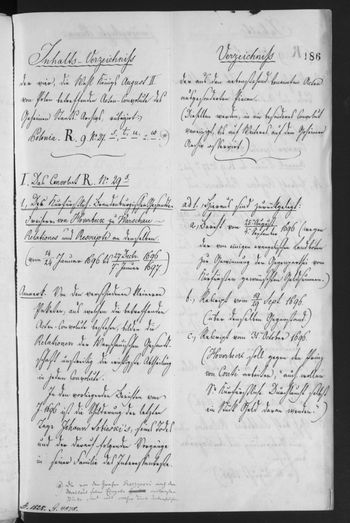
Le gouvernement prussien est confronté à des questions similaires et ne se prive pas d’y répondre de la même manière. En octobre 1842, le comte polonais Eduard Raczynski se voit ainsi prié d’expliquer plus précisément les « tenants et aboutissants Footnote 71 » de son intérêt pour les archives royales ; celui-ci s’exécute en précisant qu’il désirerait dépouiller les procès-verbaux de l’élection royale polonaise de 1696-1697 Footnote 72. Parmi les quatre recueils concernés, le troisième (Polonia R.qN. 27 s.) s’avère délicat. Les manœuvres de l’ambassadeur brandebourgeois, le baron Johann Dietrich von Hoverbeck, s’y étalent à travers les rapports qu’il envoie à Berlin, comme Georg Wilhelm von Raumer (1800-1856) l’avait déjà établi. Le candidat soutenu par le Brandebourg avait par ailleurs perdu la « bataille rangée de pots-de-vin qu’était alors une campagne électorale à Varsovie », et qui avait opposé les grandes puissances européennes Footnote 73. Les documents attestent la propagande menée contre le candidat favori, les sommes d’argent mises à disposition de son concurrent pro-brandebourgeois ainsi qu’une grande quantité d’« imitations de sceaux que l’on utilisait pour prendre connaissance, sans laisser de traces, de la correspondance des partisans du prince de Conti » – autant de « machinations » justifiant de maintenir ces pièces au secret Footnote 74. Indépendamment de l’« apparence de duplicité » jetée sur la politique de puissance du Brandebourg, ces sources permettraient en effet au requérant polonais de prouver l’« objectif final » de ces agissements : « l’anéantissement de la République de Pologne, au profit des États voisins », qui devait trouver son aboutissement un siècle plus tard Footnote 75. Des éléments comme les « commissions de vote » versées à hauteur de 200 000 thalers ne sont « certes déjà plus un secret », comme l’indique le conseiller de légation Guido von Usedom (1805-1884), qui est en charge de l’affaire et s’appuie sur la littérature historique déjà parue Footnote 76. Il lui semble néanmoins qu’il existe « une différence entre raconter l’affaire, et pouvoir l’étayer, documents à l’appui Footnote 77 ». L’établissement d’un inventaire précis des documents incriminés et, notamment, des pièces qui devraient rester secrètes doit, selon lui, permettre que ce passé, déjà partiellement connu, ne gagne pas davantage en notoriété et en crédibilité à cause des archives de l’État prussien lui-même (fig. 3)Footnote 78.
La politique de puissance menée par le Brandebourg, ses objectifs et les moyens qu’elle employait à leur réalisation, ainsi qu’ils apparaissent dans cette élection polonaise de 1696, sont donc connus au milieu du xixe siècle, du moins dans leurs lignes générales, si ce n’est dans tous leurs détails. Cette histoire de lutte de pouvoir n’est en aucun cas impossible à révéler : elle est déjà racontée, écrite et lue. Les détails de ces agissements, quant à eux, ne semblent pas tabous pour les fonctionnaires en charge des archives, comme le montre leur argumentation. Leur discours, fondé sur l’idée de raison d’État et légitimé par elle, permet tout à fait d’admettre les motivations de tels actes. En revanche, ces mêmes conceptions politiques et leurs preuves matérielles ne peuvent ni être transmises à l’extérieur du périmètre secret de l’administration, ni être publiées. Les archives, pour reprendre la thèse de Michel Foucault dans L’archéologie du savoir, ne touchent donc pas à l’idée commune de ce qui peut être dit ou pensé. En raison de sa perspective structuraliste, Foucault appréhende cependant le concept d’archive d’une manière trop limitée pour pouvoir saisir les caractéristiques spécifiques des archives dans le cadre de l’évolution du discours historique Footnote 79. Le fondement de la spécificité du discours historique procède en effet des archives, dans la mesure où la référence à une pièce d’archives se superpose à l’auctoritas de l’administration. En se libérant du cercle étroit que lui imposait jusqu’au xixe siècle le système des arcana et du secret lié à la raison d’État, ce discours commence à valider des histoires qui étaient déjà racontées : il les étaie par des preuves et conquiert de la sorte un tout autre statut épistémique. L’histoire devient pour ainsi dire plus vraie à partir du moment où elle se réfère au « trésor des archives ».
Cette nouvelle légitimité de l’histoire recèle dès lors un potentiel à la fois historique et politique dont le gouvernement a pris la juste mesure et qu’il a cherché à contrôler en instrumentalisant la communication des documents. Il ne s’agit cependant pas de « circuits » qui détermineraient le mode opératoire du discours historique – comme le suppose la conception des archives de Wolfgang Ernst, inspirée par la théorie des médias Footnote 80. La procédure de contrôle de l’accès aux actes montre précisément que la communication des documents ne constitue pas un « sacrilège » mais une pratique d’ordre politique subordonnée à la volonté des acteurs, et une pratique administrative tout à fait courante Footnote 81. L’ouverture des fonds est à géométrie variable, modulée en fonction des personnalités, de leurs compétences et de leurs connaissances respectives ainsi que de leur vision de l’histoire, souvent conditionnée par la situation politique présente et par le concept de raison d’État. Le lien entre le secret, hérité de la tradition des arcana, et les problématiques de la publicité est ici patent : il n’est pas question d’écrire un récit historique qui nuirait à la réputation ou aux intérêts de l’État à partir des documents qu’il possède lui-même. Histoire et secret s’entrelacent dans la politique gouvernementale d’ouverture des archives, en raison de cette dialectique du silence et de la publicité Footnote 82. L’histoire de l’historiographie a mis en lumière, dans le sillage du tournant linguistique, les concepts directeurs et les thèmes spécifiques qui sous-tendent les représentations esthétiques et la vision de l’ordonnancement narratif des travaux historiques du xixe siècle Footnote 83. Il faut étendre cette perspective à l’analyse de la matérialité de ces travaux – dans le sens d’une mise au jour de la construction matérielle du savoir historique. Finalement, la recherche du xixe siècle repose en effet, dans la mesure où elle s’appuie sur des archives, sur le silence et la dissimulation. L’interpénétration de l’histoire et du secret n’est pas seulement au cœur des enjeux politiques autour de la consultation des archives : elle affecte directement le résultat de cette consultation et les travaux qui en découlent Footnote 84.
L’historien, un gêneur ?
L’équilibre entre écriture de l’histoire et maintien du secret se rompt complètement lorsqu’en 1828 l’écrivain prussien Friedrich Christoph Förster (1791-1868) commence à publier sa « collection » sur la vie d’Albrecht von Wallenstein Footnote 85, l’un des principaux héros de la guerre de Trente Ans, qui a suscité un vif intérêt de la part de l’historiographie et de la littérature, avant comme après 1800. La raison de cet attrait est la suivante : alors que Wallenstein avait été élevé au rang de commandant en chef des armées impériales par la cour de Vienne, il était passé, à l’été 1633, au camp adverse, en joignant ses forces à celles du roi de Suède Gustave II Adolphe – le principal ennemi des Impériaux. Ce crime de haute trahison constitue un thème littéraire de premier choix et la littérature historique du temps insiste généralement sur la culpabilité de Wallenstein, en présentant son assassinat ultérieur par ses propres officiers comme une punition légitime. Förster renverse complètement cette image de l’historiographie officielle. La biographie, truffée d’extraits des lettres et des écrits du général, montre le rôle crucial qu’ont joué un grand nombre de protagonistes dans ce revirement de l’été 1633, tout en plaidant pour l’innocence de « notre héros » Wallenstein Footnote 86. D’après lui, eu égard à cette « falsification de l’histoire de Wallenstein », sa biographie ne peut qu’adopter une perspective « critique, plutôt que purement historique » Footnote 87. Förtser estime que la vera narratio en vigueur auparavant, le récit de Schechina Raschin, correspond à la version des faits imposée après coup sous la pression de la maison de Habsbourg, dans laquelle les contradictions des différents manuscrits disponibles ont été occultées, tandis que d’autres événements connus par ailleurs ont simplement été ignorés Footnote 88.
Les propos de Förster constituent un précédent fâcheux pour les autres chercheurs Footnote 89. Face à la résonance de l’affaire, Ranke, qui se trouve au même moment à Venise, se sent obligé de témoigner de sa loyauté envers l’État prussien auprès du conseiller d’État Friedrich Gentz, qui est son protecteur. Peut-être par crainte de se voir restreindre l’accès aux archives, il assure qu’il ne faut pas s’inquiéter de le voir écrire un livre « comme cette wallensteiniade Footnote 90 ». Près d’une décennie plus tard, le ministère prussien rappelle que le « gouvernement impérial autrichien a eu à regretter récemment d’avoir ouvert ses archives à des personnes qui ont utilisé celles-ci pour confirmer leurs idées préconçues sur l’innocence de Wallenstein Footnote 91 ».
La portée de cette affaire Wallenstein réside dans son aspect scandaleux, la version non officielle des faits s’étant trouvée corroborée par des éléments probants tirés des archives du gouvernement lui-même. Förster a d’abord utilisé des archives privées, avant d’obtenir l’autorisation de consulter les archives du Conseil de guerre secret à Vienne, à l’issue de plusieurs tentatives infructueuses Footnote 92. Förster n’a cependant pas su répondre à la faveur impériale avec l’humilité attendue Footnote 93. Il a abusé de la confiance qui lui a été témoignée, en utilisant contre l’auctoritas du gouvernement les documents qui sont censés être au fondement de celle-ci. Autrement dit, il n’a pas montré la retenue qui aurait été le pendant de l’ouverture bienveillante des archives Footnote 94.
En termes de politique scientifique, l’affaire de la « wallensteiniade » est un fiasco, le pire scénario auquel l’administration d’État pouvait s’attendre Footnote 95 et que les procédures de maintien du secret auraient dû empêcher. Dans la mesure où la fonction première des archives est juridique, il est significatif que l’affaire ait eu des répercussions non seulement en historiographie, mais également dans le domaine du droit. Le chef du lignage Wallenstein s’appuie en effet sur la lettre de Majesté exhumée par Förster pour contester en justice (sans succès) la confiscation des biens de la famille en 1634 Footnote 96. L’« ordre juste des choses Footnote 97 » est ici invoqué à l’appui des archives, dans un sens aussi bien juridique qu’historique ; droit et histoire s’entremêlent une fois de plus. L’invocation de preuves juridiques pour légitimer l’écriture de l’histoire transforme également la façon dont se construit le récit historique. L’ouvrage de Förster en est un exemple-type : en réalité, il a ouvert un procès contre la cour de Vienne, et rendu un non-lieu en faveur de Wallenstein. Admettons que le titre choisi par Förster pour le troisième volet de son étude, publié en 1844, renvoie à celui du drame Wallenstein (1799) composé par Schiller et reflète par là même le caractère fortement littéraire des travaux historiques de l’époque, ainsi que l’ont montré à juste titre les recherches inspirées par le linguistic turn. Cependant, l’ouverture progressive des archives est visible elle aussi, dans la mesure où se retrouve dans l’œuvre de Förster le souci de la documentation du récit historique par des sources d’archives. L’écrivain se voit contraint de rendre publics les matériaux de la vérité historique qu’il expose – même s’il faut relativiser les conditions dans lesquelles ceux-ci ont été obtenus – et il intègre dans son étude, comme beaucoup d’autres chercheurs le font au même moment, les documents consultés.
Les preuves juridiques émanant des archives avaient une grande valeur pour la recherche historique. La raison de cet attrait réside – aux yeux des contemporains –dans la conception ancienne des archives comme « trésor de chartes » dont le contenu et la valeur épistémologique seraient essentiellement différents de tout autre document. Le ius archivi, apparu au début de la période moderne, reconnaît en effet à la charte tirée des archives un « droit prééminent lié à sa force en tant que preuve » : pour reprendre la formulation d’Ernst Spangenberg, « chaque pièce originale conservée dans les archives est considérée comme une charte issue de la puissance publique Footnote 98 ». La doctrine du droit archivistique traditionnel confère aux documents d’archives une fides perpetua qui les met au-dessus de n’importe quel autre témoignage Footnote 99. La valeur de cette nouvelle source de légitimation du discours historique s’exprime chez Förster lorsqu’il souhaite que l’on considère son compendium dédié à Wallenstein comme un « trésor des chartes indispensable Footnote 100 ». Cette conception juridique de la vérité, incarnée par les documents d’archives, est à l’origine de l’optimisme épistémologique du savoir historique du premier xixe siècle, souvent présenté comme naïf ou romantique. C’est ainsi que Hormayr recommande à un gouvernement bavarois plus que méfiant de donner à l’historien prussien Friedrich von Raumer (1781-1873) l’accès aux « trésors archivistiques » de Munich, en justifiant son avis favorable par le fait qu’il souhaite seulement trouver des documents destinés à l’enseignement Footnote 101. La fabrication de faux atteste également de cet engouement pour les archives et de la croyance en leur prééminence comme preuves définitives. Hormayr voulait par exemple à tout prix relier le monde abbatial des cisterciens du Tyrol, auquel il était sentimentalement attaché depuis sa jeunesse, à la politique gouvernementale bavaroise ; il n’hésite pas, dans ce but, à fabriquer de toutes pièces un texte qu’il publie dans une édition de chartes en tant que pièce « B. n. 3335 Footnote 102 ».
Dans l’antichambre des archives, une micropolitique savante
En raison de ce statut épistémique particulier qui leur est conféré en tant que références absolues du passé, les actes des archives apparaissent donc comme très attractifs. Cette exclusivité repose également sur tous les facteurs qui en limitent l’accès : non seulement le coût financier des séjours lointains pour aller les consulter, la nécessité d’être un fin lettré, les connaissances linguistiques et paléographiques nécessaires, mais aussi la connotation intrinsèquement masculine du domaine des archives et des secrets gouvernementaux Footnote 103 en excluent d’emblée l’immense majorité des contemporains. Et même parmi ceux qui détiennent ces « laissez-passer » implicites, nombre d’« hommes de science Footnote 104 » et de chercheurs amateurs sont confrontés à un obstacle de taille lorsqu’il leur faut se conformer au contrôle de leurs activités par l’administration.
Montrer patte blanche constitue, dans ce contexte, un préalable indispensable pour se frayer un chemin vers le trésor des archives Footnote 105. Conscient de la précarité de la situation, Ranke écrit lors de son voyage vers Vienne : « Je vais vers un pays inconnu, il n’est pas sûr que je me fasse facilement accepter Footnote 106. » Ces chercheurs se meuvent dans un univers nouveau, sans avoir de relations parmi les puissants et sans connaître le contexte institutionnel local – ce qui les rend dépendants de tiers. Les conséquences d’une préparation insuffisante du séjour sont visibles. Ainsi, Böhmer note en mai 1837 : « Je suis arrivé le 11 mai à Milan. Au début je ne savais absolument pas à qui m’adresser », avant d’ajouter : « Je suis redevable à la bienveillance de M. Mylius, un Francfortois établi ici, d’avoir eu accès aux bonnes personnes. Toutes les archives du pays me sont à présent ouvertes »Footnote 107.
Il est fréquent que les ambassades jouent un rôle décisif dans les pourparlers en vue d’une consultation des fonds d’archives à l’étranger. Les demandes évoquées plus haut de Pardessus, de Mackintosh, d’Adelung, de Förster, de Ranke ou de Schottky passent ainsi par l’intermédiaire de leurs gouvernements respectifs. En intercédant en faveur des requérants, l’ambassade se porte garante du caractère justifié de la demande et des motivations strictement historiques qui la sous-tendent. Philipp Jaffé (1819-1870) bénéficie quant à lui de l’aide de l’ambassade prussienne, qui soutient sa demande auprès des Archives impériales, en le gratifiant des « meilleures recommandations orales » ; par ailleurs, un certificat de la direction de la Société d’histoire ancienne de l’Allemagne (Gesellschaft für ältere deutsche Geschichtskunde) atteste de sa qualité de savant professionnel Footnote 108.
Les historiens trouvent aussi des soutiens directement sur place, en recourant à des intermédiaires de confiance. Friedrich Bluhme (1797-1874), historien du droit et disciple de Carl von Savigny, utilise ses contacts à Lucques et donne à son collègue Pertz une lettre de recommandation à l’attention du chanoine Domenico Bertini, dans laquelle il demande au « primo conosciutore dei archivi di Lucca » (« le meilleur expert des archives de Lucques ») de soutenir la demande de Pertz « per fare la recolta dei materiali » (« pour recueillir les matériaux »), à l’occasion de son voyage en Italie Footnote 109.
Lorsque Konstantin Höfler (1811-1897) se rend à Rome pour le compte de l’Académie bavaroise des sciences au début de l’année 1834, il s’en remet au savoir-faire de l’ambassade bavaroise auprès du Saint-Siège pour obtenir l’accès aux manuscrits des Agilofingiens qu’il convoite Footnote 110. Le comte Karl von Spaur und Flavon (1794-1854), qui lui sert d’intermédiaire, l’avertit que « pour accéder aux sources de notre histoire, il faut y mettre le plus grand sérieux, et parfois la malice et la ruse. De nombreux obstacles se dressent en travers du travail de fourmi du savant Footnote 111 ». À force de nouer des relations, de récolter des lettres de recommandation et en soutenant Höfler de tout son poids, l’ambassadeur bavarois finit par obtenir l’autorisation sollicitée par son protégé Footnote 112. Il se renseigne ainsi sur les différents fonds d’archives disponibles à Rome, afin de trouver les plus pertinents pour la mission de recherche de Höfler ; il s’informe en détail sur les traits de caractère des directeurs et sur les conditions d’accès. Un « état d’esprit catholique » est un prérequis auquel il est confronté dans toutes les institutions auxquelles il s’adresse, et les savants doivent rivaliser de démonstrations de leur foi catholique et romaine pour être autorisés à séjourner à la Biblioteca Angelica ou à la Minerva. Cela n’est néanmoins pas suffisant pour franchir les portes de la Bibliothèque vaticane. L’ambassadeur bavarois doit évoquer « en haut lieu » la « réputation d’un roi catholique, dévoué à l’Église », pour dissiper les dernières inquiétudes Footnote 113. L’attitude singulière du supérieur des Archives n’arrange pas les choses, et l’ambassadeur estime qu’un « ordre du pape lui-même » ne garantirait pas de pouvoir accéder aux archives du Vatican. Le supérieur Marini utilise en effet sa position omnipotente pour faire de la « reconnaissance de ses mérites » le critère déterminant de sa coopération : « satisfaire intelligemment la vanité du supérieur, et par la suite récompenser celle-ci d’espèces sonnantes et trébuchantes » s’avère finalement nécessaire pour ouvrir la voie à Höfler Footnote 114.
Étant donné que la recherche savante s’inscrit dans un contexte où les archives jouent un rôle institutionnel, elle se retrouve intégrée au processus diplomatique et obéit donc à ses règles. Bien que la position du supérieur des Archives du Vatican se réduise à une version exclusivement pécuniaire du principe du « donnant-donnant », il est évident que la réciprocité est un principe reconnu par tous, qui régule les attentes mutuelles des protagonistes individuels, mais aussi des institutions. En mars 1833, Friedrich Christian Bergmann (1785-1845), un historien du droit de Göttingen, demande qu’on lui envoie quatre manuscrits issus des fonds de Munich, d’Erlangen et de Bamberg, dans le cadre de son édition du Tancredus de ordine judiciorum Footnote 115. Il s’agit là d’une pratique d’envoi tout à fait habituelle au xixe siècle Footnote 116. Le gouvernement du royaume de Hanovre s’en charge pour le compte du savant, établi à Göttingen, et demande qu’on « le laisse consulter les manuscrits, pour une durée d’environ six mois », en « se portant garant, au nom du gouvernement, de leur restitution sans dommages » Footnote 117. Cinq mois plus tard, malgré les relances, le gouvernement de Munich ne s’est toujours pas prononcé sur la demande de Bergmann Footnote 118, ce qui conduit l’ambassadeur Hormayr à expliciter les règles diplomatiques non écrites de la communication de manuscrits. Par le passé, le gouvernement hessois n’avait « pas tenu le moindre compte de [s]es demandes, ou de celles d’autres savants bavarois, de [se] voir confier des manuscrits précieux ». Il est évident pour lui, de plus, que si l’accord implicite de réciprocité se trouve violé, il faut s’attendre à des mesures de rétorsion. Enfin, la communication des manuscrits suppose d’obtenir la bienveillance d’un gouvernement étranger, et une « telle amabilité repose sur le respect de la plus grande délicatesse » Footnote 119.
Le respect des usages diplomatiques peut ainsi avoir de lourdes conséquences, dont Anders Fryxell (1795-1881) fait les frais, en tant que sujet de la Couronne de Suède, lorsqu’il séjourne à Munich en 1834. Le gouvernement bavarois avait initialement donné une suite favorable à sa demande de consultation des archives de la Hof- und Staatsbibliothek. Le directeur de celles-ci, Philipp von Lichtenthaler (1778-1857), lui rappelle néanmoins qu’une « collection importante » de chartes originales a été donnée au gouvernement suédois « en 1832 ou en 1833, sans que ce dernier juge utile de faire un don en retour, comme on l’avait espéré » Footnote 120. Le fait que les choses en soient restées là incite les Bavarois à nourrir un soupçon envers la demande de Fryxell. Lichtenthaler ne lui accorde en conséquence qu’un accès limité aux manuscrits, en prétextant que la collection qu’il veut utiliser est composée de forts volumes reliés, et qu’il faudrait défaire les reliures s’il voulait prendre connaissance de l’ensemble.
L’utilisation des archives à des fins scientifiques est donc à l’origine, au cours du « long xixe siècle Footnote 121 », d’une transformation décisive de la conception administrative des fonds d’archives qui devait se poursuivre par la suite. Cette libéralisation de l’accès aux documents s’accélère à partir de la fin des années 1860 et du début des années 1870 et, d’une manière générale, dans le dernier tiers du siècle. Tandis que le contrôle de l’accès aux pièces transmises aux savants disparaît, des séries de documents plus importantes et surtout d’un seul tenant leur sont livrées, sans sélection préalable de la part des archivistes. En outre, il est permis dans certains cas aux historiens d’accéder directement aux inventaires, même si ceci reste dans un premier temps exceptionnel. Le raccourcissement de la période de « sensibilité politique » des documents est par ailleurs frappant : il se réduit soudain au dernier siècle, alors que la tradition héritée de l’époque moderne voyait dans les pièces issues des cinq derniers siècles des brûlots potentiels. Tout cela relève cependant des modalités pratiques de consultation, sans que le dispositif d’ensemble issu de la tradition du secret de l’époque moderne soit complètement abandonné. Mais l’enjeu central dépasse ces remarques : le point nodal, ici, est la relation politique qui se met en place entre l’auctoritas et l’usager. Plus généralement, le rapport entre l’État et l’individu se manifeste à travers, d’une part, l’intérêt qui s’exprime progressivement pour le trésor historique que représentent les archives et, d’autre part, les négociations politiques qui en sont la conséquence. L’histoire des archives au xixe siècle ne peut donc pas négliger cette dimension sociale. Rétrospectivement, elle donne à voir une démocratisation de l’accès aux archives, parallèlement à celle qui se manifeste dans d’autres domaines de la société, comme la presse ou le vote. Dans cette perspective, l’usage matériel des archives apparaît comme un enjeu central, quoique jusqu’à présent peu étudié, de l’univers social dans son ensemble. Cet usage recèle également une dimension transnationale évidente, dans la mesure où même l’historiographie la plus patriotique ne parvient pas à faire l’économie de la consultation des dépôts d’archives situés dans les pays voisins, et parfois aussi dans des lieux beaucoup plus éloignés. L’interpénétration entre l’histoire du pouvoir politique, d’un côté, et le secret de nature politique qui entoure les archives, de l’autre, rend en effet nécessaire, pour les historiens du xixe siècle, de prendre en compte des documents qui se trouvent dans d’autres pays. L’historiographie est devenue une affaire qui implique une médiation internationale et qui dépen, dans certains cas, des interventions du corps diplomatique. Parallèlement à cette aide directe des ambassadeurs, rendue nécessaire par le secret d’État lié aux archives, les savants se livrent à une sorte de micropolitique transfrontalière qui requiert les services de tiers de bonne volonté. Une mise en réseau des savants s’est donc mise en place, rendue indispensable par les conditions mêmes d’accès aux documents dont ils avaient besoin, puisque celles-ci supposent de disposer du capital social nécessaire, afin de pouvoir mener à bien un programme de recherche. Avec l’aide de confrères, d’amis d’amis ou encore de protecteurs bienveillants, les savants peuvent appréhender le terrain des conditions locales et accéder finalement aux personnes compétentes.
Matériellement, les archives sont présentes dans l’historiographie du xixe siècle de deux manières différentes : d’une part, à travers des zones d’ombre et de silence, surtout en ce qui concerne les études sur l’époque moderne ; d’autre part, à travers la présentation appuyée des sources juridiques. Le maintien d’un secret de nature politique sur les archives implique que les fonds ne sont jamais véritablement connus de ces « hommes de science », ni dans leur exhaustivité ni dans leur structure exacte, faute de pouvoir consulter les inventaires. Ils ne peuvent pas espérer avoir une vision d’ensemble des archives, ni une connaissance de chacun des documents, sans parler du contrôle de l’accès aux archives exercé par l’administration, tant sur le contenu que sur les conditions dans lesquelles les pièces ont été transmises au cours du temps. Ces freins matériels mis à l’investigation historique apparaissent aussi, évidemment, comme une limite constitutive de la connaissance de l’histoire que peuvent avoir ces savants.
Cependant, il est important de souligner que ce déficit structurel n’enlève rien à la valeur intrinsèque des matériaux qu’ils ont effectivement consultés. L’occultation d’un grand nombre de sources est, d’une certaine manière, le prix qu’ont dû payer les historiens du xixe siècle pour légitimer leurs ambitions scientifiques, en liant ceux-ci à une institution, le centre d’archives, afin de donner un fondement à leur modernité. La consultation des archives permet d’ajouter un surplus d’information à des récits historiques traditionnels, en les éclairant d’une manière nouvelle – les découvertes concernant Wallenstein en sont un exemple caractéristique. Par ailleurs, la conception juridique de la vérité se trouve propulsée au premier rang des enjeux de la recherche historique, du fait de la prééminence accordée à ce type de sources. Dans un contexte scientifique marqué par une forte concurrence, le statut épistémique des documents utilisés constitue en effet un avantage certain, afin de se démarquer de récits plus anciens ou concurrents et de permettre au chercheur de se profiler comme historien « moderne » – les documents juridiques y contribuent au premier chef. Ce souci de se distinguer des pairs se retrouve en particulier dans les avant-propos, qui dissèquent à plaisir les circonstances dans lesquelles ont été menées les recherches et les trouvailles qui ont été faites. C’est en définitive de cette manière que l’archive est parvenue au cœur du livre d’histoire, à mesure que la mise en perspective des documents y prenait une place plus importante. En intégrant des séries de documents dans leur récit, les historiens ont voulu non seulement prouver la vérité de leur démonstration, mais également exposer au grand jour le trésor qu’ils avaient trouvé, afin d’établir leur réputation de savants.
Première page de la première liste des archives à évacuer (1866)
Source : GStA PK, I. HA Rep. 178 GDA no 2012.

Utilisation officielle et privée de la Geheimes Staatsarchiv (1868)
Source : GStA PK, I. HA Rep. 178 GDA no787.

Inventaires des documents disponibles et des pièces à garder secrètes
Source : GStA PK, III. HA MdA III n° 18211.