INTRODUCTION
Caring for the patient and family as a unit is a fundamental principle of palliative care. Likewise, improving family members' end-of-life experience and satisfaction with end-of-life care is a major goal of palliative care (World Health Organization, 2002).
Previous studies have indicated that several factors (including sufficient symptom relief, time spent with the patient, clear goals of care, accessibility and continuity of hospice care, and good communication with hospice staff) are the main determinants of high family satisfaction (Morita et al., Reference Morita, Chihara and Kashiwagi2002; Pottie et al., Reference Pottie, Burch and Thomas2014; Rhodes et al., Reference Rhodes, Mitchell and Miller2008; Ringdal et al., Reference Ringdal, Jordhoy and Kaasa2002).
Family members are often involved in end-of-life care as informal caregivers. They may experience caregiver burden, which is defined as the extent to which caregivers feel that their emotional or physical health, social life, and financial status have suffered as a result of providing care for their loved one (Zarit et al., Reference Zarit, Reever and Bach-Peterson1980). Feeling burdened may be a strong predictor of anxiety and depression in family caregivers (Park et al., Reference Park, Kim and Shin2013), and it is one of the biggest concerns of advanced cancer patients when choosing to stay at home during the final days of their lives (Yamagishi et al., Reference Yamagishi, Morita and Miyashita2012). In previous studies, routine care increased care burden and decreased family satisfaction (Jansma et al., Reference Jansma, Schure and de Jong2005; Johansson et al., Reference Johansson, Axelsson and Danielson2007; Northouse et al., Reference Northouse, Katapodi and Song2010). Paying attention to and alleviating caregiver burden are strong requirements for palliative care clinicians. There is a significant association between receiving care/support and family satisfaction (Ozcelik et al., Reference Ozcelik, Cakmak and Fadiloglu2015). However, only a few studies have examined the direct association between caregiver burden and family satisfaction with end-of-life care (Chang et al., Reference Chang, Kwon and Lee2013; Hwang et al., Reference Hwang, Chang and Alejandro2003). Caregiving is an interpersonal exchange (Braun et al., Reference Braun, Mikulincer and Rydall2007), so that caregiver burden connected to such relational factors as feeling angry with the patient or feeling that the patient wants more help than he/she needs may be an important determinant of family satisfaction. Little is known about what kind of caregiver burden reduces family members' satisfaction with care (Schulz, Reference Schulz2013). Addressing the direct impact of caregiver burden on family satisfaction with end-of-life care and specifying the kinds of burdens that decrease family satisfaction are important for the development of a home care model to improve patients' and family members' end-of-life experiences.
The primary aim of the present study was to examine the impact of caregiver burden on family satisfaction with end-of-life care, the types of burdens that decrease family satisfaction, and family members' dissatisfaction within the home care setting.
METHODS
Settings and Outreach Care Service
The National Hospital Organization (NHO) Kinki-Chuo Chest Medical Center and the Sakai Hospital Kinki University Faculty of Medicine are acute hospitals located in the city of Sakai in Japan. An outreach palliative care service for patients discharged from the hospitals' respiratory or oncology wards was implemented in 2005. Most home-based care services in Japan are routinely provided by primary care physicians; however, most do not have sufficient oncology and palliative care practice expertise. In the outreach palliative care service, general care (treatments for comorbidities, fluid therapy, nutritional support, and assistance with daily living) was provided by home care physicians and home-visit nurses. Specialized care (advanced symptom management and end-of-life discussions with patient and family) was provided by the outreach care team. This team included two hospital oncologists with expertise in palliative care, two nurses, and a medical social worker supporting the home care physician and home-visit nurses. If a patient required admission to a hospital, the oncologists provided hospitalized care for them. Clinical information was shared between the home care team and outreach palliative care team by telephone conversations and by using patient-held medical records. All costs were covered by national healthcare insurance.
Participants
We retrospectively reviewed 37 patients with far-advanced cancer who were discharged from our institutions and received outreach palliative care between January of 2005 and December of 2010. One principal caregiver for each patient was identified based on information found in the medical records. We could not contact 13 of the bereaved family caregivers because of the death of the family member or the lack of a contact address. Of the remaining 24 bereaved family members, 1 refused to participate in our study. We obtained written consent for study participation from 23 bereaved family caregivers (response rate = 96%).
Procedure
Two trained researchers conducted the researcher-assisted questionnaire at the patient's home between 1 August 2011 and 21 March 2012. These researchers were not medical staff and were not involved in patient care. Nor did they have experience in clinical medicine. They helped participants to complete self-administrated questionnaire depending on their ability to understand the questions. Participants took about 30 minutes to complete the study questionnaire. Our study was approved by the ethics committee of the NHO Kinki-Chuo Chest Medical Center.
Measurements
Patient characteristics, number of outreach visits, and the place and date of death were obtained from the medical records. Patient and family member preferences regarding place of death were evaluated by means of the survey.
Family Satisfaction with Care
Family satisfaction with end-of-life care was quantified using the Japanese version of the FAMCARE Scale (Kristjanson, Reference Kristjanson1993; Shimozuma et al., Reference Shimozuma, Yamaguchi and Saito2008). This 20-item instrument (see http://www.npcrc.org/files/news/famcare_scale.pdf) was developed to measure family satisfaction with the care provided for advanced cancer patients, including palliative care patients (Hudson et al., Reference Hudson, Trauer and Graham2010; Teresi et al., Reference Teresi, Ornstein and Ocepek-Welikson2014; Lo et al., Reference Lo, Burman and Hales2009). The FAMCARE Scale was originally developed within a conceptual framework of four dimensions—information giving, availability of care, physical care, and psychosocial care—though a later study revealed the unidimensionality of this instrument (Ringdal et al., Reference Ringdal, Jordhoy and Kaasa2003). Family caregivers were asked to rate their satisfaction with care on a 5-point Likert-type scale, ranging from “very satisfied” to “very dissatisfied.” The total score ranged from 20 to 100, with a higher score indicating higher satisfaction. This scale had high internal validity and reliability in its original language (Cronbach's alpha [α] = 0.93 and test–retest reliability = 0.92, respectively) (Kristjanson, Reference Kristjanson1993). The validity and reliability of the Japanese version of the FAMCARE has also been tested (research in preparation).
Caregiver Burden
The 22-item Zarit Burden Interview (ZBI) (Zarit et al., Reference Zarit, Orr and Zarit1985) was utilized to measure caregiver burden. This scale was originally developed to evaluate the caregiver burden of patients with dementia, but it has been widely used in various settings, including caregivers of patients with advanced cancer (Garlo et al., Reference Garlo, O'Leary and Van Ness2010; Higginson & Gao, Reference Higginson and Gao2008). The ZBI can evaluate broad areas of subjective (distress, worry, guilt) and objective (direct tasks, indirect tasks, dealing with the emotional needs of the patient, effects of caregiving on other aspects of life) caregiver burden as classified previously (Sales, Reference Sales2003). Each question is scored on a 5-point Likert-type scale ranging from 0 (“never”) to 4 (“nearly always”). The total score ranges from 0 to 88, with a higher score indicating a heavier burden. Sufficient internal consistency and reliability were confirmed (Cronbach's α = 0.89, test–retest reliability = 0.71) (Zarit et al., Reference Zarit, Orr and Zarit1985). We employed the Japanese version of the ZBI, which also has sufficient reliability and validity (Cronbach's α = 0.93, test–retest reliability = 0.76) (Arai et al., Reference Arai, Kudo and Hosokawa1997).
Statistical Analyses
The characteristics of patients and family caregivers were presented as a median (range) or number (n, %), where appropriate. Scatterplots and Spearman's ρ were employed to illustrate the correlation between family satisfaction and caregiver burden. The association between FAMCARE and ZBI total scores was examined in an exploratory manner using multiple regression models after adjustment for patient age and sex, place of death (home/other), and concordance between the patient's preferred and actual place of death (yes/no). ZBI items that had a significant negative correlation with the FAMCARE total score were listed to indicate burden items that reduced satisfaction. One-way ANOVA was used to compare FAMCARE total scores according to severity of care burden. Dissatisfaction items were indicated using barplots for each item of the FAMCARE Scale. Dissatisfaction was defined as the sum of “very dissatisfied” and “dissatisfied” responses for each item. To address the small number of patients with missing data on FAMCARE and ZBI items (less than 2%), the missing values were imputed using median scores for each item. A value of p < 0.05 was regarded as statistically significant. All analyses were done using SPSS (v. 18.0; SPSS Inc., Chicago, Illinois, USA).
RESULTS
Characteristics of Participants
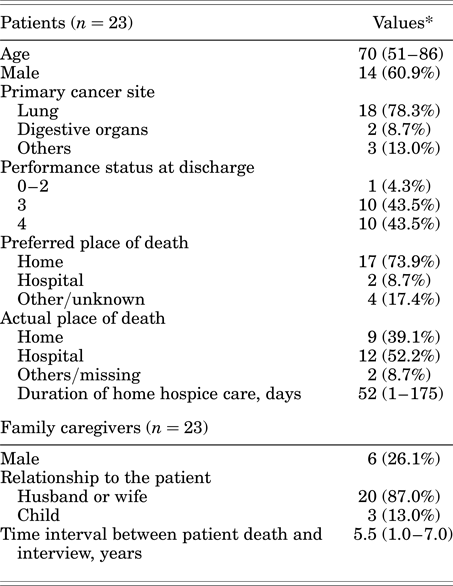
Most patients had a diagnosis of lung cancer and poor performance status at discharge. The majority of caregivers were spouses of the patients. One or more live-in alternative caregivers were available for six patients (26.1%). A third of the caregivers (n = 7) had no support from additional caregivers who lived locally. Median survival after discharge was 52 days (range = 1–175). The median number of outreach visits was 11 (range = 1–33) during this period. The preferred place of death was at home for 17 patients (73.9%), in hospital for 2 patients (8.7%), and other or unknown for 4 patients (17.4%; Table 1). In actuality, 9 patients died at home. The concordance rate between preferred and actual place of death was 43.5% (10 patients overall: 8 at home, 2 in hospital).
Characteristics of patients and family members

* The values indicate median (range) or n (%).
Association Between Family Satisfaction and Caregiver Burden
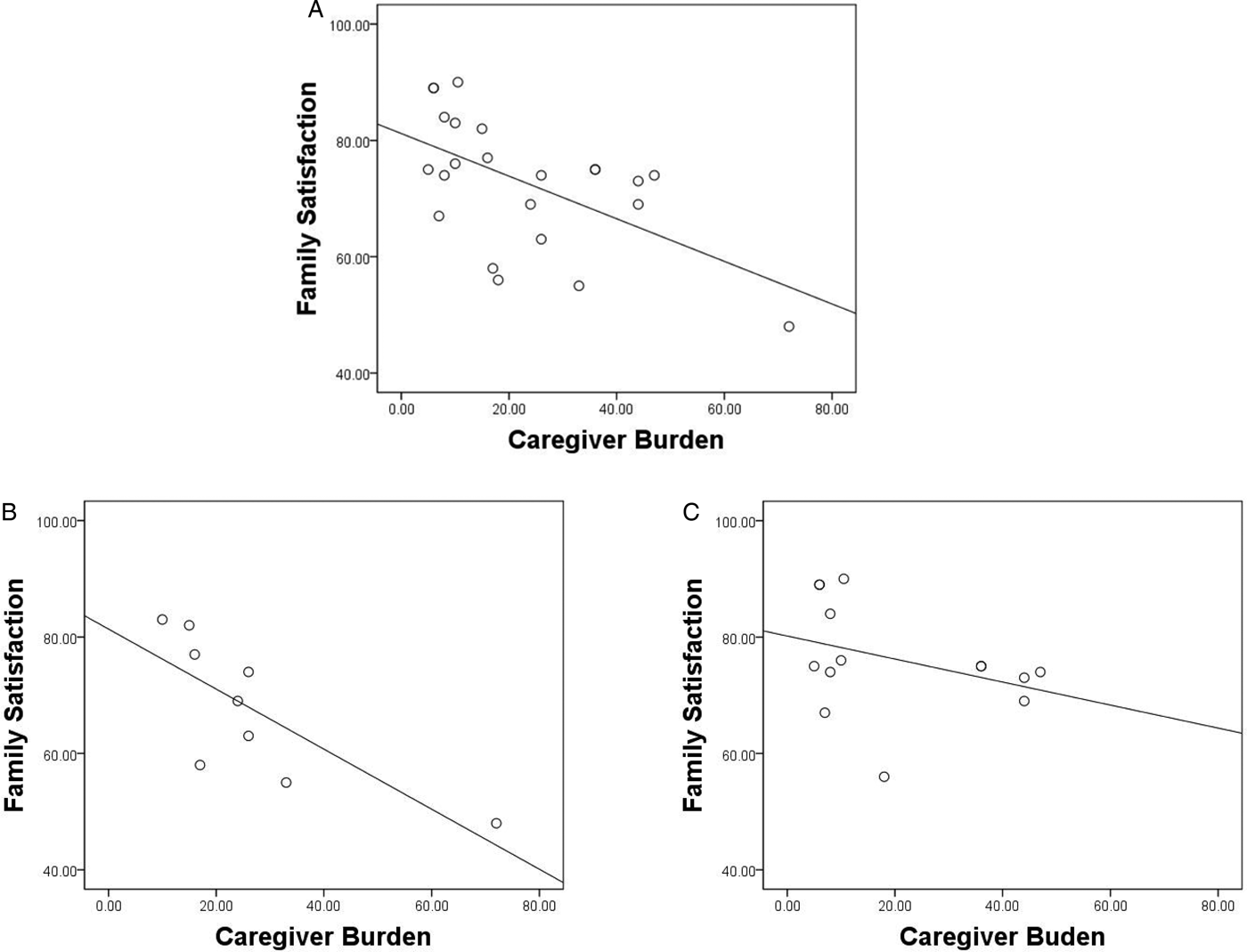
The mean FAMCARE and ZBI scores in the total population were 72.8 ± 11.2 and 22.8 ± 17.3, respectively, indicating moderate-to-high satisfaction and low-to-moderate burden. Caregiver burden had a strong negative correlation with family satisfaction with end-of-life care (Spearman's ρ = −0.560, p = 0.005; Figure 1A). For the patients who died at home, a stronger correlation was observed than for the total population (Spearman's ρ = −0.870, p = 0.002; Figure 1B).
Association between family satisfaction and caregiver burden. Caregiver burden showed a significant negative correlation with family satisfaction in (A) total population, (B) patients who died at home, and (C) patients who died at other places. Family satisfaction and caregiver burden were measured using FAMCARE total scores and the 22-item Zarit Burden Interview, where higher scores indicate higher satisfaction and perceived heavy burden, respectively.

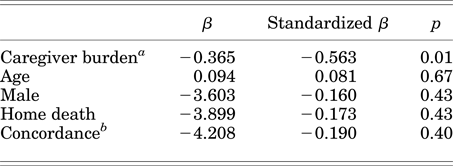
In the multiple regression analysis, the negative association between caregiver burden and family satisfaction with end-of-life care remained significant after adjustment for potential confounders (Table 2). The interaction of place of death and concordance between the patient's preferred and actual place of death was not significant. When the time interval between the date of the patient's death and study inclusion was included in the multiply adjusted model, the association between caregiver burden and satisfaction did not change (data not shown).
Factors associated with family satisfaction (multiple regression model)

Adjusted R 2 = 0.296.
a Measured using the Zarit Burden Interview.
b Concordance between patient's preferred and actual place of death.
Caregiver Burden Items that Decreased Family Satisfaction
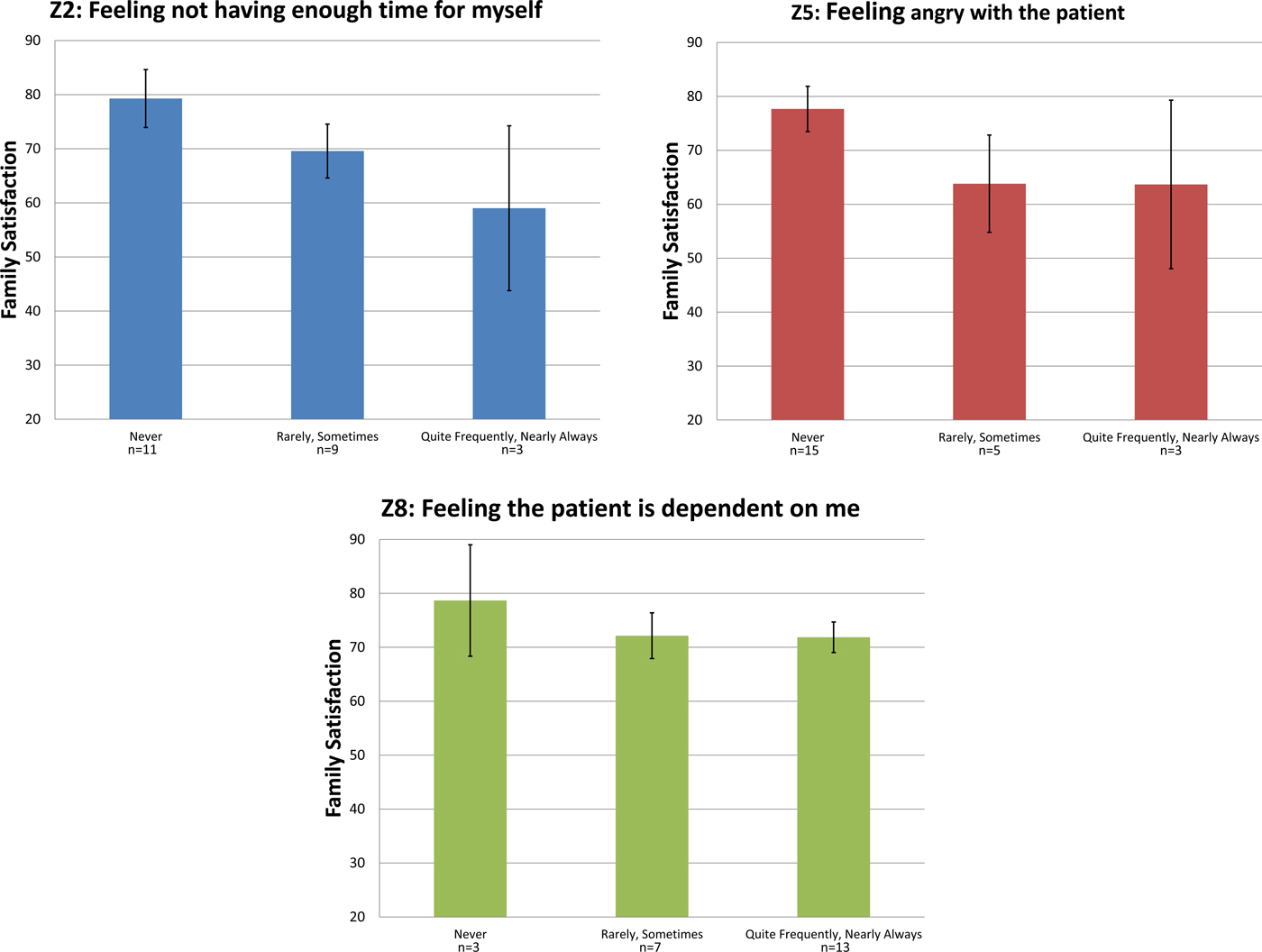
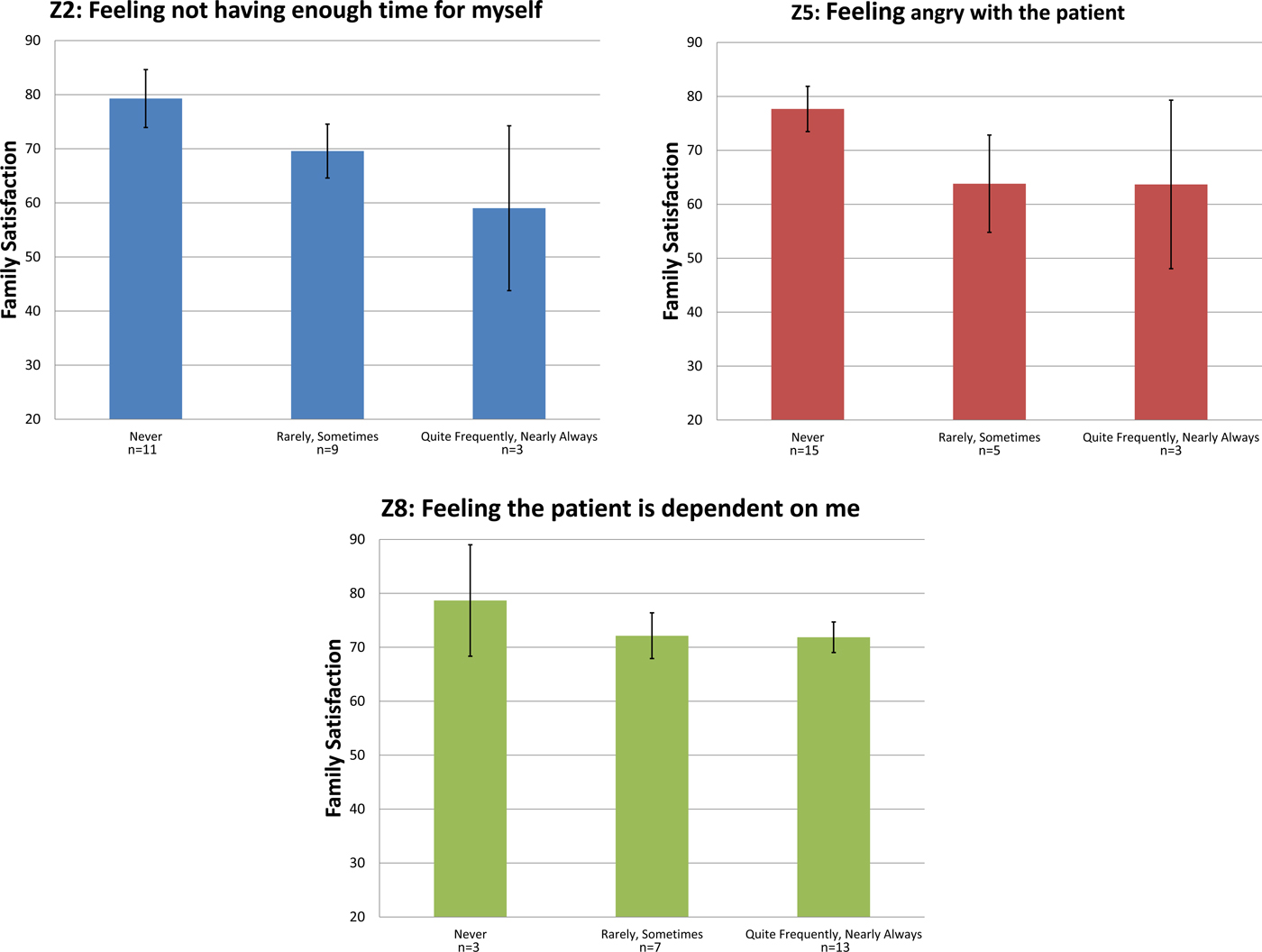
The following 8 of 22 care burden items were negatively correlated with satisfaction: feeling that they do not have enough time for themselves (Spearman's ρ = −0.621, p = 0.002); feeling angry with the patient (−0.576, 0.004); feeling a loss of control over their own life caused by the patient's illness (−0.516, 0.012); feeling that the patient negatively affects relationships with other family members or friends (−0.481, 0.020); feeling that the patient asks for more help than he/she needs (−0.466, 0.025); feeling that they do not have enough money to take care of the patient (−0.461, 0.027); wishing to leave the care to someone else (−0.443, 0.034); and feeling able to give better care (−0.420, 0.046) (Figure 2). The most prevalent caregiver burdens were the feeling that the patient is dependent on them (57%) and that they are the only people on whom the patient could depend (48%); however, these items did not show significant correlations with overall satisfaction.
Association between caregiver burden items and family satisfaction. Overall satisfaction differs significantly according to the severity of “feeling not having enough time for myself” (p = 0.005) and “feeling angry with the patient” (p = 0.011), but not of “feeling the patient is dependent on me” (p = 0.647).
Dissatisfaction
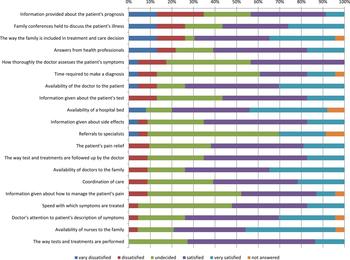
As shown in Figure 3, the dissatisfaction rate was highest for the information provided regarding patient prognosis (dissatisfaction rate = 34.8%), for family conferences held to discuss the patient's illness (26.1%), and for the way the family was included in treatment and care decisions (26.1%). In contrast, almost all caregivers were satisfied or very satisfied with the way the tests and treatments were performed, the availability of nurses to the family, the doctor's attention to the patient's suffering, and the speed with which symptoms were treated.
Dissatisfaction was measured using each item of the FAMCARE Scale. Items are listed according to rate of dissatisfaction, defined as the proportions of very dissatisfied or dissatisfied caregivers. The data utilized were not imputed (raw data).

DISCUSSION
Caregiver burden in our study population was negatively correlated with family satisfaction with end-of-life care. Some types of caregiver burden, including the feeling of not having enough private time and feeling angry with the patient, had a significant negative impact on overall satisfaction. Some bereaved family members reported that the information provided regarding the patient's prognosis, having a family conference to discuss the patient's illness, and the method of family involvement in care decisions were major causes of dissatisfaction.
Sufficient symptom relief, information provision concerning the patient's condition and treatment goals, and availability of medical staffs have been reported as key determinants of family satisfaction (Morita et al., Reference Morita, Chihara and Kashiwagi2002; Pottie et al., Reference Pottie, Burch and Thomas2014; Rhodes et al., Reference Rhodes, Mitchell and Miller2008; Ringdal et al., Reference Ringdal, Jordhoy and Kaasa2002). However, very little evidence has been gathered regarding the associations between family satisfaction and caregiver burden, and the study results have been inconsistent. Hwang et al. (Reference Hwang, Chang and Alejandro2003) conducted a survey in 100 cancer patient/family caregiver dyads in a Veterans Affairs medical center. Caregiver burden, measured using the Care Strain Index, was not significantly correlated with family satisfaction with care, measured using FAMCARE (Pearson's r = −0.01). Chang et al. (Reference Chang, Kwon and Lee2013) explored the factors affecting family satisfaction in terminal cancer patients and their family caregivers in a Korean population and found that satisfaction with overall care was significantly higher if the patient and family caregiver did not experience much burden (multiply adjusted odds ratio [95% confidence interval] = 2.82 [1.76–4.50] for patients; and 2.94 [1.75–4.93] for caregivers) (Chang et al., Reference Chang, Kwon and Lee2013). However, satisfaction and caregiver burden were not measured using validated instruments, and no information regarding the type of burden that might negatively impact satisfaction was available. On the other hand, we demonstrated a significant negative correlation between caregiver burden and family satisfaction using well-validated measures. Moreover, we identified the burden items that might decrease family satisfaction, such as changes in lifestyle (loss of control, personal time, and social engagement with others); conflict with the patient (feeling angry with the patient, feeling that the patient wants more help than he/she needs); and a lack of confidence (wishing to leave the care to someone else, feeling capable of giving better care). Feelings of isolation and loneliness and a restricted social network have also been identified as risks for increased caregiver burden (Bishop et al., Reference Bishop, Beaumont and Hahn2007; Goldstein et al., Reference Goldstein, Concato and Fried2004; Rossi Ferrario et al., Reference Rossi Ferrario, Zotti and Massara2003; Stenberg et al., Reference Stenberg, Ruland and Miaskowski2010). The tiredness of family caregivers is also a common problem in cancer care (Fletcher et al., Reference Fletcher, Paul and Dodd2008; Tokoro et al., Reference Tokoro, Ikeyama and Matsuda2009). Our findings are in line with the results of previous studies.
Caregivers of patients who died under hospice care reported fewer unmet needs when compared with those who died in hospital settings (Dawson, Reference Dawson1991). However, we found some dissatisfaction in bereaved family members mostly concerning information sharing: information provided about the patient's prognosis, family conferences with the medical professionals, and the way family members were involved in care decisions. In Japan, family conferences between patient and family, hospital physicians and nurses, and home care staffs before discharge have increasingly been held since the national healthcare insurance started financially supporting family conferences in 2006 (~$100 for a home care physician and $230 for a hospital). This system facilitates reduction in dissatisfaction with information sharing.
LIMITATIONS OF THE STUDY
Our study has several limitations. First, although we have adjusted for potential confounders, some unmeasured variables (including level of patient function, symptom severity, and financial resources) may have had an influence on our results. These potential confounders should be assessed in future studies. Second, because we asked family caregivers to participate in our survey and recall their satisfaction and burden after a median time interval of 5.5 years from the patient's death, a recall bias might have also existed. Although our results did not change when we adjusted for the time interval between patient death and time of the survey, we are aware that the long interval might have minimized a caregiver's recall of the actual physical and emotional burden that they experienced while caring for the patient. In addition, we did not assess the caregiver's emotional state and stage of grief at the time of the survey. Our results may also be biased by these factors. Prospective studies are required to know the actual caregiver burden at the time of patient care. Third, because the patient preference for place of death and satisfaction with care were measured by proxy rating, these measurements might not be completely identical to those of the actual patients. Fourth, patient satisfaction with care was not measured directly. However, we believe that this issue does not undermine our findings because family satisfaction with end-of-life care was the main focus of our study. Fifth, our findings were based on the perspectives of the family caregivers of patients who were discharged and had taken part in our outreach palliative care service, and the sample size was relatively small. Hence, we could not generalize our findings to the experience of all family caregivers whose loved ones could not be discharged due to severe symptom intensity or rapid deterioration of their general condition. Moreover, 57% of the patients needed at least one readmission after discharge from our hospitals; contamination due to hospital readmission might have also affected our findings. Sixth, the interrater reliability of the FAMCARE Scale and the ZBI was not tested in our study. Although the two interviewers were instructed to perform similar tasks by using the same questionnaire, some bias may have been introduced through this issue. Seventh, the question items in the FAMCARE Scale and ZBI are phrased in the present tense. We employed these tools, and there was no validated measurement with which to ask caregivers about satisfaction with care and burden in the past tense. Finally, because this study was conducted in an urban setting with a relatively high availability of home-visiting services and emergency departments, our results cannot be applied to other regions.
CONCLUSIONS
Caregiver burden could be a potential barrier to family satisfaction with the care provided to patients and family members receiving palliative care at home. More attention should be paid to caregiver burden with regard to changes in lifestyle, conflicts with the patient, and lack of confidence. Seeking methods to share information concerning the patient's prognosis with the family and involving family members in the decision-making process are crucial. A home hospice care model focused on these issues could improve the end-of-life experience of patients and family members.
DISCLOSURES AND ACKNOWLEDGMENTS
Yoko Kozaki is an employee of Teijin Home Healthcare Co. Ltd. She contributed to this study as an interviewer of the family caregivers. Teijin Home Healthcare was not involved with the planning, funding, data analysis, or writing of the manuscript. All of the remaining authors hereby declare that they have no conflicts of interest to disclose. Our study was funded by the Osaka Medical Research Foundation for Intractable Diseases (grant no. 14-2-39). We are grateful for the assistance given by Ms. Mori.