INTRODUCTION
Harmful flagellates belonging to the genus Chattonella, Chattonella antiqua (Hada) Ono, Chattonella marina (Subrahmanyan) Hara & Chihara, and Chattonella ovata Hara & Chihara, are widely distributed in temperate coastal regions worldwide. When proliferating in coastal waters, the noxious flagellates sometimes cause mass mortality of cultured and wild fish (Okaichi, Reference Okaichi and Okaichi2004; Edvardsen & Imai, Reference Edvardsen, Imai, Granéli and Turner2006; Imai & Yamaguchi, Reference Imai and Yamaguchi2012). The economic damage to the aquaculture industry is severe and occasionally exceeds ¥1 billion ($10 million) (Okaichi, Reference Okaichi and Okaichi2004; Katano et al., Reference Katano, Yoshino, Matsubara and Hayami2012). It is therefore important to understand the bloom dynamics of Chattonella species.
Chattonella species have vegetative and resting phases in their life cycle and typically occur as resting-cells, namely cysts, in seabed sediments (Imai & Itoh, Reference Imai and Itoh1987). There are no morphological differences in cysts among species (Yamaguchi et al., Reference Yamaguchi, Yamaguchi, Nishitani, Sakamoto and Itakura2008). These cysts mature well at a low temperature of 5–16°C in winter (Imai et al., Reference Imai, Itakura and Itoh1991) and germinate actively under warm conditions of 20–28°C (Imai et al., Reference Imai, Itakura and Itoh1991; Yamaguchi et al., Reference Yamaguchi, Yamaguchi, Nishitani, Sakamoto and Itakura2008). Germinated vegetative cells proliferate rapidly in water temperatures ranging from 25–30°C (Yamaguchi et al., Reference Yamaguchi, Imai and Honjo1991, Reference Yamaguchi, Mizushima, Sakamoto and Yamaguchi2010), and subsequently form massive blooms by accumulating in the euphotic layer of the water column. At a late phase of bloom development, the vegetative cells shift to the resting state via meiosis (Yamaguchi & Imai, Reference Yamaguchi and Imai1994). In order to understand bloom development in Chattonella species, it is therefore essential to clarify the factors that influence the dynamics of Chattonella vegetative cells associated with the distribution and abundance of their cysts.
Itakura et al. (Reference Itakura, Imai and Itoh1991) investigated the distribution and abundance of Chattonella cysts in sediments of several areas – Harima-Nada, Osaka Bay and Kii-Suido of the Seto Inland Sea, Japan – and found high-density areas of cysts (seed beds). However, the seed beds were not always consistent with high-density areas of vegetative cells (Itakura et al., Reference Itakura, Imai and Itoh1991), as was also reported by Imai et al. (Reference Imai, Itoh, Terada and Kamizono1986). Most coastal regions have inputs of riverine waters and complex tidal patterns (and/or complex ocean currents). Since the vegetative cells and cysts of Chattonella species are planktonic and/or sinking particles in the water column, they are most likely transferred throughout coastal areas by both tidal action and ocean currents (Itakura et al., Reference Itakura, Imai and Itoh1991; Imai & Yamaguchi, Reference Imai and Yamaguchi2012). We consider that the previously investigated coastal regions (e.g., Seto Inland Sea, Japan) may be too large and/or open for us to understand the critical factors that influence the bloom development of Chattonella species.
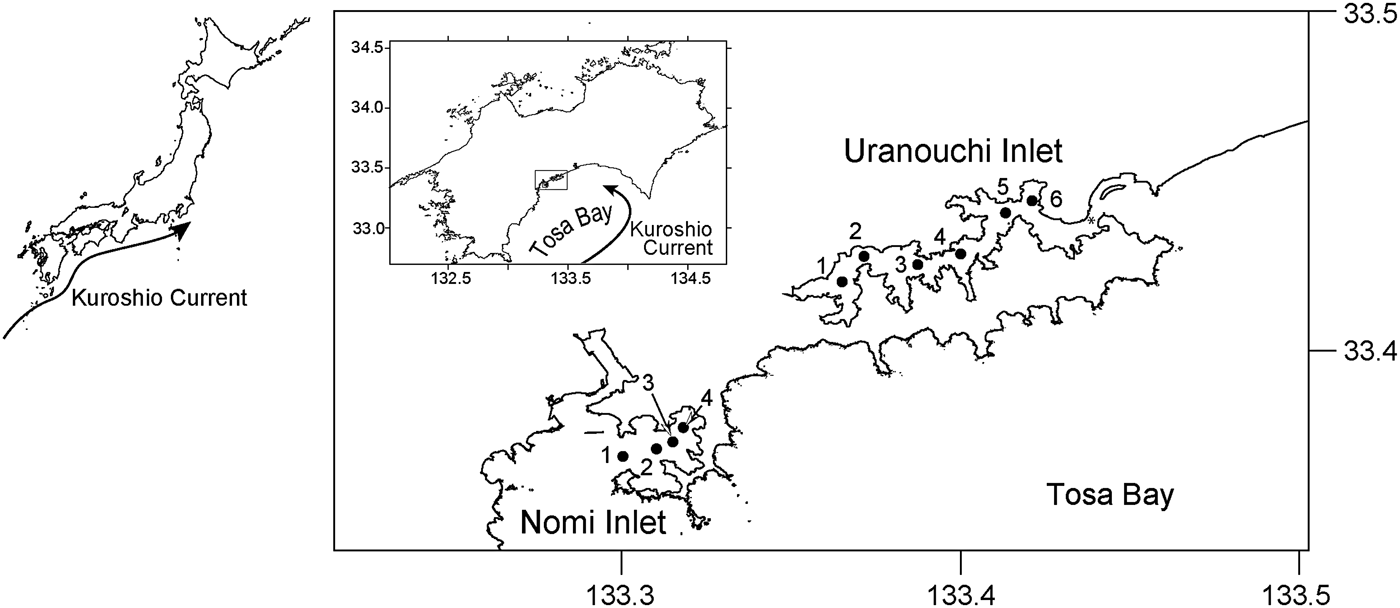
Uranouchi Inlet and Nomi Inlet are located along Tosa Bay of Shikoku and are neighbouring coastal regions (see Figure 1); these small regions in this study were defined as inlet. Uranouchi Inlet encompasses an area of 12.37 km2 and Nomi Inlet covers a small area of 4.1 km2. They are comparatively small water bodies, 8.5 × 10⁷ m3 (Uranouchi Inlet) and 4.8 × 10⁷ m3 (Nomi Inlet), relative to Harima-Nada (8.9 × 10¹⁰ m3, 3426 km2) and Osaka Bay (4.4 × 10¹⁰ m3, 1447 km2) of the Seto Inland Sea. Furthermore, Uranouchi Inlet and Nomi Inlet represent contrasting enclosed natures; Uranouchi Inlet has an ‘enclosure index’ of 6.30 (Hiruma, Reference Hiruma2008), whereas that of Nomi Inlet is 1.9 (present study). This index, which indicates the degree of closure of a given coastal region, is calculated by the equation:
 $${\rm Enclosure}\;{\rm index} = \displaystyle{{D_1 \sqrt S} \over {D_2 W}}$$
where W is the width of the mouth (km) of the water body, S is the area (km2) covered by the water body, D 1 is the maximum depth (m) of the coastal bay/inlet and D 2 is the maximum depth (m) at the mouth of the water body (Hiruma, Reference Hiruma2008; International EMECS Center, 2008). An index value that exceeds 1 indicates a highly closed area and consequently a greater risk of eutrophication due to poor water circulation (International EMECS Center, 2008). Uranouchi Inlet is an extremely enclosed region and has no frequent inputs of oceanic and riverine waters (Munekage & Kimura, Reference Munekage and Kimura1990; Yamaguchi & Sai, Reference Yamaguchi and Sai2015). Nomi Inlet, because of its semi-enclosed nature (enclosure index 1.9), is probably affected to a greater degree by the Kuroshio Current than is Uranouchi Inlet (see Figure 1). We think that algal bloom initiation, development and decline are complete in each small inlet and believe that it is possible to determine the critical factors that influence bloom development of Chattonella species by comparing the bloom dynamics in the two regions.
Sampling locations in Uranouchi Inlet and Nomi Inlet along Tosa Bay. The Kuroshio Current flowing along the south to east coast of Japan is shown, together with maps of Japan and Shikoku. An asterisk indicates a shallow area in Uranouchi Inlet.

In this study, a comparative investigation of the abundance/distribution of Chattonella vegetative cells and resting cysts in Uranouchi Inlet and Nomi Inlet was conducted. On the basis of the results obtained, we discuss the effects of geography and environment on the bloom dynamics of Chattonella species in coastal regions.
MATERIALS AND METHODS
Sampling
Sampling was conducted between 2005 and 2008 at stations in Uranouchi Inlet and Nomi Inlet, Japan (Figure 1). Between April 2007 and March 2008, water temperatures were measured vertically at a central station in Uranouchi Inlet (station 4) and Nomi Inlet (station 2) using a multiparameter water quality monitor manufactured by YSI (model 85 or 600XLM; YSI). Seawater was collected between June and August in 2005–2007 at a depth of 2 m using a RIGO-B sampler (RIGO, Japan). Sampling stations were stations 2, 4 and 6 in Uranouchi Inlet and stations 1, 2 and 3 in Nomi Inlet (Figure 1). The samples were placed in polypropylene bottles and within 2–4 h were transferred to the laboratory, where they were used for nutrient assay and observation of microalgae. Seawater samples collected from each central station in early June, July, August and September 2007 were filtered through 0.45-μm membrane filters (FK-45, Fujifilm), and the resultant filtrates were stored at 10°C prior to the nutrient assay.
Sediment sampling was conducted on 1 December 2006 for Uranouchi Inlet (stations 1 to 5) and 19 April 2007 for Nomi Inlet (stations 1 to 4). Sediments were collected from the stations by using an Ekman-Birge-type bottom sampler (RIGO, Japan). The surface sediments (0–3 cm) were sampled using a dispensing spoon, transported in plastic containers, and stored in the dark at 10°C prior to enumeration of the cysts.
Enumeration of vegetative and resting cells of Chattonella species
A drop of the seawater sample was placed on a glass slide with a chamber. Vegetative cells of Chattonella species (C. antiqua/C. marina/C. ovata) in the drop were observed and counted using a light microscope (XF-21, Nikon).
Following the procedures described by Yamaguchi et al. (Reference Yamaguchi, Yamaguchi, Nishitani, Sakamoto and Itakura2008), particles ≥20 and ≤150 µm in size were obtained from five wet-g aliquots of the sediments and suspended in 10 ml of sterile seawater. Cysts of C. antiqua, C. marina and C. ovata (Chattonella cysts) in the sediment suspension were counted in triplicate under blue light excitation using an inverted epifluorescence microscope (IX-70, Olympus) (Imai & Itoh, Reference Imai and Itoh1987). To evaluate the abundance of Chattonella cysts in sandy and/or muddy sediments, we also determined the specific gravity values of the sediments (Kamiyama, Reference Kamiyama1996), from which the cyst abundance per cubic metre sediment (cysts cm−3) could be calculated. Differences between the average abundance obtained for each station of Uranouchi Inlet were analysed using Tukey's multiple comparison test (α = 0.05).
Nutrient assay
Dissolved inorganic nitrogen (DIN: sum of ammonium, nitrite and nitrate) and dissolved inorganic phosphorus (DIP: orthophosphate) in the filtrates were measured using an autoanalyser (QuAATro-HR, BLTEC).
RESULTS
Distribution and abundance of Chattonella spp.
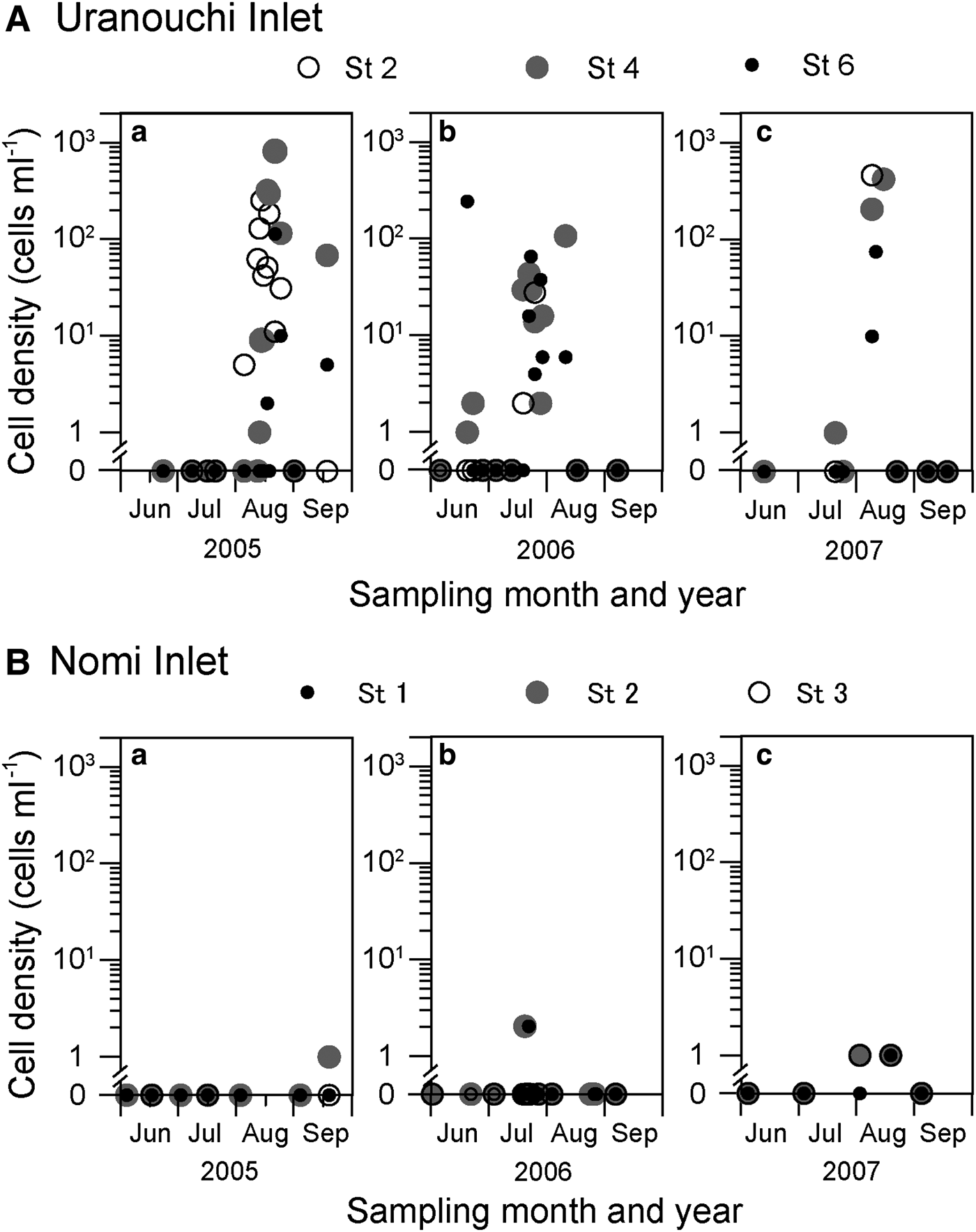
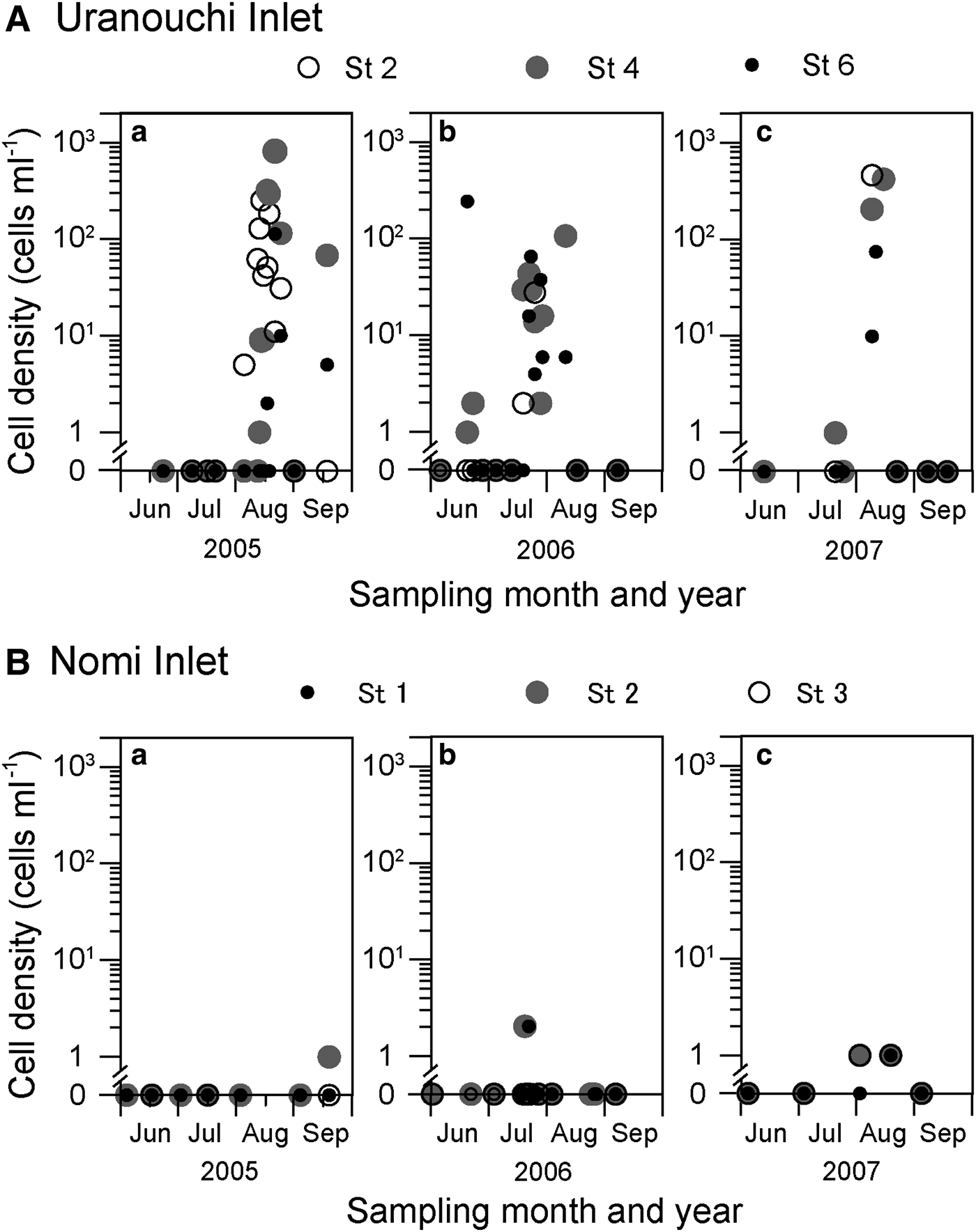
Vegetative cells of Chattonella species in Uranouchi Inlet and Nomi Inlet occurred from either June to August or June to September, depending on the year (Figure 2). The cells in Uranouchi Inlet proliferated to 102 cells ml−1 over the entire region (stations 1 to 6) and reached a maximum value at a central region within a year (Figure 2). In contrast, Chattonella species in Nomi Inlet remained at a low density of 1–2 cells ml−1 in a short period within 1–2 weeks (Figure 2).
Temporal changes in the cell densities of Chattonella species (C. antiqua, C. marina and C. ovata) in surface waters at three stations in Uranouchi Inlet (A) and Nomi Inlet (B) in 2005 (a), 2006 (b) and 2007 (c). See Figure 1 for the location of each station.
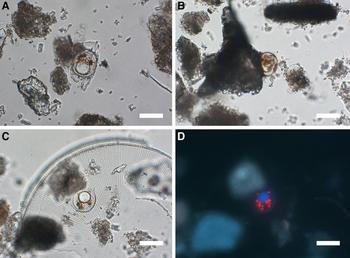
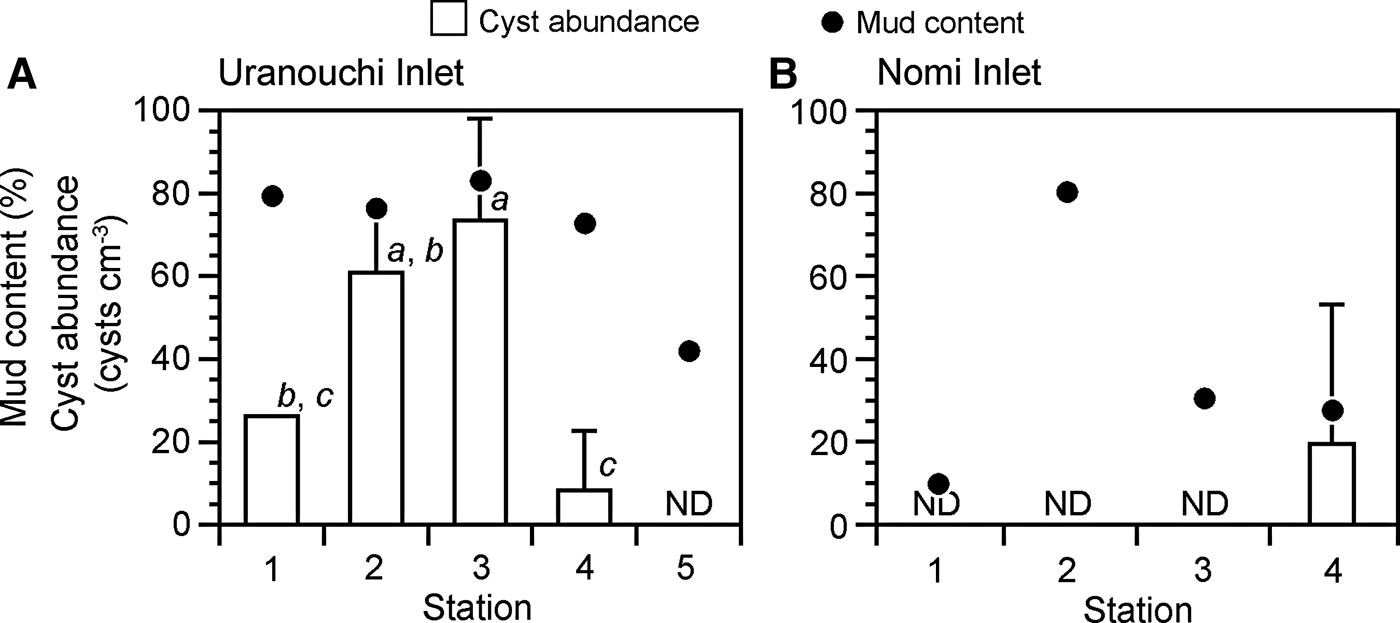
Chattonella cysts were detected in the sediment samples collected from Uranouchi Inlet and Nomi Inlet (Figure 3). The cysts showed typical autofluorescence from chloroplasts under a fluorescence microscope (Figure 3D) and were thus obviously in a living state. Cyst abundance in Uranouchi Inlet was 8.3–73.5 cysts cm−3 in the innermost/central parts of stations 1 to 4, where high mud content of over 70% was observed (Figure 4A). There was a positive correlation between mud content and cyst abundance (r = 0.704, P > 0.05, N = 5). Significantly higher abundance values (Tukey's test, P < 0.05) were found in stations 2 and 3 (Figure 4A). In Nomi Inlet, cyst abundance was 19.5 cysts cm−3, and cysts were found only in the innermost area, which had a mud content of 27.3% (Figure 4B). The correlation between cyst abundance and mud content in Nomi Inlet was quite weak (r = −0.23, P > 0.05, N = 4). Mean cyst abundance (4.9 cysts cm−3, N = 4) in Nomi Inlet was seven-fold lower than that in Uranouchi Inlet (33.8 cysts cm−3, N = 5).
Light (A, B and C) and epifluorescence (D) micrographs of the cysts of Chattonella species (C. antiqua, C. marina and C. ovata). The same cyst in (C) was observed using blue-light excitation (D). Scale bar = 30 µm.

Mud content and Chattonella species (C. antiqua, C. marina, and C. ovata) cyst abundance in sediment samples from Uranouchi Inlet (A) and Nomi Inlet (B). ND, not detected (<5 cysts cm−3). Error bars indicate standard deviation (N = 3). Means that do not differ significantly (Tukey's test, P > 0.05) are indicated by the same letter.

Environmental variables
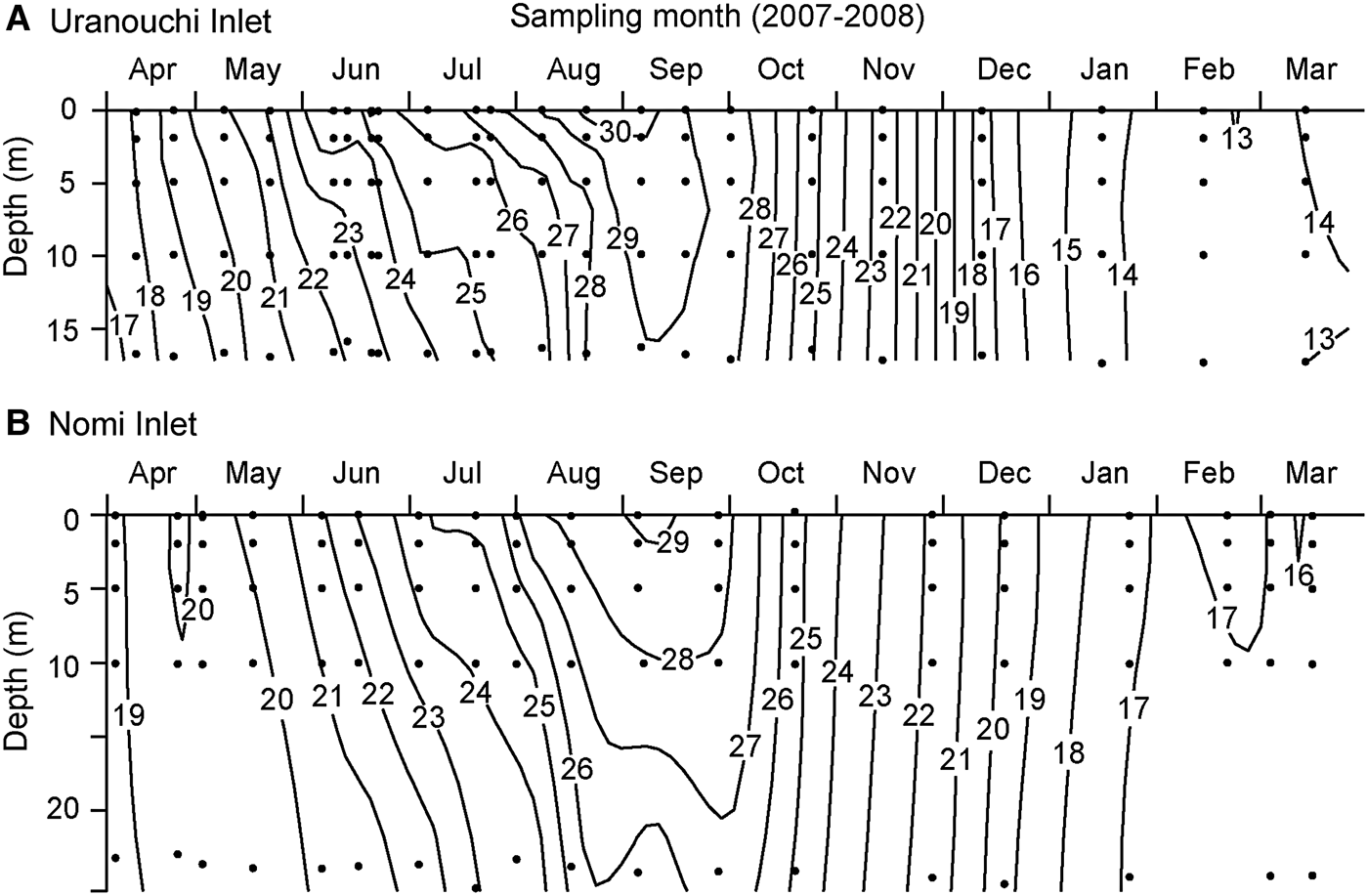
From April 2007, the water temperatures of Uranouchi Inlet and Nomi Inlet began to increase in the surface layers (Figure 5). Typical thermoclines in both coastal regions clearly appeared in July, August and September, and then stratification of water bodies developed. Between June and September, the surface temperatures in Uranouchi Inlet and Nomi Inlet were 24–31°C and 22–29°C, respectively.
Vertical and temporal profiles of water temperatures (°C) at station 4 in Uranouchi Inlet (A) and station 2 in Nomi Inlet (B) between April 2007 and March 2008.

The thermoclines were disrupted in October, and vertical mixing occurred between October 2007 and March 2008 (Figure 5). Even during winter, the water temperatures of Nomi Inlet were greater than 15.9°C, whereas the lowest temperature in Uranouchi Inlet was 12.5°C. As shown in Figure 5, the range of water temperature was narrower in Nomi Inlet (15.9–29.4°C) than in Uranouchi Inlet (12.5–31.1°C).
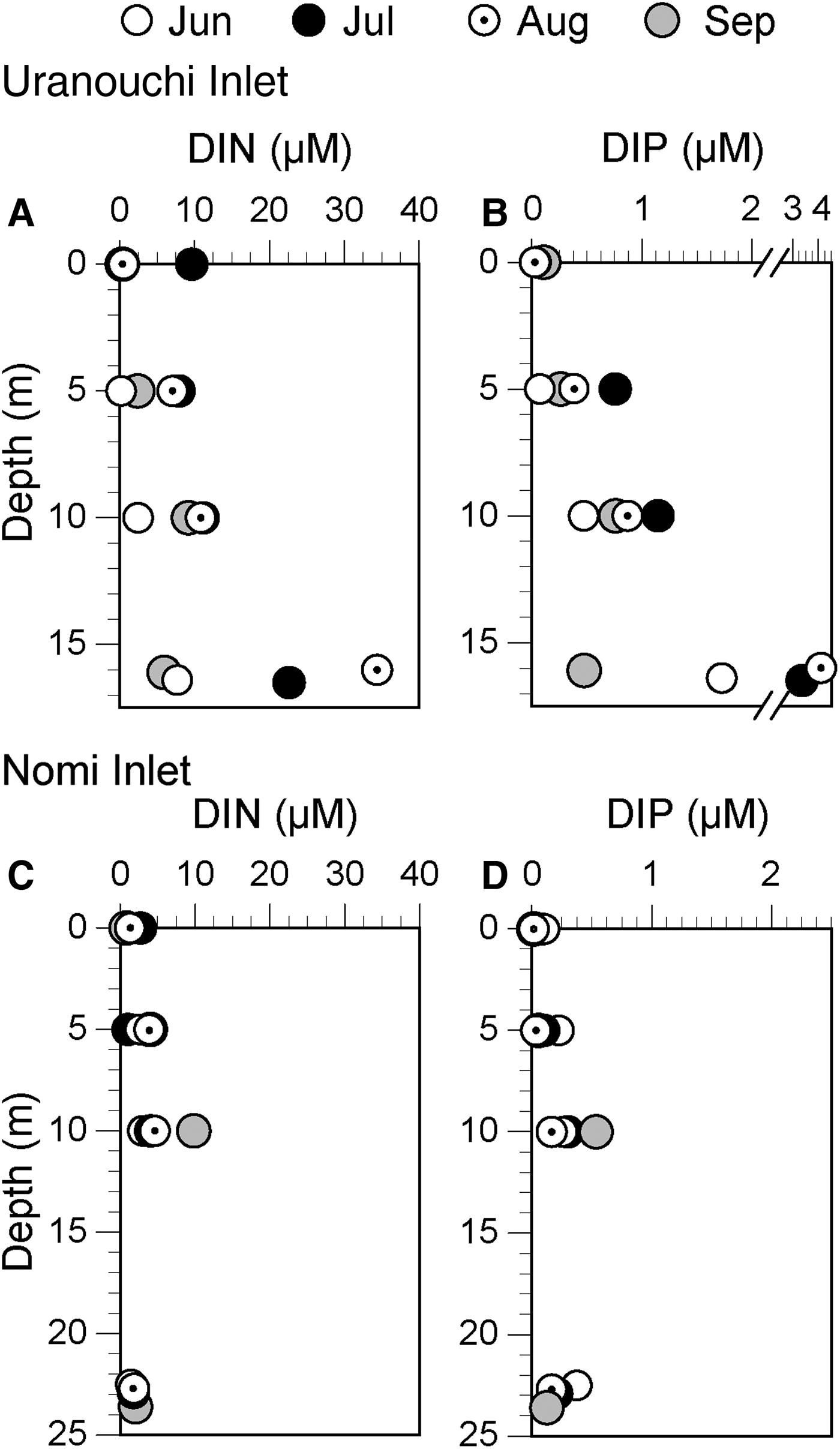
The DIN and DIP concentrations in Uranouchi Inlet were 0.21–34.4 µM and 0.03–4.10 µM, respectively (Figure 6). Large reservoirs of DIN and DIP were found in the bottom layers of this inlet. The DIN and DIP concentrations in the water column of Nomi Inlet were 0.57–9.83 and 0.02–0.54 µM, respectively, and were high at a depth of 10 m (Figure 6). In contrast to Uranouchi Inlet, high concentrations of nutrients were not found in the bottom layers during the sampling period.
Vertical and temporal profiles of dissolved inorganic nitrogen (DIN, A and C) and dissolved inorganic phosphorus (DIP, B and D) at station 4 in Uranouchi Inlet (A and B) and station 2 in Nomi Inlet (C and D) between June and September 2007.

DISCUSSION
The 3-year investigation clearly demonstrated that the different closed natures of the two coastal regions affected the bloom scale and cyst abundance of Chattonella species. Uranouchi Inlet is almost enclosed and is shallow (~4 m in depth; indicated by an asterisk in Figure 1) and has a cone/bowl-like shape (Munekage & Kimura, Reference Munekage and Kimura1990). The central and innermost areas of this inlet are characterized by high mud content, along with an abundance of vegetative cells and cysts of Chattonella species in the sediments. In Nomi Inlet, the opening is wide and deep (greater than 20 m) (Yamamoto & Tanaka, Reference Yamamoto and Tanaka2006). This inlet seems to be a semi-enclosed region and has small amounts of muddy sediment, which corresponds to the small number and patchy distribution of Chattonella cysts and vegetative cells (Figures 2 & 4). The suspended/sinking micro particles including motile vegetative cells and non-motile cysts in coastal waters are likely to accumulate in a more enclosed region such as Uranouchi Inlet.
The high enclosure index of Uranouchi Inlet probably corresponds with a large reservoir of nutrients in the bottom waters and with a high abundance of Chattonella cells. There are few data on the abundance of Chattonella cysts associated with the enclosure indices of temperate coastal regions. In Japan, Kagoshima Bay has an enclosure index of 6.26. This bay is subjected to massive blooms of Chattonella species (occasionally over 103 cells ml−1; Okaichi, Reference Okaichi and Okaichi2004) and the large abundance of cysts, max. 653 cysts cm−3 (Imai, Reference Imai1990). We suggest a possible relationship between the degree of closure of coastal regions and the abundance of Chattonella vegetative/resting cells. Further studies are needed to evaluate this relationship.
The Kuroshio Current flows in oligotrophic and warm oceanic waters, with temperatures in excess of 20°C throughout the year. It flows along the south to east coast of Japan (see Figure 1), as shown by the database of the Hydrographic and Oceanographic Department of the Japan Coast Guard (JCG, http://www1.kaiho.mlit.go.jp/jhd.html, accessed on 27 August 2015). According to Kuroda et al. (Reference Kuroda, Setou, Aoki, Takahashi, Shimizu and Watanabe2013), a part of the Kuroshio Current flows inwards, counterclockwise, from the east/centre of Shikoku into Tosa Bay (see Figure 1). The warm oceanic waters of the Kuroshio Current presumably penetrate infrequently into Uranouchi Inlet because this inlet is an extremely enclosed coastal region. In contrast, Nomi Inlet is a semi-enclosed region subjected to frequent inflow of warm oceanic waters of the Kuroshio Current. Our results – over 15°C even during winter – provide evidence that warm oceanic currents frequently penetrate into Nomi Inlet but not into Uranouchi Inlet, indicating that there is an active water exchange in Nomi Inlet. Therefore, the vegetative cells and cysts of Chattonella species in Uranouchi Inlet are not easily washed out through water exchange and are thus likely to accumulate in the water column and sediments. In contrast, the vegetative cells and cysts in the semi-enclosed Nomi Inlet are unlikely to accumulate because of active water exchange. Yamamoto & Tanaka (Reference Yamamoto and Tanaka2006) conducted a numerical simulation of trace particles in Nomi Inlet, and showed that the particles spread horizontally with time, with some particles being transported out within 3 days under simulated summer conditions. Considering these issues, the degree of closure of coastal regions could influence water exchange, and is thus an ecologically important factor influencing the accumulation of both vegetative and resting cells of Chattonella. The residence times of the coastal regions were not estimated in this study but would be useful for understanding the accumulation dynamics of Chattonella cells.
Water temperature is known to play an important role in excystment of Chattonella cysts. In the laboratory, Chattonella cysts are able to mature over a range of low temperatures (5–16°C), and more than 50% of the populations germinate (Imai et al., Reference Imai, Itakura and Itoh1991). However, the germination rate decreases proportionally when the temperature increases within the range of 11–18°C (5% germination rate at 18°C) (Imai et al., Reference Imai, Itakura and Itoh1991, Reference Imai, Yamaguchi, Watanabe, Anderson, Cembella and Hallegraeff1998). The warm environmental conditions observed during winter in Nomi Inlet appear to be unsuitable for the maturation of Chattonella cysts in sediments, presumably having negative effects on their excystment. Even if a large number of cysts accumulate in the sediments, they show poor maturation. In contrast, the lower temperature of 12.5°C in Uranouchi Inlet during winter may be more suitable for cyst maturation and subsequent excystment.
In July and August, water temperatures in the two coastal regions are generally between 23 and 28°C in the bottom layer and between 24 and 29°C in the euphotic layers. These temperature ranges are optimal and/or semi-optimal for the excystment of mature Chattonella cysts (Imai et al., Reference Imai, Itakura and Itoh1991, Reference Imai, Yamaguchi, Watanabe, Anderson, Cembella and Hallegraeff1998; Yamaguchi et al., Reference Yamaguchi, Yamaguchi, Nishitani, Sakamoto and Itakura2008) and proliferation (Yamaguchi et al., Reference Yamaguchi, Imai and Honjo1991, Reference Yamaguchi, Mizushima, Sakamoto and Yamaguchi2010) of Chattonella vegetative cells. Salinity was 25–33 in Uranouchi Inlet (Munekage & Kimura, Reference Munekage and Kimura1990; Patel et al., Reference Patel, Fukami and Nishijima2000) and 33–34 in Nomi Inlet (Yamamoto & Tanaka, Reference Yamamoto and Tanaka2006); these values fall within the 25–35 range considered optimal for the growth of Chattonella (Yamaguchi et al., Reference Yamaguchi, Imai and Honjo1991, Reference Yamaguchi, Mizushima, Sakamoto and Yamaguchi2010). In both inlets, neither water temperature nor salinity is a limiting factor for bloom initiation and development of Chattonella species during the warm seasons.
Vegetative cells of Chattonella require a large amount of nutrients to form blooms of over 102 cells ml−1. The maximum cell density (C; cells l−1) can be calculated by dividing the ambient nutrient concentration (S n; mol l−1) by the algal minimum cell quota (Q 0). Thus, Chattonella species require 0.78 µM of nitrogen and 0.062 µM of phosphorus in order to yield 102 cells ml−1. In Uranouchi Inlet, the ambient concentrations of DIN and DIP in euphotic layers (0–5 m) were 7.99–9.70 µM and 0.06–0.757 µM, respectively, in early July 2007. Similarly, in Nomi Inlet, the ambient concentrations of DIN and DIP in euphotic layers were 1.05–2.71 µM and 0.083–0.103 µM, respectively, in early July 2007. These data are consistent with those of Patel et al. (Reference Patel, Fukami and Nishijima2000) and Yamaguchi et al. (Reference Yamaguchi, Nishijima, Oda, Fukami and Adachi2004), who indicated that DIN and/or DIP concentrations in the surface layers are lower than those in the bottom layers. Although nutrients in both regions would be sufficient for Chattonella bloom development, Nomi Inlet is subjected to frequent inputs of oligotrophic oceanic waters, which probably disperse vegetative cells.
Yamaguchi & Sai (Reference Yamaguchi and Sai2015) briefly estimated the effects of the phosphate reservoirs of 0.474−2.00 µM in the bottom waters of Uranouchi Inlet. The flux of phosphate from the lower to the upper layer during a mixing event in summer was calculated to be over 0.47 µmol l−1 day−1. The concentration of phosphate vertically supplied within a day has great potential for supporting massive proliferation, over 700 cells ml−1, of Chattonella species (Yamaguchi & Sai, Reference Yamaguchi and Sai2015). Because of the enormous nutrient reservoir in Uranouchi Inlet, in excess of 20 µM-DIN and 1 µM-DIP, there is a higher risk of algal bloom development.
Here, we document the critical factors influencing Chattonella bloom development in temperate coastal regions as follows: (1) the importance of whether Chattonella cells are present or absent in the resting/vegetative phase; (2) the important role of coastal region degree of enclosure in water exchange, water temperature and accumulation of these cells. Aquaculture is emerging as a revolution in agriculture of global importance to humankind (Duarte et al., Reference Duarte, Marbá and Holmer2007). However, aquaculture farms in enclosed coastal regions of temperate areas, such as Uranouchi Inlet and Nomi Inlet, are threatened by blooms of harmful algae such as Chattonella spp. In Uranouchi Inlet and Nomi Inlet, Chattonella cysts are present in the sediments as seed populations. The seed size associated with bloom scale in Uranouchi Inlet is larger than that in Nomi Inlet because the former region has a predominantly closed nature. The results obtained in this study should be helpful in assessing the risk of Chattonella blooms in temperate coastal regions.
ACKNOWLEDGEMENTS
We are grateful to Dr Masayuki Matsuoka of Kochi University for the technical support.
FINANCIAL SUPPORT
This study was supported partly by the discretionary fund of the director for the Faculty of Agriculture, Kochi University, Japan.