


Introduction
Avocado (Persea americana Mill.) is a fruit tree native to Mexico and Central America (tropical America) and is considered the fourth most consumed tropical and subtropical tree fruit crop worldwide (Kuhn et al., Reference Kuhn, Livingstone, Richards, Manosalva, Van den Berg and Chambers2019; Selladurai and Awachare, Reference Selladurai and Awachare2020). In Colombia, there has been an increase in the planted area of this species, mainly the Hass cultivar during the last years (Ramírez-Gil et al., Reference Ramírez-Gil, Morales and Peterson2018). The Hass cultivar has excellent organoleptic characteristics and greater resistance to post-harvest processing, leading to its greater acceptance in international markets (Erazo-Mesa et al., Reference Erazo-Mesa, Ramírez-Gil and Sánchez2021; García et al., Reference García, Hurtado-Salazar and Ceballos-Aguirre2021). This cultivar has a sown area of 51 261 ha with a fruit yield of 5 75 694 t in Colombia in 2022 (Agronet, 2024).
Agricultural production faces several challenges, and increasing productivity is important to meet the food needs of a growing world population (Rouphael and Colla, Reference Rouphael and Colla2020a). The application of biostimulants provides crop management solutions for yield, and has become a common tool in crop production (Jiang et al., Reference Jiang, Yue, Wang, Lu, Yin, Li and Ding2024). Plant biostimulants are substances of biological, synthetic, or microorganism origin, which, when applied to plants (root drench, foliar spray, or their respective combination), can stimulate natural processes, such as growth, increase tolerance to abiotic or biotic stresses, and improve nutritional status (Ali et al., Reference Ali, Ramsubhag and Jayaraman2021). Plant extracts derived from marine algae are among the most studied biostimulants (Du Jardin, Reference Du Jardin2015; Rouphael and Colla, Reference Rouphael and Colla2020b).
The use of products containing seaweed extracts as biofertilizers or biostimulants is an alternative to improve the yield and quality of harvested products (Ali et al., Reference Ali, Farrell, Ramsubhag and Jayaraman2016; Hassan et al., Reference Hassan, Ashour, Sakai, Zhang, Hassanien, Gaber and Ammar2021). Seaweed extracts contain high levels of bioactive compounds such as mannitol, alginic acid, polysaccharides, oligosaccharides, vitamins, antioxidants, and phytohormones (auxins, cytokinins, gibberellins, and betaines) that can benefit plant metabolism (Ali et al., Reference Ali, Ramsubhag and Jayaraman2019). One of the main seaweed species used in commercial products as biostimulants is the brown seaweed Ascophyllum nodosum because of its long history of positive effects on increasing crop productivity (Goñi et al., Reference Goñi, Quille and O'Connell2018). The beneficial effects of the exogenous application of A. nodosum extracts (ANEs) on crop growth and yield (Goñi et al., Reference Goñi, Łangowski, Feeney, Quille and O'Connell2021), chlorophyll content (Chrysargyris et al., Reference Chrysargyris, Xylia, Anastasiou, Pantelides and Tzortzakis2018), and fruit number (Mattner et al., Reference Mattner, Milinkovic and Arioli2018) have been reported. Finally, the use of ANEs can induce an endogenous increase in phytohormones such as cytokinins (Ali et al., Reference Ali, Ramsubhag and Jayaraman2019).
The application of seaweed (ANEs) has been widely reported to favour different metabolic processes in plants, such as increased leaf gas exchange (photosynthesis and stomatal conductance), antioxidant enzyme activity (catalases, peroxidases, and superoxide dismutase), nutrient uptake and assimilation (nitrogen and potassium), roots, aerial parts, flowers, and fruit development in various crops (Díaz-Leguizamón et al., Reference Díaz-Leguizamón, Chingaté-Cruz, Sánchez-Reinoso and Restrepo-Díaz2016; Salvi et al., Reference Salvi, Brunetti, Cataldo, Storchi and Mattii2020; Repke et al., Reference Repke, Silva, dos Santos and de Almeida Silva2022). Świerczyński et al. (Reference Świerczyński, Antonowicz and Bykowska2021) observed that the application of a biostimulant based on ANEs improves the stomatal conductance and growth of apple trees. Additionally, foliar or drench applications of seaweed products have been studied to mitigate post-transplant stress in trees (Fraser and Percival, Reference Fraser and Percival2003).
The efficiency of ANEs also depends on the exogenous application rates. Ahmed et al. (Reference Ahmed, Ullah, Piromsri, Tisarum, Cha-um and Datta2022) evaluated five doses (0, 2.5, 5, 10, and 20 ml/l) as a soil or foliar applications in tomato. They concluded that the application of ANEs at 5 ml/l as a soil treatment was more efficient, especially in fruit yield. In addition, repeated application of ANEs at very low doses can stimulate plant growth (Shukla et al., Reference Shukla, Mantin, Adil, Bajpai, Critchley and Prithiviraj2019). Finally, studies to determine the optimal application rate are necessary because different plant species can exhibit different physiological responses depending on the application methods and rates of ANEs (Li and Mattson, Reference Li and Mattson2015).
Knowledge on the use of plant biostimulants such as ANEs has gained importance around the world, and the available information has been focused on plant growth and yield in avocado (Bonomelli et al., Reference Bonomelli, Celis, Lombardi and Mártiz2018; Arioli et al., Reference Arioli, Villalta, Hepworth, Farnsworth and Mattner2024). However, literature on the form of application and its subsequent effects on physiological processes such as gas exchange (stomatal conductance) and nutritional and water status is still needed for the development of ‘Hass’ avocado cultivation on regional, national, and international scales. Therefore, the objective of this study was to evaluate two application methods (foliar v. root (drench)) of ANEs at four different doses (0, 2.5, 5 and 7.5 ml/l) on physiological variables [stomatal conductance (g s), leaf relative chlorophyll content, plant hydraulic conductivity (K), and plant growth], and sap nitrate (NO3), calcium (Ca2+), and potassium (K+) in ‘Hass’ plants at three different growth stages (nursery (seedlings), transplant (young trees), and trees in production).
Materials and methods
General conditions of experiments and plant material
Three different experiments were conducted simultaneously to estimate the effect of ANEs use on physiological response in different growing stages of avocado between December 2020 and April 2021. The plant material used and growing conditions in the three different experiments (nursery, young, and adult trees) were described in a previous paper (Gross-Urrego et al., Reference Gross-Urrego, Chávez-Arias, Pantoja-Benavides, Moreno-Poveda, Ramírez-Godoy and Restrepo-Díaz2024). In general, the experiments were performed in avocado ‘Hass’ plant grafted on Antillean avocado (Persea americana var. americana).
Local nursery trial (E1)
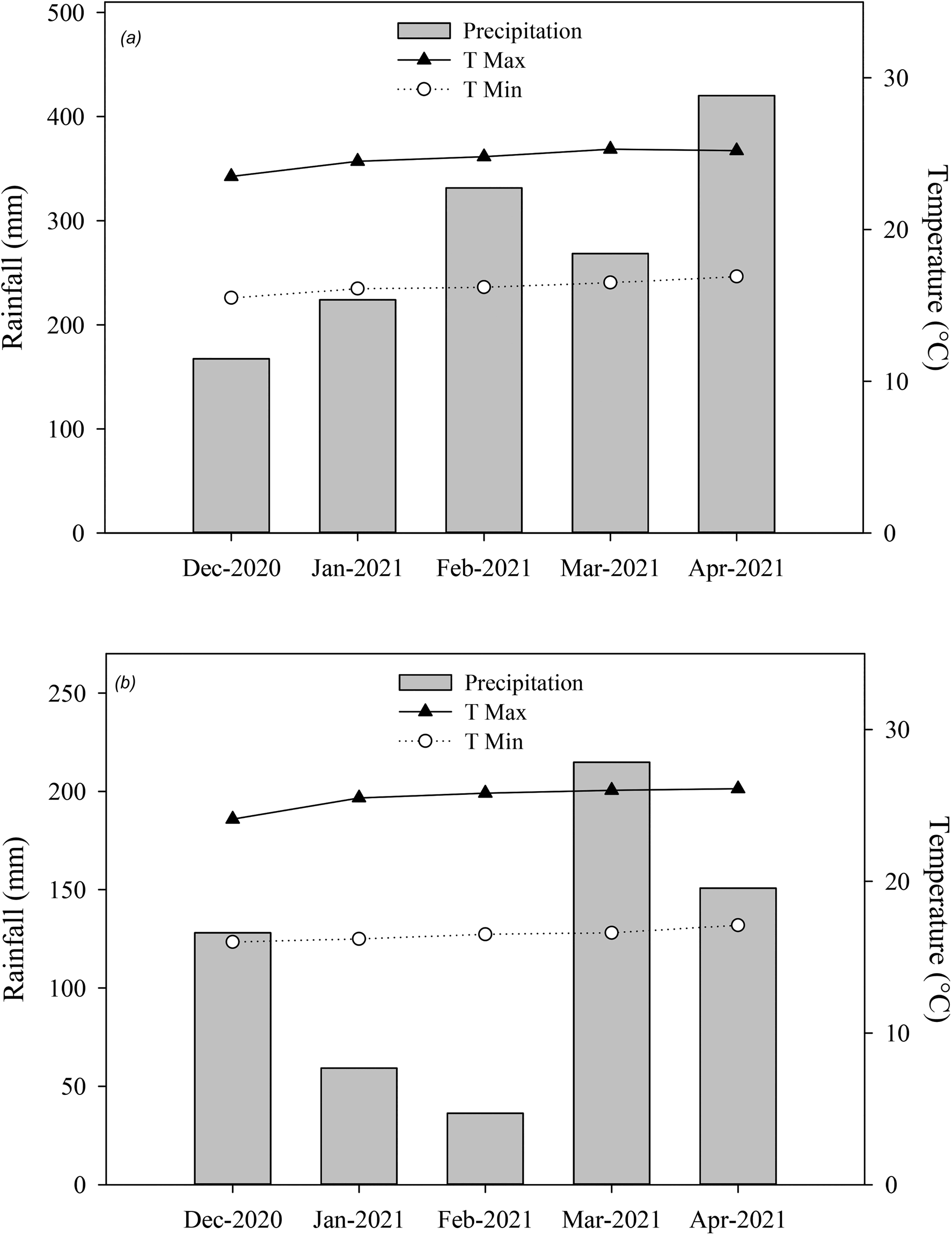
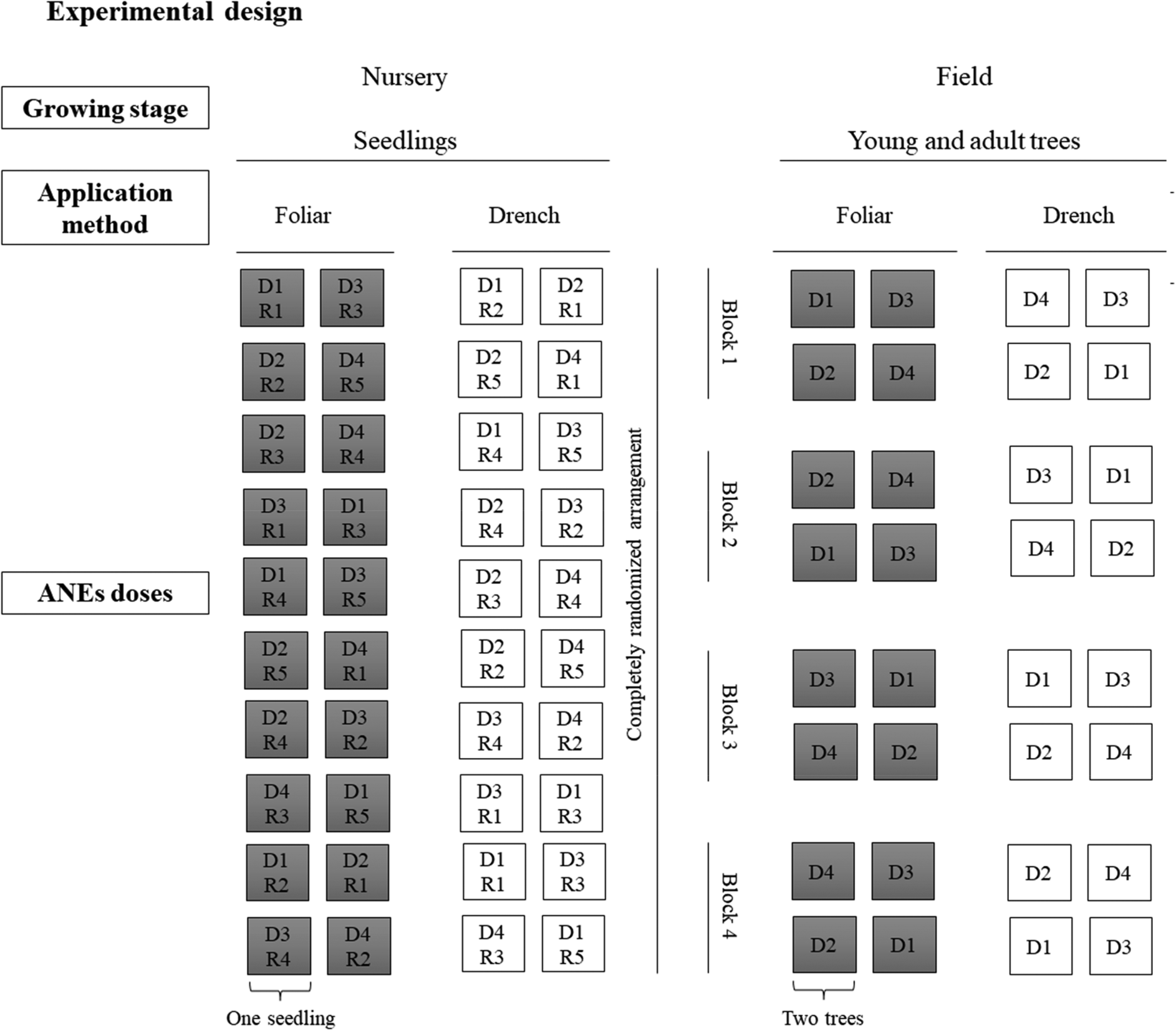
The aim of this experiment was to estimate the biostimulant effect of the application of ANEs on the physiological response of avocado seedlings under nursery conditions. This experiment was carried out in a shade house in a commercial nursery in the municipality of Fresno in the Department of Tolima (latitude: 5°9ʹ N, longitude: 75°4ʹ W; altitude: 1705 m a.s.l.). Eight-week-old seedlings were grown in 5000 cm3 plastic bags. The substrate mixture was soil and rice husks (2:1 v/v) in E1. Soil characteristics are presented in Table 1. Seedlings were grown in two beds (10 m × 1.5 m) in a shade house. The experimental setup was completely randomized, with five replicates per treatment in a local nursery, where each replicate corresponded to one seedling (Fig. 1). Figure 2 summarizes the treatments used in the commercial nursery. The environmental conditions in the shade house during the test were as follows: average temperature of 21.5° C (maximum temperature of 25°C and minimum of 18°C). The average outside photosynthetic active radiation (PAR) in the shade house was 1400 μmol/m2s at midday, while the average PAR inside the facility was 1050 μmol/m2s at midday. Environmental data were recorded using a data logger (RC-51H; Elitech Technology, Inc., San Jose, CA, USA).
Physicochemical properties of soils used in experiments with seedlings and young and adult trees

Environmental conditions (rainfall and maximum and minimum temperatures) of the experiments conducted in the Fresno (a) and Bituima (b) areas between December 2020 and April 2021.
Experimental design set up of two application ANEs method (foliar v. drench) and four ANEs doses (D1: 0 ml/l; D2: 2.5 ml/l; D3: 5 ml/l and D4: 7.5 ml/l) for three different experiments [seedlings (E1), young (E2) and adult (E3) trees] in ‘Hass’ avocado during 20 weeks after starting the treatments (WAT). ANEs: Ascophyllum nodosum extract. R: replicate.
Young trees trial (E2)
The aim of this trial was to evaluate the effects of the application method and ANEs doses on the physiology of avocado trees during the transplanting period. The plant material used in this experiment, experimental location, and experimental design layout were described in a previous paper (Gross-Urrego et al., Reference Gross-Urrego, Chávez-Arias, Pantoja-Benavides, Moreno-Poveda, Ramírez-Godoy and Restrepo-Díaz2024). Figure 2 summarizes the treatments used in the field. In general, young trees were grown in a triangular pattern and spaced 6 × 6 m. The soil characteristics and environmental conditions are summarized in Table 1 and Fig. 1(b), respectively. Environmental data were obtained from a nearby weather station [Viani station (latitude: 4°87′ N, longitude: 74°55′ W, elevation 1500 m) at the Institute of Hydrology, Meteorology, and Environmental Studies (IDEAM)].
Adult trees trial (E3)
The aim of this trial was to evaluate the short response to ANEs application (method v. dose) on the fruit yield of mature avocado trees. The plant material used in this experiment, experimental location, and experimental design layout were also described in a previous paper (Gross-Urrego et al., Reference Gross-Urrego, Chávez-Arias, Pantoja-Benavides, Moreno-Poveda, Ramírez-Godoy and Restrepo-Díaz2024). Figure 2 summarizes the treatments used in the field. Adult trees were grown in a triangular pattern and spaced at 6 × 6 m. The soil characteristics and environmental conditions are summarized in Table 1 and Fig. 1(a), respectively. Environmental data were obtained from a nearby weather station [El Eden station (latitude: 5°15′ N, longitude: 75°05′ W, elevation 1670 m) at the Institute of Hydrology, Meteorology, and Environmental Studies (IDEAM)].
Young (E2) and adult (E3) avocado trees were managed according to the recommendations of Correa Moreno et al. (Reference Correa Moreno, Jaramillo Laverde, Grajales Guzmán and Bolaños-Benavides2022) for commercial avocado management, which included row cover crop maintenance, weed removal, nutrient management, and pesticide application. Finally, the fertilization of seedlings and young and adult plants was carried out based on soil analysis and crop nutrient requirements. Table 2 shows the fertilizer sources and quantities used in the three trials. Finally, all experiments had a duration of 20 WAT.
Fertilizer source applications and quantities used in different growing stages of avocado plants

a The frequency of plant fertilization was applied monthly.
Ascophyllum nodosum extracts application methods treatments
Trees and seedlings were randomly arranged to establish the application method treatments (foliar v. drench), and four ANEs (0, 2.5, 5 and 7.5 ml/l) were used in three different trials. Eight treatments were performed in each experiment. The treatment groups were as follows: (i) plants without any product application (absolute control); (ii) plants with foliar or drench applications at a dose of 2.5 ml/l of the product; (iii) plants with foliar or drench applications at a rate of 5 ml/l of the product; and (iv) plants with foliar or drench applications at a rate of 7.5 ml/l of the product. The commercial product Ocean sprint® (BioAtlantis Ltd., Clash Industrial Estate, Tralee, Co. Kerry, Ireland) was used as the source of ANEs. The chemical composition of the ANEs used was as follows: concentration >300 g of A. nodosum/l, pH range 8–10, organic matter range 14.5–17.5% w/w, potassium (K) of 4% w/w, and potassium oxide (K2O) of 4.8% w/w.
Foliar and drench ANEs applications were carried out every 4 weeks from the beginning of the trials (0 weeks after starting the treatments (WAT)) to 16 WAT. In total, five ANEs applications (foliar v. drench) were conducted during the trials. The features of foliar and drench ANEs applications (application time, equipment, and adjuvant) were summarized by Gross-Urrego et al. (Reference Gross-Urrego, Chávez-Arias, Pantoja-Benavides, Moreno-Poveda, Ramírez-Godoy and Restrepo-Díaz2024). The volume of water used for foliar applications was 200 ml for E1, 600 ml for E2, and 4 litres for E3, whereas drench applications used the following volumes for each application: 500 ml for E1, 4 litres for E2, and 12 litres for E3. For E1, the seaweed product was dissolved in 500 ml of water and applied directly to each seedling. For tree treatments, the seaweed product was injected into the soil using a manual spray pump connected to an injection spike. Prior to the injection, the Ocean sprint® treatment was dissolved in 4 litres of water for E2 and 12 litres of water for E3. Four soil injections of 1 or 3 litres, respectively, were applied around each experimental tree. Finally, control treatments were developed using only water in both forms of application in each experiment.
Stomatal conductance (g s) and leaf chlorophyll content
The procedure to estimate leaf stomatal conductance (g s) and relative chlorophyll content, such as leaf type, equipment characteristics, and time readings, has been described in a previous paper (Gross-Urrego et al., Reference Gross-Urrego, Chávez-Arias, Pantoja-Benavides, Moreno-Poveda, Ramírez-Godoy and Restrepo-Díaz2024). These variables were recorded at 20 WAT in all the trials.
Leaf hydraulic conductivity (K) and sap nutrient content
The methodology used to obtain leaf hydraulic conductivity (K) and sap [nitrate (NO3−), calcium (Ca2+), and potassium (K+)] contents has been described previously (Gross-Urrego et al., Reference Gross-Urrego, Chávez-Arias, Pantoja-Benavides, Moreno-Poveda, Ramírez-Godoy and Restrepo-Díaz2024). This manuscript describes the materials and methods used to obtain these variables, including instruments, leaf type, and reagents. These variables were also estimated at the end of each trial (20 WAT).
Plant growing
Shoot and root lengths were obtained using a rule, whereas the stem diameter was registered with a digital Vernier caliper in the seedling trial. In addition, the avocado seedlings were harvested and separated into organs (leaves, stems, and roots), which were dried in an oven at 70°C for 72 h. Leaf dry weight (LDW), stem dry weight (SDW), root dry weight (RDW), and total dry weight (TDW) were measured at the end of seedling trial (20 WAT). On the other hand, the growth index (GI) was obtained according to Irmak et al. (Reference Irmak, Haman, Irmak, Jones, Campbell and Crisman2004) using the height and crown width per tree of each treatment at young trees trial at 20 WAT (Eqn (1)).

where H is the plant height (m), WEW is the canopy width in the east-west direction (m), and WNS is the canopy width in the north-south direction (m).
In adult trees (E3), four young terminal shoots from each cardinal point were selected to estimate shoot length at 20 WAT. The values for each cardinal point in each tree were then averaged. The trees were harvested to obtain the fruit yield per tree (kg of fruit per tree) and the dry matter percentage of each fruit at the end of E3. All variable measurements carried out in E2 and E3 were obtained from both trees of the experimental unit. The readings of each tree were then averaged to obtain data for each experimental unit.
Experimental design and statistical analysis of data
The analysis focused exclusively on the ANEs doses (0, 2.5, 5 and 7.5 ml/l) that varied in each of the experiments. Data from foliar or drench application experiments were separately subjected to analysis of variance using a randomized complete design or randomized complete block design for seedlings or young and adult trees, respectively. Regression models (polynomial regressions) were used to capture quantitative information on the levels of ANEs (Piepho and Edmondson, Reference Piepho and Edmondson2018). Statistical analyses were conducted using Statistix v 9.0 (Analytical Software, US). Evaluation of the residuals showed that the data showed normal response, so it was not necessary to transform them. Finally, SigmaPlot (version 12.5; Systat Software, US) was used to generate figures.
Results
The ANOVA results of the effect of four ANEs doses (0, 2.5, 5 and 7.5 ml/l) applied to either the soil or foliar for each experiment are summarized in Table 3. Therefore, the results are described in a group of variables, such as growth parameters and fruit yield, g s and chlorophyll content, sap nutrient content, and K. Each group variable is explained for each trial.
Summary from the analysis of variance (ANOVA) of growth, physiological, and yield parameters in three separate experiments [seedlings (E1), young (E2) and adult trees (E3)] of ‘Hass’ avocado at 20 weeks after starting treatments (WAT)
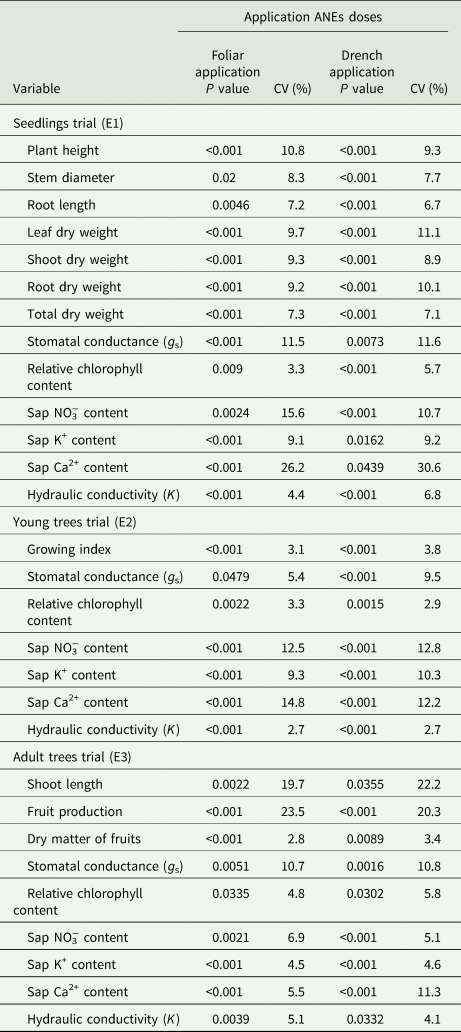
CV, coefficient of variation.
Effect of application methods and ANEs doses on growth parameters in E1 (seedlings)
The effects of the two ANEs application methods, with their respective doses, on avocado seedling growth parameters are presented in Fig. 3. Lineal and quadratic regressions were obtained for foliar and drench applications for plant height and stem diameter, respectively. Drench applications caused a linear trend in which higher growth parameters were recorded when seedlings were sprayed with high ANEs doses (115 cm for height and 13.8 mm for stem diameter). Regarding foliar application, it observed that both variables had a quadratic trend in which plant height and stem diameter showed higher readings at 5 ml/l (78.1 cm for height and 11.8 mm for stem diameter) (Figs 3(a) and (b)). Finally, both application methods provoked quadratic regression of root length. The root length was higher when avocado seedlings were treated at a rate of 5 ml/l (49.3 cm for foliar sprays and 56.1 for drench application) (Fig. 3(c)).
The effects of two ANEs application methods (foliar v. drench) and four doses (0, 2.5, 5, and 7.5 ml/l) on plant height (a), stem diameter (b), and root length (c) of ‘Hass’ avocado seedlings at 20 weeks after starting the treatments (WAT). Each datum point represents the mean of five data points ± standard error (n = 5). ANEs: Ascophyllum nodosum extract.

Leaf (LDW), shoot (SDW), root (RDW), and total dry weight (TDW) showed quadratic and linear responses for foliar or drench ANEs application at their respective rates (0, 2.5, 5 and 7.5 ml/l) (Fig. 4). In general, a linear regression was observed when the ANEs doses were applied by drench application. In all cases, a high dose (7.5 ml/l of ANEs) provoked a better dry weight (LDW: 21.1 g, SDW: 20.9 g, RDW: 21.3 g and TDW: 63.4 g). In contrast, a quadratic regression was recorded when the seedlings were treated with foliar application of ANEs. In this sense, ANEs sprays at 2.5 ml/l caused the highest dry weights (LDW: 17.4 g, SDW: 19.2 g, RDW: 20.1 g and TDW: 56.7 g) (Fig. 4).
The effects of two ANEs application methods (foliar v. drench) and four doses (0, 2.5, 5, and 7.5 ml/l) on leaves (a), stems (b), roots (c), and total dry weight (d) of ‘Hass’ avocado seedlings at 20 weeks after starting the treatments (WAT). Each datum point represents the mean of five data points ± standard error (n = 5). ANEs: Ascophyllum nodosum extract.

Effect of application methods and ANEs doses on growth index in E2 (young trees)
The growth index exhibited a quadratic response for both the application methods. Higher values were recorded when post-transplantation trees were treated at 2.5 ml/l (109.7 cm for foliar sprays and 110.6 for drench application) compared to trees untreated with ANEs (88.6 cm for foliar sprays and 88.9 for drench application) (Fig. 5(a)).
Effects of two ANEs application methods (foliar v. drench) and four doses (0, 2.5, 5, and 7.5 ml/l) on tree growing [growth index for young trees (a) and shoot length for adult trees (b)] and fruit yield parameters of ‘Hass’ avocado [fruit production (c) and dry fruit matter (d) of adult trees] at 20 weeks after starting treatments (WAT). Each datum point represents the mean of five data points ± standard error (n = 5). ANEs: Ascophyllum nodosum extract.

Effect of application methods and ANEs doses on shoot length and fruit yield in E3 (adult trees)
Shoot length showed a differential response between the application methods. A cubic response (r 2 = 0.99) was obtained when the trees were sprayed with different doses of ANE. In this application method, a lower dose (2.5 ml/l) provoked a greater shoot length (17.7 mm) than the other doses (10.2, 13.3 and 13.5 mm for 0, 5 and 7.5 ml/l, respectively). However, a quadratic response (r 2 = 0.98) was obtained with soil application, in which trees treated with an ANEs dose of 7.5 ml/l exhibited a higher shoot growth (15.3 mm) than the untreated trees (10.2 mm) (Fig. 5(b)). Regarding fruit yield, foliar sprays or drench applications caused a quadratic or cubic regression, respectively. The higher fruit yield was observed to ANEs doses at 5 ml/l (9.5 kg/tree for foliar sprays and 10.4 kg/tree for soil application) (Fig. 5(c)). Finally, the dry matter of fruits analysis showed that a quadratic regression (r 2 = 0.8 for foliar and r 2 = 0.59) for drench application) in both application methods were obtained for this variable. Although the two application methods showed a similar trend, the application rates were different. The adult trees sprayed at 7.5 ml/l showed a high dry fruit mass (34%). Meanwhile, trees treated with ANEs by the soil method at 5 ml/l exhibited a higher accumulation of dry matter in fruits (35%) at the end of E3 (Fig. 5(d)).
Effect of application method and ANEs doses on leaf stomatal conductance (g s) and chlorophyll in E1 (seedlings)
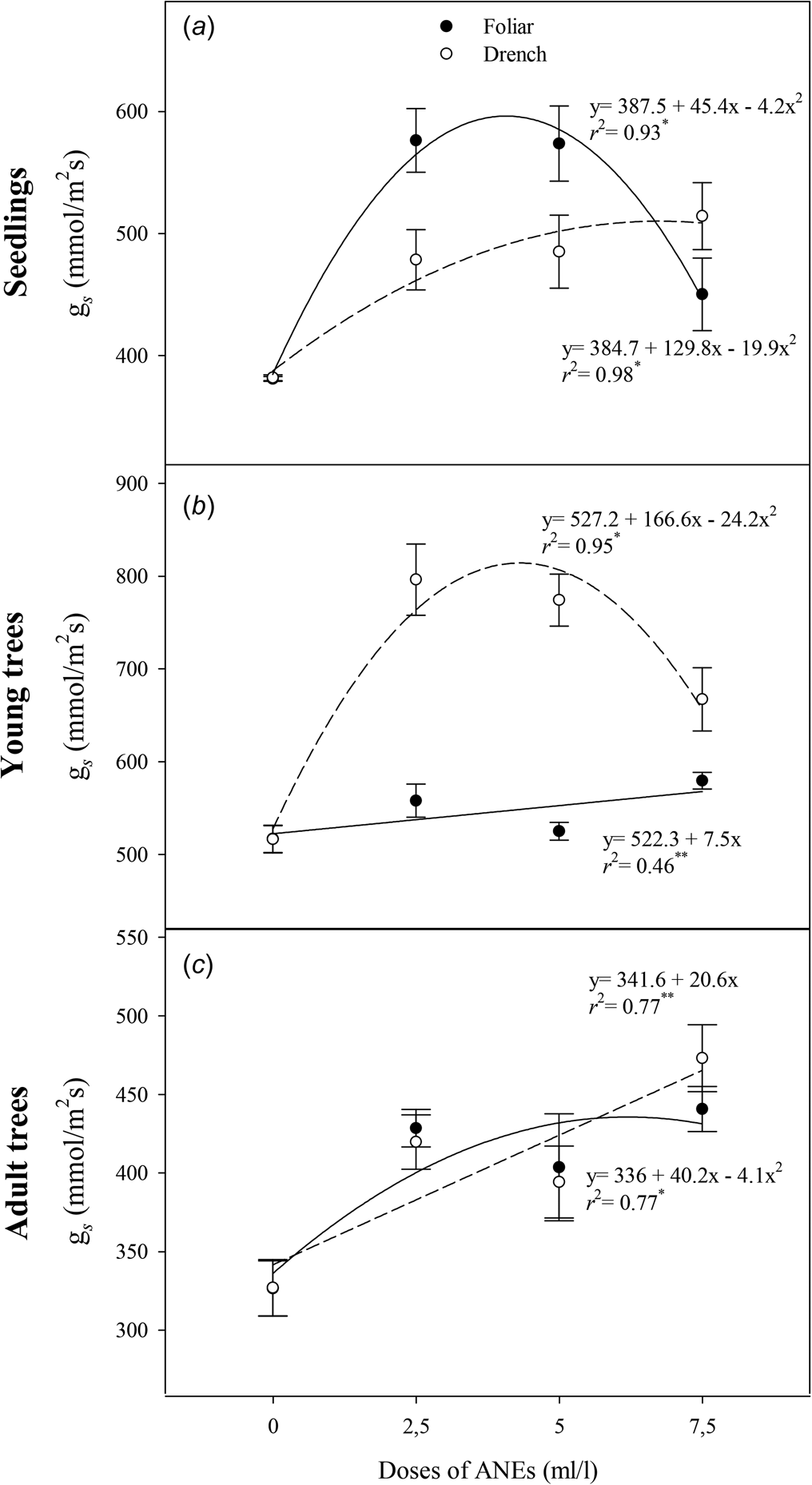
Leaf stomatal conductance (g s) exhibited a quadratic regression in both application ANEs methods. In foliar applications, doses at 5 ml/l resulted in a better g s, obtaining readings around 573 mmol/m2s. On the order hand, drench application exhibited that doses higher at 5 ml/l had a better gas exchange performance (485 mmol/m2s for 5 ml/l and 514 mmol/m2s for 7.5 ml/l) (Fig. 6(a)). Regarding atLEAF readings, a quadratic response was also obtained between both application methods (r 2 = 0.79 for foliar and r 2 = 0.98 for drench). Both application methods recorded that dose at 5 ml/l had the high chlorophyll relative content (44.3 and 50.4 atLEAF units for foliar and drench application, respectively). In addition, drench application resulted in higher chlorophyll content than foliar sprays (Fig. 7(a)).
Stomatal conductance (g s) in seedlings (a), young trees (b), and adult trees (c) of ‘Hass’ avocado (Persea americana Mill.) with two application methods (foliar v. drench) and four ANEs doses (0, 2.5, 5, and 7.5 ml/l) at 20 weeks after starting treatments (WAT). Each datum point represents the mean of five data points ± standard error (n = 5). ANEs: Ascophyllum nodosum extract.
Leaf relative chlorophyll content (atLEAF readings) in seedlings (a), young trees (b), and adult trees (c) of ‘Hass’ avocado (Persea americana Mill.) with two application methods (foliar v. drench) and four ANEs doses (0, 2.5, 5, and 7.5 ml/l) at 20 weeks after starting treatments (WAT). Each datum point represents the mean of five data points ± standard error (n = 5). ANEs: Ascophyllum nodosum extract.

Effect of application method and ANEs doses on leaf stomatal conductance (g s) and chlorophyll in E2 (young trees)
Two contrasting g s responses were recorded in young trees. A quadratic response (r 2 = 0.95) was obtained when ANEs doses were applied by drenching. g s showed better performance with drench application at doses between 2.5 and 5 ml/l of seaweed extract (~785.2 mmol/m2s). A linear regression was obtained that showed a slight increase when ANEs were sprayed (516.4 mmol/m2s for 0 ml/l and ~554.2 mmol/m2s for another doses) (Fig. 6(b)). Regarding the chlorophyll content, quadratic regressions were registered for both application methods. It was observed that the use of different doses improved this photosynthetic pigment content in young trees, recording the highest value at 5 ml/l (65.1 and 63.9 atLEAF units for foliar and drench application, respectively) compared to untreated trees (57.2 atLEAF units) (Fig. 7(b)).
Effect of application method and ANEs doses on leaf stomatal conductance (g s) and chlorophyll in E3 (adult trees)
A linear response (r 2 = 0.77) was observed for the drench application of the ANEs. All ANEs doses increased g s regarding to the control trees; but the ANEs dose at 7.5 ml/l favoured g s (456.9 mmol/m2s). Foliar ANEs spray exhibited a quadratic trend (r 2 = 0.77) in which g s showed a better performance at doses higher than 5 ml/l (422.2 mmol/m2s) (Fig. 6(c)). Regarding the relative chlorophyll content, the foliar and drench methods enhanced this variable. A quadratics regression (r 2 = 0.86 and 0.87 for foliar and drench application, respectively) were observed in both application methods, in which avocado trees treated with the highest doses (7.5 ml/l) had a high content of this pigment (52.6 atLEAF units for foliar and 53.9 atLEAF units for drench application) at 20 WAT (Fig. 7(c)).
Effect of application method and ANEs doses on concentration of nitrate (NO3−), calcium (Ca2+) and potassium (K+) in E1 (seedlings)
The sap NO3− content was higher when the seedlings were treated with drench application of ANEs. In seedlings trials, cubic or quadratic response (r 2 = 0.99 or 0.91) were registered for NO3− content in foliar and drench application methods, respectively. It was observed that plants had a better response when treated with a dose of 5 ml/l in both application methods (884 mg/l for filar and 953 mg/l for drench) compared to untreated seedlings (610 mg/l) in the sap NO3− content. Respect K+ sap content, a positive linear regression (r 2 = 0.92) was observed when ANEs doses were applied to drench applications. This group of plants registered a higher sap K+ content (3415 mg/l) at 7.5 ml/l; meanwhile, a quadratic response (r 2 = 0.88) was registered in foliar ANEs applications, in which a dose of 5 ml/l (3190 mg/l) enhanced K+ content in seedlings. Finally, drench ANEs application caused a quadratic regression (r 2 = 0.98) in which a high Ca2+ sap content was observed at 7.5 ml/l (526 mg/l); meanwhile, foliar ANEs sprays showed a lineal negative response (r 2 = 0.81) in which a lower sap Ca2+ sap content was observed at higher ANEs doses (194 and 240 mg/l for 5 and 7.5 ml/l, respectively) compared to untreated seedlings (579 mg/l) (Table 4).
Sap nitrate (NO3−), potassium (K+) and calcium (Ca2+) content of seedlings, young and adult trees of ‘Hass’ avocado of with two application methods (foliar v. drench) and four ANEs doses (0, 2.5, 5, and 7.5 ml/l) at 20 weeks after starting treatments (WAT)
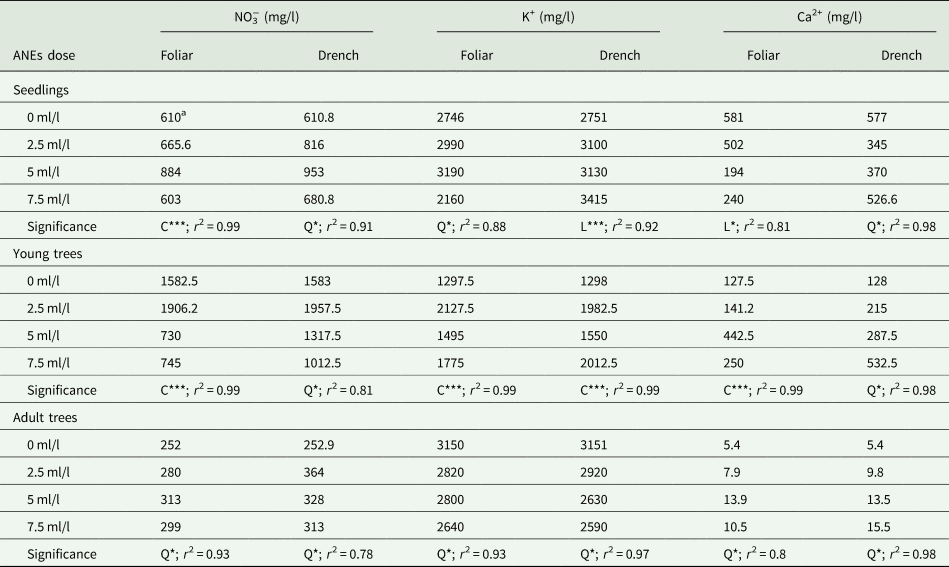
ANEs, Ascophyllum nodosum extract.
L, linear; Q, quadratic; C, cubic according to regression analysis.
a The data represent the average of four trees per treatment (n = 5). * and *** differ significantly at 0.05 and 0.001, respectively.
Effect of application method and ANEs doses on concentration of nitrate (NO3−), calcium (Ca2+) and potassium (K+) in E2 (young trees)
Cubic (r 2 = 0.99) or quadratic (r 2 = 0.81) regressions were registered in the sap NO3− content of young trees treated with foliar and drench ANEs doses, respectively. In general, trees with foliar or drench ANEs applications at 2.5 ml/l showed higher NO3− content (1906 and 1957 mg/l for foliar and drench applications, respectively). For sap K+ content, cubic responses (r 2 = 0.99) were observed for both application methods. Foliar ANEs sprays at a rate of 2.5 ml/l (2127 mg/l) or drench ANEs applications at a rate of 7.5 ml/l (2012 mg/l) caused an increase in sap K+ content compared to trees without any treatment (1297 mg/l). Cubic (r 2 = 0.99) and quadratic (r 2 = 0.98) trends were observed for the foliar and drench methods, respectively. In the foliar application method, it was observed that the sap Ca2+ content was high at 5 ml/l of ANEs (442 mg/l); meanwhile, drench application showed that the higher ANEs doses (7.5 ml/l) caused the high Ca2+ concentration in the sap (532 mg/l) (Table 4).
Effect of application method and ANEs doses on concentration of nitrate (NO3−), calcium (Ca2+) and potassium (K+) in E3 (adult trees)
For sap NO3− content, quadratic regressions were obtained for the foliar (r 2 = 0.93) and drench (r 2 = 0.78) methods. Adult trees with foliar ANEs sprays at 5 ml/l and drench ANEs application at 2.5 ml/l caused an increase in sap NO3− concentration (313 mg/l for foliar and 364 mg/l for drench) compared to untreated trees (252 mg/l). The sap K+ concentration also showed a quadratic response (r 2 = 0.93, foliar application; r 2 = 0.97, drench application) in both application ANEs methods. A progressive decrease when the application ANEs dose increased, with the lowest values recorded at the 7.5 ml/l rate (2640 and 2590 mg/l for foliar and drench, respectively) in both application ANEs methods. Finally, sap Ca2+ content also exhibited quadratic regressions in foliar (r 2 = 0.8) and drench (r 2 = 0.98) applications of ANEs. Drench application at 7.5 ml/l (15.5 mg/l) and foliar application at 5 ml/l (13.9 mg/l) caused an increase in sap Ca2+ content compared to untreated trees (5.4 mg/l) at the end of E3 (Table 4).
Effect of application method and ANEs doses on hydraulic conductivity of the plant (K) in E1 (seedlings)
At the seedling stage, two responses were observed for K performance. In the foliar method, a quadratic response (r 2 = 0.75) was registered for this variable, in which an ANEs dose of 5 ml/l improved K (1.46 × 10⁻⁶ kg/s MPa). Linear regression (r 2 = 0.93) was obtained in trees treated with drench ANEs doses, in which an increase on K was observed when the ANEs rates increase, registering a higher value at dose of 7.5 ml/l (1.41 × 10⁻⁶ kg/s MPa) respect to untreated trees (1.14 × 10⁻⁶ kg/s MPa) (Fig. 8(a)).
Plant hydraulic conductivity (K) of seedlings (a), young trees (b) and adult trees (c) of ‘Hass’ avocado of with two application methods (foliar v. drench) and four ANEs doses (0, 2.5, 5, and 7.5 ml/l) at 20 weeks after starting treatments (WAT). Each datum point represents the mean of five data points ± standard error (n = 5). ANEs: Ascophyllum nodosum extract.

Effect of application method and ANEs doses on hydraulic conductivity of the plant (K) in E2 (young trees)
In young trees (E2), K registered a quadratic regression in both application ANEs methods (r 2 = 0.99 and 0.95 for foliar and drench, respectively). K increased when ANEs doses were higher for both application methods. At 7.5 ml/l, K was highly stimulated by the application of either the drench or foliar method (3.55 and 3.91 × 10⁻⁶ kg/s Mpa for foliar and drench applications, respectively) compared to trees without application (2.9 × 10⁻⁶ kg/s Mpa) (Fig. 8(b)).
Effect of application method and ANEs doses on hydraulic conductivity of the plant (K) in E3 (adult trees)
Adult trees exhibited differential responses to ANEs application. When the trees were treated with foliar ANEs spray, a quadratic response (r 2 = 0.99) was observed. K was higher at 5 ml/l (1.88 × 10⁻⁶ kg/s MPa). Meanwhile, trees treated with drench ANEs showed a cubic regression (r 2 = 0.99) in which a better K starting with ANEs dose at 2.5 ml/l (1.77 × 10⁻⁶ kg/s MPa). A slight increase was observed at 7.5 ml/l (1.73 × 10⁻⁶ kg/s MPa) compared to untreated trees (1.62 × 10⁻⁶ kg/s MPa) (Fig. 8(c)).
Discussion
Experiments developed during three different stages showed a beneficial effect of the application of ANEs on the physiology and yield of this species under tropical conditions. The results obtained indicate that both edaphic and foliar application of this seaweed extract can be considered at the time of a biostimulation process in the crop, since one of the main effects was the increased growth of the avocado. In general, ‘Hass’ avocado seedlings or trees showed better shoot length, height, stem diameter, root length, and dry matter accumulation when treated with doses from 2.5 ml/l of ANEs. Díaz-Leguizamón et al. (Reference Díaz-Leguizamón, Chingaté-Cruz, Sánchez-Reinoso and Restrepo-Díaz2016) also observed that the ANEs application favoured the growth represented as dry matter of Solanum quitoense L. under tropical conditions. Our results are consistent with those of other studies, in which the use of seaweed extracts improved avocado root growth (Arioli et al., Reference Arioli, Villalta, Hepworth, Farnsworth and Mattner2024). This suggests that increased plant growth may be because ANEs favour root physiological processes, such as water and nutrient uptake, and induce the synthesis of plant hormones, such as auxins and cytokinins, which generate cell division, vascular growth, and cell elongation (Ali et al., Reference Ali, Ramsubhag and Jayaraman2019; Ahmed et al., Reference Ahmed, Ullah, Piromsri, Tisarum, Cha-um and Datta2022).
The application of ANEs can also increase the nutrient content of the plant sap (Di Stasio et al., Reference Di Stasio, Van Oosten, Silletti, Raimondi, Dell'Aversana, Carillo and Maggio2018). In the present study, the three experiments showed higher concentrations of NO3−, Ca2+, and K+ in the sap of ‘Hass’ avocado plants after foliar or drench application of different doses of ANEs. Bonomelli et al. (Reference Bonomelli, Celis, Lombardi and Mártiz2018) also found that ANEs application caused an increase on Ca2+ and K+ concentration in avocado plants under non-stressed conditions. Likewise, NO3− content has also been favoured by the application of seaweed extracts on cultivated plants such as wheat (Łangowski et al., Reference Łangowski, Goñi, Ikuyinminu, Feeney and O'Connell2022). In general, the higher content of these nutrients in the sap of ‘Hass’ avocado plants after the treatments may be due to factors such as (i) an increased expression of genes related to the synthesis of plasma membrane transporters and (ii) such biostimulants can enhance the effectiveness of fertilizers as well as the utilization of nutrients from the soil (Rathore et al., Reference Rathore, Chaudhary, Boricha, Ghosh, Bhatt, Zodape and Patolia2009; Ali et al., Reference Ali, Ramsubhag, Benn, Ramnarine and Jayaraman2022).
Foliar or drench application of ANEs improved the water flow rate of avocado plants by increasing K values in all experiments. Salvi et al. (Reference Salvi, Brunetti, Cataldo, Storchi and Mattii2020) also observed an increase in parameters related to plant water status such as relative water content (RWC) and K after treatment with ANEs in grapevine plants. It has been reported that the use of seaweed extracts can promote water flow in plants because they regulate the synthesis of proteins involved in transmembrane water transport, such as aquaporins of the PIP1;2 (plasma membrane intrinsic protein 1;2), PIP2;2, and PIP2;3 families (Deolu-Ajayi et al., Reference Deolu-Ajayi, van der Meer, Van der Werf and Karlova2022). Likewise, ANEs can also help improve the water status of plants by promoting the synthesis of compatible osmolytes, such as proline, thereby helping the osmotic adjustment of the plant (do Rosário Rosa et al., Reference do Rosário Rosa, Dos Santos, da Silva, Sab, Germino, Cardoso and de Almeida Silva2021).
Foliar or drench application of ANEs can favour gas exchange properties (g s) and photosynthetic pigment synthesis (De Clercq et al., Reference De Clercq, Pauwels, Top, Steppe and Van Labeke2023). In the present study, the use of seaweed extract (ANEs) had a positive effect on g s and chlorophyll content (atLEAF units) of avocado plants in the three experiments. Subramaniyan et al. (Reference Subramaniyan, Veerasamy, Prabhakaran, Selvaraj, Algarswamy, Karuppasami, Thangavel and Nalliappan2023) also observed that ANEs treatments improved g s and chlorophyll content (SPAD values) in tomato plants. As mentioned above, the use of ANEs favours water uptake, which helps maintain plant water relations and cell turgor pressure, thereby reducing leaf stomatal closure. Additionally, ANEs enhance cytokinin synthesis and N metabolism, positively affecting photosynthetic pigment biosynthesis in plants (Kałużewicz et al., Reference Kałużewicz, Krzesiński, Spiżewski and Zaworska2017; Deolu-Ajayi et al., Reference Deolu-Ajayi, van der Meer, Van der Werf and Karlova2022).
The yield and dry matter percentage per fruit were also enhanced using A. nodosum algal extract. The results obtained in this study are similar to those reported by Arioli et al. (Reference Arioli, Villalta, Hepworth, Farnsworth and Mattner2024), who reported that studies of seaweeds on avocado are scarce and concluded that the application of algae extract (ANEs) significantly improved ‘Hass’ avocado yield (kg of fruit/tree) by 7%. An increase in yield may be associated with various factors such as improved soil fertility, which favours the absorption and mobilization of nutrients. This would stimulate vegetative development, as this type of plant extract provides compounds such as growth regulators (auxins, abscisic acid, gibberellins, cytokinins, betaines, brassinosteroids, jasmonates, polyamines, salicylates, and signal peptides), polysaccharides, vitamins, phenolic compounds, and trace elements, such as nitrogen, potassium, calcium, iron, copper, zinc, manganese, and nickel (Kumari et al., Reference Kumari, Sehrawat, Phogat, Sehrawat, Chaudhary, Sushkova, Voloshina, Rajput, Shmaraeva, Marc and Shende2023; Villa e Vila et al., Reference Villa e Vila, Marques, Rezende, Wenneck, Terassi, Andrean, de Faria Nocchi and Matumoto-Pintro2023).
In general, it has been reported that application ANEs method and dose play an important role in the efficiency of plant responses (Ali et al., Reference Ali, Ramsubhag and Jayaraman2021; Ahmed et al., Reference Ahmed, Ullah, Piromsri, Tisarum, Cha-um and Datta2022). In our study, the results obtained show that the application of ANE at the highest doses by foliar sprays is as effective as application by root drenching for avocado plants in their different growing stages. Similar conclusions were reported in tomatoes, in which plant nutritional status, growth, and fruit yield and quality did not differ between application methods (foliar v. drench) (Ali et al., Reference Ali, Farrell, Ramsubhag and Jayaraman2016). Additionally, the efficiency of the application method can be associated with the application rate (Li and Mattson, Reference Li and Mattson2015). In the present study, avocado plants showed better physiological response when treated with higher ANEs doses (≥5 ml/l). Ahmed et al. (Reference Ahmed, Ullah, Piromsri, Tisarum, Cha-um and Datta2022) also observed that growth, yield, and physiological responses of tomato plants enhanced with higher ANEs doses (≥5 ml/l) in drench or foliar applications. These biostimulating effects at higher doses can be attributed to the higher presence of compounds such as growth hormones (auxins, cytokinins, ethylene, gibberellin, and abscisic acid), quaternary ammonium compounds (betaines and proline), polysaccharides (alginates), and trace elements and lipid-based molecules (sterols) (Illera-Vives et al., Reference Illera-Vives, Labandeira, Fernández-Labrada, López-Mosquera, Torres, Kraan and Dominguez2020).
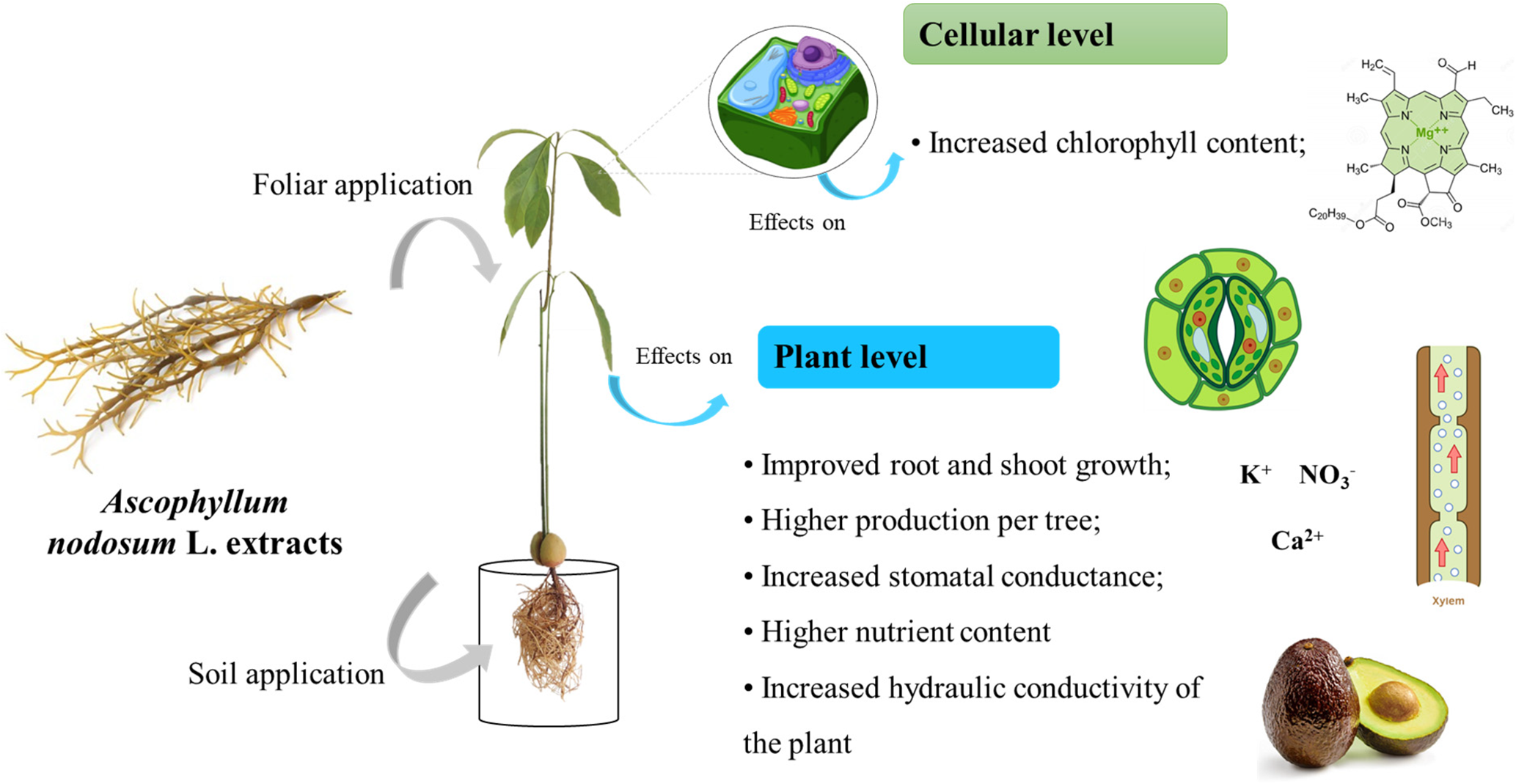
In recent years, studies on the use of biostimulation in avocado have focused mainly on using compounds such as amino acids, carboxylic acids, and growth-promoting microorganisms to improve plant growth, yield, and fruit quality (Lemus-Soriano et al., Reference Lemus-Soriano, Venegas-González and Pérez-López2021; Rojas-Rodríguez et al., Reference Rojas-Rodríguez, Ramírez-Gil, González-Concha and Balaguera-López2023). However, Arioli et al. (Reference Arioli, Villalta, Hepworth, Farnsworth and Mattner2024) mentioned that scientific publications reporting the benefits of using ANEs in avocado orchard production are limited. In this sense, our study sought to provide knowledge on the application in different developmental stages in avocado cv. Hass. The main responses of avocado plants to foliar or edaphic application of this seaweed extract were an increase in root and shoot growth, g s, relative chlorophyll content, plant hydraulic conductivity, and nutrient concentration in the leaf sap. In addition, the plants showed an increase in yield per tree and a higher percentage of fruit dry matter (Fig. 9).
A conceptual model representing the performance of ‘Hass’ avocado plants based on application methods (foliar v. soil application) and ANEs doses at cellular and plant levels. ANEs: Ascophyllum nodosum extract.
Conclusion
In conclusion, the results showed that the use of ANEs resulted in physiological benefits, such as improved plant growth and nutrient and water status, in avocado plants at different growth stages (seedlings, young, and adult trees). At the seedling stage, the use of ANEs, preferably drench application, enhanced growth, nutritional status (NO3− and K+ content), and relative chlorophyll content. In young trees, drench ANEs applications are an important strategy to cope with post-transplant stress because treated trees had a better leaf gas exchange parameter (g s), chlorophyll content, and plant hydraulic conductivity. In adult trees, high ANEs doses (≥5 ml/l) in both application methods (foliar or drench) resulted in higher fruit yield, shoot length, stomatal conductance, NO3− and K+ content, and plant hydraulic conductivity. From these results, it can be concluded that the use of foliar and soil ANEs applications can be considered for integrated crop management of ‘Hass’ avocado to improve crop sustainability. Finally, research is needed to study the effects of climate variability and changes in avocado cultivation on marine algae, such as A. nodosum.
Author contributions
J. A. G.-U., G. A. M.-P., A. R.-D. and H. R.-D. conceived and designed the study. M. C.-B., J. A. G.-U., A. D. P.-B., C. C. C. –A. and H. R.-D. conducted data gathering. A. D. P.-B. and C. C. C.-A. performed statistical analyses. J. A. G.-U., G. A. M.-P., A. R.-D. and H. R.-D. resources and project administration M. C.-B. and C. C. C.-A. writing – original draft. A. R.-D. and H. R.-D. writing – review and editing. All authors read and approved the final manuscript.
Funding statement
This research received no specific grant from any funding agency, commercial or not-for-profit sectors.
Competing interests
The authors declare there are no conflicts of interest.
Ethical standards
Not applicable.



