Introduction
‘[I]t can be determined that, in physical anthropological respects, the Tibetans are one people’, concludes the ethnographer HRH Prince Peter of Greece and Denmark (Prince Peter and Balslev Jørgensen Reference Jørgensen1966, 39). Prince Peter (1908–1980), son of Prince George of Greece and Denmark (the second son of the Greek king) and French psychiatrist Marie Bonaparte, was trained in anthropology at The London School of Economics and Political Science under Bronislaw Malinowski. Upon joining the Third Danish Expedition to Central Asia (1947–1954), he travelled to the northeast Indian Himalayan town of Kalimpong, then home to a large Tibetan population. Arriving there in January 1950, he went on to gather an astounding 5,000 anthropometric measurements of Tibetans.
Kalimpong sits at 1,250 metres above sea level on a ridge in the eastern Himalayan foothills of northern West Bengal, burrowed among towering snow-clad mountains that include the world's third tallest peak—Kanchenjunga—to the north. In the valley below flows the River Teesta, which forms both a natural and political boundary between the states of West Bengal and Sikkim. When Prince Peter arrived in January 1950, Kalimpong was home to a large Tibetan community, which included Tibetan Christians, intellectuals, merchants, and aristocrats, as well as many itinerant traders, pilgrims, caravaneers, and beggars; numbers would swell when winter drove people across the border to enjoy the milder climate there. The town attracted Tibetans because of its strategic location at the southern end of a commodity pathway from the Tibetan capital Lhasa to India via the Jelep mountain pass (Harris Reference Harris2008, Reference Harris2013; see also Viehbeck Reference Viehbeck2017). Its proximity to the eastern Indo-Tibetan border made it, in the words of Prince Peter (1953, 6): ‘like a big funnel at the entrance to Tibet: everybody must pass through here to reach the Indian plains’. For many foreigners, it therefore became a proxy for Tibet—‘a Tibet in absentia’ (Brox and Koktvedgaard Zeitzen Reference Brox and Zeitzen2017b, 16). A stroll down Kalimpong's main street today still gives one the feel of a busy trading town, where a continuous and noisy stream of people and goods flows. In the 1950s, when Prince Peter made it his expedition headquarters, the town was not only in its heyday as a hub of transnational trade, it was also a political hotbed, having become one of the battlegrounds of the so-called Tibet Question.
The Tibetan government in Lhasa had been ruling central Tibet as an independent state since 1913 (covering an area roughly corresponding to the present-day Tibet Autonomous Region). Kham and Amdo, the eastern and northeastern regions of Tibet inhabited by mainly Buddhist Tibetan-speaking populations, had consisted of various social and political formations with shifting relations to Lhasa and China-based powers, as well as to more local monastic and non-monastic authorities. With the establishment of the People's Republic of China in 1949 and Mao Zedong's avowed intent to ‘liberate’ Tibet, the Lhasa-based Tibetan government felt increasingly threatened. On 7 October 1950, 40,000 soldiers of the People's Liberation Army (PLA) crossed the River Drichu into eastern Tibet. In an appeal to the United Nations dispatched from Kalimpong on 11 November 1950 (Kashag 1950), the Tibetan delegation called the PLA advancement into Tibetan territory an ‘armed invasion’ and summarized the Tibet Question as follows: ‘The problem is simple. The Chinese claim Tibet as a part of China. Tibetans feel that racially, culturally, and geographically they are far apart from the Chinese.’ The PLA's incursion into Tibet also threatened the national security of a newly independent India; Prime Minister Jawaharlal Nehru considered Tibet to be India's buffer against both Russia and the PRC (Norbu Reference Norbu2008; Shakya Reference Shakya1999). On 16 December 1950, as the crisis escalated, the Fourteenth Dalai Lama fled in disguise from Lhasa and travelled to Dromo near the Indo-Tibetan border, where he stayed until July 1951. He was followed by many Tibetans who escaped with their families to safety in Kalimpong. The local newspaper The Himalayan Times (1952) reported that within 15 months about 10,000 Tibetans had registered with the Frontier Police in the Darjeeling District, which included Kalimpong. Around 100 Tibetans were crossing the border area into India every day, about half of whom did not return to Tibet (The Himalayan Times (1952)).
In his first expedition report from Kalimpong on 31 January 1951, Prince Peter (1951, 1) noted: ‘Recent events in Tibet, where a full scale invasion by Chinese Communist troops developed in the early days of November, can be said to have made Kalimpong even more interesting.’ The town had become a refuge for Tibetan and Chinese dissidents and a recruiting ground and headquarters for the CIA in its strategic collaboration with Tibetan guerrillas to fight communist expansion. The many foreign agents said to be operating from Kalimpong at the time led Nehru to dub the town a ‘nest of spies’ (Nehru Reference Nehru1959, 18−19). Prince Peter himself fell under the suspicion of the local government since he was a European prince with a military background who had been stationed at Chiang Kai-shek's headquarters in Chongqing. He also had close ties with Russian nationals suspected of spying for Russia—his wife Irina and close friend George Roerich (son of the painter Nicholas Roerich).
It was in the midst of such extreme political tensions in this strategically important ‘geopolitical contact zone’ (Brox and Koktvedgaard Zeitzen Reference Brox, Zeitzen and Viehbeck2017a) that Prince Peter launched his measuring marathon. His anthropometric survey was part of a broader Danish expedition to scientifically map out Tibet's ‘unknown’ civilization and to ‘salvage’ its remains and its people. Like many other foreign observers of his time, Prince Peter thought of Tibet and its culture as ancient, secretive, and on the brink of extinction: a ‘Disappearing World’ (1979, 28). The plans for the Third Danish Expedition to Central Asia described Tibet as ‘guarding a plenitude of secrets silently and closed to the world’ and expressed the belief that ‘Denmark should make an effort in Central Asia to rescue the fast disappearing culture, before it is irrevocably too late’ (Anon 1949). For Prince Peter, the expedition's mission was clear—to document and rescue the remains of this elusive cultural treasure trove before the modern world and the Chinese army destroyed it. These twin threats were already at the doorstep. Prompt action was required to explore Tibet anthropologically and ethnographically ‘before it is too late and unavoidable changes, due to the radically altered political status of the country, utterly obliterate its ancient cultural forms and institutions’ (Prince Peter 1952a, 284).
With the Chinese incursion into Tibet, Prince Peter's rescue mission therefore suddenly took on a very concrete and urgent character. He was to collect tangible heritage such as jewellery and costumes on commission for the National Museum of Denmark, as well as data on intangible heritage, such as polyandrous kinship systems, which were his primary ethnographic interest. But his mission also extended to the biological heritage which Tibet was now bleeding as thousands fled (see Koktvedgaard Zeitzen Reference Koktvedgaard Zeitzen2016; Koktvedgaard Zeitzen and Brox Reference Koktvedgaard Zeitzen and Brox2016). Prince Peter thus oscillated between two collection modes: an ethnographic mode, in which displaced Tibetans were carriers of a culture facing extinction, with their artefacts and accounts as scientific specimens to be secured; and an anthropometric mode, in which the people themselves were scientific specimens of physical types and carriers of threatened biological characteristics.
In this article, we explore Prince Peter's commission to measure 5,000 Tibetans at a time when anthropology had seemingly moved on, theoretically and ethically. The official aim of the survey was to identify Tibetan types. But in the context of the unfolding Tibetan crisis in the 1950s and resultant stream of Tibetans entering Kalimpong, anthropometry also became one of Prince Peter's main entries into Tibetan worlds. For Prince Peter, it seemed less a method to theorize about Tibet and Tibetans than a pragmatic way to gain access to Tibetan accounts and artefacts. We approach the anthropometric survey historically by uncovering, first, the understandings and scientific paradigms underpinning it, as well as the historical conditions and contingencies of Prince Peter's research. Due to the lack of sources providing Tibetan or other local perspectives, we can only speculate about how those who were measured felt about the survey, but we do consider its ethical and scientific problems and possible reasons for Prince Peter's apparent lack of reflection on them. Second, we explore the survey's representations of Tibetan peoples and places, which give us an insight into how Prince Peter—who would later become an advocate for Tibetans and a free Tibet—understood and approached the category of Tibet as he mapped out a Tibetan nation. We argue that while his understanding was, in essence, primordialist, linking particular peoples to particular places, in practice he took a more modernist approach to ‘Tibetaness’ as contingent upon historical processes. Finally, we build on our historical and scientific contextualization of the survey to reflect on the potential significance of this vast and unique collection of Tibetan historic anthropometric data for Tibetans today.Footnote 1
A pre-war paradigm in a post-war world
Prince Peter's data gathering in a geopolitical hot spot is in keeping with the scientific history of anthropometry and its parent science, physical anthropology, both of which have been entangled with politics and colonialism. Anthropometry has been used by anthropologists to explore the borderlands between biology and culture—a quest with a long and complex lineage that remains ideologically charged and controversial in contemporary anthropology (Lindee and Santos Reference Lindee and Santos2012, 8; Stocking Reference Stocking and Stocking1988, 14–15). In a twenty-first century theoretical and ethical landscape, investigating historic anthropometric data necessarily involves engaging with ‘obsolete and unsavory anthropological theories and practices’ and finding ways to ‘domesticate and defuse the overtones of racial science and colonial violence’ (Elliott Reference Elliott, Bell and Hasinoff2015, 176, 201). Indeed, using measurement as a method for studying humans was not ethically unproblematic when Prince Peter conducted his survey in the 1950s; anthropometry had been tainted by its pre-war association with race research, culminating in the atrocities committed by Nazi Germany during the Second World War (see Brace Reference Brace and Spencer1997; Holck Reference Holck, Lynnerup, Bennike and Iregren2008; Jensen Reference Jensen, Lynnerup, Bennike and Iregren2008). Nor was it theoretically unproblematic—anthropometry became central to Prince Peter's expeditionary endeavours during its scientific eclipse in the wider anthropological world.
Anthropometry has a long history as a measure of human variation, fuelled by the long-running quest in physical anthropology to investigate whether or not there is an underlying unity of humankind: are we one or are we many? Before the twentieth century, Western encounters with foreign peoples and alien cultures were often framed in religious terms through which Otherness could be addressed by conversion, but the tremendous cultural and biological variation encountered posed a challenge for anthropological interpretation. Anthropometry was one of several technical disciplines developed in the nineteenth century to assist Western researchers in processing this diversity. Formulated in its modern form in 1881 by the anthropologist Paul Topinard, who devised a system of proportional measurements of the living human body (and cadaver) (Spencer Reference Spencer and Spencer1997, 80), it became a relatively cheap and simple way of measuring human variation by focusing on surface morphology. As a widely used expeditionary tool seen as both objective and scientific, it provided, among other things, a way to distinguish between the different human races and establish the relations between them. One of the aims of anthropometric surveys was to arrange indigenous peoples (and everyone else) into series by assigning them to particular types based on an unarticulated assumption that some people were somehow ‘more’ biological (and ‘cultural’) than others; bodies thus warranted comparative scientific interest and became resources for scientific practices (Lindee and Santos Reference Lindee and Santos2012, 7; Spencer Reference Spencer and Spencer1997).
Concerns about the method's accuracy and aims, as well as a general turn towards social and cultural anthropology in the early twentieth century, led to anthropometry losing influence. Some countries, such as Germany, retained an interest in the method and many anthropometric surveys were carried out by administrators, medical officers, and expedition members up until the post-Second World War decolonizing process (Stocking Reference Stocking and Stocking1988, 3; Ulijaszek and Komlos Reference Ulijaszek, Komlos, Nicholas Mascie-Taylor, Yasukouchi and Ulijaszek2010, 183, 190). However, human physical and behavioural differences were increasingly being interpreted in environmental or cultural terms, while new developments in genetic research meant that anthropometric approaches relying on phenotypic inference were abandoned in favour of ever more sophisticated molecular genetics analysis. During the same year that Prince Peter started his survey, Sherwood Washburn famously proclaimed a ‘new’ physical anthropology, grounded in behavioural, experimental, and processual approaches that made typological and essentialist methods—such as the field anthropometry practised by Prince Peter—seem scientifically unprofitable (Hunt Reference Hunt1959, 77; Washburn Reference Washburn1951). This move towards biological anthropology, informed by post-synthesis evolutionism and molecular biology, also constituted a break with a discredited disciplinary past tainted by typological racism and race research (Lindee and Santos Reference Lindee and Santos2012, 4; Stocking Reference Stocking and Stocking1988, 13).
The scientific paradigms underpinning Prince Peter's commission to survey Tibetan morphological types must thus be seen against a discipline—physical anthropology—undergoing major transformations. Prince Peter had embarked on his momentous measurement marathon in Kalimpong on a commission from Kurt Brøste, head of the University of Copenhagen's Anthropological Laboratory. It formed part of the brief of the Third Danish Expedition to Central Asia to map Central Asian civilizations in terms of their local flora, fauna, and folk. The expedition's investigations were understood in their broadest sense to include ethnographic, archaeological, religious, and physical anthropological studies. The aim of the latter was to identify Tibetan types representing a geographically circumscribed Tibetan nation, which were to be analysed as particular parts of the human family, and their relation to other parts of humanity's body. Brøste believed that anthropometric measurements in Central Asia could make a significant contribution to race research in general and Danish anthropological research in particular. In a letter to expedition leader Henning Haslund-Christensen on 24 August 1945, he suggests that through the study of Asiatic peoples hailing from the same ‘Mongoloid race’ as Greenlandic Inuit, new insights might be gained into ancient migrations into Greenland. This reflects a Danish scientific interest in Greenland dating back to the early colonial period in the eighteenth century and continuing to the present day (Greenland remains part of the Danish realm). Although physical anthropology never enjoyed a great professional interest in Denmark, Greenlandic data have been one of the consistent foci of archaeological investigations (Balslev Jørgensen Reference Balslev Jørgensen1953; Bennike Reference Bennike and Spencer1997; Brøste et al. Reference Brøste, Jørgensen, Becker and Brøndsted1956; Gilberg, Balslev Jørgenson and Laughlin Reference Gilberg, Jørgensen and Laughlin1975; Lynnerup Reference Lynnerup1998) and Danish scientists remain interested in elucidating relations between Greenlandic and other peoples, as reflected in modern genetic analyses of circumpolar peoples (e.g. Raghavan et al. Reference Raghavan, DeGiorgio, Albrechtsen, Moltke, Skoglund, Korneliussen and Grønnow2014).
Brøste's vision of establishing racial links through anthropometry between Inuit and Asiatic peoples, including Tibetans, was never developed. By the time Prince Peter started measuring Tibetans, physical anthropology was moving in new directions, and ‘[r]emote racial history has ceased to be the chief excuse for field anthropometry’ (Hunt Reference Hunt1959, 82). There are no indications in Prince Peter's publications or writings that he shared Brøste's vision or ever considered Tibetans in terms of their position in a human hierarchy of racial types (although he did racially typologize them), nor did he attempt to use anthropometric data to explain Tibetan lifeways. His anthropometric work was framed within a salvage paradigm. In the nineteenth century, field anthropometry, which reduces humans to data assemblages in order to make their body types comparable (Herle, Elliott and Empson Reference Herle, Elliott and Empson2009, 31), had become part of a salvage mission to document the human family's great diversity as explorers witnessed the rapid destruction of indigenous cultures and peoples around the world. This seems to have been the main scientific aim of Prince Peter's anthropometric survey of Tibetans, made all the more urgent given the tumultuous political context in which he found himself working.
To Prince Peter, the threat to Tibet and its people was very real. The many Tibetans now leaving their homes and their homeland spoke directly to the expedition's stated aim of rescuing the fast-disappearing cultures of Central Asia (Prince Peter 1952a). It was paramount that Tibet should be documented before it was drained of its cultural and biological essence, so to speak. One very pragmatic way to achieve this was to collect its people and their artefacts and stories as they flowed into India in great numbers. Retrospectively at least, Prince Peter and Brøste's successor, Jørgen Balslev Jørgensen, saw the survey as a ‘gold mine of information about a now dispersed people who soon may well be wiped out’ (Prince Peter and Balslev Jørgensen Reference Jørgensen1966, 6).
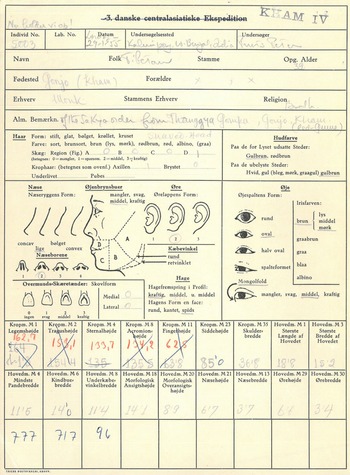
Prince Peter was in effect working within a pre-war positivist paradigm by using body measurements to uncover biological correlates of human difference through numbers. Various expedition members took measurements, but Prince Peter threw himself into the work with particular dedication, reaching a total of 5,003 measurements. Of those, 5,000 were processed for statistical analysis. On the last datasheet (see Figure 1), dated 29 January 1955, he noted ‘now we are stopping!’. Although he stayed in Kalimpong until 1957 to continue his ethnographic and anthropometric studies, the Third Danish Expedition to Central Asia officially ended in 1954; he had therefore dutifully crossed out the sheet's heading.
Anthropometric datasheet no. 5,003, the last in Prince Peter's survey of Tibetans. Source: Courtesy of the University of Copenhagen.

His extraordinary commitment to this particular expeditionary commission would suggest that Prince Peter did not question anthropometry's effectiveness as a method, although his writings contain no direct reflections on this. He could certainly lean on disciplinary tradition, since the integration of physical and sociocultural anthropological approaches as part of scientific expeditions had a long history. He was also following in familiar expeditionary footsteps. His maternal grandfather, Prince Roland Napoléon Bonaparte, grandson of Emperor Napoléon's brother Lucien, was a member of the 1886 French scientific expedition to northern Norway, which anthropometrically measured and photographed indigenous Sami people (Bonaparte Reference Bonaparte1886).
Yet, despite the enormity of the scale of the survey, publication outputs based on its anthropometric data were scant, consisting only of a 44-page overview, published in 1966 (Prince Peter and Balslev Jørgensen Reference Jørgensen1966), and a few subsidiary studies, including reports on the attrition of teeth (Prince Peter 1957) and the ABO and Rhesus D blood groups among Tibetans (Prince Peter, Eldon and Balslev Jørgensen Reference Eldon and Jørgensen1961). As we will discuss, this might have had less to do with the changing scientific tides rendering morphological measurement obsolete than with Prince Peter's scientific detachment from anthropometry in favour of his other interests as an ethnographer. It was a context of crisis, not an a priori interest of Prince Peter, that made anthropometry a primary field method on the Third Danish Expedition to Central Asia. The vagaries of the escalating geopolitical situation created a unique opportunity for collecting data from Tibetans who had become literal embodiments of a threatened heritage.
Measuring marathon in Camp Kalimpong
For an ethnographer like Prince Peter, the anthropometric survey's greatest attraction was undoubtedly the unparalleled access it gave him to thousands of potential interlocutors from all parts of Tibet, as well as to their accounts and artefacts (Prince Peter 1953). His main scientific interests lay elsewhere, in the study of polyandry. Like his anthropological mentor Bronislaw Malinowski, he was inspired by the psychoanalytical ideas of Sigmund Freud. He was particularly interested in whether Freud's theories on the Oedipus complex and castration anxiety could be applied cross-culturally. One of his primary motivations for joining the Third Danish Expedition to Central Asia had been the opportunity to test these hypotheses in Himalayan polyandrous societies, which differ radically in kinship and sexual dynamics from Western societies (Koktvedgaard Zeitzen Reference Koktvedgaard Zeitzen2016). He hoped to uncover Tibetans’ psychological or psychoanalytical reasons for practising polyandry, just as he had attempted in the 1930s among the Todas on the Malabar coast of South India, and during a private expedition to the Himalayas (Prince Peter 1958, 1963). After his demobilization as a captain in the Greek army during the Second World War, Prince Peter was keen to resume his pioneering pre-war work by conducting research in Tibet; cross-culturally, Tibetans have the highest incidence of polyandrous marriage (Koktvedgaard Zeitzen Reference Koktvedgaard Zeitzen2008; Prince Peter 1963).
Prince Peter's continued pursuit of these interests as he was conducting the anthropometric survey is evident in his published work. In cooperation with the Department of Anthropology at the University of Calcutta, he administered Thematic Perception Tests and Rorschach tests to some survey participants (Prince Peter Reference Schur1965). He also interviewed some of the people he measured and collected social statistics on 2,000 of them. He used part of the social data in his ground-breaking book The Study of Polyandry (1963), which was based on his PhD thesis at the London School of Economics, supervised by the anthropologist Raymond Firth.
It was the context of the crisis—as thousands of Tibetan residents were pushed across the border into India with the PLA's advance towards Lhasa in 1950—that catapulted anthropometry to the forefront of Prince Peter's expeditionary endeavours. When he arrived in Kalimpong for a short stopover en route to Lhasa, the anthropometric survey was probably not high on his agenda; it constituted one of several expeditionary commissions to be carried out in Tibet proper. Due to the Chinese incursion into Tibet, however, Prince Peter ended up spending seven years in Kalimpong, waiting in vain for permits to travel onwards. As the expedition ground to a halt, circumstances suddenly provided him with a unique and exceptional opportunity to conduct his measurements. Due to the rising geopolitical tensions, Indian authorities had altered their previous policy of allowing free travel in the frontier regions and placed restrictions on movement across the Tibet-India border. Border-crossers now had to register with the Frontier Police and obtain a residence permit for a maximum of six months (Prince Peter 1953). Prince Peter quickly realized the potential of the combination of this new registration requirement with the increasing number of Tibetan arrivals. In a letter to India's home and states minister Dr K. N. Katju, dated 29 March 1954, he notes:
The fact that registration for Tibetans was introduced in 1951 was a godsend from the scientific point of view. This opportunity enabled us to gather anthropological data on these practically unknown people in a way that would not be possible in their own country, and we anthropologists were quick to perceive the unhoped-for chance thus provided for us … it would be a really heart-breaking thing not to take advantage of.
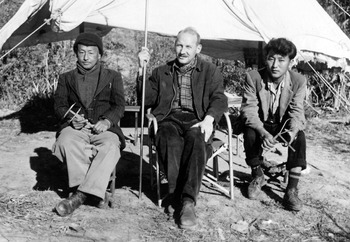
Prince Peter set up ‘Camp Kalimpong’—as he named his field station in his expedition reports—at the police station, where people lining up to be registered could conveniently be ‘intercepted’ for his survey (see Figure 2). He originally conceived of this idea in order to assist Dr Ernst Büchi, a Swiss anthropologist and director of physical anthropology at the Anthropological Survey of India at the Indian Museum in Calcutta. In the spring of 1951, Dr Büchi arrived with his wife in Kalimpong to measure Tibetans and asked Prince Peter for advice on how to access research subjects. They were permitted to work at the police station by Nyima Namchu, the frontier inspector of police, who was also the assistant officer responsible for registering arrivals and issuing permits in the Kalimpong area. Assisted by Prince Peter, Büchi and his wife measured 198 Tibetans before their funding ran out. Having gained this first-hand experience in conducting anthropometric measurements, Prince Peter was ready to start his own survey.
The anthropometric survey team in Camp Kalimpong: Cyril Namchu, Prince Peter, and Kesang Tsewang, undated, circa 1954. Source: Courtesy of the National Museum of Denmark.

Prince Peter's initial goal of measuring 2,000 Tibetans was accomplished by 24 April 1952, only ten months after he initiated the survey on 26 June 1951. Dr B. S. Guha, head of the Anthropological Survey of India and tribal adviser to the Government of India—and an old acquaintance from Prince Peter's pre-war fieldwork in South India—had helped pave the way. Guha oversaw research into ‘human physical types in India’, an inquiry established under British colonial rule (Elliott Reference Elliott, Bell and Hasinoff2015). Prince Peter asked him to check the 2,000 datasheets before sending them to Brøste in Copenhagen. As he noted: ‘It seemed to be important that I should collaborate in this with the Anthropological Survey of India as a matter of policy’ (Prince Peter and Balslev Jørgensen Reference Jørgensen1966, 7). This suggests that political expediency was Prince Peter's main motivation for sharing his data, although it is possible that he also felt an ethical imperative. After conferring with Brøste upon returning to Copenhagen in the summer of 1952, Prince Peter agreed to aim for 5,000 measurements based on his success in securing the first 2,000.
In the autumn of 1952, Prince Peter returned to Kalimpong, now officially the head of the expedition, and immediately resumed his survey. On 12 March 1953, when he had measured 2,956 Tibetans, Indian authorities ordered him to stop, ostensibly because Tibetans had complained. According to Prince Peter (1952b), the real reason was that the Indian authorities were bowing to Chinese pressure to obstruct his daily contact with Tibetans; flyers in Kalimpong's bazaar accused him of collaborating with Tibetan imperialists to overthrow Chinese rule. He was eventually allowed to continue his work on the condition that he relocate Camp Kalimpong. He duly moved the camp from the police station to the lane leading up to it, along which all new arrivals would pass. Tibetans ‘would start arriving at 6 am and by 11 am, when the Registration Office of the Frontier Police Station closed, I would have done about a dozen or so of them, depending on the daily arrivals’ (Prince Peter and Balslev Jørgensen Reference Jørgensen1966, 8–9). Moving his field station gave him a reprieve from the authorities’ concerns about hidden political agendas in his work and he was able to reach 5,003 measurements by 29 January 1955.
Prince Peter did not carry out the anthropometric survey of Tibetans singlehandedly; he was helped by local assistants, including the medical student L. D. Sitling in 1951–52, Cyril Namchu (the son of Police Inspector Namchu) in 1953, and, in 1954, Kesang Tsewang and former sub-inspector of police Assang Babu. Prince Peter gives due credit to his assistants and includes a picture of the 1954 team in his 1966 publication (see Figure 2). He also collaborated with his close friend and fellow Tibetologist René de Nebesky-Wojkowitz, who worked out the statistical implications of the datasheets and checked the Tibetan spelling of local and personal names (Nebesky-Wojkowitz Reference Nebesky-Wojkowitz1956, 178). In the latter task, Nebesky-Wojkowitz was assisted by Lobsang Phüntsok, Prince Peter's Tibetan language teacher and one of his main Tibetan interlocutors in Kalimpong.
The main research output from Prince Peter's survey summarizes only the most elementary physical-anthropological metrical observations (height and breadth of different parts of the body) and non-metrical observations (regarding shape, form, and colour). The survey followed a classic anthropometric concern with international standardization of measurements so that racial samples from different parts of the world and their relational kinship could be compared with a minimum of ambiguity and error (Hunt Reference Hunt1959, 77; Spencer Reference Spencer and Spencer1997, 87). Observations to be noted among Tibetans were (a) personal data: name, ethnicity (Danish: folk), tribe, age, place of birth, occupation, religion, tribal occupation, and parents’ names and birthplaces; (b) metrical data: height and breadth of different parts of the body, such as sternal height, biacromial breadth, facial height, ear breadth, sitting height, and head length—everything that could be measured apart from feet and genitals; and (c) non-metrical observations regarding the shape, form, and colour of the hair, skin, nose, supra-orbital ridges, ears, eyes, jaw, chin, and teeth (Prince Peter and Balslev Jørgensen Reference Jørgensen1966, 6) (see Figure 1).
Prince Peter and his assistants experienced several difficulties working with the datasheets in the field. A particularly problematic area was the classification of skin colour and chin shape; the categories available did not fit Tibetan realities or were difficult to determine, according to Prince Peter. He sometimes disagreed with his assistants about classification, prompting him to remark that one should not take his notes ‘too seriously’ (Prince Peter 1952b, 2). Yet, based on these notes, he nonetheless concludes that the population and racial type are basically the same everywhere in Tibet, with some internal variations: ‘The Tibetans are … typical Mongoloids, characterized by low height, relatively short extremities, mesocephalic heads, broad faces, medium noses, narrow eyes with Mongol folds, sparse hair, a yellowish skin, dark wiry hair, dark eyes and powerful jaws’ (Prince Peter and Balslev Jørgensen Reference Jørgensen1966, 45).
Anthropometry's scientific and ethical pitfalls
While Prince Peter was aware of his circumstantial luck in gaining access to such a large number of Tibetans in Tibet-by-proxy Kalimpong, he does not directly address potential ethical problems in his recruitment and measuring practices. As part of a concerted salvage operation, the anthropometric commission may have seemed straightforward and based on sound science. Certainly, the published overview of the survey celebrated the great scientific gains that were to be harvested from it:
Being a country that through the ages has been almost entirely closed to Europeans, Tibet has been a coveted prize for scientific investigations. The physical anthropology of the Tibetans formed no exception to this. In the general physical-anthropological description of the peoples of the earth, Tibet has occupied a blank section … [which] naturally augmented interest in the people who dwell there and the assessment of their racial kinship with the peoples around them. (Prince Peter and Balslev Jørgensen Reference Jørgensen1966, 5–6)
As already discussed, rescuing Tibetan heritage was imperative for Prince Peter because both its cultural and biological expressions were considered threatened. It was also a coveted prize: prying open the door to the ‘unknown’ peoples and places of Tibet was a quest with a long history in Western popular and scientific imagination (Hopkirk Reference Hopkirk2006; Pommaret Reference Pommaret2003).
In the 1950s, ethnographers did not routinely wrestle with the kinds of ethical issues that twenty-first century anthropologists are expected to reflect on and address, such as the question of informed consent for research participants (see Fluehr-Lobban Reference Fluehr-Lobban1994). Prince Peter's few written descriptions of his field methods contain little evidence of ethical reflection or awareness of the spectre of colonial violence, but they nevertheless throw light on the very conspicuous power imbalances at play in the survey. He seems not to have considered, for example, that Tibetans lining up at the police station may have felt pressured to participate, perhaps out of fear of not obtaining a permit to stay in Kalimpong. Instead, he remarks on how obliging the Tibetans he intercepted at the police station appeared to be:
They made no difficulties at all letting me measure them, often joking in all sorts of ways about the work. I was told by one Tibetan that I measure everything that was of no importance and nothing which should be measured; others, when I asked them if they had hair on their bodies, said of course they had not, how could such a thing be? When, in order to explain what I meant, I showed them the hair on my own chest, they would break into excited exclamations, saying that I must be a monkey. One man asked me why I wore a shirt, since I was that hairy. (Prince Peter and Balslev Jørgensen Reference Jørgensen1966, 9–10)
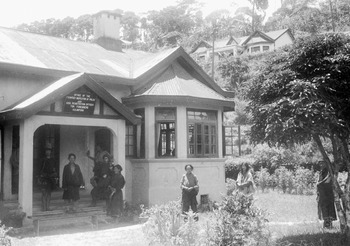
As a well-connected, wealthy, white male ethnographer in 1950s post-colonial India, Prince Peter probably did not question his scientific entitlement nor his ease of access to Tibetan subjects. He did recognize that Tibetans might have been less obliging had he attempted to measure them on their own turf: ‘in the country itself it would probably never have been possible to obtain so much, as the population there presumably never would have agreed to be measured in such a fashion’ (Prince Peter 1953, 12). Yet such observations do not seem to have guided his recruitment practices; they merely figure in his descriptions of field conditions in Kalimpong. In fact, he considered it quite fortunate that Tibetans were falling into his lap (see Figure 3).
Tibetans waiting to register at the Kalimpong police station, undated, circa 1954. Source: Courtesy of the National Museum of Denmark.

Prince Peter does mention the difficulties involved in registering ‘hidden’ and intimate body parts:
The women's body hair is noted according to what was answered when I asked them about it; it was not possible for me to check it. Similarly, it was impossible for me to investigate abdominal and pubic hair, even on the men; in some rare cases I was coincidentally told about it, and I have of course noted it then. (Prince Peter and Balslev Jørgensen Reference Jørgensen1966, 15)
Such difficulties appear to have had more to do with the practicalities involved in observing intimate parts of Tibetan bodies than with ethical considerations. Again, such observations form part of field descriptions. Prince Peter mentions, for example, that body height was almost always measured with boots on, with the height of the heel subtracted from the total, because ‘it was too much trouble (and the smell too strong with these unwashed people!) to make them take their long boots off’ (Prince Peter 1952b, 2).
Given the contexts of the time and his own social position, it is perhaps less surprising that Prince Peter does not reflect on the potential ethical implications of his research practices among Tibetans in Kalimpong. It is more puzzling, however, that he does not question the general idea of measuring people or the uses of such measurement. Anthropometric measurements are not unethical in and of themselves, even if how and why they have been gathered and put to use historically often has been. Numbers, as Stephen Gould (Reference Gould1996, 106) notes, ‘suggest, constrain, and refute; they do not, by themselves, specify the content of scientific theories’. Yet, decades before Prince Peter started measuring Tibetans in Kalimpong, anthropologists were already raising an ethical alarm. By the 1930s, anthropologist Alfred Haddon had wearied of his earlier use of anthropometry and become greatly concerned about the misuse of the term ‘race’ by political forces in Europe and the ‘pseudoscience of racial biology’. Haddon sought to distance himself from the connection between race and culture—a connection that anthropologists had helped establish, but which it was possible to use to justify political ambitions, economic ends, social grudges, and class prejudices (Herle and Rouse Reference Herle, Rouse, Herle and Rouse1998, 20–21).
One of the ethical pitfalls of anthropometry is that it lends itself to arguments of biology as destiny, reflecting scientific interpretations of human bodies based on assumed associations between physical, mental, and cultural characteristics. This, in turn, prompts controversies about innateness, which can lead to prejudicially motivated misuse of data. An infamous example is the colonial administrator and ethnographer Herbert Risley's ‘nasal index’, the ratio between the nose's width and height said to indicate an ethnic group's degree of civilization. It was developed as part of Risley's turn-of-the-century colonial surveys of India (Elliott Reference Elliott, Bell and Hasinoff2015, 181). Such controversies have resulted in an-often radical rejection of biology in anthropological narratives. In the immediate post-war period, while Prince Peter measured away in Kalimpong, any relation between race and culture was rejected by an international scientific consensus. This consensus included Danish scientists such as Kaj Birket-Smith (Reference Birket-Smith and Birket-Smith1954), head of Ethnographic Collections at the National Museum of Denmark, who had commissioned Prince Peter to collect Tibetan artefacts on the Third Danish Expedition to Central Asia.
That Prince Peter honoured the anthropometric commission apparently without questioning its scientific or ethical merits is particularly perplexing considering the 1947 Nüremberg War Trials’ exposure of the horrific applications of race research in Nazi Germany. Here, nineteenth-century evolutionary racialism in eugenic or genetic guise had become a matter of state policy (Stocking Reference Stocking and Stocking1988, 11). Prince Peter's collection practices in Kalimpong followed in the scientific slipstream of earlier German efforts to identify Tibetan types. During the German expedition to Tibet in 1938, led by Ernst Schäfer, 400 anthropological measurements, hundreds of hand- and footprints, and 16 head masks were taken (Engelhardt Reference Engelhardt2007, 55–56). Bruno Beger, who had been responsible for the expedition's anthropometry, continued his racial research during the war in an SS research department focusing on Asia, including in the concentration camp Auschwitz (see Kaufmann Reference Kaufmann2010). Through their racial research, scientists such as Beger helped foster associations between anthropometry and race research and eugenics that could lead to atrocities such as the Nazi medical experiments and the Holocaust (Lipphardt Reference Lipphardt2012; Schafft Reference Schafft2004). This caused anthropometry to lose legitimacy in much of the international anthropological community in the post-war period.
Scientifically, the 1945 anthropometric commission to measure Tibetans is also somewhat baffling. The survey was designed to create Tibetan types from surface morphology, which lends itself to ‘impressionistic racial diagnosis’ (Hunt Reference Hunt1959, 77), reflecting a belief that typological statistics could be related to events in cultural history. Yet by 1945, changing understandings of human diversity and its development were challenging earlier anthropometric classifications used to create and validate racial typologies. Early in the twentieth century, anthropologist Franz Boas was already engaging in a systematic critique of nineteenth-century racialist assumptions, opening the door for a more plastic understanding of human morphology. By the mid-twentieth century, anthropometry had become a measure of physiological and developmental plasticity in relation to environmental quality, and its use for taxonomic purposes was mostly rejected (Stocking Reference Stocking and Stocking1988, 9; Ulijaszek and Komlos Reference Ulijaszek, Komlos, Nicholas Mascie-Taylor, Yasukouchi and Ulijaszek2010, 184, 187).
There was some reflection of these scientific developments, at least when Prince Peter's anthropometric survey was published in 1966, since it was partly reframed as a contribution to human adaptability research. A description of Tibetans’ physical characteristics could now help uncover ‘the reciprocal importance of conditions of life, physique and development’ (Prince Peter and Balslev Jørgensen Reference Jørgensen1966, 5–6). However, his more general lack of reflection on the scientific and ethical pitfalls of anthropometry, and the latent colonial violence engendered by his measurements methods vis-à-vis Tibetans in Kalimpong, may have stemmed partly from his focus on the survey's expediency for gaining ethnographic insights. The anthropometric survey became a way to gain access to the Tibetan people and places he wanted to document and rescue for posterity, in a geopolitical situation that prevented him from travelling through Tibet itself.
A most wonderful cross-section of Tibetans
The 1950s had seen the emergence of a new kind of traveller interested in Tibet as a ‘thing in the world’—the ethnographer—after a history of missionaries, adventurers, and diplomats travelling to Tibet (Bishop Reference Bishop1989). Despite their very different reasons for entering the field, missionaries such as Robert B. Ekvall and scholar-spies like Sarat Chandra Das had already conducted research that later became important to Tibetan Studies. Yet Prince Peter was among the first, if not the very first, trained anthropologist to treat the Tibetans as a coherent category of people that could be studied ethnographically. His pioneering work in Kalimpong marked a new era for Tibetan Studies at a time when access to Tibet had been severed (Shakya Reference Shakya, Barnett and Akiner1994).
While Prince Peter's work on polyandry was undeniably ground-breaking, the main thrust of his gargantuan anthropometric survey was the morphological measurement of Tibetans, with all of its awkward disciplinary and ethical baggage. From a twenty-first century perspective, it seems misguided to have commissioned a survey exploring the Tibetan ‘Other’ through the lens of anthropometry—and, at times, racial vocabulary—when field anthropometry as a method was already widely seen as scientifically obsolete. Already from a 1950s anthropological perspective, it seemed rather irrelevant that only 20 out of 4,924 surveyed individuals had heavy beards, that men in eastern Tibet had a bigger tendency to baldness, or that Tibetans did not have convex noses (Prince Peter and Balslev Jørgensen Reference Jørgensen1966, 20, 26).
Yet to Prince Peter, the survey data constituted ‘a most wonderful cross-section picture of the population’ (1954a, 234) from which it would be possible to map out a threatened civilization in terms of its cultural and biological parameters:
It was a great experience interviewing the many Tibetans who came to Kalimpong during the three years that I worked at the Police Station. They came from every part of their vast country … I was able to get a much wider variety of Tibetans than would have been the case had the task of measuring them been undertaken in Tibet proper. I met noblemen from Lhasa, merchants and caravaneers, pilgrims and beggars, peasants and nomads, and not only men, but women also. (Prince Peter and Balslev Jørgensen Reference Jørgensen1966, 8–9)
Our preliminary investigation into this rich anthropometric material reveals that, except for the geographical diversity, it might not represent such a ‘wonderful cross-section’ of Tibetans in terms of gender, occupation, or social status. The gender ratio, for example, is extremely skewed: of the 4,924 individuals identified as Tibetan, 4,411 were identified as male and 513 as female. There was in fact no ‘gender’ box on the datasheets. Instead, the notation ‘Female’ was usually written in the additional comments box. The omission of gender as a category might have been a deliberate oversight on the part of Brøste, who perhaps designed the sheets assuming that all research subjects would be male. In The Mismeasure of Man, Gould (Reference Gould1996, 20) remarks that in the sexist scientific past, males were regarded as standards for humanity. Thus, while anthropometric techniques tended to mismeasure men through their use of scientifically dubious methods, it simply ignored women.
There are no indications that Prince Peter deliberately sought out male subjects. By circumstance, the subjects available to him would have been mostly men, since they made up the bulk of the caravaneers, traders, pilgrims, refugees, and other travellers between Tibet and India who had to register at the police station. Caravaneers were particularly numerous in Kalimpong; in his fourth expedition report from 1953, Prince Peter describes the many ‘tough’ types he measured from this group. The movement of Chinese troops and administrators into Tibet in 1950 had greatly increased the demand for goods, many of which were sent through Kalimpong by mule and yak caravans due to the lack of Himalayan roads capable of sustaining heavy motorized traffic. The number of female subjects might have remained low regardless—women might have been more reluctant to be measured publicly by Prince Peter and his assistants, who were all male.
The survey is also less than representative of social status. Substantial numbers of Tibetans in Kalimpong were from the upper echelons of Tibetan society, yet Prince Peter appears to have measured only a few of them, judging from the records of his survey subjects’ professional status. Aristocrats keen to uphold their social prestige might have found it awkward to be measured, particularly publicly along with commoners. Prince Peter might have felt uncomfortable asking them, even though he interacted with several Tibetan noblemen and women in town (Prince Peter 1954a, 1954b). He is also unlikely to have been particularly motivated to do so, since he was able to use his own high social status to gain access to this reserved and often inaccessible informant group. They were of far more value to him as ethnographic subjects—bearers of authentic traditions, artefacts, and accounts—with whom he could communicate on an equal footing, rather than as anthropometric subjects. Unfortunately, there are no available Tibetan sources who can actually tell us how his research subjects felt,Footnote 2 but we can surmise that ordinary Tibetans may also have found it disconcerting to be measured publicly. They may have felt less able to refuse, however, particularly when lining up at the police station (see Figure 3).
On some sheets, Prince Peter wrote remarks about the individuals he was measuring or noted particular individual features. He often tried to connect family members—for example, the husbands of a polyandrous wife—or travellers who came to Kalimpong together. Sometimes he questioned the information provided by his subjects. For instance, on datasheet no. 198, he notes that the 29-year-old woman from Lhasa had no occupation or claimed to be a housewife, but then adds in the comments box that she is ‘female; in reality she is a prostitute’. These small comments provide some interesting ethnographic details, as well as giving us insights into Prince Peter's understandings and representations of Tibetans. However, a general lack of accompanying ethnographic data and field journals severely limits the anthropological relevance of the datasheets today.Footnote 3
The ‘inutility’ of pure anthropometric data had already been noted by anthropologists by the early twentieth century (Elliott Reference Elliott, Bell and Hasinoff2015, 182). Yet, even if the data might have little to offer the contemporary anthropologist, the framework of Prince Peter's survey gives us an important insight into how he understood and approached Tibet and Tibetans as a nation and people. He had come to Kalimpong in order to travel into Tibet to study Tibetans, but as the Tibetan crisis unfolded and brought the expedition to a halt in Kalimpong, circumstances forced him to develop a more fluid understanding of where Tibet might be studied—not just in particular places, but also in particular peoples. Through the thousands of Tibetan bodies he measured in Kalimpong, Prince Peter could now metaphorically travel through the Tibet he could not enter.
Anthropometric Tibet
Through his anthropometric survey, Prince Peter mapped a ‘Tibet’ that stretched beyond the borders of the central Tibetan state, which had enjoyed de-facto independence as a nation-state from 1913 until 1951 when its government signed an agreement with the Beijing authorities. Rather than working within these political boundaries, Prince Peter seems to have depended upon his own or his interlocutors’ geographical notions to organize his subjects into place-based categories that together made up the vast area that he identified as ‘Tibet’—the place inhabited by Tibetans, a Tibetan homeland. Through his geographically defined Tibetan types, Prince Peter was defining the Tibetan nation and thus the borders of the civilization and the people that he hoped to rescue before their cultural and biological lifeforce ran out.
Expedition reports from Kalimpong suggest that extracting information from subjects about their backgrounds was even harder than measuring their bodies, making it difficult for Prince Peter to establish the geographical correlates of Tibetan identities. On the Danish-language datasheets, there is a box for birthplace (in Danish: fødested). Lack of detailed field journals means that we cannot know whether subjects were asked directly for their skye-sa (‘birthplace’), referring to a specific place of origin (for example, a village) or for their yul (‘home’) or pha-yul (‘fatherland’), terms that refer to regional identity (see Cencetti Reference Cencetti2015).Footnote 4 Perhaps they were simply asked: ‘Where are you from?’ The majority of informants related well-known geographical locations such as Repkong and Taktsang Lhamo in Amdo; Litang and Gonjo in Kham; and Phari and Lhatse in Tsang. But other responses were less clear. For example, the datasheets of individuals grouped into the category ‘Amdo’ record ‘birthplaces’ that include the names of monasteries like Tashi Gompa, Lhabrang, and Kumbum. Informant no. 23 related that he was ‘born in a tent somewhere near the Kokonor lake in northeastern Tibet’; when asked about his ‘tribe’ (in Danish: stamme) he gave a more specific response: ‘rnga-ba’.Footnote 5 In some cases, nothing more than the region ‘Amdo’ is recorded.
Prince Peter notes that after April 1952, the geographical place names given by his subjects became less reliable as the Indian government decided that people travelling from Kham and Amdo were no longer allowed to enter India. Although the Chinese government in Beijing recognized these to be Tibetan areas, they had been subsumed under the Chinese Communist Party (CCP)-led administration of Chinese provinces (Gansu, Qinghai, Sichuan, and Yunnan) rather than under the Lhasa-based Tibetan government; it was with the latter that the CCP had signed a treaty-like agreement promising no alteration to Tibet's existing political system. Tibetans born in Amdo and Kham therefore ‘naturally’ tried to hide this fact by lying about their birthplace, according to Prince Peter (1952b, 1). This made determining geographical origins steadily more complicated.
Despite these difficulties, Prince Peter sought to categorize his anthropometric subjects into groups based on their place of origin or birthplace. He used 19 geographical divisions: from western Tibet (Tö), through to Central Tibet (Khampa Dzang, Tsang Gyantse, Tsang Shigatse, Tsang, Sakya, Tromo, Ü Lhasa, Ü, Lhasa Muslim, Pembo, Lhoka, and Kongpo) to the eastern regions (Pemakö, Kham Chamdo, Kham Markham, Kham, Amdo, and Hor). These 19 divisions related to very different administrative levels in a political-geographical sense, nor were they categorically equivalent. In their report, Prince Peter and Balslev Jørgensen (Reference Jørgensen1966, 10) explained that the informants were grouped ‘primarily by provinces’, but that provinces with a large number such as Tsang, Ü, and Kham, were divided into ‘sub-provinces’ (for example, Kham Chamdo, Kham Markham, Kham). However, their categorization was not stringent, as geographical designations ranging from the regional level to small hamlets were all placed on the same organizational level. The vast Amdo region, represented in the survey by only 52 people, was thus placed on the same level as the county Pemakö (represented by eight people), the village Khampa Dzang (90 people), and the capital Lhasa (521 people). A religious group (27 Lhasa Muslims) was likewise included as a geographical division.
Leaving aside these problematic categorizations, we still get a sense of how Prince Peter understood Tibet. When assigning Tibetans to a geographic locality, he seems to have operated with a conception similar to that of ‘ethnographic Tibet’, a term commonly used by scholars today to refer to those areas where the majority of people consider themselves to be Tibetan, primarily speak a Tibetan language, and identify with Tibetan Buddhism (or Bon). This Tibet, also referred to as ‘Greater Tibet’, thus includes the eastern regions that were incorporated into provinces of the People's Republic of China, which fall outside ‘political Tibet’, defined as coterminous with the Central Tibetan state (and nowadays the Tibet Autonomous Region) (Klieger Reference Klieger and Klieger2015). By including these other areas inhabited by ethnic Tibetans, Prince Peter—whether knowingly or not—was taking a position in a highly politicized field. The question of what constituted Tibet and its people was—and still is—hotly contested. While ‘political Tibet’ was at the centre of international debates and negotiations over Tibetan sovereignty at the time of his survey, Prince Peter seems to have approached Tibetans primarily from an ethnographic perspective. For him, what made a Tibetan ‘Tibetan’ related to their language, culture, religion—and anthropometric measurements—not the boundaries of what had been for a short time a de-facto independent state. Yet, by conducting an anthropometric survey and, effectively, mapping out a Tibetan people, he was also mapping out a Tibetan nation struggling to become a nation-state. It is here that we might find some continued relevance in his anthropometric survey, which in many other respects was already anachronistic even as it was being conducted.
Defining the Tibetan nation
Questions of national identity are central to scientific interpretations based on anthropometric data, as physical anthropology and human biology provide ways of thinking about the nation and the state (Lindee and Santos Reference Lindee and Santos2012, 9). Prince Peter's geographic categorization of Tibetan subjects conflates nation with an ethnic group; for him, there was clearly a Tibetan nation made up of ethnically Tibetan people belonging to a specific geographical place—Tibet—that, at the time of his survey, was subsumed under the People's Republic of China. As Prince Peter conducted his measurement marathon in Kalimpong, the CCP undertook its own gargantuan ethnic classification project. It also recognized the eastern Tibetan areas as ‘Tibetan’ (Chi.: zangzu), but conceived of Tibetans as one of many nationalities (Chi.: minzu) belonging to an a-historical ‘unified’ Chinese multi-nationality nation-state (Mullaney Reference Mullaney2011). The projects were very different in their political positioning. While the CCP was mapping out a Tibetan nation in need of rescue from imperialism and feudal serfdom, Prince Peter was mapping out a Tibetan people who defined the boundaries of a nation in need of rescue from the detrimental effects of modernity and Communist China.
At the core of Prince Peter's rescue paradigm was an assumed connection between the particular peoples and places of Tibet—a nation under threat precisely because other peoples from other places with other cultures were moving into Tibetan spaces. Based on his collection strategies, and his expeditionary plans to travel through Tibet to uncover its secrets, Prince Peter's underlying understanding of the Tibetan nation therefore appears to have been primordialist. He considered it to have deep cultural roots in particular places that could be explored and collected in material and immaterial forms. This was also apparent in his later activism; Prince Peter was to become personally invested in Tibet both as a political issue and as a culture in which to immerse himself (Brox and Koktvedgaard Zeitzen Reference Brox and Zeitzen2017b). After the Fourteenth Dalai Lama went into exile in India in March 1959, he was active on behalf of Tibetans and a free Tibet. Speaking at the annual meeting of the American Anthropological Association in Houston in 1977, Prince Peter (1979, 25–26) lamented how the Chinese ‘invaders’ and ‘alien masters’ were threatening to ‘end’ the Tibetans, who have ‘nothing in common with the Han Chinese’, and rhetorically asked his fellow anthropologists: ‘If genocide and ethnocide have decimated the Tibetans over the last quarter of a century, what is there still to look into in a largely Sinicized, communized and colonized so-called “Autonomous Region”…?’ He saw the displacement of Tibetan culture as amounting to ‘…ruthless sinicization completely smothering Tibetan cultural personality to the point of its radical elimination’ (Prince Peter 1979, 29).
Yet, Prince Peter's actual collection practices among Tibetans in Kalimpong—as well as his later advocacy work—ended up reflecting a more modernist approach, as he took Tibetaness to be contingent upon historical processes rather than on place. As the years passed and the Chinese presence prevented Prince Peter and many of his interlocutors from travelling to Tibet, he came to work primarily with Tibetans in exile in order to rescue, collect, and preserve what was—or what he considered to be—authentically Tibetan. Among other activities, he acted as chairman of the Nordic Council for Tibetan Assistance and, through his friendship with the Dalai Lama, helped facilitate the education of 100 Tibetan youths in Denmark, Sweden, and Norway between 1960 and 1979. The Council even considered sending a larger group of Tibetans to Greenland—the very origin of the Inuit anthropometric material that had inspired Brøste to survey Tibetan bodies in the first place—but conditions were considered too harsh.Footnote 6 To Prince Peter, the idea of relocating Tibetan exiles was motivated by the wish to preserve their distinctiveness (Brox and Koktvedgaard Zeitzen Reference Brox and Zeitzen2017b). As such, Prince Peter came to operate within a modernist view of Tibetan national sentiments as historically contingent and able to exist independently of a specific Tibetan territory (cf. Gellner Reference Gellner1983), rather than as reaching far back in time in a specified territory (cf. Smith Reference Smith1988). He was in effect working with a new Tibetan nation in exile, which had emerged in India due to contemporary political contingencies.
This is where Prince Peter's anthropometric conclusion that Tibetans are one people inhabiting the entire Tibetan plateau might have the most contemporary relevance—socially and politically, if not anthropologically—for contemporary Tibetans who share his views that Tibetan civilization is under threat. In Prince Peter's survey, Tibetans are treated as an ethnographic unit in which internal variation is less important than external difference. This mirrors a forceful element in the discourse of the contemporary Tibetan movement in exile, which attempts to unify different regional and religious identities and subordinate them under a pan-Tibetan identity as bod-pa, citizens of bod, with the Dalai Lama as a source of Tibetan unity that overrides group loyalties (Brox Reference Brox2016). However, this idea is problematic. According to Tibetan historian Tsering Shakya (Reference Shakya1993, 9): ‘There is no indigenous term which encompasses the population denoted by the Western usage [of the word Tibet]. A local term such as “Bodpa” can be used only restrictively, even today.’ The term bod was apparently used by highland nomads or people from Amdo or Kham to refer to Lhasa or the central Tibetan province of Ü-tsang respectively; bod-pa were the inhabitants of this limited bod (see also Lopez Reference Lopez1998, 197; Stoddard Reference Stoddard, Barnett and Akiner1994, 125). Other group identities, such as regional and religious affinities, are very important in the Tibetan cultural sphere. A pan-Tibetan identity rooted in Tibetan Buddhism is a relatively new phenomenon arising from physical and cultural displacement (Brox Reference Brox2016, 61). Yet in exile, where the survival of a Tibetan nation depends on it being distinct and distinguishable, particularly in opposition to the Chinese (see Yeh Reference Yeh and Klieger2002), the construction of a pan-Tibetan identity becomes part of a political struggle and rises to the fore, subordinating other identities.
Conclusion
A central question to emerge from our historical contextualization of Prince Peter's momentous measuring marathon is what significance the anthropometry survey might hold for Tibetans today. Prince Peter came to the Tibetan borderlands as part of the Third Danish Expedition to Central Asia to explore Tibet and document Tibetan civilization. Yet the referents ‘Tibet’ and ‘Tibetan’ as singular units that can be studied and collected are inherently political and problematic in several ways, as is evident in today's exile politics. What and where is Tibet, and who are its people? As an ethnographer, Prince Peter does not seem to have problematized his use of these categories, but he does seem to have subscribed to the notion that one could in fact measure a Tibetan nation, in practice if not in theory.
Whereas Prince Peter's physical-anthropological observations have not had any crucial impact, his approach was significant: Prince Peter treated the Tibetans as a coherent ethnological category and operated with the idea that these diverse peoples—hailing from locations as far apart as Tö in the west and Hor in the east—did indeed share a common identity as Tibetans. It is this fundamental concept of a united Tibetan people, whose identity and loyalty are not predicated upon localized belonging, that has been nurtured in exile since the Fourteenth Dalai Lama fled to India in 1959. Perhaps then, in a small but significant way, Prince Peter's work in Kalimpong from 1950 to 1957 played some part in the perceptions of the scholarly community, as well as those of the exile community and the world at large, that there indeed exists an overarching Tibetan identity.
During his seven-year stay in Kalimpong in the 1950s, Prince Peter experienced first-hand the development of the ‘Tibet Question’ to which the definition of Tibet and Tibetans were central, just as he witnessed the threat to Tibetan people and places posed by the growing Chinese presence. We have suggested that his anthropometric survey—in many ways anachronistic even at that time—was primarily a means to pursue his research interests in polyandry, even if he did celebrate its achievements in his short published overview. As a tool that opened up Tibetan worlds to him, it was probably also key to the empathy he developed towards Tibetans and their plight in exile. This empathy was evident in his later advocacy work for Tibet and Tibetans, even if he failed to reflect on the ethical implications of his anthropometric work—whether out of lack of awareness of disciplinary developments, or simply in his excitement over its expediency as a windfall for gaining great ethnographic insights.
While we have found no evidence that Prince Peter used his anthropometric survey to make direct political statements, his conclusion that, in terms of physical anthropology, the Tibetans are one people, lends itself to contemporary ideas of a unified Tibetan national identity and Tibetan nation-building. Such primordialist notions seem to have underpinned his general approach to the ethnography of Tibet in the 1950s, as well as his later political and humanitarian advocacy on behalf of Tibet and Tibetans—even though, as we have argued, he actually worked with a much more fluid and modernist understanding of Tibetaness. Setting aside the ethical and scientific soundness of the survey, its significance for Tibetans today may thus lie in its historical contextualization of the Tibetan crisis and its message of unity among Tibetans as both a people and a nation. The survey represents a microcosm of this crisis as it unfolded through the thousands of Tibetan bodies subjected to Prince Peter's anthropometric measuring devices—several years before the Fourteenth Dalai Lama's flight to India in 1959, which usually marks the beginning of the Tibetan exile (Brox Reference Brox2016). This unique and unusual view into the early days of Tibetan displacement and disenfranchisement provides the setting for the survey's main message of pan-Tibetan unity. It builds on biology, but speaks of one people of one nation, a message with strong resonance for Tibetans today still fighting for a Tibetan homeland.
Acknowledgements
The authors would like to thank Niels Lynnerup, Professor of Forensic Medicine, University of Copenhagen, for his constructive feedback. Acknowledgement is due to Tashi Tsering of the Amnye Machen Institute in Dharamsala for sharing relevant materials, and Jane Caple for copy editing. We are also very grateful to the two anonymous reviewers of MAS whose comments contributed significantly to the development of this article.
Competing interests
None