

Introduction
The highly prolific Garole breed of sheep is prevalent in the state of West Bengal and Bangladesh (Ghalsasi and Nimbkar, Reference Ghalsasi and Nimbkar1993; Bose and Moitra, Reference Bose and Moitra1995; Sandip Banerjee and Soma Banerjee, Reference Banerjee and Banerjee2000). Various authors (Ghalsasi and Nimbkar, Reference Ghalsasi and Nimbkar1993; Bose and Moitra Reference Bose and Moitra1995; Singh and Bohra Reference Singh and Bohra1996; Sharma et al., Reference Sharma, Arora, Narula and Singh1999; Sahana et al., Reference Sahana, Gupta and Nivsarkar2001) have reported that the breeding of Garole sheep is localized in the Sunderban region of West Bengal and Bangladesh. Bose and Moitra (Reference Bose and Moitra1995) reported that the habitat of the breed spans between 21° and 23° North latitude and 87° and 89° East longitude, spanning an area of 4 226 km2. Sharma et al., (Reference Sharma, Arora, Narula and Singh1999) observed that the highest elevation inhabited by the Garole sheep is 200 m above the sea level. The present study was carried out to study the distribution of the Garole sheep within the state of West Bengal in India and also to study the reasons for prolificacy in sheep flocks reared in the districts of Jalpaiguri and Cooch Behar in India.
This project was done to identify the presence of the bone morphogenetic protein receptor IB (BMPR-IB) gene, which affects the fecundity of sheep in different sheep flocks reared in West Bengal. The presence of BMPR-IB mutation was initially identified in Garole sheep, reared in the Sunderban region of West Bengal and Bangladesh. The historical findings indicate that wool was traded from Tibet. Sheep were also used to carry merchandise by the Tibetan traders to Jalpaiguri and Cooch Behar districts from the seventeenth till the early-twentieth century. The FecB gene as observed in the flocks in the above-mentioned districts have been introduced to the local ovine population by the crossings with the sheep of Tibetan origin that occurred during the past, as has been observed in the present study (Binny, Reference Binny2005). Davis (Reference Davis2004) reported that one copy of the FecB gene increases ovulation rate in Booroola Merino by about 1.5 and two copies by 3.0. These extra ovulations in turn increase litter size by 1.0 and 1.5, respectively. High prolificacy in Booroola sheep is due to a non-conservative mutation (q249r) in a highly conserved intracellular kinase signalling domain of the BMPR-1B expressed in the ovary and granulosa cells (Mulsant et al., Reference Mulsant, Lecerf, Fabre, Schibler, Monget, Lanneluc, Pisselet, Riquet, Monniaux, Callebaut, Cribiu, Thimonier, Teyssier, Bodin, Cognie, Chitour and Elsen2001; Wilson et al., Reference Wilson, Juengel, Ross, Lumsden, Lord, Dodds, Walling, McEwan, O'Connell, McNatty and Montgomery2001a, Reference Wilson, Wu, Juengel, Ross, Lumsden, Lord, Dodds, Walling, McEwan, O'Connell, McNatty and Montgomeryb). The BMPR-1B, also known as ALK-6, is a member of the transforming growth factor-β (TGF-β) superfamily. These are multifunctional proteins that regulate growth and differentiation in many cell types. Members of this family play essential roles during embryogenesis in mammals, amphibians and insects as well as in bone development, wound healing, haematopoiesis and immune and inflammatory responses (Massague, Reference Massague1998; Letterio and Roberts, Reference Letterio and Roberts1998).
There are historical records indicating large scale trading of livestock in the districts of Jalpaiguri and Coochbehar, during the seventeenth till early decades of the twentieth century. The great silk route from China via Tibet terminated at the districts of Coocb Behar and Jalpaiguri (Figures 8 and 9). The exchange of goods from the hills took place in the regions and many fairs that sprang up at different places in this region. The fairs were generally held in winter and continued roughly for 4 weeks. The largest of such fairs one took place at Darwani (presently in Rangpur district of Bangladesh; latitude 25° 45′00″ and longitude 89°15′ 00″) where, according to a contemporary source, around 50 000 visitors participated. Here along with the traditional products, various live animals such as elephants, camel, sheep were sold here from the neighbouring states such as Bihar (Ratna Sarkar and Indrajit Ray, Reference Sarkar and Ray2006). Similar fairs were also held at Panga Barabhita, Badarganj, Birat in different parts of Rangpur district and in Rangpur town itself (Ratna Sarkar and Indrajit Ray, Reference Sarkar and Ray2006).
As sheep from different parts of eastern India and Tibet were traded in these fairs at Rangpur and adjoining area, there were chances of crossing among different breeds in the region as indicated in present results from Jalpaiguri and Cooch Behar region (Zone-3) of West Bengal. The aim of the present study was to study the prevalence of FecB mutation in sheep reared at different locations of West Bengal and to correlate the historical findings regarding the migration of sheep from Tibet to plains of Bengal during the past centuries.
Materials and methods
The state of West Bengal is situated between 22°34′10.92″N and 88°22′10.92″E latitude and longitude. The state is situated in the eastern part of India, to the south is situated the Bay of Bengal, to the East is Bangladesh, the North is guarded by the Himalayas and in the West is situated the state of Jharkhand. The study was carried out using multistage sampling technique. For the study the state of West Bengal was divided into six zones, where there could have been possibilities of the existence of sheep with high incidences of prolificacy.
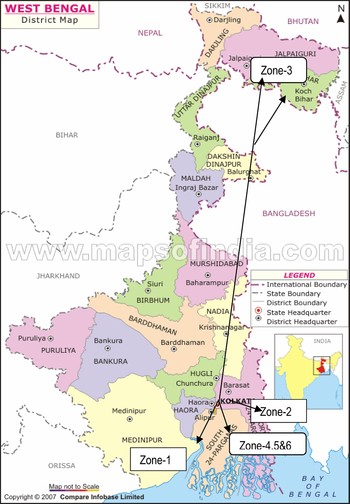
The Zone-1, situated in the Midnapur (East) district 22°30′00″N and 87°30′00″E, located away from the Sunderbans and is divided by the river Hoogly, near to the Bay of Bengal. Zone-2, the district 24 Parganas (North) is situated between latitude: 23°15′ North–22°11′ North and longitude: 89°5′ East–88°20′ East, a part of the district comes under the Sunderban region. Zone-3, the districts of Jalpaiguri and Cooch Behar, is situated between 26°16′ and 27°0′ North latitude and 88°4′ and 89°53′ East longitude is in the Northern part of the state at the foothills of the Himalayas, the place is situated nearly 800 km away from the currently known Garole sheep breeding tract. The Cooch Behar and Jalpaiguri districts boundary Bangladesh in the south, state of Assam in the east, Bhutan in the north and the district of Darjeeling in the west. Zones 4, 5 and 6 district 24 Parganas (South) located between latitude North 20′20″ South 22′06 and longitude East 88′20″ West 88′60″ and is the district where maximum Garole population is found and is taken as a control district. The locations of the various districts are presented in Figure 1.
Location of all the zones from where the blood samples were collected.

The present literature reviewed on the breeding tract of Garole breed indicates that the same is limited only to 24 Parganas (North and South) in West Bengal.
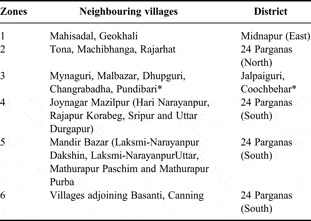
A total of 114 of sheep were included in the present study. The locations/areas/regions were the blood samples were collected from the sheep have been presented in Table 1.
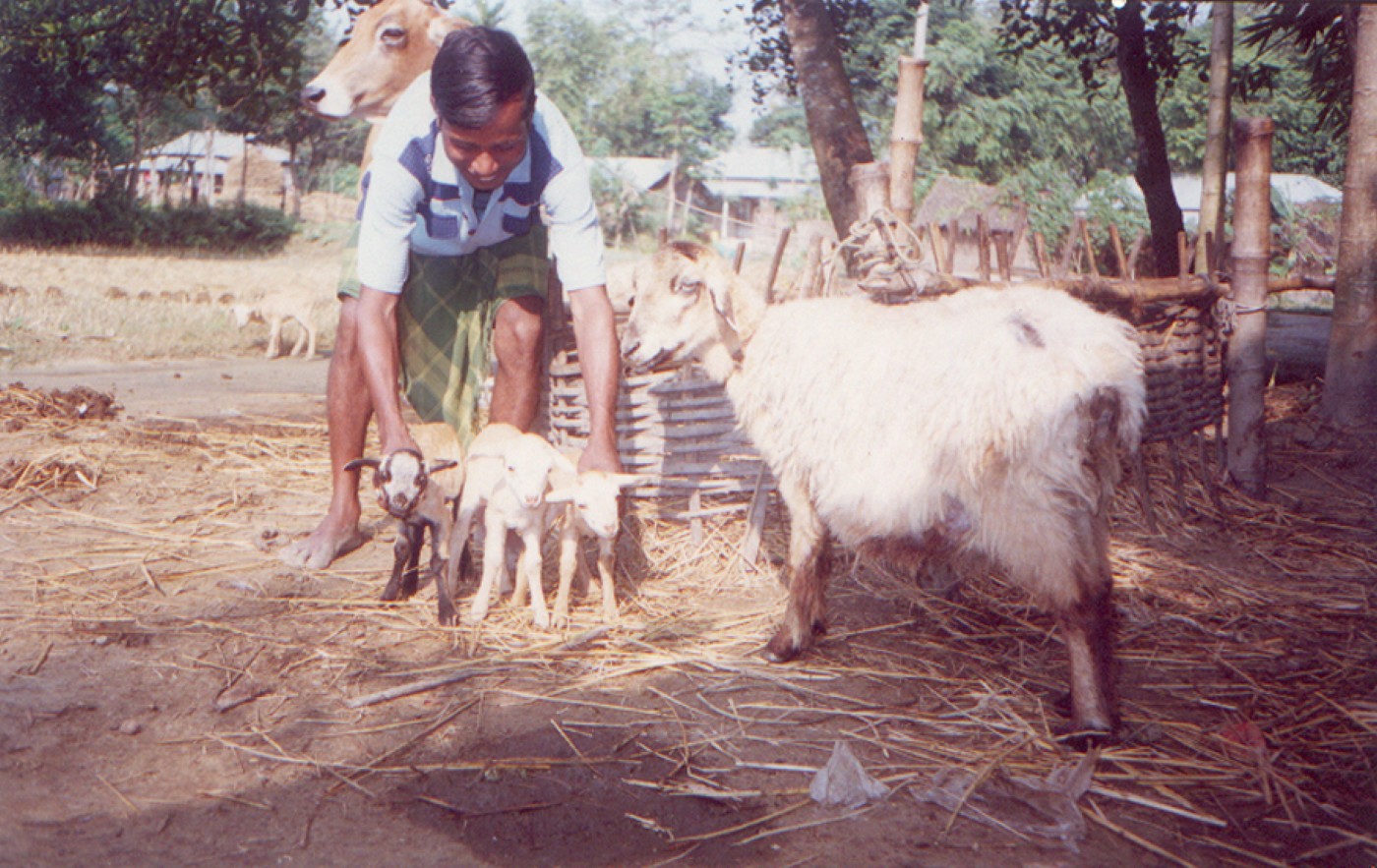
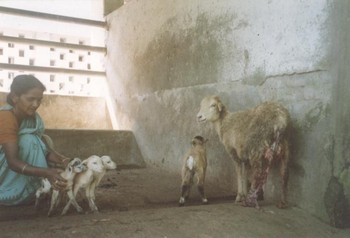
Garole ewe carrying FecB gene with her twins, Zone-4.

Zones from where the samples were collected

*signifies that the villages around Punibari (from where the samples were collected) are situated in the district of Cooch Behar.
The samples were collected through multistage sampling process and the villages within the zones were selected randomly and purposive sampling (for their prolific status) was done within the village. Sheep with prior history of multiple births and lambs and rams born from multiple births were considered for the present study. The history of multiple births in the sheep was obtained from the rearers by formulating informal questioners. There were also instances where the blood was collected from the ewes with multiple lambs at foot. The blood was collected by puncturing the veins of the animal's ear. The samples were collected in duplicate on easi Trace™ DNA labels (Hally Labels, Christchurch, New Zealand) and were analysed for the presence of the BMPR-IB mutation.
Preparation of blood samples
DNA was extracted from each 2.0 mm punch using alkaline lysis at 75 °C as described by Rudbeck and Dissing (Reference Rudbeck and Dissing1998). The punches were incubated for 5 min in 20 µl 0.2 M NaOH and then 180 µl 0.04 M Tris-HCl, pH 7.5 was added. An aliquot of 1–5 µl of extract was used per polymerase chain reaction (PCR).
Forced restriction fragment length polymorphism PCR for FecB
The process was carried out as per the methodology suggested by Davis et al. (Reference Davis, Galloway, Ross, Gregan, Ward, Nimbkar, Ghalsasi, Nimbkar, Gray, Subandriyo, Inounu, Tiesnamurty, Martyniuk, Eythorsdottir, Mulsant, Lecerf, Hanrahan, Bradford and Wilson2002). However, in the present process easi Trace™ labels were used. PCR was carried out using a modification of the forced Restriction fragment length polymorphism (RFLP) method described by Wilson et al. (Reference Wilson, Juengel, Ross, Lumsden, Lord, Dodds, Walling, McEwan, O'Connell, McNatty and Montgomery2001a, Reference Wilson, Wu, Juengel, Ross, Lumsden, Lord, Dodds, Walling, McEwan, O'Connell, McNatty and Montgomeryb). The primer TestR15 has been engineered to introduce a point mutation such that PCR products from the BMPR-1B gene with the Booroola mutation contain an AvaII (New England Biolabs, Beverly, MA, USA) restriction site (G|GACC),whereas products from non-carriers of the mutation lack this site. Genomic DNA (~100 ng) was amplified as described by Wilson et al. (Reference Wilson, Juengel, Ross, Lumsden, Lord, Dodds, Walling, McEwan, O'Connell, McNatty and Montgomery2001a, Reference Wilson, Wu, Juengel, Ross, Lumsden, Lord, Dodds, Walling, McEwan, O'Connell, McNatty and Montgomeryb). The samples on easi Trace™ DNA labels were punched (single 1.2 mm punch) and were amplified in a 25 µl reaction volume using an alternative primer set CCAGAGGACAATAGCAAAGCAAA, Test F2, and CAAGATGTTTTCATGCCTCATCAACACGGTC (Test R15).
The amplification was carried out using 35 cycles at 94 °C for 15 s, 60 °C for 30 s and 70 °C for 30 s, followed by 72 °C for 5 min and 99 °C for 15 min. The 190 bp product was then digested using AvaII. The resulting products were separated by electrophoresis on a 5 percent agarose gel and visualized with ethidium bromide. Products containing the FecB mutation yield 160 and 30 bp fragments, while non-carrier products remain uncut at 190 bp.
Results
The results obtained from the present study are presented in Table 2. The results indicate that, FecB was observed in most of the samples analysed from all the zones. The results also show that the samples from zones, 1, 2, 4, 5 and 6 are having either BB or B+ mutation, as evident from Figure 2.
Presence of Fec B gene in sheep at different locations studied.

1Refer to Figures 1 for different zones.
The results further indicate that the sheep reared at Jalpaiguri and Cooch Behar districts of West Bengal at 26°16′ and 27°0′ North latitude and 88°4′ and 89°53′ East longitude too carry the BMP IB mutation. However, results from this zone indicates the presence of all the three genotypes i.e. BB, B+ and ++ . Suggesting that, in the past some out crossing has taken place among the sheep breed reared in the districts of North Bengal (Figures 3–5).
Sheep carrying FecB gene, with her triplets, Moynaguri, district: Jalpaiguri, West Bengal, Zone-3.

Garole ewe with FecB mutation and her quadruplets, a case of super foetation, Zone-3.

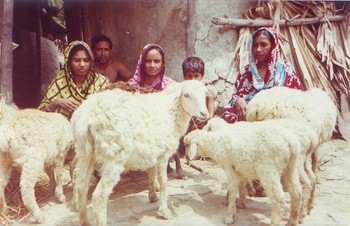
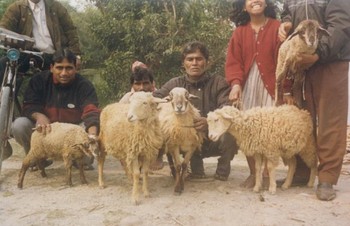
Owner of sheep reared at Jalpaiguri, North Bengal, Zone-3.

Historical findings
The erstwhile Government of Bengal records indicate that sheep were brought to Bengal by the traders from Tibet (Rennie, Reference Rennie1866; Firminger, Reference Firminger1920; Hunter, Reference Hunter1879). Therefore, there are possibilities that the FecB gene may also be present in the Sipsu sheep breed of Bhutan. The breeding tract of the Sipsu sheep is South Bhutan, adjacent to Cooch Behar and Jalpaiguri districts of India. Dorji et al. (Reference Dorji, Tshering, Wangchuck, Rege and Hannote2003) reported that the Sipsu sheep is also a prolific sheep breed, in the region. Grenard (Reference Grenard1974) reported that the sheep were used as a beast of burden by the transhumance community in Tibet. Pemberton (Reference Pemberton1839) in his observations also mentioned that the caravans from Tibet usually comprised mules, ponies, horses, yaks, sheep, etc. who could negotiate the narrow rugged paths in the mountains. Sheep was reared in Tibet for wool and most of the wool was traded to eastern India from the Jelep la pass, via Chumbi valley to Kalimpong, presently in Darjeeling district of West Bengal. Many traders from Bhutan terminated their journey at Cooch Behar, disposing their wares there. It was a commercial centre that developed from the sixteenth century onwards as a centre of exchange among various traders from Tibet, Bhutan, Sikkim and India, The last leg of the journey for the traders was from Cooch Behar to Rangpur. Hunter (Reference Hunter1876) reported that the price of a Tibetan sheep was lower than that of a Nepali sheep (Bonpala). As the former had a lower body weight the Tibetan sheep could carry a load of 15–20 kg each as against the carrying capacity of 6–12 kg for the Bhutanese sheep and goat (Ratna Sarkar and Indrajit Ray, Reference Sarkar and Ray2005).
Discussion
The presence of the BMPR IB gene both in Small Tail Han and Hu sheep of China (Yan Ya-Dong et al., Reference Yan, Chu, Zeng, Fang, Ye, Wang, Guo, Han, Zhang, Wang and Zhang2005; Chu et al., Reference Chu, Liu, Jiao, He, Fang, Ye, Chen and Wang2007), support the present results. The Hu sheep originated from Mongolian sheep as early as in the Song Dynasty (AD 420–479). Mongolian sheep were introduced from the pastoral region of North China to the Taihu lake basin which borders the present provinces of Zhejiang and Jiangsu (Feng et al., Reference Feng, Ma, Zhang, Zhou and Fahmy1996). The migration of the ancestors of the sheep to India during the colonial era via the silk route may have led to the transfer of the gene to the sheep reared in West Bengal. Bell (Reference Bell1928) reported that merchants from Bhutan traded with China through Tibet during the nineteenth century. The major items of trade between China and Bhutan were sheep and woolen products besides other items such as rock salt and silk. Moreover, as the traders travelled long, it is logical to conclude that they used the rams as beast of burden. The rams being slightly heavier could take more loads. Moreover, ewes could delay movements of caravans due to lambing en-route. Therefore, suggesting that the FecB gene in sheep reared in the plains of Bengal and Bangladesh could have been transferred from the paternal linage only, similar inference regarding the transfer of FecB gene through paternal lines has been suggested by Davis (Reference Davis, Walkden-Brown, Werf, Nimbkar and Gupta2008). This inference is in accordance with the mitochondrial (mt) DNA results, which suggests that the Hu sheep has haplotypes A, B and C (Chen et al., Reference Chen, Duan, Sha, Xiangyu, Wu and Zhang2006), while Garole has only haplotype A, (Meadows et al., Reference Meadows, Kantanen, Tapio, Sipos, Pardeshi, Gupta, Calvo, Whan, Norris and Kijas2005). The mt DNA results on both the breeds suggest that the two breeds have distinctly different maternal lines while may be have similar paternal lines.
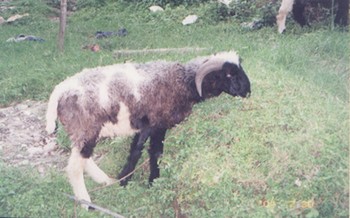
The currently available literatures on ovine breeds of India (Acharya, Reference Acharya1982; ICAR, 2002) indicate that the sheep reared in the Jalpaiguri and the Cooch Behar districts of India are of Bonpala breed. The Bonpala sheep (Figure 6) is a large breed of sheep and is reared in the district of Darjeeeling and some parts of the neighbouring state of Sikkim (Vij et al., Reference Vij, Tantia and Nivsarkar1997). The Bonpala is not a prolific breed and does not harbour the BMPR-IB mutation.
Bonpala sheep from Sikkim.

At the termination of the journey at Cooch Behar and furthermore at Rangpur the sheep and ponies were traded off as it was not worthwhile to take them back all the way to Tibet. These animals were purchased by the local traders who then transported the sheep by boats to the southern parts of Bengal (now Bangladesh and West Bengal). Hunter (Reference Hunter1875) in his report on the Sunderban region of erstwhile Bengal reported that sheep were not traditionally reared by the farmers of the region. William Milburn (Reference Milburn1813) reported trading of sheep at Fulta port which is situated on the bank of the river Hoogly, opposite to Geokhali in Zone-1.
The traded sheep at Fulta were the ones that were transported from Rangpur to the Sunderbans and were allowed to regain their condition at the local villages.
The sheep traded from Fulta were slaughtered for consumption by the sailors en route to different ports. It is possible that some of these sheep might have escaped or may have been dropped off or exchanged by the sailors in Java, the hypothesis is in accordance with the report by Bradford and Inounu (Reference Bradford, Inounu and Fahmy1996) regarding the progenitors of the Javanese thin-tailed sheep. They were also in opinion that of the Javanese thin-tailed sheep probably originated from the sheep brought from Bengal and Bangladesh. The presence of FecB gene in Garole sheep strongly supports the earlier claim by Austin (Reference Austin1943) and Guthrie (Reference Guthrie1957) regarding the transportation of Bengal sheep to Australia in the eighteenth century.
The present findings conclude and support the historical findings that the breeding tract of Garole sheep extends up to the Northern districts of West Bengal and is not limited to Sunderbans alone. Binny (2005) was in the opinion that the sheep transported to New South Wales, Australia during the nineteenth century by the ship Shar Hormuzear (from Bengal) were in fact the long haired Tibetan sheep. It can therefore be concluded that the FecB gene of the Garole sheep may have its origin from the ovine breeds of Tibet which were traded in the Northern parts of Bengal during the colonial era.
Acknowledgements
The author (Sandip Bannerjee) acknowledges the assistance received from the rearers of the Garolesheep in different parts of West Bengal, Lt. Col. (Retd.) and Mrs M.K. Banerjee, Dr (Mrs) Soma Banerjee, Shristi Banerjee and Mr S.R. Bhowmick besides the Directors and staff members of BioDiverse Farming Pvt Ltd, Kolkata.