Depression change expectancies refer to individuals’ expectations that their depression will change (Eddington, Dozois, & Backs-Dermott, Reference Eddington, Dozois and Backs-Dermott2014). In general, positive pre-treatment expectancies tend to be accompanied by greater treatment response to psychotherapy (Chambless, Tran, & Glass, Reference Chambless, Tran and Glass1997; Dew & Bickman, Reference Dew and Bickman2005; Price, Anderson, Henrich, & Rothbaum, Reference Price, Anderson, Henrich and Rothbaum2008; Safren, Heimberg, & Juster, Reference Safren, Heimberg and Juster1997; Wenzel, Jeglic, Levy-Mack, Beck, & Brown, Reference Wenzel, Jeglic, Levy-Mack, Beck and Brown2008; Westra, Arkowitz, & Dozois, Reference Westra, Arkowitz and Dozois2009) and medication (Howland, Reference Howland2008), although there have been exceptions to this pattern (e.g., McFarlane, Olmstead, & Goldbloom, Reference McFarlane, Olmsted and Goldbloom2005). Laboratory studies have also demonstrated that alterations in expectancies affect both treatment effectiveness and symptomatic improvement in anxiety (Ahmed & Westra, Reference Ahmed and Westra2009; Ingram & Goldstein, Reference Ingram and Goldstein1978). For depression, change expectancy predicted reductions in symptoms over time in a randomized controlled trial of group cognitive behavioral therapy (Eddington et al., Reference Eddington, Dozois and Backs-Dermott2014). In sum, change expectancy may facilitate recovery from depression.
In a parallel development, a “recovery movement” has emerged where service users have put forward their own views of recovery and the factors that promote it. This emerged after the 1960s with the advent of psychiatric medication and shift from hospital-based care towards community-based care. Many consumers at the time found that medication and post-discharge care were inadequate as they struggled to find jobs and housing. It was felt that standard psychiatric care of that era had overemphasized the biological aspects of illness and recovery at the expense of psychosocial factors (Whitley, Palmer, & Gunn, Reference Whitley, Palmer and Gunn2015), ultimately leading to the detriment of the consumers’ quality of life. This led to the development of “consumer recovery,” which is most commonly described as:
… a deeply personal, unique process of changing one’s attitudes, values, feelings, goals, skills, and/or roles. It is a way of living a satisfying, hopeful and contributing life even within the limitations caused by illness. Recovery includes the development of new meaning and purpose in one’s life as one grows beyond the catastrophic effects of mental illness. (Anthony, Reference Anthony1993, p. 527)
While consumer recovery can occur despite the presence of some symptoms and disability (Mental Health Commission [Ireland], 2005), persistent low mood, constant worries, or otherwise distressing or impairing symptoms are arguably antithetical to the uplifting sense of existential well-being that is essential in consumer accounts of recovery. Thus, symptom attenuation could still be necessary for achieving consumer-defined recovery.
There is now an emerging consensus on the processes that promote such recovery. A systematic review (Leamy, Bird, Le Boutillier, Williams, & Slade, Reference Leamy, Bird, Boutillier, Williams and Slade2011) identified five “chime” processes that are thought to drive recovery: (1) social Connectedness (e.g., securing support from friends and family), (2) Hope about the future (e.g., believing in recovery and a better future), (3) developing a positive Identity (e.g., overcoming a sense of stigma and gaining self-esteem), (4) renewed Meaning in life (e.g., enhancing the quality of life and sense of purpose), and (5) Empowerment over one’s life (e.g., developing care plans and coping skills) (Leamy et al., Reference Leamy, Bird, Boutillier, Williams and Slade2011).
Notably, “hope” and change expectancy are two distinct constructs. The former is concerned with hopes for a better overall life, while the latter is focused solely on changes in the illness without necessarily implying that the person has a better quality of life beyond it. This is consistent with consumer recovery, where recovery occurs when the past or present experience of illness is no longer the primary focus of consumers’ lives (Anthony, Reference Anthony1993), even if the underlying illness or some disability remains (Roberts & Wolfson, Reference Roberts and Wolfson2004). Thus, consumers may have hope for a better life even if they do not expect their symptoms to completely dissipate. Conversely, they may have negligible symptoms but lack an optimistic outlook of their future.
The CHIME framework has also been validated with consumer focus groups (Bird et al., Reference Bird, Leamy, Tew, Le Boutillier, Williams and Slade2014), and the study concluded that CHIME offered a defensible framework to guide clinical practice and research. Subsequent studies continued to report that CHIME matches consumers’ descriptions of recovery (Petros, Solomon, Linz, DeCesaris, & Hanrahan, Reference Petros, Solomon, Linz, DeCesaris and Hanrahan2016) and systematic reviews of such descriptions (Stuart, Tansey, & Quayle, Reference Stuart, Tansey and Quayle2017). While newer processes have also been proposed in addition to CHIME, the original CHIME set of recovery processes was not challenged. These studies suggest that CHIME recovery processes may play an important role in recovery.
This leads to a convergence in the research on CHIME and change expectancy. While change expectancy is linked to improvements in symptom reduction, it is less clear why some individuals have better change expectancies than others. Since CHIME processes have been consistently endorsed by consumers, it may be that CHIME processes may lead to improvements in change expectancy which, in turn, leads to better treatment response and symptom reduction. A clearer understanding of how CHIME may contribute to change expectancy could help various stakeholders improve treatment guidelines for the benefit of service users, regardless of whether they subscribe to consumer perspectives on recovery.
It was thus hypothesized that depression change expectancy would mediate the effect of CHIME processes on depression symptoms. While consumer recovery has traditionally focused on individuals with psychosis, the present study was conducted in the context of depression in primary care. This population was chosen because depression has the fourth greatest worldwide burden of disease (World Health Organization, 2008) and the identification and treatment of depression mainly takes place at the primary care level of formal healthcare (World Health Organization, 2003).
Methods
Participants
The sample consisted of patients who were at least 18 years old at various stages of treatment for depression (i.e., from intake to follow-up) with clinical psychologists at the National Healthcare Group Polyclinics (NHGP). Patients who were pregnant or indicated a risk of harming themselves or others were excluded from this study. A total of 100 participants were recruited. After deleting 1 case with incomplete medical records, the final sample consisted of 99 individuals. Their mean age was 45.87 years (SD = 17.13) with 29 men and 70 women. As for ethnicity, there were 75 Chinese, 6 Malay, and 12 Indian participants, as well as 6 individuals who were classified as “Other” in official nomenclature.
Measures
1.2.1 Connectedness
This was measured with the 12-item Multidimensional Scale of Perceived Social Support (MSPSS; Zimet, Dahlem, Zimet, & Farley, Reference Zimet, Dahlem, Zimet and Farley1988). It assessed the perceived adequacy of social support from friends, family, and significant others. Responses were made on a 7-point Likert scale(1 = Very Strongly Disagree, 7 = Very Strongly Agree) with higher scores reflecting better perceived social support. Its factor structure had been validated in Singapore (Vaingankar, Abdin, & Chong, Reference Vaingankar, Abdin and Chong2012) while other studies had established its convergent validity and test–retest reliability in general (Hardan-Khalil & Mayo, Reference Hardan-Khalil and Mayo2015).
Hope
This was measured with the State Hope Scale. State hope refers to beliefs about one’s ability to start and sustain goal-directed actions (i.e., agency) along with one’s ability to create pathways to achieve those goals. Participants rated six items on an 8-point Likert scale (1 = Definitely False, 8 = Definitely True), with higher scores reflecting better state hope. The scale has good overall internal reliability, factor structure, and convergent validity (Snyder et al., Reference Snyder, Sympson, Ybasco, Borders, Babyak and Higgins1996).
Identity
The Modified Engulfment Scale measures how much patients “see themselves totally and merely in terms of their illness” (McCay & Seeman, Reference McCay and Seeman1998, p. 41). The scale has 24 items that are answered on a 5-point Likert scale (1 = Completely False, 5 = Completely True). Higher scores reflect greater engulfment. The scale has demonstrated internal reliability and convergent validity (McCay & Seeman, Reference McCay and Seeman1998).
Meaning
This was measured with the Life Engagement Test (Scheier et al., Reference Scheier, Wrosch, Baum, Cohen, Martire, Matthews and Zdaniuk2006). It assesses meaning in life as the extent to which the individual engages in personally valued activities. The scale has six items with a 5-point Likert scale (1 = Strongly Disagree, 5 = Strongly Agree) with higher scores reflecting more meaning in life. The scale has demonstrated convergent validity and test–retest reliability (Scheier et al., Reference Scheier, Wrosch, Baum, Cohen, Martire, Matthews and Zdaniuk2006).
Empowerment
The Mental Health Self-Efficacy Scale was used to assess participants’ confidence in managing their stress, anxiety, or depression (Clarke et al., Reference Clarke, Proudfoot, Birch, Whitton, Parker, Manicavasgar and Hadzi-Pavlovic2014). It has six items with a 10-point Likert scale (1 = Not at all confident, 10 = Totally confident). The scale has an acceptable factor structure, internal validity, and convergent validity (Clarke et al., Reference Clarke, Proudfoot, Birch, Whitton, Parker, Manicavasgar and Hadzi-Pavlovic2014).
Depression change expectancy
This was measured with the Depression Change Expectancy Scale (DCES). The DCES consists of 20 items on a 4-point Likert response scale (1 = Strongly Disagree, 5 = Strongly Agree). The items are divided into two separate subscales, one for optimism (DCES-O) and another for pessimism (DCES-P). Since the DCES-O and DCES-P were highly correlated in clinical samples (Eddington, Burgin, & Majestic, Reference Eddington, Burgin and Majestic2016), a single score for positive outcome expectancy was used, with the items from DCES-P reverse scored so that higher values on the overall scale would reflect better expectations of symptomatic improvement. The DCES has acceptable internal consistency and convergent validity (Eddington et al., Reference Eddington, Dozois and Backs-Dermott2014).
Depression severity
The Patient Health Questionnaire 9-item Scale (PHQ-9) was used to assess the participants’ depressive symptoms (Kroenke, Spitzer, & Williams, Reference Kroenke, Spitzer and Williams2001). There are nine items with a 4-point Likert response scale (0 = Not at All, 3 = Nearly Every Day). Higher scores reflect greater symptom severity. The PHQ-9 has acceptable convergent validity and internal reliability (Cameron, Crawford, Lawton, & Reid, Reference Cameron, Crawford, Lawton and Reid2008; Sung, Low, Fung, & Chan, Reference Sung, Low, Fung and Chan2013).
Procedure
Approvals for research ethics were obtained from the National Healthcare Group Domain Specific Review Board in Singapore (NHG DSRB reference number: 2016/01055). Clinical psychologists at the NHGP identified eligible participants from their current caseload. Eligible individuals were then informed about the background and aims of the study and invited to participate. Informed consent was obtained prior to participation. The clinical psychologists subsequently collected each participant’s demographic information and administered the PHQ-9 during their psychological consultations. The participant was then introduced to a co-investigator for the administration of the other questionnaires in their preferred language (English or Mandarin). Participants were encouraged to seek clarification if they did not understand the questionnaires.
Data analysis
Mediation analyses followed the PROCESS approach (Hayes, Reference Hayes2013a) and accompanying software (Hayes, Reference Hayes2013b). The mediation is divided into five regression relationships. The first consists of the total effect of the independent variable on the outcome. The second involves the effect of the independent variable on the mediator. The third involves the effect of the mediator on the outcome while controlling for the independent variable. Fourth, the analysis examines the direct effect of the independent variable on the outcome while controlling for the mediator. Lastly, the analysis assesses the indirect (i.e., mediated) effect of the independent variable on the outcome. The PROCESS software assesses the statistical significance of the indirect effect through 95% confidence intervals. A full mediation is supported if the indirect effect is statistically significant and the direct effect is not. A partial mediation occurs when both a direct and indirect effect is found.
The first set of analyses positioned depression change expectancy as the mediator. The analysis began by assessing which CHIME constructs would predict change expectancy in a simultaneous multiple regression. This method tests for the influence of any single CHIME construct while controlling for the effect of the other four. This is necessary because CHIME was developed as a set of five distinct categories (Leamy et al., Reference Leamy, Bird, Boutillier, Williams and Slade2011), but research has not clarified if they have interactive effects as well. CHIME constructs that predicted change expectancy were then subjected to mediation analyses.
To clarify the direction of effect, it was then tested if CHIME constructs would also mediate the relationship between depression change expectancy and symptoms of depression. This was examined with a parallel mediation model where all five CHIME variables were positioned as parallel mediators. Again, this examines the effects of any single CHIME variable while controlling for the other four. All mediation analyses were bootstrapped with 5000 resamples to better estimate effect sizes at the level of the population.
Results
The mediating role of depression change expectancy
Of the five CHIME variables, depression change expectancy was predicted by Hope, b = 0.39, p = .003, 95% CI [0.13, 0.64], and Identity, b = −0.19, p = .003, 95% CI [−0.32, −0.06]. All other CHIME variables failed to predict change expectancy, all p > .05.
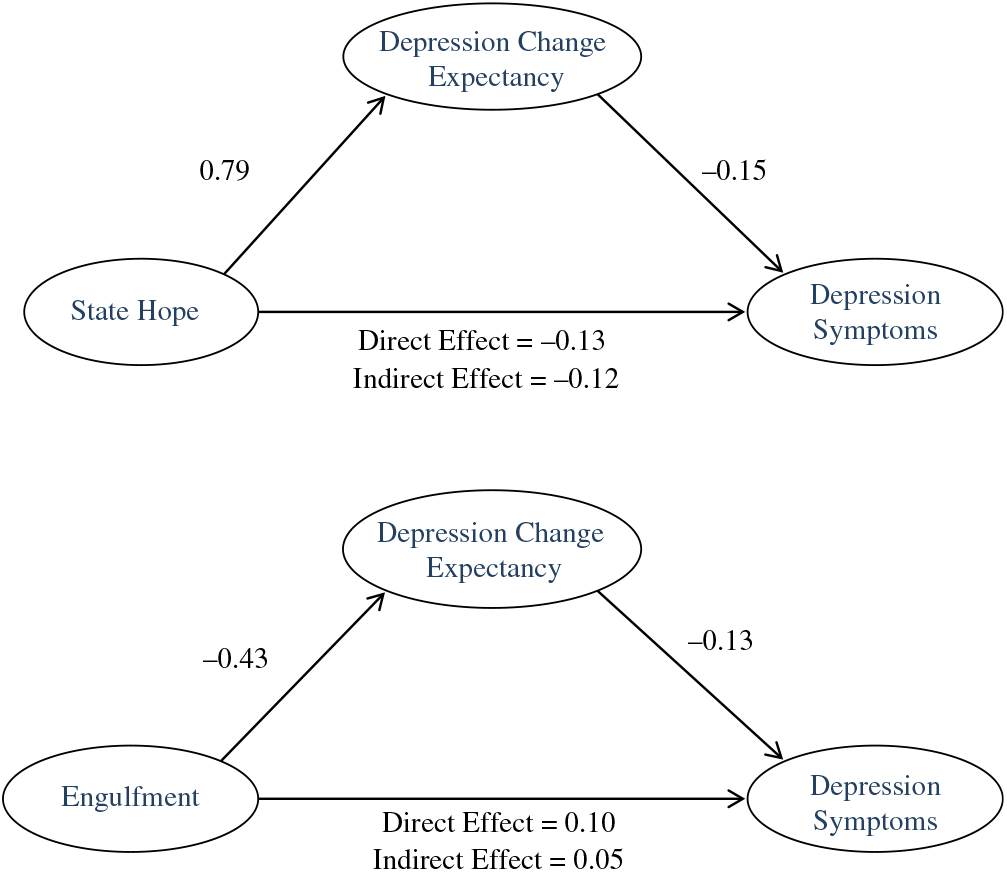
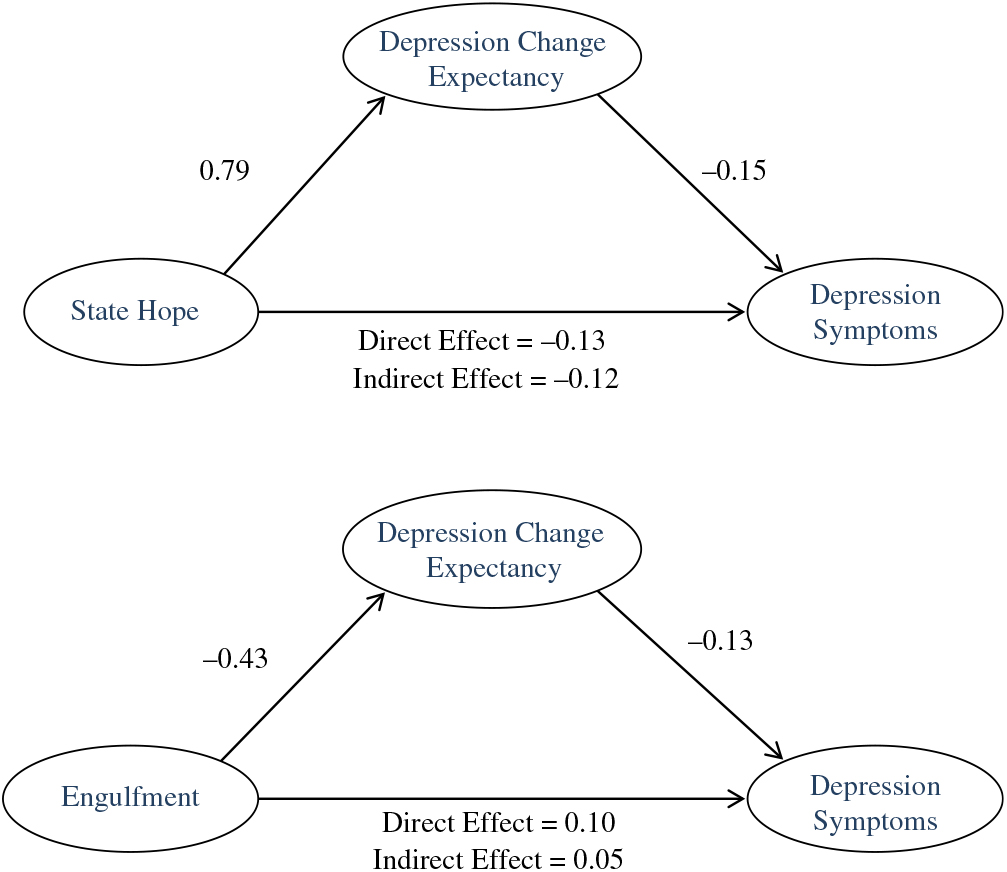
Change expectancy partially mediated the relationship between Hope and depression symptoms. Hope predicted greater change expectancy, b = 0.79, p < .001, 95% CI [0.61, 0.98], and change expectancy predicted lower depression symptoms when controlling for Hope, b = −0.15, p = .003, 95% CI [−0.25, −0.05]. The total effect was b = −0.26, p < .001, 95% CI [−0.35, −0.016] with a statistically significant direct effect when controlling for Hope, b = −0.13, p = .03, 95% CI [−0.26, −0.01]. An indirect effect was found, b = −0.12, 95% CI [−0.21, −0.04].
Change expectancy partially mediated the effect of Identity on depression symptoms. Identity predicted change expectancy, b = −0.43, p < .001, 95% CI [−0.54, −0.32], and change expectancy predicted improved depression symptoms when controlling for Identity, b = −0.13, p = .006, 95% CI [−0.23, −0.03]. The total effect was b = 0.16, p < .001, 95% CI [0.11, 0.22] with a significant direct effect, b = 0.10, p = .001, 95% CI [0.04, 0.17] and indirect effect, b = 0.05, 95% CI [0.01, 0.10].
These results are summarized in Fig. 1.
Supported mediation models with depression change expectancy as mediator.
The mediating role of CHIME constructs
Given the cross-sectional nature of the study, it was subsequently examined if CHIME constructs could, instead, mediate the effect of depression change expectancy on depression symptoms.
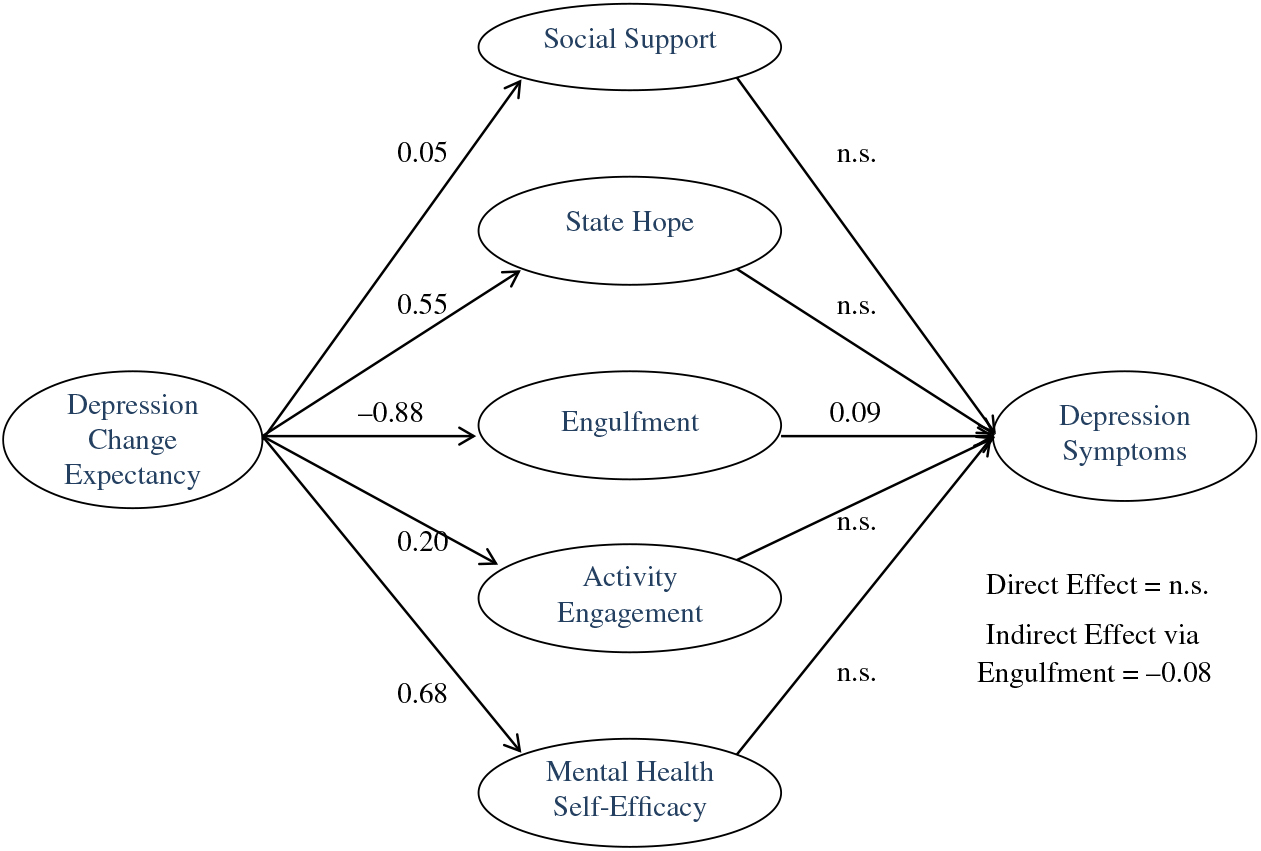
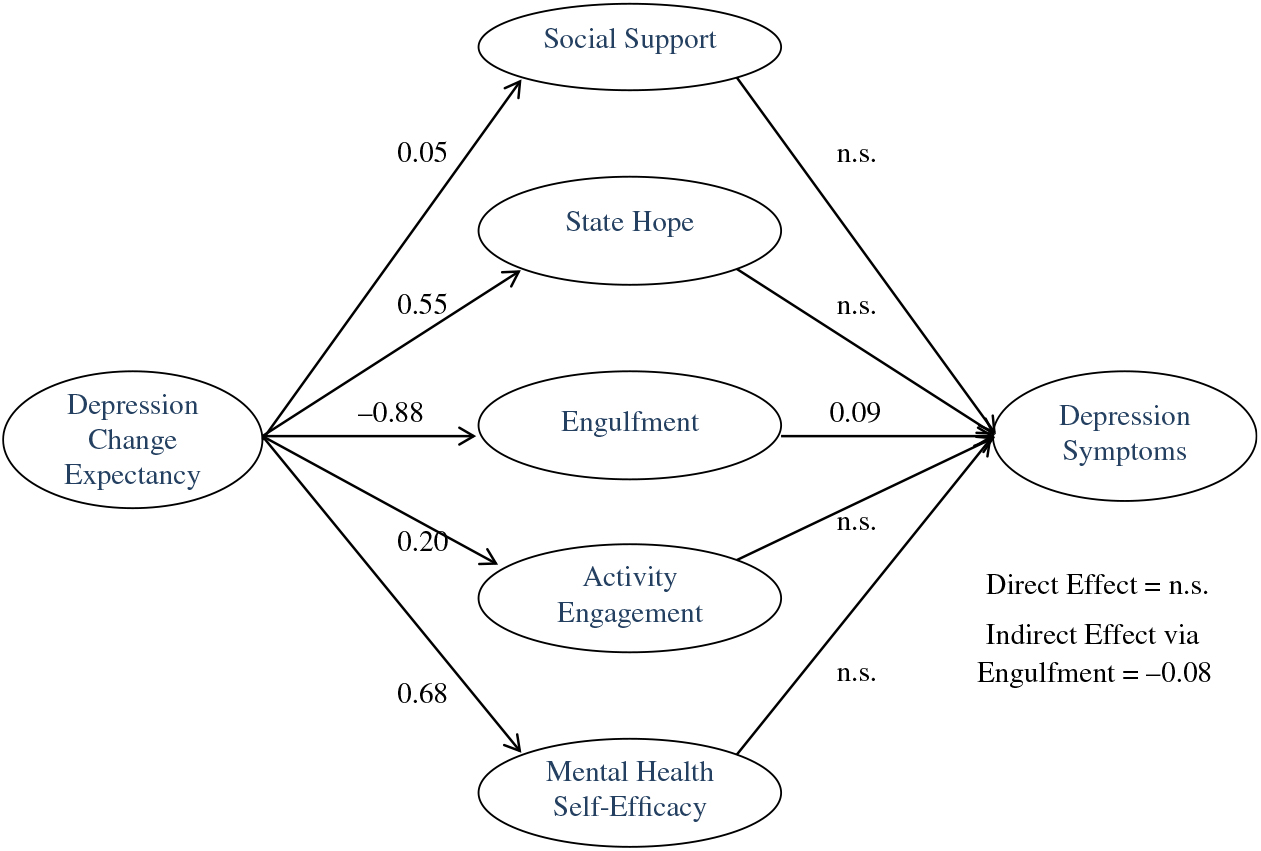
The first link in the parallel mediation involves the effect of depression change expectancy on each CHIME construct. Change expectancy predicted Connectedness, b = 0.05, p < .001, 95% CI [0.02, 0.07]; Hope, b = 0.55, p < .001, 95% CI [0.42, 0.67]; Identity, b = −0.88, p < .001, 95% CI [−1.11, −0.66]; Meaning, b = 0.20, p < .001, 95% CI [0.14, 0.27]; and Empowerment, b = 0.68, p < .001, 95% CI [0.49, 0.87].
Controlling for depression change expectancy, only Identity predicted symptoms of depression, b = 0.09, p = .01, 95% CI [0.01, 0.16]. The other CHIME predictors did not predict depression symptoms, all p > .05.
The total effect of change expectancy on depression symptoms was b = −0.23, p < .001, 95% CI [−0.31, −0.15]. The direct effect was non-significant, b = −0.08, p = .16, 95% CI [−0.19, 0.03], but an indirect effect was found, b = −0.08, 95% CI [−0.16, −0.01]. This indicates that Identity – after controlling for the other CHIME constructs – fully mediates the relationship between depression change expectancy and depression symptoms. This is depicted in Fig. 2.
Parallel mediation model with CHIME processes as mediators.
Discussion
This study examined the relationship between depression change expectancy, CHIME recovery processes, and depression severity. It was hypothesized that CHIME recovery processes would be associated with a better change expectancy that, in turn, would be associated with lower depression symptoms. Of the five CHIME processes examined, only Hope and Identity exhibited this pattern of association. This suggests that the processes that are thought to foster consumer recovery are not associated with lower symptoms via differences in depression change expectancy.
Given the cross-sectional design of the study, it was also prudent to examine if change expectancy could, instead, influence CHIME recovery processes that may then predict symptom severity. While change expectancy predicted all five CHIME processes, only Identity went on to predict depression symptoms and serve as a mediator.
The unidirectional relationship between Hope and change expectancy is theoretically consistent with the nature of hope as conceptualized by Snyder et al. (Reference Snyder, Sympson, Ybasco, Borders, Babyak and Higgins1996). Hope is conceptualized as the combination of pathways towards personally valued goals and a sense of agency in achieving them. A hopeful person would feel empowered and optimistic about major life goals. This may optimistically color their views about depression and produce better change expectancy. In turn, and in line with previous research, enhanced change expectancy can then lead to improved treatment response and symptomatic relief (Eddington et al., Reference Eddington, Dozois and Backs-Dermott2014; Howland, Reference Howland2008).
The bidirectional relationship between Identity and change expectancy is theoretically consistent with the nature of engulfment (McCay & Seeman, Reference McCay and Seeman1998). Engulfment implies demoralization and chronicity. The engulfed person is caught in an illness Identity that carries negative expectations for him/herself and his/her future. As the illness takes its course, the person is thought to lose various valued social roles until the sick role becomes dominant over time. As the individual experiences prolonged despair, it may become harder to develop or maintain positive expectations of recovery. Thus, an engulfed Identity can lead to poorer change expectancy and deeper depression.
The reverse direction of effect is also consistent with the concept of change expectancy and engulfment. Depressed individuals may have an improved change expectancy – perhaps through other factors like state hope above – that then diminishes the demoralization and chronicity of engulfment. Depression symptoms are known correlates of engulfment (McCay & Seeman, Reference McCay and Seeman1998) and improvements in engulfment may then lead to lower levels of depression, possibly by primarily affecting symptoms that are most closely related to demoralization, chronicity, and self-concept (e.g., poor self-esteem, hopelessness) and their consequent effects on mood.
There is some theoretical debate on the potentially positive effects of an engulfed Identity. Research on schizophrenia has suggested that a person’s identification with a diagnostic label, and its consequent engulfment, may actually motivate some affected individuals to seek help and thereby adapt more successfully to the illness (Vining & Robinson, Reference Vining and Robinson2016). In this manner, engulfment may yield positive effects in contrast to the negative effects noted in previous work (Vining & Robinson, Reference Vining and Robinson2016). Nevertheless, the present study showed that engulfment has negative rather than positive effects. Engulfment was associated with poorer mental health self-efficacy and depression severity. This study parallels common findings on engulfment in schizophrenia and shows that an engulfed Identity appears to be detrimental rather than beneficial for depression in a primary care population.
Limitations
This study was limited by its cross-sectional design. It would have been helpful to adopt a longitudinal design from pre-treatment to post-treatment. While a cross-sectional design provides less evidence of causality, the present study can serve as a starting point for the development of more comprehensive projects on the influence of change expectancy, consumer recovery processes, or other psychosocial factors on depression symptoms.
The sample in this study was limited in generalizability due to its size and gender balance. There were demographic data that were not captured in medical files. While the generalizability of the results for the wider population remains to be empirically investigated, it also shows that CHIME and depression change expectancy are promising candidates for further research in treating depression from the perspective of consumer recovery.
Another limitation concerns the operationalization of CHIME constructs. In the original paper on CHIME (Leamy et al., Reference Leamy, Bird, Boutillier, Williams and Slade2011), each CHIME category contained multiple disparate constructs that were not reducible to single scales. This study could not measure every facet of each CHIME category. Instead, this study selected and operationalized constructs that were clinically actionable. For example, “Hope” was conceptualized as “state hope.” This was defined as the perception of pathways towards valued goals along with a sense of agency in achieving them. A positive sense of agency and visions of pathways can be developed through, for instance, solution-focused therapy (Macdonald, Reference Macdonald2011), where a consumer’s sense of self-mastery is fostered by systematically asking for situations (“finding exceptions” in solution-focused lexicon) where they were able to address their difficulties. The development of pathways towards those goals is achieved through scaling questions that help consumers take incremental steps towards personally valued outcomes. Thus, this study’s operationalization of CHIME constructs is both theoretically relevant and clinically informative.
Conclusions and future research
Of the five CHIME recovery processes, this study showed that Hope and Identity may be particularly relevant for consumers who are suffering from depression. To our knowledge, it is also the first quantitative study on CHIME. In line with the philosophy of consumer recovery, results suggest that consumers may benefit from focusing on the subjective, existential aspects of recovery beyond the usual prescriptions of medication or psychotherapy.
Consumer recovery research has remained relatively siloed and few studies have attempted to reconcile it with the wider knowledge base in psychology and mental health. Studies that have attempted such reconciliation have yielded findings that could support the development of services that incorporate consumer views of recovery. As cases in point, some measures of symptoms fell as consumers recovered (Andresen, Caputi, & Oades, Reference Andresen, Caputi and Oades2010) while CHIME processes increased as consumers approached recovery, possibly through reductions in symptom severity (Low et al., Reference Low, Lim, Wong, Ooi, Oades and Yap2018). This study suggests that change expectancy is another contributor to recovery. In reconciling consumer recovery concepts (e.g., CHIME), clinically oriented conceptions (e.g., symptom severity, psychosocial functioning), and relevant psychological research (e.g., change expectancy), we may arrive at a more holistic and constructive approach to psychological recovery and well-being.
Acknowledgements
This study was funded by the National Healthcare Group Polyclinics. Wong, Ooi, and Yap were employed by this organisation at the time of the study.
Financial support
This research received no specific grant from any funding agency, commercial, or not-for-profit sectors.
Conflicts of interest
All authors declare that there are no conflicts of interest.
Declarations
The authors declare that the present paper is an original piece of work that has not been submitted to, or published, elsewhere. All authors have read and approved the paper. We have read the ICMJE discussion on overlapping publications and met the ICMJE criteria for authorship.
The administrative costs of this project were borne by the National Healthcare Group Polyclinics. Wong, Ooi, and Yap were employed by this agency when this study was conducted. All authors have no conflicts of interests.