INTRODUCTION
This paper presents some results from the largest rural labour market survey yet conducted in Mozambique.Footnote 1 The survey shows that these labour markets play significant roles in the lives of a large number of poor people. Although some of the poorest Mozambicans are captured in this survey, not all of the men and women engaged in rural wage work live in similarly deprived rural households – their levels of education, wages and experiences of poverty are very diverse. The data show a range of labour market opportunities, characterised by great variations in barriers to entry, levels of pay, contractual terms, and conditions of work.
The findings presented in this paper contrast starkly with assumptions common to much of the recent literature on rural economies in sub-Saharan Africa and in Mozambique specifically.Footnote 2 It is often assumed that the rural poor do not have access to wage labour opportunities, especially to better paid work, and that all those who do have such access to ‘off-farm’ wage employment are already non-poor. The implication is that the demand for wage labour is more or less static, and that the labour market is crisply bifurcated between those jobs available to non-poor rural Mozambicans and other wage employment that is so badly remunerated that it could not conceivably make a dent in poverty levels.Footnote 3
The Commission for Africa (2005: 242) acknowledges the urgent need to build up more labour market information, but their report has hardly any discussion of rural wage employment.Footnote 4 NEPAD (2003) also fails to mention rural wage employment in its ‘Comprehensive Africa Agriculture Development Programme’.Footnote 5 More recently, the World Bank (2007: 287) has belatedly recognised the limitations of previous research and analysis: ‘Making the rural labor market a more effective pathway out of poverty is … a major policy challenge that remains poorly understood and sorely neglected in policy making’.
The results presented in this paper also contrast with the imaginings of most labour market theory. Orthodox, neoclassical, theory treats labour as a commodity like any other, and its exchange as determined by supply and demand, in conditions best analysed from the perspective of competitive markets. More sophisticated versions of neoclassical theory are still couched in terms of rational, utility maximising individual agents, though perhaps reacting to market imperfections and interacting ultimately to grind out equilibrium in a single labour market or in multiple, segmented labour markets.
There are many critiques of orthodox labour market theory, ranging from the radical to those following recent developments within neoclassical theory, including information theoretics insights. Thus, for example, Kaufman (Reference Kaufman2007) argues that the existence of transaction costs means there cannot logically be a frictionless, perfectly competitive labour market with a monotonic, linear demand curve. Segmented labour market theory – both in the radical tradition and in its more recent appropriation and reframing by neoclassical economists – often appears more suited to the variety of labour market ‘outcomes’ observed in developing countries. However, this literature too fails to capture the degree and kinds of variation in labour market relations, processes, and outcomes observed in this research. Moreover, segmented labour market theories tend to assume a generally applicable theory across discrete sectors divided by properties relatively homogeneous within each sector.
Rather, the findings presented in this paper confirm the assessment of those, very different, economists who emphasise a greater variety and complexity of labour markets and their interactions (with each other and with other factors) than most theory has to date acknowledged. Thus, Fields (Reference Fields2007: 55) argues: ‘Developing countries’ labor markets are marked by distinct labor market sectors that work in different ways from one another and by complicated interrelationships among the sectors. Unfortunately, few existing labour market models begin to capture the rich empirical reality of developing countries' labor market conditions.' Meanwhile, Fine (Reference Fine1998: 251) emphasises that ‘labour markets are not only structurally differentiated from one another in the limited sense of being separate or divided, but that they are internally structured in different ways. In other words, underlying socioeconomic determinants endow particular labour markets with particular labour market structures, relations and processes attached to their reproduction and/or transformation.’
The first section of this paper provides a detailed discussion of the rationale for and the methodology used in the Mozambique Rural Labour Market Survey (MRLS). The following sections then focus on presenting the survey evidence, covering both types and levels of payment for both agricultural and non-agricultural rural workers. It is argued that relationships between workers and employers cannot be understood within a simple framework of supply and demand, or in terms of information, supervision and transactions costs in imperfect markets. More fundamentally political processes, themselves influenced both by longer-run history (coerced labour force participation, migration flows between Mozambique and neighbouring countries, warfare within Mozambique, state-owned enterprises), and by recent events and interventions (including new cropping patterns, particular provincial government appointments, recent land concessions to incoming Zimbabwean farmers, individual farmers' strategies), help to account for much of the specificity of labour markets. This is especially so in a context in which, arguably, the relation of capital and labour and the social parameters of labour force participation are in flux, the ‘rules of the game’ are shifting, and power (exercised by employers over workers, by men over women) can be both brutal and paranoid.
The impact of employment on some simple measures of household welfare is also discussed. The evidence shows clearly that many Mozambicans who would by any criteria be considered among the very poorest in the country have been pitched into wage work. However, the evidence also suggests the potential for decent jobs to transform the living standards of even the poorest rural women.
SURVEY RATIONALE AND METHODOLOGY
The formation of a rural class depending on wage employment was already deeply rooted at independence (Castel-Branco Reference Castel-Branco1983; O'Laughlin Reference O'Laughlin2002: 517). After independence, the ruling Frelimo party, downplaying the heterogeneity of rural society, implemented policies on the basis of a crude dualist assumption, pitting a homogeneous subsistence-oriented peasantry against a ‘commercial’ sector. During the war, the class stratification of rural society continued, but differentiation processes were largely ignored by policy-makers and academics alike (O'Laughlin Reference O'Laughlin1996: 1; Wuyts Reference Wuyts and Addison2003).
Since the end of the war, new processes of economic and social change have begun to have substantial effects on rural inequality and the demand for wage labour. These changes have included: the rehabilitation of transport infrastructure; new foreign investment in agriculture; the immigration of farmers from Zimbabwe and South Africa (concentrated especially in Manica Province); the revival of tea plantations in Zambézia Province; the privatisation of other state-owned plantations; and the rapid integration of small- and middle-scale farmers into international commodity markets (especially the wage labour-intensive markets for tobacco and cotton). Similar dynamic influences on rural labour markets, in some cases even more pronounced, are a feature of many African societies. So the findings of this survey in Mozambique may well be relevant to other sub-Saharan African economies.Footnote 6
Unfortunately, the data collected in recent household surveys are not useful for analysing the impact of these uneven developments on the market for wage labour. The usefulness of these household surveys is limited because they adopt international statistical conventions for measuring labour market participation that are ill-suited to the complex reality of labour transactions in poor rural areas.Footnote 7 Where new instruments have been developed to overcome the problems evident in conventional household survey data, they clearly demonstrate the large amount of labour market activity missed in the types of national surveys conducted in Mozambique (Lund Reference Lund2004; Adato et al. Reference Adato, Lund and Mhlongo2004: 17).
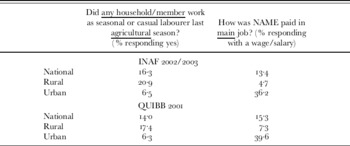
The results from two recent household surveys in Mozambique, the Inquérito Nacional aos Agregados Familiares (IAF 2004) and the Questionário de Indicadores Básicos de Bem-Estar (QUIBB 2001), yield surprisingly different measures of the relative significance of wage labour, depending on the specific questions asked in each of these surveys and their interpretation (Table 1). In particular, conventional questions in both surveys about rural respondents' ‘main’ job suggest that wage labour is rare – only about 7·3% of household members in the QUIBB survey, or 4·7% in IAF, claimed to have been paid a wage or salary in their ‘main’ job.Footnote 8 In contrast, a much larger percentage of rural households (almost 21% of rural households in IAF, 17·4% in QUIBB) claimed that at least one household member had been employed as an agricultural labourer in the most recent agricultural season.Footnote 9

If the IAF demographic extrapolations are accepted, then it may be concluded that at least 561,000 rural households (representing over 2·6 million rural Mozambicans) have one or more members employed as seasonal or casual agricultural wage labourers. The results from the IAF survey also suggest that households in the poorest quintiles are more likely to contain members who are temporary agricultural workers.
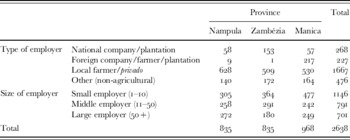
During 2002–3, fieldwork for the Mozambique Rural Labour Market Survey (MRLS) was completed in three provinces in the centre and north of the country: Manica, Nampula and Zambézia, where 2,638 wage-employed respondents (slightly less than half of them women) answered a lengthy questionnaire and provided information not only about themselves but also about other household members. As a result, the survey collected data on some 16,000 individuals in these provinces. The respondents were employed by a wide range of different types of establishment (around 900 separate employers), varying from very small farms, bars and market stalls to large plantations employing thousands of temporary workers. The wide range of types of employment/establishment covered in the MRLS allows an analysis that is much more disaggregated than is usual in the literature discussing the main sources of income for poor and rich rural households. For example, Tschirley and Benfica (Reference Tschirley and Benfica2001) focus on the broad category of ‘non-agricultural’ wage income, ignoring the important differences between, for example, households dependent on salaried office jobs in the rural bureaucracy (teachers, health workers, administrators, etc.) and households dependent on the wages of a waitress or cleaner in a roadside barraca.
The sampling was purposive rather than random. There was, of course, no reliable sampling frame on which to base a random sample of rural wage workers. The available official statistics not only fail to collect information on employees in enterprises employing fewer than ten workers, but also exclude many enterprises employing more than ten workers if, as is often the case, these enterprises are not legally registered. Ministry of Labour officials lack the resources, training or incentives to investigate employment, especially seasonal and temporary employment in many local firms.
The research team therefore used a wide range of sources to construct, as completely as possible, its own provincial sampling frames on the basis of existing agricultural censuses (TIA 2002 and the Agricultural Census 1999/2000 (INE 2000) on which TIA was also based), recent household survey lists (from the QUIBB 2001 database), and visits to all the relevant provinces and districts to assemble up-to-date and reliable lists of large and middle-scale farms;Footnote 10 lists of those enumeration areas that had recently experienced dynamic economic growth and structural change, but had not been covered by previous household surveys (IAF, QUIBB);Footnote 11 and the names and location of other large-scale employers in different districts of Nampula, Zambézia and Manica. The three central and northern provinces were selected because they account for the bulk of labour-intensive cash crop production (cotton, tobacco, sisal and tea), and Nampula and Zambézia contain a very large proportion of the Mozambican rural population.
This preliminary work to establish these sampling lists provided some assurance that the MRLS would not miss either the most significant rural employers, or those enumeration areas where wage employment had recently become particularly important in each of the provinces.Footnote 12 The sample purposively included a relatively large number of small- and middle-scale farmers.Footnote 13 The most successful of these farmers, who account for much of the demand for agricultural wage labour, are non-randomly distributed in rural Mozambique and there is, therefore, no guarantee that their wage workers would be included in conventional, randomised sample surveys of households. The range of occupations and of types of employer captured was large enough to ensure that sufficient diversity was achieved to make the results statistically relevant, and to obtain a well-targeted coverage of the most important rural labour markets within the selected provinces.Footnote 14
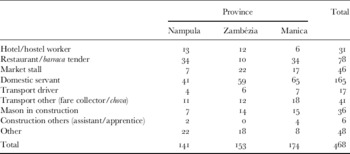
The principle used in the purposive sampling in this research was that of ensuring ‘maximum variation’, so that the final sample size was a function of the extent to which ‘saturation points’ had been reached for several key strata of jobs (agricultural, non-agricultural, small-scale vs large-scale employers, local and foreign investors and so on). The combination of care taken to build appropriate sampling frames, the large sample size, and the principle of maximum variation provide grounds to believe that the MRLS is a fair representation of the wide range of different types of rural wage workers in the provinces selected, and of the various categories of employers (see Tables 2 and 3 for a breakdown).
Sample distribution by province and employer category

Source: MRLS 2002/3.
Sample distribution by province and category of non-agricultural labour

Source: MRLS 2002/3.
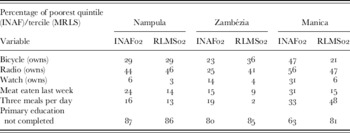
When the results of this research and the results of the nationally representative IAF survey (2002/03) are compared, it is clear that the purposive sampling of people working for wages in the MRLS succeeded in capturing many respondents who would certainly be classified by IAF as among the poorest Mozambicans. Thus, the bottom third of the MRLS sample, ranked according to a simple but robust household asset index,Footnote 15 is at least as poor as or poorer than the bottom quintile of households surveyed by IAF in the rural areas of the same provinces. As Table 4 shows, fewer of the poorest tercile of MRLS respondents in Manica own a bicycle, a watch or a radio than the poorest quintile of IAF respondents in that province. And in all three provinces, fewer MRLS respondents had eaten meat within the last week or owned a watch. Educational status is known to be closely associated with other measures of poverty in Mozambique (Simler et al. Reference Simler, Mukherjee, Dava and Datt2004); 80% or more of the poorest households in both MRLS and IAF (with the surprising exception of IAF respondents in Manica) failed to complete primary school. When other education statistics (and most of the demographic statistics) for the whole sample of rural wage workers in the MRLS were examined, the results were not statistically different from the IAF rural samples in the same provinces.Footnote 16 In sum, the purposively sampled survey is a policy-relevant complement to standard survey techniques; both the questionnaire design and the MRLS sampling procedures were planned specifically to fill in gaps that are common to household surveys in Africa (Sender et al. Reference Sender, Cramer and Oya2005).

This paper also reports findings from 120 respondents to a different questionnaire administered to a sample of small- and medium-scale agricultural employers. In addition, the researchers conducted semi-structured interviews with thirty-three large-scale employers, all employing more than fifty workers at the peak of the agricultural year, and collected the life histories of fifteen female wage workers.Footnote 17 Thus, this paper aims to combine the quantitative findings of large- and smaller-scale purposive surveys with primary qualitative material to question both the policy conclusions reached in much of the current literature on rural Mozambique, and some of the methods commonly used.
VARIATIONS IN METHODS OF PAY: MONTHLY, DAILY AND PIECEWORK PAY
Payment arrangements in rural labour markets are extremely complex. They are difficult to investigate and summarise (Hatlebakk Reference Hatlebakk2004; Rogaly Reference Rogaly2005). The literature on piece-rate systems and farm wage differentials attempts to explain marked differences between how workers are paid, even when they are doing similar things and in comparable locations. The focus in this literature is often on the costs of labour recruitment and supervision faced by employers, and on the implications of different payment methods for labour productivity (often in the context of debates about ‘efficiency wages’). There are also many other explanations, less firmly rooted in the neoclassical economic literature, for observed variations in payment methods (Bardhan & Rudra Reference Bardhan and Rudra1986; Newman & Jarvis Reference Newman and Jarvis2000; Ortiz Reference Ortiz1999; Rogaly Reference Rogaly2005; Rubin & Perloff Reference Rubin and Perloff1993; Wells Reference Wells1996). In Mozambique, forms and levels of payment vary within provinces from one rural area to another; they appear to be influenced by the strategies adopted by individual employers, making any general statement about or explanation of prevailing methods on Mozambican farms questionable.
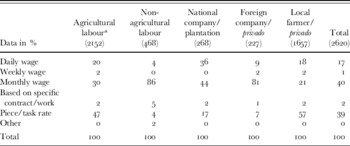
Table 5 shows the distribution of the main methods of payment in the MRLS sample, based on workers' responses to both coded and open-ended questions.Footnote 18 However, in many of these responses the distinction between (unwritten) contracts to purchase labour time and contracts to complete a specific task was unclear, so the classifications in Tables 5 and 6 should be regarded as ‘best estimates’, rather than definitive.
Wage payment methods for agricultural and non-agricultural workers, by type of employer

Note: a Number in brackets shows the total number of observations for each category. Note that the total 2620 differs from the 2638 reported in Table 2 as a result of some missing values for pay modalities. The total of agricultural labourers may slightly differ from the same total in other tabulations due to missing values in some of the categories used.
Source: MRLS 2002/3.
More than two thirds of the respondents employed as agricultural labourers were not paid on a monthly basis. An even larger proportion (almost 80%) of the agricultural workers employed by local farmers (small Mozambican farmers or medium-scale private farmers known as privados) were paid either by task or on a daily basis. In contrast, over 80% of agricultural workers employed on foreign-owned firms were paid monthly wages.Footnote 19
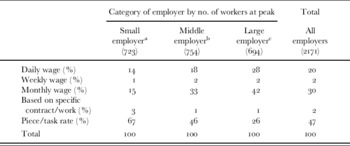
Payment methods on the larger farms, particularly on ‘foreign’ or ‘national’ corporations, were more clearly defined than on other types of farm, where the variation in payment methods and rates was particularly large. Table 6 shows that larger farming enterprises are more likely to employ monthly paid workers than smaller farmers. However, many of the large employers recorded as paying a monthly wage to temporary workers were, in fact, applying a daily rate (often derived from the legal monthly minimum rate), although the number of days of work required per month was at the discretion of individual employers.Footnote 20
Wage payment methods by size of establishment (agricultural workers)

Notes: a 1–10 workers; b 11–50 workers; c 50+ workers.
Source: MRLS 2002/3.
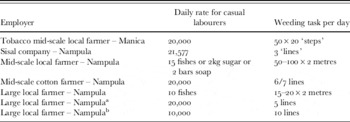
Larger farms also need to employ a great many temporary workers for one to three months to meet seasonal labour peaks. These workers are usually required to complete the task set by their employers before they receive a ‘daily’ payment. The tasks involved varied, as did the judgement of what could be done in a day and how many hours a casual worker should be expected to work. On some farms there was a stable daily wage paid for seasonal tasks, but these tasks would vary in intensity. Yet on other farms the daily wage varied according to the task set. For example, on a large joint venture farm in Nampula Province growing sisal and cotton, day workers were paid MT31,347 a day for a set task (cutting ninety-eight piles of sisal leaf), but for clearing weeds in sisal fields the task rate was MT21,577 (for three ‘lines’ of weeding). Thus, among large-scale employers, even when a ‘daily rate’ applied, this could vary depending on the specific task involved. Table 7 gives some idea of the latitude for setting differing wage rates for weeding.
Daily pay for weeding by selected large and mid-scale employers in Nampula (Meticais)

Notes: a For tough weeding; b for lighter weeding.
Source: MRLS 2002/3.
On the larger farms in the sample, with hundreds of casual workers at peaks of the agricultural cycle, employers often paid a bonus for work well done or for regular attendance. Although some respondents only performed an occasional day of ganho ganho (casual) labour on these farms, employers appeared to prefer offering longer (unwritten) contracts, typically for one to three months, to ‘daily’ labourers. For example, on one farm the employer offered MT5,000 per day on top of the daily wage, payable on the last day of an agreed span of work and conditional on the employee having turned up regularly. In many cases it was left to field supervisors to judge whether a task had been done satisfactorily or whether a bonus had been earned.
Local farmers/privados rely much more heavily on task-based payment systems. The tasks their workers have to perform are even less clearly defined than on the large farms and require widely varying amounts of time and effort to complete, making it extremely difficult to calculate the wage received per day or hour.Footnote 21 One important advantage of task-based payment systems is that they allow privados to incorporate the labour efforts of additional female and child labour without having to contract (or pay) these workers directly. Thus, a woman who has difficulty completing the task set by her employer will bring along her children and female relatives to ‘help’ with the work.
Payment methods are determined not only by the size and ownership characteristics of farms, but also by the crop and the farming operation. An analysis of 733 responses to open-ended questions concerning agricultural tasks (mainly from the sample in Nampula province) suggests the following patterns: work in cultivating maize, cashew and rice is almost always paid by task or piece-rate; where tobacco, sisal and horticulture are the main crops, the proportion of more regular monthly-paid workers is much higher than for other crops; tasks like weeding and harvesting are more likely to be paid on a piece-rate basis, whereas clearing and sisal stumping are usually paid on a daily or monthly basis.
VARIATIONS IN RATES OF PAY FOR AGRICULTURAL WORK
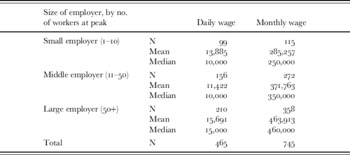
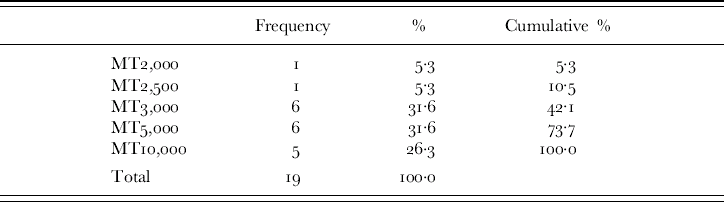
How much people can earn on different types of farm enterprise also varies. The median monthly wage ranges from a low of MT250,000 for people working for local farmers or neighbours, through MT381,000 earned on the farms of privados, up to MT460,000 on Mozambican-owned companies and plantations, and MT525,000 on foreign enterprises.Footnote 22 The range of daily, as opposed to monthly, wage payments is more compressed, varying from a low median rate of MT10,000 per day paid by local or neighbouring farmers to a high of around MT15,000 paid by national and foreign agricultural companies. The modal as well as the median daily payment rate (MT10,000) was equivalent to about 42 cents/day, at the exchange rate prevailing during the main period of fieldwork.Footnote 23
Distinguishing employers by size (defined in terms of the number of workers employed at the peak of the agricultural year), rather than by ownership type, reveals a similar pattern of variation in rates of pay, as seen in Table 8.Footnote 24 The fact that larger enterprises tend to pay their workers more is hardly surprising (Idson & Oi Reference Idson and Oi1999). However, the widespread belief that concentrating resources on small farm agriculture and food production will reduce African poverty ignores the fact that some of the poorest rural people are particularly dependent on earnings from agricultural wage labour.Footnote 25 Small farmers in the MRLS, especially food producers, do not offer very high or regular wages to their workers; virtually all of them ignore government minimum wage legislation.
Payment rates by size of agricultural employer

Source: MRLS 2002/3.
Workers engaged in the production of some crops are more highly paid than workers on other crops, given a similar type of employer. For example, tobacco out-growers paid higher wages than the SME respondents growing other crops in the same area (Manica Province). Work on sisal and cotton growing enterprises is relatively highly paid (at a median daily rate of MT14,000 and MT25,000, respectively), compared to work on food crops such as rice, maize, groundnuts or sesame (typically paid at the rate of MT10,000 per day). Men usually cut sisal and this work is arduous, involving risks of cuts and snake-bites. Thus, some combination of gendered job segregation and the need to provide incentives for dangerous and unpleasant work may account for relatively high payment rates on sisal plantations. However, higher payments for sisal and cotton cultivation are also probably a result of the fact that, in the MRLS, these crops were often grown on larger farms or plantations, usually owned and managed by national privados or corporations,Footnote 26 which tend to pay higher (daily or monthly) wages.
A small sub-sample of workers employed to harvest cashew nuts, all paid on a piece-rate basis and working on the same farm in Nampula, also showed a surprising degree of variation in rates of payment (Table 9).Footnote 27 These differences in task payments could not be explained by reference to the gender, levels of education or age of the workers. This simple case illustrates the idiosyncratic spread of payment rates, and suggests the difficulties involved in using standard Mincerian equations to explain variations in these rates.Footnote 28
Piece-rates on a cashew-nut farm for harvesting (Nampula)
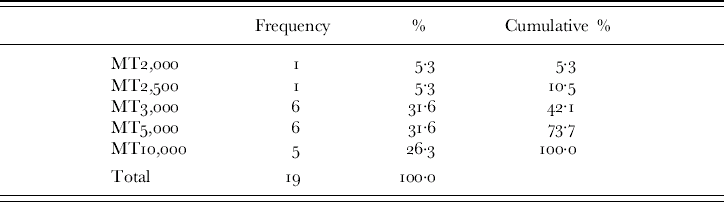
Source: MRLS 2002/03.
It is also difficult to account for the variation in monthly wage payments received by another sub-group of workers, all of whom were male, semi-skilled and working on large scale farms. Some of the interviews with large farmers yielded information on the range of salaries they had decided to pay their tractor drivers. The lowest reported monthly wage for a tractor driver was MT600,000 and the highest was MT1·5 million. Most drivers were reported to earn around MT800,000, though a few were earning less and a handful were paid more than MT1 million monthly.
VARIATIONS IN PAYMENT RATES FOR NON-AGRICULTURAL WORK
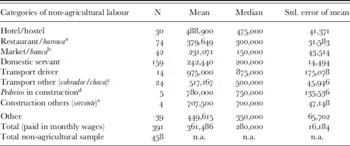
Table 10 summarises the survey results for the monthly wages reported by 391 respondents employed by rural non-agricultural enterprises. During the survey period, the non-agricultural minimum wage was set at MT812,163 (roughly $34·26) a month. So, median monthly earnings of MT150,000 ($6·33) for working on a market stall, or the MT200,000 median amount earned by the 159 domestic servants (empregadas) in the survey, are not only extraordinarily low, but also illegal. Payments reported by empregadas were remarkably consistent, having the lowest standard error of the mean wage among the categories surveyed. By contrast, people (usually males) working in the transport and construction sectors in the same rural towns could earn substantially more, although there was a relatively large variation around the mean wage for drivers and bricklayers. The fourteen drivers interviewed had the highest median monthly wage (MT875,000).
Monthly wages of non-agricultural rural workers (MT)

Notes: a An informal, ‘street’ bar. b Market stall. c Ticket collector or cart-boy. d Bricklayer/mason. e Assistant.
Source: MRLS 2002/3.
A CLASSIFICATION OF JOBS AND PAYMENT METHODS
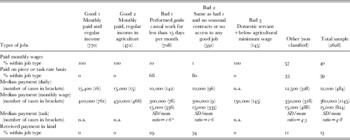
The analysis above has shown that rural Mozambicans experience a complex range of methods and rates of payment for wage labour. A crude dichotomy between privileged ‘labour aristocrats’ and all other rural workers cannot capture this reality. The MRLS allows for a more nuanced, although still rather simple, taxonomy of wage employment. Thus, Table 11 identifies five main types of wage employment obtained by rural Mozambicans, using a mixture of quantitative and qualitative criteria. The classification contrasts the characteristics of workers who are relatively (un)successful in the labour market, in terms of earnings and some aspects of working conditions (e.g. access to trade unions and compensation for working overtime).
Better and worse jobs – payment methods and rates

Note: a SD=Standard deviation.
Source: MRLS 2002/3.
Table 11 shows that some (770) workers enjoy access to ‘good’ jobs that guarantee a relatively decent and more or less regular flow of income. A similar number of workers (708) only succeeded in finding casual or very low-paid (‘bad’) jobs. The five types of employment identified in the table are not mutually exclusive. For example, the second is a fraction of the first. Categories ‘bad 1’ and ‘bad 2’ are also partly overlapping, and a few workers with access to ‘good’ jobs also perform some of the ‘bad’ jobs on the side.
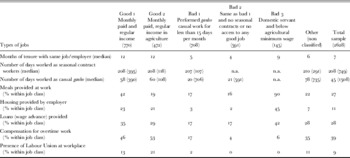
Although the median wage of all the agricultural workers classified as having ‘good’ jobs is still below the statutory minimum, the ‘good 2’ category workers do receive 13% more than ‘good 1’ category workers, and over 25% more than other monthly-paid unclassified workers. Moreover, these agricultural workers are more likely to have access to trade union representation than workers in any other type of job (Table 12). However, the benefits they derive from union representation are not clear. One or two of the biggest agricultural employers stated that in the past unions were combative and even aggressive; of late they have only been ‘helpful’. This was confirmed by other employers (and by provincial union officials) who said that union officials either never visited farms or that they did visit from time to time but would only do so if they could get a lift from the farmer – in other words, one major constraint on union officials organising on farms is the lack of transport facilities. Clearly, the disorganisation of unions – chiefly the Sindicato Nacional de Trabalhadores Agro-Pecuários e Florestais (SINTAF) – and the failure of both government and international donors to invest in increasing their capacity, allow for the high degree of employer discretion in setting wages and their composition in terms of money wages, benefits and payments-in-kind.
Employment tenure and other work conditions, by types of job

Source: MRLS 2002/3.
Among monthly-paid workers, the 145 domestic servants receiving less than the minimum wage are particularly disadvantaged, since half of them earned below MT150,000 per month. The median daily rates of the agricultural workers employed on a casual basis (ganho ganho), whether they are classified as having a ‘bad 1’ or ‘bad 2’ job, are consistently lower than the daily rates for any other type of worker.
Moreover, workers with bad jobs were more likely to be paid in kind (usually with food) than any other worker (Table 11). The most common substitutes for money wages reported in interviews with large farmers were dried fish, sugar, soap, maize or cassava flour, and capulanas (the cloth wraps worn by women). For example, a woman worker might work for four days to earn a capulana ‘worth’ (according to the farmer) MT35,000. Obviously, precise estimates of an imputed money wage (or the employer's wage costs) are difficult when payments are made in kind. The lack of precision appears to increase employers' control over the terms on which they acquire labour.
In all types of rural wage employment, job tenure appears to be insecure. Even for those workers who have a ‘good’ job, half report spending twelve months or less in their present job. More than half of the workers with the worst jobs (bad jobs 1 and 2) only manage to find twenty days or less of wage work per year. An increase in the number of days per year when they can find employment would have a dramatic impact on their standards of living.Footnote 29
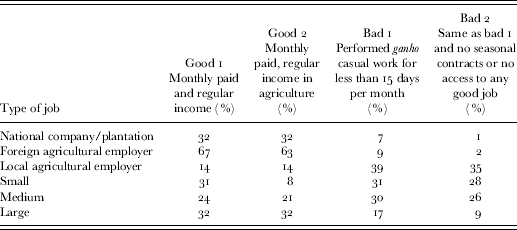
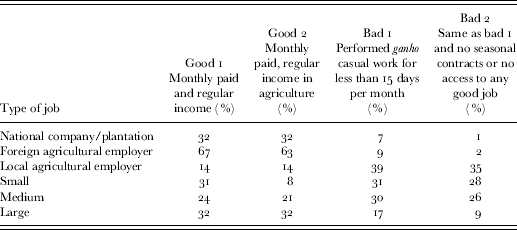
Small-scale employers and especially Mozambican-owned small farm enterprises are unlikely to offer ‘good’ jobs to their workers, while almost two thirds of workers employed by foreign agricultural investors enjoy good jobs in agriculture (Table 13). Many workers with relatively ‘good’ jobs suffer from employment conditions that are below statutory minimum standards. For example, about half of them do not receive any compensation for working overtime (Table 12).Footnote 30 Nevertheless, they are more likely than workers with ‘bad jobs’ 1 and 2 to be provided with housing, meals and credit by their employers.
Workers by employer categories and job types
(% of workers within each employer category)
Source: MRLS 2002/3.
The amount and quality of these non-wage benefits, as revealed in interviews with large farmers and in the quantitative surveys, is variable and discretionary. Benefits can be and are withdrawn, whenever the employer feels this is appropriate. Moreover, almost all the women captured in the MRLS were denied access to the most basic non-wage benefits. Thus, only about 3% had paid maternity leave; less than 4% of all female wage workers were given paid holidays by their employers and less than 10% were given paid sick leave or any medical benefits.
THE POLITICAL ECONOMY OF LABOUR CONTROL
Employer discretion over labour contracts is exercised within a context of widespread poverty, a generally weak presence of trade unions and labour inspectors, low levels of literacy and education and, by the accounts of large farmers, a huge excess in the supply of labour. As local monopsonists, most rural employers are in a strong position to shape labour relations by using an array of discretionary gambits in setting wage levels, imposing payment methods, offering and threatening to withhold incentives, and by choosing what combination of male and female permanent, seasonal and casual labour to employ.
Although very few of the workers in the survey are aware of the minimum wage for agricultural labour, and none of the provincial officials working for the trade union or the Ministry of Labour could quote the current rate accurately, nevertheless many employers feel constrained to follow prevailing norms for daily wage rates, or to calculate payment rates by reference to the legal minimum wage; they often feel themselves to be embattled and hemmed in by hostile local interests.
Large and medium-sized commercial farmers, both Mozambican and foreign, are constantly embroiled in social tensions and legal conflicts, and face encroachment onto their land. These conflicts may involve long-standing claims to landownership or grazing access rights that clash with recently granted land concessions to large-scale farmers. The conflict can play itself out in different ways: through legal challenges and bureaucratic tangles; insinuations of the engagement of spirits and curses; and aggressive encroachments onto the concession.Footnote 31 Recently arrived boere farmers in Manica, for example, not only complain of the bribes they have to pay to provincial officials, but also that the locals frequently burn their crops and sabotage their farm equipment.Footnote 32 One response to routine theft and trespassing is to locate selected permanent workers on smallholdings along the perimeter, or border area, of the farm. This response has the advantage not only of promoting local social and political allies who are expected to help in the struggle to secure contested property rights,Footnote 33 but also, when it takes the form of smallholder out-growers surrounding a nucleus estate, of acquiring the labour inputs of women and children for tobacco and cotton production without having to employ additional wage labour directly.
The interviews with large-scale farmers shed some light on their preference for hiring casual workers on very short-term contracts, rather than permanent workers. The largest agricultural enterprises (and generally also foreign-owned enterprises) cite the complexity of the labour law and the inflexibility of the fines for firing workers as the main disincentive to hiring more permanent workers. Smaller farmers (and nationals) are more likely to explain a relatively low number of permanent relative to temporary workers in terms of either insufficient resources to pay permanent workers while ‘idle’, or of the workers' own preferences.
Both the gender composition of the labour force and its division into permanent or casual employees are presented (in interviews with employers) either as an employer choice or as a worker (and worker's family) choice. For example, some employers might say that they rely on temporary workers because they want to evade the perils of a prying bureaucracy and a complex labour law, or to reduce supervision costs,Footnote 34 while others might say that their dependence on temporary workers is driven entirely by the fact that ‘they prefer it that way’. Thus, one very large employer, on a tea plantation in Zambézia Province, claimed that he needed 1,400 permanent workers but could not get them (he had only about seventy) because local people do not want permanent employment, they lack ‘ambition’, and have only intermittent need for cash.
These stereotypical prejudices are also evident in some of the large-scale farmers' explanations for the gendered division of labour on their farms, and for the fact that men are more likely to be permanently employed than women. The standard explanation is couched in terms of physical abilities and/or skills. Many agricultural tasks are physically demanding, e.g. pruning cashew trees or cutting sisal, and require male strength. And many farm jobs depend on the kind of skills that are assumed to be male preserves (driving tractors, working as mechanics, acting as supervisors). Yet employers commonly make assessments of the relative superiority of women for other, less well-remunerated, types of job. Most tobacco-grading and bundle-tying, for example, is done by women. Most employers explain this in terms of women ‘having better eyesight’ or being more ‘nimble-fingered’, or women liking to sit and chat while patiently working, whereas men get bored and wander off from the work in hand.
Sometimes, rather more general assertions are made. Some farmers claim that women are better at jobs ‘needing care’, or that women are better at ‘ensuring quality’. Others argue that women ‘are more serious’, while men either work for a month or two, and then leave, or ‘pretend to work’ while actually slacking, taking cigarette breaks furtively, etc. Women are often said to be ‘more trustworthy’: for example, one farmer claimed that women are better to employ for harvesting because ‘they steal less than men’. Finally, men were said by one farmer to be more likely to ‘run to the labour department to make complaints’. These statements suggest that employers generally aim to hire at least a certain number of women and girls chiefly because they are regarded as more compliant. Yet some employers also had a clear sense that the choice was not theirs to make freely. As one (expatriate) farmer put it, the situation in ‘our community’ is delicate: hiring women causes tension in an area where there is enormous male need for wage labour. Other employers claimed, more convincingly, that they would like to hire more women but that husbands often prevented their wives from working for wages.
Larger farmers often invoke the idea that they are ‘developing the local population’, claiming that ‘we are doing this to help people’, ‘nobody round here had anything, not even any soap, till we started farming here’, and so on.Footnote 35 These avowals of paternalist intent are partly a means to justify the presence of large farmers in a context in which many of them, especially foreign investors, face overt or covert local threats to their property. Thus, allocating food production plots along the borders of the farm to favoured permanent workers is cited as evidence of concern for workers' nutrition and welfare. Similarly, a cotton farmer in Nampula grew maize and beans as well as his principal crop, but only ‘to distribute’ to the local population, i.e. to sell them locally. One well-established practice, usually represented by farmers as evidence of paternalistic concern for employees' welfare, is the sale of food and other basic consumer goods to workers through farm shops at ‘fair prices’, or on credit repaid through deductions from wages. However, these practices can also be seen as further evidence of employers' discretion in manipulating real wage rates, or as adding to workers' difficulties in understanding, or complaining about, the relationship between their net wages and hours of work.
SOME CHARACTERISTICS OF THE POOREST WORKERS AND THEIR LABOUR MARKET PROSPECTS
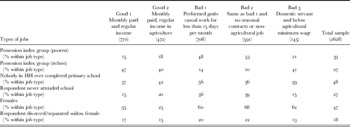
It is not surprising that most of the worst jobs (‘bad 2’) are performed by workers living in the poorest households. One third of the surveyed households lack even the most basic of the material possessions (a paraffin lamp, a clock or watch, a radio cassette, a bed, pairs of shoes, access to some form of toilet) used to calculate the household asset score. Table 14 contrasts the experience of these extremely poor and deprived households with ‘less poor’ rural households achieving a much higher asset score. A far greater proportion of the ‘good’ and a very low proportion of ‘bad 2’ jobs (only 10%) are done by members of the richer households. Similarly, the majority of ‘bad’ jobs were done by workers who lived in households in which no one had completed primary school. In contrast, most of the ‘good’ jobs (over 80%) were held by respondents who had attended school.Footnote 36
The share of different types of household and worker in ‘good’ and ‘bad’ jobs

Source: MRLS 2002/3.
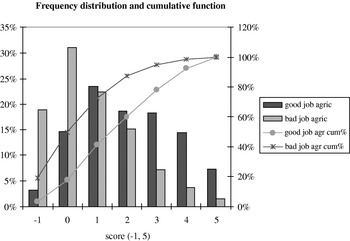
Table 14 suggests that there may be an association between household socio-economic status and the ability of household members to avoid employment in the worst types of rural jobs. ‘Better-off’ people in rural areas are likely to have very significant advantages compared with very poor people in searching and bargaining for the best available employment because of their education, ability to move, household connections and previous work experience.Footnote 37 At the other end of the spectrum, the strong relationship between household possession scores and participation in the worst type of insecure casual agricultural labour is graphically illustrated in Figure 1.Footnote 38
Possession scores by type of job in agriculture.

However, the direction of causality is not obvious. As Table 14 shows, by no means all of the ‘good’ jobs are monopolised by a ‘labour aristocracy’ comprising members of richer and more educated households. Table 14 also shows that although the worst jobs are much more likely to be performed by women, a significant proportion of the better jobs on farms are filled by female workers; and even some of the women with the weakest bargaining position in the labour market, divorced/separated and widowed women, have been able to find decent work. Thus, entry barriers into ‘good’ jobs are not always insuperable for the poorest households, and when such a job is obtained, the impact on standards of living can be dramatic, even in the short term.Footnote 39 After all, access to good jobs also depends on historically contingent combinations of interventions and actions by the state, unions, farmers and so on that help increase demand, tighten rural labour markets and have a positive influence on the prospects for the poor.Footnote 40
* * *
Rural labour markets remain on the periphery of policy discussions for growth and poverty reduction in sub-Saharan Africa.Footnote 41 However, evidence from the largest rural labour market survey to be conducted in Mozambique adds to other research in showing that these labour markets have become central to the lives and prospects of significant numbers of poor rural Africans. Wage labour is not only associated with large plantations, agri-businesses or kulak farmers, but is also widespread among small- and medium-scale farmers, though these tend to offer much lower wages and worse working conditions than larger employers. Rural non-farm wage employment is not restricted to members of the wealthiest households, but involves domestic servants, restaurant, market and other workers from extremely poor rural households. Rural labour markets also play an important part in the lives of many people who differ in terms of household background, sex, age, education and degrees of poverty. This paper has shown how and why complementary and innovative survey methodologies can shed more light on the significance of wage labour relations in rural Mozambique. The combination of quantitative survey methods with qualitative techniques also facilitates the task of making sense of complex wage labour arrangements in poor rural areas, and investigating issues surrounding the unequal bargaining power of employers and workers.
The paper has methodological lessons. The types of questionnaire typically applied in large and statistically ‘representative’ surveys are unlikely to reveal the complex and multiple payment patterns, employment practices and working relations that have emerged from the findings of the MRLS research. Often these patterns, practices and relations are specific to individuals or particular types of employer. Thus, first, other investigative techniques are necessary to make sense of observed differences or apparent inconsistencies within quantitative data sets. Second, survey questionnaires themselves need to be designed, and enumerators trained, to capture the nuances of differences in payment methods and wage rates. They need to be able to pick up a great deal of detailed information on ‘tasks’ or piece-rates and their variation. And questionnaires need to be redesigned to escape the artificial vision of rural society imposed by questions framed exclusively in terms of ‘main activity’ over the past week or month. Third, representative sampling should be complemented by purposive sampling to add information on what are likely, especially in the dynamic contexts of rural Africa, to be non-randomly distributed trends, for example in labour demand. Fourth, surveys (and complementary techniques) need to be designed also to identify, as a matter of urgency, the scale and characteristics of rural non-agricultural employment in small rural towns, including the employment of domestic servants.
Labour market research in rural Mozambique has other implications. Ideas of ‘fairness’ are not universally shared values of a moral economy but, rather, are part of the armoury of employers who are often embroiled in social and political conflicts at local and other levels. Meanwhile, ‘norms’ of payment and working conditions may have developed over time and are influenced by minimum wage legislation. However, employers in practice exercise a great deal of discretion in implementing these norms. The relatively weak bargaining power of wage workers, especially agricultural workers and domestic servants, means that a large proportion of them live on pitiful and irregular wages with no protection or non-wage benefits. However, this paper has shown that some types of employer are able to offer better working conditions than others, despite enjoying similar bargaining power. Some employers offering decent jobs, typically larger employers, are also more visible and exposed to control over their employment practices, in spite of the generally weak enforcement of labour laws by unions and labour inspectors.Footnote 42 While this paper has argued that the diversity of conditions and dynamics within rural labour markets is greater than, and different from, the divisions mapped by segmented labour market theory, its evidence also suggests that this diversity is not purely contingent or random.
These characteristics of rural labour markets have policy implications. Incentives (fiscal, credit, infrastructural, etc.) can be devised to generate demand for labour among the types of employer most likely to offer decent working conditions, instead of being distributed to small ‘family farms’ or to the party/bureaucratic elite.Footnote 43 Not only journalists, human rights activists and NGOs, but also foreign donors, should press governments and trade unions to implement existing legislation more effectively, and should provide much more support for them to do so – analytically, administratively and in resource allocations. The evidence suggests that even poorly implemented minimum wage legislation does have some influence on the level around which employers exercise discretionary power. Finally, there is a strong case for significant expenditure on public information and education, for example by radio, on rural women's legal rights on wages and working conditions.