


Recent years have witnessed a trend in the developing world toward local participation in government decision making (Stiglitz Reference Stiglitz2002; World Bank 2004). What this trend means in practice is that decisions about local public good provision are increasingly delegated to local assemblies, such as the Gram Panchayat in India and the Conselho do Orçamento Participativo in Brazil. Although these forums provide for local input, only a small fraction of the population typically attends, leading to concerns that they may be prone to capture by local elites (Bardhan Reference Bardhan2002; Bardhan and Mookherjee Reference Bardhan and Mookherjee2006).
This article investigates an alternative political mechanism for deciding on local pubic goods—plebiscites, where citizens vote directly at an election for their most preferred projects. Proponents of direct democracy argue that it has two main virtues (Matsusaka Reference Matsusaka2004). First, direct democracy allows voters a way to circumvent representative institutions that may have been captured by elites or other special interests. Second, compared with meetings, elections allow an order of magnitude more citizens to participate directly in political decision making, and this increased participation may enhance the legitimacy of political decisions, even if the decisions themselves do not change (Lind and Tyler Reference Lind and Tyler1988).
To investigate these two hypotheses, I conducted a randomized, controlled field experiment in 49 Indonesian villages, each of which was preparing to apply for infrastructure projects as part of the Indonesian Kecamatan Development Program (KDP). Under KDP, each village follows a political process that results in two proposed infrastructure proposals, one “general project” proposed by the village at large and one “women's project” proposed exclusively by women in the village. The experiment randomly allocated villages to choose their projects either through a standard KDP decision-making process, in which projects are selected at two representative village meetings (one meeting to select the general project, and one meeting exclusively with women representatives to select the women's project), or through direct plebiscites, in which all villagers could vote directly at an election for their most preferred projects. To mirror the meeting-based process, in plebiscite villages two simultaneous votes were held, one in which all adults in the village were eligible to vote for the general proposal and one in which all adult women in the village were eligible to vote on the women's-specific proposal. The list of potential projects to be considered by the meeting process or by the plebiscite process was generated using an identical agenda-setting process in both types of villages.
In almost all naturally occurring settings, political decision rules are chosen endogenously through a complex political process, which makes evaluating the impact of political rules challenging (Green and Shapiro Reference Green and Shapiro1994). In this case, however, the fact that political mechanisms were randomly assigned allows me to evaluate their impact by simply comparing outcomes across the two experimental conditions. In so doing, I build on a small but growing number of randomized field experiments conducted to investigate political issues (e.g., Druckman et al. Reference Druckman, Green, Kuklinski and Lupia2006; Eldersveld Reference Eldersveld1956; Gerber and Green Reference Gerber and Green2000; Wantchekon Reference Wantchekon2003). To the best of my knowledge, however, the field experiment reported here represents the first time the political process itself has ever been randomly assigned.
Using this methodology, I examine the impact of moving from meetings to plebiscites along two main dimensions. First, I examine the impact on elite capture by examining whether the types of projects chosen move closer to the preferences of villages elites and whether the location of projects moves toward wealthier parts of the villages. Second, I examine the impact on legitimacy by examining a wide range of measures of villagers’ satisfaction with, and perceived fairness of, KDP.
First, with regard to potential elite capture of the selected project, I find relatively little impact of the plebiscite treatment on the general project, but substantial impacts on the women's project. For the general project, the type of project selected (i.e., road, irrigation system, water/sanitation) did not change whatsoever as a result of the plebiscite, and there were offsetting changes in the locations of these projects as a result of the plebiscite. For the women's project, in contrast, the plebiscite resulted in projects located in poorer areas of the village, which seems to suggest that the plebiscite shifted power toward poorer women who may have been disenfranchised in a more potentially elite-dominated meeting process. At the same time, however, the plebiscite resulted in the types of projects chosen for the women's project being closer to the stated preferences of the village elites. One potential explanation for these changes is that in the experimental design, the plebiscite treatment did not affect how each area of the village selected its proposals, and elites were more dominant in the agenda-setting process in poorer areas of the village. A shift in power toward poorer areas of the village at the final decision-making stage might therefore result in projects that look closer to elite preferences.
Second, with regard to measures of legitimacy and satisfaction, I find that the election-based plebiscite process resulted in substantially higher citizen satisfaction across a wide variety of measures. For example, plebiscites substantially increased villagers’ overall satisfaction with KDP. They also improved villagers’ perceptions of the fairness and legitimacy of the selected project, and dramatically improved their stated satisfaction with the project selected. Remarkably, these findings even hold for the general project, where the project types remained unchanged. I show that the result that the plebiscites increase satisfaction is robust to controlling very flexibly for characteristics of the project chosen and for the match between the project chosen and the preferences of survey respondents. The effects are large, statistically significant, and seem to occur regardless of how the questions were phrased. Villagers also indicate that they are substantially more likely to contribute voluntary labor or materials to KDP projects in villages where plebiscites were held.
The striking results on citizen satisfaction and legitimacy, and the fact that these results are robust to controlling for the actual project chosen, provide evidence in support of the view of some democratic theorists that broad participation in the political process can be a legitimizing force, even if the ultimate decisions taken do not change (Ackerman and Fishkin Reference Ackerman and Fishkin2004; Benhabib Reference Benhabib and Benhabib1996; Fishkin Reference Fishkin1991; Lind and Tyler Reference Lind and Tyler1988). An alternative explanation for the increase in satisfaction is that the shift in power induced by the plebiscites led to compensating transfers from the village elites. Although qualitative evidence suggested at least one case of such transfers occurring in response to the plebiscites, and although I do find that lobbying behavior increased in response to the plebiscites, I find no systematic evidence of compensating transfers in the data, suggesting that for the most part it is the more participatory process itself that is behind the increase in reported satisfaction.
The findings in this article complement the existing nonexperimental empirical literature on the impacts of direct democracy. A main thrust of this literature has been to investigate the relationship between direct democracy and the size of local government, identifying this effect using variation in the extent of direct democracy across political jurisdictions in the United States (Matsusaka Reference Matsusaka1995), Switzerland (Feld and Matsusaka Reference Feld and Matsusaka2003; Funk and Gathmann Reference Funk and Gathmann2007), and Sweden (Pettersson-Lidbom and Tyrefors Reference Pettersson-Lidbom and Tyrefors2007). A key difference between this study and this earlier nonexperimental work is that the field experiment studied here investigates the choice of which public goods should be provided, rather than the amount of public goods. In the study most closely related to this project, Frey and Stutzer (Reference Frey and Stutzer2005) study the impacts of direct democracy in Switzerland on subjective well-being, finding that Swiss citizens are happier than non-Swiss citizens in those Swiss cantons where holding a referendum is easier. However, the fact that the extent of direct democracy in these cantons also changes policy outcomes makes interpreting the Swiss results somewhat challenging; the results in this article lend confirmation to the idea that participation itself may in fact affect satisfaction because satisfaction increases even in cases when the policy choices remain largely unaffected.
The remainder of the article is organized as follows. The next section provides background information on the setting and outlines the experimental design. The section following that presents the results, showing the impact of the plebiscites on the selected project type (roads, irrigation, education programs, etc), project location, various measures of satisfaction and predicted utilization, knowledge about the program, and public and private discussion of development issues. The article ends with the conclusion.
SETTING, EXPERIMENTAL DESIGN, AND DATA
Local Government in Indonesian Villages
This study takes place in 49 Indonesian villages from three subdistricts located in different parts of rural Indonesia. These three subdistricts were chosen by the author to represent the wide variety of conditions in rural Indonesia. One subdistrict is in East Java, a heavily Muslim area that is one of the most densely populated rural areas in the world. A second subdistrict is in North Sumatra, an area with much smaller villages and a large Christian population. A third subdistrict is in Southeast Sulawesi, in a poorer, more remote area with substantial ethnic heterogeneity, even within villages. This section describes the aspects of village structure and governance relevant for this study.
Geographic Structure
Official village structures were standardized throughout Indonesia in 1979 to follow a pattern similar to that traditionally found in Java. All of rural Indonesia was divided into administrative villages (desa). The size of villages varies substantially: in the sampled villages in East Java, the median village contains approximately 1,500 households, whereas in the sampled villages off Java, the median village contains only 230 households. Villages are in turn made up of two to seven hamlets (dusun), which are naturally occurring clusters of between 25 and 250 households. Sometimes the hamlets within a village are adjacent, but often the various hamlets in the village are separated by agricultural fields, and can be as much as 1 to 2 km away from each other. Given this wide geographic separation, the key public goods for most villagers are those that are located in their hamlet or nearby to them; a road or water facility built 2 km away in another hamlet would be of considerably less use.
Hamlets are the geographic unit with which most villagers interact and identify directly. Given this, there can be rivalries between hamlets within villages over access to resources, with the village head, hamlet heads, and members of the village committees mediating these relationships. Qualitative evidence suggests that public goods are often more readily available in a centrally located hamlet, with better access to roads and water systems than more outlying locations (Evers Reference Evers2000).
Political Structure
The political structure of villages was also made uniform throughout Indonesia by the 1979 village law, although there have been some important changes in recent years. The political organization of the village under the 1979 village law was centered around an executive, called the village head (kepala desa), who was elected for up to two 8-year terms (Government of Indonesia 1979). The village head appointed a set of village officials, including a village secretary and various administrative heads, as well as the heads of each hamlet. These officials, plus the members of a Village Consultative Assembly (LMD), formed the political elite of the village. Under the 1979 law, the village head had virtually complete control over the allocation of local public expenditures in the village, both through direct control over the village budget and because he appointed the members of the village budget planning council (LKMD) and the LMD (Antlov Reference Antlov2000; Evers Reference Evers2000).
Under the Soeharto government, which ruled Indonesia from the mid-1960s until 1998, although there were competitive elections for village heads, the potential candidates were vetted by the subdistrict head, the army, and the police to ensure that they were acceptable to the ruling party (Ministry of Home Affairs 1981). Once elected, village heads were obliged to support the state and help ensure that Soeharto's political organization, Golkar, won the general elections that were held every 5 years (Antlov and Cederroth Reference Antlov and Cederroth2004; Martinez-Bravo Reference Martinez-Bravo2009). Money-politics, whereby Golkar (often in coordination with the village head) gave out cash in exchange for votes, was common (King Reference King2003). Thus, under the Soeharto government, although village heads were indeed elected by villagers, they were generally perceived to be part of the Soeharto government's state apparatus, and because they controlled the entire village government, the village government was in turn perceived to be part of the central state apparatus (Antlov Reference Antlov2000).
Prior to the beginning of this study, however, there were several reforms that increased the de facto level of local democratic control in Indonesian villages. First, after the fall of the Soeharto government in 1998, many village heads stepped down (or were encouraged to do so), and new elections were held to choose their replacements. These post-Soeharto village head candidates did not require the same vetting that had taken place before, and so were more likely to be perceived as independent of the central government. The term was also shortened to 5 years in most areas. This wave of replacement of village heads, plus the natural attrition of village heads, meant that by the time this study was conducted, only 22% of village heads in study villages had been serving as a village head under the Soeharto government, and of these, all but 4 village heads (8% of the total) had been either elected or re-elected under the new, democratic post-Soeharto regime.Footnote 1 Thus, although the office of the village head may have lost some legitimacy due to its role as an agent of the state during the Soeharto period, the village officials in charge at the time of the study had generally been elected in free and fair elections post Soeharto.
A second major change after the fall of Soeharto was the introduction of an independent village legislature (BPD), which was introduced in a 1999 law and replaced the previously appointed LMD. The BPD was designed to provide a check on the power of village heads (Evers Reference Evers2000). These legislatures were elected independently (generally, at large), had between 5 and 13 members (more than 90% of whom were men in villages in this study), and had the power to write village budgets and propose to the district head that the village head be replaced. By the time of this study, however, a law revision in 2004 had made the future of the BPD's uncertain: they existed in most of the study villages at the time of our survey, but there was some confusion at the village level as to whether they would be phased out or would continue. Although the BPDs were often independent, and many qualitative reports suggested that they provided a real check on the authority of village heads, there were reports that in some cases they were filled with members of the previously appointed LMD and remained a rubber stamp on the village executive (Mutiarin Reference Mutiarin2006).
Development assistance to Indonesian villages tends to come in one of three forms. First, the district government provides assistance to villages through the regular planning process. This is a multistep process whereby the village, starting with the elite-dominated LKMD, makes proposals to the district, which are then sometimes (often with a lag of several years) funded and implemented by the district government through a complex and opaque budgeting process (Evers Reference Evers2000). Second, the village receives a small discretionary budget from the district that the village head and BPD can allocate. This budget is often supplemented with local contributions of money and labor for small-scale projects (Olken and Singhal Reference Olken and Singhal2009). Third, the largest source of development assistance comes from community-driven development projects, in particular, the KDP project studied here and described in more detail in the next section.
This study compares plebiscites to representative meetings against this backdrop. As is discussed in more detail later, for historical reasons the representative meetings in the KDP are independent of the formal village institutions. However, villagers’ attitudes toward these representative meetings at the desa level may be conditioned by their prior experiences, specifically, of less than democratic village institutions through 1998, as well as a subsequent increase in village democracy in the 7 years between the fall of Soeharto in 1998 and the time this study was fielded in 2005.
The Kecamatan Development Program
The villages in this study participate in the Kecamatan (Subdistrict) Development Program or KDP, which is a national Indonesian government program funded through a loan from the World Bank. KDP began in 1998 and, at the time of the study, financed projects in approximately 15,000 villages throughout Indonesia each year. As described previously, the study takes place in three KDP subdistricts, one each on the islands of Java, Sumatra, and Sulawesi, which were chosen from among KDP subdistricts by the author to represent the wide variety of conditions in rural Indonesia. Within each of the three target subdistricts, villages were randomly sampled.
In KDP, participating subdistricts, which typically contain between 10 and 20 villages, receive an annual block grant for three consecutive years. Every year, each village in the subdistrict makes two proposals for small-scale infrastructure activities. The village as a whole proposes one of the projects (which I refer to as the “general project”); women's groups in the village propose the second (which I refer to as the “women's project”). Once the village proposals have been made, an intervillage forum, consisting of six representatives from each village, ranks the proposals according to a number of criteria, such as the number of beneficiaries and the project's cost, and projects are funded according to the rank list until all funds have been exhausted. Typically, about 40% of villages have at least one project funded each year.
This study focuses on the process by which the village selects its two proposals. The baseline process in KDP works as follows. All Indonesian villages are comprised of between 2 and 7 dusun, or hamlets. For a period of several months, a village facilitator organizes small meetings at the hamlet level; for large hamlets, multiple meetings might be held in different neighborhoods within each hamlet.Footnote 2 These meetings aim to create a list of ideas for what projects the village should propose. These ideas are then divided into two groups—those that originated from women's-only meetings and those suggested by mixed meetings or men's meetings. The village facilitator presents the women's list to a women-only village meeting and the men's and joint ideas to a village meeting open to both genders. Although these meetings are open to the public, those that attend represent a highly selected sample, just as in Mansbridge's (Reference Mansbridge1983) study of Vermont town meetings. In particular, government officials (e.g., the village head, village secretary, and other members of the village executive), neighborhood heads, and those selected to represent village groups compose the majority of attendees. A typical meeting would have between 9 and 15 people representing the various hamlets, as well as various formal and informal village leaders, with on average about 48 people attending in total out of an average village population of 2,200. In the general meeting, the representatives are usually (but not always) men, whereas in the women's meeting, all representatives are women. At each meeting, the representatives in attendance discuss the proposals, with substantial help from an external facilitator (as in Humphreys, Masters, and Sandbu Reference Humphreys, Masters and Sandbu2006), deciding ultimately on a single proposal from each meeting.
It is important to note that although the KDP village meetings in some ways resemble the regular village parliament, the BPD, they are formally separate from the BPD, and the hamlet representatives who vote at KDP village meetings are selected directly for that purpose at the hamlet-level KDP meetings.Footnote 3 The reason for this separation is historical: KDP was designed between 1996 and 1998 in the context of the Soeharto regime, and the program designers sought to create a decision-making institution that was more independent than the village head–appointed LMD that existed at the time (Guggenheim Reference Guggenheim2004; Guggenheim et al. Reference Guggenheim, Wiranto, Prasta and Wong2004).
Experimental Design
The results reported here come from field work conducted between September 2005 and January 2006. The key intervention studied is a change in the decision-making mechanism: instead of following the meeting-based process described previously, some villages were randomly allocated to choose their projects via a direct election-based plebiscite. The idea behind the plebiscite was that it would move the political process from a potentially elite-dominated meeting to a more participatory process that might be less subject to elite capture.
The method for selecting the list of projects to be chosen (i.e., the agenda-setting procedure) was the same in both cases—the list of projects to be decided on at the meeting or the list of projects on the ballot was determined from the results of hamlet-level meetings, where each hamlet was allowed to nominate one general project and one women's project.Footnote 4
The plebiscite was conducted as follows. Two paper ballots were prepared—one for the general project and one for the women's project. The ballots had a picture of each project, along with a description of the project. Village officials distributed voting cards to all adults in the village who had been eligible to vote in national parliamentary elections held approximately six months previously. The voting cards also indicated the date of the election and the voting place. Voting places were set up in each hamlet (dusun) in the village.Footnote 5 When arriving at the voting place to vote, men received one ballot (for the general project) and women received two ballots (one for the general project, one for the women's project). The selected project (for both the general and women's projects) was the proposal that received a plurality of the votes in the respective vote. Turnout at these elections averaged 807 people, or 79% of all eligible voters in the village.Footnote 6 This means that roughly 20 times as many villagers participated in the plebiscites as attended the village meetings in nonelection villages. Participation in the plebiscite was approximately balanced between men and women.
The experiment was conducted in two phases. First, Phase I was conducted in 10 villages in East Java Province and 19 villages in North Sumatra Province. Based on qualitative reports from Phase I areas, the experimental protocol was changed slightly, and then run again in Phase II in an additional 20 villages in Southeast Sulawesi Province.Footnote 7
The randomization design is shown in Table 1.Footnote 8 In Phase I of the project, 25% of villages were allocated to the plebiscite treatment, whereas in Phase II, 45% of villages were allocated to the plebiscite treatment. Given these different probabilities, in all specifications, I include phase fixed effects to capture the fact that the treatment probability differed by phase.
Experimental Design

Note: Each cell displays the number of villages in each treatment.
A natural question is the degree to which the randomization resulted in a balanced set of villages in the two treatment conditions. To investigate this, Table 2 shows summary statistics for a wide range of variables that capture the social and economic characteristics of the village (population, agricultural wage, distance to district capital, Herfindahl indices of ethnic and religious fragmentation), the characteristics of the village's executive branch (village head and his staff), the village's legislative branch (the BPD), prior development experience (number of previous KDP projects in the village), and survey respondents (log per capita expenditure predicted from assets, age, education, etc). For each variable, I calculate the mean of the variable in meeting villages. To test for differences between the plebiscite and meetings groups, for each variable I estimate the regression in Equation (1) via OLS:

where v is a village and αphase refers to fixed effects for whether the village was in Phase I or Phase II of the project. Column (2) of Table 2 shows the coefficient β, with robust standard errors in parentheses; for respondent-level variables with more than one observation per village, the standard errors are adjusted for clustering at the village level. Column (3) shows the p value for the null hypothesis that β=0, and column (4) shows the number of observations for each variable.Footnote 9
Summary Statistics

Notes: Column (1) presents the mean of the listed variable in the meeting villages, with standard deviations in brackets. Column (2) presents the difference between election and meeting villages, estimated with wave fixed effects, with robust standard errors in parentheses clustered at the village level. Column (3) shows the p value from a test of the null hypothesis that the listed variable is not different between elections and meeting villages. Column (4) shows the number of observations of the listed variable.
* significant at 10%; ** significant at 5%; *** significant at 1%.
The results in Table 2 show that the sample appears balanced across these variables. As would be expected when 26 variables are considered, one variable is statistically significant at the 5% level (number of parliament meetings held in the past year) and one variable (village head's education) is statistically significant at the 10% level. We have verified that controlling for these two variables does not affect the main results. Thus, the randomization results appear balanced on the key variables of interest.
Strategic Considerations
As discussed previously, the village funding process in KDP is essentially a three-step process—agenda setting at the hamlet level, proposal creation at the village level, and funding decisions at the intervillage level. The experimental intervention considered here—replacing the meeting-based mechanism for creating village proposals with a plebiscite-based mechanism for creating village proposals—affects only the 2nd step of this three-step process. To interpret the results of this experiment, it is important to consider the relationship of the proposal-setting process discussed here to both the first step and the third step and to understand potential strategic considerations villagers may face and how they might affect the results.
Agenda Setting
The first step in the process is agenda setting. As discussed previously, the “agenda,” the list of projects to be considered as proposals at the village meeting, is set by brainstorming a list of potential project ideas in each hamlet. For a period of several months, a village facilitator organizes small meetings at the hamlet level; for large hamlets, multiple meetings might be held in different neighborhoods within each hamlet. Project ideas originating in women's groups are kept separate from project ideas originating in mixed or men's groups.
In the standard KDP process, the list of potential project ideas is brought to the village meetings, with the women's ideas going to the women's meeting and all other ideas going to the general meeting. At the beginning of the meeting, the facilitator reviews the ideas with the meeting participants and helps the participants group ideas together that are either redundant or highly complementary with each other. For example, if two neighboring hamlets each propose to asphalt a road in their hamlet and the roads are contiguous, these might be grouped into a single project; similarly, water supply and irrigation projects can be grouped to take advantage of natural economies of scale. In the plebiscite process, because this grouping of project ideas needed to occur before the ballot could be printed, the process of grouping similar ideas together was done by the project facilitators in consultation with villagers who had been elected at a previous KDP meeting to administer KDP in the village. After the grouping process was complete, there was little redundancy left. About 40% of the final projects on the agenda ended up being of the same project type as another project on the proposal list and differed only on the location where the project would be conducted. Only 4% of projects on the agenda were of the same type and same location as another project on the agenda; excluding those in the “other” category, only 1% of projects on the agenda were of the same type and same location as another project on the agenda.
As discussed previously (see footnote 4), in two of the three provinces of the experiment (East Java and Southeast Sulawesi), the brainstorming exercise was completed before the randomization of villages into meeting or plebiscite treatment was announced. Assuming the grouping process was performed similarly (and it was designed to be as similar as possible), the agenda in these provinces should be comparable between meeting and plebiscite groups. Examining the final lists, I have verified that, indeed, the composition of projects (e.g., share of projects that are roads/bridges, water/sanitation, health/education, or irrigation) appears unrelated to treatment status in these provinces. I have also verified that the grouping process appears to have worked comparably in both treatments—the number of final agenda items is similar between the two treatments, and the share of projects that involve multiple hamlets is also similar (results available on request).
In the remaining province (North Sumatra), the brainstorming exercise was completed after the randomization of villages into meeting or plebiscite had been announced. Thus, in North Sumatra, villagers in plebiscite villages might have proposed different projects than those in meeting villages, strategically believing that certain types of projects might fare better in the elections than in the meetings. In fact, there is evidence for this—examining the agenda in North Sumatra, I find more roads (which, as shown in Table 3, are the type of project preferred by the most villagers) and fewer water and sanitation projects in plebiscite villages compared to meeting villages. I also find fewer total projects on the agenda in plebiscite villages relative to meeting villages.
Project Types

Notes: Data in columns (1) and (2) show the project types chosen by the village, for the general and women's projects respectively. Number of observations can be greater than the number of villages because several projects fell into multiple types. Columns (3) through (10) give preferred project of respondents to wave 1 of household survey type broken down by respondents’ gender, estimated per capita household expenditure, and whether the respondent owns land. Q1 refers to the poorest income quartile, and Q4 to the wealthiest.
If the plebiscite treatment were to be permanently implemented outside an experiment, this type of endogenous agenda setting would clearly come into play. However, the working paper version of the article (Olken Reference Olken2008) discussed how the main results are very similar in the two subsamples, suggesting that the results are not substantially affected by the potentially endogenous agenda setting in the North Sumatra villages.
Final Funding Decisions
After the village proposals are made, the third and final step in the fund allocation process is the intervillage forum, which allocates a fixed amount of money among the various villages in the subdistrict. To interpret the results of the plebiscite experiment, it is important to understand how villagers perceive this step. For example, villagers might believe that by making the general and women's proposals for the same project, they might be sending a stronger signal to the intervillage committee about their need for the project. Or, villagers might believe that the committee is more or less likely to fund certain types of projects. Alternatively, because elite villagers are the ones likely to be selected as representatives to the intervillage meeting, they might lobby harder for their village's proposal if it matches elite preferences.
From the perspective of interpreting the experiment, it is important whether villagers thought strategically about this final stage in making their village proposal choices. Although it is difficult to answer this question definitively, in my qualitative field work in all three study provinces, I found almost no discussion during the proposal process—in either the representative meetings or among villagers in the plebiscite villages—about this third decision-making stage.Footnote 10 Instead, the discussions focused almost exclusively on the pros and cons of the various alternative proposals from the hamlets. The qualitative field work thus suggests that, from the perspective of interpreting the results, villagers behaved without taking into account strategic considerations of how their proposals would be received at the third and final funding stage.
Although the funding decisions were made after the conclusion of the experiment and after all data were collected, and so did not actually affect the experimental results, looking at how the actual funding decisions were made can potentially shed light on what villagers might have been expecting, assuming that they had rational expectations about the funding process. Examining these data, I find that, in fact, the general and women's projects were treated equally—12 out of 49 general projects were funded and 11 out of 49 women's projects were funded. These funding decisions for the general and women's projects were independent of each other (i.e., 2 villages received both general and women's projects, almost exactly what one would expect if the probability of funding each project was independent).Footnote 11 Although power is limited given that I have data on only 49 villages, I find no evidence that proposing the same project type and location for the general and women's projects makes a village more likely to receive funding, and no evidence that projects that better match match elite preferences were more likely to be funded (results available on request).Footnote 12 These results suggest that strategic considerations about the third-round funding decisions may not be a first-order concern when deciding on proposals at the second stage.
Data
The analysis here uses three data sources. First, a panel household survey was conducted, in which five households were randomly sampled in each village. The households were stratified such that two households were randomly selected from the population of each of two hamlets in the village, and were again randomly stratified so that one respondent in each hamlet would be a randomly selected adult woman and the other respondent in the hamlet would be a randomly selected adult man (from a different household). To ensure that those who were involved in village affairs were adequately represented in the sample, the fifth household was randomly drawn from the attendance list at a KDP meeting that was held prior to the project beginning.
This household survey was conducted in two waves, one at the inception of the study and one after the project selection process was concluded.Footnote 13 The household survey contains information on a standard set of household characteristics, such as assets (used to predict expenditure). Respondents ranked potential projects in order from most to least preferred. The same respondents were resurveyed in the second wave, in which they also responded to a number of questions about their perceptions of and satisfaction with KDP in their village.
Second, a survey was conducted in which we asked the village head and the head of every hamlet a number of background questions about the condition of the village. The survey also elicited their preferences about types of projects, which I refer to in the analysis as “elite” preferences.Footnote 14 Third, detailed data (type and location) was collected about the list of projects on the agenda and about the projects actually selected.
RESULTS
This section discusses the main findings. The first subsection presents results on the impact of the plebiscites on the type and location of projects selected. The second shows the effect of the plebiscites on subjective measures of satisfaction with the project. The third subsection examines the degree to which the satisfaction results are caused by changes in the project choices induced by the plebiscite or caused by the plebiscite process itself. The fourth examines heterogeneity in the treatment effects on satisfaction. The fifth subsection discusses the impact of the plebiscites on informal discussions about the project and on citizen knowledge about the outcomes of the political process. The sixth examines the impact of the treatment on direct transfers to voters and lobbying behavior.
Impacts on Project Selection
Project Types. Projects have two main attributes: project type (i.e., whether the project is a road, bridge, irrigation system) and project location (i.e., in which area of the village the project is located).
To begin, Table 3 presents summary statistics about types of projects. The first two columns show the breakdown of project types that were actually selected by the program, for both the general proposal [column (1)] and the women's proposal [column (2)]. The general project is much more likely to be a road or bridge (64% for general projects vs. 37% for women's projects), whereas the women's project is much more likely to be a drinking water supply system (27% vs. 8%).
The remaining columns of Table 3 show respondents’ most preferred project type, broken down by various demographic characteristics, according to the responses from the first wave of the household survey. Columns (3) and (4) break down preferences by gender. Note that the differential preferences by gender match almost exactly the differences in the actual project selections—men are more likely to prefer roads or bridges (64% for men vs. 38% for women), and women are more likely to prefer drinking water projects than men (23% vs. 3%). This provides suggestive evidence that, in equilibrium, the project selected by the women's process reflects the opinions of women in the village, whereas the general project reflects the preferences of men in the village.Footnote 15
The next four columns, which split households by per capita expenditure quartile (where quartiles are constructed separately for each province), show that richer households are also more likely to prefer roads, whereas poorer ones tend to prefer irrigation projects, which may reflect the fact that the poor are more likely to be in agriculture than involved in trading or services. Finally, the last two columns show that landowners prefer irrigation projects more often than landless individuals.
The first question about the impact of the plebiscites relates to their effect on the types of projects selected. Figure 1 shows, for both the general project and the women's project, the composition of selected projects broken down by whether the village was a plebiscite village or a meeting village. As is evident from Figure 1, there were no changes whatsoever in the types of projects selected as the “general project” across the two different treatment conditions. For the “women's project,” some differences emerge—the projects chosen by plebiscite were slightly more likely to be roads and bridges (i.e., moving away from women's stated preferences as shown in Table 3) and water/sanitation systems (i.e., toward women's stated preferences as shown in Table 3), and substantially less likely to be irrigation projects.
Project Type Selected

To estimate the statistical significance of the changes shown in Figure 1, I estimate a conditional logit model via maximum likelihood (following McFadden Reference McFadden and Zarembka1974). Adapting the standard conditional logit notation, denote by Pv the number of project types (i.e., road, irrigation) in village v and by Tv the total number of types selected in that village (which will almost always be equal to 1). Denote dvp to be a dummy variable equal to 1 or 0 and Sv to be the set of all possible vectors dv = {d v1, . . ., d vP v} such that  . I then estimate the following model:

where CHOSEN vp is a dummy variable equal to 1 if project type p was chosen in village v and 0 if not, and CHOSEN v indicates the vector of projects chosen in village v. ELECTION equals 1 if the village chose its project proposal via plebiscite and 0 otherwise. I group the 8 project types into four major categories—roads/bridges, irrigation, water/sanitation, and other—to preserve statistical power. The omitted category in the regression is “other,” which consists of educational and health projects. Robust standard errors are adjusted for clustering at the village level. The key coefficients of interest are the interactions of the project types × election (i.e., the βjs), which indicates the differential likelihood a particular type of project is chosen in plebiscite-based villages relative to meeting-based villages.
The results from estimating Equation (2) are presented in Table 4. The first 3 columns show the results when all options are considered; the last 3 columns restrict the sample to the subset of types that were actually available as agenda items in that village. (The second specification has more power, but I present both because there was endogeneity in available project types in North Sumatra villages, given the timing of the experiment.) The coefficients are interpretable as log odds ratios. The results confirm the picture shown in Figure 1. For the general project, the point estimates are generally small and statistically insignificant—a joint F test has a p value of .79 or .87, depending on the specification. For the women's project, the point estimates indicate substantial increases in the probability of choosing roads/bridges and water/sanitation projects, although given the small sample sizes these shifts are not statistically significant (p values from a joint F test of .55 and .18, depending on specification).
Impact of Plebiscites on Project Type

Notes: Results from conditional fixed-effects logit regression, where each observation is a project type in a village. Robust standard errors in parentheses adjusted for clustering at the village level. The dependent variable is a dummy equal to 1 if the respective project type was chosen by the village. In columns (1) through (3), all four project types are included as alternatives, whereas in columns (4) through (6) only project types available in the respective village are included. Other (education and health projects) is the omitted category. Phase is a dummy variable equal to 1 if the village's treatment was assigned during Phase I of the study (see Table 1). The conditioning variable in columns (1) and (4) is village × general/women's project and in columns (2), (3), (5), and (6) is village.
*significant at 10%; **significant at 5%; ***significant at 1%.
Although the overall preferences for different types of projects reported in Table 3 give some indication of which project types were preferred by which types of people, I can estimate more directly whether the project resulted in chosen projects that were more or less preferred by different subsets of villagers. Recall that in the first household survey, respondents were asked to rank each of the eight potential project types from most preferred (1) to least preferred (8). I can therefore estimate the conditional fixed-effects logit regression [Equation (3)]:

where v is a village, p is a project type, and h is the respondent. Note that the coefficient γ1 is allowed to vary by project phase to take into account the fact that the probability of ELECTION differed between Phase 1 and Phase 2 villages. CHOSENvhpequals 1 if the project type p was chosen by respondent h's village v and 0 if it was not. RANKvhp is respondent h's rank of project p in village v, where the top project is ranked 1, the second project is ranked 2, etc. Robust standard errors are clustered by village to take into account the fact that there are multiple respondents in each village.
The key coefficients of interest are the interactions of ELECTION and RANK (i.e., β1), and the triple interactions of ELECTION, RANK, and individual characteristics X (i.e., β2). A negative coefficient on the triple interaction indicates that the plebiscite made projects preferred by individuals with the respective characteristic X more likely to be chosen.
The results are shown in Table 5. The first column shows the overall impact of plebiscites on the probability that low-ranked (i.e., preferred) project types are likely to be chosen; the second column focuses on whether projects preferred by elites are more likely to be chosen when elections are used, and the third column investigates a host of individual characteristics.Footnote 16 For the general project, I find no effects, which is not surprising given that the previously results that show that the plebiscite had almost no impact on the types of projects chosen as the general project. For the women's project, the negative coefficient on ELITE × RANK × ELECTION in column (8) indicates that the plebiscites make the project chosen by the women's process look more like the preferences of the village elite and less like the preferences of ordinary villagers, although the coefficient is of only borderline statistical significance (p = .096). Similarly, the negative coefficient on the triple interaction of log HH per capita expenditure, RANK, and ELECTION indicates that the relatively affluent are more likely to have their highly ranked projects selected as the women's proposal when plebiscites are used than when meetings are used. These results are likely driven by the fact that roads are more likely to be chosen as the women's project in the plebiscite treatment, and roads are preferred by the elites, by men, and by the wealthy.
Impact of Plebiscites on Project Rank

Notes: Results from conditional fixed-effects logit regression, where each observation is a project type for a particular respondent in the household and/or elite survey. Robust standard errors in parentheses, adjusted for clustering at the village level. The dependent variable is a dummy equal to 1 if the respective project type was chosen by the village. In columns (1), (3), (4), (6), (7), and (9), the sample includes household respondents, and in columns (2), (5), and (8), it includes both household and elite respondents (village heads, village parliament heads, and hamlet heads). The individual's most preferred project receives a rank of 1. Phase is a dummy variable equal to 1 if the village's treatment was assigned during Phase I. Male is a dummy equal to 1 if the respondent is male, HH p.c. expend. gives estimated household per capita expenditure, time to village office gives time from the respondent's hamlet to the village office and is measured as a percentile among hamlets within the village, poverty score is a ranking of hamlets by poverty and is measured as a percentile, and minority household is a dummy equal to one if the household is a minority in its village. Relatively central hamlets and relatively wealthy hamlets correspond to low percentiles. The p value is from a chi-square test of the joint significance of the election rank interactions. The conditioning variable is respondent × general/women's project in columns (1) through (3), and respondent in columns (4) through (9).
*significant at 10%; **significant at 5%; ***significant at 1%.
Project Location. In practice, qualitative evidence suggests that the key political question to be determined in the KDP process is not the type of project, but rather where the project should be located. Each area of the village may have their own preferred project type, but virtually everyone in the villages I interviewed reported that they would strongly prefer a suboptimal project type in their own hamlet to their most preferred project type located somewhere else in the village where they would not be able to use it.
Under the assumption that everyone's most preferred project is a project in their own hamlet, moving from a meeting-based system to a plebiscite-based system has several implications. First, the representative meeting process allocates equal numbers of votes in the meeting to each hamlet, whereas in the plebiscite, the number of votes likely depends on population (assuming a uniform participation rate in elections). This suggests that one would expect the plebiscite to favor hamlets with large populations relative to the meeting treatment (Ansolabehere, Gerber, and Snyder Reference Ansolabehere, Gerber and Snyder2003).
Second, the implication of the plebiscite for whether the public good is located in a central or more remote area is less clear. On the one hand, the meeting is typically held in the village town hall. Although votes are allocated in meetings equally to each hamlet, the meeting's location in the village town hall means that the number of attendees at the meeting is typically skewed in favor of hamlets located close to the village town hall. To the extent that these people can influence the meeting even though they cannot vote (e.g., by dominating the conversation), one would expect that the plebiscites would favor more outlying hamlets, given that polling stations were located in each hamlet. On the other hand, centrally located projects are potentially more efficient because they minimize total travel time to the public good. If there is elite capture of the meetings but less elite capture of the plebiscites, the plebiscites might be more likely to select the efficient outcome (centrally located), whereas the meetings might select a project in a more remote location.
One might also expect plebiscites to shift projects to poorer areas. To the extent that the number of attendees at meetings determines outcomes, one might expect the poor to be less likely to attend meetings and hence be under-represented in meeting-based decisions. Because the cost of voting in an election is much lower than the cost of attending a meeting (10 minutes vs. 3 hours), it is plausible that the poor might be relatively more likely to vote than to attend meetings, in which case the plebiscite treatment would increase the power of the poor.Footnote 17 More generally, meetings may be more easily captured by elites than elections because elite individuals may be more vocal at meetings than poorer villagers (Olken Reference Olken2007).
To examine these questions, I first plot the probability distribution of the selected project's location according to various village characteristics. As can be seen in Figure 2, plebiscites did not change the probability that the general project would be located in a poor relative to a wealthy hamlet, but they did increase the likelihood that selected women's projects would be constructed in relatively impoverished hamlets. (Hamlets were ranked in terms of their poverty by the village head before the project began.) Thus, although plebiscites may have led selected project types for the women's proposal to move closer to the preferences of the elite, they simultaneously increased the likelihood that selected projects would be located in poorer areas of the village.
Plebiscites and Project Location by Hamlet Poverty Rank

Plebiscites affect locations of projects in other ways as well. Figure 3 shows that plebiscites also resulted in projects being more likely to be located in less populous hamlets, rather than more populous hamlets. This is particularly true for the general project. This goes directly against the hypothesis that the plebiscite should help more populous areas. One possibility, suggested by the experience of several villages in field work, was that in a situation where there are more than two hamlets, no hamlet has an outright majority. Large hamlets may be tempted to go it alone, hoping to win with a plurality, whereas small hamlets may better foresee the need to form coalitions in order to win.
Plebiscites and Project Location by Hamlet Population

Finally, as shown in Figure 4, plebiscites decreased the probability that projects selected by both the general and women's proposals would be constructed in isolated hamlets (i.e., those hamlets that are located furthest from the center of the village). (I group hamlets into quartiles according to their distance from the center of the village.)
Plebiscites and Project Location by Hamlet Centrality

To investigate the impact on project location more systematically (and, in particular, to control for these various factors simultaneously), I estimate conditional logit specifications of the form in Equation [4]

where v is a village and d is a hamlet (dusun). Once again, the coefficients γ are allowed to vary by project phase. CHOSENvd equals 1 if the hamlet was chosen for project construction and 0 if not. X indicates a group of hamlet characteristics. The coefficients of interest are β, which represent the differential likelihood of a hamlet of type X receiving the project in election areas vs. nonelection areas. Robust standard errors are clustered by village.
The results are presented in Table 6. These results confirm the qualitative patterns shown in Figures 2 to 4. For the women's project, the results indicate that the plebiscites resulted in projects that were more likely to be located in poorer hamlets. Particularly for the general project, the plebiscite also resulted in projects that were located in less populous but more centrally located hamlets.Footnote 18
Impact of Plebiscites on Project Location

Notes: Results are from conditional fixed-effects logit regressions. Robust standard errors in parentheses, adjusted for clustering at the village level. The hamlet affluence measure is the village head's ranking of hamlets in his village by poverty. Population share gives the hamlet's share of village population. A high percentile corresponds to relatively affluent hamlets and distant hamlets. Phase is a dummy variable equal to 1 if the village's treatment was assigned during Phase II (i.e., the village is located in Southeast Sulawesi). The p value gives the joint significance of the hamlet characteristic × election interactions. The conditioning variable is village × general/women's project in column (1), and village in columns (2) and (3).
*significant at 10%; **significant at 5%; ***significant at 1%.
Interpretation of Results
Overall, the data suggest that the main effect of plebiscites was felt in the women's project. For the women's project, the plebiscites resulted in projects located in poorer hamlets, as well as in projects that looked closer to preferences of the village elites. One way of reconciling these two results is to recall that the plebiscite process did not affect the agenda setting within these hamlets. It is possible that in poorer hamlets, poor women were less involved in the agenda-setting stage, so the women's projects proposed in these hamlets were more elite dominated. Consistent with this, I find that the poorest hamlet was 19.2 percentage points more likely to propose a road for the women's project than the richest hamlet, although this result is not statistically significant (p value .12; results available on request). When time came to vote, however, the newly enfranchised poorer women may have preferred to vote for a suboptimal project type located in their area than in an optimal project type located too far away to be useful. This suggests that although the plebiscite process is successful to some degree at enfranchising poorer women in the final decision-making process, fully enfranchising poorer women would require increasing their participation at the agenda-setting stage as well.
An interesting question is why the change in political process affected the selection of projects much more in the women's project than in the general project. Qualitative evidence from the study villages suggests one potential explanation for these differential results. In particular, men—who often dominate the discussion surrounding the general project—may be able to strike deals among themselves in which those who lose out from the political process in one year receive benefits in a future year. If so, the change in political power induced by the plebiscite treatment may have changed the allocation of these future promises, even if the project chosen this year remained unchanged (i.e., this may be an empirical example of what has been termed a “Political Coase Theorem”) (Acemoglu Reference Acemoglu2003).Footnote 19 The elite men in the village are able to make these types of dynamic commitments to one another because they are frequently involved in village decision making; therefore, promises can be sustained by their repeated future interactions. For women, whose political power in the KDP process studied here is very much the exception to village politics rather than the norm, the political process investigated here may have been more of a one-shot game, making it difficult to offset the change in political power induced by the plebiscite with promises of future transfers.
Project Satisfaction and Support
The previous analysis has shown that plebiscites had relatively little impact on the types of projects chosen for the general project and served to move the selected women's projects toward the types of projects chosen by village elite. One might expect, given these results, that the plebiscite process would not have been particularly popular in the villages.
However, the opposite is true. Table 7 shows the impact on responses, from the second round of the household survey, of people's perceptions about the KDP decision-making process in their village. Each cell in Table 7 is the coefficient β from the following regression:

For ease of interpretation, I estimate Equation (5) using OLS; estimation using ordered probit and probit models produces qualitatively similar outcomes (see Olken Reference Olken2008). All variables have 4 possible response categories, scaled so that 0 indicates lowest satisfaction and 1 indicates highest, except for “will you use the project,” which is binary. I cluster standard errors by village to take into account that there are multiple respondents h in each village v. The vector X represents a set of respondent control variables (gender, age, log per capita expenditure, number of household members, and occupation dummies). Table 7 presents both pooled results and results separated out by type of project (general and women's) and gender of respondent.
Impact of Plebiscites on Perceptions of KDP Process

Notes: Each cell is the coefficient on the plebiscite dummy from a different regression. All questions except “will you use the project?” are 4-point, multiple-ordered response questions on a scale from 0 (worst) to 1 (best); “will you use the project?” is a dummy variable. All regressions are estimated using OLS with robust standard errors, adjusted for clustering at the village level; results are qualitatively similar using ordered probit and probit models. In column (1), the sample includes both the general and women's proposals, whereas in columns (2) and (3), it is limited to the general proposal, and in columns (4) and (5), to the women's proposal.. All regressions include phase fixed effects and controls for gender, age, log per capita expenditure, number of household members, and occupation.
*significant at 10%; **significant at 5%; ***significant at 1%.
As seen in Table 7, the plebiscite process resulted in greater villager satisfaction across a wide variety of measures. In the plebiscite villages, villagers were more likely to report that the project was chosen in accordance with their wishes and was more likely to benefit them personally, and that they were more likely to use the project. They were also more likely to respond that the project was fair and was chosen in accordance with the “people's aspirations” (aspirasi masyarakat—a broad measure of legitimacy), and that they were satisfied with KDP overall.
The magnitude of these changes in satisfaction is substantial. To interpret the magnitudes, note that overall, the plebiscites resulted in an increase of 21 percentage points of people who said that the project chosen was either very much or somewhat in accordance with their wishes, an increase of 18 percentage points of people who said they would benefit either very much or somewhat from the project, an increase of 10 percentage points of people who said they would use the project personally, and an increase in overall satisfaction with KDP by 13 percentage points.Footnote 20 although these responses are subjective responses only (e.g., not directly tied to actual behavior) and thus do not necessarily predict changes in behavior (Bertrand and Mullainathan Reference Bertrand and Mullainathan2001), they are nevertheless suggestive of substantial changes in attitudes associated with the plebiscite.
One potential concern is that villagers’ answers to the questions about the project actually reflect views about government more generally, rather than specifically being about KDP. To investigate this, the last two rows of Table 7 repeat the same regression, but with the dependent variable being questions about the respondent's job approval for the president of Indonesia and the head of the village. These questions are rescaled to the same 0–1 scale (with 0 worst and 1 best) and are taken from the same endline household survey where villagers were asked about KDP. I find no changes in overall job approval for the president or the village head. This suggests that the changes in responses to KDP are, indeed, about KDP, and not reflecting attitudes about government more generally. An important question is whether this increased stated support would translate into increased material support for the project. Although the study did not cover the actual construction phase, the second round of the household survey asked respondents about their plans for making voluntary contributions to the project.Footnote 21 Because these questions did not bind the respondents to actually contribute the specified amounts, they should be treated as suggestive, rather than definitive. Again, estimating Equation (5), Table 8 shows that plebiscites substantially increased villagers’ intentions to contribute to KDP construction, particularly for the general project. Specifically, plebiscites raised the probability that individuals stated that they would contribute something (i.e., labor, money, food) to project construction by 17 percentage points. The majority of this is driven by planned labor contributions, which increase by 16 percentage points.Footnote 22 Perhaps surprisingly, the plebiscite slightly decreased the probability that respondents would contribute money, although the decline is only statistically significant for male respondents and appears more than offset by the increase in labor contributions.Footnote 23 Nevertheless, to the extent these stated intentions were subsequently manifested in actual contributions, they would represent a substantial impact of the plebiscites on support for the general project.

Understanding Satisfaction Changes: Changes in the Process or Project?
An important question in interpreting the dramatic increases in satisfaction described in the Table 7 is whether these changes are due to the process itself, or are due to changes in the project selected as a result of the process. Although the project types chosen did not change substantially in response to the plebiscites (particularly for the general project), it is possible that that there were changes in the locations of the project, or more subtle changes in the types of projects chosen that reflect better matching between projects selected and villagers’ needs. Although it is difficult to definitively disentangle the impact of changes in process from changes in project selected, there are a number of pieces of evidence that suggest it is the change in the process itself that is primarily driving the satisfaction results.
First, for the general project, reported satisfaction increased for both male and female respondents across a wide variety of the measures. In contrast, for the women's project, the increases in satisfaction came only on the part of female respondents, who were the only ones to participate in the decision-making process for the women's project. Thus, the increases in satisfaction precisely mirror the increases in participation—for both men and women for the general project, and for women only for the women's project—which suggests that participation itself may be responsible for the increases in satisfaction.
Second, we can investigate directly whether the results on satisfaction disappear once we control for the project selected. Table 9 performs this analysis. For ease of comparison, column (1) of Table 9 repeats the baseline specification from column (1) of Tables 7 and 8 (i.e., including all respondents’ answers to the satisfaction and contribution questions for both the general and women's projects). Column (2) adds as a control variable a dummy variable for whether the project included construction in the respondent's hamlet. Although this variable substantially increases satisfaction (e.g., it increases the “project chosen according to your wishes” variable by 9.6 percentage points, results not reported), including it as a control does not change the impact of the election variable on any of the listed satisfaction measures. Column (3) adds to the baseline specification dummy variables for each type of project, and likewise, the coefficients on the plebiscite variable do not change.
Controlling for Project Selected

Notes: This table examines the robustness of the results in Table 7 to controls that capture the project selected. Each cell reports the coefficient on the plebiscite dummy from a separate regression. Column (1) repeats the main specification in column (1) of Table 7 and 8 for ease of comparison. Column (2) adds a control for the project selected being in the respondent's hamlet. Column (3) controls for dummies for each type of project. Column (4) controls for the project being the type most preferred by the respondent. Column (5) controls for interaction of the project being in the respondent's hamlet and the project being the respondent's most preferred type. Column (6) controls for the project chosen being the respondent's most preferred among the actual projects on the agenda. Column (7) adds all controls from columns (2)–(6) simultaneously.
The next columns then investigate whether changes in the match quality between the project chosen and the respondent's preferences drive the satisfaction results. Column (4) adds to the baseline specification a dummy variable for the project type chosen, matching the project type the respondent said he or she most preferred during the baseline survey. Although once again this variable affects satisfaction (choosing the respondent's most preferred project type increases the “project chosen according to wishes” variable by 5.5 percentage points), including it as a control does not substantially reduce the impact of the plebiscites on satisfaction. Column (5) adds to the baseline specification a dummy for the project chosen, being both the respondent's most preferred type and being located in the respondent's hamlet; once again, doing so does not substantially reduce the impact of plebiscites on satisfaction.
A final concern is that the project could be changing in more subtle ways than that captured by project type or location (i.e., that there are more subtle distinctions in the projects observable to villagers but not to us). To investigate this, at the time of the endline household survey, respondents were asked to state their preferences among the various specific projects that were actually on the agenda.Footnote 24 Column (6) includes a dummy for whether the project actually selected was the respondent's most preferred project among the projects on the agenda. Once again, although this variable affects satisfaction (it increases “project chosen according to wishes” by 8.2 percentage points), including this as a control does not substantially reduce the impacts of plebiscites on satisfaction. Finally, column (7) includes all of the additional controls from columns (2)–(6) simultaneously: the project being located in the respondent's hamlet, dummies for the type of project selected, the project being the respondent's most preferred project type, the interaction of the project being the respondent's preferred type and being located in the respondent's hamlet, and the project being the respondent's most preferred among all choices on the agenda. Despite including all these controls that capture changes in the project selected, the plebiscite treatment still has a dramatic impact on virtually all measures of satisfaction. Combined, these results suggest that, at least to the extent that I can measure it in the data, endogenous changes in the actual project selected do not seem to be driving the satisfaction results.
Heterogeneity in Impacts
The results presented previously represent average treatment effects of the plebiscites across the 49 villages in the experiment. These villages are spread over three provinces on three different Indonesian islands, and represent an average over a wide range of political, social, and economic conditions. This section examines the degree to which the impacts of the plebiscites on project satisfaction and support discussed above appear similar across these varied contexts, or whether there are important sources of heterogeneity in treatment effects.
I examine heterogeneity across several important dimensions: economic conditions (measured by mean predicted per capita expenditures among survey respondents), education levels (measured by the mean years of education of survey respondents), ethnic and religious makeup (measured by a Herfindahl index to capture within-village ethnic heterogeneity and by the percent of Muslims in the village), village political competitiveness (measured by having more than 1 village head candidate in the previous election), village political activism (measured by the turnout rate in the last village election), and satisfaction with KDP (measured by the percent of respondents in the baseline survey who felt that their “voices were heard” in the typical KDP decision-making process).Footnote 25
To estimate treatment effect heterogeneity, for each of the dependent variables in Tables 7 and 8, I estimate the regression via OLS in Equation (6):

where Q v are the village characteristics across which we want to measure heterogeneous treatment effects and γ captures how the plebiscite treatment varies with characteristic Q.
The results are presented in Table 10. The most consistent interactions are those in column (1), which examines the impact of the plebiscite treatment with the mean log per capita expenditure in the village. For all 9 outcome variables considered, the interaction coefficients are negative, and they are statistically significant in 4 cases (fairness, people's aspirations, labor contributions, any contributions) and almost statistically significant in one other case (project in accordance with respondent's wishes, p value .113). This suggests that the impacts of the plebiscites on satisfaction are consistently stronger in poorer villages.
Heterogeneity in Treatment Effects

Notes: This table examines heterogeneous treatment effects on the satisfaction measures examined in Table 7. Each cell reports the interaction of the plebiscite variable with the dependent variable shown in the column heading from a different regression. The specification includes the main effect of the variable listed in the column, and the interaction of that variable with the election dummy.
To interpret the magnitude of these interactions, mean log per capita expenditure in the 90th percentile village in the sample is 11.77, whereas mean log per capita expenditure in the 10th percentile village is 11.26. The 10th percentile village is thus is 0.51 log points, or about 40%, poorer than the 90th percentile. The estimates imply that in the 10th percentile village, the impact of plebiscites on perceived fairness is an increase of 12 percentage points (coefficient 0.128, p value .007), whereas in the 90th percentile the impact of plebiscites on perceived fairness is essentially zero (coefficient −0.011, p value .778). The implied magnitudes (approximately double the mean effect at the 10th percentile and approximately zero at the 90th percentile) are similar for the other statistically significant variables in Table 10.
An important question is whether this heterogeneity by expenditure level is in fact about incomes, or whether expenditure is instead proxying for some other variable, such as education, propensity to participate in the political process, or dissatisfaction with the meeting-based process. These variables are investigated in the remaining columns of Table 10, but show little statistical significance and no other clear patterns. For example, although the impact on using the project is statistically significantly lower in ethnically fragmented villages, the other coefficients are a mix of positive and negative point estimates, with no clear pattern emerging. Similarly, the effect of plebiscites on using the project is higher when there is more political participation in the village (proxied by the share of people who voted in the previous village head election), but the impact of plebiscites on satisfaction with KDP is lower in those same villages. Thus, the main dimension of heterogeneity of the plebiscite's impact appears to be based on income levels.Footnote 26
Knowledge and Discussions
In political science, several theorists have argued that active discussions of issues among citizens are important both to increase legitimacy and to help citizens discover the socially optimal outcome (Ackerman and Fishkin Reference Ackerman and Fishkin2004; Fishkin Reference Fishkin1991). These types of discussions can take place in public forums, as well as in a variety of private settings or informal discussions outside the formal political process (Benhabib Reference Benhabib and Benhabib1996). One might expect, in a plebiscite that involved an order of magnitude more people, that an ordinary citizen's discussions of the project would increase in preparation for the plebiscite.
To investigate the degree to which the change in political process affected these discussions, I use data from the second-round household survey in which households were asked about the degree to which they had discussed village development issues in the period before the survey. Table 11 reveals that plebiscites do not impact the general-level private and public dialog about development issues, at least not in the short timeframe within which this study was conducted. Specifically, I detect no statistically significant difference in the probability that a respondent discussed “development issues in the village” in the last three months with anyone, with household members, or with members of the village government.

A second important measure of civic engagement is the degree to which individuals are knowledgeable about the outcome of the political process. To investigate this, wave 2 of the household survey also asked respondents to name the type and location of selected KDP proposals in their villages. Table 11 shows, again by estimating Equation (5), that plebiscites substantially increase knowledge about the projects. When plebiscites are used, respondents are 18 percentage points more likely to correctly identify the type and location of the selected general proposal and 25 percentage points more likely to do so for the women's proposal. Female respondents are 31 percentage points more likely to be able to correctly identify the women's proposal in the plebiscite treatment. Thus, although there was little detectable increase in whether citizens had any discussions about village development, villagers were certainly much more aware of the outcomes of the political process in the plebiscite treatment.
Lobbying and Transfers
In interpreting the results, an important question is whether there were additional compensating transfers from village elites to voters because greater transfers could potentially explain the reported increases in voter satisfaction. In the second-round household survey, there were two questions designed to measure these types of transfers. One question asked about “festivals or parties” related to selection of representatives or to selection of the project (in Indonesian campaigns, these types of festivals and parties are a prime way in which money or other rents is distributed to villagers before elections—see, for example, King Reference King2003 and Antlov and Cederroth Reference Antlov and Cederroth2004). A second question asked whether villagers were offered anything to support the selection of representatives or the project. Examining the responses to these questions, there appears to have been little in the way of direct transfers to households. There were essentially no campaign-style festivals or parties where rents were distributed (only 2 respondents said these occurred), and no direct transfers to villagers (only 2 respondents said these occurred).
However, the political process did affect lobbying. In particular, Table 11 shows that respondents in plebiscite villages are 34 percentage points more likely to report that someone had a discussion with them to convince them to support a particular project.Footnote 27 This suggests that the election process engendered substantial lobbying to gather support for projects. We do not know whether these conversations were merely encouragement, or whether they contained promises of future transfers (as in the case study discussed in footnote 19). Nevertheless, they suggest that there was substantial lobbying activity in the village in response to the changed political process.
CONCLUSION
This project investigated two alternate mechanisms through which villagers could choose how to spend money for infrastructure projects in their village: a representative meeting and a plebiscite. Each village selected two projects: a general project, chosen by all villagers, and a women's project, chosen exclusively by the women in the village. These experimental interventions affected only the final choice of which would be selected—the process of setting the agenda, in which each hamlet in the village nominated one general project and one women's project through a series of hamlet-level meetings, was unchanged across the experimental treatments.
The experiment found different results for the two projects considered. For the general project, the plebiscite process resulted in substantially higher villager satisfaction with the political process, even though it had limited impacts on the actual projects selected. For the women's project, not only did women's satisfaction increase, but also the plebiscite process resulted in women's projects that were more likely to be located in poorer hamlets of the village.
There are two interpretations of these results. The main interpretation of the results is that the process matters (i.e., the fact that satisfaction increased in the general project even though outcomes remained unchanged suggests that the increased satisfaction comes from the act of participating itself). The fact that the increases in satisfaction match the increases in participation (i.e., for both male and female respondents for the general project, but only for female respondents for the women's project), and the fact that these results are unaffected by controlling flexibly for the project chosen, lend support to this view. To the extent the results here generalize more broadly, they lend support to the view that the ability to participate in the political process may affect utility (Frey and Stutzer Reference Frey and Stutzer2005), and may help explain the growth of citizen referenda and initiative petition systems, despite the many issues associated with such systems (Matsusaka Reference Matsusaka2005a, Reference Matsusaka2005b).
An alternative interpretation of the results is that, for the general project, promises of future transfers may have been used to undo the change in political power from the plebiscite. The evidence that there was increased lobbying behavior associated with the plebiscite suggests that this response may have been occurring, although there is no direct empirical evidence of changes in transfers. To the extent that these transfers were occurring, the deals may have occurred in the general project, but not in the women's project, because male elites from different hamlets are involved in village decision making every year, so their repeated interactions allow them to enforce agreements over time. In contrast, KDP was unusual in the role reserved for women, so women were in effect playing a one-shot game in which they could not credibly commit to future transfers. The ability of elites to enforce these types of intertemporal commitments through their repeated interactions suggests a potentially beneficial role that they may play in local politics, and is consistent with the theoretical requirements for a Political Coase Theorem to hold. Although the results seem to suggest a direct role for participation, teasing out these two alternate explanations for the increase in satisfaction remains an important topic for continued research.
There are several important caveats that one needs to bear in mind when considering this study. First, this study was conducted in only 49 villages in 3 Indonesian provinces. Therefore, although the results that show large, statistically significant impacts on satisfaction and legitimacy are clearly valid, some caution must be used in interpreting the relative lack of an impact on project type and project location for the general project, because there might have been small effects that would only have been detectable in a larger study. Nevertheless, if such effects existed, they were of a much smaller order of magnitude than the effects of the plebiscite on citizen perceptions of fairness, legitimacy, and satisfaction with the project, which are large enough to be detected even in this relatively small sample size. With regard to external validity, one can never know for sure how the results in these 49 villages would generalize to a broader sample. However, the fact that results were strongest in poorer villages suggests that the results here might be more applicable to poorer contexts than richer ones.
Second, this study considered only the short-run implications of the plebiscites. In the long run, it is possible that there could be strategic adaptation to the plebiscite process, through agenda setting, campaigns to convince voters, or other channels, all of which could affect the results. Voters’ increased satisfaction might also decay over time if, in fact, actual project choices remained unchanged. Thus, although the results discussed here point to dramatic improvements in satisfaction from the plebiscite process, and thus to substantial legitimizing effects of democracy, they do not fully settle the question of the long-term implications of participation. Nevertheless, bearing those caveats in mind, the results here add an important data point to the broader debate about participatory vs. deliberative approaches to democracy and suggest that—whether by inducing a redistribution of rents from politicians to voters or by directly affecting satisfaction, direct participation appears to substantially improve satisfaction with the political process.
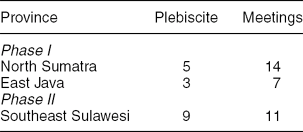
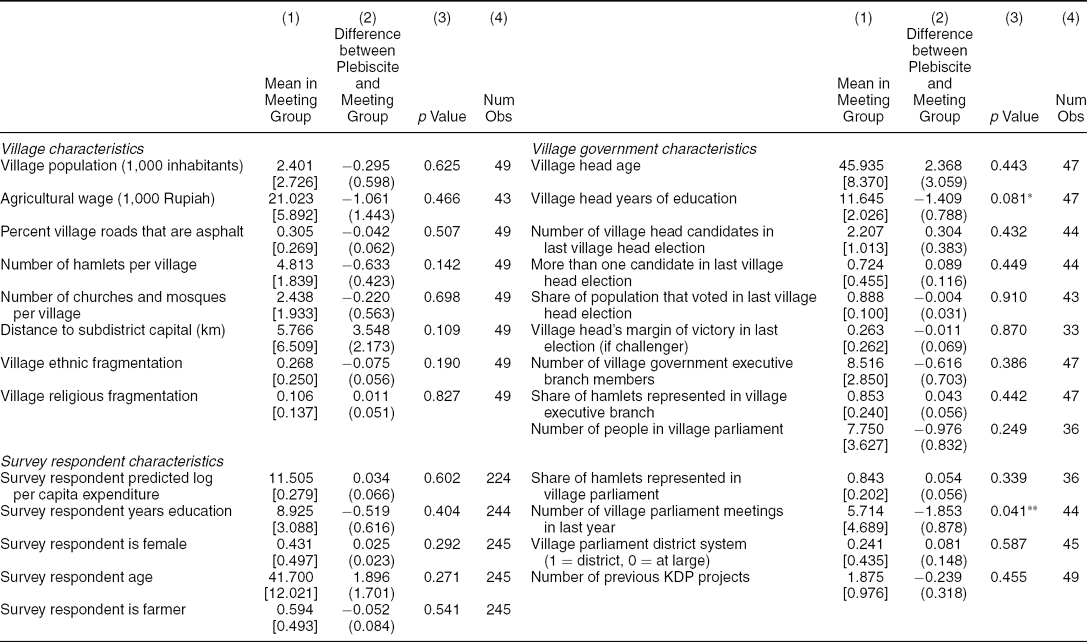
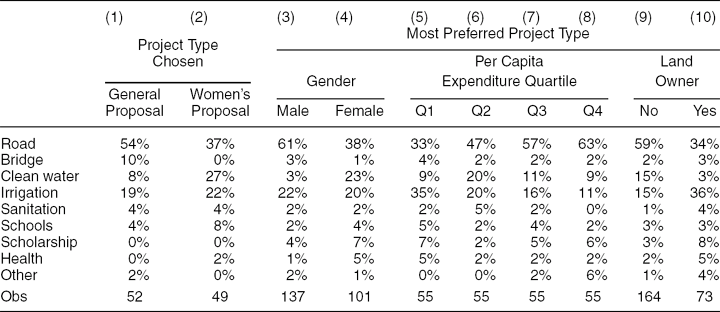

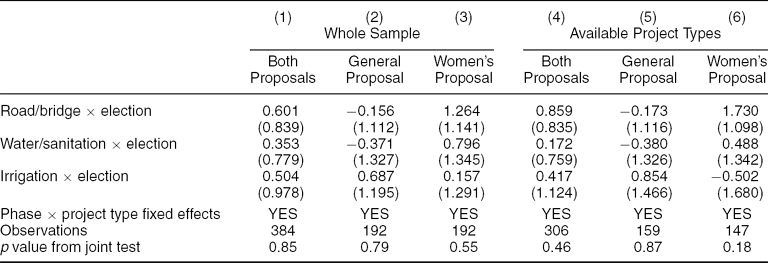
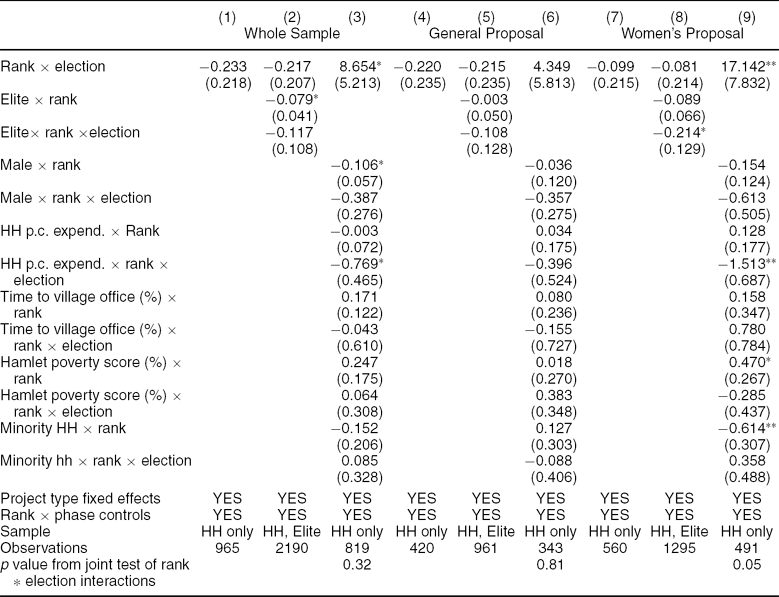
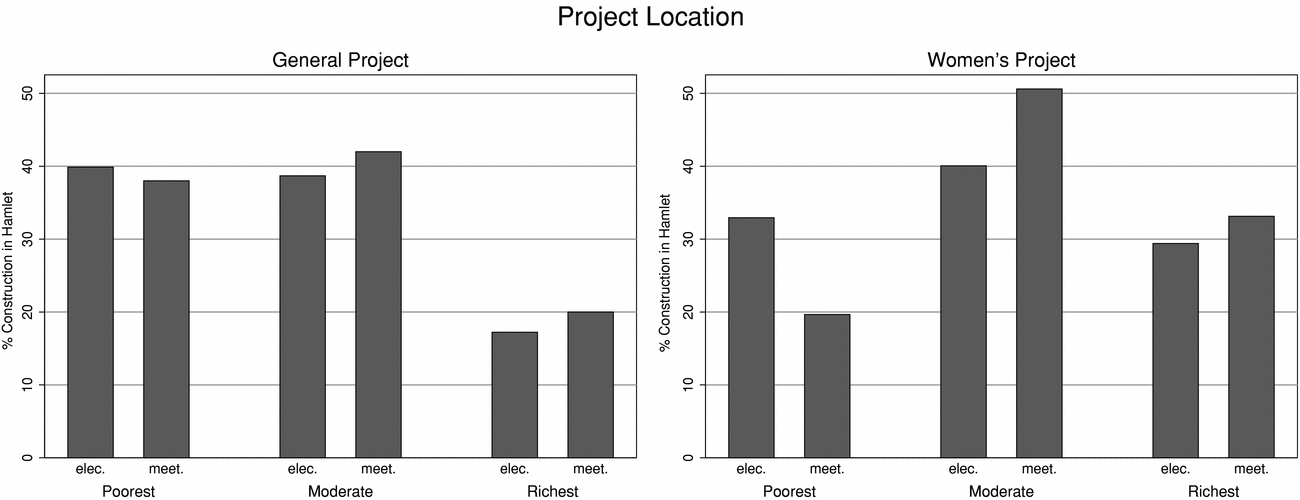
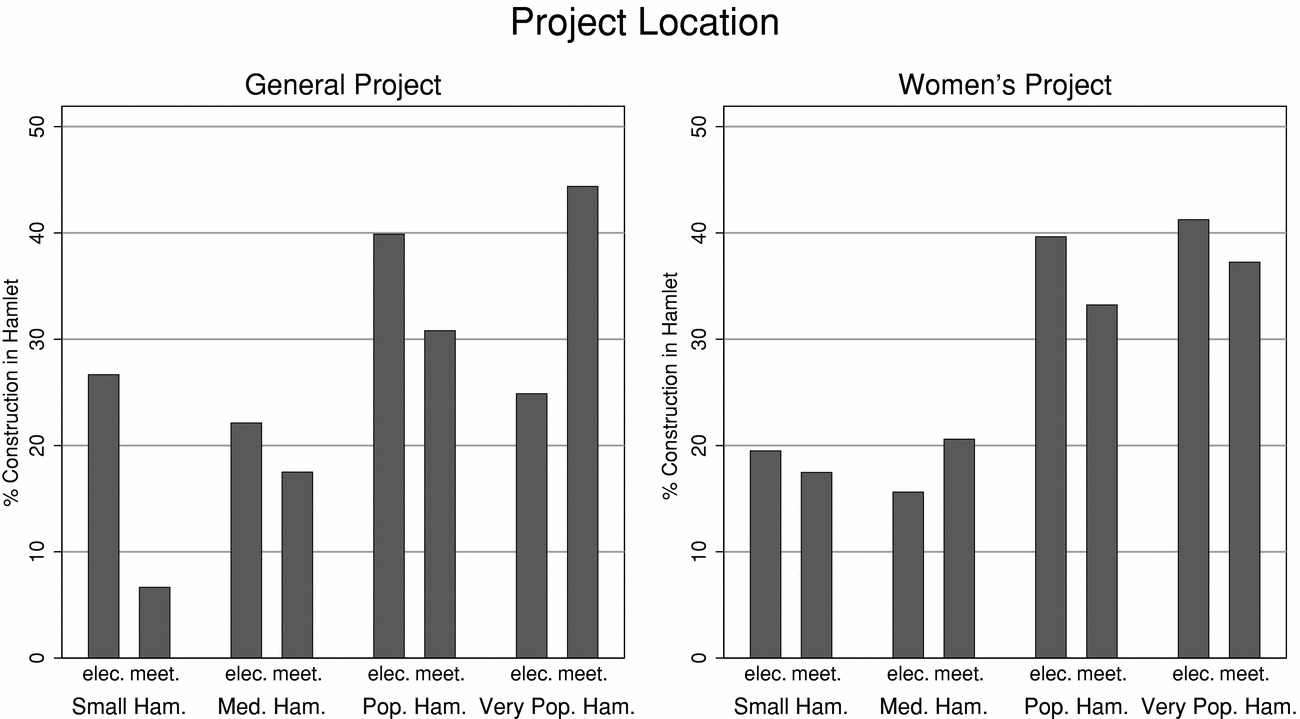
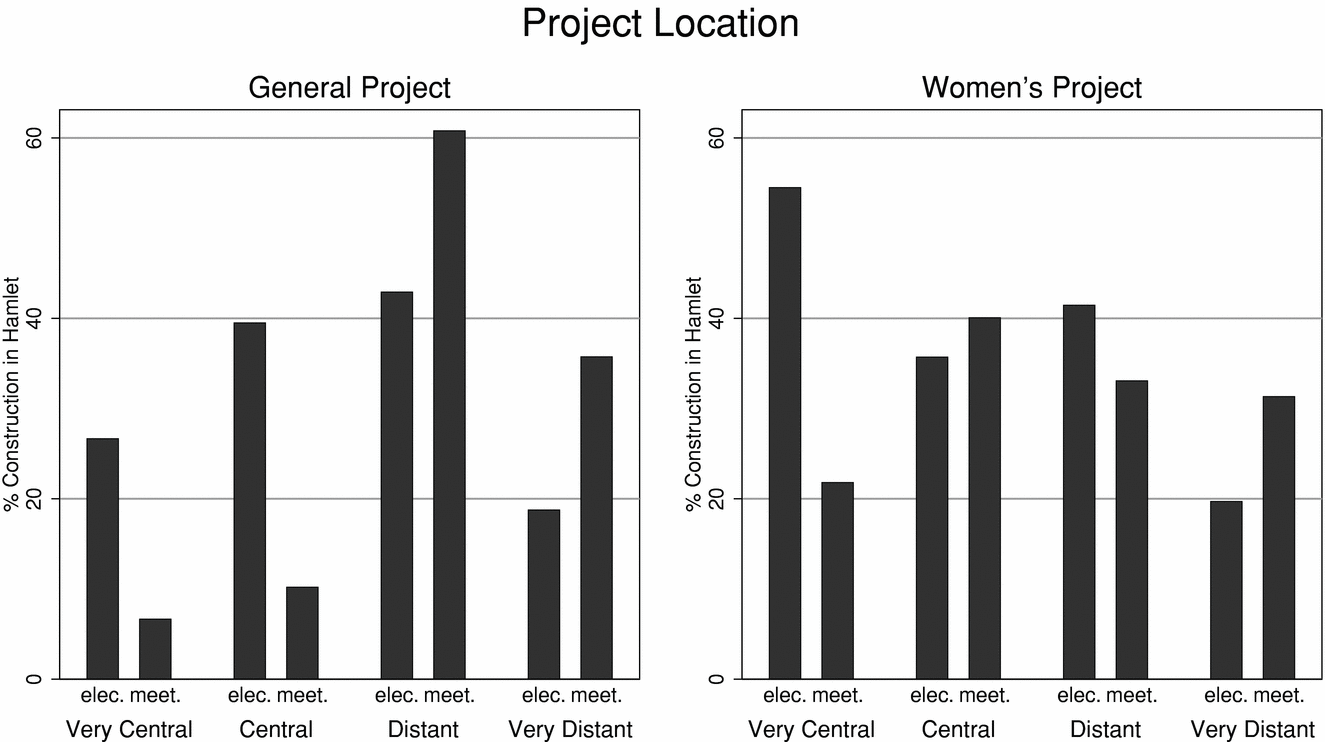
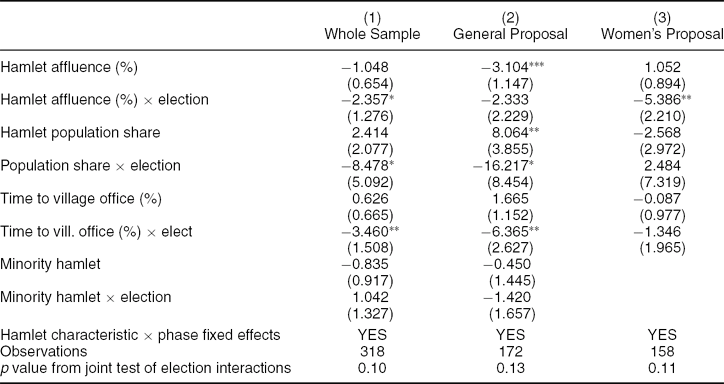

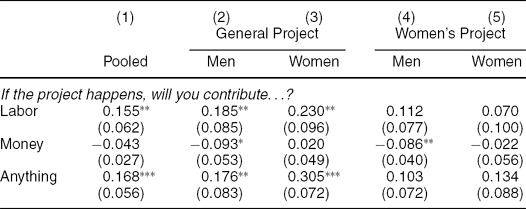

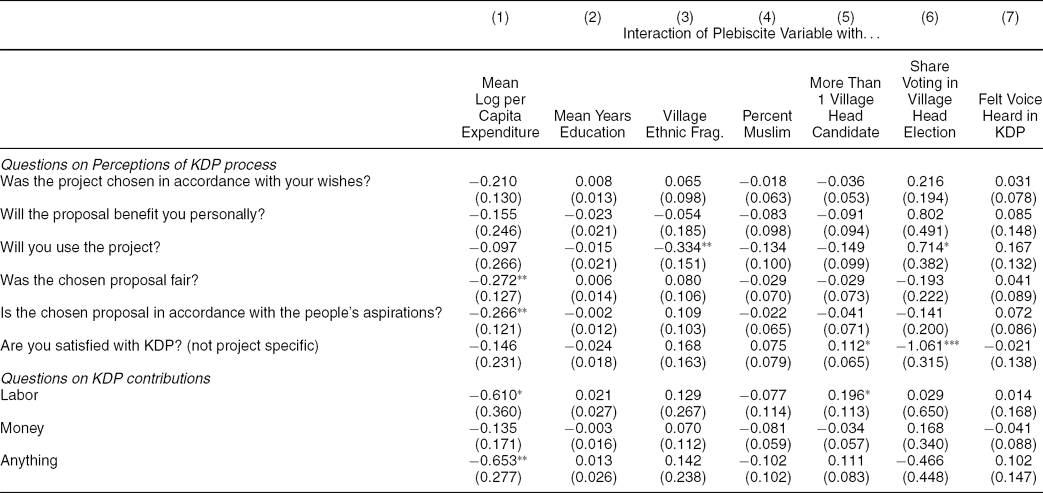
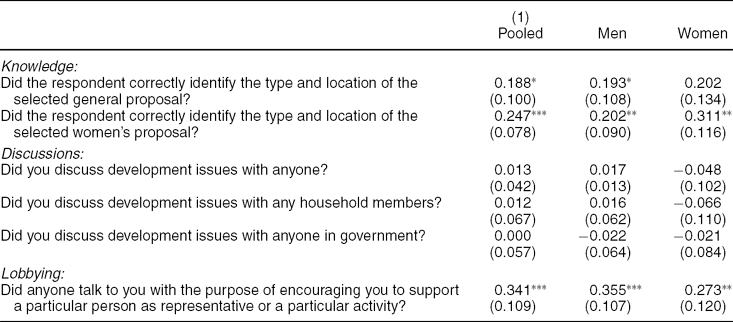



Comments
No Comments have been published for this article.