Introduction
Citriculture in Mexico is an activity of great economic and social importance (SAGARPA, 2014). However, orange production (Citrus sinensis Linnaeus) is affected by pests, such as the Mexican Fruit Fly Anastrepha ludens (Loew) (Hernández-Ortiz & Aluja, Reference Hernández-Ortiz and Aluja1993). To control this pest, the sterile insect technique (SIT) has been used (Santiago, Reference Santiago, Montoya, Toledo and Hernández2010). This technique consists of producing, sterilizing, and releasing insects of the targeted species to compete with fertile wild populations, thereby curtailing its reproduction (Knipling, Reference Knipling1955, Klassen & Curtis, Reference Klassen, Curtis, Dick, Hendrichs and Robinson2005). Even though only sterile males are necessary for the SIT to function effectively, most mass-reared strains release both sexes. While mass-reared males induce sterility in wild females, mass-reared females can oviposit and damage the fruit, thereby diminishing its commercial value (Cáceres et al., Reference Cáceres, Cayol, Enkerlin, Franz, Hendrichs and Robinson2002; Hendrichs et al., Reference Hendrichs, Kenmore, Robinson, Vreysen, Vreysen, Robinson and Hendrichs2007a). Furthermore, sterile females can mate with sterile males and decrease the efficiency of SIT (Orozco et al., Reference Orozco, Hernández, Meza and Quintero2013a). To avoid releasing females, a unisexual strain ‘Tapachula-7’ (Tap-7) of A. ludens has been developed, which allows for differentiating sex by pupal color, with black pupae being females and brown pupae being males (Zepeda, Reference Zepeda, Montoya, Toledo and Hernández2010). Males of this strain have shown similar mating competitiveness as males of the bisexual strain (Orozco et al., Reference Orozco, Mesa, Zepeda, Quintero-Fong and Solis2013b) as well as comparable survival and dispersal in the field (Flores et al., Reference Flores, Campos, Gómez, Espinoza, Wilson and Montoya2015).
There are various factors in mass rearing that can reduce insect fitness. Mass-reared males in various tephritids have a lower capacity for attracting wild females (Cayol, Reference Cayol, Aluja and Norrbom2000; Pérez-Staples et al., Reference Pérez-Staples, Shelly and Yuval2013). Quality control tests used for adults include: emergence and flight ability, survival under stress, sex ratio, timing of emergence, and mating performance against wild males in field cages (FAO/IAEA/USDA, 2003; 2014; Hernández et al., Reference Hernández, Orozco, Quintero, Domínguez, Montoya, Toledo and Hernández2010; Santiago et al., Reference Santiago, Orozco, Hernández, Luis and Bravo2012). However, none of these parameters takes into account the antipredator behavior that released mass-reared males will need to escape from predators and survive to mate with wild females.
Anastrepha ludens males are released in the field when they are 6 days old (SENASICA, 2012). They need to survive in the field, mature sexually, and then attract and mate with wild females. During this time they are at risk from predation. The natural enemies of Tephritidae include spiders, mantids, lizards, birds, wasps, predatory flies, ants (Hendrichs & Hendrichs, Reference Hendrichs and Hendrichs1998; Yuval & Hendrichs, Reference Yuval, Hendrichs, Aluja and Norrbom2000, Dor et al., Reference Dor, Valle-Mora, Rodríguez-Rodríguez and Liedo2014), beetles of the Carabidae, Histeridae, and Staphylinidae family, hemiptera of the Pentatomidae family, neuroptera of the Chrysopidae family, and earwigs of the Dermaptera order (Bateman, Reference Bateman1972; Eskafi & Kolbe, Reference Eskafi and Kolbe1990).
One of the most common predators of Tephritidae is spiders. In citrus grown in Valencia, Spain, there is an abundance of spiders that feed mainly on insects (Barrientos et al., Reference Barrientos, Villalba, Alvis-Dávila and García-Marí2010). Anastrepha striata Schiner adults are attacked by spiders of the genus Dolomedes (Pisauridae) (Hedström, Reference Hedström1992). In A. ludens, mass-reared females have lower survival when attacked by spiders than wild females (Rao et al., Reference Rao, Aguilar-Arguello, Montoya and Díaz-Fleisher2014). In adult screwworm Cochliomyia hominivorax Coquerel (Diptera: Calliphoridae), 12 spider genera were found as their natural enemy (Welch, Reference Welch1993). Therefore, using spiders as predators could be a useful quality control parameter before releasing the flies. Recently, there have been various proposals to use predators as quality control tests, for example: wasp, spider, and lizard (Hendrichs & Hendrichs, Reference Hendrichs and Hendrichs1998; Rao et al., Reference Rao, Aguilar-Arguello, Montoya and Díaz-Fleisher2014; Dor et al., Reference Dor, Valle-Mora, Rodríguez-Rodríguez and Liedo2014). However, these studies only focused on a single species of predator. The fly irritability test for example, simulates predator attacks by approximating a potential wasp attack using a human observer with a mechanical aspirator (Hendrichs et al., Reference Hendrichs, Wornoayporn, Katsoyannos and Hendrichs2007b; FAO/IAEA/USDA, 2014). There is, therefore, a strong need to measure the ability of mass-reared flies to avoid real and diverse predators.
In this study, we performed a series of experiments using a combination of field cages and laboratory experiments to evaluate Tap-7's antipredator capabilities. First, we collected spiders from citrus orchards to estimate what type of diurnal spiders could a fruit fly encounter. Second, we evaluated activity in terms of movement of Tap-7 males against wild flies. Third, we tested the strain's defense against hunting predators (jumping spiders) and orb weaving spiders. Last, we provide an easy and effective way to monitor fly activity.
Materials and methods
Biological material
Mass-reared A. ludens pupae were obtained from the Moscafrut Facility located in Metapa de Domínguez, Chiapas, Mexico (Domíngez et al., Reference Domíngez, Artiaga, Solís, Hernández, Montoya, Toledo and Hernández2010). Pupae were either sterile males from the Tap-7 strain, sterile males from the bisexual strain, or fertile males from the bisexual strain. Sterile flies were irradiated 2 days before their adult emergence using a Cobalt-60 radioactive source at 80 Gy (Gómez, Reference Gómez, Montoya, Toledo and Hernández2010). Wild flies were obtained from infested sour orange (Citrus aurantium Linnaeus) trees around Xalapa, Veracruz, Mexico. Wild flies were provided with grapefruit (Citrus paradisi Macfad) or mango (Mangifera indica Linnaeus) according to seasonal availability and maintained as colonies in the Instituto de Biotecnología y Ecología Aplicada (INBIOTECA) laboratory, in Xalapa. Wild fly colonies were constantly renewed every three generations.
Once adults emerged, they were placed in 30 × 30 × 30 cm3 cages covered with a mesh (2 mm holes). Flies were maintained on a 12:12 L:D photoperiod (0700–1900 h), at a 25 ± 1°C and a relative humidity of 65 ± 5%. All flies were supplied with water and fed ad libitum with a mixture of sugar and hydrolyzed protein (MP Biomedicals, Aurora, OH, USA) at a 3:1 ratio.
The orb web spider, Leucauge venusta Walckenaer (Aranae: Tetragnathidae) and the hunting spider, Phidippus audax Hentz (Aranae: Salticidae) were used as predators. Adult female L. venusta were collected from May to September 2014 in the Unidad de Servicios Bibliotecarios y de Información (USBI) campus of the Universidad Veracruzana, Xalapa, Veracruz, Mexico. Once collected they were released inside field cages located at INBIOTECA. P. audax were collected from abandoned maize plantations on the outskirts of Xalapa and were housed in plastic containers of 10 × 5 × 5 cm3 (one spider per container) and transported to the INBIOTECA spider laboratory.
Fly and spider interactions were filmed with a SONY HDR-PJ90 V video camera at 30 fps. All the videos were analyzed with Tracker software, version 4.87.
Experiments
Arachnids in citrus trees
Twenty sweet orange trees (C. sinensis Linnaeus) were randomly selected in the ‘Costa Rica’ plantation in the municipality of Coatepec, Veracruz, Mexico (19°24′12.5″N, 096°52′56.7″W). Sampling was conducted in October 2014 at the time of fruit production. Spiders were collected using the beating technique, which consisted of hitting four branches per tree (Márquez, Reference Márquez2005). Selected branches were from the middle part of the canopy. Underneath each branch, we placed a white sheet in an up-turned umbrella to catch the specimens. Spiders were later removed and placed in vials with alcohol at 80%. Vials were labeled by tree number and transported to INBIOTECA for identification.
Identification was carried out at family level with a stereoscope (Olympus SZX7), using keys developed for world fauna and North America (Jocqué & Dippenaar-Schoeman, Reference Jocqué and Dippenaar-Schoeman2006; Roth et al., Reference Roth, Ubick, Dupérré and American Arachnological Society2005).
Activity of Tap-7 males
We assessed differences in activity between sterile Tap-7 and wild males in laboratory conditions following the methods of Dominiak et al. (Reference Dominiak, Fanson, Collins and Taylor2013), with modifications. Twenty-three test tubes (1 cm diameter × 10 cm length) were marked with a black line at 5 cm. One male of each type was placed in each test tube and left for a minute for acclimatization. The next 5 min were videotaped. Observations were made two times (16:00 and 18:00 h) using Tap-7 (10 days old) and wild males (17–21 days old). We choose these two times to compare activity levels as it comprises the sexual activity period, when we would expect both strains to be most active (Aluja et al., Reference Aluja, Piñero, Jácome, Díaz-Fleischer, Sivinski, Aluja and Norrbom2000). Furthermore, previous studies have found that mass-reared flies are more active at 16:00 h than wild flies (Meza-Hernández & Díaz-Fleischer, Reference Meza-Hernández and Díaz-Fleischer2006). Twenty three males for each treatment type were analyzed. For each video, we recorded the number of times the flies crossed the mid-line. Frequency of displacements was analyzed with a General Lineal Model to determine if treatment affected the probability of crossing the halfway line. Analyses were performed with the statistical package JMP version 11.0.
Defense mechanism of Tap-7 males against hunting spiders
Phidippus audax spiders were starved for a week before the test to ensure interactions. One sterile Tap-7 male (10–12 days old) or one wild male (17–21 days old) were introduced into the arena which consisted of a small plastic Petri dish (14 cm in diameter and 3 cm tall), with an opaque partition in the middle to prevent the spider from seeing the fly before the experiment began. Subsequently, the spider was placed on the opposite side of the partition, which was then removed (see Rao et al., Reference Rao, Aguilar-Arguello, Montoya and Díaz-Fleisher2014 for details about the method). Ninety replicates were performed per treatment.
Within a bout, only the first interaction was used. For the flies, wing display frequency and duration, as well as retreat and capture frequency were recorded. Wing displays were recorded when the fly was positioned in front of the spider, spreading completely one or both wings and ended when the fly or the spider retreated or when the fly was attacked. Retreats were recorded when the fly turned away from the spider by either walking or flying. We recorded number of attacks and successful attacks (captures). A chi-square (χ 2) test was used in order to determine if there were significant differences in the probability of performing wing displays according to the fly strain. We further evaluated whether males that displayed had the same probability of being attacked, captured or retreating. One outlier was deleted as the interaction began much later than any other trials. A Mann–Whitney U test was used to determine if the duration of the display depended on the type of male. Analyses were performed with the statistical package Stat View version 5.0.
Survival of Tap-7 males exposed to orb web spiders
The survival of Tap 7 males against orb web spiders was compared against wild and sterile bisexual males. To determine if differences could be due to irradiation effects we also compared Tap 7 males against fertile bisexual males. To simulate a natural environment, we used two cylindrical field cages, 3 m diameter and 2 m height, supported by bamboo sticks (Calkins & Webb, Reference Calkins and Webb1983). Citrus trees (C. aurantium Linnaeus), guava (Psidium guajava Linnaeus), and coffee (Coffea Arabica Linnaeus) of 1.5 m height were placed alternately in the internal periphery of the cage. Fifteen adult female L. venusta were released in each cage to build webs 2 days before observations. Each cage contained 10 webs, and additional webs were carefully destroyed before releasing flies. According to the availability of flies and spiders, observations were divided as follows: a) Tap-7 vs wild, b) Tap-7 vs fertile bisexual, and c) Tap-7 vs sterile bisexual. All individuals were males and each type of fly was placed in a different field cage (two cages observed per day).
Observations began when 50 males per treatment were released at 15:00 h. Webs were checked every half an hour for 5 h to record the number of captured males (Observation period: 15:00–20:00 h). Twenty-four hours after flies were released the number of surviving males was noted by thoroughly checking the field cage. There was a gap of 2 days between replicates so spiders could build new webs and new spiders were released to make up for any missing ones. Each treatment was repeated six-times.
Captured males per web and survivors were analyzed with a Mann–Whitney U test. Analyses were performed with the statistical package Stat View version 5.0.
Escape time against orb web spiders
Adult female L. venusta spiders were released in the field cages so that they could build webs. A Tap-7 (10–11 days old) or a wild male (17–21 days old) was placed in a web using tweezers. Fifteen repetitions were carried out with and without the spider, respectively. Each repetition was filmed to record male escape and capture time. Data were analyzed with Mann–Whitney U tests. Analyses were performed with the statistical package Stat View version 5.0.
Results
Experiment 1. Spiders in citrus trees
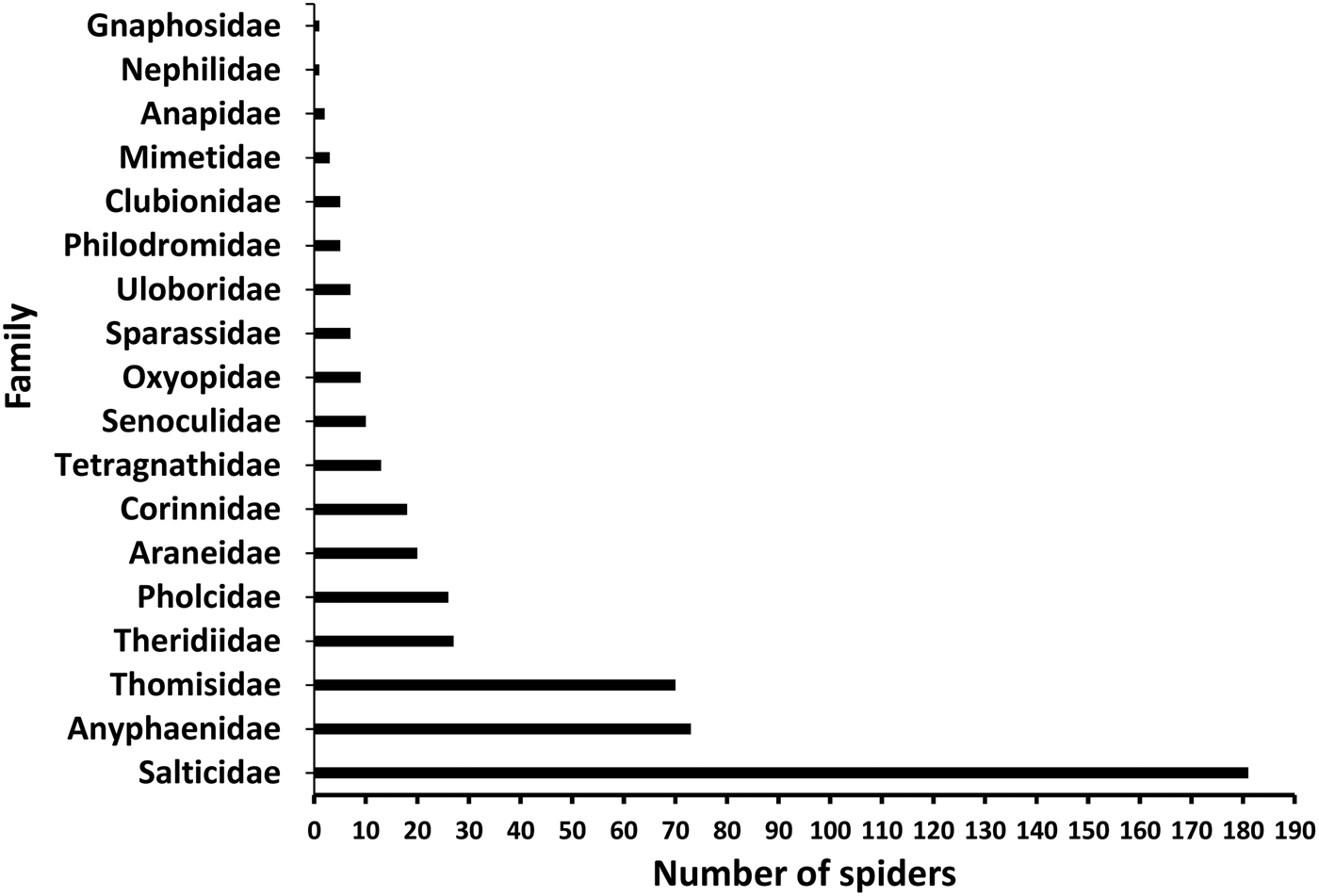
From the 20 sampled trees, we identified 478 spiders, which corresponded to 18 families. The most abundant families were: Salticidae with 181, Anyphaenidae with 73, and Thomisidae with 70 spiders, respectively (fig. 1). The 18 families were grouped into six guilds: (1) Stalkers (Salticidae, Oxyopidae y Mimetidae). (2) Leaf runners (Anyphaenidae, Clubionidae and Sparassidae). (3) Ambushers (Thomisidae, Senoculidae and Philodromidae). (4) Ground hunters (Corinnidae and Gnaphosidae). (5) Spatial web builders (Theridiidae and Pholcidae). (6) Orbicular web builders (Araneidae, Tetragnathidae, Uloboridae, Anapidae and Nephilidae).
Identified spider families and their abundance in citrus trees.

Experiment 2. Male activity
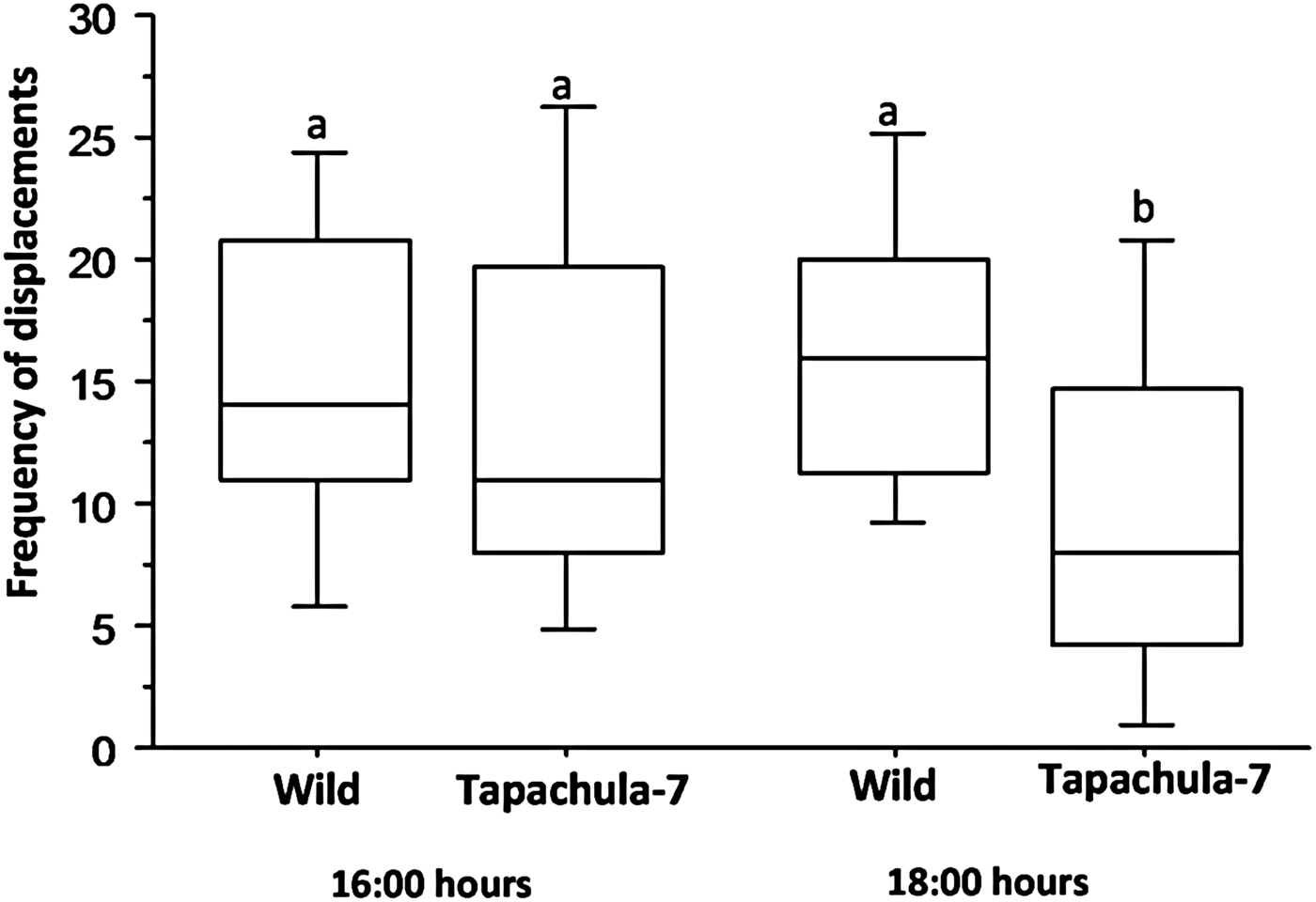
There were no significant differences in activity at 16:00 h between Tap-7 males and wild males. However, at 18:00 h Tap-7 males were significantly less active than wild males (χ2 = 6.430, DF = 1, 88; P = 0.011, N = 46 males; fig. 2).
Frequency of male movement (crossing the mid-line) between 16:00 and 18:00 h. The line inside the box is the median, the upper part of the box is the 75th percentile and the lower part is the 25th percentile. Whiskers represent the 10 and 90th percentile, respectively.
Experiment 3. Defense mechanism of Tap-7 males against hunting spiders
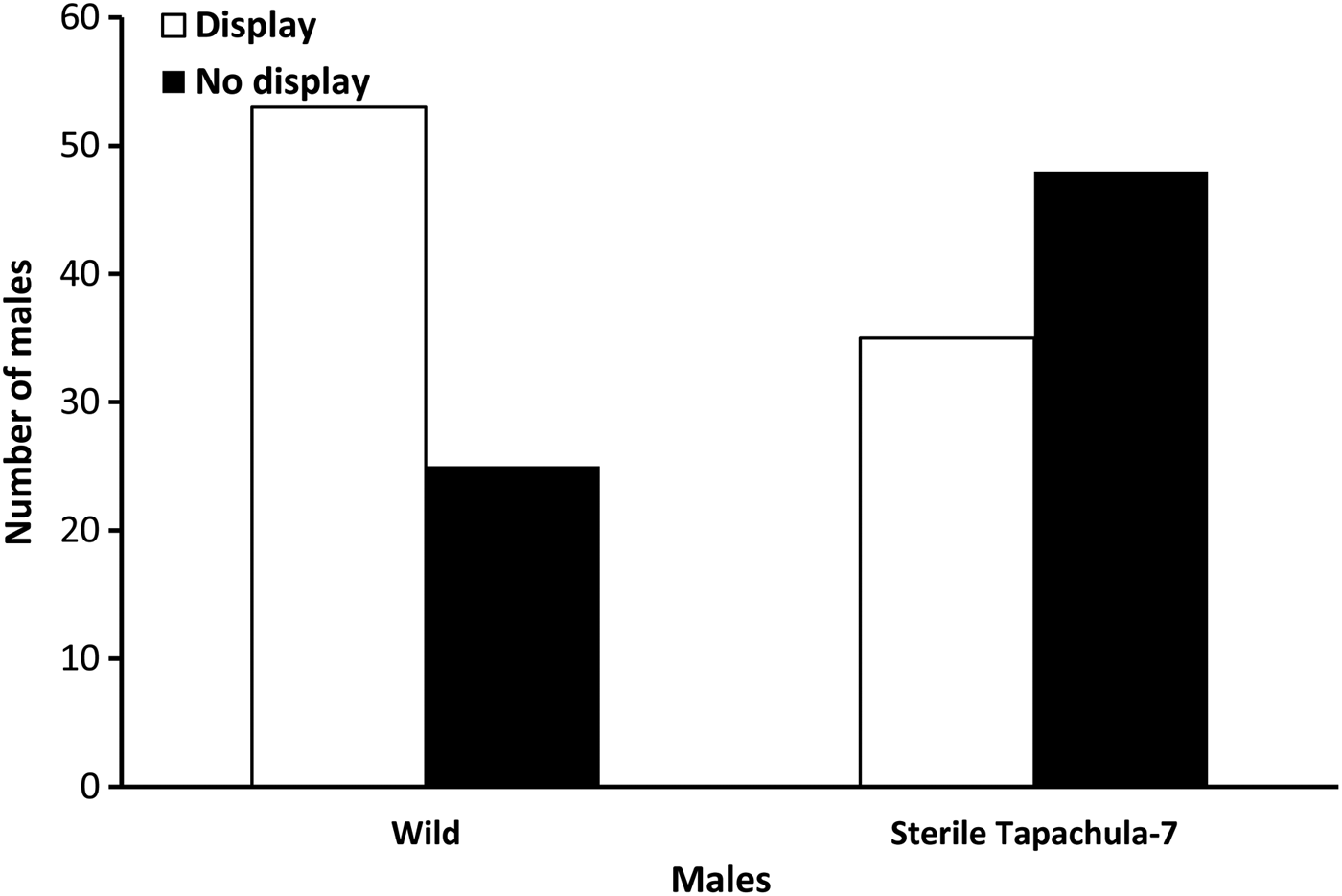
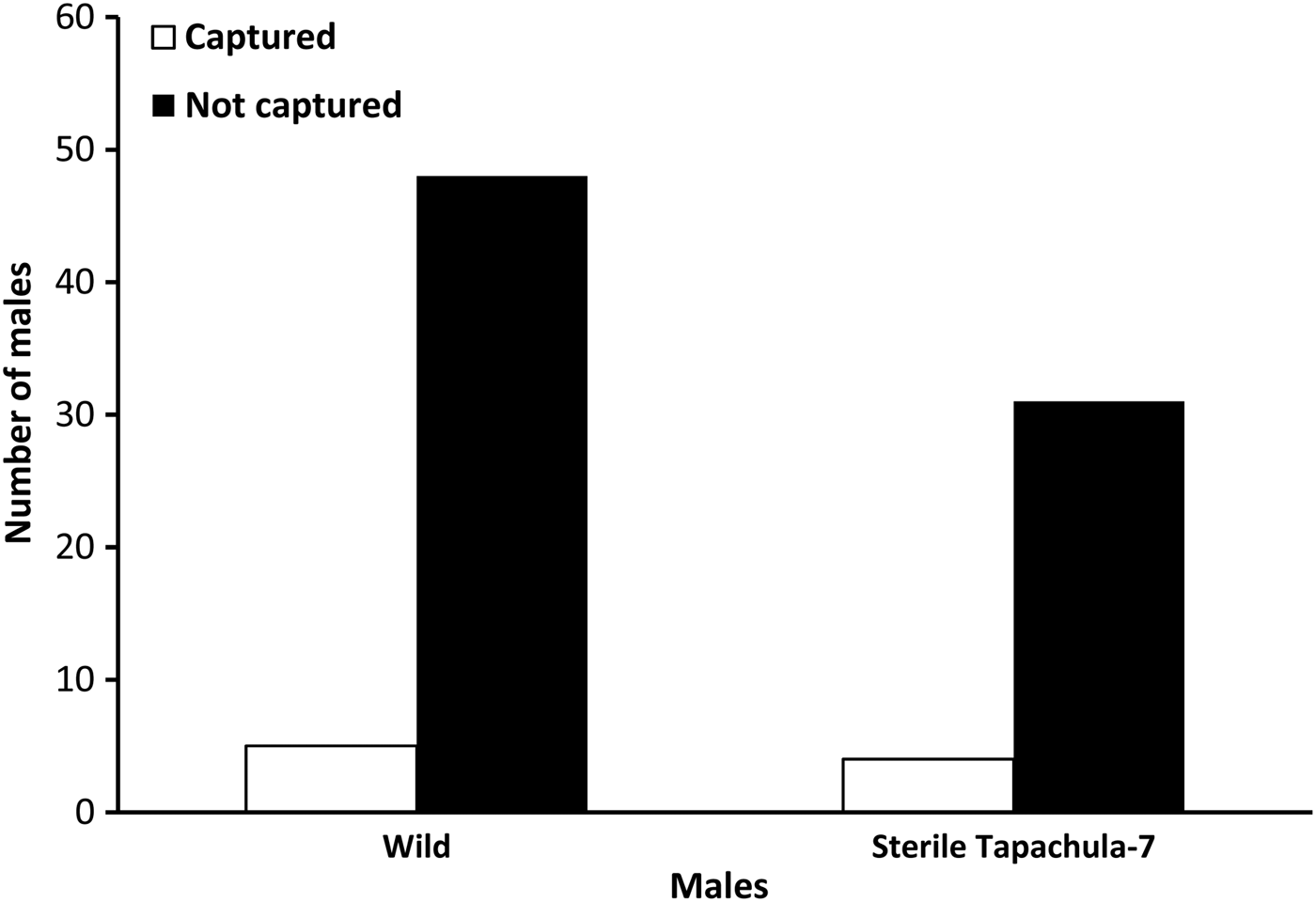
For wild males, 53 displayed, 25 did not display, and 12 did not interact with the spider. For Tap-7 males, 35 displayed, 48 did not display, and 7 had no interaction. Wild males had a higher probability of wing displaying than Tap-7 males (χ2 = 10.784, DF = 1, N = 161 males, P = 0.001; fig. 3). However, there was no significant difference between wild or Tap-7 males with respect to display duration (U = 910.0, DF = 1, P > 0.999; N = 35 Tap-7; N = 52 wild). When comparing only males that displayed, there were no significant differences in the capture frequency by the spider between Tap-7 and wild males (χ2 = 0.091, DF = 1, N = 88, P = 0.762; fig. 4), or in the probability of retreating by flies (χ2 = 0.129, DF = 1, N = 88, P = 0.719).
Number of males that displayed in front of spiders.
Number of males captured by spiders.
Experiment 4. Survival capacity of Tap-7 males exposed to orb web spiders
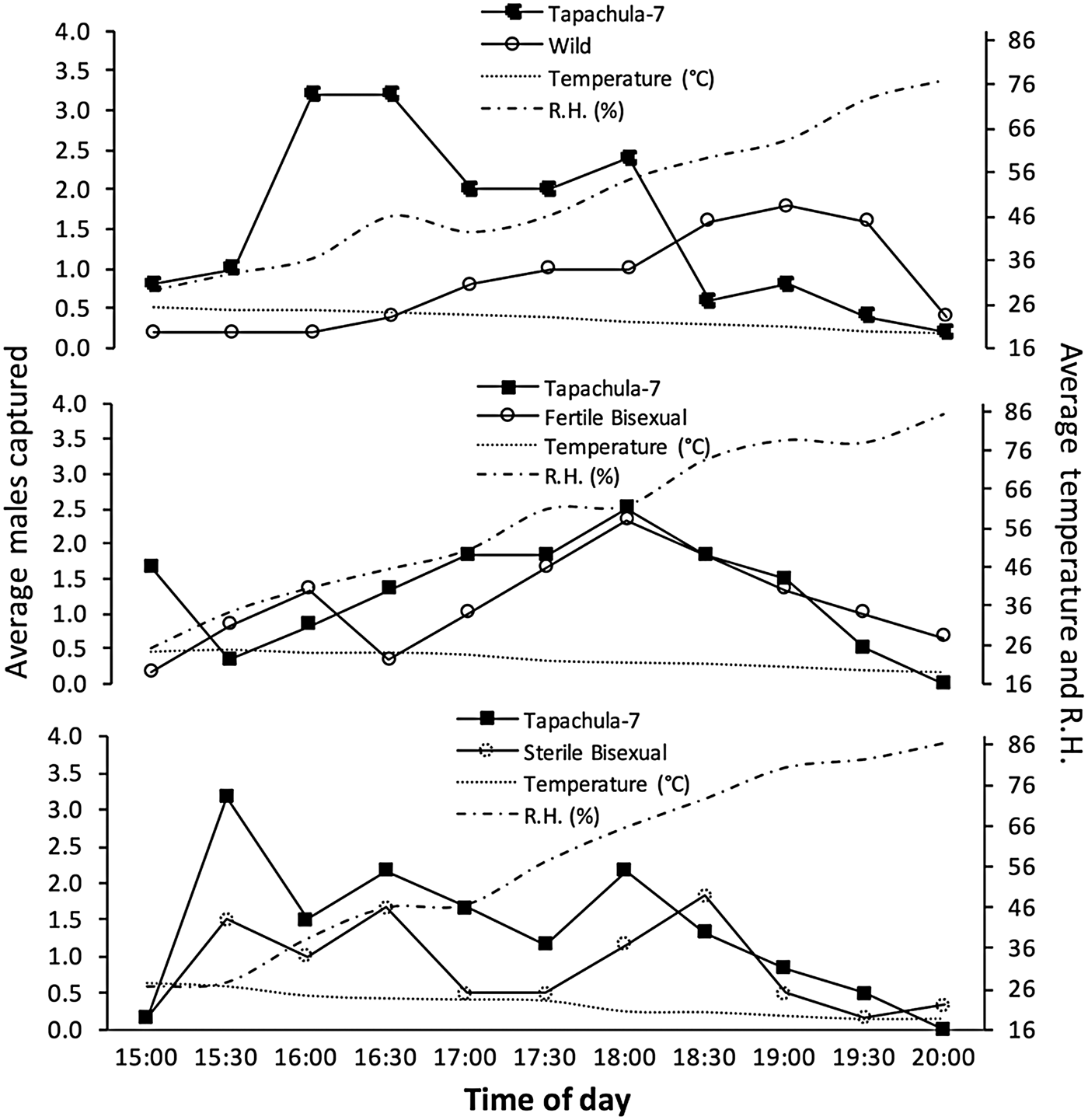
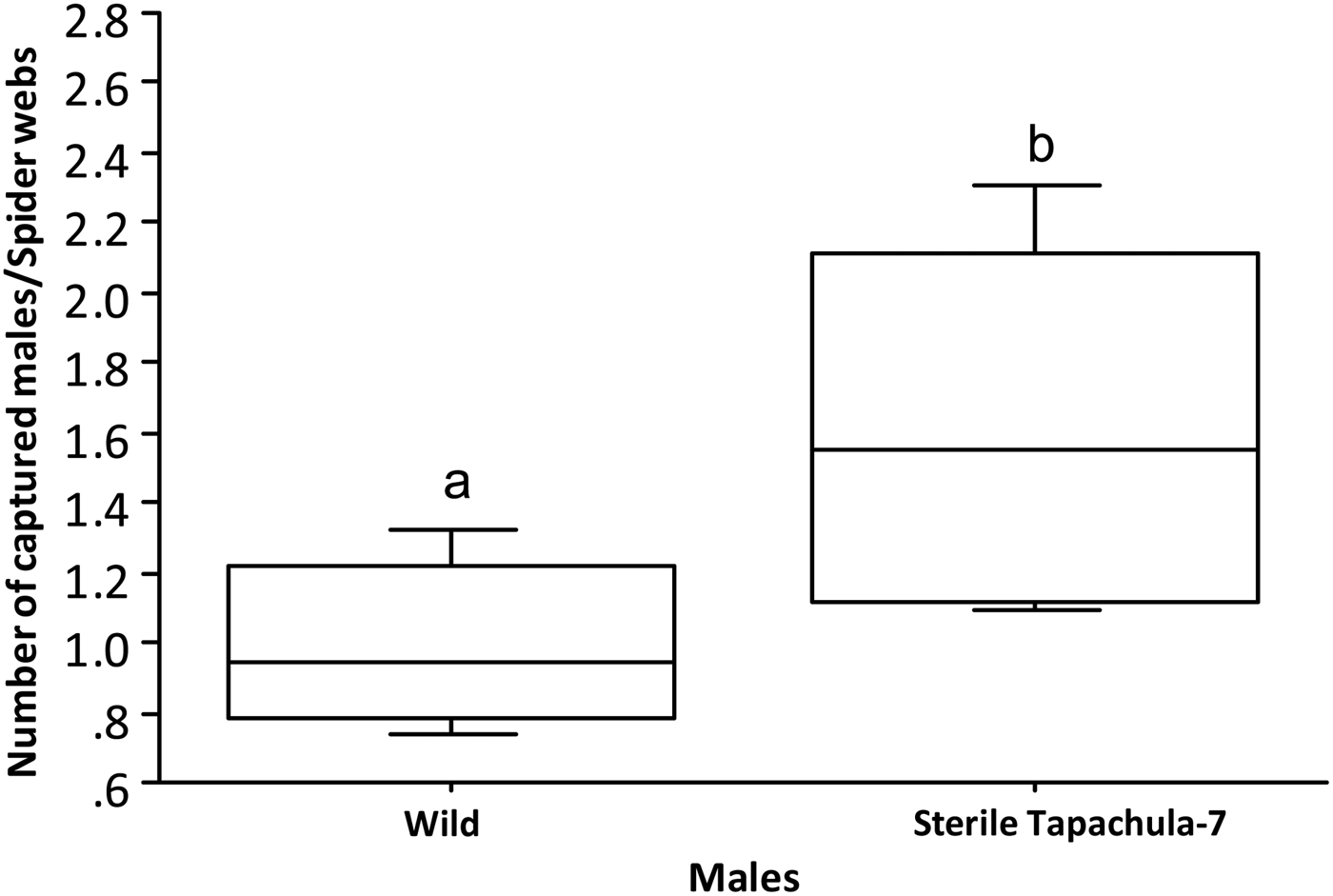
Within 5 h after release, Tap-7 males were captured at a higher frequency from 15:30 to 18:00 h, while more wild males were captured from 18:00 to 19:30 h (fig. 5). Within 5 h after release, Tap-7 males were captured at a higher frequency than wild males (U = 4.0, DF = 1, N = 6 repetitions, P = 0.025; fig. 6). There were no significant differences in capture frequency between Tap-7 males vs fertile bisexual males (U = 15.5, DF = 1, N = 6, P = 0.689). There was also no significant difference in capture frequency between Tap-7 males and sterile males from the bisexual strain (U = 7.0, DF = 1, N = 6 Tap-7, N = 6 bisexual sterile, P = 0.0776).
Average number of captured males by Leucauge venusta within 5 h of release in field cages. (a) Sterile Tap-7 males vs wild males; (b) sterile Tap-7 males vs fertile males from the bisexual strain; (c) sterile Tap-7 males vs sterile males from the bisexual strain. Dashed lines represent average temperature and relative humidity.
Number of males captured by webs. The line inside the box is the median, the upper part of the box is the 75th percentile, and the lower part is the 25th percentile. Whiskers represent the 10 and 90th percentile, respectively.
Within 24 h after release, fewer Tap-7 males survived than wild males (U = 4.5, DF = 1, N = 6, P = 0.031). There were no significant differences in survival between Tap-7 males vs fertile bisexual males (U = 12.0, DF = 1, N = 6, P = 0.337) or Tap-7 males vs sterile bisexual males (U = 11.0, DF = 1, N = 6, P = 0.262).
Experiment 5. Escape time of Tap-7 males in orb webs
When the spider was present on the web, there were no significant differences in escape time between Tap-7 males and wild males (U = 34.000, DF = 1, P = 0.594; N = 8 Tap-7; N = 10 wild), nor in the time taken for the spider to capture them (U = 15.500, DF = 1, P = 0.745; N = 7 Tap-7; N = 5 wild). When the spider was not present on the web, Tap-7 males took longer to escape than wild males (U = 56.5, DF = 1, P = 0.034; N = 15 Tap-7; N = 14 wild).
Discussion
In the foliage of citrus trees, there exists a great variety of spiders, where the most abundant are: Salticidae (37.87%), Anyphaenidae (15.27%), and Thomisidae (14.64%). These three families correspond to the 67.78% of the collected spiders. This indicates that these families have a greater possibility of interacting with A. ludens, when those flies are resting on trees leaves either for courtship or for posing on the lower leaf. The greater abundance of the Salticidae family coincides with studies in citrus in Transvaal, South Africa; Acireale, Italy and Valencia, Spain (Van Der Berg et al., Reference Van Der Berg, Dippenaar-Shoeman, Deacon and Anderson1992; Benfatto et al., Reference Benfatto, Di Franco and Vacante1992; Barrientos et al., Reference Barrientos, Villalba, Alvis-Dávila and García-Marí2010). However, since we used only the beat sheeting method, it is likely that the citrus trees contain more spiders than collected, especially of the family Araneidae (Whitehouse et al., Reference Whitehouse, Hardwick, Scholz, Annells, Ward, Grundy and Harden2009).
Taking into consideration that spiders are generalist predators and that insects constitute their major food source (Foelix, Reference Foelix1982), we used both web building spiders (L. venusta) as well as hunters (P. audax) to assess the performance of Tap-7 sterile males against predators. In the interactions with L. venusta in field cages, these spiders captured both wild flies as well as mass-reared flies from both strains (Tap-7 and bisexual). However, wild males were more likely to survive compared with mass-reared males. In the interactions with P. audax, both Tap-7 and wild males performed wing displays to avoid spiders, but wild flies displayed more frequently. Previous studies have determined that A. ludens females use wing displays as a defense mechanism against jumping spiders, but sterile females display with less frequency than fertile females and both in less frequency than wild females (Rao & Díaz-Fleischer, Reference Rao and Díaz-Fleischer2012, Rao et al., Reference Rao, Aguilar-Arguello, Montoya and Díaz-Fleisher2014). Nevertheless, in our study, we found that sterile Tap-7 males also have a lower probability of using this defense mechanism than wild males, even though, there were no significant differences in display times between Tap-7 males and wild males.
To determine if differences in survival where possibly due to differences in the locomotion frequency of individuals, we measured displacement frequencies, i.e., activity levels, modifying the design used with Bactrocera tryoni, which consisted of test tubes with an infra-red movement sensor connected to a monitor (Dominiak et al., Reference Dominiak, Fanson, Collins and Taylor2013). Here, we found differences between the strains in activity. Tap-7 males were just as active as wild males at 16:00 h. Yet, at the beginning of the sexual activity period at 18:00 h, Tap-7 males diminished their activity significantly compared with wild males, a similar behavior was observed in the bisexual strain when comparing with wild flies (Meza & Díaz-Fleischer, Reference Meza-Hernández and Díaz-Fleischer2006). This difference in activity may add weight to the results of field cage experiments, i.e., in times of increased activity (flights) there is a higher risk of being predated upon by orb web spiders. The average frequency of captures over the evening was similar in mass-reared flies of all strains and occurred earlier in the evening compared with the wild flies (fig. 5). Under natural conditions Tephritidae males fight to defend small territories to attract and mate with females (Benelli, Reference Benelli2015). When they decrease their flight activity to rest or form leks on the lower surface of the leaves, they could be at risk of predation from hunting spiders.
It is important to understand the behavior of mass-reared insects, since the quality of the insects is critical in the success or failure of the programs that use SIT (Gómez, Reference Gómez, Montoya, Toledo and Hernández2010). The main objectives of quality control are to detect significant changes in reared insects, improve production process and assure that sterile males interact successfully with females of wild populations. (e.g., Lance et al., Reference Lance, McInnis, Rendon and Jackson2000; FAO/IAEA/USDA, 2003). Mass-reared males showed less defensive response to spiders in comparison with wild males, which could be due to handling in mass rearing (Cayol, Reference Cayol, Aluja and Norrbom2000; Pérez-Staples et al., Reference Pérez-Staples, Shelly and Yuval2013). Having additional quality control parameters that take into account defense mechanisms and survival probability when faced with a real predator can be a useful means of assessing quality beyond sexual behavior. Due to the greater difficulty of working with orb web spiders, we recommend the defense mechanism (wing display) towards predators as a quality parameter (sensu Rao et al., Reference Rao, Aguilar-Arguello, Montoya and Díaz-Fleisher2014).
While wasps or lizards have been used to determine the survivability of the Mexican and Mediterranean fruit fly (Hendrichs & Hendrichs, Reference Hendrichs and Hendrichs1998; Hendrichs et al., Reference Hendrichs, Wornoayporn, Katsoyannos and Hendrichs2007b; Dor et al., Reference Dor, Valle-Mora, Rodríguez-Rodríguez and Liedo2014), spiders are abundant and relatively easy to maintain in laboratory conditions. The use of wasps, or more precisely simulated wasp attacks, to determine antipredator behavior as suggested by Hendrichs et al. (Reference Hendrichs, Wornoayporn, Katsoyannos and Hendrichs2007b) requires the use of a field cage and is laborious. Furthermore, skill levels in using an aspirator to simulate attacks may vary between observers, which could lead to a bias in the data. Observers using this technique would have to be trained for parity in skill, and this further increases the time required for performing the test. Using lizards as recommended by Dor et al. (Reference Dor, Valle-Mora, Rodríguez-Rodríguez and Liedo2014) would reduce the time needed to perform the test, but there is no information on how different lizard species would respond. Dor et al. (Reference Dor, Valle-Mora, Rodríguez-Rodríguez and Liedo2014) used color-coded flies simultaneously but did not test for an effect of coloration. Lizards can see in color (including ultraviolet, Kelber et al., Reference Kelber, Vorobyev and Osorio2003) and may be capable of differentiating the markings on the flies. In contrast, spiders, especially jumping spiders, are readily available and evaluation of the fly antipredator ability can be carried out at an individual level in laboratory conditions eliminating the need for color markings.
In conclusion, our study focused on a broad range of interactions between the Tap-7 strain of A. ludens and their spider predators. We show that mass-reared flies of both strains may be more susceptible than wild flies to attack, but also that the unisexual strain Tap-7 performs on average on par with the bisexual strain. Further studies should evaluate if the anti-predator behavior of the new strain is comparable with that of the bisexual strain after release.
Acknowledgements
We thank Evaristo Calihua Chipahua, Cruz Perea Castellanos, Carlos Carmona, and Mariana Alaniz Orozco for their invaluable technical assistance. We thank Francisco Méndez Castro for his support in identifying spiders, Samuel Aguilar Argüello for his support on experimental design and especially to Miguel Trujillo Ochoa, owner of the Costa Rica property for allowing us access to the citrus trees. We thank two anonymous reviewers for helpful comments. Funding was provided by CONACyT Ciencia Básica grant number 168746 awarded to D. R. We thank Programa Moscafrut DGSV-SENASICA for the supply of mass-reared flies. G.I. González-López thanks CONACyT for a Masters scholarship.