Refine search
Actions for selected content:
62 results
Admissible matchings and the Castelnuovo–Mumford regularity of square-free powers
- Part of
-
- Journal:
- Nagoya Mathematical Journal / Volume 261 / 2026
- Published online by Cambridge University Press:
- 03 November 2026, e57
-
- Article
-
- You have access
- Open access
- HTML
- Export citation
-
Square-free powers of square-free monomial ideals relate homological properties of monomial ideals with combinatorial matching structures. Let $ I $
 be any square-free monomial ideal, and let $ \mathcal {H}_I $
 denote its associated hypergraph. We refine the concept of $ k $
 -admissible matching, originally introduced by Erey and Hibi for graphs, by defining a generalized version for arbitrary hypergraphs. This new notion allows us to establish a sharp lower bound for the Castelnuovo–Mumford regularity of the $ k\text {th} $
 square-free power $ I^{[k]} $
 . When $ I $
 is equigenerated, the bound is given in terms of a new combinatorial invariant, the $ k $
 -admissible matching number $ \mathrm {aim}(\mathcal {H}_I, k) $
 , provided $ I^{[k]} \neq 0 $
 . Surprisingly, for edge ideals $ I(G) $
 of graphs, this gives the first general lower bound on the regularity of $ I(G)^{[k]}$
 . When $ G $
 is a forest, our invariant coincides with the $ k $
 -admissible matching number of Erey and Hibi. Moreover, we prove that for any block graph $ G $
 , the bound becomes an exact formula, thereby generalizing the known regularity formula for forests. We conclude by proposing a conjecture on the regularity of square-free powers of edge ideals of chordal graphs.


Corrigendum: Regularities and multiplicities of Veronese type algebras
- Part of
-
- Journal:
- Canadian Mathematical Bulletin , First View
- Published online by Cambridge University Press:
- 15 October 2026, pp. 1-4
-
- Article
-
- You have access
- Open access
- HTML
- Export citation
Exploring a local variant of the Buchsbaum–Eisenbud–Horrocks conjecture
- Part of
-
- Journal:
- Proceedings of the Royal Society of Edinburgh. Section A: Mathematics , First View
- Published online by Cambridge University Press:
- 10 August 2026, pp. 1-20
-
- Article
-
- You have access
- HTML
- Export citation
The Briançon-Skoda theorem for pseudo-rational and Du Bois singularities and uniformity in excellent rings
- Part of
-
- Journal:
- Forum of Mathematics, Pi / Volume 14 / 2026
- Published online by Cambridge University Press:
- 15 July 2026, e19
-
- Article
-
- You have access
- Open access
- HTML
- Export citation
-
Suppose $J = (f_1, \dots , f_n)$
 is an n-generated ideal in any ring R. We prove a general Briançon-Skoda-type containment relating the integral closure $\overline {J^{n+k-1}}$
 with ordinary powers $J^k$
 . We prove that our result implies the full Briançon-Skoda containment $\overline {J^{n+k-1}} \subseteq J^k$
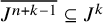 for pseudo-rational singularities (for instance regular rings), and even for the weaker condition of birational derived splinters. Our methods also yield the containment $\overline {J^{n+k}} \subseteq J^k$
 for Du Bois singularities and even for a characteristic-free generalization. Our Briançon-Skoda-type theorem also implies well-known closure-based Briançon-Skoda results $\overline {J^{n+k-1}} \subseteq (J^k)^{\mathrm {cl}}$
 where, for instance, $\mathrm {cl}$
 is tight or plus closure in characteristic $p> 0$
 , or $\mathrm {ep}$
 closure or extension and contraction from $\widehat {R^+}$
 in mixed characteristic. Our proof relies on a study of the tensor product of the derived image of the structure sheaf of a partially normalized blowup of J with the Buchsbaum-Eisenbud complex (equivalently the Eagon-Northcott complex) associated to $(f_1,\dots ,f_n)^k$
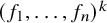 .
As an application of our results and methods above, we prove the uniform Artin-Rees theorem and the uniform Briançon-Skoda theorem for quasi-excellent, respectively quasi-excellent reduced, rings of finite dimension, answering conjectures of Huneke.


Uniform bounds on projective dimension and Castelnuovo–Mumford regularity
- Part of
-
- Journal:
- Nagoya Mathematical Journal / Volume 261 / 2026
- Published online by Cambridge University Press:
- 23 June 2026, e30
-
- Article
-
- You have access
- Open access
- HTML
- Export citation
Koszul binomial edge ideals
- Part of
-
- Journal:
- Forum of Mathematics, Sigma / Volume 14 / 2026
- Published online by Cambridge University Press:
- 09 January 2026, e3
-
- Article
-
- You have access
- Open access
- HTML
- Export citation
-
The study of Koszul binomial edge ideals was initiated by V. Ene, J. Herzog, and T. Hibi in 2014, who found necessary conditions for Koszulness. The binomial edge ideal
 $J_G$ associated to a finite simple graph G is always generated by quadrics. It has a quadratic Gröbner basis if and only if the graph G is closed. However, there are many known nonclosed graphs G where
 $J_G$ is Koszul. We characterize the Koszul binomial edge ideals by a simple combinatorial property of the graph G.


POWERS OF FACET IDEALS OF SIMPLICIAL TREES
- Part of
-
- Journal:
- Nagoya Mathematical Journal / Volume 261 / 2026
- Published online by Cambridge University Press:
- 18 December 2025, e9
-
- Article
-
- You have access
- Open access
- HTML
- Export citation
-
In 2004, Herzog, Hibi, and Zheng proved that a quadratic monomial ideal has a linear resolution if and only if all its powers have a linear resolution. We study a generalization of this result for square-free monomial ideals arising from facet ideals of a simplicial tree. We give a complete characterization of simplicial trees for which all powers of their facet ideal have a linear resolution. We compute the regularity of t-path ideals of rooted trees. In addition, we study the regularity of powers of t-path ideals of rooted trees. We pose a regularity upper bound conjecture for facet ideals of simplicial trees, which is as follows: if
 $\Delta $ is a d-dimensional simplicial tree connected in codimension one, then reg
 $(I(\Delta )^s) \leq (d+1)(s-1)~+$ reg
 $(I(\Delta ))$ for all
 $s \geq 1$. We prove this conjecture for some special classes of simplicial trees.


A new hierarchy for complex plane curves
- Part of
-
- Journal:
- Canadian Mathematical Bulletin / Volume 69 / Issue 3 / September 2026
- Published online by Cambridge University Press:
- 12 November 2025, pp. 824-848
- Print publication:
- September 2026
-
- Article
-
- You have access
- HTML
- Export citation
-
We define the type of a plane curve as the initial degree of the corresponding Bourbaki ideal. Then, we show that this invariant behaves well with respect to the union of curves. Curves of type $0$
 are precisely the free curves, while curves of type $1$
 are the plus-one generated curves. In this article, we first show that line arrangements and conic-line arrangements can exhibit all the theoretically possible types. In the second part, we study the properties of the curves of type $2$
 and construct families of line arrangements and conic-line arrangements of this type.


Regularity and multiplicity of Veronese type algebras
- Part of
-
- Journal:
- Canadian Mathematical Bulletin / Volume 69 / Issue 1 / March 2026
- Published online by Cambridge University Press:
- 08 August 2025, pp. 150-178
- Print publication:
- March 2026
-
- Article
-
- You have access
- Open access
- HTML
- Export citation
Linear syzygies of curves in weighted projective space
- Part of
-
- Journal:
- Compositio Mathematica / Volume 161 / Issue 4 / April 2025
- Published online by Cambridge University Press:
- 15 August 2025, pp. 916-944
- Print publication:
- April 2025
-
- Article
-
- You have access
- Open access
- HTML
- Export citation
-
We develop analogues of Green’s
 $N_p$ conditions for subvarieties of weighted projective space, and we prove that such
 $N_p$ conditions are satisfied for high degree embeddings of curves in weighted projective space. A key technical result links positivity with low degree (virtual) syzygies in wide generality, including cases where normal generation fails.


Koszul homomorphisms and universal resolutions in local algebra
- Part of
-
- Journal:
- Forum of Mathematics, Sigma / Volume 13 / 2025
- Published online by Cambridge University Press:
- 28 March 2025, e63
-
- Article
-
- You have access
- Open access
- HTML
- Export citation
-
We define a local homomorphism
 $(Q,k)\to (R,\ell )$ to be Koszul if its derived fiber
 $R\otimes ^{\mathsf {L}}_Q k$ is formal, and if
 $\operatorname {Tor}^{Q}(R,k)$ is Koszul in the classical sense. This recovers the classical definition when Q is a field, and more generally includes all flat deformations of Koszul algebras. The non-flat case is significantly more interesting, and there is no need for examples to be quadratic: all complete intersection and all Golod quotients are Koszul homomorphisms. We show that the class of Koszul homomorphisms enjoys excellent homological properties, and we give many more examples, especially various monomial and Gorenstein examples. We then study Koszul homomorphisms from the perspective of
 $\mathrm {A}_{\infty }$-structures on resolutions. We use this machinery to construct universal free resolutions of R-modules by generalizing a classical construction of Priddy. The resulting (infinite) free resolution of an R-module M is often minimal and can be described by a finite amount of data whenever M and R have finite projective dimension over Q. Our construction simultaneously recovers the resolutions of Shamash and Eisenbud over a complete intersection ring, and the bar resolutions of Iyengar and Burke over a Golod ring, and produces analogous resolutions for various other classes of local rings.


Derived functors and Hilbert polynomials over regular local rings
- Part of
-
- Journal:
- Proceedings of the Edinburgh Mathematical Society / Volume 67 / Issue 4 / November 2024
- Published online by Cambridge University Press:
- 23 October 2024, pp. 1137-1147
-
- Article
-
- You have access
- HTML
- Export citation
-
Let
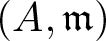 $(A,\mathfrak{m})$ be a regular local ring of dimension
 $d \geq 1$, I an
 $\mathfrak{m}$-primary ideal. Let N be a nonzero finitely generated A-module. Consider the functions
 \begin{equation*}t^I(N, n) = \sum_{i = 0}^{d}\ell(\text{Tor}^A_i(N, A/I^n)) \ \text{and}\ e^I(N, n) = \sum_{i = 0}^{d}\ell(\text{Ext}_A^i(N, A/I^n))\end{equation*}
of polynomial type and let their degrees be
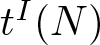 $t^I(N) $ and
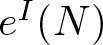 $e^I(N)$. We prove that
 $t^I(N) = e^I(N) = \max\{\dim N, d -1 \}$. A crucial ingredient in the proof is that
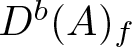 $D^b(A)_f$, the bounded derived category of A with finite length cohomology, has no proper thick subcategories.


A short proof of the Hanlon-Hicks-Lazarev Theorem
- Part of
-
- Journal:
- Forum of Mathematics, Sigma / Volume 12 / 2024
- Published online by Cambridge University Press:
- 10 May 2024, e56
-
- Article
-
- You have access
- Open access
- HTML
- Export citation
SUBCOMPLEXES OF CERTAIN FREE RESOLUTIONS
- Part of
-
- Journal:
- Nagoya Mathematical Journal / Volume 256 / December 2024
- Published online by Cambridge University Press:
- 25 March 2024, pp. 886-904
-
- Article
-
- You have access
- HTML
- Export citation
-
We invoke the Bernstein–Gel
 $'$fand–Gel
 $'$fand (BGG) correspondence to study subcomplexes of free resolutions given by two well-known complexes, the Koszul and the Eagon–Northcott. This approach provides a complete characterization of the ranks of free modules in a subcomplex in the Koszul case and imposes numerical restrictions in the Eagon–Northcott case.


HOMOLOGICAL LINEAR QUOTIENTS AND EDGE IDEALS OF GRAPHS
- Part of
-
- Journal:
- Bulletin of the Australian Mathematical Society / Volume 110 / Issue 2 / October 2024
- Published online by Cambridge University Press:
- 29 January 2024, pp. 291-302
- Print publication:
- October 2024
-
- Article
-
- You have access
- HTML
- Export citation
-
It is well known that the edge ideal
 $I(G)$ of a simple graph G has linear quotients if and only if
 $G^c$ is chordal. We investigate when the property of having linear quotients is inherited by homological shift ideals of an edge ideal. We will see that adding a cluster to the graph
 $G^c$ when
 $I(G)$ has homological linear quotients results in a graph with the same property. In particular,
 $I(G)$ has homological linear quotients when
 $G^c$ is a block graph. We also show that adding pinnacles to trees preserves the property of having homological linear quotients for the edge ideal of their complements. Furthermore,
 $I(G)$ has homological linear quotients for every graph G such that
 $G^c$ is a
 $\lambda $-minimal chordal graph.


Lim Ulrich sequences and Boij-Söderberg cones
- Part of
-
- Journal:
- Forum of Mathematics, Sigma / Volume 11 / 2023
- Published online by Cambridge University Press:
- 18 December 2023, e115
-
- Article
-
- You have access
- Open access
- HTML
- Export citation
GENERIC LINES IN PROJECTIVE SPACE AND THE KOSZUL PROPERTY
- Part of
-
- Journal:
- Nagoya Mathematical Journal / Volume 251 / September 2023
- Published online by Cambridge University Press:
- 06 January 2023, pp. 576-605
-
- Article
-
- You have access
- Open access
- HTML
- Export citation
-
In this paper, we study the Koszul property of the homogeneous coordinate ring of a generic collection of lines in
 $\mathbb {P}^n$ and the homogeneous coordinate ring of a collection of lines in general linear position in
 $\mathbb {P}^n.$ We show that if
 $\mathcal {M}$ is a collection of m lines in general linear position in
 $\mathbb {P}^n$ with
 $2m \leq n+1$ and R is the coordinate ring of
 $\mathcal {M},$ then R is Koszul. Furthermore, if
 $\mathcal {M}$ is a generic collection of m lines in
 $\mathbb {P}^n$ and R is the coordinate ring of
 $\mathcal {M}$ with m even and
 $m +1\leq n$ or m is odd and
 $m +2\leq n,$ then R is Koszul. Lastly, we show that if
 $\mathcal {M}$ is a generic collection of m lines such that then R is not Koszul. We give a complete characterization of the Koszul property of the coordinate ring of a generic collection of lines for
 $$ \begin{align*} m> \frac{1}{72}\left(3(n^2+10n+13)+\sqrt{3(n-1)^3(3n+5)}\right),\end{align*} $$
 $n \leq 6$ or
 $m \leq 6$. We also determine the Castelnuovo–Mumford regularity of the coordinate ring for a generic collection of lines and the projective dimension of the coordinate ring of collection of lines in general linear position.


REGULARITY OF POWERS OF BIPARTITE GRAPHS
- Part of
-
- Journal:
- Bulletin of the Australian Mathematical Society / Volume 107 / Issue 1 / February 2023
- Published online by Cambridge University Press:
- 19 September 2022, pp. 1-9
- Print publication:
- February 2023
-
- Article
-
- You have access
- HTML
- Export citation
-
For a simple bipartite graph G, we give an upper bound for the regularity of powers of the edge ideal
 $I(G)$ in terms of its vertex domination number. Consequently, we explicitly compute the regularity of powers of the edge ideal of a bipartite Kneser graph. Further, we compute the induced matching number of a bipartite Kneser graph.

Bi-graded Koszul modules, K3 carpets, and Green's conjecture
- Part of
-
- Journal:
- Compositio Mathematica / Volume 158 / Issue 1 / January 2022
- Published online by Cambridge University Press:
- 24 January 2022, pp. 33-56
- Print publication:
- January 2022
-
- Article
-
- You have access
- Open access
- HTML
- Export citation
-
We extend the theory of Koszul modules to the bi-graded case, and prove a vanishing theorem that allows us to show that the canonical ribbon conjecture of Bayer and Eisenbud holds over a field of characteristic
 $0$ or at least equal to the Clifford index. Our results confirm a conjecture of Eisenbud and Schreyer regarding the characteristics where the generic statement of Green's conjecture holds. They also recover and extend to positive characteristics the results of Voisin asserting that Green's conjecture holds for generic curves of each gonality.

A FREENESS CRITERION WITHOUT PATCHING FOR MODULES OVER LOCAL RINGS
- Part of
-
- Journal:
- Journal of the Institute of Mathematics of Jussieu / Volume 22 / Issue 5 / September 2023
- Published online by Cambridge University Press:
- 20 December 2021, pp. 2117-2129
- Print publication:
- September 2023
-
- Article
-
- You have access
- Open access
- HTML
- Export citation
-
It is proved that if
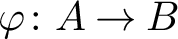 $\varphi \colon A\to B$ is a local homomorphism of commutative noetherian local rings, a nonzero finitely generated B-module N whose flat dimension over A is at most
 $\operatorname {edim} A - \operatorname {edim} B$ is free over B and
 $\varphi $ is a special type of complete intersection. This result is motivated by a ‘patching method’ developed by Taylor and Wiles and a conjecture of de Smit, proved by the first author, dealing with the special case when N is flat over A.

