Refine search
Actions for selected content:
22 results
APPROXIMATION THEORY AND ELEMENTARY SUBMODELS
- Part of
-
- Journal:
- Bulletin of Symbolic Logic , First View
- Published online by Cambridge University Press:
- 29 September 2026, pp. 1-45
-
- Article
-
- You have access
- Open access
- HTML
- Export citation
Cohomology of dilute Temperley–Lieb algebras
- Part of
-
- Journal:
- Canadian Mathematical Bulletin , First View
- Published online by Cambridge University Press:
- 13 February 2026, pp. 1-15
-
- Article
-
- You have access
- Open access
- HTML
- Export citation
Homological full-and-faithfulness of comodule inclusion and contramodule forgetful functors
- Part of
-
- Journal:
- Glasgow Mathematical Journal / Volume 68 / Issue 1 / January 2026
- Published online by Cambridge University Press:
- 21 May 2025, pp. 86-119
-
- Article
-
- You have access
- Open access
- HTML
- Export citation
-
In this paper, we consider a conilpotent coalgebra
 $C$ over a field
 $k$. Let
 $\Upsilon :\ C{{-\mathsf{Comod}}}\longrightarrow C^*{{-\mathsf{Mod}}}$ be the natural functor of inclusion of the category of
 $C$-comodules into the category of
 $C^*$-modules, and let
 $\Theta :\ C{{-\mathsf{Contra}}}\longrightarrow C^*{{-\mathsf{Mod}}}$ be the natural forgetful functor. We prove that the functor
 $\Upsilon$ induces a fully faithful triangulated functor on bounded (below) derived categories if and only if the functor
 $\Theta$ induces a fully faithful triangulated functor on bounded (above) derived categories, and if and only if the
 $k$-vector space
 $\textrm {Ext}_C^n(k,k)$ is finite-dimensional for all
 $n\ge 0$. We call such coalgebras “weakly finitely Koszul”.


The rigidity of filtered colimits of n-cluster tilting subcategories
- Part of
-
- Journal:
- Proceedings of the Royal Society of Edinburgh. Section A: Mathematics , First View
- Published online by Cambridge University Press:
- 06 February 2025, pp. 1-14
-
- Article
-
- You have access
- HTML
- Export citation
-
Let Λ be an artin algebra and
 $\mathcal{M}$ be an n-cluster tilting subcategory of Λ-mod with
 $n \geq 2$. From the viewpoint of higher homological algebra, a question that naturally arose in Ebrahimi and Nasr-Isfahani (The completion of d-abelian categories. J. Algebra 645 (2024), 143–163) is when
 $\mathcal{M}$ induces an n-cluster tilting subcategory of Λ-Mod. In this article, we answer this question and explore its connection to Iyama’s question on the finiteness of n-cluster tilting subcategories of Λ-mod. In fact, our theorem reformulates Iyama’s question in terms of the vanishing of Ext and highlights its relation with the rigidity of filtered colimits of
 $\mathcal{M}$. Also, we show that
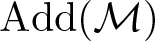 ${\rm Add}(\mathcal{M})$ is an n-cluster tilting subcategory of Λ-Mod if and only if
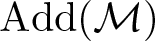 ${\rm Add}(\mathcal{M})$ is a maximal n-rigid subcategory of Λ-Mod if and only if
 $\lbrace X\in \Lambda-{\rm Mod}~|~ {\rm Ext}^i_{\Lambda}(\mathcal{M},X)=0 ~~~ {\rm for ~all}~ 0 \lt i \lt n \rbrace \subseteq {\rm Add}(\mathcal{M})$ if and only if
 $\mathcal{M}$ is of finite type if and only if
 ${\rm Ext}_{\Lambda}^1({\underrightarrow{\lim}}\mathcal{M}, {\underrightarrow{\lim}}\mathcal{M})=0$. Moreover, we present several equivalent conditions for Iyama’s question which shows the relation of Iyama’s question with different subjects in representation theory such as purity and covering theory.


On split quasi-hereditary covers and Ringel duality
- Part of
-
- Journal:
- Forum of Mathematics, Sigma / Volume 12 / 2024
- Published online by Cambridge University Press:
- 02 December 2024, e105
-
- Article
-
- You have access
- Open access
- HTML
- Export citation
-
In this paper, we develop two new homological invariants called relative dominant dimension with respect to a module and relative codominant dimension with respect to a module. Among the applications are precise connections between Ringel duality, split quasi-hereditary covers and double centralizer properties, constructions of split quasi-hereditary covers of quotients of Iwahori-Hecke algebras using Ringel duality of q-Schur algebras and a new proof for Ringel self-duality of the blocks of the Bernstein-Gelfand-Gelfand category
 $\mathcal {O}$. These homological invariants are studied over Noetherian algebras which are finitely generated and projective as a module over the ground ring. They are shown to behave nicely under change of rings techniques.

Resolving dualities and applications to homological invariants
- Part of
-
- Journal:
- Canadian Journal of Mathematics / Volume 77 / Issue 6 / December 2025
- Published online by Cambridge University Press:
- 22 October 2024, pp. 1861-1889
- Print publication:
- December 2025
-
- Article
-
- You have access
- HTML
- Export citation
On tau-tilting subcategories
- Part of
-
- Journal:
- Canadian Journal of Mathematics / Volume 77 / Issue 3 / June 2025
- Published online by Cambridge University Press:
- 08 March 2024, pp. 975-1012
- Print publication:
- June 2025
-
- Article
-
- You have access
- HTML
- Export citation
-
The main theme of this paper is to study
 $\tau $-tilting subcategories in an abelian category
 $\mathscr {A}$ with enough projective objects. We introduce the notion of
 $\tau $-cotorsion torsion triples and investigate a bijection between the collection of
 $\tau $-cotorsion torsion triples in
 $\mathscr {A}$ and the collection of support
 $\tau $-tilting subcategories of
 $\mathscr {A}$, generalizing the bijection by Bauer, Botnan, Oppermann, and Steen between the collection of cotorsion torsion triples and the collection of tilting subcategories of
 $\mathscr {A}$. General definitions and results are exemplified using persistent modules. If
 $\mathscr {A}=\mathrm{Mod}\mbox {-}R$, where R is a unitary associative ring, we characterize all support
 $\tau $-tilting (resp. all support
 $\tau ^-$-tilting) subcategories of
 $\mathrm{Mod}\mbox {-}R$ in terms of finendo quasitilting (resp. quasicotilting) modules. As a result, it will be shown that every silting module (resp. every cosilting module) induces a support
 $\tau $-tilting (resp. support
 $\tau ^{-}$-tilting) subcategory of
 $\mathrm{Mod}\mbox {-}R$. We also study the theory in
 $\mathrm {Rep}(Q, \mathscr {A})$, where Q is a finite and acyclic quiver. In particular, we give an algorithm to construct support
 $\tau $-tilting subcategories in
 $\mathrm {Rep}(Q, \mathscr {A})$ from certain support
 $\tau $-tilting subcategories of
 $\mathscr {A}$.


HYPERSURFACE SUPPORT FOR NONCOMMUTATIVE COMPLETE INTERSECTIONS
- Part of
-
- Journal:
- Nagoya Mathematical Journal / Volume 247 / September 2022
- Published online by Cambridge University Press:
- 10 January 2022, pp. 731-750
-
- Article
-
- You have access
- Open access
- HTML
- Export citation
-
We introduce an infinite variant of hypersurface support for finite-dimensional, noncommutative complete intersections. We show that hypersurface support defines a support theory for the big singularity category
 $\operatorname {Sing}(R)$, and that the support of an object in
 $\operatorname {Sing}(R)$ vanishes if and only if the object itself vanishes. Our work is inspired by Avramov and Buchweitz’ support theory for (commutative) local complete intersections. In the companion piece [27], we employ hypersurface support for infinite-dimensional modules, and the results of the present paper, to classify thick ideals in stable categories for a number of families of finite-dimensional Hopf algebras.


FLAT RING EPIMORPHISMS OF COUNTABLE TYPE
- Part of
-
- Journal:
- Glasgow Mathematical Journal / Volume 62 / Issue 2 / May 2020
- Published online by Cambridge University Press:
- 07 May 2019, pp. 383-439
-
- Article
-
- You have access
- Export citation
-
Let R→U be an associative ring epimorphism such that U is a flat left R-module. Assume that the related Gabriel topology
 $\mathbb{G}$ of right ideals in R has a countable base. Then we show that the left R-module U has projective dimension at most 1. Furthermore, the abelian category of left contramodules over the completion of R at
 $\mathbb{G}$ fully faithfully embeds into the Geigle–Lenzing right perpendicular subcategory to U in the category of left R-modules, and every object of the latter abelian category is an extension of two objects of the former one. We discuss conditions under which the two abelian categories are equivalent. Given a right linear topology on an associative ring R, we consider the induced topology on every left R-module and, for a perfect Gabriel topology
 $\mathbb{G}$, compare the completion of a module with an appropriate Ext module. Finally, we characterize the U-strongly flat left R-modules by the two conditions of left positive-degree Ext-orthogonality to all left U-modules and all
 $\mathbb{G}$-separated
 $\mathbb{G}$-complete left R-modules.


The Primitive Spectrum and Category
 ${\mathcal{O}}$ for the Periplectic Lie Superalgebra
- Part of
-
- Journal:
- Canadian Journal of Mathematics / Volume 72 / Issue 3 / June 2020
- Published online by Cambridge University Press:
- 16 November 2018, pp. 625-655
- Print publication:
- June 2020
-
- Article
-
- You have access
- Export citation
-
We solve two problems in representation theory for the periplectic Lie superalgebra
 $\mathfrak{p}\mathfrak{e}(n)$, namely, the description of the primitive spectrum in terms of functorial realisations of the braid group and the decomposition of category
 ${\mathcal{O}}$ into indecomposable blocks.
To solve the first problem, we establish a new type of equivalence between category
 ${\mathcal{O}}$ for all (not just simple or basic) classical Lie superalgebras and a category of Harish-Chandra bimodules. The latter bimodules have a left action of the Lie superalgebra but a right action of the underlying Lie algebra. To solve the second problem, we establish a BGG reciprocity result for the periplectic Lie superalgebra.


Cluster categories for marked surfaces: punctured case
- Part of
-
- Journal:
- Compositio Mathematica / Volume 153 / Issue 9 / September 2017
- Published online by Cambridge University Press:
- 15 June 2017, pp. 1779-1819
- Print publication:
- September 2017
-
- Article
-
- You have access
- HTML
- Export citation
-
We study cluster categories arising from marked surfaces (with punctures and non-empty boundaries). By constructing skewed-gentle algebras, we show that there is a bijection between tagged curves and string objects. Applications include interpreting dimensions of
 $\operatorname{Ext}^{1}$ as intersection numbers of tagged curves and Auslander–Reiten translation as tagged rotation. An important consequence is that the cluster(-tilting) exchange graphs of such cluster categories are connected.

Homological Properties Relative to Injectively Resolving Subcategories
-
- Journal:
- Canadian Mathematical Bulletin / Volume 58 / Issue 4 / 01 December 2015
- Published online by Cambridge University Press:
- 20 November 2018, pp. 741-756
- Print publication:
- 01 December 2015
-
- Article
-
- You have access
- Export citation
-
Let
 $\mathcal{E}$ be an injectively resolving subcategory of left
 $R$ -modules. A left $R$ -module
 $M$ (resp. right $R$ -module
 $N$ ) is called $\mathcal{E}$ -injective (resp. $\mathcal{E}$ -flat) if
 $\text{Ext}_{R}^{1}\left( G,\,M \right)\,=\,0$ (resp.
 $\text{Tor}_{1}^{R}\left( N,\,G \right)\,=\,0$ ) for any
 $G\,\in \,\mathcal{E}$ . Let $\mathcal{E}$ be a covering subcategory. We prove that a left $R$ -module $M$ is $\mathcal{E}$ -injective if and only if $M$ is a direct sum of an injective left $R$ -module and a reduced $\mathcal{E}$ -injective left $R$ -module. Suppose
 $\mathcal{F}$ is a preenveloping subcategory of right $R$ -modules such that
 ${{\mathcal{E}}^{+}}\,\subseteq \,\mathcal{F}$ and
 ${{\mathcal{F}}^{+}}\,\subseteq \,\mathcal{E}$ . It is shown that a finitely presented right $R$ -module $M$ is $\mathcal{E}$ -flat if and only if $M$ is a cokernel of an $\mathcal{F}$ -preenvelope of a right $R$ -module. In addition, we introduce and investigate the $\mathcal{E}$ -injective and $\mathcal{E}$ -flat dimensions of modules and rings. We also introduce $\mathcal{E}$ -(semi)hereditary rings and $\mathcal{E}$ -von Neumann regular rings and characterize them in terms of $\mathcal{E}$ -injective and $\mathcal{E}$ -flat modules.


On the Generalized Auslander–Reiten Conjecture under Certain Ring Extensions
-
- Journal:
- Canadian Mathematical Bulletin / Volume 58 / Issue 1 / 01 March 2015
- Published online by Cambridge University Press:
- 20 November 2018, pp. 134-143
- Print publication:
- 01 March 2015
-
- Article
-
- You have access
- Export citation
-
We show that under some conditions a Gorenstein ring
 $R$ satisfies the Generalized Auslander–Reiten conjecture if and only if
 $R\left[ x \right]$ does. When $R$ is a local ring we prove the same result for some localizations of $R\left[ x \right]$ .


Duality of Preenvelopes and Pure InjectiveModules
-
- Journal:
- Canadian Mathematical Bulletin / Volume 57 / Issue 2 / 14 June 2014
- Published online by Cambridge University Press:
- 20 November 2018, pp. 318-325
- Print publication:
- 14 June 2014
-
- Article
-
- You have access
- Export citation
-
Let
 $R$ be an arbitrary ring and let
 ${{\left( - \right)}^{+}}\,=\,\text{Ho}{{\text{m}}_{\mathbb{Z}}}\left( -,\,{\mathbb{Q}}/{\mathbb{Z}}\; \right)$ , where
 $\mathbb{Z}$ is the ring of integers and
 $\mathbb{Q}$ is the ring of rational numbers. Let
 $\mathcal{C}$ be a subcategory of left $R$ -modules and
 $\mathcal{D}$ a subcategory of right $R$ -modules such that
 ${{X}^{+}}\,\in \,\mathcal{D}$ for any
 $X\,\in \,\mathcal{C}$ and all modules in $\mathcal{C}$ are pure injective. Then a homomorphism
 $f:\,A\to \,C$ of left $R$ -modules with
 $C\,\in \,\mathcal{C}$ is a $\mathcal{C}$ -(pre)envelope of
 $A$ provided
 ${{f}^{+}}:\,{{C}^{+}}\,\to \,{{A}^{+}}$ is a $\mathcal{D}$ -(pre)cover of
 ${{A}^{+}}$ . Some applications of this result are given.


STABILITY OF GORENSTEIN FLAT CATEGORIES
-
- Journal:
- Glasgow Mathematical Journal / Volume 54 / Issue 1 / January 2012
- Published online by Cambridge University Press:
- 09 December 2011, pp. 177-191
-
- Article
-
- You have access
- Export citation
The rank of a hypergeometric system
- Part of
-
- Journal:
- Compositio Mathematica / Volume 147 / Issue 1 / January 2011
- Published online by Cambridge University Press:
- 17 August 2010, pp. 284-318
- Print publication:
- January 2011
-
- Article
-
- You have access
- Export citation
ON A DUALITY THEOREM OF WAKAMATSU
- Part of
-
- Journal:
- Bulletin of the Australian Mathematical Society / Volume 78 / Issue 2 / October 2008
- Published online by Cambridge University Press:
- 01 October 2008, pp. 343-350
- Print publication:
- October 2008
-
- Article
-
- You have access
- Export citation
-
Let R be a left coherent ring, S a right coherent ring and RU a generalized tilting module, with S=End(RU) satisfying the condition that each finitely presented left R-module X with ExtRi(X,U)=0 for any i≥1 is U-torsionless. If M is a finitely presented left R-module such that ExtRi(M,U)=0 for any i≥0 with
 (where n is a nonnegative integer), then
 and ExtSi(ExtRn(M,U),U)=0 for any i≥0 with . A duality is thus induced between the category of finitely presented holonomic left R-modules and the category of finitely presented holonomic right S-modules.
 (where n is a nonnegative integer), then
 and Ext
LOCAL LIMITATIONS OF THE Ext FUNCTOR DO NOT EXIST
-
- Journal:
- Bulletin of the London Mathematical Society / Volume 38 / Issue 1 / February 2006
- Published online by Cambridge University Press:
- 30 January 2006, pp. 97-98
- Print publication:
- February 2006
-
- Article
- Export citation
PROPERLY STRATIFIED ALGEBRAS AND TILTING
-
- Journal:
- Proceedings of the London Mathematical Society / Volume 92 / Issue 1 / January 2006
- Published online by Cambridge University Press:
- 19 December 2005, pp. 29-61
- Print publication:
- January 2006
-
- Article
- Export citation
Linear free resolutions over non-commutative algebras
-
- Journal:
- Compositio Mathematica / Volume 140 / Issue 4 / July 2004
- Published online by Cambridge University Press:
- 04 December 2007, pp. 1053-1058
- Print publication:
- July 2004
-
- Article
-
- You have access
- Export citation
