Refine search
Actions for selected content:
14 results
Action-Driven flows for causal variational principles
- Part of
-
- Journal:
- Forum of Mathematics, Sigma / Volume 14 / 2026
- Published online by Cambridge University Press:
- 26 May 2026, e83
-
- Article
-
- You have access
- Open access
- HTML
- Export citation
On a general matrix-valued unbalanced optimal transport problem
- Part of
-
- Journal:
- European Journal of Applied Mathematics / Volume 36 / Issue 6 / December 2025
- Published online by Cambridge University Press:
- 24 February 2025, pp. 1063-1095
-
- Article
-
- You have access
- Open access
- HTML
- Export citation
-
We introduce a general class of transport distances
 $\mathrm {WB}_{\Lambda }$ over the space of positive semi-definite matrix-valued Radon measures
 $\mathcal {M}(\Omega, \mathbb {S}_+^n)$, called the weighted Wasserstein–Bures distance. Such a distance is defined via a generalised Benamou–Brenier formulation with a weighted action functional and an abstract matricial continuity equation, which leads to a convex optimisation problem. Some recently proposed models, including the Kantorovich–Bures distance and the Wasserstein–Fisher–Rao distance, can naturally fit into ours. We give a complete characterisation of the minimiser and explore the topological and geometrical properties of the space
 $(\mathcal {M}(\Omega, \mathbb {S}_+^n),\mathrm {WB}_{\Lambda })$. In particular, we show that
 $(\mathcal {M}(\Omega, \mathbb {S}_+^n),\mathrm {WB}_{\Lambda })$ is a complete geodesic space and exhibits a conic structure.


Sharp conditions for the validity of the Bourgain–Brezis–Mironescu formula
- Part of
-
- Journal:
- Proceedings of the Royal Society of Edinburgh. Section A: Mathematics / Volume 156 / Issue 1 / February 2026
- Published online by Cambridge University Press:
- 16 April 2024, pp. 69-92
- Print publication:
- February 2026
-
- Article
-
- You have access
- HTML
- Export citation
-
Following the seminal paper by Bourgain, Brezis, and Mironescu, we focus on the asymptotic behaviour of some nonlocal functionals that, for each $u\in L^2(\mathbb {R}^N)$
 , are defined as the double integrals of weighted, squared difference quotients of $u$
 . Given a family of weights $\{\rho _{\varepsilon} \}$
 , $\varepsilon \in (0,\,1)$
 , we devise sufficient and necessary conditions on $\{\rho _{\varepsilon} \}$
 for the associated nonlocal functionals to converge as $\varepsilon \to 0$
 to a variant of the Dirichlet integral. Finally, some comparison between our result and the existing literature is provided.


Joint partial equidistribution of Farey rays in negatively curved manifolds and trees
- Part of
-
- Journal:
- Ergodic Theory and Dynamical Systems / Volume 44 / Issue 9 / September 2024
- Published online by Cambridge University Press:
- 08 January 2024, pp. 2700-2736
- Print publication:
- September 2024
-
- Article
-
- You have access
- HTML
- Export citation
ON SEQUENCES OF HOMOMORPHISMS INTO MEASURE ALGEBRAS AND THE EFIMOV PROBLEM
- Part of
-
- Journal:
- The Journal of Symbolic Logic / Volume 88 / Issue 1 / March 2023
- Published online by Cambridge University Press:
- 13 September 2021, pp. 191-218
- Print publication:
- March 2023
-
- Article
-
- You have access
- HTML
- Export citation
-
For given Boolean algebras
 $\mathbb {A}$ and
 $\mathbb {B}$ we endow the space
 $\mathcal {H}(\mathbb {A},\mathbb {B})$ of all Boolean homomorphisms from
 $\mathbb {A}$ to
 $\mathbb {B}$ with various topologies and study convergence properties of sequences in
 $\mathcal {H}(\mathbb {A},\mathbb {B})$. We are in particular interested in the situation when
 $\mathbb {B}$ is a measure algebra as in this case we obtain a natural tool for studying topological convergence properties of sequences of ultrafilters on
 $\mathbb {A}$ in random extensions of the set-theoretical universe. This appears to have strong connections with Dow and Fremlin’s result stating that there are Efimov spaces in the random model. We also investigate relations between topologies on
 $\mathcal {H}(\mathbb {A},\mathbb {B})$ for a Boolean algebra
 $\mathbb {B}$ carrying a strictly positive measure and convergence properties of sequences of measures on
 $\mathbb {A}$.


Uniformly positive entropy of induced transformations
- Part of
-
- Journal:
- Ergodic Theory and Dynamical Systems / Volume 42 / Issue 1 / January 2022
- Published online by Cambridge University Press:
- 28 December 2020, pp. 9-18
- Print publication:
- January 2022
-
- Article
-
- You have access
- Export citation
-
Let
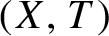 $(X,T)$ be a topological dynamical system consisting of a compact metric space X and a continuous surjective map
 $T : X \to X$. By using local entropy theory, we prove that
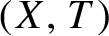 $(X,T)$ has uniformly positive entropy if and only if so does the induced system
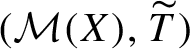 $({\mathcal {M}}(X),\widetilde {T})$ on the space of Borel probability measures endowed with the weak* topology. This result can be seen as a version for the notion of uniformly positive entropy of the corresponding result for topological entropy due to Glasner and Weiss.
A new class of costs for optimal transport planning
- Part of
-
- Journal:
- European Journal of Applied Mathematics / Volume 30 / Issue 6 / December 2019
- Published online by Cambridge University Press:
- 29 November 2018, pp. 1229-1263
-
- Article
-
- You have access
- Export citation
-
We study a class of optimal transport planning problems where the reference cost involves a non-linear function G(x, p) representing the transport cost between the Dirac measure δx and a target probability p. This allows to consider interesting models which favour multi-valued transport maps in contrast with the classical linear case (
 $G(x,p)=\int c(x,y)dp$) where finding single-valued optimal transport is a key issue. We present an existence result and a general duality principle which apply to many examples. Moreover, under a suitable subadditivity condition, we derive a Kantorovich–Rubinstein version of the dual problem allowing to show existence in some regular cases. We also consider the well studied case of Martingale transport and present some new perspectives for the existence of dual solutions in connection with Γ-convergence theory.
Delone dynamical systems and spectral convergence
- Part of
-
- Journal:
- Ergodic Theory and Dynamical Systems / Volume 40 / Issue 6 / June 2020
- Published online by Cambridge University Press:
- 22 October 2018, pp. 1510-1544
- Print publication:
- June 2020
-
- Article
-
- You have access
- Export citation
DEGENERATION OF ENDOMORPHISMS OF THE COMPLEX PROJECTIVE SPACE IN THE HYBRID SPACE
- Part of
-
- Journal:
- Journal of the Institute of Mathematics of Jussieu / Volume 19 / Issue 4 / July 2020
- Published online by Cambridge University Press:
- 31 August 2018, pp. 1141-1183
- Print publication:
- July 2020
-
- Article
-
- You have access
- Export citation
Hidden regular variation of moving average processes with heavy-tailed innovations
- Part of
-
- Journal:
- Journal of Applied Probability / Volume 51 / Issue A / December 2014
- Published online by Cambridge University Press:
- 30 March 2016, pp. 267-279
- Print publication:
- December 2014
-
- Article
-
- You have access
- Export citation
LORENTZ SPACES OF VECTOR-VALUED MEASURES
-
- Journal:
- Journal of the London Mathematical Society / Volume 67 / Issue 3 / June 2003
- Published online by Cambridge University Press:
- 20 May 2003, pp. 739-751
- Print publication:
- June 2003
-
- Article
- Export citation
The Gaussian distribution revisited
- Part of
-
- Journal:
- Advances in Applied Probability / Volume 28 / Issue 2 / June 1996
- Published online by Cambridge University Press:
- 01 July 2016, pp. 500-524
- Print publication:
- June 1996
-
- Article
- Export citation
On improvements of the order of approximation in the Poisson limit theorem
- Part of
-
- Journal:
- Journal of Applied Probability / Volume 33 / Issue 1 / March 1996
- Published online by Cambridge University Press:
- 14 July 2016, pp. 146-155
- Print publication:
- March 1996
-
- Article
- Export citation
The Vitali Integral Convergence Theorem and Uniform Absolute Continuity
-
- Journal:
- Canadian Journal of Mathematics / Volume 43 / Issue 5 / 01 October 1991
- Published online by Cambridge University Press:
- 20 November 2018, pp. 939-947
- Print publication:
- 01 October 1991
-
- Article
-
- You have access
- Export citation
