Refine search
Actions for selected content:
33 results
Computing the probability of intersection
- Part of
-
- Journal:
- Combinatorics, Probability and Computing / Volume 35 / Issue 5 / September 2026
- Published online by Cambridge University Press:
- 19 June 2026, pp. 714-733
-
- Article
-
- You have access
- Open access
- HTML
- Export citation
-
Let
 $\Omega _1, \ldots , \Omega _m$ be probability spaces, let
 ${\mathbf \Omega }=\Omega _1 \times \cdots \times \Omega _m$ be their product and let
 $A_1, \ldots , A_n \subset {\mathbf \Omega }$ be events. Suppose that each event
 $A_i$ depends on
 $r_i$ coordinates of a point
 $x \in {\mathbf \Omega }$,
 $x=\left (\xi _1, \ldots , \xi _m\right )$, and that for each event
 $A_i$ there are
 $\Delta _i$ other events
 $A_j$ that depend on some of the coordinates that
 $A_i$ depends on. Let
 $\Delta =\max \{5,\ \Delta _i\,:\, i=1, \ldots , n\}$ and let
 $\mu _i=\min \{r_i,\ \Delta _i+1\}$ for
 $i=1, \ldots , n$. We prove that if
 ${\mathbb P}(A_i) \lt (3\Delta )^{-3\mu _i}$ for all
 $i$, then for any
 $0 \lt \epsilon \lt 1$, the probability
 ${\mathbb P}\left ( \bigcap _{i=1}^n \overline {A}_i\right )$ of the intersection of the complements of all
 $A_i$ can be computed within relative error
 $\epsilon$ in polynomial time from the probabilities
 ${\mathbb P}\left (A_{i_1} \cap \ldots \cap A_{i_k}\right )$ of
 $k$-wise intersections of the events
 $A_i$ for
 $k = e^{O(\Delta )} \ln (n/\epsilon )$.


Shapiro’s problem on polynomials with large partial sums of coefficients
- Part of
-
- Journal:
- Forum of Mathematics, Sigma / Volume 14 / 2026
- Published online by Cambridge University Press:
- 10 June 2026, e69
-
- Article
-
- You have access
- Open access
- HTML
- Export citation
-
Given a polynomial
 $\sum _\nu a_\nu X^\nu $ of degree
 $<d$, bounded by one on the unit disk, how large can
 $ \left \lvert {a_0+a_1+\ldots +a_n} \right \rvert $ (
 $n<d$) get? This question dates back at least to the 1952 thesis work of H. S. Shapiro. In 1978, D. J. Newman gave an exact answer for
 $d=2(n+1)$, but there does not seem to have been further progress on the question since. We study variations on exact answers for some related coefficient sums, and answer the original question in an asymptotic sense, provided that n is ‘not too large’ in terms of d. The latter is achieved via a ‘quantitative’ Eneström–Kakeya theorem, while the former is based on certain identities for carefully selected Lagrange interpolators. From the interpolation approach we also obtain a general inequality for coefficient sums
 $ \left \lvert { t_0 a_0 + \ldots + t_{d-1} a_{d-1} } \right \rvert $ for arbitrary complex numbers
 $t_0,\ldots ,t_{d-1}$. This inequality fails to be sharp in general, yet it is in some cases and also yields non-trivial bounds for Shapiro’s problem for some choices of n and d.


Metric projections, zeros of optimal polynomial approximants, and some extremal problems in Hardy spaces
- Part of
-
- Journal:
- Canadian Journal of Mathematics , First View
- Published online by Cambridge University Press:
- 16 February 2026, pp. 1-21
-
- Article
-
- You have access
- HTML
- Export citation
-
The well-known proof of Beurling’s Theorem in the Hardy space
 $H^2$, which describes all shift-invariant subspaces, rests on calculating the orthogonal projection of the unit constant function onto the subspace in question. Extensions to other Hardy spaces
 $H^p$ for
 $0 < p < \infty $ are usually obtained by reduction to the
 $H^2$ case via inner–outer factorization of
 $H^p$ functions. In this article, we instead explicitly calculate the metric projection of the unit constant function onto a shift-invariant subspace of the Hardy space
 $H^p$ when
 $1<p<\infty $. This problem is equivalent to finding the best approximation in
 $H^p$ of the conjugate of an inner function. In
 $H^2$, this approximation is always a constant, but in
 $H^p$, when
 $p\neq 2$, this approximation turns out to be zero or a non-constant outer function. Further, we determine the exact distance between the unit constant and any shift-invariant subspace and propose some open problems. Our results use the notion of Birkhoff–James orthogonality and Pythagorean inequalities, along with an associated dual extremal problem, which leads to some interesting inequalities. Further consequences shed light on the lattice of shift-invariant subspaces of
 $H^p$, as well as the behavior of the zeros of optimal polynomial approximants in
 $H^p$.


UPPER BOUNDS ON POLYNOMIAL ROOT SEPARATION
- Part of
-
- Journal:
- Bulletin of the Australian Mathematical Society / Volume 112 / Issue 2 / October 2025
- Published online by Cambridge University Press:
- 20 January 2025, pp. 274-289
- Print publication:
- October 2025
-
- Article
-
- You have access
- Open access
- HTML
- Export citation
-
We consider the relationship between the Mahler measure
 $M(f)$ of a polynomial f and its separation
 $\operatorname {sep}(f)$. Mahler [‘An inequality for the discriminant of a polynomial’, Michigan Math. J. 11 (1964), 257–262] proved that if
 $f(x) \in \mathbb {Z}[x]$ is separable of degree n, then
 $\operatorname {sep}(f) \gg _n M(f)^{-(n-1)}$. This spurred further investigations into the implicit constant involved in that relationship and led to questions about the optimal exponent on
 $M(f)$. However, there has been relatively little study concerning upper bounds on
 $\operatorname {sep}(f)$ in terms of
 $M(f)$. We prove that if
 $f(x) \in \mathbb {C}[x]$ has degree n, then
 $\operatorname {sep}(f) \ll n^{-1/2}M(f)^{1/(n-1)}$. Moreover, this bound is sharp up to the implied constant factor. We further investigate the constant factor under various additional assumptions on
 $f(x)$; for example, if it has only real roots.


Random analytic functions with a prescribed growth rate in the unit disk
- Part of
-
- Journal:
- Canadian Journal of Mathematics / Volume 77 / Issue 5 / October 2025
- Published online by Cambridge University Press:
- 26 April 2024, pp. 1546-1569
- Print publication:
- October 2025
-
- Article
-
- You have access
- Open access
- HTML
- Export citation
-
Let
 $\mathcal {R}f$ be the randomization of an analytic function over the unit disk in the complex plane where
 $$ \begin{align*}\mathcal{R} f(z) =\sum_{n=0}^\infty a_n X_n z^n \in H({\mathbb D}), \end{align*} $$
 $f(z)=\sum _{n=0}^\infty a_n z^n \in H({\mathbb D})$ and
 $(X_n)_{n \geq 0}$ is a standard sequence of independent Bernoulli, Steinhaus, or complex Gaussian random variables. In this paper, we demonstrate that prescribing a polynomial growth rate for random analytic functions over the unit disk leads to rather satisfactory characterizations of those
 $f \in H({\mathbb D})$ such that
 ${\mathcal R} f$ admits a given rate almost surely. In particular, we show that the growth rate of the random functions, the growth rate of their Taylor coefficients, and the asymptotic distribution of their zero sets can mutually, completely determine each other. Although the problem is purely complex analytic, the key strategy in the proofs is to introduce a class of auxiliary Banach spaces, which facilitate quantitative estimates.


ON THE NUMBER OF REAL ZEROS OF POLYNOMIALS OF EVEN DEGREE
- Part of
-
- Journal:
- Bulletin of the Australian Mathematical Society / Volume 109 / Issue 1 / February 2024
- Published online by Cambridge University Press:
- 27 February 2023, pp. 89-93
- Print publication:
- February 2024
-
- Article
-
- You have access
- HTML
- Export citation
-
For any real polynomial
 $p(x)$ of even degree k, Shapiro [‘Problems around polynomials: the good, the bad and the ugly
 $\ldots $’, Arnold Math. J. 1(1) (2015), 91–99] proposed the conjecture that the sum of the number of real zeros of the two polynomials
 $(k-1)(p{'}(x))^{2}-kp(x)p{"}(x)$ and
 $p(x)$ is larger than 0. We prove that the conjecture is true except in one case: when the polynomial
 $p(x)$ has no real zeros, the derivative polynomial
 $p{'}(x)$ has one real simple zero, that is,
 $p{'}(x)=C(x)(x-w)$, where
 $C(x)$ is a polynomial with
 $C(w)\ne 0$, and the polynomial
 $(k-1)(C(x))^2(x-w)^{2}-kp(x)C{'}(x)(x-w)-kC(x)p(x)$ has no real zeros.


Mahler measure of polynomial iterates
- Part of
-
- Journal:
- Canadian Mathematical Bulletin / Volume 66 / Issue 3 / September 2023
- Published online by Cambridge University Press:
- 12 January 2023, pp. 881-885
- Print publication:
- September 2023
-
- Article
-
- You have access
- Open access
- HTML
- Export citation
-
Granville recently asked how the Mahler measure behaves in the context of polynomial dynamics. For a polynomial
 $f(z)=z^d+\cdots \in {\mathbb C}[z],\ \deg (f)\ge 2,$ we show that the Mahler measure of the iterates
 $f^n$ grows geometrically fast with the degree
 $d^n,$ and find the exact base of that exponential growth. This base is expressed via an integral of
 $\log ^+|z|$ with respect to the invariant measure of the Julia set for the polynomial
 $f.$ Moreover, we give sharp estimates for such an integral when the Julia set is connected.


An algebraic approach to a quartic analogue of the Kontsevich model
- Part of
-
- Journal:
- Mathematical Proceedings of the Cambridge Philosophical Society / Volume 174 / Issue 3 / May 2023
- Published online by Cambridge University Press:
- 20 September 2022, pp. 471-495
- Print publication:
- May 2023
-
- Article
-
- You have access
- Open access
- HTML
- Export citation
-
We consider an analogue of Kontsevich’s matrix Airy function where the cubic potential
 $\textrm{Tr}(\Phi^3)$ is replaced by a quartic term
 $\textrm{Tr}\!\left(\Phi^4\right)$. Cumulants of the resulting measure are known to decompose into cycle types for which a recursive system of equations can be established. We develop a new, purely algebraic geometrical solution strategy for the two initial equations of the recursion, based on properties of Cauchy matrices. These structures led in subsequent work to the discovery that the quartic analogue of the Kontsevich model obeys blobbed topological recursion.


Zero and uniqueness sets for Fock spaces
- Part of
-
- Journal:
- Canadian Mathematical Bulletin / Volume 66 / Issue 2 / June 2023
- Published online by Cambridge University Press:
- 25 July 2022, pp. 532-543
- Print publication:
- June 2023
-
- Article
-
- You have access
- HTML
- Export citation
-
We characterize zero sets for which every subset remains a zero set too in the Fock space
 $\mathcal {F}^p$,
 $1\leq p<\infty $. We are also interested in the study of a stability problem for some examples of uniqueness set with zero excess in Fock spaces.


On the roots of polynomials with log-convex coefficients
- Part of
-
- Journal:
- Canadian Journal of Mathematics / Volume 75 / Issue 2 / April 2023
- Published online by Cambridge University Press:
- 15 February 2022, pp. 470-493
- Print publication:
- April 2023
-
- Article
-
- You have access
- HTML
- Export citation
-
In this paper, we consider the family of nth degree polynomials whose coefficients form a log-convex sequence (up to binomial weights), and investigate their roots. We study, among others, the structure of the set of roots of such polynomials, showing that it is a closed convex cone in the upper half-plane, which covers its interior when n tends to infinity, and giving its precise description for every
 $n\in \mathbb {N}$,
 $n\geq 2$. Dual Steiner polynomials of star bodies are a particular case of them, and so we derive, as a consequence, further properties for their roots.


More on zeros and approximation of the Ising partition function
- Part of
-
- Journal:
- Forum of Mathematics, Sigma / Volume 9 / 2021
- Published online by Cambridge University Press:
- 07 June 2021, e46
-
- Article
-
- You have access
- Open access
- Export citation
-
We consider the problem of computing the partition function
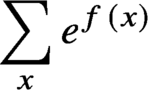 $\sum _x e^{f(x)}$, where
 $f: \{-1, 1\}^n \longrightarrow {\mathbb R}$ is a quadratic or cubic polynomial on the Boolean cube
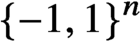 $\{-1, 1\}^n$. In the case of a quadratic polynomial f, we show that the partition function can be approximated within relative error
 $0 < \epsilon < 1$ in quasi-polynomial
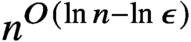 $n^{O(\ln n - \ln \epsilon )}$ time if the Lipschitz constant of the non-linear part of f with respect to the
 $\ell ^1$ metric on the Boolean cube does not exceed
 $1-\delta $, for any
 $\delta>0$, fixed in advance. For a cubic polynomial f, we get the same result under a somewhat stronger condition. We apply the method of polynomial interpolation, for which we prove that
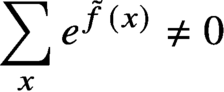 $\sum _x e^{\tilde {f}(x)} \ne 0$ for complex-valued polynomials
 $\tilde {f}$ in a neighborhood of a real-valued f satisfying the above mentioned conditions. The bounds are asymptotically optimal. Results on the zero-free region are interpreted as the absence of a phase transition in the Lee–Yang sense in the corresponding Ising model. The novel feature of the bounds is that they control the total interaction of each vertex but not every single interaction of sets of vertices.


Une note sur la densité des zéros des sommes partielles de la fonction zeta de Dedekind sur un corps quadratique
- Part of
-
- Journal:
- Canadian Mathematical Bulletin / Volume 65 / Issue 2 / June 2022
- Published online by Cambridge University Press:
- 24 May 2021, pp. 409-415
- Print publication:
- June 2022
-
- Article
-
- You have access
- Open access
- HTML
- Export citation
On non-separated zero sequences of solutions of a linear differential equation
- Part of
-
- Journal:
- Proceedings of the Edinburgh Mathematical Society / Volume 64 / Issue 2 / May 2021
- Published online by Cambridge University Press:
- 30 April 2021, pp. 247-261
-
- Article
-
- You have access
- Export citation
-
Let $(z_k)$
 be a sequence of distinct points in the unit disc $\mathbb {D}$
 without limit points there. We are looking for a function $a(z)$
 analytic in $\mathbb {D}$
 and such that possesses a solution having zeros precisely at the points $z_k$
 , and the resulting function $a(z)$
 has ‘minimal’ growth. We focus on the case of non-separated sequences $(z_k)$
 in terms of the pseudohyperbolic distance when the coefficient $a(z)$
 is of zero order, but $\sup _{z\in {\mathbb D}}(1-|z|)^p|a(z)| = + \infty$
 for any $p > 0$
 . We established a new estimate for the maximum modulus of $a(z)$
 in terms of the functions $n_z(t)=\sum \nolimits _{|z_k-z|\le t} 1$
 and $N_z(r) = \int_0^r {{(n_z(t)-1)}^ + } /t{\rm d}t.$
 The estimate is sharp in some sense. The main result relies on a new interpolation theorem.


A STABILITY VERSION OF THE GAUSS–LUCAS THEOREM AND APPLICATIONS
- Part of
-
- Journal:
- Journal of the Australian Mathematical Society / Volume 109 / Issue 2 / October 2020
- Published online by Cambridge University Press:
- 05 September 2019, pp. 262-269
-
- Article
-
- You have access
- Export citation
-
Let
 $p:\mathbb{C}\rightarrow \mathbb{C}$ be a polynomial. The Gauss–Lucas theorem states that its critical points,
 $p^{\prime }(z)=0$, are contained in the convex hull of its roots. We prove a stability version whose simplest form is as follows: suppose that
 $p$ has
 $n+m$ roots, where
 $n$ are inside the unit disk, then
 $$\begin{eqnarray}\max _{1\leq i\leq n}|a_{i}|\leq 1~\text{and}~m~\text{are outside}~\min _{n+1\leq i\leq n+m}|a_{i}|\geq d>1+\frac{2m}{n};\end{eqnarray}$$
 $p^{\prime }$ has
 $n-1$ roots inside the unit disk and
 $m$ roots at distance at least
 $(dn-m)/(n+m)>1$ from the origin and the involved constants are sharp. We also discuss a pairing result: in the setting above, for
 $n$ sufficiently large, each of the
 $m$ roots has a critical point at distance
 ${\sim}n^{-1}$.


Division algebras of slice functions
- Part of
-
- Journal:
- Proceedings of the Royal Society of Edinburgh. Section A: Mathematics / Volume 150 / Issue 4 / August 2020
- Published online by Cambridge University Press:
- 15 March 2019, pp. 2055-2082
- Print publication:
- August 2020
-
- Article
-
- You have access
- Export citation
On the Size of an Expression in the Nyman–Beurling-Báez–Duarte Criterion for the Riemann Hypothesis
-
- Journal:
- Canadian Mathematical Bulletin / Volume 61 / Issue 3 / 01 September 2018
- Published online by Cambridge University Press:
- 20 November 2018, pp. 622-627
- Print publication:
- 01 September 2018
-
- Article
-
- You have access
- Export citation
-
A crucial role in the Nyman-Beurling-Báez-Duarte approach to the Riemann Hypothesis is played by the distance
 $$d_{N}^{2}:=\underset{{{A}_{N}}}{\mathop{\inf }}\,\frac{1}{2\pi }\int _{-\infty }^{\infty }{{\left| 1-\zeta {{A}_{N}}\left( \frac{1}{2}+it \right) \right|}^{2}}\frac{dt}{\frac{1}{4}+{{t}^{2}}},$$
where the infimum is over all Dirichlet polynomials
 $${{A}_{N}}\left( s \right)\,=\,\sum\limits_{n=1}^{N}{\frac{{{a}_{n}}}{{{n}^{s}}}}$$
of length
 $N$ . In this paper we investigate
 $d_{N}^{2}$ under the assumption that the Riemann zeta function has four nontrivial zeros off the critical line.


INVERSE BERNSTEIN INEQUALITIES AND MIN–MAX–MIN PROBLEMS ON THE UNIT CIRCLE
- Part of
-
- Journal:
- Mathematika / Volume 61 / Issue 3 / September 2015
- Published online by Cambridge University Press:
- 13 August 2014, pp. 581-590
- Print publication:
- September 2015
-
- Article
-
- You have access
- Export citation
-
We give a short and elementary proof of an inverse Bernstein-type inequality found by S. Khrushchev for the derivative of a polynomial having all its zeros on the unit circle. The inequality is used to show that equally-spaced points solve a min–max–min problem for the logarithmic potential of such polynomials. Using techniques recently developed for polarization (Chebyshev-type) problems, we show that this optimality also holds for a large class of potentials, including the Riesz potentials
 $1/r^{s}$ with
 $s>0.$


The zeros of linear combinations of translates of polynomials
- Part of
-
- Journal:
- Journal of the Australian Mathematical Society / Volume 72 / Issue 1 / February 2002
- Published online by Cambridge University Press:
- 09 April 2009, pp. 109-118
-
- Article
-
- You have access
- Export citation
A Note on a Conjecture of S. Stahl
-
- Journal:
- Canadian Journal of Mathematics / Volume 60 / Issue 4 / 01 August 2008
- Published online by Cambridge University Press:
- 20 November 2018, pp. 958-959
- Print publication:
- 01 August 2008
-
- Article
-
- You have access
- Export citation
Erratum: On the Zeros of Some Genus Polynomials
-
- Journal:
- Canadian Journal of Mathematics / Volume 60 / Issue 4 / 01 August 2008
- Published online by Cambridge University Press:
- 20 November 2018, p. 960
- Print publication:
- 01 August 2008
-
- Article
-
- You have access
- Export citation
