To save content items to your account,
please confirm that you agree to abide by our usage policies.
If this is the first time you use this feature, you will be asked to authorise Cambridge Core to connect with your account.
Find out more about saving content to .
To save content items to your Kindle, first ensure no-reply@cambridge.org
is added to your Approved Personal Document E-mail List under your Personal Document Settings
on the Manage Your Content and Devices page of your Amazon account. Then enter the ‘name’ part
of your Kindle email address below.
Find out more about saving to your Kindle.
Note you can select to save to either the @free.kindle.com or @kindle.com variations.
‘@free.kindle.com’ emails are free but can only be saved to your device when it is connected to wi-fi.
‘@kindle.com’ emails can be delivered even when you are not connected to wi-fi, but note that service fees apply.
This chapter concludes the book with an extended discussion of ‘Crusoe and England’, Bishop’s longest, most ambitious, and perhaps greatest poem. This final chapter outlines ‘Crusoe in England’s use of all the features of style considered in this book, and demonstrates its importance to Bishop’s allusive art. The relationship between ‘Crusoe in England’, Defoe’s Robinson Crusoe and Charles Darwin’s The Voyage of the Beagle is examined in detail. Critically negative readings of the poem are explored, and the poem is read in relation to William Wordsworth, loneliness in Bishop’s life and work, and the modernist and New Critical legacy of the evaluative term ‘self-pity’.
Bishop – like Tennyson before her – was professedly ambivalent about, and sometimes antipathetic to, critics who sought ‘literary references’ in her poems. Tom Paulin takes Bishop’s lead when he writes that she ‘avoids recondite allusion’, and many recent critics have followed him. In this chapter, Bishop’s poetry is shown to be profoundly and variedly allusive. This chapter examines Bishop’s relation to the burgeoning knowledge industry of the 1960s and ’70s, and showcases the wide range of authors – including Luis de Camoes, Shakespeare, Wordsworth and Robert Frost – to whom she alludes. This chapter considers in particular Bishop’s relationship to T. S. Eliot, as both an alluded-to source text and as a model of allusive practice. The chapter uses and then complicates Eliot’s distinction between allusions that confirm their sources’ effects, and those which are used in contexts that are ‘pointedly diverse’. John Hollander’s distinction between quotation, allusion and echo also frames the discussion of Bishop’s allusions in relation to loneliness, identity, posterity, and artifice.
There is a recent scholarly consensus on the nature of Hipponax’s interaction with Homer, especially with the figure of Odysseus in the Odyssey. According to this picture, the iambist is an early precursor to the Hellenistic poets – alluding, combining and recombining different Homeric passages in a manner we would routinely associate with Callimachus or Apollonius. Yet this picture is entirely anachronistic, divorced from the evidentiary and methodological difficulties we encounter in thinking about textual dynamics in the Archaic world, and the apparent cases of Homeric interaction are overplayed and misidentified. This chapter surveys the evidence and its scholarship with a sceptical eye, and comes to a sceptical conclusion: not only is it unjustified to relate Hipponax directly with Homer, but it also closes our eyes to the flexibility with which, and the variety of ways in which, Hipponax attempted to invoke the heroic world and its medium for his own poetry.
What did 'style' mean to Elizabeth Bishop? And what does 'style' mean to contemporary literary criticism? This book breaks ground in three broad areas: first, it provides a new, comprehensive interpretation of Bishop's style, one that considers her poetry, naturally, but also her various prose writings. Second, it incorporates new analyses of common literary techniques-including simile, allusion, cliché and 'correctio' (artificial self-corrections)-into an examination of Bishop's vast reading of writers in several languages from the late medieval period to the present. Third, it models new ways of reading Bishop and other authors, and thus intervenes in debates about the roles of judgement, aesthetics, and politics in literary criticism. Besides the international community of Bishop critics and teachers, Elizabeth Bishop's Styles of Writing will appeal to critics of twentieth-century literature, poetics and women's writing, as well as general readers interested in poetry and literary history, style, and influence.
This chapter opens the second half of the book by exploring how Imperial prose fiction responds to Roman education. Starting with Lucian’s True Story as a case in point, the chapter argues that ancient novels stage an irreverent critique of literary paideia and the learned readers it produces. Novels embrace the aesthetics of riddling (ainigma) and deception (apate) to satirize the curriculum of canonical fiction taught in schools. Through scenes of “fiction incompetence” and erotic or exotic alternatives to traditional learning, novelists expose the precarity of elite educational ideologies. The chapter surveys a wide range of Greek and Latin novels, showing how they subvert the moral and hermeneutic expectations of “good” fiction. It concludes by introducing the case studies for the remaining chapters (Life of Aesop, Story of Apollonius, and the Alexander Romance) which parody scholastic models of fictionality while promoting their heroes as masters of riddle-reading and alternative education. These works challenge ancient views of fiction as a vehicle for moral instruction, reimagining narrative pleasure as a rebellion against the institutional authority of paideia.
This chapter examines the transformative work of Danielle Dumile, the masked rapper who went by the stage name DOOM (among other aliases), and who was known for his complex lyricism and innovative personae. Adrian Matejka considers the MC’s use of persona through the dual lenses of hip-hop and poetry, highlighting the ways in which DOOM’s lyrics borrow from and enhance these twinned literary traditions. Drawing parallels between DOOM’s innovative lyricism and the tradition of persona poetry, Matejka considers how contemporary poets – particularly Black American poets – adopt various masks to explore history, culture, and identity. This longer tradition is related back to DOOM, whose layered personae subverted mainstream rap in the early 2000s. Matejka frames the rapper’s work as an enduring testament to persona’s power in mythmaking and cultural commentary.
This chapter focuses on the role that allusion plays in establishing a shared language of intimacy. It describes how Wollstonecraft and Godwin, in their letters to one another, trade literary allusions as a way of flirting. That practice cast doubt on the transparency of speech, however, since the difficulty of openly expressing feeling, versus the relative ease of slipping into a literary cliché, led to the sense of distrust that also features throughout their letters. The tension between transparency and trust is further explored in the pair’s novels. Wollstonecraft’s The Wrongs of Woman; or, Maria presents a heroine who falls in love with a man based on the books he reads, in a manner which suggests either quixotic delusion or a defiant trust in the imagination. Godwin’s novels depict scenes of shared reading which rethink his earlier philosophical discussions of personal affection versus independence, and openness versus secrecy or reserve.
Chapter 4, on David Jones’ The Anathemata (1952), considers the poem in terms of the author’s own aspiration to preserve the past. Jones considers art to be a way of making its object present and active, as the Roman Catholic Mass is believed to make Christ’s body and blood present. This form of “re-presentation” (anamnēsis) makes the past actively present without literally reconstructing it, offering a middle way between Boym’s restorative and reflective nostalgia. In Jones’ view, poets in the twentieth century must assemble the fragments of the cultural past as a means of resisting the increasingly utilitarian nature of modern culture. Ultimately, Jones’ densely allusive poetry forces us to consider the limits of nostalgia. If art inevitably makes past present, is it always in some sense nostalgic?
Against received opinion, this chapter argues that Ennius does not primarily figure as a stalwart of ancient Roman values within Varro’s Menippean Satires: the Ennius of these understudied late-republican texts is rather a boldly experimental and multiform poet, a model for Varro’s own modernist project. Particular attention is paid to Varro’s Bimarcus, in which a “new” fragment of Ennius’ Saturae is tentatively discovered.
This chapter offers an analysis of the reception of Ennian tragedy in republican Latin poetry, focussing on Pacuvius, Accius, Lucretius, and Catullus. The main methodology employed is that of intertextual analysis. The main thesis advanced is that, while Ennian tragedy seems to have retained its generic distinction and importance in subsequent tragic poetry of the second century bce, by the late Republic, Ennius seems to be more important because of what he has come to represent as a poetic figure and as a repository of poetic material than as a tragedian or epicist.
This paper investigates Herodotus’ allusions to democratic tenets dear to fifth-century Athens in Books 7 and 8 and how democracy is there suggested as an actionable possibility for all peoples. The paper also explores what Herodotus might have thought about democracy and how reflecting on it was a means for him to examine his own writing (section II). A discussion of Herodotus’ broad meditations on democracy in 7.10, 7.101–3, and 8.140–3 considers their historiographic and practical implications, showing that the Athenian democratic tenets Herodotus may have had as references formed a nucleus from which he elaborated a complex view of democracy, i.e., as a peaceful counterpart to imperialism (section III). Section IV examines some trade-offs and implications one may derive from the intertwining of allusions to democracy and the writing of history. The paper’s chief conclusions are summarized in section V: that the use of allusions allows Herodotus to discuss constituent parts of a democracy, not only those specific to the Athenian democracy, but also those appropriate to all possible forms of democracy.
In praising Sallust, Tacitus chose the epithet florentissimus in delightful allusion to the former’s apparently innovative (and influential) use of the adverb carptim in his presentation of his novel approach to writing res gestae populi Romani: the adverb and the superlative adjective share an easily discernible etymological connection.
The books of Ruth and Jonah are both short, vivid stories from the late second temple period that reuse and play with other biblical texts to add depth to characters, critique traditions, and dramatize theological arguments.
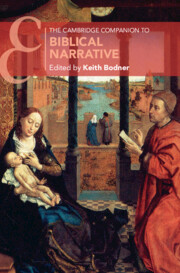
The Cambridge Companion to Biblical Narrative offers an overview and a concise introduction to an exciting field within literary interpretation of the Hebrew Scriptures and New Testament. Analysis of biblical narrative has enjoyed a resurgence in recent decades, and this volume features essays that explore many of the artistic techniques that readers encounter in an array of texts. Specially commissioned for this volume, the chapters analyze various scenes in Genesis, Exodus and the wilderness wanderings, Israel's experience in the land and royal experiment in Kings and Chronicles, along with short stories like Ruth, Jonah, Esther, and Daniel. New Testament essays examine each of the four gospels, the book of Acts, stories from the letters of Paul, and reading for the plot in the book of Revelation. Designed for use in undergraduate and graduate courses, this Companion will serve as an excellent resource for instructors and students interested in understanding and interpreting biblical narrative.
The introductory chapter to this study of Propertius 4 as a collection composed in the wake of Virgil’s death begins by highlighting some of the more obvious ways in which the elegist advertises his allusive engagement with the Eclogues, Georgics and, in particular, the Aeneid, and how the troping of this engagement as hospitality suggests a relationship that might be cooperative or antagonistic. From there it looks back to the only two Propertian elegies in which the name Vergilius features – 1.8 (ostensibly referring to the Pleiades constellation but, it is argued, punningly invoking the poet) and 2.34 (in a review of Virgil’s career to date), each constructing a relationship between elegiac and epic poetics that, as later chapters show, will be revisited in Book 4. After these preliminary case-studies the Introduction presents a history of approaches to poetic memory by way of a survey of the scholarly responses mobilized by Propertius 4 as a Virgilianizing collection. These approaches are then tested in the laboratory of elegy 4.9, a Virgilio-Propertian diptych on Hercules which, it is argued, is programmatic for allusion and intertextuality as enacted in this collection.
These concluding remarks offer a sideways look at some issues raised by this book, taking their cue from the surviving iconography of the monument at the centre of Propertius 4 – the Temple of Palatine Apollo – to address the ideological implications of the different handling by Propertius and Virgil of Augustan mythmaking. Ultimately the many traces of Virgilian sensibility in Propertius, and of Propertian sensibility in Virgil, are easier to identify than to interpret. Yet Propertius’ obsessive Virgilian intertextuality (here distilled into a multi-part typology), while showing that the elegist is haunted by his epic confrère, is also an exercise of control that transcends generic anxiety to recognize and enact Virgil’s status as a classic of the Roman literary canon. Propertius’ Virgilian intertextuality, extending as it does to structural and stichometric parallels, may also have implications for the textual criticism of both authors, at least insofar as a Virgilian reading of Book 4 obtains. These last reflections find their way to a comparison with Shostakowich’s Fourteenth Symphony, where uncanny thematic, political and structual parallels with Propertius 4 give pause for thought.
This article argues that the Virgilian narrator’s account of Juno’s anger at the outcome of the Judgement of Paris at Aen. 1.25–7 contains an allusion, which seems to have gone unnoticed, to a prologue transmitted in some manuscripts of the Rhesus attributed to Euripides. It also discusses the problem of the origin of this prologue. Finally, it suggests some interpretative possibilities arising from recognition of the allusion.
This note argues that the second line of the oracle in Apuleius’ Cupid and Psyche (Met. 4.33.1) alludes to Ovid’s Am. 1.1.2. Like its Ovidian model, Apuleius’ line marks a shift in genre, and offers a further hint of the role Cupid will play in the rest of the story.
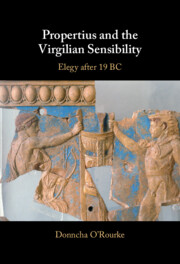
Propertius and the Virgilian Sensibility is an in-depth study of Propertius' final collection of elegies as the earliest concerted response to the poetic career of Virgil in its totality. Seven chapters show how Propertius' fourth book, published three or more years after Virgil's death, enacts the canonical status of Rome's foremost poet through an intimate conversation across a number of themes, from socio-political and historical questions centring on, for example, Rome's evolution from rustic past to 'golden age' superpower, gender and patriarchy, and warfare both international and internecine, to literary questions concerning the generic identity of elegy and epic, the appropriation of Callimachus, and the architecture of poetry books. Propertius' totalizing reading reveals an elegiac Virgil as much as it does an epicizing Propertius, with a sometimes obsessive attention to detail that enlarges familiar paradigms of allusion and intertextuality and has implications for how literary and textual criticism are practised.
This chapter examines Clare’s place among the poets in his own lifetime and more recently. The first section considers his appeal to recent and contemporary poets such as Heaney and Paulin. It argues that they have been inspired by Clare’s commitment to the local and provincial, especially his use of local vernacular, and also by his aesthetic of the uncouth and rebarbative, which also influenced Thomas. It goes on to explore how Clare’s close sensory attention to the natural world influenced Thomas, Longley, Oswald, and Jamie. The second section argues that Clare’s poetry developed in conversation with his wide reading. It focuses on a number of examples, including Collins, Cowper, and Thomson. Reading these poets alongside and through Clare we see new features of their writing emerge, giving us a richer, more dynamic sense of eighteenth-century verse, and of Clare’s poetry.