To save content items to your account,
please confirm that you agree to abide by our usage policies.
If this is the first time you use this feature, you will be asked to authorise Cambridge Core to connect with your account.
Find out more about saving content to .
To save content items to your Kindle, first ensure no-reply@cambridge.org
is added to your Approved Personal Document E-mail List under your Personal Document Settings
on the Manage Your Content and Devices page of your Amazon account. Then enter the ‘name’ part
of your Kindle email address below.
Find out more about saving to your Kindle.
Note you can select to save to either the @free.kindle.com or @kindle.com variations.
‘@free.kindle.com’ emails are free but can only be saved to your device when it is connected to wi-fi.
‘@kindle.com’ emails can be delivered even when you are not connected to wi-fi, but note that service fees apply.
Commonly considered the heart of a century dominated by American power, values, and innovation (an “American Century,” according to American publicist Henry Luce), the latter twentieth century is, from the perspective of Japan, less an American age than one of intimate global exchange. The model of state management of the economy and “superdirect” industrial financing perfected by Japan after 1945 grounded not simply an East Asian “economic miracle” but a “Golden Age of Capitalism” (1945-1973). American pundits like Thomas Friedman celebrated the new global prosperity as the apotheosis of a unique American spirit of enterprise. But the term used to describe the phenomenon – “globalization” – was initially popularized in the 1980s to capture the incredible global reach of Japanese manufacturing, banking, and shipping.
The introductory Chapter 1 sketches an outline of the book’s object of study: the gray literature produced by American and European intellectuals during World War II in the study of Nazi Germany. I point to two unexpected protagonists, who rose to the challenge of the moment during World War II: Librarian of Congress Archibald MacLeish and cultural anthropologist Margaret Mead. I describe the improvised intellectual networks, funded by government institutions, universities, as well as philanthropies and point to Hans Kohn’s career to spell out some of the complexities one encounters while studying the European-American encounter during World War II. The second part of the introductory chapter approaches the memorandum through its fictional rendering in Sinclair Lewis’ Gideon Planish, before diving into the making of one of its most famous texts, the “American Century” by Henry Luce.
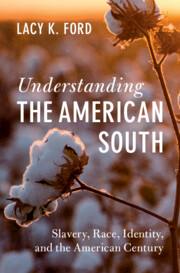
Americans in the twenty-first century find themselves searching for new understandings of their history. They seek explanations for chronic political polarization, acute pandemic polarization, social media addiction, heightened concern over global warming and armed global conflict, widening cultural and economic gaps between city and countryside, persistent racial tensions, gender divides, tensions over abortion rights and the public school curriculum, and a forty-year pattern of increasing economic inequality in the United States. Americans are looking for a past that can help them understand the divided and fractious present, a past that enlightens and inspires. In this collection of original essays, Lacy K. Ford uses the past to inform the present, as he provides a deeper, more nuanced understanding of American history and the American South's complicated relationship with it.
The prologue to this book zooms in on the inherent tensions and harmonies in the transatlantic relations that evolved in the first half of the twentieth century and laid the practical, ideational, and emotional foundations for the take-off of European integration as of 1950. In doing so, the prologue, in a more essayistic way, critically reflects upon the reconstruction of the history of the origins of European integration as presented in this book and the history of European integration in general, and the deeper meaning of both for our understanding of present-day Europe and the unique phenomenon of European integration. The prologue also introduces some key concepts and figures in the historical reconstruction that follows in the chapters, such as the the policies and politics of planning, the functionalism of David Mitrany, and the analysis of the vicissitudes of transatlantic relations by Isaiah Berlin.
Recommend this
Email your librarian or administrator to recommend adding this to your organisation's collection.