To save content items to your account,
please confirm that you agree to abide by our usage policies.
If this is the first time you use this feature, you will be asked to authorise Cambridge Core to connect with your account.
Find out more about saving content to .
To save content items to your Kindle, first ensure no-reply@cambridge.org
is added to your Approved Personal Document E-mail List under your Personal Document Settings
on the Manage Your Content and Devices page of your Amazon account. Then enter the ‘name’ part
of your Kindle email address below.
Find out more about saving to your Kindle.
Note you can select to save to either the @free.kindle.com or @kindle.com variations.
‘@free.kindle.com’ emails are free but can only be saved to your device when it is connected to wi-fi.
‘@kindle.com’ emails can be delivered even when you are not connected to wi-fi, but note that service fees apply.
The article focuses on the evolution of Don Minzoni’s martyrdom in the decade between the beginning of the Resistance in Italy and the end of the first legislature. Through an evaluation of archival and printed sources, the analysis shows how the memory of Don Minzoni, a priest killed by the Fascists in August 1923, played a dual role: it functioned as a strategic resource for Democrazia Cristiana (Christian Democracy) and contributed to reshaping Catholic identity in the postwar period. By tracing the evolving representations of Don Minzoni, the article highlights the interplay between continuity and rupture in postwar Italy. It shows how memory, religion and politics intersected in the construction of a democratic order that was not only institutional but also rooted in a Christian moral framework.
The year 2024 marked a century since socialist leader Giacomo Matteotti's assassination. Widely commemorated in Italy, he's often remembered within a national narrative of antifascist resistance. But how was this narrative built and how has the far right responded? This Element traces the construction and mobilisation of Matteotti's memory over the last century, analysing the role of grief in the early antifascist movement, and identifying the role memory played in bringing together Allies, partisans and political parties during the construction of the democratic Republic. Based on primary sources from international archives, it also adds a transnational lens to the study of a figure so often thought of in national terms. The Element closes by examining how far-right parties whose lineage traces back to Mussolini's regime have engaged with the afterlife of a man whose murder is an evergreen reminder of the centrality of violence to Fascism in its earliest days.
A global history of antifascism from its inception to our own times. Its inspiration, and subject of critique, though, is a work of fascist history, Robert O. Paxton's classic essay The Five Stages of Fascism. Paxton influentially studied fascism by comparing national case studies and proposing a cycle of five developmental stages through which each national fascism might progress. In this Element, the historian Joseph Fronczak counters Paxton's method of stages with one of ages: instead of organizing antifascism into national case studies going through stages, he organizes antifascism's global history into five ages, stressing the transnational causes and solidarities that pushed global antifascism to take form and shift shape over time. A further aim of this Element is to pose this history of antifascism as a counterhistory of fascism, a sort of epistemological experiment for rethinking fascism's history through a formulation of antifascism's history.
After introducing the topic of antifascism on the internet and the issues that scientific publications encounter when facing the web, the first part of this contribution in Contexts and Debates examined the first of three digital history projects connected to this topic, the Atlante delle stragi naziste e fasciste. In this following section, the attention is focused on two more publications: IF – Intellettuali in fuga dall’Italia fascista, a project tied to the issue of mobility for people persecuted by the Fascist regime; and Memorie in Cammino, a project that approaches its content and the user’s interaction with it in an entirely non-linear manner, reconstructing the lives and actions of those who resisted the regime.
This chapter explores the place of empire and imperialism in the British literature of the Popular Front period (1934–40). During this period, left-aligned writers responded to the Communist International’s call for broad antifascist alliances built on national cultural traditions with an outpouring of works of fiction, poetry, and drama, as well as critical reevaluations of literary history. These contributions are characterized by an evocation of “the people” as a diverse, progressive, antifascist subject, but one always national in character and therefore fraught with ambiguities and contradictions. The chapter considers the ways that writers based in Britain negotiated the connections between antifascism, anticolonialism, and anti-imperialism in this late interwar moment. It focuses first on the literary milieu around the influential journal Left Review, and second on the interlinked work of Ralph Fox, Mulk Raj Anand, and Sajjad Zaheer. In concludes by suggesting that the Spanish Civil War provided the occasion for some leftist writers from Scotland and Wales to imagine the continuities between working-class history, anticolonialism, and antifascism in their work.
Digital history represents an exciting avenue for scholars to both publish their findings and apply new research methodologies that include the public as a producer of historical knowledge. However, in the context of studies on the Second World War in Italy, and especially the antifascist Resistance, these types of productions remain rare. This situation is in stark contrast to the vast production of revisionist, pro-fascist or outright fascist materials produced by a plethora of non-scholar actors across the web. This contribution aims to present three different digital history projects tied by the theme of antifascism: the Atlante delle stragi naziste e fasciste, IF – Intellettuali in fuga dall’Italia fascista and Memorie in Cammino. Each of them covers a different timeframe or a different facet of the issue, but all are representatives of a new way forward in Italy concerning historical research and dissemination. This first part of the article focuses on the aforementioned issues and the first project, the Atlante delle stragi naziste e fasciste, while a second (to be published in the next issue of Modern Italy) will cover the remaining two.
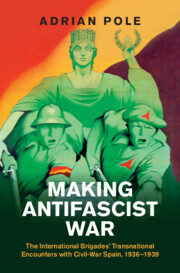
This is a study of the 35,000 antifascists who joined the International Brigades in order to defend the Second Spanish Republic and of their encounters with civil-war Spain. Dr Adrian Pole offers the first in-depth history of the rich array of cross-cultural encounters which emerged between the multinational soldiers of all five International Brigades and the people, places, politics and culture of the country which accommodated them for almost three years of civil war. He sets out to recover the place of these encounters within the making, imagining and running of a transnational fighting force, showing how they influenced the volunteers' experiences and emotions, underlined their ideas and identities, informed their motivations and actions, and ultimately underpinned their ability to imagine, wage and justify the war. In doing so, he demonstrates how they enabled thousands of transnational actors to define a deeply contentious conflict in their own very particular terms.
This article chronicles the roundtable held at LUISS University in Rome on 23 May 2025, marking the eightieth anniversary of the Italian Resistance. Organised alongside the launch of the special issue of Modern Italy titled ‘The Italian Resistance: Historical Junctures and New Perspectives’, the event gathered prominent scholars to revisit the legacy of the Resistance in contemporary historical, cultural and political discourse. Contributions highlighted emerging research on marginal actors, transnational perspectives, gendered memory and the symbolic dimensions of antifascism. Discussions revealed a shared concern with pluralising memory and resisting reductive narratives. This reflection emphasises the enduring relevance of the Resistance as a site of democratic imagination and critical historical inquiry, as well as the journal’s continued commitment to fostering innovative and inclusive scholarship on modern Italy.
This chapter examines West German efforts to admit refugees from Chile. It argues that the rhetoric of antifascism mobilized by the Chile solidarity movement was influential during the government of Willy Brandt (1973–1974), because the key pillars of the Social Democratic Party (youth organizations, trade unions, and regional party structures) endorsed the admittance of refugees as antifascist fighters, and members of the Free Democratic Party also sanctioned the admittance of refugees from Chile. However, following Helmut Schmidt’ accession to the chancellorship in 1974, securing political asylum for refugees from Chile became far more challenging and nearly impossible for political refugees from Argentina. This is because Schmidt and fellow government officials opposed left-wing solidarity during a time in which the focus shifted towards stabilizing the economy and combating left-wing terrorism. The government’s stance forced the solidarity movement to emphasize their humanitarian motivations. As the case of Helmut Frenz’s engagement demonstrates, the politics of emergency coexisted with a market-critical understanding of the violence perpetrated by the Chilean military regime.
This chapter examines the emergence of the Chile solidarity movement, a broad umbrella of Latin American exiles, West German New Leftists, Social Democrats, trade unionists, and orthodox Communists united by the idea that the Pinochet regime was fascist that required their opposition given Germany’s fascist past. The chapter explains why these leftists employed a human rights rhetoric that leftists had largely shunned in the 1960s. It argues that from 1973 to 1976 there was a widespread consensus among solidarity activists that the demand for human rights and expressing solidarity with Chile’s socialist experiment under Allende were compatible claims. Human rights became part of a common strategy to secure the international isolation of the Chilean military regime. These “politics of emergency” enabled the close collaboration between leftists and Amnesty International. These “politics of emergency” were controversial, but the Chile solidarity movement was forced to adopt them to help the Chilean left survive. The chapter concludes by showing how this consensus weakened after 1976 because Maoists rejected the endless continuation of the politics of emergency.
The axiomatic claim that the volunteers ߢfought fascismߣ in Spain is often made in response to questions concerning their motivation for enlisting. Chapter three instead treats it as the starting-point for uncovering how they imagined, represented and engaged with the Nationalists and, in so doing, argues that the making of antifascist war was dependent on the making of fascist enemies. It traces the volunteersߣ vision of the conflict as a struggle between a sovereign nation and a fascist invader back to a transnational understanding of world politics before continuing the story within Spain itself, where representations of enemy soldiers as coerced Italian peasants, barbaric Moroccan mercenaries or ignorant Spanish conscripts reinforced their partisan interpretation of the violence and legitimised their own involvement within it. It then turns from abstract understandings of the enemy towards frontline encounters with flesh-and-blood soldiers. Whilst the volunteersߣ emotional responses therein were as varied as the kind of killing being done, they agreed that any feelings of sympathy had to be subordinated to the objective of violently defeating an uncompromising ideology.
In the course of its civil war of 1936-9, Spain hosted thousands of foreign soldiers from across the world. Amongst them were the approximately 35,000 volunteers of the International Brigades, the likes of whom identified General Francoߣs rebellious Nationalists with a global fascist offensive and rallied to the defence of the embattled Republic. The introduction to Making Antifascist War argues that their encounters with the people, places and politics of Spain were not an incidental sideshow to the more important business of fighting fascism, but a key component of their transnational military service. Cross-cultural contact was not only more diverse than often assumed, but also more consequential ߝ not least by feeding into the motivations, identities and actions of thousands of soldiers. After establishing the nature of that contact, the introduction argues that it enabled the foreign fighters to engage in a creative process of defining the Spanish Civil War in their own partisan terms. It does so by engaging with sources, methodologies and questions pertinent to the cultural history of war, with a particular emphasis on the role of transnationalism.
This chapter explores the intersection of antifascism and South American women’s activism in the context of the Spanish Civil War. The analysis focuses on Mi guerra de España (My Spanish War, 1976) by Argentine Mika Etchebéhère, an account of her experiences as a captain of a Partido Obrero de Unificación Marxista (POUM) militia, and the feminist political magazines Vida Femenina (Buenos Aires, 1933–42) and Acción Femenina (Santiago, 1922–39). From different genres such as the memoir, the essay, or the journal article, and from varied platforms including political and non-political associations and publications, women expressed their will to contribute to the global discussion and struggle against fascism.
The dictatorial regime of Jorge Ubico silenced virtually all internal sociopolitical opposition in Guatemala during the interwar period (1931–44). To circumvent this restrictive political terrain, journalists Luz Valle and Gloria Menéndez Mina created literary journals ostensibly published with advice on home making and personal style which furtively cultivated an intellectual space that reflected transnational antifascist conversations. These journals served as incubators for antifascist, democratic ideals during a period of intense intellectual repression, ideals that revolutionary reformers translated directly into social and political democracy created by the October Revolution in 1944. Within a deeply patriarchal society, the journals’ gender analysis also expanded revolutionary vision of justice to include the political and social inclusion of women. Therefore, the extent to which the Guatemalan Revolution embraced antifascist ideals can be traced in part to the ideas published in Nosotras and Azul.
This chapter situates the emerging antifascism of Diego Rivera and other Mexican artists within the broader contexts of post-revolutionary Mexico, the rise of global fascism, and shifts of the global left. Their antifascism emerged slowly in the 1920s, subordinate to their sharp anti-capitalism and anti-imperialism, but moved to the forefront from the mid-30s with the rise of Hitler, the Spanish Civil War, and as part of Popular Front strategies across the progressive left. Rivera’s antifascism, shaped by his Communist dissidence during the 1930s, most fully emerged in his US murals. His Portrait of America (1933) denounces US capitalism and imperialism, while addressing the urgency of proletarian unity against fascism. Pan American Unity (1940) reflects Rivera’s disgust with the Nazi-Soviet Non-Aggression Pact of 1939. It proposes a cultural and political alliance between Latin America and the once-imperial US as the only way to defeat the alliance of Nazi and Soviet totalitarianisms.
This chapter discusses Caribbean antifascism’s roots and its connection to the Comintern’s regional radical network, tracing the evolution of the movement from its anti-imperialist origins as early as 1924. The discussion provides specific examples as to how visions of fascism and antifascism were created for and/or adapted to the local and regional realities through an anti-imperialist prism. The study also maps the transnational and transatlantic journey of an antifascist discursive formula from its origins as a Caribbean hologram equating fascism with imperialism, to its official incorporation to the Communist internationalist lexicon as Comintern policy in 1935, and finally to its application as a propaganda formula during the Spanish Civil War. In the long run, while Caribbean antifascism’s anti-imperialist sensibilities may have been lost in translation in the mayhem of theoretical battles and iron-fist, Stalinist policies, the gist of the messages survived the turmoil, and perhaps still lingers on in our culture even to this day.
During the 1930s and early 1940s, numerous groups in Uruguay coalesced to oppose fascism. This chapter examines the antifascist efforts organized by ethnic societies, labor unions, women’s groups, Afro-Uruguayans, students, intellectuals, and artists, among others. The emergent antifascist movements in Uruguay served as nodes in the broader transnational struggle for democracy and against totalitarianism. While some Uruguayans traveled to Spain to directly take part in the Spanish Civil War, others sought to marshal support at home to combat the influence of European fascism. The ideological struggles in Europe were also pressing at home, as President Gabriel Terra initiated a dictatorship in the 1930s that revealed his supporters’ fascist leanings. Likewise, an engrained sense of national exceptionalism tied to Uruguay’s decades-long democratic tradition, augmented the need to resist Terra’s dictatorship (1933–38) and later to repudiate any remnants of its legacy.
This chapter reveals how Caribbean Basin democracy and international antifascism came together during the 1944 Masacre Sampedrana. For over a decade, Honduran, Nicaraguan, and Dominican exiles protested against the respective dictatorships of Tiburcio Carías, Anastasio Somoza, and Rafael Trujillo. With World War II, exiles tapped into the international struggle against fascism to invigorate their local anti-dictatorial efforts. They blended the Four Freedoms, the Atlantic Charter, and other antifascist symbols with their longstanding democratic ideals while networking with likeminded allies. Their struggle culminated in July 1944 as teachers, workers, and students utilized antifascist symbols when women spearheaded protests against Carías’ dictatorship. After the regime violently responded, anti-dictatorial individuals and groups throughout the greater Caribbean continued to blend antifascism and Latin American democracy to denounce the horrific Masacre Sampedrana and direct regional and international attention on the Honduran dictatorship.
This chapter explores how the Sociedad Argentina de Escritores (SADE, established in 1928) and the Sociedad de Escritores de Chile (SECh, established in 1931) became actively involved with antifascism in relation to national and international processes connected to the rise of fascism, the Spanish Civil War, World War II, and the Cold War. Each association’s trajectory was specifically shaped by each country’s context. In Argentina, SADE’s politicization unfolded under military regimes, conservative fraudulently elected governments, and Juan Perón’s regime (1946–55). In Chile, SECh’s politicization developed in the context of the governments of the Popular Front (1938–52) and the relative strength of leftist parties. This comparative analysis reveals convergences and differences and highlights the networks that connected writers at multiple levels, providing a new angle on the local and transnational frameworks for the antifascist struggle in the 1930s and 1940s and its transition to Cold War-era divisions.
The introduction provides an overview of the volume’s key theoretical concepts and empirical cases. It emphasizes that there have been a variety of antifascisms in Latin America and the Caribbean that were not merely derivative of European antifascism or the product of European exiles. Rather, there were homegrown Latin American and Caribbean antifascist movements forged in the interplay between local, regional, and transnational processes. By placing Latin American and Caribbean antifascists in relation to the broader historiography on antifascism, the introduction illuminates their specific heterogeneous agendas, strategies, and styles as well as their class, racial, ethnic, and gendered dimensions. Latin American and Caribbean antifascists participated in exchanges from the Global South to the Global North and within the Global South. They resembled and yet differed from other Global South antifascisms regarding race and imperialism. The introduction ends by providing an overview of the chapters by placing them within the book’s theoretical framework.