To save content items to your account,
please confirm that you agree to abide by our usage policies.
If this is the first time you use this feature, you will be asked to authorise Cambridge Core to connect with your account.
Find out more about saving content to .
To save content items to your Kindle, first ensure no-reply@cambridge.org
is added to your Approved Personal Document E-mail List under your Personal Document Settings
on the Manage Your Content and Devices page of your Amazon account. Then enter the ‘name’ part
of your Kindle email address below.
Find out more about saving to your Kindle.
Note you can select to save to either the @free.kindle.com or @kindle.com variations.
‘@free.kindle.com’ emails are free but can only be saved to your device when it is connected to wi-fi.
‘@kindle.com’ emails can be delivered even when you are not connected to wi-fi, but note that service fees apply.
This chapter focuses on the figures of Antonio Genovesi, Immanuel Kant, and Adam Smith. It begins by exploring the similarities and differences in their biographies and historical-intellectual contexts. Next, it examines the influence of Genovesi’s and Smith’s philosophies on Kant. Lastly, it provides a critical and selective review of the secondary literature regarding these authors’ perspectives on the morality of commercial life.
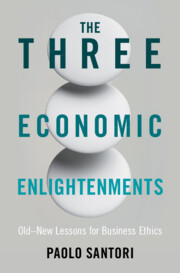
When people wonder about the appropriate course of action in a given situation, they are already engaging in moral reasoning. This also applies to the field of business, where an understanding of ethics could help businesspeople and market participants make morally informed decisions. This book aims to enlarge the body of ethical theories available in Business Ethics by illustrating three moral principles relevant to economic agents based on the ideas of Immanuel Kant, Antonio Genovesi, and Adam Smith. All three authors were prominent figures in the eighteenth-century European Enlightenment movement and have much to teach us about the origins of modern economics. Additionally, the book provides specific examples relating to contemporary business situations, focusing on the ethical challenges posed by incomplete contracts. Overall, this book demonstrates that the historical evolution of economic and philosophical concepts remains pertinent to current dialogues in Business Ethics.
Situating Enlightenment theories of rights in a broader arc extending back to the Scientific Revolution, this chapter focuses on the Italian jurists and philosophers who incorporated these theories into constitutional thought. Drawing on the works of Montesquieu and Rousseau, in particular, Gaetano Filangieri sought to reformulate arguments about natural rights in terms of a legislative “science.” This science, which would be eagerly received across Europe and Spanish America, sought to incorporate rights and popular sovereignty into constitutional law. Filangieri also drew on Italian intellectual traditions, which (in the case of Antonio Genovesi) insisted on social, alongside individual, rights. Following the influential example of Cesare Beccaria, Filangieri also paid particular attention to rights in penal matters. His constitutional principles were poignantly, if briefly, embodied in the 1799 Constitution of the Neapolitan Republic, drafted by Francesco Pagano.
Recommend this
Email your librarian or administrator to recommend adding this to your organisation's collection.