To save content items to your account,
please confirm that you agree to abide by our usage policies.
If this is the first time you use this feature, you will be asked to authorise Cambridge Core to connect with your account.
Find out more about saving content to .
To save content items to your Kindle, first ensure no-reply@cambridge.org
is added to your Approved Personal Document E-mail List under your Personal Document Settings
on the Manage Your Content and Devices page of your Amazon account. Then enter the ‘name’ part
of your Kindle email address below.
Find out more about saving to your Kindle.
Note you can select to save to either the @free.kindle.com or @kindle.com variations.
‘@free.kindle.com’ emails are free but can only be saved to your device when it is connected to wi-fi.
‘@kindle.com’ emails can be delivered even when you are not connected to wi-fi, but note that service fees apply.
The Middle East has famously been described as a region ‘dripping with identity politics’. Therefore, it is hardly surprising that constructivism has gained prominence among scholars studying the international relations of the region. Following an introduction to the philosophical and sociological roots of constructivism as a social theory, the chapter discusses various strands among constructivists. It also explores how Middle Eastern scholars employ a constructivist approach holding distinct characteristics compared to those found in the broader debate on constructivism within International Relations. Scholars of Middle Eastern politics have been attentive to challenges to state identity, at supra- and sub-state levels, resulting in puzzling international behaviour. Insights from these debates on constructivism inform the case study, which contrasts the ‘classic’ Arab cold war among Arab states in the 1950s and 1960s with the regional rivalries that emerged following the Arab uprisings, which some observers have characterised as a new (Arab, neo-sectarian, Sunni–Shia) cold war. While supra- and sub-state identities played a crucial role in regional politics during both periods, notable differences existed. The case study examines whether and how identities and ideas matter in the international relations of the region in these two eras of Middle East history.
Realism is the dominant theoretical approach to international relations. The realist tradition finds its roots in a pessimistic supposition that international relations are unavoidably shaped by power politics. This chapter examines the core assumptions of classical realism. Classical realists lay a claim to a long tradition of thought going back to eminent thinkers such as Thucydides, Machiavelli, and Hobbes. Classical realism recognises that the drive to be all-powerful is inherent in human nature. States not only seek to accumulate power but also to make sure that no other state shifts the balance of power in their favour. The chapter then examines modern variants of classical realism and explores how it has been applied in the context of the Middle East. While classical realism seems to be the most fitting tradition to explain international relations in the Middle East, its application to the region has not been without limitations. The chapter then analyses Saudi foreign policy in the post-2011 Middle East through a classical realist lens. While the Saudi Kingdom played the role of regional stabiliser for decades, it emerged in the post-2011 Middle East as a regional player vying for power and attempting to shift the regional balance of power.
Chapter 4 is the first of the four analytical chapters anchored in the qualitative interviews, and focuses on the topic of women’s representation in the MENA at the national level. The chapter presents an overview of women in parliament from independence to the present day, covering the right to vote and stand for office as well as the number of female parliamentarians per country following the most recent elections. The analysis then moves onto barriers to women’s representation, beginning with the pre-nomination stage and the role of factors such as patriarchy and violence against women. The subsequent sections detail different paths to parliament in the pre- and post-Uprisings eras. Among the topics covered are internal party culture and electoral rules, as well as the background characteristics of the women who make it in politics. The final part of chapter 4 is dedicated to the factors behind success at the campaign stage and once in office with particular reference to the importance of extra-party networks, access to finances and qualifications, as well as the issues of discrimination and self-discrimination at the time of portfolio allocation.
This chapter examines the profound impact of the Arab uprisings on the six Gulf Cooperation Council (GCC) countries (Bahrain, Kuwait, Oman, Qatar, Saudi Arabia and the United Arab Emirates (UAE)). While initially perceived as distant from the epicentre of the unrest, these countries underwent significant economic, political and security transformations as a result of it. It describes key events initiated by the Tunisian revolution, emphasising the interconnectedness of the Gulf region with the wider Arab uprisings. Furthermore, it explores the economic and socio-political conditions in the GCC countries that shaped their responses to the uprisings, particularly in the context of the challenges posed by the oil-based developmental model. In terms of implications, it dwells on the growing polarisation and intra-GCC rifts, particularly the conflict between the Kingdom of Saudi Arabia and the UAE, on the one hand, and Qatar, on the other, between 2017 and 2021, jeopardising regional integration. The Arab uprisings revealed the vulnerabilities of the GCC countries’ status quo, leading to a reassessment of their political and economic trajectory both from the domestic and the external relations points of view.
This chapter explores the puzzle of why great powers intervene in some revolutionary civil wars but not others, and how they choose sides. Focusing on the 2011 Arab Spring, it highlights contrasting responses of great powers to Arab Uprisings in Libya, Yemen, Bahrain, and Syria. Introducing the hierarchical intervention theory, it argues that great powers intervene based on preexisting security hierarchies – patron–client ties like arms transfers and defense pacts. These security ties influence the choice of roles on the backstage, while frontstage action scripts are justified through intervention frames. The chapter explains how intervention decisions are framed as performances, with great powers casting themselves and others in specific roles. The theory sheds light on the selective and strategic nature of great power military interventions in regime conflicts. The theory is contrasted with alternative explanations of great power interventions, including resource competition, rivalries, ideological ties, humanitarian concerns, and leadership traits, none of which can account for the historical patterns of great power side-taking.
This chapter examines how labor mobilization returned to its earlier patterns of political militancy in Tunisia and business unionism in Morocco by the late 2000s. It situates the post-reform period (2000–2011) as a phase of continued decline for labor unions in both countries. However, the chapter links unions’ divergent reactions to differences in their internal governance structures, a legacy from previous experiences of institutional incorporation and exclusion. It highlights how democratic internal organization fosters labor militancy, while hierarchical structures hinder opposition, even when clear incentives to protest exist. The chapter concludes with a discussion of how labor mobilization advanced democratic transition in Tunisia while reinforcing authoritarianism in Morocco.
This chapter presents a micro-sociological re-theorization of nonviolent resistance as shaped by dynamics of rhythms, destabilization of domination, energizing and de-energizing repression, and emotional feedback loops. The chapter shows how an occupying power can be understood as a tightly organized musical ensemble with dominating interactions and rhythmic coordination, and how nonviolent resistance can disrupt the rhythmic coordination and domination by a regime; hence, de-stabilizing and potentially challenging the power relation. The chapter discusses how concrete nonviolent actions can defy domination and the degree to which they can be useful for challenging violent repression. In conflicts of nonviolent resistance, the battle is determined by whether the protesters or the regime are able to dominate the situation and challenge the tight, rhythmic coordination and unity of the opponent. If neither party is able to dominate, the situation will escalate. Finally, the chapter discusses how nonviolent resistance can foster long-term change.
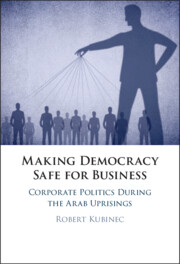
Businesses in the Middle East and North Africa have failed to bring sustainable development despite decades of investment from the private and public sectors. Yet we still know little about why the Arab Uprisings failed to usher in more transparent government that could break this enduring cycle of corruption and mismanagement. Examining posttransition politics in Egypt and Tunisia, Kubinec employs interviews and quantitative surveys to map out the corrupting influence of businesses on politics. He argues that businesses must respond to changes in how perks and privileges are distributed after political transitions, either by forming political coalitions or creating new informal connections to emerging politicians. Employing detailed case studies and original experiments, Making Democracy Safe for Business advances our empirical understanding of the study of the durability of corruption in general and the dismal results of the Arab Uprisings in particular.
Only a few weeks after Mohamed Bouazizi set himself on fire, Ennahda returned to Tunisia from exile. The same year Ennahda won Tunisia’s first free and fair elections in its history. On the night of the election, Rached Ghannouchi, the leader of Ennahda, vowed to uphold the revolutionary goals of building a free and prosperous Tunisia. And his party kept this promise to build Tunisian democracy with other stakeholders. Why did Ennahda adhere to democratic principles in power and became a force for compromise, deliberation, and engagement? This chapter shows that competing political visions have coexisted within the party organization since its establishment in the 1980s, and since the 1990s liberal Islamists pulled Ennahda towards democratic commitments not only when they were in opposition but also after coming to power in 2011. To explain this process, the chapter first turns to the origins of the Islamist movement in Tunisia and its political and ideological evolution over time including Ghannouchi’s philosophical contributions. Then it explores the shifting balance of power among factions and factors, determining this balance with a specific emphasis on organizational resources and implications for Tunisian democracy.
The modern history of Saudi–Iranian relations (dating back to the formation of the Saudi state in 1932) can be characterized broadly into five distinct phases. The first is between 1932 and 1979, which is characterized by regional distrust yet a willingness for the two states to engage with each other. The second is the period after the revolution until three years after the end of the Iran–Iraq War – where a catastrophic earthquake provided an opportunity to reset relations – which was driven by existential concerns about the nature of political organization and competition over Islamic legitimacy. The ensuing period from 1991 to 2003 was one in which a burgeoning rapprochement began to unfold, driven by domestic factors across the Gulf. The fourth period ran roughly from 2003 to 2011, in which the bombastic nationalism of Mahmoud Ahmadinejad, the Iranian president (2005–13) ran up against the belligerent ‘Axis of Evil’ narrative within the US War on Terror. The fifth period emerged after the Arab Uprisings in 2011, providing the two states with opportunities to exert influence across the Middle East through the provision of support to groups across the region. The events of the Arab Uprisings provided further opportunities to increase their influence, particularly in those states where regime-society relations began to fragment. In this chapter I offer a brief genealogy of relations between Saudi Arabia and Iran with a focus on the construction of competing nomoi – visions of regional order – which play out across the transnational field and resonate within states.
After 84 years of struggle, the Muslim Brotherhood rose to prominence in Egyptian politics in the wake of the Arab uprisings. On the night of his election, Mohamed Morsi promised to unite all Egyptians – Muslim and Christians, men and women – and to advance the revolutionary cause for democracy, human rights, and dignity. Over the next 365 days, rather than uniting and democratizing his country, he alienated large segments of the population through exclusionary politics, majoritarianism, and polarization. Why did the Muslim Brotherhood follow majoritarian and polarizing politics after coming to power? This chapter seeks to solve this puzzle by way of unpacking the Brotherhood’s internal power dynamics and disagreements regarding democratic politics. To that end, the chapter begins with a short historical account, tracing the Brotherhood’s changing relationship to politics and emerging splits within. Then, it turns to the shifting power balance between the old guard and liberal Islamists, and how the former sidelined the latter. The chapter discusses three critical episodes in this process: the Wasat Party initiative of 1996, the 2009–10 internal elections, and the post-2011 purge of the liberals. It concludes with a discussion of what the old guard’s perception of democracy looks like in action with details from Morsi’s year in presidency.
This chapter explores efforts to shape Bahrain’s political field and the ways in which its politically charged geographical location as the ‘epicentre’ of the struggle for supremacy between Riyadh and Tehran shapes these efforts. It explores the struggle for Bahrain’s political field and its social reality which has allowed a range of domestic and regional actors to become involved in the contestation over principles of vision and division, deploying economic, political, and religious capital in the process. Central to this is a number of networks and relationships that shape perceptions and behaviour, along tribal, ethnic, and religious lines. As Saudi and Iranian efforts to impose order on the region focused on Bahrain, they intersected with a complex set of intersectional phenomena bringing together tensions between rulers and ruled over social, economic, and political issues, all of which play out in the context of the transnational field.
In order to understand the ways in which the Saudi–Iranian rivalry plays out in Syria, it is essential to trace the evolution of the political field and its interaction with the transnational field. In doing so, the chapter critically reflects on the evolution of political life in Syria and the position of the state within broader regional currents, with a focus on Ba’athism, the Axis of Resistance, and the Arab Uprisings. Syria’s importance within such movements meant that it became a state of interest for other regional powers, particularly seen in the aftermath of the Arab Uprisings.
In this chapter, I examine the evolution of US democracy aid in Egypt through the eyes of the diplomats, practitioners, and bureaucrats engaged with such efforts in Egypt. I focus on the practical construction of democracy aid on the ground and the struggles undertaken by different actors to implement aid programs in an authoritarian state. I examine how ideas, interests, and institutions engaged in such aid evolved since 1990s to shape a kind of reform more attuned to the commercial and economic interests of the US and Egyptian governments rather than those of citizens in the country. In the first section, I focus on the nature of authoritarianism in Egypt, tracing its origins since the Nasser era to describe how power has since been exercised and maintained. In the second section, I examine how US democracy aid evolved in Egypt, focusing on the debates and discussions at the inception of USAID’s programs.
Given the relative dominance of positivist epistemologies in political science, the most common mode of comparison is that of variation finding. Although such models can take many forms, the objective is to identify what factors or variables differ across the cases as a means to explain that variation. But other modes of comparative analysis are available. In particular, Charles Tilly’s notion of encompassing comparisons – examining similarities and differences across cases while recognizing that they are inextricably connected or related to some larger whole – may be a better model for explaining long-term political processes, such as state formation, colonialism, capitalism, or even the spread of massive protests across a large number of cases. In this chapter, I develop an encompassing comparison of the Arab uprisings. The approach does not see the uprisings as individual cases whose diverse outcomes yearn for explanation but rather as instances of mass resistance to larger, transnational processes, notably including securitization and neoliberalism. This is not to suggest that these processes caused the uprisings. But the idea is to explore the ways in which the different governments were connected to these larger processes and networks and the extent to which those supranational factors help explain the outcomes of the individual cases.
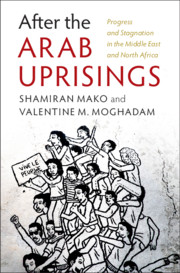
Why were some, but not all the Arab mass social protests of 2011 accompanied by relatively quick and nonviolent outcomes in the direction of regime change, democracy, and social transformation? Why was a democratic transition limited to Tunisia, and why did region-wide democratization not occur? After the Arab Uprisings offers an explanatory framework to answer these central questions, based on four key themes: state and regime type, civil society, gender relations and women's mobilizations, and external influence. Applying these to seven cases: Tunisia, Egypt, Morocco, Bahrain, Libya, Syria, and Yemen, Valentine M. Moghadam and Shamiran Mako highlight the salience of domestic and external factors and forces, uniquely presenting women's legal status, social positions, and organizational capacity, along with the presence or absence of external intervention, as key elements in explaining the divergent outcomes of the Arab Spring uprisings, and extending the analysis to the present day.
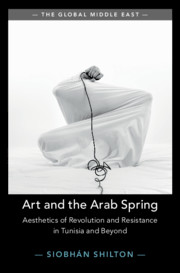
The revolutions that began to sweep across countries in North Africa and the Middle East in December 2010 – like other revolutions in diverse modern historical contexts – have often been articulated, internally and externally, in black and white terms of success or failure, liberation or constraint, for or against, friend or enemy. These internal and external clichés are perpetuated by what Jellel Gasteli has called 'icons of revolutionary exoticism'. Paying particular attention to works from the Tunisian Revolution of 2011, this book examines a diverse body of art including photography, sculpture, graffiti, performance, video and installation by over twenty-five artists. Examining how art can evoke the idea of revolution, Art and the Arab Spring reveals a new way of understanding these revolutions, their profound cultural impact, and of the meaning of the term 'revolution' itself.
This chapter gives an overview of the book in how it deals with dignity in the 2011 Egyptian Revolution in the context of the Arab Uprisings. Dignity or karama in Arabic is a nebulous concept that challenges us to reflect about various issues such as identity, human rights, and faith. This chapter shows that the research to write this book was prompted by the complexity of dignity demands at a time when the region of North Africa and the Middle East was drifting in the socio-political event of the “Arab Spring” or Arab Uprisings. The main motivation in the research was to investigate understandings of karama in the specific context of Egypt during the 2011 protests. To do so, the focus was on interviews with participants in the 2011 protests and analysis of art forms that emerged during protests and in which there was an explicit expression of dignity/lack of dignity. The chapter presents the argument and contribution of the book, the importance of terminology and layers of meanings, and finally the wider context for dignity slogans. The chapter ends by presenting the book structure and the thematic chapters.
This chapter focuses on the theme of dignity as identity and particularly Arab identity. One of the important components in the construction of nationality is consolidating a sense of identity. Karama/dignity – in the sense of being an image of God with inherent worth – has supported for millennia a sense of identity for humans. In the discussion of karama as identity in the slogans of the 2011 Arab Uprisings in Egypt, the chapter shows that there is a widespread understanding of the lack of dignity in Arab contexts, mostly due to oppressive political regimes in a postcolonial setting, which can be seen through various expressions of karama as identity in arts and in the interviews. The chapter also highlights how identity politics are also essential to increasingly globalized societal contexts around the world.
This chapter focuses on the theme of dignity as a human right. There is first a brief general review of a few relevant philosophical debates about human dignity and human rights that are concerned with societal progress in the way karama as a human right, was sometimes interpreted by protesters. Then, the chapter moves on to a closer look at a postcolonial review of similar debates. After reviewing some relevant passages from interviews and other expressions of karama as a human right in Egypt, the chapter ends with an overall analysis of this specific theme in light of the material previously presented.