To save content items to your account,
please confirm that you agree to abide by our usage policies.
If this is the first time you use this feature, you will be asked to authorise Cambridge Core to connect with your account.
Find out more about saving content to .
To save content items to your Kindle, first ensure no-reply@cambridge.org
is added to your Approved Personal Document E-mail List under your Personal Document Settings
on the Manage Your Content and Devices page of your Amazon account. Then enter the ‘name’ part
of your Kindle email address below.
Find out more about saving to your Kindle.
Note you can select to save to either the @free.kindle.com or @kindle.com variations.
‘@free.kindle.com’ emails are free but can only be saved to your device when it is connected to wi-fi.
‘@kindle.com’ emails can be delivered even when you are not connected to wi-fi, but note that service fees apply.
This chapter analyzes relationships and social boundaries. Observational data from Germany and the Netherlands suggests that people with pro-immigration attitudes are more likely to have relationships with migrants. This is further evidence that pro-immigration attitudes go beyond superficial cosmopolitanism. However, the small migrant populations means that not all pro-immigration Europeans have the opportunity to befriend migrants, which is another structural constraint. Experimental analyses from Germany and Norway provide further evidence that pro-immigration Europeans are not averse to migrants, although there is also limited evidence of active favoritism for migrants.
The profession, the legal system and society have all traditionally seen loyalty, confidentiality, care and competence as cornerstones of professional responsibility. Lawyers are in a fiduciary relationship with their clients – clients need to be able to trust their lawyers to provide advice and represent them loyally in the legal system, uninfluenced by any concern other than the client’s interests. We examine lawyers’ general duty of care and competence in Chapter 5 and their obligations to avoid conflicts of interest in Chapter 6 . The topic for this chapter is the duty of confidentiality: the obligation to keep secret all communications made by the client to the lawyer about their affairs and all the information learned about the client directly or indirectly during the professional relationship (subject to various exceptions to be discussed).
The perambulatory boundary clause form entered the English imaginary as a tool of colonization, when the West Saxons began writing charters that claimed British land using the textual forms of the Celtic British people. This relationally oriented landscape description—“from Ida’s creek to the long ridge, and from the long ridge to the wolf pit”—became standard in early medieval English land charters. The landmarks are not in themselves unique, but together, when “walked” by the reader or literally perambulated, combine to produce a unique spatial and legal entity. They were also in flux; over time, landmarks like “Ida’s creek” would have shifted and changed, requiring local, lived experience to navigate the physical, social, and chronological features of the described landscape. As a result, a form designed to stabilize legal boundaries also became a textual and epistemological model for navigating unstable relational identity in the centuries of English literature that followed. Understanding the development of this form in the Old English boundary clauses allows us to see how and why it is operating in Old English literature.
This position paper chronicles and critiques my attempts to help establish sport as a field of application for applied linguistics. In this way, it is a nontraditional article: a first-person, autobiographical, position paper. As background to this endeavor, the paper first acknowledges the critical role of collaborative publications and the establishment of a research network. The paper then explores the affordances and complications associated with building a sports-based community of applied linguistics, especially given preexisting scholarship in sports linguistics, as well as considerable scholarship in the related discipline of communication studies. The paper then briefly recounts my own research in sports linguistics with the aim of bringing to consciousness my goals and purpose. Drawing on Bakhtin’s imagined audience, I reflect on how these motivations not only shaped my research agenda but, in turn, my conceptions of the relationship between linguistics and sport and applied linguistics. I then turn to Bernstein to further reflect on my classification of sports linguistics – the discipline, its knowledge and knowers – and its influence on my attempts at community building. As a position paper, I conclude with some insights for readers who find themselves engaged in similar attempts at community building.
Psychiatrists have responded nationally and internationally to the growing scientific evidence on spirituality and psychiatry and to concerns about bad professional practice, by developing good practice guidelines/policies and by way of continuing professional development initiatives (special interest groups, conferences, etc.). Professional boundaries have historically been understood as keeping psychiatry, as a secular concern, separate from patients’ spiritual and religious concerns. However, as earlier chapters demonstrated, this is unrealistic in light of the entanglements of spirituality and psychiatry, and unlikely to be helpful for many patients. It does not address the importance of religion to patients worldwide or the transition in Western countries from a secular to a post-secular age. The Jungian concept of temenos is taken up as a way of understanding boundaries as protecting safe therapeutic spaces for psychological and spiritual transformation. Boundaries in clinical practice are thus created not to keep the psychological and spiritual domains separate but to protect a safe psychological and spiritual space within which positive therapeutic change may occur.
Chapter 7 examines the function of humor, clowns, and fools within religious systems. The systems under discussion are from India, biblical Israel, Nepal, Europe, and even corporate England. The chapter argues that clowns and fools act as signal generators reflecting the dissonance within the systems and challenging the internal boundaries on which systems depend to maintain order. This humorous disruption enhances the dynamic quality of the systems, permitting its viability over time.
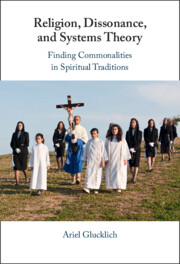
Religious belief systems are often marked by internal dissonance. Mitigating this dissonance can lead to surprising religious phenomena, including blood libels, scapegoating, religious violence, the worship of saints and martyrs, asceticism, austerities, as well as processions, fasting, and clowning. In this study, Ariel Glucklich provides a new approach to understanding how religious actions emerge in the context of belief systems. Providing an innovative psychological and social understanding of the causes that stimulate believers to action, he examines a range of religious phenomena in India, Israel, Austria, Italy, and the United States. Glucklich's new theory enables recognition of the patterns that account for the full complexity of actions inspired by religious beliefs and systems. His systematic comparison of actions across traditional boundaries offers a novel approach to cause and effect in comparative religion and religious studies more broadly. Glucklich's book also generates new questions regarding a universal phenomenon that has escaped notice up to now.
This article proposes a new typology between professional and voluntary care, thus seeking to understand why attempts to establish clear boundaries between them often end in ambiguity and frustration. We argue that because both forms of care represent their own unique and paradoxical ways of combining formal and relational care principles, any attempt to fix the boundaries between them and create the sense of a predictable world usually proves challenging. As such, we show that the two different care practices, in fact, have severe difficulties drawing their boundaries on their own terms. Finally, we consider how these insights might enhance efforts to manage collaborations between professional and voluntary care delivery.
Volume I offers a broad perspective on urban culture in the ancient European world. It begins with chronological overviews which paint in broad brushstrokes a picture that serves as a frame for the thematic chapters in the rest of the volume. Positioning ancient Europe within its wider context, it touches on Asia and Africa as regions that informed and were later influenced by urban development in Europe, with particular emphasis on the Mediterranean basin. Topics range from formal characteristics (including public space), water provision, waste disposal, urban maintenance, spaces for the dead, and border spaces; to ways of thinking about, visualising, and remembering cities in antiquity; to conflict within and between cities, economics, mobility and globalisation, intersectional urban experiences, slavery, political participation, and religion.
The conclusion operates around four questions. First, the appropriate extent and limitations of networks and who should set the boundaries. Self-evidently, the less well-known networks created by the most marginalized, particularly lower-class women of color and Indigenous people at the outer edges of empires and religious traditions, are still the most under-researched and the least understood. Second, how to critically evaluate the relationship between Christianity and empire in the early modern and modern world. Christian expansion and the rise of the European empires are inextricably linked; they are not always in synchronicity regarding objectives or consequences. Third, how did the various revolutions in communications, from the print to the digital revolutions, shape the content of nuclei, the nature and location of nodes that became most important, and the ways networks expanded? Finally, how helpful is it to think of religious traditions capable of transnational mobility in terms of a religious nucleus with a particular DNA core? What inner cores of ideas and practices enabled these disparate religious traditions to grow and thrive thousands of miles from their origins?
This chapter examines the related objectives of defining spatial clusters and delineating spatial boundaries in discontinuous data. The former often proceeds by grouping together adjacent locations when they have the most similar characteristics; the latter proceeds by estimating boundaries between locations that are most different. For this, there are several methods available that suggest ’boundary elements’ as possible components of a final division or complete boundary, depending on the kind of data (e.g. binary versus qualitative versus continuous quantitative) and the arrangement of the measured locations (e.g. regular lattice versus irregular spatial network). Once boundaries have been established, statistics are available to evaluate them, including boundary overlap measures. Clusters and boundaries represent two aspects of the same phenomenon, with the same challenge of formalizing similarity and difference in continuous spatial data.
In this case of Complex Ethics Consultations: Cases that Haunt Us, the author recounts an ethics consultation involving a 70-year-old Roman Catholic nun in the cardiac ICU after emergency bypass and mitral valve replacement. As difficult postoperative complications began to resolve, including her respiratory function, the patient indicated that she wanted all treatments stopped, but in the past she had accepted treatments after initial reluctance. She pointed to her trach, saying she wanted it to be removed. Upon questioning by the ethics consultant, her discomfort was with the tube, not the ventilator per se. Reducing the diameter of the trach tube eased her comfort and she consented to a two-day trial. She was subsequently weaned from the vent. The author reflects on professional boundaries in ethics consultations and the risk that ethics consultants can inadvertently become stewards of the "culture of death" when they make premature assumptions.
Constitutions are fundamental sources of authority in the states that adopt them. Yet, many constitutions offer little guidance about who is eligible for citizenship and what it means to have citizenship. This vagueness often gives rise to fierce contestation about the boundaries of membership in some constitutional states. In the essay that follows, we do not attempt to resolve this contestation. Instead, we distinguish citizenship from other forms of membership, offer an overview of the concept of citizenship, and specify citizenship’s relationship to constitutional theory. We discuss the theories that undergird citizenship practices, the norms that guide its administration, and the ways in which boundaries are established in order to delimit citizenship. We also highlight common boundary problems generated by democratic citizenship even when it is explicitly defined by established constitutional jurisprudence and describe how these boundary problems create complicated challenges that citizens, non-citizens, and states must navigate.
In Chapter 6, I offer a narrative of how Tehran, as both a physical reality and a conceptual entity, captures the imagination of its residents. The chapter is organized around two emerging cities. The first is a material city that is sometimes admired as “modern,” “developed,” or “comparable to other modern capitals,” and sometimes criticized as “a betrayal of Tehran’s history,” “superficial,” “fake,” “a parody of other cities, with no authenticity.” I explore a second emerging city, a perceptual Tehran, through the narratives that engage with the city as a symbolic entity. Through these expressions, I lay out how Tehran is perceived by its residents, showing that identifying with the city is common and that place identities are more influenced by a sense of belonging to the city than to specific neighborhoods. Furthermore, Tehran has become a new source of inspiration for an unprecedented number of artworks and literature in recent years. Accordingly, while the chapter explores perceptions of the city through narratives of its residents, it also draws on examples of works of art and literature to examine how the city is reproduced and, thus, remembered and celebrated.
As Chapter 4 has already made clear, this chapter is not another caravan-to-car story. Nor is it another case study of threatening mobility vs. governmentality. It is rather a continuation of Chapter 4 on the transformations of economic and political geography that put caravans to the test. Building on Chapter 4 and contrary to developmentalist notions of modernisation, this chapter argues that the end of caravans was a cumulative process, just like its persistence until the interwar period. New kinds of territorialisation (automobility and what I define as the ‘evening of mobility’ were part of it, indeed) fostered gradual disintegration and divergence across the caravan regional market. This would gradually erode the caravans’ raison d’être and deepen their transition to shorter routes while camels and traders would find new employments.
This chapter begins with the First World War, when camels were used in unprecedented numbers by fighting armies. The First World War was the first step in the gradual transformation of the economic and political geography of the Middle East. It had deep influence on caravan trade and, following the caravans during the war and in the midst of borders negotiations, one can see how transnational and national form in parallel through overland mobility. With the following one, this chapter benefits from a dense and heterogeneous source base, which allows for the inclusion of lively narratives in order to give a full extent to Middle Eastern experiences of these transformations.
The Introduction begins by unpacking a 1929 Taiwanese civil case where multiple parties were concerned with the formation of a marriage, showing how the case – and public debates as well as other civil and criminal cases presented in this book – evolved around sociolegal problems across the empire, social customs and new forms of family, masculinity tied to household relationships, and Taiwanese women’s agency. The argument of the circulation of gender ideals is followed using ethnographic and historical backgrounds on marriage gifts, daughter adoption, and premarital sexual relationships in Japan and Taiwan from the late nineteenth century through the 1910s. Grounded in these historical contexts, the Introduction suggests gender was at the center of Japan’s international and colonial relations, the competition surrounding Taiwanese masculinity in society and law, and the contested formation of Taiwanese women’s agency in the colonial courts. The final section outlines the organization of Geographies of Gender by highlighting the shift in narrative from the larger historical circumstances surrounding the Japanese empire to the specific interactions between discourse and colonial law in gendered terms.
This chapter seeks keywords and concepts that will enable us to grasp the contradictory and conflictive globality of the current moment and sharpen our analysis of equally contradictory and conflictive global pasts. In a plea to move beyond equating the global with openness, connection, and integration, I address the role of closure, boundaries, and limits in global history in a wider sense. For this purpose, I explore in an experimental and deliberately open-ended fashion how thinking about global spherescan be utilised fruitfully for the current practice of history writing. The first part explores the radically inclusive yet claustrophobic vision of the globe as a closed sphere from which there is no escape. Building on earlier closed-world and one-world discourses, this thinking gained prominence after the Second World War in the face of the threat of nuclear destruction and environmental degradation. I then move to think about the globe as composed of many bounded spheres – geopolitical but also social. Here, I take central examples from the realm of communication and language and discusses the public sphere as an exclusionary rather than inclusionary figure of thought.
More-than-human refusal, as an expression of agency, plays an active role in constructing boundaries. In this article, I address what kind of environmental education is made possible by the productive constraints of respecting more-than-human boundaries and refusal. This is intertwined with how humans can practice being attentive to the intra-actions of more-than-humans when they are not physically present, are only speculated to be present or are present through artifacts. I rhizomatically analyse my relationship with a leafcutter bee (Megachile spp.) nest as a situated example of practicing a relational ethic of care. Through queering the boundary between myself and the leafcutter bee, nature becomes not something that I (human) experience, but as something we (bougainvillea-leafcutter bee-nest-human assemblage) produce through our human-and-more-than-human relationality. Rather than seeing limited proximity as prohibitive, environmental education can use this productive constraint to know-with more-than-human others in a way that disrupts the nature/culture binary — to blur the boundaries between humans and more-than-humans without violating the agency asserted by more-than-humans.