Refine search
Actions for selected content:
16 results
Uniform bounds on projective dimension and Castelnuovo–Mumford regularity
- Part of
-
- Journal:
- Nagoya Mathematical Journal / Volume 261 / 2026
- Published online by Cambridge University Press:
- 23 June 2026, e30
-
- Article
-
- You have access
- Open access
- HTML
- Export citation
Explicit formulas for the Grothendieck class of
 $\overline {\mathcal{M}}_{0,n}$
- Part of
-
- Article
-
- You have access
- Open access
- HTML
- Export citation
-
We obtain explicit expressions for the class in the Grothendieck group of varieties of the moduli space
 $\overline {\mathcal{M}}_{0,n}$. This information is equivalent to the Poincaré polynomial and yields explicit expressions for the Betti numbers of
 $\overline {\mathcal{M}}_{0,n}$ in terms of Stirling or Bernoulli numbers. The expressions are obtained by solving a differential equation characterizing the generating function for the Poincaré polynomials, determined by Manin in the 1990s and equivalent to Keel’s recursion for the Betti numbers of
 $\overline {\mathcal{M}}_{0,n}$. Our proof reduces the solution to two combinatorial identities, verified by applying Lagrange series. We also study generating functions for the individual Betti numbers. These functions are determined by a set of polynomials
 $p^{(k)}_m(z)$,
 $k\geqslant m$. These polynomials are conjecturally log-concave; we verify this conjecture for several infinite families, corresponding to generating functions for
 $2k$-Betti numbers of
 $\overline {\mathcal{M}}_{0,n}$ for all
 $k\leqslant 100$. Further, studying the polynomials
 $p^{(k)}_m(z)$, we prove that the generating function for the Grothendieck class can be written in terms of a series of rational functions in the principal branch of the Lambert W-function. We include an interpretation of the main result in terms of Stirling matrices and a discussion of the Euler characteristic of
 $\overline {\mathcal{M}}_{0,n}$.


Distributions on partitions arising from Hilbert schemes and hook lengths
- Part of
-
- Journal:
- Forum of Mathematics, Sigma / Volume 10 / 2022
- Published online by Cambridge University Press:
- 29 June 2022, e49
-
- Article
-
- You have access
- Open access
- HTML
- Export citation
-
Recent works at the interface of algebraic combinatorics, algebraic geometry, number theory and topology have provided new integer-valued invariants on integer partitions. It is natural to consider the distribution of partitions when sorted by these invariants in congruence classes. We consider the prominent situations that arise from extensions of the Nekrasov–Okounkov hook product formula and from Betti numbers of various Hilbert schemes of n points on
 ${\mathbb {C}}^2$. For the Hilbert schemes, we prove that homology is equidistributed as
 $n\to \infty $. For t-hooks, we prove distributions that are often not equidistributed. The cases where
 $t\in \{2, 3\}$ stand out, as there are congruence classes where such counts are zero. To obtain these distributions, we obtain analytic results of independent interest. We determine the asymptotics, near roots of unity, of the ubiquitous infinite products
 $$ \begin{align*}F_1(\xi; q):=\prod_{n=1}^{\infty}\left(1-\xi q^n\right), \ \ \ F_2(\xi; q):=\prod_{n=1}^{\infty}\left(1-(\xi q)^n\right) \ \ \ {\mathrm{and}}\ \ \ F_3(\xi; q):=\prod_{n=1}^{\infty}\left(1-\xi^{-1}(\xi q)^n\right). \end{align*} $$


Limiting Betti distributions of Hilbert schemes on n points
- Part of
-
- Journal:
- Canadian Mathematical Bulletin / Volume 66 / Issue 1 / March 2023
- Published online by Cambridge University Press:
- 13 May 2022, pp. 243-258
- Print publication:
- March 2023
-
- Article
-
- You have access
- Open access
- HTML
- Export citation
-
Hausel and Rodriguez-Villegas (2015, Astérisque 370, 113–156) recently observed that work of Göttsche, combined with a classical result of Erdös and Lehner on integer partitions, implies that the limiting Betti distribution for the Hilbert schemes
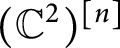 $(\mathbb {C}^{2})^{[n]}$ on
 $n$ points, as
 $n\rightarrow +\infty ,$ is a Gumbel distribution. In view of this example, they ask for further such Betti distributions. We answer this question for the quasihomogeneous Hilbert schemes
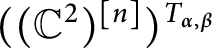 $((\mathbb {C}^{2})^{[n]})^{T_{\alpha ,\beta }}$ that are cut out by torus actions. We prove that their limiting distributions are also of Gumbel type. To obtain this result, we combine work of Buryak, Feigin, and Nakajima on these Hilbert schemes with our generalization of the result of Erdös and Lehner, which gives the distribution of the number of parts in partitions that are multiples of a fixed integer
 $A\geq 2.$ Furthermore, if
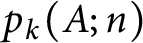 $p_{k}(A;n)$ denotes the number of partitions of
 $n$ with exactly
 $k$ parts that are multiples of
 $A$, then we obtain the asymptotic a result which is of independent interest.
 $$ \begin{align*} p_{k}(A,n)\sim \frac{24^{\frac k2-\frac14}(n-Ak)^{\frac k2-\frac34}}{\sqrt2\left(1-\frac1A\right)^{\frac k2-\frac14}k!A^{k+\frac12}(2\pi)^{k}}e^{2\pi\sqrt{\frac1{6}\left(1-\frac1A\right)(n-Ak)}}, \end{align*} $$


Bundles on
 $\textbf{P}^n$ with vanishing lower cohomologies
- Part of
-
- Journal:
- Canadian Journal of Mathematics / Volume 73 / Issue 4 / August 2021
- Published online by Cambridge University Press:
- 24 April 2020, pp. 993-1012
- Print publication:
- August 2021
-
- Article
-
- You have access
- Open access
- Export citation
-
We study bundles on projective spaces that have vanishing lower cohomologies using their short minimal free resolutions. We partition the moduli
 $\mathcal{M}$ according to the Hilbert function H and classify all possible Hilbert functions H of such bundles. For each H, we describe a stratification of
 $\mathcal{M}_H$ by quotients of rational varieties. We show that the closed strata form a graded lattice given by the Betti numbers.


BETTI NUMBERS FOR CERTAIN COHEN–MACAULAY TANGENT CONES
- Part of
-
- Journal:
- Bulletin of the Australian Mathematical Society / Volume 99 / Issue 1 / February 2019
- Published online by Cambridge University Press:
- 30 August 2018, pp. 68-77
- Print publication:
- February 2019
-
- Article
-
- You have access
- Export citation
-
We compute Betti numbers for a Cohen–Macaulay tangent cone of a monomial curve in the affine
 $4$-space corresponding to a pseudo-symmetric numerical semigroup. As a byproduct, we also show that for these semigroups, being of homogeneous type and homogeneous are equivalent properties.

LIFTINGS OF A MONOMIAL CURVE
- Part of
-
- Journal:
- Bulletin of the Australian Mathematical Society / Volume 98 / Issue 2 / October 2018
- Published online by Cambridge University Press:
- 05 July 2018, pp. 230-238
- Print publication:
- October 2018
-
- Article
-
- You have access
- Export citation
BETTI NUMBER ESTIMATES IN
 $p$-ADIC COHOMOLOGY
- Part of
-
- Journal:
- Journal of the Institute of Mathematics of Jussieu / Volume 18 / Issue 5 / September 2019
- Published online by Cambridge University Press:
- 07 August 2017, pp. 957-991
- Print publication:
- September 2019
-
- Article
-
- You have access
- Export citation
-
In the framework of Berthelot’s theory of arithmetic
 ${\mathcal{D}}$-modules, we prove the
 $p$-adic analogue of Betti number estimates and we give some standard applications.


On the evolution of topology in dynamic clique complexes
- Part of
-
- Journal:
- Advances in Applied Probability / Volume 48 / Issue 4 / December 2016
- Published online by Cambridge University Press:
- 11 January 2017, pp. 989-1014
- Print publication:
- December 2016
-
- Article
-
- You have access
- Export citation
Betti Numbers and Flat Dimensions of Local Cohomology Modules
-
- Journal:
- Canadian Mathematical Bulletin / Volume 58 / Issue 3 / 01 September 2015
- Published online by Cambridge University Press:
- 20 November 2018, pp. 664-672
- Print publication:
- 01 September 2015
-
- Article
-
- You have access
- Export citation
-
Assume that
 $R$ is a commutative Noetherian ring with non-zero identity,
 $\mathfrak{a}$ is an ideal of $R$ , and
 $X$ is an $R$ -module. In this paper, we first study the finiteness of Betti numbers of local cohomology modules
 $\text{H}_{\mathfrak{a}}^{i}\left( X \right)$ . Then we give some inequalities between the Betti numbers of $X$ and those of its local cohomology modules. Finally, we present many upper bounds for the flat dimension of $X$ in terms of the flat dimensions of its local cohomology modules and an upper bound for the flat dimension of $\text{H}_{\mathfrak{a}}^{i}\left( X \right)$ in terms of the flat dimensions of the modules
 $\text{H}_{\mathfrak{a}}^{j}\left( X \right),j\ne i$ , and that of $X$ .


EXPECTED TOPOLOGY OF RANDOM REAL ALGEBRAIC SUBMANIFOLDS
- Part of
-
- Journal:
- Journal of the Institute of Mathematics of Jussieu / Volume 14 / Issue 4 / October 2015
- Published online by Cambridge University Press:
- 12 May 2014, pp. 673-702
- Print publication:
- October 2015
-
- Article
-
- You have access
- Export citation
-
Let
 $X$ be a smooth complex projective manifold of dimension
 $n$ equipped with an ample line bundle
 $L$ and a rank
 $k$ holomorphic vector bundle
 $E$. We assume that
 $1\leqslant k\leqslant n$, that
 $X$,
 $E$ and
 $L$ are defined over the reals and denote by
 $\mathbb{R}X$ the real locus of
 $X$. Then, we estimate from above and below the expected Betti numbers of the vanishing loci in
 $\mathbb{R}X$ of holomorphic real sections of
 $E\otimes L^{d}$, where
 $d$ is a large enough integer. Moreover, given any closed connected codimension
 $k$ submanifold
 ${\it\Sigma}$ of
 $\mathbb{R}^{n}$ with trivial normal bundle, we prove that a real section of
 $E\otimes L^{d}$ has a positive probability, independent of
 $d$, of containing around
 $\sqrt{d}^{n}$ connected components diffeomorphic to
 ${\it\Sigma}$ in its vanishing locus.


On Certain Multivariable Subnormal Weighted Shifts and their Duals
-
- Journal:
- Canadian Mathematical Bulletin / Volume 56 / Issue 3 / 01 September 2013
- Published online by Cambridge University Press:
- 20 November 2018, pp. 459-465
- Print publication:
- 01 September 2013
-
- Article
-
- You have access
- Export citation
-
For every subnormal
 $m$ -variable weighted shift
 $S$ (with bounded positive weights), there is a corresponding positive Reinhardt measure
 $\mu $ supported on a compact Reinhardt subset of
 ${{\mathbb{C}}^{m}}$ . We show that, for
 $m\,\ge \,2$ , the dimensions of the 1-st cohomology vector spaces associated with the Koszul complexes of $S$ and its dual
 $\widetilde{S}$ are different if a certain radial function happens to be integrable with respect to μ (which is indeed the case with many classical examples). In particular, $S$ cannot in that case be similar to $\widetilde{S}$ . We next prove that, for $m\,\ge \,2$ , a Fredholm subnormal $m$ -variable weighted shift $S$ cannot be similar to its dual.


Hilbert schemes and Betti numbers over Clements–Lindström rings
- Part of
-
- Journal:
- Compositio Mathematica / Volume 148 / Issue 5 / September 2012
- Published online by Cambridge University Press:
- 25 July 2012, pp. 1337-1364
- Print publication:
- September 2012
-
- Article
-
- You have access
- Export citation
TELESCOPIC LINKAGES AND A TOPOLOGICAL APPROACH TO PHASE TRANSITIONS
- Part of
-
- Journal:
- Journal of the Australian Mathematical Society / Volume 90 / Issue 2 / April 2011
- Published online by Cambridge University Press:
- 03 June 2011, pp. 183-195
-
- Article
-
- You have access
- Export citation
ABSOLUTE, RELATIVE, AND TATE COHOMOLOGY OF MODULES OF FINITE GORENSTEIN DIMENSION
-
- Journal:
- Proceedings of the London Mathematical Society / Volume 85 / Issue 2 / September 2002
- Published online by Cambridge University Press:
- 22 August 2002, pp. 393-440
- Print publication:
- September 2002
-
- Article
- Export citation
SPECIALIZATION OF GRADED MODULES
-
- Journal:
- Proceedings of the Edinburgh Mathematical Society / Volume 45 / Issue 2 / June 2002
- Published online by Cambridge University Press:
- 17 June 2002, pp. 491-506
-
- Article
-
- You have access
- Export citation
